







Abstract
In established democracies, parties provide ideological cues either with their policy stances or with their social group affiliations. In new democracies, these signals are still ambiguous. What determines the meaning attached to ideological labels in such circumstances? Existing explanations emphasise country-specific ethno-linguistic cleavages. I propose a different explanation, which rests on the ideological legacy of the authoritarian past. Dictatorships are linked either to the left or to the right. This association between ideology and the authoritarian past persists after the democratic transition, distorting people’s perceptions of the meaning of ideological labels. This distortion translates into a bias against the ideology of the dictator. As the party system consolidates, however, the role of history is overcome by the accumulation of democratic experience. Focusing on the case of Greece, I propose a modelling framework to test the presence of this bias, its observational implications and its evolution along the process of party system consolidation.
Evidence from new democracies has questioned the degree to which the left-right (LR) dimension can be exported beyond established democracies (Evans and Whitefield, 1993; Kitschelt et al., 1999). Drawing mainly on case studies (Evans and Whitefield, 1995; Shabad and Slomczynski, 1999) and comparisons among post-communist countries (Gijsberts and Nieuwbeerta, 2000), most of this research points to the important role of non-economic cleavages in shaping the party competition and voting behaviour of new democracies (Evans and Whitefield, 1995; Tucker, 2002; Whitefield, 2002). Illustratively, the organisational and symbolic role of religion in some of these countries (Van der Brug et al., 2008; White et al., 2000), as well as their ethnic composition (Evans and Whitefield, 1998), have featured as important determinants of the ideological outlook of these electorates.
Although these explanations have shed light on the formation of political cleavages in new party systems, they impose a static understanding of how ideological perceptions form, not allowing the gap between new and old democracies to close as the former consolidate. In other words, although they take into account the different underlying social bases of emerging democracies, they seem to neglect the fact that all these democracies are actually new and, as such, they should be characterised by some learning process in their understanding of ideological terms.
I propose a different explanation for the observed differences between new and established democracies in the content and meaning of LR. The argument draws on the ideological legacy of the authoritarian regime. Rather than using the LR semantics as a continuum to signal their policies, in new democracies both political elites and masses build on the lines of the past. The resulting party system exaggerates ideological dichotomies, formed on the basis of the ideological label of the previous regime. This context is likely to shift public sentiments against the ideology of the dictator. Left-wing authoritarian regimes, as those stemming from the Communist bloc, should thus be followed by negative predispositions towards the left side of the ideological spectrum, whereas right-wing authoritarian regimes, such as military dictatorships, should be succeeded by anti-right sentiments. I characterise this distortion of ideological perceptions as anti-left and anti-right bias, respectively. The first aim of the article is to propose an analytical framework which will enable the systematic examination of whether such biases actually exist.
The hand of history, however, is unlikely to persist forever; its legacy might be eventually overcome by the accumulated experience of the political parties along the course of party system maturation. The dynamics of this process, however, remain unclear. Is change the result of shocks which hit all citizens at the same rate, or is there a generational element of political learning (Stoker and Jennings, 2008), with the young being quicker in adapting their perceptions to the democratic reality (Franklin and van Spanje, 2012)? The second aim of this study is to shed light onto this exact question, distinguishing between adjustment trajectories which characterise the electorate as a whole and those which result from cohort replacement.
Addressing these questions – which both allude to the interplay between history and politics in the meaning attached to LR semantics – necessitates two elements. First, one needs to focus on a political context in which the shadow of the authoritarian rule is still present. Second, a relatively long period of uninterrupted democratic rule is necessary so that we can examine whether historical references are overcome by the actual experience with the political actors operating in the democratic regime. The Greek political system, as formulated after the democratic transition in 1974, provides a case which fulfils these requirements. Since the authoritarian rule was explicitly linked to the right, it is interesting to examine whether the newly formed democratic regime was characterised by anti-right bias. Moreover, the consolidation of the party system allows us to explore the underlying forces behind the transformation of the content of ideology over time. 1
The Meaning of LR in New Political Contexts
The use of LR as an analytical tool whereby party competition and public opinion can be depicted in a comparative perspective is based on the assumption that LR is given the same meaning across different contexts. The reason for expecting this similarity lies mainly on the symbolic role of political parties (Arian and Shamir, 1983). Parties signal their ideological standpoints either with their issue stances (Knutsen, 1995) or by referring to relevant societal groups (Zechmesiter, 2006). Individuals, in turn, either opt for parties which represent their preferred policies or choose a party on different grounds and identify themselves in ideological terms based on their perceptions about where their party is placed in the same underlying dimension (Lenz, 2013).
Although this logic applies to established democracies, it does not suffice to account for the evolution of the meaning of ideology in new democracies. In new party systems, parties do not have the time to provide convincing cues about their ideological views. Even if partisan ties are created, they cannot readily serve as heuristic cues for a common understanding of ideological labels. How do ideological conceptions form in such circumstances?
At least in part, the answer lies with the strategic use of historical cleavages among political elites. Political actors often carry the legacy of the past. In so doing, they provide a symbolic content to ideological labels, which come to represent broad categories, given value-driven characterisations. This tendency is further reinforced by the categorical nature of ideological orientations (Bølstad and Dinas, 2016). While forming their ideological preferences, individuals do not simply perceive the LR dimension as a continuum along which different policy aims are represented. Rather, they perceive the two terms as two categories to which they attach normative connotations (Eiser and Stroebe, 1972). If one of these terms is associated with the authoritarian past, objects located in this group will also be stigmatised. The next section illustrates this pattern, introducing us to the case under examination. In so doing, it also serves to highlight the puzzle of this study.
The Puzzle
As a way to motivate the discussion, Figure 1 presents the mean placement of the main right-wing party in the 1–10 LR scale across various West European countries. 2 The estimates come from the 1999 European Election Study (EES). As it can be seen, the mean score of New Democracy (Nea Democratia, ND), the dominant right-wing party in the post-1974 political system of Greece, was 8.33, the highest among all other major right-wing parties in the European Union, together with the Swedish Moderates. Its 1989 and 1994 figures are even higher (8.72 in both instances).
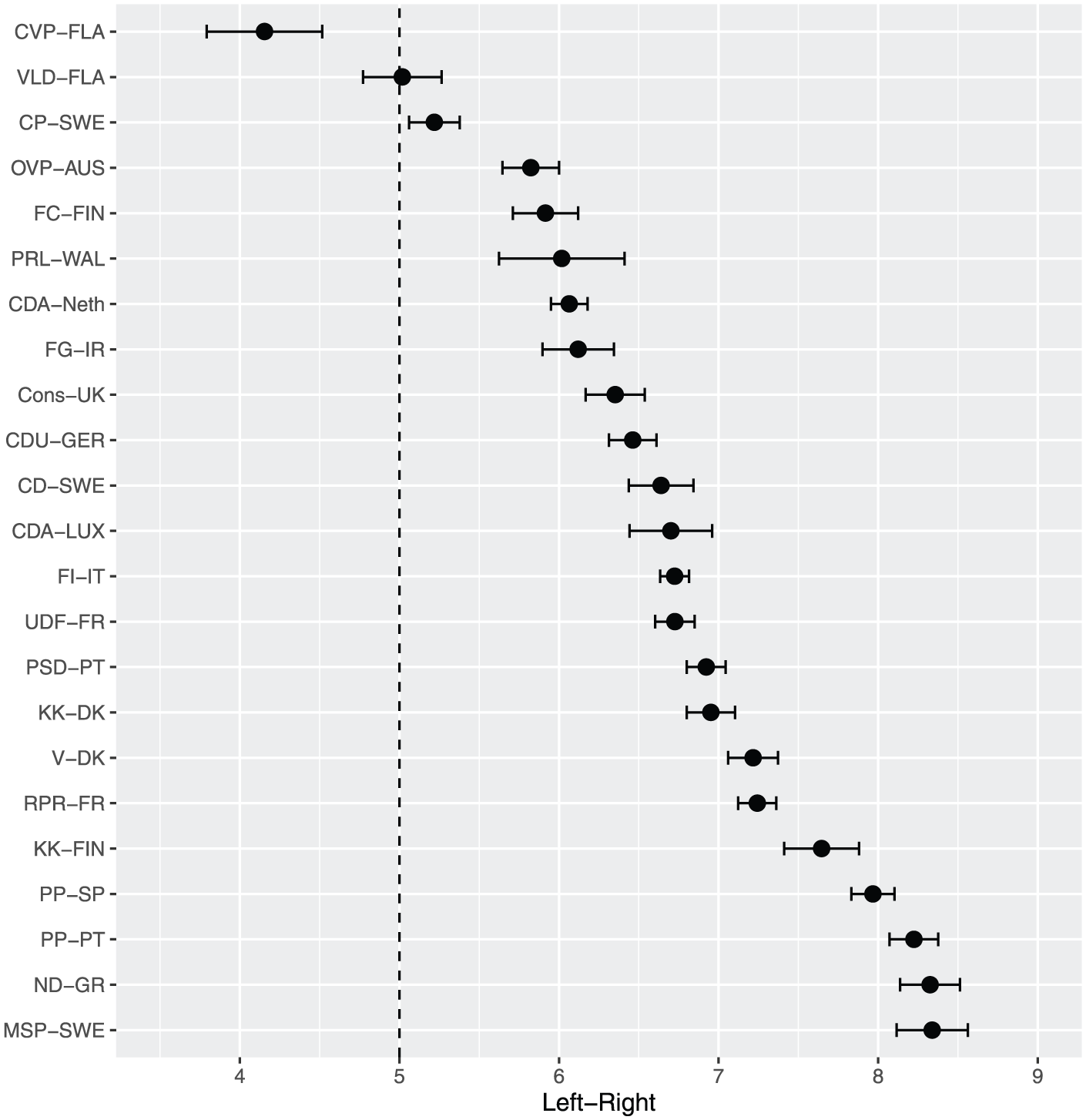
The Median Position of Mainstream Right-Wing Parties in a 1–10 LR Scale, EES 1999.
Were the Greek conservatives the most right-wing party among all major parties of this ideological camp? Figure 2 presents the placement of parties in the standard LR dimension using data from the Comparative Manifestos Project (Klingemann et al., 2007). The data come from the nearest to 1999 election which was held in each of the countries presented in the graph. Even when the uncertainty associated with each estimate is taken into account, it seems that ND is located more to the left than most other major right-wing parties in the European Union.
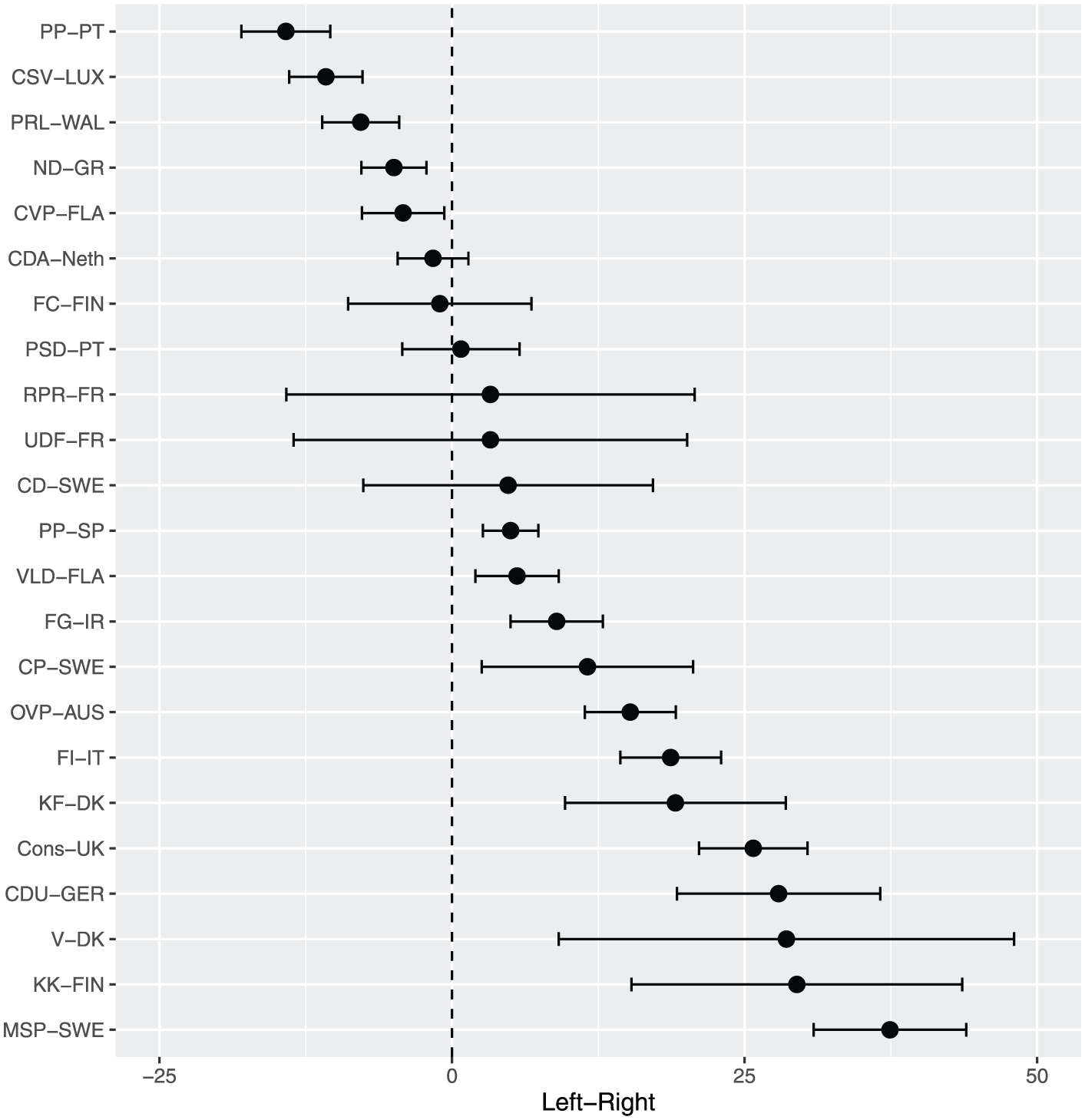
The Mean Position of Major Right-Wing Parties in the Comparative Manifestos Project LR Scale.
The question that naturally emerges is what accounts for this divergence between public opinion and party manifesto findings. The explanation elaborated here alludes to an exceptional feature which characterises societies passing from an autocratic regime that has been linked in the collective memory with the right ideological spectrum to a democratic one. Greece is one such example. The traditional meaning of the typical LR division was distorted by the asymmetric mapping of the authoritarian past on its content. To shed light on this development, it is necessary to portray the Greek party system as formed after 1974. This is the purpose of the next section.
The Weight of History and the Dynamics of Party Competition
Most accounts of contemporary Greek politics give pride of place to the political legacy of the civil war between the communists and nationalists, which started during the Nazi occupation and lasted until 1949 (Marantzidis and Antoniou, 2004). The politically turbulent period which started afterwards led to a deadlock that gave room to a military coup in 1967. The restoration of democracy 7 years later was accompanied by the formation of a new party system, fully consolidated by 1981, after two transforming elections, in 1974 and in 1977. As one of the two major parties emerging from this party system, the ND established itself from the beginning as the main conservative party, monopolising the right anchor of the political spectrum. 3 The socialist Panhellenic Socialist Movement (PASOK) and the communist Kommounistikó Kómma Elládas (KKE) populated the other side of the ideological spectrum. Although competing within the same ideological pool and despite their significant ideological differences, the two left-wing parties converged in a common narrative about the linkage between the previous regime and the right. Four factors contributed in converting this informal alliance into a seemingly unitary ‘anti-right’ block.
The first relates to the direct link between the ND and the right-wing parties of the post-civil war era. All major right-wing political parties during the entire twentieth century have been identifiable by their anti-communist views and their support of the monarchy. Consequently, the Greek colonels’ anti-communist discourse – typical in Cold War military regimes – and the controversial political role of the royal family during the period preceding the military intervention, engendered public disapproval towards these two distinctive pillars of the political identity of the Greek right.
The second reason is inextricably related to the first. The stillborn parliamentary framework built after the war was characterised by the constant intervention of extra-institutional factors (the royal family, the army and illegal forces working under the auspices of the state) which were all matched one way or another with the corresponding right-wing parties (Pappas, 2001: 76). The ND was not an exception to this rule, being both symbolically and organically linked to the post-civil war regime (Nikolakopoulos, 2005). 4
Third, the circumstances of despotism and violation of political freedom during the dictatorship, coupled with the political messages of the 1960s that were also disseminated in Greece – albeit with some delay – resulted in a shift, especially among younger generations, towards more liberal political demands (Kornetis, 2013). In a way, what the Greek left had not achieved on the military front 30 years earlier seemed to have been pursued at an ideological level through this long-standing process of political repression attributed to parties and mechanisms related to the ‘Right’. The recognition of this tendency has been referred to as the ‘ideological vengeance of the “civil war” defeated’ (Mavrogordatos, 1999).
Fourth, the generation of a latent ‘anti-right bias’ was assisted by the convergence between the two other ideological poles as it was manifested through their party representatives, PASOK and KKE. As Elias Nikolakopoulos (2005) observes, at least up to 1985, the supporters of either of these parties liked the other party more than the ND. This unofficial alliance was based on the common opposition towards the US and its international role (Laliouti, 2010: 96–97), capitalism and the ‘post-civil war State of the Right’ (Nikolakopoulos, 2005). As a careful observation of Greek politics reveals, the non-right political spectrum is formed as an ‘anti-right’ block as soon as its constituent parts use the ‘anti-right’ terminology as a way to define their own ideological position and to distinguish themselves from the ND (Moschonas, 1995: 187). 5 In the actual political debate, the anti-right rhetoric was aided by a polarising political setting, in which political discussions were far more frequent than in any other European Economic Community (EEC) country (Demertzis and Kafetzis, 1996; Martín, 2004).
Whereas the first period of democratic consolidation provided the circumstances for the formation of anti-right bias, various factors over the following decades mitigated the political penalisation of the right. Three of them require highlighting. First, as part of its post-1989 strategy, the communist party began to undermine the ideological alliance with PASOK in favour of a more levelling strategy against the two major parties (Kalyvas and Marantzidis, 2001). 6 Second, the replacement of PASOK’s leader in the mid-1990s with a moderniser, Costas Semites, transformed the party’s physiognomy (Dinas and Gemenis, 2010) and its electoral pool (Zafeiropoulos and Marantzidis, 1999). Third, since September 2000, an anti-immigration party, initially emerging as an ND splinter, the Popular Orthodox Rally (LAOS), entered the political scene of the country and facilitated the distinction between the extreme-right and the ND.
To be sure, the aim here is not to examine the determinants of right-wing support. This narrative has served to highlight two features of the Greek party system: the role of the pre-transition period in party competition and the gradual replacement of historical references with people’s current experience with the parties along the process of party system consolidation. These are the two aspects which make the Greek case particularly useful for our purposes. The first allows us to examine how the hand of history affected people’s understanding of the terms left and right, while the second permits us to explore the dynamics of political learning. Three interrelated questions are addressed. First, is Greek public opinion characterised by an anti-right bias? Second, are there signs of change in the way people form their ideological perceptions? Third, if such signs exist, is change driven by generational replacement or by uniform updating? To answer these questions, I propose a statistical model which allows the observational manifestation of a latent ‘anti-right bias’ and the investigation of the extent to which this tendency wears off over time.
Analytical Strategy: Anti-Right Bias as Asymmetric Projection Bias
Without a benchmark (e.g. an otherwise identical country but without anti-right bias), it is unwarranted to consider any inclination in the LR distribution to the left as robust evidence for the presence of anti-right bias. Instead, I try to detect the presence of this bias in an indirect way, which builds on the logic of projection bias (Merrill and Grofman, 1999). A voluminous literature has suggested that when survey respondents are asked to locate political parties on ideological or issue scales, they tend to bring parties they like closer to their own ideal points and to distance themselves from parties they dislike (see, for example, Dinas et al., 2016; Granberg and Jenks, 1977). I exploit this pattern by leveraging possible asymmetries in the direction and strength of this bias. In particular, I use the ND, as the dominant party of the right, and examine the relationship between affective evaluations for this party and perceptions about where it is located on the LR axis. The departure point in this analytical framework is the standard model of projection bias (Markus and Converse, 1979)

where Pij is the LR placement of individual i of party j, Pi is i’s individual self-placement and Uij is a measure of i’s utility (preference) for party j.
If
First, I focus on purely centrist voters, for whom projection bias is typically much lower and can go towards either direction (e.g. Merrill, Grofman and Adams, 2001). Centrist voters remain relatively indifferent about ideological labelling and, therefore, are less vulnerable to projection bias. Finding a negative relationship between ND LR placement and ND preference for centrist voters would thus be more easily attributable to anti-right bias. This is done by centring ND’s LR position (Pi) in equation (1) so that 0 represents the midpoint of the LR scale. Doing so, we can then focus on the main effect of Uij, that is, the level of affect for the ND on the LR positioning of the party among those located at the centre of the ideology scale. Second, to examine this pattern across all respondents, I compare the observed results with idealised cases of either projection or anti-right bias. To do that, it is first essential to describe what the observed pattern would have been in the absence of anti-right bias and contrast it with what would have been in the absence of projection bias. We will later see what happens when real data are used.
Figure 3 presents four idealised cases of how projection bias could work. The solid black line denotes the marginal effect of ND affect (Uij) on the party’s LR placement. The (non-consequential) assumption made is that in all cases the average location of the party by voters is at point 5. In the first case, Figure 3(a), we see a symmetric pattern, the product of solely projection bias. Those located on the left side of the ideological scale place the party more to the left the more positively they feel about the party. Those located at points 6–10 place the party more on the right the more they like it. For those located at the middle of the scale, liking or disliking the party seems not to matter in terms of where the party is to be located on the scale. In general, the pattern observed in Figure 3(a), could only be attributed to projection bias since there is no indication that this bias works differently between left- and right-wing voters.
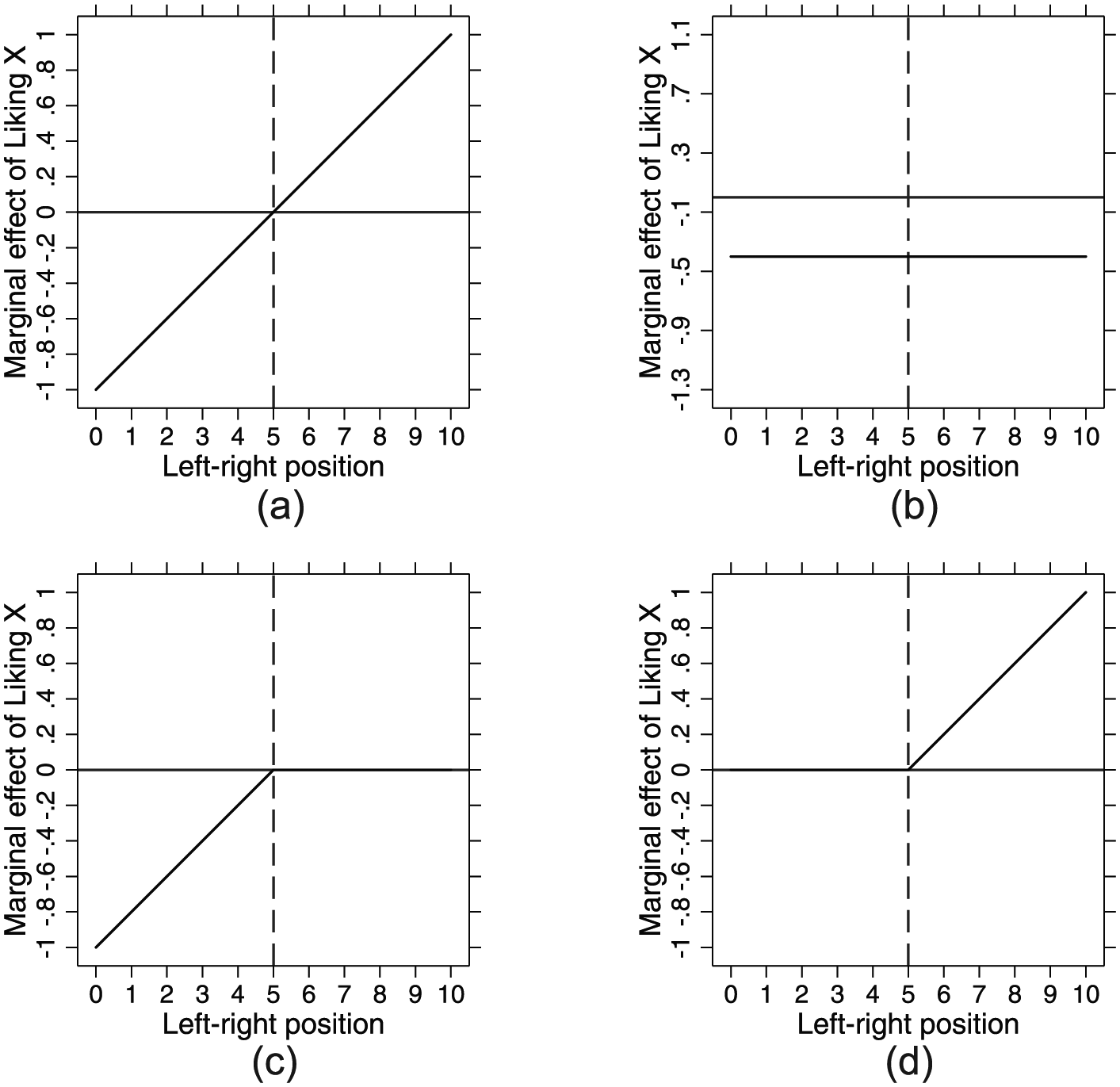
Idealised Cases for the Effect of Party Sympathy (β2) Across all Levels of LR Self-Placement (β1).
Figure 3(b) presents the exact opposite pattern, whereby β3 = 0 and β2 < 0. Irrespective of voters’ ideological self-placement, holding positive evaluations about the party results in locating it more to the left. For instance, even if voters are themselves located at point 8, they perceive a more pro-left point in the scale as more desirable, thus the more they like party j, the more they place it on the left part of the scale. Although finding such a pattern would imply evidence in favour of the anti-right bias hypothesis, it is not a very realistic scenario since it would imply negative projection effects for right-wing individuals: liking the party leads one to place it far away from one’s own position.
Figure 3(c) and (d) show a mixed pattern. Projection bias works but only in one direction. In the first case (Figure 3(c)), among those located on the left of the scale, respondents who like this party place it more to the left (i.e. closer to their own positions). Individuals located on the right, however, are not influenced by their evaluations of the party. Such a pattern is to be expected if apart from projection bias there is also a latent anti-right bias: for those not located on the right side of the scale, projection bias should also be accompanied by a more generic disapproval of the right. Thus, apart from locating the party further away from themselves as a result of not liking it (contrast effects), they should also locate it to the right because they have penalised this ideological space. On the other hand, right-wing voters should only move their party to the right as a way to bring it closer to themselves and thus without this pattern being reinforced by an ‘anti-left’ bias. Finally, Figure 3(d) reveals the reverse pattern: projection operates only among right-wing voters. This pattern is not compatible with the idea of anti-right bias.
Data and Measurement
To get estimates of the parameters of equation (1), we need data on self- and party-placement (Pi and Pij, respectively) as well as a measure of party preference (Uij). Although I also use Greek election surveys to corroborate the findings (see online Appendix), the main analysis is based on the EES. The EES surveys are available at equally spaced time intervals and they always use the same measures for each of these three variables of interest. This facilitates the examination of over-time change in the presence and magnitude of anti-right bias. 7
With regard to measurement, all these surveys ask respondents to place themselves and the party on an LR scale. The important question here is how to measure Uij. All European Election Studies include a Propensity to Ever Vote (PTV) for Party ‘X’ measure. ‘X’ typically includes all significant parties of the country in question. The original PTV scale is reversed so that higher scores indicate lower preference for the ND. Both the (reversed) PTV variable and the LR scales range from 1 (very likely to ever vote ND; left) to 10 (not at all likely to ever vote for ND; right). 8
To evaluate the magnitude of anti-right bias over time, we need to pool all EES surveys so that the effect of Uij among centrist voters can be compared across different years. This means that the following model is fitted into the data

where EESt is a dummy denoting the year of the EES survey, X is a vector of individual-level controls, γ is the associated vector of their coefficients and all other terms are the same as described above. Observations are clustered at the survey level. The fact that each survey year is represented by a separate dummy variable implies that no functional form assumption is made about how change has occurred over time.
The results are presented in the following sequence. First, I examine the presence of anti-right bias evaluating the association between party preference (Uij) and LR party placement Pij among centrist voters. Second, I explore the way this association evolves over time. Next, I present the effect of ND preference (Uij) on the party’s LR placement (Pij) along the range of LR self-placement (Pi), comparing the observed pattern against the benchmarks described in Figure 3. Finally, I assess the change in these patterns between 1989 and 2004.
Results
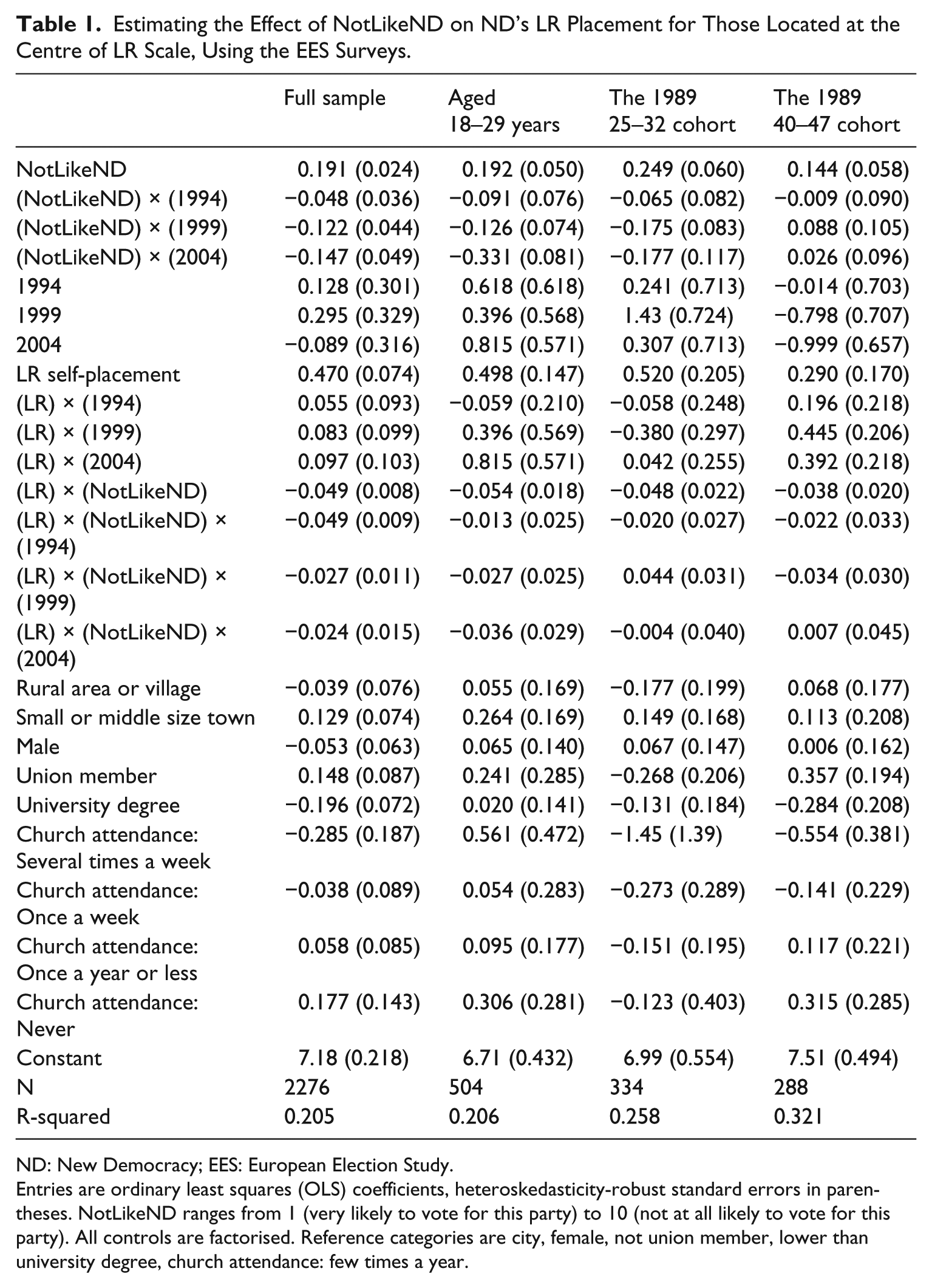
Table 1 shows the results from the estimation of equation (2). ND preference (Uij) is measured with the reversed PTV scale. LR self-placement (Pi) is centred so that we can (minimally) extrapolate the effect of party preference for those located at the centre of the 1–10 ideological scale. Evidence for anti-right bias in 1989 – the reference category – is given by the coefficient attached to Uij (β8, first row of the table). Evidence for the change in the magnitude of this bias is provided by the comparison of this main effect with each of the two-way interactions between Uij and EESt, that is, β9 for 1994 (second row), β10 for 1999 (third row) and β11 for 2004 (fourth row). The theoretical argument remains agnostic about whether other, and if so which, covariates need to be kept constant. Thus, the same model with and without controls has been estimated. The results regarding the parameters of interest remain intact. Table 1 presents the results with the presence of these covariates.
Estimating the Effect of NotLikeND on ND’s LR Placement for Those Located at the Centre of LR Scale, Using the EES Surveys.
ND: New Democracy; EES: European Election Study.
Entries are ordinary least squares (OLS) coefficients, heteroskedasticity-robust standard errors in parentheses. NotLikeND ranges from 1 (very likely to vote for this party) to 10 (not at all likely to vote for this party). All controls are factorised. Reference categories are city, female, not union member, lower than university degree, church attendance: few times a year.
As it is seen in the first column of the Table 1, for those holding centrist positions in 1989, a one-point increase in the reversed PTV scale implies a 0.19 move of ND towards the right of the scale. Practically, this means that among centrist voters, for whom projection bias, if it exists, can go either way, more negative predispositions towards the ND are associated with a more right-wing positioning of the party. This effect remains practically the same by 1994 but declines by 60% (0.122/0.191) in 1999 and 75% (0.147/0.191) in 2004. In other words, preference towards the party becomes a weaker predictor of ND positioning in the LR axis among respondents located at the centre of the scale. Taken as a whole, this pattern provides evidence for the presence of anti-right bias even 15 years after the democratic restoration. Moreover, it indicates that the gradual consolidation of the party system has resulted in the partial decrease of anti-right sentiments, making the link between ND positioning and preferences towards the Greek right-wing party less evident.
The next three columns of Table 1 decompose these effects for three different cohorts, providing evidence for conversion versus generational effects. The second column suggests that at least in part the decline observed in the first column is to be attributed to the coming of new cohorts. In each EES study, only respondents younger than 30 years are included. As it is seen, being young in 1989 does not imply a lower degree of anti-right bias, since this cohort is still socialised in a political context characterised by anti-right bias. The political environment in which the young cohorts of 1999 and 2004 have been socialised, however, is radically different. Consequently, the negative coefficient of 1989 becomes even positive by 2004. The third column traces a young cohort over time, namely those aged between 25 and 32 years in 1989. Different age windows ranging from 18 to 35 years produce very similar results. This cohort starts from an even stronger anti-right baseline but this pattern gradually evaporates, although it is not even close to the change observed among the young cohorts of 2004. Finally, the fourth column traces a cohort which has most likely crystallised its political and ideological predispositions even by 1989, namely those who were between 40 and 47 years old in that year. Among this cohort, we see no sign of decrease in the tendency to locate the ND more to the right as a result of not holding positive evaluations about this party.
Figure 4 visualises the findings of the first part of Table 1. It compares the average placement of ND between those who give a PTV score of 3 (grey dots) versus those who give a PTV score of 8 (black dots) with regard to this party. The first panel of the graph shows the overall pattern across all respondents. It is evident that the initial gap tends to shrink in a monotone fashion. The second panel of the graph presents the same scenario but focusing only on young respondents (column 2 of Table 1). Here, the initial difference becomes almost zero in 1999 and the pattern actually reverses in 2004. The third graph (the 25–32 years 1989 cohort) is similar with the first, indicating that after 1999 there has been hardly any sign of anti-right bias. This pattern comes in contrast with the pattern shown in the last panel of the graph (the 40–47 years 1989 cohort), where the initial gap in 1989 remains almost identical, although on average ND is placed by both groups in more centrist positions in more recent years. Taken as a whole, these findings suggest that the dissipation of anti-right bias is the outcome of an interaction between the coming of new cohorts and the change in the signals disseminated by the parties.
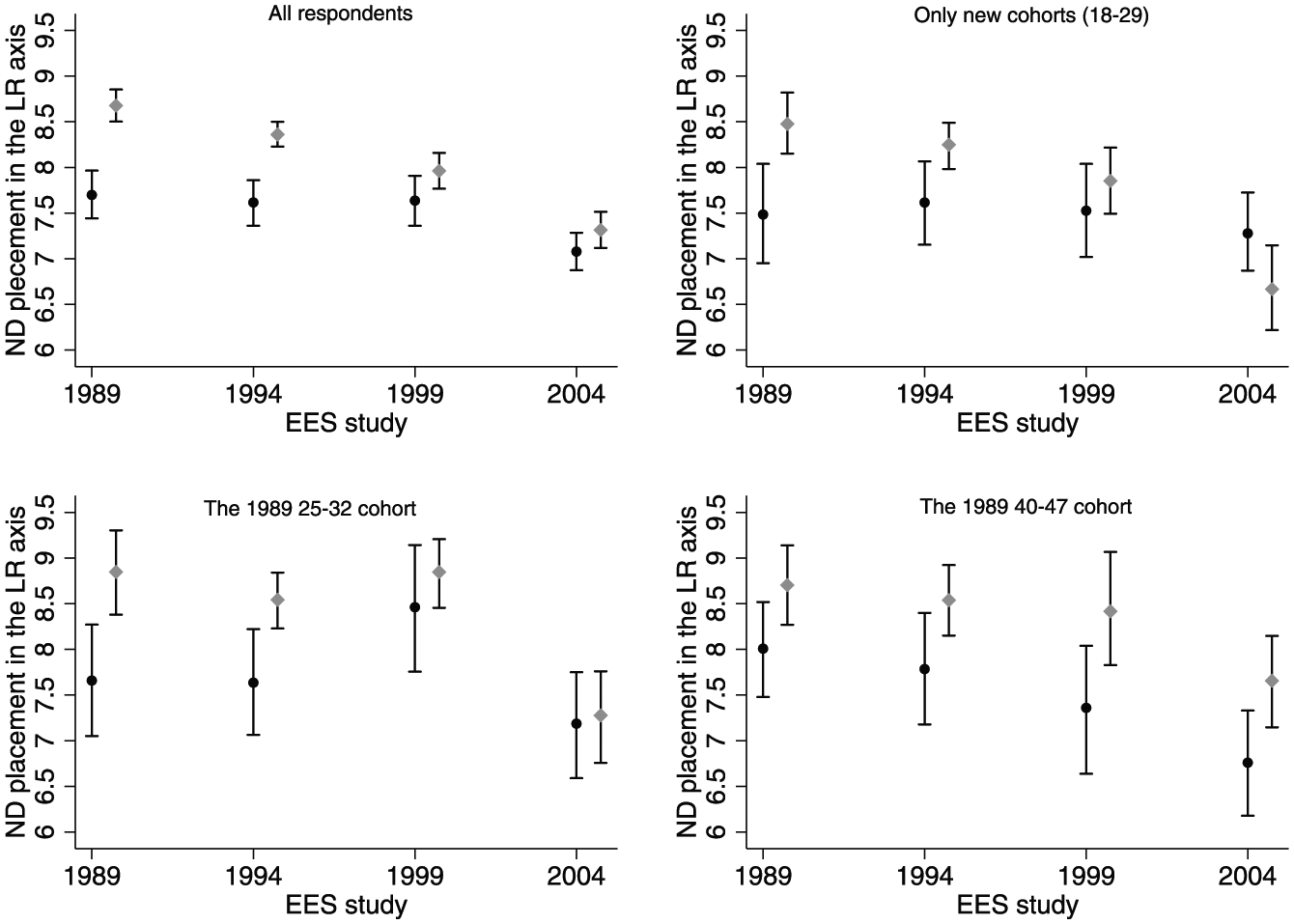
The Estimated ND Position in the LR Axis, Based on the Model Estimates of Table 1, if (1) the PTV Score Given to ND is 8 (Black Dots); (2) the PTV Score Given to ND is 3 (Grey Diamonds).
To what extent are these findings contingent upon the measurement and sampling procedures of the EES? To address this question, I engage in out-of-sample inference. The same analysis is repeated with data from four Greek electoral surveys (1985, 1989, 1996, 2004). The results of this exercise are shown in the online Appendix. Two points need to be highlighted. First, going back to 1985 helps to confirm that what was found in 1989 was a representative pattern of the 1980s. The effect of NotLikeND on its ideological placement is, if anything, slightly higher in 1985 than in 1989. Second, although the same declining trend is observed over time, the baseline 1985 effect seems to reduce by only 50% in 1996 and 2004. That said, when decomposing this effect into new-comers and those aged 35–44 years in 1985, we find a similar pattern as was also observed using the EES data. 9 There is hardly any noticeable decline for those socialised in the early 1980s. Change is once again driven by young cohorts.
We now return to the EES data. Thus far, the analysis has been constrained only in the examination of those individuals located at the centre of the LR scale. Focusing on the 1989 EES, the first panel of Figure 5 utilises the second method proposed for the examination of the presence of anti-right bias. It displays the marginal effect of the reversed PTV score for ND on the party’s placement in the LR axis, conditional on respondents’ self-placement in this dimension. The horizontal line denotes a zero effect and the dashed curves represent the 95% confidence bands. As it is shown, the effect of Uij is always positive across the LR self-placement scale. This implies that no matter where people are located in this axis, a low PTV score for the ND in 1989 means placing the party to the right side of the scale. Even someone located to the right side of the ideological space is more likely to place the ND more to the right than to the left of the spectrum if he or she holds negative feelings for this party (measured with a low PTV score). The graph comes closer to Figure 3(b) than to Figure 3(a). The picture becomes more illustrative once we compare this finding with the 2004 EES graph, shown in the right panel of Figure 5. Here, the pattern is substantively more symmetric, resembling Figure 3(a). Thus, the comparison of Figure 5 with Figure 3 leads to the same conclusion. There is evidence for anti-right bias which, however, seems to have weakened during the process of party system stabilisation.
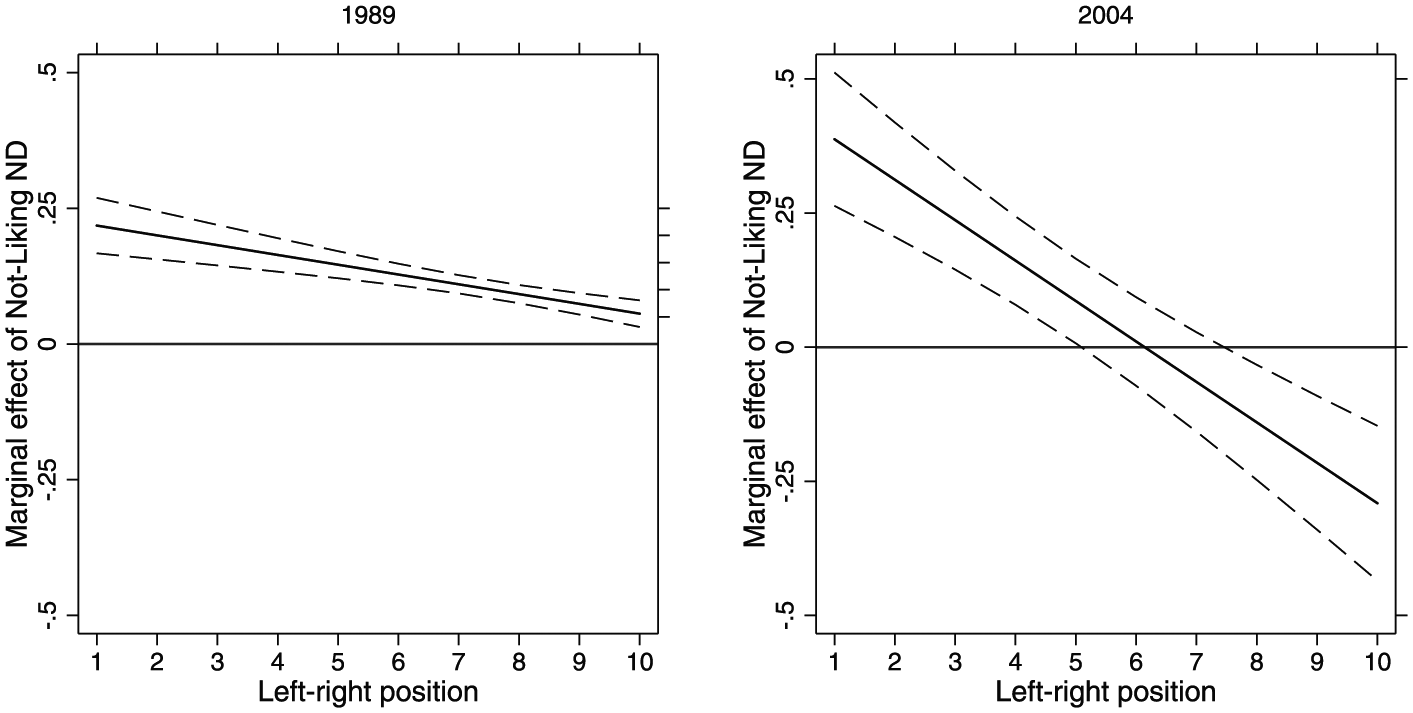
The Coefficient of Not-LikeND Across the Ideological Scale in 1989 and in 2004.
In the online Appendix I try to examine the scope conditions of my argument. I replicate this exercise but using other European parties of a right-wing party family. In particular, I employ the Conservatives in Britain, the Christian Democratic Union (CDU) in Germany and the Spanish Popular Party. I find no instance of anti-right bias for the first two parties, as one would expect given the absence of a recent right-wing authoritarian regime in both countries. I do find a clear signal of anti-right bias for the Spanish Popular Party, however, which is expected given that the authoritarian regime in this country was also linked to the right and ended approximately at the same time as in Greece. That said, this bias seems to dissipate more quickly in Spain than in Greece – a pattern worth further exploration in future research. 10 When taken as a whole, the results from this sensitivity analysis suggest that a precondition for the presence of anti-right bias is a vivid memory of a recent authoritarian past.
Implications for the Use of Ideology on Party Evaluations
The existence of an anti-right bias should have important implications on actual vote choice. If people are socialised in a context which has attributed negative normative connotations to the right, the ideological grounds of party preferences should be more evident for those opting for a party other than the ND. For ND voters, we would expect that they would undermine the role of ideology on vote choice.
To see whether this is the case, I examine the impact of LR proximity between respondents and parties in determining their party preferences. To account for all parties without having to compare ND with each different party, I use the PTVs for each party as the dependent variable and I stack the data with respect to this variable (Van der Eijk et al., 2006). Accordingly, the ideological proximity variable denotes the absolute value of the difference between voter i and party j. ND voters are denoted by a binary indicator. An interaction between this indicator and proximity helps to examine whether the weight attached to ideological congruence varies between ND voters and all other respondents. Table 2 presents the results. To see whether this pattern changes over time, a similar model as that presented in equation (2) is fitted into the data. For the difference between ND voters and all other respondents in 1989, the reference year, we need to focus on the interaction between LRproximity and NDvote. The three-way interactions between these two terms and EESt compare the 1989 pattern with that in more recent years. As it is seen (row 1), in 1989, ideology is much less important for ND voters than for all other respondents. This gap diminishes in a monotonic fashion from 1994 onwards (rows two, three and four).
The Effect of LR proximity on Party Preference Among ND voters and all Other Respondents.
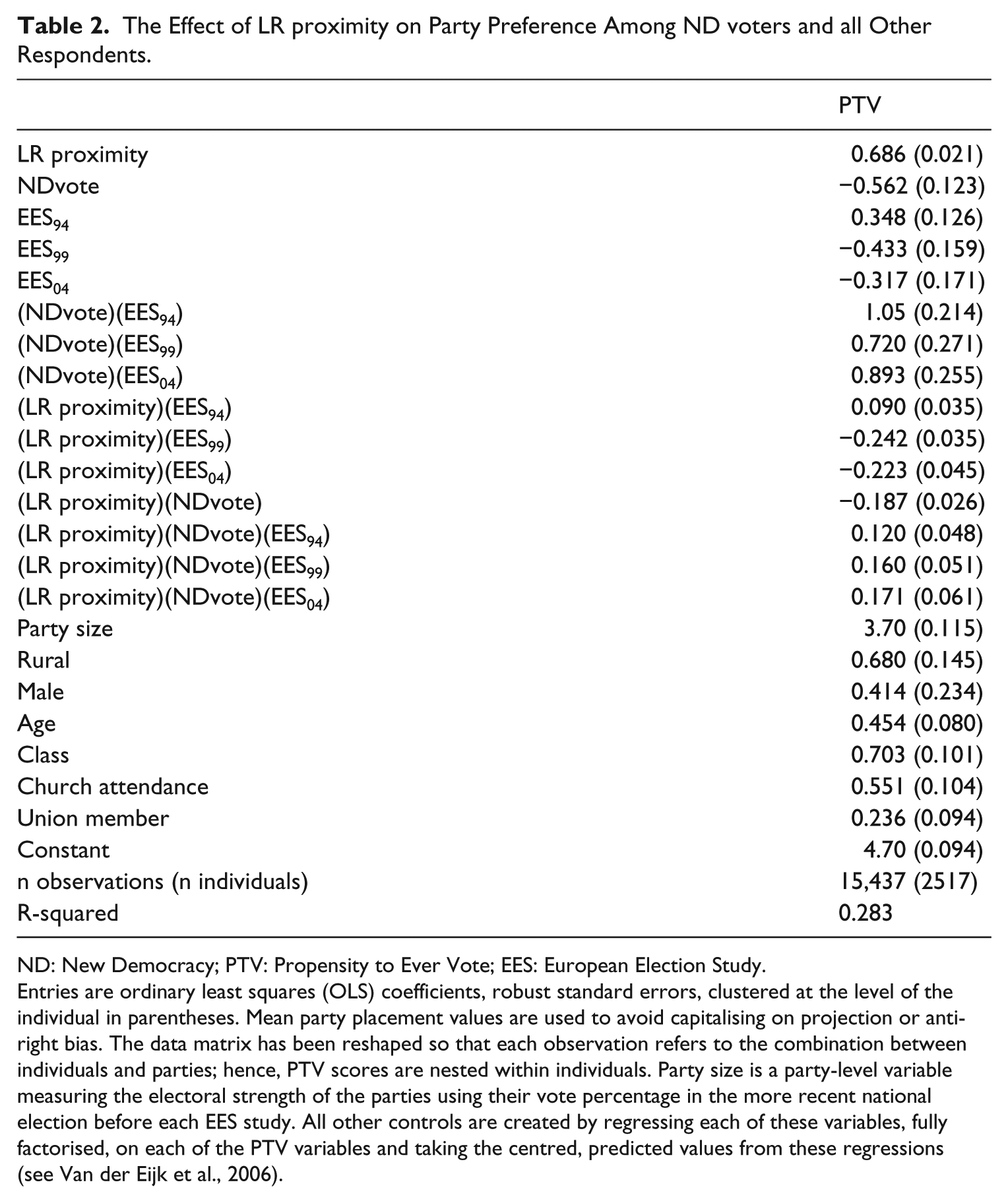
ND: New Democracy; PTV: Propensity to Ever Vote; EES: European Election Study.
Entries are ordinary least squares (OLS) coefficients, robust standard errors, clustered at the level of the individual in parentheses. Mean party placement values are used to avoid capitalising on projection or anti-right bias. The data matrix has been reshaped so that each observation refers to the combination between individuals and parties; hence, PTV scores are nested within individuals. Party size is a party-level variable measuring the electoral strength of the parties using their vote percentage in the more recent national election before each EES study. All other controls are created by regressing each of these variables, fully factorised, on each of the PTV variables and taking the centred, predicted values from these regressions (see Van der Eijk et al., 2006).
The Era of the Crisis
What has remained of this anti-right bias at the aftermath of the debt crisis and its accompanying political turmoil? The 2012 Greek elections marked the complete transformation of the party system, breaking established partisan allegiances (Dinas and Rori, 2013). The 2015 elections, held in conditions of ever-increasing uncertainty about the country’s permanence in the Eurozone, confirmed the new era of polarised multipartism (Rori, 2016). The cataclysmic realm of political events is likely to have outweighed the legacy of the past. In this context, we would expect to find hardly any imprint of anti-right bias among younger cohorts, whose political outlook has been shaped by the years of the crisis. Any remaining shadow of anti-right bias should be confined among the older cohorts, who experienced the crisis long after their formative years.
I test this expectation with a survey experiment which took place in February 2016.
11
After being reminded that Greece’s history is rich in unfortunate historical incidents, respondents of a random sample of Greek voters were asked whether they think that the right or the left are mainly to blame for the current economic crisis. A random half of the sample was provided with a general statement about Greek political history, without any reference to a specific event:
Control Condition: Let’s move now to another group of questions. Greece has gone through great historical challenges even before the current economic crisis. When you think about it, would you say that the problems Greece faces nowadays are more the responsibility of the left, the right or both the same?
The other random half was explicitly given the colonels’ dictatorship as an example of previous difficult moments in contemporary Greek history:
Treatment Condition: Let’s move now to another group of questions. Greece has gone through great historical challenges even before the current economic crisis.
By being primed to think about the dictatorship, the second group of respondents are expected to be more likely to attribute responsibility for the current situation to the right than to the left. This difference, however, is expected to be more evident among the older cohorts, who have experienced the democratic transition, than among younger cohorts.
Full results are presented in the online Appendix. Figure 6 displays the key findings. I compare old with young cohorts, by categorising as old everyone above 54 years. 12 As shown in the figure, there is considerable difference in the age gap observed in survey responses. For the control group, in which no reference to the dictatorship was made, the old cohort is 10.8% less likely to attribute the blame to the right. For the treatment group, the older group is 4% more likely to attribute the blame to the right than the younger cohort. The difference-in-differences estimator between young and old cohorts between the two experimental conditions indicates a difference of 14.8 percentage points, which is significant at conventional levels of statistical significance (std. error 6.07 percentage points). This figure means that the older cohorts are approximately 15 percentage points more likely to blame the right than the young when a specific mention is made of the dictatorship. Taken as a whole, the results confirm the generational origins of the dissipation of anti-right bias in the Greek political culture.
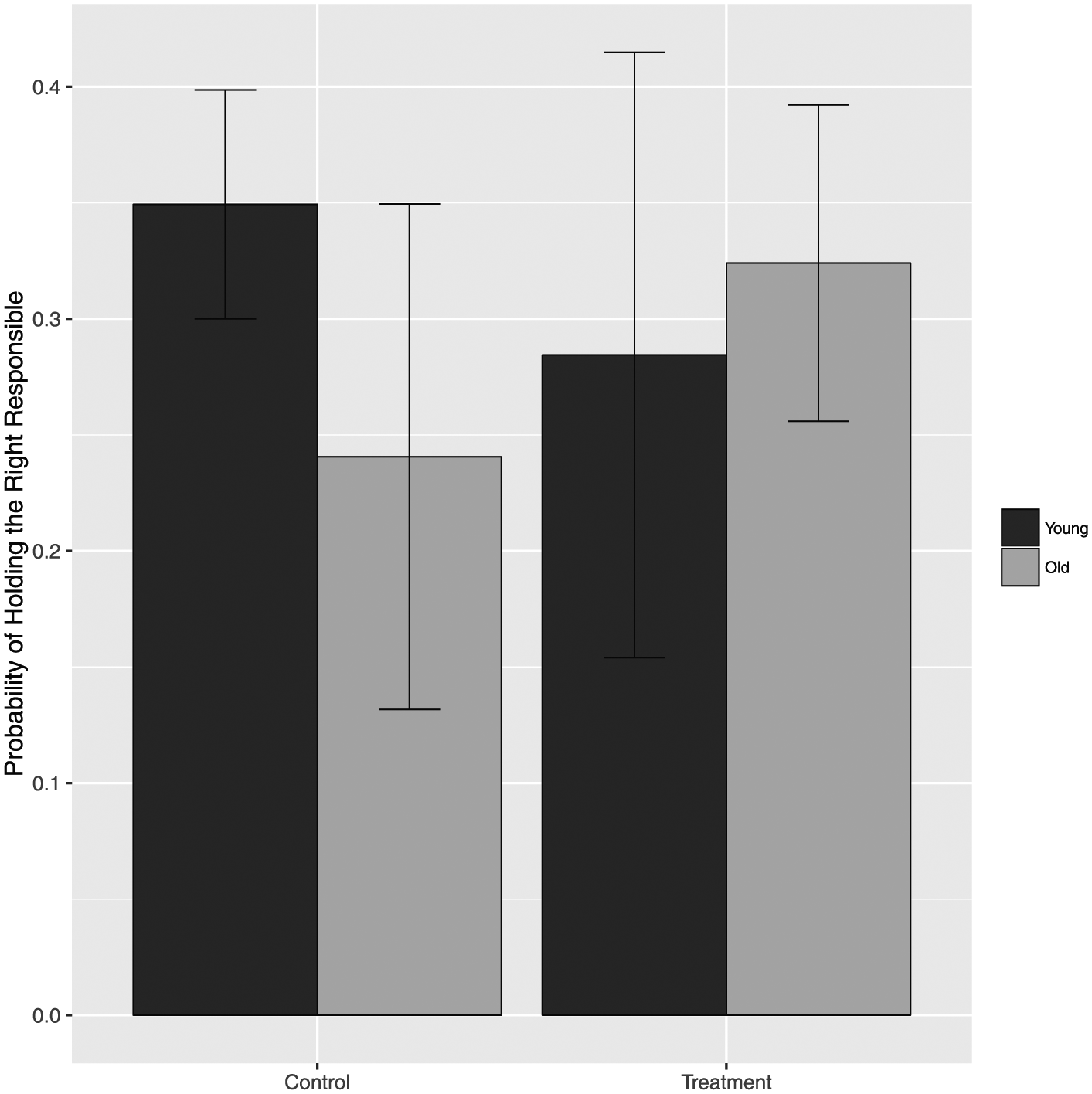
Anti-Right Bias, Cohort Effects and Attribution of Responsibility for the Country’s Economic Crisis.
Conclusion
Rather than actually being the most right-wing party among all European parties belonging in the same family, the ND was perceived to be so extreme mainly because of being the right-wing party in post-dictatorship Greece. To be sure, the party did not do much to alter this presumption among public opinion. Yet, in the political circumstances of the 1980s, pursuing such a goal would be very difficult. The political environment of the transition period was built upon the footprints of the pre-dictatorship period. Gradually, however, the accumulation of experience with the political system weakened the weight of the past. The driving force of change has been the process of generational replacement. History is stronger than politics when it is based on actual experience. When it is based on socialisation narratives, however, its effect is bound to wane. In this respect, the findings seem to confirm the insights from previous studies of political learning (Dinas, 2013; Stoker and Jennings, 2008). People learn from the parties and as they do, they update their ideological perceptions. The inclination to do so, however, declines, as the prior stock of political information increases (Achen, 1992; Grynaviski, 2006).
Even though the analysis focused on the Greek case, the main argument seems applicable in a wider context. Previous studies have focused on the legacy of authoritarian rule on attitudes about democracy (Neundorf, 2010), but little attention has been placed on the impact of dictatorships on the ideological outlook of new democracies. Despite the fact that regime change typically comes in an abrupt way, there is often remarkable continuity in the composition of political elites before and after the democratic transition. To the extent that these elites decide to prime the legacy of the past, the era of the dictatorship can become a cleavage which shapes party competition under democratic rule (Torcal and Mainwaring, 2003). In so doing, it can influence people’s understanding of ideology, generating asymmetric patterns of projection or contrast effects. Further research could test this idea, by extending the analysis to both right- and left-wing authoritarian regimes.
The findings also underline the elasticity of ideological labels. When the democratic political process operates in an uninterrupted way, issues, parties’ stances on these issues and the political discourse among elites inform voters’ perceptions of ideological terms. The content of left and right is coloured by the political dynamics of democratic rule. When political institutions, however, are bereft of a long tradition of democratic rule, the ideological signals are still noisy. It seems that in these instances both elites and masses turn to history for informative cues. In so doing, they attach a normative meaning to ideological terms. Being on the ‘right’ side of history matters. Parties’ ideological stances are not only judged by their policy implications but also assessed according to whether they are opposed to the ideology of the previous regime. If not, they might enter party competition with an ideological impediment. As the democratic process evolves, however, this handicap gradually evaporates, to be replaced by parties’ actual policy stances.
Let us conclude by considering the implications of the findings for Greek politics within the era of the sovereign debt crisis. What has remained of this anti-right bias in the aftermath of the crisis and its accompanying political turmoil? We saw that alluding to an event which is expected to bring anti-right sentiments to mind (the military coup) sparked such sentiments only among the old. No effect was found among those aged between 18 and 53 years. This pattern might explain one of the most noteworthy developments of the 2012 Greek elections, namely the electoral rise of a neo-nazi party, the Golden Dawn. A largely pending question is how this fringe party succeeded in spreading its electoral appeal from the centre, which felt most heavily the implications of austerity, to the periphery. Although speculative, one explanation for the success of the Golden Dawn in these areas might be the fact that the crisis brought the post-transitional political system to an end. The collapse of the party system was probably followed by the fall of its key ideological pillars. The anti-right bias was one of them. By disappearing, it might well have liberated long-suppressed anti-communist sentiments, primarily stemming from the legacy of the civil war (Kalyvas, 2006). Adopting an explicit anti-communist discourse, the Golden Dawn may have thus benefited electorally, especially in those rural areas in which the footprints of the civil war have been most persistent.
Footnotes
Acknowledgements
The author is grateful to Wouter van der Brug, Mark Franklin, Florian Foos, Kostas Gemenis, Gerasimos Moschonas, Ksenia Northmore-Ball, Nasos Roussias, Joost van Spanje, Takis Pappas and Adam Ziegfeld for their helpful comments and suggestions in previous versions of this paper. The usual disclaimer applies.
Funding
The author(s) received no financial support for the research, authorship, and/or publication of this article.
Supplementary Information
Additional supplementary information may be found with the online version of this article.
The analysis of the Greek election studies. The analysis of other European right-wing parties from different countries. The full results from the survey experiment.
Notes
Author Biography
References
Supplementary Material
Please find the following supplemental material available below.
For Open Access articles published under a Creative Commons License, all supplemental material carries the same license as the article it is associated with.
For non-Open Access articles published, all supplemental material carries a non-exclusive license, and permission requests for re-use of supplemental material or any part of supplemental material shall be sent directly to the copyright owner as specified in the copyright notice associated with the article.
