







Abstract
Many adolescent girls in custody have extensive histories of profound childhood trauma and abuse. They typically come from marginalized communities marked with gang violence. The Art of Yoga Project provides a gender-specific, trauma-informed, and culturally sensitive approach to cater to this understudied and underserved population. The Yoga and Creative Arts Curriculum combines yoga, mindfulness, meditation, and art for girls in custody in several Californian counties. The findings are from a mixed methods evaluation of multiple sites over several years. Taken together, we saw an improvement in the self-reported emotional regulation of incarcerated girls. We discuss practical implications for extending this work in other jurisdictions and to other populations.
Introduction
It is not controversial to state that the majority of young women in custody have experienced trauma. This trauma manifests in numerous negative ways, which include but are not limited to substance abuse, sexual abuse, physical abuse, domestic violence, neglect, and poverty (Nurius, Green, Logan-Greene, & Borja, 2015; Schaffner, 2014). Research also demonstrates that girls’ involvement in crime is often motivated by survival and driven by a desire to escape or erase victimization experiences (Chesney-Lind, 1989; Solomon, Davis, & Luckham, 2012). Virtually all adolescent girls in custody are released back into the community and their reentry process is fraught. Girls warrant gender-specific, trauma-informed, and culturally sensitive approaches to ameliorate the accumulated social stressors that compromise their effective psychosocial functioning and development into adulthood (Nurius et al., 2015).
Studies of adult women in prison reveal an important link between childhood victimization and later criminality (Chesney-Lind & Shelden, 2004). If we are to successfully disrupt the developmental pathways that lead to more (and more serious) offending, programs need to target girls’ understanding and processing of their own traumatic biographies and promote the making of more appropriate life decisions (Solomon et al., 2012).
The Art of Yoga Project (AYP) is a nonprofit organization that provides girls in custody with a Yoga and Creative Arts Curriculum (YCAC) designed to attend to the concerns raised above (Harris & Fitton, 2010). This article examines the impact of the AYP as a trauma-informed approach for intervention with teenage girls in custody. We present the qualitative and quantitative results of a mixed-methods process evaluation that included data collection over several years in three locations. The following literature review will summarize the body of knowledge on offending girls, trauma, and the development of various trauma-informed approaches for this population.
Over the last two decades, the number of girls in custody in the United States has risen quickly (Chesney-Lind & Jones, 2010; Kerig, Vanderzee, Becker, & Ward, 2011). The typical female detainee in the United States is a 16-year-old African American or Latina girl from a low-income family who has dropped out of school. With little or no access to affordable health care, she is at high risk of hepatitis C, asthma, diabetes, and parasitic infections and has almost certainly experienced at least one form of abuse (sexual, psychological, and/or physical) prior to her arrest. It is also likely that she presents with symptoms of depression, suicidal ideation, and posttraumatic stress disorder (PTSD; Kerig et al., 2011; Schaffner, 2014).
Some of the more commonly expressed traumatic experiences girls reported include the early onset of physical and/or sexual abuse in the home, attempted suicide, truancy, dropping out of high school, and running away from home (Black, Woodworth, Tremblay, & Carpenter, 2012; Chesney-Lind & Jones, 2010). Although boys and girls share common experiences that correlate with crime, they are differentially affected by their experiences, and their subsequent reactions to those experiences are gendered (Messerschmidt & Ebrary, 2012).
Studies have generally concluded that compared with boys in custody, girls are between 70% and 90% more likely to have been physically and/or sexually abused at home (National Conference of State Legislatures [NCSL], 2017), 75% more likely to run away from home (NCSL, 2017), 82% more likely to self-report an extensive trauma history (NCSL, 2017), and 60% more likely to self-report feeling unwanted, abused, and neglected, by family, peers, and teachers (Black et al., 2012). Girls are also 6 times more likely than boys to report symptoms of PTSD, depression, anxiety disorders, and self-harm, as a direct result of trauma (Chesney-Lind, Morash, & Stevens, 2008; Kerig & Ford, 2014; Springer, 1997).
Despite girls’ multiple needs, there remains a dearth of programs designed specifically for them (Auty, Cope, & Liebling, 2015; Hauzinger, 2013). In 1998, the Office of Juvenile Justice and Delinquency Prevention (OJJDP) noted that only 5% to 9% of federal funding was allocated to gender-responsive programs. Ten years later, still less than 8% of funding provided services to girls between the ages of 9 and 15 (Chesney-Lind et al., 2008). Given the differential experiences and pathways to offending of girls within the criminal justice system, this is clearly insufficient. It is fundamental to their transition back into society that they have the tools to overcome the negative effects of trauma. Otherwise, they are likely to become part of the 67.5% of prisoners rearrested within 3 years of custodial release (Petersilia, 2003).
Trauma
Van der Kolk (2014) defined trauma as the suite of overwhelming experiences that result in a fundamental reorganization of the way the mind and brain manage perceptions. Trauma changes not only how and what we think but also our capacity to think. The American Association of Children’s Residential Care [AACRC] (2014) argues that trauma is not necessarily incident based but can be generated by subjective everyday life experiences. Such experiences include interpersonal challenges, physiological conditions, chronic neglect, stressful situations, sexual and/or physical abuse, domestic violence, harsh and neglectful parenting, witnessing domestic violence, chronic illness, and poverty (see also Berliner & Kolko, 2016). Trauma research now identifies exposure to these experiences as adverse childhood experiences (ACE). Taken together, they have been shown not only to increase the risk of health and behavioral disorders but also to negatively affect aspects of the developing brain, leading to PTSD (Nurius et al., 2015; Pereda, Guilera, Forns, & Gomez-Benito, 2009).
The experience of trauma has a number of long-term consequences (Chesney-Lind & Shelden, 2004; Pereda et al., 2009; Van der Kolk, 2014). When the system of social engagement is sabotaged and one’s ability to function productively in society is compromised, the intergenerational transmission of abuse and the likelihood of aggression are increased (Chamberlain & Moore, 2002). Research consistently indicates a positive association between exposure to trauma and subsequent health and behavioral problems, all of which are elevated in incarcerated populations (Chesney-Lind et al., 2008).
Mindfulness and Emotional Regulation
In recent years, the use of mindfulness training has gained momentum as an effective intervention to help calm the nervous system of trauma sufferers. Mindfulness is increasingly becoming an integral part of trauma-informed approaches that seek to respond to and understand the needs of traumatized youth as an alternative to harsh and aversive interventions (Black et al., 2012). Van der Kolk (2014) used mindfulness as a treatment for PTSD and found that it helped calm the nervous system of trauma sufferers, offering them a structure for developing awareness of the body (that they might otherwise lack or fear; Van der Kolk, 2014).
Mindfulness activates the regions of the brain involved in emotional regulation and allows for a connection between the emotions and the body (Van der Kolk, 2014). The movement in physically oriented therapies such as yoga and dance, combined with mindfulness-oriented therapies such as meditation and art, reduces aggression, increases self-awareness, improves well-being, and decreases stress (Bilderbeck, Farias, & Brazil, 2014; Himelstein, 2011; Springer, 1997). Emotional regulation is an important protective factor in the risk–need–responsivity (RNR) model of rehabilitation (Andrews & Bonta, 2007). In correctional settings, the RNR model focuses on preventing antisocial behaviors by targeting criminogenic needs.
Yoga and Movement
Yoga is a body discipline that aligns mind and body. It encompasses both mindfulness and physical exercise through the inclusion of philosophical teachings and mental focus (Elwy et al., 2014; Hill, 2010). Yoga philosophy contends that life success comes from the ability to inhabit both an inner world of thoughts and emotions and an outer world of physicality and social interaction, in a way that develops self-awareness and prosocial behavior (Kusilka, 2014; Sovik, 2013).
Trauma-Informed Yoga
Some yoga practices (such as the AYP) address trauma specifically. These programs focus both on meditation through breathing and engaging in poses that coordinate the physical and mental aspects of the individual through conscious discipline and control (Kusilka, 2014). The slow, deep breathing in yoga puts a parasympathetic brake on arousal, taking the reactive energies of the mind and focusing them into a coherent pattern for problem-solving and healing (Sovik, 2013). By combining self-regulation skills through relaxation and meditation, yoga has been shown to alleviate stress and anxiety (Bilderbeck, Farias, Brazil, & Wikholm, 2013); reduce depression, pain, and fatigue (Hill, 2010); and improve positive affect, executive control, and emotional regulation in highly traumatized populations (Bilderbeck et al., 2013; Muirhead & Fortune, 2016).
Trauma-Informed Yoga in Custody
The use of yoga as a trauma-informed therapy with incarcerated populations has also increased in recent years and with promising results. Based on the findings from both adult community and prison samples, yoga therapy has been associated with many physical and psychological benefits, including improved well-being, improved mood, reduced anxiety, reduced depression, and reduced stress (Hauzinger, 2013; Muirhead & Fortune, 2016).
Art and Expression
Art is a form of self-expression that can help in the treatment of trauma. Studies evaluating experiences of creative rehabilitation through the arts in incarcerated populations have produced positive results (Gussak, 2007). In various studies of both male and female incarcerated populations, participants of such programs reported improved attitude and mood, compliance with staff and rules, increased socialization skills, reduced depressive symptoms, increased confidence, feelings of empowerment and self-belief, and an increased acceptance of others and their environment (Bilderbeck et al., 2013; Fishbein et al., 2016; Himelstein, 2011; Nugent & Loucks, 2011).
Further studies demonstrate that participation in art therapy programs has a positive impact on confidence levels, listening and communication skills, distress tolerance, levels of self-expression, enhanced levels of engagement with further education and training, an improved ability to cope with stressors of prison life, and an overall positive behavioral change (Sandoval, Baumgartner, & Clark, 2015). Participants further described art as a safe way to express, release, and deal with potentially destructive feelings, as well as to form positive relationships with both their instructors and peers (Gussak, 2007).
Taken together, results from the research cited suggest that acknowledging and processing traumatic childhood experiences in safe, structured environments can be particularly beneficial to incarcerated youth with co-occurring disorders. So far, however, a knowledge gap exists in our understanding of these kinds of intervention for young girls in custody. Although we have seen an increase in the use of yoga, art, and mindfulness programs in correctional facilities, most empirical evaluations have examined the impact on adult male samples only. The present study attends to this knowledge gap by exploring the impact of teaching yoga and creative arts to girls in detention.
The AYP’s (Harris & Fitton, 2010; Harris, Kaplan, & Epstein, 2016; Murtagh, 2016) YCAC combines gender-responsive best practices with trauma-sensitive yoga, creative expression through art, and journaling. The AYP’s mission is to address emotional dysregulation while improving self-control, self-awareness, and self-respect. Classes are designed specifically for female survivors and adhere to the Child Trauma Academy’s evidence-based Neurosequential Model of Therapeutics (NMT; Harris, Kaplan, & Epstein, 2016). A series of recent studies have evaluated various aspects of this initiative including art therapy (Murtagh, 2016), a focus on teen mothers (Harris, Kaplan, & Epstein, 2016), and a postrelease peer mentor program (Harris & Malone, 2014). However, a thorough evaluation that speaks to all of the components of this curriculum more globally is necessary and is, thus, the focus of this investigation. Given that the evaluation of yoga interventions with incarcerated populations is a relatively new field of research, this piece is largely exploratory. Our guiding hypothesis was that the AYP’s YCAC would improve the self-reported emotional regulation of incarcerated girls.
Method
We used quantitative methods to determine patterns and explore between-group differences (Bryman, 2012) and qualitative approaches to fill the explanatory gaps and provide contexts for those observations. The former included self-report surveys, satisfaction surveys, and pre/post questionnaires, and the latter included semi-structured interviews (conducted by the second author) and internal reports written and compiled by yoga instructors and facility staff.
Although we would very much like to speak to the impact of this curriculum on recidivism, we simply did not have the resources or the access to conduct a community follow-up. Instead, our focus here was on measuring the self-reported emotional regulation as a proxy for adjustment, resilience, and potential upon release. We operationalized emotional regulation as self-reported self-control, self-respect, and self-awareness/mindfulness. This approach was consistent with the AYP curriculum’s “here and now” philosophy (Harris et al., 2016). Although our findings are limited by these constraints, it was the best option in the absence of a longer term follow-up study, and in response to the challenges raised by considerable and unexpected attrition.
Participants and Data Sources
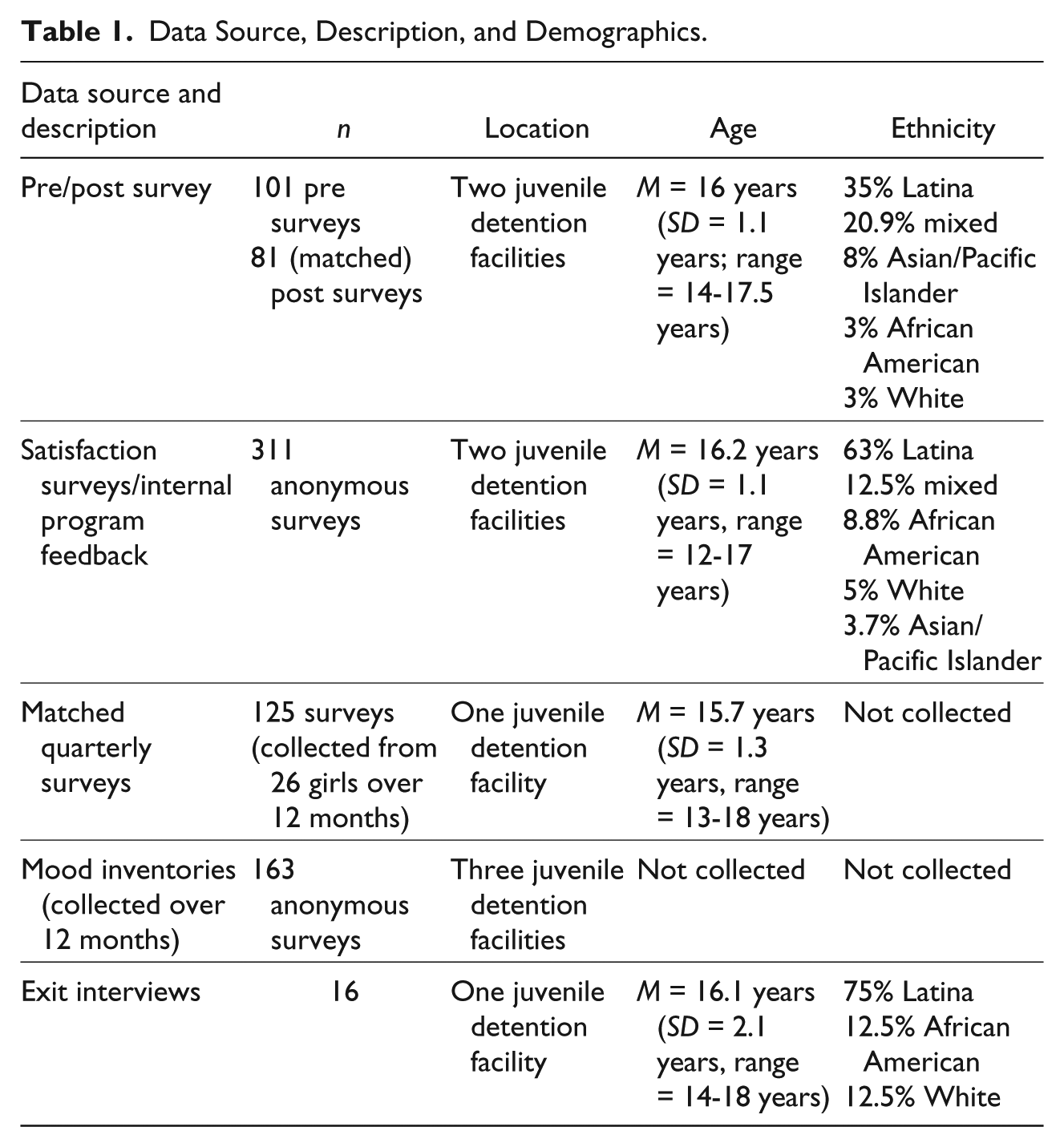
The sample consisted predominantly of Latina and mixed race girls (aged 12-18 years), detained in one of three juvenile facilities in California. We collected five separate sources of data between 2010 and 2016. These include (a) traditional matched pre/post style surveys, (b) satisfaction surveys collected for quarterly program reports, (c) matched quarterly surveys, (d) mood inventories, and (e) exit interviews. Table 1 presents the demographic details for these data. We describe the data collection process below.
Data Source, Description, and Demographics.
Pre–Post Surveys
We initially implemented a typical pre/post design that matched responses, but unpredictable population attrition made this difficult to manage. Because the program operates on a voluntary basis, not every girl attended every class session, and many participants left the facility prematurely (either by absconding or by an unscheduled early release). After 12 months of data collection, we had collected pre surveys from 101 girls incarcerated in two institutions (n = 52 and n = 49, respectively). The pretest survey was administered 2 weeks into their sentence. Eighty-one girls were ultimately administered a posttest survey after serving at least 3 months in custody.
The pre–post survey contained 41 statements with Likert-type scale response options ranging from “almost never” to “almost always.” The items were adapted from four existing scales: the Perceived Stress Scale (Cohen, Kamarck, & Mermelstein, 1983), the Rosenberg Self-Esteem Scale (Rosenberg, 1965), the Healthy Self-Regulation Subscale (Danylchuck, L., personal communication, May 2010), and the Mindful Awareness Attention Scale (Brown & Ryan, 2003). The survey also contained demographic questions including age and cultural/ethnic identity. To ensure anonymity, we relied on yoga instructors and facility staff to administer the surveys and student interns returned coded/deidentified surveys to the research team. This process was consistent with the ethical guidelines of the university’s institutional review board (IRB) process and the policies of the County’s Juvenile Court.
Satisfaction Surveys
The satisfaction survey consisted of a four-part questionnaire administered at the end of each class, once every 3 months, between 2010 and 2014. The first section contained Likert-type scale items with responses that ranged from “very negative” to “very positive,” asking the girls how they felt about the YCAC. The second section used open-ended questions to ask participants to identify what they specifically liked or disliked and why. The third section included various demographic items such as age, self-described race, and length of time at the facility. The final section contained 28 Likert-type scale questions (with response options from “never” to “always”) arranged into several domains: self-respect, self-awareness, perspective taking, self-control, relationships, and out-of-class participation. This final section was consistent with the items in the pre/postsurvey described above.
We implemented this anonymous approach in response to the substantial turnover and unpredictable attrition experienced during the pre/post tests above. Because these surveys were administered anonymously, it was difficult to estimate the exact level of overlap. To be clear, although we collected 311 surveys, it is likely that some girls completed a survey more than once. The average time spent so far during their current sentence at the facility was 4.4 months (range = 0.25-48 months, SD = 4.6 months), and the average time spent ever participating in the AYP was 7.01 months (range: 1-15, SD = 8.7).
Matched quarterly surveys
The matched quarterly survey was the same as the satisfaction survey (described above) but was collected monthly for a period of 1 year. We collected 125 completed surveys from 26 unique girls who had completed the survey at least twice (and up to 5 times). This approach was designed to attend to the limitations of the pre/post (time, attrition, honesty) as well as the limitations of the satisfaction surveys (aggregate-level data only and overlaps in the data collection).
Mood Inventories
The Mood Inventory consisted of four parts: Part 1 instructed participants to identify three words (out of a possible 29 1 ) that best described the participant’s feelings “right now” (before class); Part 2 allowed for an open-ended space in which to provide free expressions of additional feelings. At the end of class, girls were asked to complete Parts 3 and 4: Part 3 was the same as Part 1. Part 4 offered the same open-ended option to express feelings and explanations not already listed. Participants were asked not to identify themselves on the inventories and received no incentive for their cooperation. Many girls misread the instructions and endorsed more than three words. To preserve the authenticity of their experiences, the results contained herein include all the endorsed words.
The Mood Inventories were collected from 163 girls who participated in the AYP curriculum in three juvenile institutions. No demographic data were collected. Trying to capture opinions is notoriously difficult, particularly in a sample of incarcerated girls. The mood inventories were designed to attend to the self-reported limitations of these girls through a tool that captured their feelings “in the moment”—immediately before and immediately after class.
Exit Interviews
To attend to the knowledge gaps left by the quantitative data, 16 exit interviews were conducted. Participants were asked to describe their satisfaction with the YCAC, any difficulties they experienced, their most favorite and least favorite elements of the classes, whether they intended to continue to practice yoga upon release, and any suggested improvements they would make to the program. The interview transcripts were reviewed and coded for emergent themes. Several staff were interviewed informally, and those notes were also included in the analysis below.
Analytic Approach
The individual survey items were factor analyzed to identify thematic clusters. Three scales were subsequently developed: self-reported self-control, self-respect, and self-awareness/mindfulness. 2 Cronbach’s alpha indicated the internal reliability of the scales ranged from .654 to .872. Paired samples t tests were conducted using the means from the pre- and post surveys.
Results
Pre–Post Surveys
The results from the pre/post tests indicated a modest improvement in self-reported self-control and self-respect after 10 to 12 weeks, but neither measure was statistically significant, self-control: t(63) = −1.93, p = .058, r = .24; self-respect: t(77) = −1.219, p = .227, r = .14. The girls also indicated a slight decline in self-reported self-awareness/mindfulness, t(77) = 1.76, p = .082, r = .19. It is difficult to draw too many conclusions from these data at this time, but we suggest the continued investigation of these variables in the future. We note that the slight decrease in mindfulness scores could be reflective of a generally more defensive attitude at Time 1 and an increased awareness of their foibles by Time 2, rather than an actual decline. Our interpretation of these results is that respondents might have been more inclined to answer honestly to questions of emotional awareness, rumination, and recognizing attention and impulse control deficits later in the curriculum. Evidently, these preliminary numbers do not tell the whole story.
Satisfaction Surveys
Descriptive statistics found that three in four (75.5%) girls reported an overall satisfaction with the YCAC. An important (but difficult to measure) variable is the extent to which participants engaged in the curriculum outside of class, or whether they intended to continue their practice upon release. Almost two thirds (60%) of the girls reported that they wrote consistently in their journals outside of class, and 52% said that they practiced yoga outside of class. These results are encouraging because they suggest that the girls are positively involved in the program, that the benefits continue outside of class hours, and that they have access to elements of the curriculum outside of class hours. This then increases indirect dosage and benefits the girls even when resources are limited. Furthermore, almost a third (30%) of the girls said they intended to continue yoga practice when they left the detention facility. The modal qualitative explanation for saying they would not continue included “insufficient funds,” “no transport,” and “not knowing where to go.” During the time of our data collection, the AYP responded to this feedback. Now, girls receive a “take it ohm” bag upon their release. The bag contains a mat, a yoga strap, coupons for free classes, and a list of local studios that have agreed to allow the girls to participate free of charge.
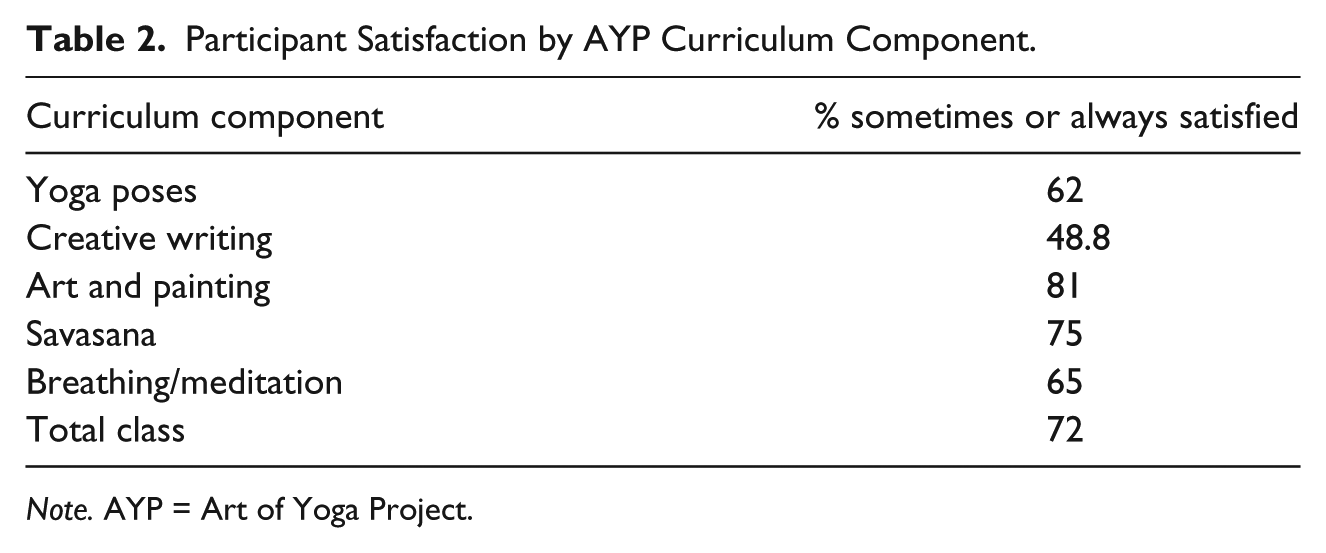
Given their traumatic histories, it is remarkable that during their YCAC class, most girls consistently reported feeling both physically (85%) and emotionally (83.9%) safe. Table 2 includes the satisfaction ratings of the individual components of the AYP curriculum. Art and creativity classes scored most highly, with four fifths of participants noting that they were satisfied with this part of the program. This dropped to just less than half of the sample reporting satisfaction with the poetry/reading element of the class. We interpret this lower score as indicative of lower literacy skills. It is clear, however, that the satisfaction scores for the AYP curriculum are positive overall.
Participant Satisfaction by AYP Curriculum Component.
Note. AYP = Art of Yoga Project.
One of our initial research questions concerned whether age might have a statistically significant impact on satisfaction scores and whether we could detect a dosage or exposure effect over time. Upon analysis, however, there was no correlation between age and satisfaction. Furthermore, although we expected an exposure effect, their level of satisfaction was unrelated to the time they had spent in the facility or the overall length of their sentence. Higher satisfaction scores were positively correlated with a number of variables including “getting on better with my family” (r = .348, p < .001) and “getting on better with staff” (r = .469, p < .001), “practising yoga outside class” (r = .310, p < .001), “writing in my journal outside class” (r = .219, p < .001), “feeling physically safe during class” (r = .409, p < .001), and “feeling emotionally safe during class” (r = .419, p < .001). Of note is our finding that improved relationships with staff and other girls did not necessarily correlate with improved family relationships. We suggest that as girls gain an increased sense of self, they might come to no longer support dysfunctional family behaviors or attitudes.
Mood Inventories
The mood inventories evolved as a method of capturing the immediate emotional status of each participant both immediately before and immediately after their yoga practice. A visible trend emerged as can be seen in Figure 1. The girls endorsed mostly negative adjectives to describe how they felt before class and chose mostly positive words to describe their feelings after class. Feelings of frustration, anger, irritation, stress, and anxiety diminished after class, and feelings of calm, peacefulness, focus, and relaxation increased. For those who provided additional responses before class, some said they were “tired,” “depressed,” or “stuck in a corner.” After class, common additional words were “stress free,” “blessed,” and “focused.”
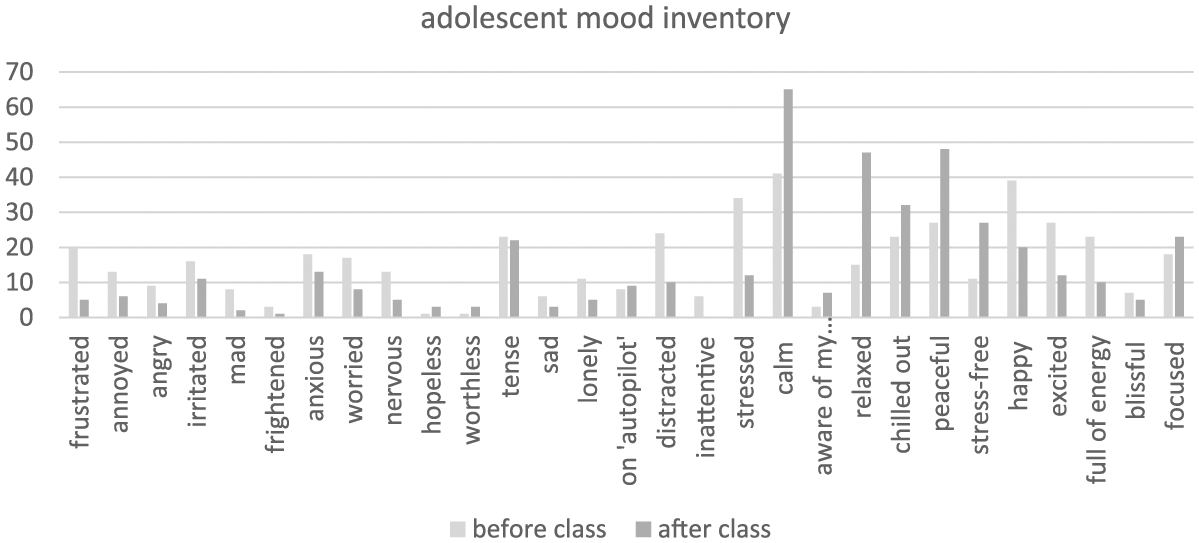
Mood inventory.
Exit Interviews and Staff Comments
Three main themes emerged from the qualitative materials: (a) A history of trauma was common, (b) attitudinal improvement was observed in (and reported by) YCAC participants, and (c) yoga and meditation led to the experience of more positive emotions. Evidence of each one is below.
Trauma History
Staff noted that the girls faced daily challenges both with their incarceration and with the profound effects of their traumatic childhoods. Resistance to participation in yoga class and feelings of frustration were consistent challenges for some girls: I have changed for the worse. I’m a very angry person . . . knowing you were locked up for something you didn’t do. (1) I hate it. I absolutely hate writing. (10)
Interviews showed that some girls made excuses about why they were unable to participate, and others refused to engage at all. Anecdotal conversations with staff suggested that this was an ongoing challenge that ebbed and flowed. The girls expressed difficulty with some of the poses, in particular, “downward dog.” We observed their discomfort and resistance to this specific pose as likely due to the pose’s physical exposure and the vulnerability associated with its shape.
The mandatory nature of the program was a concern. Many of the girls commented that they did not like “being forced to do it”: If I had a choice I would like it, but having to do it 3 times a week, I end up hating it. (1) I had to be in the mood to do yoga and I had to do it when I did not want to do it. (4)
Staff members commented, Of course they have many life issues . . . they are pretty damaged . . . they often wake up not feeling well, having had a nightmare, or their own thoughts intrude upon them at night . . . they can be sad, upset, depressed, angry, and they can get into negative interactions with each other . . . (Staff 1) There was one girl who was very uncomfortable doing yoga . . . she is the victim of multiple [incidents of] sexual abuse . . . it’s easier for girls who are ready to heal . . . when it’s not buried so deep . . . Doing yoga brings up issues . . . it’s a less invasive way of bringing up material I don’t think they’d have access to. The girls bring it into individual and group counselling sessions . . . they can articulate the discomfort they feel doing yoga and this lets the therapist go deeper once the girl brings it up. (Staff 2)
Attitudinal Improvement
Even those who expressed resistance in the beginning of their involvement expressed positive changes in their attitudes over time. One of the staff commented, So many of these girls have been touched in ways that are not positive—physical and sexual abuse. Here they are letting someone touch them. It’s really working. (Staff 3)
Yet another remarked that Yoga is integral; wonderful; positive . . . The girls really need the positive reinforcement . . . and they like it. I am grateful to be able to witness such transformation. (Staff 4)
Staff observed that, through the program, the girls developed self-reflection, an intention to make smarter decisions, to weigh consequences and outcomes, and to think and take time before reacting. Perhaps most telling are the words of the girls themselves: You get to know more about your strengths, have you thinking about them, notice things about yourself. You recognise a lot of things about your body . . . you just let go . . . feel like you can handle everything better. (6) I’m definitely nicer to myself. I’m more hopeful, less negative. I have more patience. (10) My way of thinking and perspective have changed. The way I do things now makes me feel like I’ve matured. The outcomes of what I do are different. (9)
Through yoga and creative arts, the girls were able to cultivate a more positive self-image: My body is beautiful because I accept it just the way it is. I am beautiful because I am my own expression. (7) Self-respect is accepting who I am and how I am, and that I don’t harm myself and that I am not a quitter. I’m definitely nicer to myself . . . I’m more hopeful; less negative. (8)
Positive Emotions
Multiple members of staff observed that the shifts that included a yoga class were the most popular because that is “when the girls are the most mellow” (Staff 3). Staff spoke about the common positive shifts in the girls’ mental and physical states from one class to the next. The girls also communicated their gratitude at the opportunity to express themselves openly through art and writing. Group discussion contributed to the development of a stronger sense of self and a sense of trust in the class, the facilitators, and among each other: Something that brings us women together is that we all like yoga. (8) Everyone you know is fighting a battle you know nothing about. Be kind. I try to write, instead of say things I shouldn’t. (5)
Many of the girls spoke about the pride they felt in their improving physical capacity: I can lift myself off the ground in crow pose. Never thought I would be able to do it. (10)
They expressed an improved ability to control negative impulses, stress, and anxious thoughts. They reported a better sense of control over their bodies, improved relationships with peers and staff, and finding better ways to communicate with family: Yoga helps me calm down when I’m having problems with my family. Knowing you have a source to calm you down is good. I can breathe, think, not react, to move in the direction of my goals (5) These things—art, writing, yoga—relax me, make me feel good about myself and the things I do . . . just loving yourself, dependable on yourself. (7) I have better communication with my family and friends . . . I try to listen more (11)
When asked to describe how the lessons had extended beyond the classroom, one girl said, Before, when my daughter cry—I don’t like hearing kids cry—like, it would irritate me. I’d be like, “oh, my God, little girl, would you PLEASE be quiet!” And now when my daughter cry, I’m like, I get into like a yoga motion or something like that and I’m like “listen. [pause. Takes a deep breath] child of mine, please hush.” (16)
Teaching meditation and breathing techniques has provided the girls with tools for their own emotional regulation. Their comments were evidence that they now knew how to use those tools: My head is not going a mile a minute anymore. (12) I can bring more peace into my life by doing yoga and finding ways to meditate. I usually feel really jumpy and nervous but now I feel so relaxed. When I’m mad I take deep breaths. When things go bad, I breathe . . . I avoid problems to not make it worse. (14) When I’m mad I take deep breaths. Yoga really helps me calm down. (3)
The ability to express themselves contributes to a sense of trust and creates an environment where the girls feel safe enough to be vulnerable and express their thoughts and feelings.
One girl said, “I am less cold-hearted. I care about people now” (6).
Discussion
This article is the culmination of several years of data collection in which we used multiple methods and approaches—each one designed to attend to the limitations of the one before it. The area of research into yoga, meditation, and creative arts interventions in custody is young but growing quickly. The present study contributed to this developing literature by examining the impact of the YCAC on girls’ self-reported emotional regulation. Limited by small samples of difficult and vulnerable populations with both high turnover and attrition, we set out to paint a thorough picture by asking different questions in different ways over time.
Taken together, these results suggest that participants were satisfied with the YCAC and that the teachings of the curriculum improved the self-reported emotional regulation of incarcerated girls. Although we intended initially to assess the possibility of a dosage effect, our findings suggested quite positive results even after just a few classes. Perhaps, most interesting was the immediate difference in mood reported in the moment before and after class. Particularly noteworthy is the fact that girls reported engaging in the curriculum outside of class time, therefore suggesting that the benefits extended beyond the classroom.
Participation led to a modest self-reported improvement in emotion regulation, and breathing exercises and meditation were noted to have a positive impact on impulse control and feelings of anger and anxiety. These findings support other conclusions that movement, meditation, and breathing are critical components to learn in the management of trauma (Kusilka, 2014; Van der Kolk, 2014). Self-reported feelings of physical and emotional safety within the program were high. This is consistent with Kusilka’s (2014) and Van der Kolk’s (2014) work, which has demonstrated that teaching trauma sufferers to focus their attention on breath and movement fuels physical and emotional safety. This is particularly encouraging, given the environments from which these girls have come and the fact that they were in custody at the time of the intervention. Furthermore, that between 70% and 90% of these girls have been physically and/or sexually abused at home, and/or are exposed to gang violence while in the community (Chesney-Lind, 1989; Kerig et al., 2011; Schaffner, 2014), makes it even more meaningful that the girls expressed feeling safe in yoga class.
Most of the girls reported positive attitude changes, increased self-reflection, self-awareness, and self-acceptance. They noted decreased impulsivity and increased empathy toward others and positivity about their own bodies and future. Research has shown that negative self-respect and self-worth and a lack of empathy are common among samples of girls in custody. This likely leaves them vulnerable to substance abuse, aggression, and antisocial behavior (Chesney-Lind & Shelden, 2004; Pereda et al., 2009). We suggest that a demonstrated decrease in these negative feelings and an increase in empathy might better prepare these girls for a more successful transition back into the community and help ameliorate the negative long-term effects of their traumatic childhoods.
Some studies have found that surveys collected soon after detention are contaminated by bravado and a defensive attitude and might, therefore, reveal little about the individual’s actual state of mind (Harris & Fitton, 2010). Sometimes, in subsequent surveys, respondents tend to be more genuine in their responses, and this can make the individual appear to have deteriorated with treatment rather than having made any therapeutic gains (Harris & Fitton, 2010). A third round of questioning may produce more honest answers in response to program participation and increased self-awareness. By being more honest and self-aware, the respondents might report feeling worse about certain things. For example, we noted a slight decline in self-awareness and posit that this phenomenon explains our observed results.
The quarterly program feedback surveys indicated broad satisfaction with most components of the curriculum. The mandatory nature of the program was raised as an issue by some participants. To ameliorate this, some AYP instructors subsequently developed nontraditional yoga games to engage those girls resistant to the more traditional and disciplined forms of yoga. Staff reported that even resistant girls responded positively to these activities, saying that they were “inspiring,” “calming,” and “fun.” Many also found the writing projects difficult, perhaps due to literacy, limited English language skills, and poor high school engagement (Chesney-Lind & Jones, 2010). We suspect that feelings of dissatisfaction with the outcomes of their written work led to a lack of enthusiasm for those activities and feelings of frustration toward those tasks.
For the most part, participation in the program was correlated with a self-reported improvement in positive attitudes toward oneself, one’s peers, and facility staff. Attitudes toward and relationships with one’s family were mixed, however, and some appeared to deteriorate over time. A possible explanation for this result is that as the girls’ self-awareness and self-respect improves, they may no longer tolerate negative family behaviors that they had previously condoned or justified. Research demonstrates that variables such as abuse, structural dislocation, and dysfunction lead to gang involvement and offending behaviors in youth (Miller & Mullins, 2011). An increased sense of self-respect and awareness may mean that the girls acknowledge these problems as the source of their own offending. It is, thus, reasonable to suggest that this clarity might lead them to reject or shun their family of origin.
Future Directions
A cost–benefit analysis of the AYP is certainly beyond the scope of the current work, but we recommend such an investigation in the future. Given that there is no need for expensive equipment and only meager up-front costs, we would expect such an evaluation to be positive. The girls are able to benefit from the program by practicing yoga and writing in their journals out of class time, essentially increasing dosage for no extra cost. Many of the girls have expressed the desire to continue the program once they are released back into the community, and some have gone on to become yoga instructors and mentors themselves (Fitton ML., personal communication, June 2016; Harris & Malone, 2014). A qualitative case study of these girls is forthcoming.
Future research would benefit from a longitudinal study following a cohort sample through custody and postrelease. This would support further evaluation of the long-term effects of the YCAC. Pilot studies of the AYP with other custodial populations such as boys and mothers in custody with their children would also be of benefit. Programs such as the AYP that incorporate trauma-informed care may be profoundly beneficial to these populations more broadly, and, thus, to society as a whole.
This study provides preliminary support for the AYP’s YCAC capacity to meet its expressed goals of improving the self-reported emotional regulation (self-awareness, self-respect, and self-control). We conclude that programs such as the AYP are fundamentally important to the future health of the women and mothers of the future.
Footnotes
Declaration of Conflicting Interests
The author(s) declared no potential conflicts of interest with respect to the research, authorship, and/or publication of this article.
Funding
The author(s) received no financial support for the research, authorship, and/or publication of this article.