







Abstract
A valuable goal for correctional settings is the application of workforce development education for incarcerated individuals as they prepare for the reentry process. Exploring the transitional bridge from prison to society signifies the need for “employment skills” that empower the formerly incarcerated to achieve employment success and avoid recidivism. The U-Work Program student volunteers teach reentry classes focused on workplace employment skills, including financial literacy, communications, resume writing, interviewing, and technology. This article showcases the themes that emerged from incarcerees’ responses in an exploratory study of the U-Work Program at a low-security federal facility in the Northeast, illustrating the importance of workforce development education in the reentry process.
Introduction
The last 50 years of mass incarceration in the United States (U.S.) document the many difficulties, consequences, and struggles that formerly incarcerated individuals encounter in reentering society. The transition back into the community after serving a significant period of imprisonment includes a variety of obstacles: Employment and housing needs, struggles to obtain financial and community support, lack of educational opportunities, and health challenges related to substance abuse and mental disorders (Lappas & Smith, 2022; Mourão et al., 2025). The intense stress and anxiety experienced by incarcerees’ returning to their communities enhance susceptibility to returning to criminal behaviors and re-incarcerations.
Researchers have examined the criminogenic needs of incarcerated individuals and analyzed prison educational programs. Their findings indicate that those who completed need-specific programs were less likely to return to prison after release (Long et al., 2017). However, some studies of reentry programming show mixed results. For example, Lugo et al. (2017) reported that inmate groups that did not participate in needs-identified reentry programs and those who completed such programming were equally likely to return to prison. In general, the extant literature cites a number of deterrents to recidivism that includes a multimodal focus, with emphasis on family and social services support, life skills, treatments that promote healthy relationships, and workforce development (Lappas & Smith, 2022; Muentner & Charles, 2020).
Data from a national poll showed that 70% of American citizens supported reentry services both in prison and following release (Krisberg & Marchionna, 2006). Prior research suggests that the public recognizes the many challenges that incarcerated individuals face when returning to the community. Notably, obtaining employment is one of the primary obstacles to successful offender reentry (Varghese & Cummings, 2012). Furthermore, such barriers to reentry continue over time, with formerly incarcerated people unsure how to obtain employment, illustrating the need for workforce development education prior to reentry.
The history of evolving correctional initiatives suggests that the criminal justice pendulum continues to swing back and forth, although it currently leans toward rehabilitation and reform. For example, The Second Chance Act of 2008 promoted strategies to reduce prison costs, reduce recidivism, and provide resources, training, and assistance to incarcerated individuals (U.S. Department of Justice, 2007). This legislation was generally endorsed by the American public, with 8 out of 10 citizens supporting federal funding reentry legislation (Garland et al., 2013). Yet, there remains a need for a sustained shift in focus regarding rehabilitation and workforce development education. Thus, The First Step Act of 2018 continues the efforts to reduce the federal prison system population, maintain community safety, and lower recidivism rates (Prison Policy Initiatives, 2024).Toward the goal of workforce development education, the 2018 Act also encourages the establishment of community-based partnerships, connections with nonprofit and private organizations, and the inclusion of recidivism-reduction programs. A recent study released under the First Step Act showed an estimated 37% lower recidivism rate for program participants compared to incarcerees released before the law was enacted (Council on Criminal Justice, 2023).
The U.S. correctional system currently houses about 1.8 million individuals, with 2.9 million individuals on probation, and about 700,000 individuals on parole (Prison Policy Initiatives, 2024). The Department of Justice (2023) reports that about 600,000 incarcerated persons are released from custody yearly and return to communities throughout the United States. However, a Department of Justice study that reviewed 2016-2019 recidivism data noted that the transition from prison to the community can be extremely difficult, with 62% of previously incarcerated individuals returning to prison (Clark, 2022).
UWork Program Overview
The objective of the UWork Student Assisted Reentry Program is to provide incarcerated individuals with workforce development training and education. This program is a volunteer student-led educational reentry component that supplements reentry classes in a federal correctional institution. Student volunteers teach classes that assist with reentry programming through the Federal Bureau of Prisons (BOP). Incarcerated individuals volunteer to participate in reentry classes and upon successful completion, receive a certificate from the Bureau of Prisons. The purpose of this article is to discuss, review, and analyze the results of a UWork exploratory investigation, and offer insights regarding the general workforce educational needs that are most relevant and important to incarcerated persons in the reentry process.
Literature Review
Public attitudes toward important social policies, especially related to crime and justice, are rarely straightforward; rather, they tend to be complex and fluid (Alvarez & Brehm, 1995; Cullen et al., 2000; Feldman, 2003; Garland et al., 2013). The term “reentry” continues to be used in mainstream discussions regarding public policy, corrections, reform, and rehabilitation. The transition of incarcerated people into society has been the topic of great debate in the criminal justice system during the last 50 years of U.S. mass incarceration policies. Striving to find a balance between ensuring public safety and achieving some degree of correctional rehabilitation is challenging for policy makers, correctional administrators, political interest groups, human services organizations, and criminal justice agencies under revolving ideologies over time. More recently and since the Covid epidemic, correctional policy and community support appear to show less support for punishment and deterrence policies and more openness to rehabilitation initiatives for inmates returning to society (Mourão et al., 2025). According to Garland et al. (2013, p. 28),“the modern reentry movement is founded on the belief that at the most fundamental level prisoner reentry is a community issue, which necessitates a collaborative response between correctional organizations and the communities to which inmates return.” Therefore, a community understanding of reentry programs may lead to incarcerated individuals’ developing employment networks and community ties in their reentry process. As noted by Krisberg and Marchionna (2006), “Public opinion toward reentry measures and data analyzed indicates that 70% of Americans support reentry services both in prison and during reentry to society.” Policies toward reentry tend to be focused on the safety of the community, but they should also consider the incarcerated individual's psychosocial needs, risks, and responsivity factors. According to Ogloff and Davis (2004), “The risk-needs-responsivity model of offender assessment and rehabilitation has received considerable research attention over the last 25 years and has been a leading factor in the offender-rehabilitation movement” (p. 29). Institutional programming that considers individual offender risks and criminogenic needs may produce successful outcomes for individuals returning to the community (Ogloff & Davis, 2004, p. 232).
The Risk-Needs-Responsivity (RNR) provides a model based on dynamic and static factors for reentry practitioners (prison, parole, courts, etc.) to review an individual's background for potential risks of reoffending. This model's framework for “best practices” in reducing the probability of recidivism includes the evidence-based method of developing a “needs profile” to determine an individual's risks, criminogenic needs, and behavioral strategies. The aspect of responsivity is the offender's ability to learn and understand rehabilitative interventions, including cognitive behavioral treatment, motivation, strengths, abilities, and willingness to change.
Research reviews of reentry issues and analyses of other studies have determined that many of the factors that reduce the likelihood of ex-inmates’ success revolve around employment, communications, and finances. The work of Taxman et al. (2002) affirms that reentry transition programming provides the groundwork for an offender's return to the community as well as expectations for assuming roles as productive members of society. A meta-analysis review of short-term reentry service outcomes demonstrated modest positive successful outcomes, with interview data collected before release and three months post-release (Lattimore & Visher, 2013).
The reentry process usually begins in a custodial facility with rehabilitative education, but not all incarcerated individuals participate in this programming. Such classes are often taught by correctional officers and/or reentry, treatment, or facility educational specialists. In some institutions, reentry education may even be conducted by community-based providers or volunteers. With the individual's release from prison, reentry education continues with probation/parole personnel or social service agencies. Research conducted by the Rand Corporation (Russo et al., 2023) cited a recommendation from reentry participants to start workforce or educational development preparation as early as possible in the facility. Although studies are limited, a review of previous literature suggests that incarcerated individuals returning to society can benefit from reentry services, training, and workforce education. Educational programs meant to improve employment outcomes should prioritize high-risk individuals with high employment needs to the extent this is possible without forgoing other rehabilitative programming, incorporate the continuum of care principle, build relationships with community employers, and address practical barriers to finding work (McNeeley, 2022).
Further, as researchers continue to develop approaches to reentry education based on best practices, they emphasize the importance of reentry interventions that reflect strong community support and comprehensive services that provide the best opportunity for success (Visher & Travis, 2011). Some investigations have shown that the effectiveness of reentry programs is limited. Gill and Wilson (2017) suggest that an explanation of reentry program success may reside in the issue of matching services with an individual's personal risks and needs. A meta-analysis conducted by Bozick et al. (2018) reviewed 57 educational programs through 37 years of data collection. The findings show that incarcerated individuals who participated in correctional education programs were less likely to recidivate when compared to those who did not participate. However, the investigation also noted that incarcerated individuals who participated in correctional education programs were just as successful in obtaining employment as individuals who did not participate in educational opportunities in a custodial setting.
Yet other research finds that the rate at which formally incarcerated individuals obtain employment after release is, on average, 13% higher for individuals who received correctional education than those who did not (Davis et al., 2013). Although selection bias cannot be ruled out, these results align with the meta-analysis conducted by Wilson et al. (2000). The systematic review and meta-analyses conducted by Yukheneko et al. (2020) note that assessing modifiable risk factors should be considered with the integration of criminal justice educational services. This means that the reentry process cannot be a standard one-size-fits-all approach, suggesting that the identification of individual needs be specific and provide alternatives to assist their reentry through productive behavior change.
While the passage of the Second Chance Act of 2008 and the inclusion of the First Step Act of 2018 provided millions of dollars to support the reentry process, challenges still remain. According to Koschmann and Peterson (2013), “formerly incarcerated individuals face increased difficulties at every turn, most will commit additional crimes and be sent back to prison or jail, and the whole process is a huge burden on budgets and society” (p.190). Participants in a recent Rand study “argued that greater emphasis should be placed on teaching the basic life skills that affect employability, such as proper hygiene, dress, punctuality, social cues, interpersonal skills, verbal and nonverbal communications” (Russo et al., 2023, p. 16). In sum, reentry transition from prison to the community remains a very complex, detailed, and evolving process.
UWork Program Foundations
The UWork Student Assisted Reentry Program (workforce opportunities through resources and knowledge) is a student-administered direct/applied workforce development program at Saint Francis University (SFU) in rural western Pennsylvania. Student volunteers are business and criminal justice majors; they present workforce development subjects, including financial literacy, resume/cover letter creation, interviewing/interpersonal/soft skills, communication skills, entrepreneurship, and technology skills.
The UWork program commenced in 2019, and training sessions have been delivered by students with faculty mentor assistance each semester since the start of the program. While initial non-profit partners included community workforce development organizations (i.e., low-income/high-risk individual job training), UWork was initially implemented at a local federal correctional institution as part of the established “Money Smart” curriculum. The program was paused in 2020 due to COVID pandemic restrictions and then restarted in the fall of 2021.
Student UWork leaders volunteer to work in the program, and are connected through business or criminal justice clubs and organizations. A yearly recruitment meeting provides students with the history of the program, participation expectations, reentry presentation topics, prison policy, and training. Students select their most familiar workforce topics and engage in the development and implementation of training materials and visual aids for the classes. By attending a weekly reentry training meeting with faculty advisors, the student volunteers prepare the weekly topic materials and plan discussions. Additionally, all students and faculty complete background security checks and attend a mandatory four -hour training workshop for volunteers at the correctional facility. Reentry classes vary in size each week for the five-week class schedule and usually have no more than 30 incarcerated individuals in each session.
One of the goals of the UWork Program is to provide educational assistance to the correctional reentry services staff, with a focus on reducing recidivism while providing incarcerated individuals with workforce skills. The in-house UWork volunteer reentry program emphasizes workforce development with instructional content focusing on the basic skills for obtaining and maintaining employment. Cover letters, resumes, and communication skills are covered in detail. Overall, The UWork Program provides an option for incarcerated individuals to learn from student volunteers and faculty, creating a learning environment that differs from traditional correctional staff-led classes. According to Russo et al. (2023) studies suggest that leveraging community volunteers and organizations may assist incarcerated individuals to effectively manage transition back into the community. As well, the volunteers learn from this experience, having shared the impact of the realism that this opportunity presents. Further, students relate that they have become more civic minded and thoughtful through their UWork program involvement and stress the importance of making a difference in society.
After a thorough review of reentry and workforce development programs at the local, state, and federal levels, options were discussed with BOP staff, faculty, and student volunteers on the selection of educational topics to present that would complement the “Money Smart Program.” Of note, faculty advisors involved in the UWork Program include a former federal probation officer and a former business development and information technology specialist. Their exposure to workforce development education was impactful in determining the topics most important to incarcerated individuals through the UWork Program.
Current Study
The current study examines whether participation in the UWork Student Assisted Workforce Development Program leads to increases in incarcerated persons’ confidence in workforce readiness skills. This quasi-experimental one-group pretest–posttest design with an embedded mixed-methods component was conducted in spring 2024 at a low-security federal correctional institution in rural Pennsylvania. The investigation explores both quantitative changes in confidence across several domains and qualitative reflections on participants’ perceived learning and reentry preparation.
Two research questions guided the study: RQ1: Does participation in the UWork workforce development program increase participants’ overall confidence in workforce readiness skills? RQ2: Which specific workforce confidence domains (managing finances, communicating with others, technology use and understanding, and interviewing skills) show the greatest increases following participation in the UWork program?
The study was completed in cooperation with the BOP and implemented through the BOP's Money Smart program, an established financial literacy course for incarcerated individuals approaching release. The UWork Program, facilitated by trained Saint Francis University student volunteers under faculty supervision, delivered reentry classes focused on workforce skill development. Instructional topics included financial literacy, resume and cover letter writing, communications, interviewing, business etiquette, and technology, each considered essential for successful reintegration into the community and sustained post-release employment.
This study extends prior research on correctional education and reentry by examining both measurable gains in workforce confidence and participants’ lived perspectives on how educational interventions support reentry preparation. Through integration of quantitative and qualitative findings, it aims to deepen understanding of how structured workforce development programming can enhance incarcerated individuals’ readiness for employment upon release.
Method
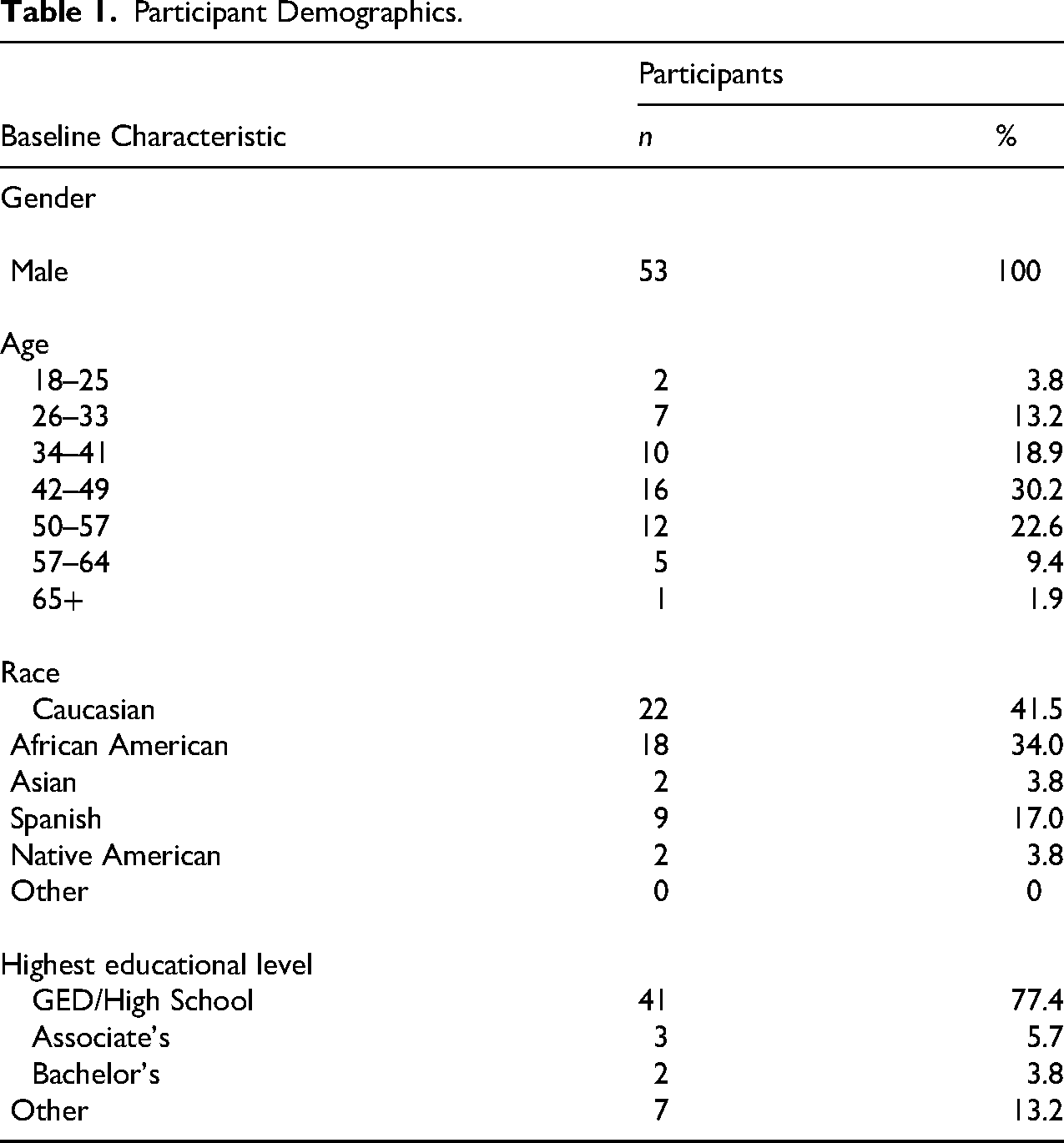
A total of 53 incarcerated males participated in the workforce development training; however, three individuals did not complete the post-survey, leaving 50 matched pre- and post-responses for analysis. Participants were housed in a low-security federal correctional institution and participated in the Money Smart reentry program. The majority were between the ages of 34 and 57, with most identifying as Caucasian or African American and holding a high school diploma or GED. Participants were not separated by sentence type or housing unit.
Participant Demographics.
Procedure
Prior to initiating the study, research ethics approvals were obtained from the Institutional Review Board (IRB) at Saint Francis University and the Office of National Policy and Programs at the BOP. The program participants, who were advised of the study and its confidentiality guidelines, were provided with a written copy of the informed consent, an explanation of the survey's anonymity, and a numbered survey response sheet (for each pre and post session).
All training sessions were conducted in the facility visitation room, which is a large educational classroom. Seated at a table of six, respondents were discouraged from discussing their survey answers collectively. Participants were provided with directions, and informed that it was optional to complete the pre- and post-surveys (completing the survey would imply consent).
The pre-and post- session surveys were administered with corresponding numbers to the respondents; only the completed survey pairs (matching numbers) were included in the final analysis. The pre-surveys were administered at the beginning of the content module for base knowledge; the post-survey was administered after the content module was instructed. The responses were recorded on a paper survey (pre/post), including both quantitative (i.e., Likert Scale), and qualitative (i.e., open-ended) questions. Respondents were assigned random folder numbers, and pre-and post-surveys were secured in the file folders and in a locked office.
Instruments
Along with questions gathering demographic information, the survey contained 4 Likert-type questions (1 = Not confident to 5 = Very confident) and one open-ended question that invited respondents to describe what was most valuable in the training. The four Likert-scale items (Q7–Q10) specifically measured self-reported confidence in workforce readiness domains: managing finances, communicating with others, technology use and understanding, and interviewing skills. After confirming acceptable internal consistency through reliability testing, these four items were used to construct a composite measure of overall workforce readiness confidence. Quantitative analyses were conducted at both the composite level and the individual item level.
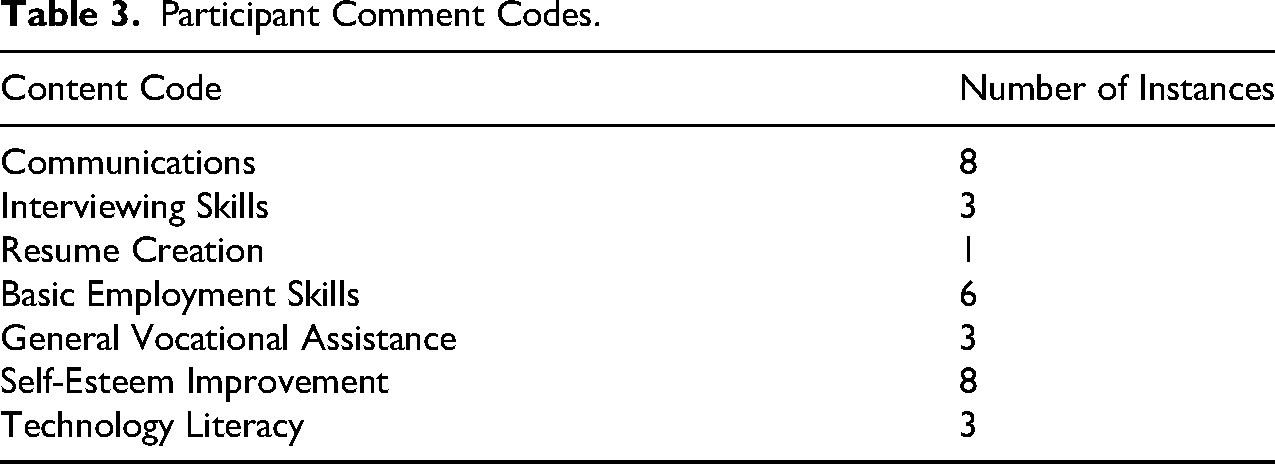
The survey also included one open-ended question in which participants were asked to describe what they found most valuable about the training sessions. Responses to this question were analyzed qualitatively by two of the researchers, repeatedly reading comments to identify recurring ideas, patterns, and sentiments; a code book was developed (See Table 3). These qualitative findings were utilized to complement the quantitative results and provide a richer understanding of participants’ perceptions of the UWork Program impact.
Data Analysis
Quantitative Analysis
All quantitative analyses were conducted using Minitab® Statistical Software (version 21.1.0). Statistical data were screened for completeness and accuracy, and each participant was assigned a unique identifier to match pre- and post-survey responses. Four Likert-scale items (Q7–Q10) assessed confidence in distinct workforce readiness areas, rated from 1 (“Not confident at all”) to 5 (“Very confident”).To evaluate the internal consistency of the four confidence measures: Q7 (financial management), Q8 (communication with others), Q9 (ability to use technology), and Q10 (interviewing skills)a reliability analysis using Cronbach's alpha was conducted for both the pre- and post-survey administrations. The four items demonstrated acceptable internal consistency at both points in time. The pre-survey alpha was 0.75, and the post-survey alpha was 0.72, indicating that the items were sufficiently correlated to be combined into a single composite measure representing overall workforce confidence. According to conventional thresholds (α ≥ .70), these coefficients indicate satisfactory reliability for both pre- and post-intervention scores as shown in Table 2.
Internal Consistency Reliability for Confidence Measures (Q7–Q10).

Participant Comment Codes.
An Overall Workforce Readiness Confidence Composite Score was computed for each participant by averaging responses to Q7–Q10. This composite served as the primary variable for evaluating changes in workforce confidence from pre- to post-survey. To test whether participants’ overall confidence increased following program engagement, a directional Wilcoxon signed-rank test was conducted, consistent with the hypothesis that post-survey confidence levels would be greater than pre-survey levels.
To provide a more detailed perspective, each confidence domain–managing finances, communicating with others, technology use and understanding, and interviewing skills–was also analyzed separately using directional Wilcoxon signed-rank tests. This domain-level analysis identified specific areas in which participants’ self-reported confidence significantly increased after program participation. Descriptive statistics and p-values were generated for each item to complement the composite analysis and clarify confidence trends across domains.
Together, these quantitative findings establish the statistical foundation for understanding the program's impact on participants’ perceived workforce readiness. The following section expands upon these results through qualitative analyses that explore participants’ written reflections on their learning experiences and perceived areas of personal growth during the UWork Program.
Qualitative Analysis Findings
Qualitative survey responses for the open-ended question “What did you learn or was most influential in the UWork training sessions?”Responses to the open-ended question were analyzed using Thematic Analysis. Two researchers reviewed responses to identify recurring patterns and themes related to perceived learning, reentry preparation, and barriers to employment. Coding discrepancies were resolved through discussion and consensus. Representative participant statements were selected to illustrate key themes that complemented the quantitative findings
“Communications” was the most common theme in qualitative responses, with 8 respondents placing frequent emphasis on how the training was likely to produce improved interaction with employers. Sample responses included: “Learned how to break shyness.” “Learned how to better present myself in front of an employer as well as how to communicate with others.”
As associated themes, a number of individuals also noted the value of interviewing skills and resume creation. “I learned how to better present myself in front of an employer as well as how to communicate with others.” “Staying focused on how to act during an interview.”
The topic of basic employment skills emerged in 6 responses, with emphasis on the need to adapt to a rapidly-changing business environment in the wake of a global pandemic: “Significance of communications skills and behavioral science.” “Excellent information and perspectives on businesses in general and operating in the post-COVID business world.”
Additional participants documented the usefulness of UWork training for basic vocational assistance: “Find out what you want to do before you search for a job.” “I’ve learned a lot about business and how to become an asset.”
Several participants also noted the benefits of the training as potential preparation for post-incarceration entrepreneurship: “Small business ownership and steps to acquire (sic) certain credit to help finance it.”
Despite the fact that self-esteem/leadership training was not an explicit component of the UWork curricula, eight participants noted the positive impact of the training on their own self-esteem: “Nice class. Good overall info that will be very useful upon release. Thank you.” “This training session helped me out a lot. Everyone from the college was really good and gave us the information and advice to better ourselves.”
Finally, three respondents noted the positive impact of technology literacy, including self-awareness of digital skills deficits in incarcerated individuals: “Technology is the now and the future. Wish we could of (sic) learned more on that and the whole way technology is taking on more of a role (like interviews done over computer).”
Quantitative Analysis Findings
The quantitative results addressed the study's two research questions by examining: 1) whether participants’ self-reported workforce confidence increased following completion of the UWork workforce development training (RQ1); and, identifying: 2) which confidence domains showed the greatest change from pre- to post-survey (RQ2).
Using the Overall Workforce Readiness Confidence Composite Score (mean of Q7–Q10), the Wilcoxon signed-rank test revealed a statistically significant increase in post-survey confidence compared to pre-survey levels, indicating that participants reported higher overall confidence in their workforce readiness skills after completing the program.
As illustrated in
Pre- and Post-Survey Results for Overall Workforce Readiness Confidence Composite Score.

Note .p < .05 indicates statistical significance.
To address RQ2, each confidence area was analyzed separately. Directional Wilcoxon signed-rank tests showed statistically significant increases in participants’ perceived ability to use and understand technology (p = .021) and to interview effectively (p = .037). Although improvements in financial management and communication were positive, they did not reach conventional levels of statistical significance (p = .128 and .112, respectively), as summarized in Table 5:
Pre- and Post-Survey Confidence by Item (Q7–Q10).
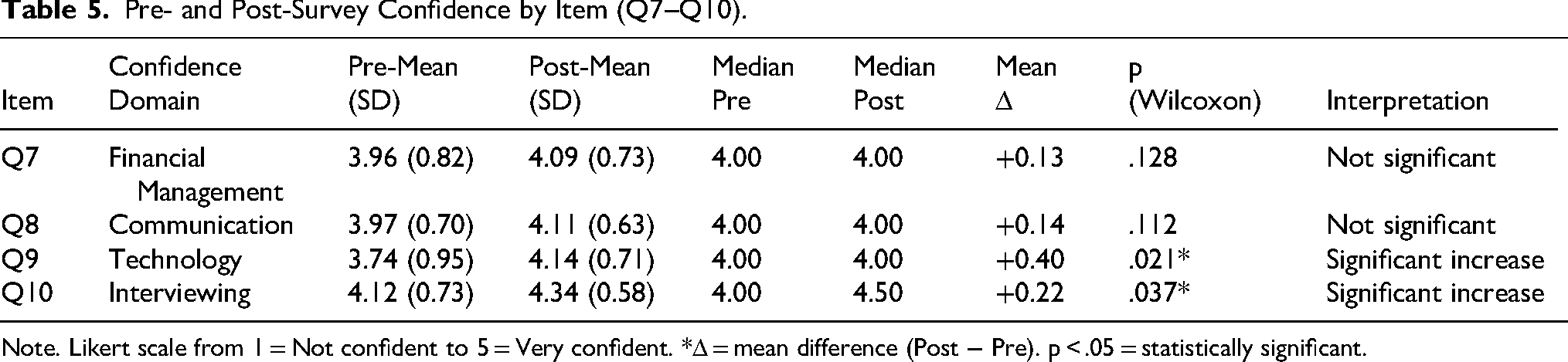
Note. Likert scale from 1 = Not confident to 5 = Very confident. *Δ = mean difference (Post − Pre). p < .05 = statistically significant.
In examining the distribution of responses, participants who initially rated themselves below the maximum confidence level exhibited the greatest improvement between pre- and post-surveys. For example, among those who did not select the highest level of confidence in interviewing skills (Q10), 56% reported an increase in confidence following the intervention, with average confidence rising from 3.26 to 3.88. These findings suggest that the UWork Program may be particularly effective for individuals who begin with lower baseline confidence levels.
Results
Taken together, the quantitative results address both research questions by demonstrating measurable increases in overall workforce readiness confidence and specific area gains, particularly in technology and interviewing skills. The qualitative observations appear to support the perceived need for workplace communications training, with specific emphasis on interviewing. As noted in the previous section, specific subsets of participants demonstrated more substantial improvement in interviewing confidence; this improvement seems to be echoed in the documented qualitative statements. In addition, it is worth noting that the theme of self-esteem/self-improvement was offered as frequently as communications. Given the status of the individuals participating in this study, persons convicted of crimes, it may be worth considering the inclusion of self-affirmation/self-esteem/leadership training in future versions of UWork. As well, while only specifically mentioned by three participants in qualitative comments, the lack of technology as part of this training program should be assessed. No UWork participants had regular Internet access, and all program materials were required to be printed (i.e., print outs of Power Point presentations). Related to this limitation, one individual noted the need to be conversant with online interviewing and other technological aspects of modern employment acquisition. Stated directly, it is difficult to teach someone how to be an effective online interviewer without having access to online technologies.
Discussion
While the current study was exploratory, and the sample size was relatively small and regionalized, the findings provide insights on the reentry process from a population that is not often queried for their input on prison-based work skills programs, thus offering some important implications for reentry education. As the public has come to generally embrace the concept of reentry and reintegration, policy makers, practitioners, advocacy groups, and volunteers continue to seek effective inmate reentry programming that enhances workforce development, reduces recidivism, and ensures community public safety. For the most part, unfortunately, these approaches produce training designed to be applied at a broad and generalizable level.
A closer examination of this study's participant responses reveals a more nuanced story that indicates the need for better participant recruitment. While 50 individuals answered question 10, “How confident do you feel in your ability to interview for employment opportunities?”16 of them already exhibited the highest level of confidence in the pre-study, suggesting no room for further improvement. Among the remaining 34 participants who did not initially indicate the highest level of confidence, 19 (56%) reported an increase in their confidence levels. Excluding those who reported the highest confidence level initially, the average confidence score showed a significant increase, from 3.26 to 3.88 out of 5, while the overall average confidence score across all participants, including those who already indicated the highest level of confidence before training, showed a modest increase from 3.82 to 4.00. These responses suggest that a more detailed pre-evaluation of program participants could assist both the FBOP and volunteer groups to design more targeted and appropriate levels of training.
Further, one of the issues in determining the long-term impacts of this training program was the inability to access study participants for follow-up on assessments. Once incarcerated individuals leave the federal correctional system, many move frequently, change contact information, and assume some level of anonymity. Even with the requirement of reentering citizens to continue communication with a parole officer, for example, there is no centralized process for researchers to easily (or legally) maintain connection with a formerly incarcerated person. While such individuals could choose to continue sharing information with researchers, they would have to take the initiative. Clearly, such outreach after a lengthy prison stay is likely to be a low priority for a person who is already facing the reentry challenges of gaining employment, handling financial issues, and securing housing.
`Another qualification of the study was the relatively small sample size of the total prison population involved in the volunteer reentry program. Some of the respondents did not complete the pre- and post-evaluations, and several did not speak fluent English or engage with the program leaders or participate in any of the classes. Additional reasons for attrition often include facilitiy release, transfer or program denial due to disciplinary or protective reasons. Under the First Step Act ([FSA], 2018) inmates can “volunteer” to enroll in the reentry classes in the Bureau of Prisons. This supports the initiation of a study that is primarily exploratory in nature.
The researchers also find it noteworthy that post measures in several skill areas such as communications, technology use, and interviewing documented a decrease in participant confidence. While on the surface this decrease could be an indictment of the quality of training, an alternative interpretation is that the participants acquired a greater awareness of their own shortcomings. During the session conversational interactions, the researchers noted that student volunteers regularly shared stories about their use of technology, such as smart phones and social media in their own job searches and career expansion. These nuanced interactions would have added significant contextual data to the formal study of career readiness.
As indicated in the qualitative responses, many of the respondents’ admitted that they lacked access to any type of technology or Internet-connected devices, with several stating that these areas could be problematic in their post-incarceration job searches. The researchers suggest that this challenge could be further explored through a qualitative phenomenological study of these specific populations. Such knowledge could be beneficial in developing policies that would lead to greater chances of success for individuals who have been uninvolved in years (or even decades) of technological workplace transformation, including smart devices, mobile computing, and now artificial intelligence (AI). As of the time of writing, some studies are already documenting job losses in fields ranging from data analytics to food service associated with improvements in AI (Benedict & Breen, 2024; Cawley, 2024). From a policy perspective, government organizations such as the BOP will likely need to evaluate current approaches to technology access for inmates to maximize opportunities for success at reentry in the modern workplace.
Conclusion
The transition from incarceration into the community remains an extremely important initiative in the criminal justice system. The present exploratory study provides preliminary empirical evidence of the effectiveness of the UWork Student Assisted Workforce Development Program in conjunction with prison work skills education classes. This investigation provides insights into which training skills are most beneficial for incarcerated individuals preparing to reintegrate into the community, while also providing some research insights on the effectiveness of employment skills for incarcerated people. This study's findings point to the importance of designing offender workforce rehabilitation training that correlates with the risks and needs of the individual. Generally, work skills reentry training should include the foundations of writing (cover letters and resumes), communications, and an understanding of digital and technical skills needed in today's workplace. Even though selection bias was a study limitation due to a relatively small sample size, important workforce preparation interventions were identified. Therefore, a research recommendation is for replication of this study with a larger sample across multiple correctional facility sites. As the criminal justice system continues to shape the reentry process, the use of evidence-based practices, including workforce development training, is an essential element in the continued exploration of successful reentry and reintegration for formerly incarcerated people
Footnotes
Funding
The authors received no financial support for the research, authorship, and/or publication of this article.
Declaration of Conflicting Interests
The authors declared no potential conflicts of interest with respect to the research, authorship, and/or publication of this article.
