







Abstract
Employees’ turnover intentions may entail expensive consequences for companies. The study examined the mediating effect of work engagement in the relationship between workplace bullying and turnover intention. Using a cross-sectional sample of 373 employees, structural equation modeling and mediation analysis showed that perceptions of work- and person-related bullying were linked to low levels of vigor and dedication which in turn were associated with high turnover intention. Work engagement partially mediated the effect of high workplace bullying on high turnover intention. The results were interpreted from a social cognitive perspective and recommendations for practice were made.
Keywords
Introduction
Turnover intention is a premeditated and intentional wilfulness to leave the organization (Tett & Meyer, 1993); the individual has the deliberate goal or determination to end employment at a specific organization (DeTienne, Agle, Phillips, & Ingerson, 2012). Employees' turnover intention is a principal mental precursor of their definite turnover actions (Tett & Meyer, 1993) and the final stage before they display actions to exit the organization. Turnover intentions may entail expensive consequences for companies because of the high costs involved in recruiting and training new employees (Wöcke & Heymann, 2012) and the lower engagement and productivity of existing staff due to increased workload demands resulting in incidents of burnout and exhaustion and perceptions of workplace bullying (James & Matthew, 2012; Kumar & Dhamodaran, 2013). Because high voluntary turnover negatively influences organizational growth and success, employers and practitioners continually strive to understand the workplace factors that lead to turnover intention (van Dyk, 2016).
Bad events and stressors in the workplace such as abusive leadership and supervision, interpersonal conflicts, and bullying behavior are associated with low job satisfaction and high turnover intention (Einarsen & Hoel, 2001; Einarsen, Hoel, Zapf, & Cooper, 2003; Glasø, Vie, Holmdal, & Einarsen, 2011; Skogstad, Torsheim, & Einarsen, 2011). Research shows that bad events (such as those represented by bullying behavior) influence people more strongly than do positive events (Baumeister, Bratslavsky, Finkenauer, & Vohs, 2001; Skogstad et al., 2011). Glasø et al. (2011) posit that negative behavior in the form of workplace bullying may be reasonably common, since 70% of respondents in their research study have indicated some kind of exposure to bullying actions in the work context.
Workplace bullying refers to unwanted negative behavior (verbal or nonverbal), actions, and incidents that occur repeatedly and frequently (e.g., weekly) and over a period of time (e.g., for about six months) and that may potentially cause discomfort on a psychological, emotional, and/or physical level (Einarsen & Raknes, 1997). Bullying behavior includes acts of harassment that offends, socially excludes, or negatively affects a person’s work (Einarsen, Hoel, Zapf, & Cooper, 2003). Such acts may include passive-aggressive threats to an individual’s professional or personal position, physical and emotional isolation, work over- or under-load, and active attempts to threaten the individual’s emotional and physical well-being (Rayner, Hoel, & Cooper, 2002). The bullying behavior may also manifest in physical or unspoken threats, coercion, intimidation, embarrassment, sabotage, or the disruption of productivity in the workplace (Nami & Nami, 2011). Bullying behavior is viewed as different from regular conflict in the workplace because the bullying behavior is associated with repetitive and continuous negative behavior focused on the target to harm his or her personal dignity or to decrease his or her self-confidence (Mikkelsen & Einarsen, 2001). Bullying is an intensifying process where the victim ends up in an inferior position and becomes the object of organized negative social actions (Einarsen et al., 2003).
The types of bullying that are measured in this research study are actions associated with work-related bullying, person-related bullying, and physical intimidation. Work-related bullying is viewed as negative acts that can deter productivity and work performance such as unreasonable deadlines or impractical workloads, extreme inspection of assignments, or allocation of insignificant tasks or given no responsibilities (Einarsen et al., 2009). Person-related bullying behavior entails negative behavior such as making offensive comments, excessive bantering, spreading gossip or rumors, incessant disapproval, playing practical jokes, and psychological threats. Mobbing as an extreme form of person-related bullying generally involves a group of people working together to socially incapacitate or harm a target (Einarsen & Hoel, 2001; Einarsen et al., 2003, 2009; Einarsen & Raknes, 1997). Physical intimidation in this study is seen as the invasion of one’s personal space, threats of violence, physical abuse, or mistreatment (Einarsen & Raknes, 1997; Einarsen et al., 2009).
Workplace bullying negatively influences employee wellness and performance as well as organizational success and productivity. Laschinger, Wong, and Grau (2012) argue that, although a reasonably small number of individuals battle with workplace bullying, the consequences seem severe on a personal and organizational level. Research findings indicate that employees who experience bullying at work display high levels of burnout (Laschinger, Finegan, & Wilk, 2009; Laschinger, Wong, & Grau, 2012; Sá & Fleming, 2008) and consequently, low levels of job satisfaction and high turnover intentions (Laschinger et al., 2012). Bullying behavior has a negative emotional influence on victims, lowers their work fulfillment and increases their intention to leave the organization. It was therefore expected that apart from the known link between bullying and high turnover intention, perceptions of bullying behavior will be linked to low levels of engagement.
Various research studies indicate that exposure to bullying is related to an increase in intention to leave the organization (Berthelsen, Skogstad, Lau, & Einarsen, 2011; Djurkovic, McCormack, & Casimir, 2004; Mathisen, Einarsen, & Mykletun, 2008; Vartia, 1996). Berthelsen et al. (2011) found over a two-year period that employees exposed to bullying changed employers more often than employees who were not exposed, indicating the significant effect of bullying on turnover intention. Similarly, research done by Djurkovic, McCormack, and Casimir (2008) indicates that bullying exposure predicts intention to leave, and even less severe types of bullying were found to have a significant impact on employees and their intention to leave the organization.
Although the association between perceptions of workplace bullying and high turnover intention is clear from the research literature, research on the link between bullying and work engagement is sparse (van Dyk, 2016). Scholars increasingly emphasize the importance of work engagement in enhancing employees’ contribution to business performance and competitive advantage in a demanding business environment (Hoole & Bonnema, 2015; Ugwu, Onyishi, & Rodriguez-Sánchez, 2014). The construct of work engagement is understood as a positive, energetic work-related state of mind that can be utilized toward organizational success and personal career-related benefits for the individual (Hoole & Bonnema, 2015). Engaged employees seem to be resourceful in coping with demanding situations in the workplace (Schaufeli & Bakker, 2004) and as a consequence, high levels of work engagement may help to promote a positive social work environment (Consiglio, Borgogni, Di Tecco, & Schaufeli, 2016).
Work engagement refers to an enduring positive motivational state toward work flowing from an energetic (physical, emotional, and cognitive) connection between employees and their jobs (Schaufeli & Bakker, 2004). Engaged people demonstrate vigor (high levels of energy and psychological resilience at work, an eagerness to be devoted to one’s work through determination and perseverance, even during challenging circumstances), dedication (a feeling of meaning, importance, passion, excitement, motivation, pride, and challenge), and absorption (a complete state of focus and intense involvement in one’s work) (González-Romá, Schaufeli, Bakker, & Lloret, 2006). Work engagement is positively associated with psychological well-being (Schaufeli, Bakker, & van Rhenen, 2009; Schaufeli et al., 2008) and appears to promote and encourage individuals’ work productivity and organizational performance (Halbesleben, Harvey, & Bolino, 2009). Work engagement is also associated with low turnover intentions (Mendes & Stander, 2011; Saks, 2006).
Bullying is indicated as a workplace stressor (Skogstad et al., 2011); acts of bullying behavior may therefore significantly lower individuals’ work engagement. Research shows that bullied employees experience low psychological well-being symptoms such as anxiety, depression, and a lack of self-confidence (Cortina & Magley, 2003). Laschinger, Grau, Finegan, and Wilk (2010) found that exposure to bullying is significantly related to emotional exhaustion, which may allude to lower levels of engagement in the context of the present study. Employees who are subjected to acts of bullying may become entangled in a vicious circle of occurrences which can increase negative feelings (Glasø et al., 2011). The increased negative emotions and lower positive moods may instigate the utilization of ineffective coping methods, which in turn, can create lower engagement and job satisfaction and increased turnover intentions (Glasø et al., 2011). Prolonged stress experienced in the workplace can affect individuals negatively; employees may start to experience exhaustion, aggression, irritability, and frustration with the situation, which can further result in lower levels of motivation, engagement, and productivity (Schaufeli & Bakker, 2004).
The present study explored the mediating role of work engagement in the bullying-turnover intention link from the social cognitive theory (Bandura, 1997; Consiglio et al., 2016) perspective. This perspective views people as producers as well as products of social systems (Bandura, 2000; Consiglio et al., 2016); they are active agents able to build up the motivation to proactively improve their social environment (Consiglio et al., 2016) and effectively cope with demanding situations in the workplace (Schaufeli & Bakker, 2004). Building on this social cognitive perspective of human behavior, engaged individuals have the intrinsic motivation and capability to adjust to change and proactively encounter challenging situations through effective coping strategies when exposed to stressors such as workplace bullying (Langelaan, Bakker, van Doornen, & Schaufeli, 2006; Rothmann, Jorgensen, & Marais, 2011). Schaufeli et al. (2002) describe engagement as an emotional-intellectual condition that includes determination and persistence, which is not focused on a particular situation, person, or activity. As a vigorous and energetic mental condition, engagement promotes the utilization of resources, even during mentally strenuous circumstances (Hakanen & Schaufeli, 2012). Research indicates that work engagement can lower the effect of stressors, and subsequently protect a person’s physical and mental health during difficult circumstances (Hansen, Byrne, & Kiersch, 2014). Highly engaged individuals direct their reasoning, feelings, and behavior in order to help reach the desired organizational objectives; they are also likely to display more satisfactory and less counterproductive behavior in the workplace (Den Hartog & Belschak, 2012). In the context of the present study, it was expected that high levels of work engagement would act as a potential buffer in the bullying-turnover link. The negative attitudes and experiences of stress generated by bullying acts could potentially be cushioned by the positive frame of mind embedded in high levels of engagement. Empirical evidence shows that work engagement lowers turnover intention and generates positive employee attitudes such as organizational commitment and job satisfaction, including positive employee behaviors such as proactive behavior and organizational citizenship behavior (Christina, Garza, & Slaughter, 2011; Guest, 2015; Kim, Park, & Kwon, 2017).
We expected that work engagement would buffer the workplace bullying-turnover intention relation, such that those with strong perceptions of workplace bullying may have lower levels of turnover intention in part because of high levels of work engagement. Given how little is currently known about the role of work engagement in the context of workplace bullying, the study added to the research literature by studying the links between workplace bullying, work engagement, and turnover intention. Although the links between workplace bullying and turnover intention, and work engagement and turnover intention are well established, little is known about the link between work engagement and workplace bullying, especially the mediating role of work engagement in the bullying-turnover intention link. Should the mediating effect of work engagement in the bullying-turnover relation be empirically established, strategies to enhance a multiculturally diverse workforce’s work engagement may potentially help business managers to lower the negative effect of perceptions of bullying behavior on the turnover intention of high performing talented staff that the organization would like to retain.
Method
Participants and Procedure
Data were collected from individuals employed in various South African organizations. Convenience sampling was employed through a combination of an online (a copy of the questionnaire emailed to participants) and paper-based survey (participants completing the questionnaires in group sessions). Employees of the various companies were invited to participate voluntary and anonymous in the research project. The sample of participants (N = 373) was represented by staff-level females (63%) and males (37%). The mean age of the participants was 44 years (SD = 8.47). The participants were represented by individuals who had more than five years of tenure in the company (53%) and those with less than five years (47%). People from a caucasian origin (race) represented 68% of the sample. Thirty-two percent of the sample was people of African origin. Permission to conduct the survey was obtained from the participating organizations and ethical clearance was provided by the research institution.
Measures
The study provided a self-report questionnaire consisting of a section on sociodemographic information and the following three measuring instruments.
Negative Acts Questionnaire-Revised
The 22-item Negative Act Questionnaire-Revised (NAQ-R) developed by Einarsen et al. (2009) was utilized to measure respondents’ perceptions of work-related bullying (7 items; e.g., “Being given tasks with unreasonable deadlines”), person-related bullying (12 items; “Being humiliated or ridiculed in connection with your work”), and physical intimidation (3 items; “Being shouted at or being the target of spontaneous anger”) on a five-point Likert-type scale (0 = never; 1 = now and then; 2 = monthly; 3 = weekly; 4 = daily). Einarsen et al. (2009) and Nielsen et al. (2009) provide evidence of good internal consistency reliability (.90) and construct validity of the NAQ-R.
Turnover Intention Scale
The 5-item (e.g. “I often think about quitting my present job”/”I do not see many prospects for the future in this organisation”) Turnover Intention Scale (TIS) developed by Dysvik and Kuvaas (2010) is a self-report inventory that measures turnover intention as a global construct on a five-point Likert-type scale (1 = strongly disagree; 5 = strongly agree). Dysvik and Kuvaas (2010) report good internal consistency reliability (.83 and .90) and construct validity of the TIS.
Utrecht Work Engagement Scale
The 21-item Utrecht Work Engagement Scale developed by Schaufeli et al. (2002) was utilized to measure the respondents’ levels of engagement on a seven-point Likert-type scale (0 = never; 6 = every day): vigor (8 items; e.g., “I am immersed in my work”), dedication (5 items; “My job inspires me”), and absorption (8 items; e.g., “I feel happy when I am engrossed in my work”). Acceptable internal consistency reliability (.68 to .91) and good construct validity are reported by Schaufeli et al. (2002) and Schaufeli and Bakker (2004).
Statistical Analysis
Descriptive statistics, correlations, and mediation modeling, using the structural equation modeling method with the CALIS procedure in SAS Institute Inc. (2013) were performed. The CALIS procedure in SAS Institute Inc. (2013) estimates parameters for constrained and unconstrained problems and provides a robust estimation of parameters with maximum likelihood evaluation. The first phase of the mediation modeling procedure involved confirmatory factor analysis in order to test competing measurement models for each scale before testing the underlying structural mediation model. A marginal value of RMSEA and SRMR for model acceptance is ≤.10 and a value of ≤.08 and lower and a CFI value close to ≥.90 and higher is considered an acceptable fit (Hamtiaux, Houssemand, & Vrignaud, 2013; Park, Nam, & Cha, 2012). A bias-corrected bootstrapping technique (Shrout & Bolger, 2002) was used to examine the significance of the indirect effects. The more stringent 95% upper and lower confidence intervals were investigated for indirect paths to determine significance levels. According to Shrout and Bolger (2002), if zero is not included within the range of the confidence intervals, it is suggested that the indirect effect is significant.
Results
Descriptive Statistics
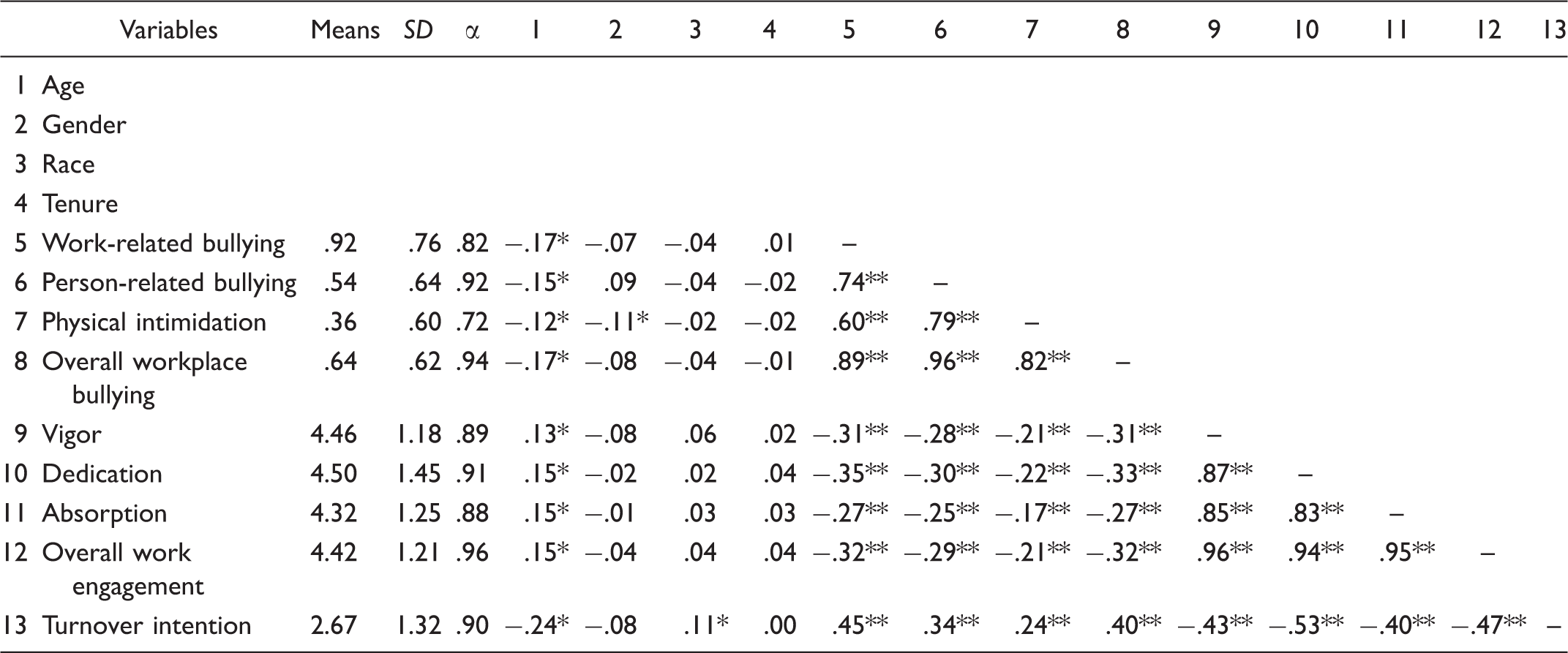
Descriptive Statistics and Zero-Order Correlations.
Note. n = 373.
*p ≤ .05. **p ≤ .01.
Age, gender, race, and tenure were considered as possible control variables. Table 1 shows that the correlations between the scale variables and the biographical variables (gender, race, and tenure) were not significant with the exception of gender and physical intimidation (r = −.11; p = .05, small practical effect) and gender and turnover intention (r = .11; p = .05, small practical effect). Although age had significant correlations with all the scale variables, the correlations were small in practical effect (r ≤ .24; p = .05). The significant correlations between the scale variables and the biographical variables were therefore regarded as negligible.
Mediation Effect of Work Engagement
As shown in Table 2, preliminary statistical analysis involved testing three competing measurement models for each scale in order to assess the construct validity of the factor structure for each scale (a model with the relevant original subscale factors for each scale and then a second modified model to see whether the data fit improved when deleting problematic items in each of the measurement scales, and a third modified model which retained only factors in the respective scale that contributed to better data fit). The best fit measurement model data (indicating good fit) as indicated below was used in the statistical analyses:
NAQ-R: Two-factor solution (work-related bullying and personal bullying): chi-square minimum discrepancy divided by its degrees of freedom (CMIN/df ) = 2.72; p = .0001; root mean square error of approximation (RMSEA) = 0.06; standardised root-mean-square residual (SRMR) = .04; comparative fit index (CFI) = .95; akaike information criterion (AIC) = 422.89. TIS: OneA-factor solution: CMIN/df = 7.28, p = .0001; RMSEA = .09; SRMR = .03; CFI = .95; AIC = 5859.10. Utrecht Work Engagement Scale: Two-factor solution (dedication and vigor): CMIN/df = 6.35; p = .0001; RMSEA = .10; SRMR = .05; CFI = .91; AIC = 456.29. Confirmatory Factor Analysis: Competing Measurement Models. Note: ***p < .0001
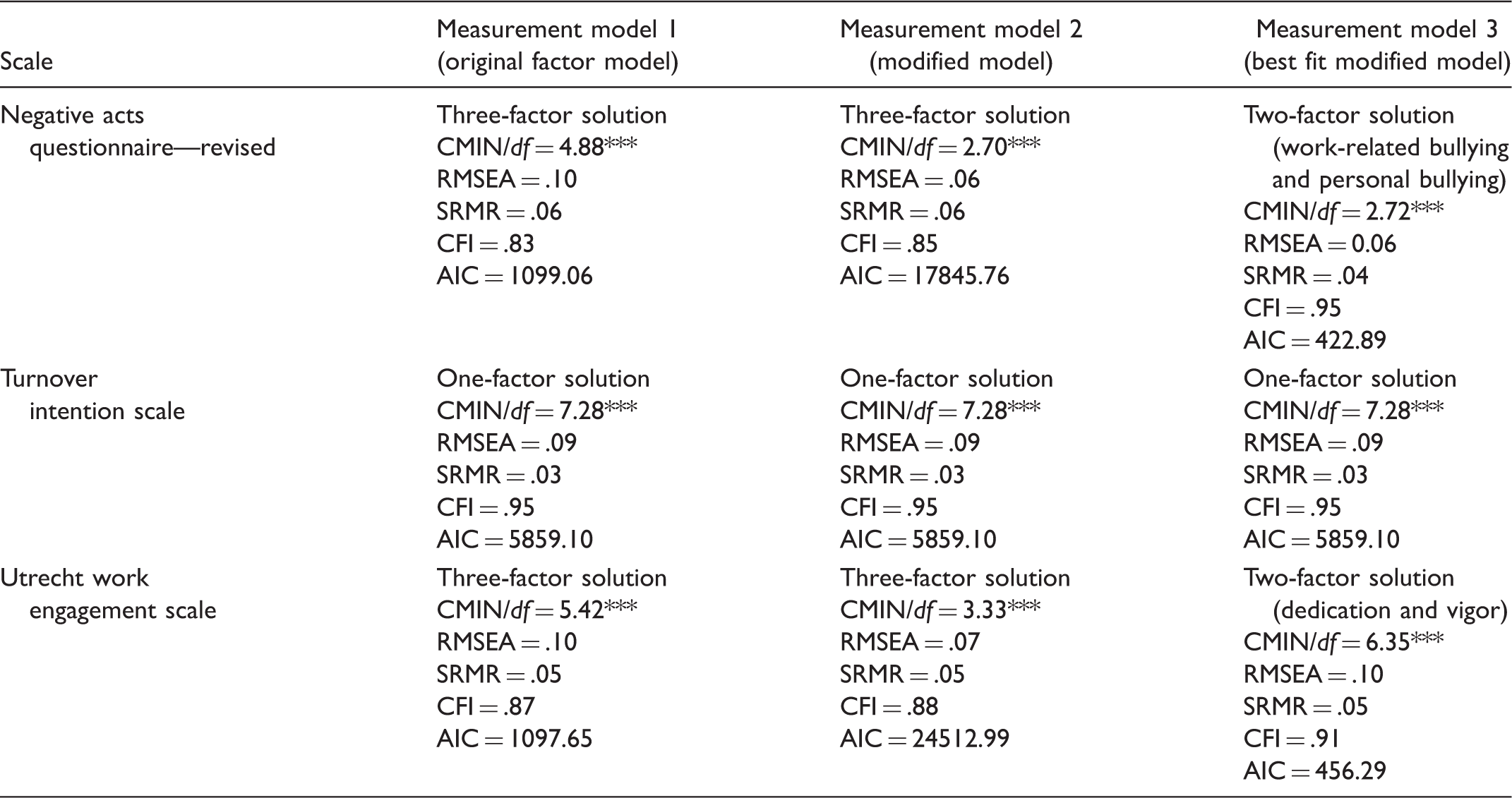
Structural equation modeling (SAS Institute Inc., 2013) was performed to test the construct validity of the mediation (structural) model which included a two-factor workplace bullying construct (work-related and person-related bullying loading onto overall workplace bullying), a two-factor work engagement construct (vigor and dedication loading onto overall work engagement as mediators), and turnover intention. The model fit data indicated a good fit: CMIN/df = 1.49; p = .0001; RMSEA = .04; SRMR = .02; CFI = .99; AIC = 38.473.
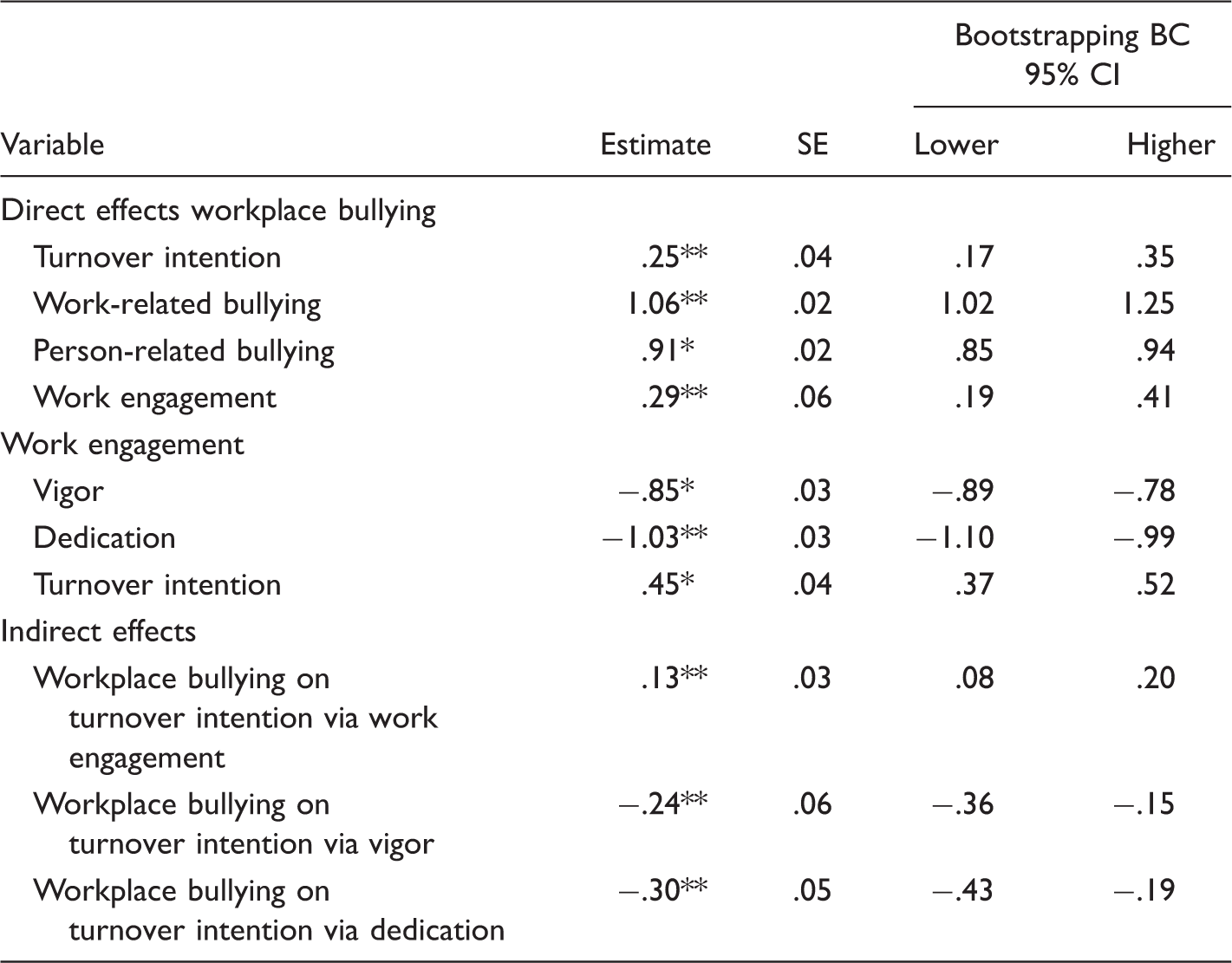
Direct and Indirect Effects: Workplace Bullying (Work-Related and Person-Related) on Turnover Intention Through Work Engagement (Vigor and Dedication).
Note. n = 373.
**p ≤ .01. *p ≤ .05.
Since the cross-sectional nature of the research design does not allow for casual inferences from the data analyses (Wu & Zumbo, 2008), correlational inferences were used to identify the extent to which the mediator variables (work engagement as explained by vigor and dedication) accounted for the direct and indirect relationships between the independent variables (workplace bullying as explained by work-related and person-related bullying) and the dependent variable (turnover intention). The focus was therefore placed on exploring the magnitude of the direct and indirect effects (standardised path coefficients) between the variables. To establish the unique effect of the mediators (work engagement as explained by vigor and dedication) on the dependent variable (turnover intention), the independent variables (workplace bullying as explained by work-related- and person-related bullying) were controlled for in the mediation model.
Table 3 shows that the four conditions for significant mediating effects as suggested by Zhou et al. (2012) were met. Workplace bullying (as explained by significant high levels work- and person-related bullying) had a significant positive pathway to work engagement (ß = .29; p = .01; CI = .19 to .41) which was explained by significant low levels of vigor (ß = −.85; p = .05; CI = −.89 to −.78) and dedication (ß = −1.03; p = .01; CI = −1.10 to −.99). Workplace bullying had a significant positive pathway to turnover intention (ß = .25; p = .01; CI = .17 to .35). Work engagement (as explained by significant low levels of vigor and dedication) had a significant positive pathway to turnover intention (ß = .45; p = .05; CI = .37 to .52). The work engagement variables partially mediated the workplace bullying-turnover intention relation after controlling for the mediating variables: The relation was still significant, but less strong. In addition, the more reliable bootstrapping bias-corrected 95% confidence interval did not include zero (Shrout & Bolger, 2002) and supported the significant indirect effect of work engagement in the workplace bullying-turnover intention link.
Discussion
The study explored the mediating role of work engagement in the workplace bullying-turnover intention link. The results corroborated previous research indicating that strong perceptions of workplace bullying are associated with high turnover intention (Berthelsen et al., 2011; Djurkovic et al., 2008; Laschinger et al., 2012). The results added new insights regarding the association between workplace bullying and work engagement by providing empirical evidence of the negative effect of work- and person-related bullying on vigor and dedication, which in turn also significantly related to high turnover intention. Previous research suggested that workplace bullying influences employee wellness and performance negatively and consequently increases employees’ turnover intentions (Laschinger et al., 2009, 2012). The present research extends theory on the consequences of workplace bullying. It appears from the findings that work-related negative acts which deter productivity and work performance and negative behavior aimed at the person of individuals (Einarsen et al., 2009) were likely to be associated with a lower motivational state of mind. The participants’ perceptions of work- and person-related bullying were associated with low levels of vigor (psychological resilience and work devotion: Schaufeli & Bakker, 2004) and dedication (meaningfulness, motivation: Schaufeli & Bakker, 2004) which could be attributed to the notion that acts of bullying increase negative feelings and job dissatisfaction (Glasø et al., 2011).
The results added new insights to the bullying literature by showing that high work engagement partially lowered the negative effect of workplace bullying on the participants’ turnover intention. The bullying-work engagement-turnover intention relation dynamics revealed by the study findings reinforce the importance of cultivating employees’ work engagement and suggest that perceptions of bullying acts lower individuals’ sense of vigor and dedication, which may in turn result in higher turnover intention. However, high levels of work engagement appear to cushion the negative effect of work-related and person-related bullying acts on turnover intention. Storm and Rothman (2003) state in this regard that work engagement functions as a personal coping resource which could explain the buffering effect of work engagement in the bullying-turnover intention link.
This finding suggests that individuals who are highly engaged in their work, who are internally energized to work and who are dedicated to complete their work tasks are more likely to experience fewer occurrences of workplace bullying and are therefore more inclined to display lower intentions to leave. As suggested by previous research, the high energetic (emotional–intellectual) motivational state implicit in individuals’ work engagement (Schaufeli et al., 2002) may alleviate experiences of anxiety during difficult circumstances (Hakanen & Schaufeli, 2012) such as when exposed to negative work-related and person-related acts in the workplace. Building on the social cognitive theory of human agency (Bandura, 1997; Consiglio et al., 2016), developing high work engagement may help individuals become motivated to proactively improve their social circumstances in the workplace instead of acting passively as victims of bullying acts or contemplating leaving the organization.
The findings have important implications for organizational retention practices. Managers should be aware of the buffering effect of work engagement in the bullying-turnover intention link and devise strategies for enhancing the vigor and dedication of employees and addressing acts of person- and work-related bullying in the work environment. The findings suggest that addressing work-related negative acts that deter productivity and work performance (e.g., unreasonable deadlines or impractical workloads, extreme inspection of assignments, or the allocation of insignificant tasks or being given no responsibilities: Einarsen et al., 2009) and negative behavior aimed at individuals’ person (e.g., offensive comments, excessive bantering, spreading gossip or rumors, incessant disapproval, and psychological threats: Einarsen et al., 2009) may help to increase the vigor and dedication (work engagement) of employees, in turn may help to reduce their turnover intentions. Research indicates that employees who perceive their general work environment as supportive and safe and feel protected by management tend to experience increased levels of engagement (May, Gilson, & Harter, 2004; Wollard & Shack, 2011). Establishing a fair and supportive work culture, building trust among culturally diverse groups and leaders, aligning job roles with the organization’s vision and mission, offering employees more autonomy to do their work, and supporting their career development generally help to strengthen the energetic connection between the individual and the job within the organization which may result in higher levels of vigor and dedication (Albrecht, 2012). Highly engaged employees tend to be more resilient in dealing with psychologically harmful acts stemming from bullying (Guest, 2015).
The cross-sectional design of the research approach limits the possibility to address causality questions. Longitudinal studies are needed to determine causality. Such studies could also investigate the role of external factors (i.e., the sociopolitical business climate) on perceptions of bullying, work engagement, and turnover intention. The self-report nature of the questionnaires and convenience sampling method could also give rise to concerns about common method bias as a potential threat to the findings. However, the anonymity of responses and assurance that the research would only be used for research purposes may have diminished this risk. The data were obtained from a convenience sample of predominantly White and female participants employed in South African organizations which limits the generalizability of the findings to other cultural contexts. Future research should involve a more culturally diverse group of participants from various business contexts. Although the influence of the control variables was regarded as negligible in the context of the present study, future longitudinal studies could explore the role of control variables such as age, gender, race, and tenure in the bullying-engagement-turnover intention link.
In spite of these limitations, the study findings added important new insights regarding the role of work engagement in the bullying-turnover relation. The research findings corroborate the importance of work engagement in lowering turnover intention and the negative effect of bullying on employees’ engagement and intention to leave. The findings added important new insights to the engagement and retention literature by providing empirical evidence that alludes to the importance of enhancing employees’ vigor and dedication in order to buffer the negative effect of bullying on employees’ turnover intention. Understanding the role of work engagement in impairing the negative effect of bullying behavior on turnover intention is important for talent retention and business performance strategies in the current turbulent business climate.