







Abstract
Older adults with cancer experience are more likely to encounter a notable reduction of participation in physical and social leisure activities, which may threaten their overall well-being. The purpose of this study was to explore how specific types of leisure activities and leisure satisfaction were linked to hedonic and eudaimonic well-being among older adults who had experienced cancer. A nationally representative sample of 2,934 older adults with lifetime cancer experience was retained from the Health and Retirement Study. The results of regression analysis revealed that walking for 20 minutes was reported as the only type of leisure activity related to hedonic well-being for the oldest-old (85+ years old). The current study also found that TV watching was significantly, but negatively associated with eudaimonic well-being for the young-old (50-74 years of age). In contrast, using a computer was positively linked to hedonic and eudaimonic well-being among the young-old and old-old (75-84 years of age). The current study made a significant contribution to build the body of knowledge that the different age groups of older adults who had experienced cancer can enhance eudaimonic and hedonic well-being by participating in different types of leisure activities. Implications for further research are discussed.
Cancer is one of the leading age-related illnesses, and the incidence rates for cancer increases with advancing age (National Cancer Institute, 2021). Among an estimated 26.1 million survivors across all age groups in the United States, 73% of them are expected to be 65 years and older in 2040 (Bluethmann et al., 2016). During later life, the experience of cancer and recovery accompany physical, psychological, cognitive, and social challenges in everyday life (Howlader et al., 2016). One of the common challenges of cancer experience is distress, often accompanied by depression, anxiety, fatigue, insomnia, nausea, and pain (e.g., Reeve et al., 2014). In addition, the recovery process requires a tremendous amount of effort and time to improve levels of physical energy (Lyons et al., 2013). These various limitations and chronic health conditions not only tend to limit individuals’ functional performances in everyday activities (Cardol et al., 2002), but also are associated with lower levels of life satisfaction and overall well-being among older adults with cancer experience (Keating et al., 2005; Kim et al., 2016).
Eudaimonic and Hedonic Well-Being Among Older Adults
Although advancing age is one of the significant risk factors for cancer occurrence, the average life expectancy of older adults with cancer experience continues to increase considerably (White et al., 2019) due to improvements in health care, technology, and science (Simone & Haas, 2013). A considerable number of studies have identified that individuals who had lived with cancer can experience a high quality of life from a long-term perspective while the majority of previous studies reported the negative consequences of cancer experiences among older adults (e.g., Heo et al., 2016; Lyons et al., 2013; Stanton, 2006). It is also possible that individuals can experience high subjective and psychological well-being with advanced age (Keyes et al., 2002). With the increased numbers of older adults who have lived with cancer, promotion of living well or overall well-being become an important topic regardless of the experience of illnesses or disabilities (Heo et al., 2016). With the advancement of health care and technology, more older adults will be able to live at home and the majority of them are likely to have one or more chronic illnesses (Howlader et al., 2016; van Leeuwen et al., 2019), which may require more effective care and support for living well with various illness and disabilities (e.g., White et al., 2019). While the majority of cancer research has focused on the physiological health associated with ageing and cancer development (e.g., Bellury et al., 2012), a better understanding of various psychological and behavioral resources is needed to promote overall well-being in the lives of older adults who have experienced cancer (Chun et al., 2016; Heo et al., 2016).
Among various definitions, Ryan and Deci (2001, p. 142) defined well-being as “optimal psychological functioning and experience,” and identified two different constructs of well-being, eudaimonic and hedonic views. The eudaimonic standpoint focuses on psychological well-being and explores well-being from a perspective of pursuing meaning and goodness in life (e.g., Huta & Ryan, 2010). People with a higher level of eudaimonic well-being are more likely to fully engage in everyday activities, which reflect on one’s true self and are congruent with deeply held values (Waterman, 1993). Moreover, by participating in enjoyable and personally meaningful activities, they tend to experience a sense of meaning and purpose in life (Chun et al., 2016), pursuing self-actualization (e.g., Ryan & Deci, 2001), psychological well-being and life satisfaction among older adults with cancer experience (Heo et al., 2016). Previous studies reported that the experience of eudaimonic well-being among older adults are associated with reduced risk of stroke, Alzheimer’s disease, mental illness, and psychological distress (e.g., Hill & Turiano, 2014; Kim et al., 2014; Ryff, 2017). On the other hand, the hedonic perspective of well-being is explained with emotional responses such as the attainment of immediate pleasure, experience of positive emotions, and pain avoidance (Ryan & Deci, 2001), which lead to greater satisfaction with one’s life (e.g., Kashdan et al., 2008). Hedonic well-being tends to focus on subjective happiness (Ryan & Deci, 2001), which is often used to evaluate hedonic pleasure in the human experience (Oishi et al., 1999).
Previous literature indicated that older adults are more likely to experience a stable or increased level of hedonic well-being (e.g., positive emotions) with the advancement of aging (Gaymu & Springer, 2010) while the level of eudaimonic well-being (e.g., purpose in life, personal growth) tends to decline with age (e.g., Ryff, 2014; Springer et al., 2011). These reports indicate that as older adults advance in age, they are more likely to experience different levels of eudaimonic and hedonic well-being, which is significantly related to better physical health and decreased mortality (Diener & Chan, 2011). Although eudaimonic and hedonic aspects of well-being is defined as two distinctive constructs of well-being, these two views tend to operate together and influence each other over the long term (Kashdan et al., 2008). For example, if older adults perceive that their life is meaningful and purposeful, they are more likely to experience higher positive affect (Ryan & Deci, 2001). Furthermore, both eudaimonic and hedonic well-beings are associated with reduced risk of health-related issues and disease as well as better physical health (e.g., Ryff, 2014; Salama-Younes, 2018).
Participation in Leisure Activities and Well-Being
In this study, leisure is defined as enjoyable and preferred activities, which individuals engage in during their free time (Kleiber & Nimrod, 2009). Involvement in leisure activity is an easily accessible and relatively inexpensive means for promoting overall health and well-being for older adults (e.g., Chang et al., 2014). Among a variety of psychological, social, environmental, and behavioral benefits, participation in meaningful and pleasurable free-time activities has been reported as one of the important facilitators for enhancing well-being among older adults (e.g., Ryu & Heo, 2018). In accordance with the broader psychological literature, leisure researchers have reported an extensive number of empirical findings on the significant role of leisure associated with subjective well-being (hedonic-focus: e.g., Salama-Younes, 2018) and psychological well-being (eudaimonic-focus: e.g., Kim et al., 2017). As retired older adults tend to spend a relatively large amount of free and unstructured time in everyday life, and the younger generation of older people are expected to live longer, researchers have paid increased attention to the role of leisure participation in the lives of older adults (Paillard-Borg et al., 2009).
While general leisure literature has identified the significant role of leisure on enhancing health and well-being, several studies examined specific types of leisure activities in the lives of older adults (Chang et al., 2014; Ryu & Heo, 2018). Specifically, a large number of studies tend to focus on the benefits of leisure-time physical activities (LTPA) associated with health and well-being (e.g., Ku et al., 2016; Yao & Tseng, 2019). For example, previous empirical studies explained that free-time physical activities reduced the symptoms of depression among adults aged 50 years and older (Ku et al., 2009), but also enhanced life satisfaction, positive emotions and psychological well-being among older adults experiencing loneliness (Kim et al., 2017). On the other hand, further studies reported the importance of the different aspects of leisure such as social, productive, and mental components (Chang et al., 2014). For example, in a systematic review of the literature, older adults who are regularly involved in social activities tended to be satisfied with their lives (Adams et al., 2011). A more recent empirical study supported that greater participation in home-centered and social activities such as dining out, and family time, and socializing with friends contributed to enhancing dispositional optimism, life satisfaction, and health perception for older adults aged 60 to 90 years old (Ryu & Heo, 2018). Using Health Retirement Study (HRS) data, Chang et al. (2014) grouped eighteen separate activities into four leisure categories such as mental, social, physical, and productive domains. For example, the mental domain includes reading books and watching TV while the social domain covers spending time with grandchildren and going to a club. The physical domain includes walking and home maintenance, and the productive domain lists cooking and making clothes as possible activities. Chang et al.’s study reported that greater involvement in leisure activities is related to better health among older adults. Especially, frequent participation in mental leisure activities which helped to reduce the levels of depressive symptoms. Although Chang et al.’s study demonstrated the importance of involvement in leisure activities on enhancing health among older adults, it is still unclear which specific leisure activity contributes to health and living well.
In addition, several studies identified the benefits of specific types of activities related to overall well-being. Among Swedish adults aged 75 or older, reading (19%) was the most frequently participated individual activity among three different age groups (75 to 79 years, 80 to 84 years, 85 and older) followed by making handcrafts, cultivating political and cultural interests (Paillard-Borg et al., 2009). In a longitudinal study, TV watching was the most frequently participated leisure-time activity followed by walking, social chatting, and reading among Taiwanese adults aged 70 years and older (Ku et al., 2016). As the above examples indicate, a few empirical studies made efforts to explain the possible association of the specific types of leisure activities and the overall well-being of older adults.
Leisure and Well-Being Among Older Adults with Cancer
Within chronic illness and well-being literature, a majority of previous studies have paid great attention to the individuals’ ability to perform obligatory and committed activities while few studies explored the role of leisure activities related to the experience of well-being among older adults who had experienced cancer (e.g., Bellury et al., 2012). Existing literature constantly reported that older adults with chronic illnesses tend to be less physically and socially active in terms of participation in daily activities and often experience restriction for full involvement in activities, which may threaten their well-being (e.g., Anaby et al., 2011). Especially following cancer treatment, individuals tend to experience significant reduction of participation in physically demanding leisure and social activities (e.g., Lyons et al., 2013). Previous empirical studies identified diverse ranges of an average reduction in overall activity levels among older adults with different types of cancer treatments. After stem cell transplantation, a 30% decrease in activity levels was reported (Lyons et al., 2011) while individuals with breast cancer surgery experienced only an 8% reduction in their overall activity level (Rosenblum, 2005). Although the individuals tended to experience various limitations and constraints (e.g., physical and mental symptoms or low energy), many of them continued to make an effort to engage in meaningful and enjoyable activities during their free time and took advantage of leisure participation to enhance well-being (Lyons et al., 2013).
Current Study
The positive psychology literature has conceptualized two distinctive theoretical viewpoints, eudaimonic and hedonic well-being. Most of the previous studies tended to examine one of the theoretical viewpoints, which has hindered investigation of the various constructs of overall well-being (Gallagher et al., 2009). Also, most of the previous aging and illness-related studies have paid great attention to activities for daily living (e.g., Anaby et al., 2011; Lyons et al., 2013) as well as broader categorization of grouped leisure activities (e.g., Chang et al., 2014) although the significance of leisure participation on enhancing health and well-being is well-known. It is possible that specific types of leisure activities may or may not contribute equally to eudaimonic and hedonic well-being, especially among older adults with cancer experience. This group of individuals are likely to experience a notable reduction of participation in physical and social leisure activities (e.g., Lyons et al., 2013), which may threaten their well-being (e.g., Anaby et al., 2011). Thus, it is necessary to explore the influence of specific types of leisure activities on eudaimonic and hedonic well-being reflecting on both theoretical viewpoints (Tennat et al., 2007). Therefore, the main purpose of this study was to explore how specific types of leisure activities and leisure satisfaction were linked to hedonic and eudaimonic well-being among older adults who had experienced cancer. Among various leisure activities, this study focused on the six most frequently engaged leisure activities in the Health and Retirement Study (HRS). The six activities include watching TV, reading, praying privately, using a computer, maintenance/gardening, and walking 20 minutes.
In addition, with the advancement of health care and the increased life expectancy of older adults who had experienced cancer (Bluethmann et al., 2016), there is a need to investigate of different age group, particularly, older adults who are 85 years and older (often called, the “oldest old”). The oldest old, who are the fastest-growing age group in the United States, demonstrate higher incidence rates for cancer, advanced stage cancer diagnosis, and the lowest relative survival rate than younger age groups (DeSantis et al., 2019; National Cancer Institute, 2021). The oldest old group may demonstrate different leisure activity patterns and the influence of specific types of leisure activities on each of theoretical viewpoints on well-being may be distinctive. Therefore, as a secondary purpose, this study examined differences in the six different types of leisure activities, leisure satisfaction, and eudaimonic and hedonic well-being across the three age groups of older adults with cancer experience. The findings in this study can contribute to a better understanding of the relationships between specific leisure activities and eudaimonic and hedonic well-being among different age group of older adults who had experienced cancer. Also, the knowledge from this study might allow for the development of community-based resources and support on promoting overall well-being for older adults who have experienced cancer.
Method
Study Design and Sample Frame
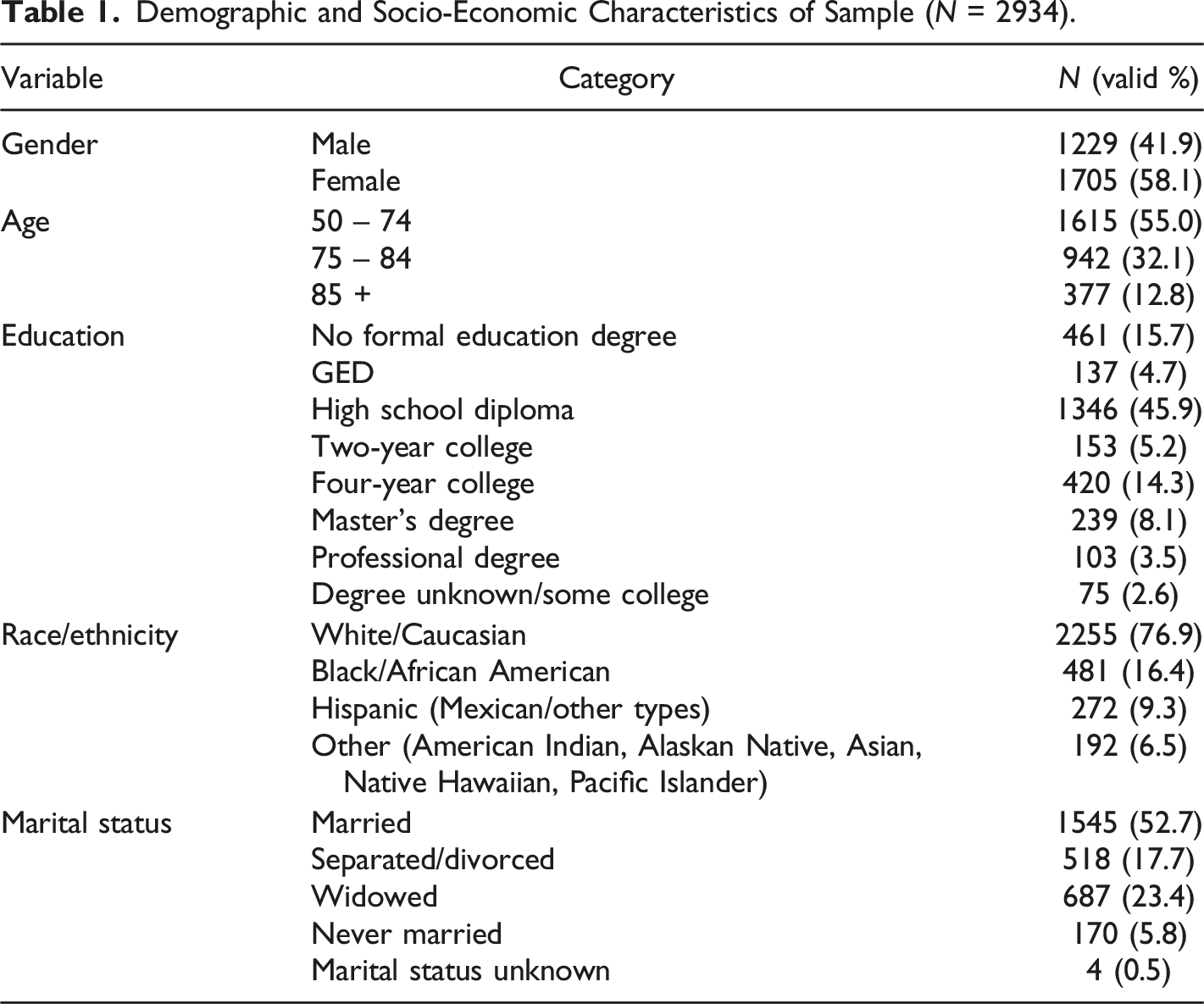
The sample for this study is comprised of participants in the Health and Retirement Study (HRS), a nationally representative in a longitudinal study of adults over the age of 50 in the United States. Research data was mainly drawn from the 2016 Psychosocial and Lifestyle Questionnaires (PLQ). PLQ is one of the self-administered survey tools of HRS, that assesses a wide range of psycho-social aspects of everyday life and well-being of the respondents. Initial raw data included a sample of 20,918 respondents. Among the respondents, 14% reported they were diagnosed with cancer or a malignant tumor over their lifetime. For the current study, the cases (n = 2,934) with lifetime cancer experience were retained.
Demographic and Socio-Economic Characteristics of Sample (N = 2934).
Measurement
Among various psychosocial and lifestyle-related measures in the 2016 Psychological and Lifestyle Questionnaires (PLQ), this study used Social Participation/Engagement, Positive Affect, Purpose in Life, and Leisure Satisfaction scales. The Social Participation/Engagement survey includes 21 different forms of activity and asks the frequency of participation in activities to the respondents. Using a 7-point Likert scale, the respondents were asked to indicate how often they participated in a given activity, ranging from 1 (never/not relevant) to 7 (daily). For the purpose of statistical analysis, six most frequently participated leisure activities were selected based on the mean score of each activity. The lists of frequently participated activities include watching television, reading, praying privately, using a computer, maintenance/gardening, and walking for 20 mins. Not selected activities included caring for adult(s), activities with grandchildren, volunteering with youth, engaging in charity work, attending education programs, attending sports/social/club, attending non-religious organizations, playing word games, playing cards and games, writing, baking/cooking, sewing/knitting, hobbies, playing sports/exercise, and participating in community arts groups. Selected activities were identically ranked both in the initial data and the current study sample of respondents with cancer experience.
Leisure satisfaction was measured using a single questionnaire item, drawn from Satisfaction with Life Domains and Life as a Whole questionnaire. Respondents were asked to indicate how much they were satisfied with their daily life and leisure activities using a 5-point Likert scale, 1 (not at all satisfied) to 5 (completely satisfied). A higher value indicated a higher level of leisure satisfaction.
In order to measure hedonic well-being, a total of 12 items was derived from the Positive and Negative Affect Schedule – Expanded Form (PANAS-X; Watson & Clark, 1994). Respondents were asked to indicate, for each emotion, to what degree they felt during the past 30 days (e.g., enthusiastic, interested, happy, inspired). Respondents rated their answers on a 5-point Likert scale from 1 (not at all) to 5 (very much). Previous studies demonstrated generally strong internal consistency, ranging from 0.83 to 0.90 (e.g., Rzeszutek & Gruszczyńska, 2020).
Eudaimonic well-being was measured by a 7-item version of the Purpose in Life Scale, which is one of the subscales of the Measures of Psychological Well-being (Ryff, 1989). The PLQ includes the Purpose in Life scale to assess the eudaimonic aspect of well-being (Smith et al., 2017). Respondents were provided with seven statements and asked to indicate the extent to which each statement described them most (e.g., I have a sense of direction and purpose in my life). Eudaimonic well-being was measured using a 6-point Likert scale, 1 (strongly disagree) to 6 (strongly agree). Previous PLQ summaries indicated an acceptable level of internal consistency, ranging from 0.74 to 0.78 (Smith et al., 2017).
Data Analysis
Descriptive and correlation analyses were performed to understand the structure of the sample frame and to examine the relationship between study variables. In order to test age group differences across the measured variables, ANOVA was used. Test for linearity and deviation from linearity was conducted to determine the linear relationship between age groups and measured variables. Regression analysis was employed to examine how leisure-related factors were linked to hedonic and eudaimonic well-being for each age group. Missing data was handled using multiple imputation technique that allowed to retain the cases with missing values instead of simply deleting those cases in the analysis (Healy et al., 2003). Supplied weights were used to adjust for selective non-responses. The data preparation and analyses were conducted using IBM SPSS Statistics 25.
Covariates
Previous studies suggested that older adults’ psychological and emotional well-being is significantly associated with socio-demographic variables (e.g., Chun et al., 2016; Matud et al., 2020; von Humboldt et al., 2015; Wright & Brown, 2017). In order to control the effect of such correlates, the covariates in the analyses included gender (coded as 1 for male and 2 for female), age (in years), race/ethnicity (coded as 1 for White; 2 for African American; and 7 for Other), educational attainment (coded as 0 for no degree; 1 for general education degree; 2 for high school diploma; 3 for two year college degree; 4 for four year college degree; 5 for master degree; and 6 for professional degree - Ph.D., M.D., J.D.), and marital status (coded as 1 for married; 2 for separated/divorced; 3 for widowed; 4 for never married).
Results
Descriptive Statistics and Correlations
Descriptive Statistics and Reliability of the Measured Variables.
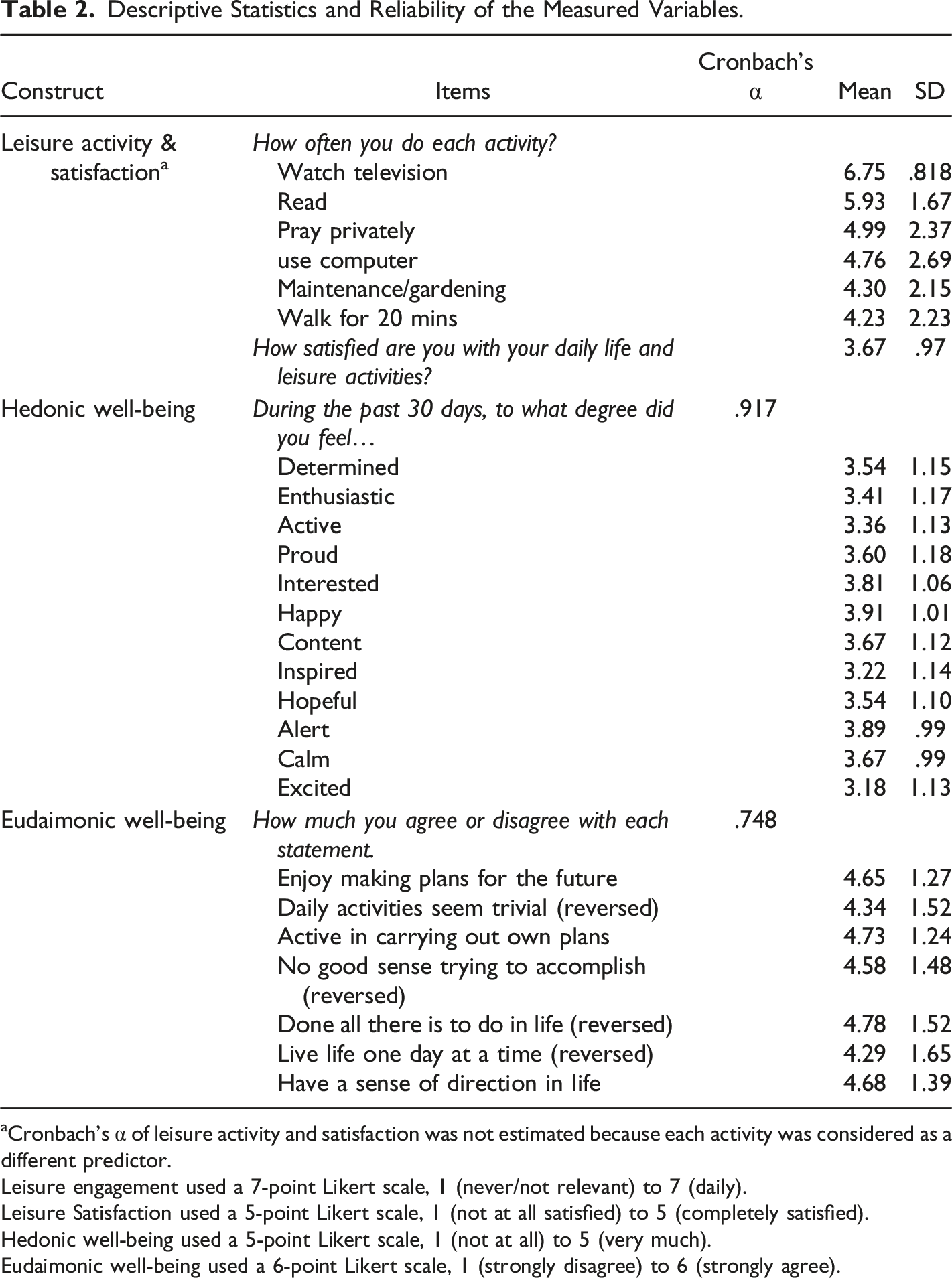
aCronbach’s α of leisure activity and satisfaction was not estimated because each activity was considered as a different predictor.
Leisure engagement used a 7-point Likert scale, 1 (never/not relevant) to 7 (daily).
Leisure Satisfaction used a 5-point Likert scale, 1 (not at all satisfied) to 5 (completely satisfied).
Hedonic well-being used a 5-point Likert scale, 1 (not at all) to 5 (very much).
Eudaimonic well-being used a 6-point Likert scale, 1 (strongly disagree) to 6 (strongly agree).
Correlations between Measured Variables.
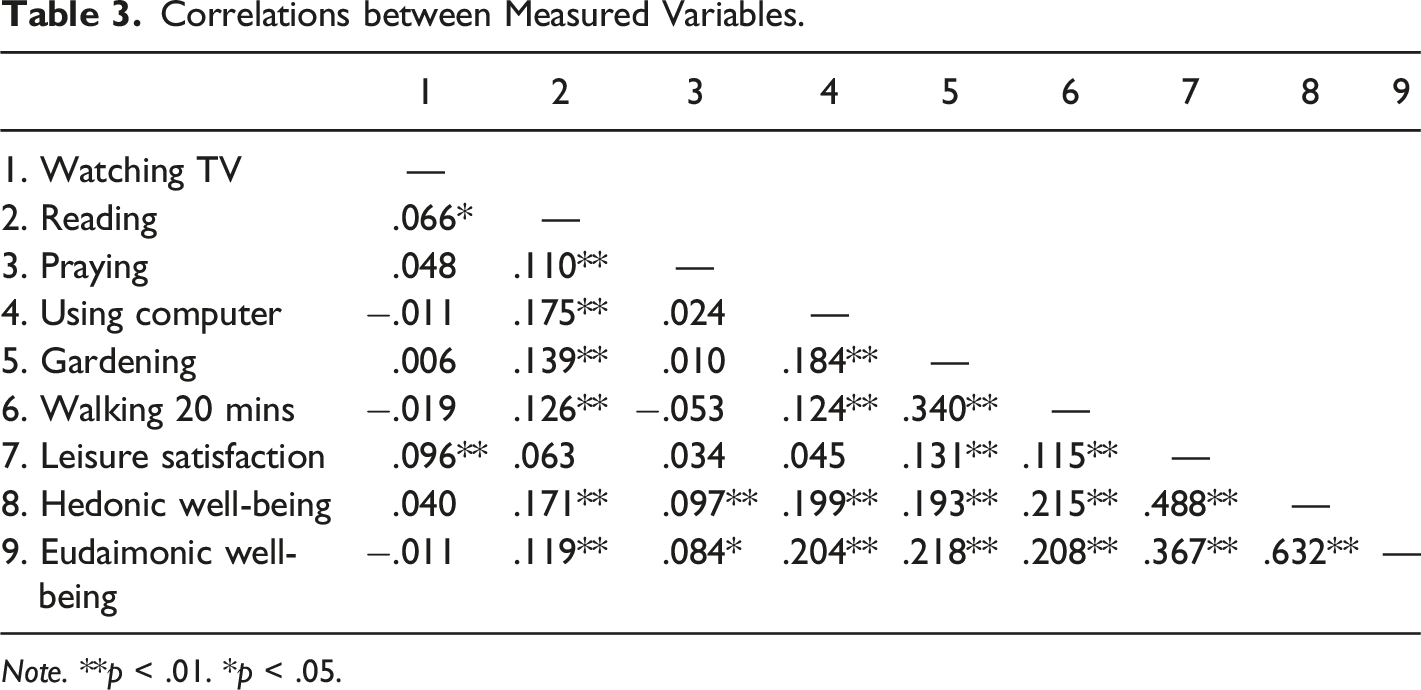
Note. **p < .01. *p < .05.
Mean Difference between Age Groups
Mean Difference among Three Age Groups.
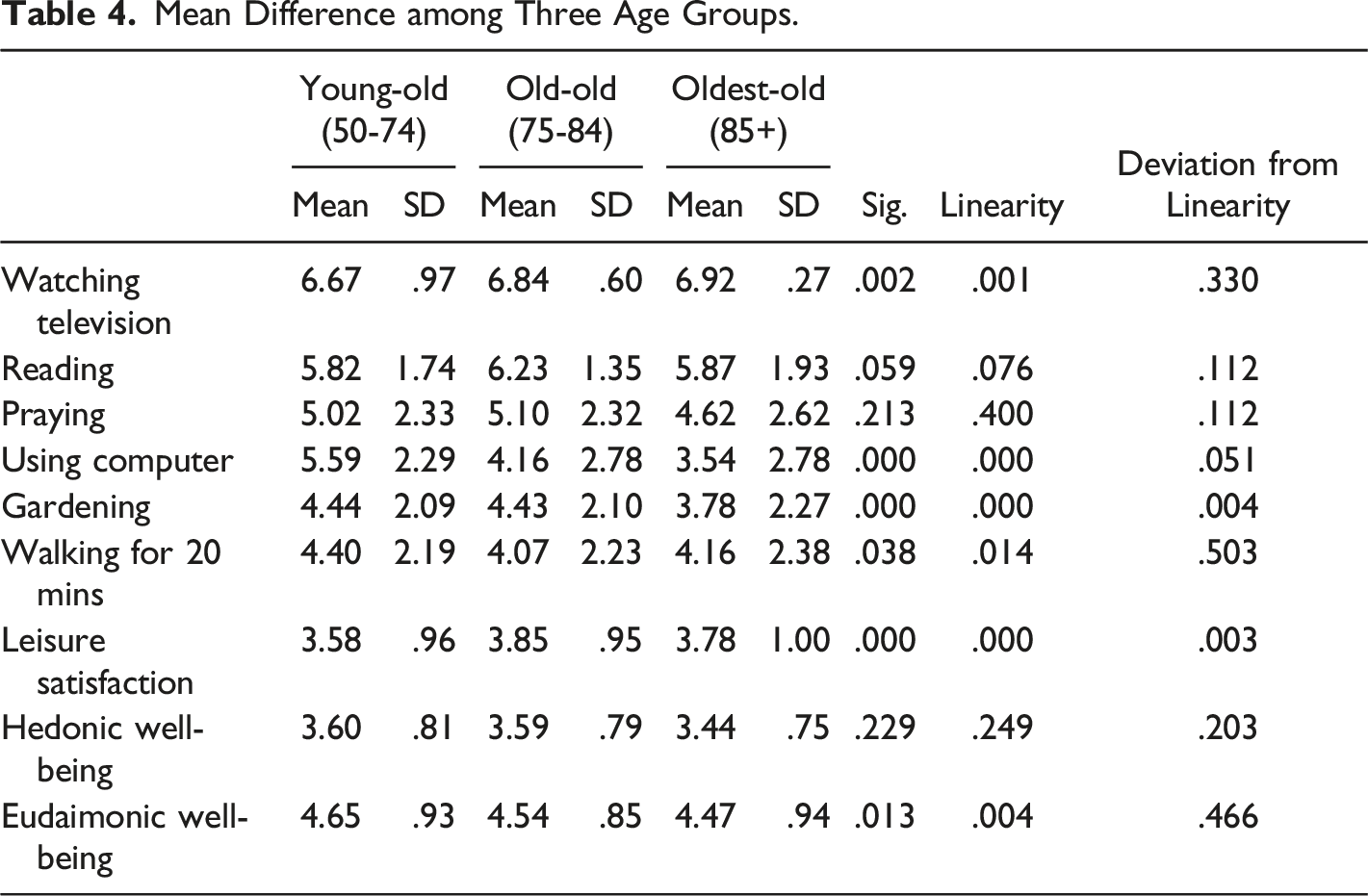
Results also indicated that there was a significant difference in leisure satisfaction and eudaimonic well-being between the age groups. For example, those 75-84 years of age had a significantly higher score on leisure satisfaction than other age groups (p < .001). Those 50-74 years of age were more likely to express higher level of eudaimonic well-being compared to other age groups (p < .05). However, no significant difference was found in the measure of hedonic well-being.
The linearity test showed a significant value of linearity smaller than .05, indicating that there was a linear relationship between age groups and dependent variables (i.e., watching television, using a computer, maintenance/gardening, walking for 20 minutes, leisure satisfaction, and eudaimonic well-being). The test for deviation from linearity had a significance value greater than .05, which means that there was a linear relationship between age groups and dependent variables (i.e., watching television, using computer, walking for 20 minutes, and eudaimonic well-being). However, in addition to the linear component, the test for deviation from linearity of the measures of maintenance/gardening and leisure satisfaction showed a significance value smaller than .05, which means that there was a non-linear relationship between age groups and the two dependent variables. As seen in Table 4, these results indicate that the older adults’ participation in maintenance/gardening activities and, level of leisure satisfaction are inconsistent across different age groups.
Relationship between Leisure and Well-being
Summary of the Statistically Significant Standardized Estimates of Path Coefficients.
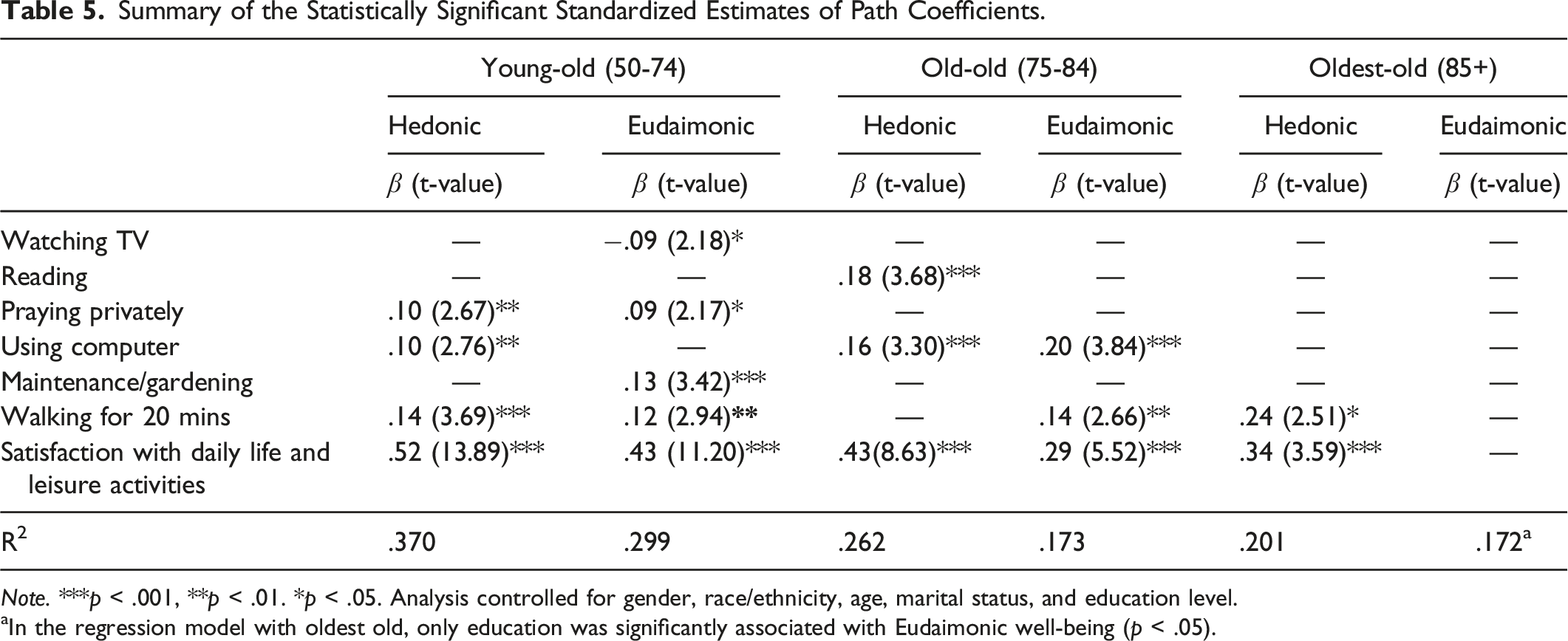
Note. ***p < .001, **p < .01. *p < .05. Analysis controlled for gender, race/ethnicity, age, marital status, and education level.
aIn the regression model with oldest old, only education was significantly associated with Eudaimonic well-being (p < .05).
For the young-old (50-74 years of age), praying (β = .10, p < .01), using a computer (β = .10, p < .01), walking for 20 mins (β = .14, p < .001), and leisure satisfaction (β = .52, p < .001) were significantly related to hedonic well-being. Results showed that praying (β = .09, p < .05), maintenance/gardening, (β = .13, p < .001), walking for 20 mins, (β = .12, p < .01), and leisure satisfaction, (β = .43, p < .001), were significantly and positively related to eudaimonic well-being. However, watching television (β = −.10, p < .01) was negatively related to eudaimonic well-being.
For the old-old (75-84 years of age), reading (β = .18, p < .001), using a computer (β = .16, p < .001), and leisure satisfaction (β = .43, p < .001), were positively related to hedonic well-being. In addition, using a computer (β = .20, p < .001), walking for 20 mins, (β = .14, p < .01), and leisure satisfaction (β = .29, p < .001) were significantly related to eudaimonic well-being.
For the oldest-old (80+ years old), walking for 20 mins (β = .24, p < .05) and leisure satisfaction (β = .34, p < .001) were positively related to hedonic well-being. However, no significant association was found between leisure activities and satisfaction and eudaimonic well-being in the oldest-old. Table 5 provides a summary of the statistically significant standardized estimates of path coefficients between the independent variables and dependent variables.
Discussion
The findings in this study demonstrated the nature of significant relationships among different types of leisure activities, leisure satisfaction, eudaimonic and hedonic well-being for older adults who had experienced cancer. Given the lack of empirical research and understanding on how different types of leisure activity have an influence on two distinctive theoretical viewpoints, the findings in this study makes a significant contribution to build the body of knowledge that the different age groups of older adults who had experienced cancer can enhance eudaimonic and hedonic well-being by participating in different types of leisure activities (e.g., Simone & Haas, 2013). Particularly, this study revealed that walking for 20 minutes, watching TV, using computers, and reading were significantly related to eudaimonic and hedonic well-being (Gaymu & Springer, 2010) among the three different age groups of older adults who had experienced cancer. For example, walking for 20 minutes was significantly related to increased hedonic well-being for both the young-old (between 50 to 74 years) and the oldest-old (85 years and older). This finding is consistent with extensive literature that frequent participation in physical activity is associated with increased hedonic well-being among older adults (e.g., Ku et al., 2016). Interestingly, walking for 20 minutes was reported as the only type of leisure activity related to hedonic well-being for the oldest-old. Löckenhoff and Carstensen (2004) explained that older adults tend to be concerned about the hedonic or emotional aspects of well-being and pursue a positive emotional experience. It is possible that easily accessible physical activities with low intensity may offer an unexpectedly powerful and positive benefit, linked to enhancing positive emotion and life satisfaction for the oldest-old group of older adults who had experienced cancer (Heo et al., 2016). It is important to note that involvement in physical activities is likely to decline with advancement of the ageing process (Chen & Feeley, 2014). Especially, older adults who had experienced cancer tend to display a notable reduction in overall activity levels with their limited energy (Lyons et al., 2011, 2013), which is closely related to obesity and higher risks of mortality in older adults (Rezende et al., 2014). Older adults with cancer experience are encouraged to engage in purposefully selected, pleasurable leisure activities that is easily accessible and low in physical intensity, which can offer an opportunity to reappraise their circumstances more favorably and eventually enhance hedonic well-being (Charles, 2010; Ryff, 2017). Further studies are warranted to explore the contribution of easily accessible physical activities with low physical intensity (e.g., walking around the neighborhood, solitary exercise, fishing) and increasing positive emotions and hedonic well-being among the different age groups of older adults (Chang et al., 2014; Ku et al., 2016).
The findings in this study revealed intriguing results on TV watching and computer use associated with eudaimonic and hedonic well-being. First, TV watching was significantly, but negatively associated with eudaimonic well-being for the young-old, which is in contrast to previous studies reporting on the positive association of TV watching with subjective well-being among older adults (e.g., Ku et al., 2016). It is possible that the young-old, who were more likely to live alone and do not have full time jobs, might spend more time watching TV (Lin et al., 2018), which is one of the most popular, accessible, and inexpensive free-time activities among older adults in the United States (e.g., Yamashita et al., 2019). However, watching TV may not facilitate actualization of one’s fullest potential (Ryan & Deci, 2001) and personal growth (Waterman, 1993) that are main attributes of eudaimonia. In contrast to TV watching, using a computer was positively linked to both hedonic and eudaimonic well-being among the young-old and old-old. With the advancement of technology and gained popularity, younger generations of older adults are likely to spend their free time using computers and other technologies, which positively influences increased well-being (e.g., Heo et al., 2015). Previous studies have suggested that the increased use of computers is associated with improved cognitive capability, social relationships, and socioemotional well-being (Calhoun & Lee, 2019; Hartanto et al., 2020). Moreover, in terms of eudaimonic well-being, using a computer as a leisure activity can possibly contribute to developing the best of their ability and potential (Huta & Ryan, 2010). The findings in this study provided further evidence that computer use is positively associated with a higher level of well-being among the younger generation of older adults with cancer experience. Older adults who had experienced cancer tend to confront physical, psychological, social, and environmental limitations for participation in physically and socially active leisure (Lyons et al., 2011). Although accumulated research emphasizes the significance of physical and social activities on enhancing well-being and health (e.g., Yao & Tseng, 2019), it is also equally important to pay more attention to the cons and pros of TV watching and internet use as two of the most frequently involved home-based, solitary, and sedentary activities with the consideration of functional decline among older adults with advancing age. Furthermore, given the growth of the older adult population with cancer experience, future studies are warranted to clarify the contribution of the leisure-time TV watching and internet use on eudaimonic and hedonic well-being among the different age groups of older adults who have lived with cancer (De Cocker et al., 2013).
In addition, reading was one of the most frequently engaged activities and was associated with hedonic well-being for the old-old group (Jacobs et al., 2008). This finding brings an additional question, why reading was significantly related to only the middle age group (the old-old) even though it is an easily accessible activity to all three age groups (e.g., Paillard-Borg et al., 2009). Also, reading is often considered a mental and intellectual activity (Chang et al., 2014), which can provide a meaningful learning opportunity and eventually contribute to enhance psychological well-being (Nyman & Szymczynska, 2016). However, in this study, reading only contributed to hedonic well-being. It is possible that the middle age group (the old-old), who are likely to experience a distinctive physical decline but still maintain mental strengths, tend to read for pleasure rather than seeking knowledge or personal meaning out of reading their favorite books (Paillard-Borg et al., 2009).
The findings in this study addressed the importance of analyzing the specific types of leisure activities instead of broader categorization of grouped activities (Fu. et al., 2016), which was a more prevalent method for examining leisure activities associated with well-being (e.g., Chang et al., 2014; Withall et al., 2014). For example, Chang et al. (2014) grouped TV watching and reading within a mental leisure category and reported that frequent participation in mental leisure activities helped to reduce the levels of depressive symptoms. However, it was unclear which specific activity actually offered the health-related benefit. The findings in this study provided further explanation that reading was significantly related to a high level of hedonic well-being (e.g., enhancing positive emotions) while TV watching was not associated with hedonic well-being among all three-age groups. In addition, Ku et al. (2016) examined TV watching and reading within a same category of leisure-time sedentary activities (LTSA) and found the positive contribution of LTSA on subjective well-being among Taiwanese adults aged 70 years or older. As the examples demonstrate, both TV watching and reading are often categorized together in different leisure-related domains although the outcomes of the two activities can be significantly different. More systematic categorization of the leisure activities or the examination of specific leisure activities would be beneficial for further accurate analysis of the benefits of participation in leisure activities on eudaimonic and hedonic well-being.
Lastly, the findings in this study build on prior research that the oldest-old (80+ years old) is likely to experience a lower level of eudaimonic well-being than younger age groups (e.g., Ryff, 2014), which is a significant vulnerability factor for health and well-being especially among those with cancer experiences (e.g., Friedman & Kern, 2015). For the oldest-old, searching for a purpose in life or committing to long-term goals by engaging in leisure activities would not be a priority during the later stage of older adulthood (Lang & Carstensen, 1994; Ryff, 2014). On the other hand, it is possible that the younger generation of older adults are likely to take advantage of relatively higher levels of physical and mental functioning to actively engage in personally meaningful leisure activities, which tend to offer a unique opportunity to develop leisure-related skills, improve self-competence, and enhance psychological well-being (e.g., Heo et al., 2016; Stebbins, 2015). Further investigation on various leisure activities and environmental factors among the oldest-old with cancer experience is needed for the development of community-based leisure and support programs for the promotion of eudaimonic well-being (Ryff, 2017) as they are one of the fastest-growing age groups in the United States (DeSantis et al., 2019).
Limitations
It is important to address that the current study used a cross-sectional data - 2016 module of the HRS. Thus, the findings in this study did not aim at clarifying causality in the relationship between leisure-related variables and two viewpoints of well-being. In addition, the interpretation of the findings is limited because this study did not differentiate cancer related factors (e.g., the types of cancer, stages of cancer, or the average length of time since diagnosis) nor include longitudinal follow-up. Future studies should consider a longitudinal path design to explore prospectively the change in leisure-related factors and eudaimonic and hedonic well-being before and after the cancer diagnosis among the different age group of older adults (Chang et al., 2014; Simone & Haas, 2013). While there exists a wide array of leisure activity types, our study only listed six activities. Furthermore, the questionnaire item to measure leisure satisfaction included two different aspects, satisfaction with daily life and satisfaction with leisure activities. Therefore, the measure may not explicitly reflect respondent’s satisfaction with leisure activities only. Due to the nature of the secondary data, selection of measures was beyond the researchers’ control. It should be noted that some contextual factors of leisure activities were not considered in this study. For example, social context is an important factor determining health outcomes, and older adults who tend to engage in social activities are likely to have higher levels of perceived health and life satisfaction (Iwasa & Yoshida, 2018; Ryu & Heo, 2018). Furthermore, time of day or week may influence one’s experience of leisure activities (Hartanto, Lua et al., 2021). As a previous study claimed, it is possible that older adults may report lower levels of well-being on the weekend, and social contexts are likely to be significant predictors of well-being of older adults on weekend (Heo et al., 2014). Another limitation that should be acknowledged is a possibility of reverse causality. Our study assumed a unidirectional relationship between the variables, and we claimed that participating in leisure activities influences levels of well-being. Considering the cross-sectional nature of the present study, it is possible that those who have higher levels of hedonic and eudaimonic wellbeing are likely to participate in leisure activities. Heeding Hartanto, Quek et al.’s (2021) argument, it is an opportune time for conducting further research using longitudinal and experimental approaches to confirm the directionality, especially between leisure participation and well-being. Lastly, the samples for this study were American older adults, and the findings in this study did not intend to be generalized to other cultures as different cultures tend to hold different value and belief systems, which significantly impact leisure choices and participation (Cummins, 2018). Future cross-cultural or socio-cultural comparative studies are needed for better understanding of the influence of cross-cultural or socio-cultural factors on the types of activities, motives, and the meaning behind leisure participation associated with eudaimonic and hedonic well-being of older adults (Fu et al., 2016).
Conclusions
The current study demonstrated the differences in activity patterns among the three age groups of older adults who had experienced cancer (Lyons et al., 2013). Particularly, the findings in this study revealed that walking for 20 minutes, watching TV, using computers, and reading were significantly related to eudaimonic and hedonic well-being, which added empirical evidence on the different trajectories of overall well-being in later life (Steverink, 2019). It is important to note that exploring well-being from two distinctive viewpoints tend to complement each other and can provide a holistic picture of well-being (Ryan & Deci, 2001). In addition, the current study addressed the importance and potential role of frequent participation in easily accessible, low-intensity, and personally meaningful leisure activities for living well among older adults who had experienced cancer (e.g., Dupuis, 2008; Heo et al., 2016). Future research needs to investigate the contribution of specific types of leisure activities on eudaimonic and hedonic well-being among the different age groups of older adults, especially the oldest-old, which is one of the most rapidly growing group in the United States (DeSantis et al., 2019).
Footnotes
Declaration of Conflicting Interests
The author(s) declared no potential conflicts of interest with respect to the research, authorship, and/or publication of this article.
Funding
The author(s) disclosed receipt of the following financial support for the research, authorship, and/or publication of this article: This study was in part funded by The Czech Science Foundation (19-11418Y GAČR). None of the funding bodies had any role in study design, data collection, data analysis, data interpretation, or writing of the report. This research was supported by the Yonsei Signature Research Cluster Program of 2021-22-0010. This research is supported by the International Joint Research Grant by Yonsei Graduate School.
Availability of Data and Material
This study used publicly available secondary data: Health and Retirement Study (HRS).
