







Abstract
The aim of this study was to investigate the relationships among aging self-stereotype, sense of coherence (SOC), and social isolation, as well as further explore the moderating role of cellphone use in older adults. The 817 Chinese older adults were assessed with regard to aging self-stereotypes, social isolation, SOC and cellphone use. Results from mediation analyses revealed that the negative effect of aging self-stereotype on social isolation was mediated by SOC. Moderated mediation analyses further indicated that the path from SOC to social isolation was stronger and the path from aging self-stereotype to social isolation was weaker for older adults with a higher level of cellphone use. These findings indicated that negative stereotypes were related to weaker SOC and are associated with more severe social isolation. Frequent use of cellphones can alleviate the negative effect of aging self-stereotype on social isolation and enhance the positive effect of SOC on social isolation.
Introduction
Social isolation refers to the lack of kin and non-kin relationships or meaningful social ties (De Jong Gierveld et al., 2006). During the aging process, the shrinkage of social networks is a major challenge for older adults. Therefore, social isolation may become a feature of older adults (Cornwell et al., 2008) and bring about adverse effects on their physical and mental health (Miyawaki, 2015). For instance, lack of social connections can lead to increased risk of loneliness, depression, and disease among older adults (De Jong Gierveld et al., 2006; Umberson & Karas Montez, 2010). Therefore, social isolation is worthy of attention for older adults.
In addition to narrowed social networks, certain psychosocial variables may also contribute to social isolation, such as negative aging self-stereotype. Aging stereotype refers to the perception that people hold about the population of older adults in general (Kornadt et al., 2017). According to Levy’s stereotype embodiment theory (Levy, 2009), individuals unconsciously encounter stereotypes of older adults through various media since childhood, such as storytelling, cartoons, and television, and thus continue to form the aging stereotype as the members of outgroup. Inevitably, as individuals age, they end up become in-groups of aging stereotypes. For older adults, they also internalize such aging stereotype into their self-concept, forming an aging self-stereotype, which affects their aging trajectory (Kornadt et al., 2017). Studies involving older adults in China, the United States, Germany, Malaysia, and so on, generally agree on the in-depth impact of aging self-stereotypes on the older adults (e.g., Cheng, 2017; Kornadt & Rothermund, 2011; Levy et al., 2019). Negative aging self-stereotypes are an environmental stressor for older adults, and coping strategies are needed to buffer this environmental stress (Levy et al., 2019). According to the stress-vulnerability model (Zubin & Spring, 1977), individuals with higher exposure to environmental stressors were more likely to experience a variety of cognitive and emotional problems, one of which is social isolation, than individuals with lower exposure to environmental stressors (Campagne, 2019). Moreover, a 2-year longitudinal study by Menkin et al. (2017) showed that older adults with more negative expectations about aging made fewer new friends. Similarly, another longitudinal study found that negative personal views of one’s aging predicted subsequent decreases in preparation for age-related changes and expected a responsive social network as a buffer against future change (Kornadt et al., 2017). Therefore, negative aging stereotypes may reduce older adults’ social interaction, thus resulting in social isolation.
Although previous studies have shown that there was a significant correlation between aging self-stereotype and social relationships or social support among older adults (e.g., Cheng, 2017; Menkin et al., 2017), few studies have directly tested the predicting effect of aging self-stereotype on the feeling of social isolation, not mentioning exploring how aging self-stereotype impacts social isolation and when aging self-stereotype may have a greater impact on social isolation. As for “how”, our research aims to explore the mediating role of sense of coherence (SOC). As for “when”, the effect of aging self-stereotype on social isolation may be reduced by cellphone use, which functions as a bridge between the outside world and an individual’s inner world because it is not only a carrier of communication but also a tool for leisure, entertainment, and Internet surfing (Oreglia, 2014). Taken together, our research aims to examine the effect of negative aging self-stereotype on social isolation, and further explore the mediating role of sense of coherence, as well as the moderating role of cellphone use. In the following sections, we first reviewed the relevant literature on the relationships among aging self-stereotype, social isolation, SOC, and cellphone use, then developed our hypotheses.
Mediating Effect of SOC
SOC refers to “a global orientation that expresses the extent to which one has a pervasive, enduring though dynamic feeling of confidence that one’s internal and external environments are predictable and that there is a high probability that things will work out as well as can reasonably be expected” (Antonovsky, 1979, p.123), which comprehensively reflects the individual’s resources of his own coping with stress, and the perception of the meaning of life. The theoretical framework of salutogenic model proposed by Antonovsky (1987), according to which protective factors promoting mental health can activate and enhance available resources in individuals when they face stress. As a core concept of the salutogenic model, SOC is a mediator between stressors and the health outcomes. SOC mediated the relationship between adverse experiences (e.g., working stress and childhood trauma), and mental health, such that working stress (Albertsen et al., 2001) and childhood trauma (McGee et al., 2018) led to lower SOC that was associated with impaired mental health. By contrast, effective coping strategies such as emotional release could improve mental health by promoting SOC (Calandri et al., 2017).
As people become older, they have to face more challenges and changes in their lives. Researchers believe that SOC plays an important role in coping with aging problems and adapting to changes, and can help older adults fully mobilize resources to meet their needs, aspirations and goals (Andruszkiewicz et al., 2017). More negative aging stereotypes create invisible pressures on older adults to adapt, which may lead to reduced SOC. Consistent with this reasoning, Świtaj and colleagues (2017) demonstrated that more severe internalized stigma was related to weaker SOC among patients diagnosed with mental illness. With regard to the relationship between SOC and social isolation, numerous studies have demonstrated that SOC was positively associated with friendship and family relationships in various age groups (Feldman et al., 2018; Holmberg et al., 2004; Posadzki et al., 2010). For older adults, an earlier study showed that SOC was sensitive to declining supportive social network for elderly women (Lewis, 1997). Drageset and colleagues (2012) also revealed that weaker SOC was associated with increased negative emotions and social loneliness in a sample of older adults aged 65 and above. Thus, aging self-stereotype may predict the SOC, which predicts social isolation among older adults.
Moderating Effect of Cellphone Use
Recently, more older adults started to use cellphones, which have exerted a wide influence on their daily lives. According to a report, as of December 2021, the number of the netizens aged 60 and above in China had reached 119 million, and an overwhelming majority of them used cell phones to access the Internet (The 49th Statistical Report on China’s Internet Development, 2022). At an old age, due to the limitations of physical conditions and other reasons, the older adults’ range of activities is narrowed. Cellphones can be used as an important social tool for older adults because it provides a platform for them to communicate extensively with others (Saare et al., 2019). Because the increasing use of information communication technology could help older adults maintain connectedness with friends and relatives (Chen & Schulz, 2016), older adults with high level of cellphone use are more likely to prevent negative factors from damaging relationships and promote positive factors to protect interpersonal relationships.
High-frequency use of cell phone exposes the older adults to more diverse culture, which make the older adults feel easier to make contact with others and more closely connected with the modern society, thereby affecting their inherent negative perception of aging. Therefore, cellphone use is likely to interact with stereotypes and affect the individuals' social isolation and play a moderating role between aging self-stereotype and social isolation. In some key life events, the use of cellphones is becoming more important. Cell phones can provide more strategies for help-seeking strategies (e.g., making emergency calls or retrieving solutions to some problems) and help people relieve stress, which can buffer the negative impact of some events and improve the individual’s ability to cope with stress (Lepp et al., 2015; Wang et al., 2015) to some extent. On the contrary, low-level cell phone use may reduce the channels for stress relief, which may make older adults feel isolated and helpless in their lives.
Consequently, older adults with high level of cellphone use may be less likely to experience social isolation even if they hold aging self-stereotypes and weaker SOC because cellphone use provides them with more chances to maintain contact with other people and the outside world in general. Therefore, cellphone use may moderate the relationship between aging self-stereotype and social isolation, the relationship between SOC and social isolation, and the indirect effect of aging self-stereotype on social isolation via SOC.
The Present Study
This study integrated aging self-stereotype, SOC, cellphone use and social isolation into a model to examine the mediating and moderating mechanisms underlying the relationship between aging self-stereotype and social isolation in older adults. We tested a theoretical model (see Figure 1), which assumed that SOC mediates the relationship between aging self-stereotype and social isolation among the older adults. We also focused on the moderating effect of cellphone use on the paths related to social isolation. The hypotheses are as follows: The theoretical model.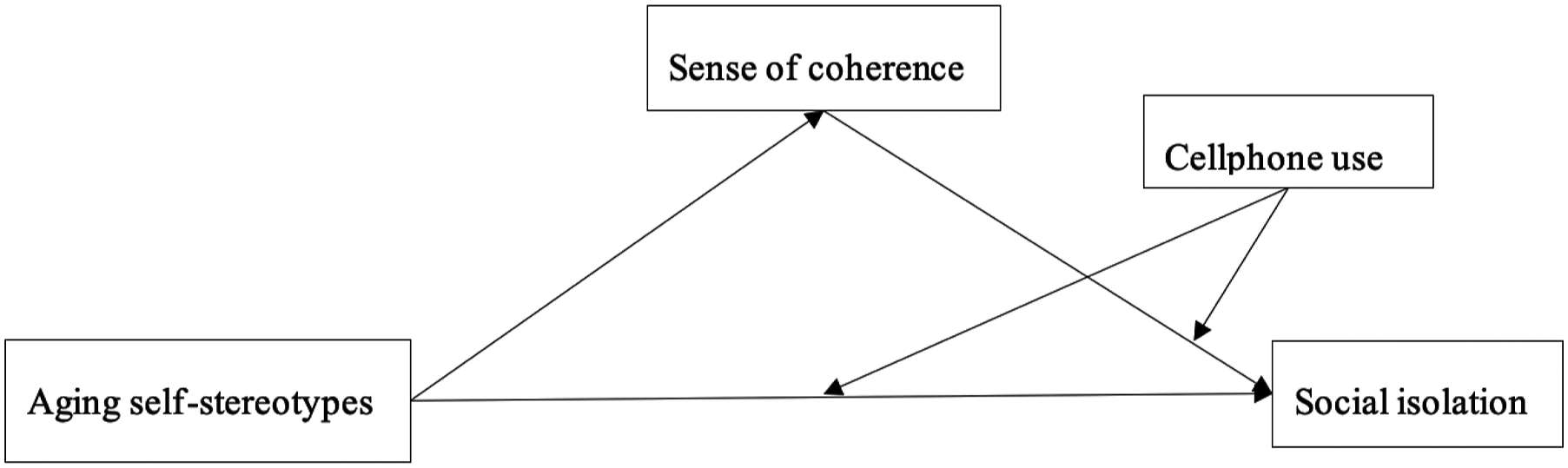
Method
Participants
The participants were recruited from six representative communities in Xi’an, China. We distributed posters and recruited participants in the neighborhood committee’s activity room or community square. We proactively invited older adults to participate in our survey in other parts of the community. Participants were also encouraged to invite their friends and acquaintances who may be interested in participating. The target population consisted of older adults aged 55 and above. A total of 825 participants were recruited, 817 valid questionnaires remained due to the questionnaires that were less than 80% completed were deleted. Thus, data from the 817 participants were included in the final analyses. The mean age of the participants was 66.28 years (SD = 6.81). Of the 817 participants, 536 were female and 281 were male; 681 were married, and 136 were single.
Procedure
This study first explained the procedure to the participants. All procedures performed in this study involving human participants were in accordance with the ethical standards of the Shaanxi Normal University research committee. All participants signed a consent form indicating that they were voluntarily participating in the measurement program and the assessment data would only be used for research purposes. The participants completed the paper-and-pencil questionnaires independently in separate, quiet cubicles, which were set off by partitions, thus preventing interference with each other. When needed, participants could ask the research assistant for help if they had any questions. All participants in the study received a gift worth over ¥20 as a reward.
Measures
Aging Self-stereotype
We used 10 items to measure the self-stereotype of older adults, six of which from the stereotypes subscale of the adapted version of the Fraboni Scale of Ageism (FSA) (Rupp et al., 2005). Another four items from a questionnaire assessing domain-specific age stereotypes developed by Kornadt and Rothermund (2011). These ten items were about negative stereotypes of older adults, which are the most consistent with the characteristics of the Chinese older adults and with the higher factor loads. The subjects of these items were revised to the first person. An example item is “I just live in the past.” The participants rated each item on a four-point scale ranging from 1 = “strongly disagree” to 4 = “strongly agree”, with higher scores representing higher levels of negative self-stereotyping. This scale has been proven to be of satisfactory reliability and validity among the Chinese older population (e.g., Dang et al., 2021; Xu et al., 2021). Cronbach’s α for the self-stereotyping scale was 0.70.
Sense of Coherence (SOC)
Sense of Coherence (SOC) was measured with the 13-item scales of a brief version of Antonovsky’s (1987) Orientation to Life questionnaire. A sample item is “Do you have the feeling that you are in an unfamiliar situation and do not know what to do?”. Participants were asked to respond on a seven-point Likert scale. The total SOC scores across 13 items were summed to form an index of SOC. Higher scores denoted stronger SOC. The Cronbach’s α for SOC in this study was 0.80.
Social Isolation
Social isolation was measured with the Lubben Social Network Scale (LSNS-6) developed by Lubben et al. (2006). LSNS-6 contains one set of three questions to assess kinship and another set of three questions to assess non-kinship: “(1) How many relatives/friends do you see or hear from at least once a month? (2) How many relatives/friends do you feel close to such an extent that you could call on them for help? (3) How many relatives/friends do you feel at ease with that you can talk to about private matters?”. Scores range from 0 to 30, wherein lower scores indicate a greater risk of social isolation (Cronbach’s α = 0.80).
Cellphone Use
Cellphone use was measured with four questions about the number of days to use the cellphone in the previous weekdays (From Monday to Friday) and weekend (Saturday and Sunday) and the number of hours and minutes they used a cellphone each day in the last weekdays and weekend. This score was calculated by the average number of hours of cellphone use per day. This scale has exhibited good reliability and validity in some other studies (e.g., Appel et al., 2012). The Cronbach’s α was 0.86.
Demographic Characteristics
All participants answered demographic information including their gender, age, and marital status.
Statistical Analysis
We calculated the descriptive statistics and correlations between variables with SPSS 22.0. Then, we used Hayes’s PROCESS macro to evaluate the model outlined in Figure 1. The significance of the indirect effects was determined using 95% confidence interval, which were based on 5000 bootstrapped resamples (MacKinnon et al., 2004). If the bias-corrected 95% confidence interval for an indirect effect did not include zero, the indirect effect was deemed significant at the .05 level.
Results
Descriptive Statistics and Correlations Between Variables
Means, standard deviations, and correlations between all variables (N = 817).
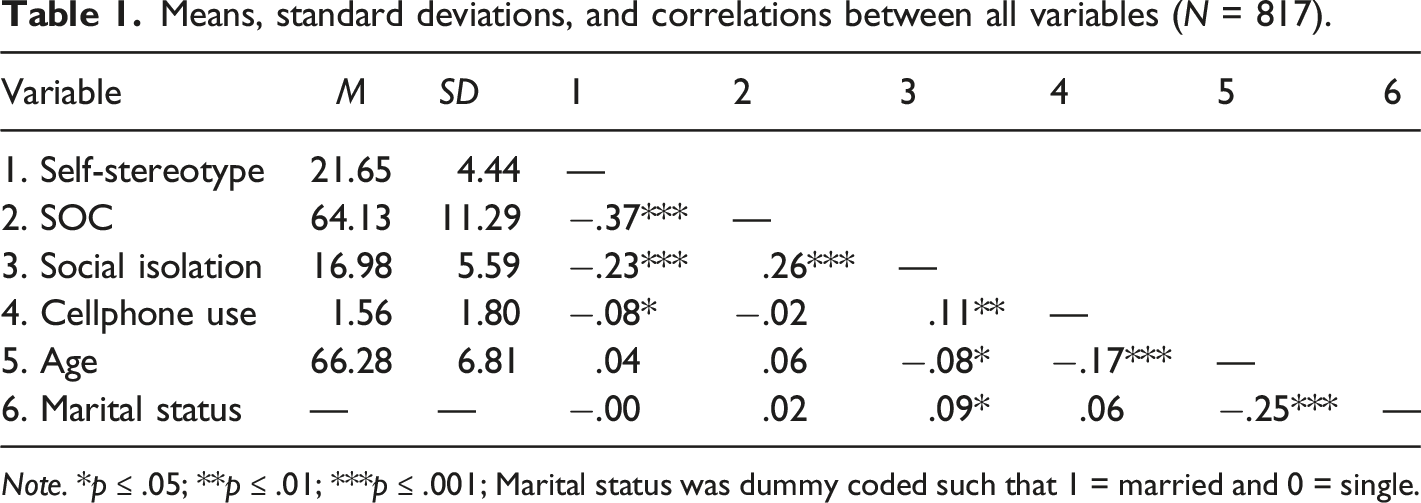
Note. *p ≤ .05; **p ≤ .01; ***p ≤ .001; Marital status was dummy coded such that 1 = married and 0 = single.
Mediation Tests
To test Hypotheses 1 and 2, we used Hayes’s PROCESS macro (Model 4) to examine the mediating role of SOC by the controlling age and marital status as covariates.
Testing the mediation effect.
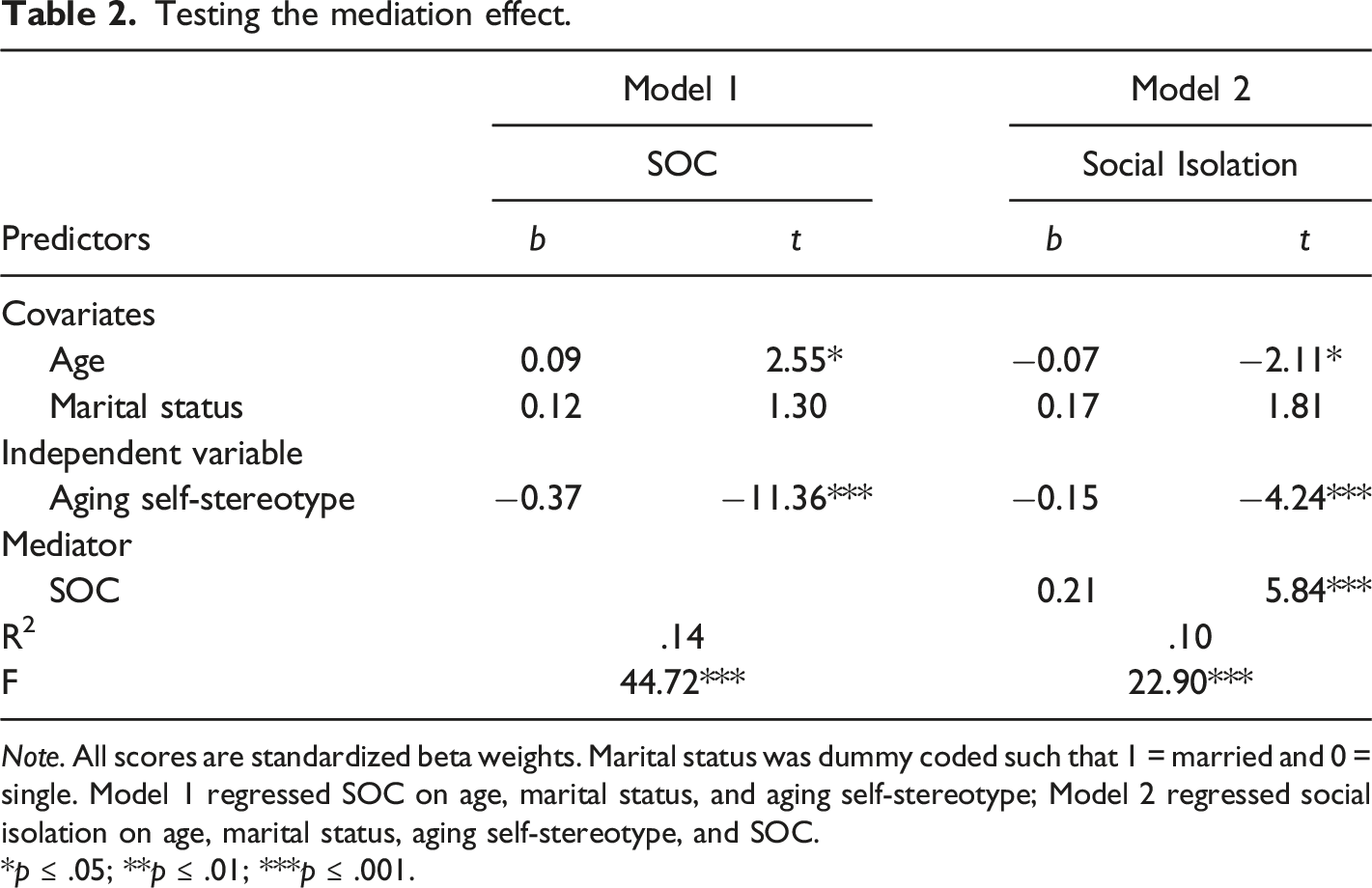
Note. All scores are standardized beta weights. Marital status was dummy coded such that 1 = married and 0 = single. Model 1 regressed SOC on age, marital status, and aging self-stereotype; Model 2 regressed social isolation on age, marital status, aging self-stereotype, and SOC.
*p ≤ .05; **p ≤ .01; ***p ≤ .001.
Moderation effects
Testing the moderated mediation effects.
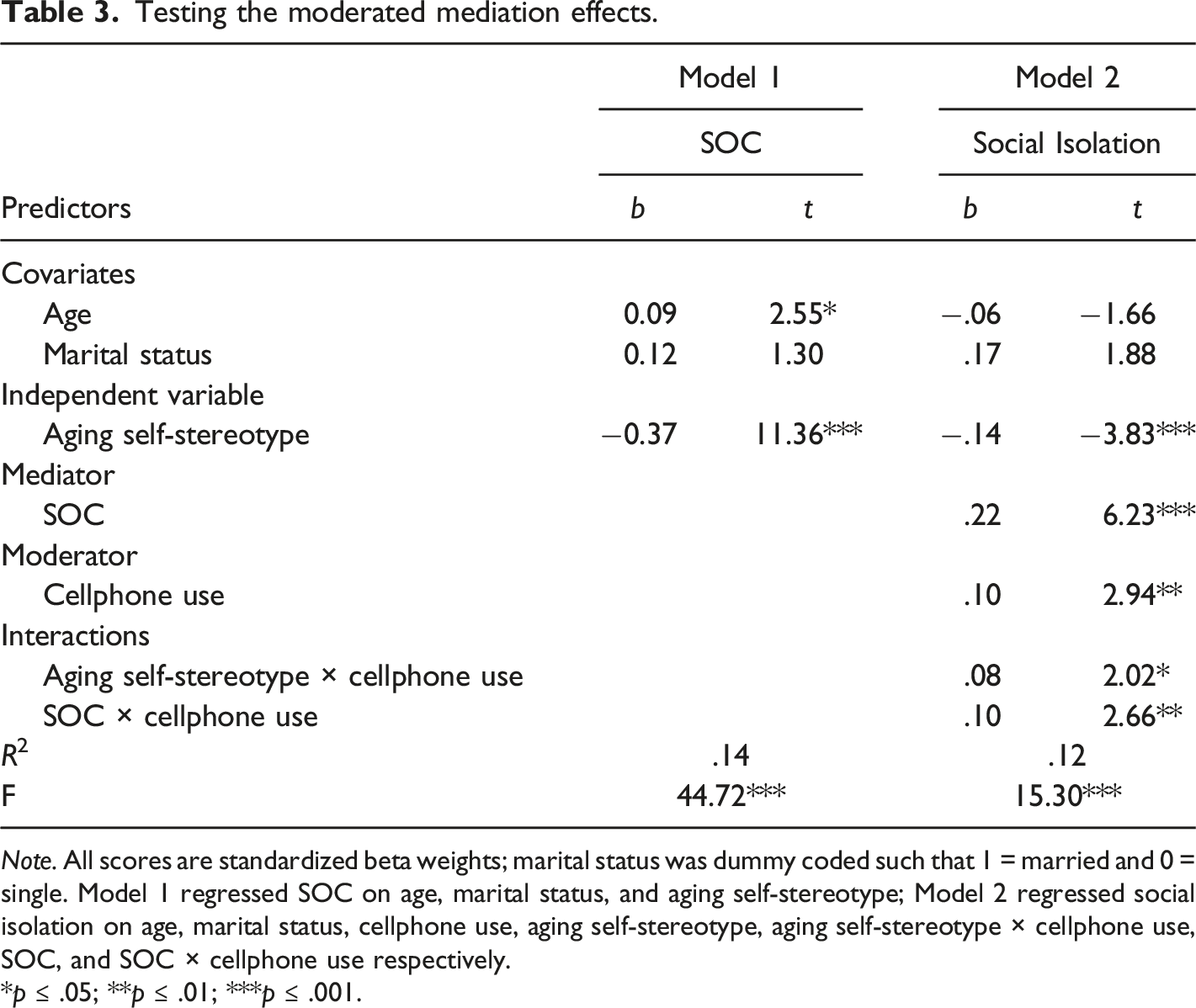
Note. All scores are standardized beta weights; marital status was dummy coded such that 1 = married and 0 = single. Model 1 regressed SOC on age, marital status, and aging self-stereotype; Model 2 regressed social isolation on age, marital status, cellphone use, aging self-stereotype, aging self-stereotype × cellphone use, SOC, and SOC × cellphone use respectively.
*p ≤ .05; **p ≤ .01; ***p ≤ .001.
Results revealed that the relationship between aging self-stereotype and social isolation was significant, and this effect was significantly moderated by cellphone use. We tested the interaction effect further at high and low levels of cellphone use (respectively, one standard deviation above the mean and one below the mean) to investigate the moderating effect. Results showed that for older adults with a low level of cellphone use, aging self-stereotypes were associated with social isolation (b
simple
= −.20, SE = .05, t = −4.30, p < .001). However, for older adults with a high level of cellphone use, aging self-stereotypes were insignificantly associated with social isolation (b
simple
= −.06, SE = .05, t = −1.11, p > .05) (see Figure 2(a)). The moderating effects of older adults’ cellphone use on the relationships between aging self-stereotype and social isolation (a), and SOC and social isolation (b). Lower scores of social isolation indicate greater risk of social isolation.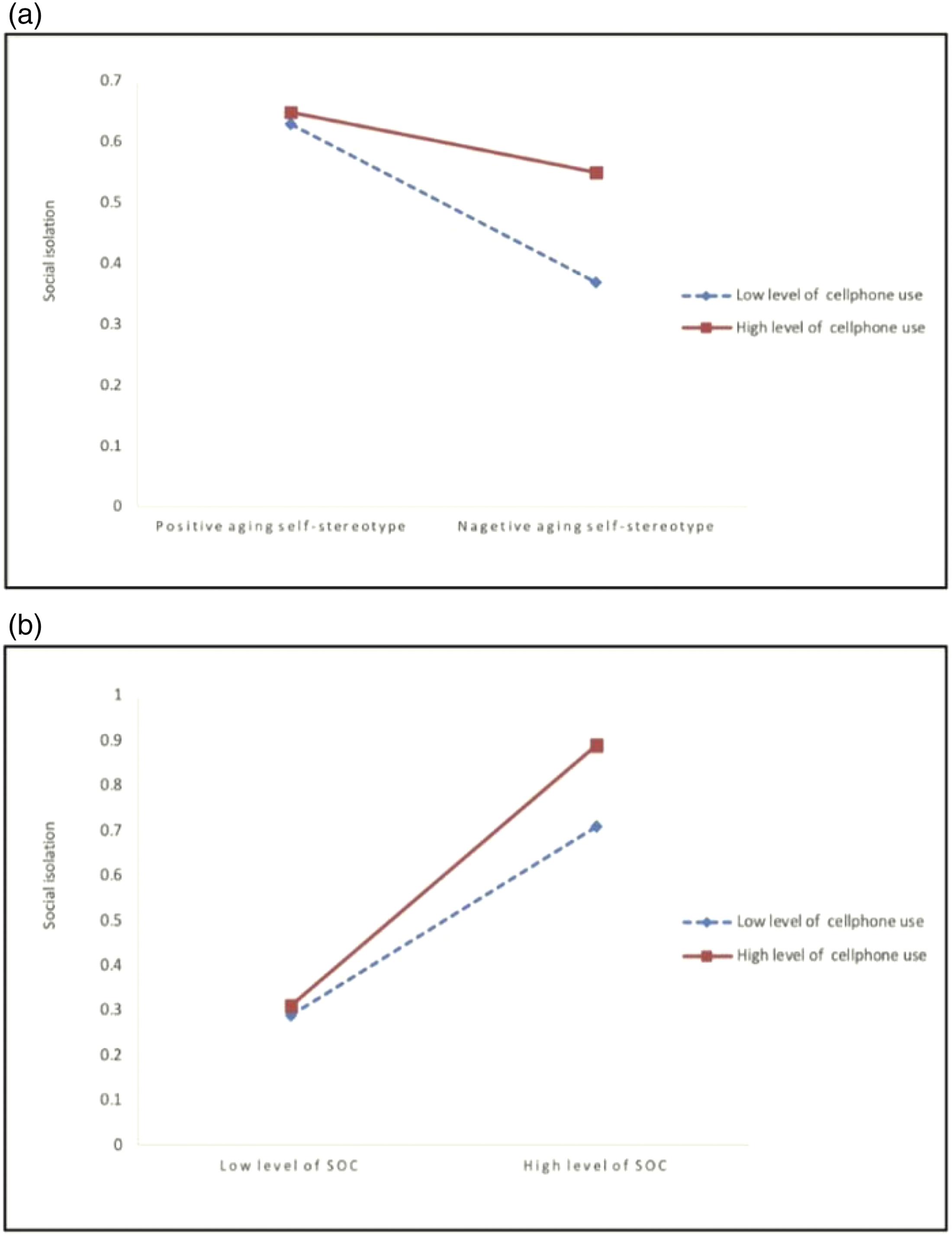
Results also indicated that SOC positively predicted social isolation, and the effect was significantly moderated by cellphone use. We also tested the interaction effect at high and low levels of cellphone use to investigate the moderating effect. Results showed that the association between SOC and social isolation was stronger for older adults with a high level of cellphone use (b simple = .33, SE = .06, t = 5.88, p < .001) than that for older adults with low levels of cellphone use (b simple = .14, SE = .05, t = 2.91, p < .01) (see Figure 2(b)).
The moderated mediation effect was significant (index = −0.04, Boot SE = 0.02, Boot CI [−0.0702, −0.0051]). The results of a simple slope analysis showed that the conditional indirect effect of self-stereotypes on social isolation via SOC was stronger for older adults with a high level of cellphone use (b simple = −0.12, Boot SE = .03, Boot CI [−0.1716, −0.0714]) than for the older adults who use cellphone for a shorter time (b simple = − 0.05, Boot SE = .02, Boot CI [−0.0900, −0.0115]).
Discussion
This study established a model to test the relationships between aging self-stereotype, SOC, and social isolation, and further examined the moderating role of cellphone use. Results indicated that a significant correlation exists between aging self-stereotype and social isolation, and the relationship between aging self-stereotype and social isolation can be partially explained by SOC. That is, negative aging self-stereotypes would predict lower SOC, while lower SOC could predict severe social isolation. Cellphone use also moderated the path between aging self-stereotype and social isolation as well as that between SOC and social isolation. The following sections will discuss each of the research hypotheses in light of this moderated mediation model of aging self-stereotype and social isolation.
With regard to the first hypothesis, the negative association between aging self-stereotype and social isolation was confirmed in older adults. This result was consistent with the findings of previous literature (Cheng, 2017, 2020; Menkin et al., 2017), which revealed that negative aging stereotypes lead to less social interaction and less perceived social support. It is probably because that aging stereotypes of older adults may weaken the motivation to socialize and disrupt the quality of social interactions by increasing social anxiety (Menkin et al., 2017). Thus, the aging stereotype is a crucial contributor to social isolation among older adults.
As expected by hypothesis 2, SOC is as a mediator between the aging self-stereotype and social isolation. Given the important role of SOC in coping with stressors or enhancing health (Eriksson et al., 2007), identifying the mediating effect of SOC is noteworthy because it indicates that the mechanism through which aging self-stereotype affects the social isolation involves the restriction of their capacity to manage stress. According to the life-span theory of control (Heckhausen et al., 2010), individuals have to adapt and cope with constant changes at various stages of life. SOC is a key issue in the adaptation and integration of dynamical changes in later life (Silverstein & Heap, 2015). Some studies have found that stereotypes not only affect individuals' problem-solving and stress-coping abilities, but may also lead to cognitive depletion (Levy, 2003). Cognitive depletion may reduce an individual’s understanding of external stressors and thus affect SOC. Self-stereotypes not only are stressors themselves, but are also factors that can diminish individuals' ability to mobilize the generalized resistance resources and to adapt to stressful situations. However, social isolation is also affected by SOC. SOC provides a mechanism by which older people aggregate their life-strengths that nourish their striving for life satisfaction (Fry & Debats, 2010). If older adults have enough internal resources to adapt to the stressors, the interpersonal balance can be promoted and even the social network can be further expanded. Thus, the SOC mediated the relationship between aging self-stereotype and social isolation.
With regard to the third hypothesis, older adults with higher levels of cellphone use are more likely to get rid of social isolation. The relationships between aging self-stereotype and social isolation, as well as between SOC and social isolation, were significantly moderated by cellphone use. Cellphone use, which offers a multitude of other functions beyond calling, sending and receiving messages; for instance, the Internet use on such devices is widespread. Thus, in addition to serving as a communication tool to facilitate communication and maintain social relations, cellphones can also be used by older adults to obtain social news and engage in leisure and entertainment. Consistent with the stereotype embodiment theory (Levy, 2009), as older adults gain access to more diverse social cultures and are exposed to more forms of social interaction through their phones, the harm of such negative stereotypes on social isolation will be reduced. Cellphone use also facilitates the use of coping strategies by providing a channel for seeking help (Gere et al., 2020). Older adults can easily obtain more news and information through their cellphones, which could help them understand the changing world. Older adults with the high frequency of internet use can better deal with life and emotional stresses to get along better with others (Slegers et al., 2008). Therefore, the high level of cellphone use highlights the mediating role of SOC between aging self-stereotype and social isolation. Specifically, the SOC stronger significantly predicts social isolation for older adults with the high level of cellphone use.
Implication and Limitation
This study has important theoretical implications. To our knowledge, the present study was currently one of only a few studies that assessed the effect of aging self-stereotype on social isolation and explore the role of SOC and cellphone use between this relationship. This study enhanced the understanding of aging stereotype theory. They further showed that SOC is an important psychological mechanism in old age and enriched the theory related to SOC in elderly populations.
Moreover, this study has significant practical implications. To begin with, the results highlight the importance of aging self-stereotype in preventing social isolation among older adults. We should prioritize prevention and interventions for older adults with more negative self-stereotypes. Thus, our research provides clues that improving negative aging self-stereotype can help reduce the social isolation of older adults. For example, a previous study found that an implicit-positive-age-stereotype intervention, which could strengthen positive age stereotypes and weaken negative age stereotypes effectively (Levy et al., 2014), and may reduce social isolation. Second, the moderating role of cellphone use provide insights for potential interventions. Realizing that people with higher levels of the cellphone use are more likely to get rid of social loneliness is helpful. Training older adults to use more functions of their cellphone possibly contribute to the prevention or reduction of the physical and psychological harms linked to social isolation. The cellphone and application design will need to pay attention to the deep psychological needs of older adults, such as large fonts, big sound and voice prompt to solve prominent problems quickly for older adults to use cellphones. Therefore, individuals, families, societies and the government should make joint efforts to help older adults to use the cellphone, and then bridge the digital divide.
However, several limitations of this study should also be noted. First, this study was cross-sectional and cannot infer causality. Future research should replicate our model by using a longitudinal design. Second, this work would have been strengthened if various types of cellphone use had been included, such as interpersonal communication, information, task performance, and leisure. Studies using both communication applications and leisure applications (e.g., the gaming system, or a virtual pet companion) consistently presented a positive effect on alleviating loneliness (Chen & Schulz, 2016). Nevertheless, a recent study by Tang et al. (2022) also discovered that interpersonal communication by Internet use (i.e., voice, video, and text chat) can expand the older adults' social networks, while information seeking by Internet use (e.g., reading, listening music, shopping, playing games, studying, and navigation) may take time away from older adults' offline interactions with others, eroding the possibility and necessity of older adults' interactions with others, which may lead to social isolation. Identifying how specific aspects of cellphone use may moderate the relationships would aid in the development of cellphone functions to intervene in the social isolation of older adults. Furthermore, more technological devices appear in our life, such as laptops, tablets and smartphones. Future studies could teach older adults to use various devices from the perspective of intervention to observe the different effects of different devices on their physical and mental health. Third, the self-report measure was adopted to collect data on all variables, which could be influenced by social desirability, especially with the measure of approval when filling in conduct problems. In the future, the measurement could be based on the evaluation of multiple reporters; for instance, collecting social isolation status from friends and family members, cellphone usage time could be collected by objectively reporting in some applications to make the results more authentic. Lastly, the current study only recruited Chinese older adults as participants. The social networks of the older adults in China may differ from those in western countries. In China, older adults attach importance to family relations, and quite a number of them even live together with their children. Therefore, cross-cultural research can be conducted in the future to explore the findings of this study further.
Footnotes
Author Contributions
Yao Lin, as the first author was responsible for data analysis and drafting of the article. Baoshan Zhang, as the corresponding author designed the study and revised the paper. Yuting Ma was responsible for revised the manuscript.
Declaration of conflicting interests
The author(s) declared no potential conflicts of interest with respect to the research, authorship, and/or publication of this article.
Funding
The author(s) disclosed receipt of the following financial support for the research, authorship, and/or publication of this article: This research was supported by the National Social Science Fund of China (17BSH153) and the Fundamental Research Funds for the Central Universities (2021TS096).
Ethics approval
All procedures performed in studies involving human participants were in accordance with ethical standards of the Shaanxi Normal University research committee (17BSH153) and with the 1964 Helsinki declaration.
Consent to participate
Informed consent was obtained from all participants included in this research.
