







Abstract
People sometimes limit themselves to doing what is explicitly expected of them and purposely avoid engaging in socially desirable behaviors. Against this background, this study tested a moderated-mediation model based on Conservation of Resources theory and equity theory in academic context through a mixed-methods approach. More specifically, it examined the role of equity sensitivity in influencing the indirect effect of teacher injustice (TI) on classroom citizenship behavior (CCB) through burnout. Results achieved through a four-wave data collected from Pakistani nursing students partially supported the model. They demonstrated that while burnout serves as a mediator in the TI–CCB relationship, the mediation effect is independent of the level of equity sensitivity. A follow-up focus group was also conducted whose findings gave additional details regarding the psychosocial processes underlying the effect of TI on targeted students’ attitudes and behaviors. Overall, the study offers theory- and evidence-based insights into the CCB withdrawal process, and provides guidance to education management practice and research.
Introduction
Prosocial behaviors of students, such as classroom citizenship behavior (CCB), are the foundation on which supportive, enabling, inclusive, safe and violence-free environments are built, which subsequently contribute to an overall, altruistic culture for the school (Brown et al., 2012; McGiboney, 2016). This behavior aims to benefit the school overall, its constituents, or both, such as by making effort to keep the classroom clean, participating in study groups, and building rapport with teachers and classmates (Myers et al., 2016). Classroom citizenship behavior can contribute to the betterment of the school, leading to enhanced competitive positioning and performance, and its individual members, including the welfare of the recipients of this behavior (Clark et al., 2022; Di Fabio & Kenny, 2018; Nejati & Shafaei, 2018). Moreover, the students who engage in CCB might get positively affected themselves too, to the extent that their social standing improves when their prosocial behaviors are acknowledged and rewarded.
Then why is it that students sometimes purposely avoid engaging in CCB despite the beneficial outcomes they might lose as a result? Past research has identified certain factors that compel students to withdraw the enactment of prosocial behaviors, such as social exclusion (Arslan, 2021), teacher–student rapport (Obsuth et al., 2017), peer influence (Park & Shin, 2017), social support (Guo, 2017), or social class differential (Ding et al., 2021). Each of these factors is a source of considerable frustration for students that compromises their decision making and social functioning. Another important yet understudied source of psychological distress is perceived teacher injustice (TI). TI refers to students’ judgements that their teacher’s behavior violates the norms of social justice and equality (Dalbert & Stoeber, 2006; Donat et al., 2012). Typical examples of TI may include betraying confidences, giving unearned privileges, ignoring concerns, denying equal opportunity for classroom participation, and creating in-groups and out-groups. Unfair behavior of teachers is not only a denial or violation of students’ fundamental rights (Dueck, 2019) but an impediment to the satisfaction of their basic psychological needs (Marcin et al., 2019). The limited but growing literature on TI has shown that TI exerts a negative influence on students’ psychological health (Mameli et al., 2018), leading to several adverse outcomes, such as negative affect (Chory-Assad & Paulsel, 2004; Mameli et al., 2021), impaired self-esteem (Donat et al., 2016) and diminished sense of school identification (Jiang et al., 2018).
While past research has focused primarily on the outcomes of CCB (e.g., Dou et al., 2019; Ehtiyar et al., 2010), inquiries into its facilitators or inhibitors are scant. The present study aims to fill this gap by identifying and understanding the factors that inhibit CCB. Thus, this study’s overarching objective is to determine how and why TI may lead to dysfunctional outcomes, in the form of CCB withdrawal. First, an underlying mechanism through which TI hinders CCB acts may be the degree to which students experience burnout: a state of exhaustion resulting from prolonged and excessive stress (Hobfoll & Freedy, 1993). Individuals who experience this chronic stress-related syndrome feel depleted and helpless, and no longer able to give off themselves to others (Ledgerwood et al., 1998). Accordingly, this study proposes that the stress induced by routine exposure to teachers’ unfair behavior mentally and emotionally exhausts targeted students to such an extent that they develop burnout, which then causes them to withhold CCB efforts as a tactic to express their resentment and conserve their valued resources. Second, this study postulates that individual differences in equity sensitivity increase students’ susceptibility to injustice and also critically determine their psychological and behavioral responses to unjust treatment. More specifically, equity sensitivity accelerates the depletion of students’ coping resources at school in the face of TI, which consequently diminishes the likelihood of their engagement in CCB activities.
To ground the arguments regarding the inverse relationship between TI and CCB, and the two pertinent variables that influence or explain this relationship, the present study uses Hobfoll’s (1989) Conservation of Resources theory (CoRT). According to CoRT, people’s desire to conserve their available personal resources and avoid resource depletion is instrumental in shaping their attitudes, behaviors and perceptions. This establishes the basis for two major premises. First, actual or perceived resource loss due to stressful contextual circumstances triggers negative beliefs, feelings and responses in individuals that allow them to combat any such loss. Second, certain personal-level factors can fuel this process, particularly those that increase the intensity or the likelihood of contextual adversity to harm individuals’ valuable resources (Hobfoll, 1989; Hobfoll et al., 2018; Wright & Hobfoll, 2004).
Resources, in CoRT, refer to “those things that people value or that act as a means of obtaining or protecting that which they value” (Hobfoll & Spielberger, 1992, p. 108). Accordingly, this study emphasizes the potentially important role of students’ emotional and self-esteem related resources, which they seek to acquire, maintain and protect fiercely. More specifically, it argues that students subjected to TI, at a minimum, feel ignored, excluded, rejected and isolated (Jiang et al., 2018). Furthermore, its frequent exposure may undermine students’ confidence in their own worth or abilities and generate self-depreciating thoughts, making them irrational and self-undermining. Based on Hobfoll’s theorization, the resource-draining experiences of TI may consequently activate students’ defense system to protect their valuable resources, often leaving them exhausted, overwhelmed and more prone to negative thoughts and emotions. Supporting this theory, the present study postulates that TI may burn-out students in their attempt to guard their psycho-emotional resources, and impede their CCB efforts in consequence.
Next, despite the increasing knowledge that personality predicts psychological states that impede/facilitate the enactment of certain behaviors, there are theoretical gaps in the understanding of ‘why’ certain traits influence CCB. Linking CoRT with social justice and psychology research, this study argues that the personality–behavior relationship can be understood through the fact that people with different personalities have different preferences for input/outcome ratios, and have different tolerances for unequal treatment—also called differences in ‘equity sensitivity’ (Huseman et al., 1987). Some individuals are more input-oriented and tolerant of being under-rewarded, while others are more outcome-oriented with lesser under-reward tolerance. Hence, a student’s equity sensitivity should determine the extent of their CCB engagement in the face of TI. Feelings of being under-rewarded compared to their inputs and receiving poor treatment compared to classmates may engender negative feelings and responses in students (e.g., anger, frustration, protest, and retaliation), which contribute to burnout syndrome. Burnout makes one feel that they are emotionally depleted, powerless, and have nothing more to offer (Awa et al., 2010; Latino et al., 2021), and thus it may ultimately culminate in reduced CCB engagement of targeted students. Hence, equity sensitivity aggravates the escalation of TI into reduced CCB through a heightened experience of burnout.
This study contributes to the literature in two important ways. First, it adopts Hobfoll’s (1989) CoRT to better understand how CCB is deactivated in students. More specifically, it predicts that TI, as a social stressor, will exhaust students’ centrally valued resources that support them at school (e.g., positive affect and self-worth) and trigger burnout syndrome as a result (Alarcon, 2011; Alarcon et al., 2011; Wright & Hobfoll, 2004). Burnt-out students will only have enough resources to complete their school-specified tasks, and will therefore be reluctant to do anything extra even if it benefits them or their class. This study argues that by considering the TI–burnout–CCB pathway, it may be able to develop a holistic understanding on why TI victims engage less in CCB. Furthermore, by empirically examining the mediating effect of burnout, the study hopes to offer insights into the possible ways in which the series of events from TI to CCB can be stopped. If burnout actually mediates the TI–CCB relationship, neutralizing TI’s negative effect on burnout might be a possible strategy to lessen the intensity of the negative aftereffects of TI on the voluntary behavior of students.
Second, this study enquires into the concept of equity sensitivity to address the question that which students are likely to perceive TI more negatively than others and, as a result, get for more affected by it. Although the literature is devoid of any specific attempts to summarize, categorize and/or relate students’ individual characteristics with perceptions of TI, limited research has demonstrated that individual differences among students interact with teacher behavior to predict important school-based outcomes (e.g., Du et al., 2019; Martin & Rimm-Kaufman, 2015). This study proposes that one particular personality difference, i.e. equity sensitivity, may increase students’ susceptibility to unjust treatment and critically determine their psychological and behavioral responses to that treatment. More specifically, equity sensitivity serves an aggravating function, so the conversion of TI into reduced CCB due to a lack of interest and concern towards the improvement of classroom climate and relations, becomes more likely when students are more sensitive to the violations of equity norms.
To summarize, the present study has a two-fold purpose. First, to quantitatively answer four research questions: (i) can unfair behavior of teachers decrease students’ CCB engagement, (ii) does burnout mediate the TI–CCB relationship, (iii) does students’ equity sensitivity moderate the effect of TI on burnout, and (iv) does equity sensitivity moderate TI’s indirect effect on CCB via burnout. Second, to qualitatively gain a better and in-depth understanding of the psychological mechanisms underlying CCB withdrawal. Anchored in CoRT, a moderated-mediation framework is developed (see Figure 1) which will be test using mixed-methods approach. Results of this study are expected to provide theory- and evidence-based insights into the withdrawal process of CCB, and contribute to prosocial behavior research in the field of education. The study will help the administrations of educational institutions to understand and control factors that impede CCB acts, and also inform them about the measures that could be taken to counteract the negative effects of those factors. The proposed research model.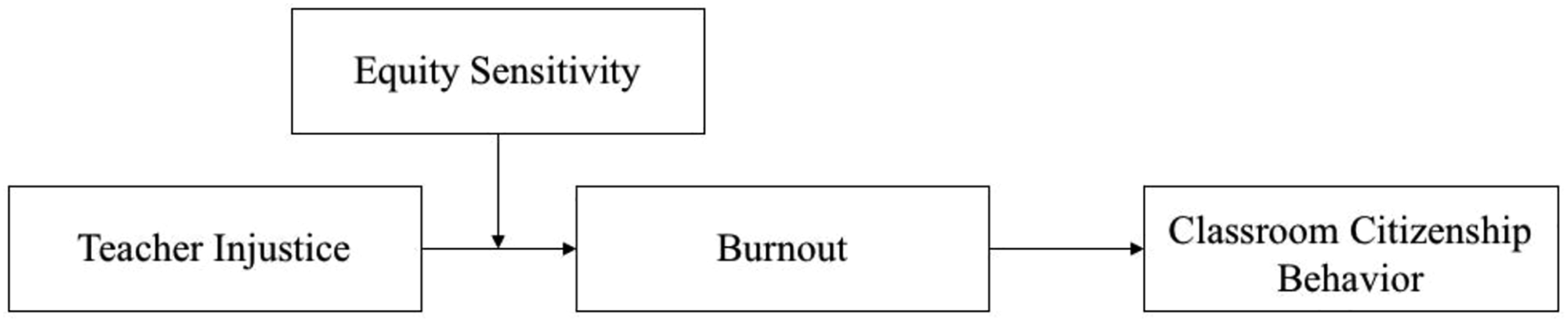
Literature Review and Hypotheses Development
Teacher Injustice
Injustice and its implications for individuals’ behavior, development and wellbeing in the social context have been studied quite extensively in organization psychology literature (e.g., Wolfe & Lawson, 2020). Whereas, only recently have educational scientists begun to question whether injustice is related to individuals’ motivation, learning, engagement and achievement in the academic context (Marcin et al., 2019). The limited research suggests that students’ perceptions of injustice can shape their experience of school, and significantly influence their emotional, attitudinal and behavioral outcomes (Chory-Assad & Paulsel, 2004; Donat et al., 2016, 2018). However, the literature still lacks theory-based studies that empirically investigate the potential effects of injustice on students’ school-related outcomes.
This study argues that teachers, by virtue of their position in the classroom, can be the principal source of injustice in school context. Teachers have a legitimate authority to enforce discipline, correct students, conduct assessments, give feedback, and provide rewards and opportunities. However, students often perceive their teachers’ withholding or dispensing of punishments or privileges, assignment of grades, and even the teacher–student interactions themselves as unjust (Peter et al., 2012). Teacher justice, the antithesis of TI, is defined as a student’s personal and subjective experience of the teachers’ behavior towards him/her personally (Dalbert & Stoeber, 2006). TI can be manifested through teachers’ disrespectful, insensitive, preferential, silent, discriminatory or stereotypical treatment of students. Research shows that TI can explain significant variance in many of students’ school-based outcomes, including school distress and social functioning (Mameli et al., 2018), class identification (Jiang et al., 2018), school belonging (Jiang et al., 2019), learning engagement (Mameli et al., 2021), and academic achievement (Mameli et al., 2020). Also, students’ perceptions of TI are associated with the non-fulfillment of their basic psychological needs of autonomy, relatedness and competence (Marcin et al., 2019).
Conservation of Resources Theory and Teacher Injustice
The role of TI in inducing burnout and subsequently hindering students’ CCB enactment can be explained through CoRT. CoRT (Hobfoll, 1989, 2011) posits that individuals are motivated to acquire, maintain and defend resources they use to overcome difficult situations and achieve their goals. These resources include objects (e.g., money), conditions (e.g., friendship), personal characteristics (e.g., self-concept) and energies (e.g., knowledge). There are two salient principles of CoRT. One, resource loss is more significant than resource loss: the stress caused by loss overpowers the satisfaction derived from gain, and also has stronger psychological impact. Two, when individuals experience loss, they become more vulnerable to further loss. The theory explains that when resources are lost, threatened or not replenished sufficiently due to contextual or relational stressors and role demands, individuals experience different stress reactions, including burnout (Hobfoll & Shirom, 2000; Wright & Hobfoll, 2004). To cope with the stress, individuals struggle to recover resources and, in doing so, may engage in behaviors that are self-defeating or counterproductive (Hobfoll, 1989).
That being so, TI, as a contextual stressor, may not only trigger various negative psychophysiological responses in targeted students by depleting their centrally important resources (e.g. self-esteem) but also threaten their social relations in the classroom which reduces the possibility of securing additional resources (e.g., peer support). Furthermore, since teachers can behave unfairly for a multitude of individual factors (e.g., misunderstandings and misjudgments), contextual issues (e.g., poor internet connection in online class), valid reasons (e.g., student misbehavior) or invalid reasons (e.g., favoritism), victimized students may expend their mental resources in determining the reason for receiving unfair treatment. Thus, TI victims who experience stress-induced states like burnout may find themselves limited in their ability to engage in CCB because their leftover resources are used in mandatory schoolwork, and nothing much remains to spend on non-essential or extra behaviors like CCB.
Teacher Injustice and Classroom Citizenship Behavior
CCB is a discretionary behavior that goes beyond what is typically done and explicitly expected of a student and, in the aggregate, promotes the effective functioning of the classroom (Gefen & Somech, 2019; Myers et al., 2016). Disengagement in CCB can be viewed as a maladaptive passive-defensive response to adversities, like social injustice. Among the various potential sources of injustice in academia, this study focuses on TI because teachers and learners constitute the two main entities in the education context. The interpersonal exchanges between them have been found to greatly influence the attitudes and behaviors of students (e.g., Zhang & Lin, 2020). It is therefore important to consider the implications of injustice in the daily teacher–student interactions. This study proposes that TI may influence students’ discretionary behaviors, and ultimately impede the attainment of their socio-academic goals. Specifically, unjust treatment by teachers will cause discomfort to students, which may make it difficult for them to practice CCB.
Based on CoRT, it is expected that TI may undermine students’ CCB performance. CoRT proposes that individuals strive to protect their valued resources in the face of actual or perceived resource loss (Hobfoll, 1989). As a stress factor, TI exhibits rejection, distrust, undervaluation and disrespect (Donat, Knigge, & Dalbert, 2018), which may make students feel alienated (Marcin et al., 2019) and consequently consume their limited resources including self-esteem (Donat et al., 2016) and sense of relatedness (Frisby et al., 2020). Furthermore, teacher support is an indispensable resource for student engagement (Havik & Westergård, 2020), which can motivate voluntary acts of CCB. However, an unjustly treated student is not likely to receive any recognition and support from his/her teacher. Accordingly, TI may be conceptualized as a sort of resource loss in regard to social support (Marcin et al., 2019) and mental health (Kamble & Dalbert, 2012). To prevent further resource loss, victimized students may be unwilling to devote energy, time and other resources in performing acts not specifically required of them.
Consistent with this reasoning, this study predicts that unfairly treated students will decrease their involvement in CCB acts to conserve their already limited resources. Hence, the following is hypothesized:
Mediating Role of Burnout
Burnout is a psychological syndrome resulting from the experience of excessive and prolonged stress embedded in the context of social relationships (Maslach & Leiter, 2008). Burnt-out students feel emotionally exhausted because of school demands, detached from and cynical toward their peers and teachers, and inadequate in terms of schoolwork (Dyrbye & Shanafelt, 2016; Shen et al., 2015). Burnout is found to predict a broad range of school-specific outcomes, including decreases in learning, motivation, engagement and performance, and also has important implications for students’ personal health and wellbeing (e.g., Salmela-Aro, 2017; Virtanen et al., 2016). According to this view, burnout is of utmost relevance and importance in the context of CoRT.
This study argues that victims of TI may feel exhausted because of their teacher’s apparent biasedness, discrimination and favoritism. They are also likely to ruminate over what they might have done to deserve such treatment, which may further heighten their exhaustion. Hence, due to TI, students may experience an unpleasant situation that will quickly deplete their psychological resources, and eventually lead to burnout. CoRT suggests that personal resources like psychosomatic energy and emotional wellbeing are critical in helping individuals to cope with and fortify against social stressors (Hobfoll, 1989). Accordingly, when targeted with TI, students invest those aforementioned resources to effectively manage stress and its resulting responses. Since these resources are limited in nature, and the injustice may occur repeatedly and over time against a victim who cannot easily defend himself/herself, he/she may develop burnout in dealing with it.
The study further claims that burnt-out students are more likely to focus only on their obligatory behaviors, like observing discipline, and are less inclined to exhibit prosocial behaviors, like CCB, that leave a positive effect on the teaching institution and its members. Past research has confirmed that burnout leads victimized students to conserve their remaining resource reserves (e.g., Erschens et al., 2018; Fares et al., 2016). A feasible strategy to do so would be to reduce their engagement in non-rewarding voluntary behaviors. Since CCB acts (e.g., active engagement in classroom discussions and helping classmates with schoolwork) can be resource intensive in terms of time, attention and energy required, burnt-out students may avoid practicing them. Students’ experiencing burnout feel fatigued and helpless (Shoaib et al., 2017), and thus, may have insufficient extra resources to participate in CCB despite their desire to make a difference. Simply put, students experiencing burnout will have limited resource reserves which they can either use for mandatory schoolwork or activities that are optional. Naturally, they will give priority to the former over discretionary acts that are neither graded nor extrinsically rewarded.
Combining the arguments presented above, it is predicted that TI victims will gradually develop burnout syndrome which will, in turn, keep them from displaying CCB as a resource-conservation strategy. Hence, the following is hypothesized:
Moderating Role of Equity Sensitivity
In agreement with social comparison theory (Goethals, 1986), this study postulates that when students experience TI, they compare their experiences with their classmates’ as they are taught by the same teacher(s). Rooted in the equity theory (Walster et al., 1973), equity sensitivity is a concept that captures this notion very well. Equity sensitivity reflects a person’s equity preference and explains how that preference influences his/her interactions with others (Han et al., 2018). Huseman et al. (1987) specifically propose that as regards individuals’ preferences in their social exchanges, they can lie on a continuum from benevolent to equity sensitive to entitled. Benevolent individuals are ‘givers’ who like being on the giving end of a social relationship, and prefer their outcome/input ratio to be less than that of their comparison others. Equity sensitive individuals strive to maintain a fair balance in their social exchanges. They are satisfied when their output-to-input ratio is equal to their peers’ ratio, and experience distress when they are over- or under-rewarded. Finally, entitled individuals are ‘getters’ who like being on the receiving end of an interpersonal exchange. They prefer their output/input ratio to be more that of their comparison others, and feel distressed when their own personal outcomes are not maximized in social interactions (Huseman et al., 1987; Miles et al., 1994). King et al. (1993) modified Huseman et al.’s conceptualization of equity sensitivity by replacing the idea of ‘preference’ with ‘tolerance’. Particularly, they argued that highly benevolent people do not perceive, enjoy, or prefer being under-rewarded as equitable, rather they have a much higher tolerance for being under-rewarded than people who are highly “equity sensitive” or highly “entitled”. This argument holds the same, albeit oppositely, for entitled individuals.
Overall, among the three, benevolents have the lowest threshold of fairness. Being interpersonally oriented, they have a greater sense of commitment and responsibility toward others (Han et al., 2018; Miles et al., 1994; Yamaguchi, 2003). They are therefore less likely to withdraw socially desirable behaviors even if they are inappropriately treated and get insufficient support. Contrarily, entitleds are generally self-centered people who are primarily concerned with their own rights and wellbeing (Allen et al., 2015; King et al., 1993). Since, they are more interested in serving their self-interests and have a transactional approach to interpersonal relationships (Grant, 2013), entitleds feel less obligated to give back. That being so, entitleds will value citizenship behaviors, but they will feel exempted from those behavior themselves and expect others to do their share.
This study proposes that equity sensitives are likely to lower their citizenship performance in the face of relational stressors. Reason being that such people are not only more likely to interpret ambiguous social situations in terms of inequity, but may also experience intense feelings of distress when inequity occurs and ruminate extensively about unfair events. More precisely, equity sensitive students will compare their own TI experience with their peers’ and may voice their concerns. This will deteriorate the quality of classmates’ interactions because the non- or less-targeted students may not be able to understand the feelings and relate to the problems of their targeted peers, which may create intra-class hostility and diminish the bonds among classmates. Equity sensitives may thus find it difficult to get consolation and comfort from the classmates, which may consequently engender negative emotions, desire for retribution and antisocial tendencies. This will not only intensify their experience of burnout, but also create a resource-loss spiral that obstructs CCB.
Considering this rationale, it is predicted that equity sensitivity is a key boundary condition which will influence the intensity of the relationship between TI and CCB mediated by burnout. Hence, the following is hypothesized and the same is graphically depicted in Figure 1.
Methodology
This study used a mixed-methods sequential explanatory approach (Creswell, 2013) to develop an insightful understanding of students’ cognitive and behavioral responses to perceived TI that would only be partially explained by qualitative or quantitative data alone. This research approach would give a better understanding of the TI–CCB relationship and yield more complete evidence, allowing researchers to gain both depth and breadth. The researchers collected data over time in two sequential phases. First, survey-based quantitative data were collected and analyzed through SPSS Statistics and SPSS Amos to test the research model, and later, interview-based qualitative data were collected and analyzed manually through Consensual Qualitative Research (CQR) method to obtain a vivid and full description of findings from the first (quantitative) phase.
Sample and Procedure
Being a universal phenomenon, TI and its detrimental effects can be examined at any educational institute or level of education. However, this study specifically focused on nursing schools in Pakistan for data collection due to the reason that the researchers had first-hand knowledge of TI incidents at those schools and the struggles students face there because to it. To collect data for testing the predictions mentioned above, the heads of nursing departments at four private universities in Islamabad and Rawalpindi (Pakistan) were contacted through personal and professional references, and were briefed about the study. Upon their approval, the research team visited each university and obtained class-wise records of the students enrolled in different nursing programs. This study adopted a stratified multistage cluster sampling design to ensure sample representativeness, avoid unintended selection bias and enhance the inferential value. Randomly selected students, stratified by class, program, and university, were personally approached by the research team after the regularly scheduled classes. No monetary reward was offered in exchange of participation. Students were excluded from participation if they were in first semester or did not have a full course load. The students who met the selection criteria and were willing to participate were asked to sign informed consent forms.
Using a time-lagged design, data was collected in four waves. Two reasons motivated this choice of research design: (i) to minimize the chances of the occurrence of common-method bias, and (ii) the fact that burnout syndrome takes a certain time to develop, and thereafter it gradually affects the attitudes and behavior of people. In the first survey (T1), performed during the fourth week of the academic term, students provided data regarding their demographic characteristics and perceptions of TI. In the second survey (T2), performed 6 weeks later, students reported their feelings of burnout. In the third survey (T3), performed after another 6 weeks, students rated their levels of engagement in CCB. In the final survey (T4), conducted 3 months later, students rated their sensitivity to equity. In each of the surveys, participants returned filled questionnaires in sealed envelopes directly to the research team.
At the time of survey, there were around 1500 to 2000 students enrolled in nursing programs at the targeted universities. According to various sample size estimation formulas (such as that of Krejcie & Morgan, 1970; Yamane, 1973; Cochran, 1977), the sample size corresponding to such a population should be between 305 and 325. Further, considering that large portion of questionnaires distributed for research purposes are never returned and those that are returned are often incomplete or improperly filled, the researchers decided to float 700+ questionnaire for this study, i.e. twice the sample size.
In the T1 survey, 770 questionnaires were distributed and 620 valid questionnaires were returned; yielding an 80% useable response rate. In the T2 survey, 620 questionnaires were distributed and 522 valid questionnaires were collected; yielding an 84% useable response rate. In the T3 survey, 450 valid questionnaires were submitted against the 522 distributed, yielding an 86% useable response rate. The final T4 survey yielded a 100% response rate, where all 450 administered questionnaires were collected. Overall, the useable response rate for the study was 58%. The characteristics of participants were as follows: 71% were female and 29% were male, average age was 22.01 years, and 67% were enrolled in a 4-year degree program while 33% were enrolled in a 2-year degree program.
Measures
The questionnaire was prepared by a multidisciplinary research team in English, and was back-translated into Urdu by bilingual professional translators to ensure equivalence of meaning. It consisted of four adapted scales, with items based on a five-point Likert scale ranging from completely disagree (1) to completely agree (5). Few items were used in their original form whereas most were modified to suit the research context. The questionnaire was pre-tested with a group of nursing students through debriefing method. The respondents first completed the questionnaire under the researchers’ observation, and were then asked for any potential problems with the format of the questionnaire and with individual items. Based on the pre-testing results, the questionnaire was further modified.
To measure TI, a nine-item subscale from Gorard’s (2012) questionnaire was adopted. Sample items included: “teachers explain until I understand the topic”, “teachers treat my opinion with respect even if we disagree” and “I feel as though I am invisible to most teachers”. To measure equity sensitivity, Kain’s (2008) five-item scale was used after minor modifications. Sample items included: “my efforts and rewards should be equal to my classmates”, “students who receive the same rewards as I do should work equally as hard”, and “I should work equally as hard as students who receive the same rewards as I do”. To measure burnout, Salmela-Aro et al.’s (2009) School Burnout Inventory consisting of nine items was adapted. Sample items included: “I feel overwhelmed by my university work”, “I brood over matters related to my university work a lot during my free time” and “I feel that I am losing interest in my university work”. Finally, to measure CCB, 12 items from Katt et al.’s (2018) refined version Classroom Citizenship Behavior scale originally developed by Myers et al. (2016) was used. Sample items included: “I silence electronics during class”, “I help my classmates with homework” and “I keep walkways clear”.
Results
Common Method Variance
Since this study collected data in a fixed timeline through self-report measures, Harman’s one-factor test was run to determine the presence of common method variance bias and its seriousness. As a result of this test, eight factors emerged with eigenvalues above 1. The first factor explained 35.28% of the total variance, while together the five factors explained 59.34% of the variance. Since multiple factors emerged and the variance explained by the first factor was just a fraction of the total variance, it was confirmed that common method variance does not pose a validity threat.
Measurement Model
The confirmatory factor analysis (CFA) was performed to test the appropriateness of the measurement model. Results showed that the proposed measurement model was consistent with the empirical data as all values of the fit indices met the conventional standards (X2 = 1337.56, df = 554, X2/df = 2.41, CFI = .91, TLI = .90, IFI = .91, RMSEA = .05, SRMR = .04). In addition, the factor loadings between the items and their respective constructs were between .52 and .88. Since the results satisfied the recommended cutoffs of Hair et al. (2010), the measurement model’s fitness was secured.
Descriptive Statistics
Results of the descriptive analyses.
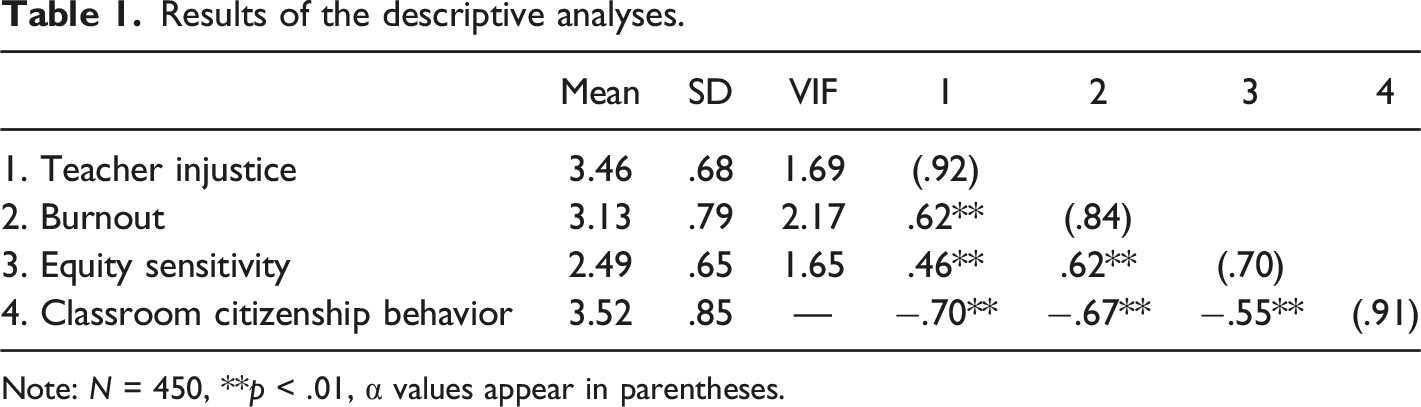
Note: N = 450, **p < .01, α values appear in parentheses.
Hypotheses Testing
To test the main, mediation and conditional effects, Hayes’ (2013) regression-based approach was used to perform a series of analyses. Following this approach, bias-corrected bootstrap confidence intervals (CIs) were calculated to confirm the significance of effects through a resampling process. Hayes’ method is an improvement over the traditional Baron and Kenny’s (1986) technique as it is a more comprehensive and systematic way to test the mechanisms underlying research constructs in social sciences area.
The mediation effect was verified using PROCESS macro (v. 4) Model 4. The results (see Figure 2) indicated that TI had a significant negative main effect on CCB (b = −.44, [−.51, −.37]); thus, offering support for Hypothesis 1. The indirect effect was estimated through bootstrapping method with 95% bias-corrected CIs with 5000 bootstrapping resamples. It was found that the TI → burnout → CCB pathway was significant as the CIs did not cross zero (b = −.20, CI [−.26, −.15]), indicating a partial mediation of burnout. This explains that targets of teacher’s unfair behavior gradually develop burnout syndrome which, drains them to such an extent that it leaves them with no choice but to withdraw from CCB activities. Hence, Hypothesis 2 was also accepted. The research model supported by results (N = 450, p < .01).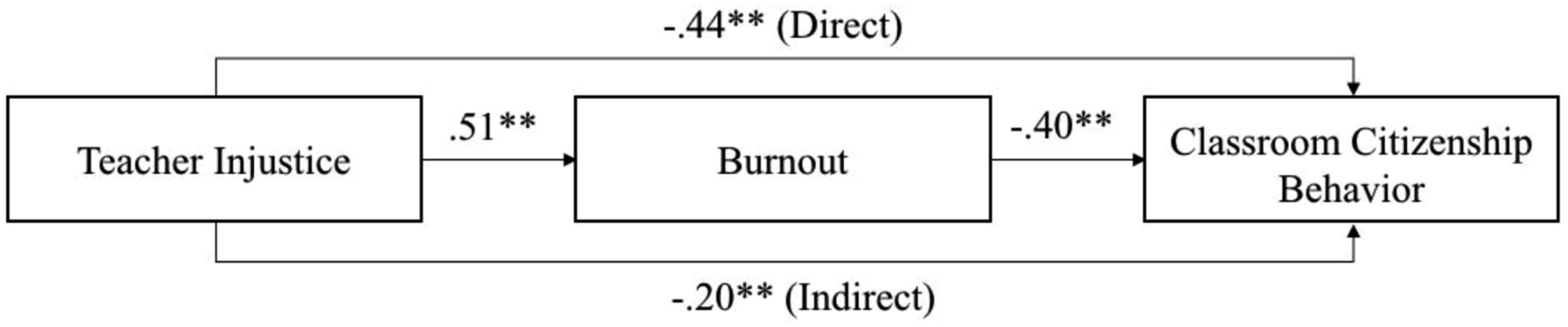
The conditional indirect effect of TI on CCB via burnout at different levels of equity sensitivity was examined using PROCESS (v. 4) Model 7 with bootstrapping. Against the expectation, it was observed that the interaction effect of TI and equity sensitivity on burnout was positive but insignificant because CIs had zero between them (b = .06, CI [−.01, .13]). Although equity sensitivity was able to produce a significant conditional indirect effect (at low level: b = −.12, CI [−.17, −.09], at high level: b = −.16, CI [−.20, −.12]), the index of moderated-mediation, which is the main criterion for testing the significance of the overall moderated-mediation model, was found to be insignificant as well (index = −.02, CI [−.05, .00]). Overall, these results revealed that even though burnout mediated the relationship between TI and CCB, the mediation did not depend on the level of equity sensitivity. Hence, the results did not support Hypothesis 3.
Supplementary Analysis
Although the above statistical analyses offered partial support to research model, they did not give insights into the mental processes involved in students’ decision to abandon CCB. Therefore, after the quantitative analyses, a focus group was held to uncover the psychosocial processes underlying the effects of TI on targeted student’s CCB withdrawal. Following the recommendations of researchers like Johnson and Christensen (2004) regarding the size of focus group, eight students from two universities who returned the T3 survey were selected as group participants. The participants were selected through maximum variation sampling to ensure representativeness and diversity of the sample, and to gather a broad range of opinions. In the interview, participants were asked to recall a certain time when they experienced TI and decided not to show CCB in response. The focus group lasted for a little more than 2 hours, including a tea break. After the first hour it was noticed that no new or different opinions, ideas or themes are coming out, which suggested that data saturation has been reached. Overall, three themes (described below) emerged from the qualitative analysis, all of which were consistent with the research model.
Teacher Injustice and Social Comparison
It was noted during the interview that students actively seek and recall social comparison information to evaluate their position in the classroom. A participant expressed that, “see, if the teacher is bad with everyone, it is okay, but he is fine with others and specifically targets you, it cannot be accepted.” Another participant narrated, “I tried telling my friends at different occasions that this teacher has a thing against me. Each time they dismissed me siding with the teacher because they were always treated favorably themselves. This infuriated me more because now I cannot even share my feelings with others. Despite being wronged, people thought that I am wrong.” In contrast, a participant reported that, “We had this mean teacher who had a reputation for failing students. She would boss around and never cooperate with us. In her class, we used to look out for each other. We shared assignments and notes, and even helped others cheat so that no falls victim to her. Once we even visited the headteacher’s office together to complain about her. Obviously, this was because we all were treated the same way by her. So, we understood each other’s experiences”.
It is evident from these excerpts that teachers’ differential treatment of students indeed triggers social comparisons, which can have significant effects on their classroom attitudes and behaviors, and subjective well-being. Unfavorable social comparisons can drive a host of negative thoughts and emotions, which may motivate victimized students to engage in noncooperative, value-destroying behavior. However, the excerpts also suggest that in case of favorable social comparison—when everyone is treated equally unfairly by teacher—students may empathize with each other’s situation, building a sense of community and solidarity among them. Simply put, perceptions of TI spark social comparisons which, on one hand, may hinder individual CCB efforts, while on the other hand, may motivate group cheating behavior by giving students a common challenge or purpose.
Teacher Injustice and Classroom Citizenship Behavior Avoidance
One female participant recalled that, “there was this teacher who knew that I got silver medal in bachelors. Every time I asked her something in class, she would say ‘you don’t know a thing, I wonder how you got that medal’ or she would say the same if I did not answer her question properly. After weeks and weeks of being publicly ridiculed, I stopped participating in class. I wanted to, but did not have the strength to tolerate more insults”. This qualitative evidence indicates that despite having a genuine desire to participate in class (i.e. show CCB), students who are routinely subjected to TI will be reluctant to further risk their limited resources (e.g., emotional energy, self-respect and honor) in hopes of clearing doubts and gaining teacher’s approval, and may adopt avoidance-based passive strategies to deal with the injustice. This is consistent with the fourth corollary of CoRT, which states that individuals will not invest more resources for additional gains if they already have fewer resources, and will probably adopt a defensive approach for resource conservation. Besides, the above quotation can also be interpreted in light of reactance theory (Brehm, 1989). Based on this theory, since unfairly treated students may experience a reduced sense of self-control along with other dark feelings and psychological difficulties, they will be motivated to engage in ways that can help them restore their sense of power and control, and one such way is to exercise discretion over their own behavior, such as CCB.
Teacher Injustice and Reduced Helping Behavior in Academic Assessments
A participant said that “once, I deserved really good marks in midterm but got only average. I complained but did not push much fearing the teacher might get offended. Anyway, before midterm, I used to share my assignments with everyone and helped others in quizzes. But after it, I thought that most probably I will again get average marks in finals, then why do I help my classmates score. So, I just stopped helping them and stayed to myself in that course. See, its fair. if you are not winning, why help others win?” This quotation draws attention toward a bright and an unexplored side of TI. It suggests that the distress caused by negative inequity (i.e., receiving poor treatment from the teacher relative to referent others) may induce various negative emotions, including shame, resentment, hostility and envy, toward one’s classmates. These emotions can overpower rational thinking and decision making, and may motivate the victimized student to hurt the referent other by withdrawing help at times of need. Thus, TI may create a divide among students, making them selfish and egoistic, suppressing classroom belongingness, and making each student see in the other only an obstacle to academic achievement.
Discussion
Using a mixed-method design, this study adopted CoRT to investigate how and why TI interferes with the enactment of CCB from a psychological perspective. Further, based on social comparison theory and equity theory, it examined equity sensitivity as an individual difference that moderates TI’s indirect effect on CCB through burnout.
Quantitative analysis of the time-lagged data yielded some interesting results which validated past findings. More specifically, results suggested that TI depletes targeted students’ valued personal resources (e.g. peace of mind), causing them to develop burnout syndrome, which, in turn, hinders acts of CCB. Past studies have also found instructor injustice to trigger negative emotions and physiological stress responses in victimized students (Callejas, Z. & Griol, 2016; Donat, Knigge, & Dalbert, 2018; Jiang et al., 2019; Mameli et al., 2021), and as result of them, students engage in indirect hostility and aggression (Chory‐Assad, 2002; Horan et al., 2013) and use antisocial influence strategies (Claus et al., 2012). Furthermore, this study found that although burnout (mediator) and equity sensitivity (moderator) were individually significant in explaining the relationship of TI with CCB, moderated-mediation did not take place as equity sensitivity was unable to produce a differential mediation effect. This particular result is against the researchers’ expectation; however, it is noteworthy because, as the literature review showed, no previously published study has produced this level of detail on the subject of TI. Overall, this result implies that the indirect effect of TI on CCB through burnout is independent of students’ tolerance for over- or under-reward situations. Meaning, that they will most probably get burnt-out and reduce CCB efforts in response even if they receive the same unfair treatment from the teacher as their classmates.
Findings of the qualitative analysis shed further light on the research framework by providing unique insights into what it feels like to be unfairly treated by one’s teacher. They drew attention toward two sides of TI. On the dark side, TI motivates students to adopt self-defeating strategies (e.g., class participation avoidance) to protect their valued resources (e.g., and self-esteem and reputation in class). This notion of adoption of such strategies in response to TI is also supported by prior research works (Chory & Offstein, 2017; Chory-Assad & Goodboy, 2010; Laeeque & Saeed, 2022). Anyway, on the bright side, TI decreases victimized students’ helping behavior in academic assessments. Furthermore, findings reveal that negative inequity resulting from comparison that one is treated unfairly relative to classmates, may diminish classroom connectedness and give rise to classroom jealousy, which may in turn lower victimized students’ motivation to enact CCB for others’ benefit. Past research echoes the same that negative inequity engenders negative feelings toward a referent other, which motivate the individual to hurt the referent other through antisocial acts (Gino & Pierce, 2009).
Theoretical Implications
The present study makes three major literary contributions. First, this study used a novel theory that has not been applied previously in research related to injustice in academia, namely CoRT by Hobfoll (1989). It developed a powerful unified model based on CoRT to provide insights into the roles of certain specific and critical constructs (i.e. TI, burnout and equity sensitivity) with respect to the CCB withdrawal process in nursing students. Findings of this study extend support to CoRT in the higher education context. They confirm that TI, as a detrimental relational stressor, threatens or actually drains students’ resources related to self-esteem, self-efficacy and social support, due to which they collapse into the state of burnout. Unfairly treated burnt-out students then use passive and maladaptive tactics to conserve rest of their already limited resources, such as decreasing involvement in non-essential resource-intensive activities like CCB.
Second, past research has only studied the TI phenomenon from an individual cognitive angle (e.g., classroom identification or belongingness; Jiang et al., 2018) or an interpersonal interaction-based approach (e.g., interpersonal or procedural justice; Cardwell et al., 2021). It has thus far neglected to tap the motivational effects of TI on student behavior. This study adopts a unique psychological lens to understand how TI makes it difficult for students to live up to their own moral standards. Based on CoRT, it emphasizes the psychological mechanism underlying TI’s impact on CCB. Specifically, it demonstrates that students avoid engaging in CCB due to a lack of resources and energy (i.e. burnout) although they have the will to do so. Hence, this study offers a theoretically reasonable explanation for the adverse effects of TI on students’ reluctance to enact CCB.
Third, this study puts forward that students individually perceive and express themselves in situations involving TI. The results elucidate that students not only appraise the treatment they receive from teachers but also observe how their other classmates are treated. Thus, the effect of TI on student behavior should be considered within a social context rather than in isolation. How others are treated by the same teacher(s) can influence aggrieved students’ reaction to their own unjust treatment. Equity sensitivity, which refers to an individual’s perception of equity and which influences the choices he/she makes to restore injustice (Huseman et al., 1987), is a complement to TI. Hence, this study expands the narrow TI literature by bringing equity sensitivity into focus.
Fourth, contrary to the prediction, this study found that the mediating effect of burnout in the TI–CCB relationship is independent of the level of equity sensitivity. This suggests that TI is a commonly experienced stressor and has similar psychosocial impact across surveyed participants. It does not matter where students individually stand on the continuum of equity sensitivity; repeated experience of TI will cause everyone to experience similar levels of psychosomatic exhaustion (i.e. burnout) and adopt similar kinds of strategies to reciprocate the injustice (i.e., withholding CCB efforts). Nevertheless, the results showed that the individual effect of equity sensitivity on burnout was positive and significant, and both equity sensitivity and CCB were negatively intercorrelated. This implies that indeed students not only care about their own unfair treatment but also take note of the treatment their class fellows receive. Hence, when attempting to understand student behavior in classroom context, the role of social comparison must not be overlooked.
Practical Implications
Based on the findings, this study provides some practical implications. First, educational institutions need to practice proactive practices that signal equality and justice. They should, for instance, explicitly state their expectations of teacher behavior in their mission statements, and create policies that prohibit injustice. Students should be encouraged to report TI incidents immediately, their complaints should be carefully and seriously investigated, and teachers guilty of injustice should be swiftly and consistently sanctioned. In addition, training programs should be arranged to help teachers be more effective with students and skilled at self-regulation. Besides, during the hiring processes, to avoid selecting candidates with a history of unfair behavior, candidates’ references should be thoroughly checked and previous employers should be contacted. They should also be asked such questions in interview that uncover their ethical standards, moral values and behavioral tendencies.
Second, although student evaluation of teaching (SET) is a common practice in global higher education sector, most Pakistani universities have not adopted it yet, while those who have, do not honor it in the right spirit. Pakistani universities are therefore required to make SET mandatory and provide useful feedback through it. They should educate students about the value of their honest and constructive feedback, inform them about the anonymity and confidentiality surrounding these evaluations, and designate proper time in class for students to perform evaluations. SET will be a good practice for students as it will encourage and empower them, and make them feel valued. Also, it will help teachers to perfect themselves by making them aware of how students react both to their teaching styles and to them as individuals. Moreover, SET will help university administrations in their assessment of teachers’ skills, abilities and personalities.
Third, parents can be the first line of defense in protecting children from TI. By virtue of their relation, parents can observe their children on a daily basis and compare their behavior with past behavior, thus placing them in a unique position to detect signs of injustice and burnout. Parents should provide a safe and therapeutic environment to children where they feel comfortable to talk about the injustices they face at school without fear of judgement or criticism. Parents should offer unconditional support to their children, and if they feel appropriate and the child agrees as well, they should meet the unfair teacher in person instead of trying to resolve the issue over email or phone. If the issue remains unresolved, they should inform the department chair or concerned authority about the situation.
Fourth, since burnout mediates the TI–CCB relationship, educational institutions should look for ways in which the effects of TI on burnout can be counterbalanced. One possible strategy can be to give some comfort to aggrieved students by demonstrating care and support, which may increase students’ psychological resources and reduce resource loss (Kim et al., 2018). They can also develop a formal grievance system and student support program for this purpose, and help students learn healthy coping skills for managing distress-related emotions. Besides, to boost CCB performance, educational institutions should foster an environment that encourages acts of CCB and reward appropriate behaviors of students.
Last, the significant correlations and main effects imply that lowering equity sensitivity levels may be a helpful strategy to reduce students’ level of psycho-physical exhaustion and increase their involvement in CCB. Hence, as students consciously or subconsciously compare their TI experience with other classmates’, teachers should bear in mind that differential treatment of students can trigger unwanted social comparison that may lead to deleterious classroom outcomes, such as intra-class hostility and rivalry, that motivate anti-social behavior. Therefore, they should avoid giving the impression of partiality, and be careful in their interactions and behaviors with all students. They should also ensure that they are not only fair, but also perceived as fair by everyone.
Limitations and Direction for Future Research
This study has certain limitations that can guide future research. First, considering the nature of the methodology used in this study, the possibility that reverse causality explains the observed relationships cannot be ruled out. That is, while it was hypothesized that TI is a chronic source of stress that influences students’ burnout and CCB, the reverse may in fact be occurring. For example, students’ CCB withdrawal may irritate teachers which in turn makes teachers unfair toward them. In future, longitudinal research should be performed to provide firm evidence of causation. Second, equity sensitivity was measured at the very end of the survey. Although it is a stable personality disposition, it is possible that students’ conception of equity may have changed over the data collection period. Hence, future research should examine if students’ equity sensitivity varies. Third, CoRT provided a unique perspective to understand how unfair teacher behavior can influence students’ CCB, yet there are other theories (e.g., Affective Events Theory) that could also offer valuable insights into the internal mechanisms linking these two. Furthermore, in this study, the TI‒CCB relationship was only partially mediated by burnout. Future research is therefore suggested to apply other theories to explore different mediators in the aforementioned relationship. Fourth, burnout and CCB may also be affected by other kinds of individual differences (e.g., trait hostility) and teacher behaviors (e.g., power abuse). Notwithstanding, this study did not consider such factors, and therefore it is uncertain as regards how they can influence the relationship among TI, burnout and CCB. Future research is accordingly recommended to determine how much variance in burnout and CCB that results from TI can be explained by those factors. Last, it is possible that students who experience TI may devote more effort in class in a bid to prove their value to teachers, and thus become more civil and obliging. Future research should study the characteristics of such students and examine their relevance.
Conclusion
An unfortunate reality of educational institutions is that students sometimes limit themselves to doing what is explicitly expected of them and purposely avoid engaging in socially desirable behaviors. Through a mixed-methods design, this study unraveled the complex reality underlying the mechanisms that impede CCB from the perspective of TI. It found that TI exerted its influence on CCB through burnout, which means that students lower their CCB efforts not only because they to want to conserve their key resources but also because they lack enough resources to begin with. Further, it observed that students’ equity sensitivity did not strengthen, diminish, negate, or otherwise change the indirect effect of TI on their CCB enactment. The study offers new insights into CCB based on CoRT and equity theory, and provides guidance to education management practice and research.
Footnotes
Declaration of Conflicting Interests
The author(s) declared no potential conflicts of interest with respect to the research, authorship, and/or publication of this article.
Funding
The author(s) received no financial support for the research, authorship, and/or publication of this article.
