







Abstract
Authentic leaders display an exceptional level of integrity and honesty, a high level of awareness and responsibility as well as a commitment to achieving their goals; as a result, they develop more trusting relationships with their employees, which could be translated into many positive outcomes, such as enhancing the ability to thrive at work. The present study aims to determine the role of authentic leadership´s (AL’s) four dimensions (self-awareness, relational transparency, balanced processing, and internalized moral perspective) in fostering an environment that offers workers the opportunity to do well, including in terms of two related elements (vitality and learning). An online questionnaire was conducted to collect data from a sample of 402 participants from the information technology (IT) industry in Australia. The study used WarpPLS software to analyze the collected data by the structural equation model. According to the results, balanced processing of AL has a positive and significant effect on two aspects of thriving at work, namely vitality and learning, Moreover, the internalized moral perspective inherent in the aforementioned phenomenon affects learning. The current study is novel as it is among examples of pioneering research that employ the path model, and it uses multi-dimensional structures to examine authentic leadership and thriving at work in the workplace. The research also discusses theoretical contributions, managerial implications, and limitations along with future study directions.
Keywords
Introduction
In today’s world, organizations face strong competition due to advanced technology and globalization, in addition to the many and varied changes in the work environment. This environment is characterized by being dynamic and constantly changing, which always needs to be developed and updated to be able to face challenges and keep pace with developments periodically (George, 2003). In light of the massive and rapid changes and the need for leadership styles that fit the requirements of the current stage, there is a focus in the leadership literature on positive leadership methods because the leadership is one of the key determinants associated with the success and failure of any organization (Durrah & Kahwaji, 2022). It is important to prepare leaders who are able to adapt to all circumstances and adopt successful leadership styles such as authentic leadership (Gardner et al., 2011). This concept has gained the attention of many researchers and practitioners in the recent period because of the important role it plays in the success and continuity of organizations (Levy, et al., 2020; Neider & Schriesheim, 2011; Tijani & Okunbanjo, 2020). Authentic leadership is an emerging leadership style rooted in humanism that can be used in conjunction with other leadership styles (Johnson, 2019). Authentic leadership is defined as “a pattern of leader behavior that draws upon and promotes both positive psychological capacities and a positive ethical climate, to foster greater self-awareness, internalized moral perspective, balanced processing of information, and relational transparency on the part of leaders working with followers, fostering positive self-development” (Walumbwa et al., 2008, p. 94).
Interest in thriving dates back to work by Maslow (1943); Rogers (1961), and Alderfer (1972). When psychologically thriving, individuals are not merely surviving or getting by but rather are growing or on an upward trajectory (Benson & Scales, 2009; Joseph & Linley, 2008; Thomas & Hall, 2008). Thriving at work points to an ongoing psychological situation in which individuals feel a sense of vitality and capable of learning within their place of employment. Vitality equates to feelings of motivation, power, and readiness to do tasks with a full degree of effort and perseverance, while learning refers to the state of continuously developing employment-based skills and adapting to changes at work (Spreitzer et al., 2005).
Spreitzer et al. (2005) suggested a psychologically integrated model of thriving at work in which they highlighted the parameters of doing well, showing that the practice of thriving is formed by the situation in which employees participate; they also considered vitality to be a very important variable because it increases the health and personal growth of individuals at work. Moreover, modern studies within the field of organizational behavior have linked thriving at work with leadership types and have demonstrated that leadership styles like authentic leadership (AL) could be positively correlated with individuals flourishing in the workplace (Leroy et al., 2015; Li et al., 2019
On the other hand, some studies focused on the importance of authentic leadership in improving the mental health of employees, a recent McKinsey report indicated that 62% of employees worldwide consider mental health a major challenge, and the World Health Organization (WHO) estimates that mental illness It costs the global economy $1 trillion in lost productivity, with nearly 300 million people suffering from depression. ABB Australia has launched a 5-week conversation series with leaders in various organizations highlighting mental health. To raise awareness of the importance of mental health and to give employees practical advice to put daily practices in place. Most importantly, spread a culture of communication and open dialogue about mental wellness. The initiative was a huge success and far exceeded expectations. The campaign was the employees’ most successful initiative by helping them feel less isolated and more connected to their work environment. In other words, the study showed the important and vital role that authentic and trusted leadership can play in normalizing mental wellness (Sassone, 2020).
Furthermore, organizational support could be one of the most important variables affecting the capacity to thrive at work (Wallace et al., 2009). The impact of the affectional elements of the work environment on the state of employees is of great importance. When workers do their best but do not see positive outcomes, they will feel hopeless and unfulfilled, so their vitality and ability to gain knowledge will decrease. In relation to this, direct supervisors and leaders have a scientific effect on a person`s level of loyalty and commitment to an organization. The more authentic a leader is, the more positive the attitudes subordinates develop towards work are. Some of the main features of AL are training and assisting workers in setting their goals, organizing their work, guiding them to avoid defects and gaps in their work, and providing them with advice when it is needed. These characteristics increase the worker`s job engagement (Hassan et al., 2011); therefore, the present research proposes to determine the role of AL’s dimensions with regard to fostering the capacity to thrive at work.
Authentic leadership theory offers a comprehensive perspective on true leadership. Encouraging and developing authentic leadership can have positive effects on employees’ work environment and their well-being, happiness, retention, and future advancement. As the technology industry field continues to evolve, the need for new leaders will emerge and leadership development will become particularly critical. This industry will need to develop a new generation of effective and real leaders who are able to take on the facing challenges in this field. The authentic leadership model continues to evolve; Therefore, more research is needed to further develop and test authentic leadership theory, particularly with regard to its practical applications and effectiveness. Additionally, there is the dire need for authentic leadership style to be greatly studied and implemented that focuses on the ethics of the leaders, concern for followers and others and congruence between moral values and decisions.
Research on thriving has so far been scarce, particularly in the information technology context. Therefore, the current research attempts to broaden the current knowledge by focusing on one potential key antecedent of thriving, namely authentic leadership. Past studies indicated that leadership is associated with positive work outcomes, such as employees’ work-related well-being (e.g. Wong et al., 2010), and prosperity in the work environment (Wong & Laschinger, 2012). For instance, relational-focused leaders elicited more positive outcomes in the work environment than task focused leaders (Cummings et al., 2010). Moreover, some studies have found a relationship between leadership and job-related learning on the one hand (Loon et al., 2012) and leadership and dynamism at work on the other hand (Carmeli et al., 2009).
From the above, it can be said that there is a scarcity to some extent in studies that directly addressed the relationship between authentic leadership and thriving in the work environment, so the current research addresses this research gap by focusing on studying the conceptual relationships of authentic leadership, and its impact on the thriving of employees in the information technology industry in Australia. Therefore, this study proposes a theoretical framework that highlights authentic leadership based on the (Ilies et al., 2005) model, which identified four dimensions (i.e. self-awareness, relational transparency, balanced processing, and moral perspective) and how it can affect the happiness and well-being of employees and their prosperity in their work environment. This leads us to define the problem of the study by asking the following question: To what extent do authentic leadership behaviors lead to thriving at the work in the information technology industry?
This study contributes to the field of leadership research by investigating whether authentic leadership is associated with thriving in the context of the technology industry. As authentic leadership behaviors can enhance the well-being of leaders and subordinates by developing personal happiness and well-being, enriching individuals with experiences, developing self-efficacy, and developing positive relationships within the work environment. This research enriches the literature in the field of leadership in general and authentic leadership in particular. The research contributes to the literature by developing and examining a research model that allows identification of authentic leadership styles that affect the well-being of employees, and the results can help in enhancing the mechanisms and methods that contribute to increasing the well-being, happiness, satisfaction and thriving of employees in their work environment within the information technology industry. In sum, this research is meaningful for managerial practice and we hope the proposed framework will contribute to provide a new perspective of understanding authentic leadership and thriving at work thus stimulate further research.
Conceptual Framework and Hypotheses Development
Authentic leadership was first discussed in the literature in the 1960s. Theory of authentic leadership has developed alongside the positive psychology movement of humanism (Gardiner, 2017). Theory of authentic leadership combines leadership theory and humanism psychology theory to create a leadership style. Authentic leadership develops out of self-awareness, moral perspective, and balanced cognitive processing (Johnson, 2019). Theory of authentic leadership asserts that there are three aspects that influence the development of an authentic leader: moral reasoning, critical life events and positive psychologic capabilities (Mason, 2017). Moral reasoning describes the decision-making process needed to address moral and ethical dilemmas, whereas critical life events refer to hardships or personal crises that enable people to grow. An underlying positive psychology and moral reasoning combined with critical life events supports the development of key characteristics of authentic leaders (Avolio & Gardner, 2005). Positive psychologic capabilities include balanced cognitive reasoning and resilience that are the skills that enable a leader to face challenges, overcome difficulties, and see alternative perspectives when making difficult and critical decisions (Hinojosa et al., 2014).
On the other hand, authentic leadership theory can be linked with social cognitive theory (SCT). Social cognitive theory is one of the most frequently applied theories of health behavior (Bandura, 1986). Social cognitive theory posits a reciprocal deterministic relationship between the individual, his or her environment, and behavior; all three elements dynamically and reciprocally interact with and upon one another to form the basis for behavior (Bandura, 2001). Social cognitive theory posits that people learn from one another, via observation, imitation, and modeling. In order to socially learn, the behavior must be modeled authentically. This process focuses on qualities and attributes leaders possess that reflect the perception of their trustworthiness as well as the connection they make with their followers (Northouse, 2010). The actions of these leaders are consistent with their beliefs and values which have been developed over time (Banks & Mhunpiew, 2012).
Authentic leadership is described as a leadership style that builds and enhances the positive emotional and mental capabilities of employees and creates an ideal moral environment. It promotes improved self-awareness, an internal moral perspective, balanced information processing, and relational transparency, which are the main components that distinguish AL in its dealings with employees from other styles of overseeing workers (Chaudhary et al., 2018). Self-awareness is the extent to which an individual is knowing of their strengths and weaknesses and their effect on others. An internalized moral perspective refers to how a person`s values and ethical norms affect their behavior and activities, while relational transparency means the degree to which an individual shares knowledge with others and expresses their feelings in an open way. Furthermore, balanced processing equates to the degree to which the leader takes into consideration all available information before making decisions (Avolio et al., 2004). These dimensions of AL play a central role in strengthening trust and good internal relations among the followers of real leaders (Walumbwa et al., 2011).
Authentic leaders have a deep desire to help others that stems from their ethics, principles, and beliefs. They also have the following main features: they realize the goal of their leadership, they have strong values with regard to the real objective, they promote truthful relations with others, and they supply self-discipline and emotion to their leadership that comes directly from their heart (George, 2003; George et al., 2007). Authentic leadership is firmly based on the attitudes, principles, and ethical norms that positively affect employees’ effectiveness and behavior at work (Alshammari et al., 2015)
The philosophically established model of thriving at work by Spreitzer et al. (2005) submits that the social and structural elements of work conditions and work resources play a key role in enhancing how well people flourish. Based on self-determination theory (SDT), positive types of leadership like inclusive leadership contribute to basic organizational contexts that promote individuals’ abilities to make decisions and create a work environment full of trust, respect, and appreciation, which supports the independence of workers, their obedience and commitment to their roles, and contributes significantly to promoting thriving at work. Indeed, Mortier et al.’s (2016) study on the nursing field found that AL may increase how much nurses thrive in the workplace. Moreover, their research found that the empathy of nursing managers completely intermediates the correlation between authentic leadership and vitality as it confirmed that they must be aware of both the level of empathy and the type of leadership that affects the vitality of their nurses.
Generally, leadership is a process that increases the efforts of individuals and the group towards learning how to achieve organizational goals (Durrah et al., 2018). Meanwhile, authentic leadership may be able to influence employees’ learning experiences by creating a supportive learning environment, which consequently positively affects their commitment to learning and their need for growth. If the employee does not agree with the vision set by the organization, he/she will lose the incentive to learn and grow (Mckee, 2010). In Shahid’s (2020) study on the banking and software sectors in Pakistan, it was confirmed that authentic leadership contribute greatly to enhancing the performance of employees by improving positive psychological outcomes, such as thriving. They also help to develop positive organizational polices like organizational virtue, which is considered highly motivational for employees’ learning and growth and contributes to achieving high standards of organizational performance.
A leader’s expression of their employees’ self-knowledge brings obvious expectations that motivate workers to adapt themselves to achieving their leader’s goals. If employees realize that their superior’s values, beliefs and norms are directing their superior’s behavior, as well as being more cognizant of the exact nature of their resolutions and attitudes, workers will also be more acutely aware of the structure within which their performance will be evaluated (Eriksen, 2009). Thriving at work is a type of evolutionary measure that supplies an employee with a sense of how well they are doing in relation to improving new competencies and working actively (Kark & Carmeli, 2009; Porath et al., 2012). Based on social cognitive theory, everyone is required to find supportive resources to enhance their flexibility (Spreitzer et al., 2012).
Previous literature supports the positive relationship between authentic leadership and thriving at work (Alotaibi, 2021; Bannay & Hadi, 2021). The conceptual models of both authentic leadership and thriving at work support the functional overlap between them (Mortier et al., 2016). Walumbwa et al. (2008) assume that the practice of authentic leadership behaviors related to self-awareness takes place through the leader’s interaction with others in order to know his strengths and weaknesses, and to know their impression of him, and this interaction provides a thriving work environment that promotes effective work behaviors, especially the behavior of exploration and communication according to the model of social cohesion to thriving at work; This increases the possibility of experimenting and learning new ways to achieve outstanding performance (Spreitzer et al., 2005). Oh et al. (2017) indicated that employees’ self-awareness increases the extent to which they relate to their work and share information. In addition, Alsubaey (2022) confirmed that increasing the practice of self-awareness behaviors enhances the vitality and learning in the work environment and leads to a prosperous work environment.
Based on the studies mentioned above, we expect that perceived level of managers’ authentic leadership will have a significant effect on the capacity of their employees to thrive (vitality and learning). The focus will be on exploring the mechanism that defines the possible relationship between self-awareness and thriving, including the latter variable’s two dimensions: vitality and learning. Being self-aware means that an individual has a good understanding of their abilities and a deep knowledge of their beliefs, assumptions, the structure of their feelings, and their daily experiences (Jopling, 2000; Natsoulas, 1998; Ryle, 1994). In addition to knowing who they are, what abilities they possess, and what they believe in, it is of the utmost importance that leaders can obviously transfer information about their capabilities, characteristics, values, and norms to their employees. So we therefore suggest the following hypotheses:
H1: Self-awareness has a positive effect on the employees’ vitality.
H2: Self-awareness has a positive effect on the employees’ learning.
Relational transparency is linked to assessing and achieving candidness as well as honesty in an individual´s close relations and includes selective self-detection (Gardner et al., 2005). Authentic leaders impact the attitudes and activities of their employees by means of key psychological factors: recognition, trust, good sense, hopefulness, and dependability. Furthermore, authentic leaders can often change the thoughts and actions of their followers by using emotions as a huge source of information (Avolio et al., 2004); they evoke good feelings in their employees by engaging in positive, encouraging, moral, and transparent interactions
Walumbwa et al. (2008) believe that the practice of authentic leadership behaviors related to the transparency of relationships takes place through the openness of the leader with subordinates and the creation of a work climate of trust among them that allows the sharing of ideas, emotions and information among them, which will contribute to the availability of a prosperous work environment that helps individuals engage in the work environment, and promotes effective work behaviors (Fredrickson, 2003), and increases the opportunity for individuals to acquire the knowledge needed to make new decisions; which will increase the efficiency of individuals, and increase their level of vitality (Bunderson & Sutctiffe, 2002; Spreitzer, 1996). A study (Morsi, 2010) showed that the transparency of relationships has the ability to predict the quality of work life for employees in the organization, and it also affects the learning climate in the organization and the sharing and dissemination of information (Okmen et al., 2018). As the presence of transparency in work relationships encourages employees to express their opinions and share information, which will lead to creating a work environment of trust and respect between leaders and subordinates, which enhances positive relationships and cooperation that leads to a prosperous work environment (Alsubaey, 2022). Based on the results of these studies, we developed the following hypotheses:
H3: Relational transparency has a positive effect on the employees’ vitality.
H4: Relational transparency has a positive effect on the employees’ learning.
Balanced processing is when leaders make a decision after taking into consideration different viewpoints objectively; being skilled in this area also means they are open-minded to ideas that challenge either the current situation or dominant beliefs (Gardner et al., 2005; Rego et al., 2012; Walumbwa et al., 2008). Previous studies have ascertained that by being self-aware, exhibiting relational transparency, and engaging in balanced processing of data, authentic leaders foster good social relationships and confidence among their employees (Avolio et al., 2004; Walumbwa & Hartnell., 2011). Furthermore, both balanced processing of information and relational transparency make leaders less worried about change and more open to the innovative ideas of their employees (Michie & Gooty, 2005). Meanwhile leaders’ self-awareness and balanced processing were also shown to make them more careful when taking employees’ suggestions into consideration (Zhou & George, 2003). In addition, workers must be prepared to face work difficulties every day, to successfully deal with any conflict, and to learn methods to effectively overcome obstacles in the workplace (Licata et al., 2003). Employees perform their tasks in creative manners when they see themselves as emotionally committed, and when leaders’ authenticity is ingrained, their followers will be more loyal to their work (Darvish & Rezaei, 2011; Leroy et al., 2012). Moreover, the balanced processing of information and the promotion of transparent relationships with followers provide authentic leaders with the power that is needed to enhance loyalty, satisfaction, and citizenship behavior along with several other positive behaviors and attitudes among their subordinates (Avey, 2014; Caza, 2015; Gill & Hirst et al., 2016; Nelson et al., 2014; Rego et al., 2012). Thus, we developed the following hypothesis:
Some conceptual models suggest that authentic leadership behaviors related to balanced processing are achieved by carefully identifying and examining information before making a decision (Walumbwa et al., 2008), which will motivate individuals to acquire knowledge in order to make the right decisions, and increase their practice of new activities in Work prompts them to explore to obtain more information required for new activities, which leads to a thriving work environment that helps individuals to know the different conditions in their work, and to identify the necessary skills for them (Spreitzer et al., 2005; Weick et al., 1999). A study (Stander et al., 2015) indicated that authentic leadership behaviors related to balanced processing contribute to increasing confidence, optimism, and engagement at work, as well as commitment to work (Abbas et al., 2021).
H5: Balanced processing has a positive effect on the employees’ vitality.
H6: Balanced processing has a positive effect on the employees’ learning.
Pervious theoretical and empirical studies (Avolio et al., 2004; Gardner et al., 2005; Shamir & Eilam, 2005) confirmed that an internalized moral perspective explains the mechanism within which ethical values guide the behavior of leaders to face the pressures of the team, the organization, and the community as their decisions and activities are based on these moral values. Having an internalized moral perspective indicates that a leader adheres to the basic principles expressed and exhibits a high level of equity and ethical practice. It also confirms that they are governed by personal ethics that regulate their behavior and actions (Walumbwa et al., 2008). This characteristic could also greatly affect an individual’s job performance (Akuffo & Kivipõld, 2021). It also generally belongs to deeply motivated figures as leaders who uphold their beliefs as they accomplish their missions become role models for their employees (Avolio et al., 2004). Therefore, fostering an internal ethical approach may motivate followers to not just put their energy into performing their tasks while acting in a way that leads to personal gains and making advantageous relationships, but instead because they wish to respond to the moral imperative of matching the standards of their manager. This means that leaders who demonstrate commitment to their moral values can contribute to creating a desire among followers to work out of a sense of joy and well-being and to achieve high levels of efficiency (Levesque-Cot et al., 2021). The internal ethical perspective has a positively significant relationship with organizational loyalty (Tijani & Okunbanjo, 2020), and it can be used to prognosticate employees’ job satisfaction in relation to their present positions, salaries, and promotion opportunities (Ortiz, 2020).
Walumbwa et al. (2008) indicate that authentic leadership behaviors related to the moral perspective are guided by internal values and standards rather than behaviors based on external pressures, which will contribute to a prosperous work environment characterized by freedom of decision-making and a sense of independence for individuals, it motivates them to act effectively and proactively to benefit from their skills at work (Wood & Bandura, 1989), and generates the desire and vitality to search for new ways and methods of doing their work, and motivates them to build new skills that increase their ability to take risks, and encourage them to learn more (Amabile, 1993). In the study of Aljuhani (2019), it was found that authentic leadership behaviors related to the moral perspective clearly contribute to determining the level of organizational health in the organization, and affect knowledge acquisition and information sharing (Okmen et al., 2018). Thus, we proposed the following hypotheses:
H7: Internalized moral perspective has a positive effect on the employees’ vitality.
H8: Internalized moral perspective has a positive effect on the employees’ learning.
IT Industry
According to the research consultancy IDC, the global IT industry was worth about $5.2 trillion in 2020, and Australia’s information and communications technology (ICT) market is worth nearly $100 billion as per Australian governmental records. The Australian IT industry’s market size, its innovative outlook and its varied customer base combine to make the country an ideal location to develop and test new ICT products and services. Australia is also host to many world recognized brands, such as Avaya, Canon and IBM, Google, Warner Bros, Microsoft, Alcatel-Lucent, Cisco Systems, and CSC 1 . Leading on from this, there are few studies that have highlighted the essentiality of AL behaviors in IT startups with regard to promoting a positive psychological and ethical environment that enhances a business’ continuity and success (Walumbwa et al., 2008). Today’s global IT organizations require authentic leaders who understand the fast-changing international environment, complex customer requirements, and technological advancements, which enable the company to achieve a competitive edge (Mukhwana, 2021).
Research Methodology
Design
The current research was designed to test a structural model consisting of two latent variables. AL, with its sub-dimensions of self-awareness, relational transparency, balanced processing, and internalized moral perspective, was considered to be an exogenous variable (Neider & Schriesheim, 2011). Meanwhile, thriving at work, with its sub-dimensions of vitality and learning, was examined as an endogenous variable (Porath et al., 2012), as shown in Figure 1. Quantitative methodology and survey method were adopted in the present study. Proposed model.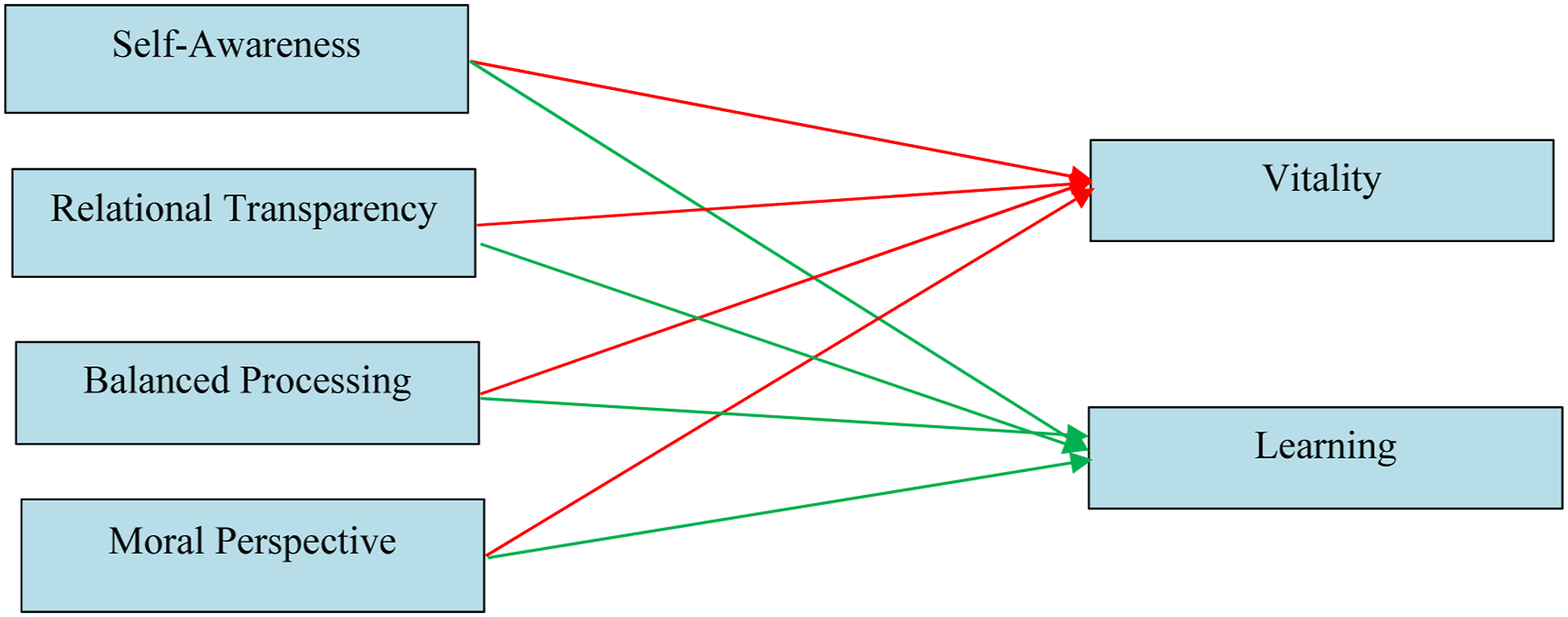
Procedure
The questionnaire that was prepared based on the study of (Neider & Schriesheim, 2011) regarding authentic leadership, and the study of (Porath et al., 2012) regarding thriving at work underwent a multi-stage process. Olson (2010) recommended that a sample of at least six experts should be used in the preliminary testing phase of pilot research, so six academic experts specializing in this field were contacted in order to review the questionnaire and assess the scales’ validity, content, and items. Based on their feedback and comments, some changes were made to the survey’s format. Subsequently, a pilot study was conducted on a small sample of 30 employees in the IT industry as a means of reducing potential measurement errors for survey items (Nunnally, 1994). Based on its results, some minor modifications were made to the survey elements, yet none of them were deleted. In compliance with research ethics, the participants in the survey were informed of the confidentiality of the information they provide and that it would only be used in relation to academic matters. As a last means of ensuring equal participation, questions were randomly distributed within different versions of the survey as a method to eliminate response fatigue (Imran et al., 2021).
Sample and Data Collection
A quantitative approach has been used to validate the proposed framework of the study. Moreover, the study’s population consists of employees from various levels of the IT industry in Australia. The data-collection period coincided with the COVID-19 global epidemic; thus, to avoid endangering the participants' and the researchers' health, data was gathered through a web-based survey during the period from September to November in 2021. Due to time and budget constraints, particularly in the growing context of the pandemic, data was collected using convenience sampling as these types of samples enable easy access to members of the research sample (Dörnyei, 2007). These sampling methods also allowed for rapid sampling, especially during the pandemic, and they provided a more complete picture of the population (Speak et al., 2018). Within these restrictions, a total of 450 responses were received; however, the 48 responses that were incomplete or inaccurate were excluded. Ultimately, data from a total of 402 employees was used for the analysis. The characteristics of the study’s sample are as follows. Among the 402 respondents to the survey, 58.2% were male, 41.8% were female, and most were 30–45 years old (67.9%). Regarding educational level, the majority of the participants were postgraduates (53.7%), and the vast majority of respondents had more than 10 years of experience (79.1%).
Common Method Variance
A common method variance (CMV) test was undertaken using Harman’s single-factor test to look for potential common-method biases (Fuller et al., 2016). All 26 items of the study’s constructs were loaded onto a single factor using exploratory factor analysis by SPSS V. 25 software. The findings uncovered that the prime factor value was 41.079%, which is less than the 50% level of variance that is relevant according to Podsakoff et al. (2012); therefore, a common method bias was not an issue in relation to this data set (Chin et al., 2012).
Measures
This study includes two variables. The first one is authentic leadership, which consists of four constructs: self-awareness (SA), relational transparency (RT), balanced processing (BP), and moral perspective (MP). Meanwhile, the second one is thriving at work, which contains just two constructs: vitality (VI) and learning (LE). A two-section survey was prepared to examine the constructs in this empirical study. In relation to this, Neider and Schriesheim (2011) identified 16 items that are designed to measure dimensions of AL: self-awareness (four items: SA1, SA2, SA3, and SA4); relational transparency (four items: RT1, RT2, RT3, and RT4); balanced processing (four items: BP1, BP2, BP3, and BP4); and moral perspective (four items: MP1, MP2, MP3, and MP4). Porath et al. (2012) also proposed a 10-item scale for measuring the level of thriving at work, which was adopted in this study and is classified into two aspects: vitality (five items: VI1, VI2, VI3, VI4, and VI5) and learning (five items: LE1, LE2, LE3, LE4, and LE5). Participants responded on five-point Likert-type scales where one reflected the highest level of disagreement and five reflected the highest level of agreement.
Analytical Process
A total of 402 questionnaires were subjected to statistical analysis, which represents 89.33% of the total distributed data. This number is suitable for data analysis using partial least squares (PLS), as recommended by Hair et al. (2016). The PLS-SEM technique was implemented to test the study model by WarpPLS V. 7.0, which includes two main stages that were conducted to analyze the valid data relating to assessing the measurement method and validating the structural model (Kock, 2020).
Data Analysis and Findings
This research explores the effects of authentic leadership on thriving in work. The PLS-SEM technique was performed to examine the collected data in the present study. This approach includes the estimation of two separate models: the first is the measurement model (outer model) to assess the validity and reliability of the measures, and the second is the structural model (inner model), which was utilized to assess the strength of the hypothesized relationships between the variables (Jarvis et al., 2003). The psychometric characteristics of scales in this study were estimated within the structural model context through an assessment of discriminant validity and reliability (Ruiz et al., 2010).
The Measurement Model
Measurements charectrics of reflective constructs.
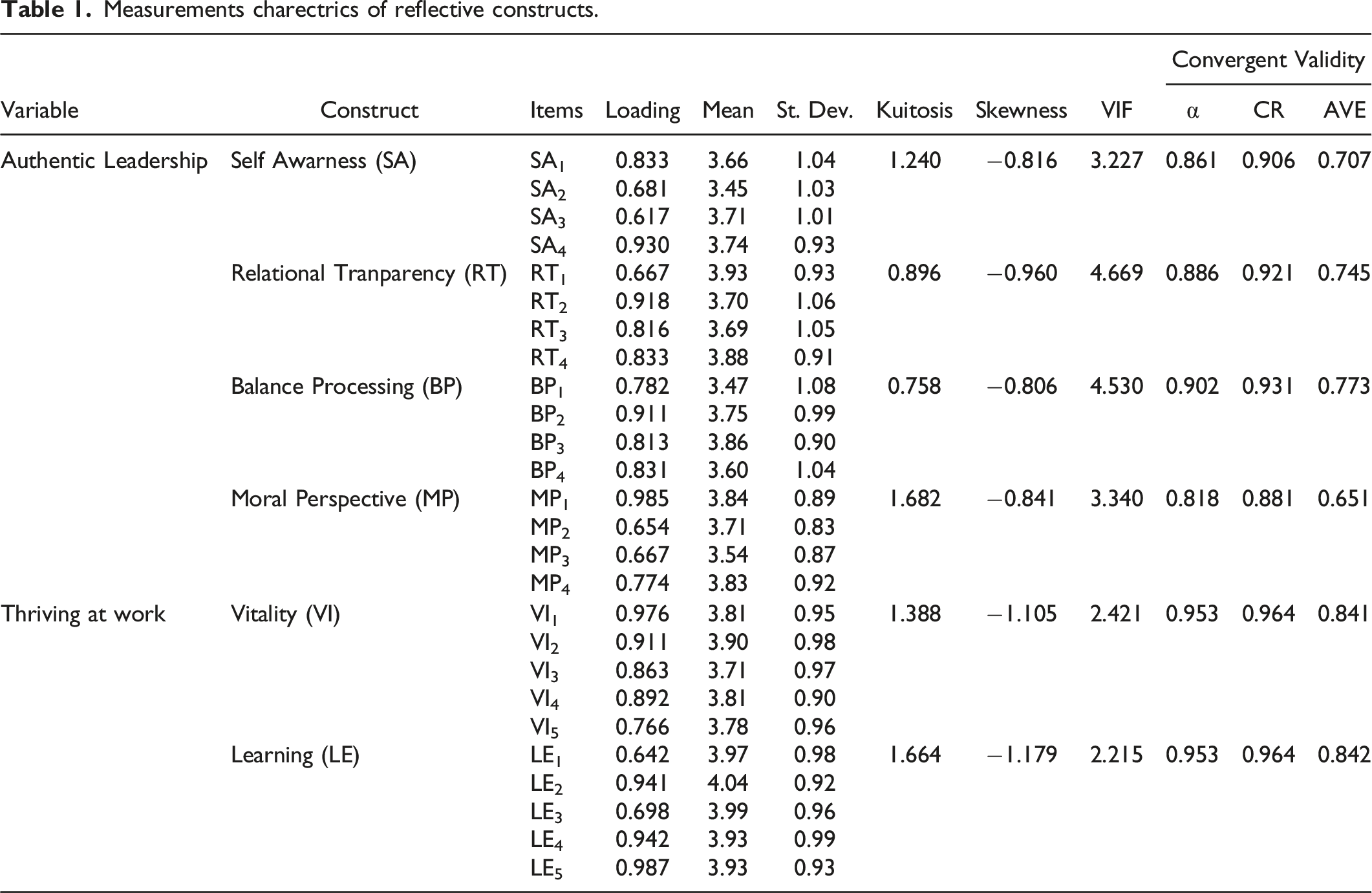
Dijkstra and Henseler (2015) suggested two coefficients to estimate the reliability of the items: Cronbach’s alpha (α) and composite reliability (CR). Meanwhile, Kock and Verville (2012) mentioned that the coefficients of Cronbach’s alpha and composite reliability values for all constructs should be higher than 0.7; as shown in Table 1, the study’s constructs exceeded the acceptable level. Additionally, a VIF test was undertaken to ensure the absence of multicollinearity between the variables and the values were found to be below five (range: 2.215–4.669), which is ideal (Kock & Lynn, 2012). Moreover, tests of normality, namely kurtosis and skewness, have been conducted (Bagozzi & Yi, 1988). All of the resulting values were within the reasonable limits (between ±3) (Almohammad et al., 2021; Ghasemi & Zahediasl, 2012). Kurtosis ranged from 0.758 to 1.682 and skewness from ranged from −1.179 to −0.806, as demonstrated in Table 1. Furthermore, the findings showed that the means of the items ranged between 3.45 and 4.04 and the values of standard deviation were of low dispersion.
Correlation among latent variable with aqure root of AVEs.
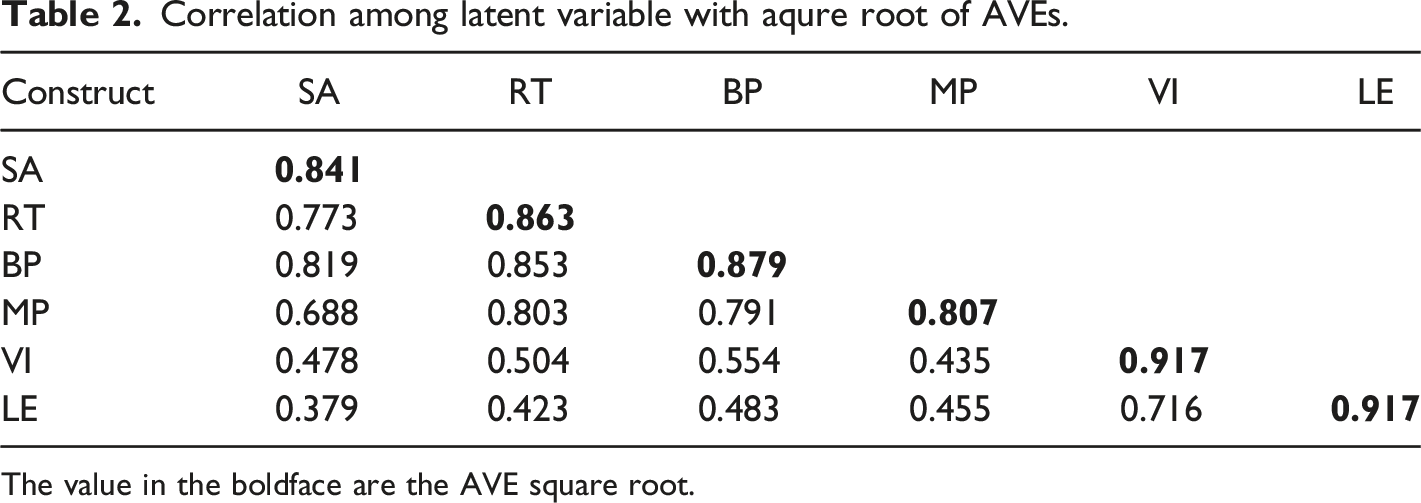
The value in the boldface are the AVE square root.
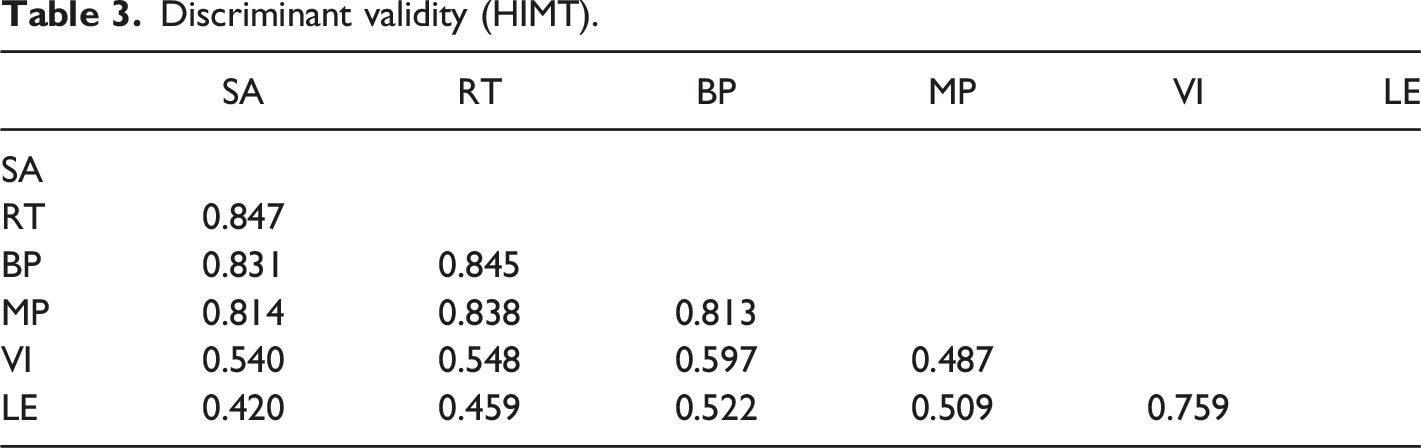
Discriminant validity (HIMT).
The Structural Model
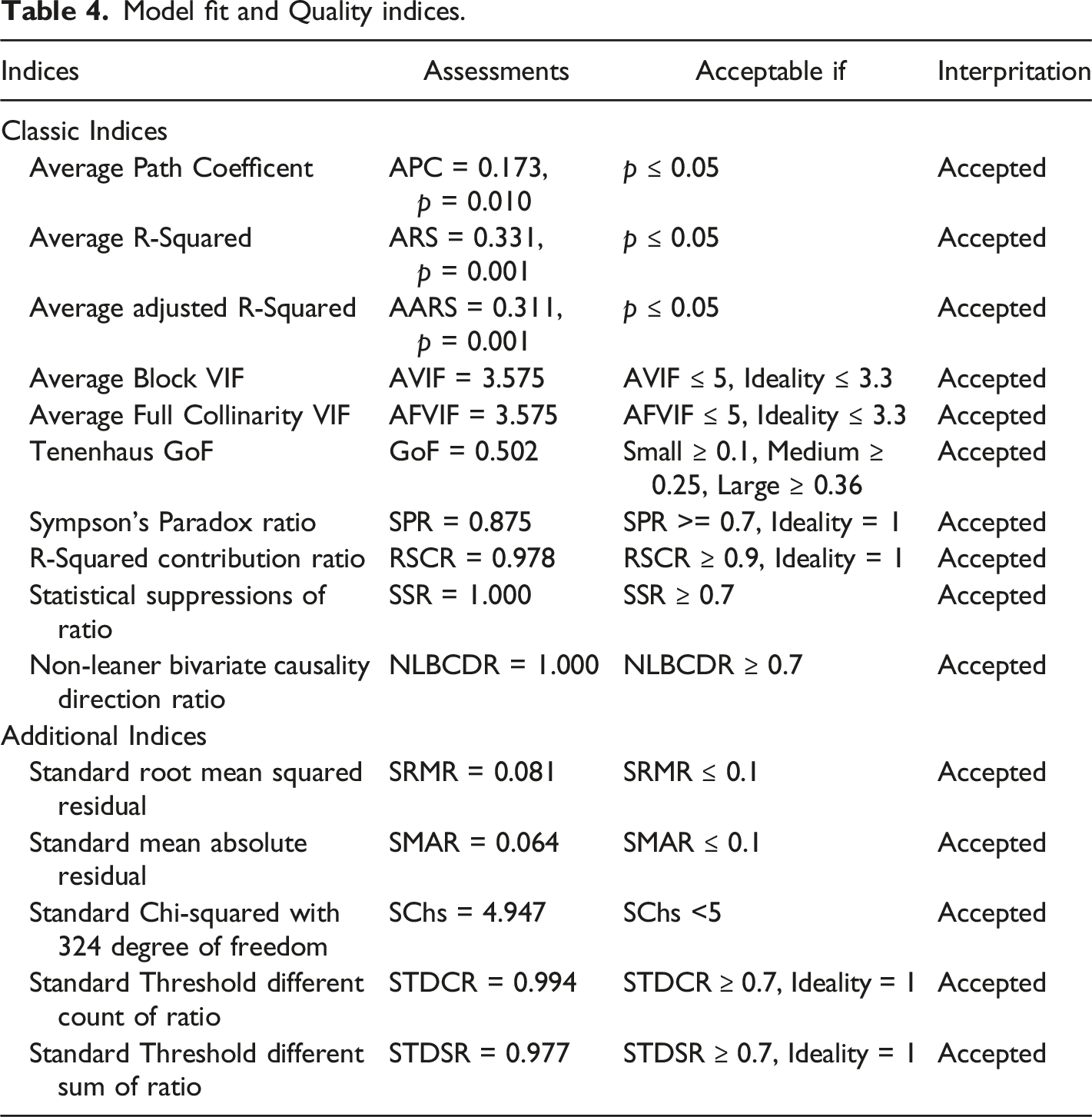
Model fit and Quality indices.
Predictive relevance and goodness of fit of the model.
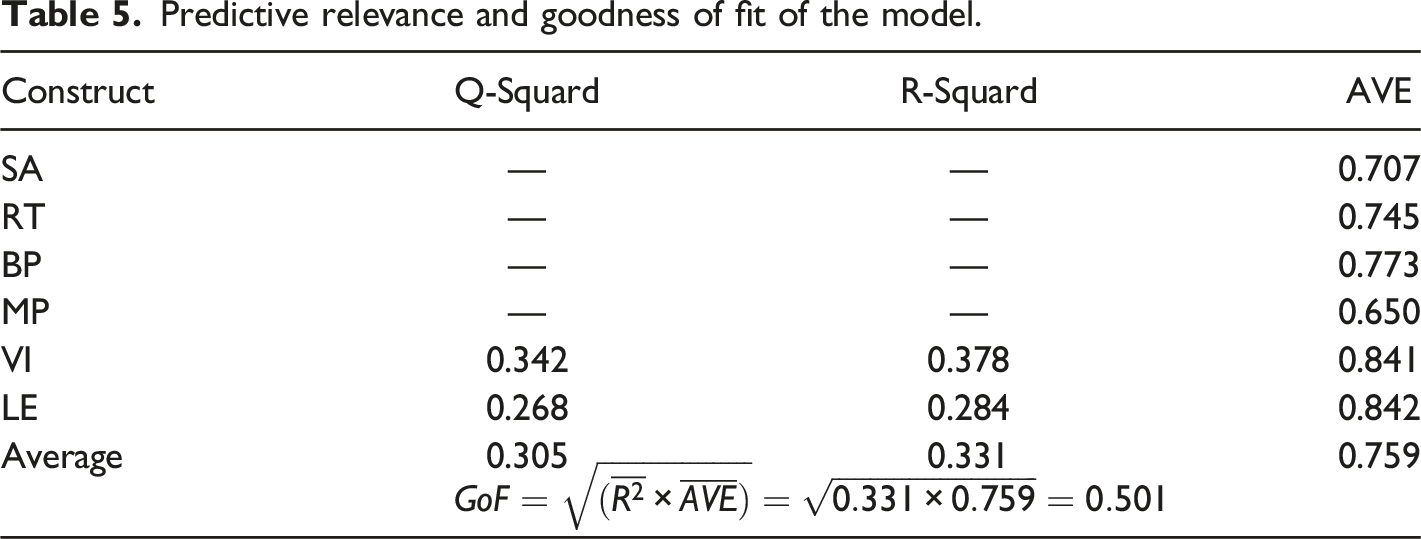
Furthermore, the goodness of fit (GoF) was calculated as 0.501, which is more than 0.36; thus, this model is suitable for considering model viability (Alkhalaf et al., 2022; Wetzels et al., 2009). In addition, the values of R-squared coefficients were 0.378 and 0.284, indicating there is a moderate interpretive ability, as explained by Cohen (1988) and Falk and Miller (1992).
The PLS-SEM technique has been adopted to test the hypotheses in this study. The path coefficients (betas) and the p-values of the structural model are presented in Figure 2. Meanwhile, Table 6 presents the results relating to the hypotheses of this research; it depicts the direct effect of AL dimensions, namely SA, RT, BP, MP, on the two studied aspects of thriving at work: VI and LE. Test model. Result of Hypothesis Test.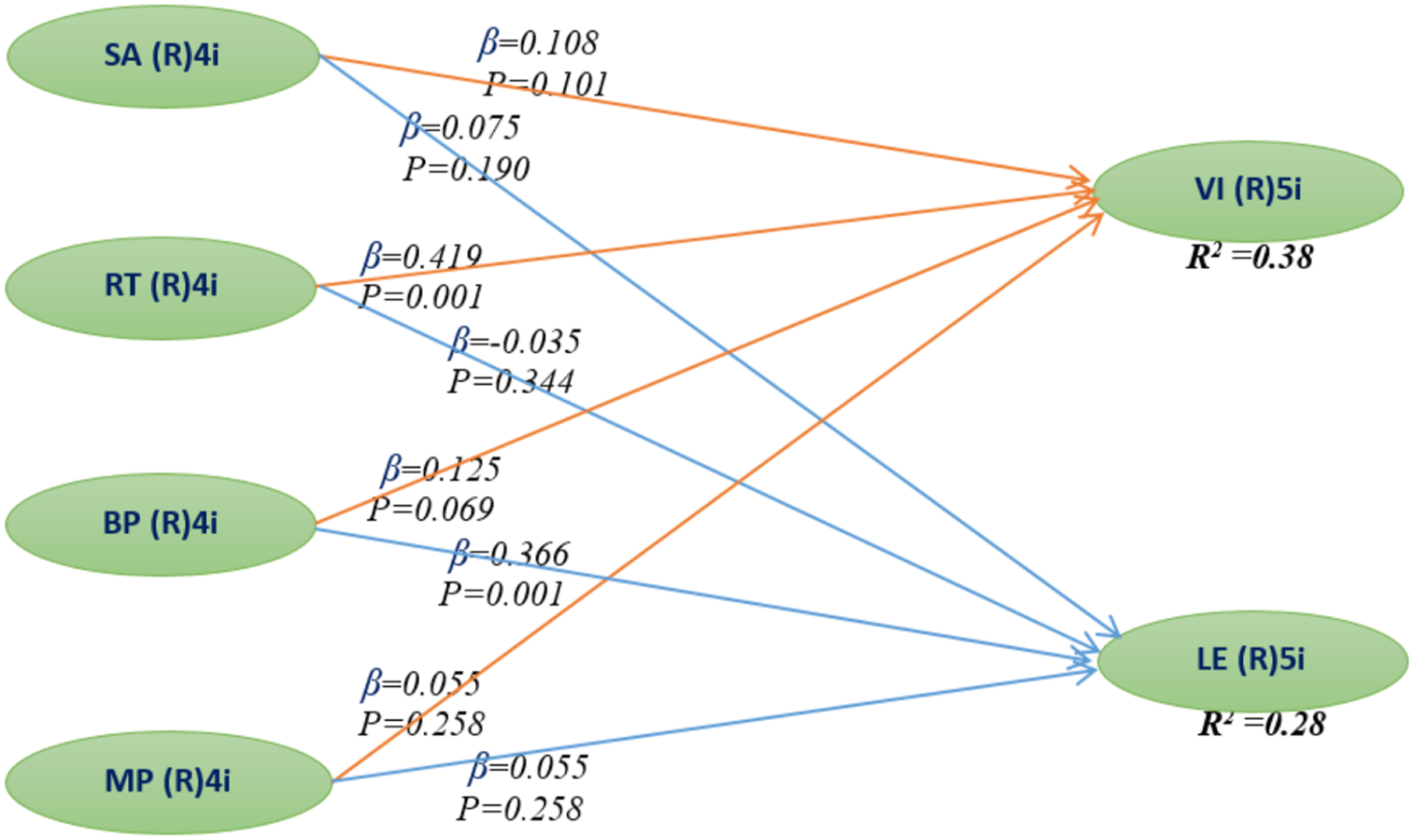
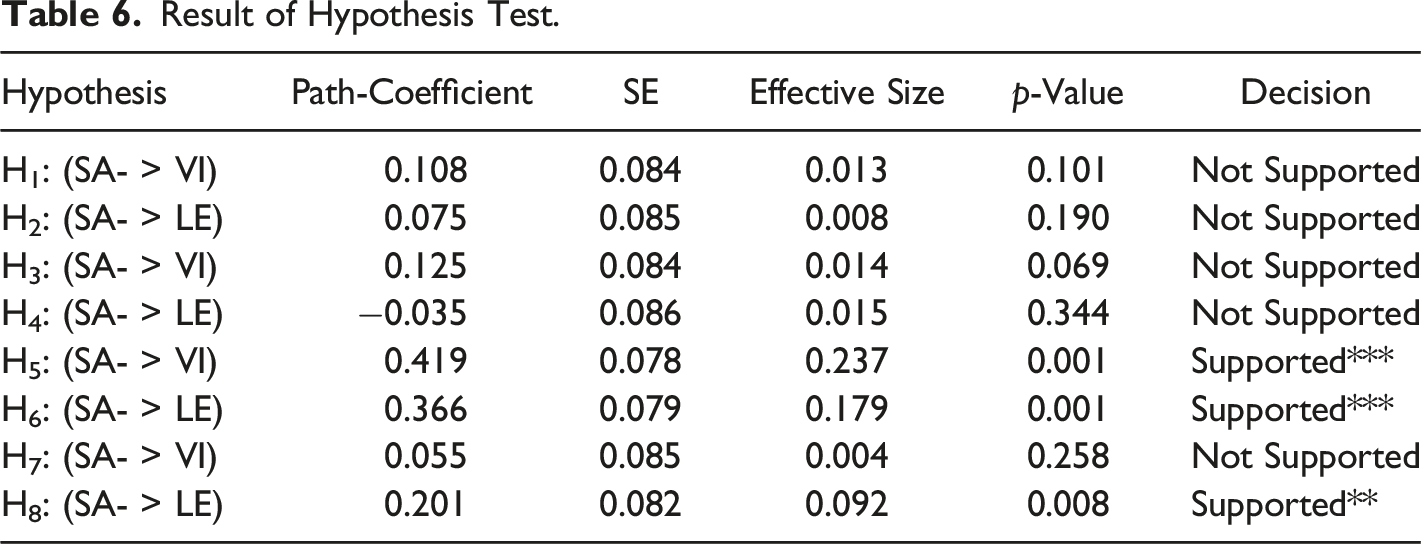
As highlighted in Table 6, only one dimension of AL (balanced processing) positively and significantly affects vitality of the employees as one of the aspects of thriving at work (β = 0.419, p < 0.001), whereas self-awareness (β = 0.108, p > 0.05), relational transparency (β = 0.125, >0.05), and moral perspective (β = 0.055, p > 0.05) have no significant impact on employees’ vitality. Thus, H5 is supported, yet the remaining hypotheses (H1, H3, and H7) are not.
Also, the results indicate that two dimensions of authentic leadership—balanced processing (β = 0.366, p < 0.001) and moral perspective (β = 0.201, p < 0.01)—positively and significantly affect learning of employees as one of the aspects of thriving at work; however, the other two dimensions—self-awareness (β = 0.075, p > 0.05) and relational transparency (β = −0.035, p > 0.05)—have no significant effect on employees’ learning. This data thereby supports H6 and H8 and allows us to reject H2 and H4. On the other hand, Table 6 demonstrates that H5 and H6 were moderately correct at rates of 0.237 and 0.179, respectively, while H8 was only slightly correct (0.092) according to the criterion set by Kock (2020).
Discussion and Conclusion
The study’s findings highlighted that self-awareness and relational transparency are not significant drivers for thriving at work within the IT industry. Indeed, both elements of flourishing in a role—vitality and learning—were not affected by an authentic leader exhibiting these attributes. One probable explanation is that the IT industry is quite fast-paced and the number of employees in IT companies is generally rather large, meaning a leader’s self-awareness and relational transparency may not affect an employee’s capacity to thrive in the workplace because they may not be influencing someone who is working on the front desk. Another potential reason could be that IT jobs are generally geared towards standard operating procedures (SOPs), which means that the processes are well defined, the structure is set, and there is perhaps less of a need for bosses to communicate with employees; nevertheless, it is necessary to conduct more investigations in this field. Meanwhile, the current study is relevant as there are has been no other research on authentic leadership’s relationship with thriving at work within the IT industry.
Our results differed from the results of another similar study (Alotaibi, 2021), where his study indicated a significant effect of all aspects of authentic leadership on thriving at work, the reason for the difference in results may be due to the different application environment between the two studies, as well as cultural differences between employees in both countries Australia and Saudi Arabia. Meanwhile, the other two elements of AL-balanced processing and internalized moral perspective—were seen to be significantly pertinent to thriving at work within the Australian IT industry. This study found that these two dimensions have a positive effect on thriving at work, which indicates that AL can play a vital and effective role in promoting employee prosperity by providing workers with opportunities for growth and advancement; subsequently, this may lead them to feeling educated and energized (Wallace et al., 2016). These results were consistent with the findings of a study by Mortier et al. (2016) which indicated that authentic leadership plays an important role in the thriving of staff at work and increases their vitality and ability to learn.
In the IT industry, an authentic leader’s balanced processing of information makes them feel less fearful of the changes that employees may be involved in and they are more likely to be accepting of their creative thinking (Michie & Gooty, 2005). This is the reason balanced processing of information is of significant importance with regard to thriving at work. The last element of authentic leadership—internalized moral perspective—also significantly affects learning in relation to flourishing in a work role. This characteristic refers to the degree to which a leader adheres to the basic principles that are expressed within the company and how much their conduct reflects equity and ethical practice. Today, the IT industry is in a position where the level of governance is high and ethical considerations are central, so these moral perspectives make employees feel like they are being fairly treated and helps maintain their vitality and learning.
Theoretical Contributions and Practical Implications
The need for a strongly aspirational underpinning for everyday leadership practice remains as strong now as it was in the past. This study was a pioneering investigation that examined the relationship between authentic leadership and thriving at work; it is also one of very few studies that have focused on the Australian IT industry and AL. The research herein makes an important contribution to AL literature by providing details about the vital roles of balanced processing of information and internalized moral perspective on thriving at work. The overall findings of this study also contribute to a better understanding of the relationship between AL and employees doing well in the workplace. The uncovered data suggests that some guidelines should be put in place for organizations and leaders to help them better manage employee relations; it also underlines that IT companies in Australia should select authentic leaders and invest in training programs to sensitize those in charge to their workers’ needs.
Furthermore, the findings indicate that authentic leadership and thriving at work are specifically relevant to the information technology context. Given the role of AL in promoting prosperity at work, we advise administrative leaders in this industry to adopt relevant behaviors by implementing a training program to develop and demonstrate authentic leadership skills by way of providing an open work environment for others, listening to and accepting the opinions of employees, exchanging information with them, and giving them the opportunity to freely share their opinions and ideas during the decision-making process (Avolio et al., 2004). Additionally, the human resources department should pay more attention to how they choose administrative leaders by focusing on individuals with leadership traits and behaviors, self-organizing, adherence to ethical standards and values, relationship building, talent, emotional intelligence, trust, integrity, transparency, openness and sharing of ideas and information with others, the ability to objective analysis, realism and honesty with oneself and others in all situations (Ilies et al., 2005).
Moreover, thriving at work was noted here as an important psychological condition for employees, so the IT industry should provide an appropriately healthy environment to maintain their workers’ passion for learning and their work-based vitality. For example, companies in this sector can offer a guided learning climate to encourage employees to keep on developing new knowledge and competencies, while also paying more attention to their needs (Alotaibi, 2021), since a positive environment that is conducive to flourishing at work leads to beneficial results (Paterson et al., 2014). The IT sector needs to assess its employees’ prosperity levels, social capabilities, respective abilities to provide assistance, enthusiasm and activity, dedication to work, and respect for their colleagues in order to improve organizational resources that encourage business-related success (Porath et al., 2012).
Limitations and Future Study Directions
In spite of the novelty of the study in terms of its contextual focus, it has many limitations that should be highlighted and could be cause for further research in the future. First, although the data collection was done online via convenience sampling, there still might have been some bias that could have been removed if random sampling was utilized. Increasing the sample size could also strengthen the capacity to make generalizations. Second, the current study concentrated solely on the IT industry, yet similar industry-focused research could be planned; for example, this might take place in relation to the hospitality sector or the travel industry. Another interesting direction for a future study to take could be a longitudinal investigation into how AL will affect thriving at work with the changing times in relation to the move towards globalization and setting up operations online. Third, the potential mediating role that could have an effect on the relationship between AL and thriving at work was not measured. Therefore, in future research, many mediators’ variables, such as individual characteristics, cultural factors, and creativity, could be added. Finally, as our results are based on a cross-sectional research design, no causal statements can be inferred. Although the current research has shown that there is a positive influence by some AL styles on thriving at work, further longitudinal research is needed to explore the potential causal effects. To overcome the limitations mentioned above, the search for more insights into the relationship between styles of AL and employees’ vitality and learning is imperative.
Footnotes
Declaration of Conflicting Interests
The author(s) declared no potential conflicts of interest with respect to the research, authorship, and/or publication of this article.
Funding
The author(s) received no financial support for the research, authorship, and/or publication of this article.
Data Availability Statement
The datasets generated during and/or analyzed during the current study are not publicly available due [DATA ARE NOT PUBLIC] but are available from the corresponding author on reasonable request.
