







Abstract
The current study aimed to examine whether body surveillance mediated the relation between social comparison and selfie behaviors, and whether this mediating process was moderated by self-esteem. A sample of 339 female adolescents were recruited to participate in the present study and completed self-report measures of selfie behaviors, upward and downward appearance comparisons with peers, self-objectification and self-esteem. Results indicated that body surveillance mediated the association between upward physical appearance comparison and selfie behaviors. In addition, self-esteem moderated the relation between body surveillance and selfie behaviors. These findings add to the extant literature by suggesting that selfies may be some new ways of body surveillance and physical appearance comparison, which have some theoretical and practical implications.
During the last few decades, Chinese adolescent users are fairly active on social networking sites (SNS) and account for 33.8% of the SNS users (Niu et al., 2018). Selfies are one of the most popular activities on social networking sites (Chua & Chang, 2016), such as Qzone and WeChat Moments, two of the most widely used SNSs in China (Niu et al., 2018, 2019). Selfies are popular among adolescents (Senft & Baym, 2015), and 69% of teenagers share selfies between three to 20 times daily in the U.S (Katz & Crocker, 2015). Several studies have found significant differences in selfie behaviors between men and women. Compared to males, females were more inclined to take personal and group selfies, post personal selfies, edit photos, and use photographic filters (Dhir et al., 2016; Salomon & Brown, 2019).
Previous studies have found that disordered eating (Cohen et al., 2018; Niu et al., 2019; Saunders et al., 2020; Wick & Keel, 2020), body dissatisfaction (McLean et al., 2015; Tiggemann et al., 2020; Veldhuis et al., 2020) and negative mood (Lamp et al., 2019; Mills et al., 2018) are potential correlates and consequences of selfie-related behaviors. Research has explored but is seemingly limited to personality traits related to selfies (e.g., self-esteem, Big Five traits, and narcissism) (Choi et al., 2017; Shane-Simpson et al., 2020; Wang, Xie, et al., 2018). It is urgent to consider social factors underlying selfie behaviors given the omnipresence and possible consequences of selfies on SNSs.
Social Comparison and Selfie Behaviors
According to the social comparison hypothesis, people evaluate themselves and how their appearance by comparing themselves to others like them (Festinger, 1954). Young adults frequently compare themselves to others on social media, either downward (i.e., to those they think to be less fortunate than themselves) or upward (i.e., to those they perceive to be better) (Chua & Chang, 2016). Upward comparisons often lead to lower self-evaluation and negative affect (Muller & Fayant, 2010). Downward comparisons, the most common example of which is the ‘‘better-than-average’’ effect or the primus inter pares effect (Taylor & Brown, 1988), would cause self-enhancement and positive affect (Gerber et al., 2018). Research has indicated that females make appearance-related social comparisons more frequently than males (Rodgers et al., 2009). When describing their appearance, females made significantly more upward comparisons, whereas males made more downward comparisons (Fardouly et al., 2017; Leahey & Crowther, 2008; Leahey et al., 2007; Strahan et al., 2006). Engaging in upward social comparisons causes females to feel more body dissatisfied (Fardouly et al., 2015; Fardouly & Vartanian, 2015; Grabe et al., 2008) and have lower self-esteem (Fardouly & Vartanian, 2015).
Social comparison theory is readily applicable to the experience of selfies on SNSs. Selfies are frequently taken and posted online by young people as part of “like-seeking” behaviors, in which users strategically interact with social media in an effort to gain attention and feel more validated by others as well as to elevate their social status, reputation, and peer group relevance (Mascheroni et al., 2015). Studies have indicated that selfie behaviors on social media are positively related to appearance comparisons (Lee & Lee, 2021; Modica, 2020; Rousseau, 2021; Wang, 2019; Yang et al., 2020). Fox and Vendemia (2016) have found women modified images more often than men did, and they felt worse following upward social comparison (Fox & Vendemia, 2016). The authors suggested that those who have a tendency to compare themselves to others feel pressed to uphold or surpass the standards of attractiveness set by others or to attract as much attention as their rivals (for example, by getting as many “likes” on a photo). In a two-wave longitudinal survey, Chae (2017) found that social comparisons with peers during Wave 1 were strongly correlated with selfie editing activity during Wave 2 (Chae, 2017). In general, these findings suggest that individuals who engage in selfie activities may not due to their dissatisfactions with physical appearance, but due to their intention of looking better than others, or at least looking the same as others based on social comparison.
Body Surveillance as a Mediator
According to objectification theory (Fredrickson & Roberts, 1997), individuals’ daily encounters with objectifying experiences socialize them to internalize an observer’s perspective of their own bodies as objects to be looked at and evaluated (i.e. self-objectification). Following frequent exposure to sexual objectification of female bodies in the media or in social situations, women may become self-objectified. Body surveillance, or the act of examining whether one’s own look complies with internalized beauty standards, is one aspect of this self-objectification (Manago et al., 2015; Moradi and Huang 2008). Previous studies have found social comparison positively correlated with body surveillance (Fitzsimmons-Craft et al., 2015; Fitzsimmons-Craft, Harney, Brownstone, et al., 2012; Fitzsimmons-Craft, Harney, Koehler, et al., 2012; Liao et al., 2014). Social comparison plays an important role in the ‘circle of objectification’ (Lindner et al., 2012). Women who compare their physical appearance to others more frequently may feel that they must continue to conduct social comparisons to ensure the compliance of their appearance with the thin ideal.
Previous study has found that time spent on SNSs was correlated with higher levels of body surveillance in adolescent girls (Chae, 2017). Many selfie-takers edit their selfies before posting by removing the “unfavorable” aspects of their appearance or adding desirable features (Abidin, 2016; Chua & Chang, 2016; Stefanone et al., 2019), which is a way of body surveillance. Body surveillance is positively associated with self-presentation (Grabe et al., 2008). Several studies have found that body surveillance was related to selfie behaviors (Lamp et al., 2019; Veldhuis et al., 2020; Yao et al., 2020). According to Veldhuis et al. (2020), body surveillance was linked to a number of young women’s selfie behaviors, including purposeful selection of selfies to post and edit (Veldhuis et al., 2020). In addition, Cohenet al. (2018) found that body surveillance moderated the relationship between selfies and bulimia symptomology in a sample of young adult women (Cohen et al., 2018). Butkowski et al. (2019) found that women who invested more in selfie feedback were more likely to express body dissatisfaction and drive for thinness via the indirect influence of body surveillance (Butkowski et al., 2019). According to new research, photo retouching may encourage women to engage in body surveillance and become more aware of their flaws, which can lead to greater anxiety and decreased confidence in their physical beauty (Mills et al., 2018). Body surveillance may mediate the relation between social comparison and selfie behaviors.
Self-Esteem as a Moderator
A recent study indicated there was no significant correlation between body surveillance and selfie activity (Cohen et al., 2018), despite several studies have shown a positive relationship between the two (Butkowski et al., 2019; Lyu, Jiao, et al., 2022; Yao et al., 2020). One possible explanation is that the motives behind selfie behaviour depends on individuals’ self-esteem levels. Self-esteem, which refers to individual’s self-evaluation of oneself (Rosenberg, 1965), plays an integral role in understanding selfies, and serves as both a motivation and an outcome of selfies (Pounders et al., 2016). Several studies have reported a significant positive relation between individuals’ self-esteem and selfie behaviour on social media (Kim, 2020; Kim & Baek, 2014; Meeus et al., 2019; Wang, Wang, et al., 2018). These results suggest that individuals with high self-esteem are more likely to post selfies on SNSs compared to those with low self-esteem.
According to objectification theory (Fredrickson & Roberts, 1997), women learn to view and evaluate themselves based on what others say about their appearance. Moreover, previous studies have reported American women with low self-esteem experience more body surveillance than women with high self-esteem (Mercurio & Landry, 2008), and women with high self-esteem tend to be more satisfied with and less focused on their appearance (Fingeret & Gleaves, 2004). The effect of body surveillance on selfies may differ among individuals with different levels of self-esteem. In particular, having high levels of self-esteem may make body surveillance more effective in predicting selfie behavior; having low levels of self-esteem may make body surveillance less effective in predicting selfie behavior. Based on the findings of previous research, the role of self-esteem may moderate the relation between body surveillance and selfie behavior.
The Present Study
It is crucial to investigate the underlying mechanisms behind the association between social comparison and selfie behaviors given the ubiquity of social comparison on SNSs and the serious implications of selfie-related activities. Drawing conclusions from the above reasoning, the current study aimed to examine the relationship between social comparison and selfie behaviors among Chinese female adolescents as well as its underlying mechanisms (moderated mediation model, see Figure 1). Based on the literature reviewed above, we put forward the following hypotheses. Social comparison would be positively related to adolescents’ selfie behaviors (Hypothesis 1). Body surveillance would mediate the relationship between social comparison and selfie behaviors (Hypothesis 2). Self-esteem would moderate the indirect link between social comparison and selfie behaviors via appearance comparisons (Hypothesis 3). The proposed moderated mediation model.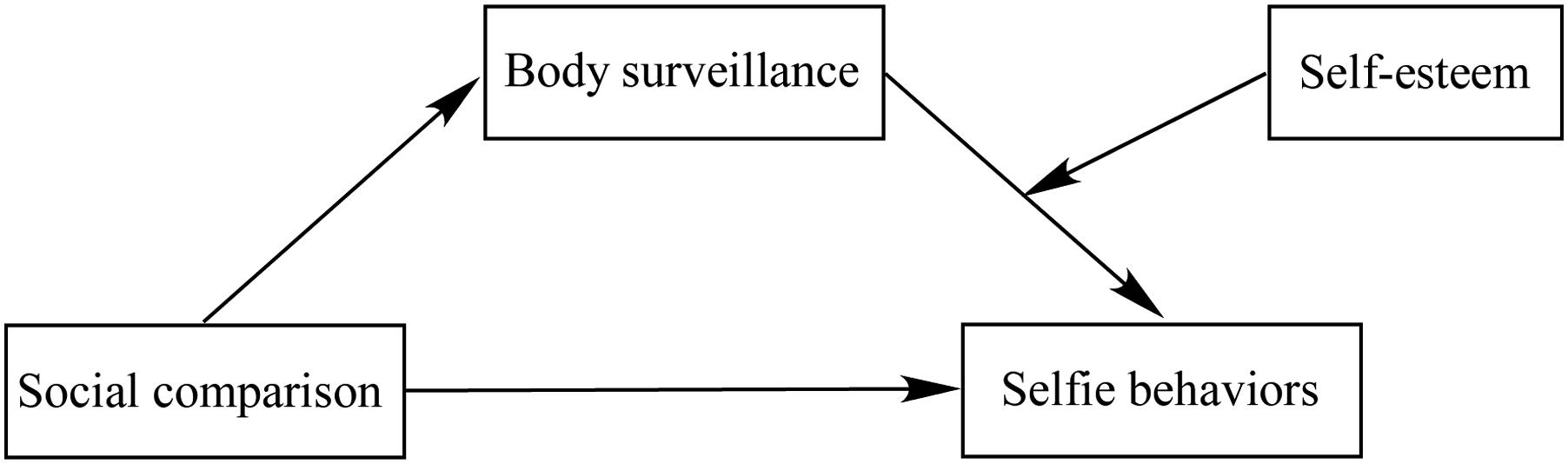
Method
Participants
Data for this study were collected from two high schools in central China. The final sample was composed of 339 female adolescents who had ever took selfies and posted them on SNS. The mean age of respondents was 16.97 (SD = 1.44), and the age range is 14–19 years old. The majority of the participants (96.76%) identified themselves as Han ethnic.
Procedure
The university human research ethics committee approved this research. After obtaining informed consent, participants were instructed to complete self-report questionnaires in a quiet classroom and be free to withdraw from the study at any time. The anonymity of the study was emphasized prior to data collection. All questionnaires took approximately 8–15 minutes to complete. Participants were paid 5 yuan for the survey.
Measures
Selfie Behaviors
Being adapted from previous studies (Dhir et al., 2016; Lyu, Jiao, et al., 2022; Lyu, Wang, et al., 2022; Sung et al., 2016; Wang et al., 2019; Wang, Wang, et al., 2018), selfie behaviors were measured using two items, “How frequently do you take individual selfies?” and “How frequently do you post individual selfies on SNSs?” Response options ranged from 1 = very infrequently to 7 = several times a day. The mean of the two items was summed with higher scores indicating higher selfie behavior frequency. In this study, the correlation between these two items was significant (r = 0.55, p < 0.001).
Upward Physical Appearance Comparison and Downward Physical Appearance Comparison
The Upward Physical Appearance Comparison Scale (UPACS) and Downward Physical Appearance Comparison Scale (DPACS) are directional appearance comparison scales (O’Brien et al., 2009). The UPACS focuses on upward physical appearance comparison (e.g., “I tend to compare myself to people who I think look better than me”), and the DPACS focuses on downward physical appearance comparison (e.g., “At parties I often compare my looks to the looks of unattractive people”). The Chinese version of the UPACS has 7 items and the DPACS has eight items (Liao et al., 2014; Luo et al., 2019). Items are rated from 1 = never to 5 = always and summed to derive total scale scores reflecting the frequency of upward and downward comparisons. In this sample, the UPACS had alphas of α = 0.90, and the DPACS had alphas of α = 0.91.
Body Surveillance
The Chinese version of the Objectified Body Consciousness Scale (OBCS) has 14 items and two subscales, body surveillance and body shame (Jackson & Chen, 2015; Jackson et al., 2016; McKinley & Hyde, 1996). The 8-item body surveillance subscale of OBCS reflects tendencies to view one’s body as an outside observer would (e.g., I often worry about whether the clothes I am wearing make me look good). For the present study, scores on the body surveillance showed acceptable reliability, α = 0.71.
Self-Esteem
Self-esteem was assessed with the Rosenberg Self-Esteem Scale (Rosenberg, 1965). The scale has 10 items using a 4-point scale ranging from 1 = strongly disagree to 4 = strongly agree. In Chinese samples, the scale had satisfactory psychometrics (Wang, Wang, et al., 2018). For this study, the Cronbach alpha coefficient was 0.77.
Demographics
Participants had to provide demographic data, such as their age, ethnicity, weight, and height. Body mass index (BMI; kg/m2) was calculated using the last two demographic factors.
Statistical analyses
SPSS version 21.0 was used to input and analyze all of the data. Pairwise deletion was used to handle missing data, and less than 2% of all relevant variables had any missing data. Before the subsequent analysis, all the study variables were first normalized to reduce multicollinearity (Dearing & Hamilton, 2006). Pearson’s correlation coefficients were calculated between physical appearance comparison, body surveillance, self-esteem and selfie behavior. Subsequently, the Hayes’ PROCESS macro (2013) for SPSS was adopted to test the moderated mediation model (Hayes, 2013). In the present study, we generated 95% bias-corrected confidence intervals on the basis of 5000 bootstrap samples to test for the significance of the effect.
Results
Preliminary analyses and descriptive data
Means, standard deviations, and correlations for main study variables.
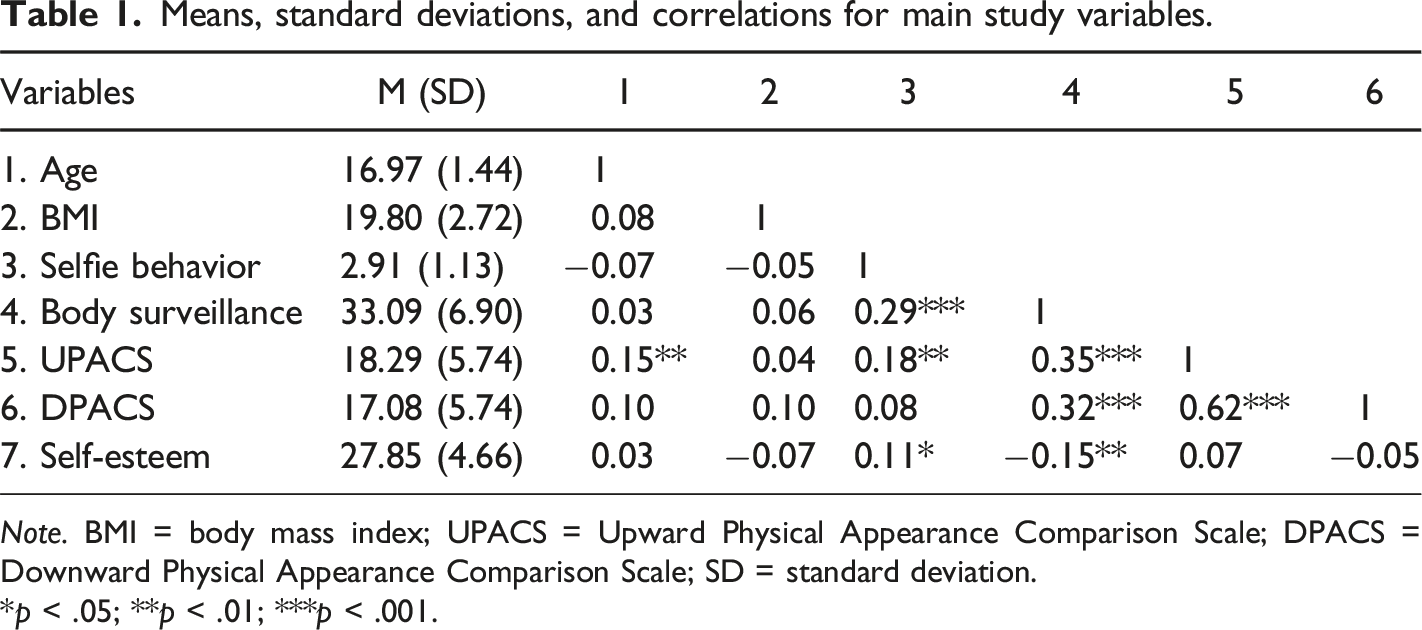
Note. BMI = body mass index; UPACS = Upward Physical Appearance Comparison Scale; DPACS = Downward Physical Appearance Comparison Scale; SD = standard deviation.
*p < .05; **p < .01; ***p < .001.
Testing for Mediation Effect
Testing the mediation effect of upward physical appearance comparison on selfie behaviors.
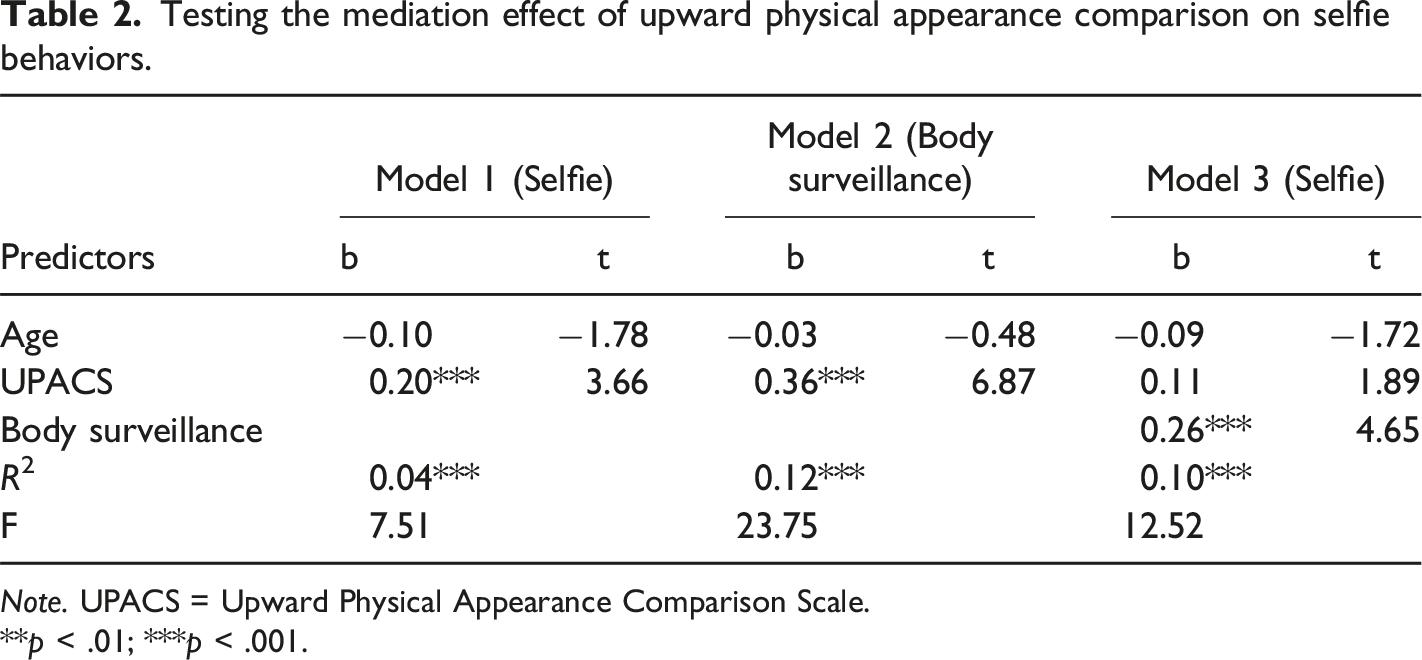
Note. UPACS = Upward Physical Appearance Comparison Scale.
**p < .01; ***p < .001.
Testing for Moderated Mediation
Testing the moderated mediation effects of upward physical appearance comparison on selfie behaviors.
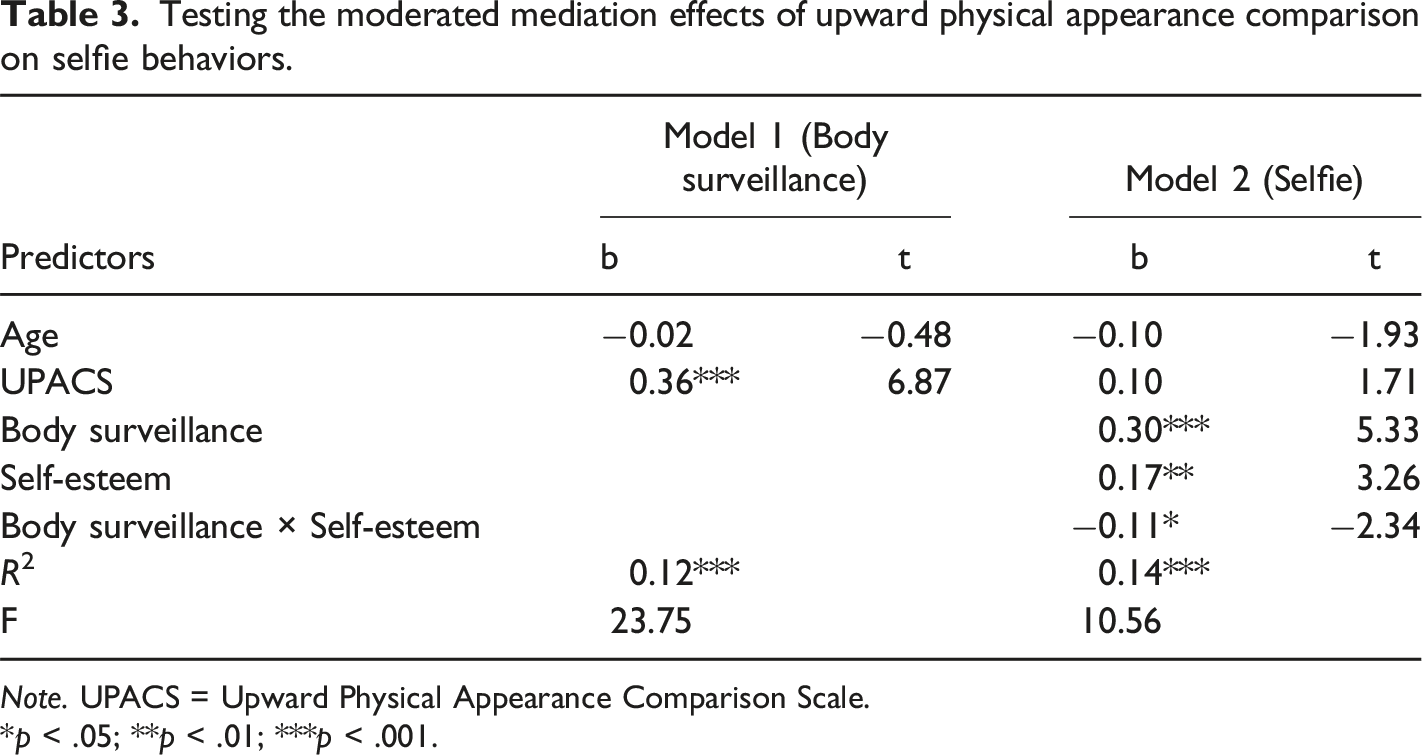
Note. UPACS = Upward Physical Appearance Comparison Scale.
*p < .05; **p < .01; ***p < .001.
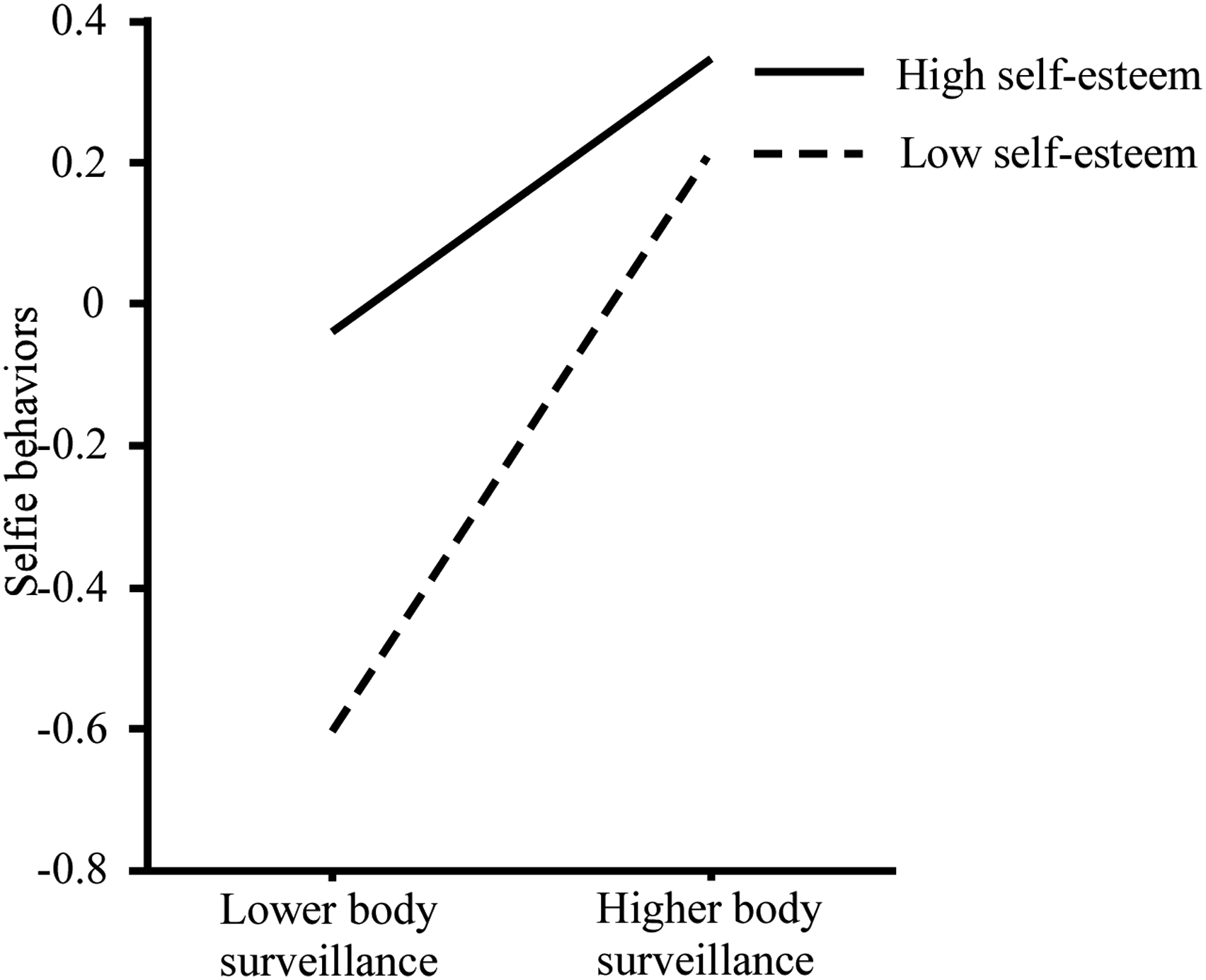
Simple slopes analysis of the interaction between body surveillance and self-esteem on selfie behaviors. Body surveillance is reported at −1 (lower) and +1 (higher) SDs.
Discussion
From the perspectives of social comparison and body objectification, we investigated the influence of physical appearance comparison on selfie behaviors as well as its possible underlying mechanisms among Chinese female adolescents. A moderated mediation model was designed in current study to examine whether social comparison is indirectly connected to selfie behaviors via body surveillance and whether the association between body surveillance and selfie behaviors is moderated by self-esteem.
The present study showed that upward rather than downward physical appearance comparison was positively related to selfie behaviors. Previous study has found that social comparison orientation was positively associated with selfie-editing frequency (Wang, 2019). Selfies including browsing and editing activities were positively associated with peer appearance comparisons in young girls (Chang et al., 2019). In Chinese samples, downward physical appearance comparisons were more correlated with mass media appearance pressure than upward physical appearance comparisons (Liao et al., 2014). Upward comparisons may motivate people to behave in ways that show their better selves, for example, by editing and posting selfies on SNSs to improve their image according to comparison standards. The significant relationship between upward physical appearance comparison and selfie behaviors suggested that when young girls took actions to conform to objectifying standards of beauty, they were also more likely to engage in social comparison for inspiration and admiration. Adolescent girls might also seek opportunities to gain positive feedbacks on their appearances by posting selfies on SNSs.
In current study, body surveillance was positively correlated with selfie behaviors. Higher frequency of posting objectified self-images was associated with trait self-objectification (Bell et al., 2018), and self-objectification predicted editing photographs of oneself posted on SNSs (Fox & Rooney, 2015). The present study found that, upward physical appearance comparison tendency was positively related to selfie behaviors through the mediating influence of body surveillance. Previous research has demonstrated that the association between social media use and negative outcomes (e.g., mental health) was mediated by body surveillance (Hanna et al., 2017; Manago et al., 2015), as well as the positive association of participants’ investment in selfie feedback with body image disturbance (Butkowski et al., 2019). According to the objectification theory (Fredrickson & Roberts, 1997), the external pressures may encourage self-objectification by encouraging women to examine their own appearance from a third-person viewpoint. The findings of this study suggest that individuals who compare their appearance upward present more selfie behaviors, which may be due to their exposure to the influence of body surveillance.
Consistent with our expectations, results revealed the moderating effect of self-esteem in the association between body surveillance and selfie behaviors. Selfie behaviors were more affected by body surveillance among those with lower levels of self-esteem. Individuals who have high level of body surveillance are more likely to take selfies (Veldhuis et al., 2020), and lower levels of self-esteem can further enhance the predicting effect of body surveillance on selfie behavior. Self-esteem refers to an overall positive or negative evaluation of the self (Rosenberg, 1965). Physical body is a source of self-esteem (Goldenberg et al., 2000). Previous research have reported women with low levels of self-esteem experience more body surveillance and engaged in greater body comparison than women with high levels of self-esteem in U.S. (Mercurio & Landry, 2008; van den Berg & Thompson, 2007). Women with low self-esteem are likely to turn to societal ideals for guidance due to the lack of confidence in their inner qualities and outer appearance (Tylka & Hill, 2004), and tend to vigilantly monitor their body and engage in greater body comparison (Tylka & Sabik, 2010; Van den Berg et al., 2007). Another possible reason for the decrease in number of selfies among people with low self-esteem could be that they do not like their bodies. Therefore, selfie behaviors, serving to reinforce concerns about appearance, might be conceptually similar to self-objectification and its relevant body surveillance for adolescents, especially for those with lower self-esteem.
The findings in current study must be considered in the light of several limitations. First, our cross-sectional and correlational design is the main limitation of this study; therefore, further research can adopt longitudinal or experimental designs to determine the direction of the relationship between physical appearance comparison and selfie behaviors on SNSs. Second, data were collected only from a sample of female adolescents. Some studies found that there is a gender differences in self-esteem, and males consistently reporting higher self-esteem than females (Bleidorn et al., 2016; Orth et al., 2018). This makes it hard to fully generalize our findings to male adolescents. Third, the scales of self-esteem focus on general self-esteem rather than the specific esteem related to appearance or body. Some research have tested the relationship between body-esteem and selfie behaviors (Chang et al., 2019; Wang, 2019). According to Harter, self-esteem has multidimensional nature, and Self-Perception Profile for Adolescents provides a more differentiated and richer picture of self-worth (Harter, 1988). Future research could use body-related esteem scale and self-esteem scale for adolescents, such as the Chinese version of Self-Perception Profile for Adolescents (Wang et al., 1996). Forth, social comparisons also include lateral comparison, i.e., comparing themselves with a target individual of comparable level (Festinger, 1954). Research has found lateral comparisons have a positive impact on women’s body image (Myers & Crowther, 2009). Future research could consider the role of lateral comparisons in selfie behavior. Finally, the measurement of selfie behaviors were based on the frequency of saving selfies on a smartphone and posting selfies on SNSs. Several studies have found varied effects of different forms of selfie behaviors on mental health (Fardouly & Rapee, 2019; Rosenthal-von der Pütten et al., 2019; Shin et al., 2017). Future research needs to examine more diverse forms of selfie behaviors.
In sum, the present study found that upward rather than downward physical appearance comparison was positively related to selfie behaviors, and this relation was mediated by body surveillance. Furthermore, self-esteem moderated the indirect association between body surveillance and selfie behaviors. By focusing on selfie behaviors, this study broadens our theoretical knowledge of the effects of social comparison and self-objectification.
Footnotes
Declaration of Conflicting Interests
The author(s) declared no potential conflicts of interest with respect to the research, authorship, and/or publication of this article.
Funding
The author(s) disclosed receipt of the following financial support for the research, authorship, and/or publication of this article: This work was supported by the Educational Science Plan of Jiangsu (B/2021/01/65), Chinese National Natural Science Foundation (31800925) and Philosophy and Social Science Research in Higher Education, Jiangsu, China (2022SJYB2131).
Data Availability
The datasets generated during and/or analysed during the current study are available from the corresponding author on reasonable request.
Declarations Informed Consent
Informed consent was obtained from all individual participants included in the study.

Author Biographies
Zhenyong Lyu, PhD, is Lecturer in Psychology at the Yangzhou University. His main research interests are eating disorders, body image and social media. His research has been published in European Eating Disorders Review, Appetite, Journal of Health Psychology, Frontiers in Behavioral Neuroscience, and Experimental Brain Research. [email:lvzheny@126.com]
Panpan Zheng, PhD, is Lecturer at the Yangzhou University. She received her doctoral degree in psychology from Southwest University, China. Her research interests include body image, sexism, and pain. [email: zheng-panpan@hotmail.com]
Dongquan Kou, PhD, a native of Quxian County, Sichuan Province, China. He is now a professor of psychology at the Yangzhou University, China. His main research interests are mental health education, learning psychology and teaching psychology. He has publications concerning these research areas. [email:koudq@163.com]