







Abstract
Workplace aggression consists of harmful actions between co-workers, supervisors, and subordinates. In this series of studies, we draw from attachment theory and competitive personality to develop and test a mediated model of workplace aggression that incorporates relational working models (i.e., attachment style) with competitive orientation to predict aggressive intentions. Our results find that an avoidant attachment style caused by dissociative relational models promotes a preference for aggression through hypercompetitiveness, while other relational models fail to predict aggressive intentions. In addition, we test and incorporate a shortened scale of competitive orientation for greater accessibility in competitiveness studies.
Introduction
Interpersonal aggression is a relational process in which a perpetrator acts in a hostile or antagonistic manner toward a victim. While workplace aggression research finds that trait-like predictors of aggression in the perpetrator and the victim interact with the organizational situation to produce aggressive behavior (Hershcovis & Reich, 2013), the processes by which someone becomes the aggressor are less well defined. In these cases, research views aggression from the perspective of the victim. While the victim is understandably the focus, the aggressor is certainly part of the story. Workplace aggression is a serious issue for practitioners as it has implications for various organizational outcomes, such as job satisfaction, commitment, psychological and physical well-being, and performance (Bowling & Beehr, 2006; Pacheco et al., 2021). Despite the significant empirical findings (e.g., LeBlanc & Kelloway, 2002), conceptual and meta-analytic reviews (e.g., Hershcovis & Reich, 2013), and a variety of conceptualizations in which it has been studied (e.g., Ferris et al., 2016; Spector & Fox, 2005), there are still unanswered questions regarding the distal underlying causes and processes of the aggressor’s behavior toward a target.
We address this behavioral process with attachment theory and competitive orientations. The attachment behavioral system has been proposed as the developmental basis for how people relate to one another (Bowlby, 1978). Based on an individual’s earliest interactions with caregivers, adult attachment styles are consistent and stable patterns of emotions and behaviors that govern how individuals determine the quality of relationships they have with others and how they manage those relationships to satisfy their needs (Hazan & Shaver, 1990; Shaver et al., 1996). As children develop, their early experiences create a framework by which they experience all future relationships. Though attachment theory originally explained the bond between infants and their caregivers, it has developed to represent an important element of human experience “from the cradle to the grave” (Bowlby, 1994, p. 129). As such, researchers have found attachment style and the working models of relationships developed during childhood to predict the behaviors of adults. Accordingly, attachment theory is used to explain how people experience emotions (Mikulincer, 1998), enact vigor at work (Little et al., 2011), handle employment relationships (Crawshaw & Game, 2015), and ultimately, find meaning in life (Dewitte et al., 2019).
One of the most ubiquitous relationships humans have with others is competition. We actively position ourselves against others from an early age as we compete for scarce resources and superiority over others. Exclusive daycares and youth sports leagues are just the beginning of a life full of competitive activity, whether in the classroom, in hopes of a spot in elite post-secondary education, for mates, and finally, for a job in a competitive business world. Even then, our workplaces are defined by competitive interactions as we strive against one another for promotions, raises, and recognition, so, unsurprisingly, competitiveness regularly exhibits itself among co-workers, supervisor-subordinate dyads, and within and between work teams. Individuals compete with each other for a variety of different reasons, including personality traits and situational factors (Murayama & Elliot, 2012; Swab et al., 2022). Regardless of the reason, competitive behaviors enacted to gain resources and power over others in the workplace often take the form of interpersonal aggression (Volk et al., 2015).
This paper examines aggression intentions from the relational perspective of the aggressor. Whether competitive behavior is enacted to gain resources and/or exert power over others in the workplace, it often takes the form of interpersonal aggression (e.g., bullying, Volk et al., 2015). Accordingly, in this paper, we investigate individual socio-emotional working models of relationships and their effect on individual competitive dispositions and, thereby, the intention to commit aggressive acts. We propose that attachment style affects the expression of individual competitiveness to predict how someone might compete against others and whether or not it is in an aggressive manner. We attempt to answer whether attachment style, the adult relational framework, determines the competitiveness of adults and, thereby, whether you display intentions towards aggression. Thus, we examine the intent to act aggressively as an outcome of one’s attachment style, mediated by one’s competitive orientation. Further, we seek to examine the ethical implications these ideals may have in the workplace. Accordingly, we contend that attachment theory and competitiveness are fruitful avenues for exploring how adults relate to one another and are both significant predictors of workplace aggression.
The paper contributes to the workplace aggression literature by identifying how an aggressor’s underlying insecurities influence aggressive intent in their relationships. Second, we contribute to the understanding of attachment theory by increasing the understanding of attachment styles as antecedents to organizational behavior and workplace phenomena (Harms, 2011). Third, we expand on the multidimensional nature of competitiveness and its influence adult relationships. While a competitive orientation determines why individuals are internally motivated to compete (Ryckman et al., 1996), with few exceptions (e.g., Houston et al., 2002; Ryckman et al., 1997; Spence & Helmreich, 1983), we know little about how competitiveness determines interactions in a (non)competitive relationship (Fletcher & Nusbaum, 2008). Thus, we examine competitive orientation as an individual difference as determined by attachment style and as a mediator to aggressive intent. Finally, in answering a call from Fezzey & Swab, (2023) regarding the significant number of measurement items among the three competitive orientation measures, we make a methodological contribution to the competitiveness literature through the validation of a composite scale.
Theoretical Background
Workplace Aggression as a Relational Phenomenon
Workplace aggression is “the frequency of acts by employees to harm (actual or potential) others with whom they work or the employing organization” (Douglas & Martinko, 2001, p. 548). It is the capacity of the mind to carry out any psychic or physical activity directed towards overcoming any obstacle interfering with the completion of an intended internal or external action (Rizzuto et al., 2004). Whether considering aggressive acts against others, like bullying or incivility (Hershcovis, 2011), or acts against an organization, such as workplace deviance behaviors (Hershcovis & Barling, 2010), aggression concretely harms organizational members and operations. Evidence indicates that aggressive behaviors at the workplace are stressors that cause several negative outcomes, including turnover, job satisfaction, and health-related outcomes such as loneliness (c.f., Bowling & Beehr, 2006; Ferris et al., 2016; Yavuzer et al., 2019). As a result, the study of aggression thrives as researchers try to identify strategies for dealing with aggressive actors.
Past studies of aggression are often oriented toward individual differences and situational factors which caused individuals to be hostile toward others and the organization (Skarlicki et al., 1999). Perceived provocation (factors that frustrate a person when attempting to achieve a goal) or a rude or unfair behavior are some of the most consistent predictors of aggressiveness (Anderson & Bushman, 2002; Barling et al., 2009). However, some individuals are more able to handle these aggravations (Dill et al., 1997; Spielberger, 1991). For example, trait anger and workplace aggression correlate with one another (e.g., Douglas & Martinko, 2001; Glomb & Liao, 2003; Parkins et al., 2006), as does aggressive or hostile personality. Those with low or unstable self-esteem are also more susceptible to workplace aggression due to self-esteem threats (Anderson & Bushman, 2002). Further, research finds a positive relationship between aggressiveness and negative affectivity (Skarlicki et al., 1999), impulsivity (Baron & Richardson, 1994), and a lack of self-control (Liang et al., 2016).
Unexpectedly perhaps, research also finds that targets of hostility often have similar trait and perceptual profiles as perpetrators. Individuals with low emotional stability (Milam et al., 2009), high trait anger (Vie et al., 2010), and a hostile attribution style (Martinko et al., 2011) are often found to be targeted by aggression from those that do not demonstrate those traits. In a study of groups of victims and non-victims, employees targeted with hostile actions were lower in extroversion, agreeableness, and conscientiousness and higher in neuroticism when compared with the non-victim group (Glasø et al., 2007).
Further, while aggression as a result of individual differences is prominent, it is not the lone cause of aggression in the workplace. Indeed, the workplace itself, as a situational factor, is often cited as causing aggressive behaviors. In a meta-analysis of situational and individual factors, perceptions of injustice by the organization, the prevalence of interpersonal conflict, and the amounts that workers were dissatisfied and frustrated by their jobs all predicted targeted aggression by the perpetrator (Hershcovis et al., 2007).
Despite all of the previous work on individual and situational factors in aggression in the workplace, each of these alone is not enough to explain the dynamic nature of hostile action. Aggression is often met with aggression (Mayer et al., 2012) and retaliation (Long & Christian, 2015). These processes suggest that it would be more accurate to view these negative intentions of aggression and hostility as a characteristic of relational views towards others. Researchers on relational aggression find relationship quality to predict hostility toward targets (Lian et al., 2012). Despite this research, there are relatively few studies of the processes of relational aggression in the workplace. Although we do not look at actual or dyadic relationships in this research, we use a well-known model of understanding how people manage relationships: Attachment Style (Bowlby, 1978).
Attachment Theory as a Basis for Understanding How People Relate
According to attachment theory, individuals have an instinctive desire to enhance their survival prospects by seeking the support of other people (attachment figures) in times of need or distress (Bowlby, 1978). The interactions with these attachment figures during child development create internal working models of relationships that are used throughout the rest of their lives as a framework for their affective, cognitive, and behavioral interactions with others as threat-support events occur and expectations about others are learned (Bowlby, 1978).
The attachment behavioral system activates when a person experiences a physical or psychological threat and deactivates when social support is achieved. In cases where the attachment figure is available and responsive during times of distress, children experience a sense of emotional well-being and feelings of security, which leads them to experience emotional relief (Mikulincer & Shaver, 2007) and develop an internal working model of relationships where help and support are expected. However, when threats are experienced and support is not provided, the attachment behavioral system can become hyperactivated or suppressed as a way to manage those feelings of threat (Mikulincer & Shaver, 2008) and the child develops a fearful or dismissive working model of relationships. These working models are known as attachment styles.
Attachment styles are based in individual perceptions of self and others. A positive view of self is one in which a person feels competent and valued, while a positive view of others is one in which they are available and supportive to the individual. The negative view of self is one in which the person sees themselves as valueless and unworthy of the support of others. The negative view of others is one in which there is no confidence that others will be there when they are needed. The remarkable feature of these mental models that are developed in early childhood is that they persist throughout an individual’s life.
As children become adults, their targets for attachment shift from their caregivers to their peers, suggesting attachment styles remain stable throughout a lifetime (Baldwin et al., 1996; Lopez & Brennan, 2000). Attachment style influences a number of different relational behaviors in adults (Yip et al., 2018), including proactive work behaviors (Wu & Parker, 2017), emotional regulation (Richards & Hackett, 2012), feedback seeking (Wu et al., 2014), organizational commitment (Scrima et al., 2015) and affect at work (Kafetsios et al., 2014). Outside of the workplace, it affects romantic relationship quality and behaviors (Klettner et al., 2020), intimate partner violence (Dutton & White, 2012), and even serious psychological disorders, such as borderline personality disorder (Agrawal et al., 2004). Although 2 × 2 models of attachment style are commonly used in clinical psychology, the most common model of attachment style in relationship research is a tri-partite model (Ainsworth et al., 1978) which is formed by three different attachment styles: secure (positive self, positive other), anxious (negative self, positive other), and avoidant (positive self, negative other). The last two are considered insecure attachment styles.
In practice, when a stressor occurs, individuals activate their attachment system (secure, anxious, or avoidant) by engaging in behavioral strategies that align with their relational working models (Mikulincer et al., 2003). These strategies focus on alleviating distress and building resources for maintaining and broadening personal capabilities and resilience in the face of an insecure situation. Through this situational learning process, some of the need for an external attachment figure is replaced by internal resources that serve as a reservoir of security in times of stress. This reservoir is often enough to support individual insecurities but can become depleted or overwhelmed. When this happens, individuals revert to behaviors aligned with their relational framework and act accordingly (Mikulincer et al., 2003).
Secure attachment develops from an assurance that other people can be relied upon for support and that attachment figures can be trusted to be present during times of threat. Those with a secure attachment style have flexible and reciprocal relationships and possess working relationship models that result in healthy patterns of behaviors where secure individuals can work alone or with others (Ainsworth & Bowlby, 1991). They have a healthy level of self-esteem (Irvine et al., 2023; Pinquart, 2023) and positive representations of the self and show few adverse psychological or physical symptoms from distress (Bartholomew, 1990). Additionally, a secure style reacts less negatively to physiological arousal, with attention placed on the positive aspects of a situation (Mikulincer & Florian, 1998). They have greater confidence in the good intentions of others (Collins & Read, 1994), which gives them the ability to form healthy social relationships stemming from respect and reliance on others’ competencies (Lopez & Brennan, 2000). Thus, they are willing to actively seek and use social support (Quick et al., 1996). Given their ability to see others as accepting and helpful rather than rejecting or shaming, they feel secure in their social relationships and are less likely to feel inferior or fear making mistakes (Dyckman, 1998; Gilbert, 1989). As a result, we propose a negative relationship between the secure attachment style and workplace aggression.
Secure attachment relates negatively to workplace aggression. In contrast to secure attachment, there are two different forms of insecure attachment style that can develop because of the attachment behavioral system: avoidant or anxious (Ainsworth et al., 1978). The insecure attachment styles frame relationships for individuals as not secure or supportive, which causes them to believe in a need to work hard for others to like or accept them (Gilbert et al., 2009). The insecure styles promote seeing others as potentially rejecting or hostile to the self, which makes the world feel unsafe, threatening, and causes an activation of potential defenses (Gilbert, 1989). When the avoidant individual developed their attachment style as a child, they dealt with the distress and negative emotions from feelings of abandonment by suppressing those emotions and unpleasant thoughts. They do this by deactivating the attachment system and denying attachment needs to avoid distress cues by removing themselves from potential vulnerability and threat (Frazier et al., 2015; Mikulincer, 1998). Rather than pursuing close relationships, avoidant individuals pursue autonomy and control and prefer to work alone (Shaver et al., 1996). Further, they are unlikely to seek support from others at work (Richards & Schat, 2011), and their relational preference is one where they are considered to be cold, competitive, and assertive (Bartholomew & Horowitz, 1991). Finally, they treat emotional arousal as unwelcome, which leads to negative approaches toward exploration and cognitive openness, as well as cynicism and pessimism (Shaver et al., 1996). The result of this is a lack of empathy and affective bonding with others that “makes sadistic gratification possible by way of violent acts” (Arrigo & Griffin, 2004).
Avoidant attachment relates positively to workplace aggression. For anxious attachment style, the relational framing is characterized by the hyperactivation of attachment needs and a sensitivity to distress cues. Anxious attachment style people are fearful about their relationships (Ainsworth et al., 1978) and they minimize their distance from others with a desire to use more support than necessary. This desire is based on the perception of others in their relationships as being unsupportive and likely to be absent in times of stress. To compensate for this fear of abandonment, anxiously attached people cling tightly to others and fear providing reasons for others to leave them. They tend to overemphasize distress cues, create hyperactive negative feelings, thoughts, or memories, and worry about rejection during interactions (Shaver et al., 1996). They also feel the need to work hard in securing their social place and acceptance from others, as they do not feel it is secure or easily won (Gilbert, 1989, 2005). However, instead of activating the threat defense system, they pursue the affection of other people as support and to prevent damage to perceptions of self-worth (Shaver et al., 1996) and strive to avoid being overlooked or rejected (Gilbert, 1989, 2005). Though they have the same underlying insecurities as an avoidant, we propose a negative relationship with workplace aggression as they enact these insecurities differently in that they tend to seek support and affection from others.
Anxious attachment relates negatively to workplace aggression.
Competitive Orientations and Relationships
Different perspectives on competitiveness provide insight into individuals in competitive situations involving comparing individuals and the unequal distribution of rewards or scarce resources that stem from competitive outcomes (Murayama & Elliot, 2012; Swab & Johnson, 2019). Even as competitive action begins early in life, children demonstrate different levels and forms of competitiveness, sometimes maladaptively (Madsen & Shapira, 1970). Adults display similar differences in competitive behavior, as some turn non-competitive situations into competition, while others refrain from the competition whenever possible (Mudrack et al., 2012). These competitive differences are considered a personality trait defining the dispositional preference to compete with others in achievement situations (Spence & Helmreich, 1983), though taking it a step further, the motivations behind why someone competes is often referred to as a competitive attitude. This research coalesces around three distinct competitive orientations: personal development, hypercompetitiveness, and competitive avoidance (Thornton et al., 2009). The personal development (PD) orientation focuses on facilitating personal growth and development via competitive action (Ryckman et al., 1996). Hypercompetiveness (HC) denotes an indiscriminate need to compete and win at any cost necessary to maintain and enhance feelings of self-worth (Ryckman et al., 1997). The third competitive orientation, competition avoidance (CA), implies an aversion to competitive actions due to the excessive fear of losing the approval of others (Ryckman et al., 2009).
Personal Development Competitive Orientation
Competitiveness arising from the personal development motive refers to “an attitude in which the primary focus of competition is not on winning, but rather more on using competitive experience to facilitate personal growth” (Ryckman et al., 1997, p. 273). Rather than spending time comparing themselves to others, they desire task mastery, self-discovery, and self-improvement, all while respecting their opponents (Ryckman et al., 1996). They are not anxious or concerned about the performance of others with the same task, as the social comparison of others is deemed unnecessary in the evaluation of their competence with the task (Dru, 2003). Instead, competition is perceived as an opportunity to test their capabilities and to identify areas of strength or weakness (Ryckman et al., 1997). PD competitors tend to be high in self and social esteem with positive, self-rated, interpersonal competence (Ryckman et al., 1996).
Hypercompetitive Orientation
Hypercompetitiveness is characterized as an individual’s indiscriminate need to compete and win while avoiding loss at any cost necessary (Ryckman et al., 1996, 1997). It is associated with a variety of aggressive and harmful behaviors toward others in competition, as they tend to view the environment as hostile and dangerous (Brown et al., 1998). Hypercompetitors are ruthless and unsympathetic (Sibley et al., 2007), jealous (Humphrey & Vaillancourt, 2021), impatient and irritable (Helmreich et al., 1988), and ethically questionable (Mudrack et al., 2012). The result of this focus to win at all costs is a contentiousness in their relationships. As such, HC individuals are generally apathetic to the well-being or approval of others (Ryckman et al., 1996).
As adults, HCs in romantic relationships exhibit less trust and honesty and more conflict and control (Ryckman et al., 2002). This reflects a general disposition for exploitation and hostility toward others, paired with a need to demonstrate dominance and superiority in a competitive situation (Mudrack et al., 2012). Due to the sharp distinction HC places between the self and others, this overly competitive trait is described as self-contained individualism (Sampson, 1988). Self-contained individuals “do not require or desire others for the completion of their lives” (Ryckman et al., 1997, p. 272). Thus, guided by narcissistic self-interest, it leads to acts of manipulation and excessive competing (Ryckman et al., 1997; Sampson, 1988).
Competition Avoidance Orientation
The final form of competitive personality is competitive avoidance (CA), which is the evasion of competition due to the excessive fear of losing the affection and approval of others. These individuals fear the effects of both success that may come from winning, as well as the failure that comes from losing, because in either outcome, others might judge them negatively (Ryckman et al., 2009). Win or lose, there is a threat to their ego that causes fear, induces anxiety, and engages defenses such as self-handicapping and reduced motivation (Ryckman et al., 2009). Self-handicapping allows them to minimize their chances of success and what they’re actually able to achieve (Ryckman et al., 2009). However, the threat of embarrassment and humiliation by defeat remains (Ryckman et al., 2009). The only option that ensures an emotionally safe outcome is to not compete at all.
Attachment Style Effects on Competitive Orientation
Because the secure attachment style is based on a positive view of self and others and an ability to value and create healthy social relationships, we propose that the secure attachment style relates positively to the PD competitive orientation. PD uses competitive action as a means for self-discovery, as they have the confidence to participate in the exploration of their capabilities by competing against others. The secure attachment style feels safe in their relationships, resulting in the development of a PD orientation because they feel free to engage in healthy competition without experiencing threats to their self-worth or enacting ego defense mechanisms. Someone with a secure style is comfortable with themselves and with other people, which results in a healthy perspective on competition as an opportunity to explore their capabilities without the ego consequences of winning or losing.
Using similar logic, the secure attachment style relates negatively to CA and HC. The secure individual does not see a reason to avoid competition because they are comfortable with exploratory behavior and do not fear the loss of affection from others. Nor would they be hypercompetitive, as they would not view the exploratory nature of a competition as an indictment of their capabilities or as a threat to their ego. Their self-worth is not derived from the view of others in the competitive relationship. Thus, we expect the following relationships between a secure attachment style and the three forms of competitive orientation.
Secure attachment style relates positively to PD orientation and negatively to HC orientation and CA orientation. Avoidant attachment individuals are assertive (Bartholomew & Horowitz, 1991) and minimizers of emotional involvement (Shaver et al., 1996). Although they avoid close relationships, they need to demonstrate autonomy, control, and independence over their environment. In a competition, this creates discord in avoidant individuals due to conflicting demands placed on their relational frameworks. They avoid relationships, so it seems that they would avoid competition to protect themselves. However, there is also a need to control their environment and demonstrate their independence and competitive action seems ideal as a way to establish that they don’t require others. To resolve this paradox, we propose that an avoidant person’s reaction to competition is volatile and situational. They prefer to avoid relational entanglements. Thus, when they are faced with the possibility of a competitive situation, they try to distance themselves from the other person by showing low involvement with the competition and denying interest in competing (Bartholomew & Horowitz, 1991). However, if there is a perceived threat to self or ego that is unavoidable, they flip strategies to engage in hypercompetitive behaviors to satisfy their need to demonstrate control and defend their autonomy as individuals (Bartholomew, 1993). Once competition is engaged, they would be inclined to exhibit extreme acts of competitive behavior as a defense mechanism. They do not care about the repercussions of their competitive actions, as competition is a means to increase power and superiority, while also distancing themselves from others. Second, they do not feel secure in their social environment, so they defend their place within it through the threat defense system (Marks, 1987) in which an individual who perceives a threat to self can elicit a wide range of defense behaviors that include aggression, anger, and other forms of cruelty (Gilbert, 2005). Finally, we predict that avoidant individuals will not engage in PD competition for the same reasons listed above. Avoidants have reasons to avoid competition or to pursue hypercompetition, but none of those reasons relate to developing their capabilities in a healthy competitive relationship with another person. In sum, competition will be seen either as a threat to be avoided or as an opportunity to demonstrate the control and dominance that supports their relational framework. Thus, we propose that.
Avoidant attachment style relates negatively to PD orientation and positively to HC orientation and CA orientation. Anxious attachment individuals are uneasy about relationships and strive to avoid being unsupported, abandoned, overlooked, or rejected by minimizing their relational distance from others. Like avoidant individuals, they are insecure in their reliance on others. However, rather than activating the threat defense system, they overcompensate in the pursuit of the affection of others. The negative view of self and positive view of others poses competition as a dual threat to an anxious’ self-worth. By engaging in competitive action, they enter into a situation they cannot win from a psychological perspective. If they win the competition, they risk harming their good will with their competitor and driving them away. If they lose the competition, they potentially lose the respect of their competitor and observers. Thus, the only “winning” move is to refrain from playing. As a result, we propose a positive relationship with competition avoidance due to the fear of losing the affection and approval of others. By extension, we also propose a negative relationship to both PD and HC orientations.
Anxious attachment style relates negatively to PD orientation and HC orientation and positively to CA orientation.
Competitive Orientation and Workplace Aggression
The very nature of these competitive orientations promotes some individuals to act in a hostile manner toward their “competitive” relationship partner regardless of the actual competitive situation due to the threat of “losing” and its effects on self-perception (Anderson & Bushman, 2002). PD competitors do not view relationships, even competitive relationships, as threatening events. Further, CA competitors shun competitive relationships completely. So, we expect neither of these competitive orientations to lead to workplace aggression.
However, the combination of excess sensitivity to competitive situations and a vulnerable sense of self suggests that HC individuals will be more likely to act with hostility than either of the other two competitive orientations. Due to their unstable views on relationships with others and competition threatening the ego of the HC, we propose a positive relationship between HC and aggression. As HC people see the competition as an opportunity to demonstrate dominance and power, their subset of actionable behaviors is broader than those actionable by PD or CA individuals. When everything is a competition, as with the hypercompetitive, all interactions result in wins or losses, either of which has ego implications on the self. To ensure wins, any conceivable action, including aggressive behaviors, is on the table. Therefore, we propose the HC orientation relates positively to aggression and that PD and CA have no correlations.
HC relates positively to workplace aggression. Finally, we propose that hypercompetitiveness mediates the relationships between the avoidant attachment style and workplace aggression. First, the avoidant individual lacks an empathetic resonance and the capacity to regulate their aggression. They do not feel the pain of others caused by their hostility, which allows them to escalate. Second, to reduce the threat of their environment and to enhance their self-worth in comparison to others, the avoidant individual creates competition in all of their relationships. Anything that is seen as depressing their ability to “win” creates conflict. When faced with someone they believe is weaker or less capable than themselves, the individual activates behaviors toward the weaker other to enhance their own ego, reduce any possible threat, and more importantly, win.
HC mediates the avoidant attachment style and workplace aggression.
Methods
We conducted our hypothesis testing and a validation of a short scale of competition orientation over four studies. We piloted our model in Study One and used the results to form a short scale of competitive personality. Studies Two and Three were used to validate the short form scale. Finally, in Study Four, we tested our model using the new scale. Respondents were asked the degree to which they agreed with the various items ranging from “Strongly Disagree” (1) to “Strongly Agree” (5) on all measures unless noted otherwise.
Study 1 Method
Participants and Procedure
Undergraduate business students at a university in the United States received course credit for participating in three surveys. Surveys were promoted in class and via email, and were administered using Qualtrics approximately a month apart. We embedded four questions in each survey to check for acquiescence bias. Invitations to participate were sent to 281 students enrolled in the class. We had 216 responses to the survey at Time 1, 159 responses to the survey at Time 2, and 217 responses at Time 3. After matching students across all three time periods and discarding any student that missed more than 1 of the acquiescence bias questions or students who did not complete each survey, we ended up with a final sample size of 134 matched surveys. Of these, the mean age is 21.6 years old and 56.5% were female. In addition, 81% identified as Caucasian, 10.2% as African American, and the other 8.8% as other ethnicities.
Measures
Attachment Style
At Time 1, subjects were asked to complete the 20-item Self-Reliance Inventory (SRI) (Quick et al., 1992). Though various scales are used for measuring attachment style, the SRI was designed to measure attachment style in working adults and has seen predictive validity (Frazier et al., 2015; Simmons et al., 2003). The measure is comprised of 10 items to measure secure, 7 items to measure avoidance, and 3 items to measure anxiousness. Based on previous work with the SRI, we also used two more items to help assess anxiousness. These two items are: “I often worry that other students do not really like me.” and “I often worry that other students will not want to work with me.” Reliabilities for each scale were good, with secure α = .70, avoidant α = .77, and anxious α = .73.
Competitive Orientations
At Time 2, subjects were asked to complete a survey that included the 26-item Hypercompetitive Attitude scale (Ryckman et al., 1990), the 15-item Personal Development Competitive Attitude scale (Ryckman et al., 1996), the 22-item Competitive Avoidance Attitude scale (Ryckman et al., 2009). Reliability for all scales were good, with HC α = .84, PD α = .90, and CA α = .86.
Aggression
In the final survey, subjects completed a contextualized version of the Negative Acts Questionnaire – Revised (NAQ: Einarsen et al., 2009) after being prompted with a vignette to prime the situation (see Appendix A). This 12-item NAQ asks about intentions to enact aggression given a classroom situation as a prompt. The scale has seen validity for predicting aggression, particularly with the aggressive act of predicting bullying intentions (e.g., Glambek et al., 2014; Nielsen et al., 2010; Stouten et al., 2010). Reliability for this scale was good at α = .77.
Study 1 Results
Study 1 Means, Standard Deviations, and Correlations.
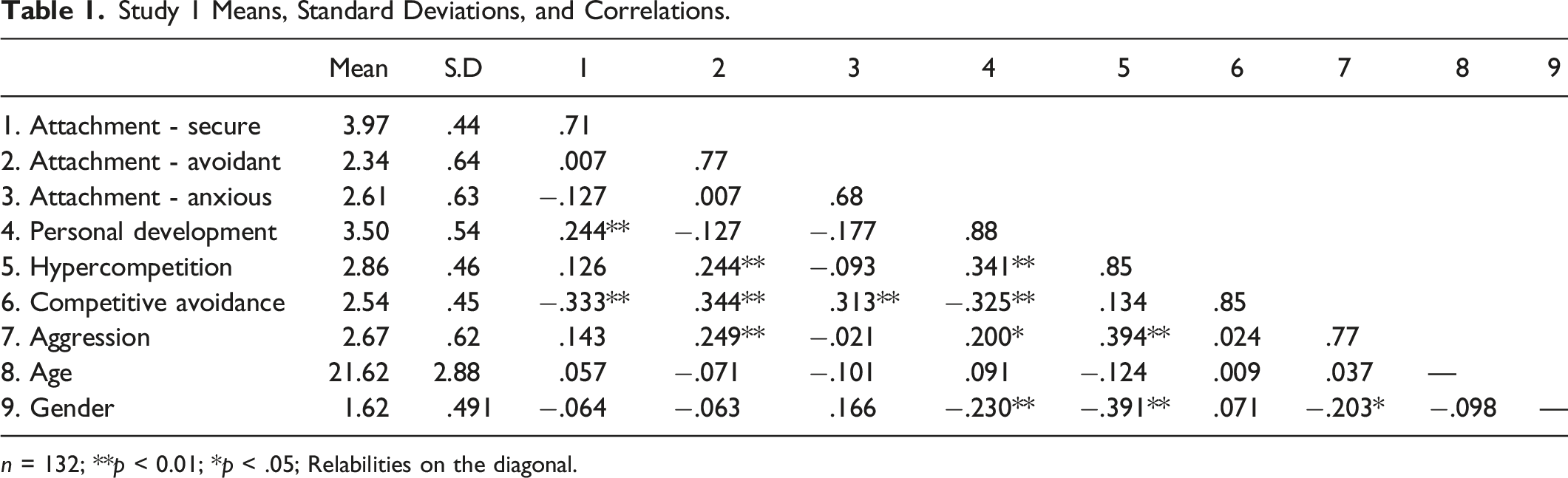
n = 132; **p < 0.01; *p < .05; Relabilities on the diagonal.
Study 1 Results.
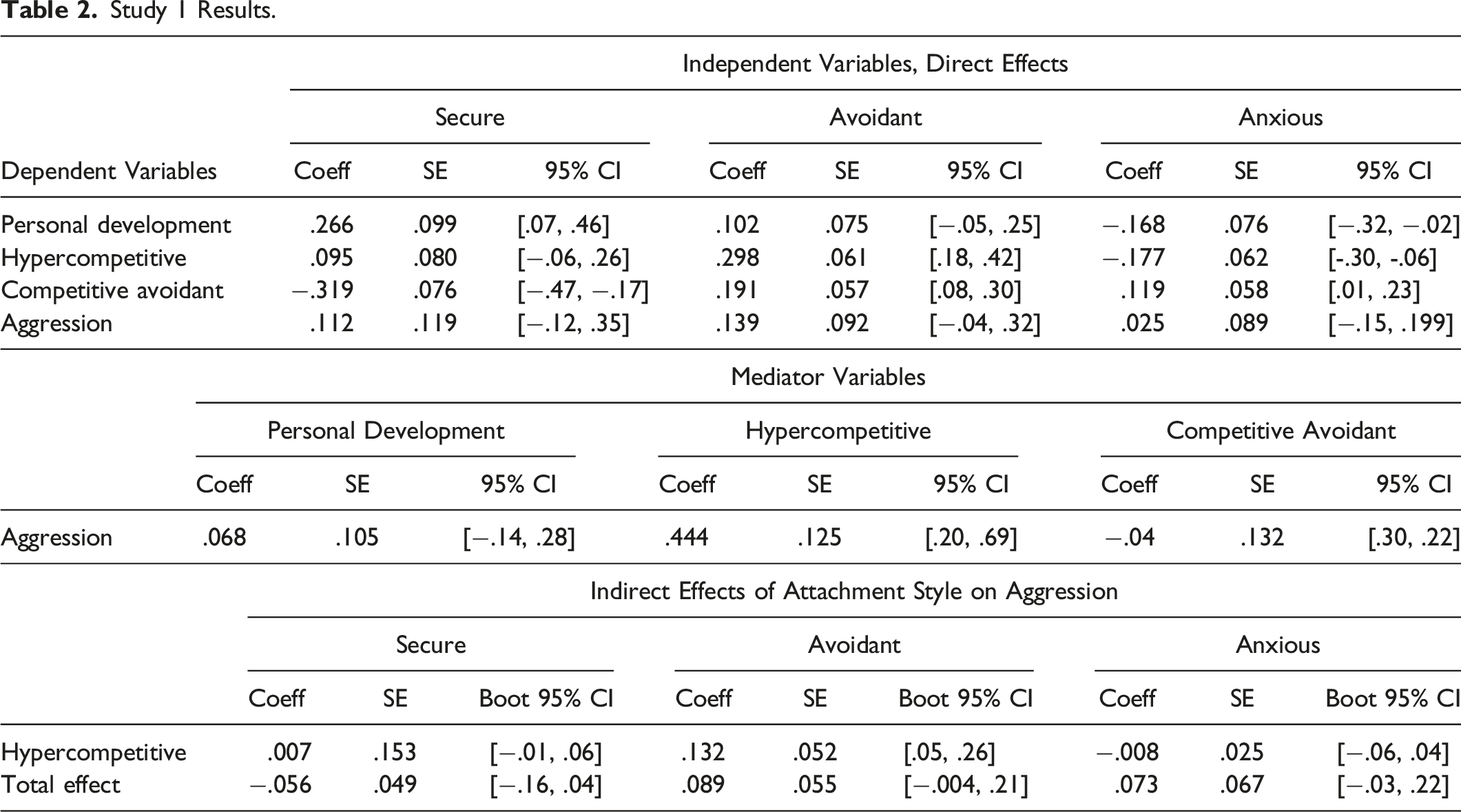
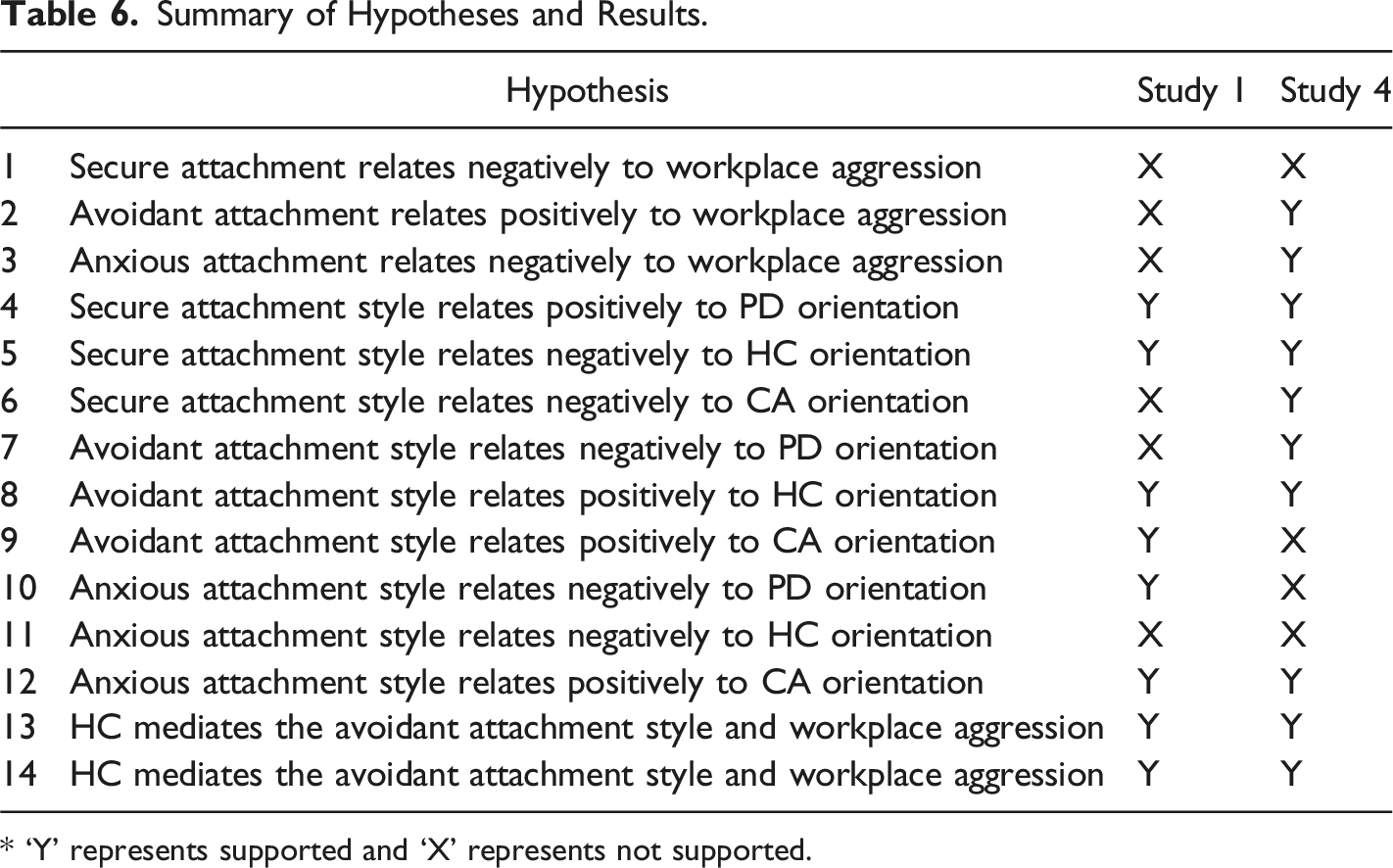
We predicted secure attachment style would relate positively with a PD orientation (H4) and negatively with CA orientation (H5) and HC orientation (H6). Our results support H4 (b = .24, p < .01) and H5 (b = −.33, p < .01), however the negative relationship in H6 was unsupported (b = .13, p > .05). We also proposed that avoidant attachment style relates positively to HC orientation (H8) and CA orientation (H9), and negatively with PD (H7). Our results support both H8 and H9 (H8: b = .23, p < .01; H9: b = .24, p < .01). However, support for H7 was not found (b = .05, p > .05). Further, we predicted that an anxious attachment style relates positively with CA (H12), but negatively with both PD (H10) and HC (H11). We found support only for H12 (b = .22, p < .01) and H10 (b = −.15, p < .05), but did not for H11 (b = −.07, p > .05). Finally, our prediction of a positive relationship between HC and aggressive intentions (H13) and the mediation by HC orientation of the avoidant attachment style and aggressive intentions (H14) both found support (H13: b = .45, p < .01; H14: indirect effect = .10, BCCI: .03,.21).
Additionally, we used the results from the second survey to explore a shortened version of the measures of competitive orientation. Although the extended measures of competitive orientation are valid, the number of items to assess each orientation is relatively large, with HC requiring 26 items, PD requiring 15 items, and CA requiring 22 items. In order to pursue this research further and build on calls for extending studies of competitiveness in organizational studies (Fezzey & Swab, 2023; Swab & Johnson, 2019), we sought to validate a short, holistic measure of competitive orientation. To accomplish this, we assessed the factor structure of each competitive attitude scale using principal axis factoring with direct oblimin rotation. Seven items were selected from each scale to serve as the basis of a short scale. Following the recommendation by Smith et al. (2000), we paired the factor analysis with content analysis to ensure that we preserved the content by the long scale in the short scale. The resulting short scales highly correlated with their long scale counterparts: CA r = .912, PD r = .943 HC r = .867.
Study 2 Method
In order to validate the shortened scales, we administered the twenty-one items (seven for each orientation) selected in Study 1 to undergraduate business students at a large university in the United States. Students again received course credit for participating in this survey, which was promoted in class and via email. The survey was given using Qualtrics. In addition to the items regarding competitive orientation, we embedded four questions in each survey to check for acquiescence bias. Invitations to participate were sent to 316 students enrolled in the class. We received 249 responses to the survey. After discarding any student that missed more than 1 of the acquiescence bias questions or students who did not complete each survey, we ended up with a final sample size of 193, all over 18 years of age.
Measures
Competitive Orientation
We used a 21-item short competitive orientation survey consisting of three, seven-item factors derived from Study 1. Reliability for the short CA scale was good (α = .81), as was the short PD scale (α = .82). Finally, the short hypercompetitive orientation subscale was also found to be acceptable (α = .78).
Study 2 Results
We conducted an exploratory factor analysis using principal axis factoring with direct oblimin rotation. After assessing the results, there were five items for each factor. We retained the five items in each subscale based on the balance between factor loading and content coverage of the item with regard to the construct. The retained items are noted in Appendix B. In order to ensure the appropriate dimensionality of the measure, we conducted a confirmatory factor analysis using Stata 15.1. We first ran a CFA with all 15 items loading onto a single factor (χ2 = 634.20, df = 90, p < .05, RMSEA = .17, CFI = .50, and SRMR = .16). Factor loadings for this model ranged from .18–.70. We next ran a three-factor model with each item loading on to its relevant latent variable. This multifactor model (χ2 = 105.39, df = 87, p > .05, RMSEA = .031, CFI = .983, and SRMR = .056) showed significant improvement over the single factor model (Δχ2 = 528.81, Δdf = 3).
Study 3 Method
Participants and Procedure
The results from Study 2 provide initial evidence for the dimensionality and the convergent validity of the shortened, multidimensional measure of attitudes toward competition. However, for further support for both discriminant validity and convergent validity, we tested the scale in relationship to other similar constructs by asking students in an undergraduate course to recruit three subject dyads composed of an employee and that employee’s direct supervisor, to complete a survey. Students were required to obtain permission from each of their recruits before submitting their names to the study. We required that these dyads be unique and absent any overlapping individuals. Students received extra credit in compensation for the contact information. Of the 315 students enrolled in the course, 225 participated in recruiting dyads.
Measures were administered using Qualtrics. Of the recruitment emails distributed, we received 198 responses from the employees and 208 responses from the supervisors. After we discarded incomplete responses and matched employees and supervisors, the final sample consisted of 135 employee-supervisor dyads. Thus, the final usable sample consists of 270 people. The mean age for employees was 35.1 years, 68.7% of them were female, and 81.3% were Caucasians, 10.4% were African American, and 8.3% other ethnicities. The mean age for supervisors was 44 years old, with 43.3% being female, and 88.8% being Caucasian, 7.5% being African American, and 3.7% being other ethnicities.
Measures
Competitive Orientation Scale
We used the 15-item scale derived from the work in Study 1 and Study 2. Instructions asked employees to rate their level of agreement or disagreement with the scale items. Reliabilities were good: CA (α = .84), PD (α = .88), and HC (α = .76).
Goal Orientation
Goal orientation is the individual disposition toward the pattern of responses across situations with regard to the selection of goals in achievement situations. The goal orientation measure, developed by VandeWalle (1997), was administered to employees to assure the tested individual motivations behind competitive orientations were not just another measure for the way in which individuals approach a goal. The measure consists of three factors measured using 13 items: learning goal orientation (LGO), performance prove orientation (PPGO), and performance avoid orientation (PAGO). Reliability for each scale was again good, with LGO α = .80, PPGO α = .70, and PAGO α = .71.
Cooperative and Competitive Orientation
Other researchers have examined a general competitiveness in individuals in addition to individual cooperativeness (e.g., Chen et al., 2011). We were interested in establishing convergent validity with a general competitive orientation and discriminant validity with a general cooperative orientation. We do not wish to argue that competitive orientations do not share overlaps with general competitiveness (HC and PD willing to compete) or cooperativeness (PD and CA share overlaps with cooperativeness), but rather that the three separate orientations are distinct from the dichotomous view of compete or cooperate. We used items developed by Chen et al. (2011) to measure general cooperative and competitive orientations. Reliability for both measures was acceptable (cooperation α = .72, competition α = .73).
Supervisor Rated Competitive Orientation
Finally, we were interested in whether others were able to detect individual competitive orientation. We asked supervisors about employee competitive orientation by rating their agreement or disagreement with whether their employee “avoids competitive situations”, “seems to enjoy competition, but doesn’t get over competitive”, and “is super competitive, even to the point of taking it too far sometimes”. These questions regarded CA, PD, and HC, respectively.
Study 3 Results
Study 3 Means, Standard Deviations, and Correlations.
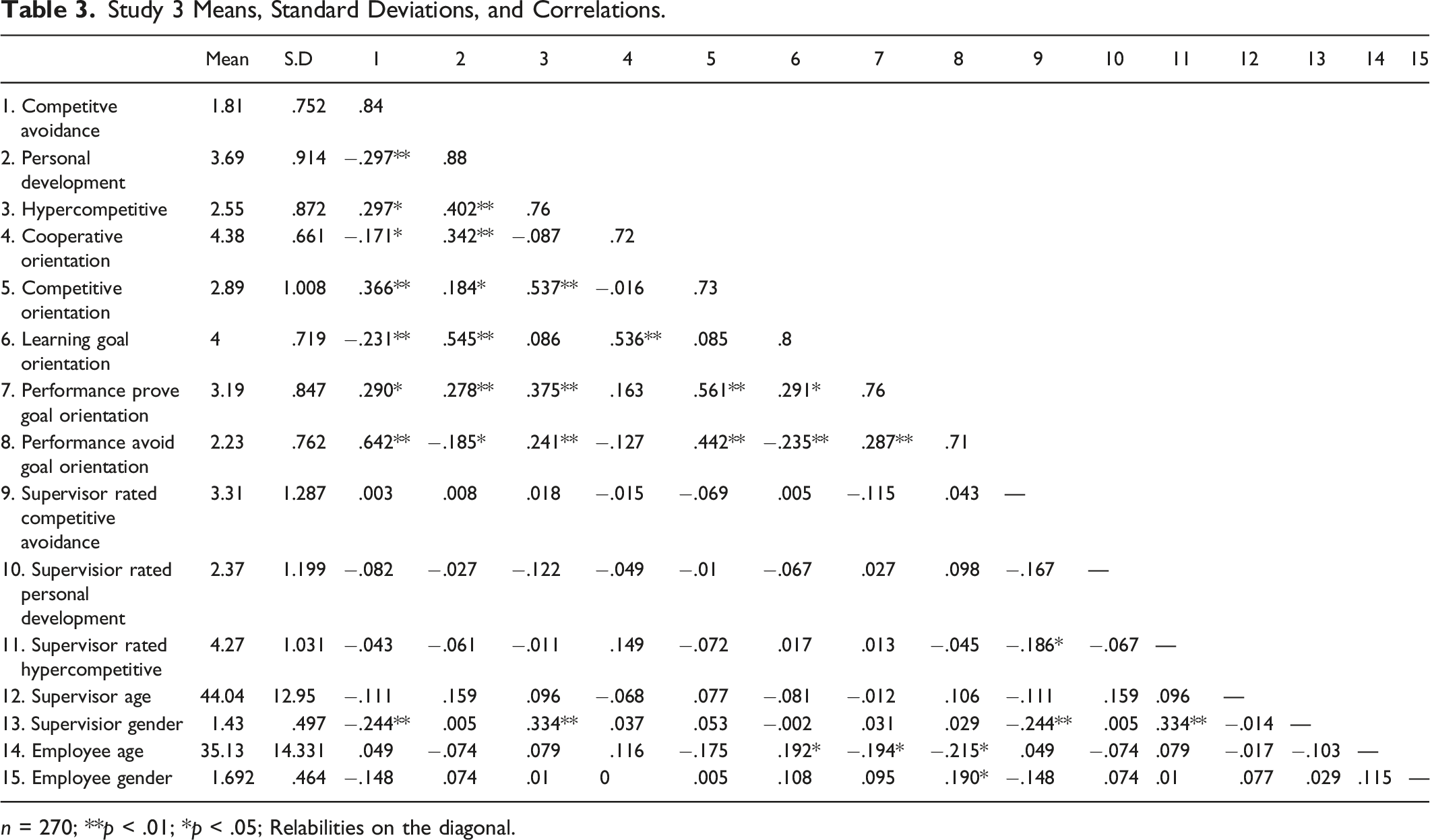
n = 270; **p < .01; *p < .05; Relabilities on the diagonal.
In addition, we conducted a confirmatory factor analysis on the model in order to examine the factor structure of the COS. We first ran a CFA with all 15 items loading onto a single factor (χ2 = 537.12, df = 90, p < .05, RMSEA = .20, CFI = .49, and SRMR = .19). Factor loadings for this model ranged from .10–.87. We next ran a three-factor model with each item loading onto its relevant latent variable. This multifactor model (χ2 = 142.74, df = 87, p < .05, RMSEA = .07, CFI = .936, and SRMR = .061) showed significant improvement over the single factor model (Δχ2 = 394.38, Δdf = 3). Standardized factor loadings ranged from .34–.89, with all but 3 items being greater than .70.
Study 4 Method
In Study 4, we return to our initial theoretical model in which attachment style predicts competitive orientation and, further, aggression intent. Though the primed classroom environment in Study 1 is an appropriate workplace environment for those test subjects, we wanted to assess the hypotheses with a working population. In order to assess this model using a different set of test subjects, we recruited 400 participants using Amazon’s Mechanical Turk (MTurk) Web site. Using MTurk has been demonstrated to produce comparable samples to other sampling methods (e.g., Buhrmester et al., 2011). After discarding incomplete responses and those responses that incorrectly answered the attention checks, the final sample for this study is 351. The average age of the participants was 38.7 years, and 56.8% were male. The sample consisted of 73.9% Caucasians, 10.2% Asian Americans, 9.4% African Americans, and 6.5% identified with other ethnicities. Finally, 95.5% of the sample was employed or self-employed, with 82.7% of those being in full-time positions.
Measures
Attachment Style
Study 4 includes the same measure of attachment as Study 1. Reliabilities for each scale were good (secure, α = .78; avoidant, α = .82, and anxious, α = .75).
Competitive Orientation
We used the results from Study 3 to create a shortened version of the measures of competitive orientation. Reliability for each facet of this scale was good (CA, α = .91, PD, α = .94, HC, α = .78).
Aggression
The Negative Act Questionnaire – Revised (Einarsen et al., 2009) described in Study 1 was used. However, the vignette was updated to prime respondents in a work environment rather than a classroom setting. The difference between the two studies can be found in Appendix A. Reliability for this scale was acceptable at (α = .85).
Study 4 Results
Study 4 Means, Standard Deviations, and Correlations.
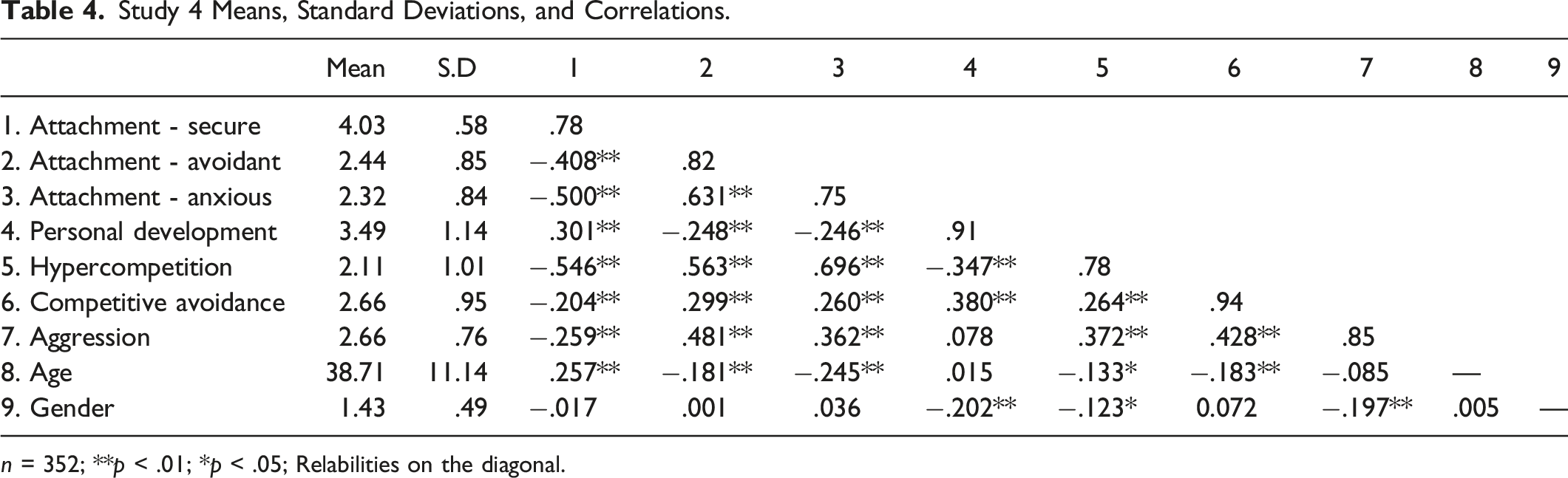
n = 352; **p < .01; *p < .05; Relabilities on the diagonal.
Study 4 Results.
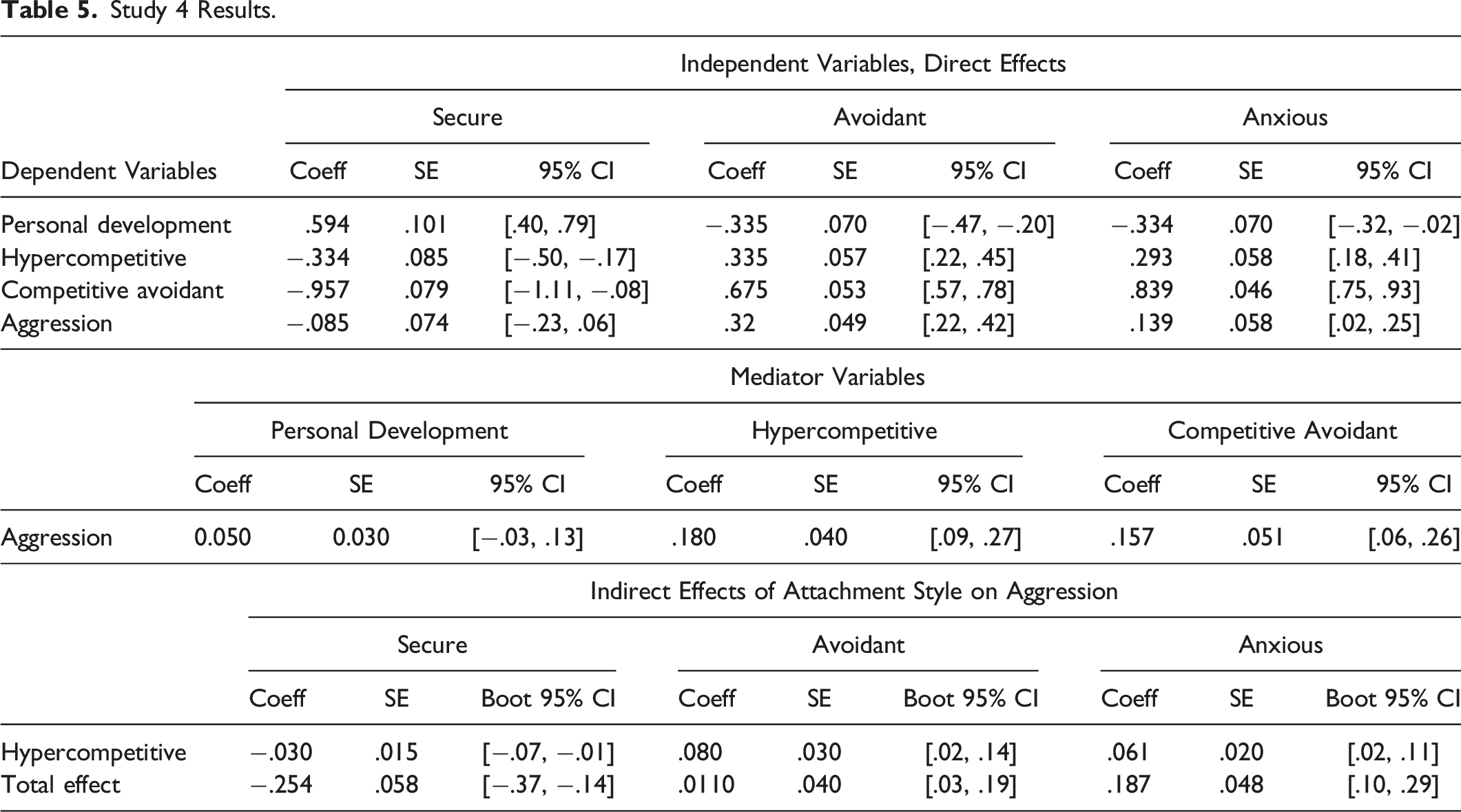
We predicted secure attachment style would relate positively with a PD orientation (H4) and negatively with the CA orientation (H6) and HC orientation (H5). Our results support all three hypotheses (H4: b = .59, p < .01; H5: b = −.96, p < .01, and H6: b = .33, p < .01). We also proposed that avoidant attachment style would relate positively to HC (H8) and negatively with PD (H7) and CA (H9). Our results support H7 and H8 (H8: b = .34, p < .01; H7: b = .34, p < .01). However, although we lack support for H9, there was a significant positive relationship with competitive avoidance (b = .68, p < .01). Further, we predicted that an anxious attachment style would relate positively with CA (H12) but negatively with both PD (H10) and HC (H11). We found support only for H12 (b = .84, p < .01) and H10 (b = −.33, p < .01) but found that anxious predicted hypercompetitiveness (b = .29, p < .05). Finally, our prediction of a positive relationship between HC and aggression (H13) and the mediation by HC orientation of the avoidant attachment style and aggression (H14) both found support (H13: b = .18, p < .01; H14: indirect effect = .08, BCCI: .02, .14).
Summary of Hypotheses and Results.
* ‘Y’ represents supported and ‘X’ represents not supported.
Discussion
The results of these studies generally support that attachment styles may form the basis of competitive orientation and, thereby, aggressive behaviors. This research speaks to how relational framing might elicit aggression toward relational others. Unexpectedly, the anxious attachment style predicted hypercompetitiveness as well. As a result, this paper establishes how competitive orientations might create a proclivity to enact abusive behaviors against those seen as a competitor or against those who may be seen as causing a loss. Competitive behavior is a fundamental human dynamic, but it remains relatively understudied compared to its importance and role in interpersonal action. We engage in competition in various forms throughout our lives, from early childhood through adulthood. In the workplace, we are embedded in an environment that implicitly (and sometimes explicitly) pits peers, supervisors, and subordinates for limited resources, promotions, perks, and glory. Thus, understanding how and why we compete and how competitive actions can lead to deleterious outcomes, such as aggression, helps us understand the relational dynamics we see in the workplace. In pursuit of this goal, we proposed a model of childhood developmental processes, attachment style, and their effects on workplace aggression as mediated by competitive orientation. By integrating these individual differences related to interpersonal activity, we establish a basis for identifying the important relational dynamics that affect competitive action and aggressive behavior.
Our final contribution to the paper was to validate the 15-item Competitive Orientation Scale (COS). The factor structure and psychometric properties of the COS, as well as its relation with other constructs in its nomological network, demonstrate the validity of the measure. The result is a concise but helpful measure focusing on the motivations behind competitiveness that can be used in future studies.
Theoretical and Practical Implications
This study highlights the importance of understanding the personal implications attachment can have on an individual’s relationships and behaviors as an adult. As prior research has typically focused on the perpetrators and the outcomes of their actions to the victims, we draw attention to the process by which attachment style via competitive orientation elicits aggressive behaviors as indicators of relational aggression. While we only test aggressive intent, our studies provide some initial evidence for how and why the perpetrators engage in their behaviors toward others within their relational sphere. Relationally insecure individuals cope with their relational models by avoiding competition and declining to act aggressively towards others (CA) or competing fiercely against others (HC) as they’re torn by a need to push others away but to also exert control over their environment.
The study also supported the relationship between adult attachment style and competitive orientation as an adult. The research began an examination of the underlying developmental processes for competitive orientation by studying the relationship between three forms of attachment style and three forms of competitive orientation. Results indicate the secure attachment style relates positively to the PD competitive orientation, as well as negatively related to CA. Individuals with secure attachment style reported using the competitive experience as a means to facilitate personal growth rather than winning. When they are competing, they are characterized by cooperative tendencies and high self-esteem, unlike aggression, which has conflict tendencies, and low self-esteem, which leads to a negative relation to CA due to not being nervous of competition or fearing the disapproval of others.
Avoidant attachment relates positively to HC and CA as they have an indiscriminate need to compete and win, and avoid loss using all means necessary. Competition can be a means to increase feelings of power, self-worth, and superiority, but they’re conflicted by a need to avoid relationships with others. Competitive relationships threaten self-worth and are potential sources of harm, so they also seek safety by putting distance between themselves and others. Additionally, there is a direct effect of HC on aggressive intent, and the hypothesized mediated model between avoidant individuals and aggressive intentions is supported.
Anxious individuals avoid competition as a general strategy. They fear both the success and failure that may come because of competition, as they desire the affection and approval of others as a mechanism for increasing their support resources. In their relational model, a win may drive their competitor to dislike them. If they lose, their competitor may disrespect them. To deal with this dilemma, anxious attachment styled individuals avoid competition when they can. Theoretically, these results add to the competition literature by beginning to examine why people like to compete (Houston et al., 2002).
From a practical perspective, this research highlights the role that attachment style has in developing strategies for dealing with individuals in competitive situations. For example, in a negotiation, it may be helpful to introduce a relational stressor to the situation. Attachment style is a fundamental personality construct, and because of this, it is predictive of affect management, including emotions such as anger (Mikulincer, 1998). By understanding a competitors’ relationship needs as part of adult attachment style, this research suggests an understanding of their competitive orientation and the competitive actions they’re likely to take. By knowing an opponent’s competitive action, you implicitly have a tactical advantage in the competitive space.
From a more positive perspective, however, understanding these relationships may help people manage others better. There are times when competition is appropriate and times when it is not. By understanding relational framing, people can help others cope with dysfunctional relationship models and use competitive activity effectively. Research suggests that counseling can help revise these working relational models, so there are opportunities for improvement.
Limitations and Future Research
These studies are not without its limitations. Although we use a popular conceptualization of attachment in this study, other versions have been advanced. In particular, where we used an attachment theory with three styles (secure, avoidant, and anxious), another popular version conceptualizes attachment using four styles. Secure and anxious remain the same, but avoidant is further split into fearful-avoidant and dismissing-avoidant (Shaver et al., 1996). This is not an unimportant factor, particularly when it comes to aggressive behaviors. For example, research on the psychoanalysis of serial murders identifies dismissing-avoidant as the attachment style predictive of psychopathic behaviors (Mizen & Morris, 2006). The psychopath’s lack of empathy for others results from disconnection from attachment figures in early childhood. That is, because they responded with a dismissed avoidant style to absent attachment figures, they failed to develop those early empathic bonds with others (Meloy, 2000). Once that window for cognitive development was missed, that part of the brain withered and died in favor of other, more stimulated parts of the brain (Cozolino, 2014, p. 29). This dichotomous nature of avoidant styles may also explain our unexpected significant relationship between avoidant and competitive avoidance. We would recommend that future researchers examine this version of attachment due to the dual dilemmas we hypothesized about in this study for avoidant style.
Although behavioral intentions as a proxy for enacted behavior have a long history (e.g., Ajzen, 1991), a second limitation for these studies is measuring intentions to act aggressively rather than actual aggressive behavior. We provided vignettes that described a competitive situation and asked subjects to evaluate a collection of negative acts that would certainly be considered aggressive. Although this situation is certainly not ideal, measured intentions across a wide array of studies explain about 30% of the variance in behavior. Though research finds support for intentions and behavior, future researchers could find additional ways to measure aggressive outcomes.
Workplace aggression literature finds that the aggressor and target share many of the same underlying similarities (e.g., neuroticism, trait anxiety) and, accordingly, should be studied together. Although we focus on the aggressor in the study, our use of attachment style and competitive orientation study how targets might perceive the relationships that they participate in. Future studies can investigate both the aggressor and the target to understand if these two antecedents represent how and why these two individuals share similarities but often have different outcomes from those similarities.
There is empirical support for both the importance of individual (e.g., trait anger, Douglas & Martinko, 2001) and situational (e.g., Skarlicki & Folger, 1997) influences that predict the aggressive act(s). Less research, however, has focused on using these two factors simultaneously (e.g., Herschcovis et al., 2007). Competitive behavior represents both individual competitiveness and the competitive situation (Fletcher et al., 2008), but competition also lacks research on using the two simultaneously. Future research should continue looking at workplace aggression and competition to understand individuals and situational factors simultaneously.
Aggression in the workplace is a serious issue and can come in many forms, such as abusive supervision, social undermining, and bullying. Our study used the NAQ scale, which is frequently used to predict bullying intentions. As the main purpose of our study was to understand antecedents and processes of aggression, and bullying focuses on recurring aggression in relationships over time, we do not explore bullying and rather only focused on aggression. Accordingly, there is an opportunity to study the relationships between attachment style and competitive orientation over time using bullying specifically.
Conclusion
This study investigated the relationship between attachment style, competitive orientation, and workplace aggression. Results demonstrate distinct differences in how each attachment style approached or avoided competitive action and, further, aggression. Secure individuals preferred to view competition as a way to develop their own capability, while avoidants were hypercompetitive and avoidant and anxious were just avoidant. HC mediated the relationship between avoidants and aggression. These results suggest that leaders may be able to manage the competitiveness and aggression of their followers using counseling to increase organizational success.
Footnotes
Declaration of Conflicting Interests
The author(s) declared no potential conflicts of interest with respect to the research, authorship, and/or publication of this article.
Funding
The author(s) received no financial support for the research, authorship, and/or publication of this article.
