







Abstract
A wealth of studies have revealed that foreign experiences affect various cognitive abilities. One well-established finding is that living abroad can increase creative thinking skills. However, there has been little research on the dark side of creativity. Here, we hypothesized that exposure to foreign experiences can also foster malevolent creativity, which refers to the deliberate application of original ideas to turn a profit at someone else’s expense. Consistent with our hypotheses, Studies 1 and 2 found that student participants with foreign experiences showed greater malevolent creativity than those without such experiences. Relying on non-student adults, Study 3 replicated the findings of Study 1 using a different behavioral outcome of malevolent creativity. Study 4 found that participants who had decided to move overseas but had not yet done so demonstrated reduced levels of malevolent creativity compared to participants who had lived abroad, which minimized the possibility of reverse causality. Study 5 utilized an experimental design methodology and provided causal evidence for the effect of foreign experiences on malevolent creativity. These findings contribute to understanding about the range of effects that foreign experiences can have on different types of creativity.
Keywords
Introduction
Travelling abroad can be one of the most beneficial experiences for many people. For example, Marco Emilio Polo, a household name then and now, is remembered thanks to a detailed and colorful travelogue of his eastward voyage. His travel book not only formulated a new perception of the Eastern world, but inspired Christopher Columbus on his voyages to the New World. Even though many countries had border restrictions and entry rules for international visitors during the COVID-19 pandemic, there were still a fair number of people choosing to go abroad for various reasons. For example, according to the latest data, 28,000 students from China applied to study in the UK (Record number of Chinese students apply to study at UK universities, 2022). This number has surged by more than a third in 2021 to hit a record high (MailOnline, 2022). Given that foreign experiences have changed the way nation, society, and people interact, empirical insights are becoming increasingly available as researchers begin to explore a broad set of psychological and organizational outcomes of foreign experiences, such as personality, cognition, morality, and leadership (Adam et al., 2018; Demes & Geeraert, 2015; Li, 2022a; Tadmor et al., 2018; Zimmermann & Neyer, 2013; see Maddux et al., 2021 for a comprehensive review).
One of the most consistent findings in the literature is that exposure to foreign experiences exerts a critical influence on people’s creativity across diverse domains (Godart, et al., 2015; Leung & Chiu, 2010; Maddux & Galinsky, 2009; Saad et al., 2013). For example, international cultural engagement inspires artists to produce more creative artworks (Hellmanzik, 2013); more extensive foreign experiences enhance and promote team creativity processes (Lu et al., 2022); varied family and migration experiences help scientists publish their work in higher impact journals (Franzoni et al., 2014). In a more recent study, Li (2022b) investigated how foreign experiences impact the flipside of creative thinking, namely, conformist attitudes and behaviors. It was found that individuals with foreign expediences demonstrated a lower tendency to conform in self-report and behavioral measures than those without such experiences. These findings suggest that cognitive flexibility, which is conferred by reorganizing and restructuring knowledge according to the new set of rules and norms in foreign cultures, can spark the engine of creativity in individuals with foreign experiences.
Despite previous research revealing that interactions with elements or members of a different culture has a robust and beneficial effect on creativity, almost all articles highlight the positive aspects of creativity. In the present inquiry, we explore whether these experiences also have negative consequences. Over the course of five studies, we sought to reveal that foreign experiences can lead to malevolent creativity. Here are the research questions addressed in the present manuscript: 1. Do foreign experiences have a positive influence on malevolent creativity? 2. Is breadth of foreign experiences associated with malevolent creativity? 3. Is depth of foreign experiences associated with malevolent creativity?
Literature review
Malevolent creativity
Although creativity is a highly required, preferred, and desired ability in diverse areas of the world, it cannot be denied that it may also have some dark aspects (Cropley et al., 2010; McLaren, 1993). One of the paradigmatic example is that malevolent creativity often leads to harmful and even destructive consequences (Cropley et al., 2010; Yefet & Glicksohn, 2021). For instance, the most famous invention of Nobel is dynamite. Although practical detonators are extremely beneficial for mining and infrastructure development, they are also useful to the art of making war. Thus, creativity is a double-edged sword that can be used in either benevolent or malevolent ways.
In addition to this observational evidence, a wealth of psychological research in the field of creativity demonstrates that malevolent creativity can be conceptualized as the deliberate application of original ideas to manipulate other or to turn a profit at someone else’s expense, often to obtain some unfair competitive advantage through using indirect tactics to control behavior, emotions, and relationships (Cropley et al., 2008; Harris et al., 2013). Much research has found that malevolent creativity can have a wide range of outcomes in many different domains. For example, advertisers may use creative examples to lure children to eat nonnutritious foods which are harmful to their health (Cropley et al., 2008); the malevolent creativity of criminals might help them commit an offence and escape punishment in a novel way (Cropley & Cropley, 2011; Eisenman, 2008); and the shady side of creativity such as drawing on connections can secure favors and beat competitors in a business context (Palmer et al., 2020). These examples are just a few of the diverse ways in which malevolent creativity might be expected to occur in everyday context.
Foreign experiences and (malevolent) creativity
The interrelation between foreign experiences and malevolent creativity can be articulated through an exploration of the complex psychological and sociocultural dynamics at play. First, when individuals immerse themselves in foreign cultures, they often encounter the necessity for cognitive flexibility, given the myriad of new cultural contexts to which they must adapt. For example, Leung et al. (2008) found that participation in foreign experiences can effectively enhance individuals’ inclination to resourcefully and adaptively employ cognitive frameworks and behavioural patterns that are representative of diverse cultural constructs.
Engaging with environments outside of one’s native context can facilitate a more malleable and discerning application of these mental schemas, encouraging a cross-cultural perspective that is invaluable in an increasingly globalized society (Hong et al., 2000). This flexible cognitive approach enables a fusion of cultural narratives and practices, fostering a rich integrative complexity within individuals’ thought processes and social interactions (Tadmor et al., 2012). Importantly, this engagement with foreign mores, languages, and behaviors is not merely superficial; it engenders a depth of cognitive agility that can manifest in the ability to forge unconventional and innovative thought patterns (Leung et al., 2008).
Second, engaging with diverse societies frequently elicits a reevaluation of entrenched moral and ethical compasses. The exposure to such a tapestry of cultural fabrics may lead to a diffusion of moral boundaries, precipitating a form of moral relativism. When individuals traverse these broadened moral landscapes, the distinction between ethical and unethical behavior can become obscured, potentially leading to the justification of malevolent creativity as a culturally contingent phenomenon. For example, Lu et al. (2017) found that as individuals engage with foreign cultural milieus, they may develop a sophisticated understanding that disparate cultures maintain distinct norms regarding moral issues, thereby cultivating an appreciation for the notion that moral dictates are not universally fixed but are instead shaped by specific cultural contexts.
In sum, foreign experiences shape an individual’s cognitive landscape, altering their moral and social frameworks in ways that can both enrich and complicate their creative outputs, occasionally steering them towards the domain of malevolence with a veil of originality and feasibility. Recently, Perchtold-Stefan et al. (2021) found that participants scoring higher on traditional creativity tests may also score higher on the malevolent creativity tests, because they can apply their general divergent thinking skills and cognitive faculties across a myriad of contexts. Drawing on the literature reviewed, we would expect that people with foreign experiences may display higher levels of malevolent creativity because they may harness their enhanced creative ability in the pursuit of aims that are illegal, violent, or destructive.
Theoretical model and hypotheses development
Integrating these two distinct strands of research on the psychological ramifications of foreign experiences—specifically, studies probing the influence of cultural diversity exposure on creative processes and inquiries into the effect of multicultural interactions on unethical conduct—it becomes important, in the pursuit of advancing the current scholarly discourse, to investigate whether foreign experiences facilitate an increase in malevolent creativity. In light of the above reasoning, we propose the following model (see Figure 1). Overall, we theorize that foreign experiences promote malevolent creativity. A theoretical model of how foreign experiences predict malevolent creativity. Both depth and breadth of foreign experiences are associated with malevolent creativity.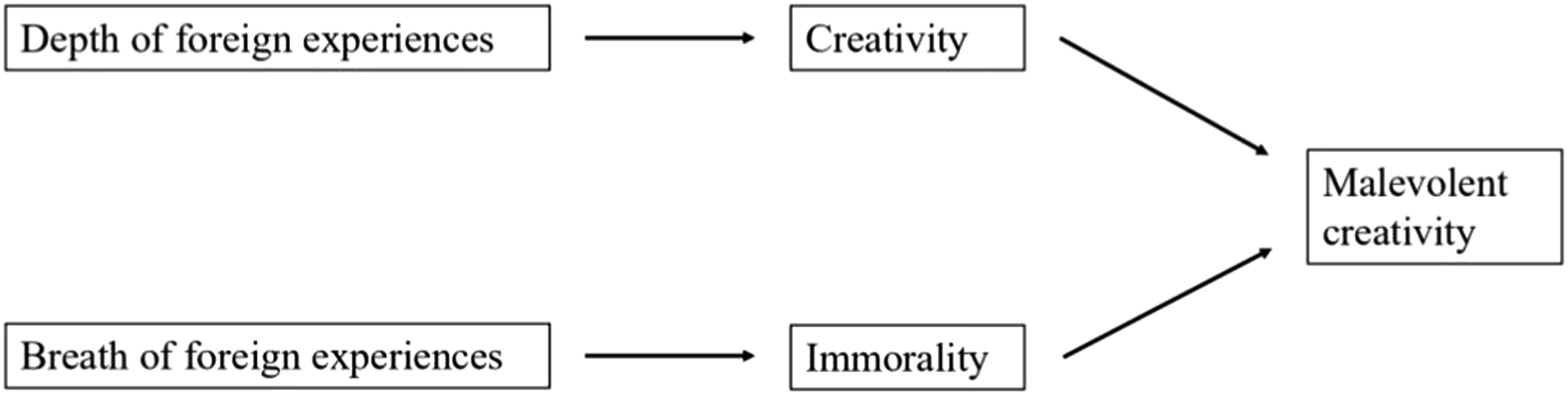
Note that foreign experiences encompass two pivotal constituents: depth and breadth. Depth of experience, typically designated as extensive engagement with an alien culture either through prolonged cultural immersion, is predominantly linked to integrative processes (Maddux et al., 2014). To illustrate, profound foreign encounters have been demonstrated to bolster the capacity for generative thought, facilitating an individual’s ability to innovate and transcend conventional cognitive frameworks across various contexts, including the enhancement of overall levels of general creativity (Tadmor et al., 2012).
The concept of breadth, on the other hand, is defined by the diversity of foreign countries one has resided in. The breadth of foreign experiences, such as a wide range of experiences across diverse cultures, is mainly associated with comparative processes (Cao & Galinsky, 2020). These comparative processes can increase ability to contrast situations involving identical or similar features. For example, broader foreign experiences may shape individuals to morally adapt to the situation rather than adhering to a certain set of moral standards (Lu et al., 2017). Thus, they are more prone to justify immoral behaviors and to act unethically. We hypothesize that both the breadth and depth of foreign experiences are associated with malevolent creativity, because immorality and originality are two important components of this mindset.
By doing so, the research reported here provides a more complete picture of the relationship between foreign experiences and different types of creativity. Accordingly, we formally summarize our key hypothesis as follows:
foreign experiences increase individuals’ propensity to be malevolently creative. In addition, because malevolent creativity involves both innovative ideas and immorality, we propose that both the depth and the breadth of foreign experiences may function as a facilitator in fostering malevolent creativity. Thus, we formally hypothesize:
deep and broad foreign experiences are associated with malevolent creativity.
Overview of the present research
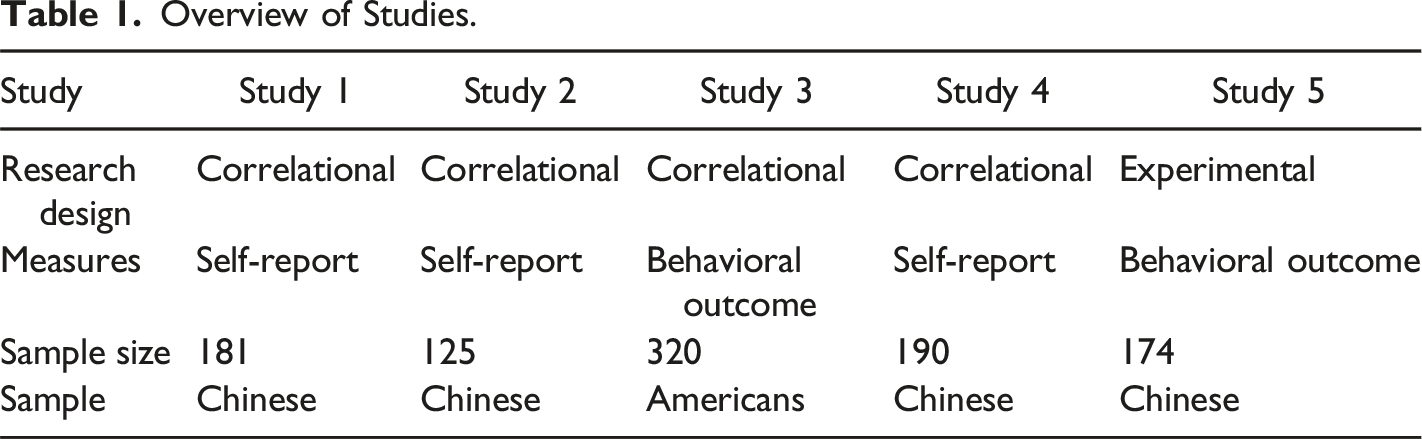
Overview of Studies.
Methodological considerations
In our studies, there were only a few instances of missing data (1 participant in Study 1; 3 participants in Study 2; 1 participant in Study 3; 1 participant in Study 4; 2 participant in Study 5). This indicates that the data fidelity in the current study is high. Several factors contribute to this result, which is not surprising. First, we utilized behavioral measures to assess malevolent creativity and minimized the length of the questionnaire. Second, participants received explicit instructions to conscientiously complete the questionnaires. Consequently, these measures effectively improve data quality and reduce the occurrence of unplanned missing data caused by unanswered questions, skipped pages, or incomplete questionnaires.
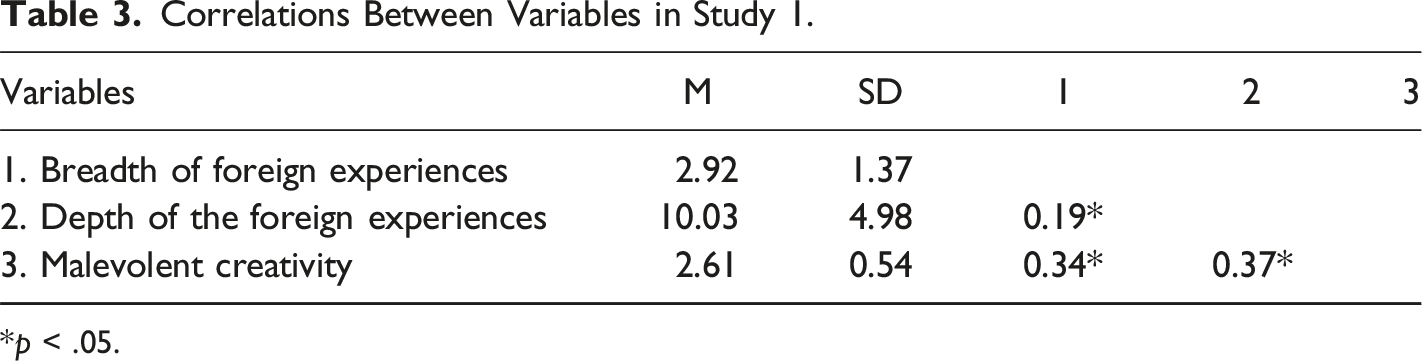
All statistical tests were executed using SPSS Version 20.0. The statistical methodologies employed for analyzing the experimental outcomes include the t-test and correlation analysis. The t-test assesses whether the means of two distinct groups differ significantly in terms of malevolent creativity (Hypothesis 1). The preference for the t-test over the z-test is informed by the latter’s suitability for large sample sizes and known population variances. However, in many research contexts, such as the one documented in this study, the population parameters remain undetermined. Moreover, the t-test is the favored approach for smaller sample sizes, particularly when the Central Limit theorem cannot reliably posit a normal distribution for the sample mean—a prerequisite for the z-test (Bakker & Wicherts, 2014). The t-test accommodates this uncertainty by employing the Student’s t-distribution, which is tailored for smaller samples. The applications of t-test can also be found in similar studies on psychological consequences of foreign experiences (Lu et al., 2017: Study 2). Furthermore, this report engages in correlation analysis to explore the linkage between the breadth and depth of foreign experiences and malevolent creativity (Hypothesis 2). This engagement is evidenced by the computation of the correlation coefficient, accompanied by its degrees of freedom and confidence interval, reflecting the strength and direction of the association between the variables in question.
Study 1
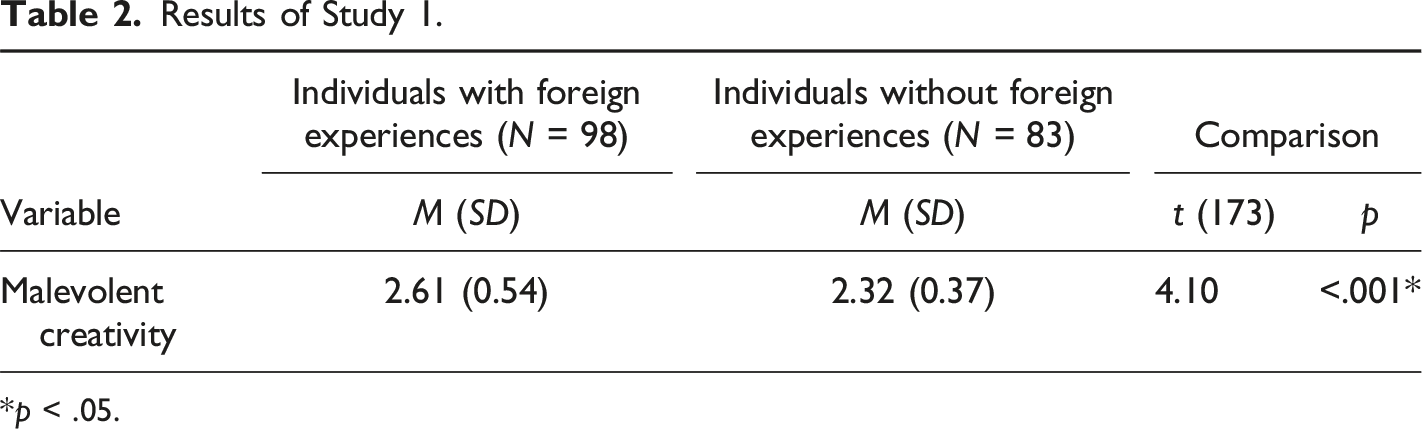
Study 1 provides the initial evidence of the relationship between foreign experiences and malevolent creativity in Chinese university students. To reiterate, we expected that individuals who had lived abroad would show greater malevolent creativity than individuals who had not.
Method
Participants
A total of 181 undergraduate and graduate students (56.4% female; Mage = 22.6, SD = 2.4) from five universities in southwest and eastern China (Southwest University, Sichuan International Studies University, Zhongnan University of Economics and Law, Southeast University, and Xiamen University) were invited to take part in the study for a monetary compensation. 98 or 54.1% of these 181 participants had lived abroad when the study took place, while the remaining participants had never lived abroad. For participants with foreign experiences, they had visited 2.9 foreign countries on average (SD = 1.4) before and spent an average of 10.0 months abroad (SD = 5.0). No significant differences were obtained between the two groups in terms of age and gender (ps > .52).
Materials and procedure
After providing informed consent, participants first completed a socio-demographic questionnaire. Next, we measured malevolent creativity by using an ideation task in Nguyen et al. (2022). In this paradigm, participants were instructed to engage in a mental exercise wherein they were prompted to envision themselves within the context of a highly contentious interuniversity rivalry. Building upon this hypothetical scenario, participants were then directed to generate ideas aimed at tarnishing the reputation of their school’s rival institution. This malevolent creativity task entailed formulating a plan to provoke disturbance among the broader outgroup, without specifying the specific targets or locations for executing the plan.
Subsequently, participants indicated whether or not they had lived abroad. For those who had foreign experiences, they also indicated the number of foreign countries that they had visited (the breadth of foreign experiences) and the period of time (expressed in months) that they had stayed overseas (the depth of foreign experiences). Finally, they were probed for suspicion regarding the true purpose of the study and thoroughly debriefed upon conclusion of their participation in this study. Should participants infer the connection between overseas experiences and malicious creativity, there is a potential for alteration in their responses to align with the scholarly conjecture. Consequently, we implemented the debriefing protocol to identify and omit participants who deduced the actual aim of the investigation.
Results and discussion
The debriefing revealed that participants was unaware of the hypotheses under investigation. In order to assess the malevolent creativity of the ideas generated, four independent coders who were blind to the true purpose of the study evaluated the participants’ responses using measures of idea originality, feasibility, and harm. This evaluation process followed similar protocols used by Gutworth et al. (2018) and Nguyen et al. (2022), and the measures of originality and feasibility were based on the work of Nguyen and Hunter (2022), with an additional dimension of harm based on previous definitions of malevolence and violence by Horgan (2013).
Evaluators rated the three items, adapted from Nguyen et al. (2022), on a 5-point scale, responding to questions such as “To what extent is this idea original?” (originality), “To what extent could this idea be reasonably executed?” (feasibility), and “To what extent would this idea cause harm to people, property, symbols, and processes?” (malevolence). The four raters had at least one year of experience in the research lab and underwent a minimum of 20 hours of training on consensual assessment technique coding procedures. Moreover, the coefficient for interrater reliability was calculated following guidelines by Koo and Li (2016). The interrater reliability scores were satisfactory for originality (k = .85), feasibility (k = .86), and harm (k = .90), which are higher than 0.80, a widely accepted threshold showing adequate reliability (Market & Nissim, 2003) Thus, the scores were averaged to create a single index of malevolent creativity.
Results of Study 1.
*p < .05.
Correlations Between Variables in Study 1.
*p < .05.
Study 2
Despite Study 1 reporting some initial findings on the association between foreign experiences and malevolent creativity, all participants were from the Chinese Mainland. They were chiefly influenced by Chinese cultural values and education systems that may vastly impact their creative thinking skills (Erez & Nouri, 2010). Thus, one alternatively explanation for the reported association could arise from the exposure to a culture with higher levels of malevolent creativity. Specifically, when Chinese students are exposed to a different culture that encourages malevolent creativity, they could increase their dark side of creativity due to personal endorsement of such values. If this is the case, the observed relationship is more like a cultural specific phenomenon rather than a universal tendency. To rule out this alternative explanation, Study 2 included American students who were studying in China.
Method
Participants
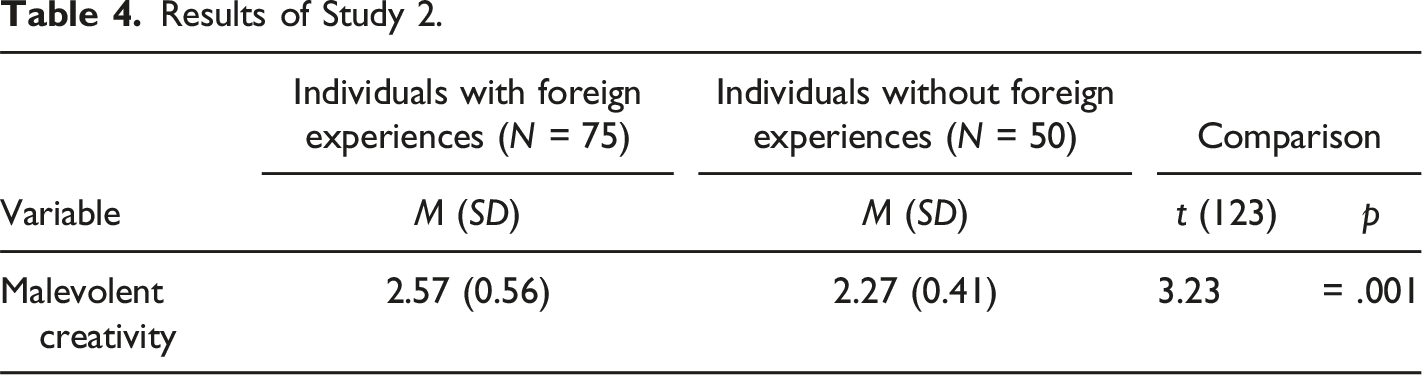
A total of 125 undergraduate and graduate students (54.4% female; Meanage = 24.4, SD = 3.2) were invited to take part in the study. They were recruited from various Chinese and American universities. 75 or 59.2% of 125 participants from the United States were studying in China when the study took place. 50 or 45.5% of 134 participants from the United States did not have any foreign experiences. Of note, there were no significant differences between the two groups in terms of age and gender, ps > .15.
Materials and procedure
The materials and procedure were the same as Study 1 except that all instructions and questionnaires were given in English. The interrater reliability scores were satisfactory for originality (k = .87), feasibility (k = .91), and harm (k = .84), and the scores were averaged to create a single index of malevolent creativity.
Results and discussion
Results of Study 2.
Study 3
Study 3 sought to replicate the findings of Studies 1 and 2 with the following modifications. First, rather than relying exclusively on student participants which could constrain the generalizability of the research results, we recruited a general adult population in Study 3. Second, we used a different behavioral measure to assess malevolent creativity to exclude the possibility that the results arise from specific measuring techniques.
Method
Participants
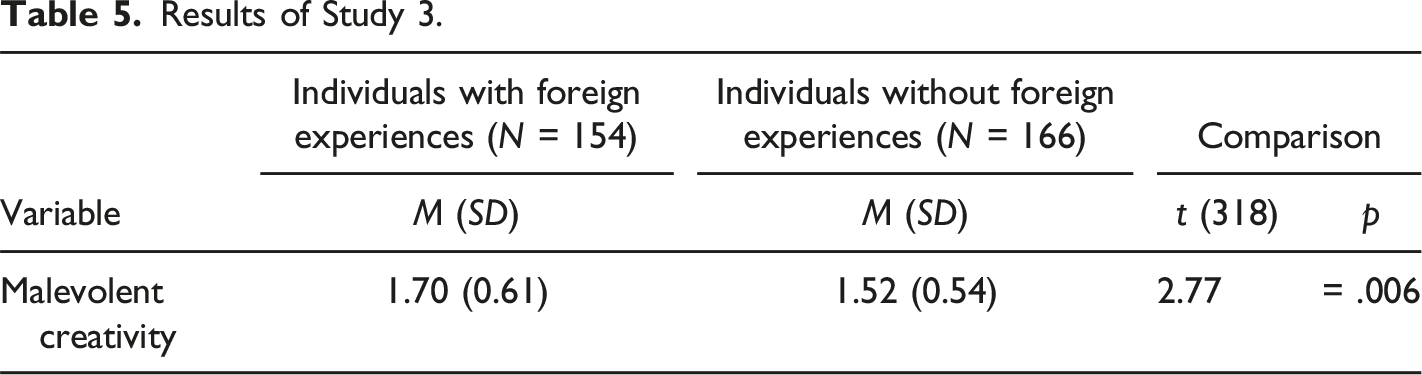
A total of 320 non-student adults (59.2% female; Mage = 38.1, SD = 12.1) in southwest and central China were invited to take part in the study for a monetary compensation. They were recruited via posting fliers throughout local communities and word of mouth. 154 or 49.0% of these 320 participants had lived abroad when the study took place, while the remaining participants never lived abroad. For participants with overseas experiences, they had visited 4.7 foreign countries on average (SD = 2.7) before and spent an average of 11.1 months abroad (SD = 7.9). No significant differences were obtained between the two groups in terms of age and gender (ps > .87).
Materials and procedure
The materials and procedure were the same as Study 1 except that they were asked to complete a different behavioral measure of malevolent creativity, which was adapted from Hao et al.’s (2016). The participant’s task was to image a scene that easily occurs in everyday life. For example, consider the incident involving Li Hua as he was returning home one day. During this moment, Li Hua’s neighbor, Xiao Ming, accidently collided with him in a hurried state. Unfortunately, the impact led to Li Hua’s computer falling to the ground and sustaining damage. However, instead of acknowledging his own carelessness, Xiao Ming chose to assign blame to Li Hua and walked away without extending a necessary apology, leaving Li Hua deeply angered. In response to this perceived injustice, participants were encouraged to generate a wide range of creative ideas within a 5-min timeframe, aimed at addressing the depicted unfairness and seeking retribution towards the wrongdoer. Following James et al. (1999), the number of solutions that participants generated for this problem was used as a composite measure of malevolent creativity per participant.
Results and discussion
Results of Study 3.
Correlations Between Variables in Study 3.
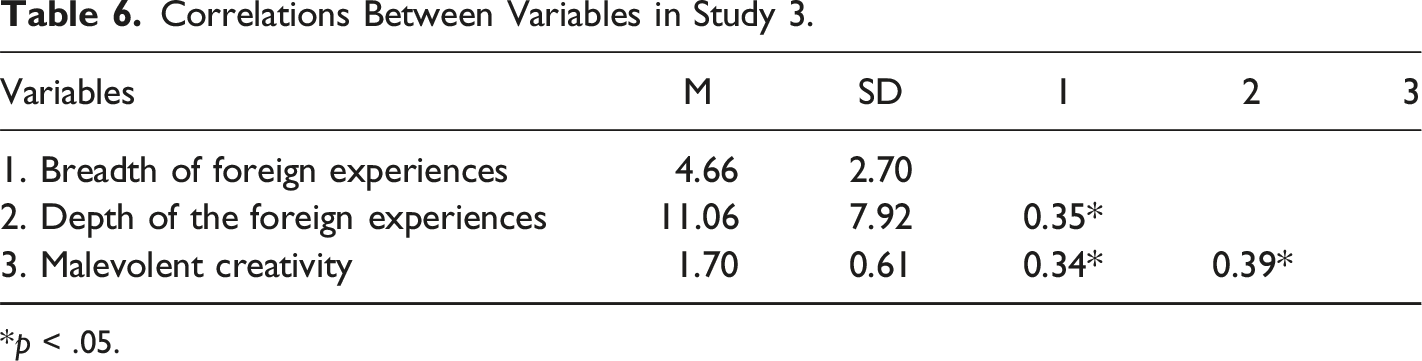
*p < .05.
Study 4
The observational nature of data in Studies 1–3 raises concerns about reverse causation because it is possible that people who have greater malevolent creativity may be more likely to travel and live abroad. To mitigate the reverse causality concern, Study 4 compared the malevolent creativity of individuals who had lived abroad with the malevolent creativity of individuals who had decided to move overseas but had not yet done so.
Method
Participants
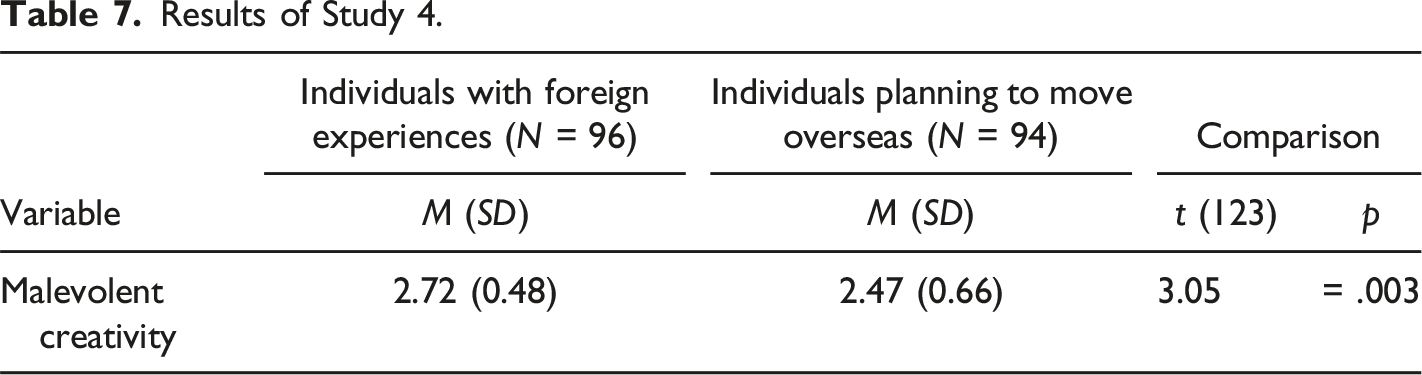
A total of 190 non-student adults (60.4% female; Mage = 35.4, SD = 9.3) in southwest and eastern China were invited to take part in the study for a monetary compensation. They were recruited via posting fliers throughout local communities and word of mouth. 94 or 48.9% of these 190 participants had planned to move overseas at some future date, while the remaining participants had lived abroad when the study took place. For participants with foreign experiences, they had visited 3.3 foreign countries on average (SD = 1.6) before and spent an average of 11.3 months abroad (SD = 4.9). No significant differences were obtained between the two groups in terms of age and gender (ps > .42).
Materials and procedure
The materials and procedure are the same as Study 1. The interrater reliability scores were satisfactory for originality (k = .90), feasibility (k = .88), and harm (k = .87).
Results and discussion
Results of Study 4.
Correlations Between Variables in Study 4.
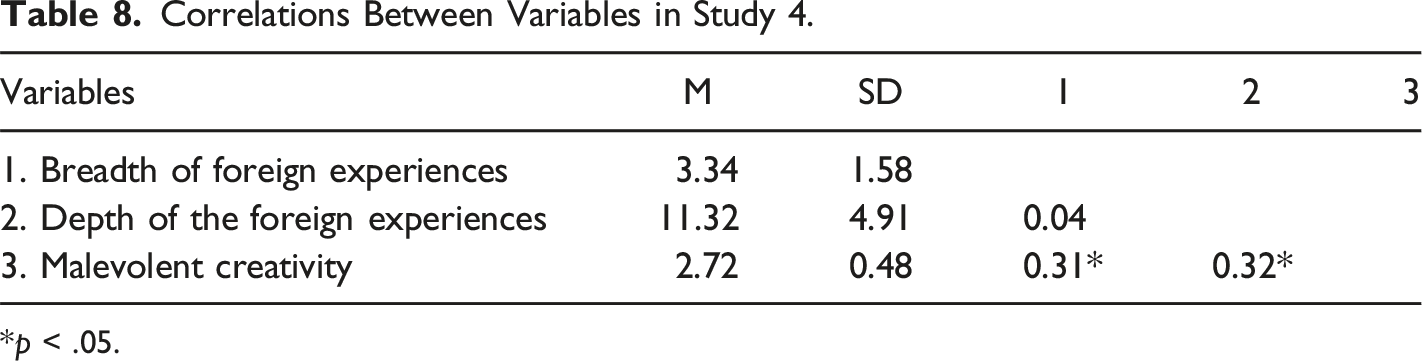
*p < .05.
Study 5
Despite Studies 1–4 providing robust evidence for the relationship between foreign experiences and malevolent creativity, they are not adequate to evaluate the causal connection between the two variables. To use data to draw legitimate causal inferences, we asked individuals to think and write about their foreign versus home country experiences, with the random assignment of respondents to different experimental conditions.
Method
Participants
A total of 174 participants (60.9% female; Mage = 36.7, SD = 10.6) in southwest and central China were invited to take part in the current study for a monetary compensation. They were recruited via posting fliers throughout local communities and word of mouth. They had visited 5.9 foreign countries on average (SD = 2.9) before and spent an average of 15.8 months abroad (SD = 8.6) when the study took place. No significant differences were obtained between the two groups of participants in terms of age and gender (p > .65).
Materials and procedure
Upon arrival at the laboratory, participants in each group were asked to recall their foreign or domestic experiences and to write down their reflections as detailed as possible within 5 minutes. Numerous studies have shown that this priming technique can efficiently manipulated the salience of relevant experiences (Cao et al., 2014; Lu et al., 2017). Upon completing the priming session, participants were asked to complete the same behavioral and performance measure of malevolent creativity as Study 3. To make better comparison, we deliberately assigned the exact half of the participants to the foreign experience condition and the other half to the home experience condition.
Results and discussion
Results of Study 5.
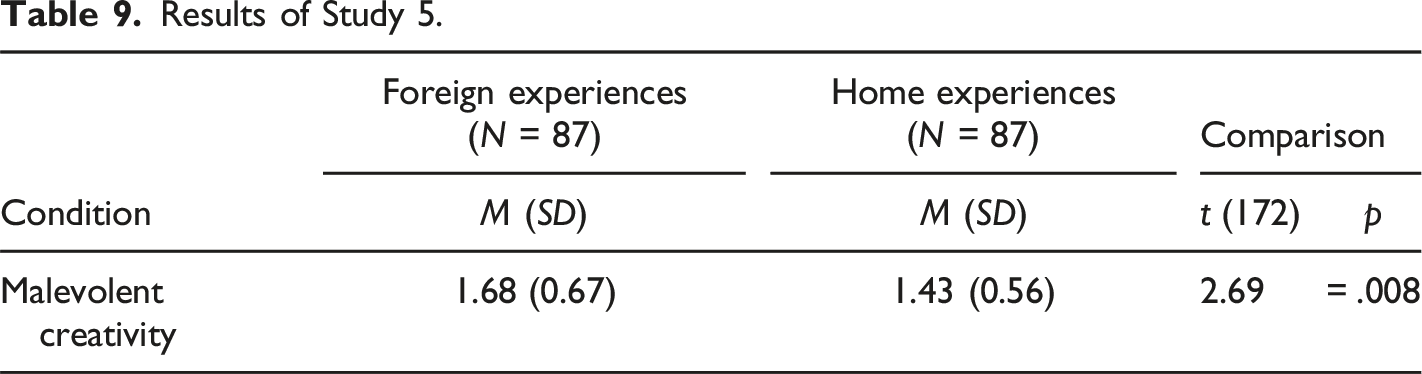
General discussion
Numerous studies have provided evidence for the notion that individuals with oversea experiences have a tendency to show more creativity. However, this prior work focused mostly on the bright side of creativity, such as innovative thinking, cognitive flexibility, and open-mindedness (Leung et al., 2008; Ritter et al., 2012; Shaftel et al., 2007). In other words, past empirical research is nearly silent regarding the role of foreign experiences in the shady side of creativity. We help close this gap by showing that living abroad is one of the facilitators of malevolent creativity. The results of five correlational and experimental studies offer a compelling demonstration that exposure to foreign experiences increases malevolent creativity. This effect was robust across multiple cultural populations (sinophone and anglophone), life stages (student and community samples), and several indicators of malevolent creativity. We also found evidence that the breadth and depth of foreign experiences were correlated with malevolent creativity.
Theoretical implications
This article makes several meaningful theoretical contributions to the scholarly literature. First, it draws a more complete picture of how living abroad can foster different types of creativity. Our research represents a first effort in showing that the enhanced creative thinking arising from foreign experiences is not entirely benevolent. By contrast, it may have a potential dark side that produces a range of unintended or unforeseen outcomes, such as hurting people, lying, and playing tricks. Recently, an emerging line of research has began to investigate the negative aspects of going abroad. For example, Lu et al. (2017) found that exposure to foreign experiences can increase unethical acts. Supporting Hypothesis 1, our work shows that foreign experiences can elevate individuals to new heights of malevolent creativity. These findings adds to this incipient literature on destructive consequences of foreign experiences.
Second, our research provides some discussions of wider implications for the Structure–Appraisal Model of Multicultural Experiences (Maddux et al., 2021). According to this model, delving into greater cultural diversity in foreign countries may elicit the activation of comparative processes which can significantly impact interpersonal outcomes such as immorality. For example, more extensive exposure to different cultures may elicit the activation of integrative processes which can significantly impact people’s underlying cognitive performance or psychological abilities such as creativity. However, most research attention has been directed to only one aspect of foreign experiences. In other words, researchers were mainly interested in how the predominance of deeper or broader foreign experiences can separately influence psychological and organization outcomes. Extending beyond these findings, we found that the depth and breadth of foreign experiences can activate in parallel and lead to more malevolent creativity, which supports Hypotheses 2 and 3. Specifically, living abroad for a longer time can promote cognitive flexibility, which in turns enhances creative thinking skills (Saad et al., 2013). Meanwhile, experiences across more foreign countries empower people to break moral rules and increase their tendency to engage in acts which other view as immoral (Lu et al., 2017). Thus, the co-activation of different structures of foreign experiences can result in the production of innovative and novel ideas with intention of damaging others.
One possible reason for the observed association between the breadth of foreign experiences and malevolent creativity is that all creative behaviors tested in our studies carry immoral connotations, such as evil pranks and revenge. Note, however, that malevolent creativity cannot simply equal immoral behavior. This is because the former does not necessarily amount to deriving deliberately bad intention (Cropley, 2010). For example, people sometimes create evil despite generally having moral intent. They may be unaware of the destructive potential of their work due to their obsessive thoughts with things. Alternatively, it is possibly because they do not have accurate information that they are choosing. For example, Zaitseva (2010) provides an example of how scientists design weapons of mass destruction (nuclear, chemical, and biological weapons) with the good intention of protecting their homeland from security threats and prevent casualties. However, these weapons can also be used in a military offensive to cause harm and to commit murder. Thus, the current studies show that the research on the role of foreign experiences in fueling creativity should consider its social context.
Practical implications
Our findings also have some practical consequences. Although foreign experiences simultaneously foster both individual creativity and team innovation, there are still traps and pitfalls underlying the bright side of creativity. Thereby, education and business practitioners should increase their awareness of these problems. Scholars from disparate disciplines (psychology, sociology, criminology, and engineering) have proposed a number of systematic practical measures to prevent malevolent creativity (Hari, 2010; Hilton, 2010). For example, Sternberg (2010) makes the point that taking an educational approach that integrating the teaching for wisdom into a subject matter and in the school classroom can protect students from negative creativity. Thus, educators in abroad programs could require international students to read classic works of literature and philosophy. This reading activity provides a useful way to improve critical thinking and analytic processes in designing measures against the dark side of creativity.
Limitations and future directions
Although our paper has its strengths, it has several limitations and provides multiple opportunities for future research. On the one hand, the statistical analyses show that the effect sizes reported in the current studies are not very large. Some psychologists suggest that replicating a small effect across situations and stimuli might be magnified to be practically meaningful (Lu et al., 2017; Prentice & Miller, 1992). However, an exact replication with a large sample size would be valuable to determine the extent to which the current findings can generalize to diverse populations and times.
On the other hand, the underling mechanism has not been fully elucidated. Previous research has established that personality serves as an antecedent of malevolent creativity. For example, Lee and Dow (2011) found that conscientiousness and trait physical aggression play a unique role in accounting for variability in malicious divergent thinking. Research has also shown that foreign experiences can be one important life experience factor that influences personality traits, such as extraversion, openness to experience, and conscientiousness (Sparkman et al., 2016). Thus, future research could explore these potential mediators.
Conclusion
Exposure to foreign experiences has the potential to expand an individual’s horizons and stimulate creative thought processes; however, this intellectual enrichment may paradoxically engender a detrimental variant of creativity. The interplay of broadened perspectives and enhanced creativity, derived from such experiences, can culminate in the emergence of malevolent creativity. In this vein, individuals might harness their innovative capacities for the formulation of insidious strategies, the exploitation of vulnerabilities, or the perpetration of deleterious acts aimed at personal benefit, as the current research indicates.
Footnotes
Declaration of conflicting interests
The author(s) declared no potential conflicts of interest with respect to the research, authorship, and/or publication of this article.
Funding
The author(s) disclosed receipt of the following financial support for the research, authorship, and/or publication of this article: This work was supported by the Second Round of Chongqing’s First-Class Disciplines in Foreign Languages and Literature 2023 Research Project; SISUWYJY202302 and Project of Social Science Foundation of Jiangsu Province in 2021 ERP Studies on the Neurocognitive Mechanism of Chinese Verbal Irony Processing (21YYB006).
Ethical Approval
All procedures performed in studies involving human participants were in accordance with the ethical standards of the institutional and/or national research committee and with the 1964 Helsinki declaration and its later amendments or comparable ethical standards.
Informed Consent
Informed Consent was Obtained from all Participants.

Data Availability Statement
The data that support the findings of this study are available from the corresponding author upon reasonable request.