







Abstract
This study explores the role of mindfulness in marriage as a potential mediator in the relationship between infidelity tendencies and divorce anxiety among married individuals. Employing a sample of 415 married individuals, the research utilized a correlational model to examine the predictive capacity of marital mindfulness. The assessment involved the Mindfulness in Marriage Scale, Infidelity Tendency Scale, and Divorce Anxiety Scale, supplemented by a demographic information form. We analyzed the data using SPSS, incorporating techniques such as Pearson correlation and mediation analysis for parametric distributions. The analysis identified a statistically significant, low, negative correlation between infidelity tendency and divorce anxiety. Additionally, there was a significant, low-positive correlation between infidelity tendency and marital mindfulness. The relationship between divorce anxiety and marital mindfulness also displayed a significant, low negative correlation. Furthermore, the study determined that marital mindfulness plays a significant role as a partial mediator in the relationship between infidelity tendency and divorce anxiety. The findings emphasize the importance of incorporating mindfulness practices in marital counseling and interventions aimed at reducing divorce anxiety and managing infidelity tendencies. We discuss the limitations and implications for future studies to improve our understanding and application of mindfulness in marital contexts.
Introduction
Family Systems and Marriage
The family is widely recognized as the fundamental building block of society, serving as a primary context for individual development and societal continuity (Fingerman et al., 2020; Walsh, 2016). Family systems theory posits that families are complex, interconnected units where each member’s actions affect the entire system (Cox & Paley, 2003; Priest, 2015). Within this framework, marriage plays a crucial role, forming the core relationship around which many families are structured (Neff & Karney, 2017; Yuan et al., 2022). The stability and quality of marital relationships have far-reaching implications for individual well-being, child development, and societal health (Bradbury & Karney, 2019; Karney & Bradbury, 2020; Robles et al., 2014). Within the complex family system, marriage stands as a central and multifaceted institution, influenced by a myriad of psychological and sociological factors (Yıldız et al., 2023). As family systems theory suggests, the interplay of individual attitudes, expectations, and behaviors significantly impacts the stability and satisfaction of the marital relationship, which in turn affects the entire family unit (Chauhan & Sekher, 2023; Priest, 2015). One critical challenge to marital and family stability that has garnered considerable research attention is infidelity (Pramudito & Minza, 2021). Viewed through the lens of family systems theory, infidelity—the act of being unfaithful to a romantic partner—can be seen as both a symptom of underlying family dynamics and a catalyst for systemic change (Azhar et al., 2018; Fincham & May, 2017). The ripple effects of infidelity extend beyond the couple, potentially disrupting the entire family system through trust issues, emotional turmoil, and, in some cases, divorce (Pournaghash-Tehrani, 2019). Given the far-reaching implications of marital instability for individual well-being and family functioning (Robles et al., 2014), understanding the factors that contribute to infidelity and the resulting divorce-related distress is crucial. This understanding can inform interventions aimed at strengthening marital bonds and fostering family resilience (Pichon et al., 2020; Walsh, 2016). By addressing these challenges within the broader context of family systems, researchers and clinicians can develop more comprehensive and effective strategies for supporting couples and families navigating these difficult experiences. Given the significant impact of infidelity on family systems and marital stability, it is crucial to understand the prevalence and consequences of this issue. Recent research has shed light on the widespread nature of infidelity and its far-reaching effects on individuals, couples, and families.
Divorce Anxiety
Divorce anxiety is a psychological state characterized by fear, worry, and uncertainty about the potential dissolution of one’s marriage (Finn et al., 2020). It encompasses concerns about the emotional, financial, and social consequences of divorce, as well as apprehension about the process itself (Neff & Karney, 2017). This anxiety can manifest even in relationships where divorce is not imminent, reflecting a general unease about the stability and future of the marriage.
The prevalence of divorce anxiety is significant, with studies suggesting that up to 30% of married individuals experience some level of divorce-related anxiety during their relationship (Karney & Bradbury, 2020). This prevalence underscores the widespread nature of marital instability concerns in contemporary society. The impact of divorce anxiety on individuals and families can be profound and far-reaching. At the individual level, persistent divorce anxiety is associated with increased stress, depression, and decreased overall life satisfaction (Sbarra et al., 2015). Within the family system, parental divorce anxiety can negatively affect children, leading to increased behavioral problems and academic difficulties (Amato, 2010).
Importantly, divorce anxiety is closely related to other concepts central to this study, namely infidelity and mindfulness. Infidelity, whether actual or suspected, can significantly exacerbate divorce anxiety by eroding trust and commitment in the relationship (Fincham & May, 2017). Conversely, mindfulness practices have shown promise in reducing divorce anxiety by promoting emotional regulation, improving communication, and fostering a more accepting attitude towards relationship challenges (Kozlowski, 2013). Understanding the nature, prevalence, and impact of divorce anxiety is crucial for developing effective interventions to support marital stability and individual well-being. By examining its relationship with infidelity tendencies and the potential mediating role of mindfulness, this study aims to contribute valuable insights to this important area of research.
Infidelity
Infidelity is a widespread issue in marriages, affecting approximately 20%–25% of all couples (Urganci et al., 2021). Emotional and sexual infidelity, which often lead to a breakdown in trust, profoundly impact the mental well-being of the involved partners (Barnes et al., 2007). Studies have shown that uncovering a partner’s unfaithfulness leads to heightened levels of melancholy, anxiety, and stress, especially among married individuals (Kappen et al., 2018; Karremans et al., 2016). Moreover, allegations of infidelity in approximately 20% of divorce proceedings have identified adultery as a prominent catalyst for marriage breakdown (Johns et al., 2015). Furthermore, the impact of infidelity extends beyond the immediate partners involved. Children in these relationships also experience negative effects, such as lower self-esteem, anxiety, and an increased likelihood of engaging in antisocial behavior (Barnes et al., 2007).
The relationship between infidelity and divorce anxiety has been well-established in the literature. Research has consistently shown that individuals who have experienced infidelity in their relationships report significantly higher levels of divorce anxiety compared to those who have not (Allen et al., 2005). This relationship is likely due to the profound breach of trust that infidelity represents, leading to increased uncertainty about the relationship’s future (Johnson et al., 2001). The fear of potential infidelity can also contribute to divorce anxiety, even in couples who have not experienced infidelity directly (Bischoff, 2003). Given these severe consequences of infidelity and its strong link to divorce anxiety, researchers have been exploring various approaches to strengthen marital relationships and prevent such issues. Mindfulness has emerged as a promising area of study, offering tools to enhance self-awareness, emotional regulation, and interpersonal sensitivity. These qualities are crucial in both preventing infidelity and helping couples navigate relationship challenges, making mindfulness a relevant concept in addressing marital instability and its associated anxieties.
Mindfulness in Marital Relationships
Mindfulness, the ability to be aware of and accept the present moment, has gained attention as a potential tool for enhancing marital quality and stability. It encompasses awareness of one’s surroundings, emotions, thoughts, and body (Bishop et al., 2004; Yang et al., 2023). In the context of marriage, mindfulness correlates with couples’ understanding of each other’s feelings, thoughts, and needs (Erus, 2019; Yang & Yang, 2021). Couples practicing high levels of mindfulness tend to communicate openly, empathize effectively, and experience deeper commitment and harmony in their relationships.
Mindfulness in marriage enables individuals to develop a more profound comprehension of themselves and their spouse (Maynard et al., 2015), improving communication, empathy, and bonding. It encourages acceptance and nonjudgmental awareness of each other’s experiences and perspectives (Keng et al., 2012), fostering a more supportive partnership. This practice empowers couples to navigate the complexities of married life with grace and compassion (Kabat-Zinn, 2003).
Research suggests that mindfulness may play a mediating role in addressing issues related to infidelity and divorce anxiety. Atkins, Baucom, and Jacobson (2005) found that individuals with higher levels of mindfulness reported lower tendencies towards infidelity, possibly due to increased awareness of their actions and their consequences. Similarly, Kozlowski (2013) demonstrated that mindfulness-based interventions could significantly reduce divorce anxiety in couples experiencing marital distress. The results of prior research (Atkins, Yi, et al., 2005; Bischoff, 2003) support the idea that mindfulness plays a mediation role in the connection between infidelity inclination and divorce anxiety. Mindfulness serves as a tool for individuals to better understand their thoughts, feelings, and automatic responses to interpersonal information (Shrout & Weigel, 2020; Wang et al., 2012), potentially allowing them to develop more adaptive ways of addressing relationship challenges (DuPree et al., 2007). Mindfulness practices are associated with improved communication, empathy, and emotional intimacy, which may mitigate infidelity tendencies and divorce anxiety while enhancing marital awareness (Barnes et al., 2007).
Current Study
While these separate relationships between mindfulness, infidelity, and divorce anxiety have been established, few studies have examined how mindfulness might mediate the relationship between infidelity tendency and divorce anxiety. However, the existing literature suggests that such a mediation is plausible. For instance, Carson et al. (2004) found that mindfulness enhances relationship satisfaction and stability, which could potentially mitigate the impact of infidelity tendencies on divorce anxiety. Therefore, this study aims to fill this gap by explicitly testing the mediating role of mindfulness in the relationship between infidelity tendency and divorce anxiety. This study aims to bridge this gap by exploring the mediating role of mindfulness in the relationship between infidelity tendency and divorce anxiety.
Our research is significant for several reasons:
It integrates three critical factors affecting marital stability (infidelity tendency, divorce anxiety, and mindfulness) into a single model, providing a more comprehensive understanding of their interplay. By examining mindfulness as a potential mediator, we offer insights into possible intervention strategies that could help couples navigate the challenges associated with infidelity and divorce anxiety. This study contributes to the growing body of literature on mindfulness in relationships, extending its application to specific marital issues like infidelity tendency and divorce anxiety.
Based on previous literature and theoretical frameworks, we propose the following hypotheses: 1. There will be a positive relationship between infidelity tendency and divorce anxiety. 2. Mindfulness in marriage will be negatively associated with both infidelity tendency and divorce anxiety. 3. Mindfulness in marriage will mediate the relationship between infidelity tendency and divorce anxiety, such that higher infidelity tendency will be associated with lower mindfulness, which in turn will be related to higher divorce anxiety.
By testing these hypotheses, we aim to gain a comprehensive understanding of the complex dynamics of marriage and offer insightful analysis that can guide the development of interventions designed to strengthen marital bonds. The findings from this study could have important implications for couples therapy, premarital counseling, and relationship education programs.
Method
Research Model
In this study, a correlational research design was utilized to investigate the relationships among infidelity tendency as the independent variable, divorce anxiety as the dependent variable, and mindfulness in marriage as the mediating variable. Correlational research aims to measure the statistical associations between variables. The objectives of this research included examining the direct relationship between infidelity tendency and divorce anxiety among married individuals and exploring how mindfulness in marriage mediates this relationship. This approach allowed for the identification of patterns of association that contribute to a deeper understanding of marital dynamics, particularly how mindfulness practices might buffer the adverse effects of infidelity tendencies on divorce anxiety.
Participants
Demographic Characteristics of the Study Sample.
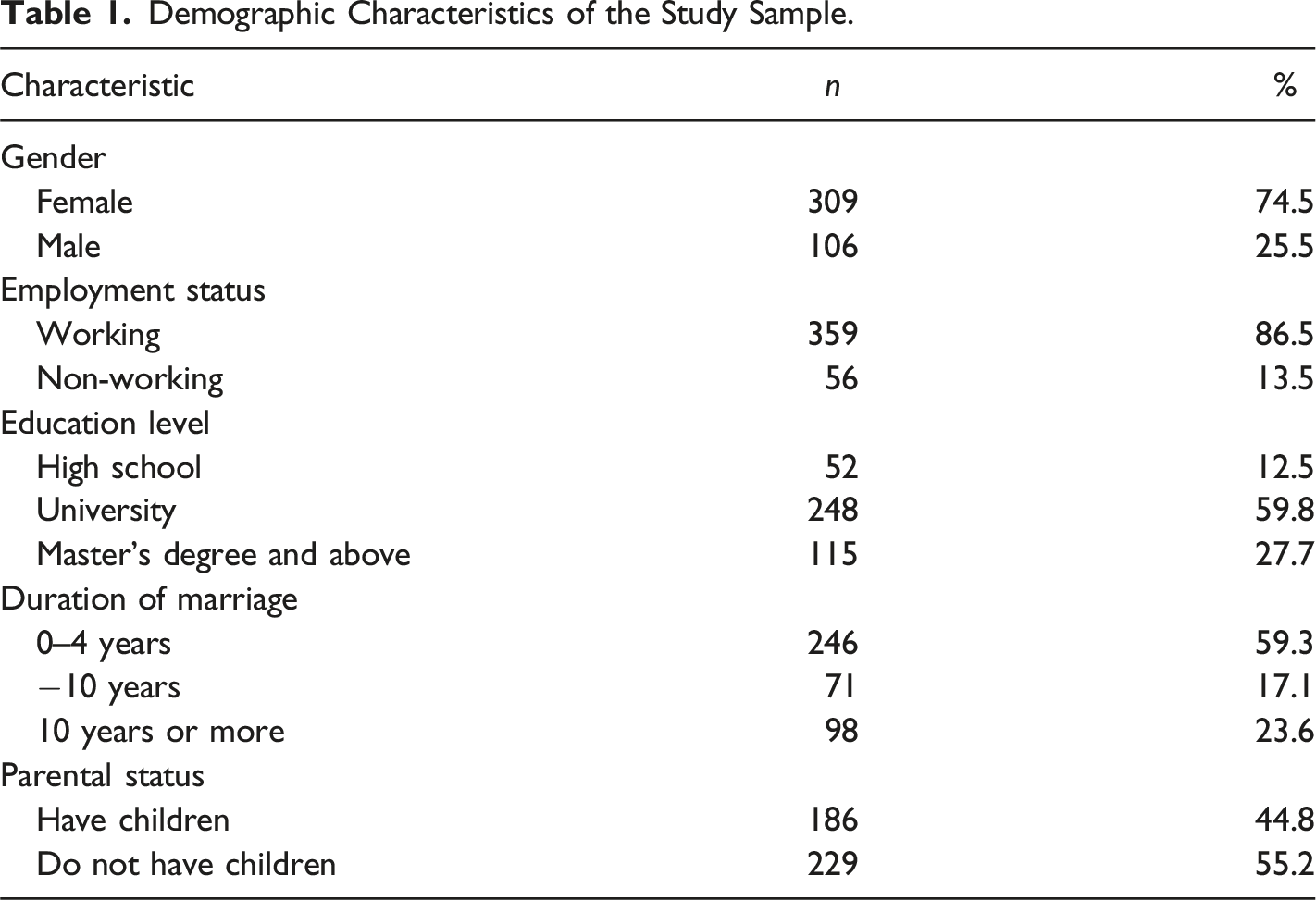
Measures
Informed Consent and Demographic Form
The survey began with an informed consent form presented to participants via a Google Form. This form detailed the research’s purpose, scope, and the confidentiality protocols in place to safeguard participant information. Upon consenting, participants were directed to complete a demographic form. This form collected data on several attributes including gender, age, marital status, educational level, employment status, and details regarding their marriage and parental status.
Infidelity Tendency Scale
The measure originally developed by Polat (2006) has been referred to in the literature as both the Infidelity Tendency Scale (ITS) and the Infidelity Tendency Questionnaire (ITQ) (e.g., Boğda & Şendil, 2012). To maintain consistency, this study will refer to it as the Infidelity Tendency Scale (ITS). The scale was designed to measure the propensity for infidelity among married individuals and includes 30 items rated on a 5-point Likert scale (1 = strongly agree, 5 = strongly disagree). The scale includes both positively worded (18 items) and negatively worded (12 items) questions, with the latter reverse scored during analysis. Polat (2006) reported strong psychometric properties, with an internal consistency coefficient and split-half reliability both reported at .95, and a test-retest reliability coefficient of .84 over a two-week interval. Construct validity was demonstrated through factor analysis, which supported a unidimensional structure. Subsequent studies (e.g., Boğda & Şendil, 2012) have validated the scale’s reliability and utility in assessing infidelity tendencies in Turkish samples. In this study, the scale demonstrated good reliability, with an internal consistency of .84.
Divorce Anxiety Scale
Created by Akın and Kahriman in (2019), this scale evaluates the level of anxiety regarding potential divorce among individuals. It includes 21 items, each rated on a 5-point Likert scale (1 = strongly disagree, 5 = strongly agree). The scale’s sampling convenience coefficient was measured at .91, and it has an internal consistency coefficient of .94, indicating robust reliability. In this study, the internal consistency was calculated as .80.
Mindfulness in Marriage Scale
This scale, devised by Erus and Deniz (2018), measures the degree of interpersonal mindfulness in marital relationships. It comprises 12 items, each rated on a 5-point Likert scale (1 = never, 5 = always). Higher scores indicate greater mindfulness within the marriage. The scale’s reliability has been validated in different studies, with internal consistency coefficients of .87 and .85, respectively. In this study, the internal consistency was calculated as .84.
Procedure
The data collection procedure for this study was designed to adhere to ethical standards and ensure the integrity of the research process. Prior to the commencement of data collection, approval was obtained from the Istanbul Beykent University Publication Ethics Committee for Social Sciences and Humanities, affirming compliance with ethical guidelines (Date/Number of Issue: 28.5.2021/36). Participants were recruited through targeted announcements in social media groups dedicated to married individuals. The inclusion criteria for the study were: (1) currently married adults, (2) aged 18 years or older, (3) proficient in Turkish, and (4) with access to the Internet to complete the online survey. Exclusion criteria included: (1) individuals in non-marital relationships, (2) those under 18 years of age, and (3) those unable to provide informed consent. This method facilitated access to a diverse pool of respondents who were actively engaged in marital contexts, thus aligning closely with the study’s objectives. The measures included a consent form, a demographic information form, and the scales relevant to the study. The consent form was critical in ensuring that all participants were fully informed about the purpose of the study, the nature of their involvement, and their rights, including confidentiality and voluntary participation. The aforementioned documents were integrated into a single Google Forms questionnaire to streamline the data collection process. This digital method not only enhanced the efficiency of administering the survey but also ensured the secure and systematic collection of data. Participants were able to complete the questionnaire at their convenience, promoting higher response rates and the reliability of the data collected.
Data Analysis
In the study, data analysis was conducted using the Statistical Package for the Social Sciences (25th Version). Initial tests for normality confirmed that the data distribution met the assumptions required for further parametric analysis. The demographic characteristics of the participants were systematically presented using frequency and percentage distributions in detailed tables. These tables also encompassed descriptive statistics for the scales used in the study, specifically mean, standard deviation, and standard error measurements. The interrelationships among marital mindfulness, divorce anxiety, and infidelity tendencies were explored through Pearson correlation tests. For interpreting the strength of these correlations, we adhered to Cohen’s (1988) benchmark scales: values ranging from .10 to .29 were considered low, .30 to .49 moderate, and .50 to .99 strong. The potential mediating effects of marital mindfulness on the relationships between infidelity tendencies and divorce anxiety were analyzed using the Hayes Process Macro within SPSS. Variables that showed statistically significant correlations were subsequently incorporated into the mediation regression analyses, leading to the development of mediation model. Following this, ‘Mediator Variable Analysis’ and ‘Parallel Multiple Mediator Variable Analysis’ were conducted using Hayes’ (2017) approach. The analysis employed the bootstrap method to identify total, direct, and indirect effects, along with their respective confidence intervals.
Findings
Descriptive Statistics Results and Correlation Analysis of the Measurement Tools Used in the Study.
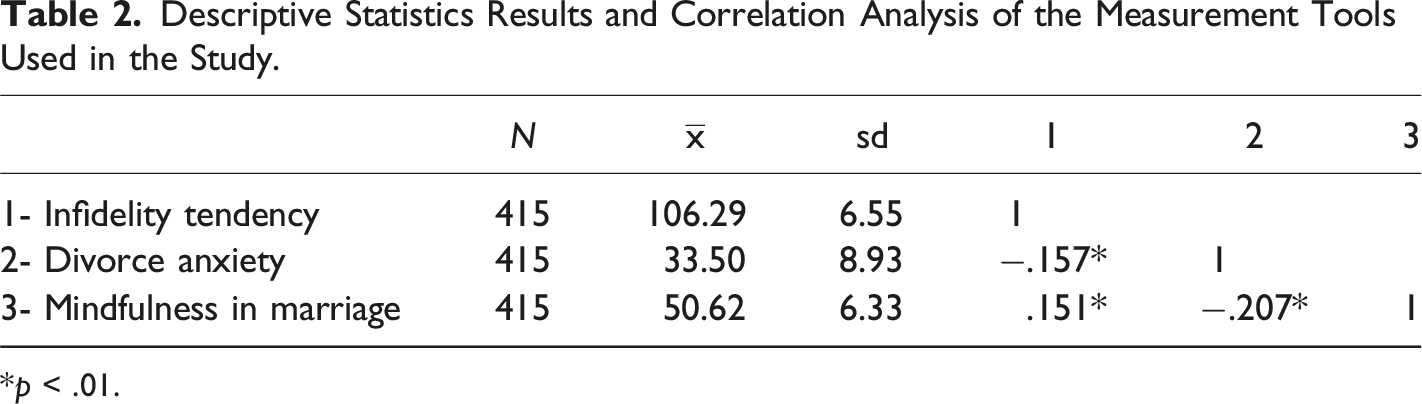
*p < .01.
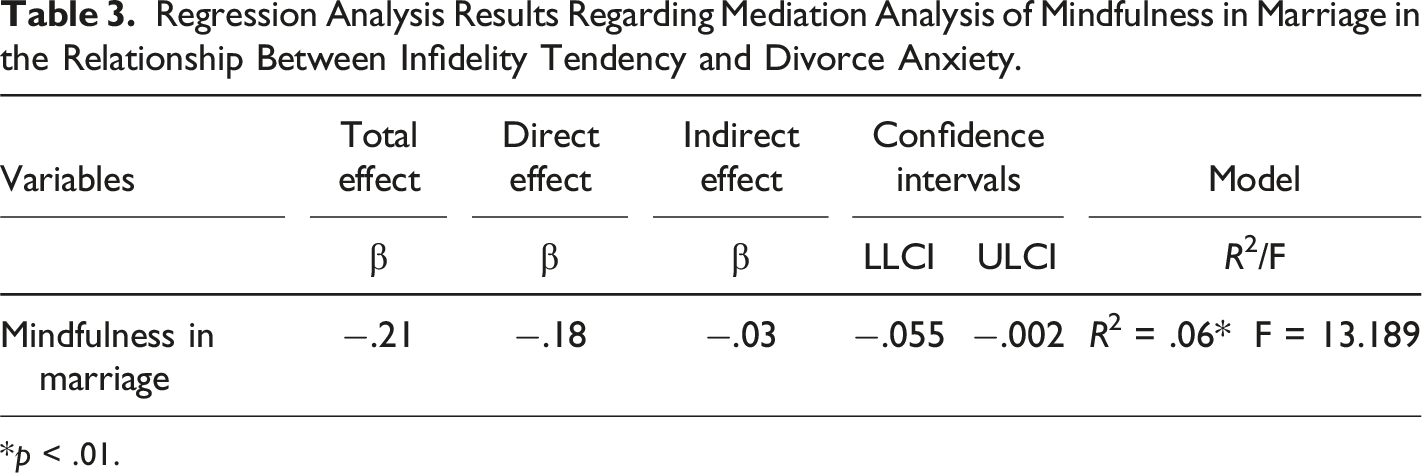
Figure 1 shows the model schematic for examining the mediating role of mindfulness in marriage in the relationship between infidelity tendency and divorce anxiety. Table 3 shows the results of the regression analysis for the total, direct, and indirect effects of the mediation. Mediation model: Mindfulness in marriage as a mediator between infidelity tendency and divorce anxiety. *p < .01. Regression Analysis Results Regarding Mediation Analysis of Mindfulness in Marriage in the Relationship Between Infidelity Tendency and Divorce Anxiety. *p < .01.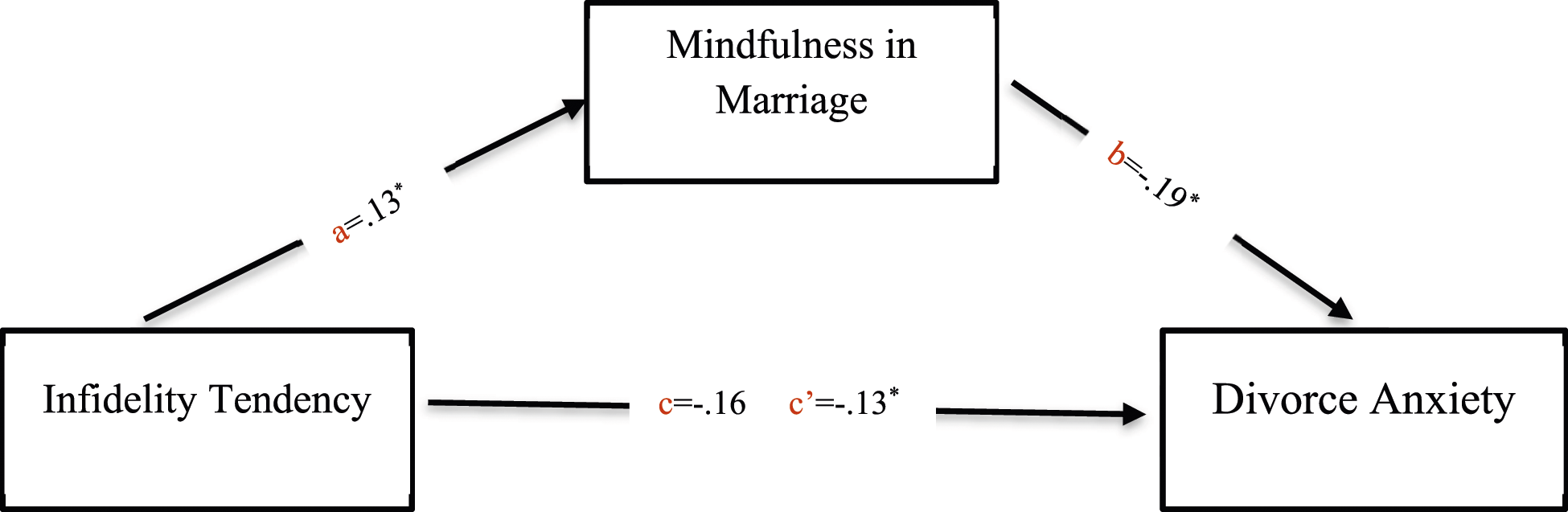
Results from a simple mediation analysis indicated that infidelity tendency is indirectly related to divorce anxiety through its relationship with mindfulness in marriage. As shown in Figure 1, higher infidelity tendency was associated with lower mindfulness in marriage (a = −.13, p < .01), and lower mindfulness in marriage was subsequently related to increased divorce anxiety (b = −.19, p < .01). A 95% bias-corrected confidence interval based on 10,000 bootstrap samples indicated that the indirect effect (a*b = −.03) was entirely below zero (−.055 to −.002). Moreover, infidelity tendency still had a significant direct effect on divorce anxiety even after accounting for the indirect effect through mindfulness in marriage (c' = -.13, p < .01).
Discussion
Our study examined the relationships between infidelity tendencies, divorce anxiety, and marital mindfulness, as well as the potential mediating role of marital mindfulness. The results revealed several key findings. First, we found a negative, low, and significant correlation between infidelity tendencies and divorce anxiety, suggesting that individuals with a higher propensity for infidelity tend to experience lower levels of divorce anxiety. Second, there was a positive, low, and significant correlation between infidelity tendencies and marital mindfulness, indicating that individuals with higher infidelity tendencies also reported higher levels of mindfulness in their marital relationships. Third, a negative, low, and significant association was observed between divorce anxiety and marital mindfulness, implying that individuals experiencing higher levels of divorce anxiety tend to exhibit lower levels of mindfulness in their marriages. Importantly, our analysis revealed that marital mindfulness plays a partial significant mediating role in the relationship between infidelity tendency and divorce anxiety, suggesting that mindfulness within the marital context influences how infidelity tendencies impact divorce anxiety. In the following sections, we will discuss each of these results in detail, comparing them with existing literature and exploring their implications for both theory and practice in the field of marital psychology.
Our study found a negative, low, and significant correlation between infidelity tendencies and divorce anxiety. This result suggests that individuals with a higher propensity for infidelity tend to experience lower levels of divorce anxiety. This finding appears to contradict some previous research in the field. For instance, Atapour et al. (2021) suggested that individuals with a greater propensity for infidelity often have heightened levels of divorce-related anxiety, potentially due to the degradation of trust and emotional stability in the partnership. Similarly, Gabriela and Corneliu (2023) recognized infidelity as a prevalent factor leading to divorce, which typically contributes to reduced relationship satisfaction and overall happiness. However, our results align more closely with studies that have identified factors contributing to higher likelihood of engaging in infidelity. Isanejad and Bagheri (2018) found that individuals more likely to engage in infidelity often have a more accepting attitude towards cheating, lower levels of commitment to the current relationship, and lower marital satisfaction. These factors could potentially explain the lower levels of divorce anxiety we observed. While the relationship between infidelity tendencies and divorce anxiety provides valuable insights, our study also explored how these tendencies relate to mindfulness within marriages.
Our study revealed a positive, low, and significant correlation between infidelity tendencies and marital mindfulness. This finding suggests that individuals with higher infidelity tendencies also reported higher levels of mindfulness in their marital relationships. This result appears to contradict some existing literature on the subject. For instance, Denes et al. (2020) suggested that individuals with a higher tendency to cheat may exhibit a lower capacity for mindfulness in marital relationships. Similarly, Groves (2016) proposed that cultivating mindfulness could potentially mitigate conflicts and foster healthier relationships, including preventing infidelity. Our findings align more closely with research highlighting the complex nature of mindfulness in relationships. Lantagne et al. (2017) noted a complex interplay between infidelity tendencies and marital mindfulness. Additionally, Gesell et al. (2020) found that relationship mindfulness, characterized by nonjudgmental awareness, is associated with reduced conflict in romantic relationships.
Having examined how infidelity tendencies relate to both divorce anxiety and marital mindfulness, we now turn our attention to the relationship between divorce anxiety and mindfulness in marital contexts. Our study found a negative, low, and significant association between divorce anxiety and marital mindfulness. This result indicates that individuals experiencing higher levels of divorce anxiety tend to exhibit lower levels of mindfulness in their marriages. This finding aligns with several previous studies in the field. Brem et al. (2015) found a correlation between practicing mindfulness in a marriage and experiencing reduced levels of divorce-related anxiety. Similarly, Pournaghash-Tehrani (2019) suggested that individuals who experience higher levels of anxiety regarding divorce have lower levels of mindful awareness within their marriage. Our results also support the work of Scott et al. (2010), who found a negative relationship between mindfulness and marital conflict, as well as anxiety and depression. However, our finding provides a more specific focus on divorce anxiety, extending the understanding of how mindfulness relates to this particular form of relationship-related anxiety.
Building upon these individual relationships, our study further investigated the potential mediating role of marital mindfulness in the complex interplay between infidelity tendencies and divorce anxiety. Our mediation analysis revealed that marital mindfulness partially mediates the relationship between infidelity tendency and divorce anxiety. The total effect of infidelity tendency on divorce anxiety was β = −.21. The direct effect, after accounting for the mediator, was β = −.18. The indirect effect through marital mindfulness was β = -.03 (95% CI: [−.055, −.002]), indicating partial mediation. We used the bootstrap method to calculate confidence intervals for the indirect effect. The model explained 6% of the variance in divorce anxiety (R2 = .06, F = 13.189, p < .01). The correlation between infidelity tendency and divorce anxiety was negative and small (r = −.157, p < .01). The correlation between infidelity tendency and marital mindfulness was positive and small (r = .151, p < .01), while the correlation between divorce anxiety and marital mindfulness was negative and small (r = −.207, p < .01). These correlations are considered low according to Cohen’s (1988) benchmark scales. The mediation effect size, calculated as the ratio of the indirect effect to the total effect, was 0.14 (−.03 /−.21), indicating a small mediation effect. The partial mediation indicates that while marital mindfulness explains some of the relationship between infidelity tendency and divorce anxiety, there are likely other factors involved. This suggests that the relationship between infidelity tendency and divorce anxiety is complex and multifaceted. Specifically, our results show that infidelity tendency has both a direct and an indirect effect on divorce anxiety. The direct effect (β = −.18) suggests that higher infidelity tendency is associated with lower divorce anxiety, independent of the level of marital mindfulness. The indirect effect (β = −.03) through marital mindfulness indicates that higher infidelity tendency is associated with higher marital mindfulness, which in turn is associated with lower divorce anxiety.
It’s important to note that while these effects are statistically significant, they are relatively small in magnitude. The model explains only 6% of the variance in divorce anxiety, suggesting that other factors not included in our model likely play important roles in determining levels of divorce anxiety.
This finding suggests that mindfulness within the marital context influences how infidelity tendencies impact divorce anxiety, but in a complex way. Specifically, the presence of marital mindfulness appears to slightly alter the nature of the relationship between an individual’s propensity for infidelity and their level of anxiety about divorce. While previous studies have examined these constructs individually or in pairs, few have investigated the mediating role of mindfulness in the specific context of infidelity tendencies and divorce anxiety. Our results align with and extend the work of Kiken et al. (2015), who found that mindfulness can serve as a mediator in various psychological processes. Similarly, Barnes et al. (2007) demonstrated that mindfulness can mediate the relationship between relationship quality and relationship stress, which bears some similarity to our finding. Murugan (2021) reported that mindfulness plays a partially significant mediating role in the relationship between infidelity tendency and divorce anxiety within marriage. According to Sabouri et al. (2020), mindfulness can act as a safeguard against the negative effects of a tendency towards adultery and the anxiety associated with divorce. However, our study is unique in its focus on the specific triad of infidelity tendencies, divorce anxiety, and marital mindfulness. This particular combination has not been extensively explored in previous literature, making our findings a significant contribution to the field.
To better understand this mediating effect, it’s crucial to explore the potential mechanisms through which marital mindfulness might influence the relationship between infidelity tendencies and divorce anxiety. Mindfulness may enhance emotional regulation, helping individuals manage the complex emotions associated with infidelity tendencies and divorce anxiety (Pepping et al., 2013). It might also facilitate cognitive reappraisal, allowing for a more objective view of one’s thoughts and feelings related to infidelity and divorce. The present-moment focus cultivated by mindfulness could encourage individuals with high infidelity tendencies to engage more fully with their current relationship, potentially reducing divorce anxiety (Gesell et al., 2020). Enhanced communication, as suggested by Wachs and Cordova (2007), might mitigate the impact of infidelity tendencies on divorce anxiety. Increased self-awareness through mindfulness could lead to more conscious decision-making in relationships, aligning with Lantagne et al.'s (2017) findings on the complex interplay between infidelity tendencies and marital mindfulness. Additionally, the non-judgmental aspect of mindfulness might allow individuals to acknowledge their infidelity tendencies without excessive self-criticism, potentially reducing associated anxiety about relationship dissolution (Groves, 2016). This mediation effect also aligns with Brem et al.'s (2018) observation of a correlation between practicing mindfulness in marriage and experiencing reduced levels of divorce-related anxiety.
In conclusion, our study reveals that marital mindfulness plays a partial mediating role between infidelity tendencies and divorce anxiety, shedding new light on the complex interplay of factors in marital relationships. This finding highlights mindfulness as a potential tool for improving marital quality and stability. It also emphasizes how cognitive, emotional, and behavioral aspects of a marriage are intricately connected. Beyond advancing our theoretical understanding of marital dynamics, these results open up new avenues for clinical interventions and future research in marital psychology. By recognizing the role of mindfulness in this context, we can develop more effective strategies to support couples facing challenges related to infidelity concerns and divorce anxiety.
Limitations
This study is subject to certain limitations. The main problem is that there isn’t a clear theoretical framework for the research problem. This makes it harder to put the results in a larger theoretical context, which could affect how widely they can be used. Additionally, the sample exhibits a significant gender imbalance, which may further limit the generalizability of the results to a wider population. Another limitation arises from mindfulness’s partial mediating effect in marriage, necessitating that both researchers and practitioners exercise caution in the interpretation and significance attributed to this finding.
Implications
Despite these limitations, this study has several valuable implications for future research and clinical practice. Incorporating mindfulness practices into therapy can help couples better manage the emotional pain and stress associated with infidelity, which can lead to improved communication, increased forgiveness, and ultimately a stronger marital bond. It is crucial to comprehend the temporal dynamics of infidelity, given that a decline in relationship functioning often precedes infidelity, particularly in perpetrators and victims. Future research could explore the interplay of factors like communication, trust, and attachment in the relationships between infidelity tendency, divorce anxiety, and marital mindfulness, offering insights into comprehensive therapeutic interventions for couples facing challenges related to infidelity and divorce anxiety. The current study employed a correlational model, which provides a snapshot of the relationships between variables. We could conduct longitudinal studies to examine how these variables interact and change over time within marital relationships. The study sample consisted of married individuals in Turkey, but no specific cultural or demographic factors were taken into account. Future research could explore how these variables might differ across diverse cultural contexts, age groups, or relationship durations. Lastly, future research should aim to replicate these findings with larger sample sizes and potentially explore additional variables that might strengthen these relationships.
Footnotes
Author Contributions
All authors contributed to the study conception and design. SK was the coordinator in writing process, a major contributor material preparation, data collection and analysis (%50). AÖ was a major contributor in writing the manuscript, in preparing the manuscript according to guidelines, and translated the manuscript into English (%50). All authors read and approved the final manuscript.
Declaration of Conflicting Interests
The author(s) declared no potential conflicts of interest with respect to the research, authorship, and/or publication of this article.
Funding
The author(s) received no financial support for the research, authorship, and/or publication of this article.
Ethical Statement

Data Availability Statement
The datasets analyzed in this study are available from the corresponding author upon request.