







Abstract
Means safety, the process by which an individual’s endorsed or expected method of suicide is made less available, is a widely used suicide prevention method. For firearm owners, this process involves delivering a means safety message, the acceptability of which may be influenced by the identity of the messenger. Previous research has indicated that the perceived expertise, trustworthiness, and ideological similarity of a messenger can influence the overall acceptability of a message, though to date there has not been research examining these constructs with regard to means safety messages for firearm suicide prevention. This study tested four hypotheses: (1) perceived expertise, (2) perceived trustworthiness, and (3) perceived ideological similarity would have a significant positive relationship with messenger acceptability; and (4) messenger categories (e.g., law enforcement personnel, friends and family, military veterans, etc.,) would have differing levels of perceived expertise, trustworthiness, and ideological similarity. Seven hundred and twenty-five participants were recruited from social media groups for firearm owners and asked to answer a series of randomized questionnaires designed to assess their opinions related to the perceived expertise, trustworthiness, ideological similarity, and overall messenger acceptability of various firearm means safety messengers, among other measures. All hypotheses were supported. The perceived expertise, trustworthiness, and ideological similarity of a messenger was related to the overall acceptability of said messengers, and the relationships between these variables differed based on the messenger category being assessed. These results carry important implications for suicide prevention messaging for firearm owners.
The suicide rate in the United States continues to rise, with the total age-adjusted suicide death rate increasing from 12.3 per 100,000 persons to 14.1 per 100,000 persons between 2011 and 2021 (Centers for Disease Control and Prevention, 2021). In 2023, the CDC reported that 49,316 people died by suicide in the United States alone (Center for Disease Control and Prevention, 2025). Although an individual may use various methods when attempting suicide, data from the Centers for Disease Control and Prevention indicates that 53.33% of all suicide attempts in 2023 were the result of a self-inflicted firearm injury (Centers for Disease Control and Prevention, 2023). America has a high rate of household firearm ownership, with roughly 32% of American households currently owning a firearm (RAND, 2021). An examination of household firearm ownership and suicide deaths has found a positive correlation between the two, with higher rates of suicide deaths in the areas of the United States where firearm ownership is higher (Miller et al., 2002). In addition, firearms are the most lethal suicide method, with a 90% death rate for suicide attempts involving a firearm, compared to the overall mortality rate of 12% for all other suicide attempt methods combined (Elnour & Harrison, 2008).
Firearm storage habits, especially habits that involve unlocked storage of firearms, may represent an increased risk for suicidal individuals (Butterworth et al., 2018). Numerous studies have found that a sizeable number of gun owners keep their firearms unlocked within their homes (Hemenway et al., 1995; Schuster et al., 2000; Simonetti et al., 2018). Taken together, these data indicate that not only do a large number of American households own a firearm, but the storage practices in these homes often involve unlocked guns being stored in close proximity to ammunition, which has been found to be a risk factor for suicide deaths in a sample of US army soldiers (Dempsey et al., 2019) and in data on youth suicides (Grossman et al., 2005).
Means Safety for Suicide Prevention
Means safety, 1 the process by which an individual’s endorsed or expected method of suicide is made less available, is a widely used method of suicide prevention (Hawton, 2007). An analysis of empirical and clinical literature on means safety has found that it is a potent safety strategy when used to restrict access to particularly lethal suicide methods (Sarchiapone et al., 2011); further research has found that individuals are not likely to substitute a different suicide method once their primary method has been restricted (Daigle, 2005). Targeted messaging focused on changing the behavior of gun owners has been found to be effective in the past, though the messages in question were not related to suicide (Ridgeway et al., 2011). A recent pilot study has found that means safety outreach via the mail for firearm owners (particularly, veterans) is feasible and acceptable, though the effectiveness of this strategy related to behavior change and suicide risk reduction is not yet known (Landes et al., 2024). Furthermore, wider means safety messaging approaches may offer a way to potentially reduce suicide deaths among both new and extant firearm owners.
Acceptability of Means Safety Messaging
Acceptability of means safety messaging for firearm owners is influenced by the identity of the messenger. For example, a large study of firearm owners found that law enforcement, hunting organizations, active-duty military members, military veterans and the NRA were rated as potentially good messengers for these conversations, while physicians and celebrities were rated among the least acceptable messengers (Crifasi et al., 2018). A more recent study of firearm owners in the United States found similar results (Anestis et al., 2021). Additionally, studies examining the preferences for means safety messengers, especially as it relates to firearms, have continued to show that clear preferences exist for who these messengers should be (Anestis et al., 2022; Baker et al., 2024; Bond et al., 2024). Although it is apparent that firearm owners perceive different messengers to be more acceptable for a means safety message than others, the exact reasons for this remain unclear. Understanding why firearm owners prefer one messenger over another could help clinicians, policy makers, and other interested parties when creating means safety messaging strategies. As such, it is important to identify the ways in which the acceptability of means safety messages may be influenced by the identity of the messenger.
Potential Factors Influencing Firearm Means Safety Message Acceptability
When information is related to potential behavior change, the effect of the identity of the messenger – often known as ‘messenger effects’ – is known to be a powerful influence (Dolan et al., 2010; Kassin, 1983). Previous research has determined that messenger effects can influence the overall persuasiveness of a given message, thereby affecting the likely outcome of said message on the recipient (McCroskey, 1969; Simons et al., 1970). While numerous factors regarding the messenger may influence the reception of the communicated information, three important factors include the perceived expertise of the messenger, the trustworthiness of the messenger, and the attractiveness of the messenger (Hafner et al., 2019; Pornpitakpan, 2004). Here, ‘expertise’ refers to the degree to which the messenger is perceived to be capable of delivering correct information, and ‘trustworthiness’ refers to the extent to which the messenger is reliable and honest source (Sternthal et al., 1978). ‘Attractiveness’ can be defined as either the physical attractiveness of the messenger or the perceived ideological similarity of the messenger to the recipient (Hafner et al., 2019). When acting together, these separate constructs explain a substantial amount of the overall believability of a messenger (Wilson & Sherrell, 1993).
Effects of Perceived Expertise on Message Acceptability
Numerous studies have found that information delivered by perceived experts are more likely to produce an attitude change (McGinnies & Ward, 1980). More relevantly, previous research has found that the firearm expertise of a given messenger was seen as relevant to firearm owners when considering suicide safety messages (Knoepke et al., 2017). As was found in the studies by Anestis and colleagues (2021) and Crifasi and colleagues (2018), firearm owners generally prefer to have means safety messages provided to them by law enforcement personnel, active duty and retired military personnel, and the NRA, while they have less interest in these messages coming from celebrities or physicians. Given that the preferred messenger categories all involve professions that require an understanding and familiarity with firearms, it is possible that the perceived expertise of these messengers may be influencing their acceptability as a means safety messenger. It should be noted that the term “perceived expertise,” while widely used in research on messenger effects, may in reality reflect more of a perception that a given messenger category has experience using firearms, and not necessarily an expertise. While nuanced, this distinction is worth highlighting.
Effects of Perceived Trustworthiness on Message Acceptability
There is broad support from previous research for the concept that the perceived trustworthiness of a messenger influences the acceptability of a message (Lemanski & Hyung-Seok, 2012). Given that the studies completed by Anestis and colleagues (2021) and Crifasi and colleagues (2018) found that firearm owners generally preferred to have means safety messages delivered by law enforcement personnel, active duty military, and retired military personnel – all of which are groups of people that are often seen as trustworthy (Gallup News Service, 2021) 2 – it could be the case that the perceived trustworthiness of these messengers is influencing their overall acceptability as a means safety messenger.
Effects of Perceived Ideological Similarities on Message Acceptability
A study on the effects of cultural similarities in health communication acceptability found that audiences were more likely to accept health information, and make subsequent changes to their actions, when the information was communicated by someone of a perceived similar cultural background (Kreuter & McClure, 2004). Merely attempting to discuss firearm storage practices in America is a politically sensitive issue (Celinska et al., 2007) that can easily lead to the receiver of the message becoming defensive (Kahan & Braman, 2003). Firearm owners’ feelings about firearms goes beyond the firearm’s effectiveness at self-defense and suggest a deeper ideological root to the firearm possession; this effect is more pronounced in politically right-leaning firearm owners than in left-leaning firearm owners (Burton et al., 2021). Recent research has found that rural gun owners are more likely to enact behaviors in line with safe storage recommendations when the information is presented alongside information that reflects cultural competence, especially as it relates to understanding of, and agreement with, the Second Amendment of the United States Constitution (Marino et al., 2018). When these culturally competent firearm messages are compared to the standard message alone it becomes evident that the standard message alone is less likely to be followed by rural firearm owners (Marino et al., 2018).
Summary and Current Study
The general acceptability of a means safety message can be influenced by the perceived expertise, trustworthiness, and ideological similarities of the messenger as it relates to the recipient. Previous work has established that firearm owners prefer means safety messages to be delivered by certain messengers. The present study seeks to identify the mechanisms by which certain messengers are deemed to be acceptable for firearm owners and investigates whether these preferences in messengers are due to the perceived firearm expertise, trustworthiness, or ideological similarities of said messenger. We used multilevel modeling to investigate these relationships. We conducted this study as a preregistered study (AsPredicted #101,167 - https://aspredicted.org/mky8-d5b7.pdf) with the following preregistered hypotheses: • There would be a significant positive relationship between each of (H1) perceived expertise, (H2) perceived trustworthiness, and (H3) perceived ideological similarity of the messenger and messenger acceptability; that is, there would be a positive slope for each of the fixed effects of perceived expertise, perceived trustworthiness, and perceived ideological similarity on messenger acceptability. • (H4) Messenger categories would have differing levels of perceived expertise, trustworthiness, and ideological similarity; that is the intercept of the fixed effects would differ based on the messenger category.
Methods
Participants
While power calculations are complex in multilevel modeling, it is often most beneficial to consider power for the model level that is most important for a particular research question (Snijders, 2005). Given that the level 1 model (see below) is most important for this study, we used this for the estimate of the number of participants needed to achieve acceptable statistical power. Though no studies have examined the effects of perceived expertise, trustworthiness, and ideological similarity on messenger acceptability for suicide safety messages, there is existent research from the field of economics that could be helpful. For example, a recent study on the influence of celebrity endorsements on subsequent purchasing habits investigated the relationships between the participants’ impression of the celebrity’s attractiveness – described by the author as including a sense of familiarity and similarity – trustworthiness, and expertise on subsequent likelihood to purchase the product endorsed by the celebrity – which is conceptually similar to the acceptability of the messenger (Khan, 2018). This study found that attractiveness (r = .259), trustworthiness (r = .393), and expertise (r = .508) were all associated with purchasing intent. We used the smallest effect size from that study (r = .259) to conduct a conservative a priori power analysis using G*Power (Faul et al., 2007) to determine our sample size, which indicated that we would need 114 participants with a power of .8 and an alpha of .05. In total, 1491 participants were recruited from various Facebook and Reddit groups populated by self-identified firearm owners to achieve a final sample of 725 participants with valid data. As such, we were overpowered to detect our expected effects. Participants were not provided with any compensation for their participation. This study was conducted with the approval of the Institutional Review Board at Oklahoma State University.
Measures
Messenger Acceptability
All participants were provided with the same following prompt: “Listed below are different types of individuals and groups who could teach firearm owners about safe firearm storage for the purposes of suicide prevention. How good or bad do you think each of the individuals and groups would be as messengers or teachers for safe firearm storage for suicide prevention? How good or bad is this person or group as a safe firearm storage suicide safety messenger?” Below this was a list of all 21 messenger categories along with a scale to rate how acceptable each messenger category was for delivering means safety messages. Participants used a 7-point scale ranging from 0 (“Very bad”) to 6 (“Very good”), with the mid-point being “Neither good nor bad.” This served as the primary outcome variable for the study. Additionally, for exploratory analyses and replication purposes, participants used a rank order system to rate these groups, with their most preferred option at the top and their least preferred option at the bottom. The presentation order for the different messenger groups was randomized whenever they were presented to the participants to minimize the potential for influence from order effects. These messenger groups and the subsequent rating scale were derived from previous research (Anestis et al., 2021), with the addition of other groups that appeared relevant to the given question, and represented 21 different types of persons that could be involved in a firearm means safety message, such as a law enforcement officer, family members, medical professional, or celebrity.
Perceived Messenger Expertise
The participant’s perception of the perceived expertise of various messenger groups was assessed using the question: “How much does this person or group know about firearms?” Possible answers ranged from 0 (“Not at all”) to 6 (“Completely”). These data were used to investigate hypotheses 1 and 4.
Trustworthiness
The participant’s perception of the perceived trustworthiness of various messenger groups was assessed using the question: “How much do you trust this person or group to tell you the truth about things in general?” Possible answers ranged from 0 (“Not at all”) to 6 (“Completely”). These data were used to investigate hypotheses 2 and 4.
Perceived Ideological Similarity
The participant’s perception of the perceived ideological similarity between themselves and the various messenger groups was assessed using the question: “How much do you think this person or group is similar to you in their beliefs and values?” Possible answers ranged from 0 (“Not at all”) to 6 (“Completely”). These data were used to investigate hypotheses 3 and 4.
Demographics
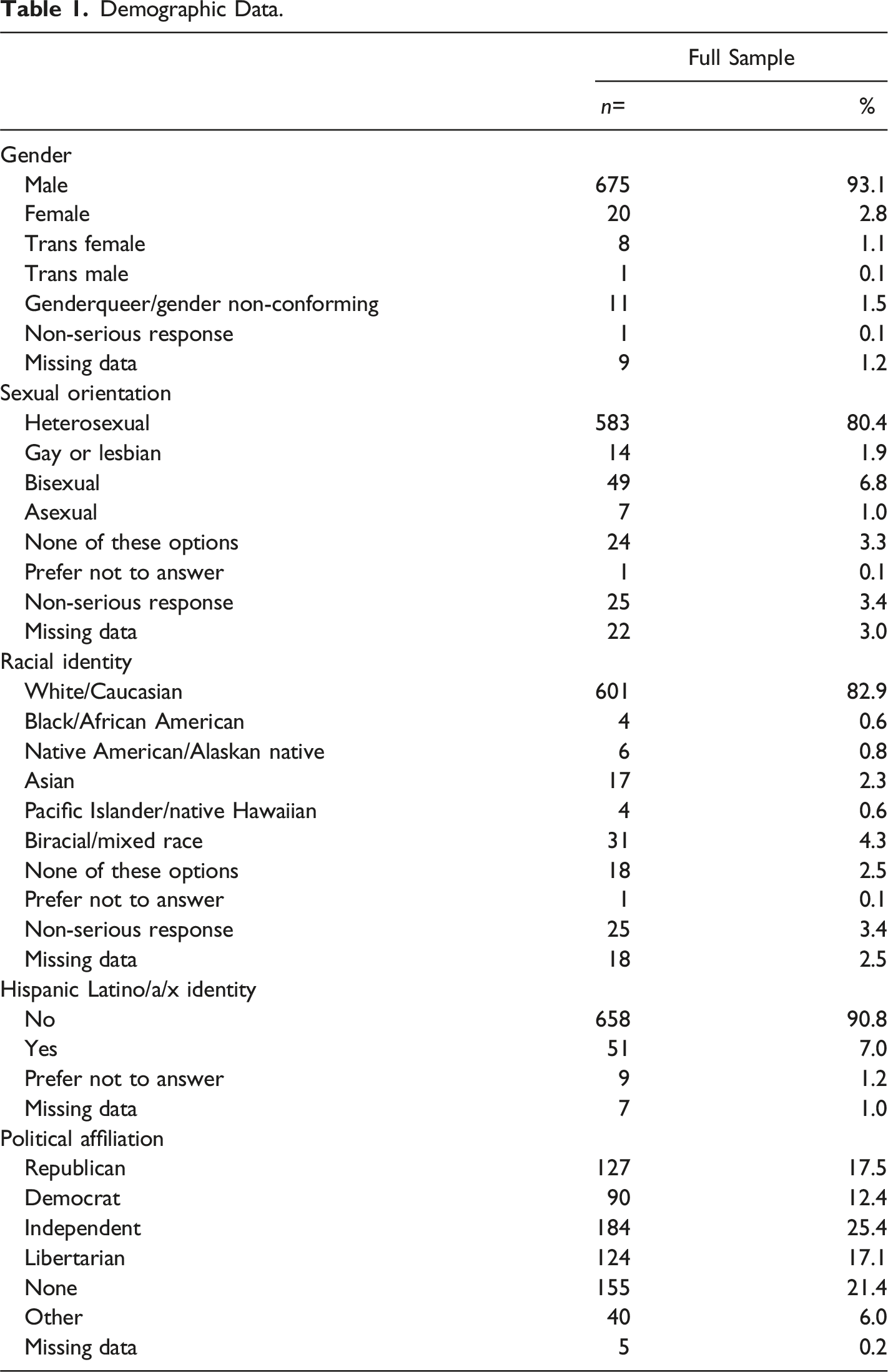
Participants completed a detailed demographics form to assess for basic demographic information, such as age, gender, race, ethnicity, sexual orientation, income, military history, law enforcement experience, and marital status. Demographic data were used to provide descriptive information about our sample.
Data Validity
During the study, participants encountered two self-report validity questions that asked participants to report information related to the validity of their responses. First, at the beginning of the survey, participants were asked whether they commit to providing thoughtful and honest answers to the questions in this survey. At the end of the survey, participants were asked to estimate the percentage of their responses that were high quality and accurate. The use of these data for data screening purposes is explained in detail in the Results section of this document.
Procedure
Participants were recruited from various Facebook and Reddit groups for firearm owners. We have successfully used this method of recruitment on previous projects when conducting research on specific populations that may be difficult to reach through more traditional research methods (Smith, 2025; Smith et al., 2020). Facebook and Reddit groups were identified through each platform’s group search tool using search terms such as “firearm owners,” “gun owners,” and the names of various firearm manufacturers, magazines, organizations, and other similar terms. Once a group was identified, its administrators and/or moderators were contacted through direct message and informed about the study. If they granted permission for the study to be conducted within their group, an informational message was posted in the group advertising the study and inviting group members to participate in the study by following the survey link.
Participants completed all measures online via Qualtrics, a commonly used online survey platform. Before completing these measures, participants provided their informed consent by indicating that they had read and understood the consent form prior to being able to continue with the survey. The order of means safety messenger acceptability, perceived expertise, perceived trustworthiness, and perceived ideological similarity was counterbalanced across participants. At the end of the survey all participants were debriefed as to the nature and purpose of the study using an online debriefing form and provided with a list of resources if they experienced negative emotions as a result of their participation in this study.
Analytic Plan
A detailed explanation of the multilevel modeling used to assess these hypotheses is provided in the Supplemental Materials of this manuscript. Hypotheses 1 through 3 were evaluated via the Level 1 model, and significance was determined by the slope of the fixed effects of the various predictor variables (perceived expertise, perceived trustworthiness, perceived ideological similarity) on the outcome variable (messenger acceptability). Hypothesis 4 was evaluated via the Level 2 model, and significance was determined by the intercept of the fixed effects differing based on messenger category.
Results
Data Validity
Participants were 1491 individuals recruited from various Facebook and Reddit groups for firearm owners. However, 766 participants were excluded from the data due to either not completing any survey questions at all, not completing the validity question given at the end of the survey, or for indicating that the overall quality/accuracy of their responses was below our cut-off value. Specifically, all participants were asked at the end of the survey “How much of the data that you provided was high quality and accurate?”, with the ability to rate the accuracy of their responses on a scale of 0–100. These responses were collected, and a mean accuracy score of 96.32 (SD = 8.383) was calculated; any participants scoring more than two standard deviations below this mean (i.e., a score of less than 79.554), or who failed to respond to this question, were excluded from these data. Similar self-report measures of data quality have been reported as an effective method for assessing data validity (Aust et al., 2013). Data from a final sample of 725 valid participants were used in these analyses.
Descriptives
Demographic Data.
Multilevel Modeling for Hypothesized Results
Results of Multilevel Modeling Indicating the Slope of the Fixed Effects of Perceived Expertise, Trustworthiness, and Ideological Similarity on Messenger Acceptability.
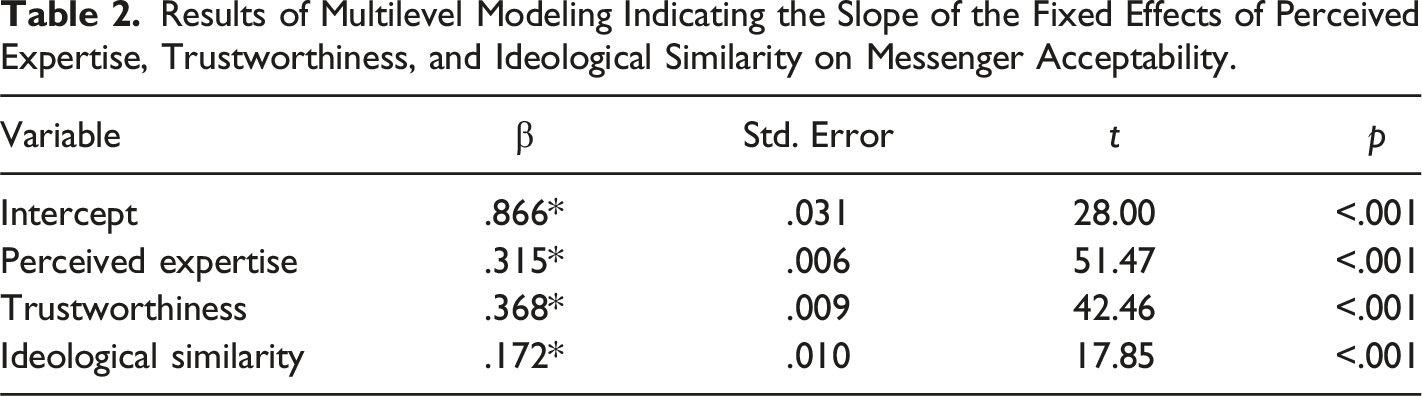
For hypothesis 4 (messenger categories have differing levels of perceived expertise, perceived trustworthiness, and perceived ideological similarity), the intercept of the fixed effects (β = .076, SE = .021) was found to be significantly different based on messenger category, p = .002. Accordingly, all of the primary hypotheses of the present study were supported. Specifically, perceived expertise, trustworthiness, and ideological similarity were all associated with messenger acceptability (the extent to which a participant finds a given messenger category to be an acceptable group to provide them with suicide means safety information), and these ratings varied by messenger category, such that certain messengers, like family members and hunting organizations, were rated higher across these dimensions than other messengers such as government officials or social media companies.
Exploratory Analyses
Detailed Examinations of Preferred Messenger Categories
Mean Messenger Acceptability, Trustworthiness, Expertise, and Ideological Similarity Ratings by Messenger Category.
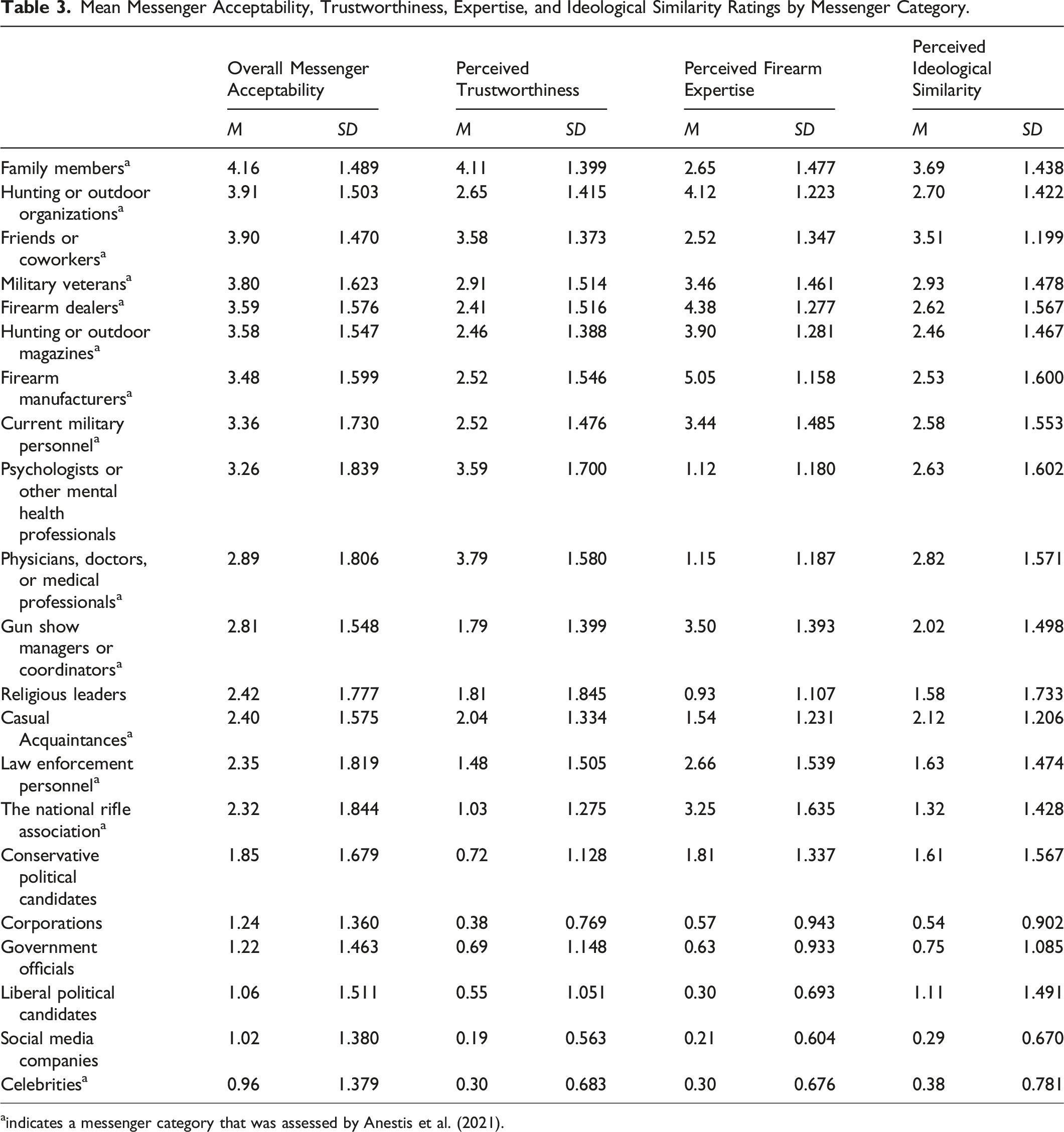
aindicates a messenger category that was assessed by Anestis et al. (2021).
Discussion
The current study explored the relationships between the acceptability of a messenger for a firearm means safety message and the perceived expertise, trustworthiness, and ideological similarity of the messenger, which are facets of messenger acceptability that are important for messengers in general (Hafner et al., 2019; Pornpitakpan, 2004; Wilson & Sherrell, 1993). Our first hypothesis, that there would be a positive relationship between perceived expertise and messenger acceptability, was supported. The perceived firearm expertise of a suicide safety messenger had previously been found to be particularly salient for firearm owners (Knoepke et al., 2017), but no previous research has investigated whether perceived firearm expertise could explain the differences between preferences in messenger categories. As such, our findings agreed with previous research indicating that perceived expertise is a crucial factor for firearm owners when assessing suicide safety messages, but adds to this literature by demonstrating that perceived expertise influences messenger acceptability (rather than message acceptability).
Our second hypothesis, that there would be a positive relationship between perceived trustworthiness and messenger acceptability, was also supported. The perceived trustworthiness of a suicide safety messenger had previously been indicated to be a particularly salient factor for firearm owners when considering the acceptability of a means safety message (Marino et al., 2016). However, previous research had not asked firearm owners to compare the trustworthiness of different means safety messenger categories, which is a novel approach taken by the present study. As such, our data was found to agree with this previous research and add additional evidence to indicate that perceived trustworthiness is an important factor for firearm owners when assessing messenger acceptability for suicide safety messages.
Our third hypothesis, that there would be a positive relationship between perceived ideological similarity and messenger acceptability, was also supported. The perceived ideological similarity of a suicide safety messenger had previously been established as a particularly salient factor for firearm owners (Marino et al., 2018). As such, our findings supported previous research and add to the body of literature indicating that perceived ideological similarity is an important factor for firearm owners when assessing messenger acceptability for suicide safety messages.
Our fourth hypothesis, that the intercept of the fixed effects would differ based on the messenger category, was also supported. This indicates that different messenger categories have differing ratings of perceived expertise, trustworthiness, and ideological similarity. Given that previous research had established that firearm owners have clear preferences for suicide safety messengers (Anestis et al., 2021; Crifasi et al., 2018), and that the perceived expertise (Reimer et al., 2004), trustworthiness (Lemanski & Hyung-Seok, 2012), and ideological similarity (Marino et al., 2018) of different messengers can differ based on messenger category, these results were expected. However, to date there had been no research examining all three of these variables as part of a combined model of messenger acceptability. As such, this work was the first of its kind to examine how these variables may interact with messenger acceptability, which has far reaching implications for communicating messages in general, but especially regarding suicide safety messages for firearm owners. Understanding how firearm owners perceive different suicide safety messengers allows for a more careful, tailored approach to suicide prevention for firearm owners that involves choosing the right messenger for the right message recipient, which could lead to an increase in message acceptability and suicide safety behavior among firearm owners.
Suicide Safety Messengers for Firearm Owners – Specific Recommendations
This then begs the question: who is the ideal suicide safety messenger for firearm owners? Determining the answer to this question will allow clinicians and public health officials to make informed decisions when attempting to deliver critical suicide safety interventions for firearm owners. Based on the present study, combined with previous research, we may make the following recommendations: (A) Messengers for suicide safety messages targeted to firearm owners should be those that are viewed to have a high degree of perceived expertise, trustworthiness, and ideological similarity. This indicates that messengers attempting to deliver suicide safety messages for firearm owners should perhaps look for ways to signal expertise, trustworthiness, or ideological similarity wherever feasible, whether explicitly or implicitly. For example, careful use of language when discussing firearms (e.g., using the term “sporting rifle” instead of “assault rifle”) may signal general firearm expertise and ideological similarity by avoiding loaded terms for some firearm owners. The use of these “loaded terms” can simultaneously communicate either an unfamiliarity with firearms, and/or a perceived hostility towards firearms, especially for firearm owners who are on-guard against certain ideological viewpoints. In this way, a messenger can communicate firearm expertise without accidentally using firearm-related terms that signal a broader ideological divide. (B) Firearm owners are not a monolithic group, and the opinions of firearm owners can differ drastically and change rapidly; as such, means safety messenger selections should be adaptive. For example, while law enforcement personnel have previously been a highly preferred messenger category, this did not remain true for the present study. This could very well be explained by the recruitment method of the present study (pulling from highly opinionated social media users) and the demographic make-up of the present study’s sample (e.g., a high proportion of participants identifying as “Libertarian”). However, this could also be explained by the public’s shifting view of law enforcement personnel (Schultz, 2019). Similarly, negative experiences with law enforcement personnel can shape a person’s trust or distrust in law enforcement, even when it contrasts with the general trust ratings from other members of their social group (Sharp & Johnson, 2009). As such, care should be taken to ensure that messengers being selected for means safety messages for firearm owners are adaptive to the needs of the target population. This likely indicates that there is no “perfect messenger” for firearm owners, and that additional work is needed to determine ways to predict a more favorable messenger for a target firearm owner given certain variables.
Suicide prevention for firearm owners is an increasingly important public health goal (Elnour & Harrison, 2008). Adjusting the way that firearm owners store and treat their firearms may represent an effective way to lower the rate of suicide among firearm owners (Butterworth et al., 2018). By better selecting who the messenger is that is communicating suicide safety practices to firearm owners, we may be able to increase the likelihood that these messages result in actual behavioral change and decreased suicidal actions (Anestis et al., 2021). When a different messenger cannot be selected, efforts should be made to communicate trustworthiness, expertise, and ideological similarity in some other manner. However, further research is needed to determine if messenger categories not only influence messenger acceptability, but also influence openness to means safety recommendations and commitment to action. As such, before clinicians, public health officials, or policy makers take action to change means safety messenger selection, efforts are needed to ensure that the given selection is not only the most acceptable messenger for a given audience, but also the most effective messenger.
Limitations
Limitations of the current study include a cross-sectional design, which only allows us to determine the associations of the relationships between how a participant understands the perceived expertise, trustworthiness, and ideological similarity of a messenger and their opinion of said messenger’s acceptability, rather than determine if the relationships between these variables are causal (e.g., if lowering the perceived trustworthiness of a messenger would, in turn, lower the messenger acceptability of the same messenger). Additionally, the relatively high proportion of White individuals within the present sample indicate that our sample may not be representative of the United States as a whole (84.3% vs. 73%, according to public data made available by the United States Census Bureau). It should also be noted that, while the United States population has a political makeup of 23% Republican, 32% Democrat, and 39% independent (Pew Research Center, 2015), the present study had a sample that was 17.5% Republican, 12.4% Democrat, and 25.3% Independent. If we were to group these data the way that the Pew Research Center does, where every non-Republican or non-Democrat participant is categorized as “Independent,” then our data would be 17.5% Republican, 12.4% Democrat, and 70% Independent. This is a sharply higher rate of “Independent” political affiliation than the United States population at large, and may indicate that our sample holds substantially different political views than the general United States population. Furthermore, the source of the participants for the present study – volunteers from various online firearm discussion forums – may represent a particularly opinionated audience that could differ from the average firearm owner in unknown ways. As such, these results may not be generalizable to a more representative sample. Future research should endeavor to recruit a more racially diverse sample, as well as attempt to control for party affiliation to ensure that the political representation of the sample matches that of the United States at large.
Strengths
This study had several strengths, including a careful validity screening procedure that enabled us to filter out data of participants who were unlikely to have provided valid data. Additionally, the use of a preregistered protocol prior to data collection allowed for the results to be evaluated within the context of hypotheses made before analyses, which ensures the presently reported results were not selected based on their significance or intrigue (Nosek et al., 2018). Finally, the inclusion of additional messenger categories mixed in with what was reported by Anestis et al. (2021) allowed for a deeper examination of firearm owner preferences for means safety messengers that may carry clinical implications.
Summary
The current study provides evidence that, as perceived expertise, trustworthiness, and ideological similarity of a firearms means safety messenger increases, so too does messenger acceptability. Additionally, we found that the intercepts between these variables differed based on messenger category, indicating that certain messengers were overall more acceptable, and their ratings of perceived expertise, trustworthiness, and ideological similarity would also be higher than the messengers rated as less acceptable. These findings are viewed within the context of firearm owners assessing different potential suicide safety messengers, which carries important implication for suicide prevention messages targeted towards firearm owners.
Supplemental Material
Supplemental Material - Messenger Acceptability for Suicide Means Safety Messages for Firearm Owners: Effects of Perceived Expertise, Trustworthiness, and Ideological Similarity
Supplemental Material for Messenger Acceptability for Suicide Means Safety Messages for Firearm Owners: Effects of Perceived Expertise, Trustworthiness, and Ideological Similarity by Logan Smith in Psychological Reports
Footnotes
Acknowledgments
The author would like to thank Tony T. Wells at Oklahoma State University for his contributions to this project and his feedback on earlier versions of this document when it was a dissertation project.
Declaration of Conflicting Interests
The author(s) declared no potential conflicts of interest with respect to the research, authorship, and/or publication of this article.
Funding
The author(s) received no financial support for the research, authorship, and/or publication of this article.
Ethical Statement

Data Availability Statement
Data may be shared with interested parties upon request.
Supplemental Material
Supplemental material for this article is available online.
Notes
Author Biography
References
Supplementary Material
Please find the following supplemental material available below.
For Open Access articles published under a Creative Commons License, all supplemental material carries the same license as the article it is associated with.
For non-Open Access articles published, all supplemental material carries a non-exclusive license, and permission requests for re-use of supplemental material or any part of supplemental material shall be sent directly to the copyright owner as specified in the copyright notice associated with the article.
