







Abstract
This study investigates the mediating role of parent-child communication in the relationship between parents’ awareness of their children’s technology use and parenting stress based on Parental Mediation Theory. A correlational research design, involving a sample of 545 parents, was used. Data were collected using the Parent-Child Communication Scale, Parent Stress Scale, Parent Awareness Scale for Primary School Students’ Technology Use (PASCTU), and a demographic information form. The PASCTU comprises four subscales: Security, Development, Control, and Utilization. The findings revealed that parent-child communication significantly mediated the relationship between the security, development, and control subscales of the PASCTU and parenting stress. However, there was no mediation effect on the utilization subscale. These findings have important implications in interventions aimed at reducing parental stress. This study contributes to the growing body of the literature on family communication, technology use, and parental well-being, offering valuable insights for both practitioners and researchers.
Highlights
• Parent-child communication significantly mediated the relationship between the security, development, and control subscales of the PASCTU and parenting stress. • Parent-child communication did not mediate the relationship between the utilization subscale of the PASCTU.
Introduction
As technology continues to grow and integrate into our lives, dynamics within families have changed significantly. The digital landscape has become a critical factor in shaping parents’ parenting experiences, as they navigate their children’s technology use challenges and opportunities (Patrikakou, 2016; Reginasari et al., 2020; Shin & Li, 2017). Considering these technological shifts and their impact on family life, researchers are increasingly focused on understanding the interplay between various aspects of parenting in the digital age, such as parental awareness, stress, and communication strategies. In this rapidly changing digital environment, it becomes crucial to examine how parents' engagement with their children’s technology use affects these key aspects of the parenting experience. This study aims to understand the complex relationships between parents’ awareness of their children’s technology use, parenting stress, and parent-child communication, thereby contributing to a deeper understanding of effective parenting strategies in the digital era. Drawing on Parental Mediation Theory (PMT), which examines how parents manage and regulate their children’s interactions with media and technology (Clark, 2011), this study explores how parent-child communication can influence and be influenced by parents' awareness of technology use and their resultant stress levels. According to this theory, parents employ various mediation strategies, such as active mediation, restrictive mediation, and co-use, to guide their children’s technology use. These strategies can shape both the parent’s awareness of their child’s digital activities and the nature of their communication about technology (Clark, 2011; Livingstone et al., 2017). The mediation model proposed in this study hypothesizes that parent-child communication mediates the relationship between parents’ awareness of their children’s technology use and parenting stress. Specifically, it suggests that increased awareness of children’s safe and developmentally appropriate technology use, coupled with effective communication strategies derived from parental mediation practices, can reduce parenting stress. The main aim was to provide valuable insights into the complexities of modern-day parenting in the digital age, clarify the potential pathways through which parents' awareness and communication influence their overall parenting stress levels (Joshi & Gutierez, 2006; Çekiç & Karageyik, 2021). This approach offers a focused perspective on the unidirectional impact of technology awareness on parenting stress through the mediating role of parent-child communication in the digital age.
Parents’ Awareness of Their Children’s Technological and Parental Stress
Parents’ awareness of their children’s technological use can directly influence their stress levels (Bauer, 2018; Drouin et al., 2020). This awareness may include concerns about online safety, screen time, and the content to which children are exposed, such as gambling and pornography (Davis, 2012; Martin et al., 2021; Zhang-Kennedy et al., 2016). Higher degrees of awareness can cause anxiety and tension, especially if parents are unsure how to manage or control these aspects of their children’s lives (Kuss et al., 2018; Çankaya & Odabaşı, 2009). Parents who are more aware of their children’s technology use may feel a greater sense of responsibility for monitoring and guiding their usage (Kshetri & Voas, 2018; Siibak, 2019). Parents may feel stressed, especially if they feel ill-equipped to manage the influence of technology effectively (Radesky & Moreno, 2018). The nature and frequency of technology-centered communications, arising from increased awareness, may influence the parent’s experience of stress associated with their child’s technology use (Delen et al., 2015; Drouin et al., 2020; McDaniel & Radesky, 2018). This heightened awareness and the resulting stress often led parents to adopt various strategies for managing their children’s technology use. These strategies, in turn, shape the nature of parent-child communication about technology. Researchers have identified three primary approaches which were conceptualized in Parental Mediating Theory: active mediation, where parents discuss media content with their children; restrictive mediation, involving rules and limitations on media use; and co-viewing or co-use, where parents engage with media alongside their children (Clark, 2011; Livingstone et al., 2017; Nielsen et al., 2019). These styles reflect broader patterns of parent-child communication and parental attitudes (Clark, 2011). Parents with higher awareness of their children’s technology use may be more inclined to adopt active mediation strategies, fostering open discussions about online experiences (Shin & Li, 2017). Studies have shown that active mediation is associated with more responsible internet use among adolescents (Nielsen et al., 2019), while restrictive mediation may reduce screen time but potentially increase desire for prohibited content (White et al., 2015). The choice and effectiveness of these mediation styles can significantly influence parent-child communication about technology use (Clark, 2011; Warren & Aloia, 2019) and, consequently, impact parenting stress levels. Understanding these dynamics provides crucial context for examining the relationships among parental awareness, parent-child communication, and parenting stress in the digital age, as well as how various mediating styles might shape these relationships.
Mediation of Parent-Child Communication
The theoretical rationale for expecting parent-child communication to mediate the relationship between parental awareness and parenting stress is grounded in stress and coping theory as well as family systems theory. According to these frameworks, parental stress often arises from feelings of uncertainty, lack of control, and inadequate information about potential risks to their children (Lazarus & Folkman, 1984). When parents become more aware of their children’s technology use, this awareness alone may initially increase anxiety and concern, as parents recognize potential digital risks without necessarily knowing how to address them effectively (Drouin et al., 2020). However, parental mediation theory suggests that this awareness becomes beneficial only when it is translated into effective communication and mediation strategies (Clark, 2011).
Parent-child communication serves as the critical mechanism through which parental awareness is transformed from a potential source of anxiety into effective parenting action (Toran et al., 2024). Specifically, communication allows parents to: (1) share their concerns and gather information from their children about digital experiences, (2) collaboratively establish rules and boundaries based on informed understanding rather than fear, and (3) develop ongoing dialogue that provides reassurance and control over technology-related parenting challenges (Laidlaw et al., 2015; Racz et al., 2017; Triwardhani, 2020). Without this communicative bridge, parental awareness may remain as worry or anxiety without resolution, potentially increasing rather than decreasing parenting stress (Ponnet et al., 2013).
The relationship between parents’ awareness of their children’s technology use, parenting stress, and the potential mediating role of parent-child communication can be better understood by examining the various arguments that support the hypothesis that communication acts as a mediator. Building on this theoretical foundation, empirical evidence supports the mediating role of communication in several ways. First, when parents are aware of their children’s digital activities, they are more likely to initiate purposeful conversations about technology use, creating opportunities for collaborative problem-solving rather than unilateral worry (Clark, 2011; Warren & Aloia, 2019). This communication process transforms parental awareness from passive observation into active engagement, allowing parents to address concerns through dialogue rather than internal anxiety (Benedetto & Ingrassia, 2020). Parents may foster trust in and understanding of their children’s use of technology through communication. By building trust and understanding with their children through communication, parents can alleviate the anxiety resulting from fear of misuse or exposure to harmful material as they become more confident in their children’s ability to navigate the digital world responsibly (Leest, 2019). Additionally, parent–child communication can effectively promote a sense of collaboration and shared decision-making (Munz, 2015). Parents may create a cooperative environment that supports responsible digital habits by having conversations with their children about their technology use and working together to set rules and boundaries (Güllüpınar, 2019). This theoretical understanding is supported by research showing specific pathways through which awareness-driven communication reduces parental stress.
Parents’ awareness of their children’s technology use may naturally lead them to initiate more conversations about digital boundaries, including screen time limits, appropriate content consumption, and responsible online behavior (Racz et al., 2017). Through open and constructive communication, parents can better understand their children’s online activities and potential risks, which helps them feel more in control and less anxious about digital parenting challenges (Coyne et al., 2017; Laidlaw et al., 2015). This enhanced understanding enables parents to identify potential difficulties, set informed boundaries, and adjust their parenting strategies accordingly (Çoklar & Şahin, 2014), ultimately reducing parenting stress related to technology management.
Misconceptions and exaggerated fears about technology use may cause stress in parents (Király et al., 2020). By promoting open communication, parents can clarify these misunderstandings, enabling parents to acquire a more accurate understanding of their children’s online activities (Ali et al., 2025) and reduce the unnecessary stress they may experience. Communication can enhance parents’ knowledge and confidence in handling technology-related issues (Aubrey & Dahl, 2014; Rudi & Dworkin, 2018). Parents can alleviate some of the stress and anxiety that comes with feeling powerless in the face of the digital age’s challenges (Drouin et al., 2020; Uzundağ et al., 2022) by gaining more knowledge and control over their children’s technology use. Communication allows parents and children to work together to identify methods to address concerns regarding technology use (Shin et al., 2021). This collaborative approach can reduce the pressure on parents to become all-knowing and help alleviate parenting stress (Heath et al., 2020).
Lastly, effective parent-child communication allows parents to understand and address their own concerns about their children’s technology use (Coyne et al., 2013). Sincere and non-judgmental interactions allow parents to express their concerns, seek counseling from their children, and receive reassurance (Lauricella et al., 2015). Parents who express their concerns can gain empathy, advice, and new perspectives from their children, culminating in mutual understanding and potentially reducing stress related to technology use in parenting.
To sum up, parents’ awareness of their children’s technology use serves as a foundation for informed and targeted communication, facilitating more productive discussions about digital risks, benefits, and boundaries (Triwardhani, 2020). This awareness-driven communication aligns with key aspects of PMT, which emphasizes various mediation strategies parents employ to manage their children’s media use (Clark, 2011). Through active mediation, parents can engage in explanatory and instructive conversations about technology, fostering a shared understanding between parents and children. This approach allows for collaborative problem-solving and the joint development of digital literacy skills. As parents and children engage in open dialogue, they can address concerns, provide mutual reassurance, and build trust, which directly contributes to stress reduction. This process reflects the co-use mediation strategy, where parents and children use technology together, enabling parents to continually refine their parenting strategies and increase their sense of competence in managing technology-related issues (Clark, 2011; Livingstone et al., 2017). By normalizing discussions about digital life, parents can implement a combination of active and restrictive mediation, taking a proactive approach to potential challenges and addressing concerns before they escalate into stressful situations. The restrictive mediation component allows parents to set appropriate rules and boundaries, while active mediation ensures ongoing communication about these rules. Through this integrated process of awareness, communication, and collaborative management - all key elements of effective parental mediation - parents can develop a greater sense of control over their children’s digital experiences (Nielsen et al., 2019; Warren & Aloia, 2019). This multifaceted approach to parental mediation, informed by heightened awareness and manifested through various communication strategies, can ultimately lead to decreased parenting stress related to technology use (Hwang et al., 2017).
Current Study
This study focuses on a unidirectional mediation model examining how parental awareness of children’s technology use influences parenting stress, with parent-child communication serving as a mediator. This model is grounded in Parental Mediation Theory (Clark, 2011), which explores how parents manage and regulate their children’s interactions with media and technology. In the context of this study, PMT provides a theoretical basis for understanding the relationships between the key variables in this study: Parental awareness of technology use informs the type and extent of mediation strategies parents employ. This awareness shapes parent-child communication about technology, as parents use their understanding to guide interactions and implement mediation strategies (active mediation, restrictive mediation, or co-use). The nature of this communication, in turn, influences parenting stress, as parents navigate the challenges of raising children in a digital age (Drouin et al., 2020; Triwardhani, 2020). Parents’ awareness of their children’s technology use may influence their communication patterns with their children, which in turn could affect parenting stress levels; foster trust, collaboration, and shared decision-making; address their own worries; and create a supportive environment through effective mediation strategies (Shin et al., 2021). The application of this approach can result in informed, collaborative, and adaptive parenting strategies that may alleviate the stress that is often experienced when navigating children’s technological use (Abejuela et al., 2024). Understanding the role of parent-child communication as a mediator in this setting can provide useful insights into the complexity of parenting in the digital era, as well as suggest techniques for alleviating possible stressors related to children’s technology use through effective parental mediation practices.
Method
Model
This study employs a mediation model to examine the relationships between parents’ awareness of their children’s technology use, parent-child communication, and parenting stress. The model suggests that parent-child communication acts as a mediator in the relationship between parents' awareness of their children’s technology use (independent variable) and parenting stress (dependent variable). The model hypothesizes that higher levels of parental awareness of children’s technology use will be associated with better parent-child communication, which in turn will be related to lower levels of parenting stress. Additionally, the model examines whether the mediating effect of parent-child communication differs across the four subscales of parental awareness. This mediation model allows us to investigate both the direct effects of parental awareness on parenting stress and the indirect effects through parent-child communication, providing a comprehensive understanding of these complex relationships in the context of children’s technology use.
Participants
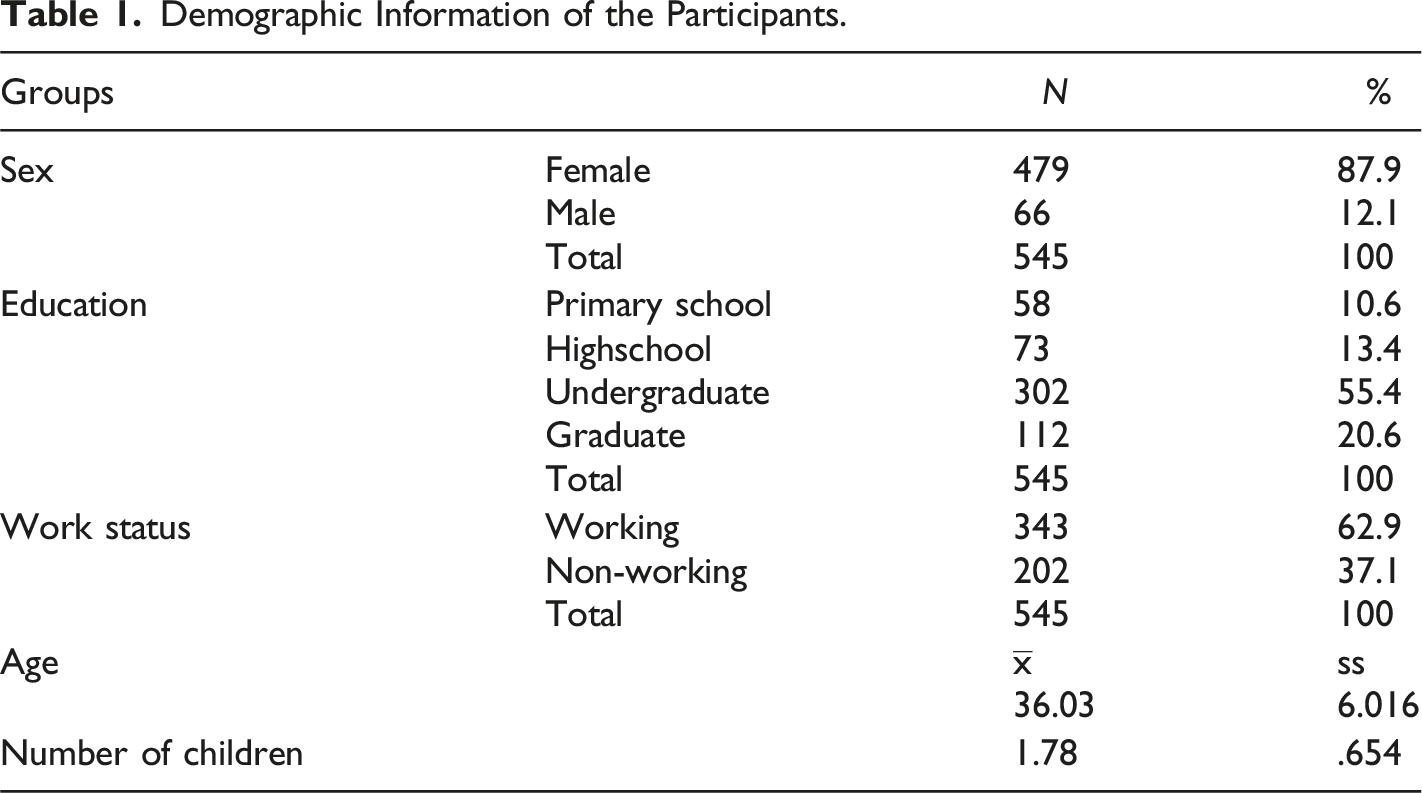
The study sample consisted of 545 parents living in Istanbul, Turkey, who agreed to participate and were selected using a random sampling method. This geographic focus was chosen due to researcher’s residency in this city. The target population was defined as parents with at least one child aged between 5 and 12 years old, residing in Istanbul. Participant recruitment was conducted through various channels including community centers, primary schools, and social media platforms (Telegram, WhatsApp and Instagram) to reach a diverse range of parents. The sample size was determined using a power analysis with a confidence level of 95% and a margin of error of 5%, based on Istanbul’s estimated parent population meeting the inclusion criteria. This calculation suggested a minimum sample size of 384, which was exceeded to account for potential non-responses and to increase statistical power. The response rate was approximately 60%, which is considered adequate for this type of research. Inclusion criteria for the study were: • Residency in Istanbul • Having at least one child aged 5–12 years • Ability to read and write in Turkish • Willingness to participate in the study
Data collection was conducted over a three-month period in 2023, using both online surveys and in-person interviews to accommodate different preferences and access levels among participants.
Demographic Information of the Participants.
Measures
Parent Awareness Scale for Primary School Students’ Technology Use
This scale was developed by Doğan Temur et al. (2022). There are four subscales: Security, Development, Utilization, and Control. The safety subscale measures parents’ awareness of how conscious their child is of using safe technology. Example item include: “My child knows that they should not communicate with people they do not know on social media.” There are ten items in the security factor. The factor load values of these items vary between .39 and .74. The variance explained by the factor is 15.28% and the Cronbach Alpha reliability coefficient score is .83. The development subscale measures parents’ awareness of how much their child develops when using technology. Example item include: “The use of technological tools appropriate for primary school age positively affects children’s mental development.” There are eight items in the development factor. The factor load values of these items vary between .42 and .70. The variance explained by the factor was 12.22% and the Cronbach Alpha reliability coefficient score was .79. The utilization subscale measures parents’ awareness of how much technology they use to help their children. Example item include: “I use technological tools when teaching English to my child.” There are six items in utilization factor. The factor load values of these items vary between .59 and .73. The variance explained by the factor was 11.25% and the Cronbach Alpha reliability coefficient score was .81. The control subscale measures the parents’ awareness of how much control they have over their children’s use of technology. There are four items in the control factor. Example item include: “I carefully choose the programs my child uses on the computer.” The factor load values of these items vary between .41 to .71. The variance explained by the factor was 8.42% and the Cronbach Alpha reliability coefficient score was .66. The total variance explained by four factors is 47.17 %. The Cronbach Alpha score for internal consistency coefficient is .88. The final form of the scale consists of 28 items. Each item was designed in accordance with five-point Likert scale which are strongly disagree 5, agree 4, neutral 3, disagree 2, and strongly disagree 1. There are no reverse-rated items.
Parent Stress Scale
This scale was developed by Özmen-Kaymak and Özmen (2012) to measure parental stress in daily relationships with their children. The scale consists of a single factor with 16 items. Example items include: “I hold myself responsible when my child makes a mistake. I have difficulty controlling my behavior when I am angry with my child. My responsibilities as a parent put psychological strain on me.” The factor loadings of these items range from .34 to .58. Construct validity was established through exploratory factor analysis, which revealed a single-factor structure consisting of 16 items that explained 32.20% of the total variance. The unidimensional structure was further confirmed through confirmatory factor analysis, demonstrating good model fit indices (χ2 = 252.98, df = 104, p < .001; χ2/df = 2.43; RMSEA = 0.05; RMR = 0.03; GFI = 0.93; AGFI = 0.91; CFI = 0.91). The scale showed strong reliability with Cronbach’s Alpha internal consistency coefficient of .85 and Spearman-Brown split-half reliability of .82. Item-total correlations ranged from .34 to .58, and all item discrimination indices were statistically significant (p < .001). Each item was designed in accordance with four-point Likert scale which are always (4), often (3), sometimes (2), and never (1). There are no reverse-scored items mentioned. A high score on the scale indicates a high level of parental stress.
Parent’s Communication with Child Scale
The scale was developed by Kahraman (2016). It is administered to parents who have children between the ages of 0–18. Example items include: “When my child misbehaves, I talk to him/her freely to make him/her understand. I share with my child what I really think about a situation. I encourage my child to express his/her ideas.” Exploratory factor analysis was conducted as part of the validity studies of the scale. The results of the varimax rotation process to reveal the factor structure of the scale and the scree plot showed that the 27-item scale explained 54.36% of the total variance. Cronbach’s alpha calculated for the scale is .87. A five-point Likert-type rating is used as “always; 5”, “often; 4”, “sometimes; 3”, “occasionally; 2” and “never; 1”. High scale scores indicate that communication between the parent and child is good, whereas low scale scores indicate that communication between the parent and child is bad.
Demographic Information Form
The form was developed by the researcher after reviewing the literature. There were five questions in total, which were prepared to determine parents’ sex, age, education level, employment status, and number of children.
Data analyses
Data were analyzed using SPSS software. Initial analyses were performed before the analysis. In this context, data accuracy, missing values, and outliers were analyzed. Initial analyses were conducted to ensure the data met the assumptions for the planned statistical tests. The skewness and kurtosis scores indicated that all variables were normally distributed (between −1.5 and +1.5). Examination of Q-Q plots and histograms confirmed this finding. Tests for multicollinearity revealed that all Variance Inflation Factor (VIF) values were below 5, indicating no concerning levels of multicollinearity. Homoscedasticity was confirmed through visual inspection of scatterplots of residuals against predicted values. Box plots and z-scores were used to identify potential outliers, resulting in no removal of any data. After these adjustments, the data were deemed suitable for the planned mediation analyses. The relationships between the variables to be included in the mediation models within the scope of these conditions were first analyzed using Pearson’s correlation analysis. After the analyses, variables with statistically significant relationships were included in the mediation regression analyses and mediation models were established. Variables with no statistically significant relationships were excluded from the model. After this step, ‘Mediator Variable Analysis' and ‘Parallel Multiple Mediator Variable Analysis' were applied using Hayes’ (2017) approach. The bootstrap method was used in the analysis, total effects, direct effects, and indirect effects were determined, and confidence intervals were considered. The SPSS Process Macro plug-in was used for mediating variable analysis.
Results
Descriptive Statistics Results and Correlation Analysis of the Measurement Tools Used in the Study.
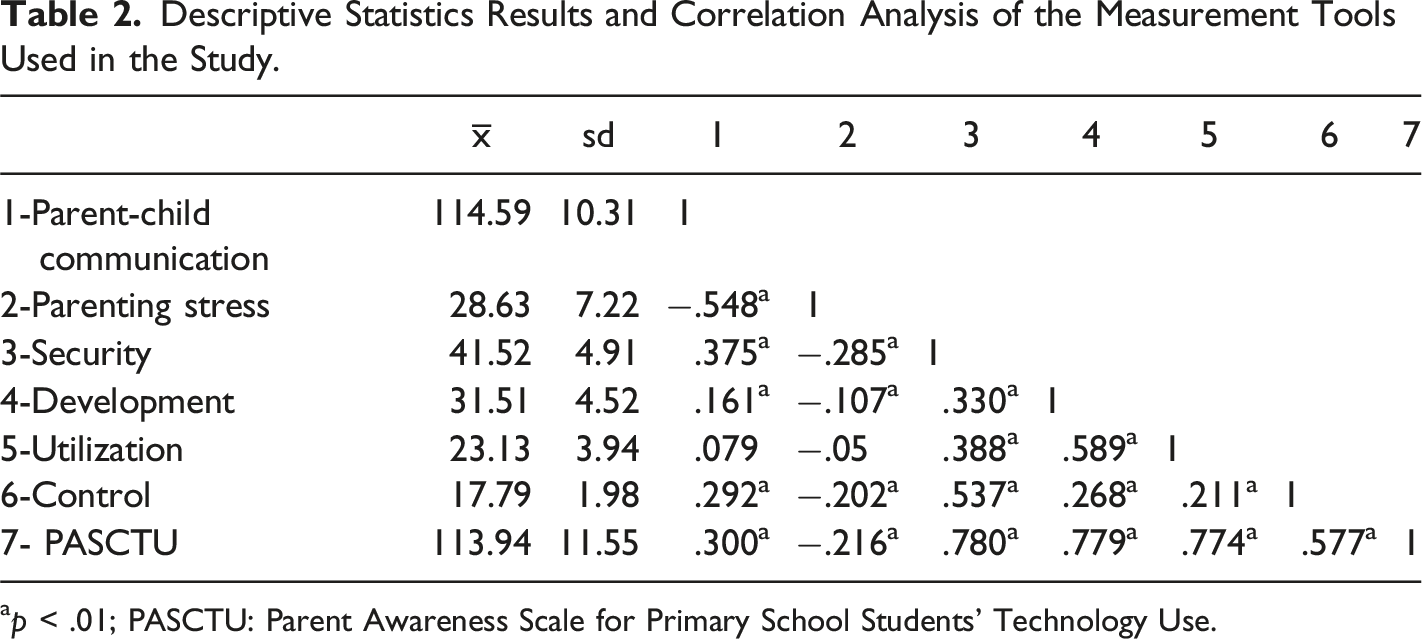
ap < .01; PASCTU: Parent Awareness Scale for Primary School Students’ Technology Use.
Figure 1 shows the model schematic for examining the mediating role of parent-child communication in the relationship between PASCTU scores and parenting stress. Mediation analyses were conducted using bootstrapping procedures with 5000 resamples to examine the indirect effects of parent awareness dimensions on parenting stress through parent-child communication. The results of the mediation analyses are presented in Table 3. Model of mediation analysis of parent-child communication in the relationship between PASCTU scores and parenting stress. *p < .01; PASCTU: Parent awareness scale for primary school students’ technology use. Regression Analysis Results Regarding the Mediating Role of Parent-Child Communication in the Relationship Between PASCTU Scores and Parenting Stress. ap < .01; P PASCTU: Parent Awareness Scale for Primary School Students’ Technology Use.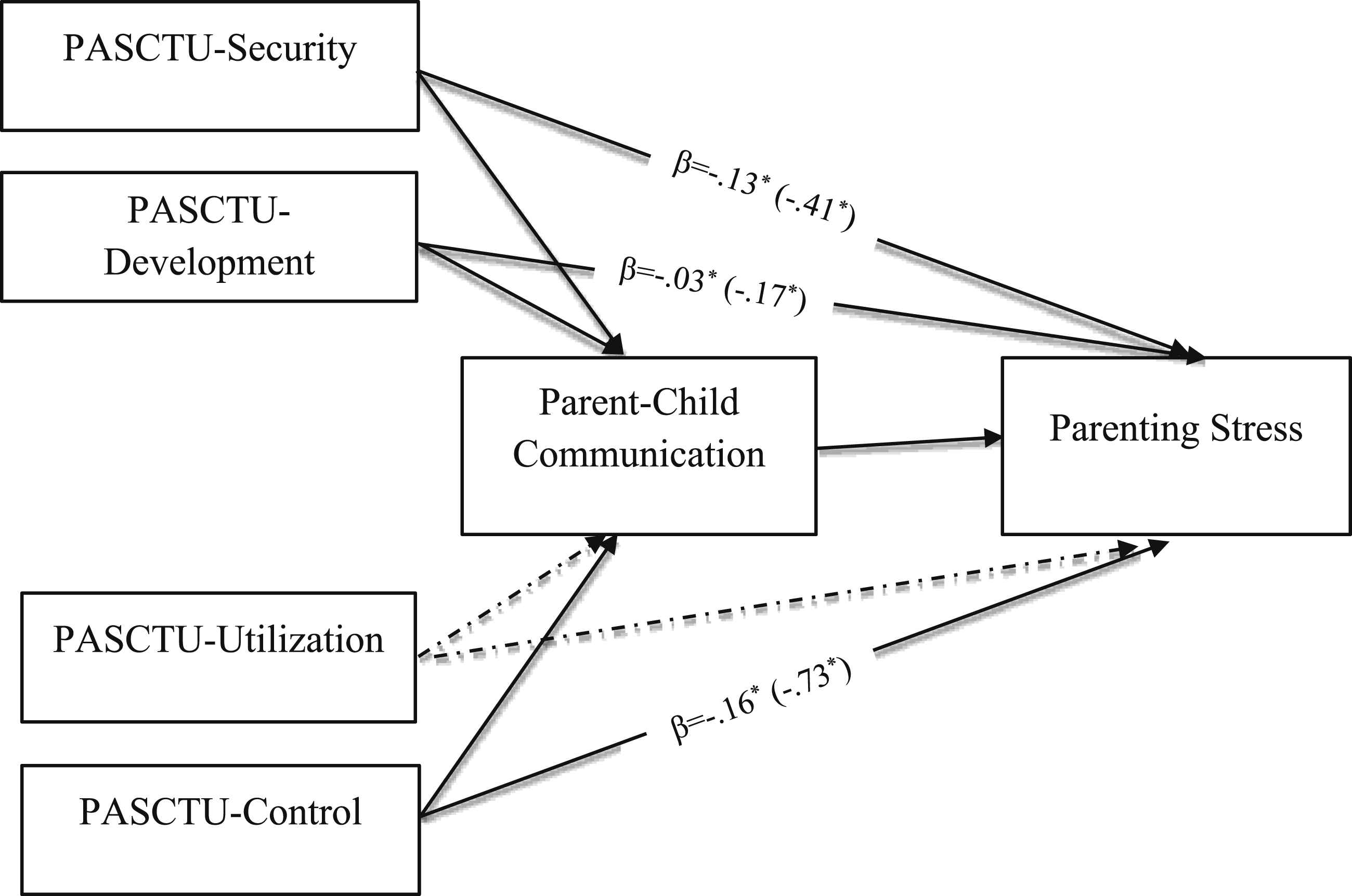
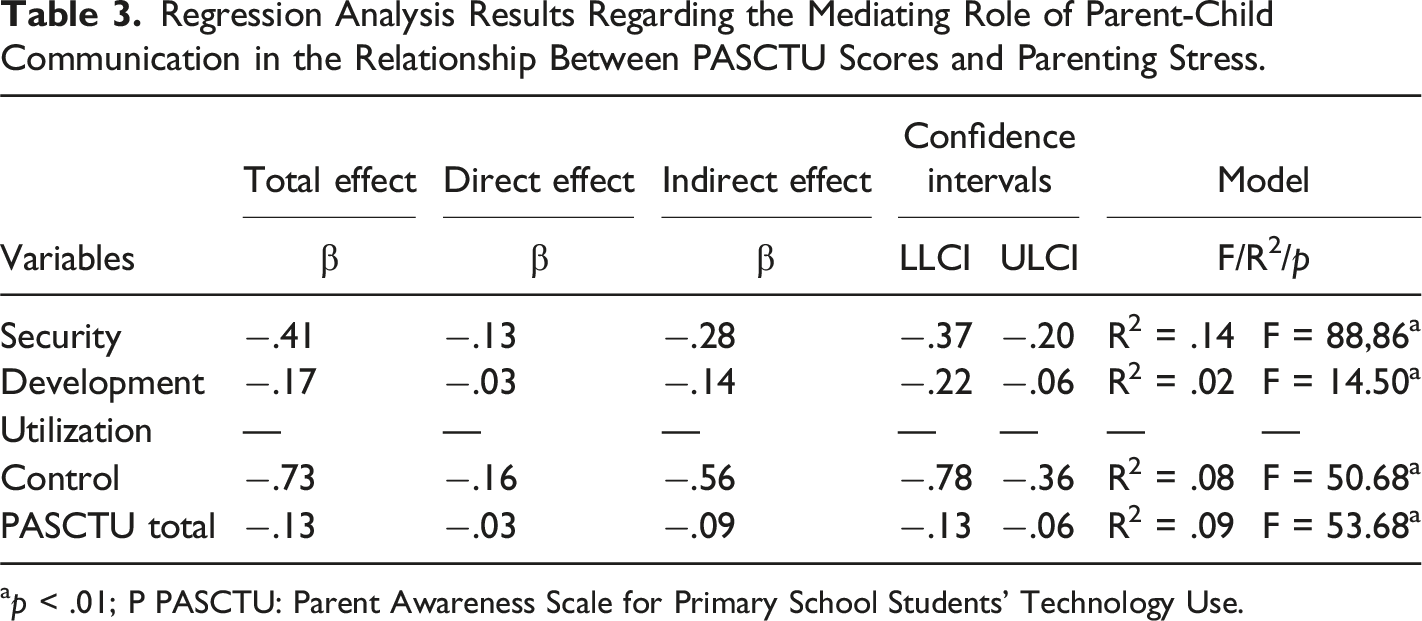
The mediation analysis revealed significant indirect effects for three of the four PASCTU dimensions. For the Security dimension, the total effect on parenting stress was significant (β = −.41, p < .01), with a direct effect of β = −.13 and an indirect effect through parent-child communication of β = −.28. The confidence interval for the indirect effect did not include zero (LLCI = −.37, ULCI = −.20), confirming significant mediation. This model explained 14% of the variance in parenting stress (R2 = .14, F = 88.86, p < .01). Similarly, the Development dimension showed a significant total effect (β = −.17, p < .01), with the indirect effect (β = −.14) being significant as evidenced by the confidence interval (LLCI = −.22, ULCI = −.06). The direct effect was non-significant (β = −.03), suggesting complete mediation through parent-child communication. The Control dimension demonstrated the strongest total effect (β = −.73, p < .01), with both direct (β = −.16) and indirect effects (β = −.56) contributing to the relationship. The indirect effect was significant (LLCI = −.78, ULCI = −.36), and the model explained 8% of variance in parenting stress. For the overall PASCTU Total score, partial mediation was observed with a total effect of β = −.13 (p < .01), direct effect of β = −.03, and significant indirect effect of β = −.09 (LLCI = −.13, ULCI = −.06). The Utilization dimension did not show significant effects in the mediation model, suggesting that parents’ use of technology to help their children does not relate to parenting stress through communication pathways.
Discussion
The aim of this research was to comprehend the complex relationships between parents’ awareness of their children’s technology use, parenting stress, and parent-child communication. This study specifically examined how parental communication mediates the association between parental awareness of their children’s technology use and parenting stress. The results revealed that parent-child communication mediated the effect of the security, development, and control subscales of the PASCTU on parenting stress, while parent-child communication did not mediate the effect of utilization on parenting stress.
A significant mediation of parent-child communication between parents’ awareness of their child’s consciousness in using safe technology and parenting stress suggests that when parents are more aware of their children’s safe technology use, coupled with effective parent-child communication, it can lead to reduced parenting stress. According to Parental Mediation Theory, parents employ various strategies to manage their children’s interactions with media and technology (Clark, 2011; Livingstone et al., 2017). The significant mediation effect observed in this study aligns well with the core principles of this theory. When parents are more aware of their children’s safe technology use, they are better equipped to implement effective mediation strategies (Shin & Li, 2017). Effective parent-child communication in this context can be seen as a manifestation of successful parental mediation. It suggests that parents are not only aware but also actively engaging with their children about technology use, likely employing a combination of mediation strategies. The reduction in parenting stress as a result of this process aligns with PMT’s proposition that effective mediation can lead to positive outcomes (Clark, 2011). In this case, the positive outcome is reduced stress, possibly due to parents feeling more in control and competent in managing their children’s technology use. Furthermore, effective communication allows parents to better understand and trust their children’s abilities to handle technology safely (Racz et al., 2017; Shin et al., 2021), reducing anxiety and stress connected with potential online threats (McDaniel & Radesky, 2018).
Similarly, there was mediation effect on the development subscale, and this indicates that when parents perceive that technology use contributes positively to their child’s development, and this perception is reinforced through open and constructive communication with their child (Archer et al., 2021; Şad et al., 2016), parenting stress can be decreased. The mediation effect can be interpreted through PMT. PMT recognizes that parents adjust their mediation strategies based on their children’s developmental stage (Beyens et al., 2018). The significant effect on the development subscale suggests that effective communication about technology use may be particularly beneficial in addressing parents’ concerns about their children’s growth and progress. This finding aligns well with the concept of active mediation in PMT. Parents who are aware of their children’s safe technology use may be more capable of engaging in developmentally appropriate discussions about digital media (Chassiakos et al., 2016). These conversations can help parents feel more confident in supporting their child’s development in the digital age (Heath et al., 2020). PMT suggests that parental mediation can serve as a form of scaffolding for children’s developing media skills (Scott, 2021). The mediation effect on the development subscale may indicate that when parents are aware and communicate effectively about technology, they feel more capable of guiding their child’s digital skill development, thus reducing stress related to this aspect of parenting (Toran et al., 2024). This finding highlights the importance of developmentally informed parental mediation strategies. It suggests that when parents are aware of their children’s safe technology use and communicate effectively about it, they may feel more confident in supporting their child’s development in the digital age (Çoklar & Şahin, 2014; Şad et al., 2016), thereby reducing stress specifically related to developmental concerns (Ponnet et al., 2013).
Parent-child communication also significantly mediated the relationship between parents’ awareness of their control over their children’s technology use and parenting stress. This finding implies that effective communication between parents and their children can help parents feel more in control of their children’s technology use (Hiniker et al., 2016; Symons et al., 2020), thereby reducing stress. PMT emphasizes different strategies parents use to manage children’s media use (Clark, 2011; Livingstone et al., 2017). The significant mediation effect of parent-child communication suggests that parents are effectively implementing these strategies, particularly active mediation, which involves discussions about technology use. PMT recognizes parental control as a key aspect of mediation (Clark, 2011; Shin & Li, 2017). This finding indicates that when parents are aware of their control over children’s technology use and communicate effectively about it, they experience reduced stress. This aligns with the concept of restrictive mediation in PMT, where parents set rules and boundaries. When parents communicate openly about rules, expectations, and the rationale behind them, it likely leads to better adherence and understanding by the children, thus reducing conflicts and stress related to control issues (Symons et al., 2020). This finding suggests that fostering open, effective dialogue about technology not only helps parents feel more in control but also reduces the stress associated with managing children’s digital experiences (Livingstone et al., 2017; McDaniel & Radesky, 2018).), aligning closely with the principles of PMT. This finding highlights the importance of technology-specific communication, a key aspect of modern parental mediation. It shows that when parents are aware of their control and communicate effectively about technology use, it can directly impact their stress levels. It is necessary to note that the conceptualization of parental control awareness in this study, as measured by the control subscale of the PASCTU, shares some conceptual overlap with the notion of restrictive mediation in PMT. While restrictive mediation typically refers to the actual implementation of rules and limits on children’s technology use (Nielsen et al., 2019), the control awareness subscale in this study measures parents' cognizance of their ability to exert such control (Doğan Temur et al., 2022).
Parent-child communication did not mediate the relationship between the utilization subscale of the PASCTU and parenting stress. The lack of mediation in this case could be because the utilization subscale focuses on how much technology is used by parents to aid their child (Doğan Temur et al., 2022), which may not directly involve or require active parent-child communication. The stress related to this aspect might be linked to parents’ personal attitudes or efficacy regarding technology use, rather than their interaction with their child about it. In addition, PMT suggests that different aspects of technology use may require different mediation strategies (Livingstone et al., 2017). The lack of mediation effect for the utilization subscale indicates that communication may not be as effective in mediating stress related to how children utilize technology.
Limitations
This study has several important limitations that should be acknowledged. First, a significant methodological limitation is our use of general parenting stress measures rather than stress specifically related to children’s technology use. The Parent Stress Scale (Özmen-Kaymak and Özmen, 2012) assesses overall parenting stress in daily parent-child relationships, which may not capture the unique stressors parents experience regarding their children’s technology use, such as concerns about screen time, online safety, or digital behavior management. This limitation makes it difficult to isolate technology-specific stressors and may have attenuated the relationships observed in our mediation model. Future research should develop or utilize measures that specifically assess technology-related parenting stress to provide more precise insights into this relationship.
Similarly, our communication measure presents another significant limitation. The Parent’s Communication with Child Scale (Kahraman, 2016) measures general parent-child communication rather than communication specifically about technology use. While general communication patterns may influence technology-related discussions, parents may communicate differently when addressing digital topics compared to other parenting issues. Technology-focused communication might involve unique challenges such as discussing online safety, negotiating screen time, or addressing cyberbullying concerns. The use of a general communication measure may not fully capture these technology-specific communication dynamics, potentially limiting our understanding of how parents and children communicate about digital issues and how this relates to parental stress.
Another limitation in this study is that the research problem was addressed within a parental mediation theory framework. This may limit the ability to frame the findings from a broader theoretical perspective, thus influencing their interpretation and generalizability. The profile of the sample also presents limitations. While efforts were made to ensure a representative sample, limitations in generalizability should be noted. The findings may not be fully applicable to parents in rural areas or other regions of Turkey, or to those with children outside the specified age range. Future research could benefit from a broader geographic scope and a larger sample size to enhance generalizability.
Additionally, this study did not consider any cultural or socioeconomic factors that might influence parent-child communication, technology use, or parental stress. Questions about children’s exact ages and their amount of technology use represent another limitation of this study. This data would allow for more nuanced analysis, such as examining how the relationships between variables might differ for parents of younger versus older children, or for children with varying levels of technology engagement.
Future research should address these limitations by developing technology-specific measures of both parenting stress and parent-child communication, incorporating broader demographic and cultural variables, and examining how these relationships vary across different child characteristics and technology use patterns.
Implications
Despite these limitations, this study has several valuable implications for future research and clinical practice. Future studies should incorporate these findings into other theoretical frameworks. This could include the employment of parental engagement theories, communication theories, and stress and coping frameworks. Different theoretical frameworks would allow for a more nuanced understanding of the dynamics of play.
Given that parent-child communication did not mediate the relationship between the utilization subscale of the PASCTU and parenting stress, future research could explore other potential mediators. This could involve parental technology skills, family relations, or children’s internet conduct. Future research may concentrate on investigating reciprocal relationships between variables through longitudinal designs and exploring more complex path models that incorporate additional relevant variables. Future research may also concentrate on experimentally examine the effect of trainings or programs for practitioners focused on improving parent-child communication in the setting of technology use, with the goal of lowering parental stress. Experimental studies could examine the effectiveness of interventions or training programs focused on enhancing parent-child communication about technology use. Such research could help determine whether improvements in communication lead to reduced parenting stress and increased parental awareness of children’s technology use.
The findings highlight several key areas for practical application:
Improving parent-child communication: Given the importance of parent-child communication as a mediator, practitioners should concentrate on improving communication skills within families. Family intervention programs should emphasize strategies for open, effective dialogue about technology use. This could include training parents on how to effectively talk about digital use, listening to their children’s opinions, and negotiating technological boundaries. Role-playing, active listening exercises, and conflict-resolution tactics can all be included in workshops or therapy sessions.
Enhancing parental awareness: Given that higher parental awareness of children’s technology use was associated with parental stress, practitioners could focus on educating parents about various aspects of children’s digital activities. This could involve workshops on current technology trends, online safety, and developmental impacts of technology use.
Tailored approaches: Practitioners should be aware of the different dimensions of parents’ awareness of their children’s technological use – security, development, and control – and how they relate to parenting stress. Training for practitioners may include updating digital trends and understanding the challenges and opportunities present in family dynamics. The findings on the differential effects across awareness domains suggest that interventions should be customized. For instance, parents struggling with security concerns might benefit from different communication strategies compared to those focused on developmental issues. Practitioners could examine the circumstances of each family member. Some families may require further assistance in areas such as Internet safety, whereas others may benefit from advice on how technology can enhance children’s growth or how to implement effective control mechanisms without jeopardizing the parent-child relationship.
Conclusions
In conclusion, this study contributes to a growing body of literature on the impact of technology on family relations by emphasizing the critical role of parent-child communication. By addressing the identified limitations and building on the implications outlined, future research can continue to unravel the complicated aspects of this important topic. For practitioners, the findings of this study provide a useful foundation for supporting families in an increasingly digital society. Understanding the impact of technology on family life is an important field of research as technology continues to improve.
Footnotes
Declaration of Conflicting Interests
The author declared no potential conflicts of interest with respect to the research, authorship, and/or publication of this article.
Funding
The author received no financial support for the research, authorship, and/or publication of this article.
Ethical statement

Data Availability Statement
Datasets analyzed during the current study are available from the corresponding author upon reasonable request.