







Abstract
More than half of American adolescents report being directly or indirectly exposed to violence each year. These exposures are associated with a higher likelihood of engaging in delinquent, or illegal, behaviors that confer significant personal and societal implications. The moderating influence of callous-unemotional (CU) traits and cognitive and affective empathy on the relation between indirect exposure to violence and adolescent delinquency was investigated to potentially determine those at highest risk of engaging in antisocial behaviors. This study collected data from 311 at-risk adolescents (231 males, 79 females, 1 preferring not to say) ages 16–19 (M = 17.55, SD = 0.65) attending a quasi-military residential program. Consistent with hypotheses, exposure to violence was associated with engaging in all types of delinquent acts when controlling for CU traits and empathy. When entered into a simultaneous regression, higher CU traits were uniquely related to higher levels of violent and property delinquency, and higher levels of cognitive empathy were uniquely related to higher levels of property and drug delinquency. The presence of CU traits strengthened the relation between exposure and violent delinquency; however, affective empathy decreased the strength of the relation. These findings demonstrate the potential relevance of the association between emotionality and violence perpetration among adolescents who are indirectly exposed to violence.
Introduction
Exposure to violence is characterized by both direct (e.g., physical harm, violent threats) and indirect (e.g., witnessing and/or hearing violence) experiences (Farrell & Zimmerman, 2018). Violence exposure is particularly high among children and adolescents, both within the family as well as at the community level (Pittman et al., 2022; Whitten et al., 2023). The National Survey of Children’s Exposure to Violence (NatSCEV; Finkelhor et al., 2015), a nationally representative, population-based study of U.S. children and adolescents, found that in a one-year period from 2013–2014, 37.3% of youth ages 0–17 experienced a physical assault, and 67.5% had at least one direct or indirect exposure to violence. A more recent study of adolescents in urban schools similarly demonstrated that 50% of participants reported being slapped, punched, or hit, and 80% reported witnessing someone else being slapped, punched, or hit in the three months preceding the study (Farrell et al., 2020). Youth exposure to violence is associated with a variety of negative outcomes, including aggression and delinquent behaviors (e.g., Chong et al., 2022), internalizing disorders potentially caused by psychobiological changes (e.g., depression, anxiety, dysregulation of the hypothalamic-pituitary-adrenal axis; Lambert et al., 2010; Miliauskas et al., 2022; Negriff et al., 2023; Pittman & Farrell, 2022), cognitive and brain structural differences (Butler et al., 2018), difficulties in peer relations (Farrell et al., 2022), and the development of posttraumatic stress disorder (PTSD; Margolin & Gordis, 2000).
Although the interrelation between violence exposure and negative outcomes is well-established, callous-unemotional (CU) traits may complicate this picture. Youth high in CU traits (i.e., lack of empathy, shallow or blunted emotions) are at an elevated risk of both having been exposed to violence in early life (Berluti et al., 2025; Docherty et al., 2023; Oberth et al., 2017), and experiencing later adverse behavioral outcomes (Vaughan et al., 2025), but research examining their interaction is scarce. However, one study (Oberth et al., 2017) found that witnessing violence, but not direct exposure to violence, mediated the relation between CU traits and adolescent delinquency. Thus, the focus of the present study was also on indirect exposure to violence insofar as it may relate to adolescents’ engagement in delinquency, particularly for those with high CU traits and/or low empathy. Based on this finding, to increase theoretical focus, and to be consistent with recommendations from a similar at-risk youth program, this study specifically focused on indirect exposure to violence.
CU traits were initially considered an affective component of psychopathy – along with poor impulse control and interpersonal deficits (Hare, 1996) – and have been studied independently as a personality construct in adolescents (Frick & Ray, 2015). CU traits involve a lack of guilt and empathy, as well as callous use of others for personal gain, differentiating a subgroup of antisocial youth at greater risk of severe and persistent offending (Frick & White, 2008), risky sexual behavior (Anderson et al., 2017), and adolescent substance use (Ray et al., 2016). Previous results have been mixed when investigating the relation between exposure to violence, CU traits, and delinquency. One study found that co-occurring psychopathic traits and violence exposure predicted greater violent crime and substance use in adolescence (Estrada et al., 2023), whereas another found that the relations between CU traits and both delinquent and aggressive behaviors were not moderated by violence exposure, although direct relations were observed (Joyner & Beaver, 2023). Additionally, exposure to violence mediated the relation between CU traits and both violent and drug, but not property, delinquency (Howard et al., 2012).
Further work is needed to clarify the relations between these variables and the conditions under which they are particularly apparent. The present study specifically examines how affective deficits (e.g., CU traits) and aspects of responsiveness to others (e.g., cognitive empathy, affective empathy) impact the relation between exposure to violence and multiple types of delinquency in at-risk adolescents. Prior research has established associations between exposure to violence and CU traits, but the conditions under which CU traits interact with violence exposure to shape delinquent outcomes remain less well understood. Although CU traits involve reduced positive emotionality and responsiveness, they also reflect a broader constellation of both affective and interpersonal features (e.g., remorselessness, shallow affect) that cannot be encompassed by the concept of empathy alone. On the other hand, empathy, especially when separated out into its cognitive and affective components, could vary meaningfully even among youth with high CU traits.
Previous research on the connections among exposure to violence, CU traits, and delinquency has not considered dimensions of empathy and specific types of delinquency concurrently. As such, examining CU traits and empathy among at-risk adolescents within the same model provides the novel opportunity to identify the separate and overlapping pathways through which emotional functioning may shape outcomes related to delinquency following violence exposure. This consideration is relevant to a practitioner perspective given the implications it could hold for managing and reducing delinquency given its potentially distinct etiological and maintenance pathways. Moreover, considering affective and cognitive empathy separately allows for a more fulsome understanding of CU’s moderating effect with the understanding that CU involves other characteristics besides empathy.
Empathy
Empathy is a heterogeneous construct that is thought to influence an individual’s moral development and describe their understanding of, and interactions with, others (Jolliffe & Farrington, 2006). Higher empathy in adolescence is associated with positive peer relationships (Portt et al., 2020) and social competence in adulthood (Allemand et al., 2015). Empathy also appears to differentiate between delinquent and non-delinquent adolescents, with non-delinquent adolescents displaying greater empathy (Robinson et al., 2007).
Empathy is often understood as having both cognitive (i.e., comprehending others’ emotions) and affective (i.e., experiencing others’ emotions) components (van Noorden et al., 2015). Affective empathy generally has a negative relation with aggression in adolescence (Lovett & Sheffield, 2007), such as lower rates of bullying perpetration (Zych & Llorent, 2019) and fewer instances of aggression and conduct problems (Kahhale et al., 2024). In comparison, a meta-analysis by Jolliffe and Farrington (2004) showed a stronger negative relation between delinquent behavior and cognitive, versus affective, empathy. Empathy has generally been considered protective against aggression for adolescents exposed to community violence (Palmeri Sams & Truscott, 2004). Thus, a consistent and robust association exists between responsiveness to the experiences of others and more prosocial, and less antisocial, behavior.
Adolescent Delinquency
Delinquent acts, or child or adolescent antisocial behaviors that are illegal, can be characterized by three subtypes: (1) violent, in which the object of their violence or threats are another person, (2) property, in which others’ belongings are destroyed or stolen, and (3) drug, which involves the use of illegal substances or prescription drug abuse (Elliott & Ageton, 1980). Delinquency trajectories can be heterogenous (i.e., increasing, desisting, chronic, nonproblem), but youth with higher levels of delinquency overall are at greater risk for a myriad of negative outcomes, including intimate partner violence, risky sexual behavior, and depression (Koshenova et al., 2025; Miller et al., 2010). Adolescents demonstrating conduct problems are more likely to have been exposed to violence in childhood, even after controlling for early childhood externalizing problems (Weaver et al., 2008). Early exposure to violence has been found to specifically predict later violent delinquent behaviors (Salzinger et al., 2007). However, the risk profile associated with early violence exposure is somewhat complicated by more recent findings. Farrell and Zimmerman (2018) found that exposure to violence predicted higher levels of violent, property, and drug-related delinquency, with the relation between exposure to violence and violent delinquency being the most stable over time. This finding speaks to the potentially long-lasting effect of such exposure.
Some evidence suggests that CU traits, and conversely, low empathy, could shape the trajectory an adolescent follows after having been exposed to violence, particularly with respect to the type and severity of subsequent delinquent acts. CU traits are reliably linked with externalizing behavior problems in adolescence, but their role in the aftermath of violence exposure has produced mixed findings. Violence itself can influence the development and expression of CU traits. Repeated or severe exposure is associated with emotional desensitization (i.e., diminished empathic responding) and moral disengagement (Boxer & Sloan-Power, 2013Boxer & Sloan‐Power, 2013; Thornberg et al., 2025), both of which are key features of callousness-unemotionality. Longitudinal work has shown that cumulative violence exposure predicts higher CU scores and greater aggression over time in diverse contexts, even outside of North America (e.g., Docherty et al., 2023), suggesting some cross-cultural relevance in relation to CU traits. However, other results implicate both in vivo and simulated violence in pathways from exposure to conduct problems and CU traits (Mrug et al., 2015). There is also evidence of a potential dose-response relationship; in this same study, young adults exposed to greater levels of violence had increased desensitization to future violence (Mrug et al., 2015), with both cognitive and affective empathy appearing to increase with low to moderate levels of exposure (possibly reflecting increased perspective-taking following hardship) before declining at higher levels of exposure (Mrug et al., 2015).
In other words, individual differences in empathy may shape how adolescents who have been exposed to violence respond to lived experiences of hardship, such that youth who also have a greater capacity to understand and share the distress of others may be less likely to engage in antisocial behavior. In contrast, among youth exposed to violence, those characterized by particularly low levels of affective empathy or elevated CU traits may be less responsive to others’ distress, which may then be associated with a higher likelihood of engaging in antisocial behavior. Finally, these observed relations are likely bidirectional. Youth who are exposed to violence and have low empathy or elevated CU traits may be prone to adopting aggressive behaviors following this exposure, creating a persistent feedback loop that enhances risk (e.g., Howard et al., 2012; Robertson et al., 2023). Together, this body of work suggests that violence exposure could be associated with a greater lack of empathy and a higher likelihood of perpetrating violence but also that youth who already demonstrate empathy deficits are more likely to act out violence once exposed to it.
Hypotheses
The purpose of the present study was to examine the influence of CU traits and cognitive and affective empathy on the relation between exposure to violence and adolescent delinquency to understand the presentations of those most at risk of engaging in antisocial behaviors. Overall, we expect that adolescents who self-report relatively high affective and cognitive empathy, despite being exposed to considerable violence, would also be less likely to perpetrate violence against others. Given the current ambiguity in this associative pathway, the present study considers exposure to violence and empathy as potentially unique and interacting pathways to delinquency in adolescence. To test these predictions, we had 3 primary hypotheses: (1) Consistent with previous evidence (e.g., Weaver et al., 2008), we hypothesized that greater exposure to violence would be associated with a history of violent, drug, and property delinquent acts. (2) We hypothesized that CU traits would account for unique variance in delinquency when covarying exposure to violence and empathy and that empathy would be inversely associated with delinquency when covarying CU traits and exposure to violence. (3) We hypothesized that CU traits and empathy would moderate the relation between exposure to violence and delinquency such that CU traits would strengthen the relation between delinquency and exposure to violence and that empathy would weaken the relation between delinquency and exposure to violence.
Method
Participants
The sample consisted of 311 adolescents ages 16–19 recruited from a 22-week quasi-military residential program in the northwestern United States. Participants were recruited from 3 consecutive cohorts of the program, representing an approximate 86% response rate based on typical program enrollment at the beginning of the cycle, across approximately 1 year. Adolescents enrolled in the program have dropped out of school or are at risk of dropping out and are referred to the program for a variety of reasons: as part of juvenile justice system involvement, as an option for obtaining a GED after dropping out of school, and/or to improve behavioral and social functioning. Adolescents from similar settings have been a focus of research on CU traits and delinquency (e.g., Ansel et al., 2015; Barry et al., 2007). The setting also provides the unique opportunity to consider risk factors for delinquency among a group that is elevated on externalizing behaviors relative to a community sample but lower on such behaviors than a detained sample (Marsee et al., 2011), positioning them at a pivotal, formative point before deeper justice system involvement. Most participants (74.3%) identified as male, 25.4% as female, and 0.3% preferring not to say. Regarding race/ethnicity, 57% identified as White (n = 177), 13% as Hispanic (n = 40), 6.8% as Multiracial (n = 21), 5.8% as American Indian or Alaska Native (n = 18), 1.0% as Asian (n = 3), 0.6% as Black or African American (n = 2), 0.6% as Native Hawaiian or Other Pacific Islander (n = 2), and 3.9% as Other (n = 12).
Procedure
After approval from the Institutional Review Board (IRB) at the authors’ institution, the director of the residential program provided informed consent for all youth attending the program to be invited to participate. A senior member of the research team provided an overview of the study in a classroom setting to each “flight” (group of adolescents living and attending activities together). Each youth then had the option of whether to participate and provided written consent or assent, depending on their age at the time of data collection. Participation in the study was voluntary and in no way affected the services received through the residential program. Additionally, no staff were present during solicitation or consent/assent to increase youth comfort and autonomy. All instruments were administered online using Qualtrics in a classroom setting with a researcher present to answer any participant questions. Due to logistical limitations, surveys were all administered on the same day, with no secondary option to participate if sick or unavailable during the initial data collection.
Measures
Things I Have Seen and Heard (Richters & Martinez, 1990)
This measure is a widely used youth self-report measure of exposure to violent events. The version used in the present study consists of five items with responses made on a four-point scale from 1 never to 4 many times. Specifically, the items were: “I have seen somebody get stabbed,” “I have seen somebody get shot,” “I have seen gangs in my neighborhood,” “I have seen somebody pull a gun on another person,” and “I have seen someone in my home get shot or stabbed.” Scores represent the sum of ratings across the file items and had acceptable internal consistency (α = .78) in the present study.
Self-Report of Delinquency (SRD; Elliott & Ageton, 1980)
The SRD is a 32-item self-report measure of illegal offenses. Two status offense items (i.e., hitchhiking, sexual activity) were excluded from the present study because of the expected very low base rate of the former and to reduce potential participant discomfort in the case of the latter item. Participants responded in a yes/no format to each item. Violent (9 items; e.g., “Have you ever attacked someone with the idea of seriously hurting or killing him or her?”), property (11 items; e.g., “Have you ever purposely damaged or destroyed property belonging to your parents or other family members?”), and drug (10 items; e.g., “Have you ever taken a prescription drug without a doctor’s prescription?”) offenses were considered in this study. Scores on this scale represented the total number of acts in which participants reported having engaged. The property (α = .81) and drug (α = .88) subscales had good internal consistency in our sample; however, the violent subscale had questionable internal consistency (α = .66), potentially due to the wide range of behaviors included in this subscale (e.g., gang involvement, direct violence, use of force to obtain money or other objects) and consistent with other studies (e.g., Kimonis et al., 2008).
Inventory of Callous-Unemotional Traits – Youth Self-Report (ICU; Frick, 2004)
The ICU is a self-report measure consisting of 24 items that form three subscales: Uncaring (e.g., ‘I feel bad or guilty when I do something wrong’ - Reverse scored), Callousness (e.g., ‘I do not care who I hurt to get what I want’), and Unemotional (e.g., ‘I hide my feelings from others. Responses are made on a four-point scale from 0 not at all true to 3 definitely true, reverse-scored items are recoded (i.e., 0 = 3, 1 = 2, 2 = 1, 3 = 0), then scores are summed to create a total score for CU traits. The total ICU was used in this study to represent a comprehensive measure of CU traits that has been validated in adolescent samples and previously shown relations with self-reported delinquency (Kimonis et al., 2008). The ICU has shown good reliability and validity in adolescent populations (Essau et al., 2006) and had good internal consistency in the present study (α = .80).
Basic Empathy Scale (BES; Jolliffe & Farrington, 2006)
The BES is a self-report measure consisting of 20 items measuring Cognitive (e.g., ‘When someone is feeling ‘down’ I can usually understand how they feel;’ 9 items) and Affective (e.g., ‘I get caught up in other people’s feelings easily;’ 11 items) empathy. Responses are made on a five-point scale from 1 strongly disagree to 5 strongly agree. Reverse-worded items were recoded (i.e., 1 = 5, 2 = 4, 3 = 3, 4 = 2, 5 = 1), and the item ratings were summed to create scores on cognitive empathy and affective empathy. Reliability and validity have been supported in community (Jolliffe & Farrington, 2006) and inpatient (McLaren et al., 2019) adolescent populations. In the present study, scores on the Cognitive (α = .76) and Affective (α = .80) subscales of the BES had acceptable internal consistency.
Analytic Plan
Descriptive Statistics
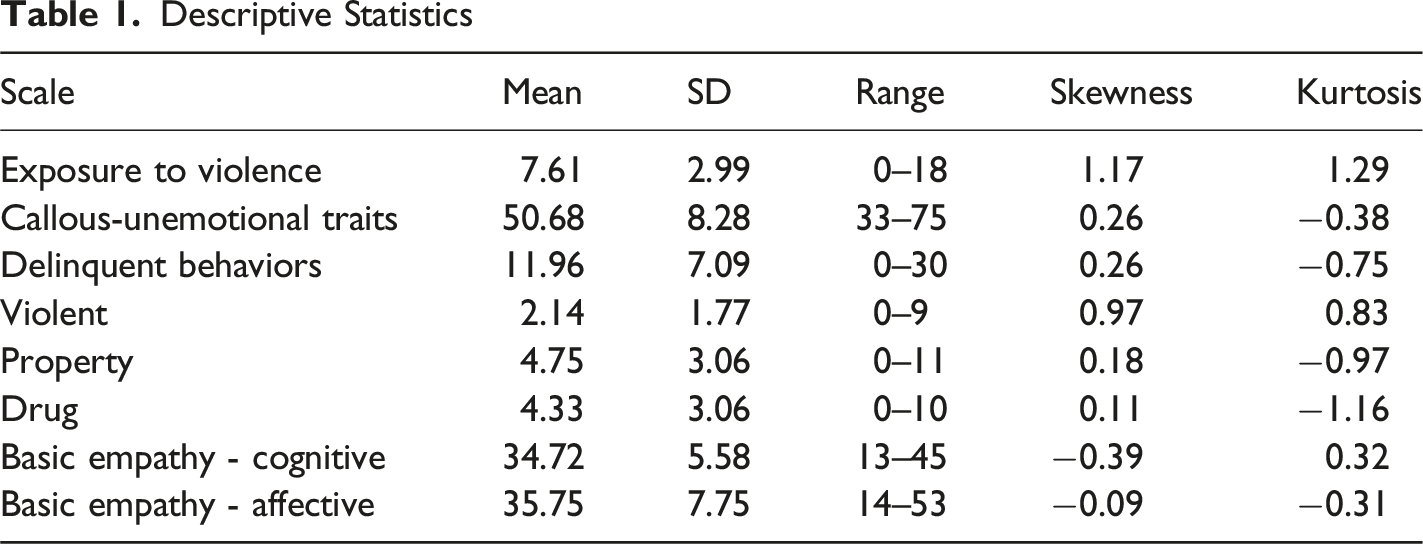
Results
Direct Relation of Exposure to Violence with Delinquency
Bivariate Correlations
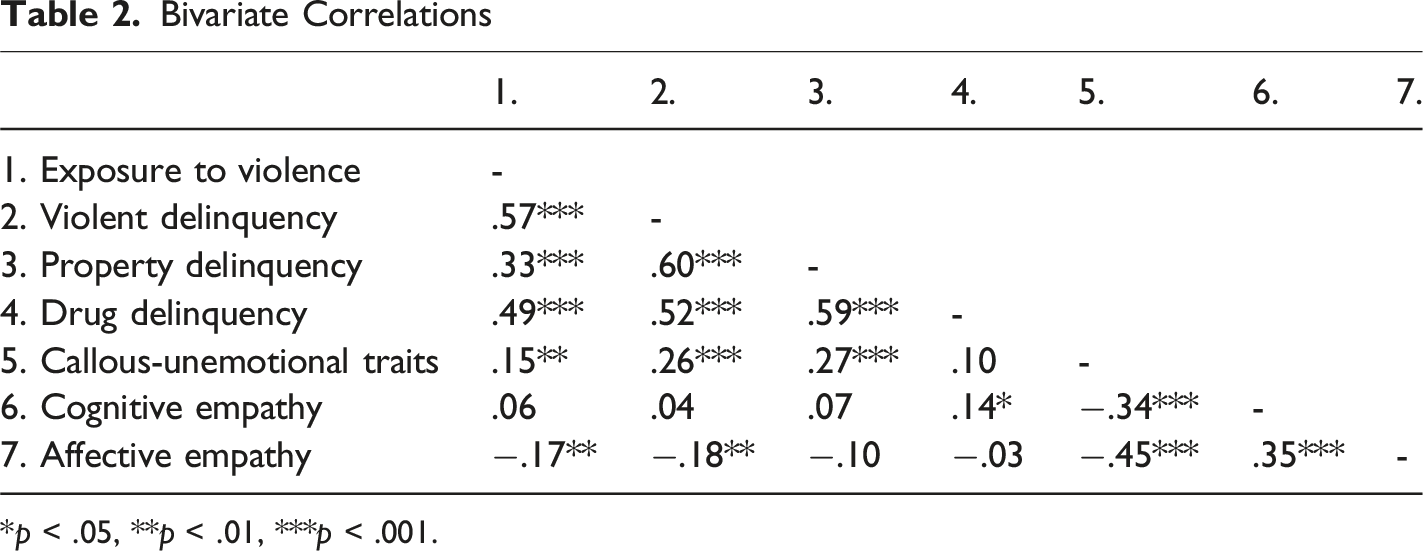
*p < .05, **p < .01, ***p < .001.
Variables Predicting Unique Variance in Delinquent Acts
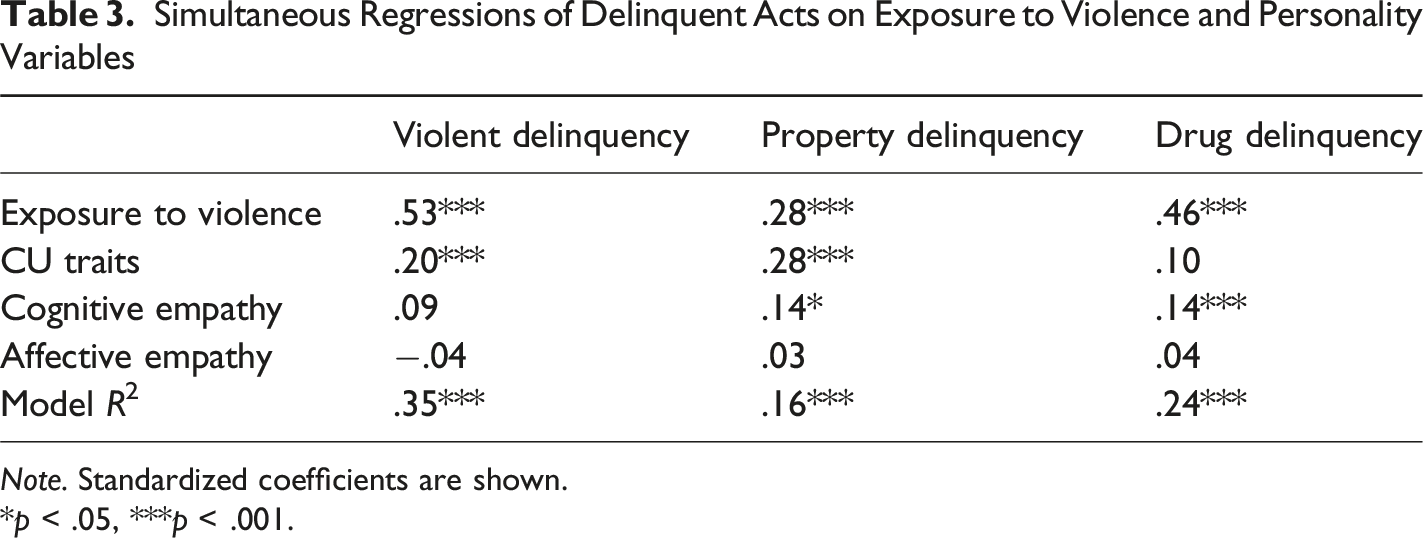
was partially supported. Higher levels of exposure to violence were associated with higher levels of each form of delinquency when controlling for CU traits and empathy (Table 3). When controlling for exposure to violence and empathy, higher CU traits were associated with higher levels of violent and property delinquency. Additionally, when controlling for exposure to violence, CU traits, and affective empathy, higher cognitive empathy was associated with higher levels of property and drug delinquency. There were no associations between affective empathy and any type of delinquency when controlling for exposure to violence, CU traits, and cognitive empathy.
Simultaneous Regressions of Delinquent Acts on Exposure to Violence and Personality Variables
Note. Standardized coefficients are shown.
*p < .05, ***p < .001.
Moderation Analyses
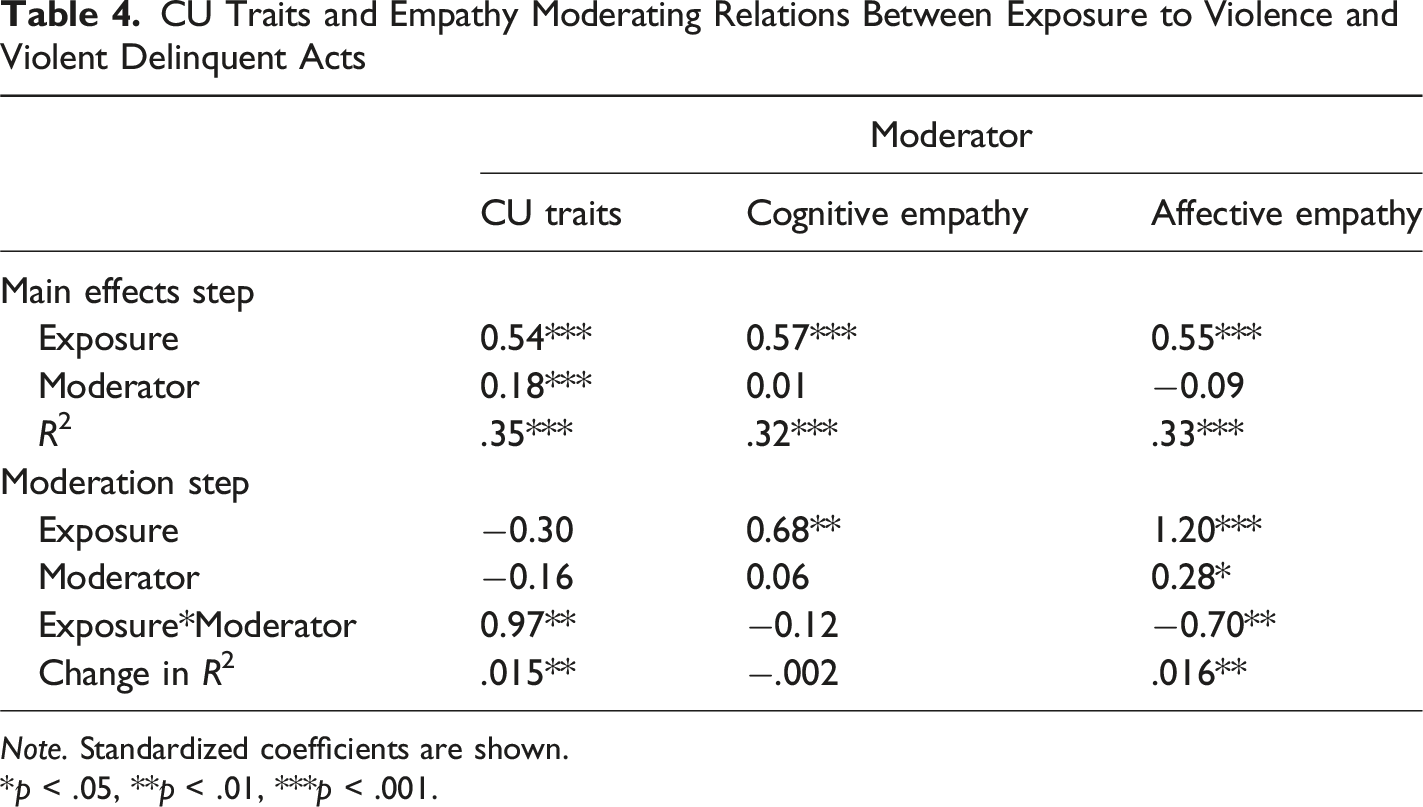
CU Traits and Empathy Moderating Relations Between Exposure to Violence and Violent Delinquent Acts
Note. Standardized coefficients are shown.
*p < .05, **p < .01, ***p < .001.
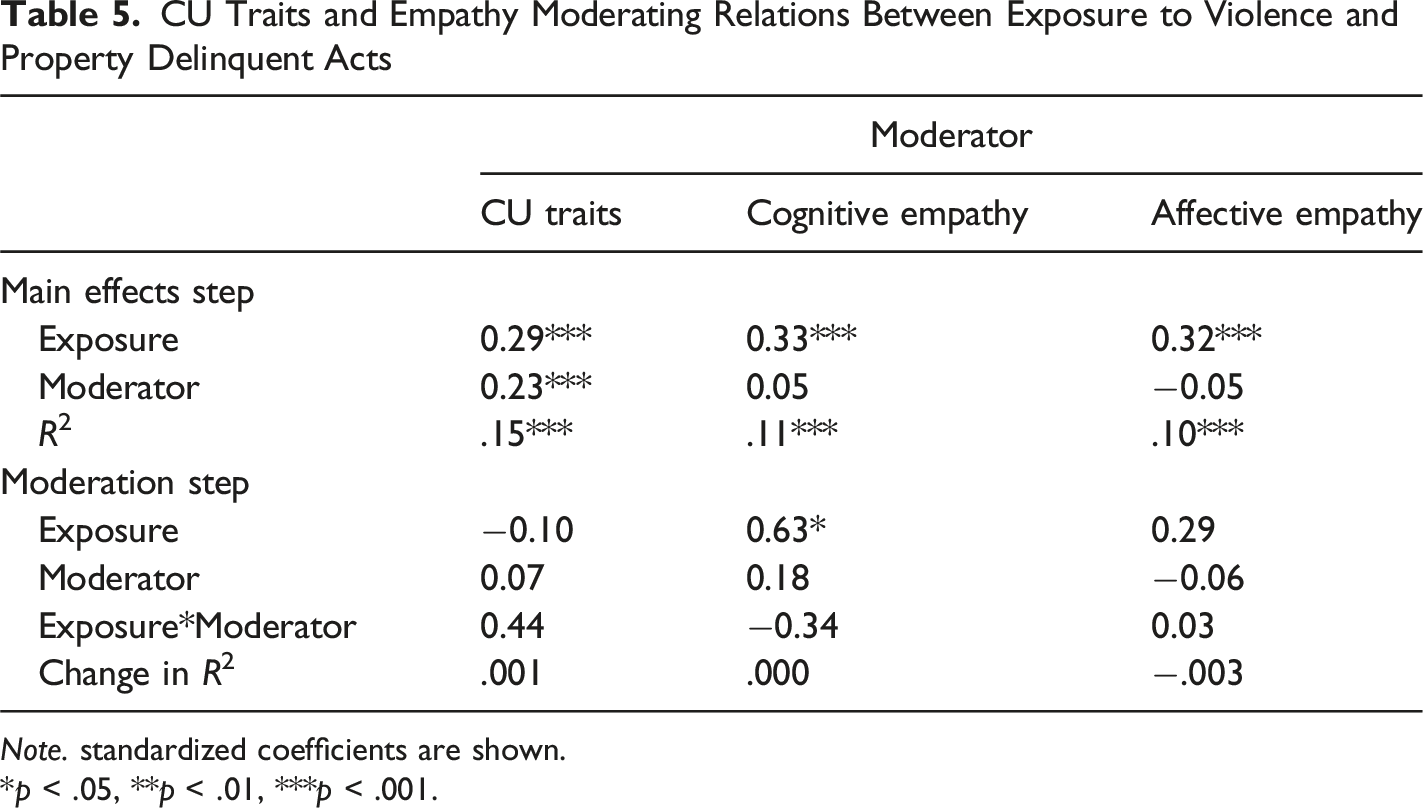
CU Traits and Empathy Moderating Relations Between Exposure to Violence and Property Delinquent Acts
Note. standardized coefficients are shown.
*p < .05, **p < .01, ***p < .001.
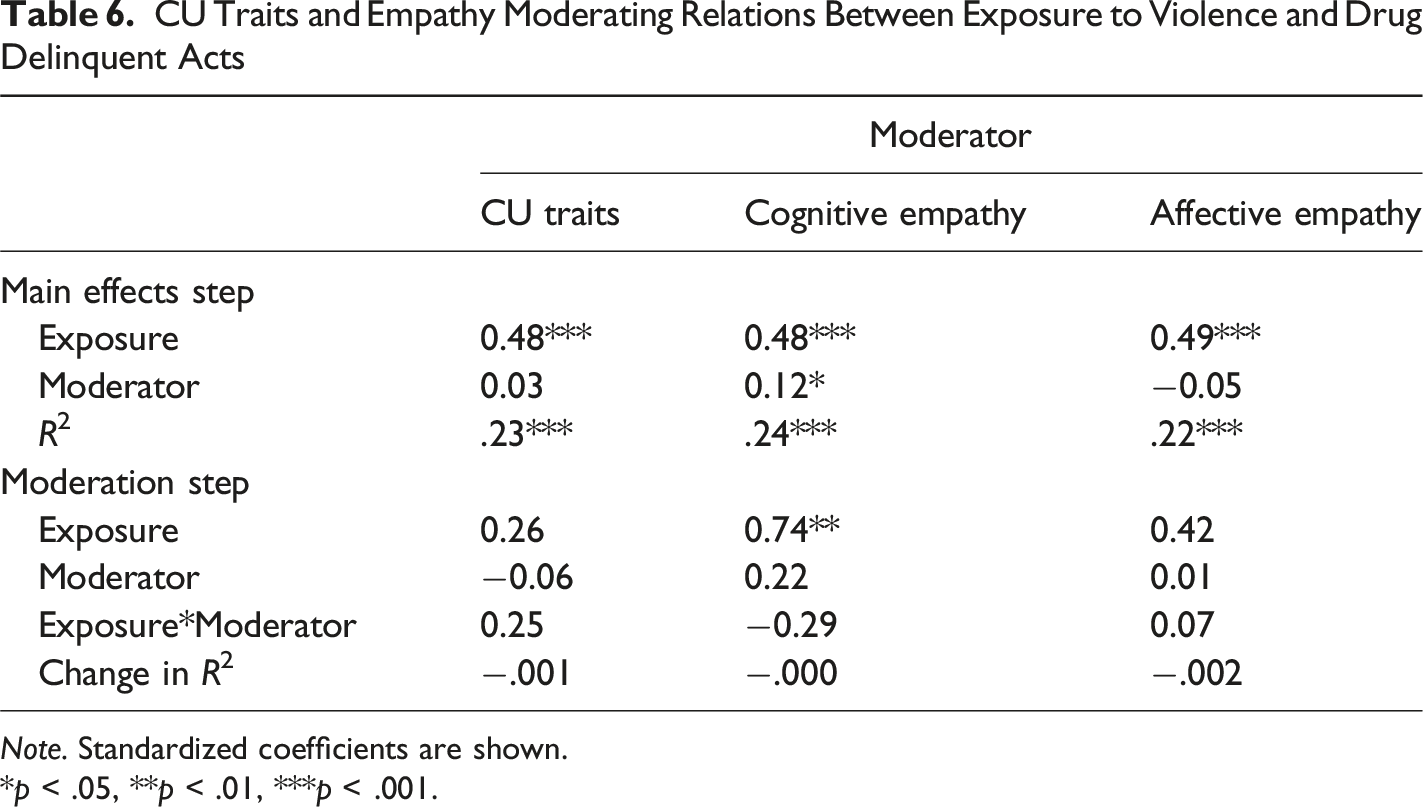
CU Traits and Empathy Moderating Relations Between Exposure to Violence and Drug Delinquent Acts
Note. Standardized coefficients are shown.
*p < .05, **p < .01, ***p < .001.
was also partially supported. Both CU traits and affective empathy, but not cognitive empathy, moderated the relation between exposure to violence and violent delinquent acts (Table 4). Specifically, higher CU traits strengthened the relation between exposure to violence (Figure 1) and violent delinquent acts. Simple slopes for violent delinquent acts regressed onto exposure to violence were significantly different from zero at both high, β = 0.67, p < .001, and low, β = 0.40, p < .001, levels of CU traits. A Johnson-Neyman test revealed that the relation between exposure to violence and violent delinquent acts was significant for all observed values for CU traits. In addition, higher affective empathy attenuated this relation (Figure 2), consistent with our hypothesis. Simple slopes for violent delinquent acts regressed onto exposure to violence were significantly different from zero at both high, β = 0.40, p < .001, and low, β = 0.69, p < .001, levels of affective empathy. A Johnson-Neyman test demonstrated that the relation between exposure to violence and violent delinquency was significant when affective empathy was less than 51.87 (range of observed values was 14–53). There were no significant moderations between exposure to violence and personality when predicting either property or drug delinquency in our sample (Tables 5 and 6).
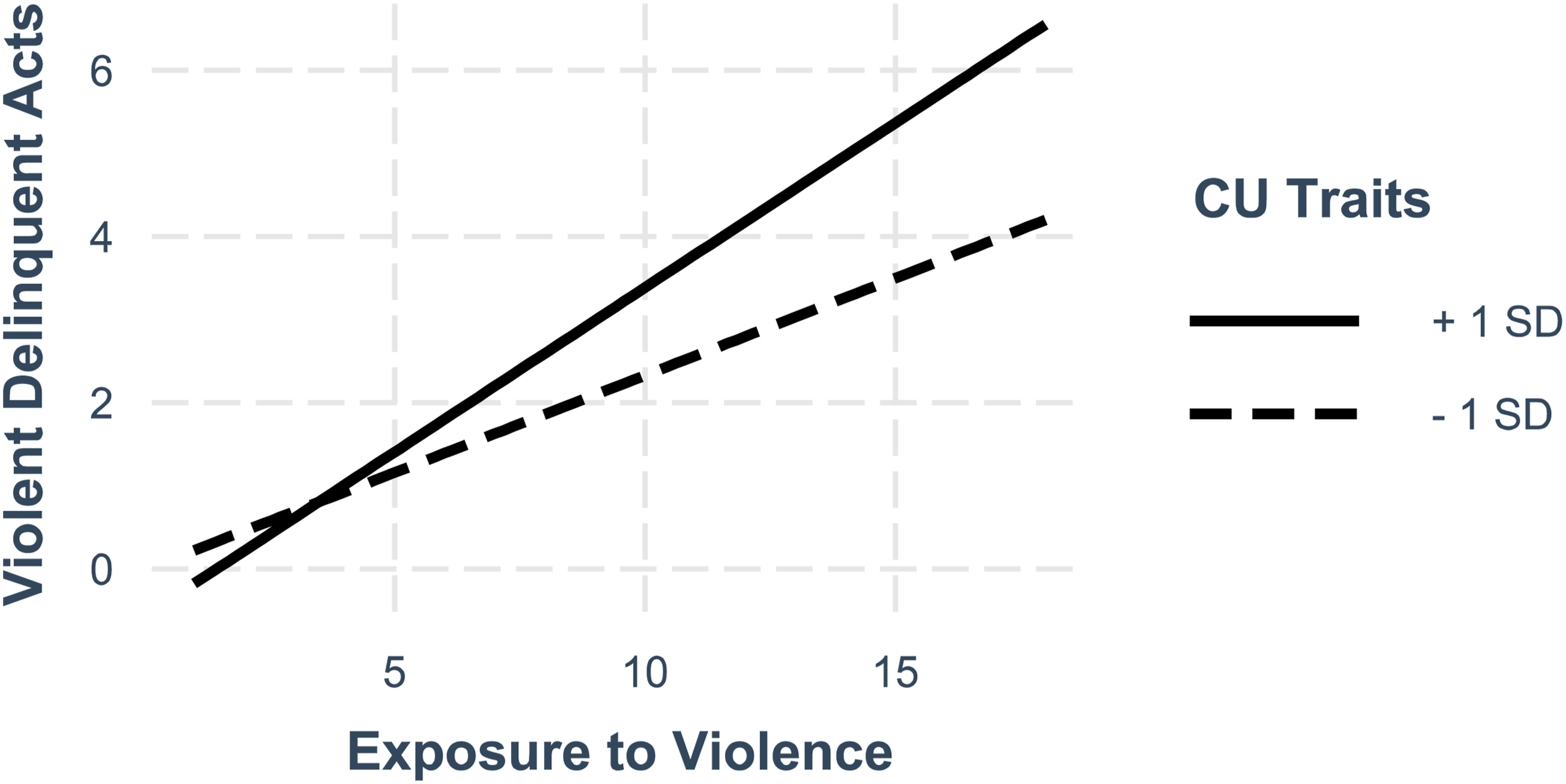
CU traits moderating the relation between exposure to violence and violent delinquent acts
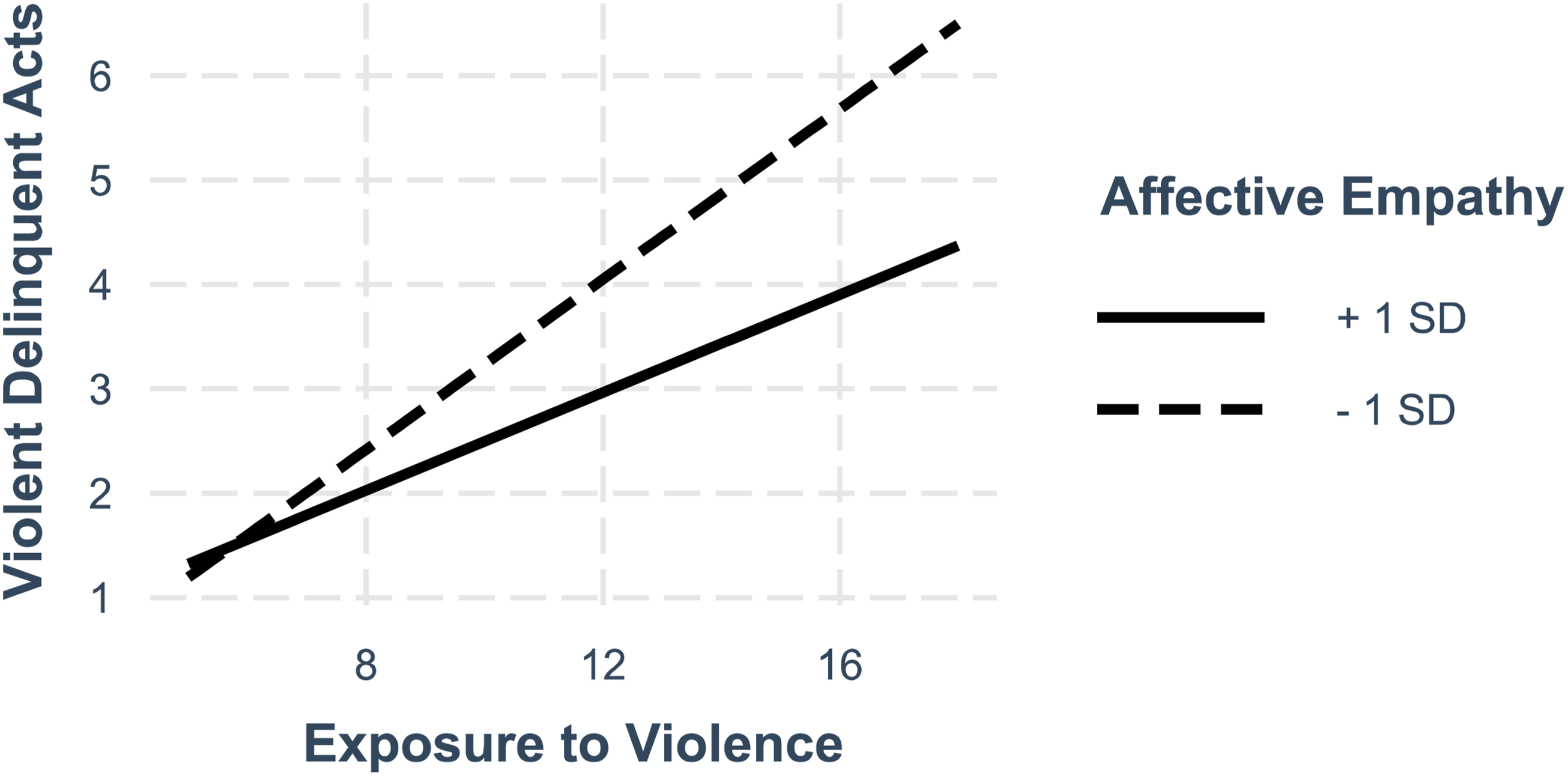
Affective empathy moderating the relation between exposure to violence and violent delinquent acts
Discussion
The purpose of this study was to examine how exposure to violence, CU traits, and empathy (both affective and cognitive), relate to adolescent delinquency. Although prior research has shown that exposure to violence is associated with delinquent outcomes and that CU traits and empathy are separately associated with problem behaviors, these associations have rarely been examined together in the same sample with particular attention to subtypes of delinquency. Consistent with prior findings (e.g., Weaver et al., 2008), higher levels of exposure to violence were associated with higher adolescent engagement in violent, property, and drug offenses in our sample. CU traits were associated with violent and property delinquent acts when controlling for exposure to violence, which was inconsistent with prior research that showed relations with violent and drug, but not property, delinquency (Estrada et al., 2023; Howard et al., 2012). This pattern suggests that the relation between CU traits and violent delinquency may be more consistent across samples, whereas the relation between CU traits and drug and property delinquency may be more context-specific and depend on variables not considered in these studies. Higher levels of cognitive empathy were associated with higher levels of property and drug delinquent acts, which was inconsistent with prior work that showed a negative relation between cognitive empathy and delinquent behavior (Jolliffe & Farrington, 2004). This positive relation might be due to at-risk adolescents being more likely to recognize positive peer implications of engaging in socially normalized non-violent delinquent acts and therefore engage in these acts to raise their social standing. However, this possibility remains speculative, as we did not distinguish between solitary and social delinquency in the present study.
Both CU traits and affective empathy moderated the relation between exposure to violence and violent delinquent acts, which might demonstrate the significant impact that emotional understanding has on how an adolescent interprets violence. Consistent with previous work (Palmeri Sams & Truscott, 2004), adolescents who are better able to identify with the emotions of others and have been exposed to comparatively high levels of violence seem to be less willing to perpetuate their own negative experiences, although adolescents with limited emotional capacity seem to be more likely to use violence after having been exposed to it, potentially in a goal-directed way (Frick & White, 2008). It is unclear whether interventions designed to increase empathic capacity may decrease future violent behavior in adolescents exposed to high levels of violence or whether capacity for empathy primarily decreases negative implications of future versus past violence exposure.
These findings have meaningful implications for policy and practice in programs serving at-risk youth. This work adds to the consistent associations found between exposure to violence and perpetration of delinquent acts (e.g., Bolland & Bolland, 2020) and expands on the roles of CU traits and empathy, suggesting that a more thorough consideration of youths’ histories of trauma and victimization, in addition to screening for criminality and current level of risk, may be warranted. More specifically, youth who report higher levels of affective empathy may be considered lower risk for engaging in violent behaviors, which could allow resources to be more effectively allocated to higher risk adolescents. Additionally, a recent meta-analysis (Heynen et al., 2025) found that there has been limited prior work on interventions to increase empathy in adolescents engaging in delinquent behavior. Our findings support an increased focus on developing these interventions to investigate whether they can decrease the probability of youth high in CU traits who were previously exposed to violence engaging in violent behaviors.
This study was not without limitations. Although constructs like CU traits and empathy can be effectively measured via self-report, behavioral variables such as delinquent acts or exposure to violence could have benefitted from additional informants or reviewing records of past behavior and experiences if they had been available. Self-report variables are additionally vulnerable to recall bias, so results reflect the psychological impact that remembering prior exposure to violence has on future behavior rather than the impact of specific, documented exposures to violence or direct victimization. These data were also all collected at a single timepoint, so although personality variables were described as the moderator in this study due to there being more well-developed literature describing the relation between exposure to violence and delinquency, longitudinal studies are needed to better understand the developmental trajectory of these variables and their interactions. Additionally, this study focused on an at-risk adolescent sample in the United States that provided a unique context in which to consider the research questions and adequate variability on the variables of interest; however, results may not generalize to either community or formally incarcerated adolescents or to adolescents in other countries. Future work would benefit from continuing to explore how affective traits, such as empathy, interact with violence exposure to perpetuate or attenuate violence in adolescence and exploring whether these relations are consistent for direct exposures to violence. Finally, both the cross-sectional design of the study and lifetime reporting limited our ability to assess temporal precedence.
In sum, the results of this study support previous work demonstrating the relation between exposure to violence, CU traits, and affective and cognitive empathy, and delinquency in adolescence. It extends prior work by more thoroughly considering the interaction of exposure to violence and CU traits in understanding delinquent behaviors and demonstrates the importance of empathy in identifying whether an adolescent exposed to violence will perpetuate that violence. Continued attention to how early life violence exposure and risk/resilience-associated traits intersect is crucial to the development of prevention and intervention strategies that disrupt cycles of violence and support more positive long-term trajectories to desistance.
Footnotes

Ethical Considerations
The study protocol was approved by the authors’ Institutional Review Board and all participation was voluntary.
Consent to Participate
Written informed consent was obtained from the guardian ad litem and written assent was obtained from all individual participants prior to participating in the study.
Funding
The authors received no financial support for the research, authorship, and/or publication of this article.
Declaration of Conflicting Interests
The authors declared no potential conflicts of interest with respect to the research, authorship, and/or publication of this article.
Data Availability Statement
Data and associated materials/code are available via request from the corresponding author.