







Abstract
The integration of Sports Programs (SP) into educational curricula is gaining attention for its potential to boost academic achievement and foster essential life skills. This study investigates how sports-based learning influences students’ performance, discipline, and social development. The study is an effort to evaluate the relationship between participation in inclusive sports programs and better performance in school, self-discipline, social competencies, resilience, time management, and sense of belonging in students. A mixed-method was employed in the study to merge quantitative responses of a structured-based questionnaire design to a sample size of 563 students with qualitative results of semi-structured interviews conducted with a sample of 50 students. Statistical Package of Social Sciences (SPSS) analyzed the quantitative data, and NVivo analyzed the qualitative data in the form of thematically. The result illustrated the positive connection between sports programs and higher academic performance, improved self-discipline, better social skills, and increased resilience. The students involved in sports showed better time management and felt more tuned to their school environment. The novelty of the study demonstrates how sport and education make an imprint on the life of a person in terms of academic progress and personal growth. This is going to build a stronger base with respect to the effects of integrating sports into education on the holistic development of students. The findings show that the inclusion of sports in the school curriculum emerges as a viable strategy for improving students’ academic performance, discipline enforcement, and collaborative spirit, thus contributing toward a positive school climate.
Keywords
Introduction
Sports Programs (SP) are significant components of academic curricula that enhance Learning Outcomes (LO), discipline, and teamwork skills among the students (Shan, 2025). Combining exercise with learning purposes, schools allow wholesome growth, not just physical well-being, but mental acuity and social skills (Huang, 2024). Sports also promote such values as persistence and collaboration that can be needed in personal development and career advancement. Additionally, they also provide an active source of the practical implementation of theoretical knowledge, which strengthens classroom lessons with the use of experience (Kang et al., 2024). Therefore, the inclusion of sports in education improves the learning experience of the students as they become well-rounded individuals better prepared to face any challenge in the future (Braunstein-Minkove et al., 2023). The research will focus on enhancing the skills of students in learning curricula based on the IS programs: the LO, discipline, and teamwork skills.
The Role of Sports in Educational Settings
Sports play an important role in educational settings and benefit students in various ways. Although there is no direct proof of associating sports with improved academic performance, sports improve intellectual functions such as attention, concentration, and focus. The social, economic, and political development of a nation is greatly influenced by the higher education system within that country, including how it impacts the professional career of an individual student and how it inspires or stimulates the creation of new businesses through entrepreneurship (da Costa & Miragaia, 2024). Physically active students have better marks, attendance, and good classroom behavior (Opstoel et al., 2020). Sports teach life lessons to students, such as success, failure, and overcoming problems. Sports teach life skills to students, such as leadership, teamwork, responsibility, and tolerance. Students learn about goal setting, time management, discipline, and tenacity (Jiang & Attan, 2024). The role of sports in educational settings goes beyond physical well-being. The schools encourage the students to go to the sports competition, and they give practice to the students. Some schools give equal importance to sports as well as students’ studies (Bang et al., 2020). According to the PEP program, academic performance and study habits are taken into consideration as the mutual impact of scholastic achievements and the learned behaviors is recognized (Wang et al., 2024).
Enhancing Academic Performance Through Physical Activity
As an effective tool of health promotion, physical exercise has a significant influence on the physical and mental well-being of college students (Peng et al., 2025). Physical activity indeed helps to improve the academic performance of students. It improves blood flow to the brain and memory, and helps students’ knowledge, so the students have good academic performance. It helps the students to be active, which leads to increased academic performance of students (Manzano-León et al., 2021). Yoga classes focus on the improvement of personal physical capabilities and usually engage in repetitive exercise of poses, which does not fit the students in a sports context (Campoamor-Olegario et al., 2025). Regular physical activity not only benefits students’ health but also has a positive impact on their academic performance. The students join the physical activities in their schools, such as dancing, exercise, and sports, which helps to increase students’ academic performance (Milambo & Pacho, 2021). Physical activity helps the students in the class to attend the class actively and observe the lesson that the teacher teaches. Furthermore, students do their work properly when they are active, which increases their academic performance of students. The students participate in physical activity programs in school that assist in improving their academic performance (Rahman et al., 2021).
Developing Discipline and Self-Regulation Through Sports in Students
The self-regulation of students can be explained as the capacity of students to control their attention, emotions, and behaviour in order to react in the best way to the external and internal requirements of their environment (Calderon-Villarreal et al., 2025). Sports play an important role in developing discipline and self-control among students. It develops personal and social skills so the students maintain discipline and self-discipline. Sports-based programs help to develop self-regulation and discipline in students (Lee et al., 2021). Participation in structured sports activities provides students with opportunities to assess their own strengths and weaknesses, enriching their discipline and self-regulation. Self-regulation is also closely associated with physical education and is a vital part of personal development among high school students (Kermarrec et al., 2022). It helps students attend other schools for competitions, and they maintain discipline and self-discipline. If the students are self-disciplined and disciplined, it leads to self-respect in the community, so sports are helpful for discipline (Kelland, 2024). Mindfulness is a state of consciousness, which is attained through concentration on the current moment and perception of feelings, thoughts, and body sensations without judgment and assessment (Rogowska & Tataruch, 2024). The students understand self-regulation and discipline through sports. It helps to manage their problems with quiet discipline. It teaches students to keep discipline with higher authorities and older people. Furthermore, it helps students not be angry in tough situations with others, remain silent, and be disciplined (Inzlicht et al., 2021).
Research Objectives
RO1: To explore the students’ LO, discipline, and teamwork skills by integrating SP into educational curricula. RO2: To determine students’ social skills, peer cooperation, and effective communication through the IS, and to assess their academic performance in a range of subjects through sports. RO3: To examine the resilience and adaptability of the students using the IS and increase their time management skills and connections to school using the IS.
Research Contribution and Novelty
The study is advantageous as it gives a systematic investigation of the multidimensional effects of including SP in the educational curricula on academic performance, discipline, social skills, resiliency, time management, and school climate. The research examines the positive relationship between retention in combined SP and academic performance in most subjects. The originality of the study is in investigating the disciplinability of the activities in sports 1 -activities transferred to academic settings that shed light on the effective disciplinability. The research is novel in exploring the psychological and emotional advantages of sporting activities, especially in developing resilience measures that could be applied in academic and personal development.
The remaining parts of the study are compiled in the following order: Section 2 is a survey of the relevant literature, Section 3 is the theoretical framework, and Section 4 presents the conceptual framework and research hypotheses. Section 5 provides both the methodology and design of the study, with the results being presented in Section 6. Section 7 discusses the findings, both theoretical and practical. Section 8 concludes the paper with research conclusions, limitations, and suggestions for future avenues for investigation.
Literature Review
The inclusion of sports in the school curriculum has been a popular subject of research to enhance student learning, discipline, and socio-emotional learning. The research in the area points to physical activity improving concentration, focus, and agility in the classroom, in addition to developing life skills such as leadership, responsibility, and patience; however, the literature is fragmented, and traditional studies tend to analyze stand-alone aspects of sport rather than organizing and theorizing how sports are played out in the school context. The following review comprises research across three primary aspects of the school context: curriculum considerations, psychosocial benefits of sports, and addressing gender inclusivity in sports and in schools. Ultimately, the literature provides frameworks for the development of a clearer theoretical foundation for these three areas and identifies other gaps in the literature.
Teacher and Coach Collaboration in Integrated Curriculum Design
There is growing evidence that suggests the necessity to have systematic collaborative arrangements between classroom educators and coaches in sports to serve educational objectives. Through a qualitative case-study design with 12 schools in the United States, Shannon et al. (2021) proved that teacher-coach collaboration enhanced the mentoring relationships and the psychosocial support systems of the students. On the same note, Richardson et al. (2020) used a mixed-method study of 200 students and 20 coaches and reported that curriculum designs that combined sports helped to create empowerment, develop communication, and engagement. Dolfing et al. (2021) found that the interaction between 45 teachers and 10 coaches in a professional development intervention encouraged the innovation of the curriculum in the long term. In more recent work, surveying 300 educators in the UK, Gryson et al. (2024) attributed interdisciplinary teamwork to the more effective lesson planning that is infused with sport. Although the overall impact of organized co-operation on the quality of teaching and the culture of the teaching profession is proven positive in these studies, they rarely discuss how teacher-coach networks can be converted into measurable results that can improve academic performance, attention, discipline, or teamwork. Therefore, although collaboration has been consistently identified as an advantageous concept, little has been theorized and empirically investigated on how collaboration enhances student learning behaviours.
Psychosocial Benefits of Sports in Educational Settings
The psychosocial benefit of sports participation is well documented in the research literature. Blynova et al. (2020) included a survey of 500 adolescents to demonstrate that association in sports was linked to a higher level of emotional safety, resilience, and stress relief. San Roman-Meta et al. (2020) conducted a longitudinal survey on 300 university students to study the extent to which sports activities encouraged intrinsic motivation and well-being; they warned that the results on universities could not be applied to school settings. Using a mixed-method approach, Thompson et al. (2023) utilized the sample of 83 sport-school student-athletes in the UK (online survey, physical fitness tests, academic performance, and interviews) and discovered numerous positive academic and social effects, but had difficulties with balancing between sport and education. A systematic review of the Sport Education Model (SEM) process for learning physical education by Zhang et al. (2024) revealed that it positively affected the attitude of the students towards physical education. Although these studies find that there are substantial psychosocial benefits (resilience, motivation, belonging) of sports participation, they generally do not proceed to relate such benefits to tangible academic behaviours (time management, discipline, classroom attention). In addition, much research is conducted on older students (university or sport-school populations) as opposed to the general population in schools.
Gender Inclusivity and Equity in Integrated Sports Programs
Research on gender equity indicated that inclusive SP can disrupt assumptions about gender and promote equity in participation. Kraft et al. (2022) followed an intervention design and involved 150 secondary students to test inclusivity coaching practices, which enhanced female involvement and peer interaction in a sports programme. Jeanes et al. (2021) employed complicated procedures (survey + interviews) in eight schools to assess the effectiveness of club-structure changes to enhance equity in access to sports among girls. Ogilvie and McCormack (2021) used case studies of three mixed-gender sport clubs addressing the role of inclusive sport environments in female participation and collaboration with peers. These articles are valuable contributions to the knowledge of sports equity and participation. However, it is the infrequent focus of the study on how inclusive sports programmes lead to academic or behavioural outcomes (e.g., teamwork in the classroom, sense of belonging to the school, better performance). The connection between gender-inclusive sporting activities and the overall educational outcomes is low.
Research Gap
While previous investigations emphasized the importance of sports in schools, there are significant limitations. Research on teacher-coach collaboration has established positive results for teacher professional development and instruction (Dolfing et al., 2021; Gryson et al., 2024; Richardson et al., 2020; Shannon et al., 2021), but those studies did not inquire how teacher-coach networks benefited student attention, focus, or engagement in the classroom. The same can be said of the psychosocial studies, and while they demonstrate that physical activity can support emotional safety, perseverance, and motivation (Blynova et al., 2020; San Roman-Meta et al., 2020; Thompson et al., 2023), the studies showed limited evidence to improve learning or discipline in the formal school setting.
Furthermore, while sport-based approaches have been found to have beneficial effects on students physically and psychosocially (Zhang et al., 2024), the literature did not fully explicate how physical activity contributes to improved attention, behavior in the classroom, or improved time management. However, the body of research that addresses inclusion and gender equity in sport (Jeanes et al., 2021; Kraft et al., 2022; Ogilvie & McCormack, 2021) has examined inclusivity primarily as participation and social inclusion; therefore, this body of research does not provide useful explanations of how inclusive sport environments influence academic or behavioral outcomes.
Thus, there is insufficient research to demonstrate how multi-sport programs are contributing to children’s achievement in academic performance, self-discipline, attention, and classroom behavior. This study embraces and acknowledges these gaps in the literature as it examines the ways that participation in SP contributes to students’ academic and behavioral improvement.
Research Questions
RQ1: How do students improve their academic performance and self-discipline through sports? RQ2: How did students face their academic challenges and develop their social skills by participating in SP? RQ3: Do integrated sports develop students’ time management skills, and how is sports-based learning useful for students?
Theoretical Framework
Experiential Learning Theory, Social Learning Theory, and Self-Determination Theory constitute a theoretical underpinning for this analysis. Rather than discussing these theories individually, this section outlines how each of these theories contributes to explaining the outcomes of this research, with particular emphasis on understanding how the integration of sport into educational programmes positively impacts academic performance and facilitates the development of social skills.
Experiential Learning Theory
Experience, reflection, conceptualization, and active experimentation are the four steps of the cycle of experience, which is the foundation of Learning according to Experiential Learning Theory (Rahmi, 2024). The results of the current study show that students who participated in sporting activities were more resilient and showed better academic outcomes, which is consistent with the concepts of experiential learning. Learners gain their initial experiences by training and taking part in competitions before reviewing their performance and determining the strong and weak areas. It is a time of reflection that assists them in building problem-solving skills that are transferred to academic assignments. Using abstract conceptualization, students can turn the sports experiences into strategic thinking and planning in the classroom settings, and active experimentation is apparent when students are able to use new learning strategies in terms of bettering test performance or being able to cope with adversity. Accordingly, the new academic success and stamina determined in the results may be explained by the experiential learning cycle, whereby the practice and reflection repeatedly allow students to develop perseverance and adaptability.
Social Learning Theory
Social Learning Theory has it that people learn through observation, modeling, as well as reinforcement. Findings of the study also revealed that involvement in sports resulted in more effective teamwork, peer cooperation, and better classroom conduct. These performance outcomes align with the social learning processes, as the students watch role models, including coaches and talented teammates, copy the admirable behaviors, and polish their behaviors with feedback (Powers et al., 2020). The sports environment allows social modeling and mutual problem-solving around the clock, thus supporting respect, compliance with rules, and communication. The results prove that learners who actively learn via social interactions have a better sense of self-discipline and become more attentive to learning in the classroom, which proves that the social learning process is not confined to the sports arena but applies to the world of learning.
Self-Determination Theory
Self-Determination Theory explains that human beings are stimulated by the desire to have autonomy, competence, and relatedness (Guay, 2022). The findings reveal that students in sport-related programs were more motivated and had a better time management level, which is attributable to the satisfaction of the aforementioned needs. Sports involvement offers autonomy in the form of personal goals and decisions to make on the field; competence in the form of quantifiable skills development and performance success; relatedness in the form of being part of a team and establishing peer relationships to support each other (Brinkley et al., 2022). Meeting these needs increases intrinsic motivation that helps students to balance the training schedules with the school-related tasks and, at the same time, better time planning, prioritization, and self-regulation. The findings reinforced the position of the theory, which states that internally motivated learners have a higher performance in academic and personal evolution.
The three theoretical views discussed embrace sports-based curricula strongly. Experience Learning Theory is in line with the results that repeated practice, reflection, and application resulted in better academic performance and resilience among the students (H1, H4). The Social Learning Theory is used to explain how self-discipline and social skills (H2, H3) are developed because students imitate the behavior of peers and coaches in the context of collaborative sports activities. The findings of increased time management and increased sense of belonging (H5, H6) are supported by Self-Determination Theory as sports involvement satisfies students with the needs of autonomy, competence, and relatedness. In combination, these theories provide a consistent explanatory basis for how integrated SP enhances holistic development among students.
Conceptual Framework and Hypothesis Development
The study discusses six elements of the conceptual framework that contribute to improved understanding of the purpose of the study. This section takes into account the six variables: Academic Performance, Self-Discipline, Social Skills, Resilience and Adaptability, Time Management, and Sense of Belonging to address the impact of the integration of sports in the learning programs. The conceptual framework usually dictates the success of the implementation of sports-based programs into the curriculum in enhancing the behavioral, social, emotional, and academic proficiency of students.
Figure 1 visually explains the conceptual framework of how the inclusion of sports in the education curriculum impacts various aspects of students’ development. Sports in Educational Curricula is the central independent variable, which is further divided into six outcome variables that are hypothesized. The framework indicates that the involvement in organized sports-based learning programs is likely to improve the academic and behavioral performance of students. Also, the figure correlates every outcome variable with applicable theoretical grounds to boost the explanatory logic of the study. Experiential Learning Theory demonstrates Academic Performance (H1) and Resilience and Adaptability (H4) improvements and hypothesizes that students can learn by finding active uses of the learning processes, reflecting, and practicing the information they have learned. The Social Learning Theory helps promote the aspects of Self-Discipline (H2) and Social Skills (H3) that include the influence of observational learning, modeling, and reinforcement in a sport context. Time Management (H5) and Sense of Belonging (H6) are based on the Self-Determination Theory, which shows how the concept of autonomy, competence, and relatedness promotes motivation, responsibility, and emotional connection. Combined, the diagram provides a consistent theoretical framework that can help the school curriculum on sports to bring about a wholesome development of students in the academic, behavioral, social, and emotional fronts. Conceptual framework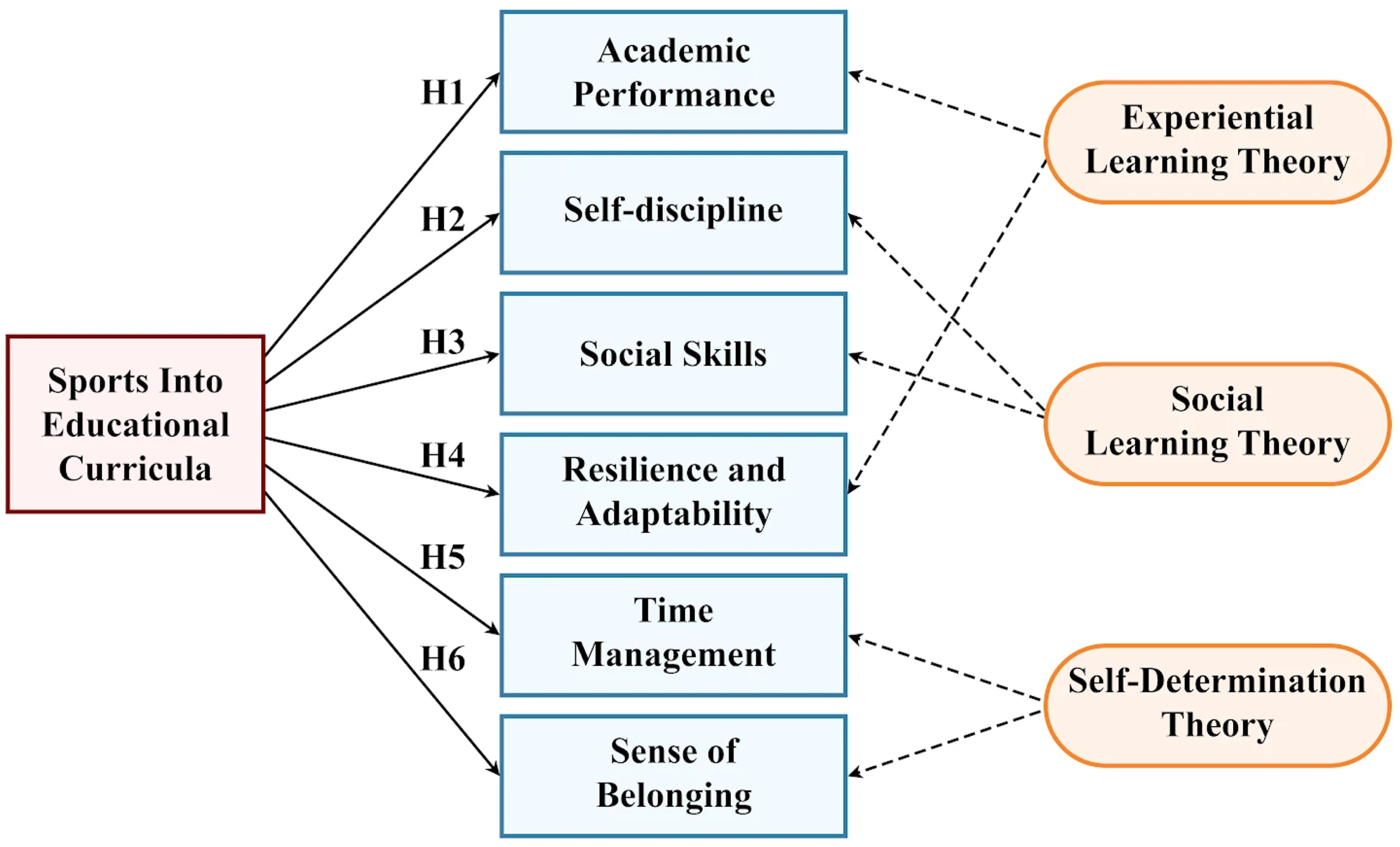
Academic Performance and Sports Integration
In SP, the students’ motivation in turn stimulates different intellectual situations in students, and it has an attitude toward study. It improves the students’ academic performance. Self-determined motivation increases academic performance in SP, and autonomous motivation increases the outcomes of the students, so it enhances academic performance (Claver et al., 2020). SP increases sports activity for students, and this activity is useful for the students’ academic performance. Sports activity improves students’ memory power. Sports activities encourage self-perception and cognitive functioning and moderate the brain’s executive functions (Barbosa et al., 2020). SP improves the task achievement of students, supports their intellectual needs, and stimulates a sense of action and progression. This gives more encouragement to students and enhances their academic performance. The interventions involving SP of greater intensity, period, and gross motor skills led to improvements in academic performance (Ferriz-Valero et al., 2020). The integrated sports program certainly corresponds with the Students’ academic performance in various subjects.
Students’ improved academic performance across a range of subjects is positively correlated with their participation in integrated sports programs.
Classroom Through Sports-Based Curricula
The sports-based curricula support students to strive to be honest people in their lives, and they aid students to realize their self-efficacy. The sports-based curricula teach the students about obeying the rules and social norms in schools and public places and reinforce the students’ self-concept and performance (Djazilan et al., 2022). Sports-based curricula assist in learning about regulating emotions, controlling thoughts, and correcting them. Sports-based curricula increase the students’ inner power because the inner power motivates their classroom behaviors and attention (Şimşir & Dilmaç, 2022). Sports activity exhibits that sports-based curricula and SP enrich sportsmanship, self-discipline, and behaviors. The sports program encourages the students to compete in games and sports and also provides guidance to learn about respect and social behavior (Habyarimana et al., 2022). Based on Sports curricula, the students enhance their self-control, classroom action, and concentration
Students’ self-discipline is improved by exposure to sports-based curricula, which results in improved classroom behavior and attentiveness.
Social Skills, Peer Cooperation, and Effective Communication
Engaging in sports action aids in learning to communicate, coordinate, and support each other to achieve goals. In sports, players must convey strategies and coordinate movements with their co-players (Schei et al., 2023). Participating in sports is beneficial for social skills because it involves teamwork and interaction with others. Sports activities require individuals to work together, which aids the sense of cooperation. Players learn to compete fairly, follow regulations, and accept outcomes gracefully, and these principles assist in extending social skills (Van der Veken, et al., 2020). Sports activity enhances students’ leadership and leads to the development of their social skills. The leadership quality required to lead a team requires strong communication skills to motivate team members, make decisions under pressure, and encourage joint efforts toward shared goals (Carreres-Ponsoda et al., 2021). Engaging in sports action reinforces community skills, cooperation, and effective communication.
Participating actively in sports activities strengthens social skills and encourages peer cooperation and effective communication.
Sports Integration and Academic Challenges
By attending SP, the students face and experience successes and failures, and attempt to fulfill their dreams of the players. The learners persistently achieve the goals with a countenance of the problems. The sports program participant learns the mistake that the person made in the match, and the person identifies and solves the mistake in the next match (Gupta & McCarthy, 2022). The players obtained confidence in the games and adapted the game plan to the teams. The sports program is useful for the players to learn some ways to win the match and encourage the sports person who played in the match (Kaya et al., 2022). Engaging in sports, the students face many hurdles and hardships, and learn how to overcome them. The sportsman practices the game before playing with the team and displays the skills in the match. The players establish their ability in the game, and they use various tricks to defeat the opposite players (Yang & Wang, 2022). The students expose their tenacity and adaptiveness in their educational challenges because of the integrated sports program.
Students participating in integrated sports programs demonstrate increased resilience and adaptability in facing academic challenges.
Enhancement in Students’ Skills and Abilities
The sports in the curriculum act to analyze tasks, schedule the program and more planning skills and also extend to increase the person’s quality of life. The students are planning skills and gaining a deeper understanding of the importance of creating work schedules. The competitive nature of academics demands that students time efficiently and seek better time control (Wolters & Brady, 2021). Sports give leadership opportunities to students that increase their abilities and management skills of the players. SP equilibrates the sports and the educational curricula, and the players give equal significance to the sports and the curriculum. Success in life is the effective management of time and resources, which everyone possesses equally, and due emphasis on planning. The students are conceivable about time, particularly when it comes to reaching higher levels in sports, as it will elevate the talents of the students (Arumugam et al., 2020). Sports-based programs in the curriculum allow educators to focus on the task at hand and reduce the amount of time spent by increasing attentional resources. Sports facilitate the process of focusing on a new task while reducing mind wandering (Marais et al., 2020). The time administration and categorization potential are increasing by combining sports into the curriculum.
Integrating sports into the curriculum enhances students’ time management skills and prioritization abilities.
Sports-Based Learning Enhanced School Climate
Sports-based education tends to have higher attendance rates and better LO, and students try to reduce mistakes. Extracurricular activities and sports are involved in some school qualities that affect students’ self-esteem, attendance, and social lives. The sports provide an environment where the students express and establish emotional closeness with other students (Li, 2025). The school environment is crucial for students’ feelings of commitment and emotions. The school characteristics and the type of relationships that students have with one another are significant points in the perceptions of the school by students. Students spend a major portion of the day in school and have sufficient time to socialize with others. (Clark & Kosciw, 2022). Organizing school circumstances to meet students’ needs and providing surroundings in which the students participate in effective factors. The students have a sense of being personally accepted, valued, included, and supported in the social environment of the school. Schools are at the forefront of the most crucial places to create a sense of safety among students (Kim & Gurvitch, 2020). Engaging in sports-based education develops the feelings of the students and the school connection of the students.
Engagement in sports-based learning enhances students’ sense of belonging and school connectedness, contributing to a positive school climate.
The study explored the IS in educational curricula. The students’ improved academic performance in various subjects is integrated with the sports program. The sports-based curricula expose the self-discipline of students and enhance classroom behavior and attention. The students are attending sports activities that strengthen social skills and motivate peer cooperation and communication. Moreover, the students are resilient and flexible in meeting the academic challenges by attending the integrated sports program. The learners gain time management skills and priority abilities through the inclusion of sports in the curriculum. Sports-based learning activity helps the students feel a sense of belonging to their school. All these hypotheses indicate the significance of academic performance, self-discipline, social skills, resilience and adaptability, time management, and sense of belonging to the students.
Methodology
The methodology used in this study aims at offering a systematic approach towards investigating the IS activities in the education curriculum in order to enhance the LO, discipline, and teamwork skills among the students. By implementing a mixed-methodology, the study is expected to offer the information that would help to add to the overall knowledge of the implementation of EC and sports to enhance the LO, teamwork, and discipline of the students. The following methodology segment will demonstrate the research design employed, the target population of the study, the procedures of the data collection process, procedural methodologies, and successive techniques that will be used in conducting the research.
Research Design
The research design of this study is a descriptive mixed-method in the sense that it aims at assessing the IS programs in education so as to improve LO, foster discipline, and help students to develop a sense of teamwork skills. In this method, quantitative and qualitative techniques are used in order to gauge academic performance, self-discipline, social skills, resilience and adaptability, time management, and a sense of belonging to have a clear picture of the experiences and views of students. The triangulation of the qualitative data with quantitative data aims to gain a holistic view of the role of SP in educational outcomes and makes some recommendations that can be applied to educators and policymakers to maximize the use and effectiveness of SP in education.
“Integrated sports programs” are used in this study as a more formalized school-based activity of physical activity, based on both being structured and being embedded within the educational context. Examples of an “integrated sports program” include: (a) mandatory Physical Education (PE) classes that are led by teachers qualified in physical education, (b) organized non-competitive sports modules within the week timetables, and (c) supervised co-curricular sports activities that promote teamwork, discipline, and physical fitness. The term “integrated SP” is not meant to represent “competitive team sports” or “student volunteer physical activity.” They represent a formalized component of the delivered educational experience, with periodic instruction in the physical subject matter across students. By providing clarity in the format of sports integration, it will provide a context for the form of sport exposure offered in this study.
Target Population Sampling Technique
The target population consists of students from schools with integrated SP and selected individuals because they directly observe or manage the effects of sports on education and can hence contribute to academic, behavioral, and social outcomes. The updated final data includes 563 valid student responses from institutions that were implementing integrated SP in China. Other institutions were contacted, and the data collection period was extended to elicit a more representative and persuasive sample. Stratified random sampling continued to be used to ensure fair representation and respect for individuals across gender, as well as age groups, education levels, sports experience, and nationality. The increased sampling provides more statistical reliability and improves the overall explanatory power of the study.
While the data collection happened in China, an aspect of the student sample included international students, currently studying in Chinese universities; these students were not sampled from their home country but were simply part of the same institutional context, with schooling contexts, instructional methods, and the same SP. For these reasons, the sampling strategy is not considered a multi-country comparison, and cultural background is not treated as a controlled variable. Bilateral nationalities are simply reported to acknowledge diversity, but the analyses are considered because the sport participants were subject to the same student context with schooling and sports integration. Because the shared academic language was English in the institutions, no translation process was required. Cultural and linguistic appropriateness was also validated through pilot testing the instrument with both Chinese and international students.
Data Collection Tool and Procedure
The data for the research was collected from 450 college students in China initially, and after that data was extended. Therefore, the amount of sample size was expanded, and the end result was 563 participants. The goal of such a quantitative and qualitative strategy is to quantify findings, which gives a complete picture of student interest in sports, both in the quantitative patterns and qualitative shades, which would add depth to the findings of the study.
Questionnaire
The main instrument of quantitative data collection is a carefully-constructed questionnaire with properly designed questions that consists of two parts. The first part involves capturing the demographic information about the participants, and the second part is for the objective-related information (refer to Appendix 1). By adhering to the two steps, cultural and linguistic validity was guaranteed since the sample was associated with the international students who were studying in universities in China. On the one hand, the questionnaire was designed in English, which served as the instruction method of both Chinese and non-Chinese students in the selected university institutions, to eliminate any translation effect. Second, international respondents would preview all items during the pilot study in terms of meaning, cultural, and language relatability. The comments obtained resulted in very minor changes in wording to make sure that the same questions were understood by students of all cultures similarly. This ensured that all participants were able to read and understand the items on the questionnaire, regardless of their nationality.
Initially, the pilot study was done using a sample of 35 learners in different learning institutions. The purpose of this pilot study will be to simplify the questionnaire to make it clear, relevant, and comprehensive. The debriefing session was used to collect feedback from the participants to understand any confusion. The final version of the questionnaire was sent to a larger sample size in various institutions of education after the refinement process had been done, having considered the feedback of the pilot study. Students studying in institutions where SP forms part of the curriculum are the participants. To make the data collected by the research objective, the participants were made aware of the intent of the research and the procedures used in a very clear manner. Printed survey data were used to collect data, which was anonymous and voluntary in nature. There were various challenges experienced during the pilot study and other data collection phases. These are the challenges in consent in getting an institution to agree to take part in the study, the representative sample among various demographics and institutions, and time constraints in terms of conducting the survey, and the problem of biases in self-reported information. Furthermore, keeping the participants interested and the data accurate with the help of effective survey administration strategies is an important issue to consider and prevent. In order to enhance the persuasiveness, the data collection period was increased, and the sample size was upgraded to 563 students as compared to 450 students. All other respondents filled out the same validated survey instrument under identical circumstances. After eliminating sites that contained either missing or hit-and-miss entries, the ultimate data gathering to be analyzed was 563 responses. A bigger set of data enhances generalizability and gives a more solid foundation for the quantitative and qualitative interpretations. Although the questionnaire used word-based response options (e.g., “Much better”, “Very high”, “Strongly Agree”, etc.), to make analytical decisions, all the items were assigned numeric values to a 1-5 scale, where 1 corresponded to the most positive response, and 5 corresponded to the least positive response. The application of this coding scheme justifies the decreased mean values of 1.00 on the perceptions of participants on the items in the questionnaire, which tends to imply a positive perception among the participants.
Interview
The qualitative data were collected through semi-structured interviews with 50 participants of the college SP who underwent integrated programs. The sample participants were chosen using Purposive sampling to select participants who could provide rich descriptions. The interviewers participated in a short training session covering interview protocol, strategies to maintain neutrality, consistency in note-taking, and strategies for working through participants’ responses to limit the influence of interviewer bias on responses. All interviewers went through practice with the refined pilot interview guide (built from 35 preliminary interviews) to support a consistent questioning style and follow the script.
Participants were contacted by email and educated about the purpose of the study and their voluntary and anonymous participation. The interview guide included open-ended questions related to how integration in sports impacted learning outcomes, discipline, and teamwork (refer to Appendix 2). Data collection services were often ineffective, which required cross-checking and awareness of other limitations at the same time when facilitating one-on-one interviews. There were certain constraints, such as just coordinating interviews, the comfort of the participants, confidentiality, and whether saturation was attained. Together, these restrictions notwithstanding, the standardized training and joint creation of protocols provided the consistency and reliability of qualitative data.
Demographical Details
Demographic Details of Students
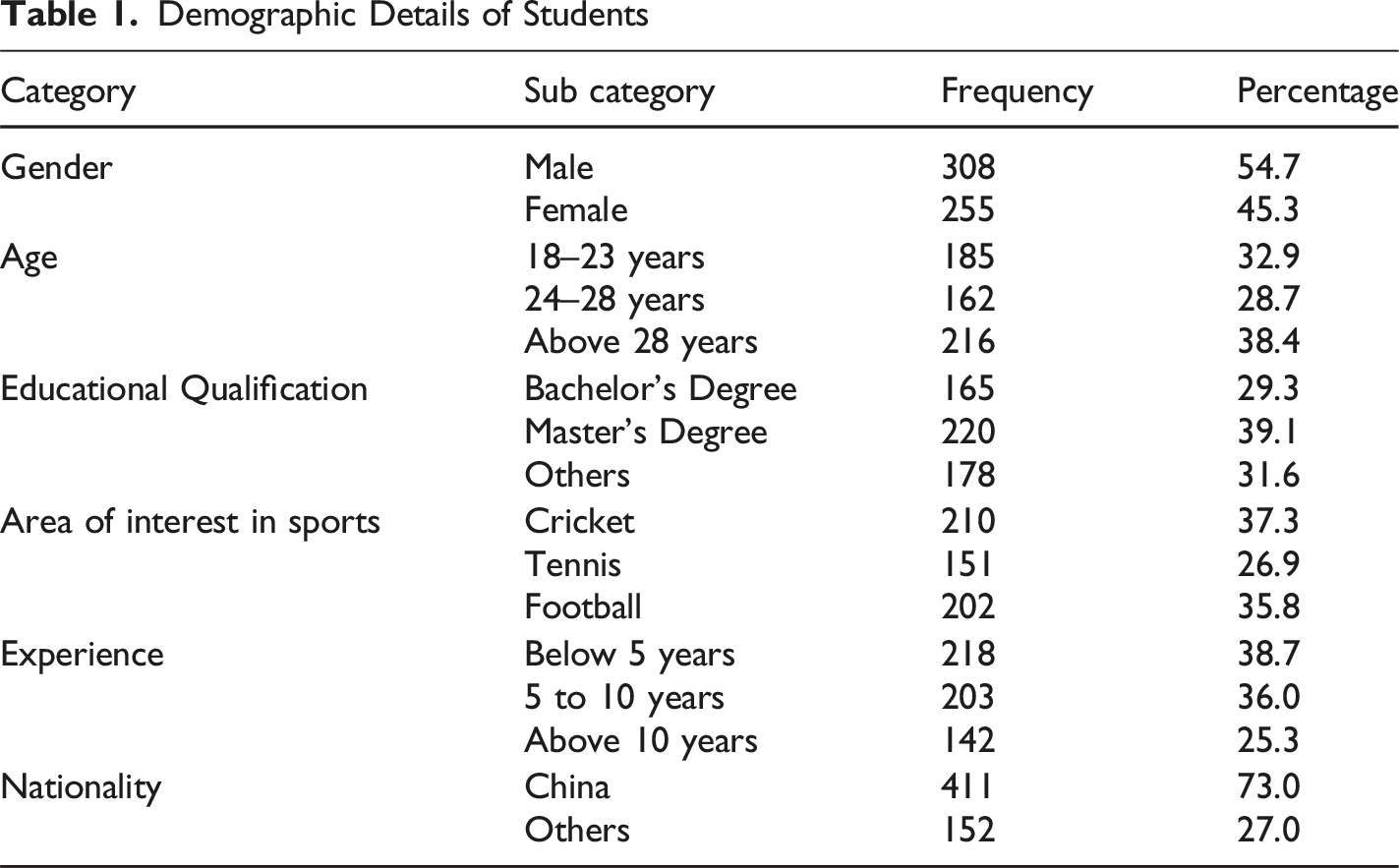
Sports experience varies, with 38.7% (218) of the students having less than 5 years of experience, 36.0% (203) years of experience is between 5–10 years, and the remaining 25.3% (142 students) having more than 10 years of experience. These students are mainly Chinese nationals, as a majority of the sampled students are Chinese and include 73.0% (411 students) of the students and 27.0% (152 students) of other nationalities. Therefore, Table 1 is a complete description of the demographic makeup of the student population in terms of gender, age, educational background, sports interest, sports experience, and nationality. This data is essential for understanding the diverse characteristics and preferences within the student body, which can inform educational and recreational strategies tailored to their interests and backgrounds.
Including students of non-Chinese nationality is not a reflection of multi-country sampling; these students were international students who were on a Chinese campus and participating in the same integrated SP. The presence of “other nationalities” represents campus diversity, rather than multi-country sampling. Cultural diversity is expressed to demonstrate the diversity on campus; not all participants were from the same academic or term-based context. Thus, this study does not report on cross-cultural or multi-country comparisons to results between other cultures or results based solely on cultural considerations.
Variables and Measures
The section on variables and measures outlines the particular constructs that are essential to comprehend the impacts of SP that are incorporated into educational modules from previous studies. These research constructs include academic performance with items AP1, AP2, and AP3. Self-discipline includes items such as SD1, SD2, and SD3, social skills include items such as SS1, SS2, and SS3, resilience and adaptability have items such as RD1, RD2, and RD3, time management with items TM1, TM2, and TM3, sense of belonging along with items SB1, SB2, and SB3, and sports into educational curricula with items such as SEC1, SEC2, and SEC3. Since the questionnaire used verbal rather than numeric response categories, each item was coded on a 1–5 scale for analysis, based on 1 being the most positive option and 5 being the least positive, which explains the lower mean values for the variables.
Academic Performance
The measure for academic performance is obtained from Komarudin et al. (2023), including the improved academic performance indicated in the research of Tzachrista et al. (2023), improved grade rates through integration of sports in education, adopted from the study of Huang (2024), and the concentration on academic tasks highlighted in the study from Ead et al. (2024), capturing the positive correlation of students’ academic performance with the participation of integrated SP.
Self-Discipline
The metric for self-discipline is taken from Hagger et al. (2021) and consists of variables such as classroom behavior obtained from the study of Hu et al. (2024), the development of self-discipline adopted from Sal (2022), and focus and attention in class hours indicated in the study of Wang et al. (2024) assessing the improvement of students’ self-discipline by the exposure of sports-based curricula in education.
Social Skills
The standard for social skills is accepted from research by Jiang and Yin (2022) including constructs, the ability to work effectively with peers outlined in the research of Bacchereti et al. (2021), communication skills adapted from the study of Miyamoto et al. (2023), and positive changes in the ability presented in the research of Frogner et al. (2022), evaluating the social skills, peer communication and effective communication of students engaged in EC integrated with sports.
Resilience and Adaptability
The measure of resilience and adaptability is embraced from the study of Chandler et al. (2020) having variables such as resilience in handling academic challenges, adaption of changes in academic workload highlighted in the research of Nielsen et al. (2022), and tackling new academic tasks obtained from the research of D’Angelo et al. (2021), exploring the resilience and adaptability of students engaged in sports integrated education curriculum on facing academic challenges.
Time Management
The metric for time management is adopted from the research by Quinaud et al. (2023), containing variables, the ability to manage time is underscored in the study by Wolters and Brady (2021), and priority to academic responsibilities is indicated in the study of Eaton (2022), determining the prioritization and time management abilities of students.
Sense of Belonging
The standard for the sense of belonging is taken from the study of Sağın et al. (2022) including the constructs such as the level of school connectedness outlined in the research from Ross et al. (2021), involvement in school activities from the study by Sagin (2022), to examine the sense of belonging and school connectedness contributing to positive school climate of students.
Sports in Educational Curricula
The measure for sports into educational curricula is obtained from the study of Hao and Yang (2022) and consists of the variables including, the importance of integrating sports into the educational curriculum discussed in the research by Hao and Yang (2022), and the positive impacts of sports integrated education curriculum highlighted in the study by Giménez-Meseguer et al. (2022), measuring the importance and the significant impacts of sports activities on the education curriculum.
Data Analysis
The data analysis is thorough in terms of analyzing the quantitative and qualitative data of the students enrolled in the education settings incorporated with sports activities on academic performance, self-discipline, social skills, resilience and adaptability, time management, and sense of belonging using the software SPSS to analyze the quantitative data and NVivo to analyze the qualitative data. The data analysis of the study is conducted with SPSS, and NVivo software is used to analyze the qualitative data. Thematic analysis and descriptive statistics were used to investigate the effects of introducing sports to schools. The analysis of descriptive statistics indicated that the mean scores differed across different variables based on the academic performance, self-discipline, social skills, resilience, time management, sense of belonging, and sports integration. The trends identified in the data set, consisting of 563 observations, included moderate scores on the characteristics of the mean and wide standard deviation, which indicated variability in responses. The thematic analysis also highlighted the beneficial impact of sports on academic achievement, discipline, social abilities, resilience, time management, sense of belonging, and the impact of sport on educational outcomes, as seen by the number of times a theme was identified as common in the qualitative data.
Quantitative Analysis
SPSS was used to analyze the quantitative data. The mean and standard deviation were computed as descriptive statistics to evaluate each construct. The findings showed that there was a difference in the responses of the participants in the major dimensions like academic performance, self-discipline, and social skills, as different individuals had different experiences.
Qualitative Analysis
NVivo was used to analyze the qualitative data in terms of thematic analysis. The results indicated that there were similar themes that focused on the beneficial effect of integrated SP on the academic and personal development of students. It is important to note that the programs enhanced greater community feeling, motivation factor, and led to better discipline among students.
Ethical Approval and Informed Consent From Participants
Ethical approval for the study was obtained from the institutional ethics committee prior to data collection. All participants were fully informed about the purpose of the study, the procedures involved, and their rights as participants. Participation was entirely voluntary, and informed consent was obtained from all participants before administering the questionnaire and conducting interviews. Participants were assured of confidentiality and anonymity, and no personally identifiable information was collected. They were also informed of their right to withdraw from the study at any stage without any consequence.
Results
The findings of the research allow offering the final confirmation of the use of sports in academic programs as a productive factor. This quantitative and qualitative research demonstrates that sports involvement positively influences the academic performance, self-discipline, and social skills of students, and also contributes to the development of resilience, time management, and a sense of belonging, which are the essential components of holistic student development.
Quantitative Result
The quantitative results section indicates the correlations between sport integration in the educational curriculum and other student achievements.
Descriptive Statistics
Descriptive Statistics
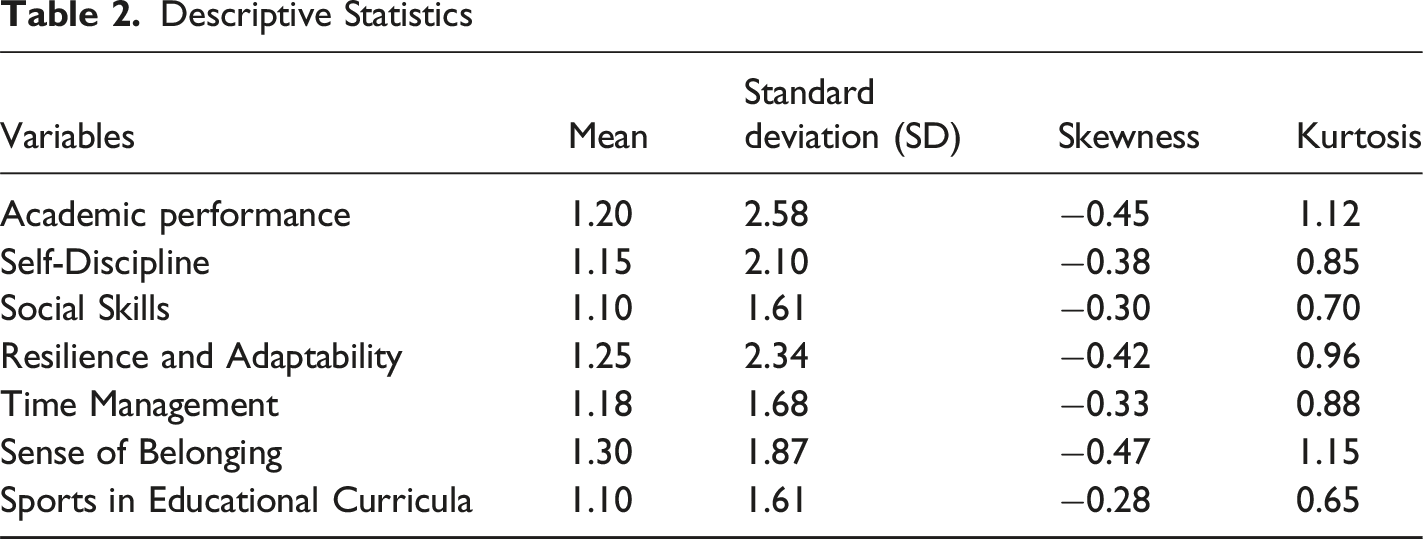
The skewness of all the variables was negative, ranging between −0.28 to −0.47, and this implies that the majority of responses were skewed towards the higher sides of the scales, with few respondents having low scores. The highest sense of Belonging was in negative skew (−0.47), which indicates a healthy propensity of students towards feeling attached to their surroundings. The scores of kurtosis fall between 0.65 to 1.15. The shift of the distributions of Academic Performance and Sense of Belonging was high in terms of kurtosis when compared to the rest of the variables (1.12 and 1.15, respectively), which are the reasons why these two variables slightly scaled to the peaks. As has been mentioned above, the mean values (≈1.10-1.30) are low because of coding the highest possible respondent value under which he/she respond positively.
Reliability & Validity Results
Reliability & Validity
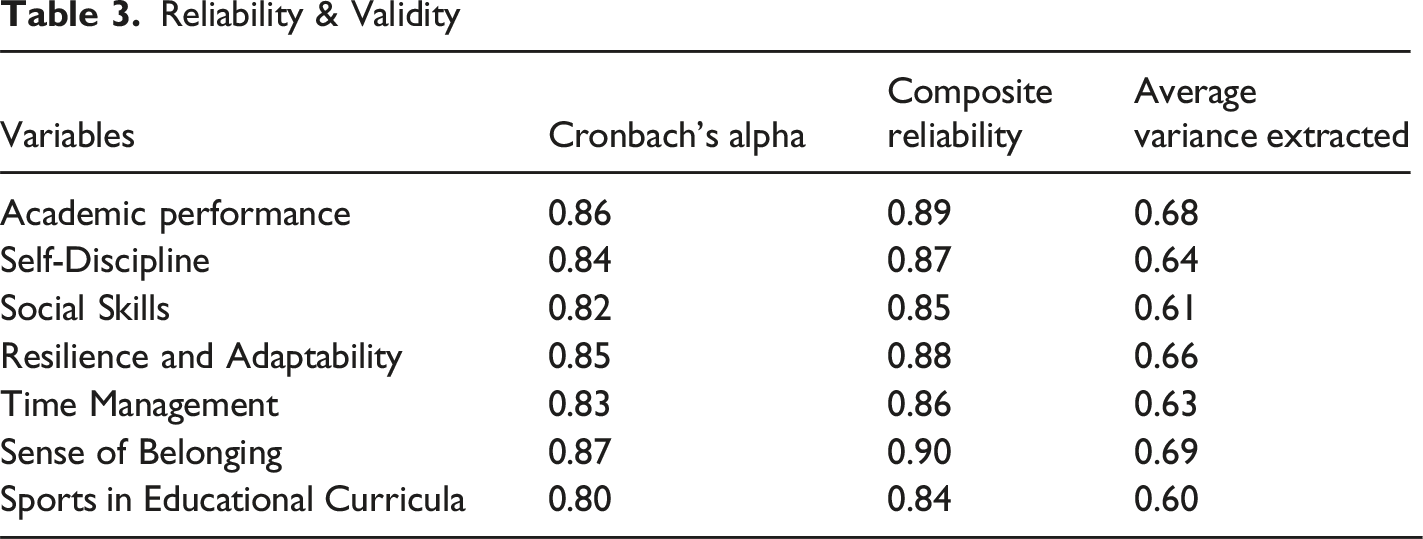
Composite Reliability, all constructs are above the acceptable cutoff of 0.70, which one more proves that the measures are consistent. The CR values are between 0.84 to 0.90, where again Sense of Belonging has the highest value (0.90). The convergent validation measurement is also satisfactory because AVE values are below the acceptable level of 0.50, and the values vary between 0.60 to 0.69. These findings affirm that the constructs are not only reliably measured but also represent enough variance of the variables that are being observed so that there is not only a sufficient amount of reliability in the constructs themselves, but the constructs are also valid for additional structural analysis.
Confirmatory Factor Analysis Results
CFA Output
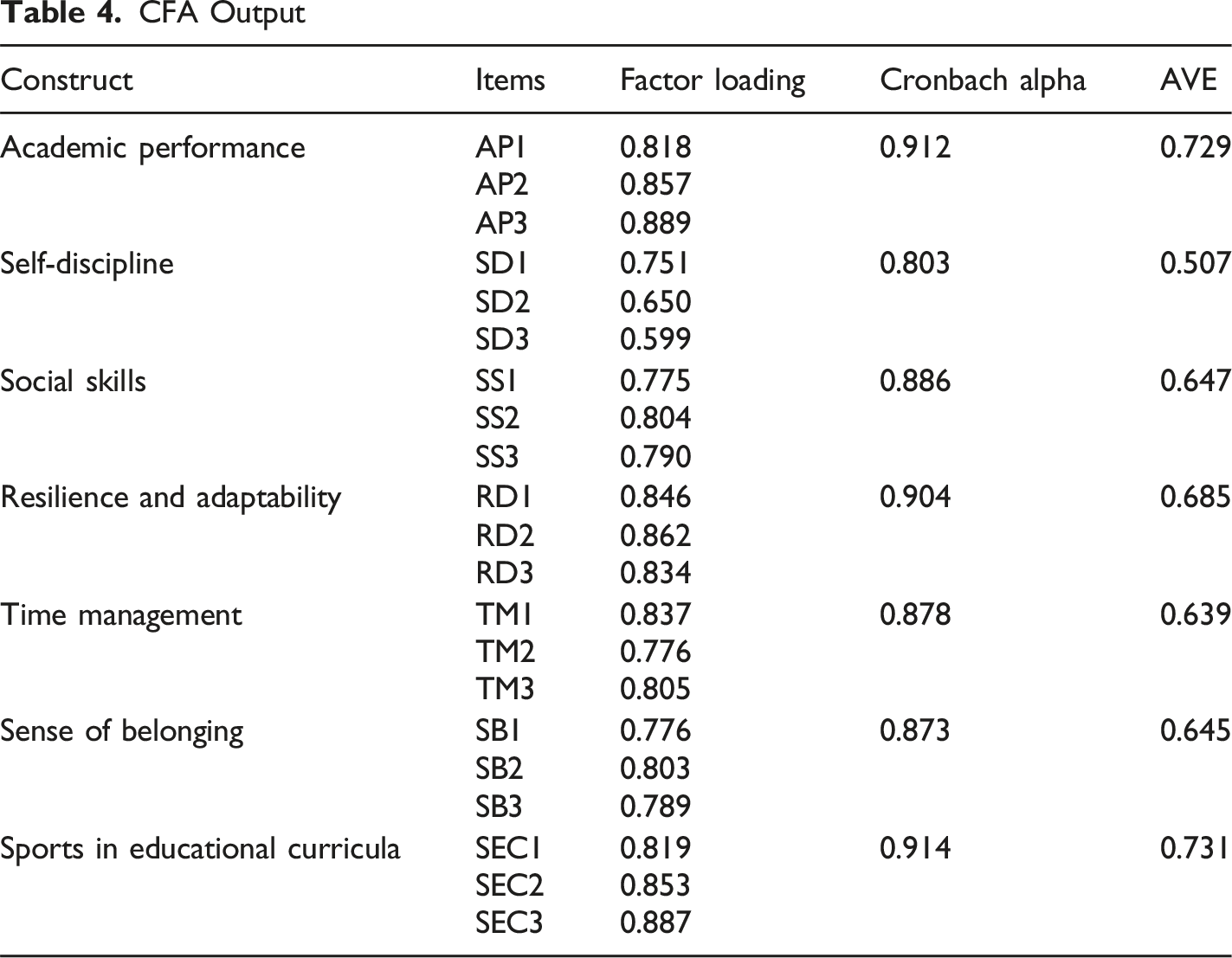
All Cronbach’s Alpha values reflect high internal consistency in all constructs, where the value of Self-Discipline is 0.803, Sports in Educational Curricula is 0.914, and all values are much higher than the benchmark of 0.70. Also, the Average Variance Extracted (AVE) of individual constructs has values between 0.507 to 0.731, which confirms that the convergent validity is satisfactory because more than 50% of the variance of the indicators is explained by each construct. The high-performing CFA scores attest that the measurement model is well-organized, the constructs are reliable and valid, and suitable for a structural equation model.
Goodness of Fit Indices
Goodness of Fit Indices
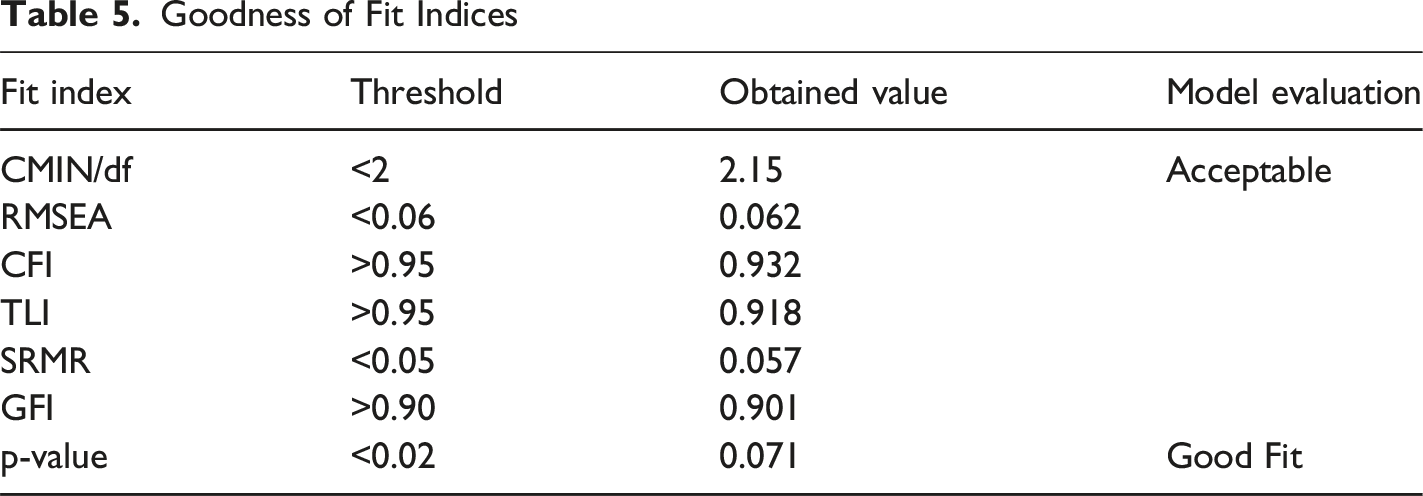
Slightly lower than the ideal value of 0.95, which is 0.932 and 0.918, respectively, are the Comparative Fit Index (CFI) and Tucker-Lewis Index (TLI). These values are still good model fits, as values that are greater than 0.90 are good in practice. The Standardized Root Mean Square Residual (SRMR) value is 0.057, which is slightly above the desired value of 0.05, which means that there is a somewhat large amount of residual error, though, within acceptable ranges. In the meantime, the Goodness of Fit Index (GFI) has a value of 0.901, which is lower than 0.90, but this parameter is not below it and therefore is a good fit. The p-value of 0.071 should, however, be < 0.02, indicating that the overall model significance is low. Nevertheless, when the two are put together, the indices reveal that the model is generally acceptable to good in terms of fits, thus it can be used to undertake additional structural analysis.
Hypothesis Testing (SEM)
Hypothesis Testing Results
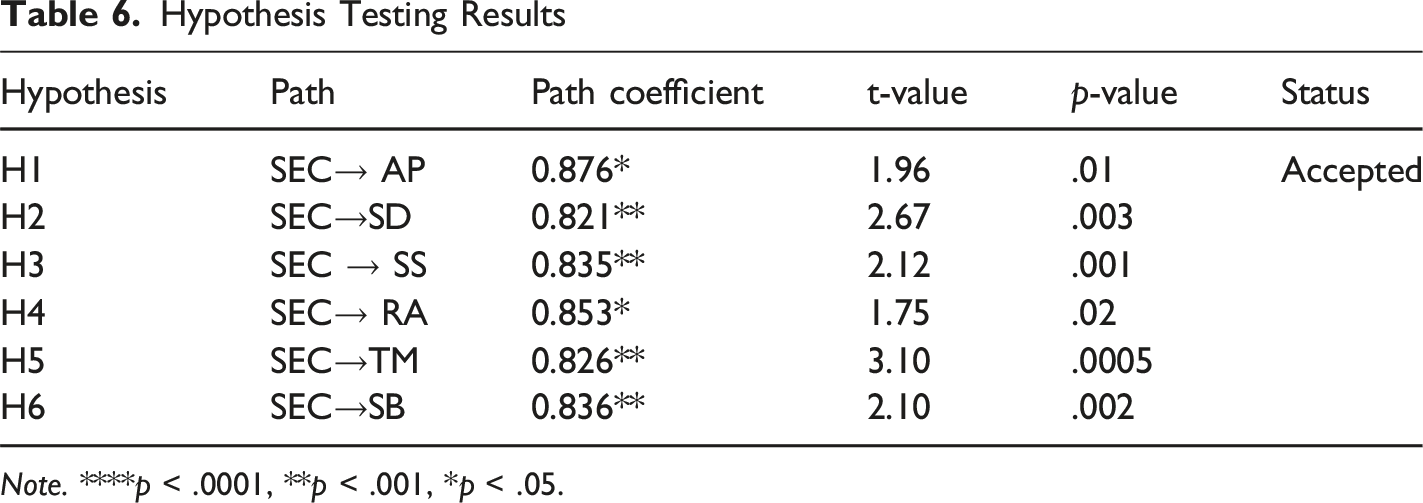
Note. ****p < .0001, **p < .001, *p < .05.
The path coefficient between H4, SEC, and Resilience and Adaptability (RA) is 0.853, and the t-value is 1.75, and the p-value is 0.02, which proves that this relationship is strong and H4 is accepted. The same level of significance is found in H5, where the path coefficient of 0.826 between SEC and Time Management (TM) is advanced with a t-value of 3.10 and a p-value of 0.0005, and H5 is accepted. The path coefficient of 0.836 between SEC and Sense of Belonging (SB), having the t-value of 2.10 and p-value of 0.002, proves a significant relationship and therefore H6 is accepted too. Overall, all the hypotheses (H1-H6) are accepted, and the path coefficients are all positive and statistically significant, which proves the effectiveness of the inclusion of sports into educational programs in the improvement of academic and personal outcomes of students.
Qualitative Result
The qualitative results section discusses the insights that were obtained as a result of the experiences and perceptions of the participants in terms of integrating sports into the educational programs.
Thematic Analysis Results
Thematic Analysis Results
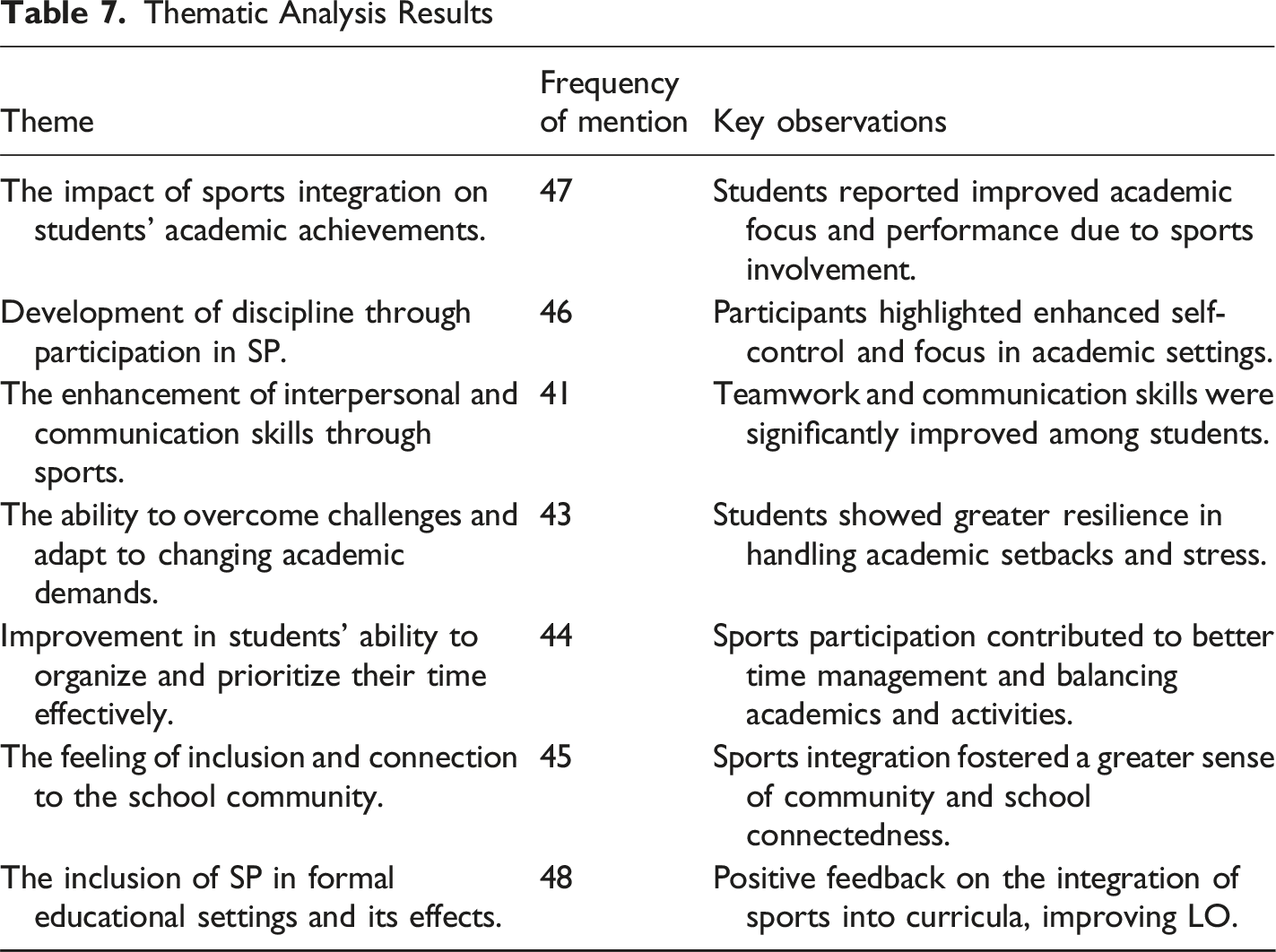
The concept of being able to conquer all the odds and meet new academic needs was raised 43 times, with the focus being on the fact that students were more resilient and adaptive when it comes to coping with academic failures and stress. Moreover, the positive change in the time management and prioritization among students, which was stated 44 times, demonstrated that the sports involvement allowed the students to improve their time management skills to balance between academic performance and extracurricular activities. The theme of the feeling of inclusion and connection to the school community, with 45 mentions, pointed out that students felt that they had a greater sense of community and connection to their school because of sports integration. Lastly, the integration of SP in institutions of formal education and their impacts were stated 48 times, with students reporting positive responses of how the introduction of sports in the curriculum positively influenced both their LO and general academic motivation.
Students’ Opinions About Teamwork Skills Improve Sports Integration in EC
Teambuilding skills are very crucial in applying sports in education. Based on the survey regarding the IS in EC, some of the views of the students who engaged in teamwork skills were recorded. The respondents disclosed enormous affirmative perceptions on teamwork abilities built as a result of educational teachings combined with sports. Figure 2 shows the opinions of the students concerning the enhancement of sports integration in education, which is provided by teamwork abilities. Students’ opinion about teamwork skills improves sports integration in education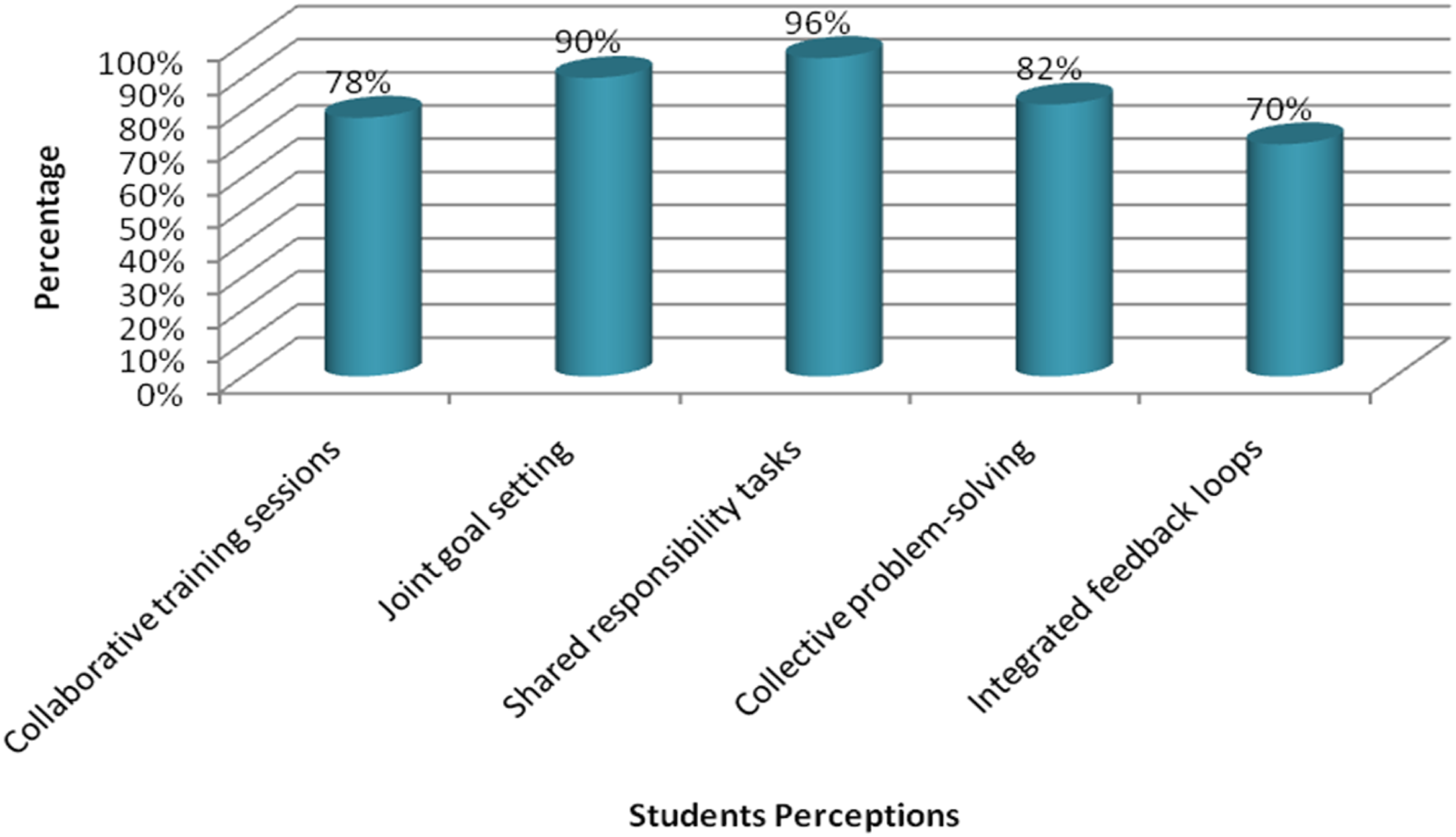
Figure 2 shows the perceptions of students in relation to the development of skills of teamwork via integration of sports in EC. The responses are showing very good feedback among the students on different dimensions of teamwork. Most of the respondents, 96%, like shared responsibility activities and emphasize the perceived importance of collective responsibility in meeting shared goals. This comes immediately after 90% of students supported the idea of joint goal setting, which focuses on the effectiveness of matching individual efforts with the aim to a common goal. The interest in collaborative training experiences expressed by 78% of the respondents supports the opinion of the effectiveness of the hands-on, cooperative learning activities, whereas 82% of students are satisfied with the collaborative problem-solving, which they consider to be a result of sports-based activities. Although the percentage of integrated feedback loops is a bit smaller (70%), it signifies acknowledgment of the importance of continuous improvement via constructive assessment in a team-based setting. The results indicated that students highly regard sports-based teamwork practice as helpful activities that enable them to acquire the fundamental interpersonal skills and supplement their learning process with practical and collaborative learning techniques.
Integrating Sports for Enhanced Education
Sports in education improve learning since they lead to physical fitness, teamwork, and discipline among the students. The students who participated in the sports-integrated EC presented different perspectives concerning the IS toward improved education. The important factors according to the respondents of the research are Physical development, Enjoyment and lifelong participation, Character development, Academic performance, Healthy habits and lifestyle, Emotional well-being, and Social skills.
Figure 3 shows the views of the students concerning the integration of sports to achieve better education in different dimensions. Physical development using sports, according to the respondents, is an important part of the overall health and fitness of students, which may help them concentrate and increase their energy level towards academic activities. The importance of enjoyment and the possibility to engage in a sport throughout their lives are noted as key characteristics, which imply that the positive experience of their sport activities in schools may motivate them to continue their physical activity after school. Another primary advantage that can be identified is the character development since sports are perceived as an experience that teaches such values as teamwork, resilience, and discipline that are crucial to personal growth and success in academics and professional life. Students take note of their academic performance, and some of them think that regular exercise can positively influence thinking and academic performance. Good lifestyle habits and health are stated as the most effective ones, which means that sports can encourage such habits as exercise and healthy eating. The respondents also mention emotional well-being as an advantage of sports since it offers a positive channel of stress management and strengthening of the psyche. Sports are known to enhance social skills by meeting peers and coaches, communication skills, leadership and cooperation skills necessary in interpersonal relations. Students’ Opinions on integrating sports for enhanced education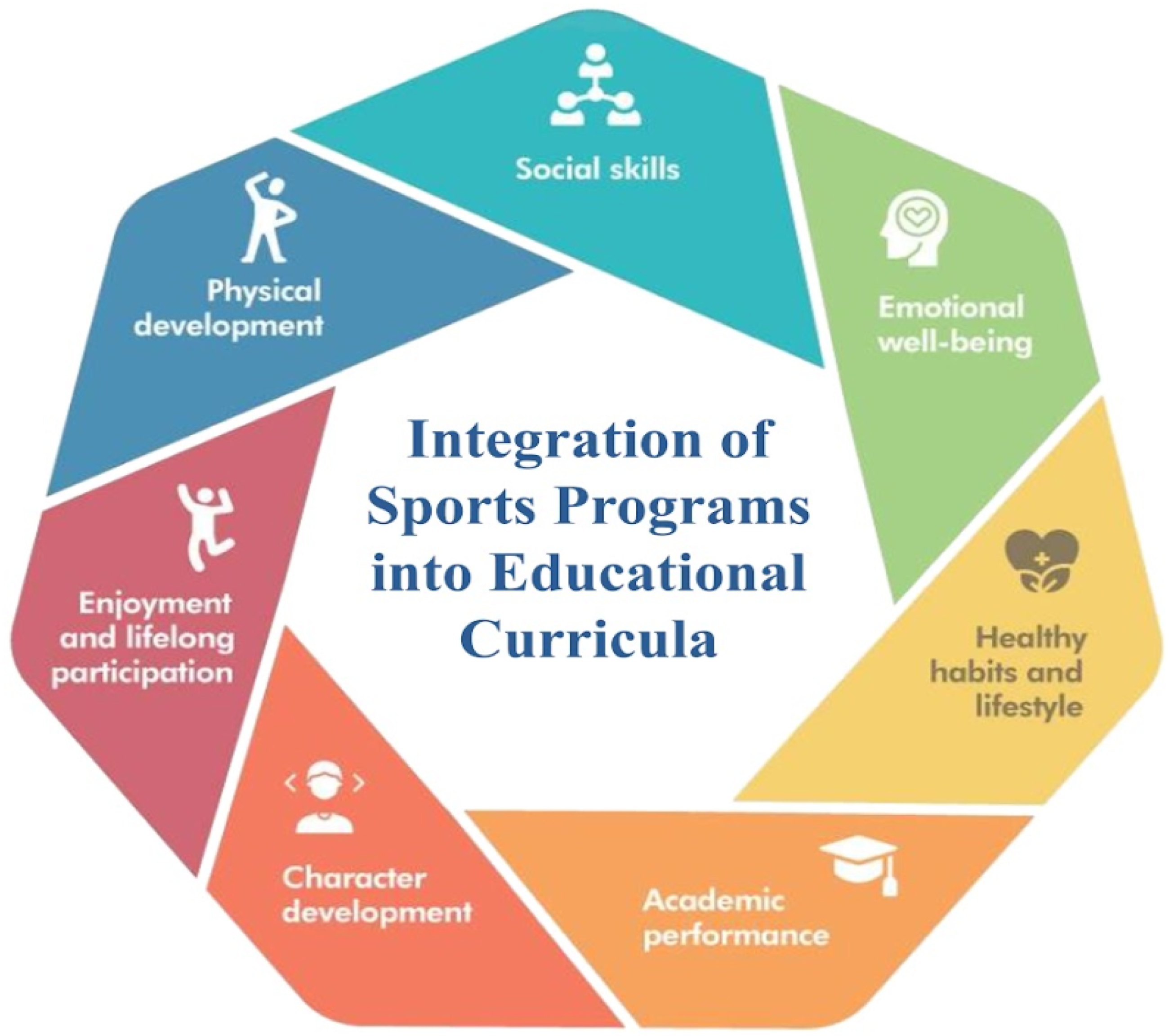
Discussion
Based on the research concerns, the proposed study will analyze the impacts of incorporating SP into educational programs with emphasis on LO, discipline, social cohesion, and emotional development. H1 stated that there was a strong positive relationship between academic performance and sports participation. This is in line with the results of San Roman-Mata et al. (2020), who determined that physical activity could improve cognitive resilience and academic productivity among university students. On the same note, Wang et al. (2024) demonstrated that the impact of sports on education through the effects of sport is associated with learning progress and concentration, especially in Chinese higher education. Further, Zhang et al. (2024) emphasized that Sport Education Models have a positive impact on the learning attitudes and academic participation of the students in different subjects. In H2, the observation reveals that there was a strong positive relationship between integrated sports curricula and student self-discipline. This is in line with the findings of Thompson et al. (2023), who proved that the engagement of structured physical exercise and good teacher behavior promotes motivation and discipline. In the paper, it has been stressed that adventurous sport activities provide students with a sense of intrinsic discipline and goal setting, whereas Blynova et al. (2020) have focused on psychological safety in sports settings as the basis of motivational discipline. H3 was well borne out, which endorsed the fact that sporting activities enable students to acquire social skills. The results covered the psychosocial advantages of sports, such as team building and human relations, even in young sports participants with chronic diseases. Another important issue that was raised by Gryson et al. (2024) was the use of interdisciplinary SP to promote collaboration, peer communication, and social unity. Also, Kraft et al. (2022) and Jeanes et al. (2021) centered on sports as a form of all-inclusive social interaction, which fosters equity and cooperation between the sexes. H4 was closely correlated with sports involvement, which is consistent with the results of San Román-Mata et al. (2020), who demonstrated that participation in physical activity is associated with higher emotional intelligence and much more flexibility in students. Dolfing et al. (2021) have suggested that context-based problem-solving can be used to create resilience by providing structured professional development environments in active learning settings, including sports-based curricula. Blynova et al. (2020) also noted that the creation of coping skills and persistence, both of which are crucial to academic resiliency, is achieved through the creation of psychologically safe sports environments that help young athletes develop coping skills and persistence. H5 showed that there is a strong relationship between sports and the time management of students. This is consistent with the results provided by Ogilvie and McCormack (2021), as they discovered that elite university sports do instill structure, balance, and planning in student-athletes. In the same manner, the research made the conclusion that the organization of routine sports activity conditions the youth to time and responsibility. Students learn how to spend time wisely between academics and extracurricular activities due to the systematic nature of sports schedules. H6 discovered that there was a significant improvement in the feeling of belonging in students who were engaged in sports. The same researchers, Richardson et al.(2020) and Shannon et al. (2021), also demonstrated the beneficial impact that coaching and collaborative school SP have on peer and instructor trust and connectedness. In addition to this, Longa (2025) and Pereira Ribeiro et al. (2024) pointed out the significance of inclusion and equity in sports settings, which directly influences the feelings of belonging and emotional well-being among students. The results confirm the necessity of the systematic physical activity implementation in the formal education system and underline the need to provide students with the opportunities of comprehensive development through adequate, inclusive, and properly designed SP.
The findings of this study demonstrate that they were in strong agreement with the sports-integrated learning theoretical frameworks. The socio-constructivist views can be applied to the observed changes in the students in terms of their attention, discipline, and behavior in the classroom, which sends the message that properly planned physical activity leads to self-regulation and meaning-making. The enhanced resilience and motivation to learn shown by the students due to the involvement of sports are related to the positive psychology model, which suggests that physical activity will result in both hedonic and eudaimonic well-being, which fosters more engaged and intrinsically motivated learners. Also, the principles of inclusive pedagogy may serve to describe the role of engaging in mixed-gender sports activities that led to the increased social competence and teamwork; when learners are engaged in fair and supportive conditions, inclusion-demonstrating behaviors are reinforced, and it may be applied to the betterment of academic behaviors. With the connection of these structures to the high rate of academic and behavioral results, this research affirms that sports involvement not only leads to the enhancement of the student behavioral results, but it also justifies the manner the enhancement occurred using the structures applied in the field of educational research in various fields.
Theoretical Implications
The current research study enhances the theoretical experience by showing that sports integration could assist in the holistic development of the students with references to Experiential Learning Theory, Social Learning Theory, and Self-Determination Theory. The findings reveal that repetition and reflection in sports have a positive influence on academic performance and resilience, which is in line with Experiential Learning Theory. The results of the self-discipline and social skills, which are achieved by observing peers and coaches, support Social Learning Theory. Self-Determination Theory is justified by improvements in time management and the sense of belonging, which is associated with the importance of autonomy, competence, and relatedness. In general, the research augments theoretical insights by establishing sports as a strong pedagogical method in formal education.
Practical Implications
The results provide useful practical recommendations to the education policy makers, school administrators, and curriculum developers, who are struggling to improve student achievement. The noted advantages of education enhancement, self-discipline, communication improvement, resilience, and time management reveal that learning based on sports is to be viewed as a part of the overall instruction, but not as an extracurricular activity. Schools may implement these findings with the help of incorporating organized sporting programs into the everyday schedule, developing interdisciplinary lessons that may relate physical activity to academic goals, and offering educators and coaches to participate in working together to contribute to student development. Administrators are expected to devote the relevant resources to sports infrastructure and provide a chance to all students to join. Curriculum planners can use sports settings as an adaptation measure to foster a sense of belonging in schools and improve the overall school climate. Through these forms of integration, the schools will be in a position to come up with holistic learners with both academic focus and social responsibility and emotional responsibility.
Conclusion
The significant aim of the research is to determine how the integration of SP into programs of educational establishments influences LO, discipline, and teamwork skills in students. The research findings show that the engagement of these programs is positively related to better academic performance in various subjects, which is a possible academic benefit of engaged students. The research shows that sports-based curricula teach students self-discipline, and hence they improve behavior in the classroom and become attentive. In addition, sporting activities which are actively involve promoting the social skills of the students, collaborating with their peers, and also effective communication among the students. Moreover, the research paper has noted the comprehension of students in combination SP, and this has shown greater resilience and flexibility in confronting academic difficulties, which indicates the significance of the program in developing strong personal traits, and also, it has indicated that integrating sports in the curriculum enhances the time management and prioritization skills amongst students, which are the core competencies of academic and personal achievements. The results of the study demonstrate that sports-based learning improves the feeling of belonging and school connectedness among students, and thus leads to a positive school climate. Finally, the research gives significant evidence that the implementation of SP in educational programs not only contributes to the enhancement of LO but also enhances the necessary life skills and improves the overall school climate, which supports the introduction of such programs in schools on a large scale.
Limitations
Although the study gives useful enlightenment on the study scenario, there are a number of shortcomings that interfere with the thoroughness of the study. Correlational studies are good at pointing out rather than proving the existence of a relation. Academic performance may also depend on factors such as individual motivation, socioeconomic status, and the involvement of parents. Particular design and enactment of SP may be different and influence results in very dissimilar ways in various schools and regions. It is not very clear how much the direct contribution of sports to social skills is compared to the indirect impacts on team activities. Individual variations in social aptitude may also be ignored in research. Although sports activity has the potential of developing social skills and cooperation between peers, the generalizability of the results with different student groups and in different cultural contexts should be approached with care. The difference in culture in the perception and participation in sports may contribute to the results.
Future Scope
Future studies can utilize longitudinal studies or experimental designs to have a better grasp of the causal relationship between sports participation and academic performance. The investigation into the effect of various kinds of sports and the intensity thereof on academic success may be a more detailed way to look at this. Research may also aim further into the nature of the particular benefits of SP that lead to better self-discipline. Comparative research in diverse schooling environments and cultures would render the findings more widely applicable. Cross-disciplinary research may also be an eye-opener to explore the synergies between sports and academic skill development. It would be a good idea to research the best proportion between academic learning and sporting activities to obtain maximum LO. This will involve the study of the effect of differences in program design, time, and teacher training on student attendance and performance.
Footnotes

Ethical Considerations
This article includes studies involving human or animal subjects conducted by the authors.
Consent to Participate
Informed consent was obtained from all individual participants included in the study.
Funding
The authors disclosed receipt of the following financial support for the research, authorship, and/or publication of this article: 2021 Hubei Provincial Teaching Research Project of Higher Education Institutions “Reform and Practice of Physical Education Professional Talent Cultivation Mode Based on Core Literacy Orientation”, Project No: 2021476.
Declaration of Conflicting Interests
The authors declared no potential conflicts of interest with respect to the research, authorship, and/or publication of this article.
Data Availability Statement
The data that support the findings of this study are available from the corresponding author upon reasonable request.
Author Biographies
Appendix 1
Sample Questionnaire of Participants Instructions: Please read each question carefully and indicate how much you agree or disagree with each question by selecting the appropriate response on the Likert scale provided.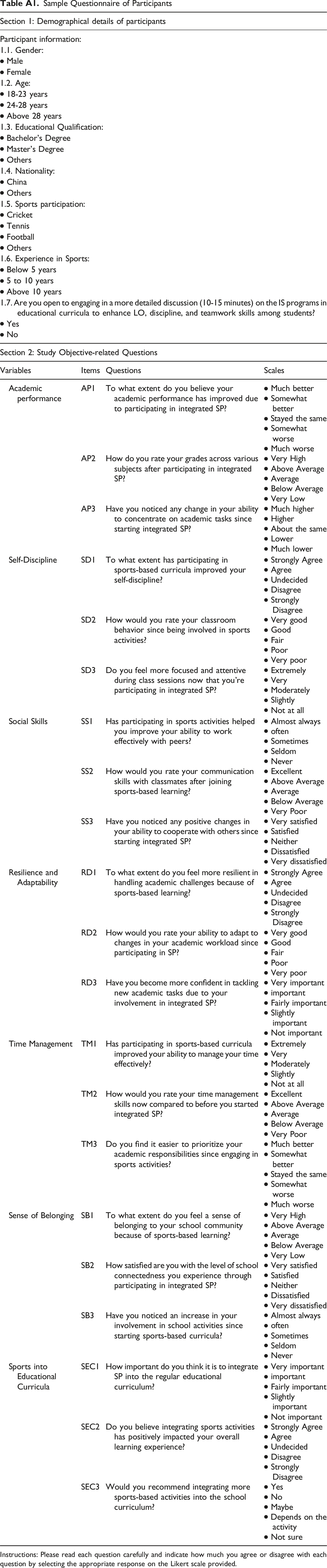
Section 1: Demographical details of participants
Participant information:
1.1. Gender:
● Male
● Female
1.2. Age:
● 18-23 years
● 24-28 years
● Above 28 years
1.3. Educational Qualification:
● Bachelor’s Degree
● Master’s Degree
● Others
1.4. Nationality:
● China
● Others
1.5. Sports participation:
● Cricket
● Tennis
● Football
● Others
1.6. Experience in Sports:
● Below 5 years
● 5 to 10 years
● Above 10 years
1.7. Are you open to engaging in a more detailed discussion (10-15 minutes) on the IS programs in educational curricula to enhance LO, discipline, and teamwork skills among students?
● Yes
● No
Section 2: Study Objective-related Questions
Variables
Items
Questions
Scales
Academic performance
AP1
To what extent do you believe your academic performance has improved due to participating in integrated SP?
● Much better
● Somewhat better
● Stayed the same
● Somewhat worse
● Much worse
AP2
How do you rate your grades across various subjects after participating in integrated SP?
● Very High
● Above Average
● Average
● Below Average
● Very Low
AP3
Have you noticed any change in your ability to concentrate on academic tasks since starting integrated SP?
● Much higher
● Higher
● About the same
● Lower
● Much lower
Self-Discipline
SD1
To what extent has participating in sports-based curricula improved your self-discipline?
● Strongly Agree
● Agree
● Undecided
● Disagree
● Strongly Disagree
SD2
How would you rate your classroom behavior since being involved in sports activities?
● Very good
● Good
● Fair
● Poor
● Very poor
SD3
Do you feel more focused and attentive during class sessions now that you’re participating in integrated SP?
● Extremely
● Very
● Moderately
● Slightly
● Not at all
Social Skills
SS1
Has participating in sports activities helped you improve your ability to work effectively with peers?
● Almost always
● often
● Sometimes
● Seldom
● Never
SS2
How would you rate your communication skills with classmates after joining sports-based learning?
● Excellent
● Above Average
● Average
● Below Average
● Very Poor
SS3
Have you noticed any positive changes in your ability to cooperate with others since starting integrated SP?
● Very satisfied
● Satisfied
● Neither
● Dissatisfied
● Very dissatisfied
Resilience and Adaptability
RD1
To what extent do you feel more resilient in handling academic challenges because of sports-based learning?
● Strongly Agree
● Agree
● Undecided
● Disagree
● Strongly Disagree
RD2
How would you rate your ability to adapt to changes in your academic workload since participating in SP?
● Very good
● Good
● Fair
● Poor
● Very poor
RD3
Have you become more confident in tackling new academic tasks due to your involvement in integrated SP?
● Very important
● important
● Fairly important
● Slightly important
● Not important
Time Management
TM1
Has participating in sports-based curricula improved your ability to manage your time effectively?
● Extremely
● Very
● Moderately
● Slightly
● Not at all
TM2
How would you rate your time management skills now compared to before you started integrated SP?
● Excellent
● Above Average
● Average
● Below Average
● Very Poor
TM3
Do you find it easier to prioritize your academic responsibilities since engaging in sports activities?
● Much better
● Somewhat better
● Stayed the same
● Somewhat worse
● Much worse
Sense of Belonging
SB1
To what extent do you feel a sense of belonging to your school community because of sports-based learning?
● Very High
● Above Average
● Average
● Below Average
● Very Low
SB2
How satisfied are you with the level of school connectedness you experience through participating in integrated SP?
● Very satisfied
● Satisfied
● Neither
● Dissatisfied
● Very dissatisfied
SB3
Have you noticed an increase in your involvement in school activities since starting sports-based curricula?
● Almost always
● often
● Sometimes
● Seldom
● Never
Sports into Educational Curricula
SEC1
How important do you think it is to integrate SP into the regular educational curriculum?
● Very important
● important
● Fairly important
● Slightly important
● Not important
SEC2
Do you believe integrating sports activities has positively impacted your overall learning experience?
● Strongly Agree
● Agree
● Undecided
● Disagree
● Strongly Disagree
SEC3
Would you recommend integrating more sports-based activities into the school curriculum?
● Yes
● No
● Maybe
● Depends on the activity
● Not sure
Appendix 2
Sample Interview Questions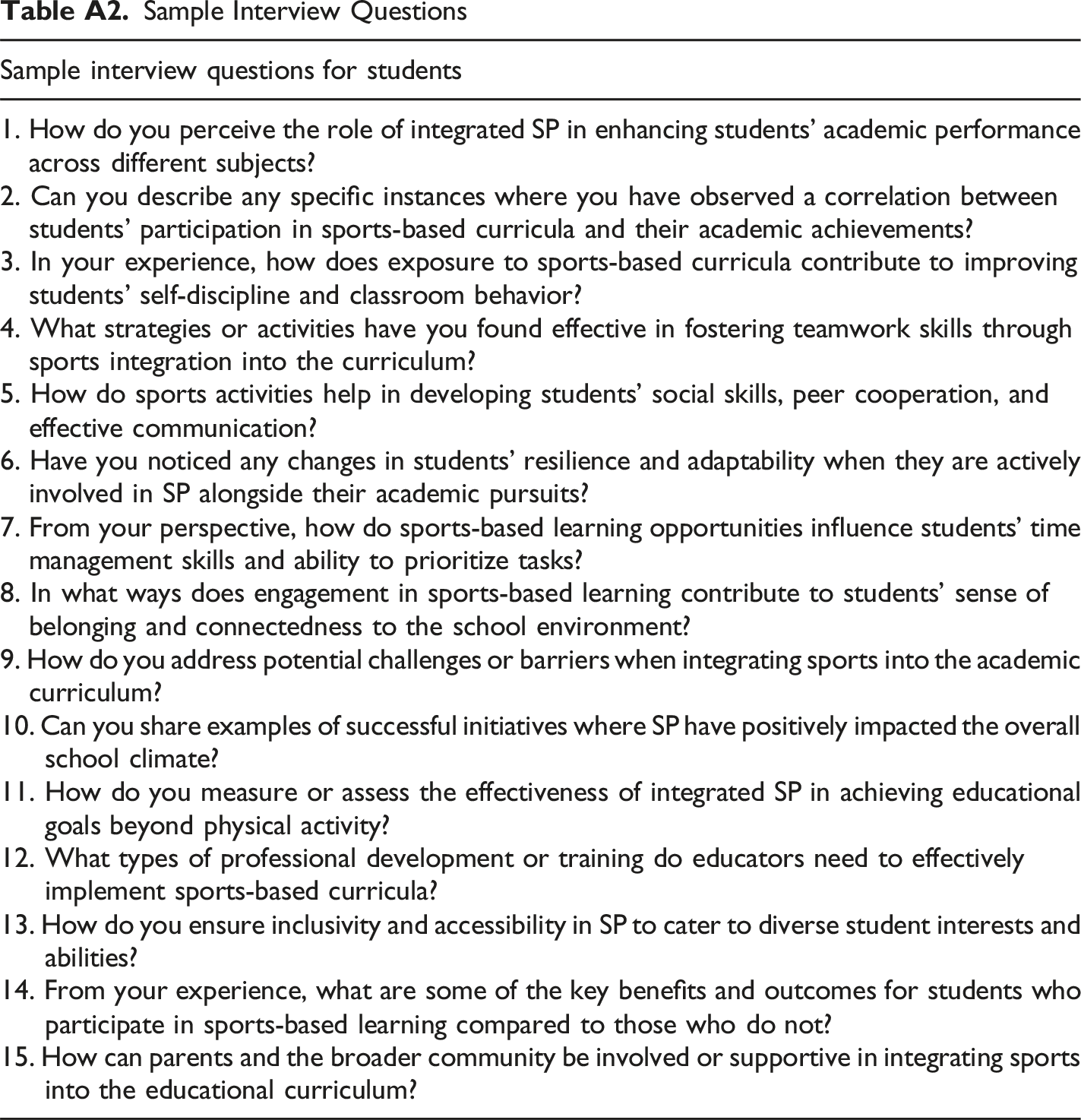
Sample interview questions for students
1. How do you perceive the role of integrated SP in enhancing students’ academic performance across different subjects?
2. Can you describe any specific instances where you have observed a correlation between students’ participation in sports-based curricula and their academic achievements?
3. In your experience, how does exposure to sports-based curricula contribute to improving students’ self-discipline and classroom behavior?
4. What strategies or activities have you found effective in fostering teamwork skills through sports integration into the curriculum?
5. How do sports activities help in developing students’ social skills, peer cooperation, and effective communication?
6. Have you noticed any changes in students’ resilience and adaptability when they are actively involved in SP alongside their academic pursuits?
7. From your perspective, how do sports-based learning opportunities influence students’ time management skills and ability to prioritize tasks?
8. In what ways does engagement in sports-based learning contribute to students’ sense of belonging and connectedness to the school environment?
9. How do you address potential challenges or barriers when integrating sports into the academic curriculum?
10. Can you share examples of successful initiatives where SP have positively impacted the overall school climate?
11. How do you measure or assess the effectiveness of integrated SP in achieving educational goals beyond physical activity?
12. What types of professional development or training do educators need to effectively implement sports-based curricula?
13. How do you ensure inclusivity and accessibility in SP to cater to diverse student interests and abilities?
14. From your experience, what are some of the key benefits and outcomes for students who participate in sports-based learning compared to those who do not?
15. How can parents and the broader community be involved or supportive in integrating sports into the educational curriculum?