






Abstract
The Information Technology (IT) field is growing in the direction of the need to not only possess good technical skills but also good interpersonal skills to be able to cooperate and achieve success in a project. Emotional intelligence (EI) is a concept that has been identified as significant to the effectiveness of communications among IT professionals. This is a quantitative research on how EI and communication skills (CS), and other related psychological variables, including self-efficacy (SE), communication apprehension (CA), empathy, and social influence (SI), relate to each other. The participants were 535 IT professionals, comprising software developers, system analysts, project managers, and IT consultants. The study employed a purposive sampling method to administer the structured questionnaire. Data were analyzed using Statistical Package for the Social Sciences (SPSS) for preliminary analyses and SmartPLS 4 for confirmatory factor analysis (CFA) and structural equation modelling (SEM). The results indicate that EI, SE, and empathy are positively associated with CS, CA shows a negative association, whereas SI is a significant predictor of CS in a group setting (all paths p < 0.05). The novelty of this study is its combined analysis of the EI and various communication and related psychological constructs in the specific context of IT professionals, which has not been studied extensively in the literature. The results also present practical recommendations for the IT organizations since they highlight the necessity of developing emotional competencies that can improve communication and teamwork, and consequently, improve individual and organizational performance.
Keywords
Introduction
Emotional Intelligence (EI) is the skill to identify, perceive, and handle personal feelings and share emotions with other people (Ida & Prabakar, 2024; Nazrin, 2024). It includes motivation, self-control, self-awareness, and social skills, all of which influence behavior, judgment, and interpersonal interactions. High EI helps to have improved relationships, communication, and solve problems, thus improving personal and professional outcomes (Kusumah, 2024). Communication skills (CS) refer to the skill to express ideas, actively listen, and comprehend the message of others (Broeckelman-Post et al., 2023). In Information Technology (IT) environments, where the level of stress is very high, deadlines are fast, technologies change rapidly, and the work is done by groups of people, EI and CS play an indispensable role in conflict management, constructive feedback, and the efficient cooperation between the team members (Hessari et al., 2025). This research thus examines the interaction between EI and CS in IT professionals and how emotional and interpersonal competencies promote effective communication in technology-based work environments.
Although EI and communication were identified as important competencies (Kukah et al., 2022; Montes et al., 2025), limited empirical investigation has explored the effect of EI on communication and other aspects of IT professionals. One of the few investigations in this area was carried out by Shrivastava et al. (2022), but the study researched interprofessional development of leadership in the healthcare environment, which is not applicable to workplaces based on technology. The majority of the literature focuses mainly on general corporate settings, healthcare, education, or a leadership-related environment (Lundqvist et al., 2023), and there is a lack of understanding about the function of EI and CS in the work of high-paced IT environments. Even though there is a significant amount of research on the topic of EI and communication separately (Fiori et al., 2022), limited studies investigate the interrelated effect, specifically with reference to psychological constructs like self-efficacy (SE), communication apprehension (CA), empathy, and social influence (SI). Other existing research uses quantitative models to analyze the efficiency of communication (Chinoy et al., 2022; Darwanto et al., 2024), but without integrating multiple dimensions of EI and IT-specific issues. This present research fills these gaps by examining direct correlations between EI and CS, as well as other related psychological variables that give a deeper comprehension of the role of emotional competencies in improving communication efficiency in IT workplaces.
This research is novel as it concentrates on an integrative analysis of EI and CS in the context of IT professionals, a group that is still underexplored in the current research on EI and communication. In contrast to the previous research studies that mostly focus on general organizational, healthcare, or educational contexts, the current research places EI and communication in the context of technology-intensive, high-stress, and digitally mediated workplaces. Moreover, this research includes several psychological constructs, such as SE, CA, empathy, and SI in one structural equation model to analyze their direct impact on CS. Through empirical modelling of these relations, the study provides a nuanced and theoretically rich insight into how emotional competencies are converted into communication practices in IT workplaces, which contribute to existing literature both contextually and methodologically.
Research Objectives
.
Literature Review
The literature review explores three pivotal areas, including the fundamentals of human communication processes, the intersection of psychology and communication, as well as the SIs in communication. This analysis highlights the major gaps in the current literature, which is the basis and focus of the present research.
Foundations of Human Communication Processes
The human communication processes of verbal and nonverbal mechanisms through which people constitute a shared meaning form the basis of social interaction. Communication is no longer being viewed as an isolated message exchange, but rather is being conceptualized as a dynamic process that has psychological, contextual, and relational influences. Misau (2023) has added to this background knowledge by providing a conceptual analysis in detail of communication systems, their channels, modes, and communicative structures, and by highlighting the importance of shared understanding in successful message transmission. Although this model elucidates critical aspects of human communication, its abstractness lacks empirical understanding of the processes of such mechanisms in the context of particular professional or technology-based situations. It is on this theoretical base that empirical studies have become more and more focused on the psychological factors of effective communication. Tegegne and Wondimu (2024) demonstrated that effective communication and EI significantly influence the organizational dedication of university teachers, and that communication somewhat mediates the connection between EI and commitment. The finding of the research highlights a recurring pattern in the literature that communication effectiveness is often a mediating variable that links psychological characteristics to organizational performance. Nevertheless, in spite of the high reported EI and communication competence, the level of organizational commitment was rather low, which indicated that the skills of individual communication were not aligned with the greater institutional and contextual variables. Likewise, Aydın (2024) identified positive relationships among the SE of communication and personality factors among university students, supporting the connection between psychological dispositions and communication competence perception. While the effects align with the findings of Tegegne and Wondimu (2024) in depicting the importance of internal psychological resources, the extension of these results to the workplace is limited. This research, taken together, presents a pattern of correlation between affective and psychological traits and the performance of communication. However, they point to the need for integrative studies that explore communication processes in professional, technologically-driven sectors of the world, such as the IT industry, where communication is increasingly mediated and context-specific.
Intersections of Psychology and Communication
The studies that have been conducted at the intersection of psychology and communication always show that both emotional and cognitive variables have a primary influence on the effectiveness of communication, especially in learning and socially mediated settings. Chau et al. (2024) offered empirical data according to which online collaborative learning can help decrease intercultural communication anxiety and enhance intercultural communication proficiency. Nevertheless, according to their results, there is also a situational variability since the success of digital collaboration was found to be more advantageous among cultural populations, where Vietnamese participants were more successful in online interaction, and Taiwanese participants were more receptive to face-to-face training. This difference implies that the technology-mediated communication does not dictate the influence of CA and competence, but rather it is influenced by culture and psychology. In addition to this view, Agrawal and Krishna (2021) showed that CA has a negative impact on perceived learning and psychological well-being, especially when the conditions are highly stressful. The results also revealed that the intentions of people toward social media use can lessen communication anxiety’s detrimental effects, which highlights the importance of psychological preparedness and technology acceptance in the mediated communication situation. The findings of this investigation are aligned with the findings of Chau et al. (2024) regarding the possibility of electronic communication to reduce apprehension, but on the other hand, they present a radically opposite point of view that technological communication can both relieve and increase psychological pressure depending on the individual’s level of stress and attitude toward technology.
By going beyond the apprehension factor and using a psychological lens, Fu et al. (2022) discovered that empathy is also a significant predictor of prosocial communicative behaviors, and the perceived social support is an important mediating factor. This observation confirms the feeling that communication is aided and interpreted using emotion-based psychological characteristics. The unique direction in these studies is that psychological constructs, CA, stress, empathy, and social support are the primary factors that can influence communication outcomes to the greatest extent. However, the methodological flaws are present, as the excessive sampling of students and adolescents. This limits the findings’ applicability to the professional environments, specifically IT professions, where communication is usually technologically mediated and shaped by the organizational needs.
SIs in Communication
The SI processes are very crucial in determining how individuals communicate in social groups and organizational structures. According to Tveleneva et al. (2023), one of the primary factors influencing the prediction of conformity behaviors is individual-level variations in self-construal. As a result, the type of self-construal affects both the degree of behavioral compliance and the degree of neural activation of the social cognition and valuation regions. These findings suggest not only the influence of a clear social norm on communication and decision-making in groups but also a high level of psychological orientation. Nonetheless, this has been constrained by the controlled experimental tasks and neuroimaging measures, allowing further generalization of the studies to the real-world communication process in the workplace, where SI works amongst more dynamic and complicated environments. Van Zoonen and Sivunen (2022) pointed to the psychological implications of mediated communication and remote work and indicated that increased levels of psychological stress and loneliness among employees are linked to greater dependence on digital communication. This is contrary to presumptions that the higher the connectivity, the greater the communication in the group is expected, where a conflict between the frequency and quality of communication is realized. Another study by Gozali (2022) supported the significance of social communication environments by demonstrating that good communication is linked positively with self-esteem and SE of the employees. Collectively, these results reveal a common trend according to which the process of SI and cultural patterns of communication influence the well-being of individuals and the dynamics of the group. Even though there is an increasingly growing body of evidence that SI significantly affects the outcomes of communication, the literature has been methodologically divided. Research methodologies are diverse, ranging from the neurophysiology of experiments to organizational surveys and literature reviews. Besides, the focus on how conformity, compliance, and mediated communication affect each other to affect decision-making processes in technology-driven professions has received limited attention. This discrepancy highlights the necessity to conduct an integrative empirical study that analyzes communication mechanisms and SI in the IT industry of employment, where collaboration, remote work, and decision-making in teams are the key to a successful professional activity.
Research Gap
Although there is extensive literature regarding human communication and its psychological foundations, there are still some important gaps in the literature. Existing literature often analyses EI, SE, CA, empathy, and SI as independent predictors of communication outcomes instead of interdependent psychological and social constructs working in the context of a professional environment (Fu et al., 2022; Misau, 2023; Tegegne & Wondimu, 2024). There is always an indication of positive correlation between EI and communicative effectiveness, SE, and communicative confidence (Aydin, 2024), but much of that is based on a student or educational sample, which limits applicability to the professional setting. Likewise, the effects of CA on learning, well-being, and quality of interaction have been noted to be adverse although the differences between digital and face-to-face contexts arise, and, therefore, it can be concluded that tensions related to the impact of psychological stress and technological communication on the effectiveness of communication remain unsolved (Agrawal & Krishna, 2021; Chau et al., 2024). Empathy studies emphasize the importance of supporting and prosocial communication, yet these studies are usually limited to the context of adolescents or non-professional groups and are not often combined with the larger framework of CS (Fu et al., 2022). Moreover, SI and conformity literature show that they can have an effect on group behavior and psychological performance, but there is an absence of unified models explaining the influence of compliance and conformity on group communication and decision-making in work environments that utilize technology (Gozali, 2022; Tveleneva et al., 2023; Van Zoonen & Sivunen, 2022). Taken together, all of these gaps highlight the necessity of integrative studies that investigate the combined influence of emotional, cognitive, and social factors in forming CS and the quality of interaction in IT careers where communication becomes increasingly collaborative and central to the performance of the profession.
Research Questions
Theoretical Framework
The theoretical framework explores the complexity of the interaction between psychological constructs in the communication process. The framework also examines how personal relationships shape communication patterns.
EI Theory
EI theory defines EI as the capacity to feel, evaluate, and control one’s own emotions as well as those of others (Mayer et al., 2004). It includes emotional control, self-awareness, social empathy, and motivation (Antonopoulou, 2024). Not only is it considered to be a psychological trait, but it is also an indispensable element to interpersonal and professional relationships. In IT, most professionals are expected to deal with others working under greater demands and even in high-pressure situations that require better communication and relationship skills. People who possess good EI are most likely to be viewed as aggressive communicators who would lean more towards empathetic and constructive ways of handling interpersonal relationships. The EI is positively associated with the effectiveness of communication and implies that empathy is converted into caring and understanding during the communication process (Giménez-Espert et al., 2020). The study shows the implications of the emotional competencies on successful interpersonal communication as they pass through them to better collaboration, improved decision-making, and group cohesion in technology-intensive workplaces.
The EI Theory applies to the current research since it offers a systematic approach to the comprehension of how emotional awareness, regulation, and empathy can be converted into the qualities of visible CS in professional situations. Communication in IT workplaces often requires discussing and providing feedback as well as coordinating work between teams, and emotional misinterpretation may undermine the effectiveness (Bahrain et al., 2023; Paredes-Saavedra et al., 2024). This research uses the EI theory to operationalize EI and empathy and CS in studying how emotional competencies can be used to fulfill effective transmission of messages, listening, and communicating emotionally. Such a theoretical background enables EI to be studied as not a personality characteristic in a general sense, but as a practical psychological asset that can be directly used to promote the effectiveness of communication in technology-oriented settings.
Social Cognitive Theory
Albert Bandura created social cognitive theory in 1986 to demonstrate the interactive combination of environmental, behavioral, and personal factors in the development of human behavior (Bandura, 1991). This theory has been expressed through the concept of SE, which can be defined as the belief in having the ability to plan and carry out the required courses of action to cope with the future situation (Stajkovic & Luthans, 1998). A high SE employee sees himself as being good at communication and is therefore focused in such a collaborative environment, such as the IT environment, where knowledge is very critical in performing the tasks and roles. Confidence in communicating under severe situational anxiety or social pressure increases as SE increases (Lent et al., 1994).
The social cognitive theory plays the key role in this study since it elucidates the communication practices as a result of perceived abilities instead of pre-determined traits of individuals. The concept of SE is operationalized in the current study as the belief that a person is capable of effectively communicating in professional relationships, especially when something that requires assertiveness, clarity, and initiative is needed. Assertive communication in the IT workplace environment is necessary to express technical opinions, clarify misunderstandings, and engage in shared decision-making. A theoretical framework is provided by the social cognitive theory to study the tendency of people with greater SE to perform direct, confident, and active communication in comparison to those with lower SE who can avoid communication or practice it less effectively because of a fear of negative evaluation or failure (Lent et al., 2022; Yang & Zhang, 2022).
Uncertainty Reduction Theory
According to uncertainty reduction theory (URT), a person’s desire to reduce uncertainty in social interaction through communication (Checton, 2010). Originally designed to comprehend how strangers talk with one another, the theory holds that people are motivated to gather information to predict or explain the behavior of the other party. With increased clarity, they can reduce relational uncertainty and social discomfort. The theory points out strategies of passive observation, active inquiry, and interactive dialogue that have a hand in reducing interpersonal uncertainty. In technology-induced workplaces, professionals are involved in interactions very frequently, and high levels of uncertainty and fear of being judged may lead to withdrawal, distortion of meaning, or interpersonal conflict. CA, a key barrier to reducing uncertainty, prevents one from seeking clarification or being fully involved in team interactions. Hence, uncertainty handling must be one of the most important keys to achieving clear, open, and effective communication (Allen et al., 2007). Using these principles of URT, this study shows how the desire to eliminate ambiguity is strongly influential on communicative behavior, especially in environments where precision and teamwork are pivotal.
URT is also applicable in this research since it gives the means through which people deal with uncertainty during interpersonal interaction, especially in terms of information-seeking and participation behavior. Complex problems, a lack of clarity on what is expected, and people communicating using unfamiliar technology are key reasons for uncertainty in professional IT environments (De & Bakhshi, 2024; Deb & Sengupta, 2025). Those behaviors, which aim at reducing uncertainty, are negatively affected by CA, which is the conceptualization of the fear of interaction in this context, and this outcome leads to a lower quality of communication. By considering CA as a factor that decreases one’s openness to uncertainty, this study employs URT to locate the problem of discomfort with uncertainty among the issues that hinder participants from free conversation and joint interaction. Therefore, this theory provides a good conceptual basis through which it can be argued that reduced uncertainty plays a role in promoting clearer and more efficient communication processes within the organizational context.
A combination of these theories provides a coherent framework in which EI, perceived communication competence, uncertainty management, and SI processes work together to develop CS in modern IT workplaces.
Conceptual Framework
The study’s conceptual framework is set up in such a way as to investigate the empirical links between the specified psychological factors and the outcomes of communication in professional settings. Instead of considering emotional and social constructs as distinct qualities, the framework views EI, SE, CA, empathy, and SI as mutually connected psychological resources that influence CS, the quality of interpersonal interaction, and the communication dynamics at the group level. The framework allows observing the relational impact of these constructs on communication in the modern, technology-mediated work setting in a systematic manner by modeling them as quantifiable variables.
Figure 1 shows the conceptual framework. The study’s hypotheses have theoretical foundations in EI theory, social cognitive theory, and URT, each offering a clear rationale for the relationships between the operationalized variables. The explanation of H1 and H4 regarding the role of emotional awareness, regulation, and empathy as core competencies to develop CS provides the basis of EI theory, which states that people with higher EI levels and more empathy tendencies are theoretically more adept at processing emotional signals, responding sensitively, and interacting in a caring and effective manner. H2 and H5 are grounded in the social cognitive theory and the importance of perceived capability, as well as socially acquired behaviors in conditioning outcomes of communication. In this situation, SE is explained as a belief in their communication competence, which enables one to express oneself in an assertive manner, whereas the SI is measured with compliance and conformity tendencies and represents the way individuals would modify communication behaviors depending on social expectations and group norms. URT supports H3 through the conceptualization of CA to encompass psychological impediments that augment the context of uncertainty and anxiety during communication, consequently, reducing clarity and effectiveness of communication. Taken together, these theories provide the rationale to include EI, SE, CA, empathy, and SI as independent variables and place CS at the center as a dependent variable, providing a theoretically coherent account of the influence of psychological processes on communication in the professional and interpersonal context. Conceptual framework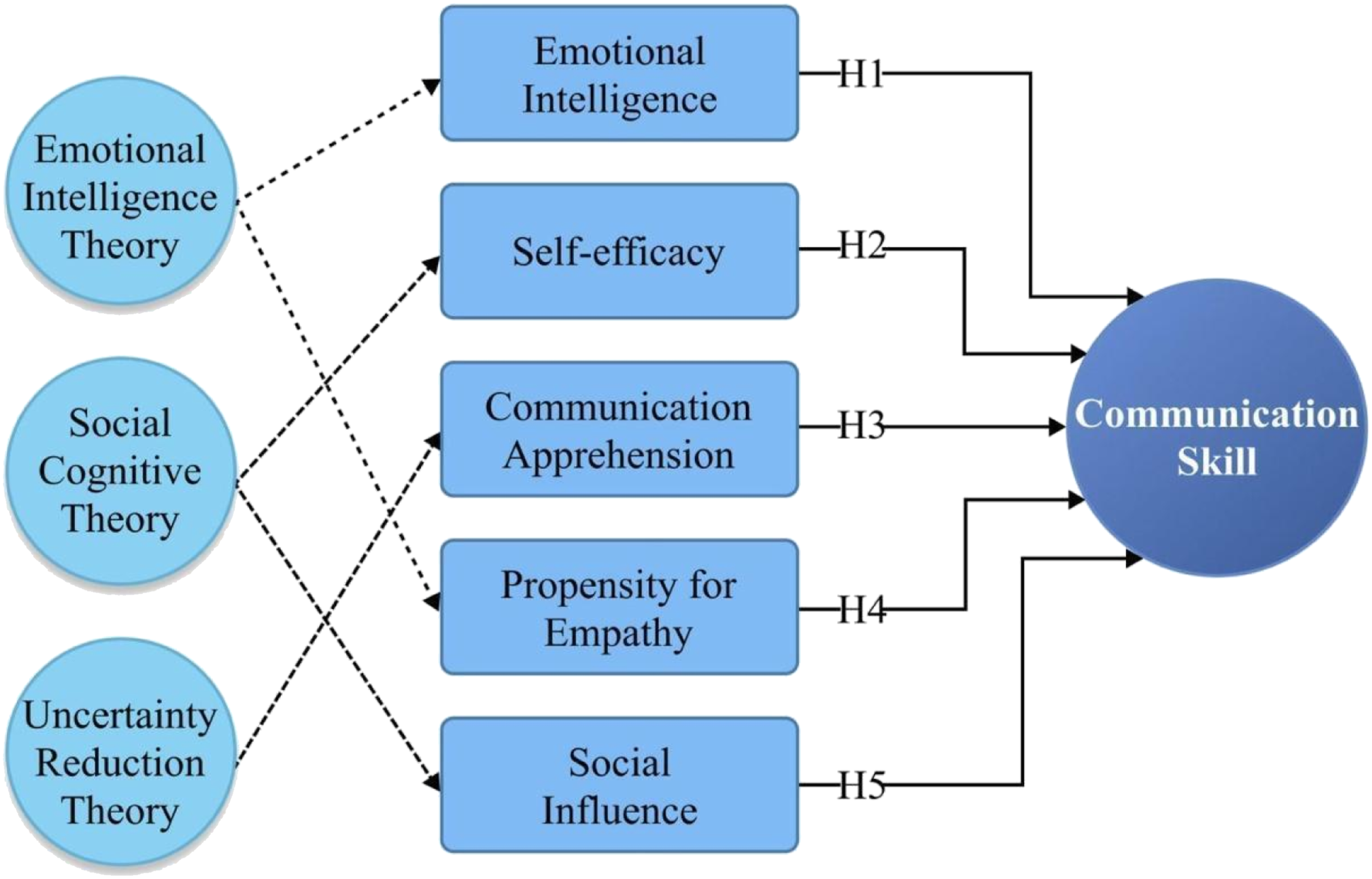
EI and CS
Individuals who have high EI scores tend to have better CS than people who have lower EI scores. Self-awareness, self-regulation, motivation, empathy, and social skills are among the key sources that contribute to the way people relate with other people in society (Kour & Bhatia, 2025). In this way, people with higher EI will be identified as possessing superior CS, verbal, and non-verbal skills. People who have high EI can understand the experience of feelings of other people and behave accordingly, solving conflicts constructively, and employ their social skills in the development of interactions between people. As an example, the high requisite of empathy is a person’s capacity to be an active listener, attentive to the position of others, and sensitive to their responses to enable an individual to improve the effectiveness of communication. The presence of an emotionally intelligent person is quite high concerning the ability to be most compelling, pushy, and cooperative in their behavior. Communication is not concerned with imparting knowledge and converting one’s thoughts into words; knowing and relating are significant to a certain emotion or situation of communication in IT. By so doing, it enables emotionally intelligent persons to gain more clarity, influence, and harmony in interrelations in their feedback. Therefore, the value considerations of EI as an indicator of contribution to efficient communication, which elicits its value as relevant to the educational domain, leadership, and team-based contexts (Paredes-Saavedra et al., 2024).
EI is positively associated with CS.
SE and Assertive Communication
SE defines the attitude of an individual to challenges, relations with others, and managing social pressures, which significantly contribute to communication (Bergman et al., 2021). High SE usually means that one has greater confidence in self-expression or boundary setting and boundary protection in any given situation, particularly with other individuals or group situations. SE functions based on motivational, emotional controls, and resilience, which promote assertiveness (Akeren et al., 2025). Lack of SE results in fear of negative evaluation, avoidance of confrontation, and inability to express needs. This particularly applies in the educational and workplace context, whereby self-disclosure and negotiation will take one far in terms of collaboration and conflict resolution. It is also demonstrated that raising the SE rates raises the assertive communication levels, thus repeating the description of both constructs (Meliá et al., 2024).
SE is positively associated with assertive dimensions of CS.
CA and Interpersonal Communication Quality
CA describes an anxiety and fear of people when communicating; it also affects the quality and effectiveness of communication interactions between people (Sweet et al., 2023). It has many dimensions that include fear of talking to people around, fear of approaching strangers in a social environment, lack of smooth conversations during one-on-ones, and is also a factual hindrance to clear and confident expression of thoughts. An individual who experiences a significant degree of communication anxiety will experience poor eye contact and disjointed speech patterns as they retreat in the interaction. On the other hand, less anxious people converse more verbally, confidently, and openly, which creates a more significant, positive weight on interpersonal interaction (Welesilassie & Nikolov, 2024). CA should be resolved and de-escalated by using numerous actions, including CS training or therapeutic measures, which could be necessary to engage in more positive and effective interpersonal communication.
CA is negatively associated with CS.
Empathy and Communication Behaviors in Interpersonal Relationships
Employees who have a greater inclination to empathy indicated in psychological measures, have a greater likelihood of inducing more empathetic communication behaviors in interpersonal relationships. The concept of empathy and the possibility of comprehending and feeling others an important factors in advancing significant relationships. In personal interaction, people with high empathy ratings in their empathy tests are better placed in identifying and understanding the emotional feelings of their partners, friends, or other workmates. This will allow them to customize their communication to provide support, demonstrate understanding, and establish understanding successfully (Aldrup et al., 2022). Being empathetic, people tend to be more patient and tolerant in communication, which helps to establish a friendly atmosphere where both parties are free to discuss the topic and understand each other (Johnson & Johnson, 2023). These sympathetic communication actions result in the development of more robust, more peaceful interpersonal relationships by the individuals, with a strong empathy propensity, in which emotional attachment and rapport work.
Propensity for empathy is positively associated with caring and understanding CS.
SI and Group Communication Dynamics
The degree of SIs, as measured in terms of compliance and conformity orientations, has an immense influence on group communications and decision-making (Gass & Seiter, 2022). Compliance is the ability of people to change their behaviors based on a direct request, and conformity is the ability to change personal behavior based on the norms or expectations of a group. Highly compliant and conformist people in the group might alter their communication in the presence of the group despite having counter-private beliefs or preferences (Chan et al., 2025). Compliance and conformity to high levels in a group can result in coherent decision-making processes in which group members can feel aligned in their opinions to find an agreement (Hollebeek et al., 2022). Nonetheless, too much conformity can suffocate creativity and independent thinking, which can be counterproductive to the exploration of different ideas. Poor compliance and conformity may lead to conflict or challenges during the making of the collective decisions. The leaders need to strike a balance between the necessity to have unity and the necessity to stimulate different viewpoints. Groups can support an atmosphere of healthy debate, innovation, and sound decision-making by regulating compliance and conformity behaviour.
SI, as reflected through compliance and conformity tendencies, is significantly associated with CS in group contexts.
Collectively, the conceptual framework places psychological characteristics not as an abstract attribute, but as measurable predictors of communication outcomes. Through empirical studies of EI, SE, CA, empathy, and SI, the framework enables a systematic assessment of the relationship between individual and social psychological dimensions and communication effectiveness at individual and group levels. This approach is relevant because it is based on a theoretically-driven, yet methodologically-appropriate study of communication behavior in an organizational setting.
Methodology
The methods used in this investigation is described in this section, encompassing the research design, target population, data collection tools and procedures, sample demographics, variable measurements, and data analysis techniques.
Research Design
This study used a quantitative method, where online questionnaires were used as the data collection tool to reach out to the IT professionals, who comprise software developers, system analysts, project managers, and IT consultants. A purposive sampling approach was used in order to select the participants who have the required professional background in technology-driven work environments where frequent interpersonal and team-based communication is required. This quantitative design offers the advantage of objectively measuring patterns and relationships between variables. Therefore, it has been a key support for the objective of this study, which is to examine the psychological factors affecting CS in IT workplace settings.
Target Population
The research population in the study includes people who are working in the IT industry, such as software developers, system analysts, project managers, and IT consultants. These people are chosen among different IT organizations and institutions, avoiding those who do not regularly communicate with people and teams within the professional field. The target group encompasses a diverse range of experience levels, from entry-level professionals to seasoned experts with over 15 years in the field. This is complemented by an age distribution spanning participants under 30 to those over 50, allowing for a comprehensive analysis of the sample.
In order to construct a sample that would suit the research objectives, when taking into consideration IT professionals, the inclusion criteria were specified clearly, and a purposive sampling strategy was used. The respondents were supposed to be employees who are currently in the IT industry, they should have a job that requires them to interact with other people regularly, either individually or in groups, and must have at least one year of professional experience to provide adequate exposure to workplace communication engagement. The potential participants were identified via company official websites and via professional networking services, as well as public corporate directories, which were sources of information concerning the job positions and professional affiliations. This served as the centralized method to make sure that invitations were sent to selected individuals with professional roles that were pertinent to the research on the communication process in technology-based set-ups.
Data Collection Tool and Procedure
A structured questionnaire was used as the primary data collection instrument in the research. These questionnaires were designed to fit the objectives of the research. A pilot test of the questionnaire was completed before the actual data collection period. The pilot test included fewer participants who were not included in the final sample. This helped to make sure that any ambiguity, confusing words, or flow of questions could be detected and corrected. The websites of the organizations where the potential participants worked were used to obtain their email addresses. This approach made sure that the population of the research comprised professionals who were pertinent to the area being studied. Initially, 700 questionnaires were distributed to the study population. The process of distribution through the Internet allowed the outreach to be wide. A total of 602 participants completed the questionnaires. Following a systematic filtering process to remove incomplete or irrelevant responses, the final analysis was based on 535 valid questionnaires. Through data screening, the responses were reviewed to ensure they aligned with the study’s target population. Any responses from individuals not currently working in IT-related jobs were not included in the final dataset. This selection process ensured that the obtained sample consisted of IT professionals who have a work environment that frequently involves technology-based and interpersonal communication in the workplace. A sample of the questionnaire employed in this study is provided in the appendix Table A1.
Demographic Details
The demographic information (Figure 2) gives an overview of the composition of the study’s sample. The study’s sample is gender balanced, 306 males (57.19%) and 229 females (42.80%). Participants involved in the research are of different ages. The sample under 30 years of age is 17.00%, 30–50 years and above 50 years comprises 47.66% and 35.32%, respectively. This wide age range allowed for investigating the possible age-related variations in the perception and involvement of the interplay of psychology and communication. Demographic details of the participants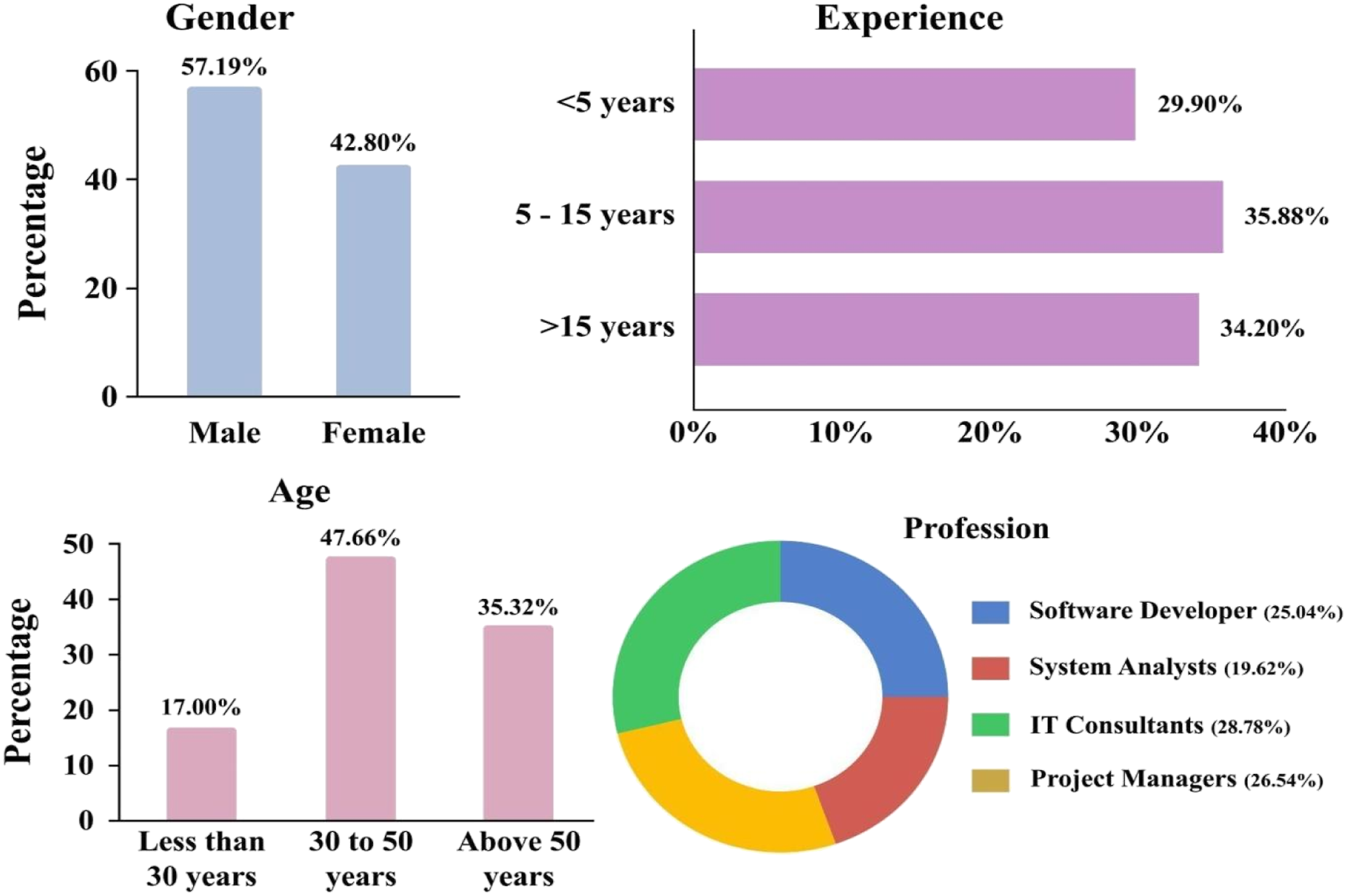
The sample is representative of a range of work experience. About 29.90% of the respondents have less than 5 years, 35.88% have experience of between 5 and 15 years, and 34.20% of the respondents have experience of over 15 years. The research encompasses an extensive knowledge base in the field of IT, with 25.04% being software developers, 19.62% system analysts, 26.54% project managers, and 28.78% IT consultants. The diversity of professionals ensured the multifactorial research of the interdependence of EI and communications in IT professionals. The different expertise in IT offered different information, and this diversified the research on a comprehensive perspective of the continuum with regard to the process of human communication in a technology-driven world.
Variables and Measures
Multi-item scales were used to measure all the latent constructs in this study so as to have adequate reliability and construct validity. The measurement of EI, SE, CA, propensity towards empathy, and SI incorporated three items, whereas the measurement of CS as the dependent variable incorporated four items. All the items were based on the previously tested instruments to establish the content validity and relevance to the context of professional communication. The responses were subsequently quantified on a 5-point Likert scale, 1 (strongly disagree) to 5 (strongly agree).
Three items (EI1-EI3) were used to measure EI as the capacity of individuals to recognize, understand, and control emotions during their interaction, which were modified based on Raeissi et al. (2019) and Tegegne and Wondimu (2024). Referring to studies by Christensen and Ammentorp (2024) and Efthymiou et al. (2025), the SE was assessed using three items (SE1–SE3) that assessed the respondents’ confidence in their ability to manage challenging interactional situations and speak appropriately. CA was measured using three items (CA1–CA3) to measure anxiety and discomfort related to real or perceived communication, adopted from the research of Croucher et al. (2024) and Wang et al. (2025). According to Field et al. (2025) and Robertson et al. (2024), propensity to empathy (PE) was assessed using three questions (PE1–PE3), which showed people’s capacity to share and understand the emotions of others. The SI was determined with three items (SI1–SI3), which capture the tendencies of compliance and conformity in group communication situations according to the study by Cao et al. (2024) and Liang et al. (2024). The dependent variable was the CS that were evaluated through four items (CS1–CS4) to measure the clarity, effectiveness, and appropriateness of message expression and interpretation among the professional interactions adopted in the study by Tong (2024) and Uysal et al. (2025).
Data Analysis
The quantitative data gathered using the structured questionnaire were analyzed with the help of Statistical Package for the Social Sciences (SPSS) (in order to perform the preliminary analyses and to test the reliability) and SmartPLS 4 (in order to conduct the confirmatory factor analysis (CFA) and to do the structural equation modelling (SEM) and testing of the hypothesis). The process of analysis was conducted by measuring the reliability and validity of the measurement model. The discriminant validity was evaluated based on cross-loadings, Fornell-Larcker and heterotrait-monotrait (HTMT) ratios, and possible common method bias (CMB) was evaluated with the help of Harman’s single-factor test. After these tests, the structural model was subjected to examine the relationships proposed between EI, SE, CA, PE, SI, and CS, the significance of which has been tested using path coefficients, t-values, and p-values.
Descriptive Analysis
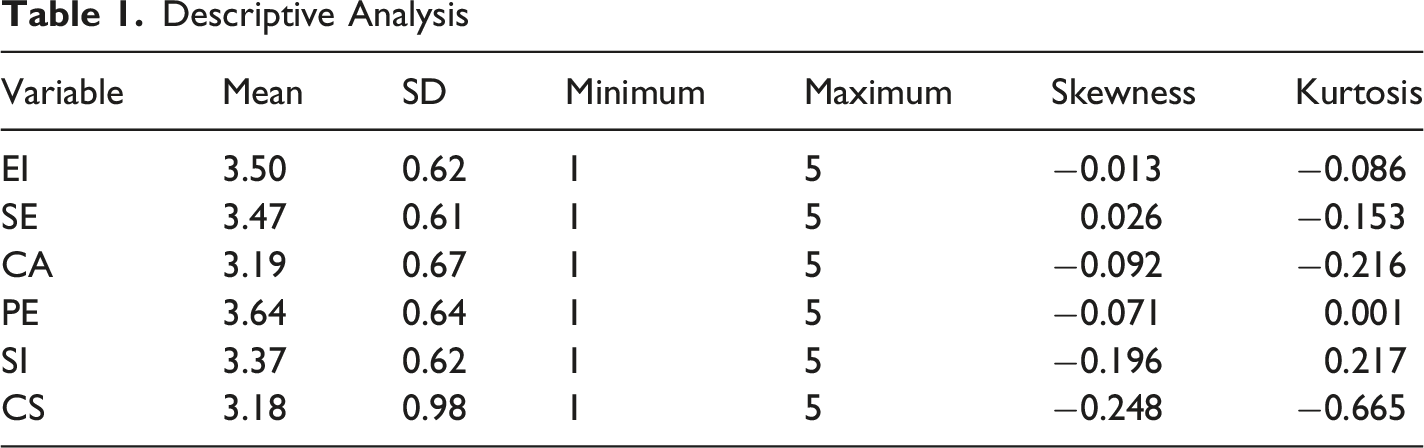
The skewness is used to measure the asymmetry of data distribution; a positive value of skewness represents the right-skewed distribution, whereas a negative value represents the left-skewed distribution. Kurtosis is used to quantify the peakedness of the distribution; a positive value of kurtosis is used to quantify a peaked distribution, and a negative one quantifies a flat distribution. Overall, the findings of descriptive statistics are the illustration and dispersion of the variables of the study among the participants.
Results
This section assesses the study’s findings and concentrates on the measurement model evaluation, the discriminant validity determination, the possible CMB, and the evaluation of the hypothesized relationships. CFA was used to assess the reliability and validity of the constructs, and SEM was used to test the relationship among EI, SE, CA, PE, SI, and CS.
Measurement Model Fitness
Fitness of Measurement Model
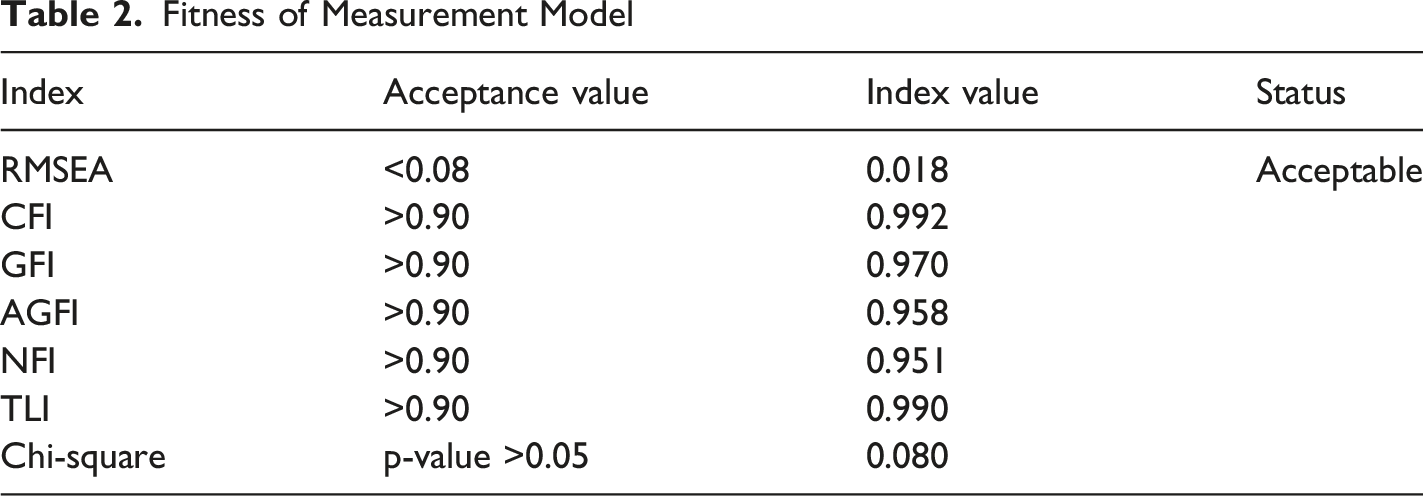
The value of the Comparative Fit Index (CFI) is 0.992, which is a better indication than the recommended 0.90. The values of the Goodness of Fit Index (GFI), Adjusted Goodness of Fit Index (AGFI), and Normed Fit Index (NFI) are all values greater than 0.90, indicating a good fit of the model. The value of the Tucker Lewin Index (TLI) stands at 0.990, which is within the acceptable range. The chi-square value is non-significant (p = 0.080), indicating no substantial difference between the observed and model-implied covariance matrices.
Confirmatory Factor Analysis
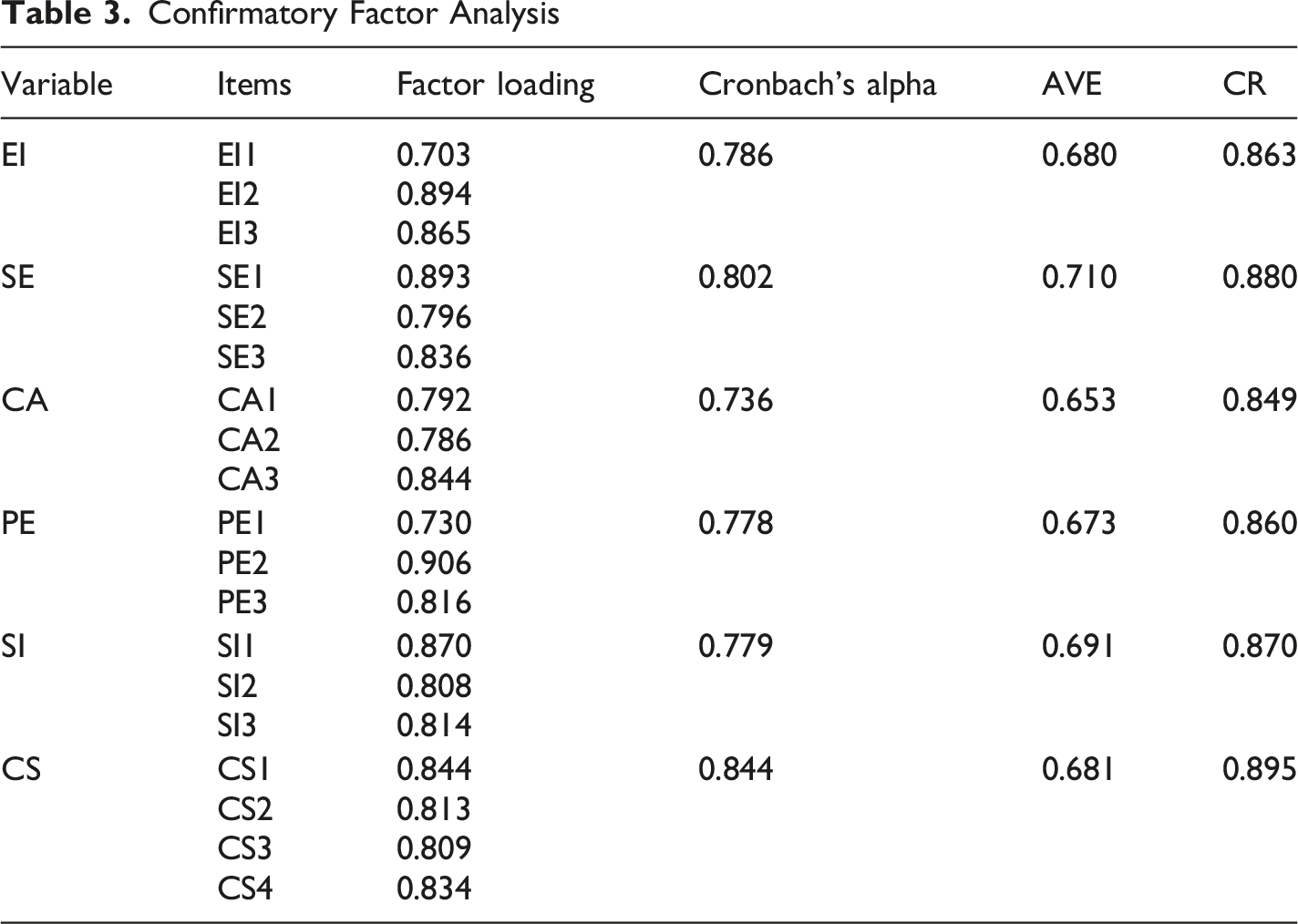
In the CA variable, the items CA1, CA2, and CA3 have strong factor loadings of 0.792, 0.786, and 0.844, respectively. This variable has a Cronbach’s alpha of 0.736, which is high in terms of internal consistency, and an AVE of 0.653 and a CR of 0.849. PE1, PE2, and PE3 have high factor loading with a value of 0.730, 0.906, and 0.816, respectively, in the PE variable. Cronbach’s alpha value is 0.778, and that indicates high reliability. The AVE is 0.673, and the CR is 0.860. The factor loadings of the SI variable, SI1, SI2, and SI3 are high with values 0.870, 0.808, and 0.814, respectively. The Cronbach’s alpha is 0.779, which indicates high internal consistency. The AVE is 0.691, and the CR is 0.870. The CS variable indicates that the items CS1, CS2, CS3, and CS4 have a significant factor loading of 0.844, 0.813, 0.809, and 0.834. The Cronbach’s alpha is 0.844, which shows that it has a high degree of internal consistency. The AVE is 0.681, and the CR is 0.895.
Discriminant Validity
Cross-Loadings
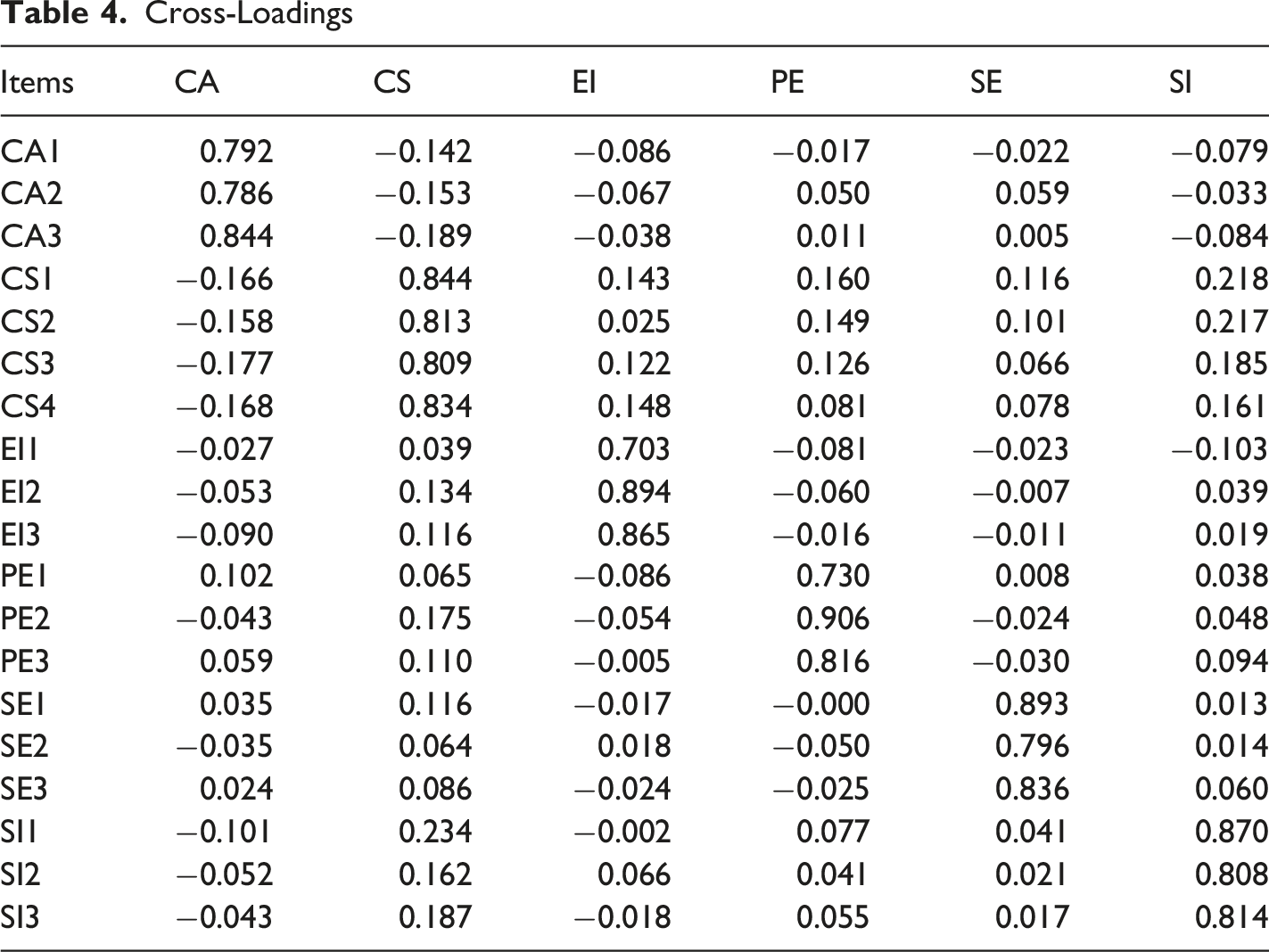
Under the EI constructs, EI1, EI2, and EI3 have strong loadings of 0.703, 0.894, and 0.865, respectively, and are thus able to fit well with this construct. Equally, in the SE construct, items SE1, SE2, and SE3 have strong loadings of 0.893, 0.796, and 0.836, respectively. The items CA1, CA2, and CA3 have high loadings of 0.792, 0.786, and 0.844 in the construct CA. In the case of the PE construct, PE1, PE2, and PE3 have high loadings of 0.730, 0.906, and 0.816, respectively. In the SI construct, items SI1, SI2, and SI3 are with values 0.870, 0.808, and 0.814, respectively. Meanwhile, for the CS construct, CS1, CS2, CS3, and CS4 are with a high loading of 0.844, 0.813, 0.809, and 0.834, respectively.
Heterotrait-Monotrait and Fornell & Larcker’s Discriminant Validity
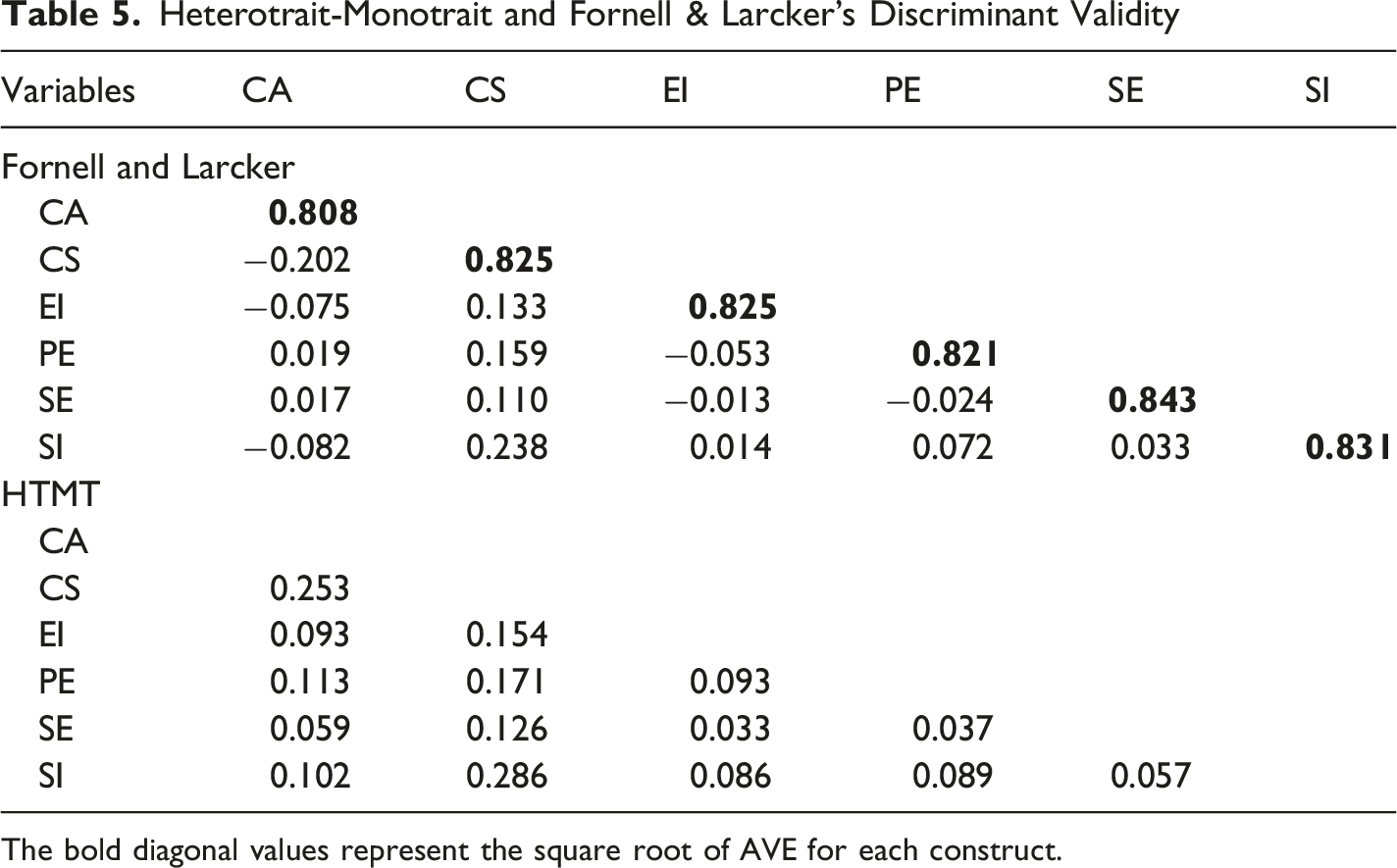
The bold diagonal values represent the square root of AVE for each construct.
Despite cross-loadings, the Fornell-Larcker and HTMT ratio methods for establishing discriminant validity, a significantly high correlation was observed between some constructs, particularly between EI and SE. This trend is theoretically plausible, as EI is strongly linked to people’s beliefs about their interpersonal relationship needs and their abilities to handle challenging communication situations; these are key aspects of SE. Theoretically, in professional IT practices, emotionally aware individuals tend to be more confident about their CS, and these constructs are inherently interrelated but conceptually distinct. Notably, the AVE values’ square roots of all constructs were higher than the inter-construct correlations, and the HTMT values were below the recommended threshold, confirming that each construct possesses empirical distinctiveness. Therefore, the observed correlations can be described as meaningful differences between constructs, but this does not indicate the presence of redundancy and multicollinearity issues in the measurement model. These findings affirm the appropriateness of retaining all constructs in the structural model to reflect their unique and complementary roles in CS.
Assessment of Common Method Bias
Procedural and statistical solutions were used to overcome the problems associated with CMB that could emerge due to using self-reported survey data. Procedurally, the questionnaire guaranteed anonymity and confidentiality, minimized evaluation anxiety, and relied on clear and concise items to minimize ambiguity and social desirability bias. Harman’s single-factor test was conducted as an initial diagnostic measure. All measurement items were entered into an unrotated exploratory factor analysis to examine whether a single factor accounted for the majority of covariance among the measures. The results indicated that the first factor explained less than 50% of the total variance, suggesting that CMB is unlikely to pose a serious threat to the validity of the findings. In addition, the satisfactory discriminant validity evidenced through the Fornell–Larcker criterion and HTMT ratios further supports the distinction among constructs and reduces concerns of method-driven inflation of relationships. Collectively, these results suggest that the observed relationships among the study variables are not primarily attributable to measurement artifacts or response bias, supporting the robustness of the subsequent hypothesis testing.
Hypothesis Analysis
Summary of Hypothesis Testing
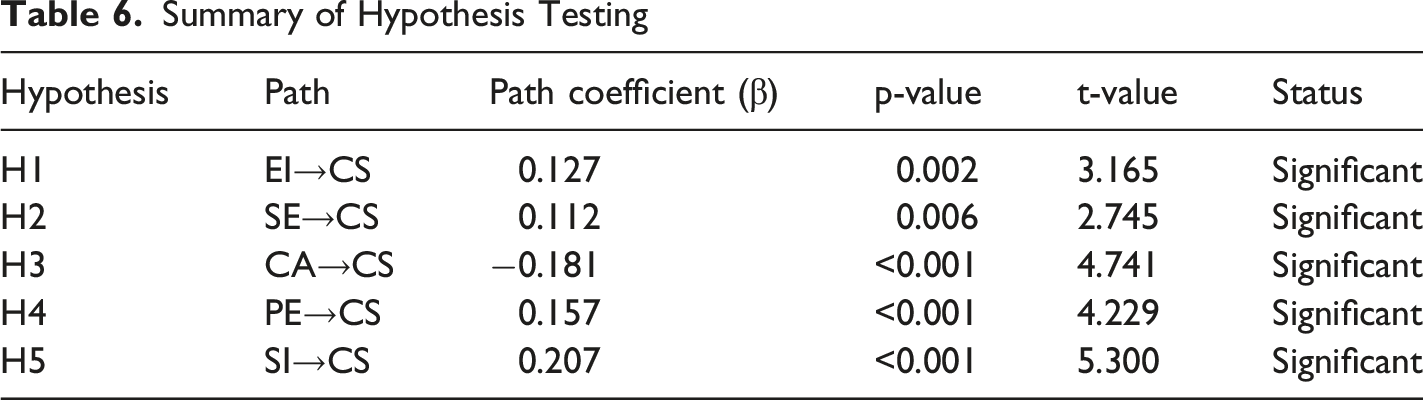
According to H3, CA negatively affects CS, β = −0.181, and this means that CA is able to decrease CS. The p-value is significant, and the t-value is 4.741, which supports the validity of the estimated coefficient. H4 suggests that variable PE affects variable CS with a β equal to 0.157, a p-value <0.001, and a t-value of 4.229, suggesting statistical significance. H5 implies that variable SI affects variable CS, having a β of 0.207, a significant p-value <0.001, and a t-value of 5.300.
Figure 3 shows the outcomes of the structural path analysis performed on hypothesis testing. The variables (H1 to H5) are specifications of relationships among variables. The paths refer to the directional relationship between these variables, whereas the values of standardized parameter estimates (β) measure the strength of these relationships and their direction. The p-values are used to evaluate the level of significance of each relationship. SEM path analysis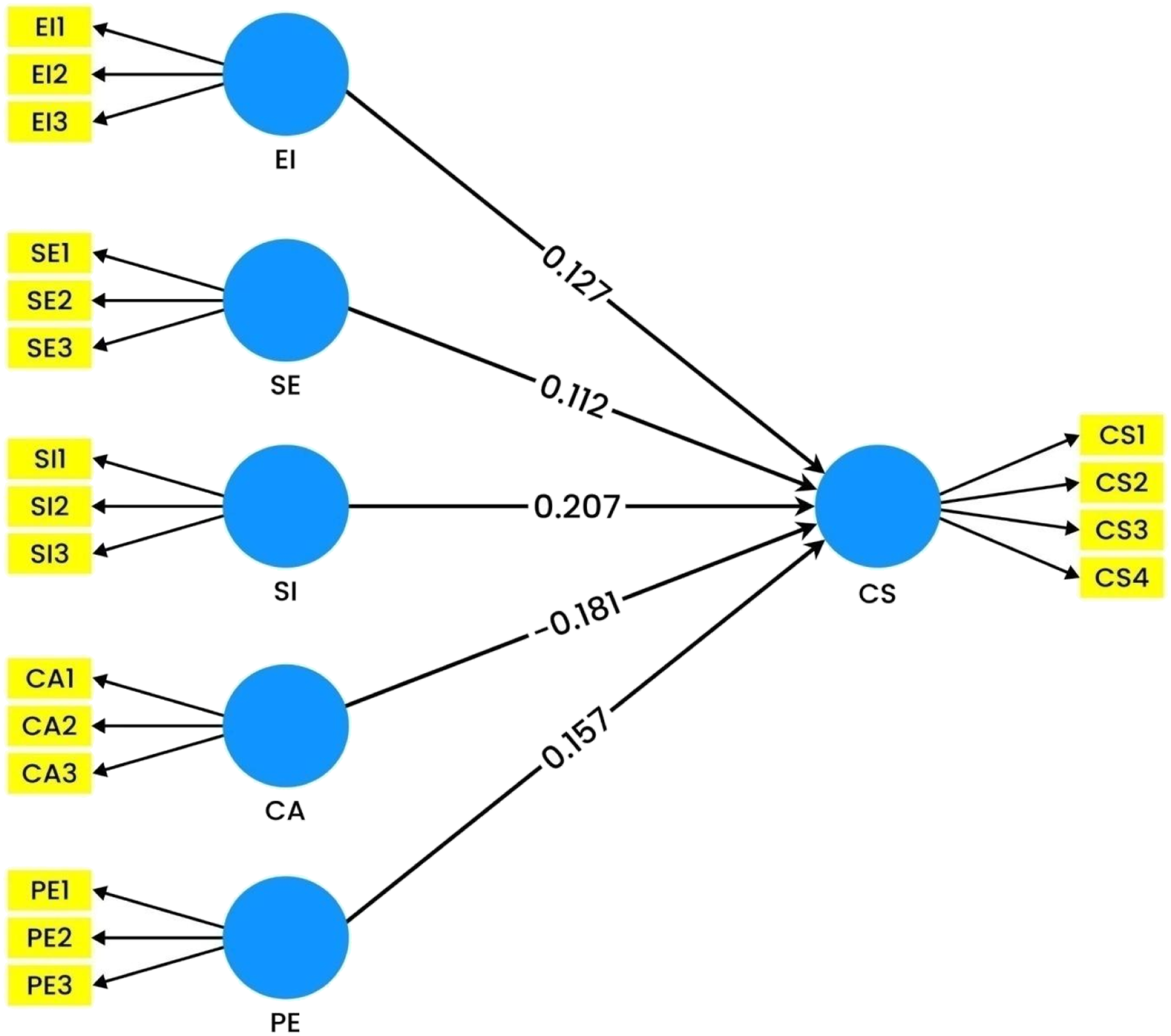
Discussion
This study examined the relationships between psychological constructs (EI, SE, CA, empathy, and SI) and CS within technology-mediated professional settings. The relationships in the hypotheses have been supported by the findings that have given both confirmation and extension of the current research.
Consistent with H1, highly EI persons had better CS. This aligns with Misau (2023), who underlined that the success of communication depends on shared understanding and interpersonal awareness. The findings build on this idea by demonstrating that perception, regulation, and utilization of emotions are directly linked with more subtle and effective communications in professional settings, specifically in the IT sector, where any communication is often mediated by a digital platform. Also, the role of SE as a mediator that was found in the presented study implies that EI cannot work alone; one will also need to believe in their CS in order to convert emotional awareness into effective and aggressive interaction. This broadens the EI Theory since it brings the cognitive evaluation of individual communicative capability into the interpersonal effectiveness model. H2 is confirmed by the correlation between SE and assertive communication, and other studies that support the correlation between internal psychological resources and perceived communication competence, including Aydin (2024) and Gozali (2022). The heightened SE level was observed to be associated with heightened assertiveness and clarity levels in communications in this research, which implied that SE is a psychological facilitator that makes people take action in accordance with their emotional and intellectual capacities. The research is relevant to the Social Cognitive Theory, and it turns out that the assumptions of individual competency substantially impact effective communication, even when it comes to virtual and distant teams.
The negative effect of CA on communication quality and effectiveness (H3) is in line with earlier research by Chau et al. (2024) and Agrawal and Krishna (2021), who have found that apprehension decreases participation and engagement and perceived learning outcomes. The current research also expands on those results as it shows that the suppressive effect of CA in the workplace IT environment is still there and can be managed with the help of such interventions as formalized collaborative work and technology-mediated communication systems. It highlights that psychological barriers need to be put into consideration, as well as technical competence, in order to enhance the effectiveness of communication. H4 was accepted, which highlights that people with a high level of empathy showed higher levels of caring, understanding, and supportive communication. These results are consistent with the research conducted by Fu et al. (2022), who reported the importance of empathy as a driver of prosocial behavior. It is crucial to remember that the current research evidence demonstrates that empathy, along with the perceived social support and mediated communication tools, can not only enhance personal interpersonal relationships, but also group cohesion and cooperation. This shows that even though H4 was based on EI theory, this finding also contributes to the social cognitive theory, as it indicates the influence of affective characteristics on the outcomes of communication and prosocial adolescent behavior in a technologically mediated professional setting.
H5 shows that the group communication aspect of social impact is positive, which is further supported by the research of Tveleneva et al. (2023) and Van Zoonen and Sivunen (2022), which demonstrate conformity tendencies influencing decision-making and collaborative interactions. The findings suggest that in team-based, IT-oriented work environments, the extent to which individuals adhere to social norms or respond to peer influence directly affects the efficiency, cohesion, and quality of group communication. Placing SI in a professional-digital communication setting, the research introduces the usability of the social dynamics in the collaborative performance formation.
The findings together have a number of theoretical contributions. The study highlights the interdependence of psychological and social factors, which implies that the process of communication cannot be entirely comprehended separately, but it should be approached as a complex and interacting system. In comparison to the prior research, the study proves the existing correlations between EI, SE, empathy, and communication outcomes and situates these effects in the context of IT and technology mediation. In contrast to most other works on the subject of student populations (Aydın, 2024; Fu et al., 2022), this study presents the results of applying the psychological determinants of communication in a professional context, thereby demonstrating their generalizability. Furthermore, although Chau et al. (2024) and Agrawal and Krishna (2021) emphasize that digital communication adapts to the context, the current findings provide evidence supporting the idea that new initiatives can be applied to mitigate the negative effects of communication anxiety and foster more effective collaboration. Overall, the present study not only recapitulates some critical findings but also builds on them by offering a subtle insight into the interaction of several psychological constructs to ascertain the efficacy of communication in the contemporary professional setting.
Theoretical Implications
The study’s findings not only support earlier research but also develop the existing theoretical constructs. In particular, when the EI theory stresses the importance of EI in interpersonal relations, the findings point to SE’s function in establishing the connection between the two, which brings a more detailed explanation of the importance of believing in CS influencing assertive behavior. With the same regard, the social cognitive theory is extended by showing that empathy cannot only be used to predict prosocial conduct when acting alone, but also interacts with perceived social support to promote effective communication in professional relations. Moreover, the implementation of the URT to IT environments proves the point that the SI and conformity effect are context-specific, and it is important to highlight that the communication process in digital and remote workplace conditions might not function the same way as it does in conventional organizational ones. Overall, the research places its results in the wider context of scholarship by demonstrating that psychological constructs that affect communication are mutually dependent and situation-specific, and provide supplementary improvements to the existing theories, and determine practical contingencies that apply to technology-driven workplaces.
Practical Implications
EI Training
Organizations can introduce EI developmental programs that help improve self-awareness, empathy, and interpersonal communication. The applied practices need to be aimed at transforming emotional awareness into practical team and client interactions.
SE Empowerment
Workshops should be conducted to develop confidence in CS, which is beneficial under circumstances such as multicultural environments and work settings that are highly stressful.
Reducing CA
Communication anxiety can be reduced through the development of learning setups or formal mentoring programmes, which facilitate group communication and open dialogue, reduce misunderstandings, and create collaborative decision-making in either a physical or virtual environment.
Promoting Empathy and Prosocial Communication
Caring and understanding communication can be aroused by the use of peer-support systems or mentoring programs. Training based on empathy can also help to increase group cohesion and prosocial behavioral communication.
Managing SI in Teams
To improve team communication, leaders and team members should be educated about the concepts of conformity and compliance. This will help them make better decisions and become creative and critical thinkers.
Application in Remote and Cross-Cultural Teams
Adapting communication strategies to digital platforms and providing culturally sensitive training can mitigate isolation, enhance collaboration, and support effective teamwork in technology-driven environments.
Conclusion
This study has analyzed EI and CS within the IT environment. The findings show that individuals with higher EI communicate better, and SE is a significant factor of assertiveness. CA does not just affect interpersonal communication, but also demonstrates how to address better caring and empathetic communication practices. SI is also there, which, regarding conformity and compliance, predetermines group communication and decision-making. The findings of these works emphasize the importance of training activities that are not related to technical functions to include EI, empathy, and individual communication strategies, especially in technology-driven companies where teamwork, leadership, and performance are important. These research results present some practical implications of research and practice in technological workplaces. Moreover, longitudinal and cross-cultural research may also be performed to identify how EI and CS vary across time and different organizational environments to give a clearer picture of the cause-and-effect sequence. To apply the real-life situation, organizations can apply the findings to come up with specific training programs in which they integrate the EI, empathy, and assertive communication in the professional development programs. The policies promoting psychologically safe and socially supportive working conditions can further enhance team cohesion and decision-making as well as the overall performance. Furthermore, in a context where the prevalence of remote and mixed work is rising, and digital collaboration protocols are needed to sustain worker productivity and engagement, it will be important to examine how EI and communication behaviors relate to these protocols.
Limitations
The present study sample is not fully representative of the IT community and thus cannot be generalized internationally or across cultures. Self-report data and findings may result in some socially inaccurate self-reports, along with the control of other factors. This was a non-experimental study, and thus, it was not able to prove causation between EI and CS. Online surveys would have influenced both engagement and the accuracy regarding some sensitive psychological questions. The research relied on a few psychological constructs, which would have omitted numerous factors that could have been of significant contribution, such as personality traits, leadership approaches, and organizational climate. This research also recognizes the possibility of common method variance because the data used in the study were self-reports and could have exaggerated the relationship between constructs. The sample might have been subjected to self-selection bias, since the participants who decided to respond might be systematically different from those who did not, which can seriously limit the applicability of the results. Moreover, there are cultural and contextual variables that are likely to influence both EI and communication norms, but the scope of the study is narrow, as it focuses on one professional situation. Future research should consider cross-cultural comparisons and diverse professional environments to address these potential sources of bias.
Future Scopes
The longitudinal designs can be employed to follow the changing EI and CS through time, establish the cause-and-effect relationships, and discuss the role of cultural norms, organizational context, and communication behaviors as the mediators in the relationships within different IT and technology-based workplaces. It is possible to discover more of the elements that support the achievement of communication by expanding the field of psychological aspects, like personality types, management style, or resilience. Research on virtual and hybrid work can be used to determine the mediation of communication outcomes based on the moderating role of EI on online teamwork platforms and their achievements. Moreover, intervention studies can determine how certain training programs are capable of enhancing EI, empathy, and assertive communication and their effects on team performance and organizational effectiveness. Future studies can also conduct research on the basis of demographic factors (age, gender, and generational difference) and establish how the organizational policies and leadership practices can promote emotionally intelligent, effective, and culturally sensitive communication in professional and technology-driven settings.
Footnotes
Ethical Considerations
This study involving human participants was reviewed and approved by the Ethics Committee of Shandong Youth University Of Political Science, China (Approval No. 20260430). All procedures performed in this study were conducted in accordance with the ethical standards of the institutional research committee and internationally accepted ethical guidelines for research involving human participants.
Consent to Participate
Written informed consent was obtained from all participants prior to participation in the study. Participants were informed about the purpose of the research, and their confidentiality and anonymity were strictly maintained throughout the study.
Funding
The authors received no financial support for the research, authorship, and/or publication of this article.
Declaration of Conflicting Interests
The authors declared no potential conflicts of interest with respect to the research, authorship, and/or publication of this article.
Data Availability Statement
The datasets generated and/or analyzed during the current study are available in the Open Science Framework repository and can be accessed through the following link: OSF Repository ( ). The deposited materials include the research dataset, questionnaire instrument, and supporting documentation associated with this study.
Author Biographies
Appendix
Questionnaire for IT Professionals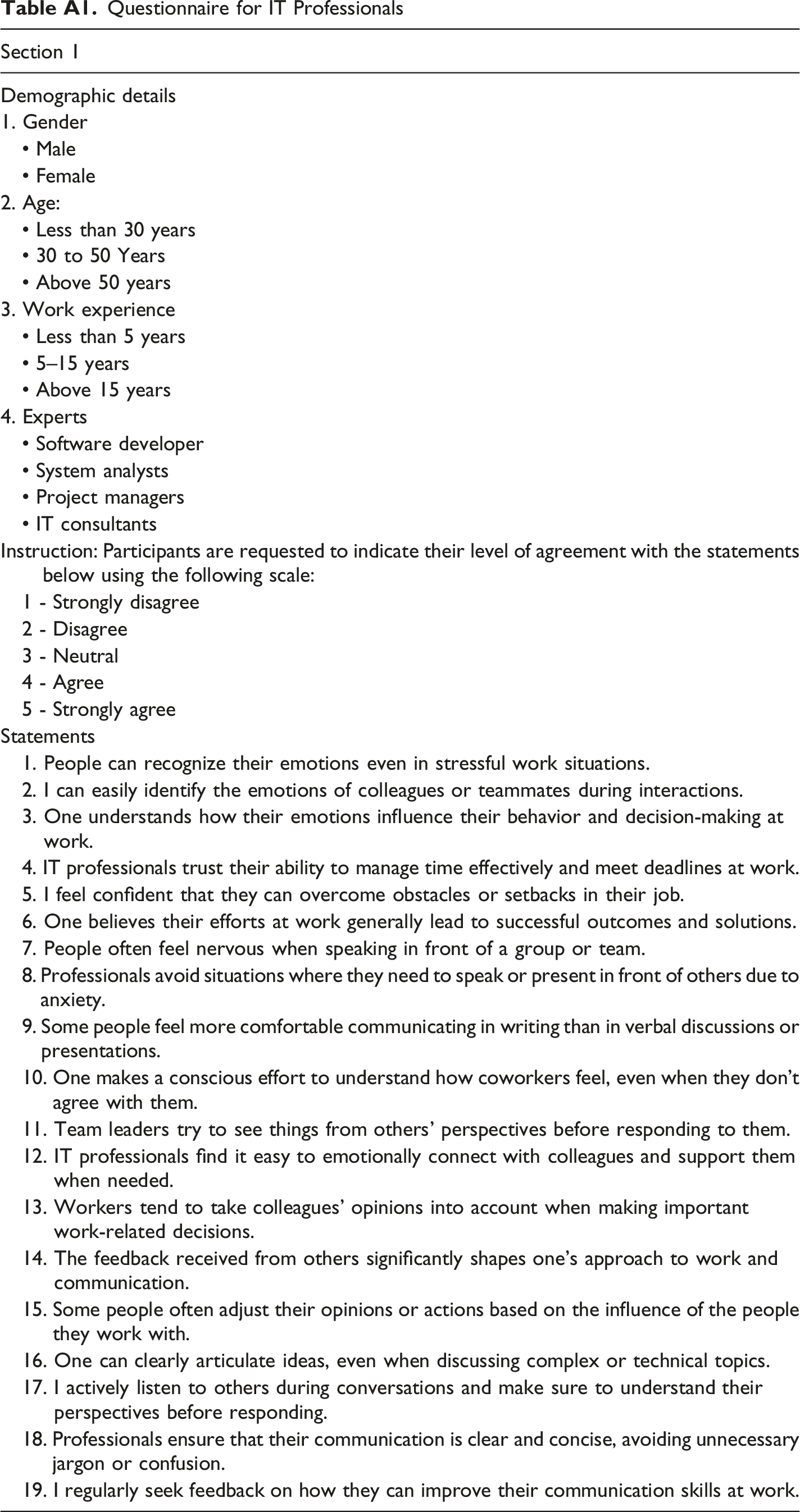
Section 1
Demographic details
1. Gender
• Male
• Female
2. Age:
• Less than 30 years
• 30 to 50 Years
• Above 50 years
3. Work experience
• Less than 5 years
• 5–15 years
• Above 15 years
4. Experts
• Software developer
• System analysts
• Project managers
• IT consultants
Instruction: Participants are requested to indicate their level of agreement with the statements below using the following scale:
1 - Strongly disagree
2 - Disagree
3 - Neutral
4 - Agree
5 - Strongly agree
Statements
1. People can recognize their emotions even in stressful work situations.
2. I can easily identify the emotions of colleagues or teammates during interactions.
3. One understands how their emotions influence their behavior and decision-making at work.
4. IT professionals trust their ability to manage time effectively and meet deadlines at work.
5. I feel confident that they can overcome obstacles or setbacks in their job.
6. One believes their efforts at work generally lead to successful outcomes and solutions.
7. People often feel nervous when speaking in front of a group or team.
8. Professionals avoid situations where they need to speak or present in front of others due to anxiety.
9. Some people feel more comfortable communicating in writing than in verbal discussions or presentations.
10. One makes a conscious effort to understand how coworkers feel, even when they don’t agree with them.
11. Team leaders try to see things from others’ perspectives before responding to them.
12. IT professionals find it easy to emotionally connect with colleagues and support them when needed.
13. Workers tend to take colleagues’ opinions into account when making important work-related decisions.
14. The feedback received from others significantly shapes one’s approach to work and communication.
15. Some people often adjust their opinions or actions based on the influence of the people they work with.
16. One can clearly articulate ideas, even when discussing complex or technical topics.
17. I actively listen to others during conversations and make sure to understand their perspectives before responding.
18. Professionals ensure that their communication is clear and concise, avoiding unnecessary jargon or confusion.
19. I regularly seek feedback on how they can improve their communication skills at work.