







Abstract
In recent years, numerous studies have investigated the association between trait boredom and the problematic use of digital technologies, producing a wide range of effect sizes. We conducted this meta-analysis following PRISMA guidelines. A systematic literature search was performed in four databases: PsychINFO, PubMed, Web of Science, and Scopus. A total of 25 studies (n = 15,152) met our inclusion criteria. We used a random-effects meta-analysis of Pearson’s r coefficients with Fisher’s Z-transformation. The results showed a moderate positive association between trait boredom and problematic digital technology use (r = .38, 95% CI [.32, .43]), with no evidence of publication bias. The relationship was not moderated by participants’ sex or age, nor by the type of digital behavior assessed. However, the year of publication, sample size, and methodological quality significantly moderated the strength of the association. The high level of heterogeneity observed suggests that additional moderators may influence this association. These findings highlight the relevance of trait boredom as a likely psychological vulnerability factor in problematic digital behavior. Future interventions should consider boredom proneness when developing prevention and treatment strategies for digital overuse.
Keywords
Introduction
In today’s hyperconnected world, where technology permeates nearly every aspect of daily life, understanding the psychological factors that contribute to excessive digital engagement has become increasingly important.
Technological addictions constitute a specific subset of behavioral addictions - also known as non-substance or non-chemical addictions - and include both passive forms of media consumption (e.g., watching television) and more interactive behaviors involving digital devices (e.g., online gaming) (Marks, 1990; Widyanto & Griffiths, 2006). These addictions share core characteristics with substance use disorders, such as craving, tolerance, withdrawal, salience, conflict, and relapse, and are reinforced by mechanisms that sustain user engagement and promote habitual use (Griffiths, 1995, 1996).
In this article, the terms “problematic technology use,” “problematic use of new technologies,” “technology addiction,” and “behavioral addiction” are used interchangeably, as they all refer to maladaptive and uncontrolled patterns of excessive engagement with digital devices and environments.
Although these terms are not fully equivalent in the clinical and nosological literature - where “addiction” typically denotes a diagnosable condition with established criteria (e.g., DSM-5 or ICD-11), whereas “problematic use” refers to a broader and often subclinical pattern - our decision to adopt an umbrella terminology is primarily motivated by the variability in terminology across the studies included in this review. Specifically, different articles employ different labels to describe similar phenomena; therefore, for the sake of consistency and comparability, we treat these terms as interchangeable throughout the present work.
Specifically, the primary focus of the present work is on shared behavioral features (e.g., loss of control, functional impairment, persistence despite negative consequences) rather than on formal diagnostic status. We acknowledge that this terminological conflation may introduce conceptual ambiguity and therefore consider it a limitation of the study; however, we believe it allows for a more inclusive and coherent synthesis of the existing literature.
A prominent subtype of technological addiction is Internet Addiction (IA), also referred to as Internet Addiction Disorder (IAD) or problematic internet use. Young (1999) identified five behavioral subtypes of IAD: compulsive online gambling, cybersexual addiction, information overload, Internet Gaming Disorder (IGD), and addiction to virtual relationships. In recent years, other forms have also been recognized, including smartphone addiction and social media addiction (SMA), the latter defined as “the inability to regulate social network use, leading to negative personal and interpersonal outcomes” (LaRose et al., 2014; Ryan et al., 2014). Among these, IGD is currently the only form officially recognized as a behavioral addiction. It is included in the ICD-11 under disorders due to addictive behaviors (Reed et al., 2022) and has been proposed in the DSM-5-TR as a condition requiring further study (American Psychiatric Association, 2022).
Due to their compulsive and dysregulated nature, technological addictions such as IGD, IAD, and SMA have been associated with a range of psychological and personality traits, including impulsivity, sensation seeking, emotional dysregulation, social withdrawal, and impaired social skills (Gentile et al., 2011; Kiss et al., 2020; Savci & Aysan, 2016). They are also frequently linked to mood and anxiety disorders (Elhai et al., 2020).
One psychological construct that plays a central role in the development of problematic digital behaviors is boredom. This article focuses exclusively on trait boredom; however, a definition of state boredom is also provided to clarify the conceptual distinction between the two constructs.
Boredom is defined as “an aversive state of wanting, but being unable, to engage in satisfying activity” (Eastwood et al., 2012, p. 483). It is generally conceptualized in two primary forms: state boredom (SB) and trait boredom (TB). SB is a transient and context-dependent experience, typically triggered by insufficient external stimulation. In contrast, TB is a more stable personality disposition, reflecting a frequent tendency to experience boredom across a wide range of situations (Eastwood et al., 2012; Elpidorou, 2018). Further information on the specific differences between trait boredom and state boredom is provided in Supplemental S1.
Trait boredom is understood as an expression of enduring and deep-seated psychological characteristics (Farmer & Sundberg, 1986; Gorelik & Eastwood, 2024). It negatively affects psychological well-being and has been linked to numerous clinical and psychosocial difficulties, particularly depression and anxiety, even after accounting for potential confounding variables such as personality traits and life stressors (Danckert & Eastwood, 2020; Fahlman et al., 2013; Goldberg et al., 2011; Li et al., 2021a, 2021b; Mercer & Eastwood, 2010; Mercer-Lynn et al., 2013).
Individuals with high levels of trait boredom frequently report a chronic sense of emptiness, lack of purpose, and difficulty finding meaningful engagement, experiences that closely mirror symptoms of depression. Mercer-Lynn et al. (2013) observed that such individuals often make continuous efforts to escape boredom through various activities yet struggle to find ones that are truly fulfilling or meaningful. This repeated failure may lead to a cycle of helplessness and despair, thereby worsening depressive symptoms.
Furthermore, TB can lead to disengagement from daily routines and social relationships, fostering emotional isolation, a key factor in the onset and maintenance of depression. High levels of TB have also been associated with reduced motivation to pursue rewarding or prosocial interactions, further undermining social connectedness (Gentile et al., 2011; Kiss et al., 2020; Savci & Aysan, 2016).
Beyond its association with depression, TB has also been linked to elevated levels of anxiety. Boredom-prone individuals frequently display attentional difficulties and a persistent sense of restlessness. In unstimulating contexts, this restlessness may intensify anxious thoughts or rumination. Moreover, the perception of wasting time or failing to engage in meaningful activities can further exacerbate anxiety (Yang et al., 2020).
In an attempt to manage these negative emotional states, individuals high in TB may resort to maladaptive coping strategies, such as excessive technology use, substance abuse, or other compulsive behaviors. While such strategies may offer temporary relief, they do not address the underlying issue and often contribute to long-term psychological distress.
From a psychological standpoint, trait boredom may impair well-being through multiple pathways. These include emotional dysregulation, manifested as difficulty managing frustration, apathy, or dissatisfaction (Xiao et al., 2021); a lack of existential purpose or direction, which can give rise to feelings of emptiness and anxiety; and low frustration tolerance, which increases vulnerability to both depressive and anxious symptoms (Mercer-Lynn et al., 2013).
Taken together, these mechanisms highlight the importance of addressing trait boredom as a clinically relevant construct, both in research and in clinical practice, particularly in relation to technological addictions and their impact on mental health.
Aim of the Study
With regard to the specific association between trait boredom and problematic use of new technologies, despite growing interest and an increasing number of studies published in recent years examining this relationship, to the best of our knowledge, no meta-analysis has yet been conducted on these two variables. Therefore, a synthesis of the accumulated evidence is warranted. Specifically, this meta-analytic study builds upon a previous systematic literature review (Tagliaferri et al., 2025) and aims to address the following research questions: (1) What is the strength of the correlation between problematic use of new technologies and trait boredom? (2) Is the relationship between problematic use of new technologies and trait boredom moderated by methodological characteristics (i.e., methodological quality, year of publication, sample size, country of data collection), participant characteristics (i.e., mean age and gender), and specific features of the technological tool used (i.e., smartphone, internet, gaming)?
Materials and Methods
The present meta-analytic study is based on a previous systematic literature review (Tagliaferri et al., 2025) and was performed according to the recommendations of the “Preferred Reporting Items for Systematic Reviews and Meta-Analyses” (PRISMA) (Page et al., 2021; Panic et al., 2013). The study was registered in the “International Prospective Register of Systematic Reviews” (PROSPERO) in May 2024 (CRD42024538859), and the detailed protocol is available upon request.
Inclusion Criteria
A comprehensive meta-analytic search was conducted across four academic databases - PsycINFO (via EBSCOhost), Web of Science, PubMed, and Scopus - using combinations of keywords related to boredom (“bored*”) and digital media (digital OR internet OR technology OR “social media” OR “social network” OR “smartphone” OR “gaming” OR “shopping online” OR “pornography” OR “cybersexuality” OR “cyber-relationship” OR “information overload” OR “gambling” OR “watching”). Studies were included if they met the following criteria (1) published in English in peer-reviewed journals; (2) employed a quantitative design (cross-sectional, longitudinal, or cohort); (3) investigated the relationship between trait boredom and technology-related addictions; (4) Participants sampled from the general population; (5) Utilized a validated tool specifically designed to measure trait boredom.
Studies were excluded if they (1) were not published in English; (2) were non-empirical publications, including qualitative studies, reviews, meta-analyses, case studies, commentaries, books or book chapters, theses, reports, and conference proceedings. This criterion was applied to ensure methodological consistency, transparency, and reproducibility, and to provide an initial systematic synthesis of peer-reviewed empirical evidence. Additionally, the literature search was restricted to peer-reviewed journal articles; consequently, grey literature sources were not included. (3) were studies conducted on clinical populations; (4) investigated only offline gambling/gaming behaviors; (5) did not use an empirical measure specifically assessing trait boredom (e.g., measures focused on state boredom or combined with other negative affect scales); (6) did not employ an empirical measure for technology-related addictions; (7) did not assess the relationship between trait boredom and technology-related addictions; (8) were studies conducted during COVID-19-related lockdowns, which were excluded to minimize confounding effects related to the temporary increases in boredom and digital media use caused by pandemic-related restrictions (Brodeur et al., 2021; Hu et al., 2025). While we acknowledge that this exclusion may introduce a degree of selection bias and potentially limit the generalizability of the findings, our decision was guided by the aim of isolating more stable, trait-like associations between boredom and problematic technology use that are less influenced by exceptional situational stressors. We therefore consider this choice a trade-off between internal validity and external validity and explicitly acknowledge it as a limitation of the present review. When two or more studies were based on the same sample, either fully or partially, only the study with the larger sample size was included to avoid duplication of data.
Figure 1 presents the PRISMA flow diagram illustrating the search and selection process. First, duplicate records were identified and removed. Subsequently, a screening of titles and abstracts was conducted to exclude irrelevant references. Finally, the remaining records were assessed through full-text review. The PRISMA flow diagram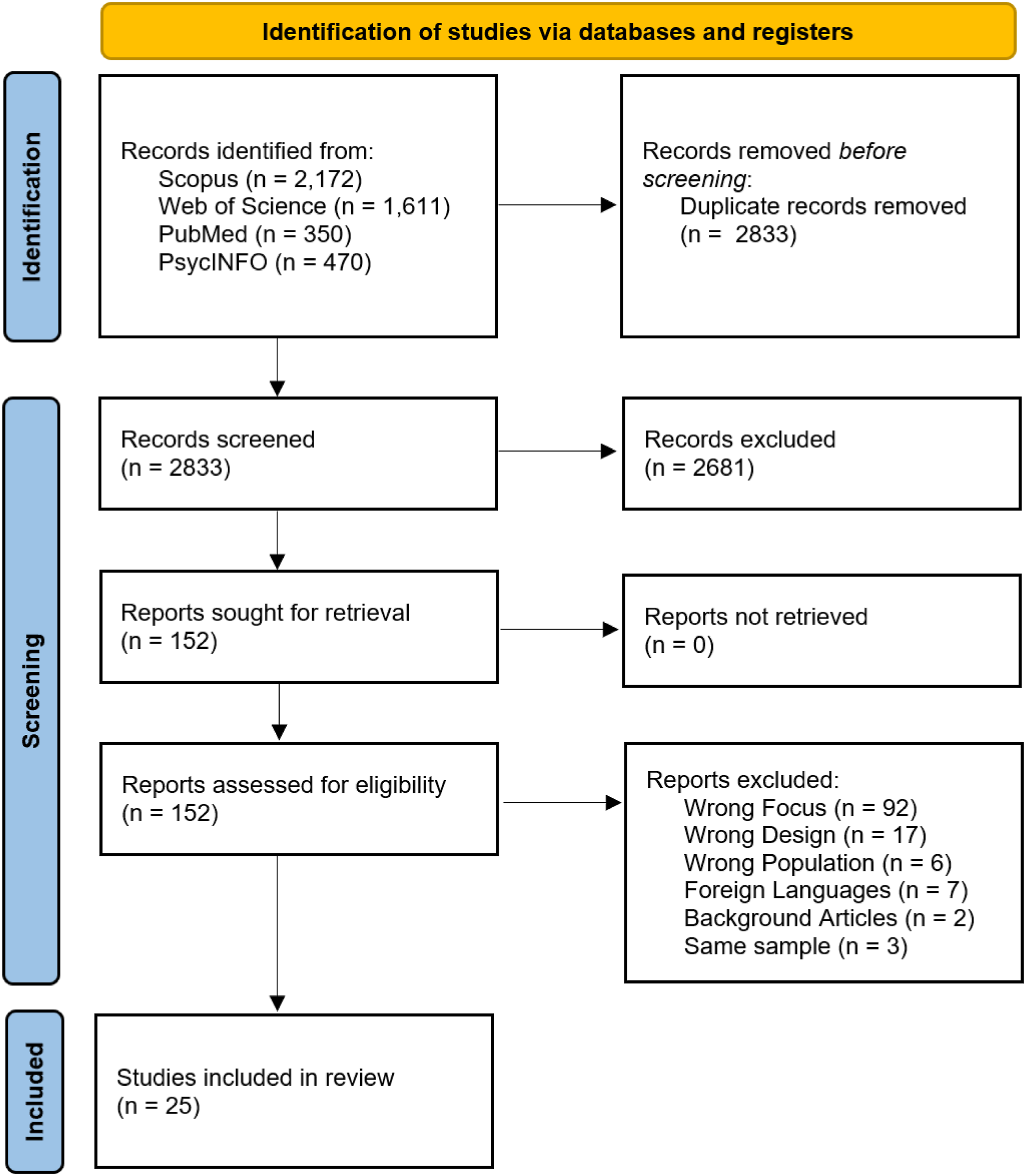
Data Extraction and Methodological Quality Assessment
An Excel spreadsheet was prepared for data extraction, in which the following information was coded for each study: author(s), year of publication, country where the study was conducted, type of publication (journal article, conference proceeding, or thesis), sample size, mean age of participants, gender (coded as the percentage of women in the sample), instrument used to assess problematic use of new technologies (i.e., smartphone, social media, gaming), instrument used to assess trait boredom, risk of bias, and the correlation between problematic technology use and trait boredom. To meet the assumption of independence required for meta-analytic procedures, in the case of longitudinal studies, only the correlation from the first measurement was coded.
In one of the studies included in the meta-analysis, two correlations were reported: one between boredom and problematic Internet use, and another between boredom and problematic smartphone use (Kiss et al., 2020). As these two indices are not independent, we opted to include the correlation with problematic smartphone use, given that the instrument used to assess this construct demonstrated higher reliability.
The methodological quality of each study was evaluated using the National Institutes of Health (NIH) Quality Assessment Tool for Observational Cohort and Cross-Sectional Studies (https://www.nhlbi.nih.gov/, accessed January 20, 2021). The same authors responsible for article selection independently assessed the quality of the included studies. Ratings were determined based on the proportion of items marked as “yes” on the NIH checklist.
Both data extraction and quality appraisal were performed independently by two authors of the meta-analysis. Any disagreements were resolved through discussion until a consensus was reached.
Data Analysis
A meta-analysis was conducted to assess the relationship between boredom and problematic use of new technologies, using Pearson’s correlations as effect sizes. Correlations were transformed into Fisher’s Z-scores to normalize the sampling distribution (Hedges & Olkin, 2014). After analysis, the average effect size and its confidence interval were converted back into Pearson’s correlations to facilitate interpretation (Borenstein et al., 2021). Given the expected heterogeneity among the included studies, attributable to differences in participant characteristics, study contexts, and types of technology examined, a random-effects model was applied. Model parameters were estimated using the restricted maximum likelihood (REML) method (Viechtbauer, 2005). Additionally, the Knapp-Hartung adjustment (Knapp & Hartung, 2003) was employed to obtain more conservative confidence intervals. This adjustment is particularly relevant in meta-analyses with a small number of studies or considerable heterogeneity, where standard methods may underestimate variability.
The estimated correlations were interpreted following Gignac and Szodorai’s (2016) empirical guidelines, which classify correlations of .10 as small, .20 as moderate, and .30 or higher as large, based on an analysis of over 700 studies in psychology. To assess the robustness of the results and examine the potential undue influence of any individual study, a leave-one-out sensitivity analysis was performed, in which studies were sequentially removed and the average effect size recalculated. In addition, a second sensitivity analysis was conducted using correlations corrected for measurement error (
Heterogeneity across studies was assessed using Cochran’s Q statistic, the I2 index (Higgins & Thompson, 2002), and the prediction interval. A significant Q statistic indicates that the observed variability in effect sizes exceeds what would be expected by chance, while I2 represents the percentage of variability not attributable to sampling error. According to Higgins et al. (2002), I2 values of approximately 25%, 50%, and 75% were considered to indicate low, moderate, and high heterogeneity, respectively. The prediction interval was also computed to estimate the range in which the effect size of a future study is expected to fall, considering the heterogeneity observed in the current body of evidence (Borenstein, 2023). This measure provides an indication of the expected dispersion in similar future research.
Following the methodological recommendations of Botella and Sánchez-Meca (2015), the risk of publication bias was assessed using a combined approach that included visual inspection of the funnel plot, Egger’s regression test (Egger et al., 1997), and Begg and Mazumdar’s rank correlation test (Begg & Mazumdar, 1994). In the absence of publication bias, the funnel plot should show a symmetric distribution around the average effect size, and both Egger’s and Begg and Mazumdar’s tests should yield statistically non-significant results.
The influence of continuous variables on effect sizes was examined through meta-regression models, while categorical variables were analyzed using subgroup analyses. For both approaches, the improved F-statistic proposed by Knapp and Hartung (2003) was used.
All analyses were conducted in the RStudio environment using the metafor statistical package (Viechtbauer, 2010).
Results
Study Characteristics
The database search yielded a total of 4,603 records. After removing duplicates (n = 1,770), the titles and abstracts of 2,833 records were screened, resulting in the exclusion of 2,681 records. Full-text screening was then conducted on the remaining 152 articles. Of these, 125 were excluded for the following reasons: non-English language (n = 7), study design not quantitative or cross-sectional (n = 17), no assessment of trait boredom or its association with problematic/addictive technology use (n = 92), clinical samples (n = 6), theoretical/background articles (n = 2), or being based on the same sample as another included study (n = 3).
A total of 25 studies were included in the qualitative review. Of these, 76% (N = 19) were published after 2019, covering a time span from 2004 to 2024. The studies were conducted in Asia (N = 11), America (N = 7), and Europe (N = 7). The study by Ksinan et al. (2021) does not report the country of origin of the population; by convention, the country of origin of the first author was included.
The relationship between boredom and various forms of problematic new technology use was examined across studies, including problematic internet use/internet addiction (N = 4), social media and social networking addiction (N = 5), smartphone addiction (N = 14), gambling addiction (N = 1), and problematic online pornography use (N = 1). Of the 25 studies, 24 were cross-sectional studies and one was longitudinal. In accordance with the assumption of statistical independence, for longitudinal studies, only the first available correlation was recorded. Specifically, in the study by Kiss et al. (2020), the correlation with problematic smartphone use was selected because the SPAI demonstrated higher reliability than the PIU-Q used for problematic internet use.
Methodological Quality and Risk of Bias
Trait boredom was assessed in all studies using the Boredom Proneness Scale (BPS; Farmer & Sundberg, 1986), with 14 studies employing the short-form version (Struk et al., 2017) and 11 using the original version.
Problematic technology use was assessed using specific instruments according to the type of technology examined:
Smartphone addiction was investigated in 14 studies using the Smartphone Addiction Scale (SAS; n = 6; Kwon et al., 2013), the Mobile Phone Addiction Index (MPAI; n = 4; Leung, 2008), the Compulsive Usage of Smartphones Scale (CU; n = 1; Lee et al., 2014), the Smartphone Addiction Inventory (SPAI; n = 2; Lin et al., 2014), and the Mobile Phone Addiction Tendency Scale (MPATS; n = 1; Xiong et al., 2012).
Internet addiction was assessed in 4 studies, mostly using the Internet Addiction Test (IAT; n = 2; Young, 1999), with one using the modified Short Internet Addiction Test for Internet-Communication Disorder (s-IAT-ICD; Wegmann, Stodt, & Brand, 2015), the Internet Addiction Scale (IAS; n = 1; Nichols & Nicki, 2004), and the Problematic Internet Use Questionnaire (PIU-Q; n = 1; Demetrovics et al., 2008).
Social media addiction was evaluated in 5 studies using different tools: the Problematic Mobile Social Media Usage Assessment Questionnaire (PMSMU-AQ; Jiang, 2018), the Bergen Facebook Addiction Scale (BFAS; Andreassen et al., 2012), the Smartphone Addiction Scale-Short Version (SAS-SV; Kwon et al., 2013), the Bergen Social Media Addiction Scale (BSMAS; Andreassen et al., 2016), and the Problematic Mobile Social Media Use Scale (PMSMUS; Jiang & Bai, 2020).
Problematic pornography use (n = 1) was assessed using the Pornography Consumption Inventory (PCI) – Subscales: Emotional Avoidance, Excitement Seeking, and Sexual Pleasure (Reid et al., 2011).
In conclusion, gambling addiction was evaluated in one study using The Canadian Problem Gambling Index (CPGI; Ferris & Wynne, 1999).
Studies’ Characteristics
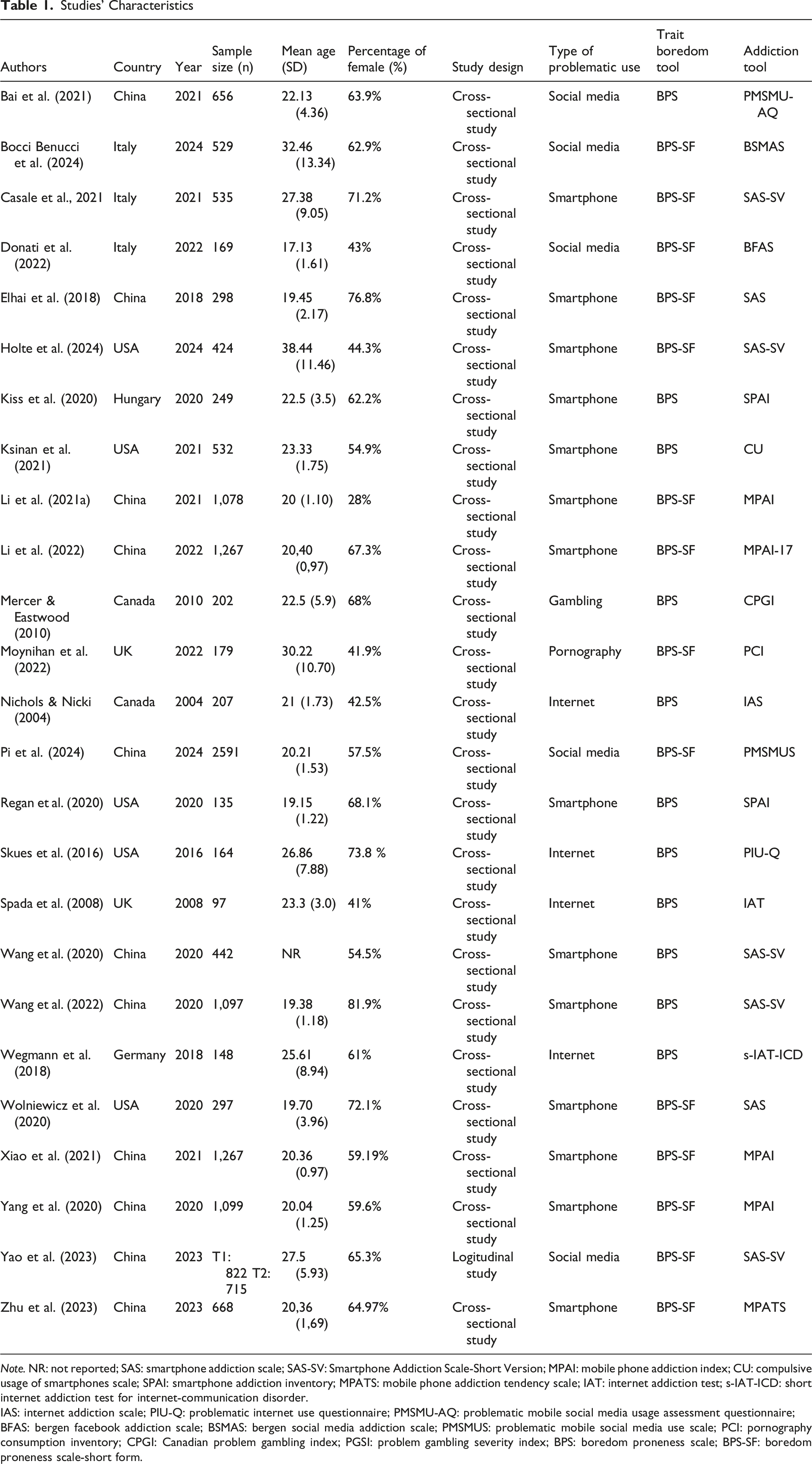
Note. NR: not reported; SAS: smartphone addiction scale; SAS-SV: Smartphone Addiction Scale-Short Version; MPAI: mobile phone addiction index; CU: compulsive usage of smartphones scale; SPAI: smartphone addiction inventory; MPATS: mobile phone addiction tendency scale; IAT: internet addiction test; s-IAT-ICD: short internet addiction test for internet-communication disorder.
IAS: internet addiction scale; PIU-Q: problematic internet use questionnaire; PMSMU-AQ: problematic mobile social media usage assessment questionnaire; BFAS: bergen facebook addiction scale; BSMAS: bergen social media addiction scale; PMSMUS: problematic mobile social media use scale; PCI: pornography consumption inventory; CPGI: Canadian problem gambling index; PGSI: problem gambling severity index; BPS: boredom proneness scale; BPS-SF: boredom proneness scale-short form.
Risk of Bias
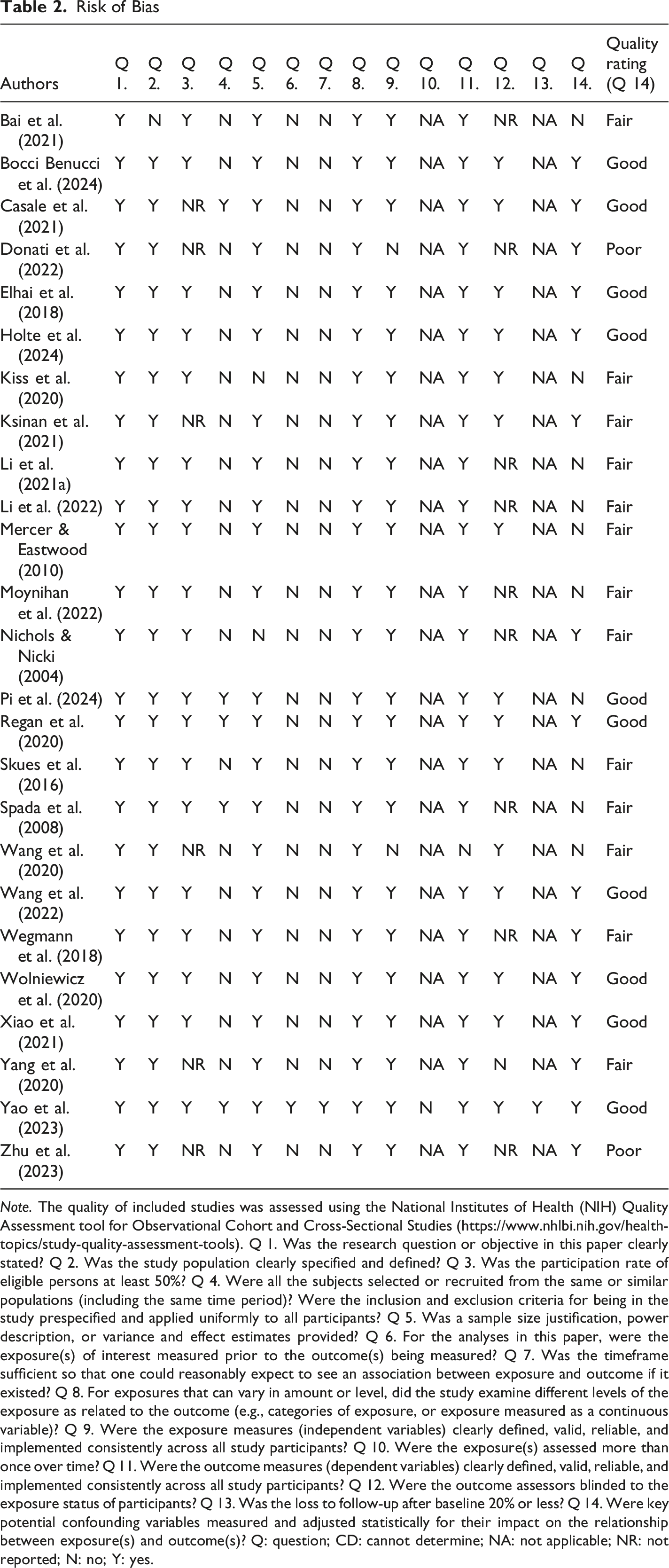
Note. The quality of included studies was assessed using the National Institutes of Health (NIH) Quality Assessment tool for Observational Cohort and Cross-Sectional Studies (https://www.nhlbi.nih.gov/health-topics/study-quality-assessment-tools). Q 1. Was the research question or objective in this paper clearly stated? Q 2. Was the study population clearly specified and defined? Q 3. Was the participation rate of eligible persons at least 50%? Q 4. Were all the subjects selected or recruited from the same or similar populations (including the same time period)? Were the inclusion and exclusion criteria for being in the study prespecified and applied uniformly to all participants? Q 5. Was a sample size justification, power description, or variance and effect estimates provided? Q 6. For the analyses in this paper, were the exposure(s) of interest measured prior to the outcome(s) being measured? Q 7. Was the timeframe sufficient so that one could reasonably expect to see an association between exposure and outcome if it existed? Q 8. For exposures that can vary in amount or level, did the study examine different levels of the exposure as related to the outcome (e.g., categories of exposure, or exposure measured as a continuous variable)? Q 9. Were the exposure measures (independent variables) clearly defined, valid, reliable, and implemented consistently across all study participants? Q 10. Were the exposure(s) assessed more than once over time? Q 11. Were the outcome measures (dependent variables) clearly defined, valid, reliable, and implemented consistently across all study participants? Q 12. Were the outcome assessors blinded to the exposure status of participants? Q 13. Was the loss to follow-up after baseline 20% or less? Q 14. Were key potential confounding variables measured and adjusted statistically for their impact on the relationship between exposure(s) and outcome(s)? Q: question; CD: cannot determine; NA: not applicable; NR: not reported; N: no; Y: yes.
Meta-Analysis of the Association Between Trait Boredom and Problematic Use of New Technologies
The meta-analytic analyses conducted under a random-effects model (k = 25), using the REML estimator, revealed that the average correlation coefficient between boredom and problematic use of new technologies was r = .38 (95% CI = .32 to .43). According to the classification proposed by Gignac and Szodorai (2016), this result indicates a strong correlation between the two variables. The forest plot displaying the effect sizes and 95% confidence intervals of the 25 included studies is presented in Figure 2. The sensitivity analysis conducted to examine the stability of the result using the leave-one-out procedure showed that the estimated effect size ranged from r = .36 to r = .39, depending on the study excluded. Given that the effect size remains within a narrow range, it can be concluded that the result of the present meta-analysis is both reliable and robust. In addition, a sensitivity analysis using correlations corrected for measurement error following Spearman (1904) and Hunter and Schmidt (2004) yielded an average effect size of r = .44 (95% CI = .38 to .50), indicating that correcting for attenuation slightly increases the estimated association. Forest plot of the association between boredom and problematic use of new technologies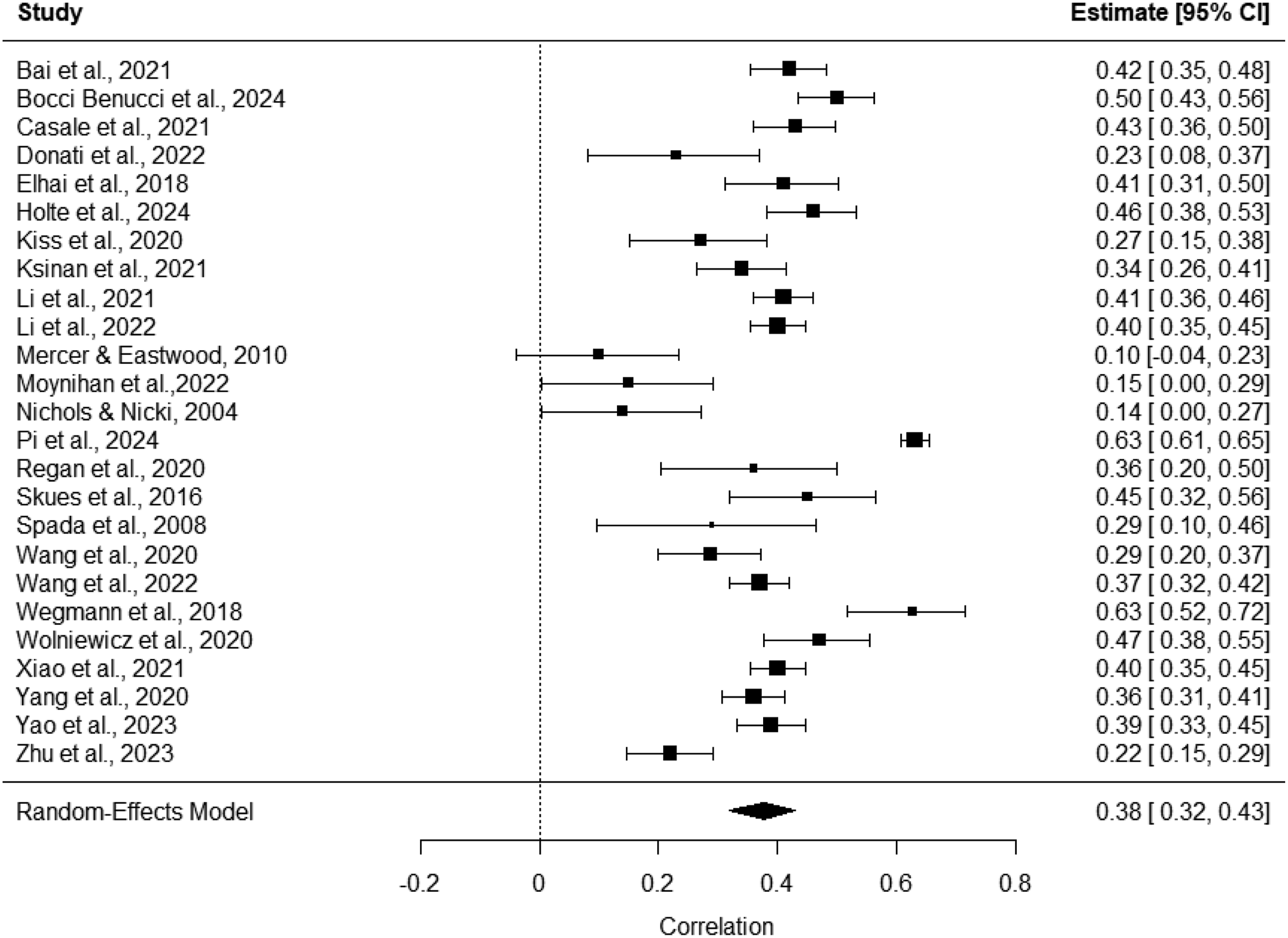
Regarding effect heterogeneity, Cochran’s Q statistic was significant (Q = 378.73, p < .0001), indicating underlying heterogeneity among the effect sizes. Additionally, the I2 value was 92.36%, suggesting a high level of heterogeneity. Finally, the 95% prediction interval ranged from r = .10 to r = .60, indicating that in future studies, the association between boredom and problematic use of new technologies may vary substantially. Further information regarding the specific correlations of each included study is provided in Supplemental S2.
Risk of Publication Bias
Publication bias was assessed through visual inspection of the funnel plot (Figure 3), Egger’s regression test, and Begg and Mazumdar’s rank correlation test. Although the funnel plot showed some signs of asymmetry, the results of the statistical tests did not indicate the presence of publication bias in the relationship between boredom and problematic use of new technologies. Specifically, Egger’s regression test yielded a t value of −1.65 (p = .114), while Begg and Mazumdar’s test produced a rank correlation of τ = −0.06 (p = .691). Since both tests were non-significant, the presence of substantial publication bias in the included studies can be ruled out. Funnel chart of the relationship between boredom and problematic use of new technologies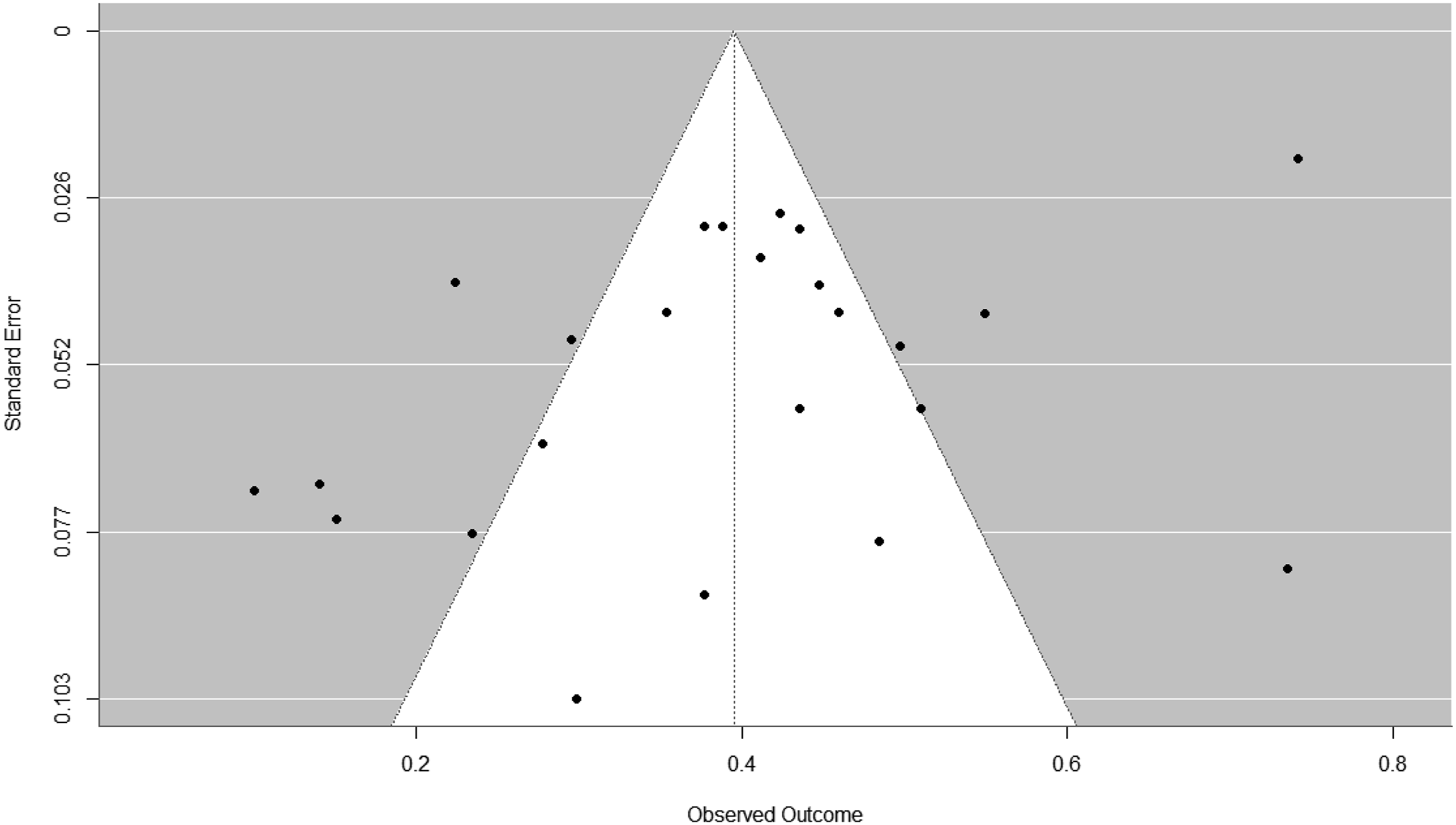
Moderation Analysis
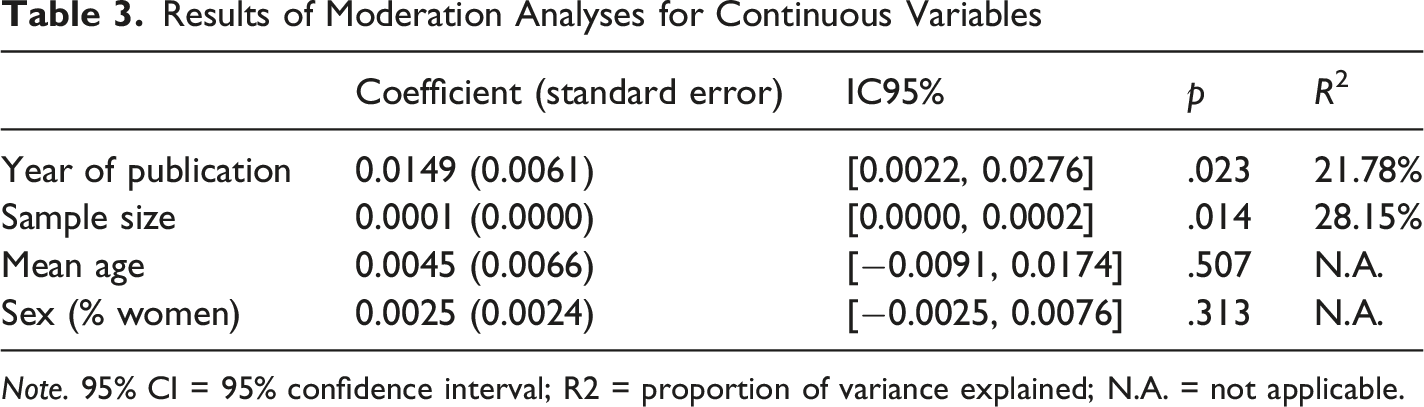
Results of Moderation Analyses for Continuous Variables
Note. 95% CI = 95% confidence interval; R2 = proportion of variance explained; N.A. = not applicable.
Publication year emerged as a significant moderator of effect size (F (1, 23) = 5.91, p = .023), accounting for 21.78% of the observed heterogeneity. The coefficient was positive (b = 0.0149, 95% CI [0.0022, 0.0276]), suggesting a progressive increase in effect size in more recent studies.
Sample size was also significantly associated with effect size (F (1, 23) = 7.15, p = .014), with a positive coefficient (b = 0.0001, 95% CI [0.0000, 0.0002]). Although the value is small, it indicates that studies with larger samples tend to report stronger effects. This moderator accounted for 28.15% of the total heterogeneity.
In contrast, participants’ mean age was not significantly associated with effect size (F (1, 21) = 0.46, p = .507), nor was the proportion of female participants (F (1, 23) = 1.06, p = .313).
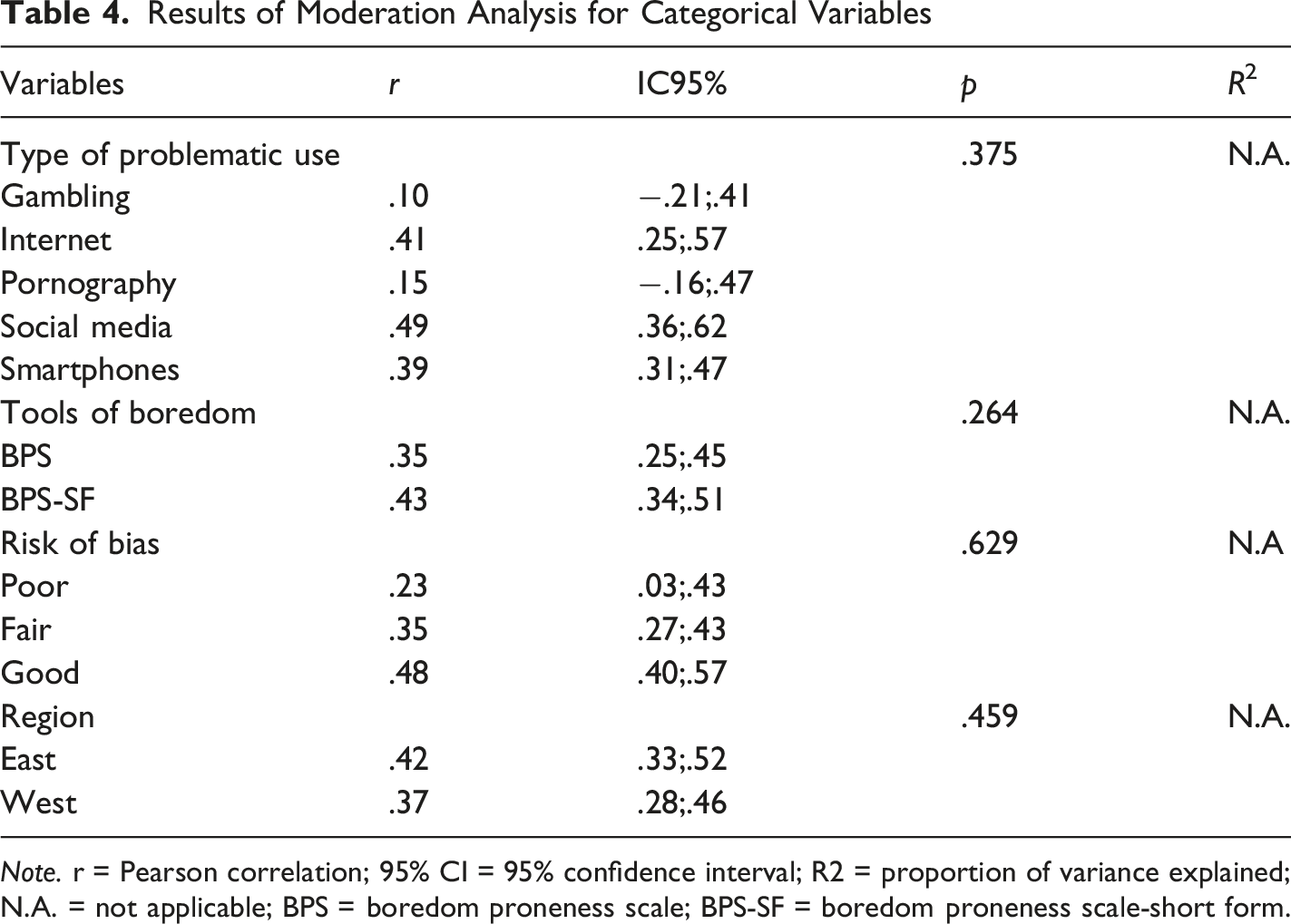
Results of Moderation Analysis for Categorical Variables
Note. r = Pearson correlation; 95% CI = 95% confidence interval; R2 = proportion of variance explained; N.A. = not applicable; BPS = boredom proneness scale; BPS-SF = boredom proneness scale-short form.
Discussion
The aim of this study was to assess the magnitude of the relationship between trait boredom and problematic use of new technologies and to examine whether this relationship is moderated by participants’ gender and age, as well as by the studies’ publication year and their individual risk of bias or methodological quality and specific features of the technological tool used (i.e., smartphone, internet, gaming). After a rigorous selection process, in line with the PRISMA statement guidelines, this meta-analysis integrated data from 25 cross-sectional empirical studies and one longitudinal study published over the past twenty years, comprising a combined sample of 15,152 participants.
The present meta-analysis revealed a significant and positive association between trait boredom and problematic use of digital technologies (r = .38, CI 95% [.32 to .43], p < .001). This moderate effect size indicates that individuals with higher levels of trait boredom are more likely to engage in problematic behaviors related to internet, smartphone, or social media use. The robustness of this association is supported by the absence of publication bias, as confirmed by both visual inspection of the funnel plot and Egger’s regression test. However, the prediction interval ranged from r = .10 to r = .60, indicating substantial heterogeneity across studies. This suggests that, although the average association is moderate, the relationship may be weak in some contexts and considerably stronger in others, highlighting that the association is not uniform across populations or settings.
These findings are consistent with prior theoretical and empirical work emphasizing boredom proneness as a relevant psychological correlation and vulnerability factor for maladaptive digital behavior (Elhai et al., 2018; Wegmann et al., 2018). Trait boredom has been linked to deficits in attentional regulation and a chronic under-stimulation of the individual, which may be associated with a compensatory use of digital devices as sources of immediate gratification (Biolcati et al., 2018). Our results extend this evidence by offering a quantitative synthesis across multiple forms of technology-related problematic use, including internet addiction, smartphone overuse, and social media dependency.
From a theoretical perspective, the observed association can be interpreted within the framework of the I-PACE model (Brand et al., 2016), which posits that predisposing variables such as trait boredom interact with affective and cognitive components (e.g., craving, poor self-regulation) correlating to addictive online behaviors. Bored individuals may be more likely to engage with digital technologies as a means of coping with under-stimulating or unpleasant internal states, maintaining an association with the cycle of problematic use through short-term mood improvement (Elhai et al., 2020). Importantly, the correlational nature of the available evidence does not allow for causal inferences regarding the directionality of these processes.
With respect to the moderation analyses, no significant differences emerged across participant age or gender, suggesting that the association between trait boredom and problematic technology use is relatively stable across these demographic characteristics. Differences in effect size estimates were observed across types of problematic technology use, with descriptively stronger associations for problematic social media use (r = .45), followed by internet use (r = .39) and smartphone use (r = .38); however, these differences did not reach statistical significance. Although this pattern may reflect the greater immediacy, interactivity, and personalized feedback characteristic of social networking platforms - which may be particularly appealing to boredom-prone individuals (Bocci Benucci et al., 2024; Donati et al., 2022) - the lack of statistically significant moderation suggests that there is insufficient evidence to conclude that the strength of the association differs across technological domains.
In addition, both publication year and sample size significantly moderate the association between trait boredom and problematic technology use. Publication year was a significant predictor of effect size, indicating a progressive increase in reported effect sizes over time. This trend may reflect the growing pervasiveness, interactivity, and psychological relevance of digital technologies in recent years, which may, in turn, strengthen the association with the influence of dispositional factors such as boredom proneness.
Sample size also emerged as a significant moderator. Although the effect size associated with sample size was relatively small, it suggests that studies with larger samples are more likely to detect and report stronger associations between trait boredom and problematic technology use. This finding highlights the risk that underpowered studies may fail to capture the full magnitude of these associations, reinforcing the importance of ensuring adequate statistical power in future research.
Taken together, these results emphasize that both methodological rigor and key design characteristics - such as sample size and recency of publication - play a critical role in determining the strength and reliability of observed effects. They also suggest that the association between boredom proneness and digital overuse is becoming increasingly salient in today’s digitally saturated environments. These warrants continued empirical attention through high-quality and well-powered research.
These results highlight trait boredom as a significant correlate in the domain of behavioral addictions. Preventive efforts to reduce problematic digital behaviors may benefit from targeting boredom-related vulnerabilities. For instance, school-based or clinical interventions could integrate strategies to enhance attentional control, emotional regulation, and engagement in meaningful offline activities, especially among adolescents and young adults, who appear particularly susceptible to the lure of digital overuse (Demirtepe-Saygili, 2022; Sun et al., 2023; Tarafdar et al., 2020).
From a clinical perspective, the results underscore the need to recognize and address trait boredom as a psychological vulnerability in preventing and treating problematic technology use (Westerhof & Bohlmeijer, 2025). Interventions aimed at enhancing emotional regulation, fostering intrinsic motivation, and promoting engagement in meaningful offline activities may prove beneficial for individuals prone to chronic boredom (Iannattone et al., 2024; Parker et al., 2021; Slovak et al., 2022; Yang et al., 2020). Furthermore, integrating trait boredom assessments in clinical screening protocols could improve the early identification of individuals at risk for digital addiction-related problems (Westerhof & Bohlmeijer, 2025).
Several limitations must be acknowledged. First, the predominant reliance on cross-sectional research designs prevents definitive conclusions regarding the directionality and causality of the observed associations. This methodological constraint significantly limits the ability to infer dynamic or developmental processes over time. Second, although validated instruments were generally employed, variability in the operational definitions of both trait boredom and problematic use may have introduced conceptual noise. Moreover, different instruments were often used to measure the same construct (e.g., problematic smartphone use), further complicating cross-study comparisons. Third, the reliance on self-report measures exposes the findings to potential biases related to social desirability and memory recall, thereby compromising internal validity. Fourth, the frequent use of non-representative samples, often composed of university students, restricts the generalizability of the results to broader and more diverse populations. Fifth, the cultural and geographic concentration of the studies (primarily from Europe and Asia) may further limit the applicability of the findings across different cultural contexts. Sixth, the high level of heterogeneity observed across studies indicates substantial variability in effect sizes; accordingly, the pooled correlation should be interpreted as an average association across heterogeneous contexts rather than as a precise or universally generalizable effect (Cordero & Dans, 2021). Seventh, the use of an umbrella terminology encompassing constructs such as “problematic technology use,” “technology addiction,” and “behavioral addiction” may have obscured conceptual and clinical distinctions between subclinical problematic use and formally defined addictive disorders, although this choice was motivated by the substantial heterogeneity and overlap in terminology and operational definitions across the reviewed studies. Eighth, the exclusion of studies conducted during COVID-19-related lockdowns may have limited the generalizability of the findings. Although this decision was intended to reduce confounding effects due to context-specific and temporary increases in boredom and digital media use, it may have resulted in the omission of relevant data from a period characterized by unusually high levels of both constructs. Moreover, the potential impact of excluding these studies on the overall results cannot be fully determined, and some degree of selection bias cannot be ruled out.
Finally, the overall number of available studies was limited, particularly for subgroup analyses. Subgroup analyses typically require a larger number of studies than primary analyses to achieve adequate statistical power (Cuijpers et al., 2021). The imbalance and small sample sizes in certain subgroups substantially reduce the likelihood of detecting statistically significant moderation effects, even when true differences exist. Therefore, the absence of significant differences between subgroups should not be interpreted as evidence of equivalence; rather, these findings likely reflect low statistical power, and variation in effect sizes across subgroups should be interpreted descriptively.
Future research should employ longitudinal and experimental designs to better clarify the causal pathways linking trait boredom and digital overuse. Such approaches would help determine whether boredom predisposes individuals to problematic technology use, whether excessive digital engagement exacerbates boredom proneness, or whether the relationship is bidirectional. Longitudinal studies could further examine how these processes evolve across different developmental stages, while experimental paradigms could directly test the impact of induced boredom on digital behavior.
It is also important to explore potential mediators, such as emotional dysregulation, impulsivity, and dysfunctional coping strategies (Marengo et al., 2019; Wang et al., 2025). Identifying these mechanisms could explain why some boredom-prone individuals develop maladaptive patterns while others do not. At the same time, attention should be given to protective factors like mindfulness and social connectedness (Sriwilai & Charoensukmongkol, 2016; Wolfers & Utz, 2022), which may buffer the negative outcomes associated with boredom by fostering resilience, emotional regulation, and engagement in meaningful offline activities.
Another important direction concerns the geographical scope of research. Most available studies come from Europe and Asia, limiting the cross-cultural validity of current findings. Expanding investigations to underrepresented regions such as Latin America, Africa, and the Middle East would allow for culturally sensitive comparisons, helping to account for contextual variables including socioeconomic conditions, cultural norms, and technological infrastructure.
Finally, future work would benefit from multi-method approaches that combine self-report instruments with behavioral tasks, ecological momentary assessment, and physiological indicators. Such methodological diversification could reduce bias and provide a more comprehensive understanding of the dynamic interplay between boredom proneness and problematic technology use.
In conclusion, this meta-analysis demonstrates a consistent and meaningful association between trait boredom and problematic digital behaviors. The findings support theoretical frameworks that conceptualize boredom proneness as a relevant psychological correlate and vulnerability factor in behavioral addictions, while clearly acknowledging that causal interpretations are not warranted based on the current evidence. Incorporating trait boredom into future research and clinical frameworks may therefore enhance the understanding, prevention, and intervention efforts aimed at addressing the psychological impact of digital technologies.
Supplemental Material
Supplemental material - Trait Boredom and Problematic Use of New Technologies: A Meta-Analysis
Supplemental material for Trait Boredom and Problematic Use of New Technologies: A Meta-Analysis by Ginevra Tagliaferri, Sergio Hidalgo-Fuentes, Francesca Valeria Frisari, Clarissa Cricenti, and Manuel Martí-Vilar in Psychological Reports
Supplemental Material
Supplemental material - Trait Boredom and Problematic Use of New Technologies: A Meta-Analysis
Supplemental material for Trait Boredom and Problematic Use of New Technologies: A Meta-Analysis by Ginevra Tagliaferri, Sergio Hidalgo-Fuentes, Francesca Valeria Frisari, Clarissa Cricenti, and Manuel Martí-Vilar in Psychological Reports
Footnotes
ORCID iDs

Ethical Considerations
Ethics approval was not required for this study. The study has been granted an exemption from requiring ethics approval as it is a meta-analysis.
Author Contributions
Conceptualization, G.T., F.V.F., C.C.; methodology, G.T., F.V.F., C.C.; review protocol, G.T., database search, F.V.F., C.C.; risk of bias, F.V.F., C.C.; data screening, F.V.F., C.C., and S.H.-F; writing-original draft preparation, G.T., F.V.F., C.C., S.H.-F; writing-review and editing, G.T., C.C., S.H.-F; supervision, M.M.-V.; project administration, M.M.-V. All authors have read and agreed to the published version of the manuscript.
Funding
The authors received no financial support for the research, authorship, and/or publication of this article.
Declaration of Conflicting Interests
The authors declared no potential conflicts of interest with respect to the research, authorship, and/or publication of this article.
Data Availability Statement
The data included in the meta-analysis are presented in Table 1 of the manuscript and in Supplemental Material S2. Further inquiries can be directed to the corresponding author.
Supplemental Material
Supplemental material for this article is available online.
Author Biographies
References
Supplementary Material
Please find the following supplemental material available below.
For Open Access articles published under a Creative Commons License, all supplemental material carries the same license as the article it is associated with.
For non-Open Access articles published, all supplemental material carries a non-exclusive license, and permission requests for re-use of supplemental material or any part of supplemental material shall be sent directly to the copyright owner as specified in the copyright notice associated with the article.
