






Abstract
Post-event processing (PEP) refers to negative and repetitive thinking following anxiety-inducing social situations and is a maintaining factor in social anxiety. Research has shown that state shame predicts PEP, beyond trait and state social anxiety. Therefore, it may be important for interventions to target shame during the post-event period. Self-compassion interventions have shown promise for PEP, and therefore, the primary purpose of the present study was to examine whether a self-compassion intervention reduces state shame during the post-event period. Participants (N = 73) completed a variety of baseline trait measures: social anxiety, depression, post-event processing, self-compassion, self-esteem, and shame. They then recalled a difficult social situation (e.g., presentation, first date, etc.) and rated their state PEP and shame in relation to that situation. They were then randomly assigned to a self-compassion writing intervention (n = 36) or control condition (n = 37). Following this, they rated their shame about the recalled situation and willingness to communicate in future social situations. Those in the self-compassion intervention reported significantly less shame post-intervention than those in the control condition. However, the two groups did not significantly differ on willingness to communicate in future social settings. Unexpectedly, the effect of the self-compassion intervention on shame or willingness to communicate was not moderated by trait social anxiety (or other baseline variables). The findings from the present study provide further evidence of the importance of shame in post-event processing. Given these findings, it may be beneficial to target shame in therapeutic settings, and self-compassion represents one effective avenue for doing so.
Social anxiety is characterized by a fear of evaluation from others, resulting in distress surrounding one or more types of social situations (American Psychiatric Association, 2022). Cognitive models posit that social anxiety is maintained, in part, due to post-event processing (e.g., Clark & Wells, 1995; Brozovich & Heimberg, 2008). Post-event processing (PEP) refers to negative and reoccurring thoughts that follow anxiety-provoking situations (Brozovich & Heimberg, 2008). While self-reflection can be used as a tool to learn from one’s past mistakes, PEP is more than simple self-reflection; this post-event self-analysis involves repetitively reviewing the anxiety-provoking situation over in one’s mind and is negatively biased in nature. It is typically dominated by the self-perceived inadequacies one assumes were on full display for others to judge during the anxiety-provoking situation (Clark & Wells, 1995; Hofmann, 2007).
PEP typically occurs in response to anxiety-provoking social situations and has been implicated in the maintenance of social anxiety (e.g., Clark, 2001; Clark & Wells, 1995; Rapee & Heimberg, 1997), with research demonstrating that PEP predicts anxiety in subsequent social situations (Blackie & Kocovski, 2016; Brozovich & Heimberg, 2008; Campbell et al., 2016). PEP is also associated with a host of other negative processes, including negative performance evaluations (Brozovich & Heimberg, 2011; Dannahy & Stopa, 2007; Gavric et al., 2017), negative affect (Kashdan & Roberts, 2007), as well as avoidance behaviours and impression management (Kim et al., 2022).
Various interventions have been shown to be effective for reducing PEP (see Donohue et al., 2024 for a review). Some notable interventions include cognitive restructuring (Shikatani et al., 2014) and distraction (Blackie & Kocovski, 2016; Gavric et al., 2023), though some research contradicts the usefulness of distraction for PEP (Rowa et al., 2014). More recently, self-compassion has been implicated as a wellbeing factor that may be relevant to social anxiety.
Self-compassion refers to a warm and non-judgmental attitude toward oneself during difficult times (Neff, 2003). According to Neff (2003), self-compassion consists of three key bipolar elements: self-kindness versus self-judgment, common humanity versus isolation, and mindfulness versus over-identification. Self-kindness involves an attitude of gentleness and understanding toward oneself during difficult times, whereas self-judgment involves an attitude that is harsh and condemning. Common humanity refers to understanding that difficulties and failures are part of the larger human experience that all individuals experience, whereas isolation refers to the perception that others do not experience difficulties or hardships. Finally, mindfulness in the context of self-compassion involves a balanced awareness of difficult thoughts and feelings. Note that self-compassionate mindfulness is slightly different from the broader construct of mindfulness, which refers to an attentiveness to the present moment in a non-judgmental manner (Kabat-Zinn, 1994). Mindfulness is contrasted with overidentification, which refers to the act of becoming overly attached to and preoccupied with thoughts and feelings. Given that social anxiety is associated with less self-compassion (Blackie & Kocovski, 2018a; Werner et al., 2012) and post-event processing (Blackie & Kocovski, 2018a), researchers have been investigating the utility of self-compassion interventions for social anxiety.
Self-compassion has also shown promise as an intervention in social anxiety. For instance, in comparison to a wait-list control condition, self-compassion training led to significantly greater reductions in social anxiety (Gharraee et al., 2018; Teale Sapach & Carleton, 2023). Furthermore, Blackie and Kocovski (2018b) found that a self-compassion intervention led to reduced PEP in socially anxious individuals in comparison to a control. Self-compassion has also shown to lead to less distress prior to interacting with others (Szczyglowski & Kocovski, 2024). When comparing self-compassion to other active experimental conditions, self-compassion did not significantly differ from cognitive restructuring with respect to social anxiety (Stevenson et al., 2019) or distress following social situations (Burnham & Kocovski, 2024). Taken together, these findings support self-compassion as an effective intervention for social anxiety and negative thinking during the post-event period. However, there is currently no research that examines whether self-compassion decreases feelings of shame during the post-event period. Considering the positive elements of self-compassion and its usefulness in reducing post-event processing and feelings of distress during the post-event period (Burnham & Kocovski, 2024), it may extend to reducing feelings of shame during the post-event period as well.
Given the nature of PEP, feelings of shame during and after social situations may be particularly important to its development and maintenance. Shame is a self-conscious emotion that arises during negative self-evaluation and is characterized by a sense of exposure and feelings of worthlessness (Tangney et al., 2014). Feelings of pain typically involve a distressing focus on the self in general, rather than on a specific behavior (Tracy & Robins, 2004). Past research has shown that shame is positively associated with social anxiety (for a review, see Swee et al., 2021). Recently, research has also shown that shame is a strong predictor of post-event processing, even when controlling for trait and state social anxiety (e.g., Cândea & Szentágotai-Tătar, 2018). Because shame involves a sense of self-defectiveness and diminished self-worth, it is possible that it may amplify post-event processing in social anxiety. Therefore, when considering the importance of shame in social anxiety and PEP, it is important to examine potential interventions for reducing shame during the post-event period.
The Present Study: Self-Compassion as an Intervention for Shame During PEP
As an initial step in the present research, we examined baseline correlations, aiming to replicate the relationship between post-event processing and shame (Cândea & Szentágotai-Tătar, 2018). Past research has shown the importance of state shame in predicting post-event processing (Cândea & Szentágotai-Tătar, 2018), and additional research has shown that individuals with social anxiety disorder tend to report greater feelings of shame (Hedman et al., 2013) and less self-compassion (Werner et al., 2012) than healthy controls. Thus, the primary purpose of the present study was to examine whether self-compassion as an intervention reduces state shame after recalling a difficult social task (e.g., interview, first date) during the post-event period. Additionally, given that past research has shown that a self-compassion intervention led to increased willingness to communicate in future social situations (Blackie & Kocovski, 2018b), we hypothesized that our brief self-compassion intervention would increase willingness to communicate in future hypothetical social situations in the present study. A final aim was to examine whether dispositional variables moderate the effect of the intervention on shame and willingness to communicate. Given the significant relationships among social anxiety, PEP, and self-compassion in past research (Blackie & Kocovski, 2018a), we hypothesized that trait measures of these constructs would serve as important moderators of the self-compassion intervention. To investigate these aims, several hypotheses were developed: (1) Baseline levels of state shame (prior to the intervention) would predict state PEP (prior to the intervention), even when controlling for trait social anxiety, trait PEP, as well as state anxiety experienced during the recalled situation. (2) An ultra-brief, five-minute self-compassion intervention would lead to reduced state shame during the post-event period, and a greater willingness to engage in future social situations in comparison to a control condition. (3) Trait social anxiety, trait PEP, and trait self-compassion would (separately) interact with the intervention (self-compassion versus control) to predict levels of state shame during the post-event period, as well as willingness to communicate in future social situations. More specifically, it was hypothesized that those with higher trait social anxiety, trait PEP, and lower trait self-compassion (independently) would experience significantly less shame and more willingness to communicate when in the self-compassion condition than when in the control condition. However, those with lower levels of trait social anxiety, lower trait PEP, and heightened trait self-compassion would not significantly differ on shame or willingness to communicate when in the self-compassion versus the control condition. In other words, those with the highest levels of trait social anxiety, highest trait PEP, and lowest levels of trait self-compassion were expected to benefit from the self-compassion intervention, whereas those with low social anxiety, low PEP, and high self-compassion would not.
Method
Participants
A student sample of 79 participants took part in the present study. Participants in the present study were not pre-screened for elevated social anxiety or a social anxiety diagnosis.
Measures
Trait Social Anxiety
Trait social anxiety was assessed using the Social Phobia Inventory (SPIN; Connor et al., 2000). This 17-item measure uses a 5-point Likert-type scale to assess the extent to which participants agree or disagree with each statement (0 = Not at All; 4 = Extremely). Higher scores on the scale represent higher social anxiety. The scale has shown excellent reliability and validity in past research (Connor et al., 2000), and excellent internal consistency in the present study (α = .92).
Depression
The Beck Depression Inventory – II (BDI-II; Beck et al., 1996) was used to assess depression in the present study. This is a commonly used measure of depression, which consists of 21 items, each rated on a scale from 0-3, with higher numbers reflecting higher symptom severity. Past research has demonstrated excellent psychometric properties for this scale (e.g., Beck et al., 1996). The internal consistency of the scale was excellent in the present study (α = .93).
Post-Event Processing
The Post-Event Processing Inventory (PEPI; Blackie & Kocovski, 2017) was employed to assess both trait and state PEP. Each form of the scale contains 12 items, represented by 3 factors (frequency, intensity, and self-judgment), which, in turn, are represented by the higher-order, global PEP factor. Thus, both subscale scores and total scale scores can be used on each form of the scale. Items on each scale are rated from 1-5 (1 = Strongly Disagree, 5 = Strongly Agree), with higher scores representing higher trait or state PEP. Both forms of the scale have excellent psychometric properties (Blackie & Kocovski, 2017, 2019). The internal consistencies for each form of the PEPI were excellent in the present study (PEPI-T α = .93; PEPI-S α = .93).
Self-Compassion
The short-form of the Self-Compassion Scale (SCS-SF; Raes et al., 2011) is a 12-item measure that assesses three bipolar aspects of self-compassion: self-kindness versus self-judgment, common humanity versus isolation, and mindfulness versus over-identified. Items on this scale are rated from 1-5 (1 = Almost Never, 5 = Almost Always), with higher scores representing higher self-compassion. The internal consistency reliability for the total scale score was good in past research (e.g., Raes et al., 2011), as well as in the present study (α = .79).
Self-Esteem
Trait self-esteem was assessed via The Single-Item Self-Esteem Scale (SISE; Robins et al., 2001), which is a one-item scale rated from 1-7 (1 = Not Very True of Me, 7 = Very True of Me) that measures global self-esteem. The psychometric properties of this scale are very good. For instance, the SISE correlates highly with the Rosenberg Self-Esteem Scale (Rosenberg, 1965), and these two measures of self-esteem correlate at similar strengths with other related variables (Robins et al., 2001). The SISE has also demonstrated very good test-retest reliability (Robins et al., 2001).
Shame
The External and Internal Shame Scale (EISS; Ferreira et al., 2022) measures both internal and external aspects of trait shame. External shame involves feeling a sense of being judged by others, whereas Internal shame involves a sense of judging oneself. Although this measure consists of two subscales, a total, global sense of shame can also be calculated. All items on the scale are rated from 0-4 (0 = Never, 4 = Always), and greater scores reflect greater shame. Past research has shown that the scale demonstrates good psychometric properties (e.g., Ferreira et al., 2022). The internal consistency of the EISS (global score) was very good in the present study (α = .82).
Minor revisions were made to the EISS (Ferreira et al., 2022) to also assess shame from a state perspective, specifically in relation to a speech. For example, the original EISS (Ferreira et al., 2022) includes an item that assesses, “Other people are judgmental and critical of me,” whereas the revised state version assesses, “Other people are judgmental and critical of my speech.” In the present study, the internal consistency for the EISS-S was very good at time 1 (α = .85), as well as time 2 (α = .86).
Willingness to Engage in Future Social Situations
The Willingness to Communicate Scale (WTC; McCroskey, 1992) measures willingness to initiate communication in various hypothetical situations (e.g., public speaking, speaking with acquaintances, speaking with friends, etc.). Although the scale consists of 20 items, 8 items serve as fillers, which serve to distract attention away from the 12 scored items. The subscales consist of willingness to communicate in four contexts (interpersonal, groups, meetings, and public speaking), with three receiver types (friends, acquaintances, and strangers). For each item, participants rate the percentage of time they would initiate communication (0% = Never, 100% = Always). Subscale scores or total scale scores may be used. A total score was used in the present study, which showed excellent internal consistency (α = .90).
State Anxiety
The Subjective Units of Distress Scale (SUDS; Wolpe, 1969) was used to rate the level of state anxiety participants experienced during the recalled situation. Participants rated this single item using a scale ranging from 0 (no anxiety) to 100 (highest possible anxiety).
Manipulation Check
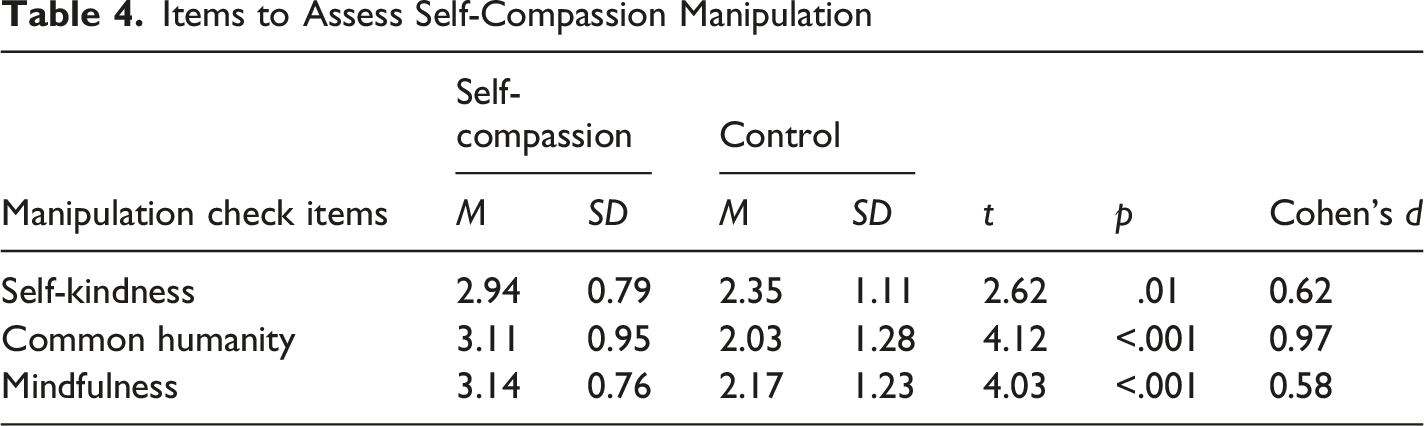
Following Blackie and Kocovski (2018b), the manipulation-check for the self-compassion intervention consisted of three items: “I was supportive and nice to myself in relation to the situation I experienced,” “I reminded myself that many people have a hard time in social situations,” and “I considered both the positive and negative aspects of the situation I experienced.” These three items were intended to capture the three key elements of self-compassion (self-kindness, common humanity, and mindfulness, respectively). Each item was rated on a scale from 1-5 (1 = Strongly Disagree, 5 = Strongly Agree), with higher scores on each item representing a higher state of self-kindness, common humanity, and mindfulness.
Procedure
After obtaining informed consent, a questionnaire booklet was administered to participants in several psychology courses at the beginning of class in exchange for one bonus point toward the course. Participants completed a demographics questionnaire, as well as trait measures of social anxiety (SPIN), depression (BDI-II), PEP (PEPI-T), self-compassion (SCS-SF), self-esteem (SISE), and shame (EISS). Following this, participants recalled a difficult, anxiety-provoking social situation that occurred within the previous two weeks (e.g., presentation, first date, etc.). They briefly described the situation, when it occurred, and level of state anxiety experienced during the situation (SUDS). All information pertaining to the recalled situation was written by participants in their survey booklet, in a private manner. Participants then rated their state levels of shame (EISS-S) and state levels of post-event processing (PEPI-S) since encountering the situation. Next, participants were randomized to either the self-compassion writing condition (n = 36) or the control condition (n = 37). Those in the self-compassion condition completed a five-minute writing exercise developed by Blackie and Kocovski (2018b), which was designed to elicit the three main components of self-compassion, whereas those in the control condition were asked to sit and wait for 5 minutes. Because participants were run in a mass setting, they were instructed to keep track of their allotted 5 minutes on their assigned task by using the clock displayed on the projected computer screen at the front of the room. Once the 5 minutes had passed, they completed a manipulation check. They then reported their state levels of shame surrounding the recalled situation (EISS-S) for the second time, as well as a measure of willingness to communicate in future social situations (WTC).
Results
Missing Data
Overall, there was 0.41% missing values within the dataset. In the present sample, six participants had significant missing data and were thus excluded, leaving a final sample of 73 participants. The remaining missing values were estimated using mean imputation for the given questionnaire in which the values were missing.
Sociodemographic Information
The average age in the present study was 22.19 (SD = 4.98). In terms of gender, 35.62% (n = 26) reported being male, 61.64% (n = 45) reported being female, and 2.74% (n = 2) reported being non-binary. The breakdown of ethnicity was as follows: White (50.7%), Asian (8.2%), Black/African Canadian (16.4%), Indian/West Asian (20.5%), Indigenous/First Nations (2.7%), and missing/prefer not to say (1.4%).
Comparing Conditions on Baseline Measures
Comparing Conditions on Variables Assessed Prior to Manipulation
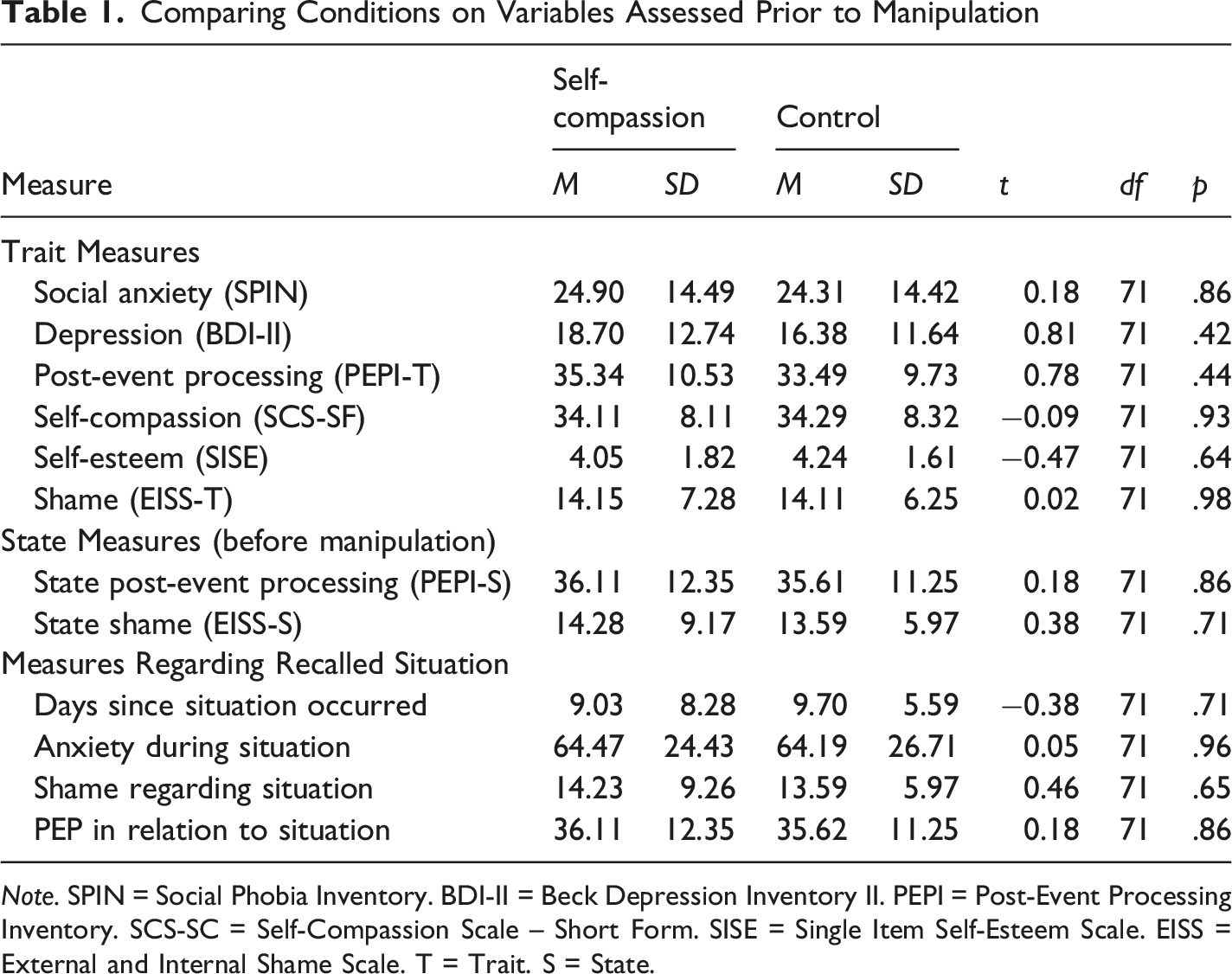
Note. SPIN = Social Phobia Inventory. BDI-II = Beck Depression Inventory II. PEPI = Post-Event Processing Inventory. SCS-SC = Self-Compassion Scale – Short Form. SISE = Single Item Self-Esteem Scale. EISS = External and Internal Shame Scale. T = Trait. S = State.
Baseline Correlations
Correlations Among Baseline Variables Measured Prior to the Manipulation
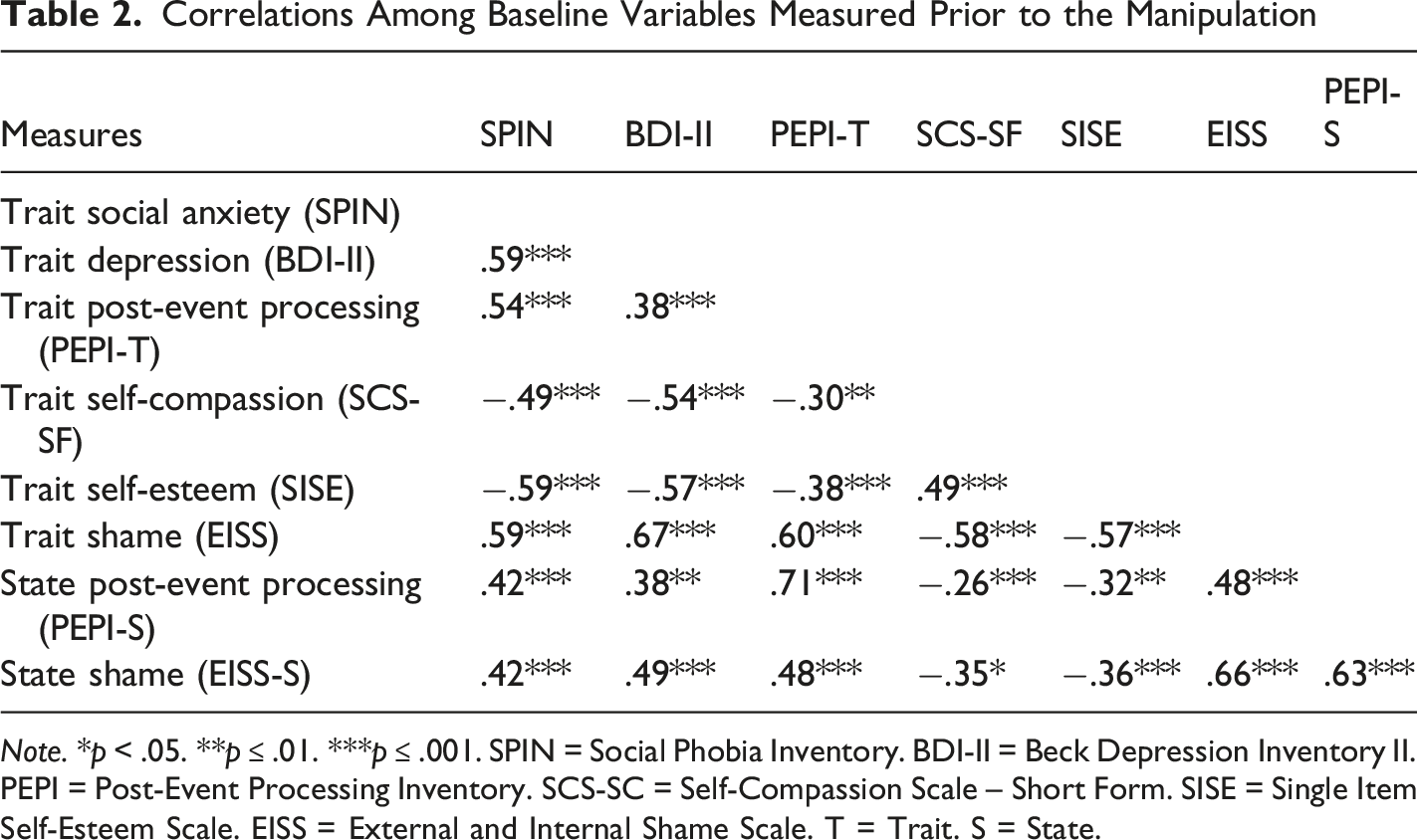
Note. *p < .05. **p ≤ .01. ***p ≤ .001. SPIN = Social Phobia Inventory. BDI-II = Beck Depression Inventory II. PEPI = Post-Event Processing Inventory. SCS-SC = Self-Compassion Scale – Short Form. SISE = Single Item Self-Esteem Scale. EISS = External and Internal Shame Scale. T = Trait. S = State.
Recalled Situation
Independent samples t-tests were used to compare conditions on several variables related to the recalled situation. As shown in Table 1, those in the self-compassion and control conditions did not significantly differ on levels of state anxiety experienced during the situation, shame felt during the situation, or post-event processing since the situation occurred.
Predictors of State PEP Prior to Manipulation
Assessing Shame as a Unique Predictor of State PEP
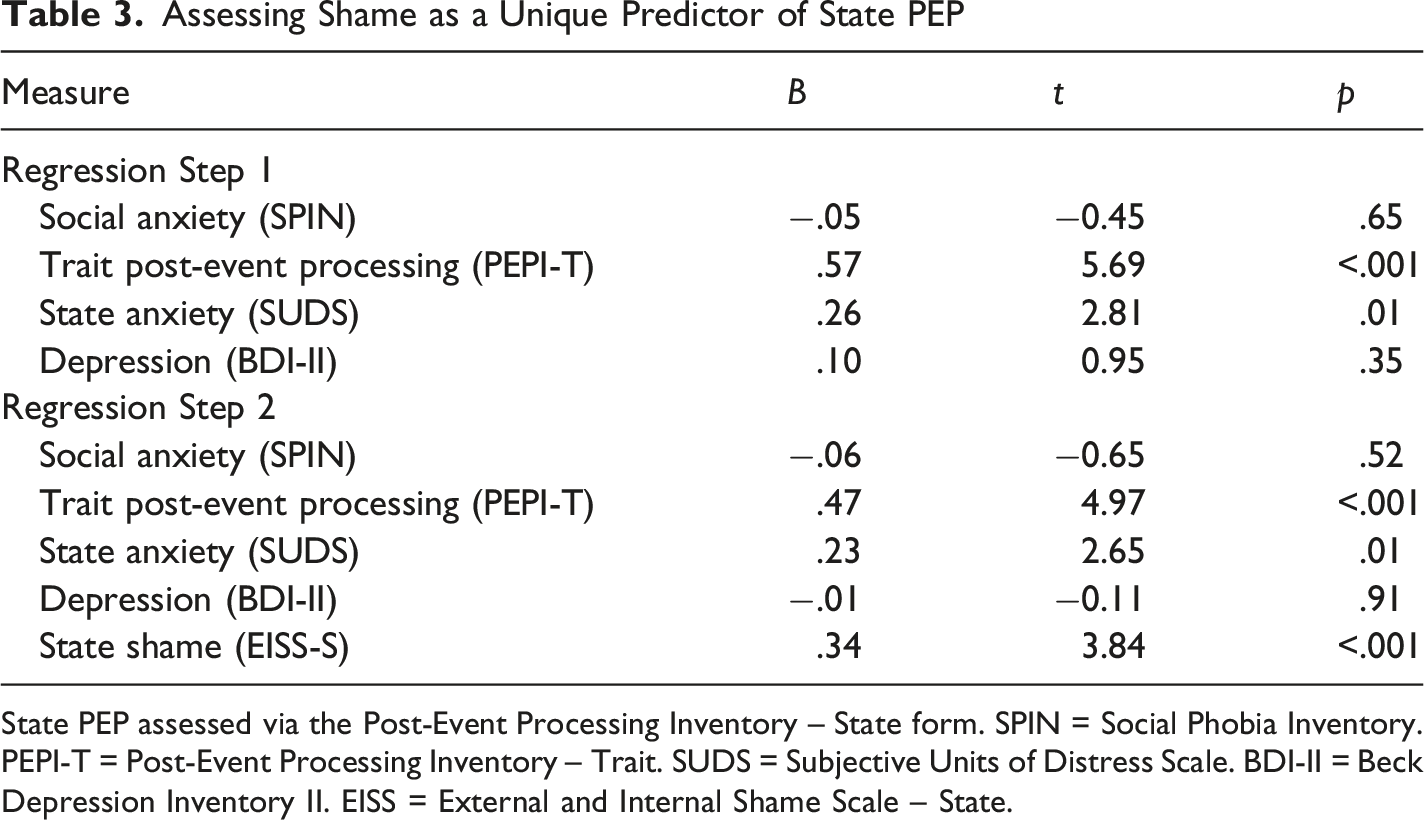
State PEP assessed via the Post-Event Processing Inventory – State form. SPIN = Social Phobia Inventory. PEPI-T = Post-Event Processing Inventory – Trait. SUDS = Subjective Units of Distress Scale. BDI-II = Beck Depression Inventory II. EISS = External and Internal Shame Scale – State.
Manipulation Check for the Intervention
Items to Assess Self-Compassion Manipulation
Intervention: The Effect of Self-Compassion on Shame and Willingness to Communicate
A one-way multivariate analysis of covariance (MANCOVA) was used to compare differences in the self-compassion and control conditions on post-intervention State Shame and Willingness to Communicate. Baseline state shame (pre-intervention) and depression were added to the model as covariates. We used the Bonferroni adjustment for multiple comparisons.
The overall MANCOVA showed significant multivariate effects for pre-intervention shame (Pillai’s trace = .52, F (2, 68) = 37.11, p < .001, partial η2 = .52) and condition (Pillai’s trace = .22, F (2, 68) = 9.50, p < .001, partial η2 = .22), but not for depression (Pillai’s trace = .04, F (2, 68) = 1.45, p = .24, partial η2 = .04). At the univariate level, there was a significant effect for post-intervention shame (F (1, 69) = 17.05, p < .001, partial η2 = .20), such that those in the self-compassion condition (M = 9.32, SD = 7.06) reported significantly less shame than those in the control condition (M = 13.60, SD = 7.03; p < .001). Unexpectedly, willingness to communicate did not significantly differ between conditions at the univariate level (F (1, 69) = 0.05, p = .82, partial η2 = .001).
Moderators of Intervention
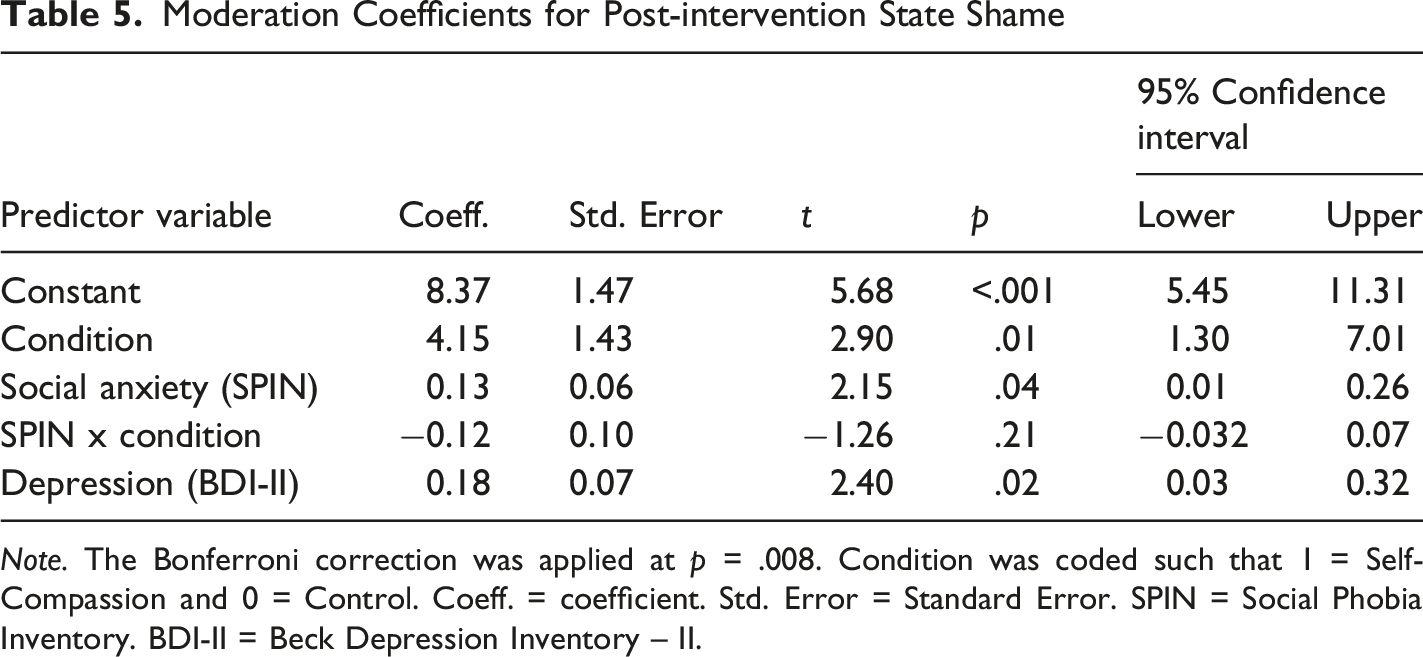
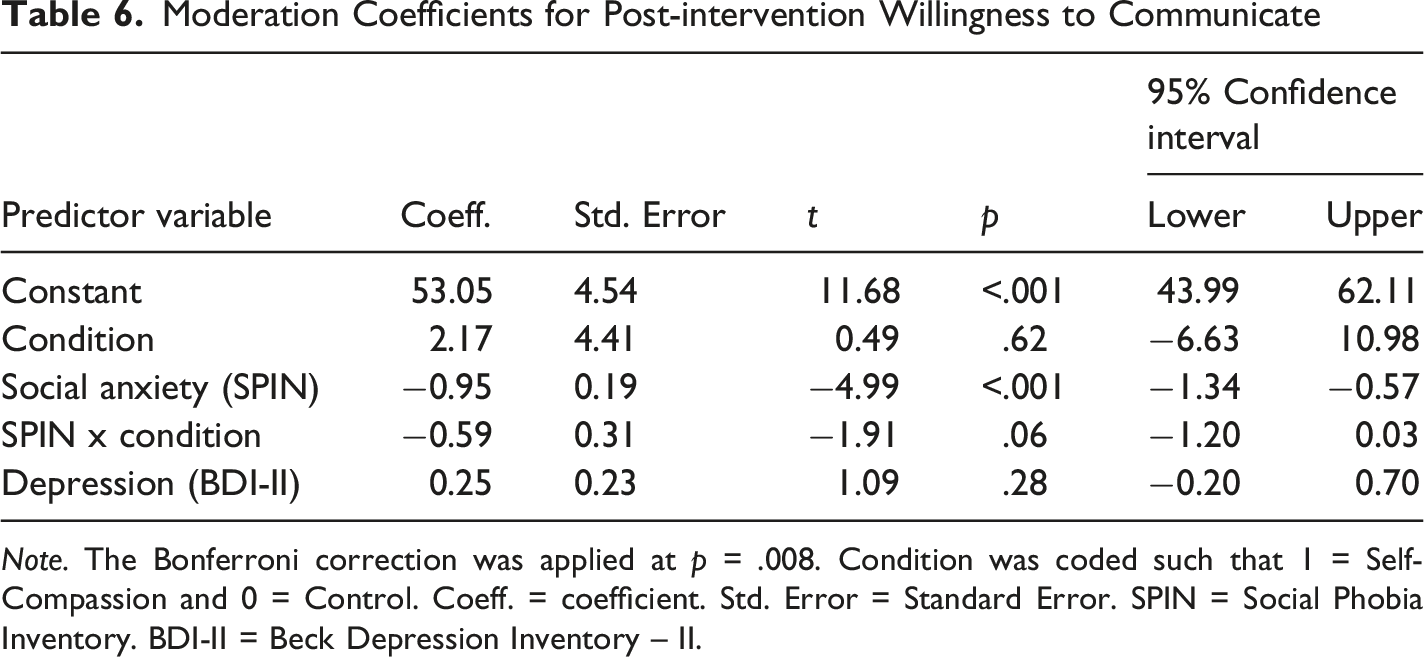
Hayes PROCESS extension bundle, version 5.0 for SPSS, model 1 (Hayes, 2022), was used to examine whether each trait measure (social anxiety, post-event processing, and self-compassion) independently interacted with condition to predict post-intervention State Shame and Willingness to Communicate. A bias-corrected percentile bootstrap with 5000 samples was selected. For each of the three moderating variables (Trait Social Anxiety, Trait Post-Event Processing, and Trait Self-Compassion), two separate analyses were conducted, one with State Shame as the primary outcome and one with Willingness to Communicate as the primary outcome. In each analysis, the condition variable was binary-coded (0 = control, 1 = self-compassion), and we selected the option to mean-center components of products. We also controlled for depression in each analysis. To account for multiple moderation analyses, a Bonferroni correction was applied. The conventional alpha level (p = .05) was divided by the number of analyses conducted (k = 6), resulting in an adjusted significance threshold of p = .008.
Trait Social Anxiety
Shame
Moderation Coefficients for Post-intervention State Shame
Note. The Bonferroni correction was applied at p = .008. Condition was coded such that 1 = Self-Compassion and 0 = Control. Coeff. = coefficient. Std. Error = Standard Error. SPIN = Social Phobia Inventory. BDI-II = Beck Depression Inventory – II.
Willingness to Communicate
Moderation Coefficients for Post-intervention Willingness to Communicate
Note. The Bonferroni correction was applied at p = .008. Condition was coded such that 1 = Self-Compassion and 0 = Control. Coeff. = coefficient. Std. Error = Standard Error. SPIN = Social Phobia Inventory. BDI-II = Beck Depression Inventory – II.
Other Moderating Variables
In separate analyses, following the same procedures described above, trait PEP, as well as trait Self-Compassion, were independently assessed as moderating variables for the effect of condition (self-compassion vs control conditions) on State Shame and on Willingness to Communicate. Unexpectedly, the interaction term was non-significant in each of these analyses (all ps > .12)
Discussion
The findings from the present study add to the growing body of research, providing evidence that self-compassion serves a well-being factor. In this study, we found that a very brief self-compassion intervention was effective in reducing feelings of shame during the post-event period in comparison to a control. Unexpectedly, however, the self-compassion intervention did not impact willingness to communicate in hypothetical, future-oriented scenarios. Furthermore, trait levels of social anxiety, PEP, nor self-compassion interacted with condition in predicting each of these outcomes (shame and willingness to communicate in future settings). These findings are interpreted and discussed in detail below.
As an initial step in our study, we provided evidence that shame correlates with social anxiety and PEP, and that shame is a strong predictor of PEP. As expected, trait and state shame were positively correlated with trait social anxiety, as well as trait and state PEP. Moreover, we showed that state levels of shame experienced during an anxiety-inducing social situation predicted post-event processing, even when controlling for trait social anxiety, trait PEP, trait depression, and situational state anxiety. Nonetheless, these variables combined predicted nearly two-thirds of the variance in PEP. This finding shows the importance of feelings of shame during the post-event period, and is similar to findings reported by Cândea and Szentágotai-Tătar (2018).
Given the importance of shame in predicting PEP, we examined whether a self-compassion intervention would be effective in reducing shame during the post-event period. As expected, those assigned to an ultra-brief, five-minute self-compassion intervention reported significantly lower levels of shame surrounding an anxiety-inducing social situation during the post-event period in comparison to control. Given the role of shame in PEP, it is important to understand whether interventions aimed at decreasing PEP can effectively target factors that may contribute to the development and maintenance of PEP. This finding builds upon Blackie and Kocovski (2018b), who found that a self-compassion intervention reduced levels of PEP. An interesting next step may be to examine whether reductions in shame serve as a mechanism through which self-compassion exerts its effects on PEP. With respect to willingness to communicate, the self-compassion intervention did not show evidence of increasing this variable. This contradicts Blackie and Kocovski (2018b), who found that a ten-minute self-compassion intervention led to increased willingness to communicate in a sample of individuals with elevated social anxiety. However, it is possible that the five-minute intervention employed in our non-selected, healthy student sample was insufficient to produce an effect. Blackie and Kocovski (2018b) employed a longer intervention and pre-selected participants based on elevated anxiety scores. The discrepant finding between studies may be understandable given these differences.
An additional aim of the present research was to examine whether trait levels of social anxiety, trait PEP, or trait self-compassion would (independently) moderate the effect of self-compassion on shame and willingness to communicate in future social situations. It was hypothesized that those with higher levels of social anxiety and trait PEP, and lower levels of trait self-compassion, would benefit most from the self-compassion intervention. On the other hand, those with lower social anxiety and PEP, and higher self-compassion would not benefit from the intervention, as they would have little room for improvement in their shame and willingness to communicate. Unexpectedly, none of these variables significantly interacted with condition (self-compassion versus control) in predicting either shame or willingness to communicate. These findings are consistent with Burnham and Kocovski (2024), who also found that trait social anxiety did not influence the effect of self-compassion on feelings of distress during the post-event period. This may suggest that the self-compassion intervention was equally effective, regardless of levels of social anxiety, baseline PEP, or self-compassion. It is possible that because all participants recalled a difficult social situation, baseline social anxiety, PEP, and self-compassion do not play a role. In other words, the situation was difficult for everyone, not just those with heightened social anxiety and PEP, and lowered self-compassion. In this regard, it would be important for future research to expose all participants to a consistent situation, rather than having all participants, with varying levels of social anxiety, recall their most difficult situation. Finally, given that the intervention was not successful in increasing willingness to communicate, it seems reasonable that none of these baseline variables altered the non-significant effects.
Although the findings from the present study are encouraging, it is important to note several limitations. One limitation was the inclusion of a student sample who was not pre-selected based on social anxiety scores or a clinical diagnosis. Although those with the highest levels of social anxiety would likely benefit most from self-compassion interventions, it is possible that self-compassion is difficult to induce when anxiety becomes too severe. Therefore, our intervention may not be as effective amongst those who would benefit from it most. Although we assessed trait social anxiety as a moderator, those with higher social anxiety (+1SD) may not have been as severe as those at diagnostic levels. Thus, it would be important to replicate this study using a sample of individuals diagnosed with social anxiety disorder to determine the effectiveness of the intervention for those with more severe social anxiety. An additional limitation in the present study was that participants recalled an anxiety-inducing social situation, rather than having all participants exposed to the same situation. Despite this, however, prior to the manipulation, participants in both conditions reported non-significantly different levels of state anxiety during the situation, as well as feelings of shame and post-event processing. Another limitation in the present study relates to the control condition. Given that participants in the control condition were asked to sit and wait, it is possible that some may have been distracted with other tasks. Past research has shown that distraction leads to less-post-event processing (e.g., Blackie & Kocovski, 2016). Despite this, those in the self-compassion condition reported less shame than those in the control, even if they were distracted, rather than sitting quietly. An additional limitation is that 61% of the sample identified as female, and an equal balance of gender identity would make generalization of findings more accurate. However, it is notable that our sample was fairly diverse in terms of ethnicity, which represents a strength in the present study. A final limitation is the relatively small sample size, which may have limited the power to detect effects.
Given the findings from the present study, future research should continue to examine shame in post-event processing and social anxiety. Shame may be an important factor that contributes to the development and maintenance of PEP and social anxiety. This should be experimentally explored in further studies to determine whether a causal link is present. Research should also continue to explore interventions for shame in post-event processing to help limit this negative and repetitive thinking. Currently, researchers have been comparing self-compassion to other active interventions. For instance, Burnham and Kocovski (2024) and Stevenson et al. (2019) compared self-compassion to cognitive restructuring for social anxiety and distress following social situations and found that the interventions did not significantly differ from one another. Future research should continue to examine self-compassion to other active interventions and examine under what conditions and for whom certain interventions may be most effective. Researchers may also examine whether shame serves as a mechanism of change to understand how interventions exert their effects.
Taken together, the findings from the present study highlight the importance of shame in post-event processing. Therefore, it may be important to target this variable in therapeutic settings through the use of self-compassionate exercises. Our findings also demonstrate that the effect of self-compassion on shame did not vary based on social anxiety severity (among other baseline variables). Therefore, it may be important for self-compassion interventions to target shame amongst all individuals struggling with social anxiety and post-event processing.
Footnotes
Ethical Considerations
This study was reviewed and approved by the Cape Breton University Research Ethics Board (protocol number: 2022083) on November 17, 2022.
Consent to Participate
Respondents gave written consent for review and signature before participation for partial course credit (one bonus point).
Consent for Publication
Informed consent for publication was provided.
Funding
The authors disclosed receipt of the following financial support for the research, authorship, and/or publication of this article: This research was supported by a Start-Up Research Grant from Cape Breton University, which was awarded to the first author.
Declaration of conflicting interests
The author(s) declared no potential conflicts of interest with respect to the research, authorship, and/or publication of this article.
Data Availability Statement
The data set from the present study is available at: https://doi.org/10.6084/m9.figshare.29717873.v1 (Blackie & Pelley, 2025).