






Abstract
The college years represent a critical period for the dynamic construction of psychological adaptation systems. To clarify the internal transformation mechanism from a supportive environment to the formation of psychological resilience, this study employed a questionnaire method to conduct three surveys at six-month intervals with 3090 Chinese college students. It examined the developmental trajectories and internal relationships among parental autonomy support, basic psychological need satisfaction, autonomous motivation, and psychological resilience. The results indicated that: (1) Parental autonomy support, basic psychological need satisfaction, autonomous motivation, and psychological resilience were all significantly positively correlated across the three measurements. (2) T1 parental autonomy support had a significant total effect on T3 psychological resilience. (3) Basic psychological need satisfaction and autonomous motivation played a longitudinal sequential mediating role between T1 parental autonomy support and T3 psychological resilience. Specifically, T1 parental autonomy support enhanced T2 basic psychological need satisfaction, which in turn strengthened T2 autonomous motivation, ultimately leading to higher T3 psychological resilience. The findings elucidate the dynamic process through which parental autonomy support fosters psychological resilience in Chinese college students by satisfying basic psychological needs and promoting autonomous motivation. This provides key longitudinal evidence for Self-Determination Theory and underscores the importance of constructing a collaborative family-school autonomy-supportive environment for cultivating college students’ psychological resilience.
Keywords
Introduction
Psychological resilience is a core concept in positive psychology, referring to an individual’s inherent psychological potential to maintain positive adaptation and benign development in the face of adversity. The higher education stage is a critical period for youth development. Cultivating psychological resilience in college students holds significant practical importance for accumulating positive qualities, enhancing the ability to withstand setbacks, and achieving self-improvement (Liu & Zheng, 2010; Feng, 2022). With the deepening development of positive psychology, researchers have gradually shifted from focusing on psychopathology and deficits to exploring psychological resources that promote positive individual adaptation. Consequently, psychological resilience has become a key focus in both positive psychology and clinical intervention (Tang & Wang, 2024; Zhang et al., 2021). Early research often viewed psychological resilience as a coping ability unique to high-risk groups. In contrast, the potential perspective emphasizes that psychological resilience is an ordinary capacity inherent in the human adaptation and development process, present in every individual, differing only in the degree of manifestation (Liu et al., 2010; Masten, 2001). Psychological resilience is not only manifested in positive coping with adversity but can also be stimulated and measured in normal developmental environments. Its essence is a dynamic process that spans an individual’s entire lifespan. Although this ability cannot directly eliminate stressors, it can promote the formation of more effective coping strategies and more adaptive behavioral patterns, thereby enhancing overall psychological functioning. Kumpfer’s “individual-process-context” resilience framework provides a systematic perspective for understanding its formation mechanism. This theory posits that psychological resilience is influenced not only by external environmental factors but also depends on individual internal factors (Kumpfer, 2002). This model emphasizes the interactive mechanisms between individual and environmental resources. At the individual level, it focuses on factors such as cognition, emotion, and motivational regulation. At the environmental level, it emphasizes the supportive contexts constituted by family, school, and peer systems, with particular attention to identifying protective factors that promote students’ positive development. Based on this, the present study uses this theoretical framework to explore the relationship between parental autonomy support and college students’ psychological resilience and its underlying psychological mechanisms.
The Relationship Between Parental Autonomy Support and Psychological Resilience
Family education, as the earliest and most enduring environmental context in individual growth, is an important protective factor for psychological resilience during adaptation and reorganization. It exerts a profound influence on the development of college students’ psychological resilience. Simultaneously, Self-Determination Theory also posits that autonomy support from significant others significantly impacts an individual’s psychological well-being and quality of life (Deci & Ryan, 2000). In this context, parental autonomy support, as a key family parenting behavior, has gradually become a core focus of researcher attention. Parental autonomy support refers to parenting behaviors where parents accept their children’s emotions, thoughts, and reactions, support their autonomous choices and self-determination in life, and encourage the development of their independence (Wang et al., 2007). It is not only one of the key external resources for promoting positive adolescent development (Froiland & Worrell, 2017; Peng et al., 2021) but can also stimulate individuals’ positive motivation and psychological functioning (Liu et al., 2020; Vasquez et al., 2016). Research indicates that adolescents who receive autonomy support from both parents demonstrate better academic achievement and mental health (Vasquez et al., 2016). Specifically, higher levels of perceived parental autonomy support are associated with enhanced academic persistence (Li et al., 2023), improved mental health levels (Liu, 2022), promotion of positive qualities (Liu et al., 2020), and effective reduction of internalizing and externalizing problem behaviors (Sun et al., 2022). Furthermore, higher levels of parental autonomy support are linked to better positive adaptation outcomes and fewer problems in negative adaptation among adolescents (Li et al., 2023). These positive adaptation outcomes are manifested not only in immediate improvements in life satisfaction, positive emotional experiences, and self-evaluation (Kumpfer, 2002) but have also been further validated through longitudinal studies (Costa et al., 2015; Matte-Gagné et al., 2015). In summary, although existing research is mostly based on cross-sectional designs, it provides preliminary evidence for a potential cross-temporal association between parental autonomy support and psychological resilience. This suggests that parental autonomy support may play a continuous protective role in the dynamic development of individual psychological resilience. Accordingly, based on Self-Determination Theory and empirical research findings, this study proposes Hypothesis 1: Parental autonomy support can longitudinally predict college students’ psychological resilience.
The Sequential Mediating Role of Basic Psychological Need Satisfaction and Autonomous Motivation
According to Kumpfer’s resilience framework, environmental factors can influence psychological resilience and behavioral performance by affecting individuals’ internal traits (Kumpfer, 2002). Self-Determination Theory further points out that basic psychological need satisfaction is a key motivational mechanism through which environmental factors influence individual adaptive behavior (Li et al., 2016; Liu et al., 2013b). Parental autonomy support, as an important external environmental factor, may promote students’ positive developmental outcomes by satisfying their basic psychological needs (Deci & Ryan, 2000). Therefore, the influence of parental autonomy support on college students’ psychological resilience may be realized through a sequential mediating pathway consisting of basic psychological need satisfaction and autonomous motivation.
Basic psychological need satisfaction is a core concept in Self-Determination Theory and crucial for individual healthy growth and development (Li et al., 2023; Liu et al., 2013a). It encompasses the needs for autonomy, competence, and relatedness, regarded as essential psychological nourishment for individual adaptation, growth, and healthy development (Deci & Ryan, 2000). Research shows a significant positive correlation between parental autonomy support and basic psychological need satisfaction (Cheng et al., 2023; Li, 2022; Zeng et al., 2022). When individuals feel supported and recognized in their environment, their basic psychological needs are more easily adequately satisfied (Vansteenkiste & Ryan, 2013). The satisfaction of basic psychological needs not only contributes to enhanced mental health levels (Liu, 2022) but also significantly and positively predicts psychological resilience (Deci & Ryan, 2000). Accordingly, Hypothesis 2 is proposed: Parental autonomy support positively influences college students’ psychological resilience by enhancing basic psychological need satisfaction.
Motivation is a key factor in maintaining human behavior and mental health (Chen & Huang, 2016). Autonomous motivation, also known as autonomous self-regulation, refers to a psychological state where an individual’s behavioral tendencies arise spontaneously due to interest, value identification, or personal volition (Black & Deci, 2000). Research indicates that teacher autonomy support can effectively promote students’ autonomous motivation (Chen et al., 2024; Chen & Huang, 2016; Jiang et al., 2023). Furthermore, in close relationships, opportunities to receive warmth and respect also facilitate the development of autonomous motivation (Zoffmann et al., 2023). As an internal motivation characterized by the highest autonomy and the least control, autonomous motivation can significantly enhance the proactivity and positivity of individual behavior (Lu & Hui, 2020) and is closely related to positive behavioral change (Sweet, 2011). Therefore, this study proposes Hypothesis 3: Parental autonomy support indirectly promotes the development of college students’ psychological resilience by stimulating their autonomous motivation.
There is a close connection between basic psychological need satisfaction and autonomous motivation. Research shows that when an individual’s needs for autonomy, competence, and relatedness are adequately satisfied, it can facilitate the internalization of external demands into self-identified value goals, thereby forming autonomous motivation (Mao, 2022; Ntoumanis et al., 2021; Wang & Zhao, 2022). Self-Determination Theory posits that supportive external environments are prerequisites for basic psychological need satisfaction (Deci & Ryan, 2000), which in turn promotes the development of autonomous motivation (Jiang et al., 2023; Patrick et al., 2007; Ryan & Deci, 2017). Research also shows that social support, especially autonomy support, helps satisfy individuals’ need for autonomy, and basic psychological need satisfaction mediates the relationship between perceived autonomy support and autonomous motivation (Bakadorova & Raufelder, 2018; Gao et al., 2022). Therefore, basic psychological need satisfaction may be an important psychological mechanism through which parental autonomy support influences college students’ autonomous motivation.
In summary, although existing research has preliminarily revealed the relationship between parental autonomy support and psychological resilience, there is still a lack of longitudinal examination of the cross-temporal predictive effects between them and longitudinal dynamic testing of their mediating mechanisms. Based on the above theoretical reasoning and empirical evidence, we further propose an integrated sequential mediation model to reveal its dynamic mechanism. Accordingly, this study proposes Hypothesis 4: Basic psychological need satisfaction and autonomous motivation play a longitudinal sequential mediating role between parental autonomy support and college students’ psychological resilience. The hypothesized relationship model of the variables is shown in Figure 1. Hypothesized model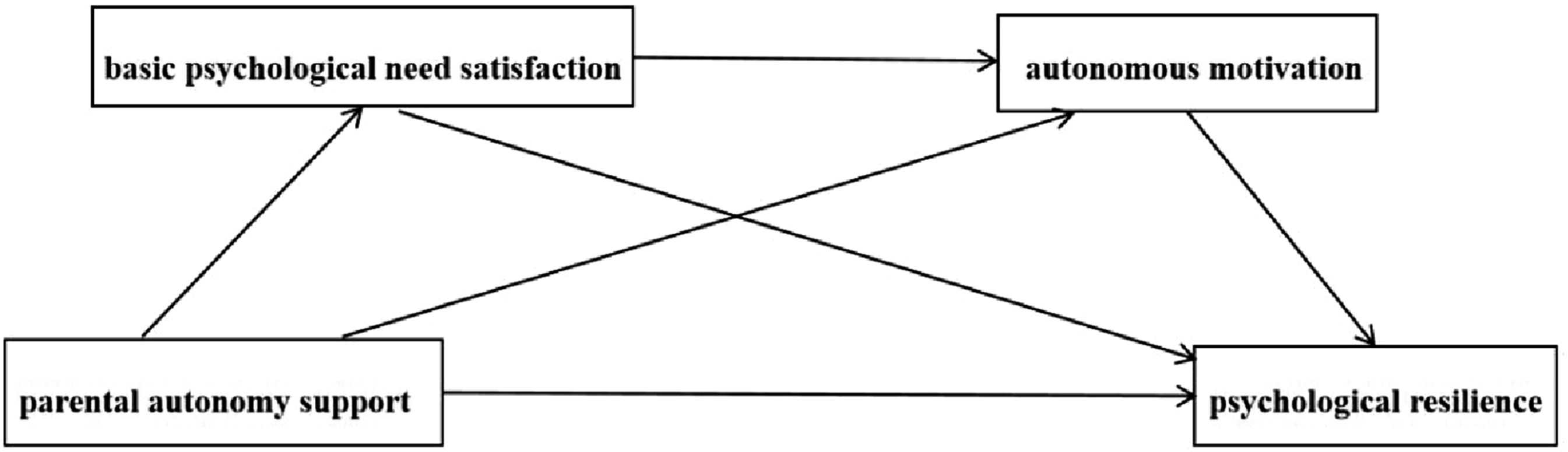
Method
Participants
Demographic Characteristics of Participants (N = 3090)
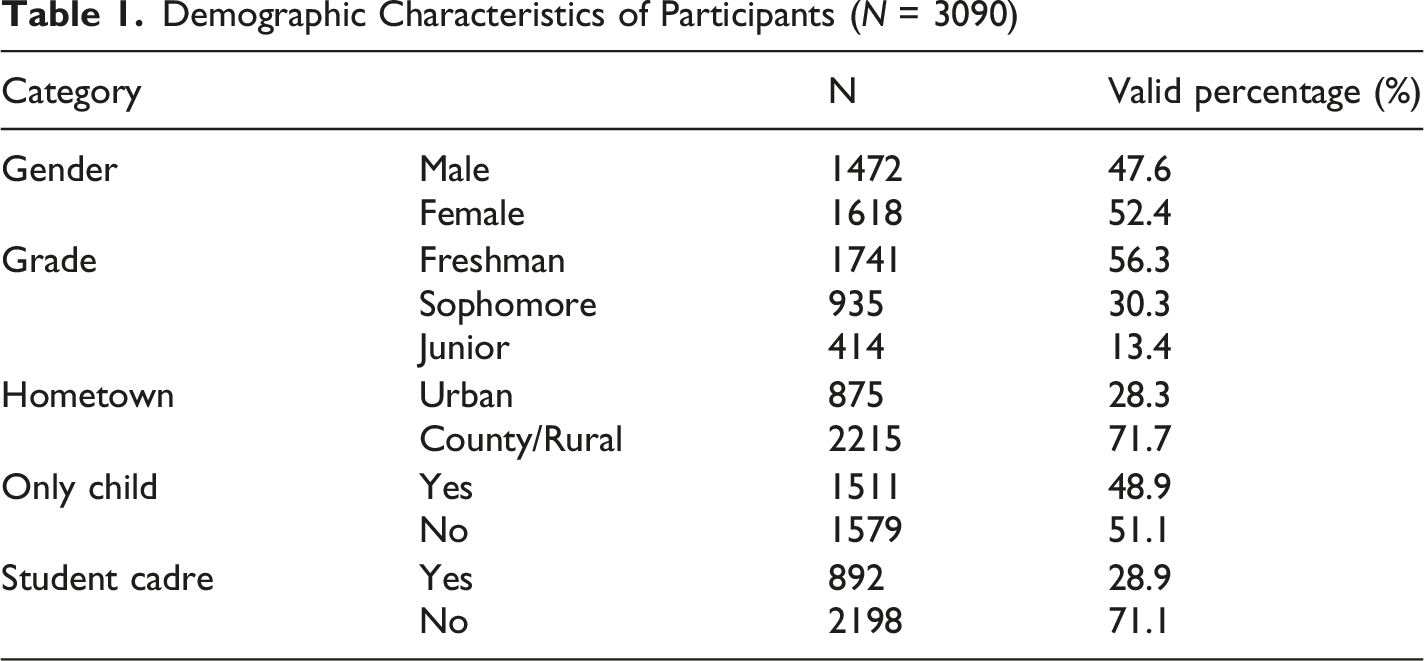
To protect participant privacy, all identifying information (names and student ID numbers) was separated from the questionnaire data immediately after the three-wave matching was completed and replaced with randomly generated participant codes. Throughout the data analysis, only these codes were used, making it impossible to trace back to individual participants. This study was approved by the Ethics Review Committee of Northeast Normal University (Approval No. 2024046). All participants signed written informed consent forms containing clauses on data confidentiality and anonymization before the first wave of data collection.
Measures
Parental Autonomy Support Scale
This study used the Parental Autonomy Support Scale revised by Wang et al. (2007), which has demonstrated good reliability and validity in research applications (Tang et al., 2013). The scale consists of 12 items (e.g., “When I have problems, my parents listen to my opinions and views”). It uses a 5-point Likert scale (from 1 = “completely disagree” to 5 = “completely agree”). The average score of the 12 items represents the level of perceived parental autonomy support, with higher scores indicating higher perceived parental autonomy support (Deng et al., 2021, 2022; Tang et al., 2013). In this study, Cronbach’s αlpha coefficients for the three waves were .943, .946, and .945, respectively.
Basic Psychological Need Satisfaction Scale
This study used the Basic Need Satisfaction Scale (BNSS) developed by Deci and Ryan (2000). The scale includes three dimensions: autonomy, competence, and relatedness. It consists of 21 items, with 9 reverse-scored items. Specifically, there are 7 items for autonomy, 6 for competence, and 8 for relatedness. It uses a 7-point Likert scale (from 1 = “completely disagree” to 7 = “completely agree”). The total score is the sum of the three subscale scores, with higher scores indicating a greater degree of need satisfaction (Luo et al., 2014). Confirmatory factor analysis (CFA) using Mplus 8.3 on the T1 sample (N = 3090) was conducted to test the three-factor structure. The results indicated a good fit for the three-factor model: χ2/df = 4.26, CFI = 0.91, TLI = 0.90, RMSEA = 0.06, SRMR = 0.05, which was significantly better than the one-factor model. Given that this study focused on the overall level of basic psychological need satisfaction rather than the unique effects of each dimension, and because the three dimensions showed moderate to high correlations (r = 0.48–0.62), the total score was used for subsequent analyses. In this study, Cronbach’s α coefficients for the three waves were .839, .877, and .839, respectively.
Autonomous Motivation Scale
This study used the Autonomous Motivation Scale. The scale consists of four dimensions: volitionality, interest, identification, and challenge. It contains 14 items: 3 for volitionality, 4 for interest, 4 for identification, and 3 for challenge. It uses a 5-point Likert scale (from 1 = “completely not true” to 5 = “completely true”). Higher scores indicate higher levels of autonomous motivation (Jing, 2021). In this study, Cronbach’s α coefficients for the three waves were .947, .954, and .951, respectively.
Psychological Resilience Scale
This study used the Connor-Davidson Resilience Scale (CD-RISC) developed by Connor and Davidson (2003) and revised by Yu and Zhang (2007). The scale includes three dimensions: toughness, strength, and optimism. It consists of 25 items: 13 for toughness, 8 for strength, and 4 for optimism. It uses a 5-point Likert scale (from 1 = “completely disagree” to 5 = “completely agree”). The total score is the sum of the three dimension scores, with a maximum of 100. Higher total scores indicate better psychological resilience (Jiang, 2022; Yu & Zhang, 2007). In this study, Cronbach’s α coefficients for the three waves were .955, .965, and .963, respectively.
Data Analysis
First, SPSS 27.0 was used to conduct Harman’s single-factor test, descriptive statistics, and correlational analysis on the data. Second, Mplus 8.3 was used to construct structural equation models for sequential analyses: (1) unconditional latent growth modeling (LGM) to examine the developmental trajectory of each variable; (2) cross-lagged modeling to test the direct predictive effect of T1 parental autonomy support on T3 psychological resilience; and (3) longitudinal mediation modeling with T1 parental autonomy support as the independent variable, T2 basic psychological need satisfaction and T2 autonomous motivation as chain mediators, and T3 psychological resilience as the dependent variable, employing bias-corrected bootstrapping (5,000 resamples) to test the chain mediating effect (Wang, 2014).
Results
Common Method Bias Test
Since the data in this study were collected via self-report questionnaires from college students, common method bias may exist. Harman’s single-factor test was conducted using SPSS to assess the potential impact (Zhou & Long, 2004). Exploratory factor analysis was performed on all items from the psychological resilience, parental autonomy support, basic psychological need satisfaction, and autonomous motivation scales. The unrotated factor analysis results indicated 9 factors with eigenvalues greater than 1, and the variance explained by the first factor was 24.5% (< 40%). This suggests that serious common method bias was not present in this study.
Descriptive Statistics and Correlational Analysis
Descriptive Statistics and Correlations for all Variables (N = 3090)
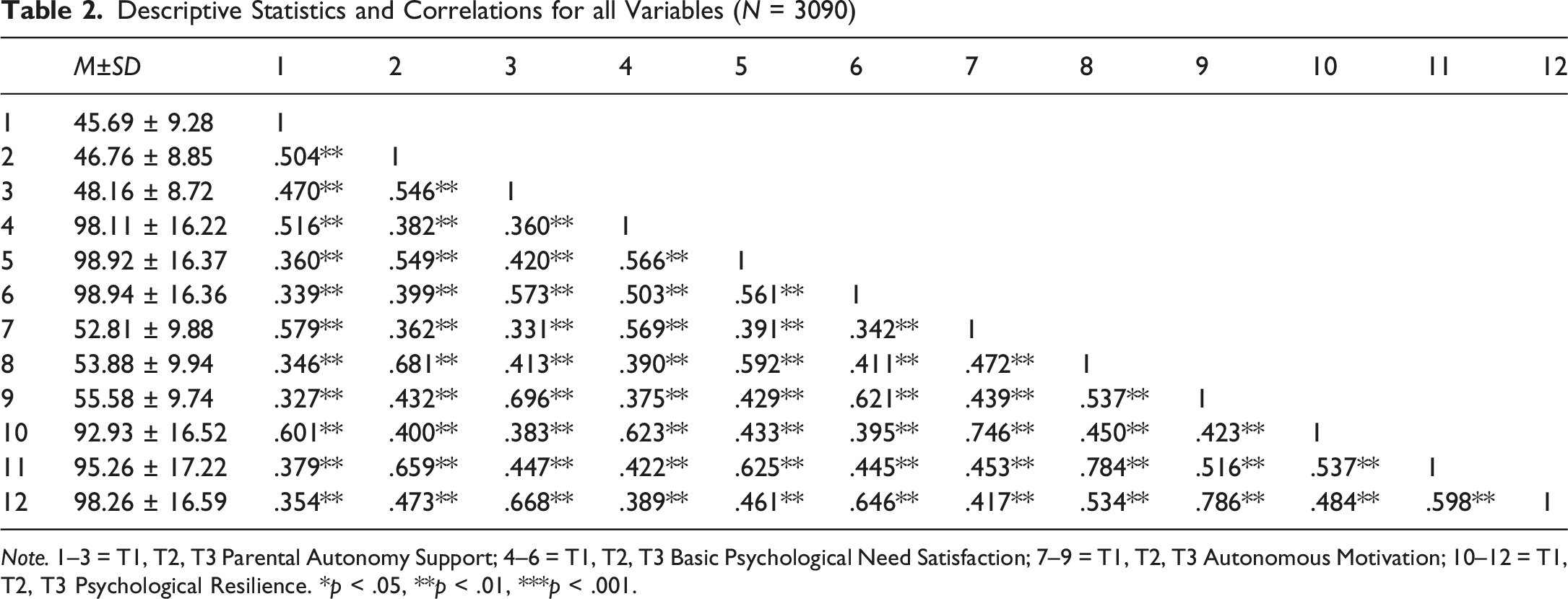
Note. 1–3 = T1, T2, T3 Parental Autonomy Support; 4–6 = T1, T2, T3 Basic Psychological Need Satisfaction; 7–9 = T1, T2, T3 Autonomous Motivation; 10–12 = T1, T2, T3 Psychological Resilience. *p < .05, **p < .01, ***p < .001.
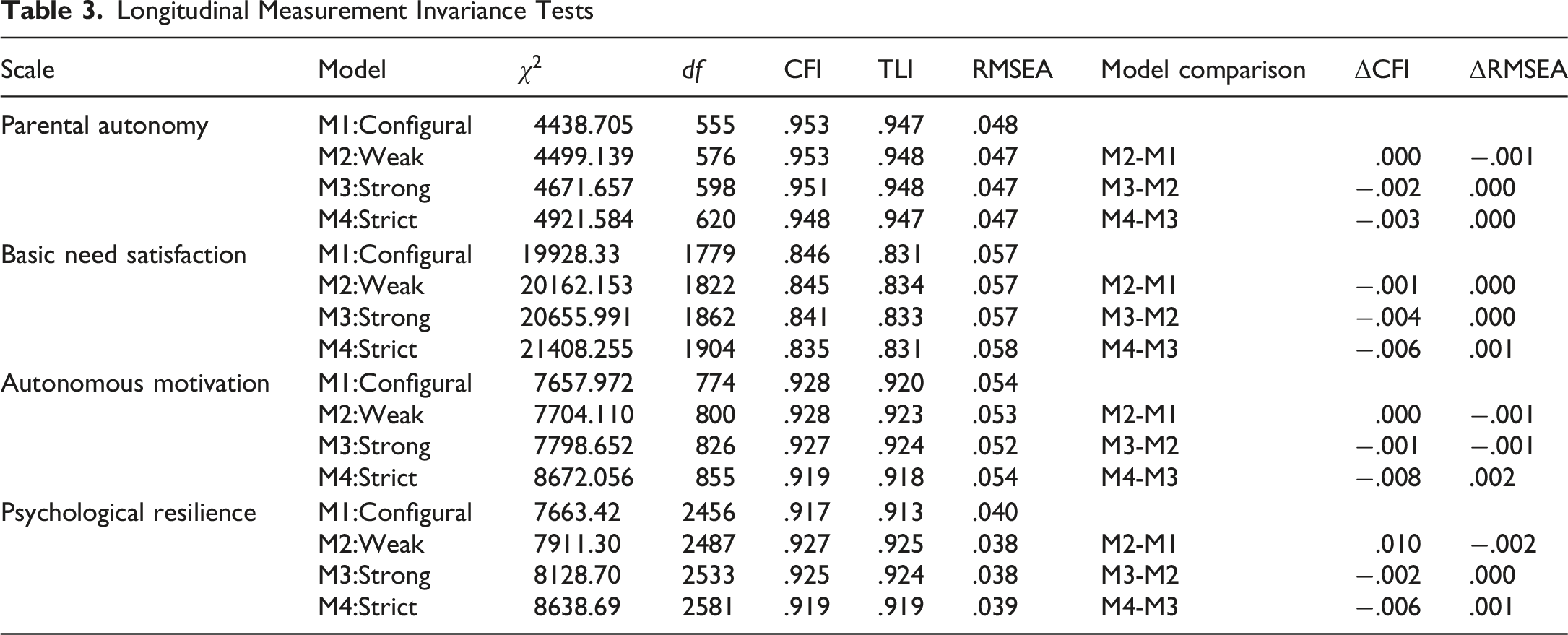
Measurement Invariance Test
Longitudinal Measurement Invariance Tests
Developmental Trends of Variables
Fit Indices, Intercepts, and Slopes of Unconditional Latent Growth Models for Key Variables
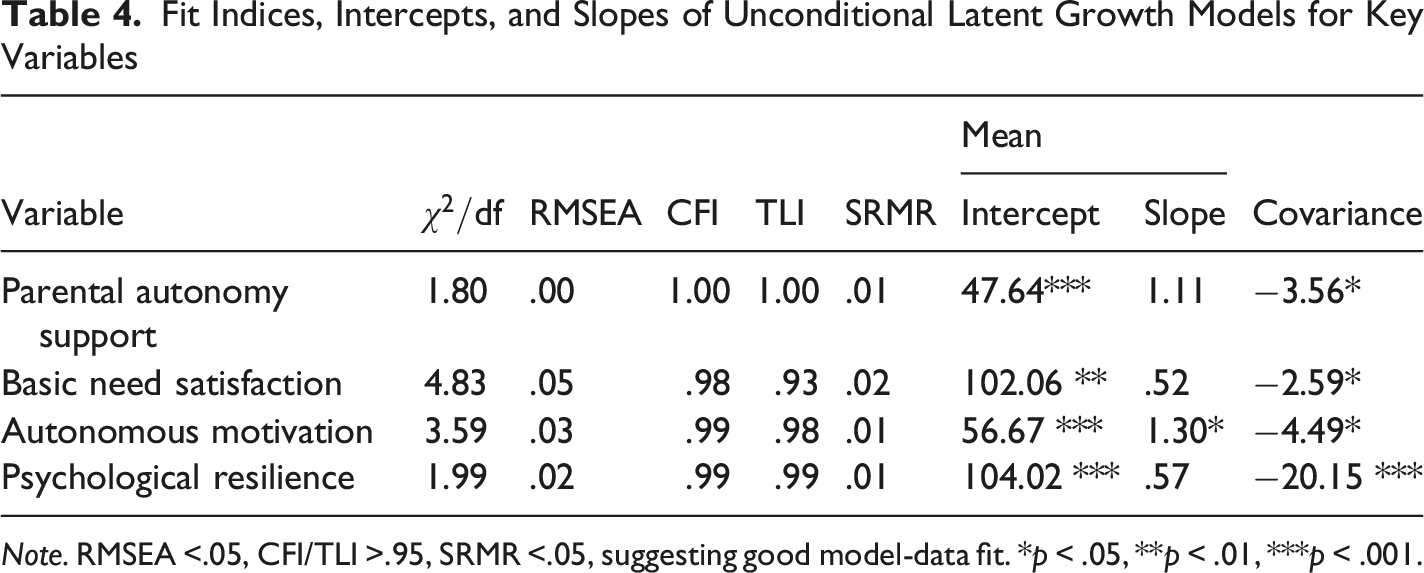
Note. RMSEA <.05, CFI/TLI >.95, SRMR <.05, suggesting good model-data fit. *p < .05, **p < .01, ***p < .001.
Test of the Sequential Mediation Effect of Basic Psychological Need Satisfaction and Autonomous Motivation
To examine the longitudinal predictive effect of parental autonomy support on psychological resilience and further investigate the chain mediating mechanism of basic psychological need satisfaction and autonomous motivation, a linear unconditional model was constructed and tested using Mplus 8.3. The model explicitly specified the temporal paths among variables, controlled for autoregressive effects, and used maximum likelihood estimation (MLR). Because participants who did not complete all three waves were removed during data matching and cleaning, the analytical dataset contained no missing values; thus, no missing data handling was required.
Taking parental autonomy support as the independent variable, the longitudinal mediation model is depicted in Figure 2. The model fit indices were good: χ2/df = 3.42, RMSEA = .03, CFI = .99, TLI = .99. The results indicated that all coefficients in the chain path were significant. The results indicated that the first half of the mediating pathway (Path 1) was significant: T1 parental autonomy support had a significant positive predictive effect on T2 basic psychological need satisfaction (β = .36, p < .001), and T2 basic psychological need satisfaction had a significant positive predictive effect on T3 autonomous motivation (β = .09, p < .001). The second half of the mediating pathway (Path 2) was also significant: T2 autonomous motivation had a significant positive predictive effect on T3 psychological resilience (β = .12, p < .001). Additionally, a contemporaneous analysis showed a significant positive correlation between T3 autonomous motivation and T3 psychological resilience (r = .68, p < .001), and the positive predictive effect of T2 autonomous motivation on T3 psychological resilience remained significant (β = .12, p < .001), further supporting the covariation between autonomous motivation and psychological resilience. The longitudinal mediation model of parental autonomy support, basic psychological need satisfaction, autonomous motivation, and psychological resilience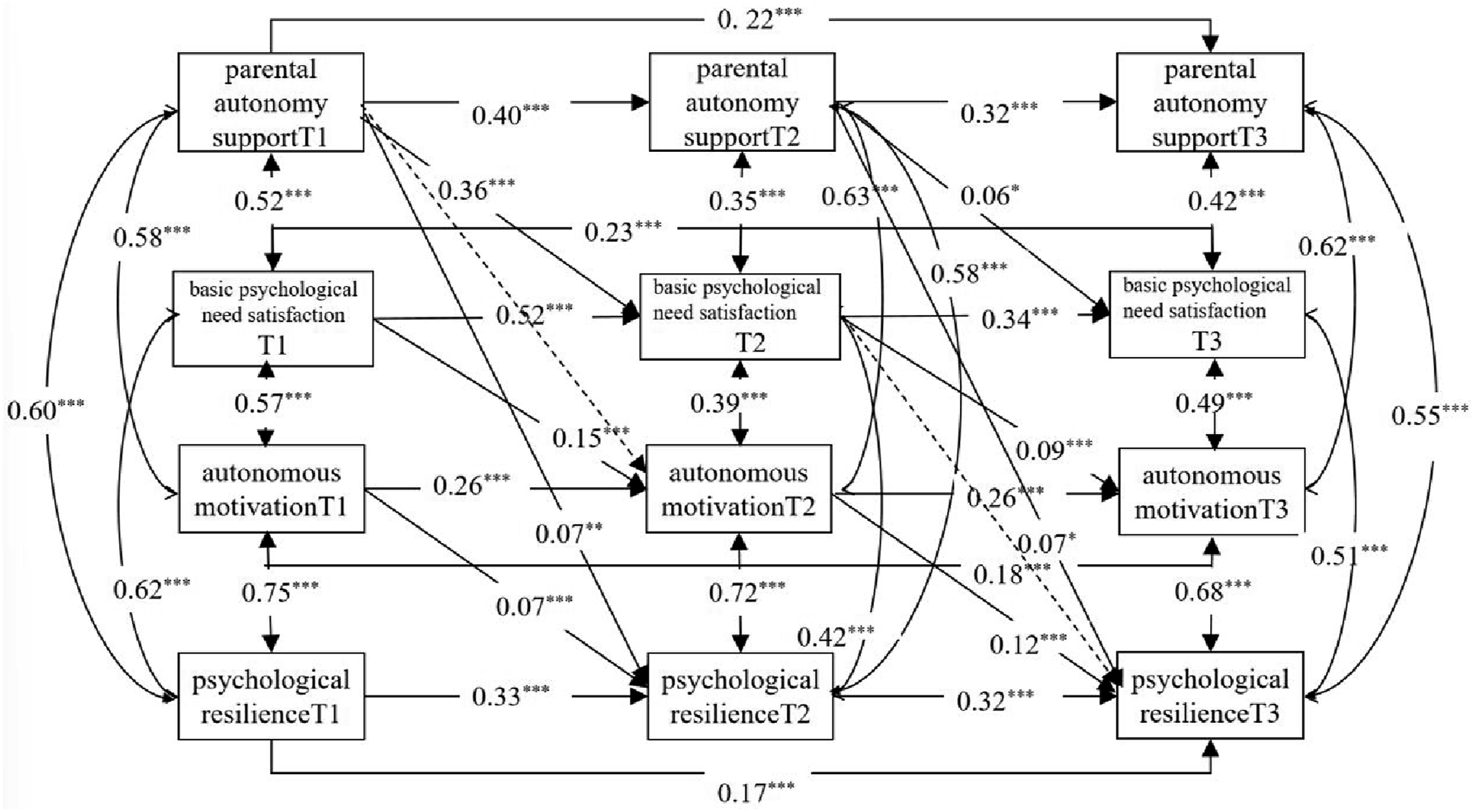
Direct and Indirect Effects in the Longitudinal Mediation Model
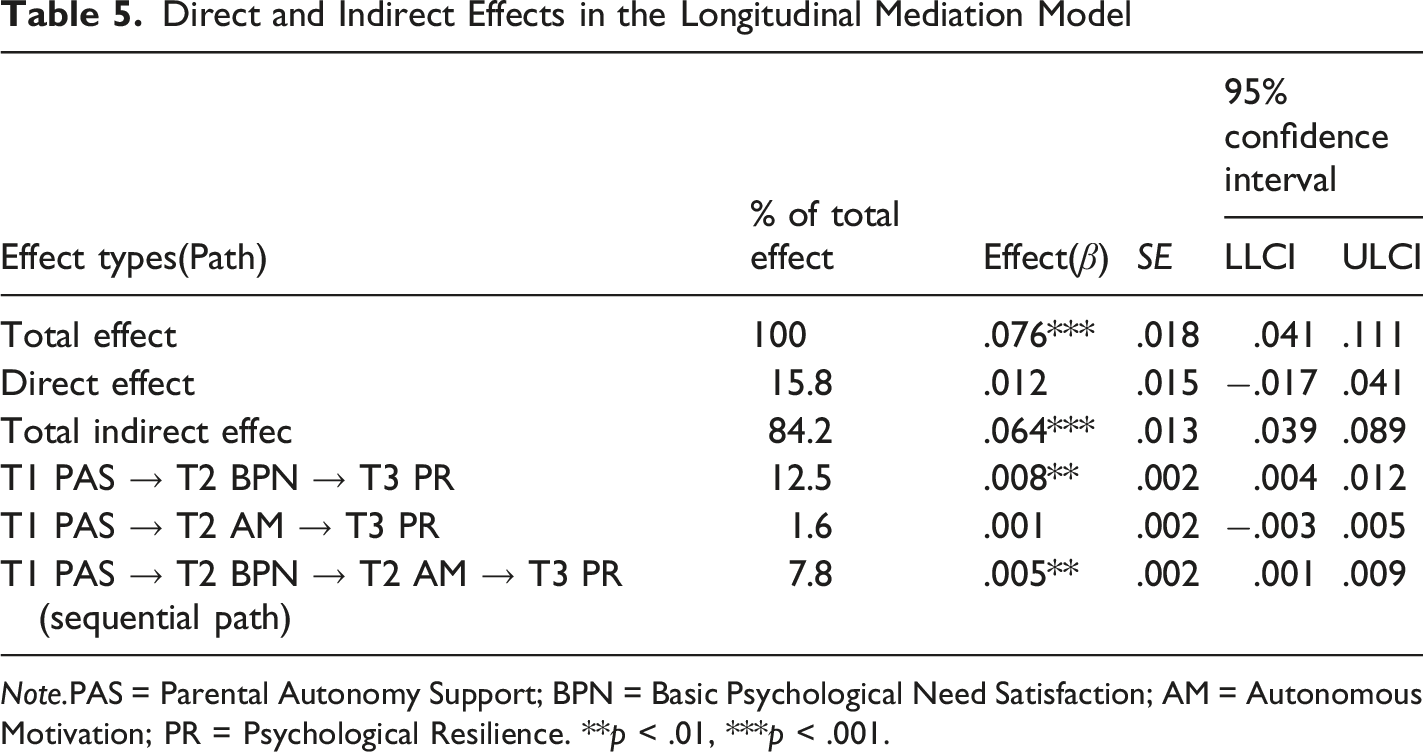
Note.PAS = Parental Autonomy Support; BPN = Basic Psychological Need Satisfaction; AM = Autonomous Motivation; PR = Psychological Resilience. **p < .01, ***p < .001.
Discussion
Based on three-wave longitudinal data and latent growth modeling, this study systematically examined the dynamic relationship between parental autonomy support and psychological resilience in college students and its underlying mechanisms.
Interpretation of Findings
Developmental Trajectories of Parental Autonomy Support, Basic Psychological Need Satisfaction, Autonomous Motivation, and Psychological Resilience
Through three waves of longitudinal tracking, this study revealed the interrelated yet distinct developmental trajectories of parental autonomy support, basic psychological need satisfaction, autonomous motivation, and psychological resilience among college students.
Parental autonomy support, basic psychological need satisfaction, and psychological resilience remained relatively stable during the university years, showing no significant linear trend of change. This finding is consistent with the general pattern of personality and core psychological traits tending to stabilize in early adulthood (Lu, 2016; Wang & Guo, 2021; Zhong, 2015). Specifically, as students enter university and become geographically separated from their parents, the influence pattern of parenting style as a distal environmental factor tends to stabilize, forming a relatively stable “baseline level.” Similarly, psychological resilience, as a positive psychological quality (Pan et al., 2023), shows a linear increasing trend in early adolescence (Wang et al., 2024). However, in the university environment—which, while challenging, is not characterized by continuous adversity—its overall level may also exhibit strong “trait-like” stability.
However, highly consistent with expectations from Self-Determination Theory, college students’ autonomous motivation showed a significant linear growth trend. This finding can be explained by the unique developmental tasks and environmental characteristics of the university stage. First, the university environment provides broad autonomous choices in course selection, club activities, and future career planning (Li et al., 2023), creating favorable conditions for individuals to internalize external demands into personal value goals, thereby systematically promoting the enhancement of autonomous motivation (Dong & Mao, 2020; Jiang et al., 2023; Ryan, 2000; Ryan & Deci, 2017). Second, the accumulation of cognitive abilities and social experience among college students also drives them to explore their interests more deeply, integrate personal values, and continuously nurture the development of autonomous motivation (Gillison et al., 2019).
It is noteworthy that the initial levels of parental autonomy support, autonomous motivation, and psychological resilience were all significantly negatively correlated with their subsequent growth rates, exhibiting a “compensatory development pattern” (Leipold & Greve, 2009). This indicates that students with relatively weaker initial psychological resources at enrollment showed a stronger “catching-up” momentum and improvement speed during their subsequent university years. The rich opportunities and supportive relationships provided by the university (e.g., autonomous academic exploration, egalitarian teacher-student interaction, close peer connections) may offer crucial developmental resources for these students, serving a compensatory supportive role that effectively activates and accelerates their intrinsic developmental potential (Jiang et al., 2023; Wei, 2021; Zhang et al., 2018). This finding suggests that higher education practitioners should pay particular attention to students with poor initial adjustment or lower initial levels of psychological resources, leveraging targeted support measures to fully realize their growth potential.
The Longitudinal Sequential Mediating Role of Basic Psychological Need Satisfaction and Autonomous Motivation
This study provides strong longitudinal evidence for parental autonomy support as an important environmental antecedent of psychological resilience. The results showed that the total effect of T1 parental autonomy support on T3 psychological resilience was significant (β = .076, p < .001); however, the direct effect became non-significant after including the mediators (β = .012, p > .05). This indicates that the influence of parental autonomy support on psychological resilience was fully mediated by basic psychological need satisfaction and autonomous motivation, further supporting full mediation in the sequential mediation model. Existing cross-sectional research has shown that parental autonomy support is one of the important external factors for positive adolescent development (Froiland & Worrell, 2017; Peng et al., 2021). This cross-temporal predictive effect provides further longitudinal temporal support for the relationships found in cross-sectional studies, supporting the hypothesis that parental autonomy support has a cross-time predictive effect on psychological resilience. That is,parental autonomy support has a lasting and robust promoting effect on psychological resilience, thus validating Hypothesis 1.
More importantly, through a cross-lagged panel model, this study revealed the longitudinal sequential mediating role of basic psychological need satisfaction and autonomous motivation, constituting the core theoretical finding. This sequential pathway (T1 Parental Autonomy Support→T2 Basic Psychological Need Satisfaction →T3 Autonomous Motivation→T3 Psychological Resilience) delineates a gradual evolutionary process, supporting Hypothesis 4. In the first half of the path, parental autonomy support, as an external protective environment, promotes the internalization of external rules and value integration by continuously satisfying college students’ basic psychological needs, thereby forming higher levels of autonomous motivation, validating Hypothesis 2. In the second half of the path, gradually enhanced autonomous motivation promotes the development of psychological resilience by increasing behavioral persistence, cognitive optimism, and the sense of strength to cope with difficulties, supporting Hypothesis 3.
This virtuous cycle of “need satisfaction→motivation internalization→ adaptation enhancement” organically integrates Kumpfer’s resilience framework with Self-Determination Theory. It indicates that distal environmental factors (parental autonomy support) cultivate positive psychological outcomes (psychological resilience) by shaping proximal individual internal states (basic psychological need satisfaction and autonomous motivation). This not only suggests that psychological resilience may exhibit dynamic changes under the influence of supportive environments but also clarifies its developmental pathway of continuous enhancement through internal motivational processes. This mechanism resonates with the longitudinal findings of Cohen et al. (2022) on teachers’ motivating styles and autonomous motivation, collectively supporting the universal process whereby supportive environments stimulate autonomous motivation by satisfying psychological needs (Cohen et al., 2022).
Although the sequential indirect effect in this study (β = 0.005) was statistically significant, the effect size was small. This is similar to the longitudinal findings of Cohen et al. (2022) regarding teachers’ motivating styles, in which changes in teaching styles and students’ need-based experiences could explain the motivational change process, with the reported model effects primarily reflected in the significance of the relationships. This pattern partly reflects the nature of longitudinal designs, where longer time intervals (six months) may attenuate the immediate associations between variables. It may also suggest that the development of psychological resilience is influenced by multiple systemic factors, and a single family environmental variable (parental autonomy support) has limited explanatory power. From a practical perspective, even small indirect effects, if they accumulate at the population level, may still have important educational implications (Ellis, 2010).
Implications
Theoretical Implications
By testing the longitudinal sequential mediation model of “parental autonomy support → basic psychological need satisfaction → autonomous motivation → psychological resilience,” this study provides several key insights for the development of Self-Determination Theory (SDT) and resilience theory.
First, this study refines the sequential mechanism of “social environment→ psychological needs→motivation→outcomes” in SDT. Although SDT posits that supportive environments promote autonomous motivation and positive development by satisfying basic psychological needs, the specific, time-sequenced psychological transformation process requires longitudinal evidence for clarification. The sequential pathway revealed in this study indicates that, among college students, the promoting effect of parental autonomy support—a distal environmental resource—does not occur overnight but follows a gradual “nourishment-internalization-enhancement” process: first continuously satisfying individuals’ basic psychological needs (nourishment), then promoting the integration and internalization of external values to form more stable autonomous motivation (internalization), and finally transforming into a general psychological capacity for coping with adversity (enhancement). This finding places the core proposition of SDT within a dynamic, longitudinal framework, refining the specific temporal progression and causal chain of motivation internalization and positive trait formation.
Second, this study provides an explanation based on motivational processes for the “plasticity” and “developmental” perspectives of psychological resilience. The results challenge the view of psychological resilience as merely a stable trait. Although psychological resilience overall showed stability, it can still be effectively promoted through specific motivational pathways. This study found that autonomous motivation is an important proximal antecedent. This suggests that psychological resilience is not only a response to adversity but may also be a natural outcome of positive growth driven by autonomous motivation, which is stimulated by basic need satisfaction in a supportive environment. This integrates Kumpfer’s resilience framework with SDT, organically linking environmental protective factors with individual internal motivational processes and clarifying a theoretical path for systematically cultivating resilience by enhancing intrinsic motivation.
Finally, the methodological and cross-cultural significance of this study is notable. Through a rigorous three-wave longitudinal design and measurement invariance testing, we provide robust longitudinal evidence for the core hypotheses of SDT within the Chinese cultural context. This responds to discussions about the universality of basic psychological needs, indicating that even in cultures emphasizing interdependence, autonomy support is equally crucial for promoting individual intrinsic motivation and psychological adaptation. Furthermore, the discovered “compensatory development pattern” (faster growth for those with lower initial levels) suggests that the university environment may provide key “psychological compensation” opportunities for individuals with insufficient early resources, offering new clues for understanding the boundary conditions of developmental plasticity.
Practical Implications
The findings have practical guiding significance for promoting positive psychological qualities in college students. Surveys indicate that Chinese parents often adopt a parenting style characterized by high control combined with high care (Chen, 2024), and approximately 50% of Chinese parents are still accustomed to using strict educational methods when raising children (Wang & Liu, 2014). Given that Chinese parenting styles may tend to combine high control with high care, practical interventions can be multifaceted:
At the family level, it is recommended to guide parents to understand the importance of autonomy support for their young adult children's long-term development through channels such as parent schools and workshops. Encourage parents to shift from being “controllers” to “consultants and supporters,” learning to interact with their children in a respectful, listening, and non-controlling communicative manner.
At the school level, universities should strive to create an autonomy-supportive campus environment. Teachers can adopt autonomy-supportive teaching styles, providing students with choices, encouraging exploration, and acknowledging their feelings and perspectives in curriculum design, academic evaluation, and career guidance. The student affairs system can create more activities and platforms that satisfy students' sense of competence (e.g., skill training), relatedness (e.g., peer communities), and autonomy (e.g., student-led projects).
At the individual level, guide students in self-awareness, actively identifying and seeking activities and interpersonal relationships that can satisfy their basic psychological needs. Through mental health education courses, help students master techniques for connecting external goals with personal values, thereby consciously cultivating autonomous motivation and psychological resilience.
Limitations and Future Directions
Although this study, through three waves of longitudinal tracking, provides important evidence for the internal mechanism through which parental autonomy support influences college students’ psychological resilience, there are still several limitations that warrant attention in future research.
First, regarding the sample, all participants were from the same region in China. While this ensures internal validity, it limits the generalizability of the conclusions to college students across different regions and socio-economic backgrounds in China.
Second, methodologically, there are two limitations. First, the longitudinal correlational design cannot completely rule out the influence of unmeasured confounding variables, so caution is needed in causal inference. Second, all variables were derived from student self-reports. Although the Harman single-factor test showed that the variance explained by the first factor was 24.5% (< 40%), indicating no severe common method bias, this method has limited sensitivity and cannot fully eliminate the potential influence of common method variance. Future studies should employ more rigorous statistical approaches (e.g., marker variable technique or latent method factor modeling) to further validate the robustness of the findings, or introduce multi-source data in the research design (e.g., parental reports, teacher ratings, peer nominations) to control for common method bias at the source.
Third, regarding research design, the one-year, three-wave measurement interval may not be sufficient to capture more subtle dynamic interactions among the variables or to reveal potential nonlinear change patterns that may occur during different key developmental stages in university (Wang & Bi, 2018). Future research could employ more intensive longitudinal designs to address this. Meanwhile, this study aggregated the three dimensions of basic psychological needs into a total score for analysis, which failed to reveal the unique contributions of autonomy, competence, and relatedness needs in the sequential mediation pathway. Future research could further explore the differential mechanisms of satisfaction of each need.
Conclusion
Based on Self-Determination Theory, this study conducted a three-wave longitudinal survey over one year and revealed the internal mechanism through which parental autonomy support influences college students’ psychological resilience. The main conclusions are as follows:
First, parental autonomy support had an indirect predictive effect on college students’ psychological resilience levels six months later through the sequential mediating pathway of basic psychological need satisfaction and autonomous motivation; the direct predictive effect was no longer significant after including the mediators.
Second, and more importantly, basic psychological need satisfaction and autonomous motivation played a sequential mediating role in the above relationship. Specifically, parental autonomy support enhanced individuals’ basic psychological need satisfaction, which in turn promoted the development of their autonomous motivation, ultimately strengthening their psychological resilience.
These findings not only refine the dynamic process within Self-Determination Theory regarding how environmental factors influence long-term adaptation through psychological needs and motivation but also provide empirically grounded theoretical foundations and practical pathways for fostering college students’ inner strengths and resilience within the Chinese cultural context by optimizing family parenting styles and campus environments.
Footnotes
Acknowledgments
We would like to thank all of the participants who dedicated their time to completing this study.

Ethical Considerations
This study was approved by the Institutional Review Board of Northeast Normal University (Protocol Number: 2024046). All procedures performed were in accordance with the ethical standards of the institutional research committee and with the 1964 Helsinki declaration and its later amendments. Written informed consent was obtained from all participants prior to their involvement in the study.
Consent to Participate
Informed consent was obtained from all individual participants included in the study.
Author Contributions
All authors contributed to the study conception and design. Specific contributions are as follows:
Conceptualization: Shuangshuang Li, Haiying Wang; Methodology: Shuangshuang Li; Formal analysis and investigation: Shuangshuang Li; Writing - original draft preparation: Shuangshuang Li; Writing - review and editing: Weichen Wang, Huili Qiao, Haiying Wang; Resources: Huili Qiao, Weichen Wang; Supervision: Haiying Wang.
Funding
This work was supported by the National Alliance of Higher Agricultural and Forestry Colleges Curriculum Ideological and Political Education Teaching Reform Research Project (Grant No. nllm202513). The funders had no role in study design, data collection, analysis, decision to publish, or preparation of the manuscript.
Declaration of Conflicting Interests
The authors declared no potential conflicts of interest with respect to the research, authorship, and/or publication of this article.
Data Availability Statement
The data that support the findings of this study are not publicly available due to privacy protection for participants. However, they are available from the corresponding author upon reasonable request and with approval from the Ethics Committee.