






Abstract
Social anxiety disorder is increasingly prevalent among college students, impairing academic and social functioning. This study examined how physical activity (PA) relates to social anxiety, with cognitive reappraisal as a mediator and sensory processing sensitivity (HSP) as a moderator. A cross-sectional survey of 465 undergraduate students from Guangdong Province, China assessed PA (PARS-3), social anxiety (IAS), cognitive reappraisal, and HSP. Moderated mediation analysis was conducted. PA was significantly negatively associated with social anxiety (β = −0.131, p < 0.01) and positively associated with cognitive reappraisal (β = 0.182, p < 0.01). Cognitive reappraisal partially mediated this relationship, accounting for 20.12% of the total effect. Furthermore, HSP moderated the direct effect, as PA was significantly negatively associated with social anxiety only in highly sensitive individuals (β = −0.216, p < 0.001). These findings suggest that PA is linked to lower social anxiety through cognitive reappraisal, with highly sensitive individuals deriving greater benefits. Interventions should incorporate HSP to personalize treatment approaches for college students.
Keywords
Introduction
Social anxiety disorder is a chronic mental illness characterised by excessive fear in social situations, persistent concern about others’ potential negative evaluations, and may lead to avoidance behaviours and impaired daily functioning (Mohammadi et al., 2019). These symptoms typically persist for at least 6 months, often onset in childhood or adolescence, and may continue into adulthood (Garcia & O’Neil, 2021; Torabi et al., 2023). Epidemiological data indicate that the global prevalence of social anxiety disorder increases with age, affecting approximately 4.7% of children, 8.3% of adolescents, and as high as 17% of young adults (Salari et al., 2024). Of particular concern, a meta-analysis of 55 studies involving 83,893 participants found that social anxiety levels among Chinese adolescents increased annually from 2002 to 2020 (Xin et al., 2022). Social anxiety not only harms patients’ mental health but also has multifaceted negative impacts on their quality of life. For college students, social anxiety can hinder academic performance and the normal development of social-emotional skills (Archbell & Coplan, 2021; Ernst et al., 2022). More seriously, social anxiety is closely associated with the onset of depressive symptoms and suicidal ideation (Chiu et al., 2024). Given this, actively exploring effective preventive strategies and intervention measures is of great significance for alleviating the burden of social anxiety on individuals and society.
Physical activity, as a common mental health intervention, has been widely applied in the treatment of various mental health issues. Research has shown that regular physical activity can effectively enhance individual well-being, strengthen emotional regulation abilities, and positively affect anxiety and depression symptoms (Buecker et al., 2020; Rebar et al., 2015; Tse, 2020). From a neurobiological perspective, exercise can regulate the levels of various neurotransmitters and hormones in the brain, which play a crucial role in emotion and anxiety regulation (Nay et al., 2021). The association between physical activity and social anxiety among college students has been supported by a growing body of research (Deng & Wang, 2024; Li et al., 2024; Nie et al., 2025). A 2-month aerobic exercise intervention study by Jazaieri et al. (2012) required participants to engage in at least two sessions of moderate-intensity individual aerobic exercise and one group aerobic exercise per week. The results showed that the physical activity intervention was significantly more effective than the untreated control group in reducing social anxiety symptoms. Similarly, long-term longitudinal studies have also found that, over time, increased physical activity levels are significantly associated with reduced levels of social anxiety (Brière et al., 2018; Zink et al., 2019). Therefore, physical activity can not only serve as an effective intervention to alleviate social anxiety symptoms but also as a preventive strategy to reduce the risk of developing social anxiety in individuals.
Physical activity is also important for developing emotional regulation skills (Tse, 2020). Emotional regulation is the process by which individuals influence which emotions they experience, when they experience them, and how they experience and express these emotions (Gross, 1998). Cognitive reappraisal is an important emotional regulation strategy that is closely related to emotional responses and cognitive processes (Brewer et al., 2016). Giles et al. (2018) found in their intervention study that endurance training, similar to 90 minutes of moderate-intensity running can enhance positive emotions during exercise and strengthen the ability of cognitive reappraisal to regulate emotions. Additionally, cognitive reappraisal triggers early (0–4.5 seconds) prefrontal cortex (PFC) responses, reduces negative emotional experiences, and decreases activity in the amygdala and insula (Goldin et al., 2008). From a long-term perspective, Brewer et al. (2016) showed that cognitive reappraisal at an earlier time point can predict higher self-efficacy, greater hope, stronger resilience, and fewer negative emotions such as depression, anxiety, and stress. Therefore, physical activity may influence social anxiety through the mediating role of cognitive reappraisal.
Sensory Processing Sensitivity (HSP) is a trait that reflects individual differences in the depth of processing environmental stimuli. Individuals with high sensitivity react strongly to internal and external stimuli (Aron and Aron, 1997). Research indicates that college students’ sensory processing sensitivity and its subcomponents are negatively correlated with the frequency of physical exercise (Yano & Oishi, 2018). Additionally, highly sensitive individuals are more prone to experiencing states of overexcitement, thereby increasing their risk of mental health issues such as depression and stress (Bakker & Moulding, 2012; Benham, 2006). Hofmann and Bitran (2007) also found a significant positive correlation between sensory sensitivity and social anxiety. These findings suggest that environmental sensitivity may play an important mediating role in the relationship between physical activity and mental health.
Although previous studies have explored the relationship between physical activity and social anxiety among college students, the role of cognitive reappraisal as a key psychological mechanism has not been thoroughly investigated, and individual differences in sensory processing sensitivity have not been taken into account. Therefore, the incremental contribution of this study lies in integrating the mediating effect of cognitive reappraisal and the moderating role of sensory processing sensitivity into a single framework. Rather than claiming to establish entirely novel associations, this study aims to systematically test the boundary conditions under which physical activity alleviates social anxiety. Specifically, by introducing HSP as a moderator, we seek to reveal for whom physical activity is most effective, thereby providing a more nuanced and integrated understanding of the complex pathways linking PA to social anxiety. Accordingly, we propose the following hypotheses (Figure 1). The moderated mediation model structure. Note. PA: Physical activity; CR: Cognitive reappraisal; HSP: Sensory processing sensitivity; SA: Social anxiety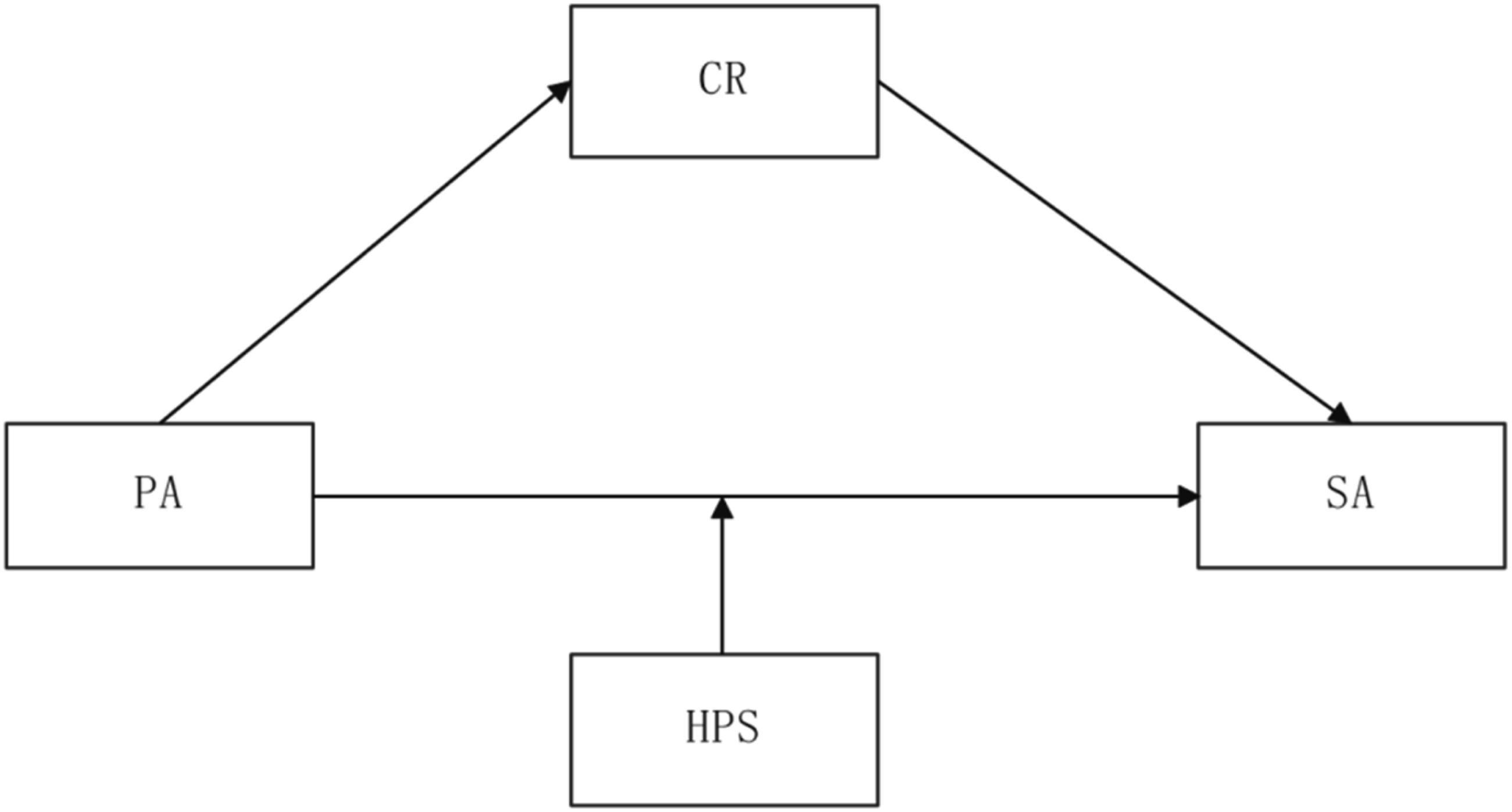
There is a negative correlation between physical activity and social anxiety
There is a positive correlation between physical activity and cognitive reappraisal
There is a negative correlation between physical activity and sensory processing sensitivity
Cognitive reappraisal mediates the effect of physical activity on social anxiety
Sensory processing sensitivity moderates the association between physical activity and social anxiety
Methods
Participants and Process
In June 2025, a cross-sectional survey was conducted among undergraduate students at a Guangdong Province, China university. The research strictly complied with the ethical principles for human subjects research outlined in the Declaration of Helsinki and relevant laws and regulations. All participants received systematic training before the survey to ensure the integrity of the research process. Based on the STROBE guidelines for cross-sectional studies, we developed an electronic questionnaire containing sociodemographic information, physical activity levels, social anxiety, sensory processing sensitivity, and cognitive reappraisal measures. After obtaining informed consent from participants, the questionnaire was distributed via the WeChat platform. A total of 501 questionnaires were collected, and dedicated researchers screened data according to the following criteria: (1) Excluded questionnaires with homogeneous or patterned responses; (1) Excluded questionnaires with completion times that were too short. Ultimately, 465 valid responses were obtained, yielding a response rate of 92.8%. Among the valid samples, 192 participants were male (41.29%) and 273 were female (58.71%), with an average age of 20.157 years (SD = 1.38).
Measurement
Physical Activity
We used the Physical Activity Rating Scale (PARS-3) to measure students’ physical activity levels. This scale was developed by Japanese scholar Hashimoto (2005) and revised by Liang (1994) in Chinese. It covers the intensity, duration, and frequency of exercise. Physical activity (PA) is calculated as the product of intensity, duration, and frequency, with a total score ranging from 0 to 100 points. Based on the scoring criteria, PA is categorised into three levels: low (≤19), moderate (20–42), and high (≥43). In this study, the Cronbach’s α coefficient for this scale was 0.671.
Social Anxiety
This study used the Interpersonal Anxiety Scale (IAS) developed by Leary (1983) and revised by Wang et al. (1999) to measure participants’ levels of social anxiety. This 15-item self-report measure uses a 5-point Likert format (1 = strongly disagree, 5 = strongly agree); four items are reverse-keyed. Total scores range from 15 to 75, with higher values reflecting greater social-interaction anxiety. Internal reliability was good (Cronbach’s α = 0.849).
Cognitive Reappraisal
This study employed the Cognitive Reappraisal Scale from the Emotion Regulation Questionnaire developed by Gross and John (2003) to measure cognitive reappraisal. This subscale consists of 6 items scored on a 7-point Likert scale ranging from “very inconsistent” to “very consistent,” with a total score range of 6–42 points. Higher scores indicate a higher cognitive reappraisal that college students use to regulate emotions. The validity and reliability of this scale have been well established in China (Wang et al., 2007). In this study, the Cronbach’s alpha coefficient for this scale was 0.884.
Sensory Processing Sensitivity
Sensory processing sensitivity data were collected using a 12-item High Sensitivity Person (HSP) scale (Pluess et al., 2023), which was revised into Chinese by Li, (2025). Ranging from 1 (not at all) to 7 (extremely), with higher total scores indicating higher HSP. Previous studies have shown that the HSP scale provides a two-factor solution for measuring HSP: three subscales and one total factor (Lionetti et al., 2018). Following the recommendation of Aron, (2018), this study used the total factor (i.e., the total score of the 12 items). The scale demonstrates high internal consistency, with a Cronbach’s alpha coefficient of 0.882.
Statistical Analysis
This study adopted a standardised data analysis process to ensure the rigour of the results. The collected data were systematically screened and cleaned in the data preprocessing stage. Subsequently, SPSS 27 software was used to perform Harman’s single-factor test, descriptive statistical analysis, and normality tests. The skewness and kurtosis were used to assess the data distribution characteristics, and Cronbach’s α coefficient was used to test the scale’s internal consistency. Additionally, Pearson correlation analysis and independent samples t-tests were conducted.
Regarding the moderated mediation model specification, we selected Hayes’ PROCESS Model 5 based on theoretical reasoning. Sensory processing sensitivity (HSP) reflects the depth of processing environmental stimuli and heightened physiological reactivity. We hypothesized HSP to moderate the direct PA-SA path rather than the mediated (PA-CR or CR-SA) paths because the physiological and neurobiological benefits of physical activity (e.g., neurotransmitter regulation, stress reduction) are likely to be directly amplified in highly sensitive individuals who possess a more reactive nervous system. In contrast, cognitive reappraisal represents a conscious, effortful cognitive strategy; while HSP influences emotional intensity, its impact on the application of cognitive strategies (CR-SA) or the promotion of cognitive strategies by PA (PA-CR) is theoretically less direct than its impact on raw physiological reactivity to exercise.
To test this model, the PROCESS 4.2 macro in SPSS was utilized. The data were standardised to eliminate unit differences, reduce multicollinearity, and enhance model explanatory power and stability. To enhance the robustness and accuracy of the analysis results, the study employed the bootstrap method, set a 95% confidence level, and conducted 5,000 resamplings to construct confidence intervals. Additionally, the ±1SD method was used to probe the interaction effects at different levels of the moderator, and all variables were centred. The significance of effects was determined based on whether the 95% confidence interval included zero: if the interval did not include zero, it indicated a significant mediating or moderating effect.
Results
Common Method Bias
This study employed Harman’s single-factor test to assess potential standard method bias. Exploratory factor analysis identified eight factors with eigenvalues greater than one, with the principal component explaining 19.85% of the variance. The cumulative variance explained by all eight components was 60.35%. Since the initial variance explained was below 40%, it can be inferred that the measurement scale structure was not substantially affected by standard method bias.
Descriptive Statistics and Correlation Analysis
Descriptive Statistics and Independent Sample t-Test Results
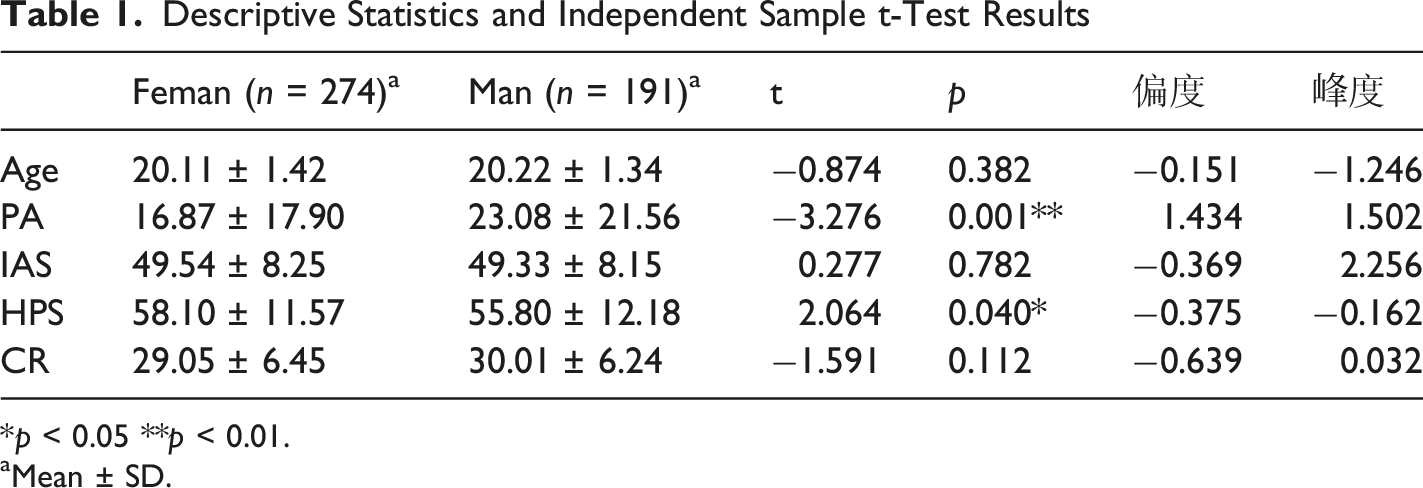
*p < 0.05 **p < 0.01.
aMean ± SD.
Pearson Correlation Coefficient Analysis Results
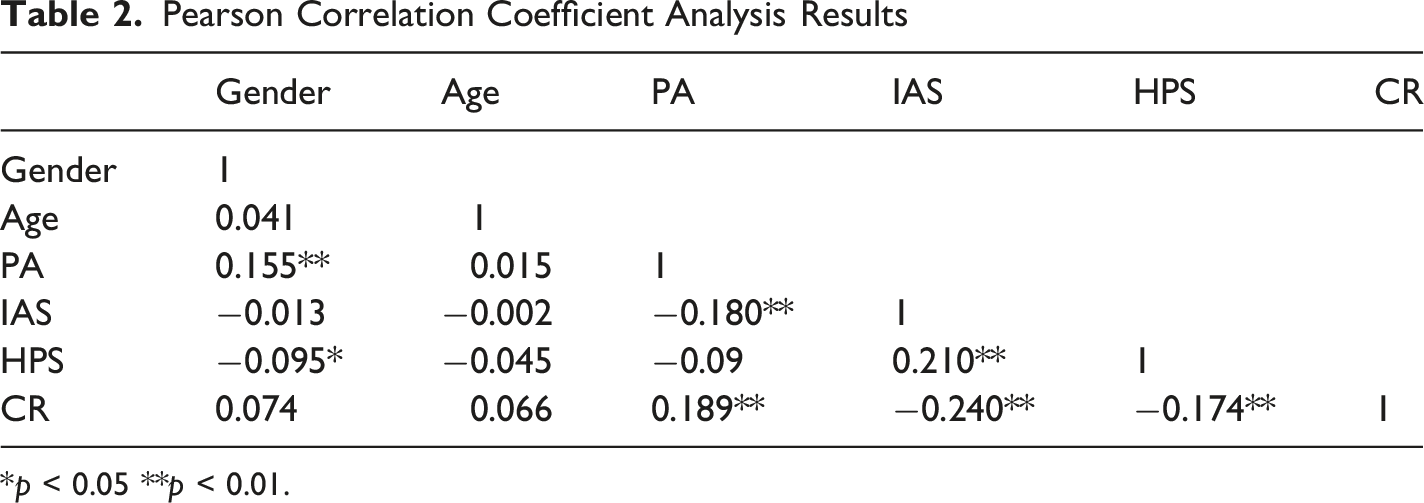
*p < 0.05 **p < 0.01.
Moderated Mediation Model Analysis
Regression Model Output Results
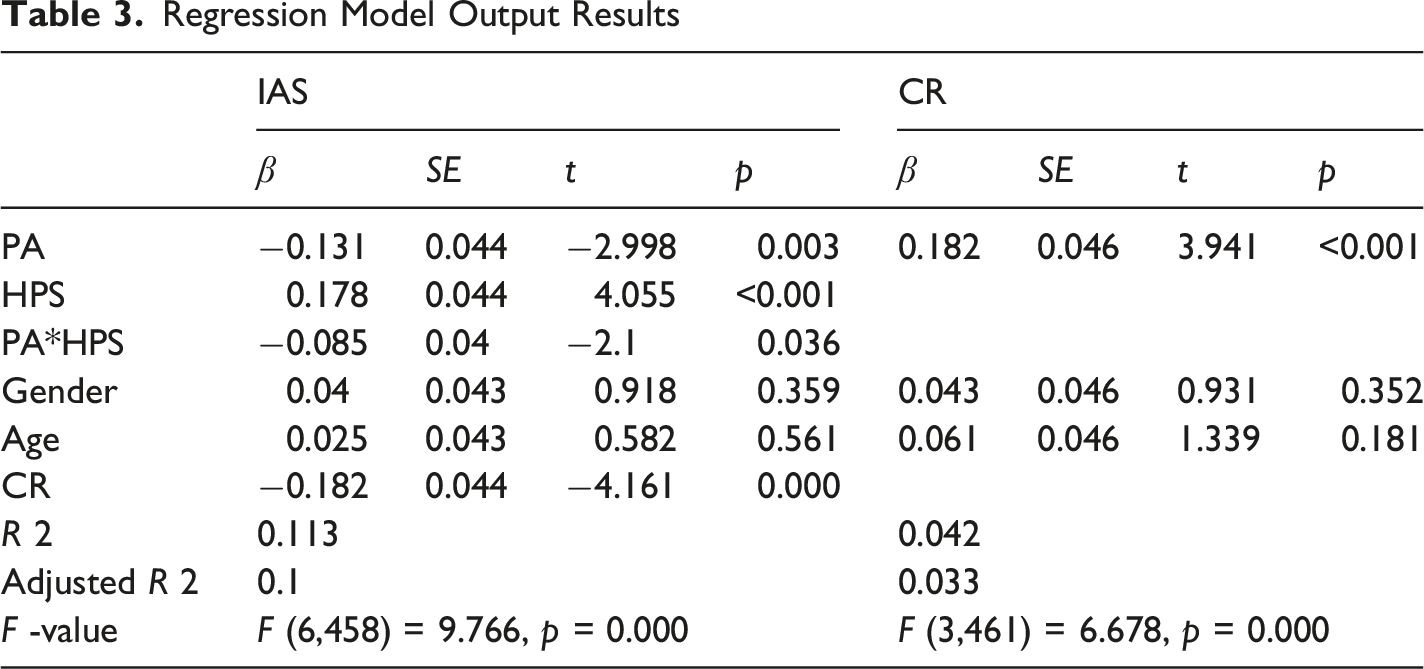
Simultaneously, physical activity is positively associated with cognitive reappraisal (β = 0.182, p < 0.01), indicating that physical activity promotes the adoption of cognitive reappraisal strategies; additionally, cognitive reappraisal demonstrates a significant negative association with social anxiety (β = −0.182, p < 0.01), validating the positive role of cognitive reappraisal in alleviating social anxiety; Finally, sensory processing sensitivity had a significant positive predictive effect on social anxiety (β = 0.178, p < 0.01), suggesting that individuals with high sensory processing sensitivity are more likely to experience social anxiety.
Path Coefficient Output Results
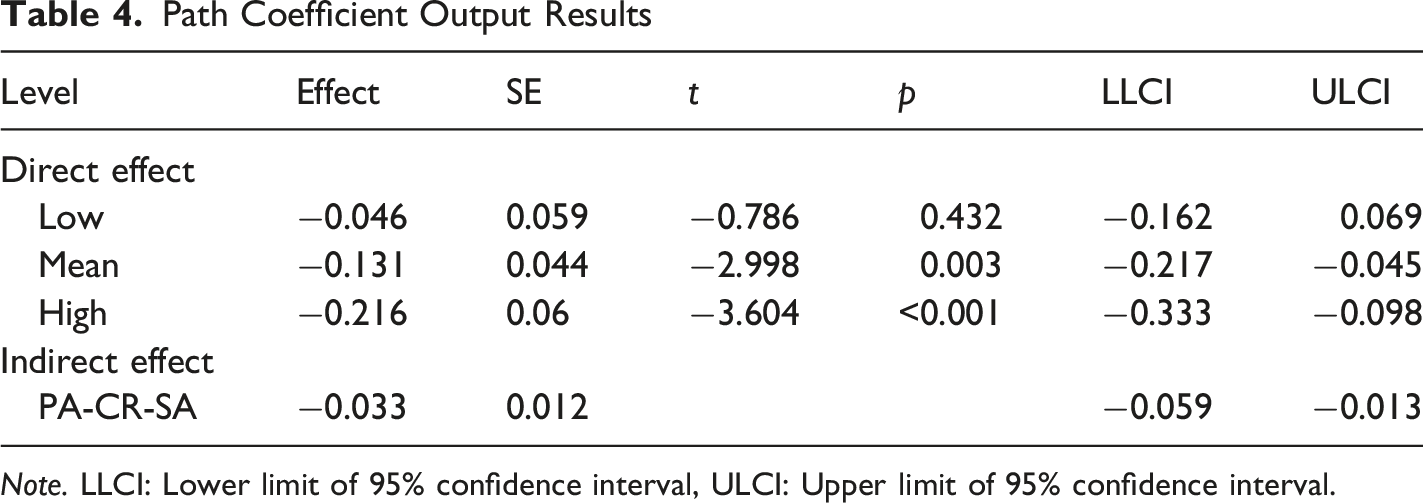
Note. LLCI: Lower limit of 95% confidence interval, ULCI: Upper limit of 95% confidence interval.
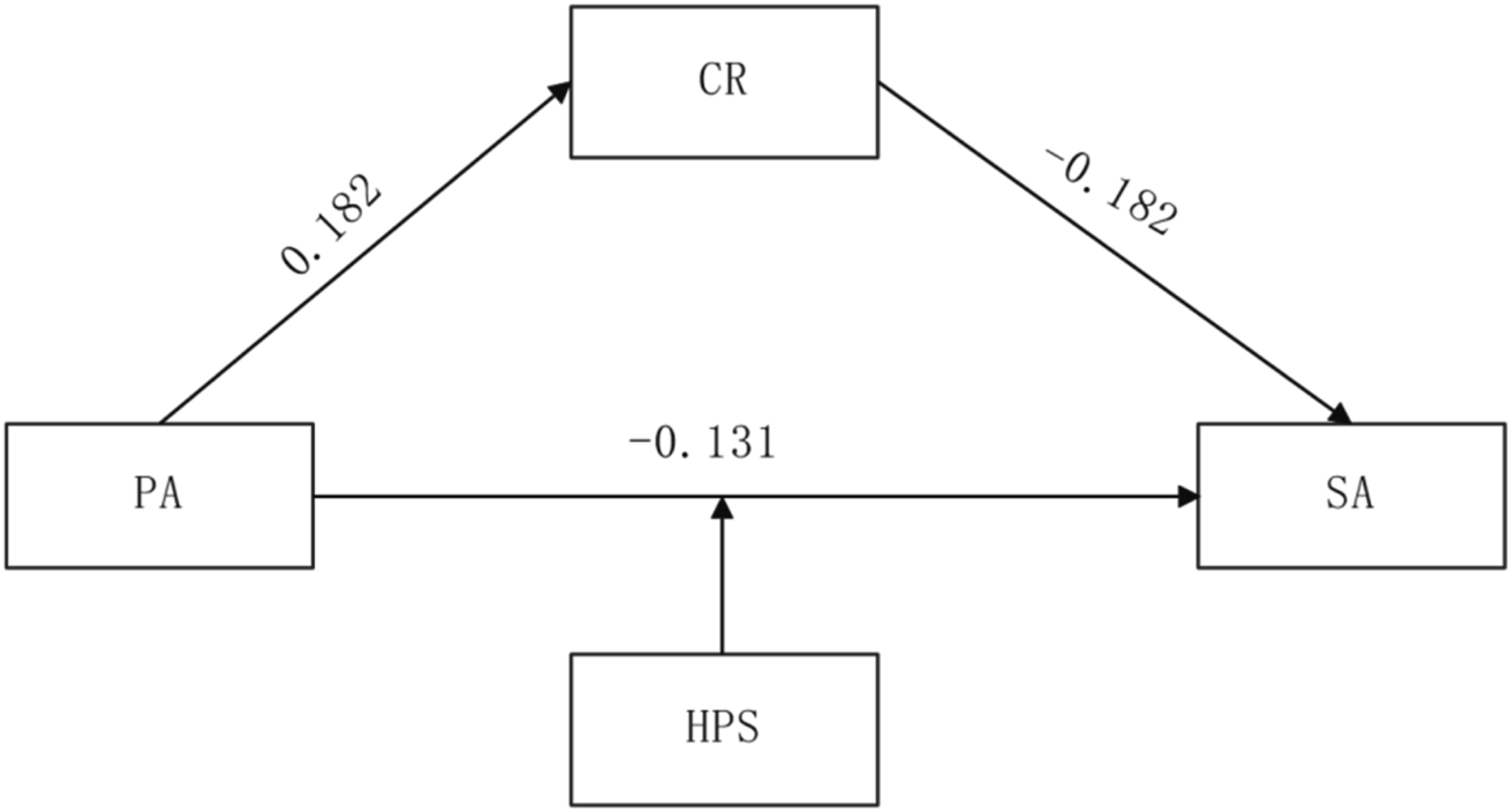
Results of the moderated mediation model test
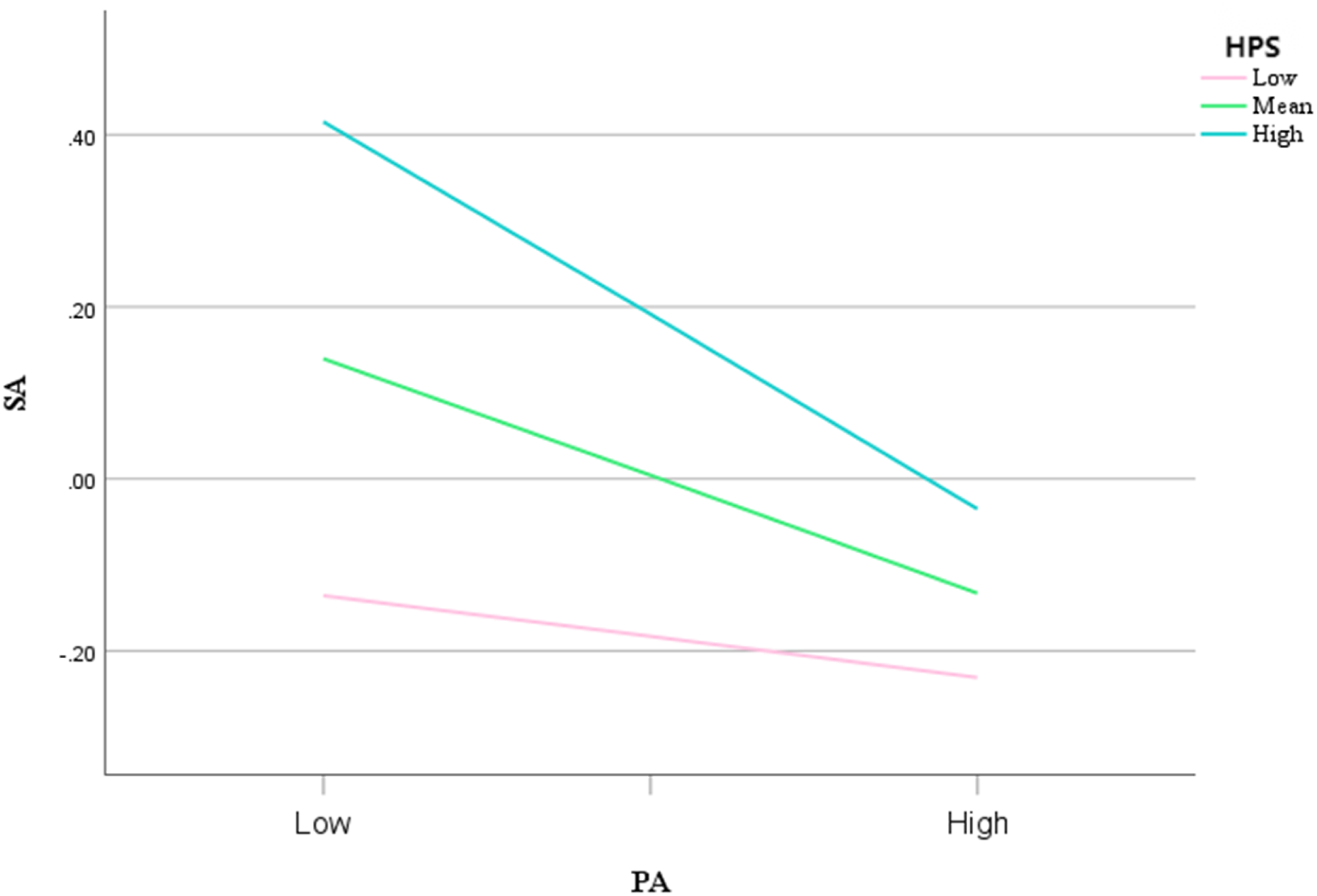
The association trend between physical activity and social anxiety across different levels of sensory processing sensitivity
Discussion
This study investigated the relationship between physical activity, social anxiety, cognitive reappraisal, and sensory processing sensitivity, and constructed a moderated mediation model with cognitive reappraisal as the mediating variable and sensory processing sensitivity as the moderating variable. The results showed that physical activity was negatively correlated with social anxiety and positively correlated with cognitive reappraisal, thereby confirming H1 and H2, which are consistent with previous studies (Giles et al., 2018; Zink et al., 2019), further affirming the role of physical activity in promoting emotional regulation and being associated with lower levels of social anxiety among college students. Self-determination theory provides a framework for understanding the relationship between social anxiety and physical activity (Brunet & Sabiston, 2009). This theory posits that individuals’ autonomy, competence, and relatedness influence their behavioural motivation. When individuals perceive themselves as having autonomy to choose and control physical activity, and experience competence and social relatedness during such activities, they are more likely to engage actively and benefit from them, thereby reducing social anxiety.
Additionally, this study found that cognitive reappraisal partially mediated the relationship between physical activity and social anxiety, explaining 20.12% of the total effect size, thereby validating H3. From a physiological mechanism perspective, aerobic exercise can enhance the activation of the prefrontal cortex, strengthen functional connectivity between the amygdala and other brain regions, and improve the neuroplasticity of key emotional regulation pathways and nodes (such as the hook bundle). These physiological changes help reduce individuals’ sensitivity to negative emotions while improving the efficiency of cognitive reappraisal (Wang, Liu, et al., 2024). Given the close association between low cognitive reappraisal efficiency and the occurrence of social anxiety (Dryman & Heimberg, 2018), physical activity may be linked to lower social anxiety by inducing beneficial physiological structural changes, thereby reducing individuals’ perceived intensity of social anxiety or enhancing their ability to employ cognitive reappraisal. It is worth noting that cognitive reappraisal and expressive inhibition are both core emotion regulation strategies (Cutuli, 2014): the former weakens negative emotions by reconstructing the meaning of a situation, while the latter avoids conflict by suppressing overt expressions. However, excessive reliance on expressive inhibition has been repeatedly confirmed as a significant marker of social anxiety (Dryman & Heimberg, 2018). This finding suggests that future research and intervention practices should focus on the balanced use of different emotion regulation strategies.
The direct pathway accounts for 79.88% of the total association between physical activity and social anxiety, indicating that a significant portion of the association between the two cannot be explained solely through cognitive reappraisal. This reflects the multifunctional nature of physical activity itself. The mechanism by which physical activity improves social anxiety is not only reflected in physiological regulation but also includes the cultivation of positive psychological qualities and social relationships. Through participation in physical activity, individuals can obtain richer social support and psychological resources, thereby potentially mitigating social anxiety symptoms (Deng & Wang, 2024). For example, peer relationships formed during physical exercise often significantly improve an individual’s social skills and self-confidence, thereby reducing social anxiety levels. Additionally, physical activity may indirectly alleviate social anxiety by mitigating other associated issues, such as loneliness or stress responses (Nie et al., 2025). This multi-pathway mechanism fully demonstrates physical activity’s comprehensive value and unique advantages in promoting mental health.
It is important to acknowledge that the effect sizes observed in this study are relatively small (e.g., the standardized β for the direct association between PA and SA was −0.131). According to conventional benchmarks, these represent small effects. However, in the context of psychological research—particularly when examining complex behaviors like physical activity and multifaceted constructs like social anxiety—small effect sizes are common and not trivial (Funder & Ozer, 2019). Even small effects can have meaningful cumulative impacts on individuals’ mental health over time. Therefore, while the associations are modest in magnitude, they still provide valuable evidence for the underlying psychological mechanisms and individual differences, rather than implying substantive clinical strength.
This study also confirmed a positive correlation between sensory processing sensitivity and social anxiety, and further identified the moderating role of sensory processing sensitivity in the relationship between physical activity and social anxiety, thereby validating H5, which is consistent with previous research (Pickard et al., 2020). As a personality trait, sensory sensitivity is characterized by a more developed sensory nervous system in highly sensitive individuals, resulting in higher activation levels in the brain in response to relevant stimuli (Aron et al., 2012; Jagiellowicz et al., 2010), they exhibit more intense emotional responses to stimuli, including both positive and negative emotions, and are more susceptible to overstimulation (Eşkisu et al., 2021), thereby potentially experiencing stronger feelings of social anxiety. Additionally, in our study, only physical activity among highly sensitive individuals directly predicted social anxiety negatively, a finding consistent with the “differential susceptibility model” (Belsky & Pluess, 2009): highly sensitive individuals exhibit stronger reactions to environmental inputs, whether negative or positive. Therefore, when highly sensitive individuals increase physical activity, they amplify the anxiety-reducing benefits of exercise (such as improved emotional regulation, enhanced self-efficacy, and social confidence). In contrast, individuals with low sensitivity exhibit weaker responses to the same dose of physical activity, resulting in no significant changes in their social anxiety levels. This finding suggests that high sensitivity is a risk marker and a “plasticity marker” that can be transformed into positive developmental trajectories in favourable environments (Greven et al., 2019). However, the results of this study showed only a marginal negative association between physical activity and sensory processing sensitivity (r = −0.09, p = 0.053), failing to meet the statistical significance threshold, thereby refuting Hypothesis H3 that “physical activity is significantly negatively correlated with sensory processing sensitivity.” This result suggests that sensory processing sensitivity, as a relatively stable temperamental trait, may not change significantly due to general variations in physical activity levels. First, the heritability estimates for sensory processing sensitivity range from 0.40 to 0.47 (Lionetti et al., 2018). This indicates a strong genetic influence and a low probability of observable changes through short-term behavioural interventions. Therefore, high-sensitivity traits may not necessarily act as barriers to physical activity but could instead serve as a “catalyst” to amplify the benefits of exercise. This finding provides a basis for designing appropriate physical activity programs for highly sensitive individuals to promote their physical and mental health development.
Research Limitations and Future Directions
The present study introduces and empirically tests an integrative moderated-mediation framework that delineates a previously unexplored pathway through which physical activity attenuates social anxiety symptoms. By incorporating sensory processing sensitivity (HSP) as a dispositional moderator, the model extends prior work that has focused predominantly on unidirectional mediators or socio-psychological correlates, thereby providing a more nuanced understanding of how physical activity influences social anxiety among university students.
Methodological limitations warrant explicit acknowledgment. First, the cross-sectional design constrains the capacity to infer causality; observed associations may reflect reverse causation or the influence of unmeasured confounders. Second, reliance on self-reported physical-activity data introduces susceptibility to recall bias and social-desirability effects, potentially yielding underestimates of true activity levels. Third, the sample was restricted to a single cultural and demographic cohort (i.e., university students in Guangdong, China, limiting the external validity and generalizability of the findings.
Future research should prioritize longitudinal or experimental designs to disentangle causal mechanisms, employ objective measures of physical activity (e.g., accelerometry, wearable sensors), and systematically recruit participants from diverse sociocultural backgrounds to enhance the ecological validity and cross-cultural generalizability of the observed effects.
Conclusions
This study confirmed a significant positive correlation between physical activity and cognitive reappraisal and a significant negative correlation with social anxiety. The results indicate that cognitive reappraisal plays a key mediating role in how physical activity alleviates social anxiety. Additionally, the study found that sensory processing sensitivity has a significant moderating effect on the pathway through which physical activity influences social anxiety, with highly sensitive individuals being able to derive greater positive benefits from physical activity, thereby reducing social anxiety symptoms. These findings deepen our understanding of the underlying mechanisms through which physical activity alleviates social anxiety and reveal differential responses among individuals with different sensitivities in this process. This study aims to provide theoretical foundations for clinical interventions, suggesting the design and promotion of specific physical activity programs tailored to different sensory processing sensitivity traits to alleviate social anxiety. Additionally, it emphasises the importance of physical activity in enhancing the efficiency of cognitive reappraisal, thereby comprehensively promoting individuals’ physical and mental health development.
Footnotes

Ethical Considerations
The Ethics Review Committee of the School of Psychology at Beijing Normal University has authorized the research, and agreement has been received from all participants.
Author Contributions
Aihua Li and Yuyang Nie:Conceptualization, Formal analysis, Methodology, Investigation, Software, Visualization, Writing – original draft, Writing – review & editing.
Cong Liu: Conceptualization, Funding acquisition, Project administration, Resources, Supervision, Writing – review & editing.
Funding
The authors received no financial support for the research, authorship, and/or publication of this article.
Declaration of conflicting interests
The authors declared no potential conflicts of interest with respect to the research, authorship, and/or publication of this article.
Data Availability Statement
The data used in this study can be requested from the corresponding author upon reasonable request.