






Abstract
Objectives:
Evidence is scarce on whether characteristics of human trafficking activity in Ohio changed after the COVID-19 pandemic. We used data from hotline-reported human trafficking activity in Ohio to compare trends in trafficking characteristics during the pre–COVID-19 (2015-2019), COVID-19 (2020-2021), and post–COVID-19 (2022-2024) pandemic periods.
Methods:
We used publicly available data from the National Human Trafficking Hotline (NHTH) to analyze human trafficking characteristics in Ohio, including demographic characteristics (age, sex), trafficking types (sex, labor), venues, reporting platforms, and primary request categories. We assessed differences in characteristics across the study periods and evaluated mean annual counts of potential victims of trafficking.
Results:
During 2007 through 2024, there were 13 584 signals (ie, any incoming communication to the hotline) in Ohio that identified 3966 human trafficking cases involving 7333 potential victims. Potential victims of human trafficking were mostly adults and females. Trafficking type varied significantly (χ2[4 df] = 32.09; P < .001); sex trafficking remained predominant but declined proportionately post–COVID-19, whereas the number of labor trafficking and combined sex and labor cases increased. Telephone calls to NHTH to report trafficking declined after 2020, but short message service, email, and web-based reporting increased. All human trafficking characteristics except for age (P = .052) were significantly different across periods. Mean annual counts of potential victims differed significantly (P = .02), with lower counts during and post–COVID-19 compared with pre–COVID-19.
Conclusions:
This study underscores the importance of interpreting hotline data within the context of reporting and detection dynamics. Strengthening reporting systems, cross-sector collaboration, and data integration are essential to improve trafficking identification and support effective, person-centered responses.
Introduction
Human trafficking is recognized as one of the most pervasive human rights violations globally, involving the exploitation of individuals through force, fraud, or coercion for commercial sex or labor purposes. 1 The International Labor Organization estimates that more than 49.6 million people are currently living in human trafficking situations worldwide, with women, children, migrants, and socioeconomically vulnerable groups disproportionately affected. 2 Human trafficking generates billions of dollars annually through illicit markets, making human trafficking not only a public health emergency but also a major criminal enterprise that undermines safety, dignity, and societal well-being. 3
Although human trafficking is a global phenomenon, the incidence varies by geographic region. Countries with versus without economic instability, conflict, migration corridors, or weak protection systems often report higher incidence, yet high-income nations are not exempt.4,5 The United States remains both a source and destination for human trafficking, and thousands of cases are reported annually through law enforcement, public health systems, and the National Human Trafficking Hotline (NHTH), which serves as a central reporting and crisis support mechanism. 6 Within the United States, states show varied trafficking patterns based on demographic characteristics, transportation networks, poverty, and industry structures. States with large urban hubs and interstate highway connectivity, such as California, Florida, Ohio, and Texas, consistently rank among the highest reported cases. 7
Ohio has consistently been identified as a state with a high incidence of human trafficking.7,8 Reports have frequently placed Ohio among the states with the highest number of hotline-identified trafficking reports; in addition, specific cities such as Columbus and Toledo have been identified as important hubs for both sex and labor trafficking activity due to urban population density, transportation corridors, and economic vulnerability patterns.8,9
Several structural and geographic factors contribute to human trafficking risk in Ohio. The state sits at the intersection of major interstate highways, has large metropolitan centers alongside rural counties, and contains sectors with transient or vulnerable labor forces. 10 These structural conditions, combined with economically vulnerable young people and socioeconomic disparities, create environments that traffickers may exploit. 11 Therefore, understanding trafficking patterns in Ohio requires examining the demographic characteristics of potential victims of trafficking, trafficking type (sex, labor, or both), and recruitment and exploitation venues. Such multidimensional analysis is essential for informing state policies, law enforcement strategies, and service delivery centered on potential victims.
The emergence of COVID-19 in early 2020 disrupted economic stability, social systems, and public health infrastructure worldwide. 12 During the COVID-19 pandemic, lockdowns, job loss, school closures, isolation, and reduced access to services heightened structural vulnerabilities that traffickers often exploit. 13 Simultaneously, mobility restrictions and closures of hotels, clubs, and public venues may have prompted traffickers to shift toward private residences and online exploitation, making trafficking more hidden. 14 Health care providers reported challenges in identifying potential victims, who in turn faced barriers in seeking help because of lack of digital access, fear, or decreased visibility. 15
Early commentary and organizational reports suggested that declines in detected cases of human trafficking during the pandemic were not necessarily a result of reduced trafficking but rather were the result of reduced reporting and decreased identification. 6 Detection increasingly relied on remote mechanisms as survivors turned to short message service (SMS), email, and online chats instead of in-person contact or telephone calls. 16 Despite these notable changes, empirical research comparing trafficking characteristics before and after the COVID-19 pandemic has remained limited, particularly in use of longitudinal hotline data at the state level.
With regard to human trafficking, Ohio has been extensively discussed in policy and media contexts regarding human trafficking. Although the state ranks seventh in population, it ranks fifth nationally in the number of cases reported to the NHTH. In addition, during 2018-2019, the number of potential victims contacting the hotline increased by 19%. 17 However, few studies have reported the effects of human trafficking before and after the COVID-19 pandemic, and no studies have used systematic hotline surveillance.12,14 Evidence is scarce on whether the demographic characteristics of survivors have shifted, whether exploitation venues have changed, and whether reporting behaviors evolved after the COVID-19 pandemic. Addressing this evidence gap is critical to support prevention strategies, improve resource allocation, and enhance interventions centered on potential victims.
The objectives of this study were to (1) describe the demographic characteristics of potential victims of human trafficking; (2) view long-term trends in trafficking type, cases, and potential victims; and (3) examine differences in trafficking characteristics before, during, and after the COVID-19 pandemic.
Methods
We analyzed publicly available secondary data from the NHTH for 2007-2024. Polaris began operating the NHTH in 2007 with support from the Administration for Children and Families in the US Department of Health and Human Services. The hotline operates 24/7 and offers crisis support, safety planning, referrals, and resource coordination for people affected by suspected human trafficking. The NHTH works with service providers, law enforcement, and other professionals nationwide, including in Ohio.18,19
Hotline data represent reports of suspected human trafficking rather than confirmed cases. Some essential characteristics of data need to be understood before interpretation of data. To ensure consistency with reporting data, we defined key terms as follows. Signals refer to any incoming communications including calls, texts, web-based reports, emails, and online chats. Not all signals indicate trafficking. A case is a situation in which information shows possible trafficking. One case may involve multiple individuals. The NHTH may refer to individuals contacting the hotline as “victims or survivors,” but the dataset also includes third-party reports and unverified information. To preserve clarity and methodological accuracy, this study refers to these individuals as potential victims as mentioned in existing literature and Polaris reports.6,18
We initially retrieved Ohio-specific data in December 2023 from the official website, which we updated in November 2025 to include finalized annual totals through 2024. We had access to annual data for 2015-2024; however, we had access to 2007-2014 data in only aggregated form. 20 From the data, we extracted the annual number of cases and potential victims, trafficking type (sex, labor, both), age, sex, exploitation venues, reporting platforms (telephone call, online/web, SMS, email, webchat), and primary request types (tip, service referral, crisis). Because citizenship was inconsistently reported after 2021, we descriptively summarized citizenship. The original dataset categorized age as minor (<18 y) or adult (≥18 y), and we preferred to use these terms because they replicate NHTH data, Polaris reports, and research conducted using the NHTH.6,18,20
Data reflect reported and identified trafficking cases rather than population-level incidence. The Ohio University Institutional Review Board determined this study was exempt because it used publicly available data without personal identifiers (IRB-FY26-618).
With inadequate cell sizes for data on trafficking venues, we aggregated the detailed venue categories before inferential analyses. We categorized sex trafficking venues as follows: commercial settings (hotels/motels, massage parlors, escort services, strip clubs), residential/private locations (private residencies, domestic spaces), transportation/public spaces (truck stops, streets, transit hubs), online/digital contexts (online advertisement, pornography-linked, digital platforms), and other or unspecified categories. We categorized labor trafficking venues as follows: domestic/personal services (domestic work, beauty services), food/hospitality (restaurant, hospitality), manual labor sectors (construction, agriculture, retail), organized exploitation (traveling sales crews, begging, strip, illicit), and other or unspecified categories. We conceptually aligned groups based on characteristics of the exploitation environment.
Because 2007-2014 data were aggregated, we limited inferential analyses to annual data from 2015-2024. We used Excel 2023 (Microsoft) to clean data and SPSS version 28 (IBM Corp) to analyze data. We used descriptive analyses to summarize trends from 2007 through 2024. We used the Pearson χ2 test to assess differences in categorical variables during the 3 study periods and 1-way analysis of variance (ANOVA) to evaluate the mean annual number of cases and potential victims. We set significance at P < .05.
Results
From 2007 through 2024, the NHTH received 13 584 signals in Ohio, identifying 3966 human trafficking cases involving 7333 potential victims (Table 1). Adults comprised most of the potential victims of human trafficking across all years, with the early aggregated period (2007-2014) documenting 312 people aged ≥18 years and 192 people aged <18 years. From 2015 onward, counts of potential victims aged ≥18 years remained consistently higher each year (198 to 288 per year) than counts of potential victims aged <18 years (54 to 99 per year), including during post–COVID-19 years. Sex distribution showed a pronounced dominance of female potential victims, peaking in 2019 (n = 379) and remaining high through 2024 (n = 260) compared with consistently lower counts of male potential victims (18 to 47 per year). Potential victims of human trafficking who identified as other than cisgender first appeared in 2016 data, with 34 cases recorded through 2024. For data that included citizenship, most potential victims of human trafficking were US citizens (266 US citizens and 109 foreign nationals were reported in 2007-2014 data).
Demographic characteristics of potential victims of human trafficking, Ohio, 2007-2024 a
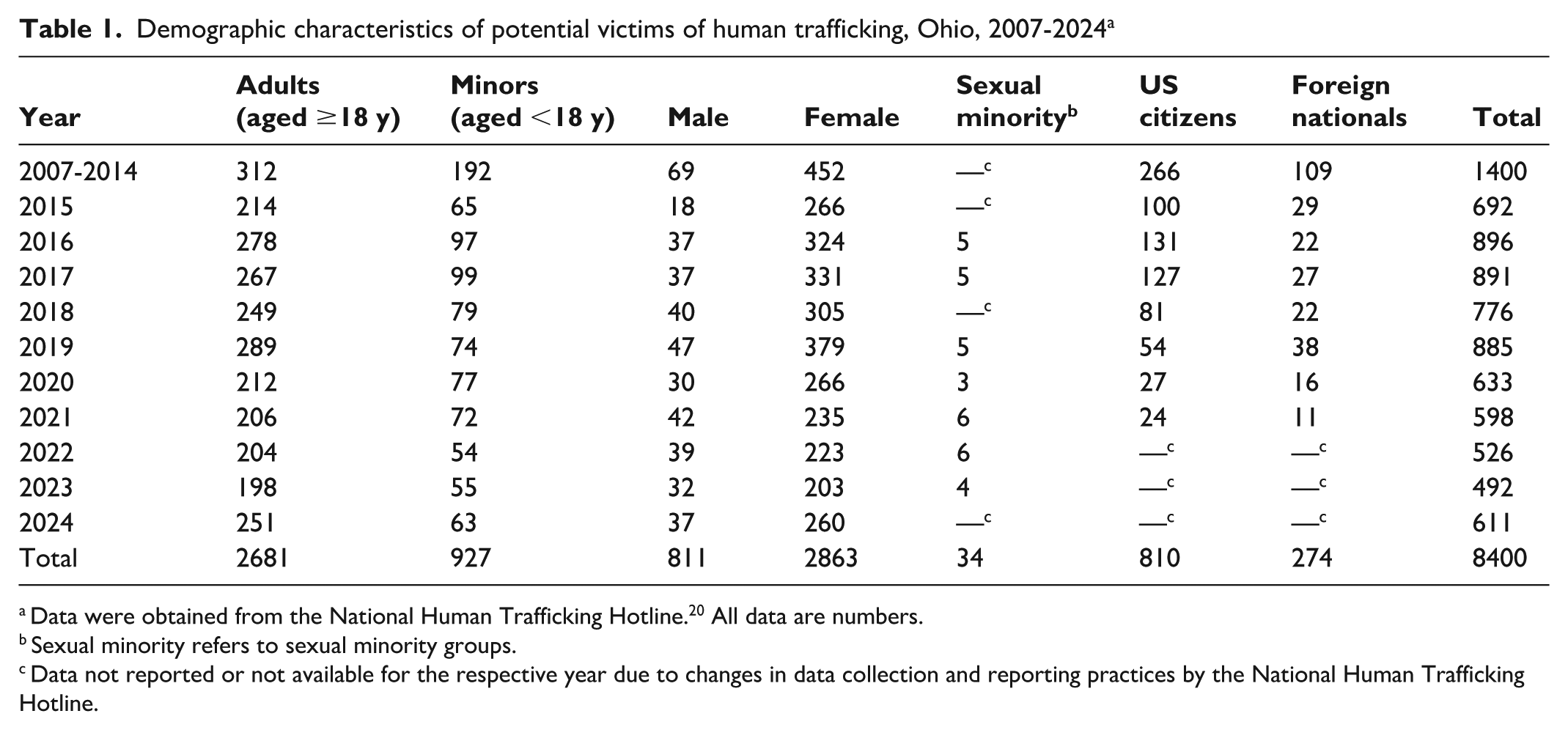
Data were obtained from the National Human Trafficking Hotline. 20 All data are numbers.
Sexual minority refers to sexual minority groups.
Data not reported or not available for the respective year due to changes in data collection and reporting practices by the National Human Trafficking Hotline.
The aggregated 2007-2014 data showed 545 human trafficking cases; the number of cases declined sharply in 2015 and then increased steadily, reaching a peak of 448 in 2019 (Figure 1). This increase was followed by a marked drop in 2020 coinciding with the COVID-19 pandemic, with case counts remaining comparatively low through 2023 before showing a modest increase again in 2024. Across all years, the number of potential victims consistently exceeded the number of cases, indicating multiple potential victims involved within individual incidents. Trends in the count of potential victims mirrored case patterns, peaking in 2018 (n = 1040), declining substantially during the pandemic years, stabilizing at lower levels from 2020 through 2023, and rising again in 2024.
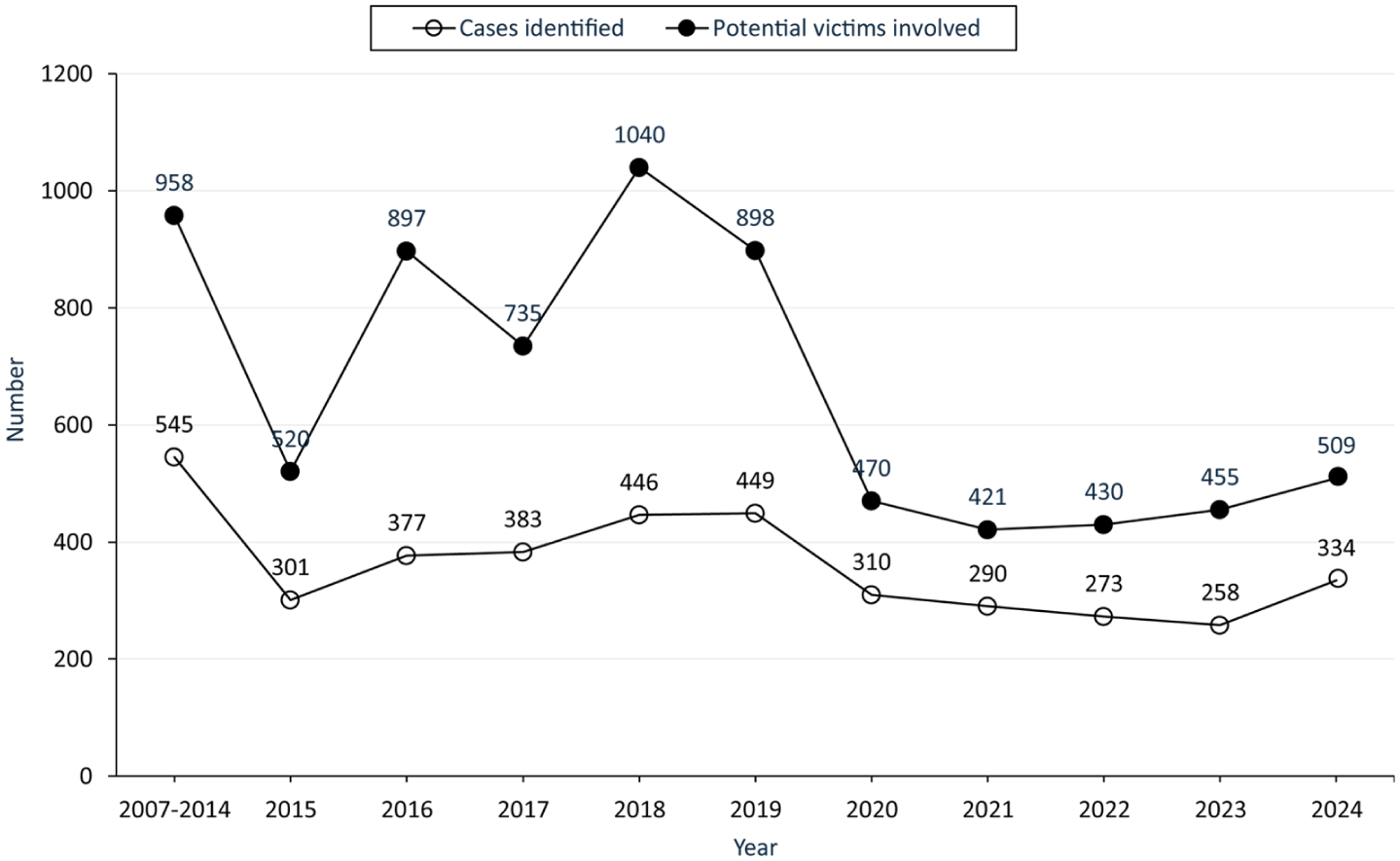
Trends of cases identified and potential victims involved in human trafficking, Ohio, 2007-2024. Data were obtained from the National Human Trafficking Hotline. 20 A case refers to a distinct report or situation in which there are indicators of suspected human trafficking based on incoming communications (signals). A single case may involve 1 or more individuals. Potential victims are individuals described in cases.
When we compared the number of sex trafficking and labor trafficking cases, sex trafficking consistently represented most reported cases across all years, with the highest volume shown in the aggregated 2007-2014 data (n = 400) (Figure 2). The number of reports decreased in 2015 but then gradually increased thereafter, peaking in 2018 (n = 351) before steadily decreasing through 2023, with a modest rebound in 2024. Labor trafficking remained comparatively low overall but demonstrated a gradual rise after 2021, reaching its highest annual count in 2024 (n = 44). Cases involving both sex and labor trafficking were the least common yet increased noticeably after the COVID-19 pandemic, particularly from 2021 through 2024.
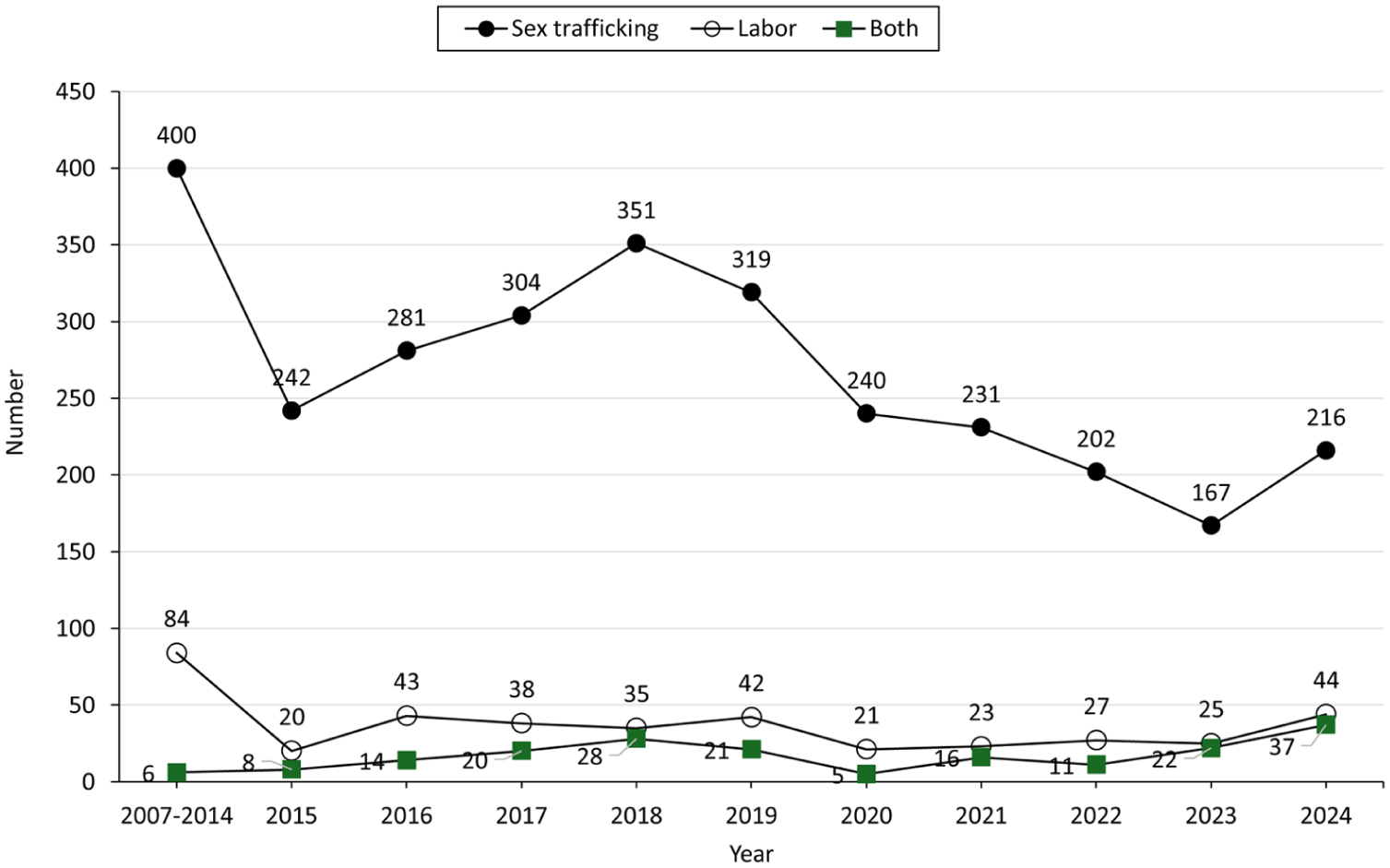
Trends in types of trafficking, Ohio, 2007-2024. Data were obtained from the National Human Trafficking Hotline. 20 A case refers to a distinct report or situation in which there are indicators of suspected human trafficking based on incoming communications (signals). A single case may involve 1 or more individuals. Potential victims are individuals described in cases.
In the comparisons of human trafficking characteristics pre–COVID-19, during COVID-19, and post–COVID-19, age distribution did not differ significantly across study periods (χ2[2 df] = 5.90; P = .052), with adults consistently comprising most of the potential victims (75.8%, 73.8%, and 79.2%, respectively) (Table 2).
Comparisons of human trafficking characteristics before, during, and after the COVID-19 pandemic, Ohio, 2015-2024 a
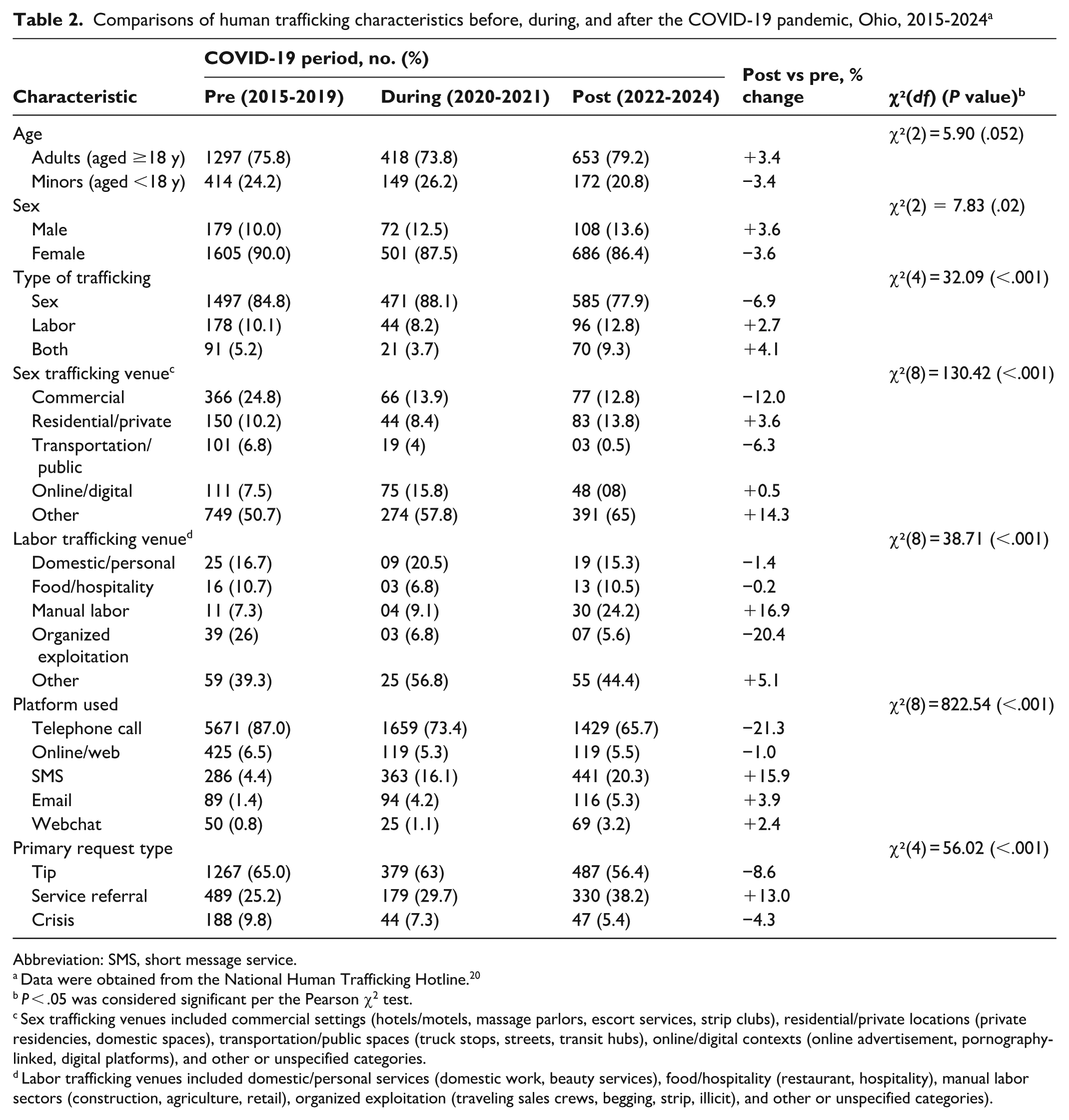
Abbreviation: SMS, short message service.
Data were obtained from the National Human Trafficking Hotline. 20
P < .05 was considered significant per the Pearson χ2 test.
Sex trafficking venues included commercial settings (hotels/motels, massage parlors, escort services, strip clubs), residential/private locations (private residencies, domestic spaces), transportation/public spaces (truck stops, streets, transit hubs), online/digital contexts (online advertisement, pornography-linked, digital platforms), and other or unspecified categories.
Labor trafficking venues included domestic/personal services (domestic work, beauty services), food/hospitality (restaurant, hospitality), manual labor sectors (construction, agriculture, retail), organized exploitation (traveling sales crews, begging, strip, illicit), and other or unspecified categories).
Sex distribution differed significantly (χ2[2 df] = 7.83; P = .02), with male representation increasing from 10.0% pre–COVID-19 to 13.6% post–COVID-19, whereas female representation declined modestly. Trafficking type also varied significantly (χ2[4 df] = 32.09; P < .001); sex trafficking remained predominant but declined proportionately post–COVID-19, whereas labor trafficking and combined sex and labor cases increased.
Sex trafficking venues changed significantly from pre–COVID-19 to post–COVID-19 (χ2[8 df] = 130.42; P < .001), with declines of sex trafficking in commercial settings and transportation/public venues and increases in residential/private settings and online contexts post–COVID-19. Labor trafficking venues also shifted (χ2[8 df] = 38.71; P < .001), with growth of labor trafficking in manual labor sectors post–COVID-19, particularly in construction and agriculture as compared with organized exploitation and domestic/personal services.
Reporting modalities changed significantly over time (χ2[8 df] = 822.54; P < .001). Telephone calls to the hotline declined (from 87.0% to 65.7%), but reporting by SMS and other digital platforms increased. Primary request types also changed over time (χ2[4 df] = 56.02; P < .001), with decreases of tip-based reports and increases of service-referral requests post–COVID-19.
In 1-way ANOVA, to compare the mean annual case and potential victim counts over time, the overall difference in trafficking cases was not significant (F2,7 = 4.65; P = .052) (Table 3). Mean (SD) annual cases declined from 391.0 (60.46) pre–COVID-19 to 301.0 (14.14) during COVID-19 and to 288.33 (40.25) post–COVID-19. ANOVA results showed significant differences in counts of potential victims of human trafficking across periods (F2,7 = 6.97; P = .02). The mean (SD) annual count of potential victims declined substantially from 817.4 (199.03) pre–COVID-19 to 447.0 (32.53) during COVID-19 and to 464.67 (40.38) post–COVID-19. The Tukey post hoc analysis showed that counts of potential victims pre–COVID-19 were significantly higher than counts post–COVID-19 (mean difference = 352.73; P = .04). Differences between pre–COVID-19 and during COVID-19 periods were not significant (P = .05), and we found no significant difference during post–COVID-19 periods.
Comparison of human trafficking cases and potential victim counts before, during, and after the COVID-19 pandemic, Ohio, 2015-2024 a
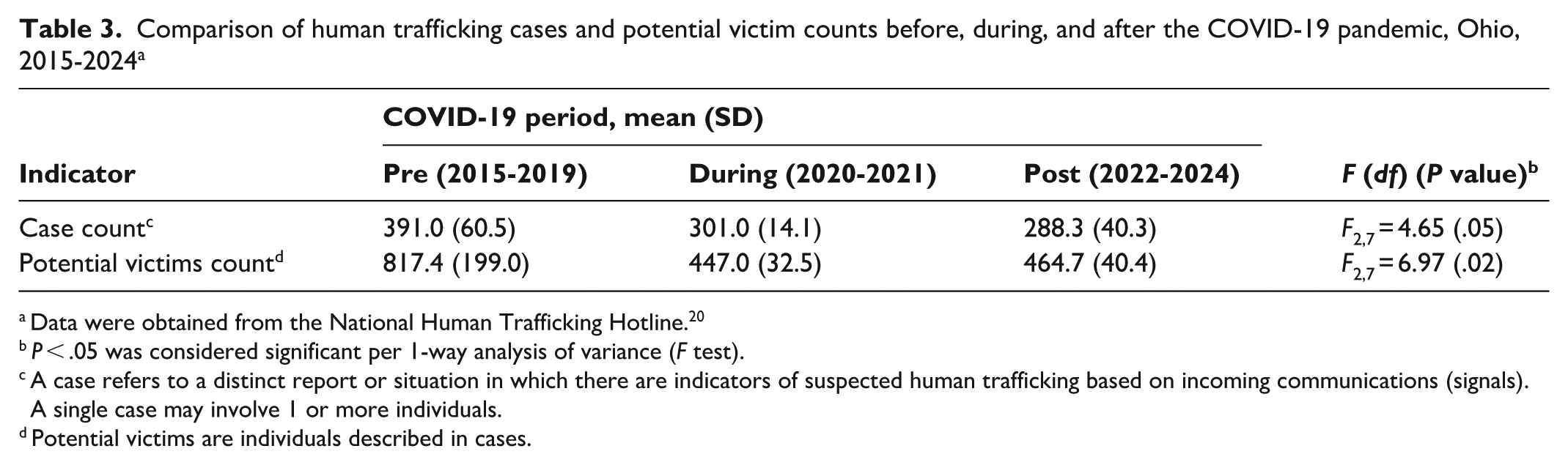
Data were obtained from the National Human Trafficking Hotline. 20
P < .05 was considered significant per 1-way analysis of variance (F test).
A case refers to a distinct report or situation in which there are indicators of suspected human trafficking based on incoming communications (signals). A single case may involve 1 or more individuals.
Potential victims are individuals described in cases.
Descriptive analyses to determine the long-term patterns (2007-2024) in awareness sources (ie, the channels through which individuals learned about or were referred to trafficking-related services, such as social media, law enforcement, health care providers, and community outreach) detailed venue distributions, reporting platforms, primary request types, and trends of signals received extended the core objectives by showing broader contextual trends that were not included in inferential testing due to sample size or structural aggregation (eTables 1-5 in the Supplement, Figure 1).
Discussion
This study examined 17 years (2007-2024) of Ohio data obtained from the NHTH, with a focus on demographic patterns, long-term trends, and differences across pre–COVID (2015-2019), during COVID-19 (2020-2021), and post–COVID-19 (2022-2024) periods.
During the study periods, adults consistently represented most reported potential victims, and people aged <18 years represented about one-quarter of the reported potential victims, underscoring persistent human trafficking vulnerability among adults. 6 Females comprised most potential victims, indicating that women and girls are disproportionately trafficked, especially in sexual exploitation.6,21,22 Although fewer male than female potential victims were reported, the frequency of male potential victims increased modestly across study periods. Collectively, these demographic patterns reflect known trafficking vulnerabilities shaped by gender norms, financial stress, and social marginalization.23-25
A notable pattern emerged in the aggregated 2007-2014 data, in which male potential victims substantially outnumbered female potential victims (452 vs 69). This difference could have been the result of 2007-2014 data being in the aggregated form and may have reflected earlier phases of hotline data operation. This difference likely reflects historical reporting structures, classification practices, or caller-based reporting differences rather than true epidemiologic reversal. The stabilization of female predominance from 2015 onward aligns with broader trafficking literature, suggesting improved data harmonization over time. 2
From 2007 through 2024, sex trafficking consistently represented the largest share of hotline signals, peaking immediately before the COVID-19 pandemic, consistent with global evidence that sexual exploitation remains the most commonly identified trafficking form.26,27 However, sex trafficking has been shown to be more readily detected and reported than labor trafficking due to greater public awareness and policy prioritization, which may influence comparative volumes.28,29 The decline in sex trafficking reports during COVID-19 may have reflected changes in visibility and reporting rather than confirmed reductions in exploitation, as international reports have documented that trafficking shifted toward digitally mediated forms during the COVID-19 lockdown, 30 with Polaris reported online sex trafficking increasing by more than 45% during COVID-19 lockdowns. 31 In Ohio, labor trafficking remained lower than sex trafficking in overall volume but showed a gradual increase after 2021. Previous literature has suggested that economic instability and labor market disruptions can heighten vulnerability to forced labor. 32 However, because our study used hotline reporting data only, our interpretations are contextual rather than causal explanations.
Age distribution did not differ significantly across the study periods, suggesting demographic stability in age composition despite fluctuations in reporting volume. In contrast, sex distribution differed significantly (P = .02), with male representation increasing from 10.0% pre–COVID-19 to 13.6% post–COVID-19. Although females remain disproportionately affected, the increased representation of male potential victims may reflect improved recognition of male victimization or visibility of labor exploitation contexts, where men are commonly represented. 33 However, a direct causal relationship between COVID-19 pandemic–related labor instability and gender shifts cannot be established from these data. Trafficking type distribution differed significantly (P < .001), with an increase in cases involving both sex and labor exploitation post–COVID-19, indicating growing visibility of overlapping exploitation contexts. 34
Our study showed significant shifts (P < .001) in sex trafficking venues during and post–COVID-19 compared with pre–COVID-19, with decreased sex trafficking in commercial venues and increased sex trafficking in residential/private settings and in venues listed as other. Sex trafficking in transportation/public venues also declined, and sex trafficking using online/digital contexts increased. These patterns suggested a redistribution in identified sex trafficking cases rather than a simple reduction in such cases. Literature has suggested that sex trafficking may have increased reliance on digital platforms during social restriction. 16 However, because the current study did not directly measure enforcement activity, business closures, or mobility trends, these interpretations should be considered contextual rather than causal explanations.
Venues for labor trafficking also shifted significantly (P < .001). The pre–COVID-19 period showed greater proportions in organized exploitation contexts and domestic/personal services than post–COVID-19. Post–COVID-19 years demonstrated notable increases in manual labor sectors (eg, construction, agriculture). 35 This redistribution suggested evolving labor shortages, informal work expansion, and economic vulnerability. 32
Our study showed decreased telephone calls to the hotline but increased use of SMS, email, and webchat, indicating expanded use of digital reporting channels similar to previous analyses of helplines. 19 Our findings reflected reporting channel shifts rather than confirmed changes in the communication preferences of potential victims. Primary requests also shifted during the study period, with more service referral needs and fewer crisis reports post–COVID-19 than pre–COVID-19; these results were inconsistent with a hotline study from the United Kingdom and overall Polaris project, in which reporting of human trafficking cases increased.19,30 Differences in Ohio versus national-level analysis may stem from methodological or geographic variation.
We found no significant difference in average case counts during the study periods; however, the overall significant decline in identification of potential victims could have been the result of changes in reporting, detection capacity, or visibility rather than confirmed reductions in trafficking. Although some studies have discussed how COVID-19 may have altered trafficking visibility and support networks, these studies highlighted a broad picture, whereas our study was limited to data from Ohio.19,36
Limitations
This study had several limitations. First, our results relied on secondary hotline data, capturing only reported cases, meaning that true prevalence was likely underestimated, particularly among undocumented migrants; lesbian, gay, bisexual, transgender, and queer (LGBTQ+) individuals; and people aged <18 years. Second, since 2022, citizenship information has been missing, thus limiting comparisons for data after 2022, and the aggregated 2007-2014 data prevented inferential testing for that period. Third, hotline records lacked details on recruitment tactics, duration of exploitation, reintegration outcomes, and external structural indicators (eg, mobility data, enforcement intensity), limiting the causal interpretation of pandemic-related shifts. Finally, because hotline data reflect reported cases rather than confirmed prevalence, findings should be interpreted as changes in reporting and detection patterns rather than definitive shifts in trafficking incidence.
Conclusion
Our findings highlight several implications for antitrafficking efforts in Ohio. Although sex trafficking has remained predominant, evolving labor-sector patterns suggest the need for balanced prevention strategies across industries such as construction, agriculture, and service sectors. Although women remain disproportionately affected by trafficking, the presence of potential victims who are male or in a sexual minority group underscores the importance of providing inclusive services centered on potential victims. The shift toward SMS and online reporting supports continued investment in digital reporting infrastructure and outreach. Finally, reduced postpandemic reporting underscores the need for adaptable, resilient detection systems during future disruptions.
Supplemental Material
sj-docx-1-phr-10.1177_00333549261460010 – Supplemental material for Human Trafficking Trends in Ohio: National Hotline Data Analysis and COVID-19–Related Changes, 2007-2024
Supplemental material, sj-docx-1-phr-10.1177_00333549261460010 for Human Trafficking Trends in Ohio: National Hotline Data Analysis and COVID-19–Related Changes, 2007-2024 by Sonali Jha and Athar Memon in Public Health Reports®
Footnotes

Funding
The authors received no financial support for the research, authorship, and/or publication of this article.
Declaration of Conflicting Interests
The authors declared no potential conflicts of interest with respect to the research, authorship, and/or publication of this article.
Supplemental Material
Supplemental material for this article is available online. The authors have provided these supplemental materials to give readers additional information about their work. These materials have not been edited or formatted by Public Health Reports’s scientific editors and, thus, may not conform to the guidelines of the AMA Manual of Style, 11th Edition.
References
Supplementary Material
Please find the following supplemental material available below.
For Open Access articles published under a Creative Commons License, all supplemental material carries the same license as the article it is associated with.
For non-Open Access articles published, all supplemental material carries a non-exclusive license, and permission requests for re-use of supplemental material or any part of supplemental material shall be sent directly to the copyright owner as specified in the copyright notice associated with the article.
