







Abstract
Although persons with disabilities are underrepresented in the workforce, a substantial portion of adults with disabilities does work. Job satisfaction, an important predictor of productivity, job tenure, and absenteeism, may be influenced by a unique set of personal and organizational factors for persons with disabilities. Using data from the 2015 Kessler Foundation National Employment and Disability Survey (KFNEDS), we examine personal and organizational predictors of job satisfaction for American workers with disabilities. Findings from the study suggest that educational attainment, perceived pay disparities, and supervisor attitudes are associated with job satisfaction for workers with disabilities. Coworker attitudes were not associated with job satisfaction for this population.
In 2017, approximately 30% of working-age persons with disabilities were employed. Although this is substantially lower than the percentage of persons without disabilities who work (74%), this 30% statistic translates into 4.7 million workers with disabilities in the United States (Kessler Foundation and University of New Hampshire, 2017). Close to 20% of all companies in the United States knowingly hire people with disabilities as part of the workforce and more than 13% of companies actively recruit people with disabilities (Domzal, Houtenville, & Sharma, 2008). Rehabilitation counselors play an important role in assisting many of these individuals with disabilities not only to obtain but also to retain employment. In addition, rehabilitation professionals often serve as a resource for employers who seek to better integrate employees with disabilities into the workplace.
Employee job satisfaction, a global measure of the perception or appraisal of work (Locke, 1969) is important to both employees and employers. Job satisfaction is tied to economic indicators including productivity, job tenure, and absenteeism (Böckerman & Ilmakunnas, 2012; Yücel, 2012). The study conducted here examines job satisfaction among workers with disabilities, highlighting the combination of individual and organizational characteristics that determine job satisfaction. As rehabilitation counselors straddle the world of both employees with disabilities and their employers, such information will be useful in ensuring that counselors can identify and possibly modify the factors which enhance job satisfaction for persons with disabilities.
Dawis and Lofquist (1984) expand on the idea of job satisfaction, defining job satisfaction as the perception of the degree to which the needs of the individual are being met by the work environment. The experience of job satisfaction can be tied to specific domains such as satisfaction with pay, advancement opportunities, social relations at work, or work-life balance. Job satisfaction is a complex phenomenon that results from the interplay of organizational and personal factors such as workplace culture and climate, opportunities for advancement, type of industry, level of education, and the perceptions of the same (Chaudhuri, Reilly, & Spencer, 2015).
For employees with disabilities, job satisfaction is a rarely researched phenomenon and the evidence supporting job satisfaction as an important outcome for employees with disabilities is preliminary and evolving. McAfee and McNaughton (1997) and Pagán and Malo (2009) suggest that employees with disabilities experience lower overall job satisfaction than those without disabilities. When considering the specific dimensions of job satisfaction, individuals with disabilities report dissatisfaction with pay, opportunities for advancement, promotions, recognition for work, and overall support from supervisors and coworkers (McAfee & McNaughton, 1997; Pagán, 2013, 2014). In contrast, some studies hypothesize that individuals with disabilities are more likely to have lower expectations for their jobs and therefore are more likely to feel satisfied with their jobs (Pagán, 2011; Pagán & Malo, 2009; Schur, Kruse, Blasi, & Blanck, 2009).
As organizations seek to better integrate persons with disabilities into their workforces, information about the factors that influence job satisfaction for this population can help to ensure that organizations are adequately supporting workers with disabilities. Improving job satisfaction can in turn increase productivity, lengthen job tenure, and reduce turnover intention.
Theory and Determinants of Job Satisfaction
Current theories on job satisfaction are grounded in the experiences of the general population of workers. Locke (1969) simply defined job satisfaction as the discrepancy between what one wants and what one has in a job. Early data-driven models of job satisfaction and well-being contended that job satisfaction is a measure of “utility” derived from work (Blanchflower & Oswald, 1999). Newer theories suggest that job satisfaction is influenced by social relations in the workplace, skill level, flexibility, and autonomy exercised by employees (Baumgärtner, Dwertmann, Boehm, & Bruch, 2015) and that job satisfaction is closely linked to an employee’s perceptions of the management and overall job security (Brown, Forde, Spencer, & Charlwood, 2008).
Perhaps the most widely known model for understanding disability in the workplace is Stone and Colella’s (1996) model, which suggests a dynamic interplay between personal attributes of employees with disabilities, personal attributes of supervisor and coworkers, their affective responses, and overall organizational characteristics. Although, Stone and Colella’s (1996) model does not directly address job satisfaction, the components of the model address several related constructs. The type of disability, appearance of disability, race, and gender of the employee with a disability can influence how they are being treated within an organization. Similarly, the personal attributes and expectations of supervisors and coworkers, their previous experience with individuals with disabilities combined with organizational values and norms can influence how employees with disabilities are treated in the workplace. Stigma, prejudice, and misperceptions on the part of employers and coworkers can negatively affect the overall experiences of employees with disabilities. If the ultimate goal of workplace programs for individuals with disabilities is to assist workers with disabilities to sustain and grow in their jobs, we need to emphasize job satisfaction as the primary outcome, given its close association with productivity and long-term job tenure.
Personal Determinants of Job Satisfaction
For individuals without disabilities, job satisfaction varies based on personal and demographic characteristics. Gender and age differences in job satisfaction are well documented (Clark, 1997; Sloane & Williams, 2000). Female workers experience higher levels of job satisfaction in jobs of a comparable nature with their male counterparts. A cross-national study of job satisfaction found that, in general, job satisfaction is higher for women, Whites, younger and older individuals, and those with high job security. Job satisfaction is positively related to income relative to a comparison point (Clark, Oswald, & Warr, 1996).
Individual level characteristics have been documented as important predictors of job satisfaction among workers with disabilities. Counter to the finding for females without disabilities, Burke (1999) and Pagán (2013) found that women with disabilities experience low job satisfaction. In a large European study of discrepancies in job satisfaction, Pagán (2011) noted that older adults with disabilities who were female are less likely to be satisfied with their jobs. Age had a U-shaped relationship with job satisfaction among individuals with disabilities, with higher levels of satisfaction for younger and older employees with and without disabilities (Blanchflower & Oswald, 1999; Clark et al., 1996). Race is relevant as well because employed individuals with disabilities belonging to non-White races were more likely to be dissatisfied with their jobs than those who identified themselves as White (Li, Roessler, Rumrill, & Ahmed, 2016). For employees with disabilities, educational attainment was a significant predictor of job satisfaction in addition to disability related factors (Pagán & Malo, 2009). Education had a negative relationship with job satisfaction, possibly because individuals of different levels of education have different expectations and outlook toward their jobs (Clark, 1997; Pagán & Malo, 2009). Job satisfaction also varies by type of disability and workplace characteristics (Badillo-Amador & Vila, 2013; Uppal, 2005). For people with disabilities, achieving a good fit between the job task demands and individual skills and values was found to be important for job satisfaction (Roessler, Rumrill, & Fitzgerald, 2004).
Organizational Determinants of Job Satisfaction for Individuals With Disabilities
Many employees with disabilities perceive negative attitudes of the supervisor as a barrier to employment (Bruyère, Erickson, & Ferrentino, 2002; Bruyère, Erickson, & VanLooy, 2004; Erickson, von Schrader, Bruyère, VanLooy, & Matteson, 2014; Fassinger, 2008; Kessler Foundation, 2015; Roessler et al., 2004; Sloane & Williams, 2000; Sundar et al., 2018; U.S. Bureau of Labor Statistics, 2013). Having a disability, especially a mental health or cognitive disability, is negatively related to performance expectations and hiring decisions among employers and human resource managers (Ren, Paetzold, & Colella, 2008). Such expectations are consistent with the stigma and discrimination employees with disabilities often face and can directly play into their own perception and satisfaction with their jobs. A positive organizational culture, which is exemplified by supportive supervisors and coworkers, is directly related to increased job satisfaction, productivity, decreased turnover intention, and increased organizational citizenship (Ng & Sorensen, 2008; Rhoades & Eisenberger, 2002; Siu, Hung, Lam, & Cheng, 2013). Supervisors and coworkers play a crucial role in socializing, supporting, and assimilating new employees with a disability into the organization (Kulkarni, & Lengnick-Hall, 2011). The absence or decline of such supports has a negative effect on job satisfaction (Jokisaari & Nurmi, 2009).
Supports in the workplace can be generally perceived as cooperative and helpful behaviors that are helpful for the overall functioning of the organization. Such behaviors include (a) personal support or helping others by sharing knowledge, skills, or personal/physical assistance with job tasks, (b) upholding the values and complying with rules of the organization and, (c) persistent effort despite challenging conditions (Borman, Penner, Allen, & Motowidlo, 2001). Supervisors and coworkers play distinct but equally important roles in supporting employees with disabilities. Supervisors may support employees with disabilities through formal or informal channels. Formalized channels of support include addressing workplace accommodation needs through human resource personnel and utilizing the legal and procedural resources for the same. On the contrary, supervisors may be faced with impromptu or individualized problem solving on behalf of the employee with the disability which requires some organizational flexibility (Baumgärtner et al., 2015).
Coworker attitudes and perceptions of procedural justice can also influence task performance, receipt of workplace accommodations (Colella, 2001; Nichols, 2008), and subsequently job satisfaction for an employee with a disability. Implementing certain accommodations such as changes in work hours or alternate duties requires the willing cooperation of coworkers. Coworkers may perceive the provision of equipment for physical accommodations unfair favoritism for the employee with a disability. Coworkers may also positively influence the organizational culture by being receptive to the needs of an employee with a disability and by providing informal support to the employee with a disability (Colella, 2001; Nichols, 2008).
With regard to job characteristics, employees with disabilities regard finding a fit between their skills and the job tasks as vital to their tenure in the organization (Roessler et al., 2004). Finding the right match also allows employees with disabilities to demonstrate their competence with the required job tasks, which in turn may garner the support of the supervisor.
The evidence supporting equity in wages and salary as a predictor of job satisfaction is mixed. Although some studies show that employees with disabilities, in general, are satisfied with their pay, others contend that wage and salary discrepancies negatively affect job satisfaction. In addition to the actual wage or salary, the perception of equity in pay in comparison with employees without disabilities is equally important (Ng & Sorensen, 2008).
A few studies have examined the dual role of organizational and personal factors that predict employment outcomes such as job satisfaction among employees with chronic conditions. Siu et al. (2013) found that age and self-efficacy of workers were significant predictors of job satisfaction. Job tenure was predicted by age, education, and income but not organizational or work related characteristics such as discrimination, physical demands of the job, self-perceived health, age, or duration of chronic condition. The study highlighted that beyond health, functional limitations, and job related stress, job satisfaction was a strong predictor of job tenure.
The purpose of this study is to use a nationally representative sample of workers with disabilities in the United States to examine individual and organizational determinants of job satisfaction for employees with disabilities. Results will help define the personal and organizational characteristics that are most closely associated with levels of job satisfaction for workers with disabilities, providing information that can be used by employers and human resource professionals to develop effective strategies to support employees with disabilities in the workplace for the long term.
Method
Data
We used data from the 2015 Kessler Foundation National Employment and Disability Survey (KFNEDS, Kessler Foundation, 2015; Sundar et al., 2018). The overall purpose of the KFNEDS was to understand how people with disabilities strive to work and overcome barriers. The survey was a nationally representative random digit dial telephone survey of working-age adults with disabilities. The survey was conducted by the Survey Center at the University of New Hampshire and the Penn State Survey Research Center. Trained survey staff completed surveys with more than 3,000 adults with disabilities or their family members (as proxy respondents) to identify key disability and employment issues. Respondents were screened for the presence of disability using the four limitation questions from the American Community Survey (ACS) that were supplemented by additional probing questions. Adults who were not identified as having a disability were screened out of participation in the survey. The full version of the questionnaire is available at http://kesslerfoundation.org/kfsurvey15. The survey took approximately 15 min to complete and included about 50 questions. All variables included in this study were derived from the 2015 KFNEDS and were based on self-report or proxy report from family members. Survey questions were derived from previously tested and valid surveys such as the Current Population Survey (CPS), the CPS-Disability Supplement (CPS-D), Veteran’s RAND 12-Item Survey, National Beneficiaries Survey, ACS, Canadian Survey on Disability (CDS), and Head Start Family and Child Experiences Survey (FACES). The research team systematically eliminated questions by judging their merits against the overall purpose of the survey. Questionnaire drafts were reviewed and revised for redundancy, language sensitivity, clarity, and comprehensiveness before pilot testing. Computer-assisted telephone interview software routed participants through appropriate subsets of the questions to best capture their current and past experiences.
A detailed description of the survey methodology is published elsewhere (Kessler Foundation, 2015; Sundar et al., 2018).
Sample
We restricted our sample only to those people who reported that they were currently working (unweighted N = 1,287).
Measures
Dependent variable
Our dependent variable was job satisfaction, measured on an ordinal basis as highly satisfied (3), somewhat satisfied (2), and not satisfied (1). Job satisfaction data were collected as a self-report response to the question “Overall, how satisfied [are you/were you] with your [current/previous] job?”
Independent variables
For personal characteristics, we included a categorical age group variable (18–24, 25–34, 35–44, 45–54, and 55–64). We included binary variables for indicators that prior research suggests are correlated with higher levels of job satisfaction: male and White. We include three categories of educational attainment: high school degree or less, some college, or a college degree or more. Disability type was measured as self-reported difficulty including the following categories: hearing, vision, physical, and cognitive (including mental health disabilities). Physical disabilities included difficulty with mobility, lifting, bending, reaching, or manipulation. Cognitive disabilities included difficulty with thinking, memory, and decision-making functions as well as mental health and psychiatric disabilities such as anxiety and depression. Where respondents reported more than one limiting difficulty, the condition that respondents listed as “most limiting” was used.
For organizational characteristics, we included whether the person perceived (a) lower pay than coworkers with similar skills, (b) negative supervisor attitudes, and (c) negative coworker attitudes. The three organizational characteristics were measured using self-report responses to the question “At your [current/previous] job [have you ever faced/did you ever face] any of the following problems related to your disability?” Respondents could choose which problems were relevant to their experience in the workplace. The three constructs described above were captured using standard choices of (a) “Getting less pay than others in a similar job as you”, (b) “Negative attitudes on the part of supervisor”, and (c) “Negative attitudes on the part of coworkers.”
Analytical Plan
To account for the complex sampling used in the survey, data were analyzed using Stata and were weighted using the sample weights. After exploring the data with descriptive statistics, we examined differences in levels of job satisfaction by demographic characteristics using chi-square. Second, we examined the polychoric correlations between the independent variables mentioned in the model above. Next, we conducted an ordinal logistic regression, where job satisfaction was measured on an ordinal scale (highly satisfied was assigned a value of 3, moderately satisfied was assigned a value of 2, and not satisfied was assigned a value of 1). Reference categories for the independent variables are noted in Table 4, along with the results for the regression analyses. Reference categories were chosen based on the current literature on predictors of job satisfaction. For example, as females, racial minorities, individuals with lower levels of educational attainment experience lower levels of job satisfaction, those variables were chosen as the reference category. To examine the strength of the interrelationships between independent variables, we used collinearity diagnostics, specifically, estimates of tolerance and Variance Inflation Factor (VIF). Although odds ratios are reported, we also produced marginal effects for the organizational variables which were significant predictors in the ordinal regression model. Marginal effects provide a probability of attaining a certain level of job satisfaction, varying the organizational characteristics of interest and holding all other variables constant. For example, when examining the association of “getting less pay than others similar to you” and levels of job satisfaction, marginal effects allow us to predict the probability of levels of satisfaction for a typical respondent. For our sample, a typical respondent was a college educated 45- to 54-year-old female with a cognitive disability. We can vary whether a hypothetical respondent perceived lower pay to find the difference in levels of job satisfaction for typical respondents who did and who did not perceive lower pay as a problem in the workplace.
Results
Table 1 presents demographic characteristics for the sample. The sample included a larger percentage of older workers, with more than half being age 45 or older. The sample was evenly split by gender and was mostly White (78%). Less than a quarter of the sample had a high school degree or less education. In terms of disability types, cognitive disabilities were most often reported (41%) and visual limitations were reported least often (7%).
Demographic Characteristics of Participants (N = 1,287).
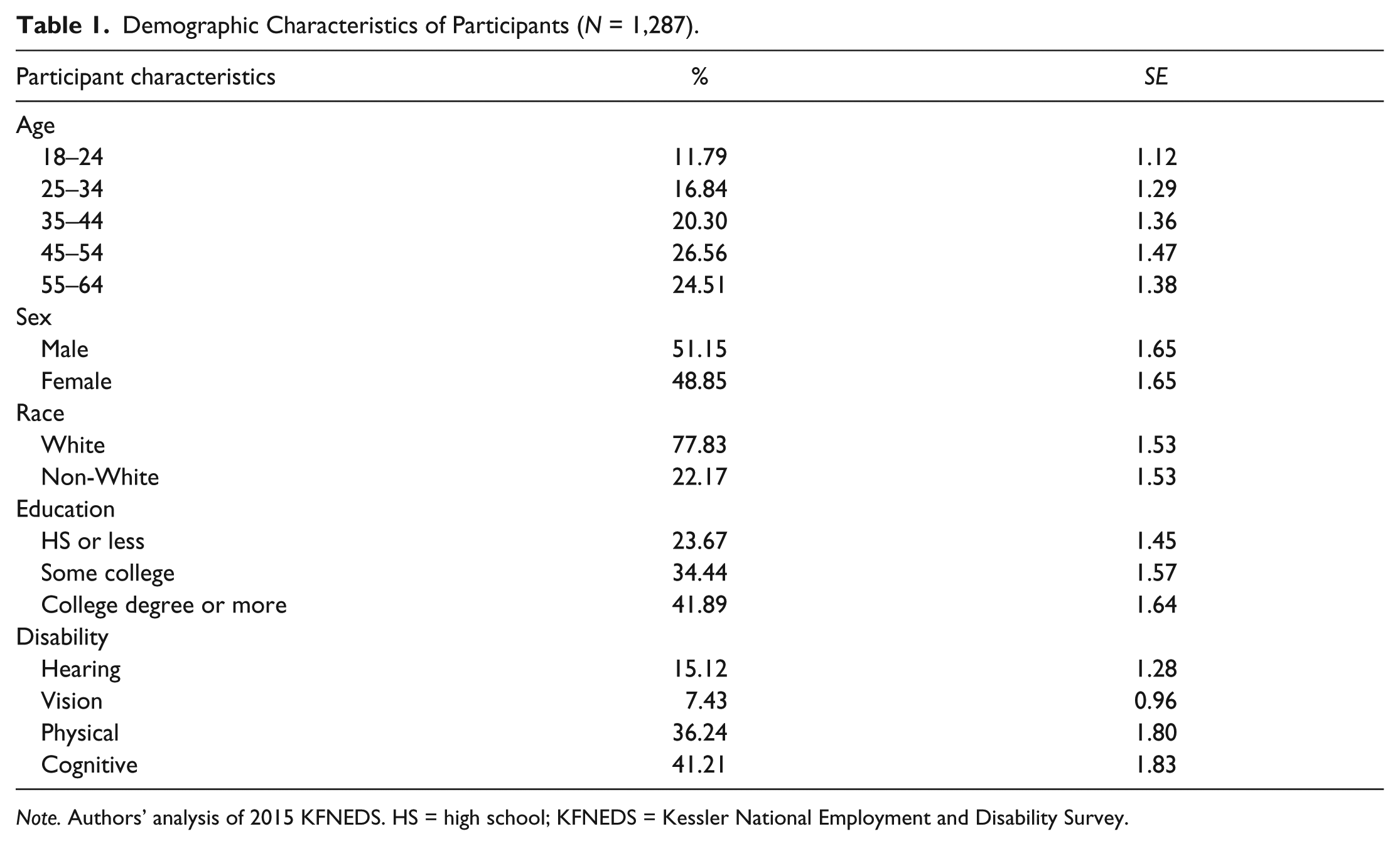
Note. Authors’ analysis of 2015 KFNEDS. HS = high school; KFNEDS = Kessler National Employment and Disability Survey.
Table 2 shows differences in levels of job satisfaction by demographic characteristics. Overall, 43% of workers with disabilities were highly satisfied with their jobs, 45% were moderately satisfied with their jobs, and 12% were not satisfied. Job satisfaction varied significantly only by age group (chi-square = 19.533, p<.05).
Differences in Job Satisfaction by Demographic Characteristics.
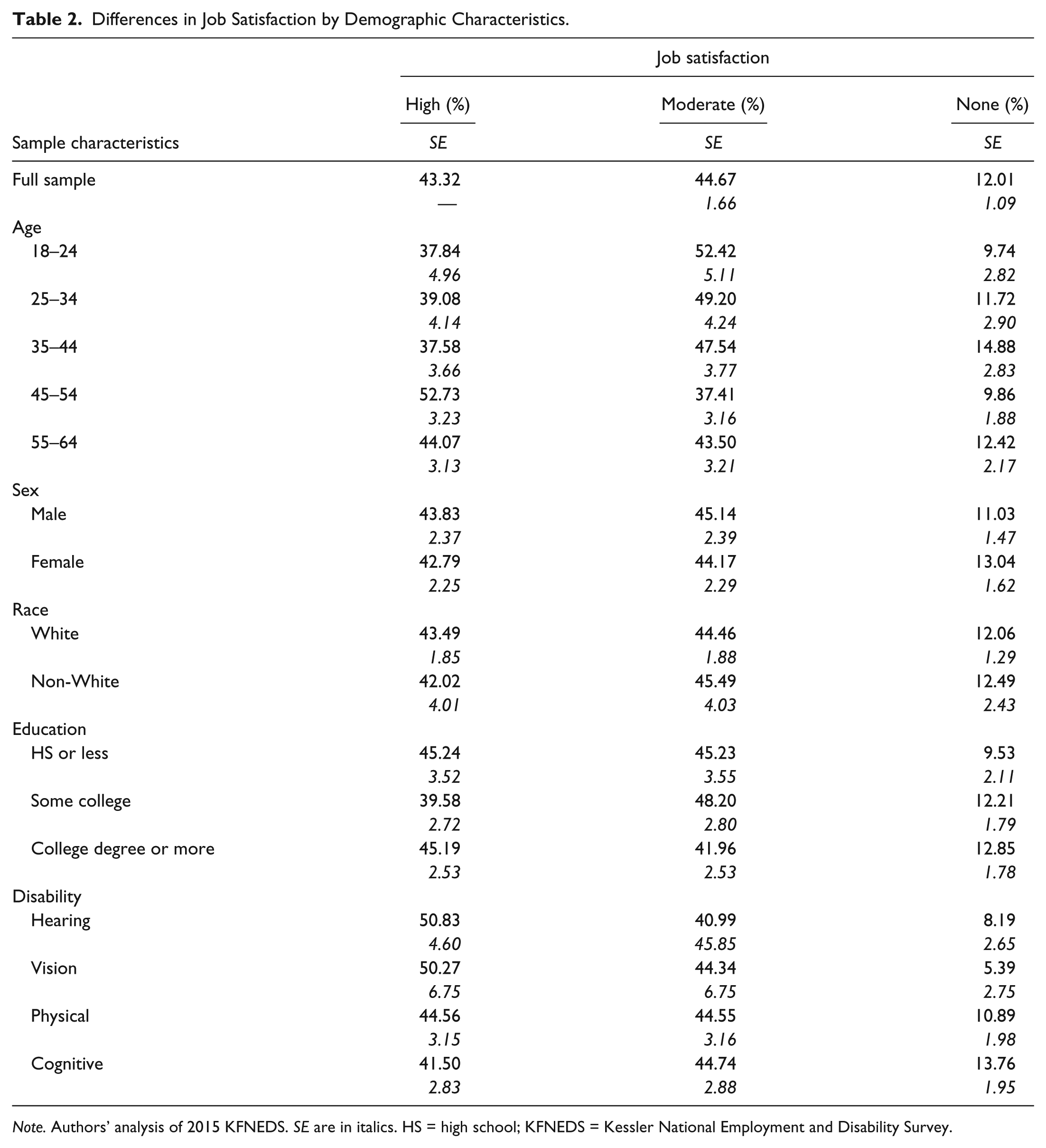
Note. Authors’ analysis of 2015 KFNEDS. SE are in italics. HS = high school; KFNEDS = Kessler National Employment and Disability Survey.
We examined polychoric correlation between the independent variables. Correlation coefficients between the independent variables ranged from .41 for perceived coworker attitudes and perceived lower pay than others to .71 for the correlation between perceived supervisor attitudes and perceived coworker attitudes. To further examine the effects of multicollinearity we used regression diagnostics. Tolerance, which is an indicator of how much multicollinearity the regression analysis can tolerate was greater than the recommended value of .1. VIF, an indicator of inflation in the standard error was less than the recommended threshold of 10 for all independent variables (Midi, Sarkar, & Rana, 2010). Table 3 presents the results from the ordinal logistic regression. People with some college education were less likely to have higher levels of job satisfaction, compared with persons with a high school education or less. In terms of organizational characteristics, persons experiencing lower pay or negative supervisor attitudes had significantly lower odds of having high levels of job satisfaction. Negative coworker attitudes were not significantly related to job satisfaction.
Personal and Organizational Predictors of Job Satisfaction: Ordinal Regression.
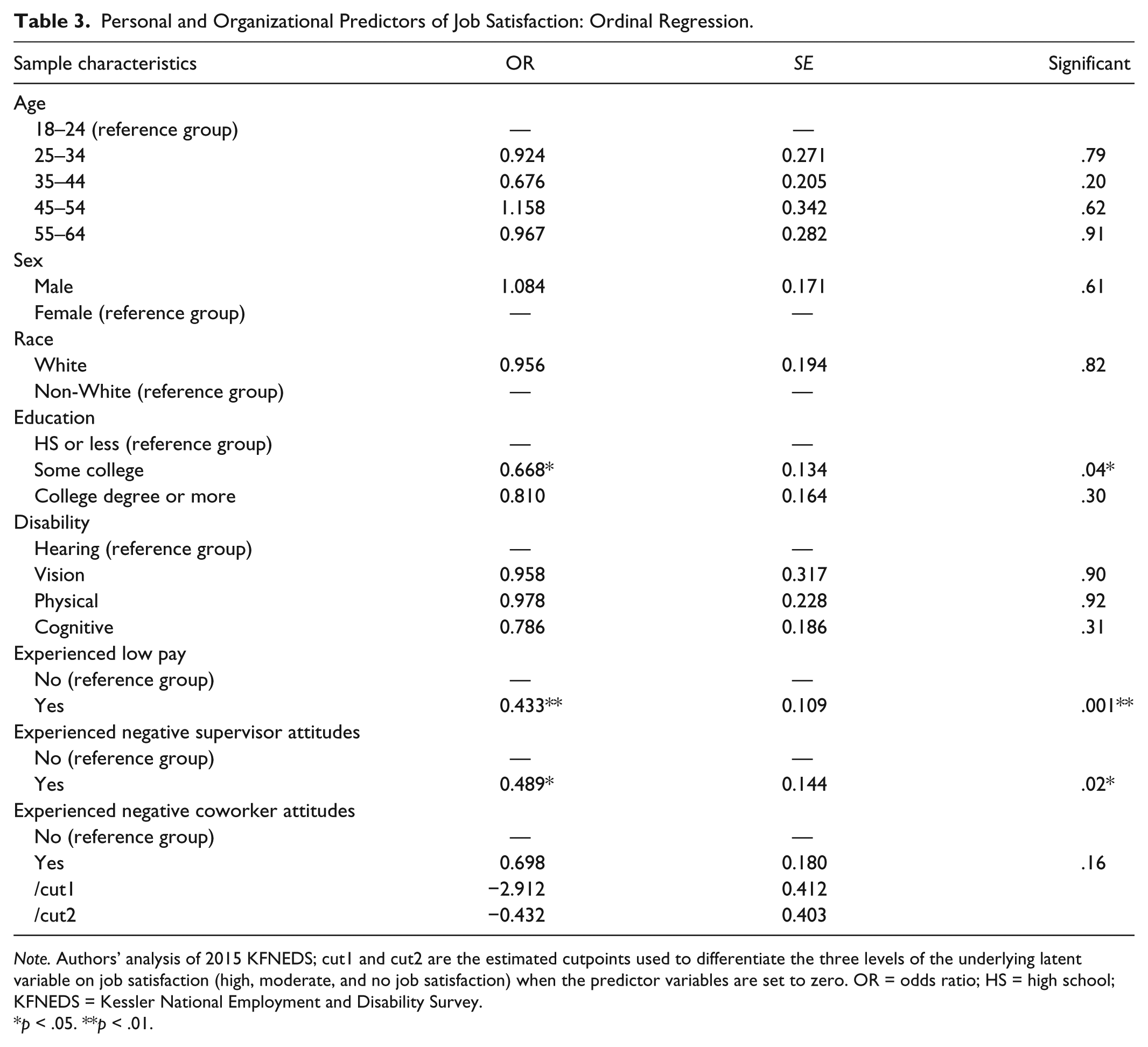
Note. Authors’ analysis of 2015 KFNEDS; cut1 and cut2 are the estimated cutpoints used to differentiate the three levels of the underlying latent variable on job satisfaction (high, moderate, and no job satisfaction) when the predictor variables are set to zero. OR = odds ratio; HS = high school; KFNEDS = Kessler National Employment and Disability Survey.
p < .05. **p < .01.
Table 4 shows the adjusted predictions of job satisfaction, varying two key organizational variables. Holding all other variables constant, people with disabilities who were getting paid less than their coworkers were less likely to be highly satisfied. Nearly 47% of employees with disabilities were highly satisfied with their jobs, assuming equal levels of pay. Only 28% of workers with disabilities who believed they were getting lower levels of pay were highly satisfied. Similarly, employees experiencing negative supervisor attitudes were less likely to be satisfied as well, holding all other variables constant. Whereas only 30% of employees who experienced negative supervisor attitudes were highly satisfied, 46% of employees who did not experience negative supervisor attitudes were similarly satisfied.
Adjusted Predictions of Job Satisfaction, 2015 KFNEDS.
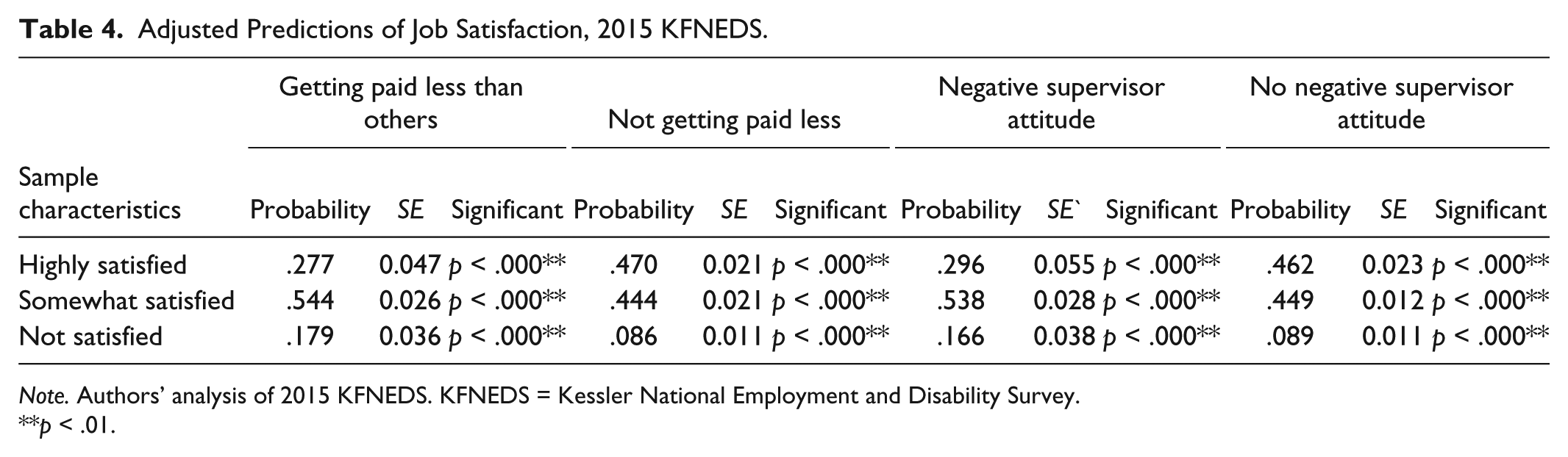
Note. Authors’ analysis of 2015 KFNEDS. KFNEDS = Kessler National Employment and Disability Survey.
p < .01.
Discussion
The results described above highlight new evidence about the association of personal and organizational factors on job satisfaction for persons with disabilities. First, educational attainment is associated with level of job satisfaction, as persons with some college education have lower levels of job satisfaction than persons with a high school education or less. Among individuals without disabilities, higher levels of education have been associated with higher levels of job satisfaction (Pagán & Malo, 2009). In general, employees who have college level education are more likely to be employed in positions that foster autonomy and allow decision-making latitude which are closely linked with job satisfaction. However, despite higher levels of educational attainment, employees with disabilities tend to be working in low paying, entry-level positions (Pagán & Malo, 2009; Schur et al., 2009). Stigma and structural barriers in the workplace may make it difficult for them to advance in their career or attain higher level positions within their organization. Our findings suggesting education at college level or higher is associated with low levels of satisfaction could signify a mismatch between employees’ personal view of their skills, talents, and the types of job they were able to obtain. Rehabilitation counselors should take particular note of this possible paradox. Future research which gathers more detailed information about not only education and job satisfaction but also about job tasks and the perceived fit between the two would be helpful in further exploring this finding.
Second, we did not find evidence that other personal characteristics such as age, gender, or race were associated with levels of job satisfaction for workers with disabilities. This is counter to prior findings about job satisfaction among persons with and without disabilities (Blanchflower & Oswald, 1999; Burke, 1999; Pagán, 2011, 2013). Our findings suggest that a full examination of both individual and organizational characteristics reduces the influence of these nonmodifiable characteristics on levels of job satisfaction. Perhaps issues of age, gender, and race are less relevant within workplaces overall than in years past, particularly when more malleable factors such as pay are examined.
Third, employees who believed that they were getting paid less than their coworkers were less likely to be satisfied with their jobs. Lower pay levels may be related to differences in job roles or work schedules or may be related to discrimination. Prior research (McAfee & McNaughton, 1997; Ng & Sorensen, 2008; Uppal, 2005) has suggested that all three areas may come into play. The data collected here do not allow us to examine whether this perception of lower pay is true or, if true, the specific reason for the lower rate of pay. Nevertheless, the results suggest that this is a key area of concern that is strongly associated with job satisfaction. As rehabilitation counselors seek to maximize economic returns for workers with disabilities, counselors should also advise employers of the path from levels of pay, job satisfaction, and levels of job retention.
Fourth, supervisor attitudes matter. This finding confirms prior research that has demonstrated the importance of supervisor attitudes to ensuring job satisfaction among workers with disabilities (Kulkarni & Lengnick-Hall, 2011; McAfee & McNaughton, 1997; Pagán, 2013, 2014). Our results show that job satisfaction was higher for employees with disabilities who had not experienced negative supervisor attitudes. Job satisfaction of employees with disabilities depends, to a large extent, on the supports within the organization, especially support from the supervisor. When faced with challenging situations, employees with disabilities rely on natural supports provided by the supervisor and coworkers (Secker & Membrey, 2003) Supervisors and coworkers may support the employee with a disability through formal or informal channels. Informal channels of support such as taking on activities that are not formally part of their job, helping and cooperating with others, and intentionally supporting the well-being of others in the workplace and interpersonal support is an essential component of organizational citizenship and prosocial organizational behavior. Supervisors who model such behaviors contribute to improving the overall morale of employees as well as improving organizational climate and justice. Rehabilitation counselors can coach employers to remove visible and invisible barriers, provide reasonable accommodations, and create a positive organizational climate. These findings suggest that targeted training on providing reasonable accommodations and facilitating inclusive workplaces may be effective in improving levels of job satisfaction for employees with disabilities. This, in turn, can translate into lower turnover and a stronger organizational culture overall.
Fifth, the attitudes of coworkers were not associated with job satisfaction. This finding is surprising as prior research has suggested that coworkers play an important role in workplace culture. Siu et al. (2013), for example, found that individuals who disclosed their chronic health condition to colleagues were more satisfied and had higher job tenure than those who did not. Although coworkers may provide informal support to persons with disabilities, our findings indicate that the role of the supervisor is much more substantial in determining job satisfaction. Our finding can be interpreted in two ways: (a) supervisors, rather than coworkers, play a significant role in ensuring that employees with disabilities receive the accommodations that are necessary to complete their job tasks and in making decisions regarding performance appraisal and career advancement; or (b) coworkers’ attitudes may be influenced by the attitudes of supervisors or the organizational culture as a whole. Also, our sample was limited to current employees with disabilities. It is likely that individuals with disabilities who are currently employed report higher job satisfaction relative to those who chose to leave their previous jobs. Perceptions of supervisor attitudes may be a better predictor of job satisfaction for employees with disabilities who are currently employed. Future research should further examine the relationship between perceptions of supervisor attitudes and coworker attitudes among current and former employees with disabilities.
Job satisfaction is a complicated, multi-dimensional concept that can be influenced by various factors. Our study did not include job tenure, job type, autonomy, or job stress as predictors. Other limitations of our study are noted below. First, our sample was similar in some ways to nationally representative disability prevalence data. Our sample had similar breakdowns by age, gender, and race. Our sample differed from the general population of working-age persons with disabilities in certain ways, however. For example, national data suggest that ambulatory disabilities are most common among working-age Americans, followed by cognitive limitations. Differences in employment are evident by disability type as well, as persons with hearing limitations have much higher rates of employment (52%) than persons with visual (42%), cognitive (26%) or ambulatory (24%) limitations (Lauer & Houtenville, 2017). These slight differences in our sample may make our results less generalizable to the entire population of workers with disabilities.
Also, our survey did not collect detailed responses from the individuals who were not working and not looking for jobs. In addition, our study relied on respondent self-report of not only disability type but also of most-limiting type of disability. Although this is standard practice in many nationally representative household surveys, the use of self-report may introduce some bias into our results. Finally, the limitations of our sample precluded any comparison of levels of job satisfaction between employees with and without disabilities. Future research should closely examine levels of job satisfaction between these two groups, controlling for personal, organizational, as well as occupational characteristics. Persons with and without disabilities may have different thresholds of job satisfaction, whereby one group is more satisfied with a similar set of circumstances within a job than another group. The nature of the disability or health condition may trigger a different set of expectations for the employee with a disability which in turn may influence their job satisfaction. In addition, most jobs are not designed to be inclusive of people with disabilities. Employees with disabilities experience a mismatch between their actual potential or preferences and the opportunities offered by the job (Kulkarni & Kote, 2014; Roessler et al., 2004), which may further lower job satisfaction.
In conclusion, the findings of this study have several implications for rehabilitation counselors. Whether assisting with job search or job retention, counselors must pay careful attention to organizational policies and practices of employers, as they set the standards for employee performance, job task assignment, pay increase and incentives, and training and mentoring opportunities (Kulkarni & Valk, 2010; Stone & Colella, 1996). Subsequently, employees’ self-perception or satisfaction with their own performance depends on the benchmarks set by the organization. Counselors can assist organizations in taking active steps toward increasing the job satisfaction of employees with disabilities beyond efforts to increase hiring of people with disabilities. Sustained efforts through both formal and informal or ad hoc channels are essential to improve the subjective employment outcomes for employees with disabilities.
Footnotes
Authors’ Note
This article does not necessarily represent the policy of the Department of Health and Human Services, and you should not assume endorsement by the Federal Government (Edgar, 75.620 [b]). Any errors or omissions are those of the authors.
Declaration of Conflicting Interests
The authors declared no potential conflicts of interest with respect to the research, authorship, and/or publication of this article.
Funding
The authors disclosed receipt of the following financial support for the research, authorship, and/or publication of this article: The research conducted here was partially funded by the U.S. Department of Health and Human Services, National Institute for Disability, Independent Living, and Rehabilitation Research (NIDILRR) under cooperative agreement H133B130015.