






Abstract
This study examined perceptions of the future among young adults with and without learning disabilities (LD). Participants were 16 college students who participated in a semi-structured interview: 8 with LD and 8 without LD. Four domains were identified: time horizon, future life domains, emotions toward the future, and impact of having a diagnosis of LD. Participants with LD expressed a more limited vision of their future than participants without LD, reflected in such aspects as a narrower time horizon scope and less detailed descriptions. In addition, most participants with LD thought that their situation as a person with a disability would impact their future to some degree, at least in specific areas of life. However, they were like participants without LD in other aspects. For example, both samples mentioned work, family, and leisure when describing their future. The results suggest that professionals working with young adults with LD cannot automatically apply the same strategies they use when working with young adults with typical development. For instance, they may need to examine the extent to which their clients perceive their disability as central and influential and focus on coping strategies where relevant.
Introduction
Perceptions of the future play an important role in young adults’ identity construction and career development (Bandura, 2001; Nurmi, 1991). Such perceptions may be shaped by different societal factors, such as culture and nationality (e.g., Bellare et al., 2018; Michael et al., 2017), and understanding them may be especially important in relation to young adults with disabilities, given their less favorable career outcomes as compared with youth without disabilities (Novak et al., 2024). However, most research has examined individuals with typical development and focused mainly on the occupation domain, neglecting other important life domains, such as family and the relationships between domains (Cinamon & Rich, 2014; Karacan-Ozdemir & Ayaz, 2022). This narrow perspective clashes with widely embraced theories (Savickas, 2005; Super, 1990) that emphasize the interplay among multiple life roles. Additionally, professionals’ ability to guide and foster young adults with disabilities in their transition into adult roles may be limited, since little is known regarding their perceptions of the future and whether they are similar to those of young adults without disabilities. Few studies have focused on young adults with specific disabilities, and they have not always compared them with individuals with typical development (Author et al., 2024). This study compared perceptions of the future among young adults with and without learning disabilities (LD). It focused on a specific cultural context – Jewish young adults in Israel.
Perceptions of the Future
Perceptions of the future include individuals’ plans, ambitions, expectations, and concerns for the near and far future across multiple life domains, such as work and family (Seginer, 1988). Different theories such as Ecological System theory (Bronfenbrenner, 1989) and Super’s (1990) Life Span–Life Space theory emphasize the interrelations between diverse domains, suggesting that one cannot address future planning of one life domain without taking into account other life domains.
Cinamon and Rich (2014) extended the concept of perceptions of the future to include five dimensions: (a) a life-space dimension – the different life roles considered in individuals’ future plans, such as work and family; (b) an integrative dimension – the degree to which individuals think about the possible relationships between future life roles; (c) an intensity dimension – the degree to which individuals are occupied by the future; (d) a clarity dimension – the degree of clarity in which the future is visualized); and (e) an emotional dimension – the emotions elicited by thinking about the future such as stress and excitement. This broad perspective is adopted in the current study.
Most research related to perceptions of the future focuses on constructs like future expectations (individuals’ beliefs about the future) and future orientation (ability to think about the future and be motivated to work toward future goals and tasks) (Black & Schofield, 2018; Seginer & Mahajna, 2016). Less attention is paid to the actual content of individuals’ thoughts when thinking about their future, or in other words, their perceptions of the future, while taking into account several life domains simultaneously (Cinamon et al., 2012), especially when relating to individuals with disabilities.
Future-oriented people often make long-term plans and focus on future goals (Rolison et al., 2017). Therefore, an important aspect of perceptions of the future is future time horizon or time span (Hagger & Malmberg, 2011), which is the period of time into the future for which individuals are able to foresee their lives. Young adults with a long time horizon, for instance, until retirement, typically view time as open-ended and prioritize preparatory, knowledge-oriented goals that support future possibilities (Charles & Carstensen, 2009).
Perceptions of the Future Among Young Adults
Investigating young adults’ perceptions of the future is critical, as this life stage involves exploring and consolidating choices across life domains (Dolli, 2012; Nurmi, 1991; Super, 1990). In industrialized countries, this phase is considered a unique developmental period known as emerging adulthood (Arnett, 2015). In such societies, higher levels of education are increasingly required to acquire well-paid jobs; thus, traditional aspects of adulthood, like lifelong partnerships and parenthood, are frequently delayed (Lowe & Arnett, 2020), and the transition to adulthood is prolonged (Faherty et al., 2020), often extending into individuals’ mid- or late twenties (Arnett, 2015). Therefore, when examining young adults’ future perceptions, it is important to consider their social context.
The relatively long period of emerging adulthood provides individuals with time to prepare for adult roles, such as establishing a career and considering parenthood, while supporting identity development and growing independence (Arnett, 2016). However, young adults with disabilities may encounter unique challenges during the transition into adulthood (Stein et al., 2016), which can impact the way in which they perceive their future. This study focused on young adults with LD.
Perceptions of the Future Among Young Adults With Learning Disabilities
LD are disorders that affect the way information is acquired, retained, organized, and understood (Learning Disabilities Association of Ontario [LDAO], 2011), leading to specific difficulties in reading, writing, or mathematics that are not attributable to other conditions (American Psychiatric Association [APA], 2022). Some LD may also interfere with social and organizational skills (LDAO, 2011).
Despite their academic challenges, individuals with LD are increasingly seeking postsecondary education and constitute the largest group of students with disabilities entering higher education (Goegan & Daniels, 2019). Nonetheless, many face significant challenges in transitioning to college and work, often depending on the guidance and support available to them (Esead & Diale, 2023).
According to Li et al. (2021), it may be difficult for students with LD to come to terms with who they are, realize their full potential, and embrace opportunities. In addition, after graduation, they often lose access to familiar supports and must navigate adult institutions independently (McKim, 2012). This may impact how they perceive their future. It also explains why students with LD lag behind their peers in college attendance and employment success (Carpinelli et al., 2021; Rojewski et al., 2012).
Indeed, difficulties in understanding LD and its characteristics were commonly linked to a lack of career-related self-awareness and exploration among college students with LD (Stipanovic, 2016), both of which are central to future planning (Kleine et al., 2021; Zhang et al., 2022). This lack may reflect not only a limited understanding of one’s interests and skills but also challenges with reflective learning practices, or metacognition, which could impact goal setting and time perspective (Stipanovic, 2016). However, to the best of this author’s knowledge, no studies have directly examined the time horizon of young adults with LD.
Hitchings and colleagues (2001), who examined college students with LD, found that the majority demonstrated difficulty describing their disability and career development needs. Other researchers reported that students with LD often have lower confidence in decision-making and are less goal-oriented in their academic pursuits than their peers without disabilities (Klassen, 2010; Sears et al., 2014). This may hinder their career development and reduce optimism regarding their vocational future, as also noted by those with other types of disabilities (Author et al., 2024).
Less is known regarding the perceptions of young adults with LD in relation to their future in life domains other than career. Keel et al. (2018), among the few who examined a broader vision of the future, found that students with LD described multidimensional lives, including goals related to further education, employment, and living situations. However, they often distanced themselves from romantic relationships and parenthood and viewed some peer friendships as hindering their future goals. This suggests that individuals with LD may view certain social and contextual factors as barriers that constrain their future outlook and make it harder to integrate multiple life roles. However, since Keel and colleagues examined 12th graders who are on the verge of young adulthood, their results may also be related to developmental factors.
The above findings suggest that young adults with LD may perceive their future differently from youth with typical development. However, as already noted, other factors may also be relevant, such as their social and cultural context (Bellare et al., 2018; Michael et al., 2017). This study focused on a sample of Jewish young adults from Israel.
The Jewish Israeli Context
When addressing perceptions of the future among Jews in Israel, some characteristics of this cultural group should be considered. For example, in the family domain, Jewish Israelis often endorse individualistic values, such as egalitarianism among family members and children’s autonomy (Beystrov, 2012). Another characteristic is mandatory military service for all Jewish citizens. Inscription into a “people’s army” (Itsik, 2020) may strengthen social involvement and belonging and impact perceptions of future social participation (Michael & Kar-Man Shum, 2021). Military service may also delay work and family-related plans (Dar & Kimhi, 2001). Consequently, many Israeli Jews begin formulating their future only after completing their service, when institutional guidance is limited, and support often comes mainly from family, friends, and the Internet. Counselors in Jewish high schools devote minimal attention to issues of career development and guidance (Vertsberger & Gati, 2016). This may not be the case for other young adults in most Western countries.
The Current Study
To support young adults with LD in transitioning to adulthood, it is crucial to examine their perceptions of their future, including their resources, barriers, and the potential influence of having an LD diagnosis. To understand such perceptions, it seems important to compare youth with and without LD, given the disparities reported in achieving adult roles (e.g., Carpinelli et al., 2021), which may also be reflected in future perceptions. Based on theories of interrelations among life domains (Bronfenbrenner, 1989; Super, 1990), Cinamon and Richs’ (2014) conceptualization of perceptions of the future, and the suggested importance of time horizon (Hagger & Malmberg, 2011; Rolison et al., 2017), this study examined three questions: (a) Do young adults with LD differ from those without LD in their time horizon? (b) Do young adults with LD differ from those without LD in their perceived future life domains and aspects such as clarity and intensity? and (c) Do young adults with LD differ from those without LD in their emotions toward their perceived future?
Method
This study applied Consensual Qualitative Research (CQR), a qualitative approach, which aims to construct the meaning individuals attribute to their experiences through their own words (Hill et al., 2005). It focused on the way young adults, with and without LD, perceive their future and their emotions toward it.
Participants
Participants were selected using criterion sampling (Patton, 2002). Inclusion criteria were undergraduate college students under the age of 30, 50% of them diagnosed with LD. Exclusion criteria were candidates with additional disabilities except for attention deficit hyperactivity disorder (ADHD), which commonly accompanies LD (McGrath et al., 2020). The sample included
Participants’ Demographic Information (N = 16).
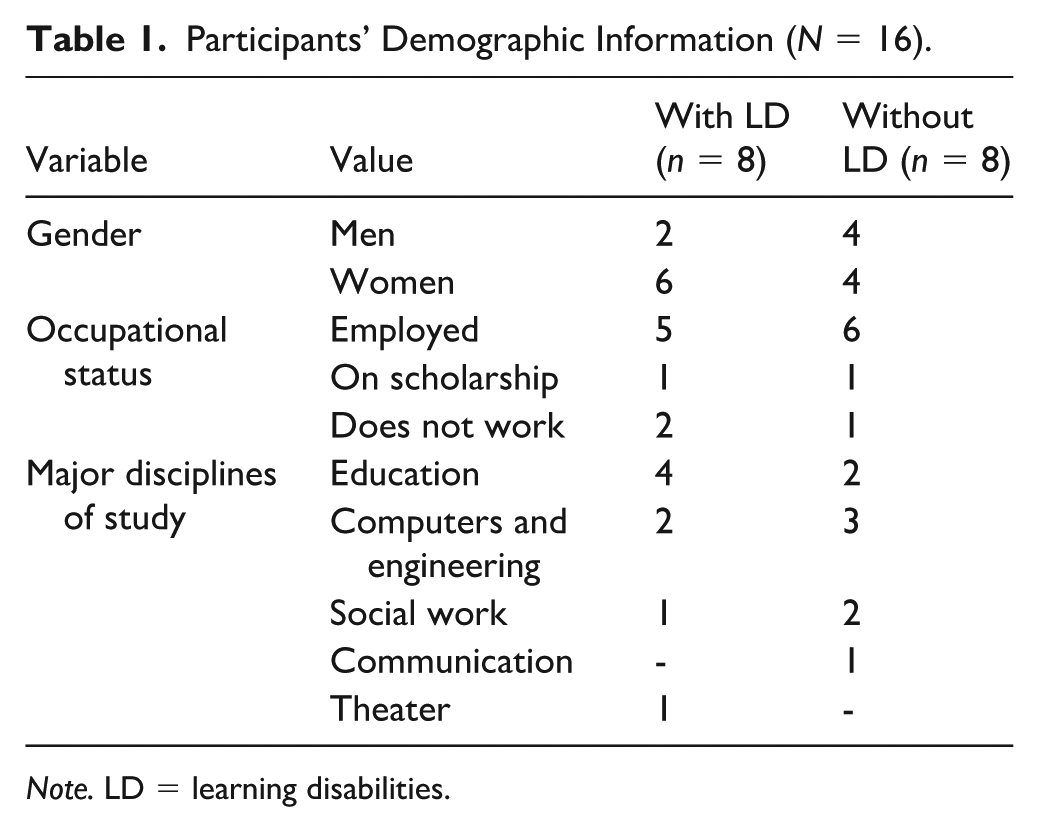
Note. LD = learning disabilities.
Instrument
An in-depth semi-structured interview protocol, adapted from a study on young adults with physical disabilities (Author et al., 2024), was used. The interview prompts were refined following feedback from a college student with ADHD who was asked to comment on their coherence. The final protocol was as follows: (1) When you think about your future, how far into the future can you picture yourself (e.g., 3, 5, 10 years)? (2) Try to describe a typical day during the time in the future that you just mentioned from the minute you wake up till you go to sleep at night. (3) In your typical day description, you (probably) mentioned different life domains (e.g., work and relationships). Try to elaborate on each of them. (4) What feelings or emotions emerge when you talk about your future? The first prompt was to examine participants’ time horizon. The second and third prompts aimed at exploring the different life domains central to the participants’ perceptions of their future. The third prompt also aimed at examining certain dimensions of perceptions of the future as suggested by Cinamon and Rich (2014), specifically the integrative, intensity, and clarity dimensions. The fourth prompt focused on the emotional dimension. In addition to the interview’s four core questions, several follow-up questions were used as suggested by Michael et al. (2024).
For each of the above, several additional prompts were suggested. For example, following the question concerning a typical day in the future, interviewers could ask more specific questions such as “How old are you?” or “Could you describe your living environment?” Additionally, participants provided demographic information including age, gender, academic institution, field of study, and current employment status.
Research Team
The research team included a researcher with a PhD in educational counseling and two undergraduate special education students. All took part in each phase of data analysis. An additional researcher from the author’s institution served as an auditor, reviewing the analyses and providing feedback in line with CQR procedures (Hill et al., 2005, 1997).
Procedure
Following formal approval from the ethics committee at the author’s institution (approval number 029/2023), participants were recruited through a Facebook ad over 2 months. Data collection continued until no new meaning structures emerged (Naeem et al., 2024). After performing 14 interviews, no new information was elicited. To confirm this impression, two more interviews were conducted. The use of probing questions, bracketing, reading of the interviews, and initial analysis (Fusch & Ness, 2015) assisted in determining this point.
Participants were requested to sign informed consent forms. They were presented with the study’s goal and assured that their anonymity would be maintained. Interviews were conducted individually by two special education undergraduate students who were in the second year of their practicum. Prior to interviewing, they received a 3-hr training session, which included diverse skills such as using prompts effectively, using strategies for verifying understanding, and breaking down questions into sub-questions when necessary. Interviews, lasting 30 to 45 min, were carried out according to the participants’ convenience either at their home or on campus. No incentives were offered to participants.
Data Analysis
Interviews were audio-recorded, transcribed, and analyzed using the CQR method (Hill et al., 2005, 1997). It involves repeated reading of interview protocols by a research team that works toward consensus following three steps: developing and coding response domains, constructing core ideas, and examining recurrent cross-analysis of cases. Final determination of coding is assisted by outside auditors who are not members of the research team.
All members of the team read each transcript independently. Through group discussions and after receiving the auditor’s approval, four domains were defined. Initially, statements were read, reread, and then grouped into meaningful clusters, for example, participants without LD reported a wider time horizon, work and family were the most dominant future life domains, etc. Then these clusters were reorganized while identifying the core ideas (within domains), categories, and sub-categories. For example, the “time horizon” domain comprised both the range of time and the degree to which participants felt they could imagine a future at the specified time. Finally, within each domain and category, similarities and differences between participants with and without LD were examined.
The three team members took part in each phase of the data analysis. The undergraduate students received training in interviewing and analyzing qualitative data in a course during their studies. They conducted the interviews according to the interview protocol and carried out independent analysis of the transcripts. Analysis was not a priori, although it was largely based on the four basic prompts of the research interview. During team meetings, the members discussed and reviewed any discrepancies (which were about 15%) until a 100% consensus was reached and domains could be generated. Then, they sought to reduce, revise, or discard categories and sub-categories until, using the constant comparative method (Strauss & Corbin, 1998) and the consensual decision-making process (Hill et al., 1997), they formed overlapping categories and sub-categories. The team sorted the categories and sub-categories according to frequency within each study group (participants with or without LD): “general” denoted categories or sub-categories identified for all the group members; “typical” denoted categories or sub-categories identified for more than half of them; and “variant” denoted categories or sub-categories identified for less than half (Hill et al., 2005, 1997).
Credibility was promoted in the current study using investigator triangulation: several researchers interpreted the data. Collaborative work was used and included three researchers who concurred about conclusions to ensure they were unbiased (Brantlinger et al., 2005).
Reflexivity
The author, a researcher of future perceptions among young adults with and without disabilities and a former teacher and educational counselor, used analysis bracketing in her data to acknowledge her positionality, which could have affected her interpretation of the data (Beech, 1999). Her professional experience with students with LD may have influenced the way she attended to participants’ responses related to their future perceptions. Independent analysis and illustrating the findings in the participants’ own words also helped to view the data from various perspectives and minimize bias. As for the other members of the research team, they were introduced in their training to issues of reflexivity and positionality and were encouraged during team meetings to reflect on their professional backgrounds, prior assumptions, and potential influences on data collection and analysis.
Results
Based on the data analysis, four domains emerged: time horizon, future life domains, emotions toward the future, and impact of having a diagnosis of LD. The first three were directly related to the research questions and the fourth was generated from participants with LD responses. Each domain was analyzed and included categories and the future life domains category also included sub-categories, as presented in Figures 1 and 2. Findings are presented by domain, highlighting participants’ perceptions of the future and noting similarities and differences between those with and without LD. Participants are quoted using pseudonyms.
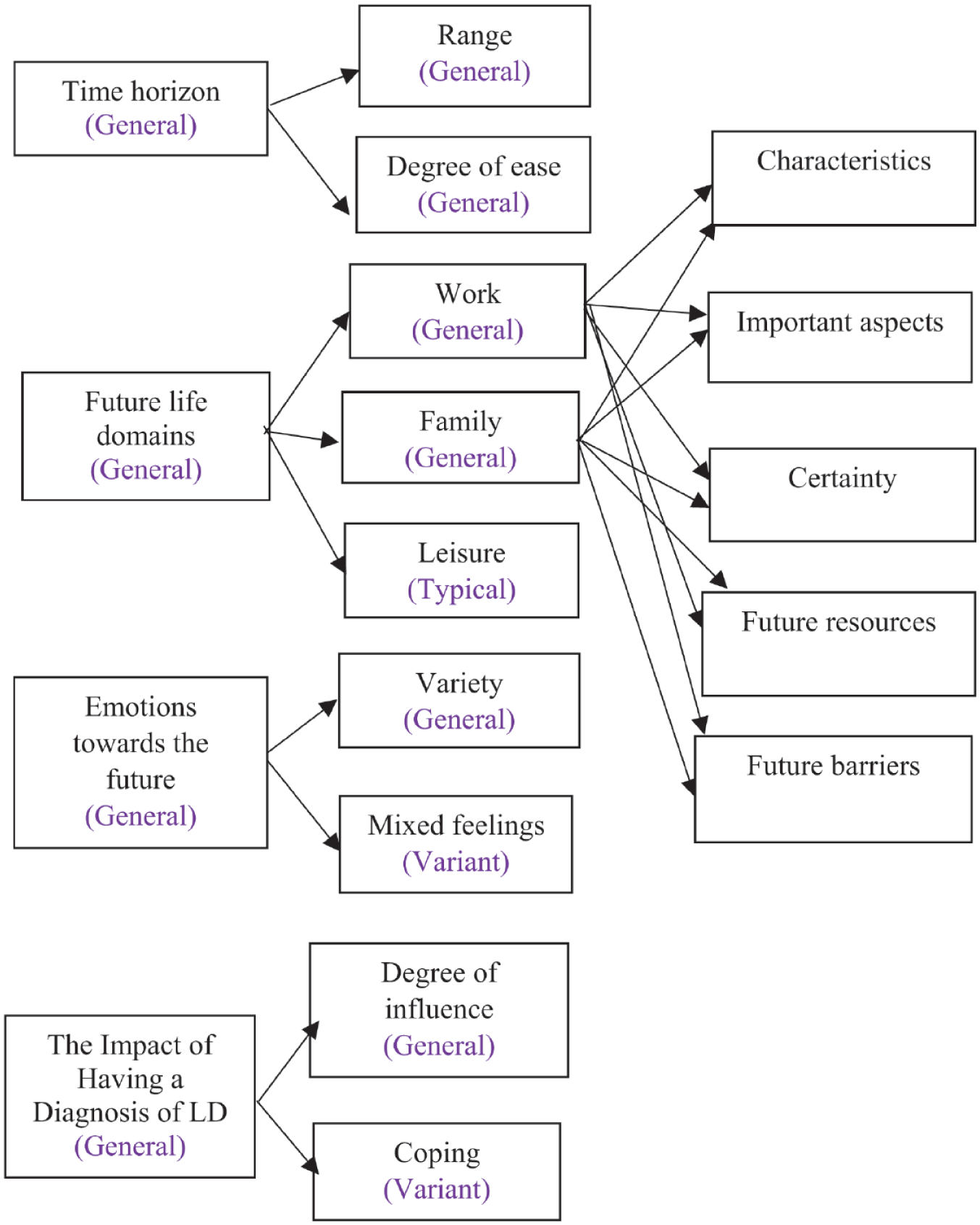
General, typical, and variant domains, categories and sub-categories of perceptions of the future among participants with LD perceptions of the future.
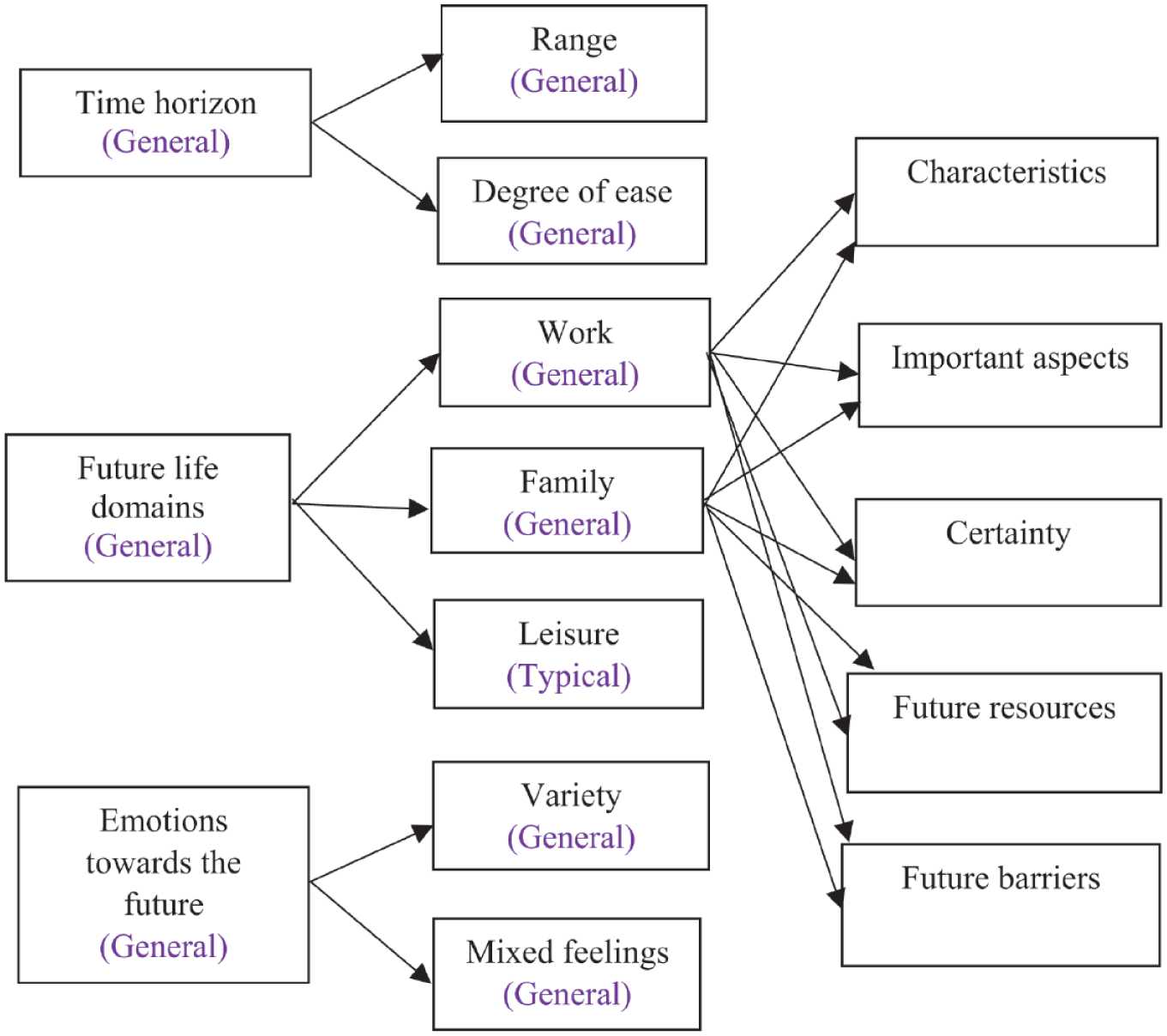
General, typical, and variant domains, categories and sub-categories of perceptions of the future among participants without LD.
Domain 1: Time Horizon
This domain comprised two categories: range and degree of ease. Range included any remarks that were related to the length of time into the future that participants could visualize themselves. Participants’ time horizon ranged from 3 to 6 years among participants with LD, with most of them talking about 3 to 4 years ahead, and between 3 and 10 years among participants without LD, with most of them visualizing themselves at least 7 years ahead. Four participants (two in each group) could not mention a specific time range.
The degree of ease category included participants’ remarks regarding the extent to which it was easy for them to envision themselves in the future. Most participants with typical development and only half of the participants with LD could easily imagine themselves in the future during the time they had mentioned. For example, Eden, a student with LD, expressed difficulty in describing a clear picture of his future: “I don’t know . . . wherever the years will take me. I’ll have a job eventually.” Similarly, Calanit, who also had LD, said, “It’s hard for me to say exactly. I don’t know where life will lead me.”
Domain 2: Future Life Domains
This domain included the different life domains participants related to when they talked about their future. Three categories emerged: work, family, and leisure. All were described in terms of their characteristics, for instance, type of future job. Participants tended to elaborate about their future work and family, and analysis revealed four sub-categories in relation to these domains: important aspects, certainty, future resources, and future barriers.
Category 1: Work
Sub-Category 1: Characteristics
Work was mentioned by all participants when portraying their future. Most participants mentioned a specific type of job such as being a teacher or a makeup artist. All participants with LD who mentioned a specific job described professions that required either postsecondary vocational training or a bachelor’s degree. The other participants described only professions that required an academic education, ranging from a bachelor’s degree to a PhD.
Among the participants who specified a future job, only half were decisive regarding the type of job they wanted to pursue. For example, Chen, a student with LD, said, “In the future I will work as an art therapist,” whereas Maor, a student without LD, stated that he will be “a physical education teacher.” The rest mentioned several options. For example, Noy, a student with LD, said, “I see myself developing my own makeup profession [being a makeup artist] . . . maybe actually be an actress . . . I don’t have much to say. My future is unplanned.” Matan, a student without LD, said, “Either a project manager in my profession [civil engineering] or I’ll have something small of my own.”
Sub-Category 2: Important Aspects
Participants stated different aspects of their future work as important to them. Both participants with and without LD mentioned personal aspects, such as meaning and enjoyment, though slightly more often by participants without LD than with LD. Environmental aspects, such as work conditions, were also stated more by participants without LD than with LD. Interpersonal aspects, such as work atmosphere and relationships with co-workers, were mentioned as well, although a little more by participants with LD than by participants without LD. For example, Eden, a student with LD, talked about two aspects that he considered important in his future job – an interpersonal aspect and a personal aspect: “A team that I’d like. That the job that I like will be something really important.” Yuval, a student without LD, mentioned all three aspects in his response:
It’s important for me to earn a lot of money . . . to work where people I like surround me in the professional environment and enable me to act freely . . . to get appreciation for my investment and dedication . . . to work in a job which is my passion.
Sub-Category 3: Certainty
Most of the participants were hesitant in relation to their future goal attainment in the work domain. Only a few, all men, expressed certainty. For example, Eden, a student with LD, said that “There is no such option” other than achieving the job he imagines in his future.
Participants’ certainty was also reflected in their willingness to imagine alternative future work options. While all participants without LD could think about alternative jobs, only two students with LD stated such alternatives. For example, Matan, a student without LD, referred to a scenario in which he might not achieve the job he had planned to pursue:
I think in 10 years I’ll expect from myself to have gotten somewhere, and if I haven’t, either I’m not good at what I do or I really don’t enjoy what I do and don’t want to do it. I think that the default is to consider a new path and if this situation occurs, I’ll probably change my profession and look for something else.
Sub-Category 4: Future Resources
When discussing future work, all participants mentioned resources that may help them achieve their perceptions in this domain. Most were internal resources, mainly strengths and abilities within the individual. All participants without LD and most participants with LD mentioned personal effort and perseverance as a resource for attaining their future work. For example, Yuval, a student without LD, said that “persistence and constant self-improvement, and especially high work ethics and professional and personal integrity that always accompany [him]” will help him achieve his career goals. Other internal resources, which were typically mentioned, included training and experience. In addition, a sense of efficacy was stated mainly by participants with LD.
Only one type of external resource in relation to future work was mentioned – personal connections, which was mentioned more by participants with LD than by participants without LD. For example, Danielle, a student with LD, said, “Mom will help me get a job. She works in the Ministry of Education.”
Sub-Category 5: Future Barriers
In contrast to future resources mentioned by all participants, almost half of them indicated they could not imagine any barrier when thinking about their future work. Most were students with LD. Participants who did mention barriers related to either internal (within the individual) or external (outside the individual) barriers. Both types of barriers were mentioned more by participants without LD than by those with LD. Work-related internal barriers included a lack of personal determination and inability. For example, Vered, a student without LD, said “only me and my will” when addressing factors that may prevent her from achieving her future work. Work-related external barriers included participants’ family and other environments. Such barriers were mentioned mostly by women. For example, Danielle, a student with LD, said, “If I have children, they may prevent me from achieving my work.”
Category 2: Family
Sub-Category 1: Characteristics
Besides work, family was also a common category. Most participants imagined an established relationship with a spouse. For example, Shany, a student with LD, said when asked to describe a day in her future life: “Returning home to my partner and we go out to have fun.” Vered, a student without LD, said, “In the evening I’ll sit with my partner . . . for quality time at home.”
Parenthood was also frequently mentioned by participants. Descriptions included parenthood-related chores, such as preparing food, picking kids up from school, and spending quality time with future children. Calanit, a student with LD, described much of her future life around parenthood:
If I have kids, I’ll wake them up to get ready for school . . . After work . . . I’ll be at home with the kids . . . I’ll go with them to activities for quality time and when my husband . . . returns home, everybody will eat dinner and maybe if there’s time we will spend quality time together. It’s important . . .
Additionally, one participant with LD mentioned relationships with the extended family, and three participants without LD noted raising a dog as part of their future family. Relationships with family were mentioned in the context of getting help, as Calanit said, “It may be that sometimes I’ll ask my parents to help if my husband or I don’t manage.”
Sub-Category 2: Important Aspects
In relation to their future family, participants talked about important aspects regarding their intimate relationships and parenthood. All referred only to interpersonal aspects of relationships, which were described in greater detail by participants without LD. Participants with LD related mostly to feelings of happiness and joy, love, support, acceptance, and being able to challenge one another. For example, Noy, a student with LD, said, “First of all, I’d like to be happily married.” Participants without LD also mentioned good communication, similar points of view, attraction, and boundaries. For example, Matan, a student without LD, said,
What’s important to me is that I’ll always feel comfortable with my partner, that she’ll be my friend and I’ll always be her friend before anything romantic . . . That she’ll be of the same mind as me in terms of raising kids, how the house should look . . . and, if there are disagreements, reaching agreements . . . mainly talking about stuff.
Sub-Category 3: Certainty
Some variation was found in levels of certainty among participants when they talked about their future intimate relationships and parenthood. No one expressed certainty regarding their future intimate relationships; they all related to the possibility that they will not be in a relationship. However, when relating to future parenthood, few students expressed certainty. For example, Maor, a student without LD, related to possible obstacles that may come in his way in creating his own family. However, he also said, “Life is unexpected and when difficulties arrive, I’ll handle them,” suggesting he could not envision the option that he will not have a family of his own. Danielle, a student with LD, declared, “I see myself, no doubt, starting a family.”
As for the ability to apply flexible thinking regarding future family, when addressing their future intimate relationships, only one participant with LD, Noy, offered an alternative. She said, “First of all, I hope this won’t happen . . . but if it happens, I’ll go on with my life, I’ll be with my family [of origin].” The other participants mentioned mainly feelings of sadness, did not know what they could do, or accepted being on their own. For example, Hodaya, a student without LD, said, “I’ll be sad that he won’t be my husband.”
In relation to future parenthood, most participants with LD and only few participants without LD suggested alternatives. For example, Danielle, a student with LD, said that if she is not able to achieve the family she would like in her future, she will “be sad and try to think about solutions with my partner.” Eden, another student with LD, said, “I will fill my house with cats,” if he does not succeed in forming a family of his own.
Sub-Category 4: Future Resources
All participants mentioned resources that will help them attain their future family goals. Most references related to parenthood and only a few participants mentioned resources associated with future intimate relationships. Most resources noted referred to environmental supports.
In relation to future parenting, most participants with LD mentioned both internal and external resources, whereas participants with typical development stated mostly external resources. Internal resources included participants’ personality, religious faith, and effort and dedication. For example, Noy, a student with LD, said, “I think it’s mainly my personality. Eventually, who I am will cause the person who will start a family with me to love me and I will cause him to start a family with me.” External resources included spouse and other environmental support. For example, Calanit, a student with LD, said that “the love between partners and the support from family and the close environment” will help her achieve her future family. Similarly, Matan, a student without LD, mentioned support from his future spouse and help from his parents as assistive factors.
As for future intimate relationships, among the participants who mentioned resources, most stated external ones, such as fate and dating sites. For example, Noy, a student with LD said, “It could happen in various ways; maybe by chance, God willing, I’ll meet him.” Only one, a student without LD, mentioned an internal resource – maintaining attractiveness. He said, “I’ll try to maintain an attractive external appearance. I will strive as far as possible so that I’ll always have something to offer” (Yuval).
Sub-Category 5: Future Barriers
Only half of the participants (mostly without LD) talked about possible barriers to their future intimate relationships, and all mentioned internal barriers such as being judgmental and having low self-esteem. For example, Danielle, a student with LD, said, “Maybe, if I judge people too quickly and too harshly.” Maor, a student without LD, simply stated himself as a barrier: “Me. Relationships are tiring.”
As for parenthood, only external barriers were mentioned. They included future spouse, religious faith, work overload, and financial reasons. For example, Zohar, a student with LD, said, “God will decide . . . If God decided that I will not have a family, that’s what will happen.” Hodaya, a student without LD, related to another external barrier: “Wow, a million things. For instance, that I won’t succeed in establishing myself [financially] as I would like, or as I should . . .”
Category 3: Leisure
Most participants included in their perceptions of the future a description of leisure activities, including personal leisure (such as pursuing hobbies or interests) and social leisure (such as meeting with friends). Personal leisure was mentioned mostly by participants without LD. For example, Noy, a student with LD said, “Towards the evening I’ll go to an aerobics studio and do some sports.” Royi, a student without LD, said, “I’ll come home and go for a run in the evening.” As for social leisure, five participants from each group mentioned different activities. For example, Zohar, a student with LD, mentioned hanging out at night in bars when describing a day in her future life, and Matan, a student without LD, stated, “From time to time I would like to go out with friends in the evening, go out with my future wife to a movie, take her to a restaurant or something.”
Domain 3: Emotions About the Future
Two categories emerged regarding participants’ emotions toward their future: the variety of emotions which were expressed and having mixed feelings. When talking about their future, participants expressed an assortment of emotions, including excitement, optimism, and curiosity, as well as fear and concern. They did not differentiate between life roles. Rather, they related to the future in general when describing their emotions. For example, Bar, a student with LD, expressed excitement. Only when asked to elaborate, did he mention different domains: “That everything I told you in the interview will happen. That I’ll get the promotion that I want, that I’ll have a family and children and my own house.” Interestingly, whereas seven of the eight participants with LD were relatively optimistic about their future, participants without LD reported mixed feelings. For example, Zohar, a student with LD, said, “I’m so looking forward to it and I get excited when I think about it. This expectation of knowing what will be in the future intrigues me.” Hodaya, a student without LD, said, “[I feel] two things: fear – that the things that I want won’t happen, and happiness and hope – because you want to achieve your hopes and what you envision.”
Domain 4: The Impact of Having a Diagnosis of LD
When addressing the possible impact their situation as individuals diagnosed with LD may have on their perceived future options, two categories emerged in the responses of participants with LD: degree of influence and coping.
Category 1: Degree of Influence
All participants with LD included statements regarding the extent to which their situation as people with disabilities may impact their future. Only one participant anticipated no impact while the rest perceived they will encounter difficulties. Few participants believed they could reduce such an impact, and half expected a definite impact, regardless of their actions. Most participants who anticipated a definite impact tended to state specific areas of influence, such as general time management or their work. For example, Calanit said, “The disability may affect employment and income, but I’ll handle it when it comes. I’ll ask for counseling, help, or whatever it takes.”
Category 2: Coping
Few participants referred to managing challenges related to their disability. Noy said she will make decisions while considering her personal characteristics: “I don’t think it will affect me because what I want to do in the future is something that doesn’t require a lot of concentration. It’s something that doesn’t require a lot of effort in terms of levels of thinking.” Zohar noted that she intends to continue using strategies she currently applies:
When things are difficult, I tell myself that I’m capable just like anyone else, and I push myself not to give up. I hope it will stay that way in the future. I won’t let it affect my future. It may influence different areas of my life, but I will never let it define my future.
Discussion
This study examined perceptions of the future among young adults with and without LD. Analysis of interviews with 16 young adults, half with LD, yielded four domains: time horizon, future life domains, emotions toward the future, and impact of having a diagnosis of LD, each comprising several categories and future life domains also included sub-categories.
Following the research question on participants’ time horizon, the domain time horizon revealed that generally, participants without LD reported a wider time horizon range and found it easier to imagine themselves in the future than participants with LD. The relatively limited perception of the future found among the participants with LD align with prior research showing reduced awareness of career options and greater difficulties in career decisions among this population (Hitchings et al., 2001; Klassen, 2010). As suggested by Stipanovic (2016), individuals with LD may have difficulties in reflective learning practices, similarly to what the participants were asked to do in this study. However, she also claimed that with proper support, professionals working with these individuals can help them improve their metacognitive skills and enhance their career development and planning.
As for the research question concerning participants’ perceived future life domains, a complex picture emerged. Overall, participants without LD seemed at greater ease to grasp and imagine their future. This was reflected in different sub-categories within the future life domains domain. Specifically, they provided a more detailed description of aspects that were important to them in the future, tended to consider potential barriers, and showed greater flexibility in thinking about future work. Therefore, it seems that young adults with LD may require more support and guidance when planning their futures.
Although participants with LD tended to portray a more limited picture of their future, there were some similarities between them and the participants with typical development concerning the content of their perceptions, which was reflected in the domain future life domains. For example, three future life domains were mentioned by both samples. The most common domains were work and family, followed by leisure.
The finding that most participants mentioned work and family in their perceptions of the future aligns with prior studies on young adults with typical development (Bellare et al., 2018; Michael et al., 2017). This contrasts with Keel et al. (2018), who found that students with LD tended to distance themselves from romantic relationships and parenthood. However, Keel and her colleagues examined younger participants who may have been less experienced in handling multiple tasks and therefore less confident in their ability to do so. Overall, this finding underscores the centrality of work and family in adult roles and their importance in career development and the transition to adulthood (Whiston & Cinamon, 2015) among young adults, whether they have LD or not.
The prominence of leisure in participants’ perceptions is consistent with previous reports showing that Jewish Israeli young adults emphasize this life domain more than youth in other countries (Bellare et al., 2018; Michael et al., 2017). This is encouraging, as leisure can buffer stress and support physical and mental health (Fancourt et al., 2021), which may be particularly important for young adults with disabilities when coping with challenges during their transition to adulthood (Dubois et al., 2023).
Nonetheless, examination within each life domain revealed some variations between the study groups. For example, participants with LD who mentioned a specific future job described professions requiring vocational training or a bachelor’s degree (which they were currently enrolled in), whereas the other participants often described professions requiring advanced academic degrees. This may reflect lower confidence among participants with LD in pursuing higher degrees. Indeed, previous research found that college students with LD have lower academic confidence than their non-LD peers. However, these perceptions were also related to factors such as time in college, hope, and optimism (Feldman et al., 2016).
As for their future family, participants from both samples expressed similar perceptions. However, when discussing relationships outside their immediate family, some participants without LD mentioned raising a dog, and one participant with LD described relationships with her extended family in the context of receiving help. Since so few participants mentioned such relationships, it is hard if not impossible to clearly interpret these responses.
Regarding the leisure domain, while similar numbers from each group mentioned leisure in their future, participants without LD favored personal leisure, such as hobbies, whereas those with LD more often mentioned social leisure. A possible explanation may be that since individuals with LD tend to have lower levels of executive functioning (Morte-Soriano et al., 2021), informal social activities may be easier for them to participate in than structured ones, such as courses and organized sports. Thus, strategies that bypass impaired executive functioning could help youth with LD not only in their current lives but also in their future, since they can help them plan their future hobbies and activities more effectively.
As for the sub-categories of important aspects, certainty, future resources, and future barriers, both samples related to these aspects with regard to categories of work and family, though variations appeared across domains. For example, internal resources were mentioned more often for future work, whereas external resources were stated more often for future family. In addition, some gender-related tendencies emerged in relation to certainty and barriers in the work domain. These findings imply that when examining such aspects, it is crucial to relate to specific life domains and to consider additional variables such as gender-related expectations.
Regarding the third research question on emotions toward participants’ perceived future, findings indicated that participants without LD expressed a greater variety of feelings toward the future, as reported in the emotions toward the future domain. This adds to the results presented earlier regarding the tendency of participants without LD to present a more complex perception of their future.
A domain unique to most participants with LD was the impact of having a diagnosis of LD, which reflected their belief that their situation as a person with a disability would affect their future to some degree in certain life domains. This aligns with previous findings of lower academic and occupational achievements of students with LD (Carpinelli et al., 2021; Rojewski et al., 2012). The fact that the majority did not state coping strategies may imply that, despite recognizing their challenges, participants may not have been provided with sufficient tools or supports to address them.
In conclusion, the current study presents central aspects in young adults’ perceptions of the future while revealing similarities and differences between college students with and without LD. Although both groups focused on similar life domains, participants with LD tended to describe less detailed and complex perceptions. Gender and cultural background appeared to play a role in certain aspects of participants’ perceptions.
Implications for Rehabilitation
This study’s findings suggest that professionals should not assume that strategies used with typically developed young adults will automatically suit those with LD. For example, counselors may need first to evaluate their clients’ ability to visualize their future and maybe work on broadening and deepening these perceptions before aiming to help them achieve their goals and ambitions. They may also need to help them locate potential barriers, which could impact their ambitions for their future and guide them in developing more flexible thinking in order to overcome such barriers.
The study’s findings also suggest that college students with LD are somewhat aware of the influence their situation as individuals with a disability may have on their future. However, this awareness may be partial, as individuals with LD often have little understanding of their disability (Buchanan & Wolf, 1986; Milarsky et al., 2025). Such knowledge is important, since it allows self-identification needed to access resources for navigating support needs and overcoming barriers (Milarsky et al., 2025). Counselors should therefore assess how central and influential clients perceive their disability to be and, when relevant, address coping strategies that may support future goal setting. This may be especially important for Israeli Jewish young adults, who typically receive little if any professional career guidance during their school years (Vertsberger & Gati, 2016).
In fact, this study’s findings point to the importance of considering clients’ cultural background when helping them to construct their future visions and plans. For example, leisure may be more dominant in the future perceptions of Jewish Israeli young adults than in other groups. Gender-related expectations should be also considered, especially when addressing perceptions regarding future work. Therefore, counselors should be aware of clients’ culture and gender role expectations and the ways in which they may impact their perceptions of their future.
Limitations and Implications for Research
Despite its importance, this study has some limitations, which should be considered. First, although Facebook is considered highly popular, only participants exposed to this platform were approached. It is advised to use diverse methods of recruitment in future studies in order to reach a more heterogeneous sample. Second, the qualitative nature of the study and the small sample size limit the generalizability of its findings. Third, the study focused on college students. Therefore, it does not represent all young adults, but rather a relatively fortunate group, especially when considering young adults with LD, who tend to face academic difficulties (Cornoldi et al., 2022) and consequently are less likely to enroll in higher education. Indeed, LD form a heterogeneous group of cognitive disabilities (Cortiella & Horowitz, 2014). Additionally, college students may have a relatively clearer future perception than other young adults, at least when considering the work domain, since they have already chosen a certain direction by engaging in academic studies. Future studies should examine young adults with LD who were not able or did not want to have a college education, since they may be different in their abilities, experiences, and expectations. Finally, this study examined perceptions of the future since they may direct individuals in their path to adult life. However, they reflect an orientation and not necessarily actual achievements. A longitudinal research design may shed some light on the contribution of such perceptions to individuals’ ultimate achievements.
Footnotes

Funding
The author received no financial support for the research, authorship, and/or publication of this article.
Declaration of Conflicting Interests
The author declared no potential conflicts of interest with respect to the research, authorship, and/or publication of this article.