







Abstract
This mixed methods research examined three interwoven strands: maternal resolution regarding a child’s special needs diagnosis; mothers’ positive versus negative religious processing; and cultural contextualization, with a focus on Bedouin society in Israel. Forty Bedouin mothers participated in semi-structured interviews that were coded in accordance with the Reaction to the Diagnosis Interview manual. The results underwent careful content analysis. The study combined categorical and qualitative research methods. Findings revealed mothers regarded God as either an empowering or a diminishing entity. Positive sub-themes included: acceptance of divine authority, faith, and privilege. Negative sub-themes included: submission to divine will, punishment, and divine test/trial. The categorical findings found 55 percent of mothers resolved with their child’s diagnosis and 45 percent unresolved. Resolved mothers referred to positive religious processing 20 times and negative religious processing four times. Unresolved mothers referred to positive religious processing 11 times and negative religious processing 13 times. Unresolved mothers exhibited inner conflict that emerged in their parental coping and religious processing, while resolved mothers tended to have a positive perception of religion and accept the challenges of raising children with special needs. The results underscore the need for culturally sensitive inquiry and spiritually informed interventions.
Introduction
Parenting Children with Special Needs
The joy associated with the birth of a child (Barnett et al. 2006) is accompanied by the challenges of navigating a child’s mental and physical wellbeing (Katznelson 2014). Parents are profoundly impacted by the problems experienced by their child (Barak-Levy and Atzaba-Poria 2015). Having a child with special needs increases the challenges of parenthood, regardless of the extent of those needs (Hsiao 2018). Thus, for example, parents of children with special needs worry about how their child will manage on a day-to-day basis, about their child’s future, and about disruptions in family life (Shenaar-Golan 2017). Studies have shown that parents of children with special needs experience ongoing stress related to their child’s disabilities (Hsiao 2018; Shenaar-Golan 2017). Among others, feelings of shame, guilt, sadness (Krstić, Mihić, and Mihić 2015), low levels of subjective well-being, pessimism about the future (Shenaar-Golan 2017), additional workload related to caring for the child (Barnett et al. 2006), and post-traumatic stress symptoms (PTSSs) (Zhang et al. 2015) have been reported in the literature. These parents may face social and psychological problems with long-term negative effects on their physical and mental health (Iacob et al. 2020; Zhang et al. 2015).
Parental Resolution with Child’s Diagnosis
Parental response to the diagnosis of their child’s special needs has received significant scholarly attention (e.g., Haley et al. 2013; Iacob et al. 2020; Paryente and Barak-Levy 2023). Some parents adapt flexibly and mobilize into effective response. Others exhibit disbelief, ineffective reactions, and resist or even deny the diagnosis (Haley et al. 2013; Heiman 2002). Oftentimes, upon receiving a professional diagnosis that their child has a disability, parents enter into a state of crisis (Heiman 2002; Marvin and Pianta, 1996). Recent studies have shown that despite processes of modernization, mothers remain the main caregivers in families of children with special needs, and are more likely than fathers to report depression, anxiety, poor sleep quality (Iacob et al. 2020), and chronic sadness (Coughlin and Sethares 2017).
This study adopts the terminological framework on parental response to stressful or potentially traumatic life events set forth in Pianta and Marvin (1992). Parents are considered to have reached “resolution” when they show realistic acceptance of their child’s diagnosis (Barak-Levy and Atzaba-Poria 2015; Pianta and Marvin 1992). The resolution response enables parents to maintain their morale and cope in a productive way with both the present and the anticipated future (Heiman 2002). Resolution can be variously considered a trait, an outcome, or a process, as well as the ability to maintain or regain mental health (Iacob et al. 2020; Sher-Censor et al. 2017). Research indicates that resolution may be associated with various personal and social variables. Parents who display higher levels of optimism, a sense of parental competence, and parental sensitivity have an increased likelihood of demonstrating resolution (Heiman 2002; Scannell 2020). Social variables such as high levels of social support, positive marriage, and religious faith (Heiman 2002; Iacob et al. 2020) have been linked to parental resolution. Studies have found that unresolved parents engage in ongoing bereavement and report more depression than resolved parents (Barak-Levy and Paryente 2023; Krstić et al. 2015).
The Bedouin Community
The Bedouin community in the Negev is one of the Arab ethnic and cultural groups that make up the multicultural society in Israel (Ben-Asher, Ben-Yehoshua, and Elbedour 2019). The Bedouins live as a minority within a minority: they are a minority among Israeli Arabs, who are a minority in the Jewish state of Israel. This increases the social and geographic marginalization of the Bedouins in the Negev and contributes to strengthening the traditional tribal system as a way to protect their individuality (Shmueli and Khamaisi 2015). Bedouin Arab culture has a number of specific characteristics, such as the prevalence of marriages between relatives, and a large number of children in each family. The extended family or hamula, which comprises a number of related nuclear families, is the most basic social unit in Bedouin families. All members are expected to behave according to the norms of Bedouin Arab society (Manor-Binyamini 2011).
The Bedouin mother is in charge of raising and educating the children, including children with developmental disorders (Manor-Binyamini 2011). Bedouin mothers of children with special needs have reported feelings of depression and stress (Benatov, Manor-Binyamini and Abu-Kaf 2022). Additionally, they reported stigmatization, lack of social support, and lack of access to information about their child’s disability (Alhuzail and Levinger 2021).
In a study that examined the coping behaviors of Bedouin parents, with particular focus on Bedouin mothers, a number of resilience factors were identified. These include maternal investment in child-rearing, faith, social cohesion and tribal support, as well as the mothers’ capacity to express emotions such as love. Additional factors include support extended by the typically developed siblings within the family and the extended family (Marey-Sarwan and Roer-Strier 2017).
Religion plays a central role in the lives of most Bedouins, including in the approach to parenting. The birth of a child with special needs is viewed by the community as divinely destined fate (Callender, Ong, and Othman 2022; Yahel and Abu-Ajaj 2021). Only a handful of studies have examined the parenting of children with special needs within Bedouin society, and even fewer have focused on the role of religious belief in this context. To date, no studies have explored the connection between parental religious processing and the resolution status of Bedouin mothers.
Studies on religious processing have shown that religion, as well as cultural beliefs and traditions, play a role in coping with challenges. Parents may turn to their faith for guidance and comfort in times of difficulty, and religious practices such as prayer and meditation can serve as coping mechanisms (Alemdar, Yilmaz, and Günaydin 2023; Callender et al. 2022; Loue 2017). Yet, the picture is complex, and certain negative religious interpretations may have the reverse effect and challenge parents’ coping efforts (Heiman 2002). For example, Dollahite, Marks, and Dalton (2018) found that rigid religious beliefs were associated with higher levels of guilt and self-blame, while Hebert and Koulouglioti (2010) reported that parents who attributed their child’s disability to divine punishment experienced higher levels of distress and lower levels of coping efficacy. In general, qualitative research has established the critical importance of religion in the lives of many parents of children with developmental disabilities (Davis and Kiang 2020). In their study on coping strategies of individuals in Islamic communities, Achour, Bensaid, and Nor (2016) found that Muslims overwhelmingly rely on religion to navigate life’s stressors, drawing strength from faith, forgiveness, prayer, recitation of the Qur’an, and a deep trust in God. Although the attitudes of Islam and the Bedouin community toward children with special needs have received scholarly attention, there is a lacuna in the literature on religious belief among those parents and its association with their coping abilities. As the current study sheds light on the challenges of Bedouin mothers of children with special needs, it also provides valuable insights into the intersection of culture, religion, and maternal experiences in highly religious minority communities.
Study Aims and Research Questions
As mentioned above, mothers remain the main source of support for children with special needs, and their parenting has a significant impact on the children (Zulfia 2020). Accordingly, this study aimed to examine the prevalence of mothers’ resolution with their children’s special needs diagnosis among Bedouins in Israel. Moreover, it aimed to explore the relations between mothers’ religious belief and their resolution status. As the principal researchers of this study belong to the Jewish Israeli sector, whereas the study participants belong to the Muslim Bedouin sector, an Israeli-Arab research collaborator has joined the research. This was important to mitigate any potential cultural bias in the prosses of analysis and interpretation of the data.
The main research questions were: What are the religious contents that arise from parental interviews regarding the diagnosis of children with special needs? How are religious beliefs expressed by resolved and unresolved parents? What is the prevalence of resolution among Muslim mothers of children with special needs?
Methods
Study Design
Exploring Muslim parents’ meaning reconstruction from a subjective perspective calls for a qualitative approach, especially in the context of coping with stressful events. Within this domain, the current study adopted the phenomenological approach, which elicits participants’ subjective experiences to interpret the meanings they attribute to the process they underwent. This approach offers the advantage of giving voice to those who typically remain silent in public discourse. Thus, it is particularly suitable for studying Muslim mothers in Israel, whose voice is rarely heard (Bokek-Cohen and Ben-Asher 2018). Furthermore, this research adopted a qualitative mixed methods approach with a categorical component. Accordingly, categorical coding and analysis were used to establish mothers’ resolution status with their child’s diagnosis. This was done in order to understand the connections between the qualitative themes that arose from the interviews to the mothers’ resolution status (see Figure 1).
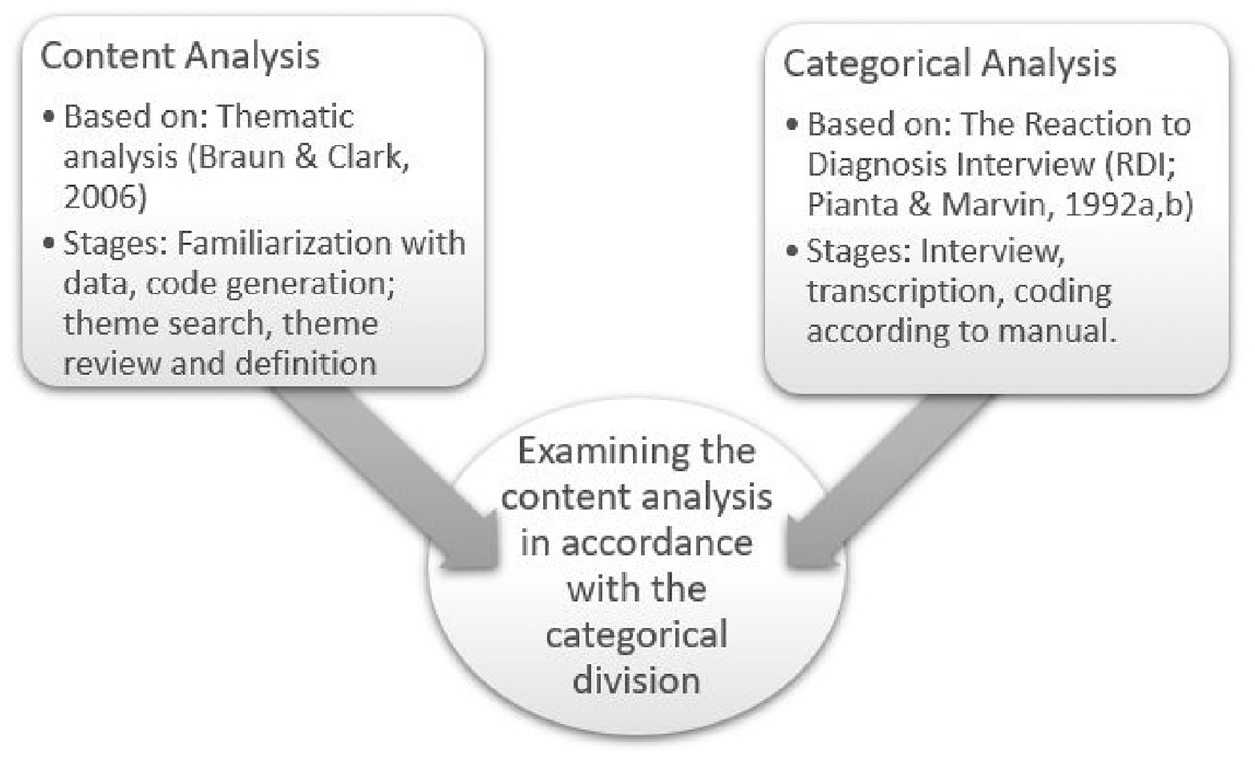
A visual representation of the analysis process.
Population and sampling
The study’s population was 40 mothers of children with special needs, between the ages of 23 and 48 (M = 34.55; SD = 6.94), all of whom had a child between the ages of 3 and 13 (M = 6.88; SD = 2.78). Mothers’ years of formal education ranged from 0 to 17 (M = 11.13; SD = 3.9). The children’s birth order ranged from first to eleventh (M = 3.13; SD = 2.42). All the children in the study were diagnosed with ASD, mental or physical developmental delay, hearing problems or Down Syndrome. All mothers were Bedouin Arab Muslims living in the southern region of Israel. Thirty-six mothers were married, two mothers were widows, and two mothers were divorced.
Measures
Categorical measure
The Reaction to Diagnosis Interview (RDI; Pianta and Marvin 1992) was used to assess the mothers’ resolution with the child’s diagnosis. The RDI is a semi-structured interview that is meticulously coded using a detailed manual, allowing categorization of mothers as resolved or unresolved with their child’s diagnosis. All interviews were conducted in spoken Arabic recorded and later transcribed by three female Muslim Arabic-speaking students.
Qualitative measure
The qualitative part of the research contained the semi-structured interview, in addition to a few more questions regarding parental coping with special needs children. According to Shkedi (2010), the semi-structured interview is the most appropriate method for documenting significant experiences. Therefore, we chose this tool based on the desire to understand the personal experiences of the mothers and the meaning they attach to their experiences (Shkedi 2003; Tzabar Ben Yehoshua 1997). The interviews were done by three female Muslim Arabic-speaking students through a recorded video call with the mother.
Data Analysis
The data analysis was done in two stages. First, data obtained from the RDI were coded into categories according to the manual of the RDI questionnaire. Coding of the recorded interviews was performed by two trained coders, using the RDI manual, in a holistic approach to coding the mothers’ resolution with their children’s diagnosis (see Pianta and Marvin 1992). Reliability between coders was reached on coding 20 percent of the sample. Coders had an inter-coder agreement of 95 percent on the resolved/unresolved classification. All disagreements or uncertainties were discussed and resolved by consensus. The categorical analysis gave us a clear view of the prevalence and distribution of mothers’ coping styles.
In the second stage, content analysis was applied using Braun and Clarke’s (2006) four-phase inductive thematic analysis. Initially, we read and reread the transcripts, to familiarize ourselves with mothers’ inner worlds and immerse ourselves in the data. During this phase, we identified and marked key statements related to the participants’ sociocultural context. In the second phase, involving initial code generation, each researcher separately assigned initial codes across all data sets. This was followed by a collaborative discussion, to determine which codes were perceived as the most significant vis-a-vis the research topic. This analysis helps to ensure that no important ideas or constructs are overlooked. Third, after coding all the data, the different codes were sorted into potential themes. This process involves a comparison of the codes in order to identify patterns and overarching themes (“theme search”). In the fourth phase, namely, theme review, the themes were reviewed and refined.
Research Procedure and Ethical Considerations
Participants were recruited through an online post written in Arabic and posted on appropriate Instagram and Facebook groups. Later the snowball method, where participants help recruit other participants, was used to increase numbers.
When the mothers gave their consent to participate in the interview, a time was set that was convenient for them. The general goal of the research was explained, and participants’ anonymity was assured. All names were replaced by consecutive numbers and pseudo names. The interviews were recorded and transcribed by the research assistants.
All mothers signed an informed consent form with the understanding that the research materials will be kept anonymous (using subject numbers and pseudonyms) and deleted upon completion of the data analysis. According to Shelsky and Alpert (2007), the documentation or identification of a phenomenon is always influenced by the attitude of the researcher. Accordingly, qualitative research is an attempt to reconstruct existing reality. In this study, every effort was made to accurately present the mothers’ voices and experiences. The study received an approval of ethics from the research committee of the Achva Academic College no. 065.
Results
Qualitative Results
This study traces the experiences of Bedouin mothers who had a child with special needs. Although no questions in the interview raised the issue of religious beliefs, all mothers brought up the topic of religion. The theme of religious processing of the child’s diagnosis was the most prominent yet both negative and positive contents arose regarding the subject.
A further analysis found that some mothers regarded God as empowering while others viewed God as diminishing. Sub-themes within the view of the empowering God included: acceptance of divine authority, faith, and privilege. The sub-themes within the diminishing God view included: submission to the will of God, punishment, and test (see Figure 2).
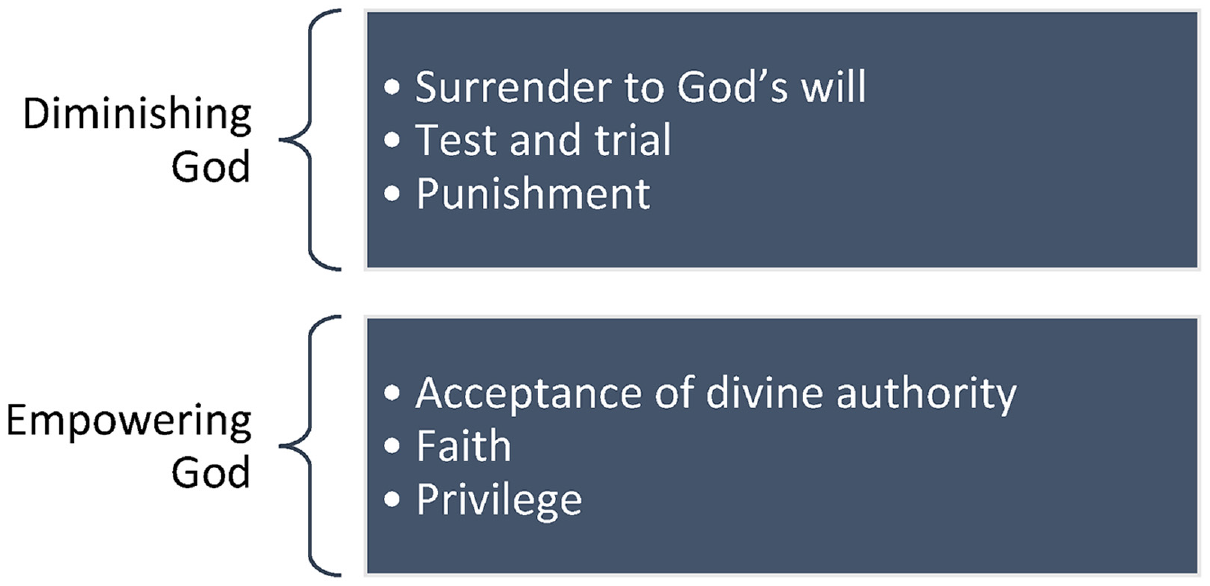
Map of themes as derived from data analysis.
The empowering God
Privilege
Some of the mothers stated that, in their view, God chose them to give them a child with special needs because he loves them. This idea is related to the traditional Islamic belief that if God loves his servant, he will send him challenges (“Abtalaa” in Arabic). Accordingly, the challenges that mothers face while raising a child with special needs is a gift from God (Abd al-Rahim 2022). In her interview, Shifaa shared this view: Shifaa: …I feel that my son is a great gift from the creator of the world… My son is one of the gifts that God gave me. The creator of the world does not place his servant in a certain situation except when he knows that his servant has the ability to handle this situation. That’s why God chose me because he knows I can handle a child who has autism.
Similarly, Areen stated: “…children are a gift from God. This child can lead his parents to heaven in the end… God loves us and chose us…” When we asked Miryam if she had any thoughts about her child’s disability, she responded: “…No, it didn’t occur to me…any thoughts on why I have a child like this. Because I know it’s from God. He loves me. That’s why he let me deal with this.”
Faith
Some of the mothers shared that they see their child’s diagnosis as divinely decreed destiny. For example, Mays, who was asked if she had thoughts about why she had a child with a diagnosis, answered: “Actually, I didn’t think about it. I just believed in fate. This is what God gave me. Even if the situation changed [for the better] more and more, we’ll say thank God, and if not, I am still satisfied….” Similarly, Dana answered to same question: I didn’t have such thoughts. It’s from God. It’s what God decreed for me to live… There was no similar case in our family… It’s true I was surprised at first and I asked for a miracle to happen to make the disease disappear, but I can’t do anything, everything is decreed by God, and thank God for everything he gives to us.
Acceptance of divine authority
A central pillar of Islam is that Allah (God) acts with complete wisdom and does not cause suffering in vain. Several mothers stated that they do not understand the wisdom behind their child’s diagnosis, but they are certain that everything happens for the best. Fatima shared: A person who believes accepts God’s will… It could be that this child is my way to gain heaven… I tell parents who have children with special needs that it is difficult, but it is also their son. This is how God created him because God tests. You are his servant so you believe that … there must be wisdom behind it… This is my way to win heaven. This is the best way to win heaven.
Samira similarly stated: I always say thank God for everything. This is what the Creator of the world planned for us. It could be that God wanted to test us and will test our patience. Everything that happens in life has behind it a message and wisdom from God. I say, thank God for everything, and this is what our God decreed. Perhaps our God wanted to test us and test our patience. Everything that happens in life has a message.
Our informants stated a belief that their children’s diagnosis was the will of God, which must be accepted. While they suggested a number of possible reasons for such a decree, they did not question it.
The diminishing God
Test and trial
According to Islam, believers are tested by God. If one accepts God’s will and thus withstands the test, that person will ultimately be rewarded with entrance to heaven. The Prophet Muhammad said: “The size of the giving is the size of the suffering, and if God loves a people and tests them, whoever is satisfied and receives, God will be satisfied with him, and if they are angry, God will be angry with them.” Some of the mothers shared that they felt God was testing them with their child’s diagnosis. Rowand said: “God tested me [to see] if I can raise him or not.”
Ahsan also said: I firmly believe in God. As they say, God does not give difficulties to a person unless he loves him. This means that if God gives us a certain difficulty, he also gives us patience… I do not for a moment doubt God or question his decision. I believe that God is testing me…
In a similar way, Samira stated: “If God gives suffering to His servant, a person should know that God is testing him and looking at him, how his patience will be tried by God. He should know that God is testing him and will see how he will be patient.”
The mothers expressed the belief that God is testing them, observing their response to their child’s diagnosis the accompanying challenges.
Punishment
Another aspect of the mothers’ religious processing related to a belief in divine punishment. From this point of view, God gave them a child with special needs as punishment for something that they had done wrong. According to Yosraa: “… I felt that I was a bad mother and God was punishing me. I felt that it was a punishment because I severed the connection with my parents in such a way….” And for Sarah: “… I kept asking myself, did I commit a sin that God is punishing me for, I would constantly turn to my husband and share it and start crying….”
Notably, mothers expressed feelings of guilt in the context of punishment. Some mothers specified what they believed they had done to be punished by having a child with special need while others described tormented attempts to identify this misdeed.
Surrender to God’s will
Mothers who mentioned surrender also expressed the belief that everything is from God, including their child’s illness. Although it may seem that they were angry at God, they could not express or acknowledge these feelings. Yet, these difficult feelings were evident in their manner and intonation. For example, Zena said: …In the end we have to accept what God gives us and reconcile with reality. What can we do except say thank you to God? That’s how life goes, there is nothing we can do. It was a very difficult experience. You can’t resist the will of God. The all-powerful God.
Sima expressed a similar feeling: “That’s what is decreed. This is nothing we can do about it… It is we who need to adjust ourselves, not he [the child] who has to adjust himself… We have no choice but to say thank you.”
The feeling of surrender was prominent, with mothers expressing a lack of control over their lives.
Categorical Results
The second research question assessed the proportion of resolved and unresolved mothers with the child’s diagnosis. We found 55 percent of mothers to be resolved with their child’s diagnosis and 45 percent of mothers unresolved.
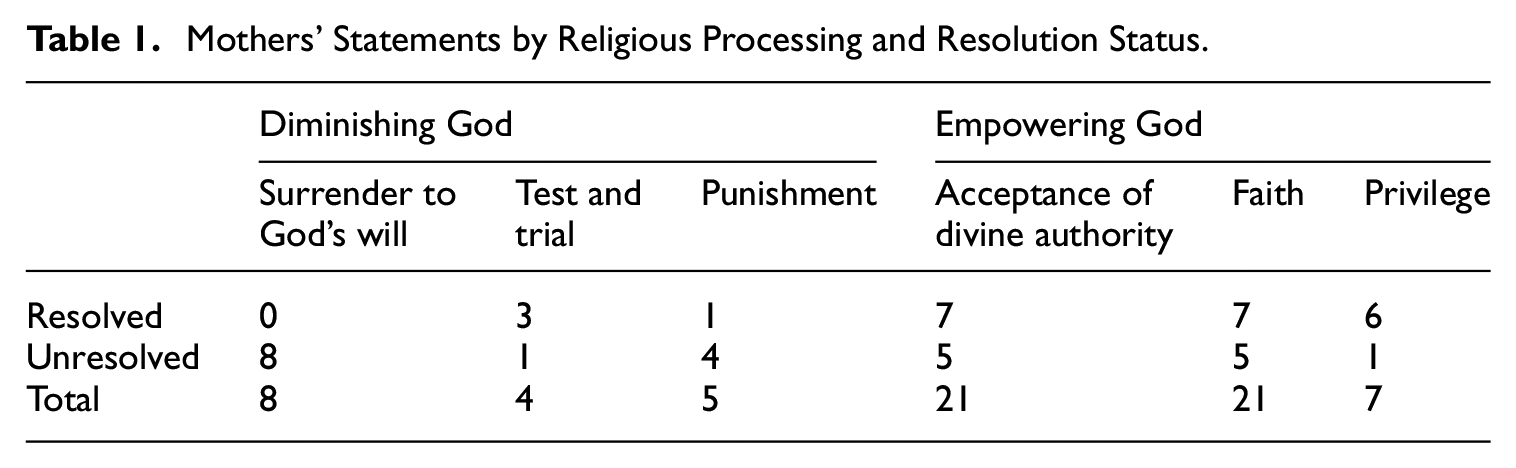
The third question aims to delve deeper into the main research topic and to examine possible differences in the religious processing of resolved and unresolved mothers. The results show that resolved mothers referred to an empowering God twenty times and to a diminishing God four times. By contrast, unresolved mothers referred to an empowering God eleven times and to a diminishing God 13 times.
The clearest difference is seen in the theme of surrender to divine will, which was not mentioned at all by the resolved mothers and was the main theme brought up by the unresolved mothers. Additionally, resolved mothers mentioned the theme of privilege six times whereas only one unresolved mother addressed that subject (see Table 1).
Mothers’ Statements by Religious Processing and Resolution Status.
Discussion
This research examined the experiences of Bedouin mothers of children with special needs by combining categorical and qualitative research methods. As Bedouin society is characterized by traditional traits, the study focused on mothers’ religious processing concerning their child’s diagnosis with special needs, in order to deepen the theoretical and clinical understanding of the subject.
Two conceptual perspectives form the core of this research. The first is parental resolution with the diagnosis of their child’s special needs, as conceptualized by Marvin and Pianta (1996). The second is positive versus negative religious processing (Hebert and Koulouglioti 2010). This study thus intertwines three strands—maternal resolution status, positive versus negative religious processing, and cultural contextualization.
Notably, an overwhelming majority of the participants referred to religious content when processing their experience of parenting their child with special needs, even though no direct question addressed this topic in the interview. This is consistent with the existing literature, which indicates that Bedouin mothers incorporate religion into their everyday lives, and that belonging to a traditional society added an aspect of religious processing to the experience of being a mother to a child with special needs (Mohamed Hussin, Guàrdia-Olmos, and Aho 2018).
Mothers’ Positive and Negative Religious Perceptions
While most respondents mentioned religious processing, our findings show a variation within mothers’ religious maternal coping strategies. Some perceived God as an empowering entity, while others viewed God as diminishing. Both views can be explained through previous literature and an understanding of Bedouin culture (Abd al-Rahim 2022; Rusdi 2017).
Islam emphasizes the acceptance of divine will (Rusdi 2017). According to the results of the study, it seems that these concepts occupy a significant place in the inner world of Bedouin mothers who have a child with special needs. Many of the mothers described their child’s diagnosis as “Qadaa wa Qadr,” namely, fated to be. The belief in divinely ordained destiny is a pillar of Islamic faith (Allahidan 2018). Believers are expected to accept God’s will, whatever that may be (Rusdi 2017(. The mothers who spoke of accepting God’s will emphasized that everything that happens in life is a message from God, and that the child’s diagnosis will benefit them in this life as well as in the world to come.
Although receiving a diagnosis of a child’s special needs is a traumatic experience (Shenaar-Golan 2017), our findings indicate that the positive religious processing of Bedouin mothers correlated with an acceptance of the diagnosis and a sense of peace and faith. Studies have shown that, for believers, faith functions as a source of stability in an uncertain world (Mohamed Hussin et al. 2018) and is used as a coping strategy to navigate life’s stressors) Achour et al. 2016). Notably, theories on trauma and posttraumatic resilience also emphasize the importance of a sense of stability and inner strength (Zhang et al. 2015).
As mentioned above, in contrast to the mothers who perceived God in a positive manner, a substantial number of the mothers in this study expressed a negative view of God. These mothers saw their child’s diagnosis as a divine test. Only if they passed the test would they be granted paradise in the afterlife. According to Abd al-Rahim (2022), the “Abatalaa” is a trial through which God assesses whether you have been sufficiently devout. Impious behavior results in divine punishment. Some of the mothers in our study regarded their child’s diagnosis as punishment from God for their own mistakes. It seems that the experience of parenting a child with special needs is interpreted and religiously processed in various ways by mothers, in ways that point to a connection between emotional and religious coping.
Parental Resolution and Religious Processing
Marvin and Pianta (1996) characterized resolution as the cessation of active grieving and a shift towards current and future realities. Unresolved parents exhibit a lack of these processes and employ a coping style that manifests enduring repercussions of trauma. Within our sample, there was an almost even split as 55 percent of the mothers were resolved with the child’s diagnosis and 45 percent were unresolved.
Previous studies have shown that parents who have not achieved resolution regarding their child’s special needs diagnosis tend to experience guilt and sadness (Krstić et al. 2015) and exhibit a prolonged preoccupation with bereavement (Barak-Levy and Paryente 2023). We found that unresolved mothers experience similar feelings, conveyed in their comments on the role of God in the child’s diagnosis. While their initial response reflected the urge to accept their fate, subsequent feelings of sadness and helplessness emerged. These findings attest to an internal conflict between a traditionally endorsed acceptance of divine will and a range of other, less culturally accepted, feelings.
An in-depth analysis of religious processing among resolved and unresolved mothers found that the former group characterized God as empowering 20 times and as diminishing four times while the latter group characterized God, in quite an even split, as both empowering and diminishing. This was the most prominent in the theme of surrender to God’s will, which was not mentioned at all by resolved mothers. A number of the resolved mothers described a sense of privilege, that their special child was a gift given to them by God. This theme was only mentioned once by an unresolved mother.
The current research sheds light on how maternal resolution regarding a child’s special needs diagnosis interacts with mothers’ perception of God. The unresolved mothers in our study exhibited an inner conflict, characterizing God as both empowering and diminishing. In line with previous research (Hebert and Koulouglioti 2010; Heiman 2002), their mixed perception of God made it challenging for them to use religion as a source of support. It is also possible that mothers’ unresolved feelings concerning their child’s diagnosis led to anger toward God. Moreover, the idea of surrendering to divine will might have left mothers with a sense of anxiety and fear of punishment. In a highly religious society, such feelings are likely to be difficult to deal with. Thus, the turmoil experienced by these mothers was mirrored in the duality of their religious processing.
The resolved mothers achieved an emotional balance that is also apparent in their view of God. As this is not quantitative research, we cannot point to a cause-and-effect relationship. Many studies have examined the ways in which religion helps believers to find stability in an uncertain world (Alemdar et al. 2023; Callender et al. 2022; Loue 2017; Mohamed Hussin et al. 2018). Mothers who perceive God as empowering and their religion as a means of support may rely on that strength when coping with their child’s diagnosis. Yet, the results indicate that parents with a positive outlook tend to have a positive perception of religion and cope more effectively with the challenges of raising children with special needs. Thus, it seems that mothers can strengthen their resilience by adopting a positive perspective on life’s challenges.
Limitations and Future Research
This study had several limitations. First, the inclusion of mothers (but not fathers) as participants stemmed from challenges of accessibility and a reluctance among Bedouin fathers to participate in research. Fathers’ representation would have enhanced the study’s gender balance regarding both inquiry and outcomes. Future research should include the paternal perspective and examine possible correlations between fathers’ resolution status and their religious processing, taking into account cultural considerations. As an extension of the current study, future work could examine the association of these variables in various societies as well as examining comparative analysis between these cultures. Specifically, this research did not investigate the place of maternal education regarding resolution status. Yet, the average education level of the Bedouin mothers that participated in this study was lower than even 12 school years (M = 11.13) with a few mothers reporting no formal education at all. It may, therefore, benefit future research to incorporate an evaluation of levels of education in different cultures and its associations to resolution and coping styles.
Another limitation was that the principal researchers belong to the Jewish Israeli sector, whereas the study participants belong to the Muslim Bedouin sector. This created the potential risk of a cultural gap that might have hindered the researchers’ understanding of the participants’ responses. To mitigate this risk, a research assistant of Israeli-Arab background was enlisted to aid in conducting interviews and analyzing the data.
Conclusion and Implications
This article examined Bedouin mothers’ resolution status in the context of their religious processing and cultural background. Bedouin society is highly traditional. Thus, healthcare and educational staff should take into account the influence of religion on mothers as they cope with their child’s diagnosis. Cooperation between the professional staff and the religious figures in the community can help to create a secure and synchronized policy to promote an effective support system that corresponds to Bedouin mothers’ personal and religious needs.
Supplemental Material
sj-pdf-1-rrr-10.1177_0034673X241259147 – Supplemental material for Maternal Resolution and Religious Processing in Muslim Bedouin Mothers of Children with Special Needs
Supplemental material, sj-pdf-1-rrr-10.1177_0034673X241259147 for Maternal Resolution and Religious Processing in Muslim Bedouin Mothers of Children with Special Needs by Yael Barak Levy, Bilha Paryente and Adan Kabha in Review of Religious Research
Footnotes
Declaration of Conflicting Interests
The author(s) declared no potential conflicts of interest with respect to the research, authorship, and/or publication of this article.
Funding
The author(s) received no financial support for the research, authorship, and/or publication of this article.

Supplemental Material
Supplemental material for this article is available online.
References
Supplementary Material
Please find the following supplemental material available below.
For Open Access articles published under a Creative Commons License, all supplemental material carries the same license as the article it is associated with.
For non-Open Access articles published, all supplemental material carries a non-exclusive license, and permission requests for re-use of supplemental material or any part of supplemental material shall be sent directly to the copyright owner as specified in the copyright notice associated with the article.
