






Abstract
Catholic priestly formation constitutes the main context for the human, spiritual, intellectual, and pastoral development of seminarians. However, the perceived effectiveness of the formative process and its contributions to seminarians’ commitment to their vocational path remain underexplored. Grounded on Self-Determination Theory and Meaning in Life tridimensional model, this study seeks to examine the relationships between perceived effectiveness of formation process (human, spiritual, intellectual, and pastoral), basic psychological needs (BPN; autonomy, competence, and relatedness), and meaning in life (i.e., coherence, purpose, and significance). Data were collected through online questionnaires and analyzed using Structural Equation Modeling (SEM) in a sample of 549 Brazilian seminarians, aged 17 to 57 years. Findings showed that spiritual, intellectual, and pastoral formation favor the fulfillment of BPN, whereas human formation did not show a statistically significant effect. Furthermore, the fulfillment of BPN is the mechanism through which the perceived effectiveness of the formation process contributes to the seminarians’ development of meaning in life. The study offers relevant theoretical and practical implications, providing evidence-based insights to improve formative processes in Catholic seminaries while reducing the psychological distress and disengagement from vocational paths.
Keywords
Introduction
Human development encompasses cognitive, emotional, and relational competencies key to promoting personal growth and resilience (Coulombe, Hardy, and Goldfarb 2020; Cerqueira Bastos dos Santos and Moises Barreto dos Santos 2024). Prior research (e.g., Liu et al. 2025; Schnettler et al. 2020; Zhang, Feng et al. 2022) indicates that a sense of purpose, connectedness, and a growth mindset can enhance students’ motivation, self-efficacy, and overall well-being, leading to better educational outcomes and preparing them for future challenges.
Educational settings are expected to create environments likely to promote human development. The Catholic seminaries are unique educational settings that aim to deliver a formation that fosters human growth. Concretely, the latter institution is expected to provide a formation that fosters holistic growth, preparing students for ministry by developing their human, spiritual, intellectual, and pastoral dimensions (Brennan 2009; Lajiness 2009; Lorca-Rodríguez 2017). However, prior research and data from the practice indicate persistent challenges, such as dropout from the priestly path (Brown 2020), difficulties in evaluating formative practices (Adubale and Aluede 2014; Blanchette 2009; Fischer 2010; Juma, Van Der Merwe, and Du Toit 2017) and structural issues such as criteria for student admissions (Feathergill 2010) and the pursuit of more efficient educational models (Oakley 2017).
Beyond these challenges, prior evidence alerts that the formative process itself can have negative implications for seminarians’ vocational trajectories. Therefore, literature has emphasized the need to review curricula, strengthen admissions assessments (Lassi et al. 2025), and prepare educators (Hernández 2019). However, research assessing the effectiveness of formative processes is still limited (e.g., Hernández 2019; Mézerville 2000). We understand formative effectiveness as the broad range of content knowledge, competencies, attitudes, and behaviors likely to instill the intended educational goals and foster student development.
The present study seeks to addresses this literature gap, while integrating the Self-Determination Theory (Ryan and Deci 2000b) and the multidimensional model of meaning in life (Martela and Steger 2016, 2023) to examine to what extent Catholic seminarians perceptions of how formation develops across the four formative dimensions (i.e., human, spiritual, intellectual, and pastoral) facilitates the satisfaction of basic psychological needs (autonomy, competence, relatedness) while shaping seminarians meaning in life (coherence, purpose, significance). Findings are expected to contribute to the development of more effective educational strategies, thereby promoting a solid formation adapted to the needs of the Church and society. The findings are expected to contribute to the development of more effective educational strategies, in line with current challenges, thus promoting a more solid formation adapted to the needs of the Church and society.
Literature Review
Self-Determination Theory
Self-Determination Theory (SDT) provides a valuable framework for addressing challenges in seminary Catholic education and priestly formation (e.g., dropout rates, educational challenges, and admissions requirements). According to basic psychological needs theory (BPNT), individuals have a limited set of basic psychological needs (i.e., autonomy, competence, and relatedness) that impact psychological growth and well-being (Ryan and Deci 2000b, 2021b, 2024; Jadrić, Koludrović, and Ercegovac 2025). Prior research has shown that need satisfaction predicts adjustment, motivation, life satisfaction, and sense of meaning in life (e.g., Martela, Ryan, and Steger 2018; Van den Broeck et al. 2016; Wang et al. 2024). Conversely, unmet needs heighten the risks of maladjustment and dropout (Ryan, Deci, and Vansteenkiste 2016; Souza 2023).
Autonomy refers to the desire for self-regulation and the experience of being the causal agent of one’s own actions. When supported, autonomy fosters intrinsic motivation, persistence, and achievement (Vansteenkiste, Ryan, and Soenens 2020; Vansteenkiste, Soenens, and Ryan 2023). Competence reflects the desire to feel effective in one’s activities and able to master challenges, which enhances engagement and performance while protecting against burnout (Bradshaw et al. 2023; Coxen et al. 2023). Relatedness involves the development of affective bonds and a sense of feeling connected to other people, which strengthens identity, resilience, and well-being (Martela and Ryan 2023).
Meaning in Life
Building on SDT, which explains how the satisfaction of autonomy, competence, and relatedness fosters motivation and well-being, the conceptual model of meaning in life offers a complementary perspective by addressing the outcomes of needs satisfaction. Meaning in life has been a subject of interest to researchers, given its strong associations with well-being, motivation, and resilience (Czekierda et al. 2017; Manco and Hamby 2021; Martela and Steger 2016, 2023; Santana et al. 2025; Steger et al. 2006; Ward and King 2017).
Following Martela and Steger (2023), we understand meaning in life as a three-dimensional model comprising coherence, purpose, and significance. Coherence, a cognitive component, refers to the need to understand and make sense of the events that comprise life. Coherence supports resilience by helping individuals interpret challenges as part of a meaningful narrative (Heintzelman and King 2014). Purpose is a motivational dimension that involves valued goals and aspirations, directing one’s behavior (Martela and Steger 2016). Purpose provides continuity and direction, sustaining engagement even in the face of difficulties (McKnight and Kashdan 2009). Significance focuses on the value, worth, and importance given to one’s life. Results from individuals’ judgment that life is inherently valuable and worth living; moreover, significance is strongly associated with psychological well-being and a positive orientation toward life (Martela and Steger 2016). Empirical evidence (e.g., George and Park 2016; Martela and Ryan 2023) has shown that higher levels of coherence, purpose, and significance are associated with stronger motivation, reduced stress, and better psychological adjustment.
Formation in Catholic Seminaries
Priestly formation is organized around four interrelated dimensions, as outlined in official documents such as “Ratio Fundamentalis Institutionis Sacerdotalis” (2016) and “Pastores Dabo Vobis” (1992). The former seeks to respond to the new realities and challenges of the contemporary Church, outlining the key principles for priestly formation. The latter is an Apostolic Exhortation that emphasizes integral formation, while highlighting the need to develop spirituality, theological knowledge, and pastoral skills.
Human Dimension
The human dimension of priestly formation emphasizes the personal and emotional development of seminarians as balanced individuals capable of establishing healthy relationships (Plante, Manuel, and Tandez 1996; Sumampong, Omega, and Arpilleda 2024). This dimension seeks to cultivate self-knowledge and emotional maturity (De Gregorio, Vistocco, and Dellagiulia 2022), a responsible integration of sexuality within the celibate commitment (Gregoire and Jungers 2004), as well as other skills (e.g., ability to listen) necessary to deal with the demands of the ministry (Juma et al. 2017; Keating 2008; Strange 2015). Additionally, training focused on this dimension is expected to promote debate among seminarians on cultural diversity and the complexity of individual experiences, preparing them to respond adaptively to contemporary pastoral challenges (Congregation for Catholic Education 1985; John Paul II 1992).
A strong human formation prepares seminarians to develop empathy and compassion and face the complexities of pastoral ministry with moral and affective maturity (Bárcenas and Manzanares 2013; Benelli 2008, 2019a, 2019b; Gregoire and Jungers 2004). To this aim, the role played by multidisciplinary training teams (including psychologists, spiritual directors, and trainers) is key (Juma et al. 2017; Musslewhite, Wagner, and Lanuzga 2020) in identifying developing interpersonal skills (e.g., effective communication, conflict resolution, and trust-building, Francis and Crea 2021; Glaz 2016; John Paul II 1992; Kasowski, Kloch, and Przybysz 2022; Weber 2009) and addressing emotional difficulties, immaturity, and sexual problems, among other challenges (Congregation for Catholic Education 1985; Francis and Crea 2021; Kasowski et al. 2022).
Spiritual Dimension
The spiritual dimension integrates the practice of prayer, sacramental life, and ecclesial communion. This dimension sustains all spheres of priestly life and ministry while connecting the human, pastoral, and intellectual dimensions. Training is focused on fostering virtues, values, and spiritual maturity to help seminarians grow a solid foundation for their vocation and ministry (Davis 2013; Estevez 2011; Steiner 2011).
One key element of this dimension is spiritual accompaniment, focused on the development of priestly spirituality (Aragon 2023; Connors 2024; Julia 2025; Solmayor and San Jose 2025). Guided by a spiritual director, every student enrolls in a spiritual direction process, a safe space for exploring spiritual experiences and self-knowledge, which is helpful for discernment and personal growth (Cameli 2013; De Kock 2024; Lilles 2013; Walz 2021). This process supports seminarians’ efforts to pursue a spiritual path while enabling them to respond authentically to their vocational call (Carroll 2012; Connors 2024; McGrath 2000). Literature (e.g., Abraham 2020; Keating 2008) has highlighted the relationships among spirituality, psychology (Chukwurah 2023), and pastoral theology, emphasizing the crucial role of the spiritual dimension in the development of priestly identity.
Intellectual Dimension
The intellectual dimension of priestly formation emphasizes the study of philosophy and theology as the foundations of critical and reflective reasoning. Philosophy subjects provide the critical and analytical tools for understanding human existence, while Theology courses allow for a deeper understanding of the Christian faith, enabling seminarians to integrate theory and pastoral practice with doctrinal coherence (Abraham 2020; Benelli 2008; John Paul II 1992; Lajiness 2009; Walz 2021).
This dimension aims to train seminarians for teaching and preaching by delivering theological content, discussing tradition, and matching pastoral practice with the Church’s doctrine (Pawlina 2021). Intellectual training prepares future priests to articulate their faith in response to contemporary social and cultural challenges and to merge spiritual growth with evangelization. Importantly, intellectual development is understood as a lifelong process, extending beyond ordination to ensure that priests remain capable of responding to new pastoral, social, and ecclesial contexts (Brennan 2009; John Paul II 1992).
Pastoral Dimension
The pastoral dimension aims to prepare seminarians to grow as competent pastoral leaders, capable of understanding and guiding their communities. Training emphasizes the integration of philosophical and theological knowledge with practical ministry skills, such as preaching, sacramental administration, and spiritual accompaniment (Benelli 2006, 2007; Estevez 2011; Lipiec 2018). Importantly, Catholic Church official guidelines emphasize the need to balance theory with practice, ensuring that pastoral training addresses contemporary needs (Pastores Dabo Vobis 1992; Ratio Fundamentalis Institutionis Sacerdotalis 1985). Pastoral formation is operationalized through enrollment in practical experiences and internships in parishes, hospitals, and other institutions, where seminarians engage with pastoral and social reality, under the supervision of experienced priests (Chiclana-Actis 2019; de Paula and do Nascimento 2018; Ortiz and McGlone 2012). These experiences foster the development of applied knowledge and pastoral sensitivity, helping in vocational discernment while equipping future priests to respond to the needs of the faithful in a context of globalization, religious pluralism, and social change (Ayegwalo and Ikhianosime 2023; Couturier 2009; Davis 2013). Pastoral formation is a continuous process that extends after ordination and unifies the human, spiritual, and intellectual dimensions (Benelli 2008). Training involves ongoing monitoring and evaluation of critical and sensitive areas (e.g., refugees, flood victims; Benelli 2008; Brown 2020; Lount and Hargie 1998; Mundy, Fredericks, and Mackey 1972), being an integral part of priestly formation.
Data and Methods
The Current Study
Data from the National Conference of Brazilian Bishops (CNBB-Oeste1 2021) indicate that priestly formation in Brazil is carried out through approximately 120 major seminaries and numerous minor seminaries comprising more than 8.000 seminarians across diocesan and religious institutions. Seminarian formation spans through four stages as follows: propaedeutic, focused on supporting spirituality and vocational discernment; philosophical, including courses and conferences emphasizing critical reflection and personality development; theological, comprised of courses and spiritual accompaniment activities aiming to provide doctrinal and pastoral foundations; and pastoral, offering seminarians opportunities to integrate the other formation dimensions into practice through supervised ministerial practice (CNBB 2018).
This structure reflects the Catholic church’s concern in delivering a holistic development; however, there is limited data on how the different dimensions (i.e., human, spiritual, intellectual, and pastoral) effectively contribute to seminarians’ development and psychological well-being. Literature has primarily analyzed priestly formation through theoretical commentary and discussion rather than through empirical studies assessing the formation process. The latter, to the best of our knowledge, are limited. For example, Del Mundo, Romboyon, and Elicay (n.d.) note that human formation appears to lag behind the other dimensions of the formation process (e.g., spiritual, intellectual, pastoral) and discuss the implications of this proposition. Moreover, recent reflections on priestly formation (e.g., Brown 2023; Casanova 2024; Colombo 2024; Ho 2025; Plante and Peng 2024) suggest that the formation delivered needs to be dynamic and responsive to cultural change, incorporating insights from related fields of knowledge (e.g., psychology, sociology, and pedagogy). However, no data were provided to support these claims.
The present study contributes to bridging the gap between theology and psychology. Current research is grounded in the Self-Determination Theory (Ryan and Deci 2000a, 2000b, 2021a) and the multidimensional model of meaning in life (Martela and Steger 2016) as complementary frameworks for analyzing seminary education. Concretely, this study aims to analyze the extent to what seminarians’ perception of the effectiveness of the formation delivered in the seminary (i.e., human, spiritual, intellectual, and pastoral) is related to the satisfaction of their basic psychological needs (autonomy, competence, and relationship with others) and meaning in life (in its three dimensions: purpose, coherence, and meaning). As outlined in Figure 1, it is hypothesized that perceptions of formative effectiveness in the four dimensions influence the meaning in life by satisfying basic psychological needs.
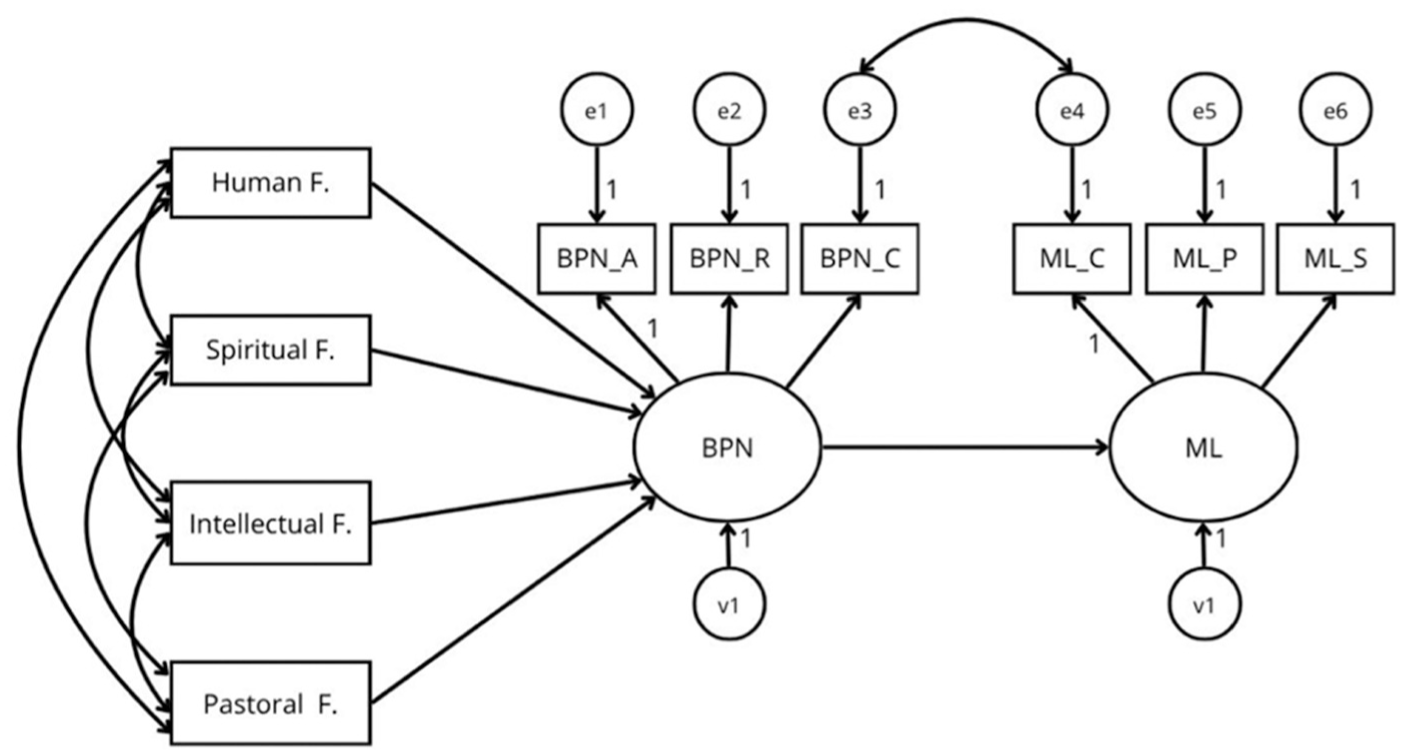
Adjusted structural equation model.
Participants
A total of 549 seminarians (response rate, 76%) with ages ranging from 17 to 57 (M = 24.99; SD = 5.34) agreed to participate in the research. The majority were enrolled in diocesan seminaries (71.4%). Regarding the stage of formation, most participants were attending configuration stage (52%) or discipleship stage (43%), with a small percentage attending either propaedeutic stage (4%) or vocational synthesis stage (1%).
Measures
Perceived formative effectiveness was assessed using a 25-item inventory developed specifically for this study (Formative Effectiveness Inventory). The items were developed based on two crucial official documents: the Ratio Fundamentalis Institutionis Sacerdotalis (1985, 2016) and Pastores Dabo Vobis (1992). Participants were asked to rate the extent to which they agreed that the formation provided in the seminary promoted the development of key skills and competencies across four formative dimensions (human, spiritual, intellectual, and pastoral). Items were answered on a 4-point Likert scale, where higher scores indicate a greater perceived contribution of seminary formation to seminarians’ personal, spiritual, academic, and pastoral growth. Items were qualitatively reviewed by a panel of experts (i.e., researchers, seminary formation board members, and priests).
The feedback was integrated, and items were adjusted accordingly. A pilot test was conducted with a pool of seminarians (N = 30) to assess the clarity, relevance, and measurement scale. Insights from seminarians were integrated to adjust the protocol and items accordingly. Participants responded on a 4-point Likert scale, where higher scores indicate a greater perceived contribution of seminary formation to personal, spiritual, academic, and pastoral growth. In this study, the scale’s reliability was acceptable for all the dimensions (Human: α = .80, ω = .80; Spiritual: α = .76, ω = .76; Intellectual: α = .74, ω = .75; Pastoral: α = .66, ω = .67). Construct validity was supported by the good model fit on confirmatory factor analysis χ2(269) = 616, p < .01, SRMR = 0.04, CFI = 0.91, TLI = 0.90, RMSEA = 0.04, 90% CI (0.04, 0.05).
The Basic Psychological Needs scale was adapted from that developed by Chen et al. (2015). Comprises 6 subscales (24 items), answered on a 5-point Likert scale (ranging from not true to completely true). In this study, the scale’s reliability was acceptable for all the dimensions (Autonomy: α = .90, ω = .90; Relatedness: α = .90, ω = .90; Competence: α = .93, ω = .93). Construct validity was supported by the good model fit on confirmatory factor analysis χ2(51) = 145, p < .01, SRMR = 0.02, CFI = 0.99, TLI = 0.98, RMSEA = 0.05, 90% CI (0.04, 0.06).
The Meaning in Life was measured using an 11-item scale adapted from Martela and Steger (2023). The scale comprises three dimensions: coherence, purpose, and significance. Items were answered on a 5-point Likert scale, ranging from not true to completely true. In this study, the scale’s reliability was acceptable for all the dimensions (Coherence: α = .92, ω = .92; Purpose: α = .90, ω = .91; Significance: α = .87, ω = .87). Construct validity was supported by the good model fit on confirmatory factor analysis χ2(41) = 126, p < .01, SRMR = 0.02, CFI = 0.99, TLI = 0.98, RMSEA = 0.05, 90% CI (0.04, 0.06).
Sociodemographic data included age, type of seminary (i.e., Diocesan or Religious), period of study, and higher education course.
Procedures
The project was approved by the Ethics Committee for Research in Social Sciences and Humanities of the University of Minho (CEICSH 056/2024). All the scales were adapted to the Brazilian Portuguese language and context using translation and back-translation procedures. Questionnaires were delivered via an online platform (Qualtrics®) to facilitate nationwide dissemination and accessibility. Bishops and the vocation directors of various seminaries across the country were contacted to help disseminate the link and the QR code among seminarians. The data collection process was preceded by informed consent. The ethical protocols adopted followed the national and international guidelines for research with human beings. Data were treated, processed, and analyzed using SPSS and the AMOS module.
Data Analysis
A structural equation model (SEM) was developed to examine the study’s hypothesis. The model includes four independent observed variables (Human F., Spiritual F., Intellectual F., and Pastoral F.) and two dependent latent variables (BPN and ML; see Figure 2). Data from the study were processed as follows. First, the statistical properties of the variables included in the model (i.e., means, standard deviations, skewness, and kurtosis) were analyzed, along with the correlation matrix and missing values. According to the criteria by Gravetter and Wallnau (2014), the distribution of the variable scores can be considered normal (both skewness and kurtosis are within ±1). There were a few missing values (0.86%), and the maximum likelihood procedure was used to impute them.
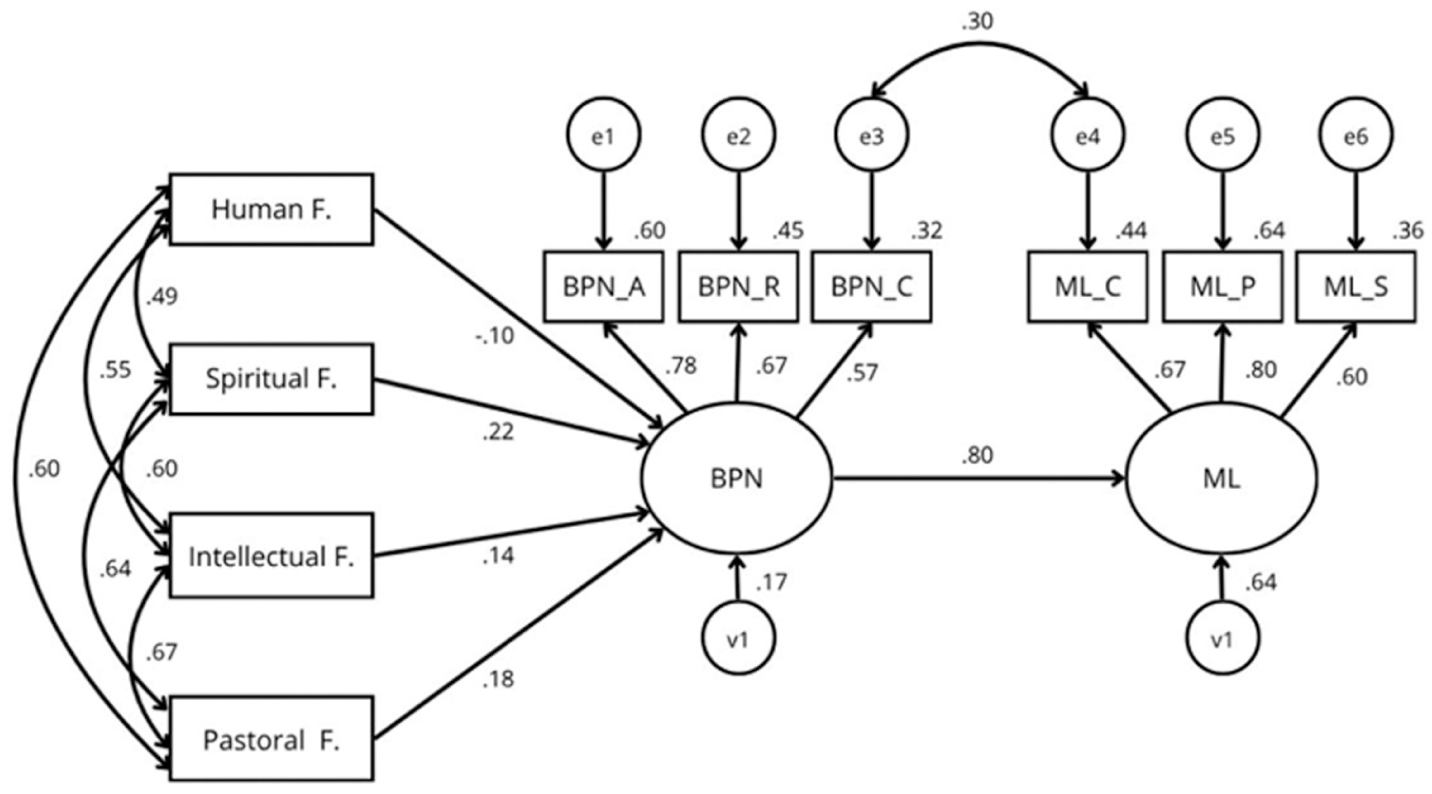
Final structural equation model.
The model was fit using the AMOS 22 software (Arbuckle 2013). The results of the SEM analyses were evaluated using commonly accepted criteria, including Chi-square, TLI, CFI, SRMR, and RMSEA. Evidence of a good fit is observed when χ2 has p > .05, AGFI and TLI ≥ .90, CFI ≥ .95, and RMR and RMSEA ≤ .06.
To address the required re-specifications of the model, the selection of the best-fitting model followed the AIC and BIC statistics (the best model shows the lowest AIC and BIC values). The effect sizes of the regression coefficients corresponding to the study’s second objective were evaluated using the f2 criterion (f2 ≥ .02 for a small effect, f2 ≥ .15 for a medium effect, and f2 ≥ .35 for a large effect).
Results
Descriptive and Correlational Statistics
Table 1 presents the descriptive statistics of the variables included in the SEM. The correlations are statistically significant in all cases except for the relationship between human formation and the variables competence and coherence. All skewness values are negative, and below 1.00, and kurtosis values, although exceeding 1.00, are below 3.00. Consequently, we can conclude that the distribution of the variables is approximately normal.
Descriptive Statistics and Pearson Correlations.
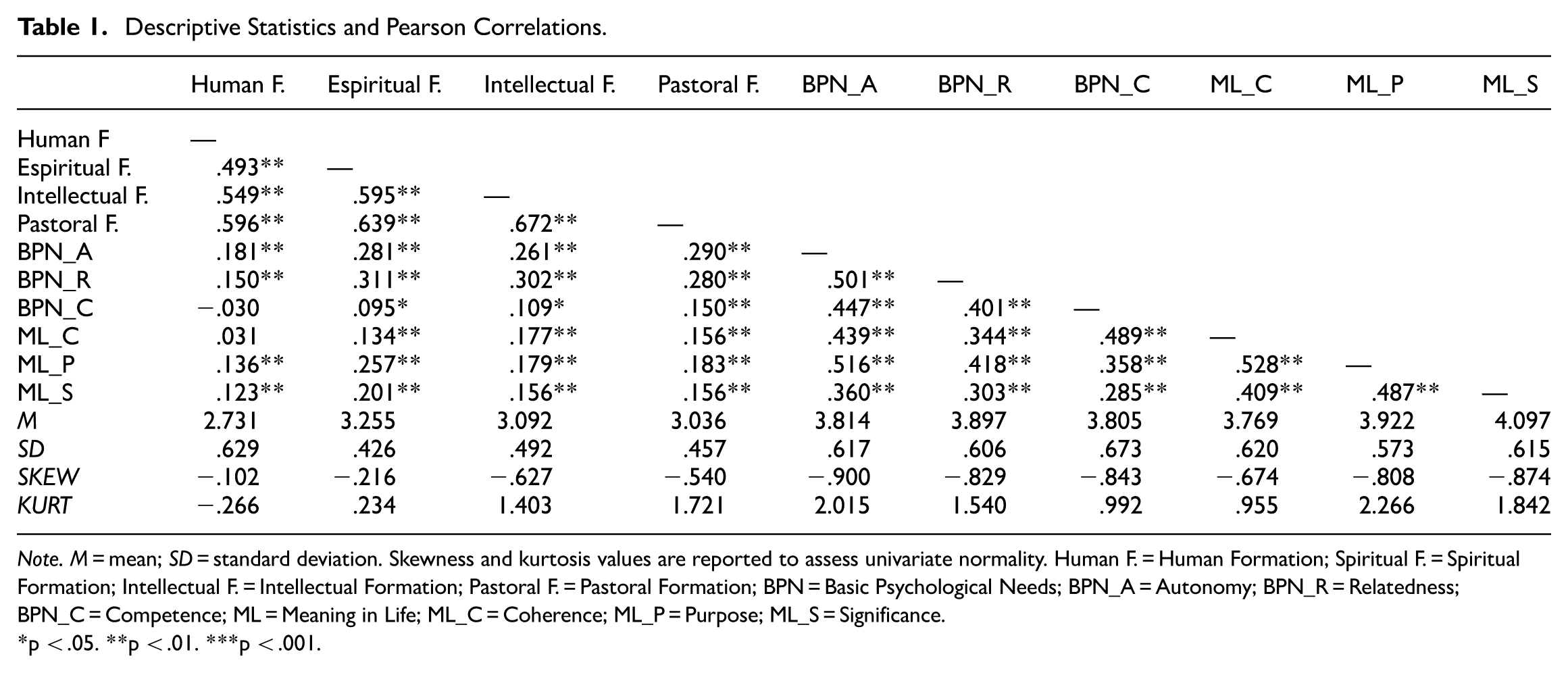
Note. M = mean; SD = standard deviation. Skewness and kurtosis values are reported to assess univariate normality. Human F. = Human Formation; Spiritual F. = Spiritual Formation; Intellectual F. = Intellectual Formation; Pastoral F. = Pastoral Formation; BPN = Basic Psychological Needs; BPN_A = Autonomy; BPN_R = Relatedness; BPN_C = Competence; ML = Meaning in Life; ML_C = Coherence; ML_P = Purpose; ML_S = Significance.
p < .05. **p < .01. ***p < .001.
Structural Equation Model Fit
The model presented in Figure 2 fits the data set. Results yield fit indices indicating an adequate model fit (χ2 = 96.802 [p = .001], AGFI = 0.930, TLI = 0.945, CFI = 0.966, RMR = 0.016, and RMSEA = 0.067). However, upon reviewing the modification indices and residuals, we learned the need to incorporate the correlation estimation between the measurement errors e3 and e4 (see Figure 2). Following this adjustment, the model fit improved significantly, showing optimal fit indices (χ2 = 59.615 [p = .001], AGFI = 0.958, TLI = 0.973, CFI = 0.984, RMR = 0.012, and RMSEA = 0.047), which represents a notable improvement over the initial model (ΔAIC = 35.187, ΔBIC = 30.878). The final adjusted model is presented in Figure 2.
Model Evaluation
Table 2 and Figure 2 provide the statistical indicators of the final SEM model, including regression coefficients (direct effects), factorial weights, variances, and covariances. Overall, the findings confirm that training activities, particularly those related to spiritual, pastoral, and intellectual formation, have a positive impact on the satisfaction of basic psychological needs (all three with a small effect: pastoral formation [f2 = 0.054], intellectual formation [f2 = 0.038], spiritual formation [f2 = 0.078]), which in turn influence meaning in life (with a large effect: f2 = 0.434). The model explains 17.1 percent of the variance in basic psychological needs and 64.1 percent of the variance in meaning in life.
Fit Statistics of the Final SEM Model.
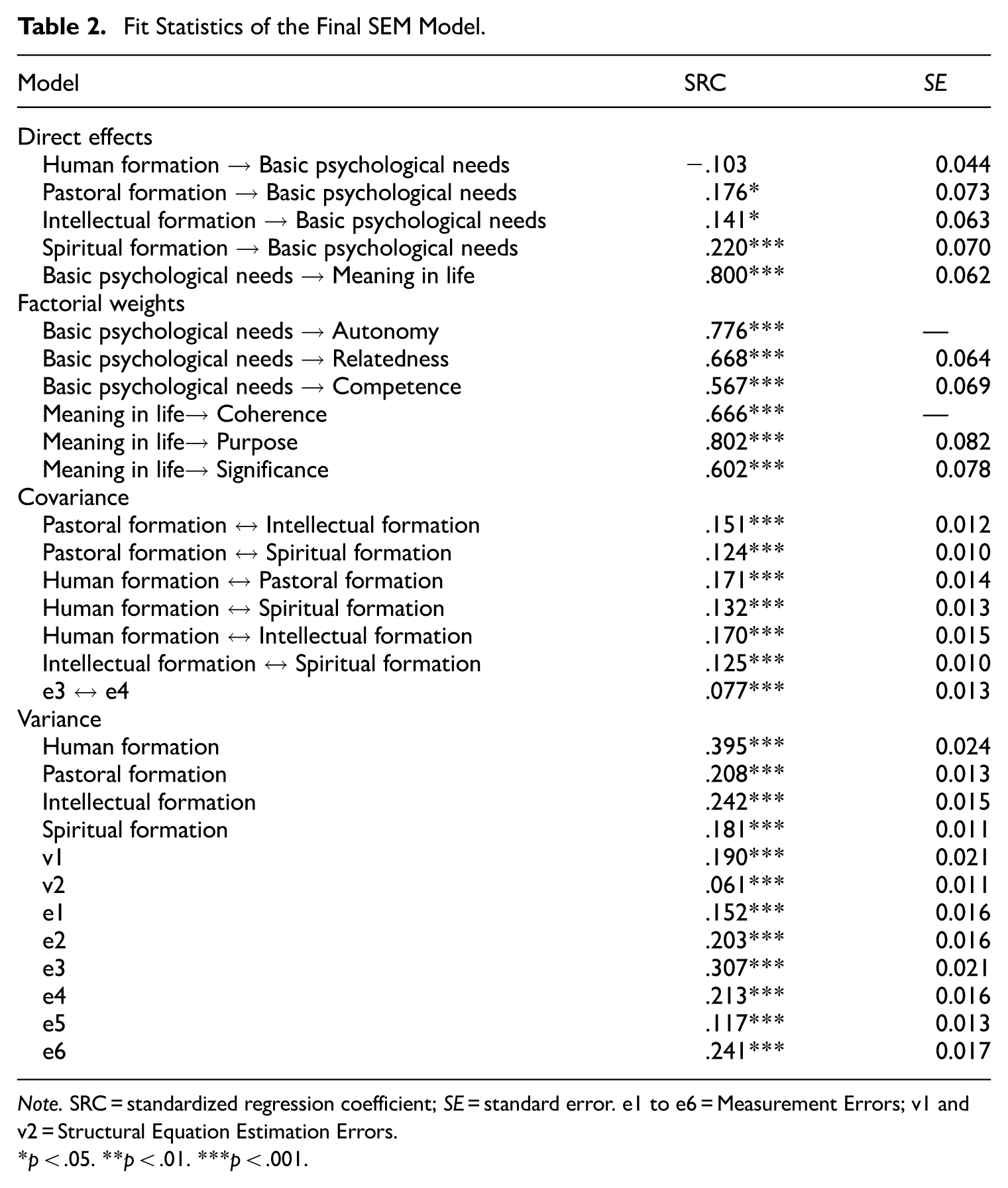
Note. SRC = standardized regression coefficient; SE = standard error. e1 to e6 = Measurement Errors; v1 and v2 = Structural Equation Estimation Errors.
p < .05. **p < .01. ***p < .001.
Discussion
A SEM model was conducted to examine the hypothesized relationships between seminarians’ formative experiences (i.e., perceived competence development promoted by human, spiritual, intellectual, and pastoral formation), basic psychological needs (i.e., autonomy, competence, and relatedness), and meaning in life (i.e., coherence, purpose, and significance). Current findings extend prior literature (e.g., Chiclana 2019; Chukwuorji et al. 2018; García 2021; Kasowski et al. 2022; Kujur 2025; Mahalik and Lagan 2001; Pawlina 2021; Pembroke 2025; Lorca-Rodríguez 2017; Taja-on 2025; Walz 2021; Weber 2009) in two ways: integrating the analysis of priestly formation processes with psychological theories of motivation and well-being and offering evidence-based insights into how seminary formation supports or hinders vocational maturity.
Results confirmed our main hypothesis: perceived formative effectiveness significantly predicted the fulfillment of basic psychological needs (17.1%), and both explained a large proportion of the variance in meaning in life (64.1%). Consistent with Self-Determination Theory (Ryan and Deci 2000a, 2021a) and previous research targeting other educational contexts (e.g., Cai and Zhan 2025; Martela et al. 2024; Zhang, Qi et al. 2022), findings stress that the fulfillment of basic psychological needs is a key pathway through which context-related factors contribute to nurturing seminarians’ meaning in life. Moreover, there is vast evidence (e.g., Martela and Steger 2023; Ryan and Deci 2000b, 2021b; Schutte and Malouff 2021; Unanue et al. 2024) supporting the strong relationship between the fulfillment of psychological basic needs and variables related to meaning in life, such as positive life outcomes, including life satisfaction, positive affect, and hope (Conesa et al. 2022; Hicks and King 2009; Snell and Zuckerman 2025; R. Wang et al. 2017). For example, a recent longitudinal study reported reciprocal relationships between basic psychological needs and meaning in life (Martela et al. 2024), supporting the role of these mechanisms in long-term vocational development.
Data show that the seminary formation process contributes to seminarians’ BPN; however, the effect size was modest. This finding aligns with studies suggesting that seminary holistic formation can both promote and hinder seminarians’ personal development (Benelli 2007, 2008; Kasowski et al. 2022; Pawlina 2021). Literature has been stressing that while contributing to developing significant competencies and encouraging mature relationships, aspects of the institutional environment and formation process can also generate experiences of isolation, submission, reduced autonomy, and communication difficulties (e.g., Adubale and Aluede 2014; García 2021; Gerardo, Villaruel, and Rosales 2025; Ortiz and McGlone 2012; Taja-on 2025). For example, in recent years, several authors (e.g., Abraham 2020; Chiclana 2019; Lorca-Rodríguez 2017; Taja-on 2025) have reported that seminarians often face institution-related barriers to their psychological adjustment and comprehensive development, including organizational rigidity, limited emotional openness, insufficient autonomy support, and challenges in facilitating identity development. These factors are likely to undermine the impact of the formation process on the seminarians’ BPN (Harty and Sweeney 2023; Nyabera, Ojore, and Magesa 2022).
As Oakley (2017) argued, although the formative dimensions are well-defined, operationalization does not always guarantee BPN fulfillment. Similar patterns were observed in general educational contexts, where the fulfillment of BPN is significantly reduced by rigid institutional environments, a lack of or inconsistent feedback, and limited opportunities for choice (Conesa et al. 2022). Importantly, current data show that the contribution of perceived formation support to BPN differs across dimensions. Spiritual, Pastoral, and Intellectual dimensions of formation emerge as positive predictors of BPN fulfillment, while Human formation showed no significant association with the fulfillment of BPN. Spiritual formation proved to be the strongest predictor, possibly because provides seminarians a system of values and beliefs that give meaning to their seminary journey, sustaining autonomy through vocational discernment (Keating 2008), reinforcing competence through the exercise of religious life and identification with ecclesial traditions (Congregation for the Clergy 2016), and strengthening relationships through community life and ecclesial belonging (Galea 2010; Prusak et al. 2021). Moreover, prior evidence gathered in other settings has linked spirituality to BPN fulfillment, personal well-being, and resilience (Marsh 2012; Miner, Dowson, and Malone 2013; Thurackal, Corveleyn, and Dezutter 2016; Van Dierendonck 2012).
Spirituality is considered the most central dimension in seminaries, as it aligns best with the search for meaning and purpose in life (Marsh 2012; Martela and Steger 2023; Solmayor and San Jose 2025; Thurackal et al. 2016). Pastoral and intellectual dimensions have also shown positive, albeit moderate, effects on BPN fulfillment. Pastoral dimension offers seminarians the opportunity to engage in real ministry experiences likely to encourage autonomy through personal growth and decision-making consistent with values and beliefs, enhance competence through skill development, guidance, and feedback, and foster relatedness through community building and supportive relationships (de Paula and do Nascimento 2018; Manu and Uskono 2024). Regarding the intellectual dimension, there is evidence linking theological and philosophical studies to self-reflection, personal meaning, and agency, as well as cognitive skill-building and the development of meaningful relationships with peers and mentors (Chukwuorji et al. 2018).
Despite unexpected, the non-significant effect of human formation on BPN fulfillment supports previous alerts by Oakley (2017) to the existing gap between the formative ideal and the daily experience. Our finding corroborates Abraham’s (2020) claims that there is an excessive focus on the transmission of theoretical and normative knowledge, pastoral experiences, and clericalism, which might limit opportunities for emotional maturity, interpersonal competence, and affective development. Furthermore, the work by Omorogbe (2021) and Sumampong et al. (2024) reports specific organizational aspects, such as heterogeneous and unstructured methodological approaches to human dimension and variability in formator preparation, which may compromise the perceived impact of human formation on BPN fulfillment.
Limitations and Future Research
This study provides various insightful contributions; however, some limitations must be acknowledged. First, despite the good model fit, a high percentage of variability in BPN fulfillment remains unexplained. While prior research has highlighted the contribution of formative contexts and experiences to BPN fulfillment, the present study did not account for other crucial variables beyond the formation program.
Future research should consider integrating variables related to the broader seminary climate, such as formators-seminarians’ relationships, peer relationships, perceived fairness of rules, and safety. Second, acknowledging the substantial variability in how formation is operationalized across seminaries, the predictive effect of formative perceived support might be underestimated. For example, considering the type of seminary could yield distinct, more focused data; it would be relevant to investigate how human formation fulfills the basic psychological needs of seminarians enrolled in a large diocesan seminary compared with counterparts in a small religious formation house.
Some institutions can be highly supportive of seminarians’ needs, but others may inadvertently frustrate them. Future research would benefit from testing this model across diverse cultural and institutional contexts to assess its robustness and generalizability (e.g., enrolling seminars and seminarians from distinct geographies and cultures, while accounting for seminary type [diocesan seminary or religious formation house]). Third, and importantly, this study measured the perceived formative effectiveness across different formative dimensions, rather than the quality of the formative process or the actual competencies of the seminarians. Therefore, the findings may have not accurately captured how seminarians experience formation and how the formative environment contributes to the fulfillment of the BPN. Future research could benefit from integrating the voices of the formators of the seminary and those of priests in the parishes where seminarians develop their pastoral service, following mixed method approaches to capture the complexity of the formative process. Lastly, as the formative processes may have cumulative effects on BNP over time, it would be important to conduct longitudinal studies throughout the formative processes to understand how BPN fulfillment/frustration and meaning in life evolve over time.
Conclusion and Implications for Practice
The formation process in Catholic seminaries intends to foster the integral development of the person. The present findings indicate that higher perceived formative effectiveness across the pastoral, intellectual, and spiritual dimensions is positively associated with the fulfillment of BPN for autonomy, competence, and relatedness. In turn, the BPN fulfillment directly contributes to the construction of meaning in life.
These results underscore the relevance of BNP-supportive environments in fostering a sense of meaning in life (Martela and Steger 2016, 2023). Despite the modest effects of perceived formative effectiveness on BPN fulfillment, this study uncovers the complex nature of seminary formation, while suggesting that how formative processes are operationalized and implemented can either enhance or hinder seminarians’ personal and vocational growth. Importantly, seminary programs offering structured conditions for experience autonomy (through conscious choices and human maturation), competence (through intellectual study and pastoral practice), and relationships (in community and spiritual life) are likely to create conditions through which meaning in life can emerge and develop (Canoy et al. 2023; Phiri, Tucholski, and Mwarari 2024). Otherwise, as Hydinger et al. (2025) and Taja-on (2025) found, in formative contexts that rely on prescriptive practices and intellectual achievement, there is a high risk of frustrating BPN, which can lead to experiences of demotivation, burnout, or even vocational abandonment.
These findings carry important implications for formative contexts. First, formation processes must strike a balance between discipline and responsible development, thereby enhancing seminarians’ ability to live and develop their vocation. Providing spaces for personal discernment, individualized guidance, and pedagogical methodologies that encourage critical reflection can foster vocational development (Canoy et al. 2023; Ryan and Deci 2000b). For example, good integration practices between the theological and pastoral dimensions (e.g., intercultural missionary experiences, community life) have been found to enhance the meaning of life, while helping candidates to test and consolidate their pastoral and academic effectiveness (Oakley 2017; Phiri et al. 2024).
Second, as reported by Jankowski, Sandage, and Wang (2024), formative environments should cultivate transparent communication, fraternity, and emotional openness, fostering humility, differentiation, and emotional self-awareness. Acknowledging that the operationalization of formation can vary across seminaries (Abraham 2020; Benelli, 2007, 2009; Oakley 2017), there is an increasing need for systematic monitoring and evaluation of formative practices to ensure their psychological responsiveness and alignment with the holistic aims and ideals of priestly formation. Lastly, sustained investment in the preparation of formators is crucial so that they can serve as mature role models, avoiding environments marked by authoritarianism, isolation, or competition (Benelli 2006, 2007, 2019a, 2019b). They play a crucial role in fostering a formative culture in which the four dimensions are harmoniously articulated, and the seminarian’s vocation is fully integrated. We hope these findings, despite their limitations, could be an opportunity, among others, for formators at Catholic seminaries and other educators involved to discuss the theological principles grounding formation and how the seminary experience contributes to the seminarians’ satisfaction of basic psychological needs.
Footnotes
Acknowledgements
The authors thank the participants who collaborated, making it possible to constitute the research sample. We acknowledge the participants in this study for contributing with their experiences and time.
Funding
The authors disclosed receipt of the following financial support for the research, authorship, and/or publication of this article: This study was conducted at the Psychology Research Centre (CIPsi; PSI/01662), School of Psychology, University of Minho, and was supported by the Portuguese Foundation for Science and Technology (FCT; UID/01662/2025) through the Portuguese State Budget. The Centre is registered under the DOI:  . This study also benefited from SEKUENS funding from the Science, Business Competitiveness and Innovation Agency of the Principality of Asturias (IDE/2024/000713).
Declaration of Conflicting Interests
The authors declared no potential conflicts of interest with respect to the research, authorship, and/or publication of this article.
Data Availability Statement
The data that support the findings of this study are not publicly available due to ethical restrictions, but are available from the corresponding author upon reasonable request.*