






Abstract
This work examines the impact of initial stress on the spread of coupled thermo-mechanical waves in a semiconductor thermo-elastic medium using a β-order fractional derivative model. The study is undertaken utilizing three generalized thermo-elastic theories: Dual-Phase-Lag (DPL) model, Lord-Shulman (L-S) theory, and Refined Dual-Phase-Lag (RDPL) model. To accurately reflect the underlying physical processes, the governing equations for heat conduction, elastic deformation, and semiconductor carrier dynamics are fully coupled, taking into account both finite-speed thermal transport and carrier density effects. To simplify the mathematical treatment, a suitable nondimensionalization strategy is adopted, lowering the number of governing parameters and clarifying the structure of the problem. A transform technique is then utilized to transform the resulting system of coupled partial differential equations (PDEs) into an analogous system of ordinary differential equations (ODEs) that can be solved analytically. This approach produces solution for displacement, temperature, carrier density, and stress tensor components, allowing for a complete investigation of wave propagation properties inside the medium. Numerical simulations using graphical representations are used to investigate the physical significance of the theoretical concept. These computations provide a comparative examination of physical quantities with and without initial stress across the three thermo-elastic theories. The β-fractional derivative and initial stress significantly impact wave behavior, including propagation velocity, amplitude evolution, and attenuation characteristics. Furthermore, the analysis sheds further light on the interplay between thermal processes and carrier density effects in thermo-elastic materials, emphasizing the significance of these elements in precisely forecasting the dynamic response of modern semiconductor media.
1. Introduction
Semiconductor thermo-elasticity is a complicated interdisciplinary domain that investigates the intricate interactions among heat fields, elastic deformation, and the movement of charge carriers (electrons and holes) in semiconducting materials. In contrast to classical thermo-elasticity, which primarily examines the interplay between temperature gradients and mechanical strain, semiconductor research must consider the photothermal and plasma effects triggered by external stimuli, such as laser pulses.1,2 Upon excitation of a semiconductor, a plasma wave of excited carriers is produced; the subsequent recombination of these carriers emits thermal energy into the crystal lattice, resulting in localized thermal expansion and the creation of elastic waves. This process is quantitatively represented by a series of interrelated governing equations, frequently integrating plasma-thermal-elastic wave theory. In modern research, these models are frequently extended using generalized thermo-elasticity theories such as theory of Green-Lindsay or the theory of L-S to accommodate for limiting thermal speeds and plasma spread, effectively eliminating the physical paradox of infinite propagation speeds found in traditional theories, for more details see3–7. Furthermore, integrating fractional calculus with temperature-dependent material properties has become critical for precisely forecasting semiconductor behavior under extreme conditions or at the micro-nano scale.8–10 Understanding these interactions is important for the structural integrity and thermal management of modern microelectronics, solar cells, and non-destructive testing of high-precision electronic components.
The RDPL model is a significant improvement in the field of non-Fourier heat transfer theory, created expressly to address the inherent limitations of the classic DPL model. While the classical DPL model improves on Fourier’s law by including two relaxation times that correspond to the phase delays of the heat flux and temperature gradient, subsequent research has shown that this formulation is insufficient for accurately describing extremely rapid thermal phenomena, particularly those occurring at micro-length scales. In such conditions, the traditional DPL model may give physically problematic predictions because its structure does not completely account for the mechanics regulating limit speed heat transport. To treat these shortcomings, the model of RDPL introduces extra higher-order correction terms and uses a more exact and mathematically consistent representation of phase-lag parameters within the constitutive heat conduction relation. These changes improve the model’s stability and physical integrity, allowing it to simulate thermal wave propagation with finite velocities and observable temporal delays. Furthermore, the revised formulation successfully suppresses nonphysical oscillations, instabilities, and exaggerated temperature spikes that commonly emerge in normal DPL model when materials are subjected to ultra-fast thermal loading. As a result, the RDPL model produces predictions that are stable, realistic, and consistent with actual behavior, leading to its increasing acceptance as a viable theoretical framework for studying thermo-elastic responses in microscale structures and sophisticated engineered materials. For additional discussion and supporting analyses, see11–20.
Initial stress is an important issue in thermo-elastic analysis since many engineering materials and structural components are already subjected to internal stresses before any external mechanical loading or thermal excitation is applied. These stressed states can result from fabrication and forming operations, residual strains from processing, thermal treatment procedures, gravitational or self-weight impacts, and long-term operational exposure. The existence of such stresses alters the reference configuration and equilibrium state of the medium, affecting the interaction between thermal and mechanical forces and leading to notable variations in the overall thermo-elastic response (see refs. 21–24). When studying thermo-elastic wave propagation, the significance of starting stress becomes even more important because it directly influences how stress components are distributed and change inside the material. Variations in the magnitude and direction of initial stress can accelerate or slow down wave propagation, induce anisotropic-like behavior in otherwise isotropic solids, and significantly affect dispersion patterns and attenuation characteristics of traveling waves (see refs. 25–28). Furthermore, initial stress strongly correlates with thermal influences, particularly in transient regimes or under high-frequency excitations, when the interplay among thermal and mechanical energy transport pathways is amplified. Such coupling may open up new pathways of energy exchange, affecting both temperature fields and wave dynamics. Therefore, accounting for initial stress within thermo-elastic models gives a more faithful and dependable description of substance performance under realistic service circumstances (see refs. 29 and 30). Advanced formulations that incorporate these effects are especially valuable in applications spanning geophysical systems, aerospace engineering, biomechanical analysis, and the development of sophisticated microstructured materials.
Fractional thermoelasticity has evolved as a sophisticated and useful paradigm for understanding heat and mechanical interactions in complicated materials, where traditional thermoelastic theories fail. This theory incorporates fractional-order operators and temperature-dependent material properties, providing a more accurate portrayal of hereditary, nonlocal, and thermal sensitivity behaviors observed in current materials and micro-scale structures. For further details, see refs. 31–37. The β-fractional derivative is a recently developed mathematical operator proposed to overcome several drawbacks associated with classical fractional derivatives.38–40 While many classical fractional derivatives compromise key calculus qualities, this formulation stands out for its ability to preserve the Leibniz rule and the chain rule, making it more intuitive and theoretically consistent with normal calculus. The operator is built using a limit-based approach, similar to the classical derivative, but it includes a unique scaling mechanism driven by both the fractional order β and the independent variable.
This study examines the impact of initial stress and the β-order fractional derivative on the thermo-mechanical response of a semiconductor thermo-elastic half-space using the model of DPL, the theory of L-S, and the model of RDPL. To facilitate the analytical treatment and reduce unnecessary complexity,The basic field equations are rewritten in dimensionless structure, a procedure that decreases the number of independent parameters while simultaneously clarifying the underlying mathematical structure of the problem. An efficient transform technique is then used to convert the system of coupled PDEs into an analogous system of ODEs, making the formulation more manageable for precise analytical analysis. This transformation enables a full investigation of transient responses and wave propagation behavior within the solid. The boundary conditions imposed at the plane surface z = 0 are then employed to determine the unknown coefficients (M, G1, G2, and G3), which are required to construct the complete form solution. To complement the analytical formulation, numerical evaluations accompanied by graphical illustrations are carried out to assess how initial stress on physical parameters influences the distributions of displacement, stress components, temperature, and carrier density. Special attention is devoted to analyzing the role of the fractional parameter β, whose effects are systematically investigated across the three theoretical frameworks. The computational findings detect that the fractional order β exerts a substantial influence on the semiconductor response of the material, markedly altering wave characteristics as well as the associated thermo-elastic field quantities for all models under consideration.
2. Preliminaries
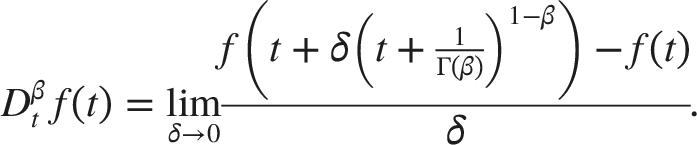
The fractional derivative
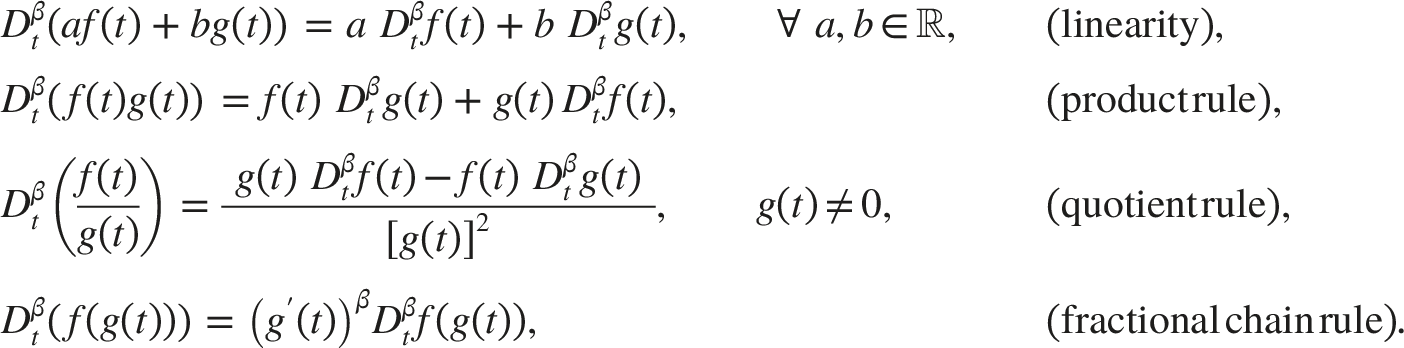
These properties show that the β-time fractional derivative is a local fractional operator that preserves the fundamental algebraic structure of classical calculus, including linearity and product-type rules. Unlike nonlocal fractional derivatives, it does not involve convolution kernels or historical memory effects. Instead, it modifies the classical first-order derivative through a time-dependent scaling factor
3. Basic equations
The fundamental field equations governing the 2 − dimensional behavior of a semiconductor thermo-elastic medium are established in the theoretical of the model of RDPL, DPL, and L-S. Particular attention is devoted to examining how both the β − fractional derivative and initial stress affect the coupled thermo-mechanical response of the system. To facilitate a more effective analytical treatment and to simplify the mathematical formulation, the derived equations are consequently transformed into a dimensionless representation, thereby highlighting the essential physical parameters and reducing the complexity of the governing relations.
The motion equation can be represented as refs. 43,44:

The constitutive relation can be written as refs.
45

The equation of semiconductor can be written as refs.
9
:

The energy equation can be introduced as refs. 6,46: 1- L = 3 and (τ
θ
< τ
q
≠ 0, k ≠ 0) is RDPL model, 2- L = 1 and (τ
θ
< τ
q
≠ 0, k ≠ 0) is DPL model, 3- L = 1 and (τ
θ
= 0, τ
q
≠ 0, k ≠ 0) is L-S theory.

Employing Equation. (2) into Equation (1), together with


Incorporating the β − fractional derivative properties from
41
into Equation (4), becomes

Throughout this study, we adopt an appropriate set of dimensionless variables that allows the original equations to be reformulated in a simplified and more tractable structure, which in turn enhances analytical clarity and supports a deeper and more comprehensive examination of the dynamic characteristics of the system

From Equation (8) in Equation (3), we uncover

Using Equation (8) in Equation (5), one discovers

Utilizing Equation (8) in Equation (6), we realizes

Employing Equation (8) in Equation (7), one infers

Using Equation (8) in Equation (2), one acquires



The displacement potentials

Inserting Equation (16) in Equations (9), (10), (11), and (12), one receives




4. Solution
The solution for the considered physical quantity is expressed using a transform method as:

Employing Equation (21) in Equation (17), one acquires

Using Equation (21) in Equation (18), we see

Utilizing Equation (21) in Equation (19), one infers

Employing Equation (21) in Equation (20), we obtain

It is observed that the cases. 1.
2. 3. τ1 = 0 and
Equations. (22), (23), and (25) give a non-trivial solution only under the condition that the determinant of the coefficient matrix corresponding to the involved physical variables vanishes. By employing MATLAB for the computational procedure, we obtain:

This equation can be expressed as

The solutions of Equation (27) bound as z → ∞ can be presented as



The solution of Equation (24) bound as z → ∞ can be expressed as

Employing Equation (21) in Equation (16), then using Equations (28). and (31), one obtains


Utilizing Equation (21) in Equations. (13), (14), and (15), then using Equations. (29), (30), (32) and (33), we see



5. Boundary condition
To find the constants

By substituting the supposed functional forms of the field into the boundary conditions previously defined in Equation (37), a set of algebraic relations is obtained that must be satisfied by the associated coefficients. This substitution procedure leads to a system consisting of four equations that govern the unknown parameters of the solution. In order to evaluate the constants

Hence, we obtain the values
6. Numerical discussions and results
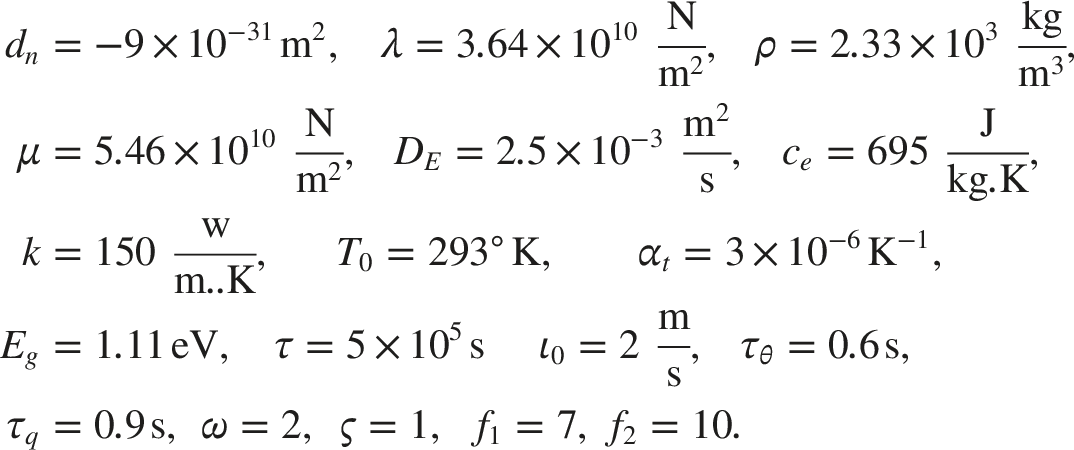
To clarify the behavior of the physical fields examined in this study, a series of numerical simulations were carried out utilizing Silicon as the representative material. Multiple scenarios were generated and graphically presented in order to enable a thorough comparative assessment of the system’s response under different conditions. In performing these computations, the set of thermo-elastic material parameters adopted as reference values was taken from the data reported in47,48, and these constants served as the fundamental basis for all numerical evaluations.
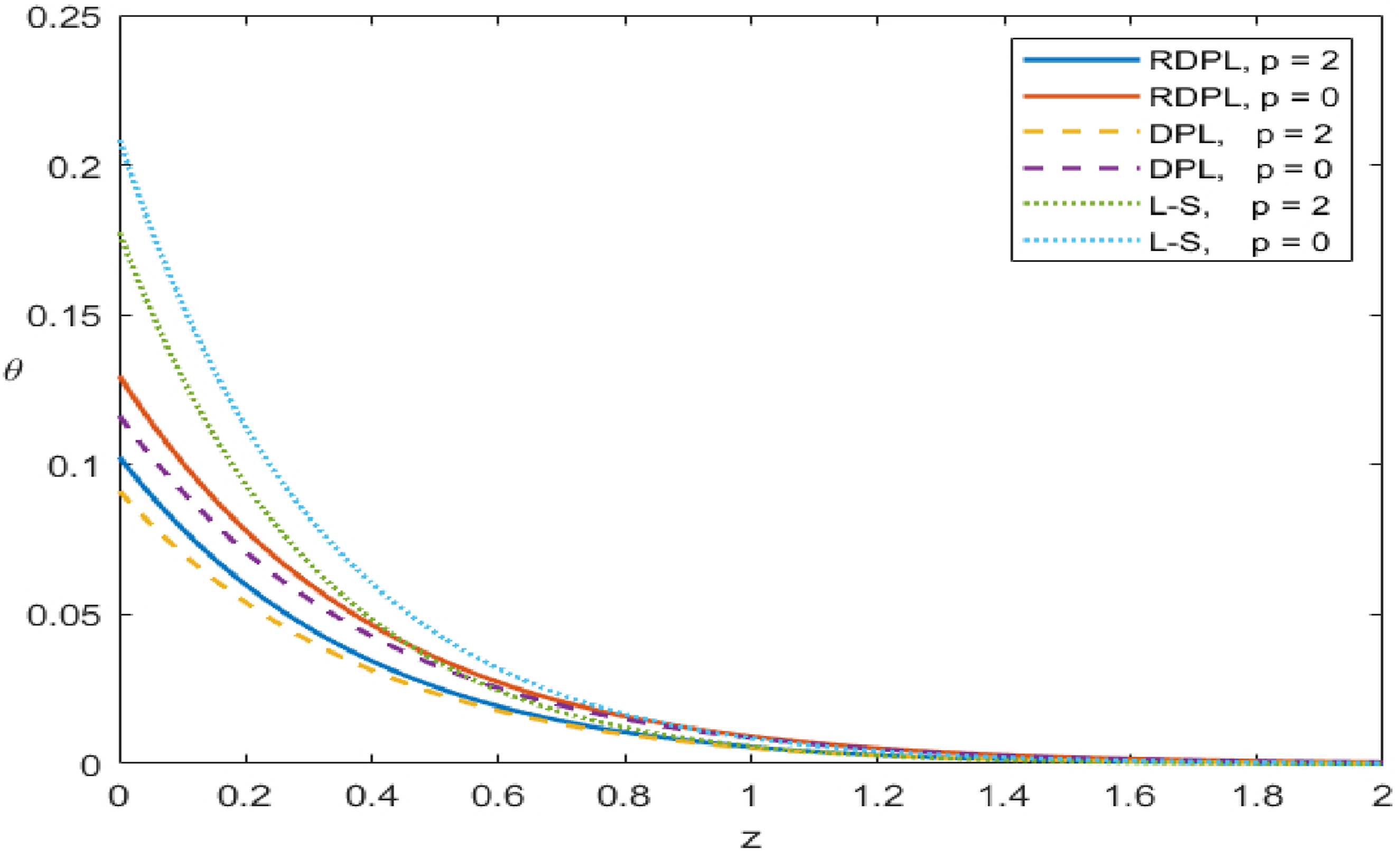
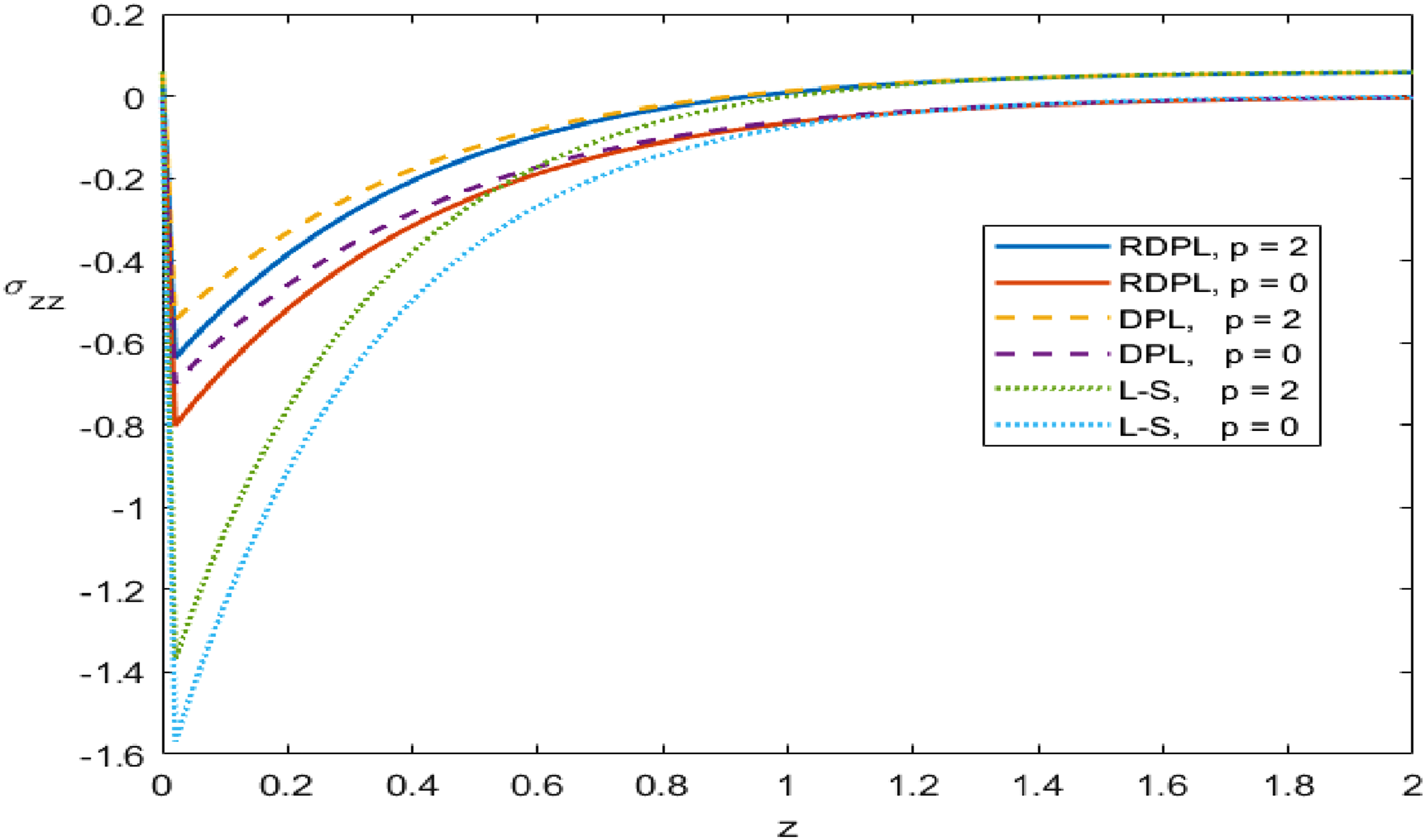
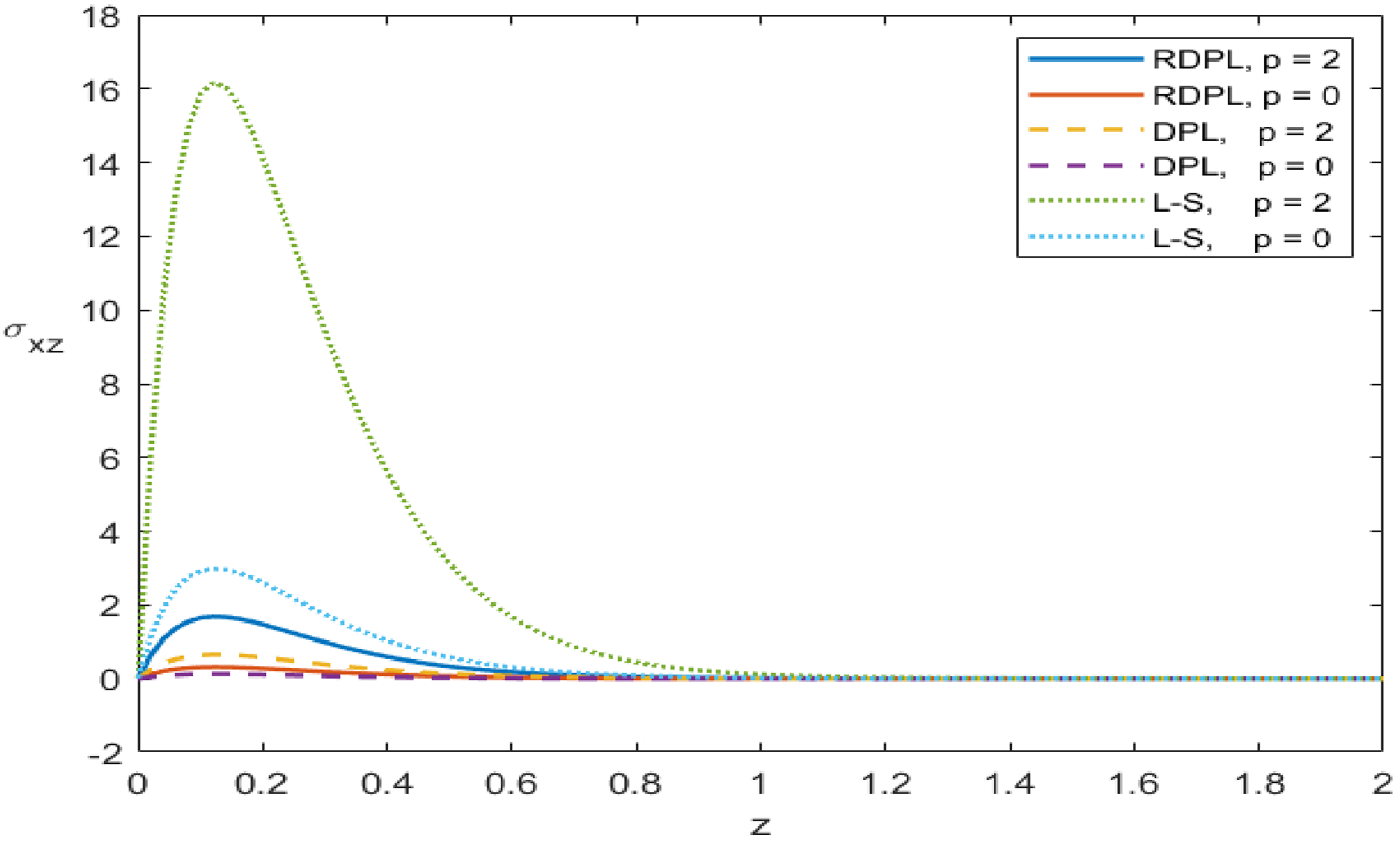
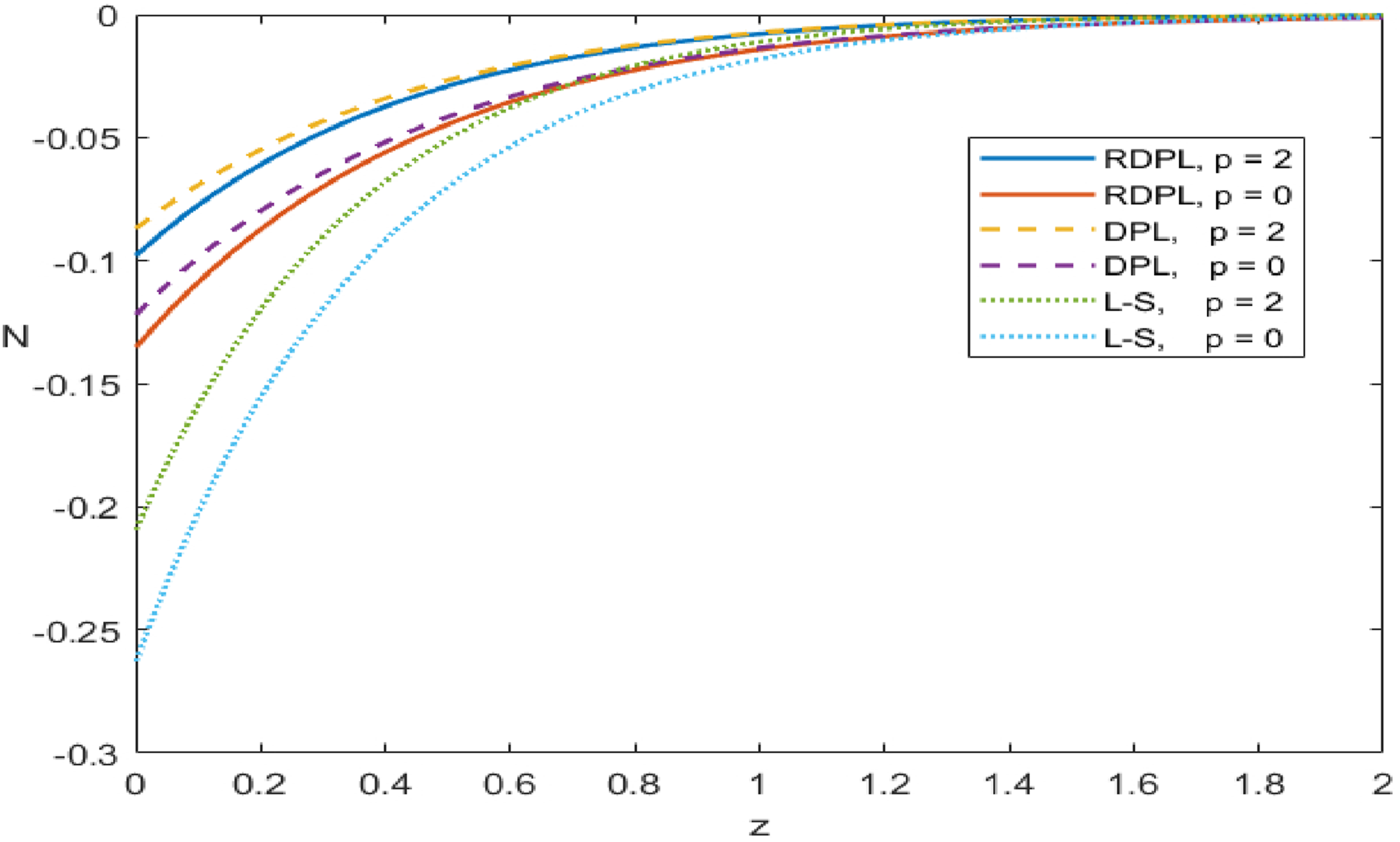
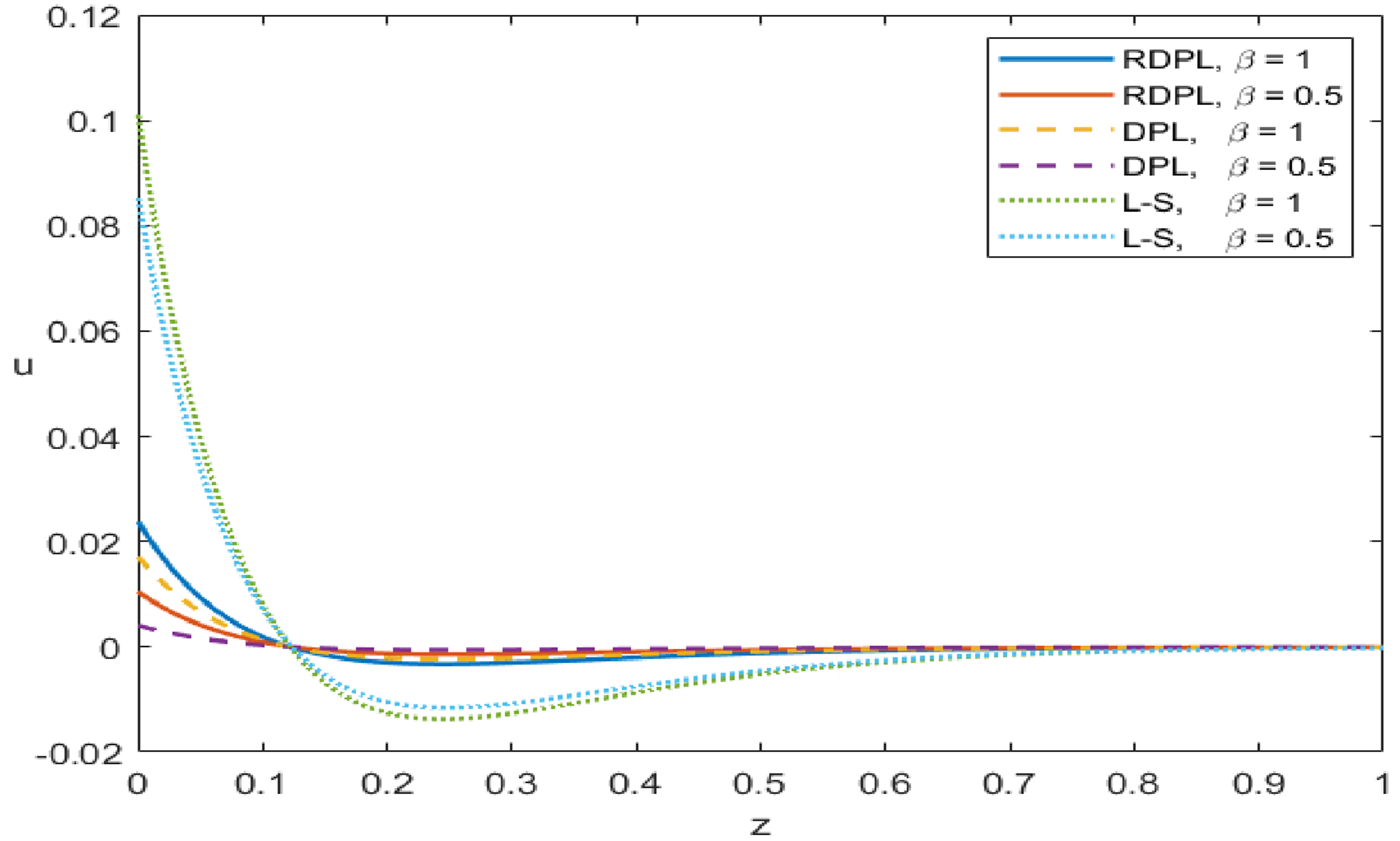
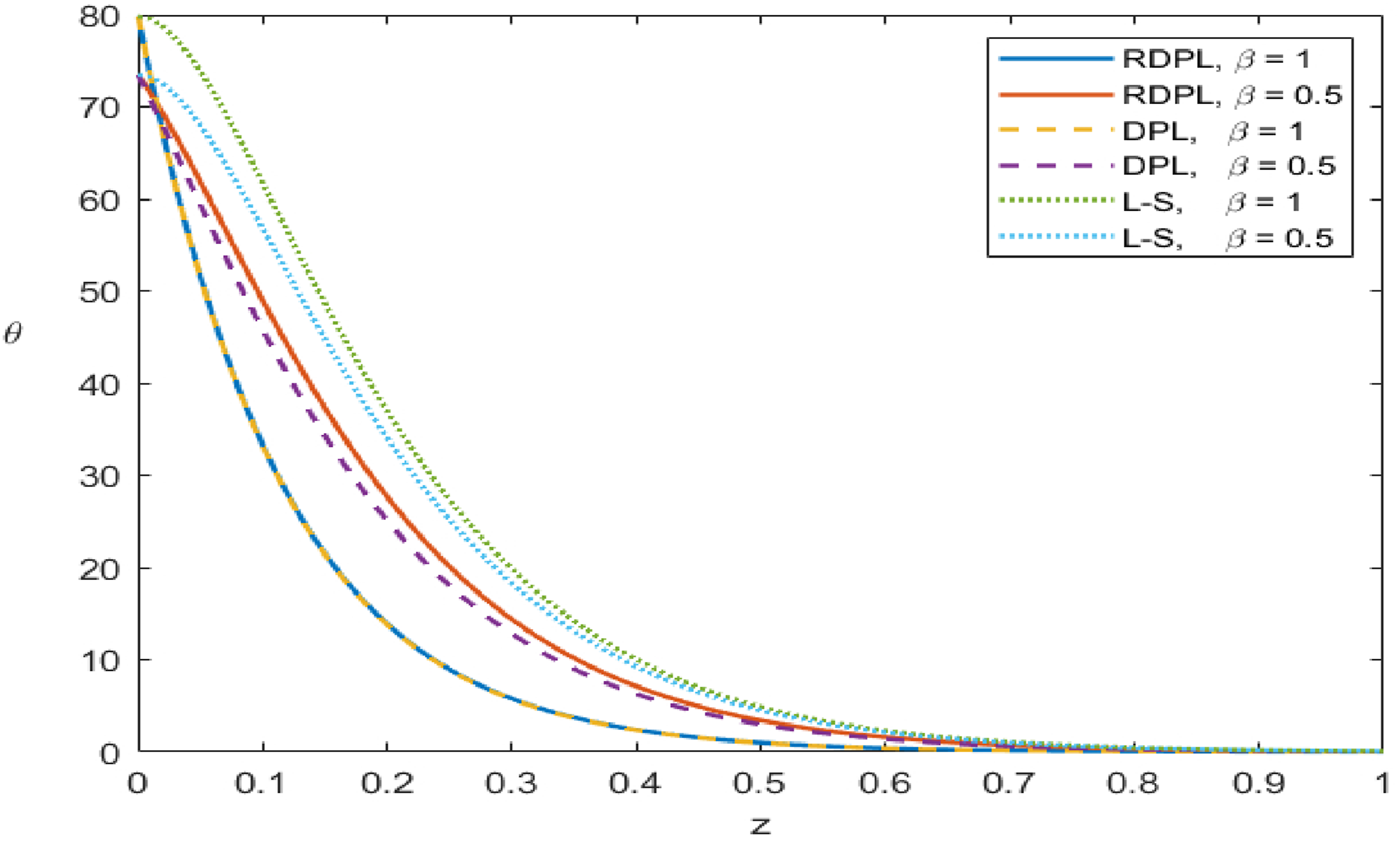
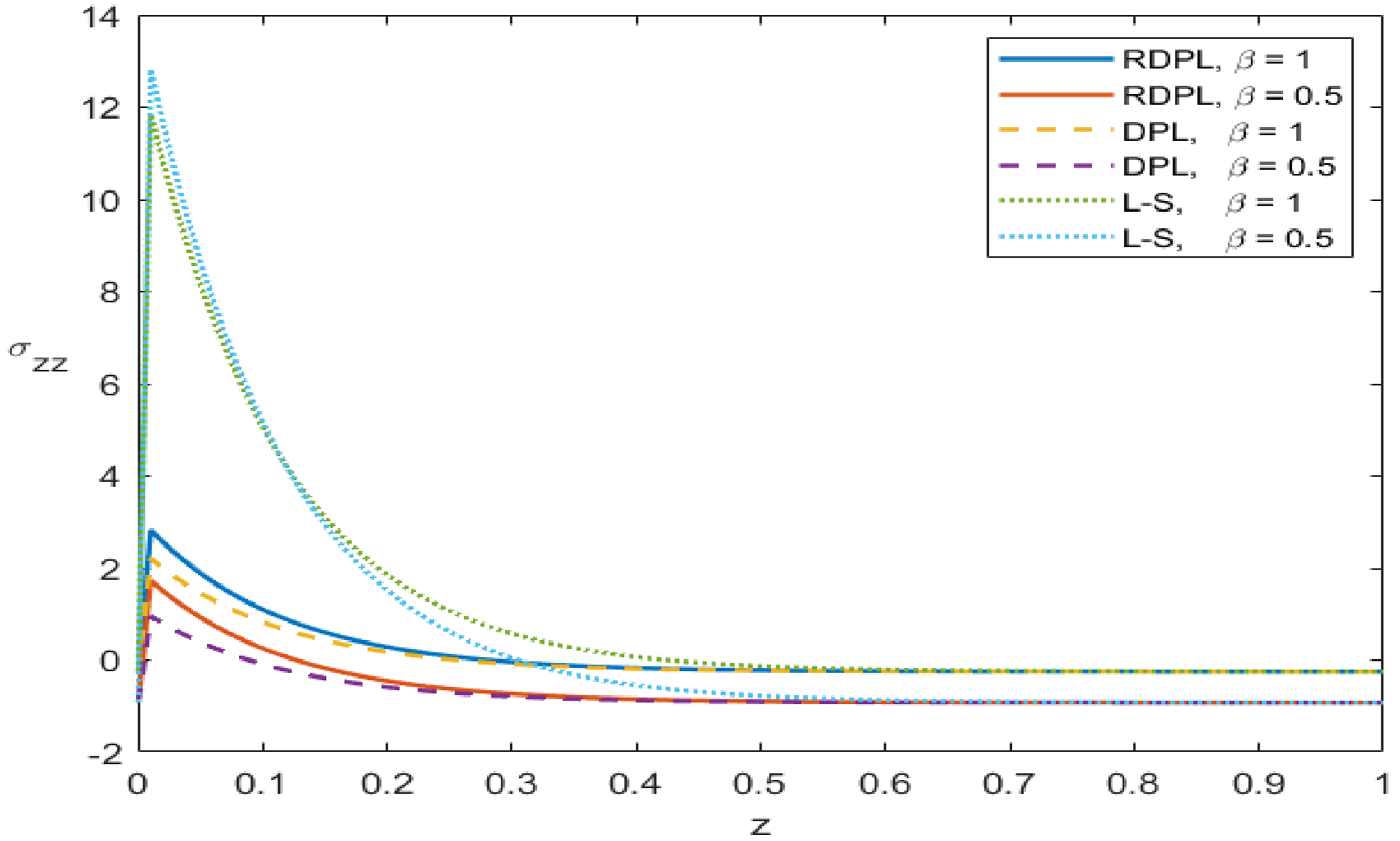
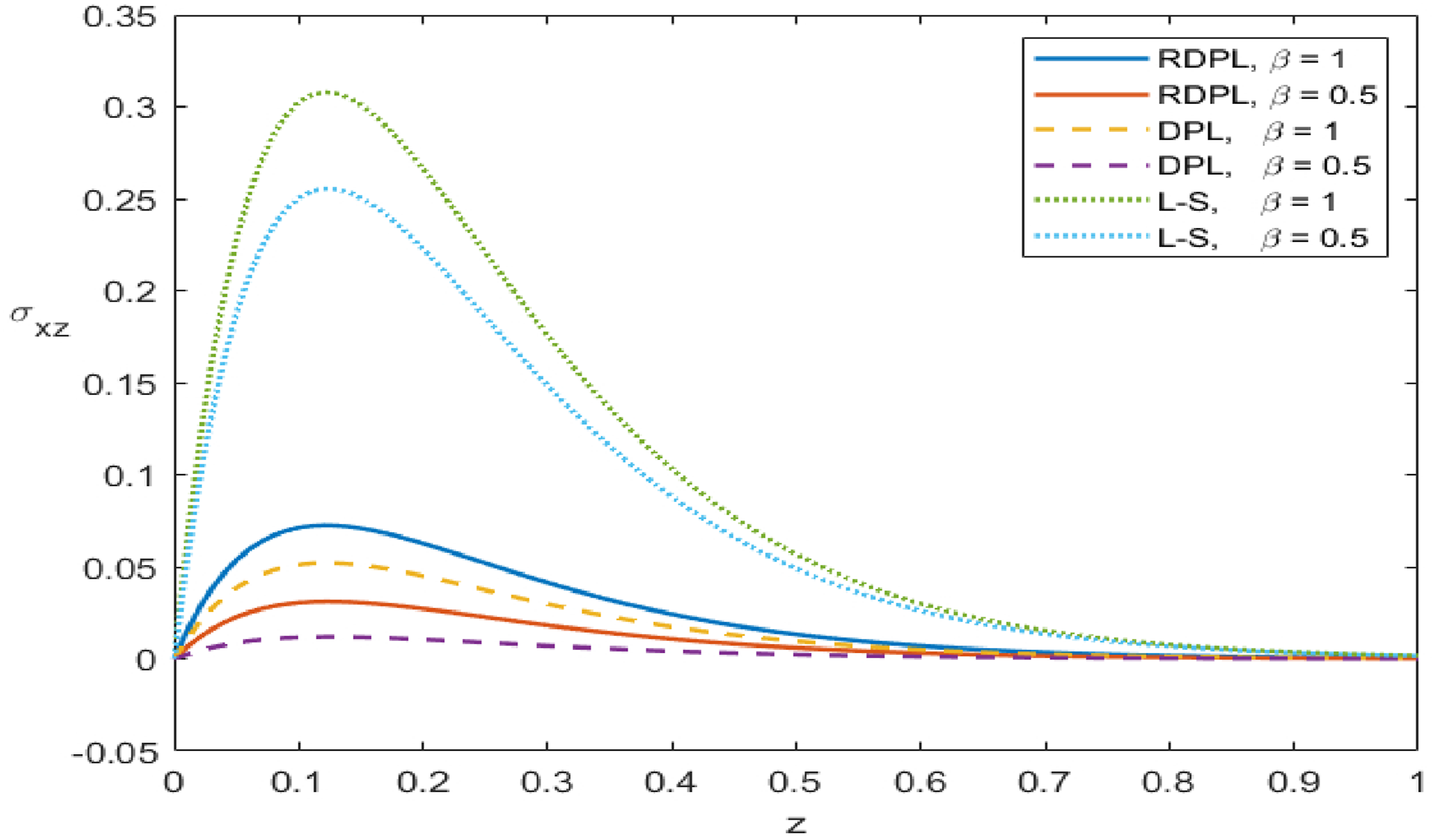
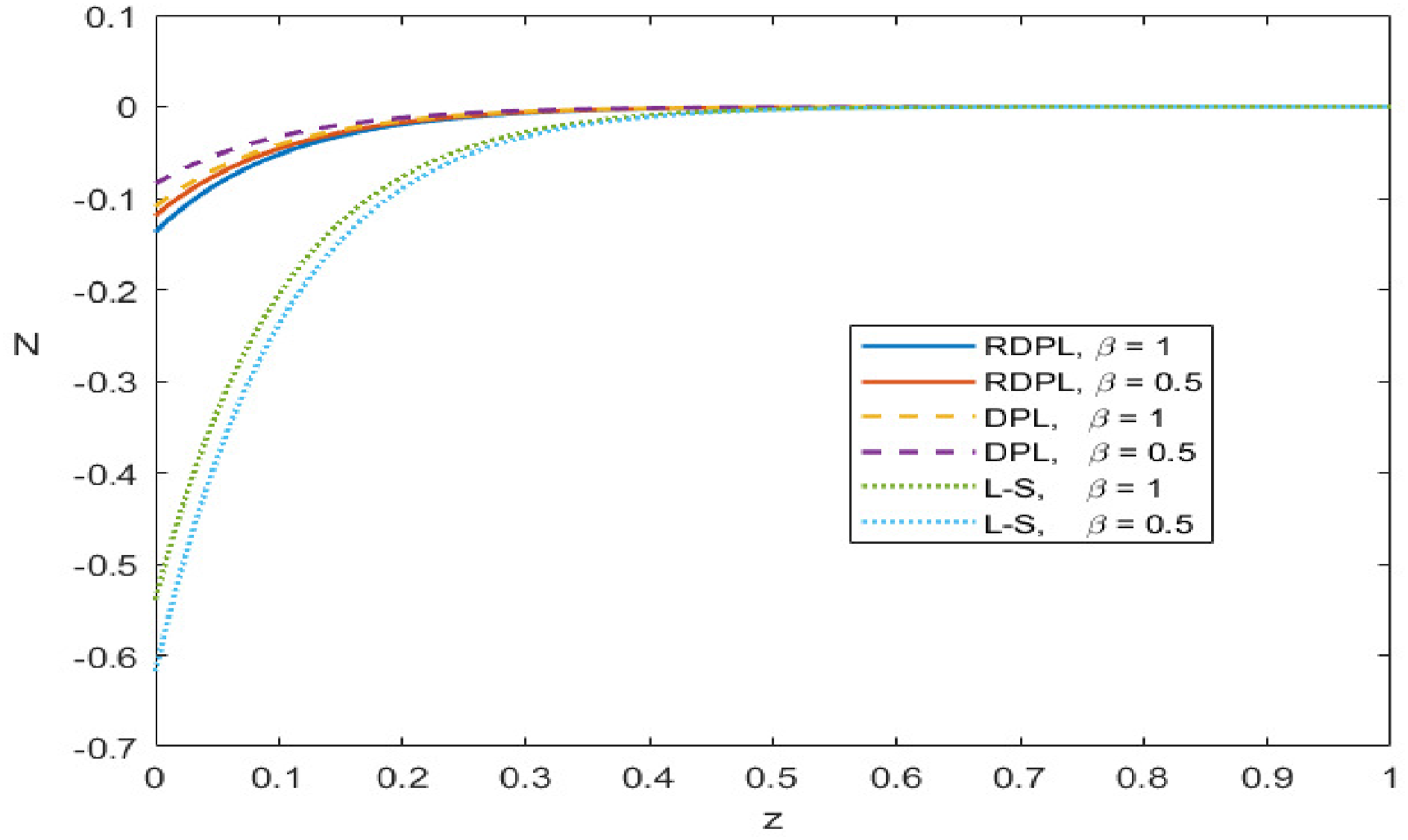
In the present investigation, numerical evaluations of all relevant physical variables are carried out at the nondimensional time t = 0.3 over the spatial coordinate z, while the surface position is fixed at x = 0.4. This computational framework is adopted to systematically analyze the spatial behavior of the displacement u, temperature θ, stress tensor components σ
zz
and σ
xz
, and Carrier density N. This approach produces precise graphical representations that clearly demonstrate the responses of these quantities to the guiding theoretical formulations. The generated results provide a comprehensive comparison between the predictions of the model of DPL, the theory of L-S, and the model of RDPL, highlighting the differences in their physical characteristics and demonstrating how each framework captures the medium’s coupled thermo-mechanical behavior. Figures 1–5 provide a comparative examination of physical quantities with and without initial stress across the three thermo-elastic theories with β = 0.5. Figure (1) depicts the effect of initial stress on displacement u. It has been shown that raising the magnitude of initial stress changes the amplitude and propagation characteristics of the displacement wave. Specifically, initial stress reduces displacement magnitude and slows wave propagation, implying that initial stress states alter the effective stiffness and inertia of the semiconductor thermo-elastic medium. Figure (2) displays temperature variation θ with various initial stress. The outcomes clarify that initial stress has a large effect on thermal wave diffusion, with initial stress suppressing temperature peaks and smoothing spatial gradients. This behavior is due to the tight connection between mechanical stress and heat conduction in thermo-elastic semiconductors. Figure (3) depicts the reaction of the stress tensor component σ
zz
to initial stress variations. The distribution clearly shows that initial stress alters the amplitude and spatial distribution of stresses. This demonstrates that initial stress has a critical role in stress wave propagation. Figure (4) exhibits the influence of initial stress on the stress tensor component σ
xz
. The results reveal that increasing initial stress enhances stress attenuation and shifts the peak positions of the stress tensor wave, illustrating how initial stress alter wave phase and energy distribution. Figure (5) indicates the distribution of the carrier density N with initial stress. The figure clarifies that initial stress significantly influences charge carrier transport, demonstrating that mechanical fields strongly interact with semiconductor transport mechanisms through thermo-elastic coupling. Overall, the presence of initial stress modifies the effective elastic stiffness of the medium, thereby altering the coupling between mechanical deformation and thermal field. As shown in Figures 1–5 initial stress changes the work done by the deformation on thermal relaxation, leading to variations in displacement u, temperatureθ, stress tensor components σ
zz
and σ
xz
, and Carrier density N. Specifically, compressive initial stress enhances energy dissipation and increases wave attenuation, while tensile stress reduces it. The three thermoelastic theories (e.g., RDPL, DPL, and L-S) differ in their treatment of thermal wave speed and relaxation; initial stress amplifies these differences, explaining the distinct trends in u, θ, σ
zz
, σ
xz
, and N. Figures 6–10 compare physical quantities with and without β − fractional derivative (β = 0.5, 1) for the three thermo-elastic theories with P = 2. Figure (6) demonstrates a comparison between fractional and non-fractional models for displacement u. The fractional formulation produces lower amplitudes and smoother curves, indicating stronger damping compared with the classical case. This demonstrates that fractional derivatives offer a more accurate depiction of wave attenuation in semiconductor media. Figure (7) illustrates the comparison between fractional and non-fractional models for temperature θ. The fractional model predicts delayed thermal responses and reduced peak temperatures, illustrating the importance of heat conduction in accurately describing thermal wave propagation. Figure (8) shows comparison among fractional and non-fractional models for the stress tensor component σ
zz
. The fractional model yields more stable stress distributions and avoids unrealistic oscillations, highlighting its superiority in capturing thermo-elastic relaxation effects. Figure (9) clarifies comparison between fractional and non-fractional models for the stress tensor component σ
xz
. The fractional model significantly attenuates high-frequency oscillations, confirming that fractional-order formulations better describe dissipative mechanisms in thermo-elastic wave propagation. Figure (10) exhibits comparison among fractional and non-fractional models for the carrier density N. The fractional model predicts smoother and more physically realistic distributions, indicating improved modeling of carrier propagation processes coupled with thermo-elastic effects. As observed in figures ((6, 7, 8, 9, and 10)), lower fractional order prolongs thermal relaxation and delays carrier diffusion relative to the temperature gradient, increasing the phase lag between stress and strain. This enhances phase shift and reduces wave speed. In the presence of free carriers (Figure 10), fractional order modulates the carrier recombination time and diffusion length, strengthening the thermo-mechanical-carrier coupling. Consequently, attenuation peaks shift and phase shifts become more pronounced, explaining the fractional-order dependence of u, θ, σ
zz
, σ
xz
, and N. The influence of the three theories on u in the presence and absence of initial stress. The influence of the three theories on θ in the presence and absence of initial stress. The influence of the three theories on σ
zz
in the presence and absence of initial stress. The influence of the three theories on σ
xz
in the presence and absence of initial stress. The influence of the three theories on N in the presence and absence of initial stress. The effects of fractional order on u. The effects of fractional order on θ. The effects of fractional order on σ
zz
. The effects of fractional order on σ
xz
. The effects of fractional order on N.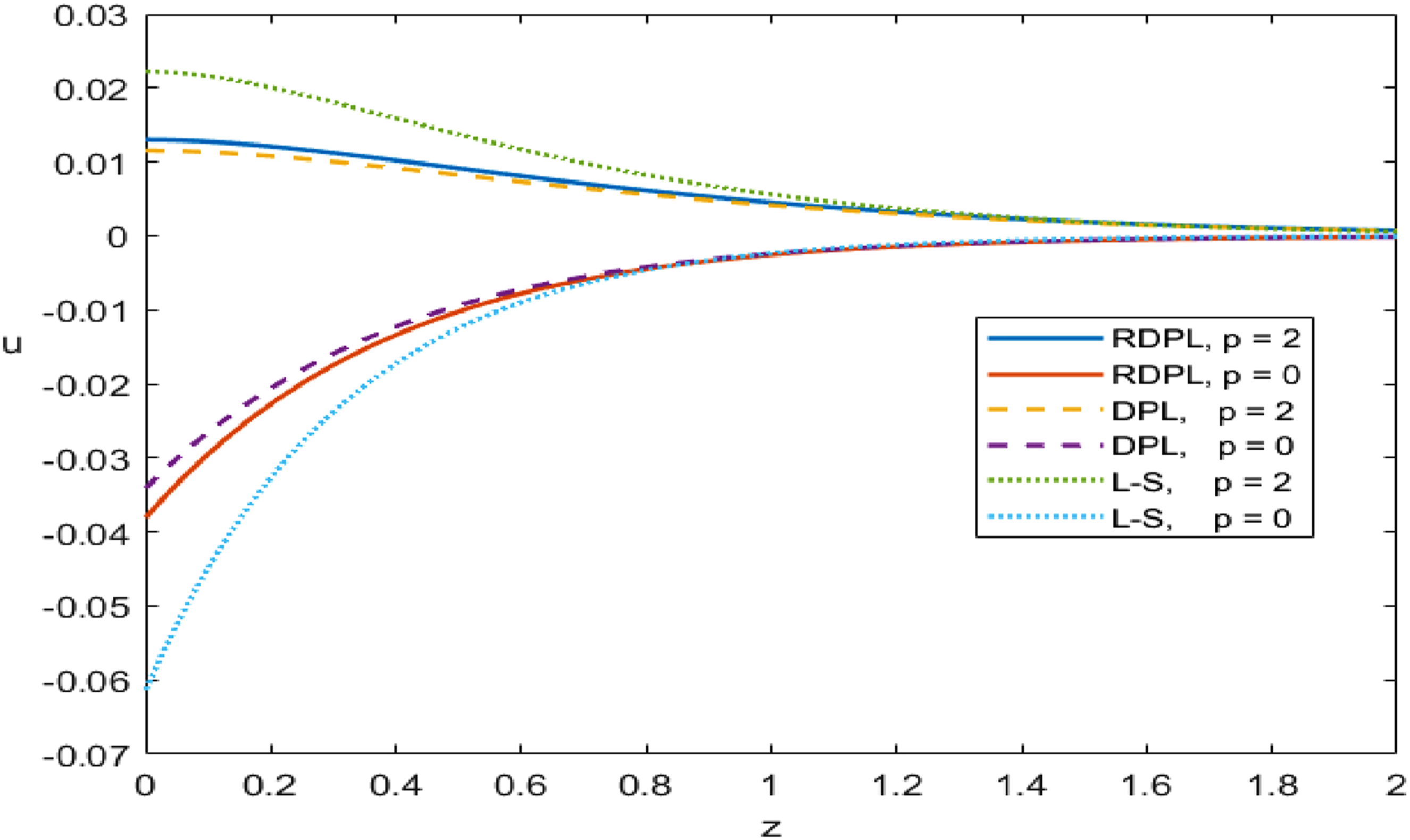
7. Comparative analysis
The current study is closely related to past investigations on thermoelastic wave propagation in semiconductor media under the influence of initial stress (refs. 28,49). However, the current study introduces a more broad theoretical approach as well as an advanced fractional modeling methodology, significantly expanding the scope of earlier assessments. To stress the novelty and contribution of the current work, a concise comparison with Refs. 28 and 49 is presented.
The current results are in qualitative agreement with those reported in Refs. 28 and 49 in several respects: 1. The three studies investigate thermoelastic wave propagation in semiconductor media subjected to initial stress effects. 2. The normal mode analysis technique is employed as the principal mathematical tool for obtaining the analytical solutions. 3. Similar physical behaviors are observed, particularly the attenuation of stress waves and the gradual decay of thermal fields during propagation.
Despite these similarities, the present work differs substantially from Refs. 28 and 49 in the following aspects: 1. The previous studies were formulated within the frameworks of the coupled thermoelasticity theory, the L-S theory, and the Green-Lindsay theory without fractional-order formulations, mainly for a thermoelastic. In contrast, the present work is developed using RDPL model, DPL model, and L-S theory within the framework of β − fractional derivative. 2. Unlike the earlier investigations, the present study provides a comparative analysis among the L-S theory, DPL model, and RDPL model under the effect of β − fractional derivative, which allows a broader examination of thermoelastic wave behavior. 3. The obtained numerical results provide deeper physical insight into the influence of the fractional parameter on wave propagation characteristics, including amplitude variation, thermal dissipation, wave speed, and attenuation behavior. 4. The present formulation demonstrates that the RDPL model combined with the β − fractional derivative yields richer dynamical responses and greater flexibility in describing thermoelastic interactions compared with the classical generalized thermoelastic models considered previously.
While prior research stressed the importance of beginning stress in semiconductor thermoelastic processes, the current work extends the existing literature by deriving analytical wave solutions inside a generalized RDPL model under β − fractional derivative. Furthermore, the established model may have prospective applications in various modern technical fields, including semiconductor engineering, precise measurement technologies, automation systems, and advanced electronic gadgets.
8. Conclusion
This study analyzed the effect of initial stress on wave dynamics in semiconductor thermo-elastic media using the RDPL model, DPL model, and L-S theory. The governing equations were designed to account for mechanical, thermal, and carrier transport factors, allowing for a thorough investigation of coupled thermo-elastic semiconductor behavior. The findings show that the initial stress has a significant impact on displacement, temperature, stress components, and carrier density distributions. Initial stress states affect wave speed, attenuation, and phase characteristics by changing the medium’s effective elastic properties. These effects are most pronounced in semiconductor materials, where mechanical fields interact directly with heat and carrier transport processes. A comparison of fractional and classical models shows that the β − fractional derivative is key in representing relaxation events. Fractional formulations consistently provide smoother distributions, lower peak amplitudes, and more stable responses, implying more physical realism. Among the three theories investigated, RDPL model delivers the most accurate and steady predictions, completely avoiding non-physical oscillations and artificial peaks that can occur in DPL model and L-S theory. While DPL model improves on classical models by integrating phase delays, it lacks the higher-order refinement required for ultra-fast processes, whereas L-S theory is relatively insensitive to effects. Incorporating starting stress and fractional-order heat conduction improves the modeling capability of thermo-elastic semiconductor theories. As a result, the RDPL model with fractional formulation provides a strong and dependable framework for studying wave propagation in advanced semiconductor materials, particularly in applications involving microelectronic devices, optoelectronic systems, and high-frequency thermo-elastic phenomena.
Footnotes
Acknowledgements

Author contributions
The authors declare that the study was realized in collaboration with the same responsibility. All authors read and approved the manuscript.
Funding
The authors disclosed receipt of the following financial support for the research, authorship, and/or publication of this article: The APC was funded by Qassim University (QU-APC-2026).
Declaration of conflicting interests
The authors declared no potential conflicts of interest with respect to the research, authorship, and/or publication of this article.
Data Availability Statement
All data generated or analyzed during this study are included in this published article. Further information is available from the corresponding author upon reasonable request.