Abstract

Hybrid Event: The Townhouse Hotel, Melrose & Microsoft Teams
CONTENTS
Oral presentations:
Session 1 – page NP3 Session 2 – page NP3 Session 3 – page NP4 Session 4 – page NP5
Index of Poster Presentations – page NP10
Thursday 29 September 2022
ORAL PRESENTATIONS
SESSION 1
Chair: Dr Rob Laing, Consultant Physician, Aberdeen Royal Infirmary
Recognising and Responding to the Vulnerable Patient
Dr Niall Campbell
Consultant Liaison Psychiatrist, NHS Borders
Physicians are often aware of patient's vulnerability, whether it be coming to terms with a new cancer diagnosis or managing chronic illness. The challenge comes in knowing what to do with those patients who seek answers we don't have. This is further complicated by the patient who presents with a vulnerability in the context of abuse at the hands of a loved one, friend, acquaintance, carer, or institution. It is in these circumstances that Physicians can feel out of their depth in being able to offer solutions or guidance to reduce the risk of harm to the patient. The physician may struggle to identify patient cues suggesting increased vulnerability, avoid the emotional quagmire that may ensure if one does identify a problem. There is often the dilemma of who and where to seek help or advice. It is essential for physicians to have a framework in mind when dealing with these challenging situations, an understanding of the need to share our concerns and recognise that this is not something you should be dealing with alone.
Update on Type 2 Diabetes
Dr Alison Heggie
Consultant in Diabetes and Endocrinology, NHS Highland
Type 2 Diabetes is common in medical inpatients, and the prevalence is increasing in the UK. There has been significant growth and development in newer drugs for Type 2 Diabetes in the past 20 years. Many of the newer medications have significant benefits both for glycaemic control and other areas, in particular cardiovascular and renal health. Yet as with any medication there are potential adverse effects which could present on the acute take. This presentation will cover the range of medications for type 2 diabetes, their benefits and potential problems, along with case studies for illustration.
SESSION 2
Chair: Dr Ruth Richmond, President, Scottish Society of Physicians
Investigation and management of gastrointestinal bleeding
Dr John Wilson
Consultant Gastroenterologist, NHS Fife
The technical and logistic provision of services for GI bleeding has improved, but mortality remains significant at 6–10%. Nearly all of those who do not survive have serious co-morbidity. The more rigorous adoption of principles already well-established would save lives, but gaps within service provision also need to be addressed. Current models of service would benefit from review.
Chest pain, troponin and why, when you ask five cardiologists, you get seven answers
Dr Anne Scott
Consultant Cardiologist, NHS Forth Valley
Chest pain is the second most common reason to present to the emergency department. Potential causes are innumerable. Dr Scott will explore the utility of clinical judgement, ECG's and biomarkers in such presentations and review real cases which provide important learning points. Dr Scott will also attempt to shed light on the vagaries of cardiologists and why when you ask two cardiologists you might be faced with three opinions!
FITZGERALD PEEL LECTURE
What makes medical work so demanding? Insights from occupational psychology
Dr Caroline Elton
Occupational Psychologist & Author “Also Human”
The 2022 GMC Trainee survey found that 40% of trainees felt burnt out to a high or very high degree because of their work. But what exactly is burn out? And what is it about contemporary medical practice that the reported levels of burnout are so high? In this talk, the origins of the concept of burnout will be traced, and evidence presented that although wellbeing at work has deteriorated following the Covid-19 pandemic, burnout was a significant issue in the medical workforce both in the UK, and across the world, long before 2020. Drawing on the work of Viktor Frankl, the argument will be made that burnout happens when highly motivated professionals, who identify with their work, find themselves unable to accomplish their work goals and thus feel unable to make a significant personal contribution through their work. This model locates the origins of burnout in aspects of the work environment, rather than as being due to a lack of personal resilience on the part of the doctor. With reference to research carried out by occupational psychologist Michael West, the specific aspects of the work environment that increase the risk of burnout will be explored. Finally, with reference to insights from Martin Seligman's positive psychology approach, practical steps that individual clinicians can take to enhance the quality of their working environments will be outlined.
Friday 30 September 2022
SESSION 3
Chair: Dr Effie Dearden, Consultant Geriatrician, Borders General Hospital, Melrose
Biologic drugs – what the general physician needs to know
Dr Anne McEntegart
Consultant Rheumatologist, Glasgow Royal Infirmary
The focus of this talk will be on the use of biologic drugs in rheumatology.
Areas covered will be
current biologic drugs used in rheumatological practice indications for their use in rheumatoid arthritis and spondyloarthritis illustrated with 2 case presentations side-effects of biologic drugs COVID-19 and biologic drugs
HIV infection in medical clinics
Dr Dan Clutterbuck
Consultant in Genitourinary and HIV medicine & Clinical Lead for Sexual and Reproductive Health, Chalmers Centre, Edinburgh
In 2020, Scotland achieved the UNAIDS 90:90:90 targets of 90% of people living with HIV being diagnosed, 90% of those diagnosed being on therapy and 90% of those on therapy having an undetectable viral load. Scotland's ambition to achieve zero new HIV transmissions by 2030 will be announced on World AIDS Day 2022 and is now realistic. The major obstacle remains identifying undiagnosed infections in a low prevalence population. I will discuss the potential barriers to routine testing and the indications for HIV testing in general medical settings, along with a quick overview of the elements involved in making HIV transmission elimination a reality.
Ocular presentations to acute medicine
Dr Justin McKee
Consultant in Medical Ophthalmology, NHS Lothian
This presentation will cover the main interfaces between ophthalmology and acute medicine. The main topics covered will be the swollen optic disc, ophthalmic manifestations of giant cell arteritis, double vision, ocular infections and the emerging topic of ophthalmic complications of immunotherapy.
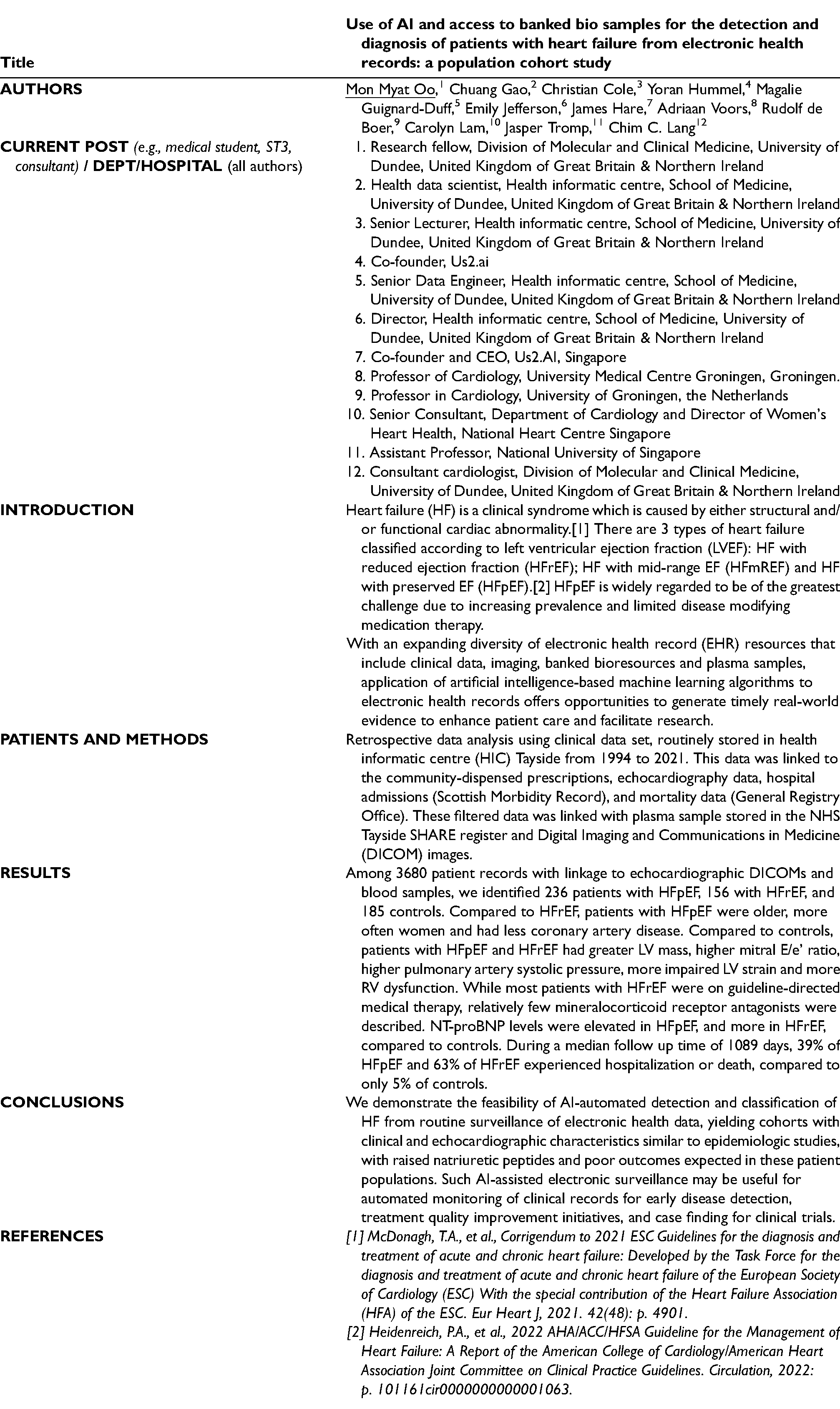
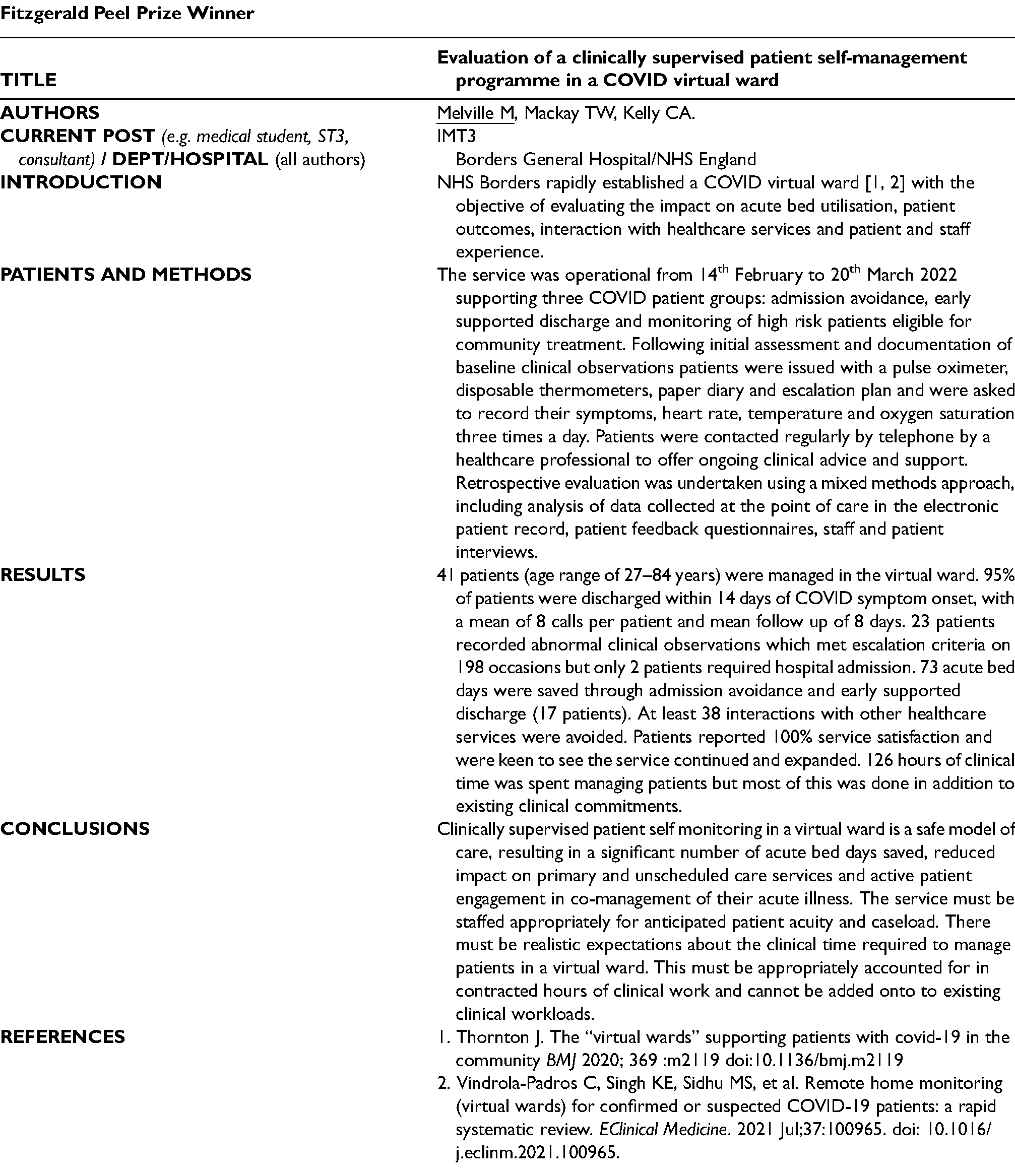
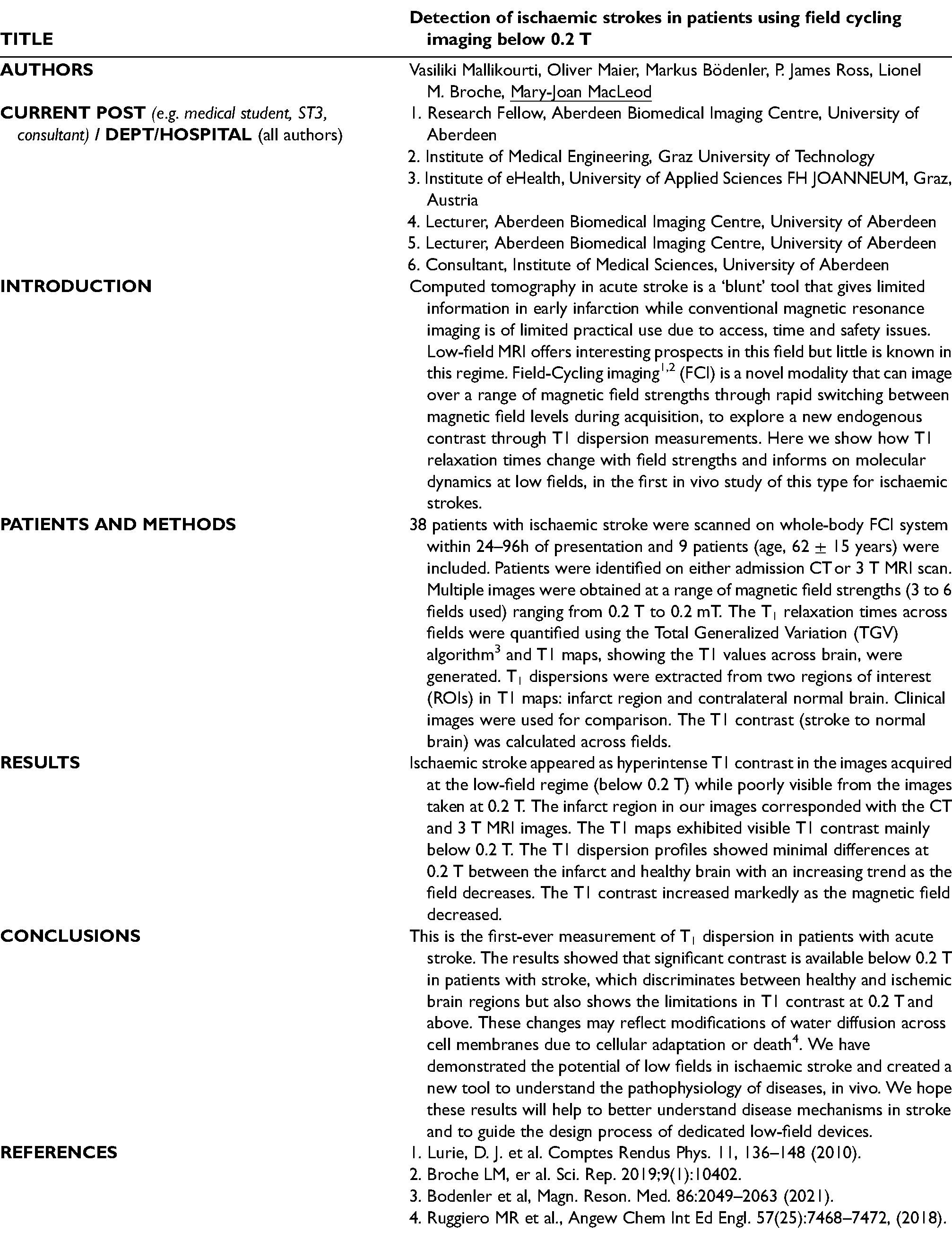
SESSION 4 – SCIENTIFIC ABSTRACT PRESENTATIONS
Chair: Professor Jesse Dawson, Professor of Stroke Medicine, University of Glasgow
(presenting author underlined)
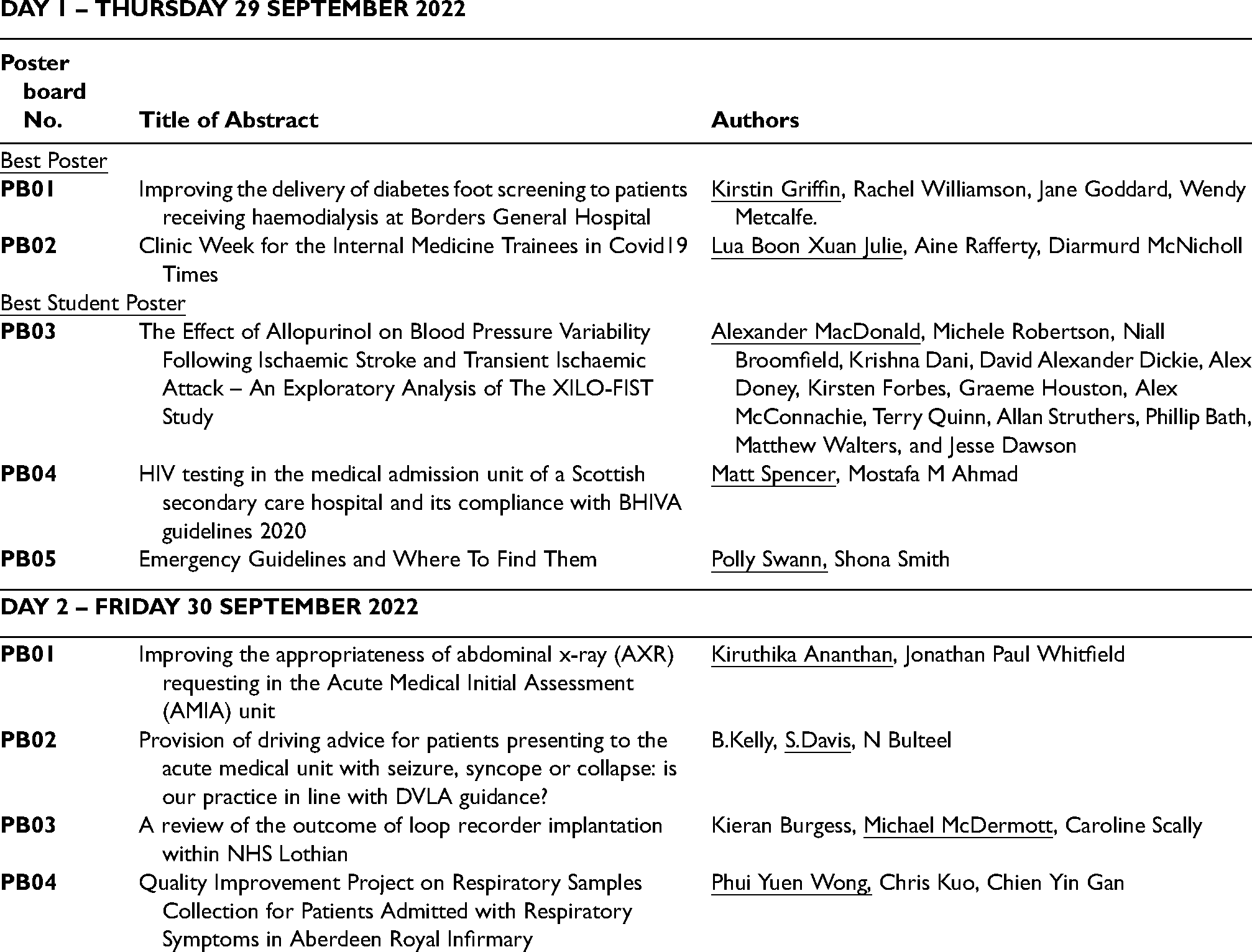
INDEX OF POSTER PRESENTATIONS