







Abstract
Aeronautics and air transport is a vital sector of our society and economy. Air transport logistics is one of the key players to support efficient globalization; however, sustainable mobility is at stake, due to facts such as the interdependencies with the financial system, climate change and an increasing scarcity of resources. This paper highlights the consequences of a lack of a proper understanding of air-side and land-side, leading to an unsustainable air transport system. A system approach for knowledge sharing between air traffic controllers, handling operators, airlines and airport managers is justified by means of causal models to design a mitigation mechanism to tackle perturbations instead of increasing the latent capacity. The simulation benefits to design indicators of sustainability are also mentioned.
1. Introduction
The growth in air travel under present traffic patterns and procedures is outstripping the capacity of the airport and Air Traffic Control (ATC) system, resulting in increasing congestion and delays. In addition, the poor utilization of the available infrastructure usually leads to greater investments in additional gates, runways and extensive pavements for taxiways and aprons. Unfortunately, a general misunderstanding of the different aeronautical operations to be properly coordinated both in the air side and in the land side, together with a lack of methodologies to support decision making integrating both strategic and tactical goals and constraints, has lead to an unsustainable air transport system (the annual cost of delays in Europe due to congested airports and airspace was estimated to be €990 million in 2004). According to Eurocontrol’s Performance Review Report, 1 air transport punctuality in 2010 was the worst recorded since 2001 (24.2% of flights delayed more than 15 minutes versus schedule) although traffic was below 2007 levels and traffic growth was modest. Congestion remains an issue at several major European airports, notwithstanding the traffic downturn in 2009.
Congestion has a negative impact on the environment and on safety because of an unprecedented level of the density and complexity of operations. It is obvious that these facts are threatening the efficiency and sustainable development of the entire European air transport system. In order to improve usage of the infrastructure and adapt it to increasing passenger and cargo flows, a proper coordination off all the agents that participate in the turnaround operation is mandatory to avoid the propagation of perturbations between the apron operations and the terminal operations.
Some examples of unacceptable consequences of this lack of understanding of air transport dynamics with impacts in the economic, environment and social areas are as follows.
Holding trajectories: when aircrafts arrive at the Terminal Maneuvering Area (TMA) of an airport, the tower traffic controller checks for the availability of the runway to clear a landing operation, or vector the aircraft to a holding trajectory, in which the aircraft will be flying in circles waiting for the clearance of a descend operation. Figure 1(a) represents the ICAO (International Civil Aviation Organization) procedure for holding trajectories. 2
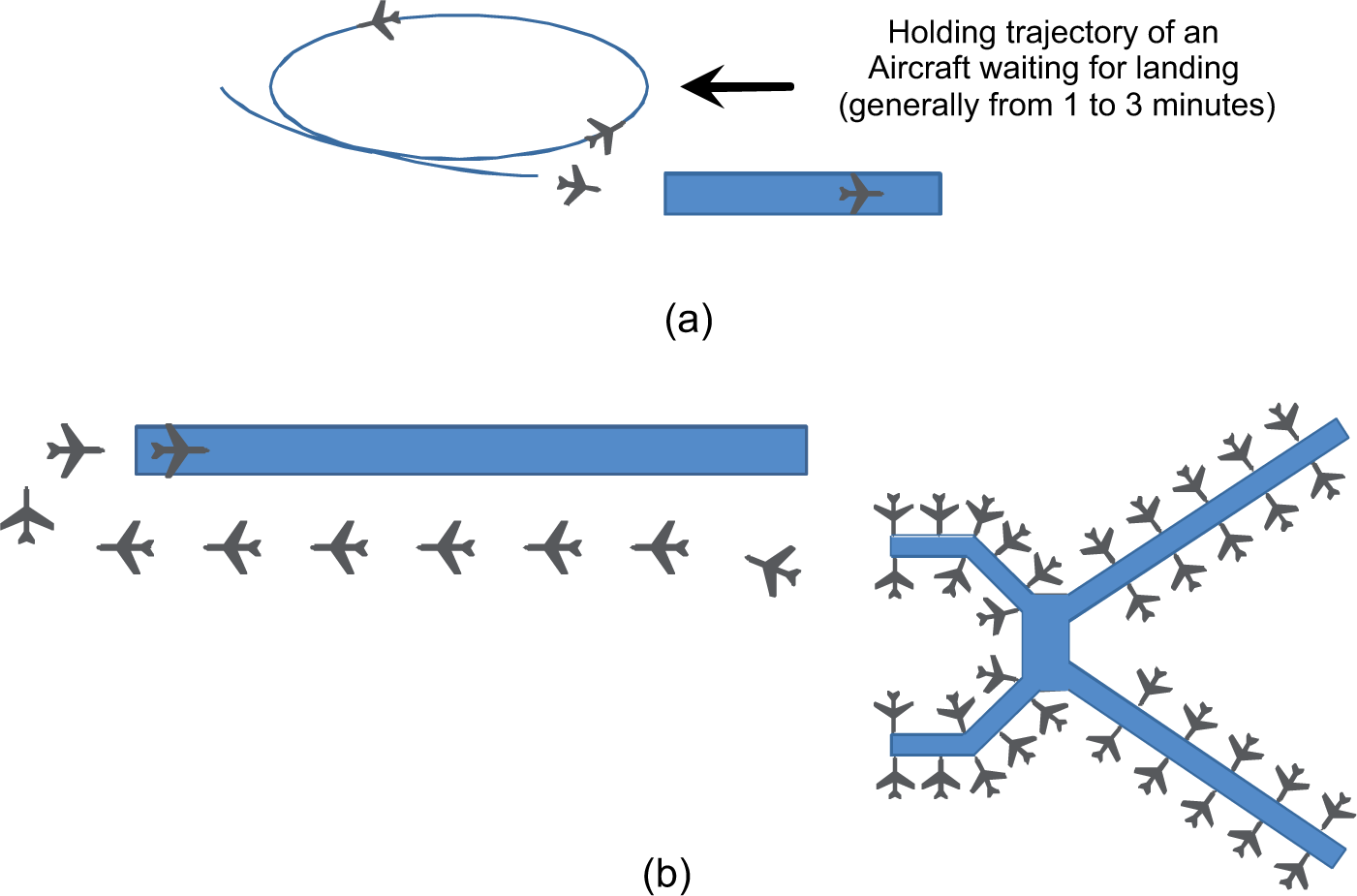
Aircrafts waiting for a landing or take-off operation.
Taxiway delays: for the take-off operation, an aircraft receive a clearance from its parking position as soon as the passenger embarkation process is finalized and the aircraft receives an approved flight plan. Airport parking positions are connected to the runway through a shared pathway known as a taxiway. Due to the different performance of handling operators, and the dynamics of the different aircrafts, it is quite frequent to see long queues of aircrafts waiting in the taxiway to reach the runway threshold. Figure 1(b) represents a typical queue of aircrafts waiting for a departure operation.
Airport pathway saturations: handling operators are responsible for attending aircraft ramp operations under certain time constraints arranged with the airline company. From transport theory, it is well accepted that the speed of mobile handling resources (tracks, air stairs, tow, fuel tracks, buses, push backs, etc.) in the airport pathway platform can be maintained around 40 km/h only if the number of resources does not exceed a certain number of vehicles that can saturate the pathways and force a low average speed around of 5–10 km/h. The layout of the airport, the distance from the terminal to the aircrafts’ parking positions and the interaction between the taxiways and the pathways, usually leads to a pathway saturation condition in which mobile handling resources are waiting with the engines on to reach the aircraft parking position. Figure 2 illustrates the number of handling mobile vehicles to be coordinated in a particular turnaround operation.
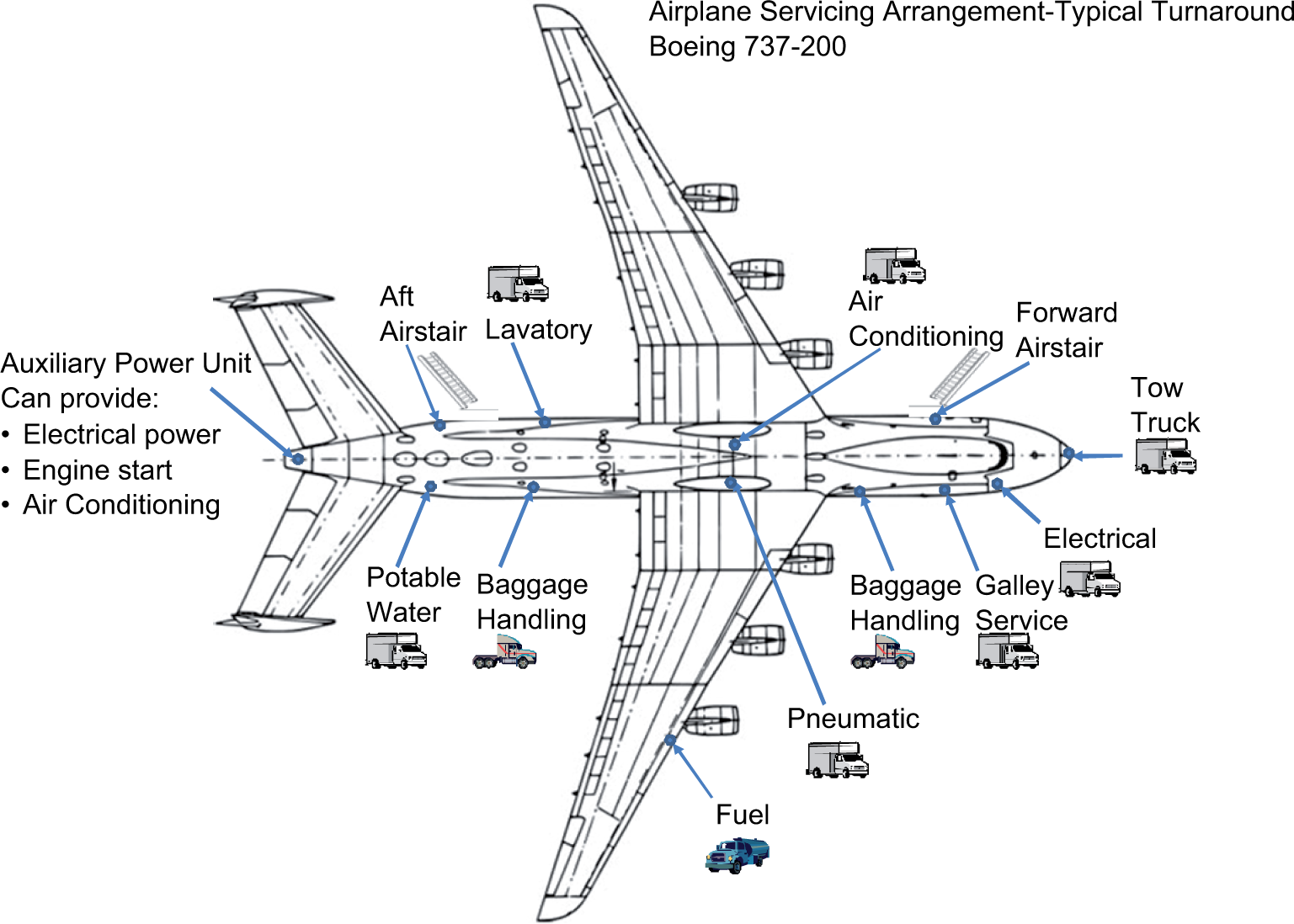
Airport and Air Traffic Control workload.
Airport urban overextension: a misunderstanding of the poor utilization of the available infrastructure usually leads to greater investments in additional gates, runways and extensive pavements for taxiways and aprons. By increasing the urbanization of an airport, longer distances to reach the parking positions will be necessary in each operation, increasing at the same time the probability of bottlenecks in the different pathways and taxiways.
Airport regulations: the airspace is fragmented in sectors with a certain capacity, mainly constrained by the capacity of the air traffic controllers assigned to each sector to monitor the traffic and take control actions when the safety distance between two aircraft trajectories can be violated (Figure 3). The number of trajectories supported in one sector depends on the characteristics of the traffic, but typical values are around 30–45 trajectories. At the strategic decision making (usually 24 hours before the day of the operation), flight plans are accepted according to the airspace capacity, allocating for each flight plan a departure slot from the origin airport. At the operation day, sometimes, some accepted flight plans are regulated at the origin airport (i.e. delayed for 2 or 3 hours) because it is expected that some air sectors can exceed their capacity due to predictions on the time arrival to those critical sectors of previous delayed aircrafts. As a consequence of delay dynamics, some unnecessary regulations are applied, generating instable demand patterns on sectors.
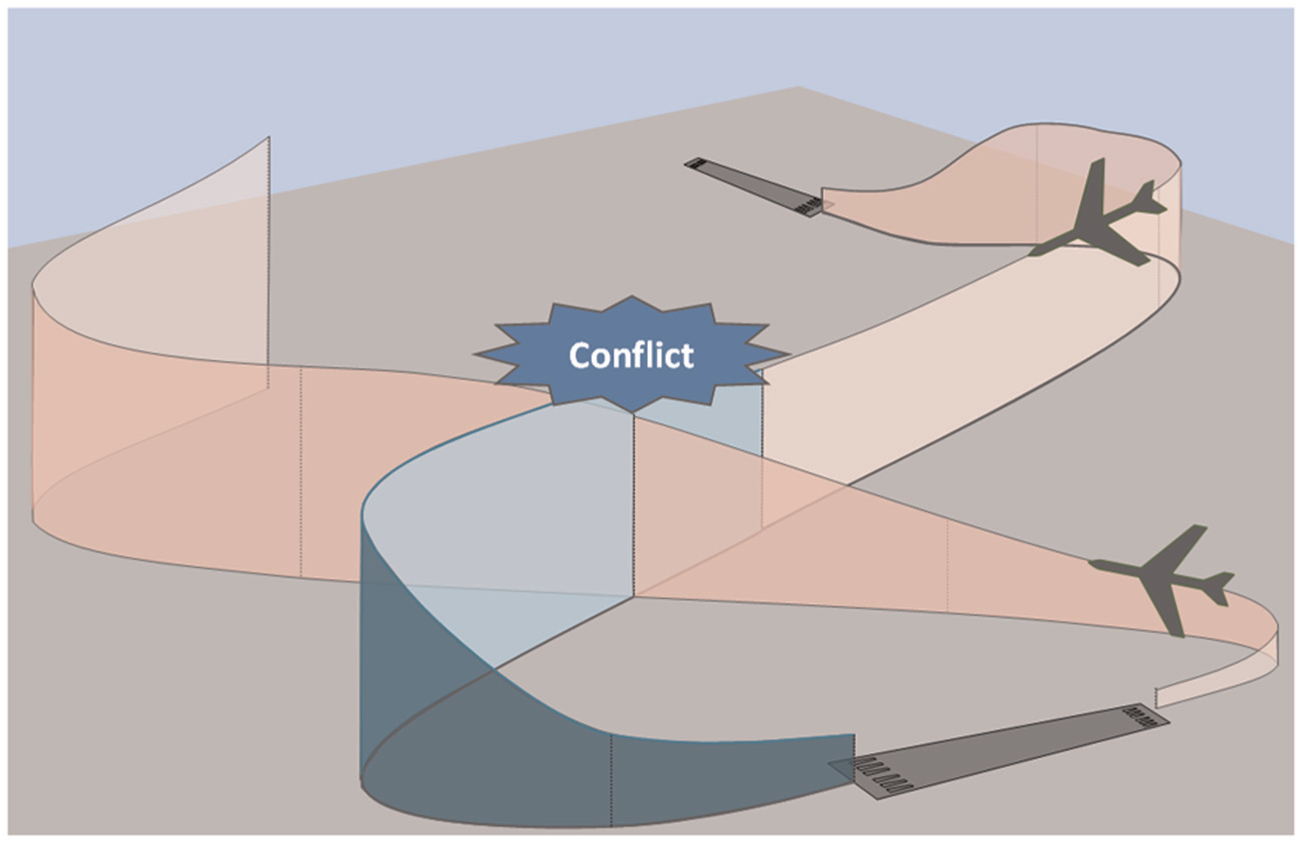
Air traffic management and air traffic controllers’ workload.
The first four examples have a direct impact on the environment and the economic cost of the operations due to the unnecessary fuel burnt, and also a social impact due to unnecessary delays on the programmed times, which affects not only passengers’ quality factors, but also the industrial system (i.e. delays to air cargo transport) and the cost of handling to airline operators due to extra labor time frames. The emissions from aviation are approximately 3.5% of total CO2 emissions in Europe. 1 Of the estimated 6% ANS (air navigation services)-related fuel inefficiency, the horizontal en route flight path holds the highest potential for ANS-related improvements (3.7%), followed by terminal transit (1.2%) and inefficiencies in the taxi phase (0.7%). Furthermore, due to strict regulations on crew time flight, sometimes the accumulation of small delays in the first legs can force the airline company to program a new crew for the last leg, increasing considerably the costs of the operations, and non-controlled delays.
One of the most commonly quoted definitions for sustainability, and in the author’s opinions one of the most comprehensive, is 3 “Sustainable development is development that meets the needs of the present without compromising the needs of future generations to meet their own needs”.
There are several researches that are trying to improve the performance of the operations to reduce both the fuel consumption and the air quality index impact by optimizing the operations in the TMA. Robinson and Kamgarpour 4 present the benefits of the well-known continuous descent approach in the TMA under high-density conditions; Coppenbarger et al. 5 present an algorithm for the efficient arrival sequencing and merging in a TMA; Korn et al. 6 describe AMAN (Arrival Management) using four-dimensional trajectories (4DTs), considering the FMS (Flight Management System) capacities; Thipphavong et al. 7 present TMA design considerations for a more efficient arrival management.
Alternatively, there are also several research teams working on the capacity–demand Air Traffic Management (ATM) balance from an environmental friendly approach, summarizing most effort in the green delay program in which the delaying of aircrafts on ground is one of the most used strategies for reducing fuel consumption and, consequently, their environmental impact. In Ball and Lulli, 8 Carlier et al., 9 Mukherjee et al. 10 and Bloem and Huang, 11 the main aspects of the ground delays program are presented considering different causes of delays and perturbations that can affect the overall ATM capacity, while in Gwiggner et al. 12 the causes and effects of airspace congestion are analyzed, including how it propagates under a correlation analysis point of view.
It is also worth mentioning the research on environmental models for high-fidelity atmospheric weather conditions, since results directly affects aircraft speed, location and engine thrust during flight, which drives the fuel burn, emissions and noise consequences. New modeling methods developed are capable of using varying weather inputs, and also implementing methods for obtaining and utilizing high-fidelity weather, which has the potential to make the outputs of environmental models much more realistic. Such improvements can directly enhance the utility of simulation-based air traffic planning and management tools, whether driven by measured aircraft position data or by standard flight procedures. The Eurocontrol Experimental Center 13 and ICAO Committee on Aviation Environmental Protection 14 provide the main aircraft performance databases used to evaluate the performance and environmental impact of aircraft operations.
For this new millennium, there are two air transport programs (ACARE 2020 15 and Flight Path 2050 16 ) with special focus on the environmental area, proposing an important cut in CO2 per pax-km (50% in 2020, 75% in 2050), in NO x emissions (80% in 2020, 90% in 2050), perceived aircraft noise reduction (50% in 2020, 65% in 2050), reduction in accidents and punctuality (99% of all flights arrive within 15 minutes of plan by 2020, all flights arrive within 1 minute of plan by 2050). NextGen 17 is the main USA-founded research project to coordinate research in the future ATM system, while its counterparts in the European sector are SESAR 18 and CleanSky. 19
In this paper, the benefits of causal models to deal with air transport inefficiencies and their impact on the economic, social and environment areas are analyzed.
2. Emergent dynamics versus perturbations
Unexpected changes in the arrival flight schedules may disrupt the initial aircraft-gate assignment, and result in congestions and delays in getting aircraft onto gates. Thus, a small delay caused by a reassignment to a remote point will introduce an extra deadline on the disembarking process that will be propagated through passenger actions (i.e. transfer operations) and also on the boarding process.
Nowadays, in a fragmented airport information system (different actors with different goals: airline, handling, airport infrastructure manager) a single delay in a certain operation can be easily propagated through all the airport subsystems. It can be noticed that in order to avoid idleness in handling resources, handling operations usually are scheduled to saturate workers and resources, while providing a timely service. In this context, a similar event propagation appears due to a delay in the start of the fuel truck positioning operation, which can cause a delay in releasing the truck, which can generate a delay in attending to the next fueling operation.
Lack of a shared understanding of the land-side and the air-side dynamics paves the way for perturbations to flow freely through the different processes, propagating downwards new delays with unknown economic and environment penalties, and with a negative social impact. Thus, a word of caution regarding perturbations should be highlighted from the simulation community, since despite the fact that the cause of the seed of a delay could be found in weather conditions, most delays appear as a consequence of a lack of mitigation mechanisms and should not be considered as spontaneous perturbations. In the present day, due to latent capacity within the air transport system, the effects of those context-sensitive configurations are often mitigated by the dynamics of the system, which usually behaves as a stable system. However, simulation results indicate that when the air traffic flow management (ATFM) system becomes highly stressed, by increasing the number of flights and the number of congestion areas for example, key characteristics of emergent dynamics are identified that propagate rapidly beyond individual subsystems (i.e. airport, air traffic sector and airline).
A deep knowledge of the different interdependencies is essential to understand these emergent dynamics and, in particular, to identify how disruptions propagate in different ways through the ATM network. Some critical factors that cannot currently be efficiently supported by most non-causal models include the following.
The number of flights at downstream airports that need to use the aircraft of the upstream flights: the causal model should allow reproducing at a macro level a causal graph in which the weights will be related to the delays of the upstream flights that may directly lead to the delays of the downstream flights that are waiting for the delayed resources.
Critical flight resources to be modeled should not be limited to aircraft, but should also include cockpit and cabin crews and passengers. Several interdependencies could be obtained that amplify the delay impact; consider a scenario using three of the resources mentioned. An upstream flight delay could impact three downstream flights (flight 1 needs the aircraft, flight 2 should use the flight crew and flight 3 is waiting for connecting passengers, for example). Thus, the upstream flight delay may result in delays to all three downstream flights. Another scenario could be easily identified when a downstream flight needs to wait for the aircraft, cockpit and cabin crew resources of three different upstream flights, then the delay of the downstream flight must be computed by the delays of the three upstream flights rather than a single flight.
Delays caused by waiting for flight resources (aircraft and crews) and delays due to competition for airport resources (runways, taxiways, contact points, etc.) may further impact each other, thereby increasing the degree and extent of delay propagation. This can happen due to many reasons. On the one hand, a delayed flight that is waiting for the resources of an upstream flight may eventually compete with other flights for runway resources at a later time. This may result in further delay to the flight itself or delay to one or more of the competitors. On the other hand, a flight delayed due to competition with other flights for constrained resources at a given time may result in additional delay to downstream flights that are waiting for the delayed flight resources (aircraft or crews).
A state space approach based on the quantitative and qualitative analysis of a causal model will allow a better understanding of the tight and soft coupling effects on a complex dynamic system, such as the European ATM network. Furthermore, the structured knowledge of the delay dynamics will allow the application of well-accepted techniques such as data mining for pattern recognition, which is essential to manage qualitatively the huge amount of data related to ATM state evolution.20–26
3. Causal analysis
Causal models 27 contribute to identify those airport operations whose scheduling can lead to future delays due to emergent dynamics when perturbations appear at a certain step of the chain of programmed operations. Causal information can be used to:
tune more robust airport decision support tools considering the particular characteristics of each airport and the programmed traffic at different time intervals;
design mitigation mechanisms to avoid the propagation of perturbation effects through the airport programmed operations.
An understanding of the system-wide effects of major (or even minor) “interventions” at the local level (e.g. intelligent dispatching rules or ground management infrastructure policies that consider the effects not only in the local airport, but also in the system of systems airport network), as well as changes at a European level (e.g. assisting in reference business trajectory/shared business trajectory (RBT/SBT) planning and conflict resolution processes at strategic level), would provide a new valuable information when trading or coordinating RBT slots/capacity between different airlines.
Thus, a causal analysis tool based on state space evaluation would provide the following.
A valuable information source for the centralized coordination of flow control activities: a delay network causal model will contribute in the planning and design of flow management units and strategies, as well as to support, in “real time”, the activities and operations of those units.
Quantitative and qualitative indicators for tight “couplings” between flights at geographically dispersed airports in order to understand the “ripple effect” (delays at one major airport have a rapidly propagating effects) throughout a system of airports and, many ATC en route sectors, as well.
Valuable knowledge to help produce requirements for an air traffic information management tool, which is considered as essential to help design schedule/business trajectory planning and management support automation that can, for example, give higher priority to those flights that are not only carrying a delay, but which risk the fast propagation of delay throughout the entire ATM network with far-reaching impacts. Previous studies regarding delay causes, such as the Federal Aviation Administration (FAA), 28 describe the increase in delays and cancellations from 1995 to 1999. However, the models used simply confirm that the current system for collecting causal data does not provide appropriate data to support the development of strong conclusions relating to delay causes. Including an excessive amount of detail or unnecessary capabilities could result in a dramatic reduction in computational performance for such an enhanced model, rendering it of little practical utility: oversimplification of reality in the interest of computational efficiency may equally render the model of little use for certain types of applications.
The ability to draw meaningful conclusions about the overall ATM system behavior from a model with an enormous total number of states, which considers that the capacity of the different affected airports varies dramatically depending on which configuration is in use.
Some examples of the application of causal models to improve the sustainability of air transport operations using causal models and state space analysis tools are as follows.
Piera and Baruwa 29 present a simulation approach for the optimal sequencing of aircrafts on a single runway operating in mixed mode (landings and take offs) using state space analysis. System dynamics are specified using the Colored Petri Nets (CPN) formalism. The approach is capable of automating the decision activity (scheduling), analyzing different scenarios of scheduling policies and optimizing the runway capacity at any given time based on actual or dynamic traffic flow. It is aimed at validating not only the expected benefit of capacity and safety, but also the benefits on efficiency from the air traffic controllers’ perspective.
In Ruiz and Piera, 30 a Conflict Detection (CD) and Conflict Resolution (CR) system is proposed based on a causal knowledge of convergence trajectories. The CD system is based on Spatial Data Structures and it returns a list with all the conflicts found among aircraft’s intended trajectories, including the geographical coordinates where the conflict occurs, all the involved aircrafts and the time window in which the conflict occurs. The CD implemented considers also the turbulences generated by aircrafts when flying. The CR algorithm has been integrated with the CD to efficiently deal with conflict-free trajectories.
In Zúñiga et al., 31 a discrete event model for the CD and CR algorithm in a TMA 4DT scenario is presented that focuses mainly on the arrival phase. The causal model arises from the overcrowding of airspace near large airports and the need to more efficiently land and take off larger numbers of aircraft. Some attempts to alleviate airspace congestion, such as the reduced vertical separation minima, negotiation of voluntary reductions in scheduled service and the construction of additional runways at major airports, have been done; however, there is still a pending matter to be solved regarding how to improve available airspace capacity avoiding non-efficient procedures such as the use of holding trajectories. A deep knowledge about all the events that take place in the management of 4DTs and their interactions in a TMA is essential to remove non-effective operations, to avoid delay propagation between arrivals and optimize the occupancy of the runway. The causal model developed considers different alternative pre-defined turning points for each flight evaluating path shortening/path stretching of all trajectories upwards of the merging point in a TMA. In Figure 4(a) different alternatives for conflict resolution have been represented, and their application to the Canary Island TMA is represented in Figure 4(b).
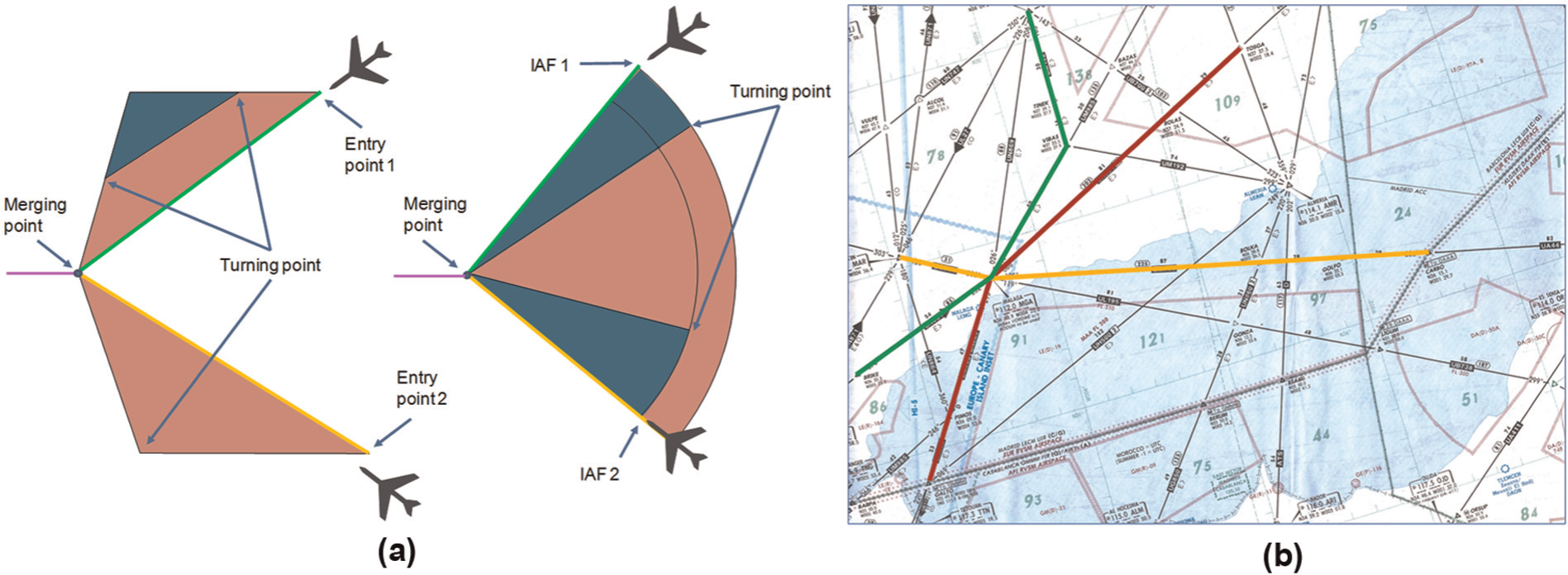
Alternative conflict-free trajectories.
4. Simulation models for the design of sustainability indicators
Airport indicators can be seen as values obtained from the information process of the state of the airport infrastructure operations at a certain time instant, together with the planned airport. The right design of these indicators is essential to airport operations centre (APOC) for understanding the degree of accomplishment of the different aeronautical process programmed and how far they are from where they should be. A good indicator alerts the user to a problem before it gets too bad and should help one to recognize what needs to be done to fix the problem.
Despite indicators of sustainability being different from traditional Key Performance Indicators, in the particular field of aeronautics, there is a tight link that interconnects performance with economy, environment and society areas. Table 1 summarizes some challenging indicators with a direct impact in the economics area, but with implications in the environment and society areas. The third column illustrates some potential benefits of using causal models to determine the operational context scenarios to improve air transport sustainability.
Air transport system indicators.
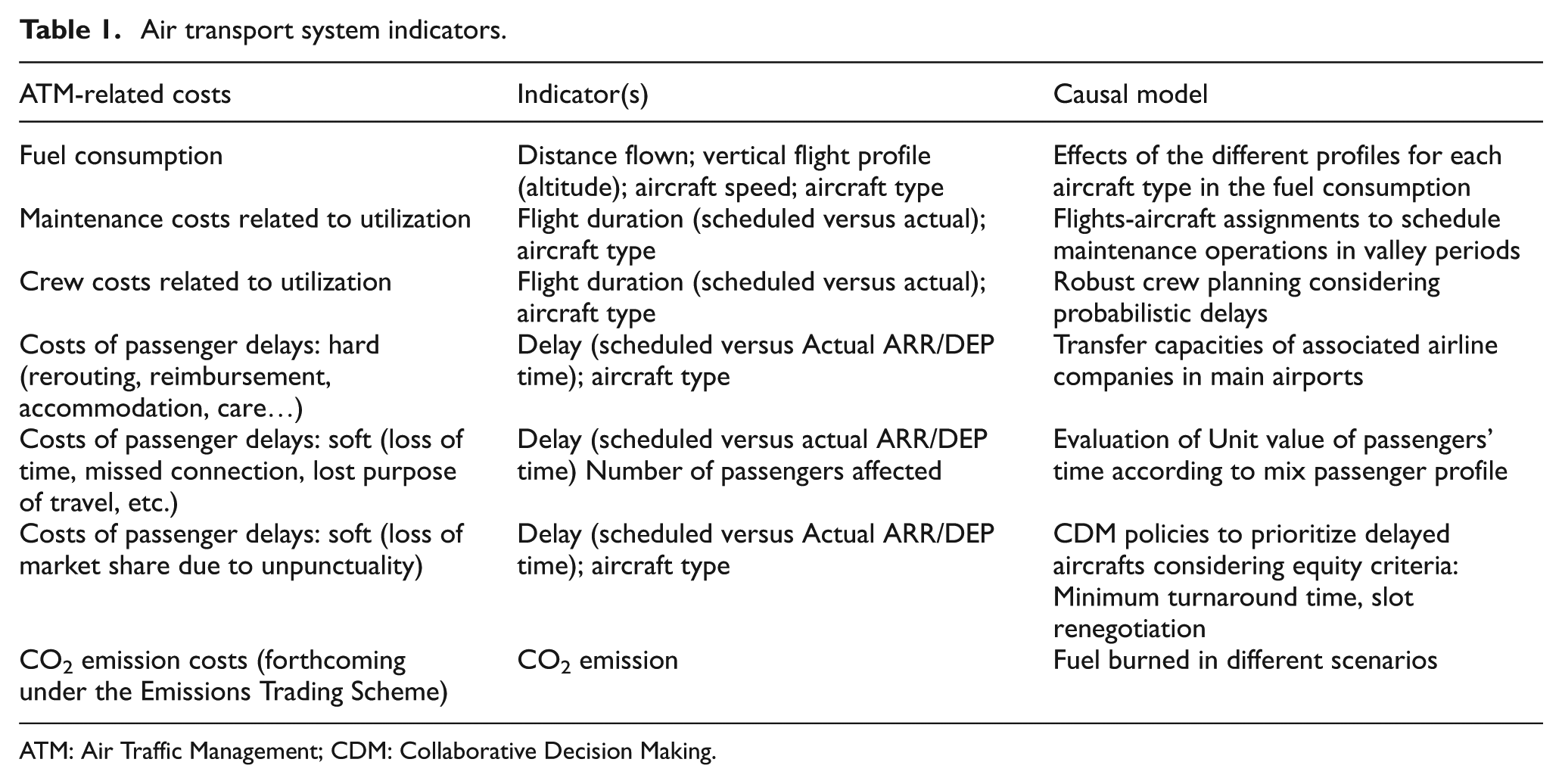
ATM: Air Traffic Management; CDM: Collaborative Decision Making.
Simulation models has been successfully used in a wide area of domains to design, evaluate and improve system indicators, as can be seen, for example, in the logistic arena in Bruzzone et al.32,33 and Longo and Mirabelli. 34 Causal simulation models can contribute as a challenging assessment method for sustainability as they can provide valuable information for guiding the decision and policy makers in adopting the right measures for infrastructure development. The indicators mentioned in Table 1 are used for operational and strategic aeronautical projects to tackle isolated performance targets wherever there is a lack of models to deal with sustainable trade-off solutions considering the complexity of multi-disciplinary indicators. The authors of this paper, together with Boeing Research Technology Europe and ALG-Indra, are collaborating in a Work Package-E (WP-E) Eurocontrol project35,36 which seeks the development of new metrics that could be integrated in a causal model to deal with a trade-off solution between different stake-holders (airlines, airports and ATM), while considering the impact on the different aeronautic operations.
5. Conclusions
The aviation sector recognizes the growing and urgent need for society to address the global challenge of climate change. It also emphasizes that aviation plays a vital role in promoting sustainable development and should remain safe, affordable and accessible in order to ensure mobility on an equitable basis to all sectors of society. The international community thus has a common responsibility to ensure that aviation can continue to deliver vital social and economic benefits, while addressing aircraft CO2 emissions.
In this paper the impact of a lack of decision-making tools that considers the interaction between the air side and land side is illustrated by means of several examples. The use of causal models to design mitigation mechanisms to avoid the flow of perturbations between the different airport processes has been presented, paying special attention to the potential benefits to support a sustainable air transport system.
Footnotes
Funding
This work was supported by the Ministry of Economy and Competitivity in the project “Fire Guided Unmanned Aircrafts and Resources Distribution (FireGUARD)”, CICYT Spanish program TIN2011-29494-C03-01.