







Abstract
The global trend is to increase the thermal comfort in all kinds of buildings, residential and non-residential. At the same time, minimization of energy consumption and improved building sustainability must be achieved. Only precise calculations can keep the balance between maximizing comfort and minimizing energy consumption. The PassivHaus (PH) is a special type of building with low heating energy consumption that fulfills special requirements defined by the Passivhaus Institut of Darmstadt, Germany. The PassivHaus concept has been successfully implemented in climates other than that of Germany. However, current practice in Southern European countries shows that PHs may exhibit overheating in the hot season, a phenomenon which is not very often encountered in Germany. Shading devices may be considered in these southern countries to improve the thermal comfort in PHs during summer. A model of the AMVIC PH office building located near Bucharest, Romania, has been developed using Simergy and EnergyPlus software. The model was validated and calibrated using measured data during summer. Measurements have been used to estimate the classical thermal comfort indices such as predicted mean vote and predicted percent of dissatisfied. Simulations have been performed to study the effect on thermal comfort of several shading devices, such as exterior blinds, exterior shades, and overhangs. Exterior blinds and exterior shades are generally more efficient than overhangs when the results are discussed with reference to transmitted solar energy flux through the windows.
1. Introduction
Scientists and engineers from a variety of fields have been working on building energy consumption minimization for a few decades. Forecasting tools for energy consumption have also been developed recently.1–6 PassivHaus (PH) is a special type of building with low energy consumption that fulfills special requirements according to the PassivHaus Institute (PHI) of Darmstadt, Germany. 7 The definition of a PH is: “A Passive House is a building, for which thermal comfort (ISO 7730) can be achieved solely by post-heating or post-cooling of the fresh air mass, which is required to achieve sufficient indoor air quality conditions – without the need for additional recirculation of air.” 8 The PH concept was developed in the Central European climate, more specifically that of Germany and Austria, where it was carefully analyzed with respect to heating energy demand and consumption. The concept migrated to the South European countries (e.g., the Passive-On Project 9 ) as well as to Eastern Europe.10–12 The climate of Eastern Europe has temperate continental features with harsher winters and hotter summers, while Germany’s climate has more maritime influences. Lower U-values are needed in cases of more severe winters. However, lowering the U-values results in overheating in summer, a phenomenon reported in Romania but which is less frequent in Germany.10,13 Even in colder climates the overheating phenomenon is more frequent than previously believed; Tabatabaei Sameni et al. considered overheating risk during the cooling season in 25 flats built to the PassivHaus standard over three cooling seasons in Coventry, UK. 14 This prompted the PHI to implement new calculation modules for shading and cooling in the most recent versions of the Passive House Planning Package software. 15
Renewable energy sources are expected to provide 20–40% of the primary energy in 2050 and 30–80% in 2100. 16 For this purpose, across Europe, dwellings will be constructed to comply with nearly zero energy buildings (nZEB) standards by 2020. 17 Deep energy retrofits, renewable energy technologies, and reducing the carbon intensity of energy sources are measures to be implemented to achieve net-zero emission status for the residential sector. 18
Over time, the PH Standard had evolved to take into account renewable energy. Renewable primary energy (PER) is being introduced as a worldwide certification criteria for Passive Houses. 19 According to the PHI, for a Classic Passive House, PER demand is less than 60 kWh/(m2a); for a Plus Passive House it is less than 45 kWh/(m2a); and for a Premium Passive House it is less than 30 kWh/(m2a). In addition, a Passive House must generate PER, more than 60 kWh/(m2a) for a Plus Passive House and more than 120 kWh/(m2a) for a Premium Passive House. 63
The operational performance and cost of a set of nZEB dwellings built as PassivHaus dwellings was examined and thereby investigates the potential of the PH typology as a solution to nZEBs. The nZEB dwellings, built to the PassivHaus standard, are characterized by low operating costs of less than €250 per annum for the combined costs of dwelling hot water, space heating, and ventilation. 17 A detailed energy analysis was used to explore pathways through which the house could be transformed into a net-zero energy house. It presents the end-use energy performance analysis of the eastern unit of a duplex built based on PH Standard requirements in Portland, OR, USA. 20
Building energy consumption and thermal comfort are the main issues of interest in thermal evaluation of buildings. The literature is scarce in terms of studies about the thermal comfort in PHs, either in winter or in summer.
Thermal and visual comfort in buildings can be provided by sun-shading systems. 21 The advantages of the sun-shading system in a classroom located in a PH buildings are presented by Wang et al. 22 The energy demand could be also affected by the shading systems, especially in connection with building orientation (for instance, the effect on south-facing buildings is normally greater than that on north-facing buildings 23 ).
The summer overheating problem depends on the climate at the building’s location. In residential PHs located in the continental climate of northern Slovenia, shading of the southern and western windows during hot periods, as well as minimization of internal energy sources, is necessary to maintain indoor temperatures within the comfort zone. 13 The implementation of the PH concept in Mediterranean countries is studied by Figueiredo et al. 24 This research intends to contribute to the implementation of the PH concept in Portugal, by means of a detailed study of the Aveiro region. The authors found that automatic shading systems could reduce significantly the overheating rate compared to manually operated systems.
Adding exterior shading devices could achieve PH requirements for several regions of mainland Portugal without using active cooling systems in the summer. 25 The overheating risk could be mitigated through the inclusion of solar shading and adjusting glazing ratios at the design stage. 26
In this paper we analyze thermal comfort during summer in a PH located in Romania in Southeastern Europe. Experimental as well as simulation results are reported. The experiments show the risks for overheating. The comfort is quantified by the using the predicted mean vote (PMV) model proposed by Fanger. 27 This classical model considers that human comfort depends on the quantitative, combined influence of six parameters (air temperature, mean radiant temperature, water vapor pressure, air velocity, closing level, and metabolic rate). Three different types of shading devices are considered and their effects on thermal comfort is studied by simulation. We are using a dynamic simulation software, the EnergyPlus package, 11 to calculate the thermal comfort parameters, which change from hour to hour. Simergy28–30 is the graphical user interface used for EnergyPlus. Two softwares, namely Window and Climate Consultant were used to process the input data for EnergyPlus. Window 31 was used to simulate the glazing system of the building, while Climate Consultant 32 was used to manipulate the EnergyPlus Weather Format (EPW) file.
2. Experimental and simulation methods and procedures
2.1. The AMVIC PH presentation
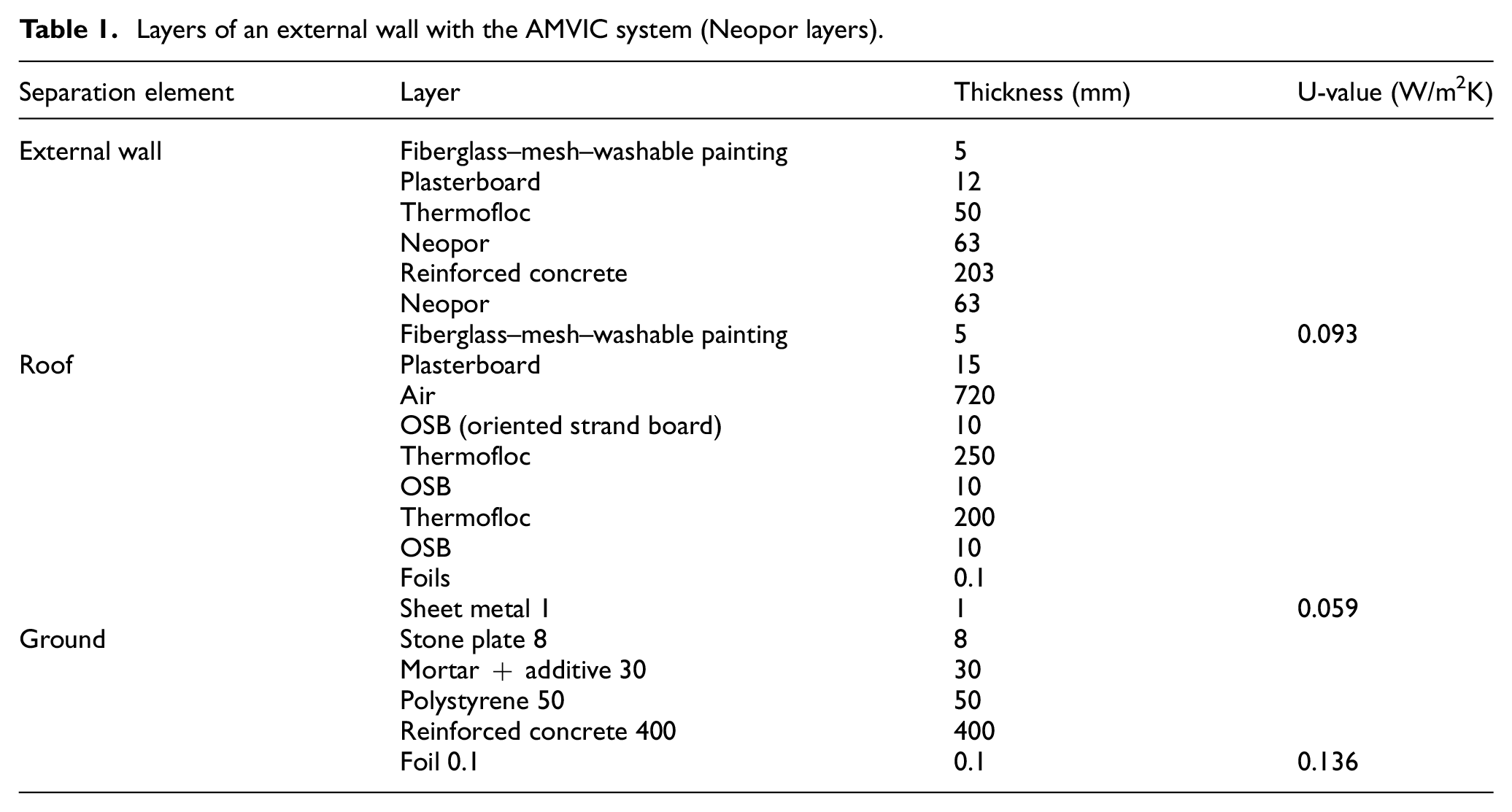
The AMVIC PH is an office building located in Bragadiru, a small town 10 km south of Bucharest, Romania (Figure 1(a)). It was inaugurated in 2009 and it is the first Romanian PH office building. A wide-open space, where the sales department and the secretary’s office operate, is located on the ground floor. Open office areas can be found also on the first, second, and third floors. Five apartments are located on the top floors of the building. The AMVIC constructive system was used for the exterior walls of the building. 33 The layers and U-values of envelope elements for the AMVIC building are presented in Table 1.
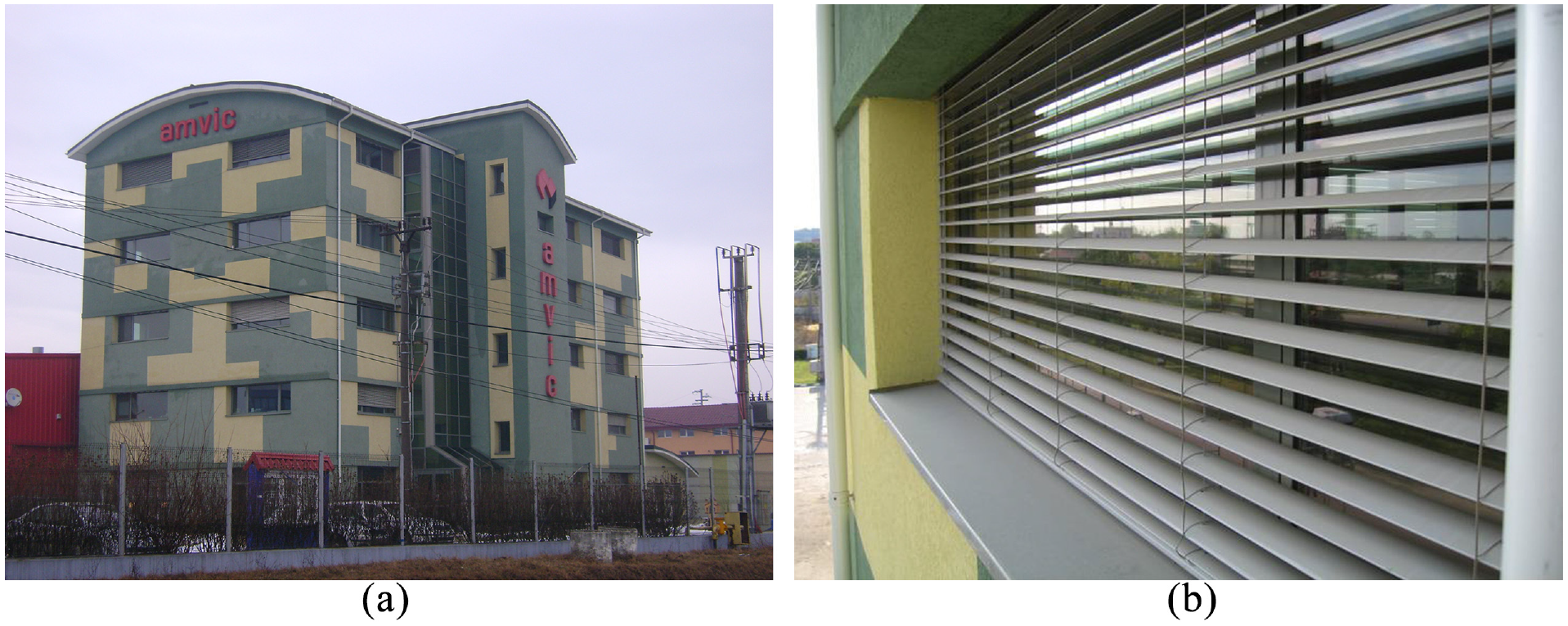
AMVIC office building: (a) southeast façade; (b) exterior blinds.
Layers of an external wall with the AMVIC system (Neopor layers).
The building is provided with low-emissivity triple-pane glazing windows with reduced overall heat transfer coefficient U and high solar transmission factor. The shading devices of the building are exterior window blinds (Figure 1(b)). Further details are given by Dimitriu et al. 34
The building heating and ventilation system includes a registry-type ground heat exchanger, a highly efficiently heat-recovery heat exchanger, a water-to-water heat pump with two wells, a floor heating system for which the heat pump or an auxiliary gas boiler may be utilized, and 10 evacuated flat plate collectors located on the top of the building that are used to provide domestic hot water for the living area bathrooms and all the toilet sink cabinets of the building. Figure 2 shows the ventilation and heating/cooling system of the AMVIC building.
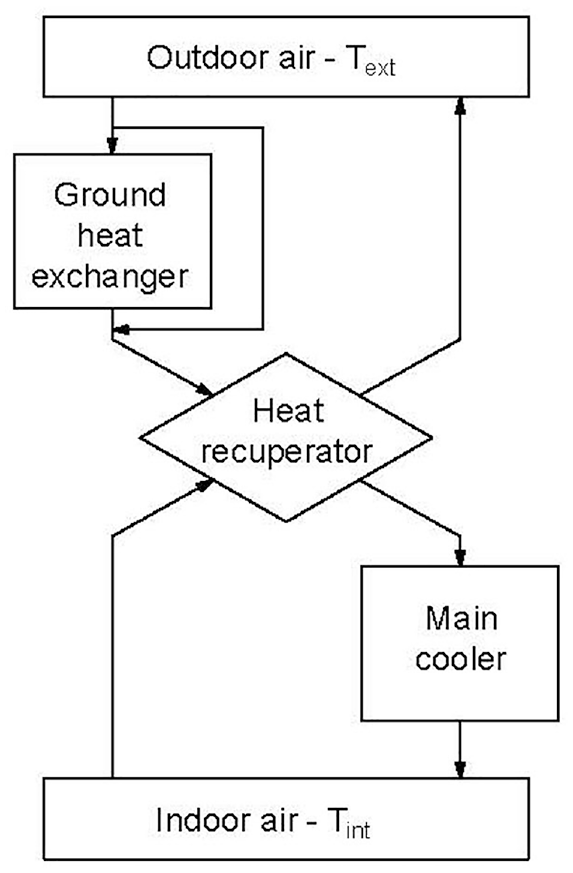
The ventilation – heating/cooling system of AMVIC building.
Details can be found in the literature.10,35,36 The AMVIC PH has been monitored for a relatively long time (2009–2013) and is well documented.10,13
2.2. Measurement surveys
Measurement of the thermal comfort parameters inside the AMVIC PH have been performed using the ComfortSense device, which is a measurement system fulfilling ISO 7730 (Figure 3). 37 This a traditional approach for classical thermal comfort (PMV-PPD), but not for adaptive comfort. 38 For naturally ventilated buildings, adaptive comfort is better suited and more realistic.
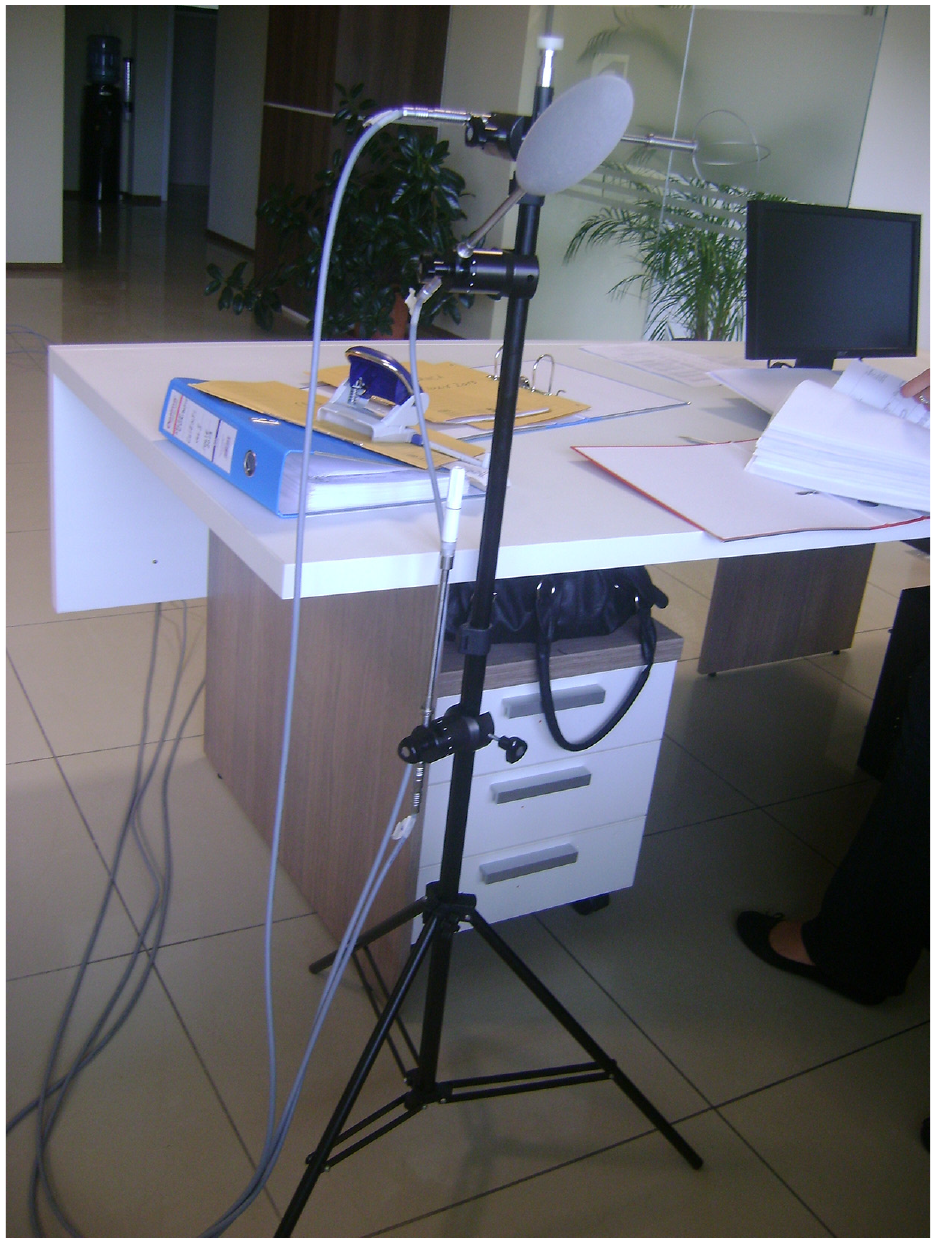
The ComfortSense system with the probes positioned on the tripod on the first floor of the AMVIC PH.
Detailed measurement results are given in an earlier work. 39 A brief presentation follows. The central part of ComfortSense consists of a main frame with a built-in A/D (analog/digital) converter and USB 2.0 interface. The measurement probes, connected with the main frame, are positioned on the system stand, a tripod. The measurement is set up using a PC and application software. The measured parameters are: the operative temperature, relative humidity, air temperature, and velocity. The computed quantities are: PMV, predicted percent of dissatisfied (PPD), and mean radiant temperature (MRT). Measurements were undertaken in various workstations on all building floors on July 9 and July 11, 2013. For each measurement post, the measurement time was 3 min with a step time of 2.5 seconds. A total number of 56 measurements were done in those two days. The measurement results can be seen in Supplementary Table S3.
2.3. Building energy simulation software
A wide variety of building energy simulation (BES) programs have been developed in past decades. These BES programs provide key building performance parameters such as energy use and demand, cost, temperature, and humidity. An overview of the 20 most widely used programs, including DeST, DOE-2.1E, EnergyPlus, ESP-R, and TRNSYS software, is given by Crawley et al. 40 An alphabetical list of over 400 BES programs is given by the US Department of Energy (DOE). 41 Comparative studies of most commonly used BES programs are provided in the literature.42–44 Little difference has been found between the simulation results obtained using these softwares, despite important differences in heating balance algorithms.
EnergyPlus software was developed by a team of the US National Laboratory and universities, 45 and is one of the most robust building energy analysis and thermal load simulation tools available today. It is the whole-building simulation tool supported by the US DOE. 28 EnergyPlus uses methods recommended by several standards,46–49 and follows the findings from hundreds of research papers, books, and specific publications (such as, ASHRAE Transactions, ASHRAE Journal, and the Lawrence Berkeley National Laboratory Report).
A comprehensive graphical user interface – Simergy – has been developed for EnergyPlus.28–30 The advantages of the EnergyPlus software are presented in detail by Crawley et al. 40 As a consequence, the California Energy Commission switched from procedures based on the DOE-2 simulation engine to those using EnergyPlus as the reference model. 50 EnergyPlus has been used very often in recent years as a research simulation tool,51–53 and it is our choice here.
EnergyPlus is a dynamic integrated simulation software. In programs with sequential simulation, the building zones, air-handling systems, and central plant equipment are simulated sequentially with no feedback from one to the other. In EnergyPlus all the elements are integrated and controlled by the integrated solution manager. This means that all three of the major parts – building, system, and plant – must be solved simultaneously. A short description of EnergyPlus core and structure is presented by Crawley et al. 54
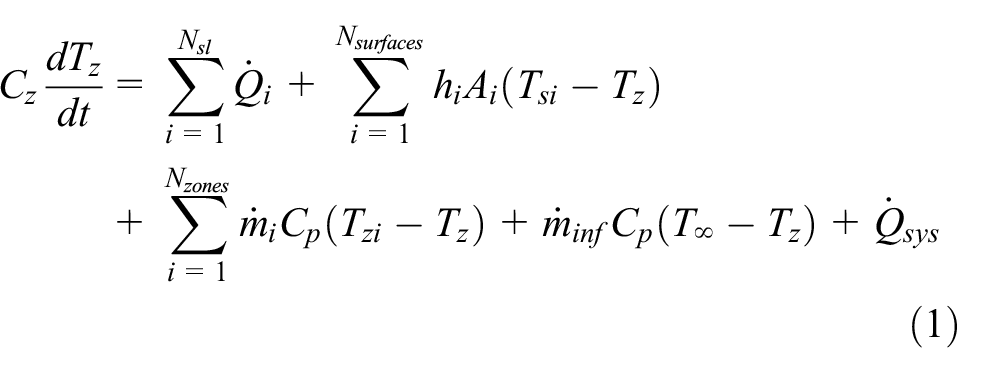
There are various individual functions of the integrated solution. For example, the basis for the zone and air system integration is to formulate energy and moisture balances for the zone air and solve the resulting ordinary differential equations (equation 1): 55
where:
Cz = ρairCpCT,
ρair = zone air density,
Cp = zone air specific heat,
CT = sensible heat capacity multiplier.
An accurate daylighting analysis is very important for solar shading device assessment. The EnergyPlus daylighting model, in conjunction with the thermal analysis, determines the energy impact of daylighting strategies, based on the analysis of daylight availability, site conditions, window management in response to solar gain and glare, and various lighting control strategies. 55
In EnergyPlus, the primary window calculation is a layer-by-layer approach in which windows are considered to be composed of the following components: glazing, gap, frame, divider, and shading device. Window blinds in EnergyPlus are defined as a series of equidistant slats that are oriented horizontally or vertically. All of the slats are assumed to have the same optical properties. Blind properties for direct radiation are also sensitive to the “profile angle,” which is the angle of incidence in a plane that is perpendicular to the window plane and to the direction of the slats. The blind optical model in EnergyPlus is based on work by Simmler and Fischer. 56
A simplified model of the AMVIC PH was implemented in Simergy. Figure 4 shows the southeastern view of the building, which has the correct cardinal orientation. Window areas were given as a percentage of the wall area to which they belong. The slightly sloped roof of the building was approximated by a plane terrace.
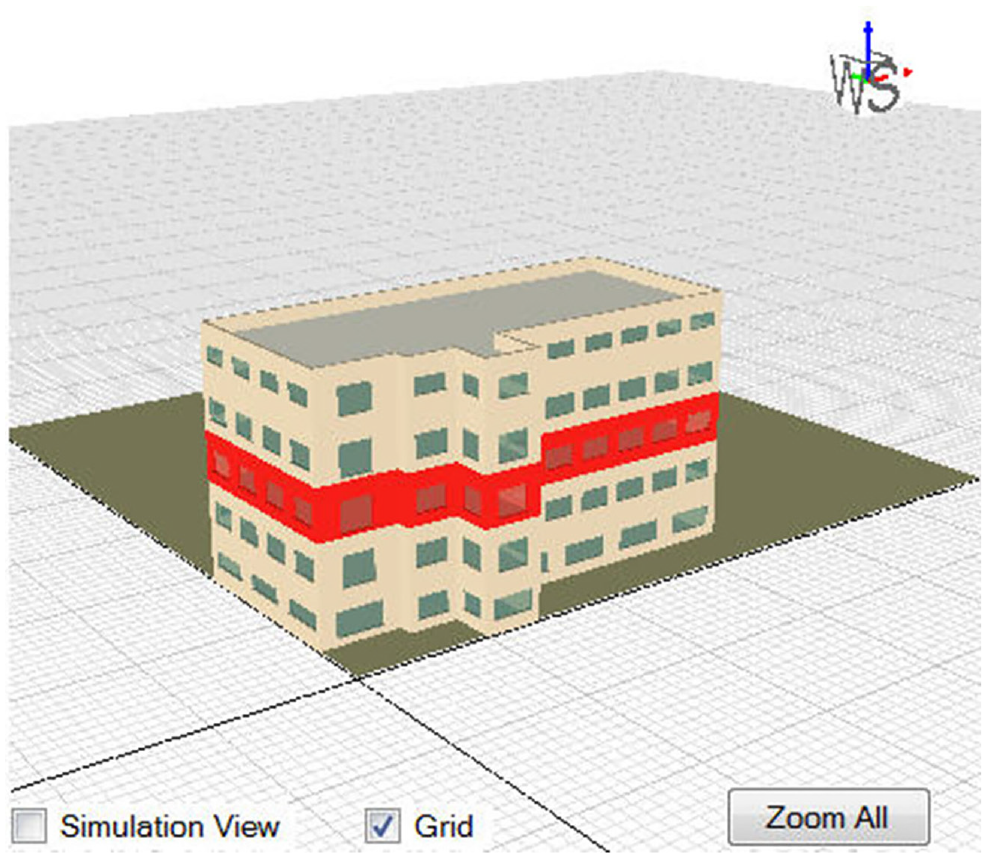
Simergy representation of the AMVIC PH.
Accurate simulation of the building requires separation of each floor into several thermal zones. The ground and first three floors of the building have similar office functions. The fourth floor, which corresponds to the residential area, has different space utilization. The stair housing (space 1-2) is placed on the south side of the office area, while the toilet area (space 1-3) is placed on the northeast side (Figure 5(a)). The main office surface is Space 1-1. The two-bedroom apartment (Space 5-1) is located on the fourth floor (Figure 5(b)), where there is also a space consisting of four studios and a little hall to access them (Space 5-3), as well as the staircase area (Space 5-2) and the space composed of the dining room and the technical room which contains the hot water tanks corresponding to the solar collectors situated on the building roof (Space 5-4). The thermal zones of the building were established based on these spaces.
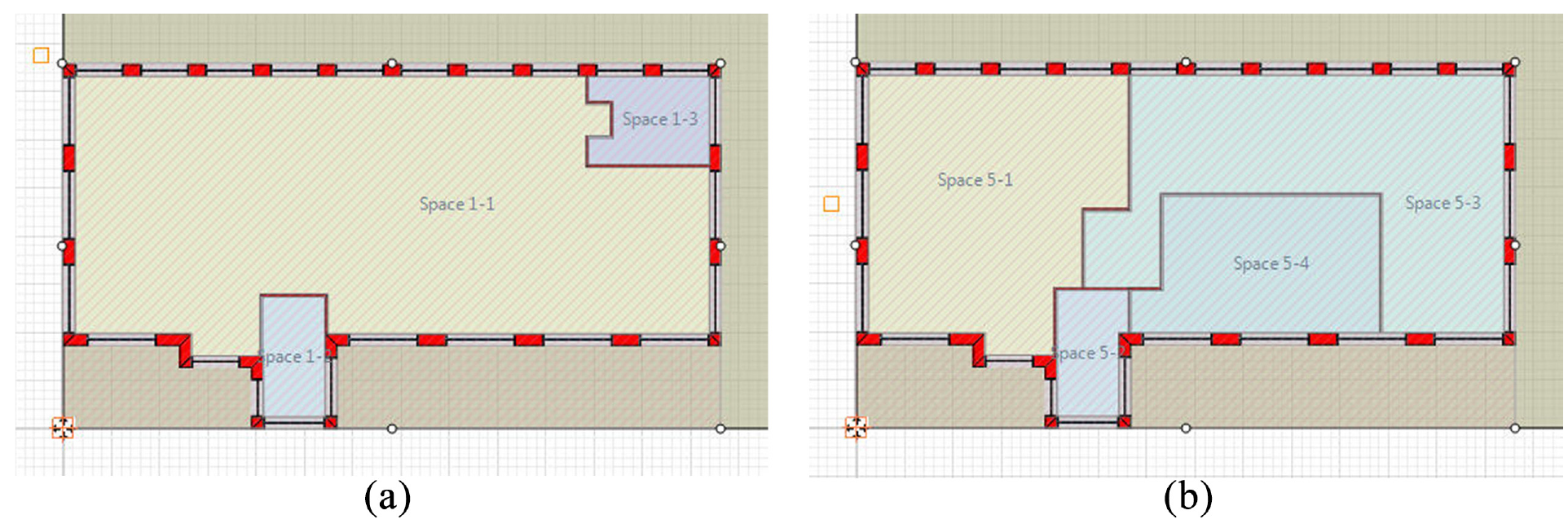
Custom spaces realized in Simergy: (a) ground floor; (b) fourth floor.
A detailed presentation of the materials used in the AMVIC PH is given by Badescu et al.10,13 These materials have been implemented into the libraries and templates of Simergy.
Special care has been devoted to the glazing system (produced by Interpane Glas Industrie AG) of the AMVIC PH, which has the following glazing and gap (inter-glazing) distances: 6–10–4–16–6 mm and the gas that fill the cavities between the panes is krypton. The value of the solar heat gain coefficient (SHGC) is 0.33 and the thermal transmittance value Ug = 0.5 W/(m2K).
A glazing model for the AMVIC PH has been implemented into the Window software 31 (see Figure S1 in the Supplementary Material). Output data from Window were used to complete the model of the AMVIC PH windows in Simergy. The AMVIC PH windows are shaded with exterior blinds. During measurements, the opening angle of the blinds was estimated to be 60°, and this value has been implemented in Simergy.
Internal gains due to people, appliances, and lighting, as well as internal gains given by the storage tanks used by the solar collectors located on the top of the building, have been previously considered for the AMVIC PH using predefined time schedules. Here, these gains have been considered for each thermal zone, according to their real-time schedule during the measurement time interval. They have been computed in detail for each thermal zone. 39
Two cooling systems are used during summer in the AMVIC PH. During the daytime, and earth-to-air-heat exchanger (EAHE) is used; during the nighttime the windows are open. No chiller is used so that the cooling is almost passive (only the fans of the earth heat exchanger are using electric energy).
The EAHE operation has been analyzed previously and is described in detail by Badescu and Isvoranu. 11 Udrea provides information about EAHE technical characteristics. 39 A time schedule for the windows’ night ventilation between 11 p.m. and 7 a.m. has been created in Simergy.
A precise calculation has been performed for the windows’ opening area used in night ventilation for each floor and thermal zone.
3. Results and discussions
3.1. AMVIC building model validation
The model has been used to simulate the comfort parameters during the time interval when measurement data are available. Hourly weather data were obtained from the Romanian National Meteorological Administration for July 9–11, 2013. A data utility (i.e., the Weather software) has been used to assist in creating the EnergyPlus Weather Formatted Data. The results obtained by using the model have been compared with measurement data. Figure 6 shows, as an example, computed and measured values of the operative temperature and PMV for the thermal zone at ground floor of the AMVIC PH. A tendency of PMV toward negative values is observed. That means a “cold” sensation in the building. In naturally ventilated buildings, the variation of the PMV follows in general the variation of the outdoor air temperature. In this case the optimal value of PMV, near to 0, is found at noon, while the minimum value, almost −2, can be found during the night. There is good agreement between measured and simulation data. Further details are given in Table 2, where the statistical indicators of accuracy are presented.
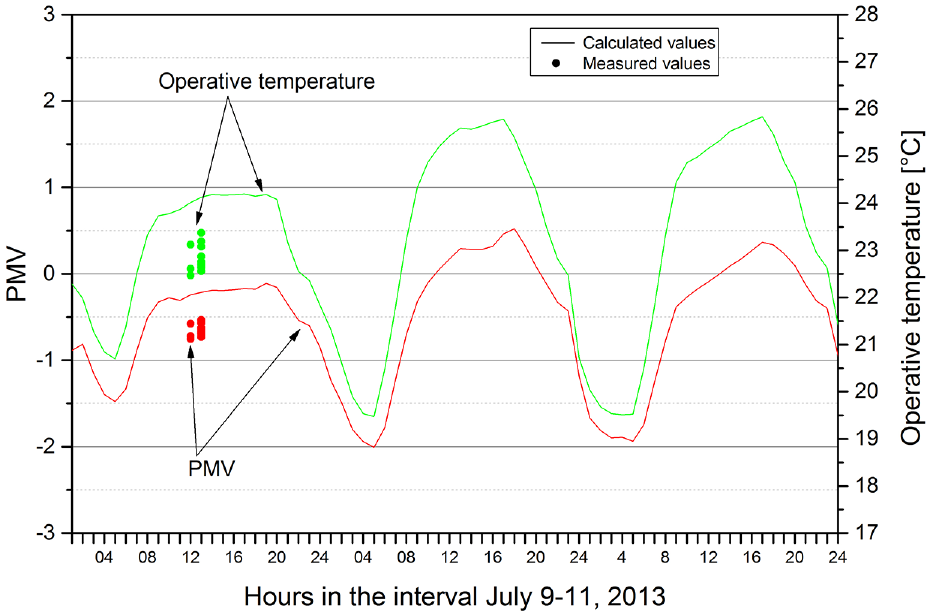
Hourly variation of PMV and operative temperature in the period July 9–11, 2013 for the office thermal zone located at ground floor.
Mean bias error (MBE) and root mean squared error (RMSE) for thermal comfort parameters and for thermal comfort index predicted mean vote for thermal zones of the AMVIC building.
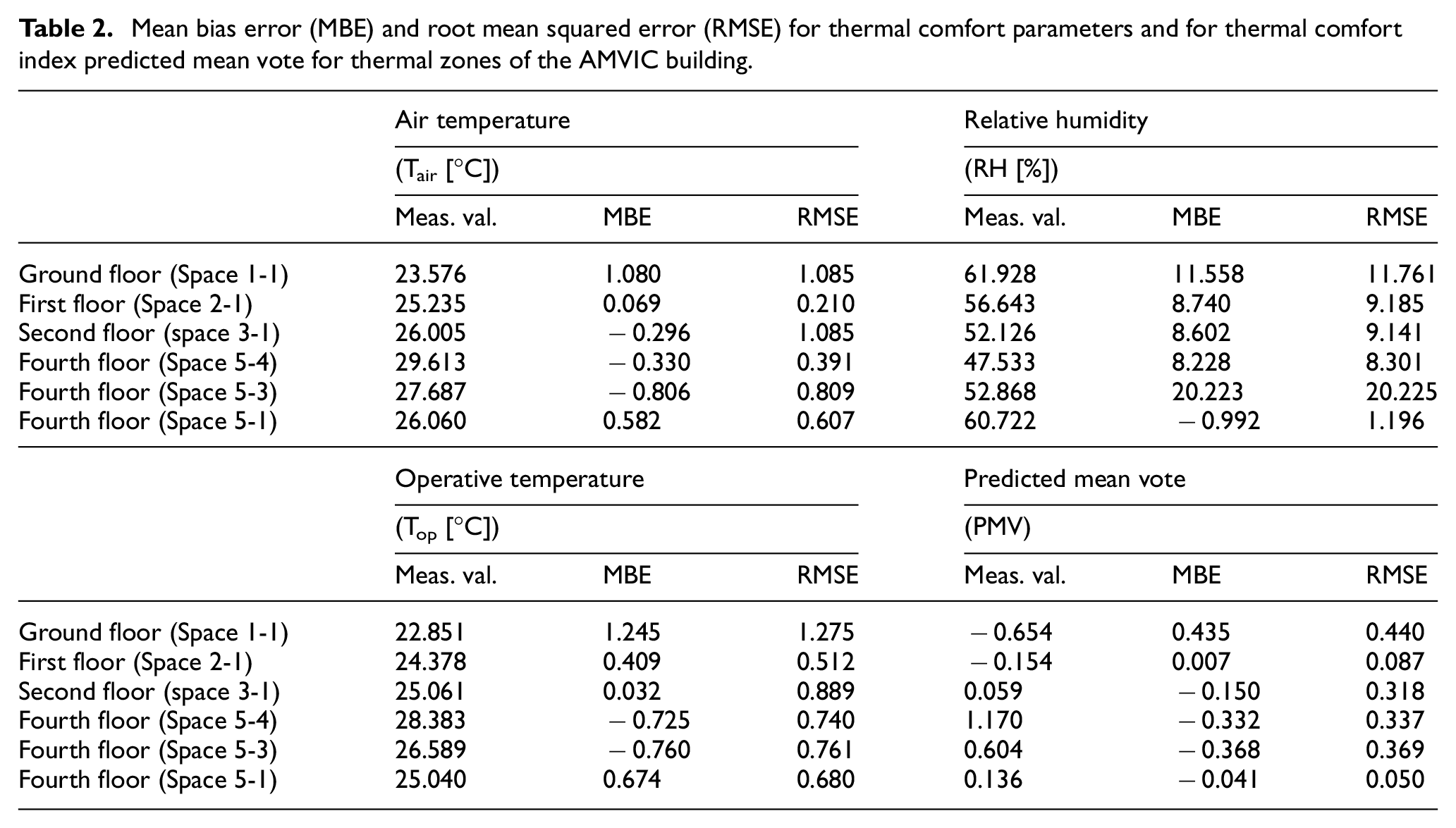
Generally, the air temperature is increasing from the ground floor to the fourth floor (Table 2). A large PMV value (1.17) is observed in the dining room located on the fourth floor (Space 5-4). That means discomfort in this space; the cause is the presence of the storage tanks corresponding to the solar collectors. The largest difference between measured and simulated values, quantified by MBE (mean bias error) and RMSE (root mean squared error) indicators, is observed at the ground floor. The reason is that the fresh air mass flow rate entering at the ground floor from the EAHE is larger in practice than in the simulation. Note that in the simulation the fresh air flow is assumed to be distributed in the thermal zones of the building proportionate to their volume.
3.2. Analysis of solar shading devices
Shading devices inside the building are not recommended, mainly because solar rays penetrate through the windows into the building. This may generate problems in summer, when overheating problems occur. This is supported by research concerning the comparison between internal and external shading devices. 57 These authors showed that external systems always perform better than internal devices, from a cooling point of view. So, in this work only external shading devices were chosen for assessment.
The shading analysis performed in this paper is presented in Table 3. First, the influence of two different window glazing types on comfort parameters is studied. Afterwards, exterior blinds with different slat angle are analyzed. Next, exterior shades with different solar transmittances are considered. At the end of the study, two groups of exterior blinds – exterior shade and overhang – are compared.
Shading devices used in the study.
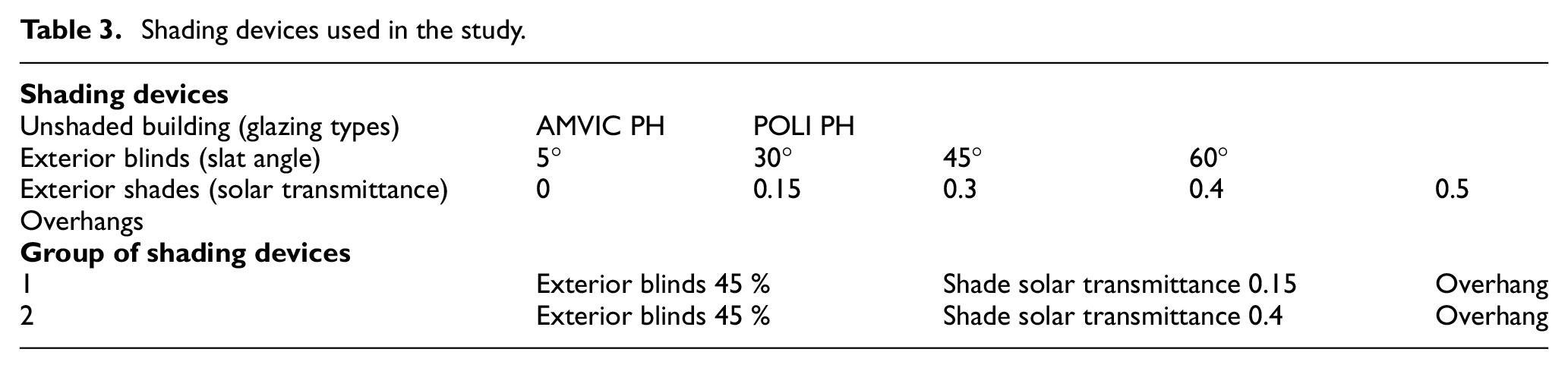
The summer thermal comfort may be improved by decreasing the amount of solar energy entering the building. A simple way is to change the type of window. This is the first option we analyze here. A simplified building model is used, namely each floor is assimilated to a single thermal zone. Thermal comfort may be improved by using solar shading devices. Here, we shall consider the following devices: exterior blinds, exterior shades, and overhangs. Their effects on thermal comfort during summer will also be studied by simulation.
3.2.1. Different window types
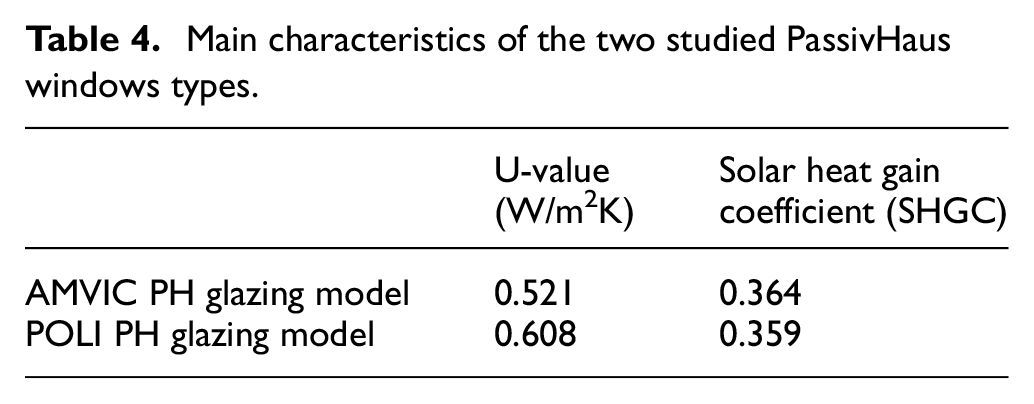
First, we studied the effect of changing the glazing of the AMVIC PH. The windows surface area is kept the same, but the AMVIC original windows were hypothetically replaced with the windows of another PH built in the campus of the Polytechnic University of Bucharest (POLI PH), 58 whose characteristics are implemented in the Window software. 31
Simulations were performed using EnergyPlus Weather Format (EPW) for a “typical” year for both types of window. There is very good agreement between the values of the operative temperature at ground floor obtained for the AMVIC PH windows and the POLI PH windows (Figure 7). Therefore, the influence of the glazing type on the operative temperature as well as on the PMV value is negligible in the case of the high-quality windows shown in Table 4. Decreasing the U-value of a glazing system from 0.61 to 0.52 W/m2K is not justified as far as the effect on the summer thermal comfort in Romanian PHs is considered.
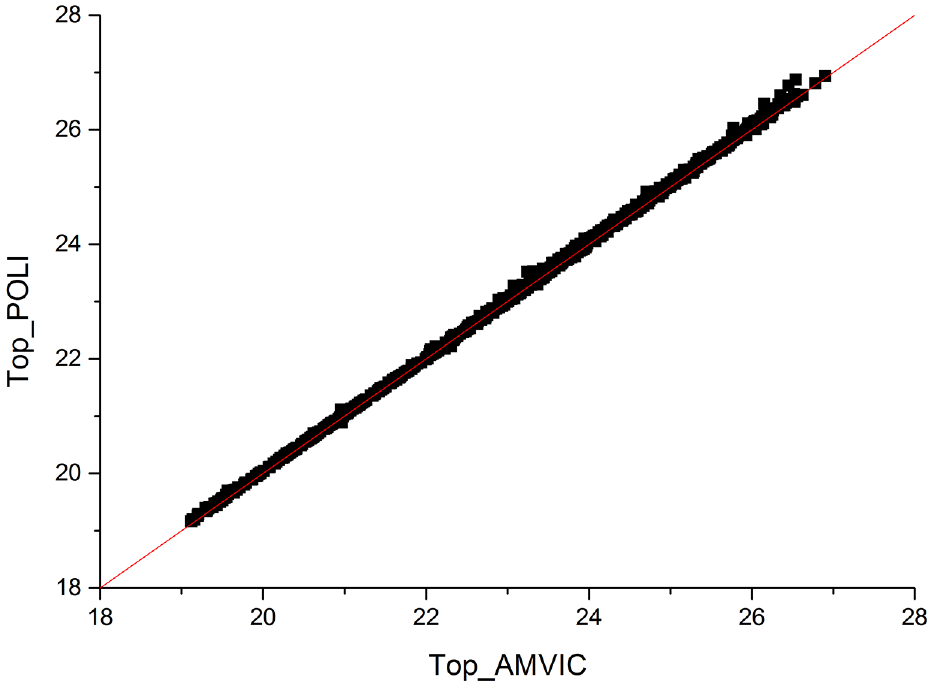
Variation of operative temperature for the window type from the POLI PH with operative temperature for the window type from the AMVIC PH in July for the thermal zone located at ground floor.
Main characteristics of the two studied PassivHaus windows types.
3.2.2. Exterior blinds
Where exterior blinds are used, the amount of solar energy entering the building depends on the slat (or opening) angle. The slat angle is defined as the angle between the glazing outward normal and the slat outward normal (see Figure 8). 31
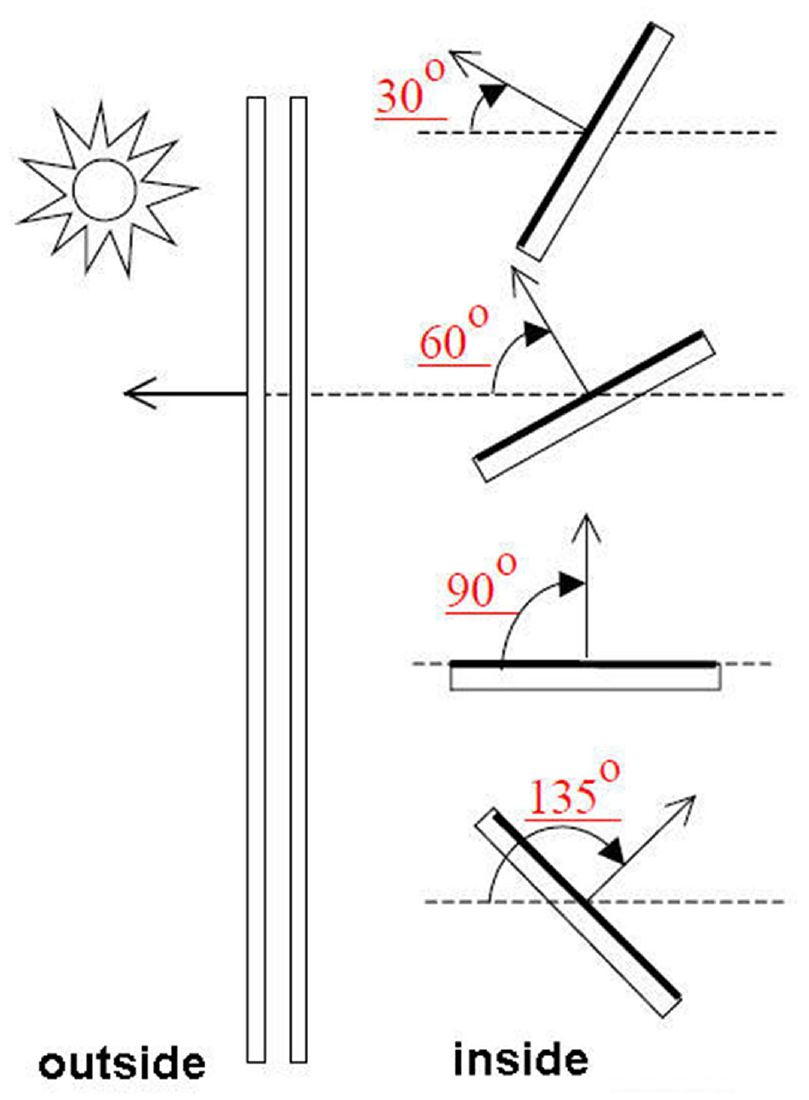
Side view of a window blind with horizontal slats showing the angle between the normal direction of the slat and the horizontal direction.
The time variation of the PMV during July at the ground floor of the AMVIC PH is shown in Figure 9 for different openings of the exterior blinds. The opening angle may be used to adjust the thermal comfort at positive PMV values (this means during the daytime, as expected).
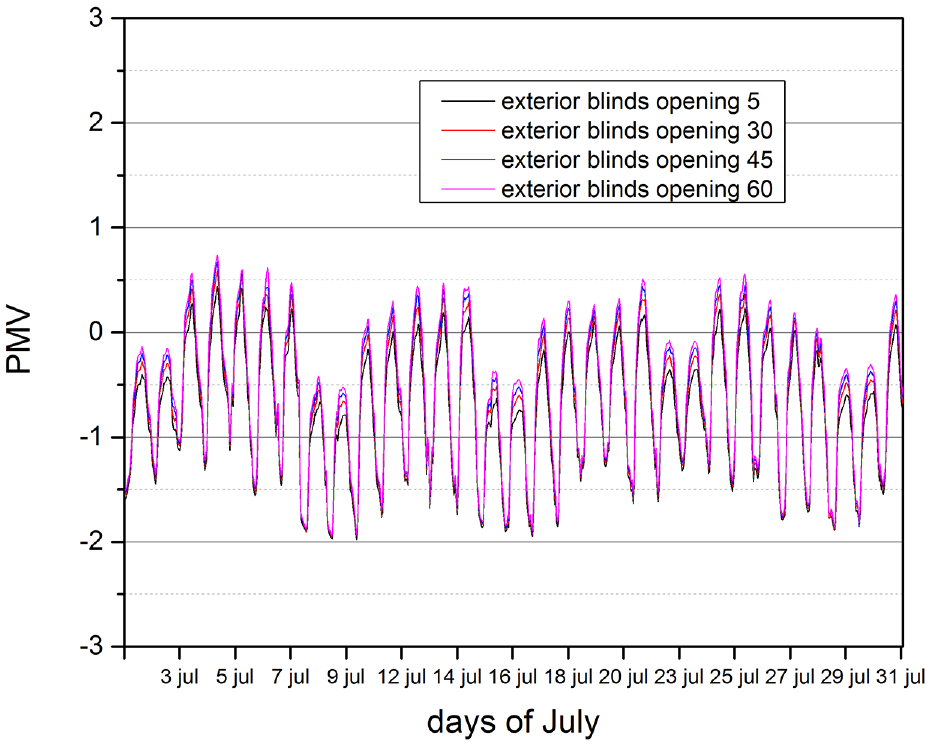
Predicted mean vote (PMV) variation in July on the ground floor for exterior blinds with different opening angles of the blinds.
More relevant information for the thermal comfort point of view is obtained by looking to some cases with extreme meteorological conditions. Thus, we have selected a three-day interval for which the middle day contains the maximum outdoor dry bulb temperature and a three-day interval with the maximum solar direct radiation on the south surface, respectively. Note that the main glazed area of the AMVIC PH is on the south façade. It is expected that these extreme meteorological conditions are associated with the lowest level of thermal comfort. The maximum outdoor dry bulb temperature and the maximum solar direct radiation on the south surface were found by using the Climate Consultant 6.0 software. 32 Climate Consultant is a simple-to-use, graphic-based computer program that helps to understand the local climate. It uses an annual 8760-hour EPW format for climate data that is made available by the DOE for thousands of weather stations around the world. By using Climate Consultant for the Romanian EPW file, a maximum value of 35.1°C for dry bulb temperature has been obtain on July 4. Therefore, the first three-day interval is July 3–5. A maximum value of 932 W/m2 for solar direct irradiation has been obtained on July 10 and the second three-day interval is July 9–11.
All-day-long shading has been considered in the following.
Four relevant opening angles for the slats of the exterior blinds were selected: 5° (this is the minimum opening angle possible – the zero angle cannot be achieved due to the finite thickness of the slats), 30°, 45°, and 60° (the opening angle for which the model validation was performed). Simulations were performed by using the EPW file for a “climate-typical” year for to Romania. Figure 10 and Figure S2 in the Supplementary Material show the time variation of the operative temperature and PMV on the ground floor of the AMVIC PH during the two three-day intervals, for different angles of slat opening. During the interval July 3–5, the maximum difference of the operative temperature between all opening angles is 1.07°C and corresponds to 3 p.m. on July 4. During the interval July 9–11, the maximum difference of the operative temperature is 1.13°C and corresponds to 2 p.m. on July 9. The PMV shows the same variation trend as the operative temperature for the ground floor thermal zone and for the same time periods, as expected (Figure S2). A maximum PMV difference of 0.33 takes place at 3 p.m. on July 4 for the interval July 3–5, and a difference of 0.79 takes place at 10 p.m. on 9 July for the interval July 9–11. These results prove that the opening angle for the exterior blinds may be successfully used to control thermal comfort.
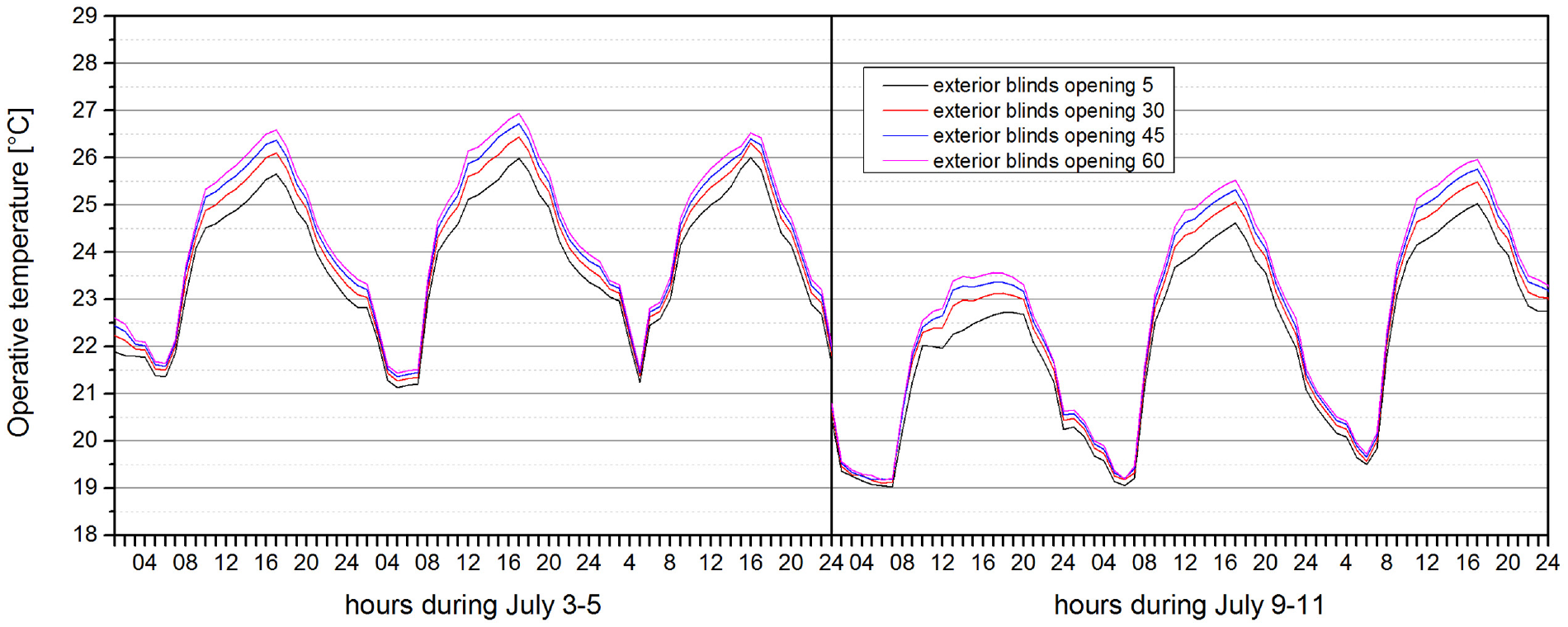
Exterior blinds. Operative temperature on the ground floor in the period of: (a) maximum outdoor temperature; (b) maximum radiation on the tilted southern surface.
Note that in a study concerning dynamic operation of daylighting and shading systems, 59 the authors concluded that even though the control strategies enhance the energy performance and occupants’ comfort, their level of complexity highly affects their efficiency and therefore influences their performance. Also, for humans, an easy-to-access control for shading and electric lighting systems is important for their satisfaction in order to correlate visual comfort with thermal comfort. 60 This justified the utilization of non-dynamic controlled shading devices, as done in this work.
3.2.3. Exterior shades
The exterior shades are mounted outside the building and do not allow part of the incident solar radiation to penetrate through the windows. They are characterized by several design parameters, including the solar transmittance value. These kinds of elements consist of a material that can be rolled up above the window when shading is not needed. The advantage of exterior shades against blinds is the lower price and the fact that they take up less space. Other benefits could be the esthetic aspect of the shade devices; indeed, they permit a large variety of colors and models. Some shade materials have been selected from the database of the Window software. 31 How the materials with solar transmittance of 0–40% are selected is shown in Figure S3 in the Supplementary Material. The next step was to implement the values of all parameters specific to the shades elements into Simergy. 30 Materials of other solar transmittance values (between 0% and 40%) were defined in Simergy. Five different shade materials were used in the simulation, with solar transmittance values of 0, 0.15, 0.3, 0.4, and 0.5.
Figure 11 and Figure S4 in the Supplementary Material show the time variation of the operative temperature and PMV, respectively, at the ground floor of the AMVIC PH during the two three-day periods for different exterior shade materials. In the case of the interval of maximum outdoor temperature (July 3–5), the maximum difference of the operative temperature between different shade devices is 2.18°C, which corresponds to 1 p.m. July 4. When the interval of maximum radiation is considered (July 9–11), the maximum temperature difference is 2.23°C, for 12 a.m. on July 11. Figure S4 shows that a maximum PMV difference of 0.62 takes place at 3 p.m. on July 4 (for the interval July 3–5) and of 0.71 takes place at 5 p.m. on July 9 (for the studied interval of July 9–11). The operative temperature difference is larger in the case of exterior shades than it is for exterior blinds (compare Figures 11 and 10). Therefore, thermal comfort may be well controlled by selecting exterior shades with proper solar transmittance.
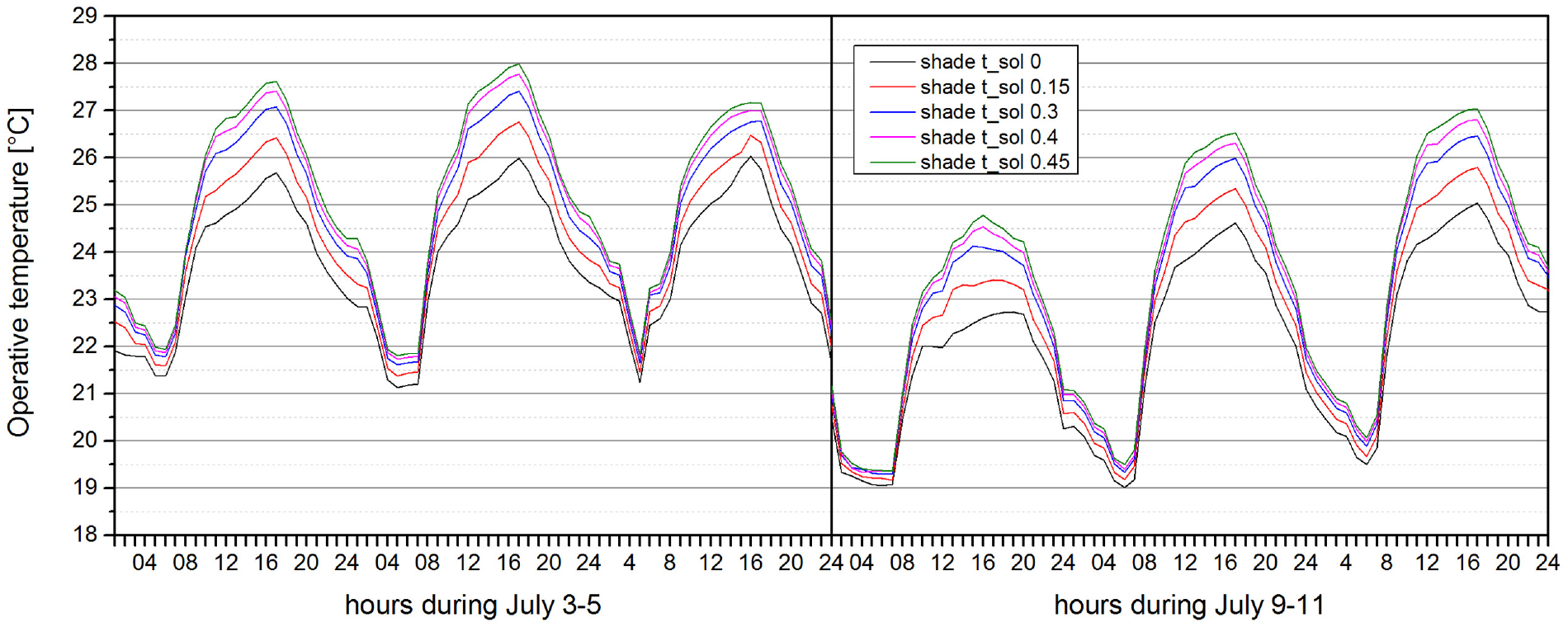
Exterior shades of different solar transmittance values. Operative temperature on the ground floor in the period of (a) maximum outdoor temperature; (b) maximum radiation on the tilted southern surface.
3.2.4. Exterior overhangs
The third shading method analyzed here consists of exterior shading of the overhang type. The overhangs have a depth of 1 m and are placed 0.2 m above the windows and the doors. Figure 12 shows how these shading devices are implemented in the AMVIC PH. The effects of the exterior overhang on thermal comfort are discussed in Section 3.2.5.
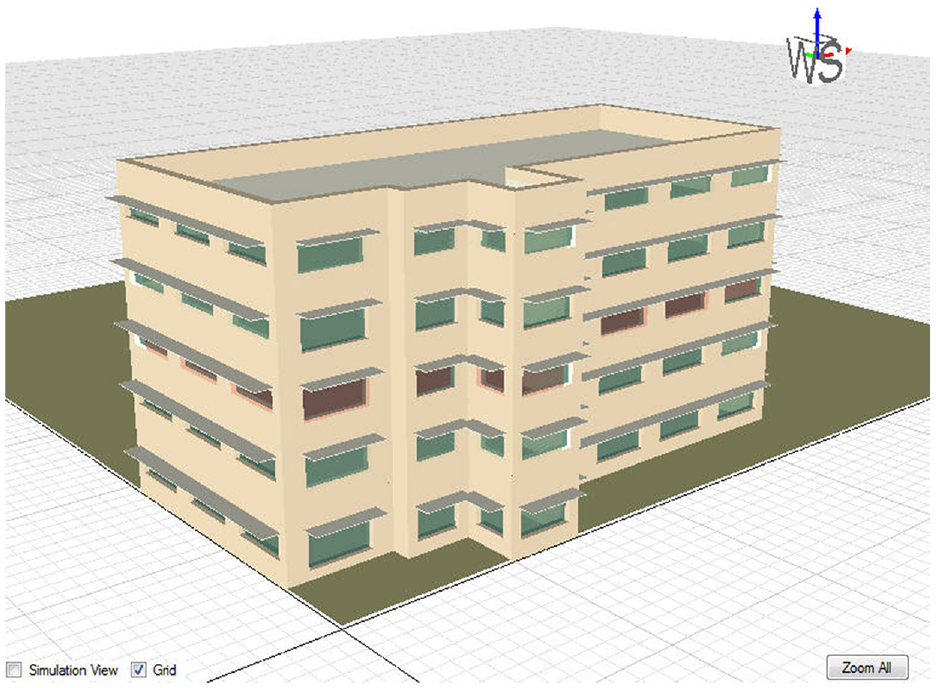
Exterior shading: continuous overhangs on the AMVIC building; image from Simergy.
3.2.5. Comparison between the three types of shading devices
In this section a comparison between the performance of exterior blinds, shade elements, and overhangs is performed. Shading devices have two main effects. First, they affect thermal comfort (more specifically, the indoor temperature). Second, they have an impact on the visual comfort inside a building.
In order to assess the visual comfort, a rough evaluation is made concerning the transmitted solar energy flux through the windows for each type of shading device. A relevant comparison requires that all shading devices ensure almost the same transmitted solar energy flux through the windows. The following procedure has been used. The EnergyPlus software provided the hourly variation of the transmitted solar energy flux through the windows for each type of shading device. The data have been averaged over the whole month of July. Table 5 shows the results.
Transmitted solar energy flux (W) through the windows for the ground floor zone for different shading elements, mean for July.

Almost the same amount of transmitted solar energy flux corresponds to exterior blinds with an opening angle of 45° (192.2 W) and “shade” with solar transmittance 0.15° (210.1 W). Two other shading devices with similar performances are the “shade” with solar transmittance 0.4 (490.4 W) and the overhang (489.3 W). In order to compare all types of shading devices, two groups of shading devices have been considered. The first group consists of (a) exterior blinds with a 45° opening angle; (b) “shade” with solar transmittance 0.15; and (c) overhang. The second group consists of (d) exterior blinds an opening angle of 45°; (e) “shade” with solar transmittance 0.4; and (f) overhang.
Comments about the first group of shading devices follow. Figure 13 shows the variation of operative temperature on the ground floor of the AMVIC PH. During the time interval July 3–5, the maximum difference of operative temperature between the three devices is 1.09°C. It occurs at 6 p.m. on July 3. The best device is the exterior blind, with a minimum value of operative temperature of 26.02°C. When the time interval July 9–11 is considered, the maximum difference of operative temperature is 1.06°C and occurs at 6 p.m. on July 9. Again, the best device is the exterior blind with a minimum value of operative temperature of 23.36°C. Figures S5–S7 in the Supplementary Material show the time variation of PMV on the ground floor, first floor, and fourth floor of the AMVIC PH, respectively. In the case of the time interval July 3–5, the maximum difference of the PMV is 0.34, 0.45, and 0.36 for the first floor, second floor, and fourth floor, respectively. Figures S5–S7 show a PMV value increasing from the ground floor to the fourth floor. In all those cases, the exterior blinds and exterior shades present an almost identical behavior, better than the overhangs. The maximum difference of the PMV is 0.44 (first floor), 0.31 (second floor), and 0.28 (fourth floor) during the time interval July 9–11. The internal gains are larger in the office area than on the fourth floor, where the residential area is. However, the PMV index presents higher values at the fourth floor. Generally, the exterior blinds with 45° opening angle and the “shade” with solar transmittance 0.15 have a more significant effect on thermal comfort than does the overhang.
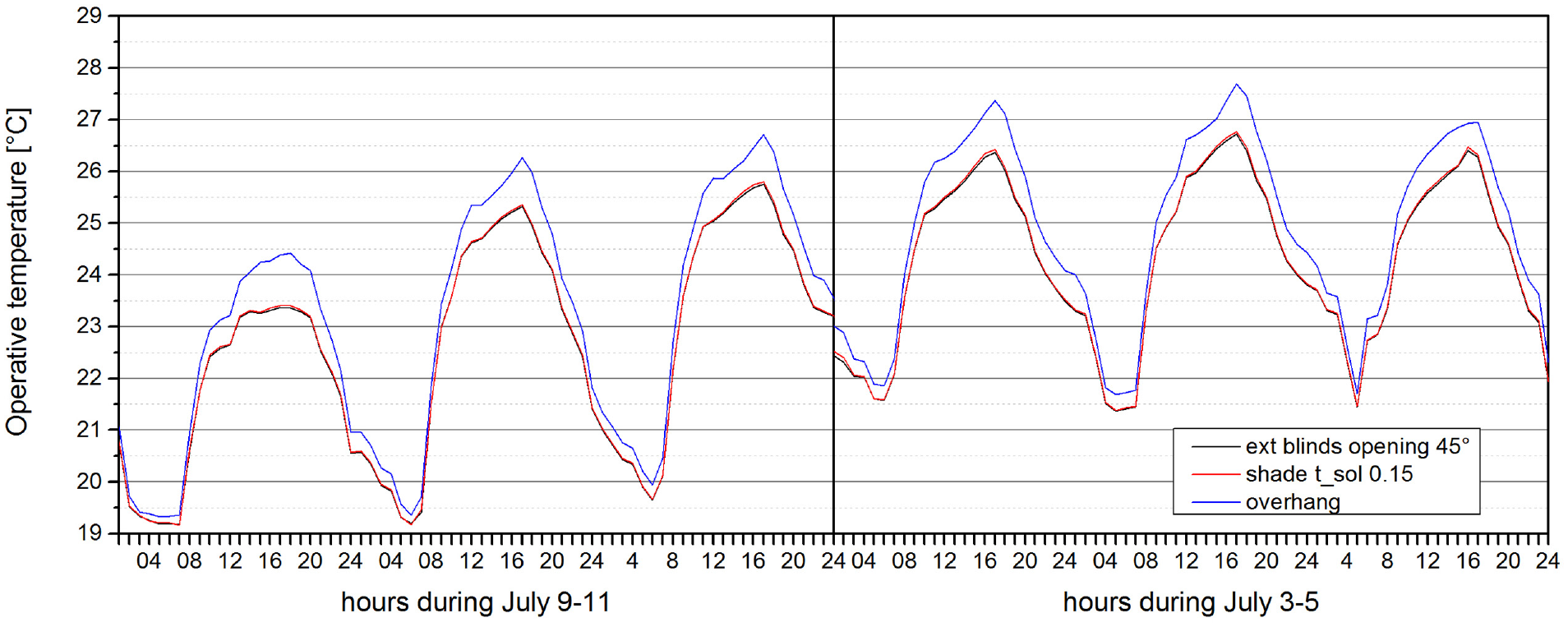
Operative temperature variations on the ground floor: comparison between devices with the same transmitted solar energy flux through the window exterior (blinds – opening angle 45°; shade – solar transmittance 0.15) and overhangs.
The effect of the shading devices with close transmitted solar energy flux through the windows is almost the same, the curves in Figures 13 and S5–S7 being almost identical. The differences between shading devices are close for the building levels, so we present the results in generally only for the ground floor.
Tables S1 and S2 show the hourly variation of the operative temperature and PMV at the ground floor for the days representing the middle of the chosen intervals for study (i.e., July 4 and July 10) for all shading devices.
Comments about the second group of shading devices follow. Figure 14 shows the time variation of the operative temperature on the ground floor for the two three-day intervals, namely July 3–5 and July 9–11. The maximum difference in the operative temperature between the three shading devices is 1.22°C at 1 p.m. on July 4 (for July 3–5) and 1.23°C at 12 a.m. on July 11 (for July 9–11). The best device is the exterior blind, with operative temperatures of 25.98°C and 25.04°C, in the first and second time intervals, respectively. Figure S8 in the Supplementary Material shows the time variation of the PMV on the ground floor. The maximum PMV difference induced by the three shading devices is 0.39 (at 1 p.m. on July 4) and 0.44 (at 4 p.m. on July 9). The best device is the exterior blind with PMV values of 0.41 and 0.43 for first and second time intervals, respectively. The exterior blinds (with opening angle 45°) and the exterior shade (with solar transmittance 0.4) show very close variation of the operative temperature and PMV, for both time periods.
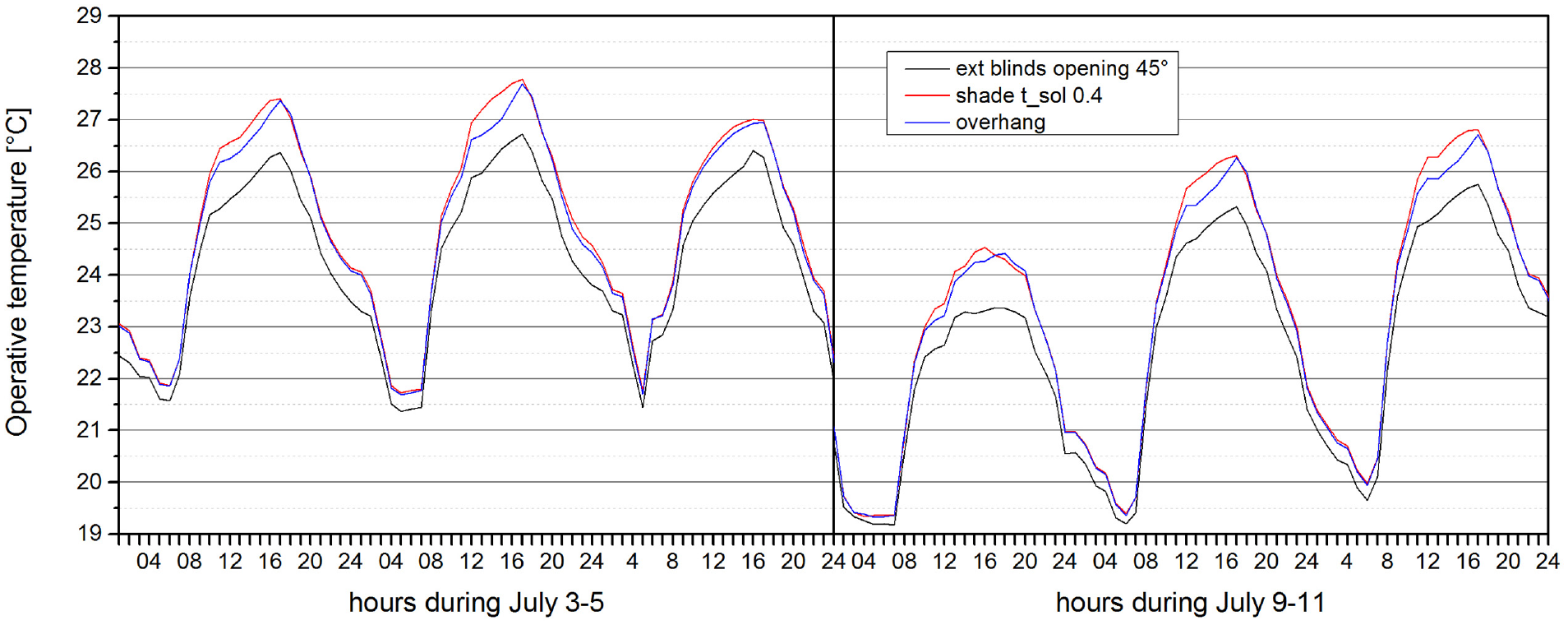
Operative temperature variations on the ground floor: comparison between blinds – opening angle 45°– and devices with the same transmitted solar energy flux through the windows exterior (shade solar transmittance of 0.4, overhangs).
Figures 14 and S8 show that the maximum difference between the effects of the shading devices (in terms of operative temperature as well as PMV) is reached around noon, when incident solar radiation is at its maximum.
The results obtained for the second group are in good agreement with those obtained for the first group; elements with (almost) similar transmitted solar energy flux through the windows have (almost) the same effect both on the operative temperature and PMV.
The advantage of the variable opening angle of the exterior blinds should be taken into account when choosing between exterior blinds and exterior shade devices. The shade devices can be rolled up but the effect is different. The cost and usability could be another criterion. Both types of devices allow the usage of automatic opening systems.
According to the European standard, 38 in the case of exterior blinds with slats with an opening angle of 45° operating at ground floor, the time percentage of thermal comfort in summer is 52.1% for comfort category B (PMV value between [–0.5, 0.5]) and 66.0% for comfort category C (PMV value between [–0.7, 0.7]).
For the fourth floor, those values are 46.5% and 60.4%, respectively. A similar study has been done in Nanjing, a typical hot-summer and cold-winter city in China, as described by Fu and Wu. 66 Those authors considered a hybrid ventilation building (natural ventilation and mechanical ventilation), similar to the AMVIC building treated in this paper. They report results for a summer month (July), as we are doing in the present work. The results show that the time percentage of thermal comfort is 49.3% for a PMV value of [–0.5, 0.5]. That is close to the values found in this study for the same thermal comfort category.
In unshaded PH buildings, overheating may occur in summer. 61 These authors studied a sports hall PH at Cracow University of Agriculture. The mean measured values are 28.3°C for operative temperature and a PMV mean of 1.1. In the present study, the mean values for operative temperature are 23.4°C for the ground floor and 24.8°C for the fourth floor. It is observed that there is a significant decrease in comparison with the results for the Cracow sports hall.
A review of indoor environment quality in PH buildings has been completed. 64 From a BES, it was found that summer comfort could be achieved by using passive improvements, without an active cooling system, particularly for north-facing zones. 25 From building measurements, it was found that almost all of the measurement data fell within the comfortable and still comfortable zone, although a few points are higher than 26°C due to uncontrolled occupant behavior. 22 From surveys it was found that 88% of the participants in the survey were very satisfied with the indoor climate.65,67
4. Conclusions
Implementation of the PH concept in Southern Europe raises the phenomenon of overheating during the warm season. Overheating may be counteracted by using shading devices. The performance of three types of shading devices (external blinds, external shades, and overhangs) is analyzed in this paper using classical thermal comfort theory. The case of the AMVIC PH, located in Bucharest, Romania, is considered.
A simulation model was developed in the EnergyPlus environment, using Simergy as an interface. The model was validated against measurement data. Next, the model was used to assess the thermal comfort in the AMVIC PH during the hottest month of the year, July. Time intervals of three days containing maximum outdoor temperature and maximum solar irradiation were identified and analyzed. The assumption was that shading operates all day long. The main results are as follows.
The indoor operative temperature at the ground floor increases by 1.13°C if the opening angle of the blinds’ slats increased from 5° to 60°.
When shades are considered, the operative temperature increases by 2.23°C when the solar transmittance increases from 0 to 0.45.
Shading devices of different types, which ensure the same transmitted solar energy flux, are associated with the same thermal comfort, as expected. For instance, a 45° opening angle for the exterior blinds has similar effects to shade elements with a value of 0.15 for solar transmittance. One concludes that exterior blinds may be preferred to exterior shades since they allow changing the opening angle of the slats.
Shading by using a small opening angle for exterior blinds or small solar transmittance value for shade elements is more efficient than shading with overhangs, since lower values for operative temperatures and PMV are obtained in the first case.
Shading with overhangs may be considered for future buildings with less severe requirements than PH buildings. This kind of element is easy to maintain, realizes shading only in some periods of the day (depending on position and size), and needs no control system. It can be mounted at any time on the building façade, not only in the construction stage, and gives the building a pleasant appearance.
For the AMVIC PH considered here, a significant decrease of the U-value of a glazing system from 0.61 to 0.52 W/m2K is not justified as far as the effect on summer thermal comfort is considered.
The time percentage of thermal comfort in summer is 52.1% for comfort category B (PMV value [–0.5, 0.5]) for the ground floor using exterior blinds with slat opening angle of 45°, and 66.0% for comfort category C (PMV value [–0.7, 0.7]). For the fourth floor those values are 46.5% and 60.4%, respectively.
This paper analyzes the effects of various types of shading devices on thermal comfort. For each type of shading device, the variation of some parameters is discussed, as shown in Table 3. A comparison between these devices has been made in order to find the best choice for an effective PH. It is demonstrated that, for a PH located in Romania, it is not necessary to use a glazing system with a low U-value as far as summer thermal comfort is considered. This can lead to significant cost reductions for new buildings or for refurbished buildings when the windows are replaced. It is the first time that the impact of various shading devices have been studied for the Romanian climate (Köppen climate type D – temperate continental climate), characterized by relatively low temperatures in winter and high temperatures in summer. 62
Supplemental Material
ESM_cor_04 – Supplemental material for Usage of solar shading devices to improve the thermal comfort in summer in a Romanian PassivHaus
Supplemental material, ESM_cor_04 for Usage of solar shading devices to improve the thermal comfort in summer in a Romanian PassivHaus by Ioana Udrea and Viorel Badescu in SIMULATION
Footnotes
Supplemental material
Supplemental material for this article is available online.
Funding
The authors received no financial support for the research, authorship, and/or publication of this article.

Author biographies
References
Supplementary Material
Please find the following supplemental material available below.
For Open Access articles published under a Creative Commons License, all supplemental material carries the same license as the article it is associated with.
For non-Open Access articles published, all supplemental material carries a non-exclusive license, and permission requests for re-use of supplemental material or any part of supplemental material shall be sent directly to the copyright owner as specified in the copyright notice associated with the article.
