







Abstract
Automated parking systems play an important role in improving the utilization of parking facilities, particularly in busy public areas that receive many visitors, such as airports, government buildings, and shopping malls. The current parking facilities of airports in Saudi Arabia use barrier gates and ticket-issuing machines. Such parking facilities increase the waiting time at every circulation point, especially at the entry and exit terminals, and when a large number of vehicles are waiting in the queue. In this study, we address this problem by applying an automated technology at the entry/exit terminals of the current parking facilities. In particular, we introduce a parking system that uses radio-frequency identification (RFID) technology for the entry and exit terminals. The basic components of the current entry/exit system and the proposed one (i.e., using RFID technology) are described in detail. Subsequently, a simulation model for the entry/exit system using Arena 14.7 is developed to evaluate the current and proposed entry/exit systems. The evaluation is based on two performance metrics: average waiting time and average number of waiting vehicles. The developed simulation model is validated using actual data through a systematic procedure. The outcome of this study shows that the proposed RFID-based entry/exit system significantly outperforms the current system. Similarly, the validated results confirm the robustness of the simulation model. Thus, it can be concluded that an RFID-based parking system will provide an effective solution for parking facilities.
1. Introduction
Parking is one of the major factors that contributes to traffic conditions and trip management in urban areas. The search for a parking space is a time-consuming process that affects not only the efficiency of economic activities but also the social interactions and costs. 1 Without an efficient parking system, drivers cannot easily find a parking spot, and vehicles are idle on the street for long periods. All of these factors lead to increases in traffic congestion, air pollution, and wasted gasoline and time.2,3 It was shown in a study conducted in Los Angeles (2001–2003) that, per year, vehicles looking for parking had to travel a distance equivalent to 38 trips around the world. Accordingly, it was found that vehicles that spent time looking for a parking space released 730 tons of carbon dioxide (CO2) emissions in a small business district, and used 47,000 gallons of gas during the search. 4 Most often, drivers make their trip decisions predicting parking based on previous experiences and real-life perceptions. 5 Therefore, parking has become a crucial aspect of modern life.
Parking in public places in Saudi Arabia has been a significant issue for a long time following rapid population growth. In 2012, the Saudi Central Department of Statistics & Information noted that the number of vehicles in Saudi Arabia increased by 5.4% per year, with a total of 13 million registered vehicles. 6 According to the Riyadh urban observatory, it is estimated that there are 274 vehicles per 1000 inhabitants in Riyadh, while the global average is estimated to be 176 vehicles per 1000 inhabitants. 7 The increase in the number of vehicles is creating a critical situation for parking and traffic conditions as a whole. Parking problems often occur in important places, such as airports, government buildings, universities, and shopping malls.
Recently, research studies have concentrated on radio-frequency identification (RFID) to solve the parking problem. RFID is becoming popular because this kind of vehicle parking system is more economical and cost-effective in the long run than manually operated gates. 8 In this study, the author addresses this issue in a systematic manner from the perspective of RFID technology. The possible application of RFID in an international airport parking system in Saudi Arabia as a case study is proposed. The goals of the study are as follows: improving traffic, utilizing the overall parking system, reducing the risk of being late for a flight, and increasing the satisfaction of airport visitors. Therefore, it is important to suggest a solution to the parking problem, in particular delays at the entry and exit points when parking. Hence, in this paper, an RFID-based automated parking system is suggested especially for airport parking, and a simulation technique is used to study the competence of the proposed system by comparing it with the existing system.
2. Related work
Over the preceding decade, different measures and methodologies were adopted by traffic authorities to overcome parking problems. Several research studies that solved this issue in the past are available in the literature. For example, Pala and Inanc utilized RFID technology and developed a parking system. 9 This system was based on counting the number of vehicles that entered and exited the parking lot, and provided users with information about the number of available parking spots at the entry gate. Similarly, the issues associated with a multifloor parking facility were resolved by Das et al., 10 who implemented a smart parking system that used wireless sensors on the ground at every parking spot to ascertain the number of available parking slots. This approach was especially valuable at the billing counter as it could provide the number of available parking slots as well as the duration for which each parking spot was in use. However, this system was costly because it involved the installation of expensive sensors at each parking spot. Moreover, the accuracy of identifying available parking spots was a matter of serious concern for these parking systems.
To enhance the accuracy of the parking system, Al-Absi et al. designed a vision-based automated parking system. 11 They installed several cameras to automatically inspect the number of available parking spots. The cameras’ recognition system was constructed depending on a set of pre-captured images of vehicles. This system, in turn, set up a system to recognize the presence of a vehicle at a particular location. It was shown that the system could achieve 90.33% accuracy, which depended significantly on the camera’s resolution and recognition quality.
Indeed, many approaches including mixed-integer linear programming and fuzzy models were employed to create a parking system that was systematic, smart, and intelligent. A perceptive parking system based on a mixed-integer linear program was developed by Geng and Cassandras. 12 Their system was effective as it could allocate and reserve a parking space depending on the driver’s requirements, such as proximity to destination, parking cost, and efficient utilization of parking capacity. The disadvantage of this system was the use of mobile phones while driving, which is unsafe. In addition, it required internet connectivity. Likewise, Dargahwala et al. suggested a Global Positioning System (GPS) based parking system. 13 This system made use of a Google application programming interface (API) to determine the nearest free parking space. However, the limitation of this system was the need to use the internet to search for a parking spot. A fuzzy-model-based intelligent parking reservation system, as well as a parking revenue management system, were established by Teodorović and Lučić. 14 This parking setup was unique because it continuously monitored the parking requests and computed parking costs by taking into consideration space availability, no-shows, and cancellations of reservations.
A web-based prototype for a parking system was designed by Zeng. 15 The architecture of this system was composed of three primary components: a mobile web application, a database, and an admin website. The application provided a means for users to find parking anywhere via mobile phones. Although the application was worthwhile, it needed users to have internet access to search for available spots. The ZigBee technology proposed by Yee and Rahayu provided an effective solution for the real-time monitoring of space availability in parking lots. 16 ZigBee was a personal area network (PAN) installed in parking slots to sense the presence of vehicles entering the system and respond via infrared sensors. The ZigBee modules required batteries to operate RFID tags. In the same manner, a company named Auto-Motion provided a parking solution for high-volume traffic and large numbers of vehicles. This system allowed for maximization of the parking spaces while automating the vehicle storage and retrieval processes. The parking system combined a traditional elevator parking system with guidance software. However, it required high initial investment in cases when the size of the parking facility was large. 17 An intelligent image-processing system was presented by Al-Kharusi and Al-Bahadly for parking space detection. 18 This system utilized a captured image from a camera to produce information about empty parking spaces. Subsequently, the signals for those empty spaces were transmitted to a computer via a wireless system. In this way, drivers were efficiently guided to available parking slots. However, a filtering system for the images was needed for image processing in the presence of unfavorable weather conditions.
Similarly, Tang et al. developed a system architecture based on a wireless sensor network for vehicle parking management. 8 However, they did not measure the effectiveness of their system in terms of any performance measures. The dynamic features of facilities, users’ preferences, and an applied management strategy were successfully considered by Sándor and Csiszár. 19 They introduced a parking management system that depended on a ranking calculation method to provide suggestions about the trip chain and the parking spot. An intelligent parking information system was also developed for trucks in addition to smaller vehicles. The parking information systems were classified into 5 + 1 service levels. At the highest service level, the information system offered individual route plans for every user after analyzing the driver’s working hours, actual traffic conditions, and personal preferences. The proposed system was effective in minimizing traffic that was looking for parking spaces and contributed to more efficient and effective route planning and driving. 20 Some commercial RFID-based parking systems, such as Gao RFID, 21 AB & R system, 22 and NephSystem 23 are also available in the market. In these systems, a vehicle with an enabled RFID windshield tag drives up to the gate, and the RFID reader automatically reads the information from the tag through a built-in antenna.
Although the abovementioned systems or methodologies possess many benefits, their applications are limited owing to their high costs and uncertain performance in exceptional circumstances. Therefore, it is always preferable to analyze a proposed system using offline computer techniques such as simulations for any issues before real-world implementation. A simulation is a useful approach to predict the future course of a system and identify actions that can affect future behavior. This can minimize trial-and-error approaches and guide the designer in analyzing different scenarios to produce the best design at the lowest price.
It has been learned from the literature as well as personal experience that it is always difficult to find parking slots in most public places such as shopping malls, educational institutions, sports clubs, commercial areas, and airports. Certainly, airports can be identified as places where finding a parking place is a very common problem for visitors. The problems with airport parking usually arise at the circulation points and in the uncertainty of finding an available spot when visitors are short of time. Therefore, there is a high probability that travelers might miss their flights. It has been observed that existing airport parking systems employ either a manual gate or a ticket-type gate. With these existing systems, the entry time is recorded, entry tickets for the vehicle are generated, and the vehicle is allowed to enter the parking area. Similarly, at the exit, the visitor is required to scan the entry ticket and pay the bill before leaving. This entire process consumes a significant amount of time and consequently results in long queues during peak times (especially during weekends, when several flights are arriving or departing within a short time frame). For example, port cities such as Miami experience a busy midday on Saturdays as vacationers on cruise ships return and head to the airport. 24 To counter this issue, an automated parking system based on RFID technology has been designed, modeled, simulated, and validated for its performance in this work.
3. Brief description of RFID
RFID is an emerging technology with a vast array of applications in many industries and helps to identify animate or inanimate objects through radio waves. RFID, which is also called an “electronic tag,” is a technology of communication that distinguishes specific targets and records information through wireless signals. The RFID system does not need physical contact to read and record specific targets. 19 It is useful for controlling, checking, and securing systems, and can identify objects as they pass through circulation points. This method was first used in the military as a radar transponder technology to identify allies. Nowadays, RFID has an important role in improving industrial systems in terms of reducing workloads and ensuring efficient object recognition. 25 The main components of an RFID system are as follows: (1) an RFID tag composed of an IC (integrated circuit) chip (used to store the required data) and an antenna (used for communication between readers); and (2) an RFID reader or transceiver, a device that sends a radio-frequency (RF) signal to the tag, receives the information from the tag, and then sends this information to the host computer.
Generally, there are two types of RFID tag, based on their power sources: active and passive. An active tag has a transponder with its own power source. The power source runs the IC circuitry and transmitter to send a signal to the reader. A passive tag either reflects energy from the reader or absorbs and temporarily stores a very small amount of energy to generate its own quick response, and then sends this information to the host computer (Figure 1). 7
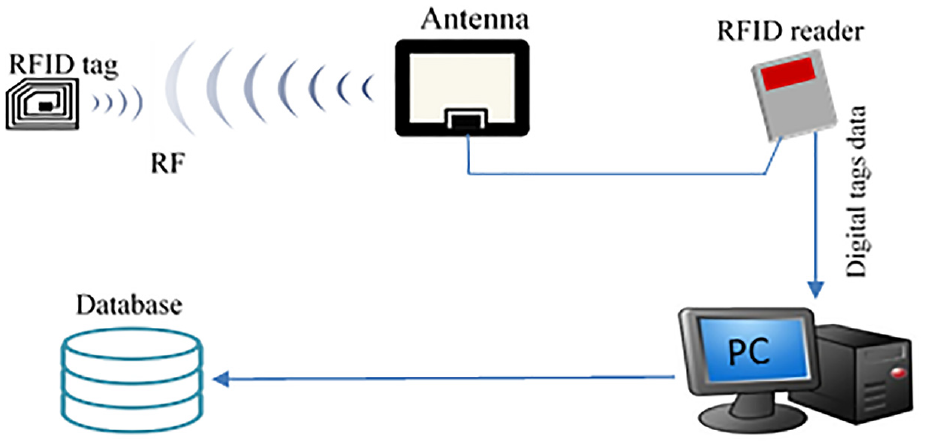
RFID (radio-frequency identification) network diagram. 7
4. Research methodology
A simulation model using Arena 14.7 software was developed to evaluate the proposed airport parking system. The model analyzes an existing airport parking facility and the proposed RFID parking system, and assesses the impact of changes in the proposed system. Relevant data for the key areas of operations were collected from King Khalid International Airport, Riyadh, which was chosen as the case study.
As mentioned earlier, airport visitors face long queues at circulation points of the entrance and exit gates in parking areas. In this paper, the current parking system of an airport facility is analyzed (see Figure 2). One of the most critical issues we found is the waiting time during the entrance/exit process. The operational performance measures used for evaluating the system are the number of vehicles waiting at key intersections and at the entrances and exits of the parking structure, and the average waiting times of these vehicles. 26 To reduce the waiting time, an automated parking system using RFID is proposed.
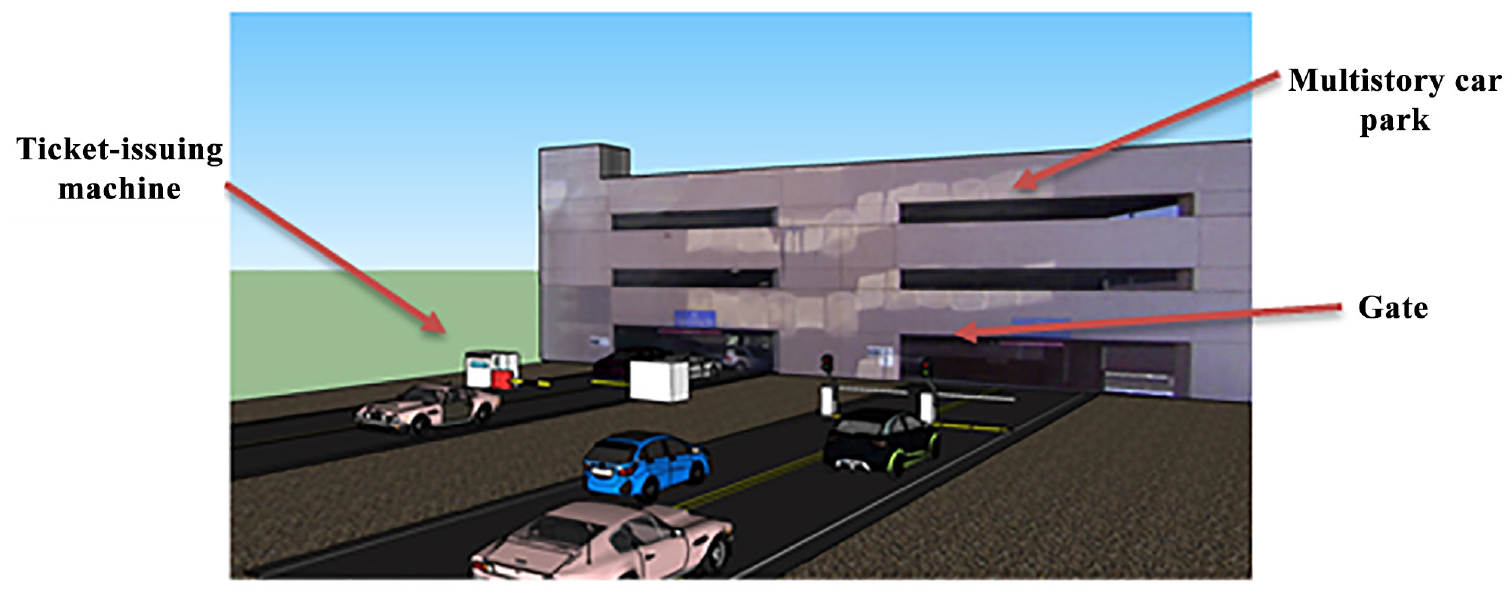
Parking system of the airport facility.
4.1. Current parking system
The current semiautomatic system is governed by humans and has two floors for parking. It has a total of four entrances and exits (each level has two entrances and two exits). The entrance terminal has three main components (Figure 3):
a ticket-issuing machine, which prints and dispenses tickets with the current time;
a check station, where the staff observe the entrance system;
a gate barrier, which is an automatic safety barrier to stop drivers.
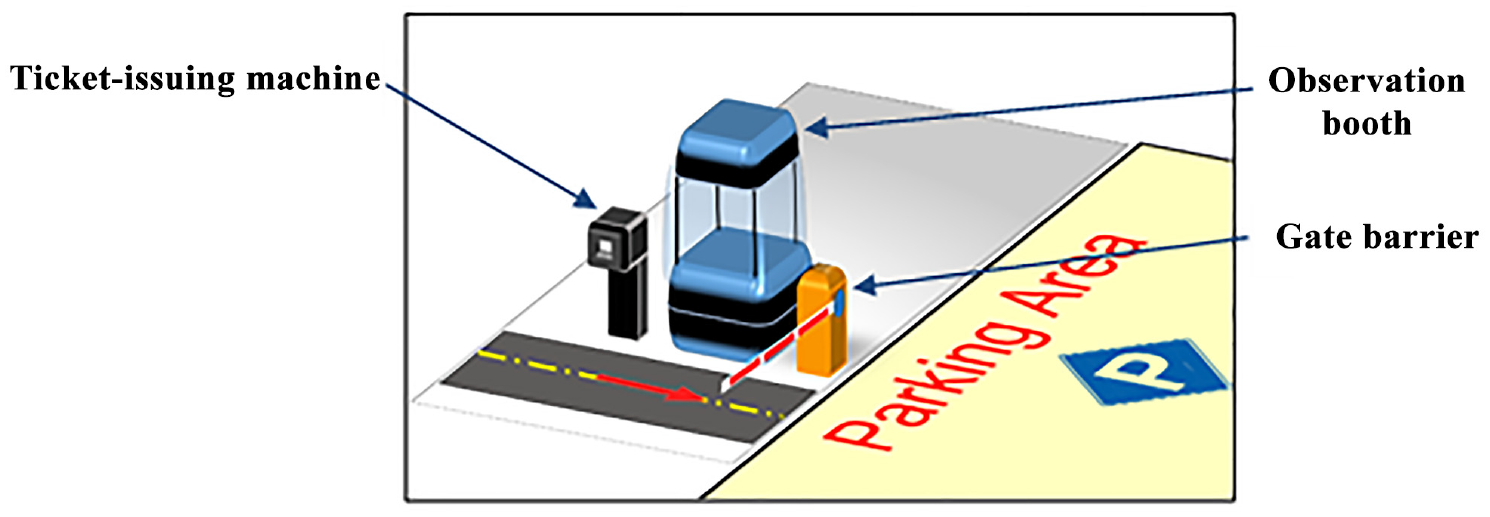
Main components of the airport entrance terminal.
Drivers who are headed to the parking entrance terminal must complete three steps before entering the parking area. First, the driver has to stop next to the ticket-issuing machine and wait as the plate number is registered by a staff member. Second, the driver has to wait for the entrance confirmation and pick up the ticket. Afterward, a staff member opens the gate barrier and allows the driver to enter the parking area.
The airport exit terminal has two components (Figure 4):
the pay station, where the driver has to pay the fees for the incurred parking time;
the gate barrier, which is an automatic safety barrier to let the driver exit the area.
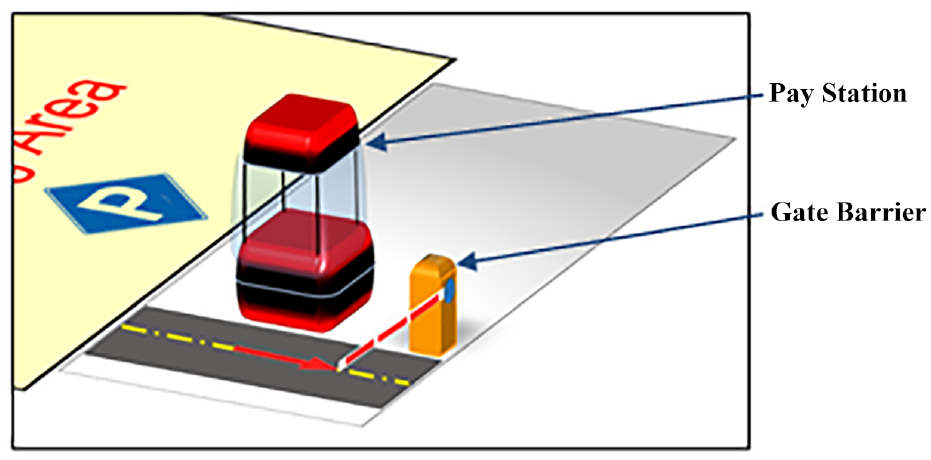
Main components of the airport exit terminal.
For the exit process, the driver has to complete the following process. First, the driver has to stop and pay the bill for the incurred time in the parking area. Then, after completing payment, the driver must wait for the gate to open. Finally, an airport staff member opens the gate barrier and allows the driver to leave the parking area.
4.2. Proposed automated parking system using RFID technology
By applying RFID technology to the system, the entering and exiting processes will be improved. All of the aforementioned steps of the current system will be eliminated (the ticket-issuing process, registration process, and gate barriers). Figure 5 shows the three entrance gate components of the proposed RFID-based automated system:
RFID tags, which contain information on the driver as well as the vehicle;
an RFID reader, which allows for identification of vehicles and records at what time a vehicle enters the system;
the host computer, which controls the gathered information and conducts automatic financial transactions.
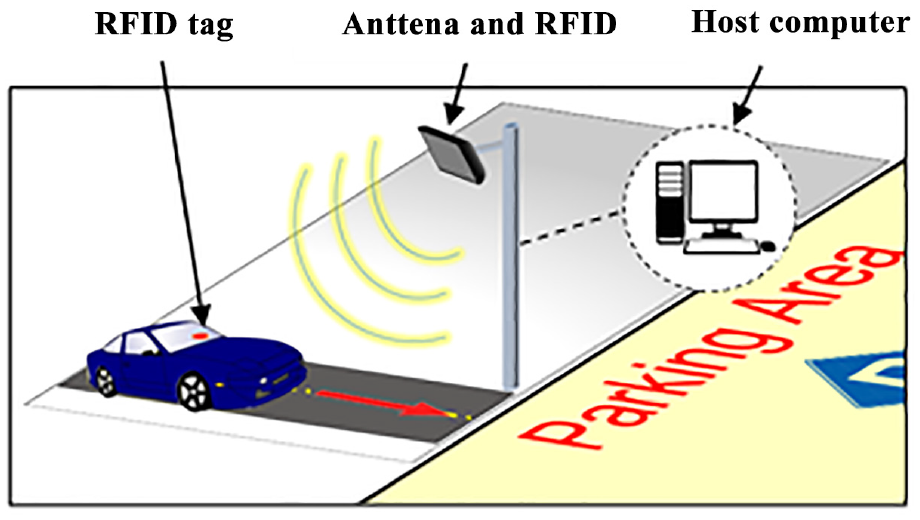
Proposed RFID-based parking system at the entrance gate.
The entrance and exit gates have the same components, with one shared host computer linking all entrances and exits to a local area network (LAN). Once a vehicle approaches the entrance/exit gate, the RFID reader detects the tag in the vehicle and captures the information about the vehicle. Afterward, the information is sent and stored in the host computer. The host computer is supported with a complete information system to integrate all of the parking components. As there are no barriers in the proposed RFID system, drivers do not have to wait for approval before entering and exiting the parking area. Similarly, when a vehicle approaches the parking exit terminal, the tag sends the information regarding time spent to the host computer via the RFID reader. The computer automatically calculates the billing amount and conducts the payment transaction.
4.3. Key parameters in the parking system
In the entry/exit terminals of a pay-and-park system, the inter-arrival time, entrance service time, and exit service time are the key determinant parameters for measuring the operational performance. The inter-arrival time is the time difference between two successive arrivals of vehicles. 27 For a pay-and-park system, two other critical parameters are essential for the performance of the entrance and exit terminals. First, the entrance service time is the time needed to enter the parking area using the entrance terminal. Second, the exit service time is the time needed to exit the parking area through the exit terminal.
The operations of the current parking system were observed, and the abovementioned data were collected for analysis. Using the Arena input analyzer, the inter-arrival time, entrance service times, and exit service times were estimated and are listed in Table 1.
Observed parameters for the current parking system

The two most important measures of the performance of the entry and exit terminals are the average number of vehicles at the terminals and the average total time spent at the terminals (which consists of the waiting time in the queue plus the service time). The objective of this work is to remove the total time spent at the entry and exit terminals. To calculate the average number of vehicles in the entry and exit terminals, Equation (1) is used:

where L(t) is the number of vehicles in the queue at any time instant t, and l is the length of the run.
The average waiting time in the queue at the entry and exit terminals was calculated using Equation (2):

where WTi is the waiting time in the queue of the ith vehicle, and N is the number of vehicles that pass through the queue.
5. Simulation model
The Arena 14.7 software-based simulation system was developed to model the existing entrance and exit of the airport parking facility with two entrance gates and two exit gates. As the research is focused on the entrance and exit, and the time spent in the parking area has no effect on the entrance and exit processes, the latter is neglected. In the model, the exit is assumed to be dependent on a compounded rate of arrival and processing time at the entrance gate. The simulation model for the current entry/exit system was built using the flowchart shown in Figure 6(a). Afterward, the simulation model was modified for the RFID entry/exit system (Figure 6(b)).
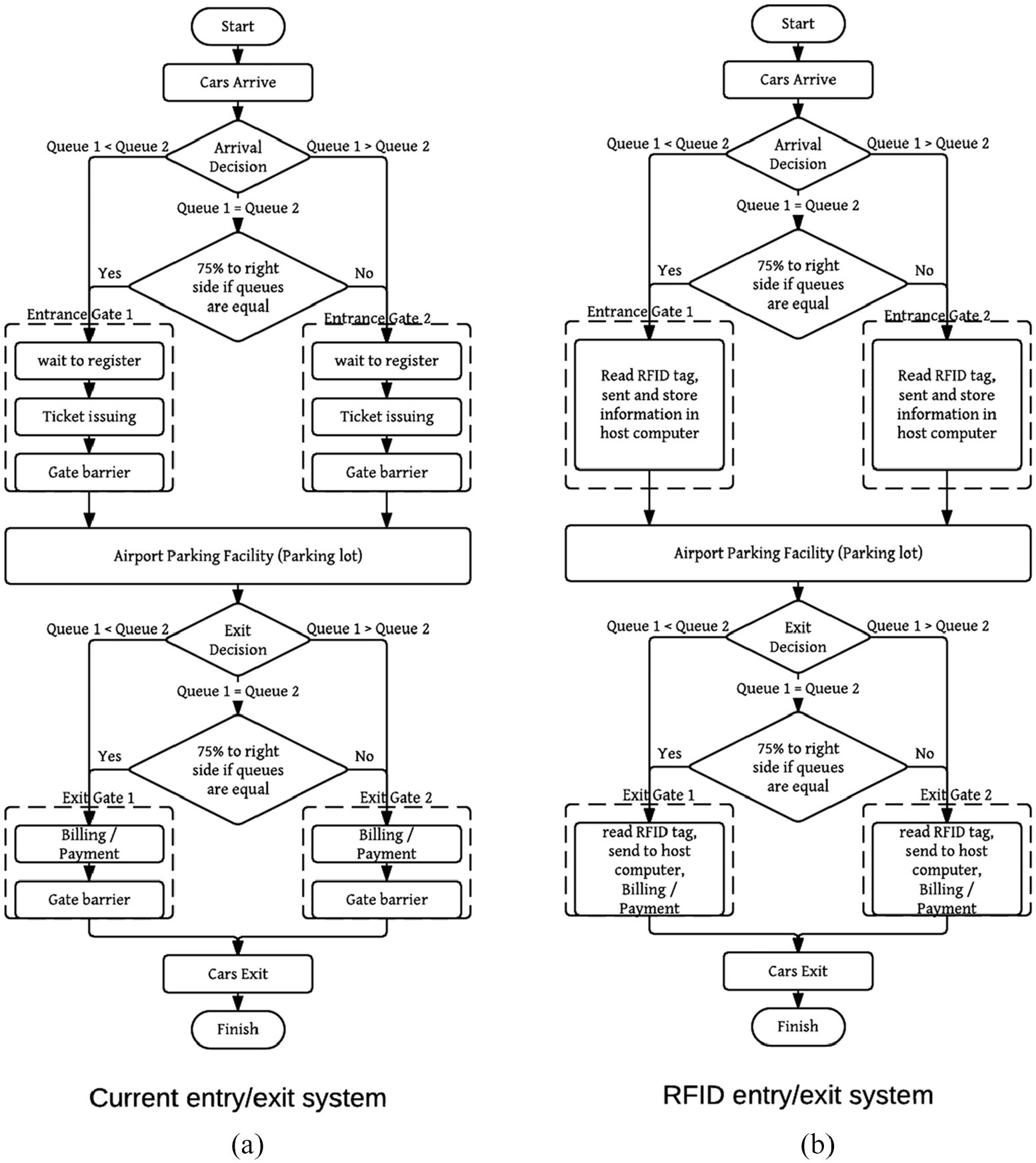
Flowchart of (a) the current entry/exit system and (b) the RFID (radio-frequency identification) entry/exit system of the airport parking facility.
The facility management is interested in the length of stay of the vehicle, the number of vehicles served by the facility in a day, and other data such as plate numbers. For our study, the most important item is the service time for the vehicle at the entry/exit gates and the inter-arrival time. These data were collected by direct observation. We observed almost 400 vehicles in 7 days at different times at all gates to collect the service times for entry/exit and the inter-arrival times of the vehicles.
The process begins with the arrival of vehicles, depending on the inter-arrival time. Then, the vehicles are routed to the entrance gate with the smallest queue. If the queues are equal, it is assumed there is a 75% probability that vehicles will be routed toward the right-hand gate. This assumption is based on the behavior of people of Saudi Arabia, who prefer the right side. After arrival at the entrance gate, it takes time to serve each vehicle in terms of registering, providing an entrance slip, and entering the parking layout. As mentioned earlier, the time spent parking and parked is neglected, so the next step in the model is the exit process. There are two gates at the exit, and vehicles are routed toward the shortest queue of the two gates. It can be added here that if the queues are equal, the same assumption of a 75% probability that vehicles will be routed to the right-hand gate is used. The service time of the exit process consists of billing, payment, and allowing the vehicle to leave. The simulation model is set up as follows:
The arrival module creates entities for vehicle arrival at the entrance gate in the simulation model. Entity creation is based on the inter-arrival time, which is calculated using real data collected from the airport (listed in Table 1).
The gate selection decision module is based on the natural behavior of a vehicle driver, which involves selecting the shortest queue. In the case of equal queues at both entry gates, the decision module sends the vehicle to the right or left gate based on the assumption above.
The entry gate module is a processing module that simulates the entry process. It also calculates the time at the entrance gate, which is composed of the entrance service time and the waiting time in the queue. The entrance service time is based on real data collected at the airport (listed in Table 1).
The exit gate selection module compares the queues for the two exit gates and selects whichever gate has the fewest vehicles in the queue. In the case of equal-length queues at both gates, the decision module sends the vehicle to the right or left gate based on the assumption above.
The exit gate module is a processing module that simulates the exit process depending on the exit service time. It calculates the time at the exit gate, which is composed of the exit service time and the waiting time in the queue. The exit service time is derived from real data collected at the airport (listed in Table 1).
The dispose module removes and deletes the entities (vehicles) from the system.
The abovementioned simulation model was modified to incorporate the RFID system in place of the current entry/exit parking system. In this modification, the entry/exit barricade system is completely replaced by the RFID system, which requires no manpower and an insignificant service time at the entrance and exit of the parking system. When a vehicle arrives at the entrance gate, the RFID reader reads the tag and sends the vehicle information to the host computer. When a vehicle exits, the RFID reader reads the tag, and the host computer calculates the bill and charges an online payment. This implies that there is no queue for entrance and exit, and hence the waiting time for the entrance/exit process is eliminated.
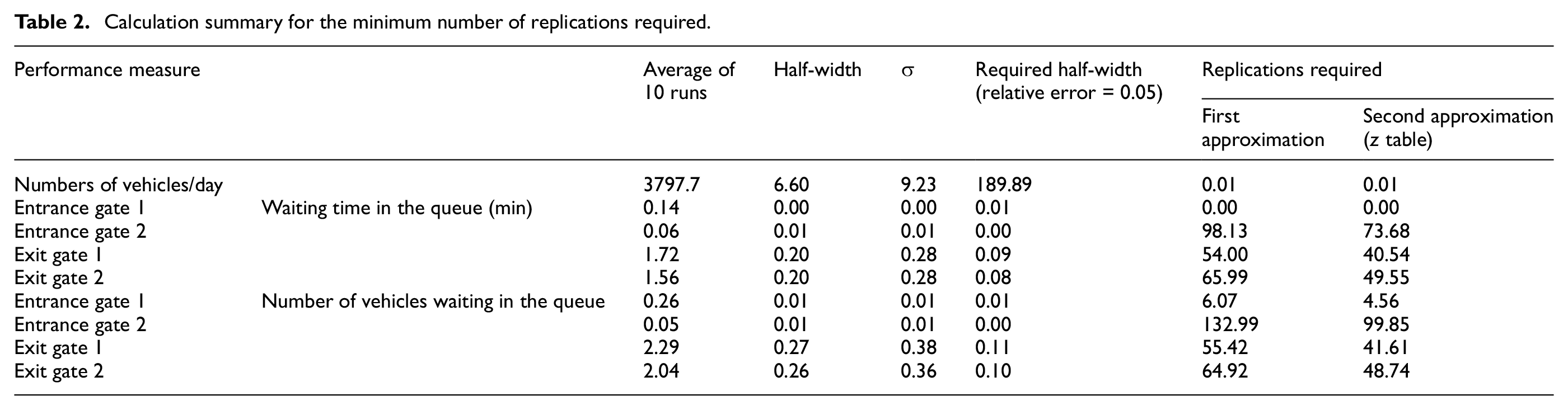
The arrival, entrance, and exit process is stochastic in nature. This randomness has a large effect on the results of the simulation and implies that different simulation runs provide different results. In order to match the simulated system with the actual system, the model was set to run for 24 h for 10 replications as the initial value for the number of replications. After observing the results of 10 simulation runs, we estimated the number of runs required for each performance measure by two different methods. Thus, to obtain results with a 95% confidence level for all performance measures, we selected the maximum number of runs required, which was 133 (Table 2). The minimum number of replications was estimated by observing the variations in the results. When the variation started to reduce, the number of required replications was selected.
Calculation summary for the minimum number of replications required.
6. Results
Simulation models were developed for both the current entry/exit system and the proposed RFID entry/exit system. The first model imitated the current parking system, and second simulated the proposed parking system utilizing RFID. A comparative analysis was performed for the results of both simulation models. Figures 7 and 8 show box-and-whisker plots from the process analyzer of Arena for the average number of vehicles in the entry/exit system. From the plots, it can be seen that the average number of vehicles was around nine in the current entry/exit system. By contrast, the average number of vehicles at the peak time reached nearly 38 vehicles, which created significant traffic congestion and a longer queue length. In the case of the proposed RFID entry/exit system, the average number of vehicles at the entry/exit points was 0.05, which is negligible. Therefore, it can be stated that there is no queue even at peak times in the proposed RFID entry/exit system.
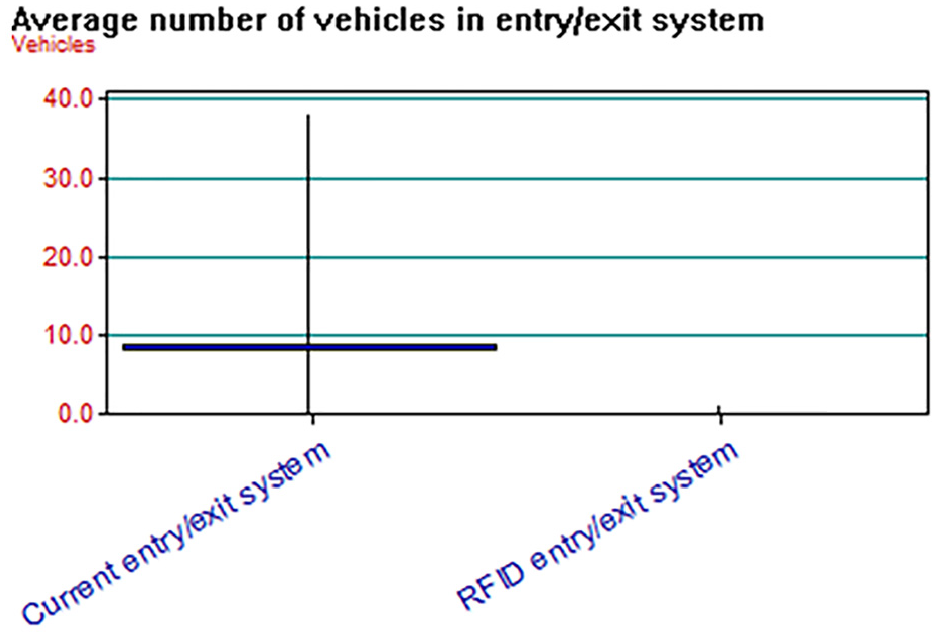
Average number of vehicles in the entry/exit system.
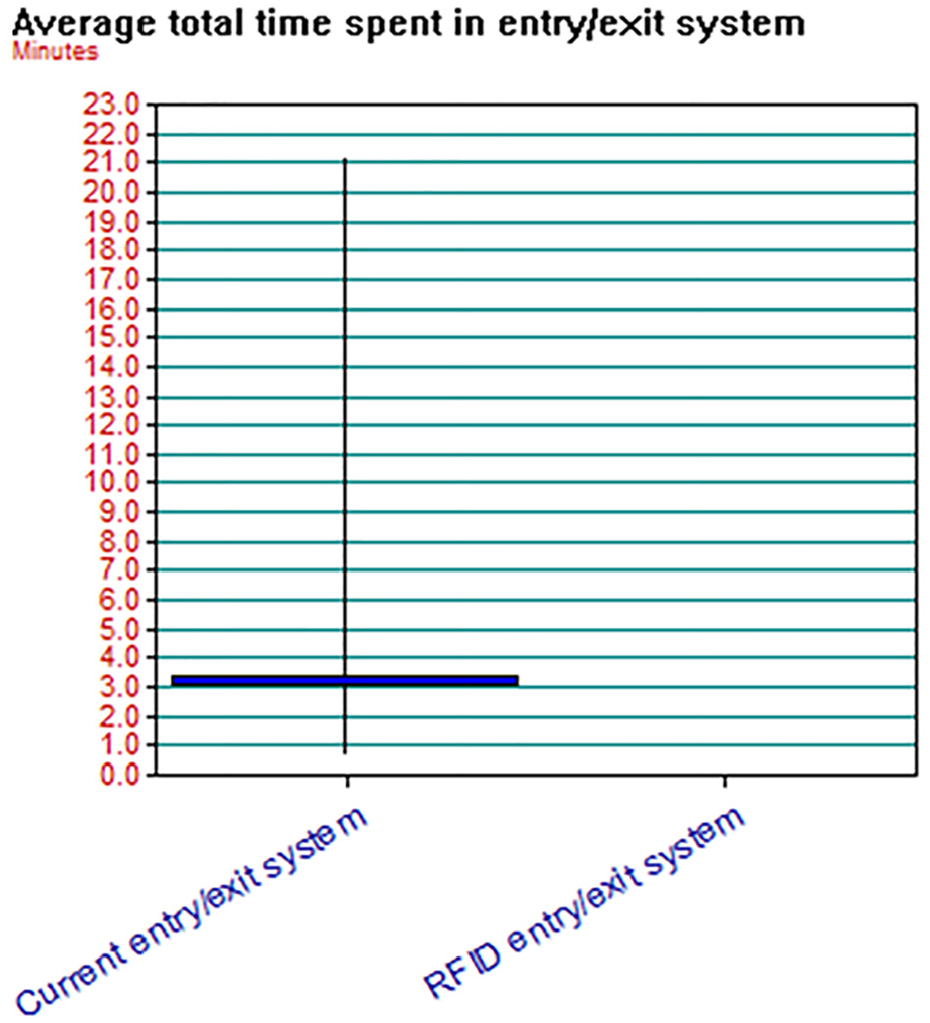
Average total time spent in the entry/exit system.
The average total time spent in the entry/exit system was 3.22 min, and at peak times this increased to around 21 min in the current system. This clearly shows that a long time is needed to enter and exit the parking area. This eventually leads to traffic congestion, energy losses, the possibility of missed flights, and environmental pollution. It can also be seen that when the RFID entry/exit system was used, the average total time spent in the entry/exit system was reduced to 0.02 min.
Further comparisons were made for all gates in both simulation models. Figures 9 and 10 show the average waiting time in the queue at each gate and the average number of vehicles waiting in the queue at each gate, respectively.
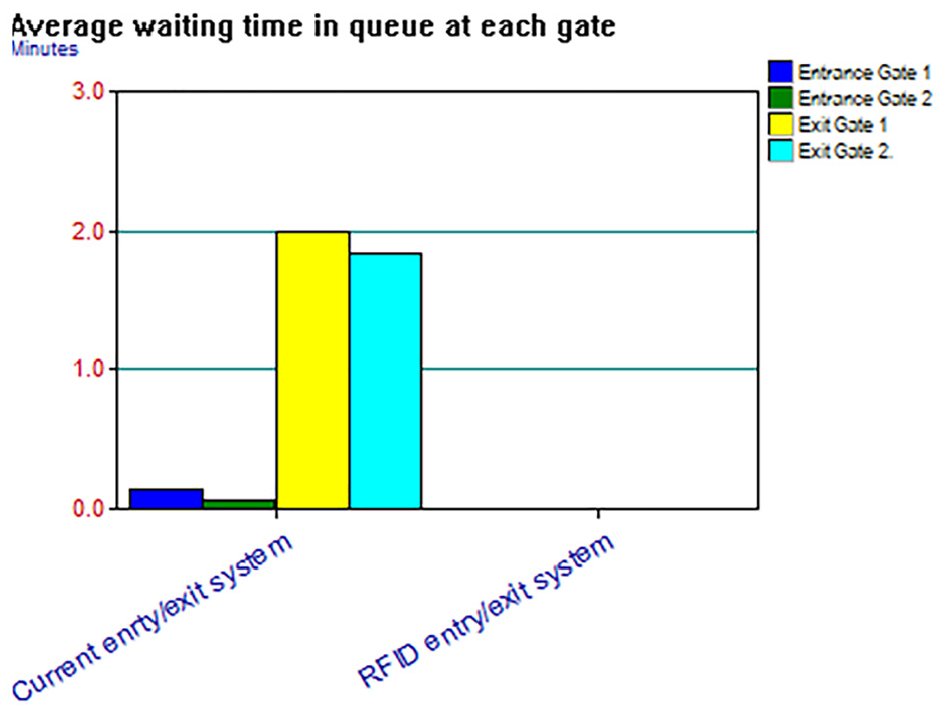
Average waiting time in the queue at each gate.
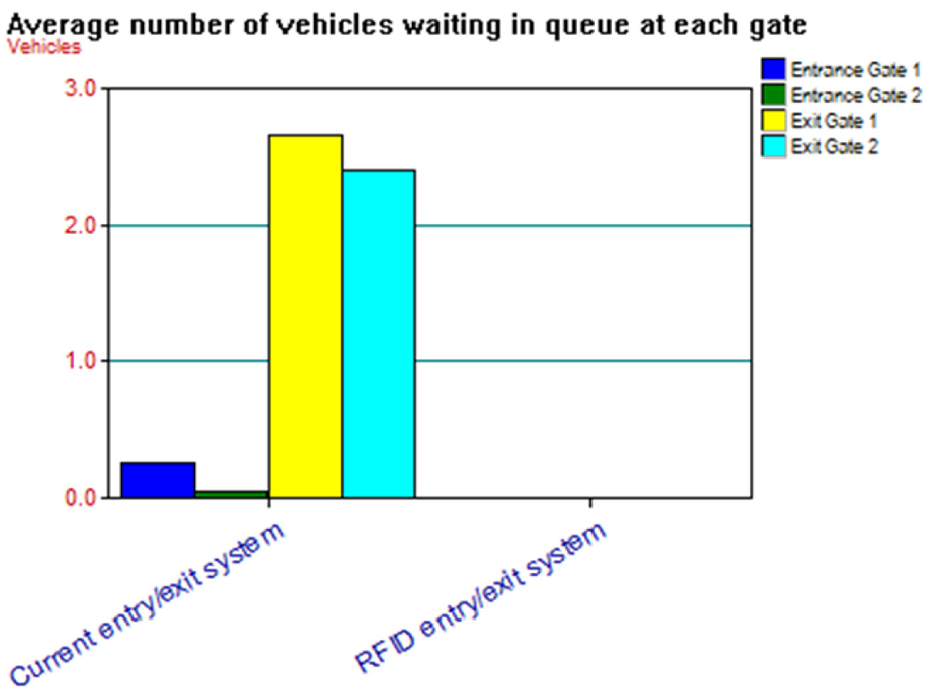
Average number of vehicles in the queue at each gate.
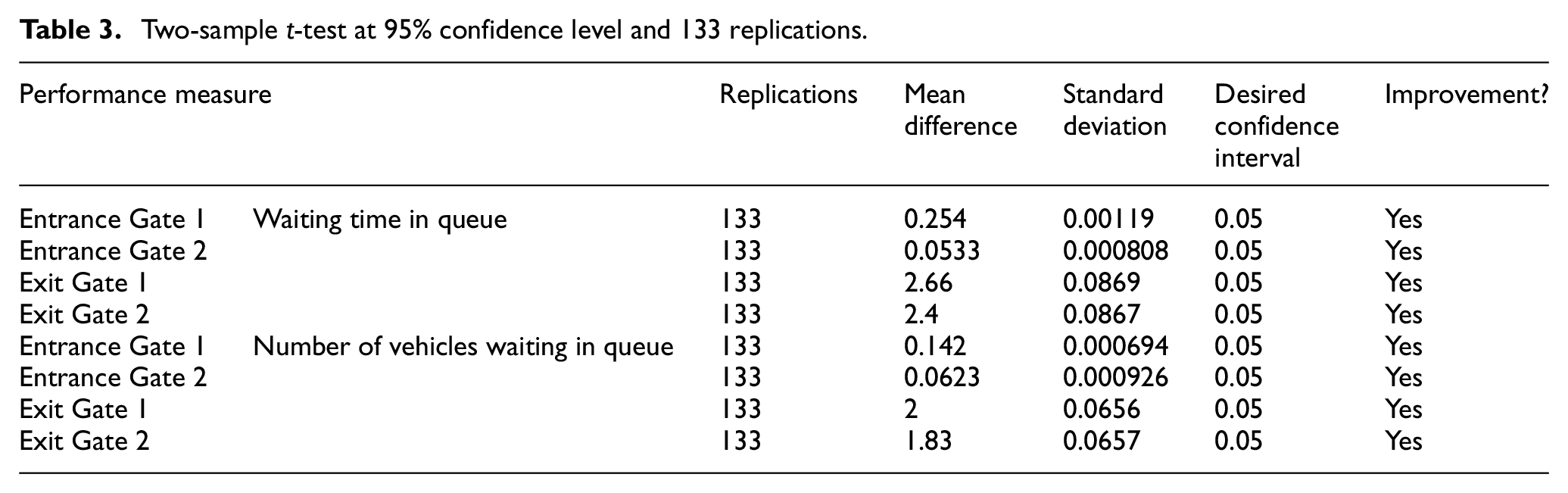
Finally, comparisons were performed for the results of 133 simulation runs for both entry/exit systems. The two population hypotheses testing with a 95% confidence interval indicated a significant difference in both the average waiting time in the queue and the average number of vehicles waiting in the queue. The results indicate improvements to all performance measures. A summary of this test is given in Table 3.
Two-sample t-test at 95% confidence level and 133 replications.
A systematic validation methodology was adopted in which the data collected over 1 day were compared with the simulation results. In this procedure, several simulation runs were performed to generate high-quality data for the purpose of validating the developed model. As shown in Table 4, different pilot runs of the simulation model were carried out in this step.
Results of pilot run made for validation.
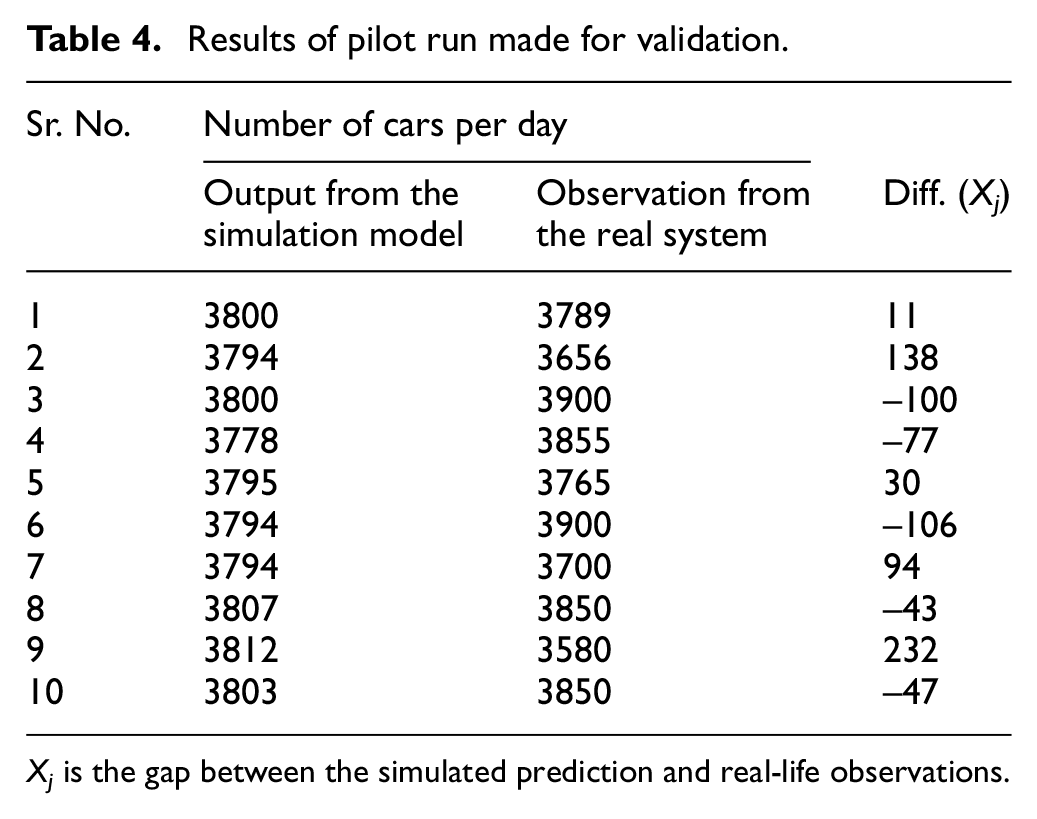
Xj is the gap between the simulated prediction and real-life observations.
We constructed a 95% confidence interval for Xj using a paired-t approach to assess the model accuracy against the test data. Since the simulation is run 10 times, the mean and the variance are calculated as follows, respectively:
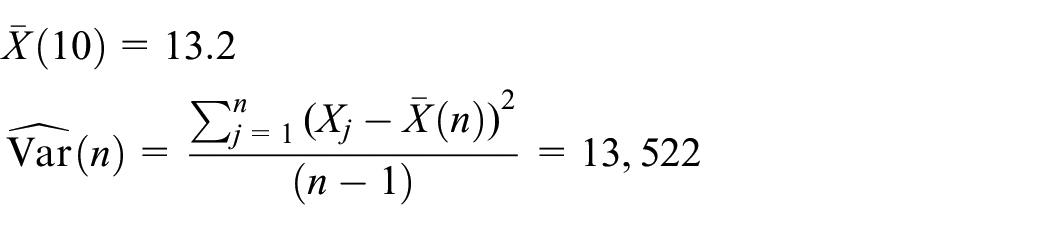
The estimate for the 95% confidence interval is:

Since the interval contains zero with low half-width, the observed difference between the simulation results and real-life observations is statistically insignificant. This indicates that the model is an accurate representation of the actual system.
7. Conclusion
In this work, an automated parking system based on RFID technology that can be utilized at entry and exit terminals was proposed. A simulation model for the entry/exit system of an airport parking facility was developed and analyzed. The simulation was used to evaluate the current and proposed entry/exit system. The results showed that the proposed RFID-based system is better than the current system in terms of average waiting time and average number of vehicles waiting in queues. The efficacy of the RFID system was demonstrated by results that showed a negligible waiting time for vehicles in this system. Therefore, there was no queue at the entry/exit terminals. Hence, the RFID entry/exit system can be operated with only a single gate that serves the dual purpose of entry/exit. This will eliminate the use of other entry/exit gates, which in turn saves space that can be utilized for additional parking spots.
In the future, we plan to study the time to search for a parking spot utilizing the same RFID system. The implementation of RFID can greatly improve traffic flow in parking systems, reduce operating costs, and better utilize the overall parking system, which will lead to an increase in customer satisfaction.
Footnotes
Funding
The author extends his appreciation to the Research Center of the College of Engineering, Deanship of Scientific Research, King Saud University for funding this work.
