






Abstract
To control manufacturing processes, integration of flows of manufacturing information is an important starting point. In this regard, an effective Integrated Manufacturing Information System (IMIS) which is capable of monitoring, analyzing, and inspecting manufacturing processes properly is critical. Often, most of difficulties in achieving an effective IMIS stem from a poor design for the system architecture. This study particularly addresses the problem of coupling in architecture of an IMIS and its effect on the system performance. This study employs “Independence Axiom” of the Axiomatic Design (AD) theory to deal with the problem and uses “times in process” and “utilized capacities of available resources” as two important criteria for evaluating the system performance. To verify the proposed methodology, a real IMIS is addressed, its stochastic behavior is simulated in Visual SLAM and AweSim (version 3.o) software environment, and the outcomes are analyzed by using logistic regression method for each level of system decomposition. Results of the analyses indicate that fulfillment of independence axiom of AD theory can significantly enhance performance of the concerned IMIS.
Keywords
1. Introduction
Within the real world, systems can interact with their operational environment by exchanging materials, energies, and information. 1 On the basis of this fact, interactions among different subsystems of every system should be considered by exchanges of material, energy, and information as well. 2 Flows of materials, energies, and information within the system’s components and with neighboring systems encompassed inside the system’s operational environment are, in fact, three key parameters that can effectively regulate behaviors of the system and significantly contribute to the system’s capabilities.2,3
In evaluation of performance of a system, information capacity of the system comparing with energy and material aspects is more crucial relatively. In other words, in evaluation of performance of a system, as the flow of information can effectively facilitate the flows of material and energy inside the system, among all three flows of materials, energies, and information, concentration on the flow of information inside the systems has its own particular significance. 3 Therefore, in attempt for improving the system’s performance, an effective control plan for regulating the system’s behaviors is expected to be more concentrated on flow of information and any sustainable success for the system may not be achieved without considering the information flow. 4
Establishment of an effective Integrated Manufacturing Information System (IMIS) in a manufacturing system is expected to significantly contribute to achieving a successful system with good performance in sharing and integrating all required information across the manufacturing processes. However, often, due to inappropriate design of the system, some difficulties in achieving an effective IMIS are experienced. 5 In fact, poor design decisions are considered to be as serious obstacles for reaching a desirable result because they cannot be resolved easily by simple actions such as fine-tuning and/or design iterations.6–9 Improper design decisions on development of any IMIS are regarded as “conceptual weaknesses” and should be reduced if they cannot be eliminated completely. 10
To achieve a successful IMIS, this study uses principles of systems engineering and emphasizes that a good design for architecture of the concerned IMIS is essential. 11 Indeed, to improve capability of the IMIS associated with the concerned manufacturing processes, a systematic design approach to develop a successful one is highly helpful. In this study, for the purpose of evaluating and improving design of a concerned IMIS, which is capable of successfully fulfilling every(functional) requirement defined for the IMIS of interest, the problem of coupling in architecture of an IMIS and its effect on the system performance are addressed. To deal with this problem, this study employs Axiomatic Design (AD) theory,12,13 particularly the “Independence (First) Axiom” of the theory.
To evaluate capability of the concerned IMIS, like any other engineering system, important parameters including processing time, processing cost, processing quality, processing risks, level of available resources utilization, responsiveness of resources, and so on are commonly used as informative indicators. 14 However, in context of the concerned IMIS, among all the factors mentioned above, significance of both “Time” and “level of available resources utilization” is relatively critical.15–18 Therefore, in this study, both “process times” and “utilized capacities of available resources” are utilized to fairly compare and evaluate performance of existing design of the IMIS with one designed based on the AD theory. In addition, since simulation models can be usefully employed as explanatory tools to define a system or problem; analysis means to identify critical components; good assessors of design to consider and evaluate possible solutions; sound tool to predict and assist any planning for any potential development; helpful vehicles to study and analyze systems of interest in the design phase, before the systems are developed; and useful means to experiment with new policies or designs before realization, analyses of this study are placed upon results of simulating the stochastic behavior of the system.19–28 Therefore, this study utilizes simulation study to just clarify the importance of design type for architecture of a concerned system in diminishing the processes time and resources utilization significantly.
The rest of the paper is organized as follows: in Section 1, the introduction was presented. Section 2 presents relevant works and gap analysis in the literature. Overview of concepts including AD theory and the problem of coupling are presented in Section 3. The method is given in Section 4. Section 5 is about the case study and includes two subsections “Visual SLAM Model for the System Architecture and the Assumptions” and “Analysis of System Performance for Existing and AD-based Design at the First Level of Decomposition.” Finally, Section 6 presents “conclusion” of the study.
2. Relevant works
To effectively integrate, manage, and control the information flow, design and development of highly capable “Information Systems,” ISs, is crucial. Review of the literature on design and development of successful ISs signifies that all authors have highlighted the significant role of effective ISs in achieving the concerned systems’ objectives while suggesting various solutions for developing ISs with more capabilities. Childerhouse and Towill 29 argued that there should be a sequence for integrating information, starting with enhanced internal effectiveness followed by external integration of information. Aiello et al., 30 in context of distribution networks or supply chains for perishable products, showed that presenting a capable IS while employing the Radio Frequency Identification (RFID) technology can helpfully pave the way for overcoming some of considerable difficulties in evaluating and assessing history of the system’s information and data. Aiello et al. 31 presented an IS, as an expert system, and discussed that a good design for this system of interest can more effectively manage the vineyard operations. Zampou et al., 32 in context of manufacturing, discussed that ISs can be employed as intelligent decision support enablers. They identified important functionalities which may be sufficient for characterizing an IS as “energy-aware” in manufacturing. These functionalities are appropriately categorized into two main categories: (1) Energy Monitoring, and (2) Energy-Aware Analytics and, then, they are composed into a high-level architecture. In addition, the study presented an approach that can integrate two flows of energies and operational information of the system. Sękala et al. 33 presented the e-manufacturing environment model as the multi-agent system. The developed e-manufacturing system is, in fact, a joint, multi-dimensional base which is to gather all needed information and provide quick access to data and variant analyses required for a manufacturing control system in a real time. Lanz et al. 34 discovered main challenges in conceiving the essence of flow of information which should relate the various design departments and activities which are essential constituents of the lifetime information of a product, including its services and processes. They introduced an idea where the semantically capable product-process information can flow through the different phases of system life cycle and therefore, enhance the knowledge. From view of Liu et al., 35 lack of sufficient capability in access to data and sharing the data in traditional enterprise IS often stems from strong coupling, lack of adaptability and flexibility in architecture of the IS incorporated into the system. Liu et al. 35 described architecture of advanced data service for modern enterprise IS. The architecture resolved two main problems: semantic integration of data and adaptability of data server. The objective was to support a wide range of enterprise ISs for finding and sharing data by data service composition. Maiga et al. 36 showed integration of Internal IS has a significant positive association with integration of external IS, and both integration of internal IS and integration of external IS are positively associated with quality performance and cost. Makris et al. 37 proposed an IS to support workers (human operators) in an assembly line. They emphasized that an intelligent decision-making algorithm is paired with this information along with a communication infrastructure to facilitate a dynamic job rotation during assembly. The system facilitates the errors mitigation in multi-variant assembly lines, the time reduction for successful retrieval of information, and the appropriate allocation of assembly tasks to operators. The system is implemented in a truck assembly line. Aiello et al.38,39 explained that an IS with the RFID technology can considerably help the automatic real-time data collection, and, hence, it can pave the way for the development of successful traceability systems. Gilia et al. 40 discussed effective role of ISs in management of clinical information/documents/data. Wang et al. 41 discussed that under the networked manufacturing environment, the enterprises may experience challenges including the increasing complexity of manufacturing processes. They argued that to overcome these challenges, the manufacturing enterprises have to apply information management by developing capable ISs. Ivezic and Srinivasan 42 described the challenges and opportunities in developing Engineering Information Systems/Services and combining them to facilitate smarter manufacturing. Hintsch et al. 43 discussed how to apply the concept of ERP system to a specific type of Information Technology (IT) service provider comprehensively. The study developed architecture of IS with the ERP system at its core. Bauters et al. 44 studied application of video-based ISs in serving different manufacturing objectives such as “inventory management,”“planning,”“quality control,” and so forth.
In manufacturing systems, the flow of information has a critical role in finding appropriate responses for dealing with changing situations in the manufacturing processes.45–47 Concerning manufacturing processes, integration of flows of information is regarded as a starting point for integrating all activities required to be completed for achieving a product of interest.48,49 In fact, integration of flows of information can connect internal and external information sources to improve the depth and breadth of flows of information. This can therefore provide a wealth of integrated information which can help fulfillment of (functional) requirements defined for a manufacturing process.50,51 An “Integrated Manufacturing Information System” can assist manufacturer to analyze manufacturing processes properly and distribute, document, verify, and trace large amount of information more efficiently and effectively.52,53 In addition, IMIS is to facilitate continuously monitoring all activities across all manufacturing processes, sharing all essential information and data among various subsystems of the manufacturing system, and reflecting any change or modifications in manufacturing processes.54,55 Also, IMIS is to support the system to diminish exposure of operational risks which can negatively affect manufacturing processes and end in considerable degradation in performance of the system. 56
Therefore, this study emphasizes that any waste in process time and resources utilization in a system often stem from inappropriate design of the system. This is the main point this study emphasizes and discusses it based on principles of systems engineering discipline. Moreover, to effectively deal with this problem in systems development, this study proposes employment of AD theory.
Table 1 presents particular features of this study achieved by applying first axiom of the AD theory.
Comparing features of this study with relevant works in the literature.
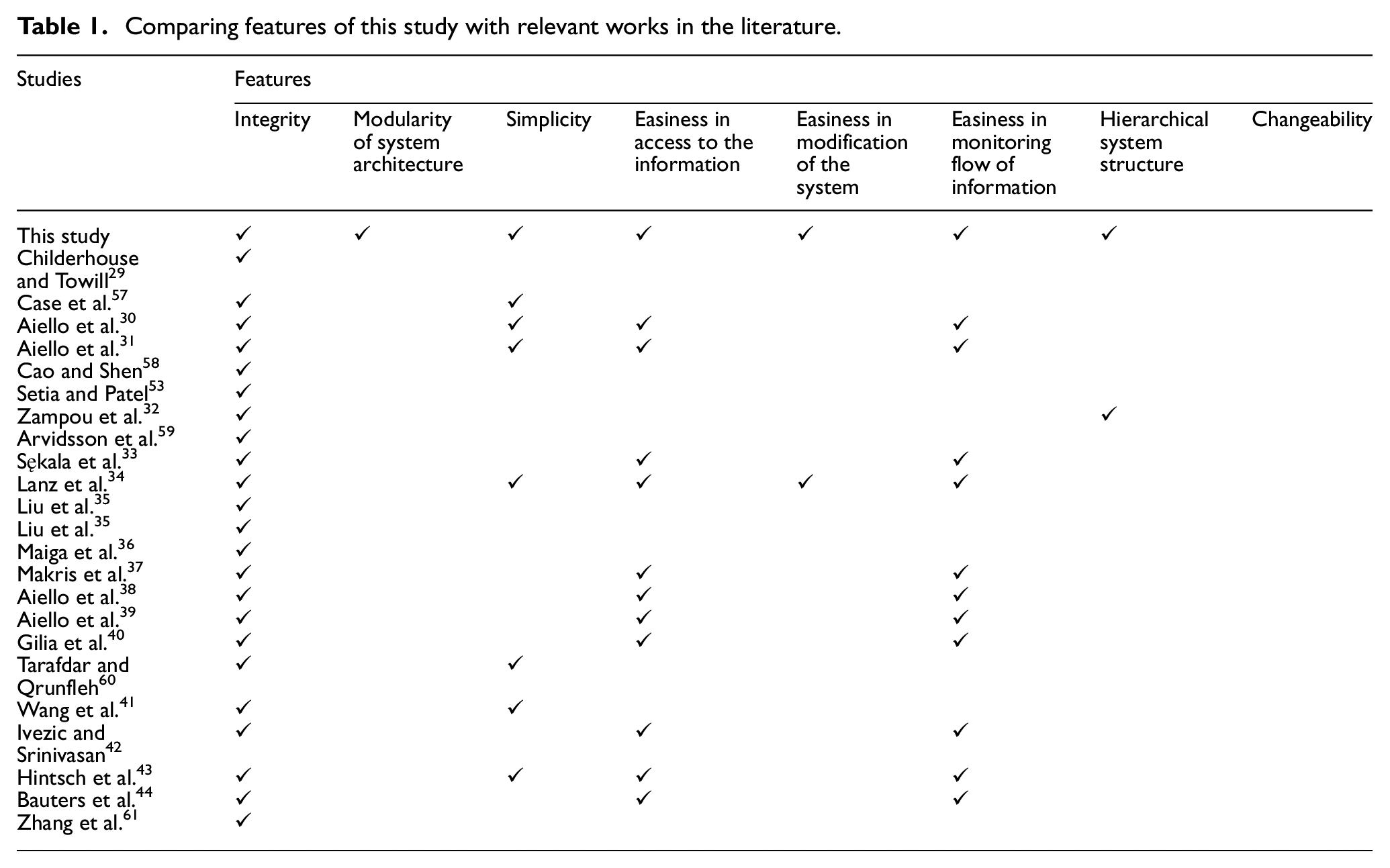
In fact, by applying independence axiom, system characteristics including “modularity” along with “integrity,”“simplicity,”“easiness in access to the required information,”“easiness in modification of the system,”“easiness in monitoring flow of information,”“hierarchical structure for the system,” and “changeability” may be highly archivable. 12
3. Overview of concepts
3.1. AD theory
AD theory was introduced by Suh 12 to design effective systems in a rational way. Axiomatic Design Theory (ADT) theory pillars upon four principles: domains, hierarchies, zigzagging processes, and axioms. According to Suh, 12 design of any system includes four domains as shown in Figure 1. The customer domain reflects customers’ attributes (CAs), which should be translated in terms of functional requirements (FRs) as well as constraints (Cs) in the functional domain. To fulfill the identified FRs, design parameters (DPs), commonly referred to as physical solutions, should be defined in the physical domain. Finally, to manufacture/produce a system, process variables (PVs) are established in the process domain. Hierarchies and zigzagging processes also take place between any two adjacent domains (Figure 1) in a top to bottom way, starting at the system level and continuing through more detailed levels. 12
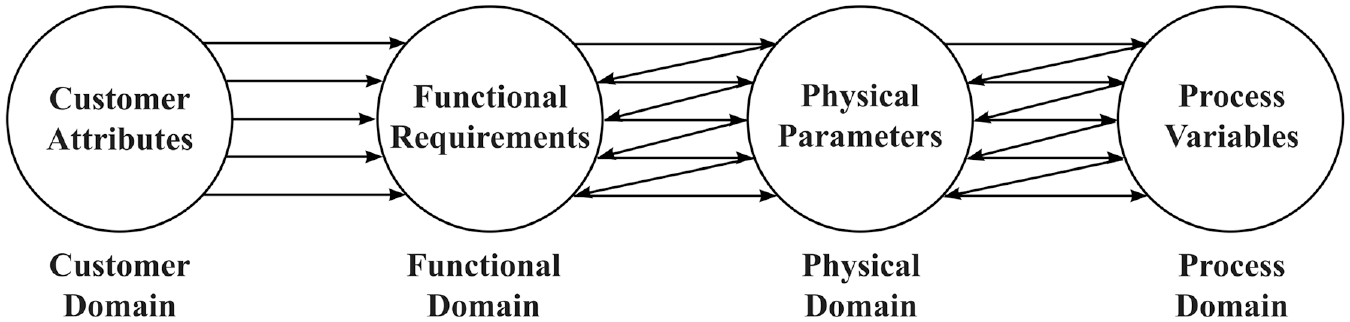
Axiomatic design (AD) domains.
AD theory is supported by two important axioms.
Axiom I is referred to as the independence axiom. A proper system design maintains the independence among FRs (DPs). Therefore, the mapping process between the functional (physical) and physical (process) domains should choose DPs (PVs) to ensure the fulfillment of each FR (DPs) without affecting other FRs (DPs).
Three types of mapping between two adjacent domains can be identified for a 3 × 3 design matrix (DM) (Figure 2).
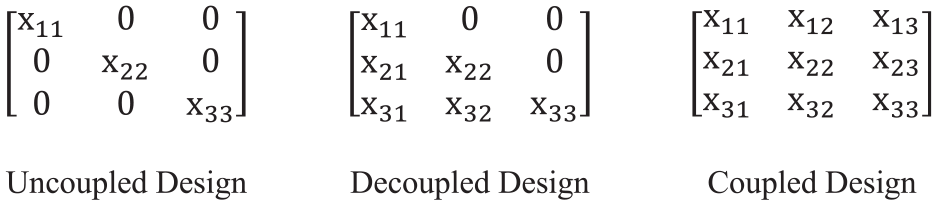
Three kinds of design of mappings between two adjacent domains.
where
Axiom II is known as the information axiom which indicates the solution with minimum information content when multiple, alternative designs satisfy the first axiom. This is accomplished by comparing the information content of the existing, alternative solutions in terms of their probability of fulfilling the FRs (DPs). 12
3.2. Coupling and its measures
For any given DM, it is possible to find a quantitative measure of independence. Suh 12 gives two metrics of independence, reangularity, R, and semangularity, S. Reangularity measures the orthogonality between DPs and is a measure of interdependence.
For the n dimensional case, R is
S measures the angular relationship between the axes of DPs and FRs and measures the correlation between one FR and any pair of DPs. With respect to coupling, S measures the magnitude of the diagonal elements in a normalized DM. For the n dimensional case, S is
Both R and S have a maximum value of unity, which corresponds to an uncoupled (ideal) design. As the level of coupling increases, reangularity and semangularity decrease. Specifically, when R or S is 0, the design is completely coupled.
4. Method
To clarify the role of “independence axiom” of AD theory in improving performance of the concerned IMIS, the following steps (Figure 3) are taken, in turn: At step 1, current hierarchical architecture of this IMIS which is to support associated manufacturing processes is identified. At step 2, the probability density function for arrival of information entities for each level of the system abstraction is fitted. At step 3, the probability density function for each service (processing) activity to be done on information entities is fitted. At step 4, essential factors evaluating performance of the IMIS of interest are found. Next, at step 5, using simulation modeling of the current architecture of the concerned IMIS, performance of this subsystem is specified. At step 6, on the basis of Independence Axiom of AD theory, the current design of the IMIS is evaluated. At step 7, coupling among FRs of the IMIS is examined, if the current design is acceptable, the next step (step 8) is taken, and following simulating the system, performance of the concerned IMIS for each level of abstraction is reported in terms of the critical indicators. Otherwise, step 9 should be taken, and hence, the current design of the concerned IMIS is modified according to independence axiom of the AD theory. At step 10, the modified design is examined, and, if the new design of this subsystem is acceptable, the next step (step 11) is completed, simulation modeling of the new architecture of the subsystem is developed, and system performance for each level of abstraction is also reported. Otherwise, step 9 should be experienced again and the current design of the subsystem is modified. At step 12, performance of old and new design of the concerned IMIS is statistically compared based on the critical indicators. At step 13, results related to the new design of this subsystem are analyzed and interpreted, and, if the results indicate the significant improvements in outcomes for the concerned IMIS, step 14 is completed and the modified design of the IMIS is presented. Otherwise, step 7 should be taken again and a new proper decision for improving the current design is essential.
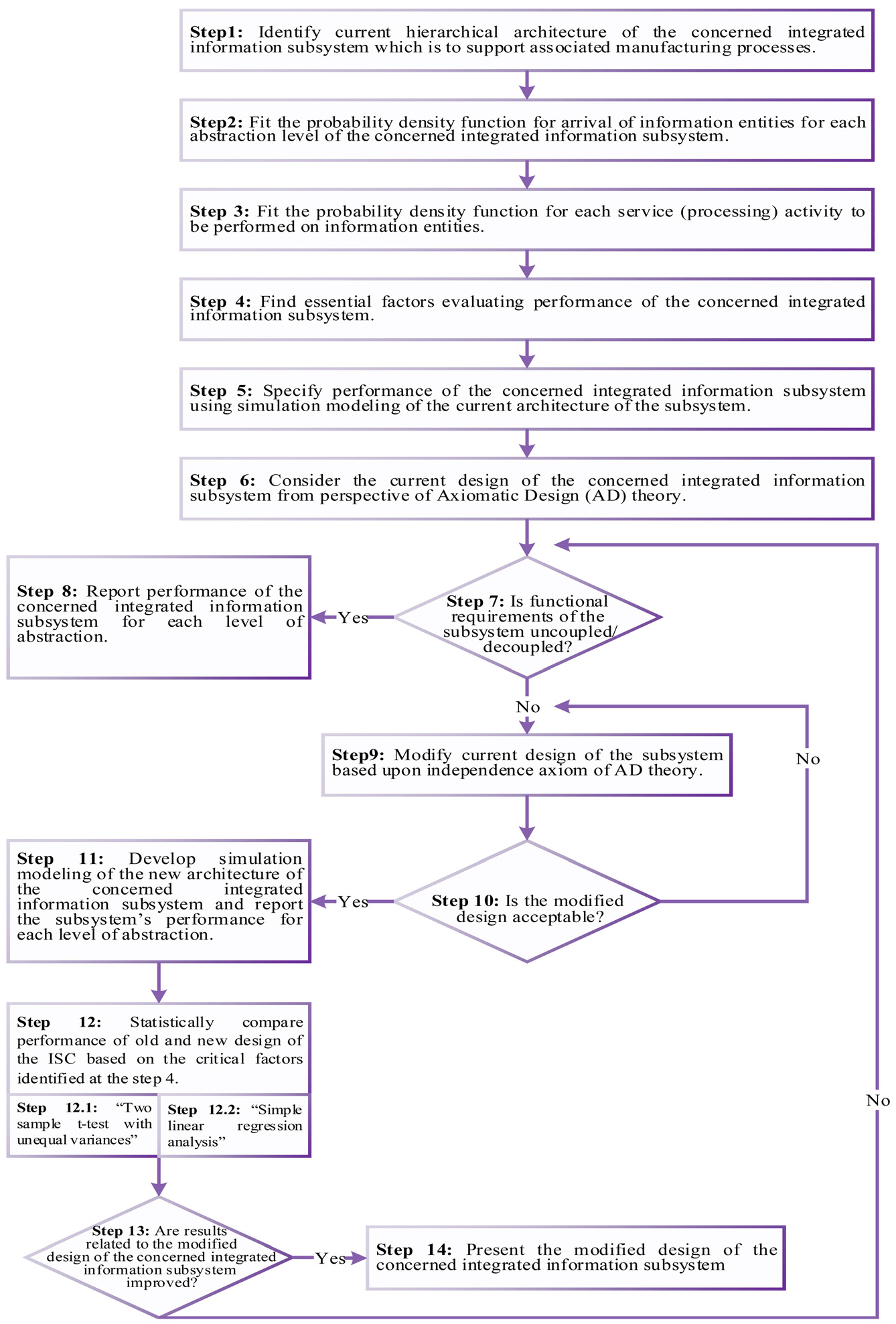
Methodology of the study in algorithmic display.
5. Case study
To illustrate the proposed methodology and verify influence of applying AD theory, most particularly the first axiom of the theory, on improvement of performance of an IMIS established to support manufacturing processes, existing architecture of the subsystem in a real manufacturing company is addressed to be analyzed.
According to steps 1–5 of the methodology, on the basis of the information elicited from a series of interviews with top-, middle-, and low-level managers involved with the concerned manufacturing system, the following are highlighted as the most important items stakeholders would like to achieve:
High Return on Investment (ROI)
Predictable Lead Times
Consistency in the Material Flow
Consistency in the Flow of Information.
To meet the concerned objectives, the subsystem should be capable of effectively distributing all required information across the system. However, due to some of deficiencies including “high manufacturing cost,”“long lead times,”“high inventory,”“quality problems,” and many others, analysis of the existing design of the subsystem is required.
FRs at each level of decomposition along with the associated DPs are provided in the Appendix 1 of this paper. However, by using AD theory, the functional and physical architecture of the system and relationships between the included elements are displayed in Figure 4.

Hierarchical structure of the system with zigzagging process.
According to step 6 of the proposed methodology, concerning the architecture of the subsystem of interest, analysis of fulfillment of FRs by associated DPs for every level of decomposition from perspective of the AD theory clarifies that the FRs defined in functional domain are not properly satisfied by the associated DPs established in the physical domain of the system. Indeed, on the basis of information obtained from interviews with the system managers and/or studying documents related to the system under consideration, it is realized that allocation of DPs into FRs (mapping between functional and physical domain of the system) in the existing design of the system under consideration is in a fully coupled ways (i.e., both measures of R and S are almost zero).
Following a series of interviews with major internal stakeholders of the company under consideration, learning about stochastic behaviors of arrival of information entities and processing (service) activities, capability of the current design of the subsystem under study is evaluated through simulating the system design of the subsystem at each level of decomposition. At each level of the decomposition, if existing design of the subsystem is not consistent with principles of AD theory, most particularly the independence (first) axiom, the mapping design will be modified to fulfill independence among the FRs.
To evaluate the capability of the subsystem, both “process time in system” and “utilization of resources” are employed as two chosen indicators providing useful information about the level of capability of the system at any level of abstraction.
5.1. Visual SLAM model for the system architecture and the assumptions
According to steps 7–9 of the methodology, with respect to the current (Figure 5(a)–(g)) and modified (Figure 6(a)–(g)) design of the subsystem, for each level of system decomposition, Visual SLAM and AweSim software (version 3) is employed. AweSim is a general-purpose simulation system which takes advantage of Windows technology to integrate programs and provide component ware. AweSim includes the Visual SLAM simulation language to build network, subnetwork, discrete event, and continuous models. Network models require no programming yet allow user-coded inserts in Visual Basic or C. Discrete event and continuous models can be created using the object-oriented technology of Visual Basic, C, or Visual C++ and can be combined with network models. 22
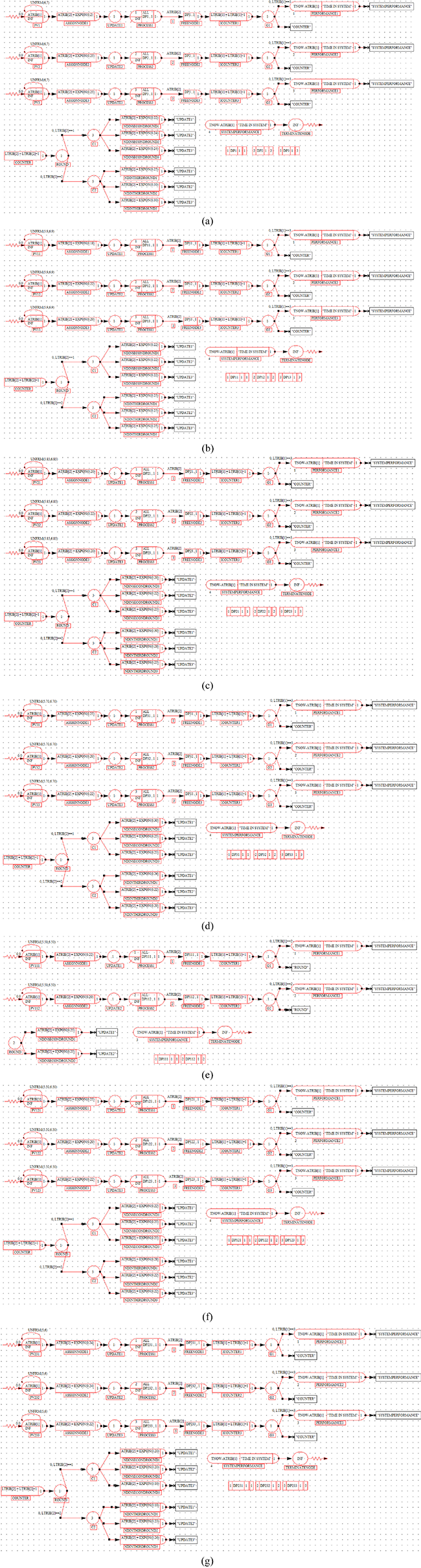
(a) Allocation of DP1-DP3 to FR1-3FR, (b) allocation of DP11-DP13 to FR11-FR13, (c) allocation of DP21-DP23 to FR21-FR23, (d) allocation of DP31-DP33 to FR31-FR33, (e) allocation ofDP111-DP113 to FR111-FR113, (f) allocation of DP121-DP123 to FR121-FR123, and (g) allocation of DP231-DP233 to FR231-FR233.
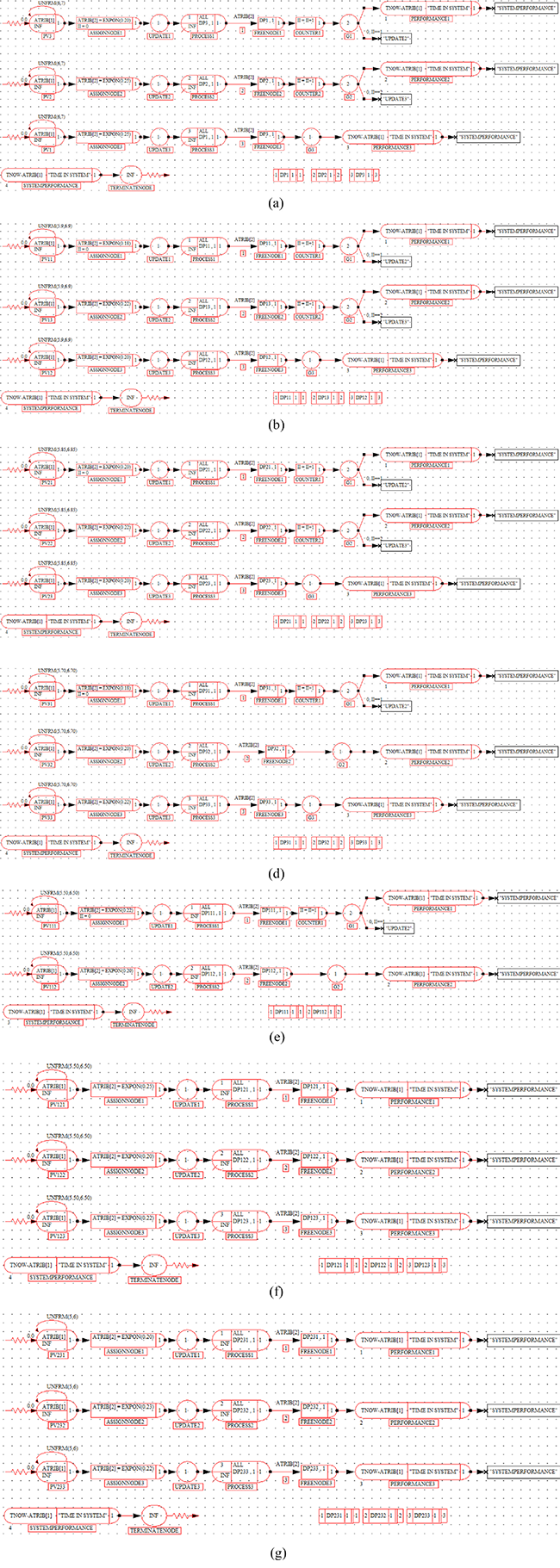
(a) Allocation of DP1-DP3 to FR1-3FR, (b) allocation of DP11-DP13 to FR11-FR13, (c) allocation of DP21-DP23 to FR21-FR23, (d) allocation of DP31-DP33 to FR31-FR33, (e) allocation of DP111-DP113 to FR111-FR113, (f) allocation of DP121-DP123 to FR121-FR123, and (g) allocation of DP231-DP233 to FR231-FR233.
For simplicity, just, the simulation model displaying the system architecture at the first level of abstraction is completely described and explained (Figure 5(a)). The readers are expected to apply the description to understand all other simulation models provided in the paper.
With reference to Figure 5(a), the “raw information,” as entities for the concerned subsystem, is generated using CREATE node for 10,000 information units of time. At this step of simulation modeling, corresponding to each of DPs, a respective CREATE node (labeled as PVs) is defined to generate system entities. In this node, stochastic nature of entering raw information is considered by assigning a probability density function to the time interval between arrivals of the system entities. In addition, the arrival time of each entity is preserved as an attribute, ATRIB[1]. At the next step, corresponding to each CREATE node, a respective ASSIGN node (labeled as ASSIGNNODE) is defined to assign a probability density function to the time interval during which processing the information entities is completed. This probability density function is also preserved as an attribute, ATRIB[2]. As the next step, the information entities enter the GOON node (labeled as UPDATE) to continue. After this step, each entity waits in the AWAIT node (labeled as PROCESS) to receive its required service (information processing). Each of the entities requires one unit of its required resources (i.e., one unit of DPs) to pass through this node. Hence, the service activity (characterized by an integer number) is operated. Following completing the service activity, all resources, already employed to process on raw information entities, must be released at the FREE node (labeled as FREENODE). As the next step, to ensure that all FRs are addressed, the ASSIGN node (labeled as COUNTER) is employed to build a counter. Values of this counter are preserved as an integer attribute 1 of a current information entity, LTRIB[1]. At the next step, the information entities previously served enter the GOON node (labeled as G) to take only one path to continue. At this node, if the last value stored in LTRIB[1] is less than the number of FRs to be satisfied, the entities will enter an ASSIGNNODE node (labeled as COUNTER). At this node, another counter is built. Values of this recent counter are preserved as an integer attribute 2 of a current information entity, LTRIB[2]. Next, the entities enter the GOON node (labeled as ROUND) to take only one path to continue. On the basis of the value stored in LTRIB[2], each of entities chooses only one path of all possibilities and, then, enter an ASSIGNNODE node (labeled as NDINTHIRDROUND). At this recent ASSIGNNODE node, the probability density function to the time interval during which processing the information entities is completed is updated. This new probability density function is also preserved as an attribute, ATRIB[2]. If LTRIB[1] is equal to the number of FRs to be satisfied, the entities will enter COLCT node (labeled as PERFORMANCE). At this node, basic statistics for both indicators “time in system” and “utilization of resources” for each resource are provided.
Tables 2 and 3 present all nodes mentioned in the above description, and, the most proper fitted distribution function, respectively. As mentioned earlier, according to independence axiom of AD theory, at any level of system decomposition, the existing design already used to develop the concerned is fully coupled. Therefore, modification of the existing design at every level of abstraction is required.
Nodes used in networks representing coupled system design of the subsystem at each level of abstraction.
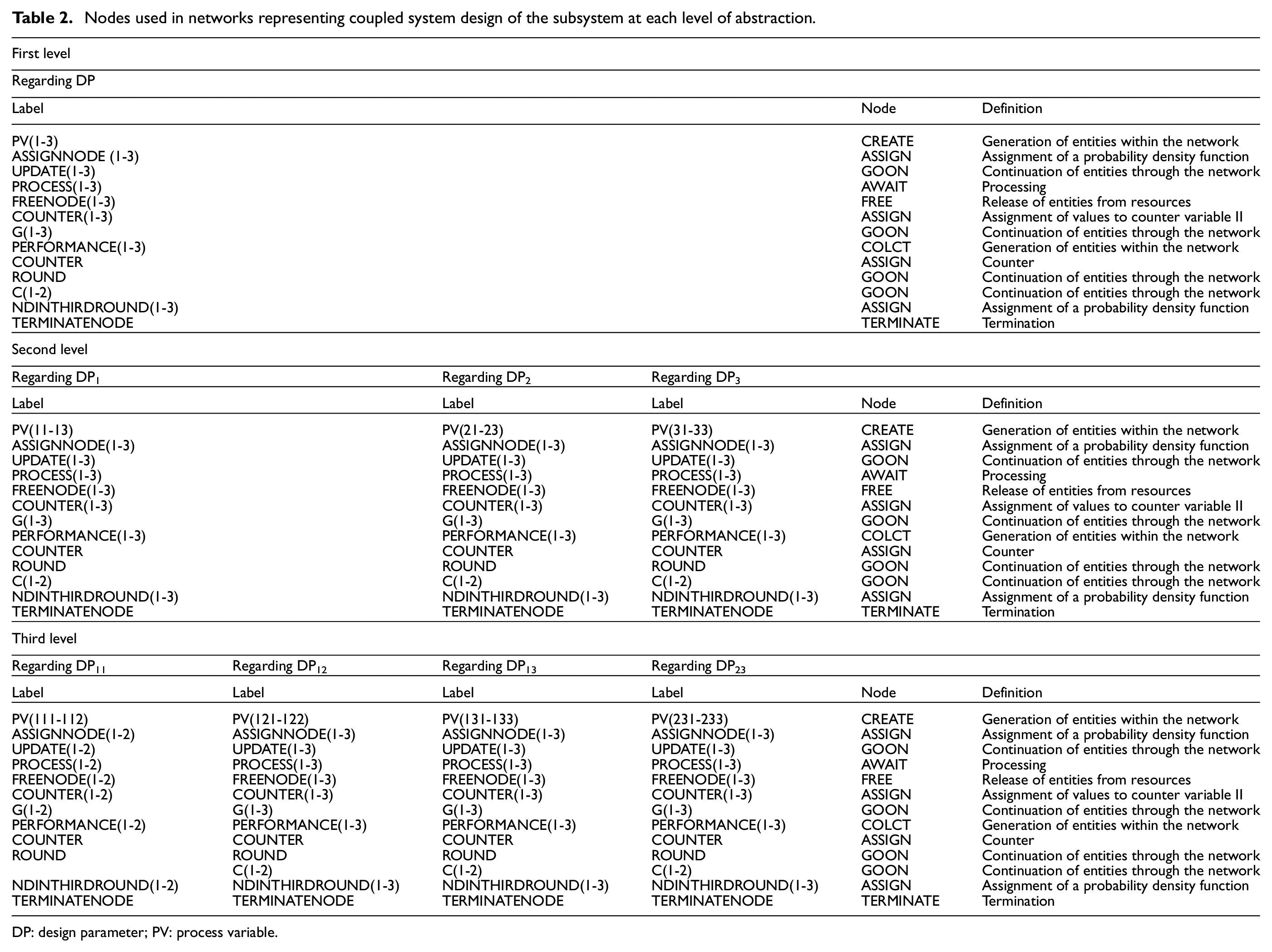
DP: design parameter; PV: process variable.
The most proper fitted distribution functions in coupled system design of the subsystem at each level of abstraction.
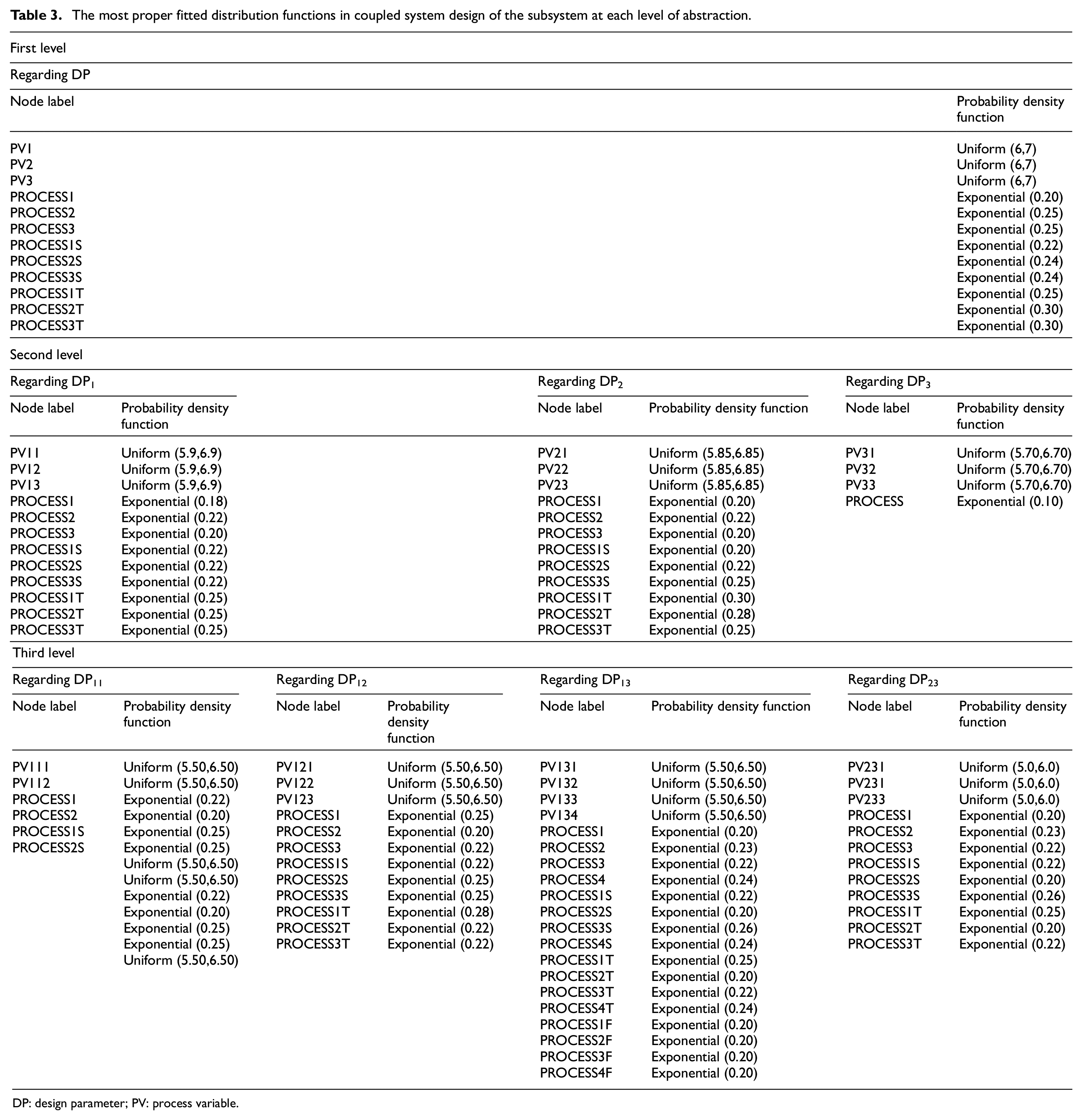
DP: design parameter; PV: process variable.
Following modifying the current design of the system, for each level of system decomposition, a list of all nodes and the most proper fitted distribution function used in simulation model of the AD-based network are presented as well.
The following section presents results of the simulation-based analyses for the original and modified design of the system at each level of abstraction.
5.2. Analysis of system performance for existing and AD-based design
According to steps 7 through 9 of the proposed methodology, the simulation model of the current (coupled) design of the system for each level of decomposition where DPs are mapped into FRs in a fully coupled way is presented in Figure 5(a)–(g). To read the simulation model, control statements in Visual SLAM are also provided (Table 4).
Control statements related to the simulation model illustrating allocation of DP1-DP3 to FR1-FR3 in a fully coupled way.
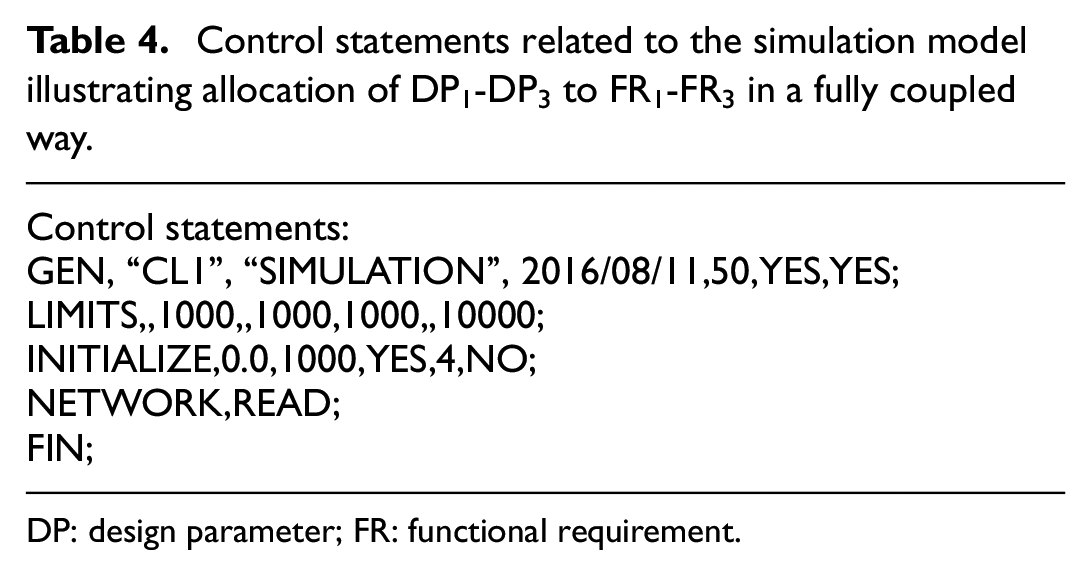
DP: design parameter; FR: functional requirement.
To fulfill the first axiom of the AD theory, a “decoupled” or uncoupled design of the system is proposed at each level of decomposition. The design equations describing allocations FRs and their associated DPs are expressed in Table 5 as Equations (3)–(9).
Design equations for axiomatic one of the IMIS of interest at each level of decomposition.
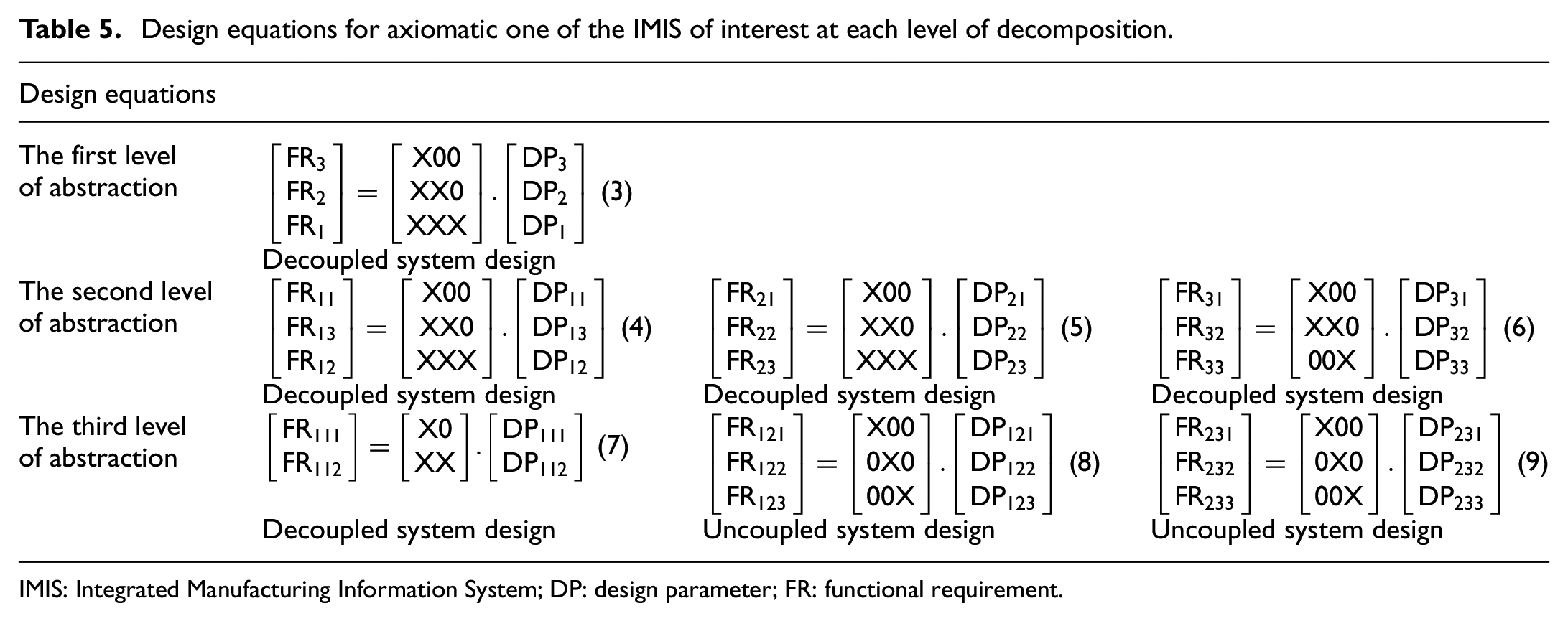
IMIS: Integrated Manufacturing Information System; DP: design parameter; FR: functional requirement.
Where X signifies relationships between the FRs and DPs. Figure 6(a)–(g) illustrates the simulation model of the modified design of the system for each level of abstraction. The associated control statements are also provided in Table 6.
Control statements related to the simulation model illustrating allocation of DP1-DP3 to FR1-FR3 in a decoupled way.
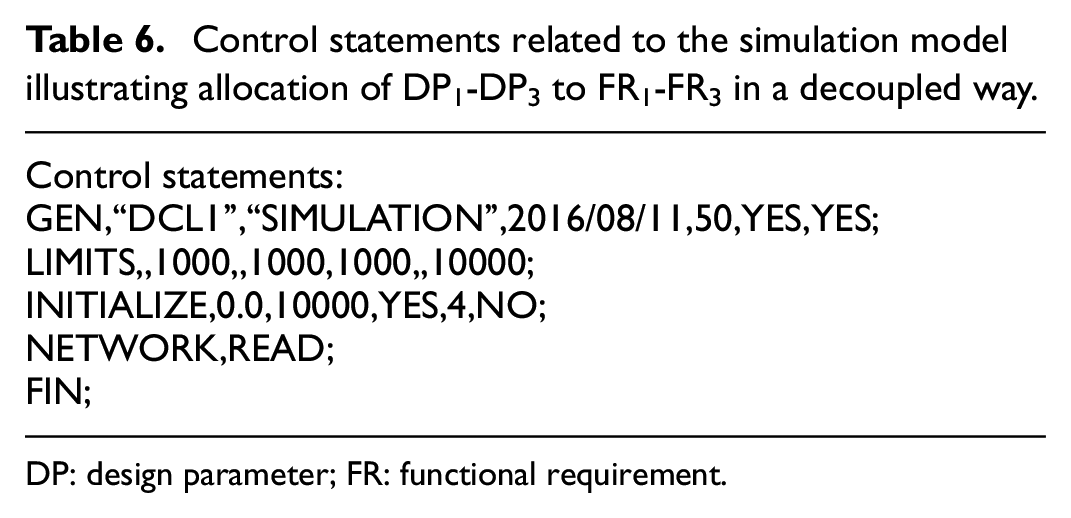
DP: design parameter; FR: functional requirement.
According to steps 10 through 12 of the proposed methodology, In order to examine effect of independence axiom of the AD theory on capability of the concerned subsystem, by using two indicators of “time in system” and “resources utilization,” the system performance between the original (i.e., coupled) and modified (i.e., uncoupled or decoupled) design is compared. Specifically, both statistical hypothesizes
“H0:
5.2.1. Search for steady state
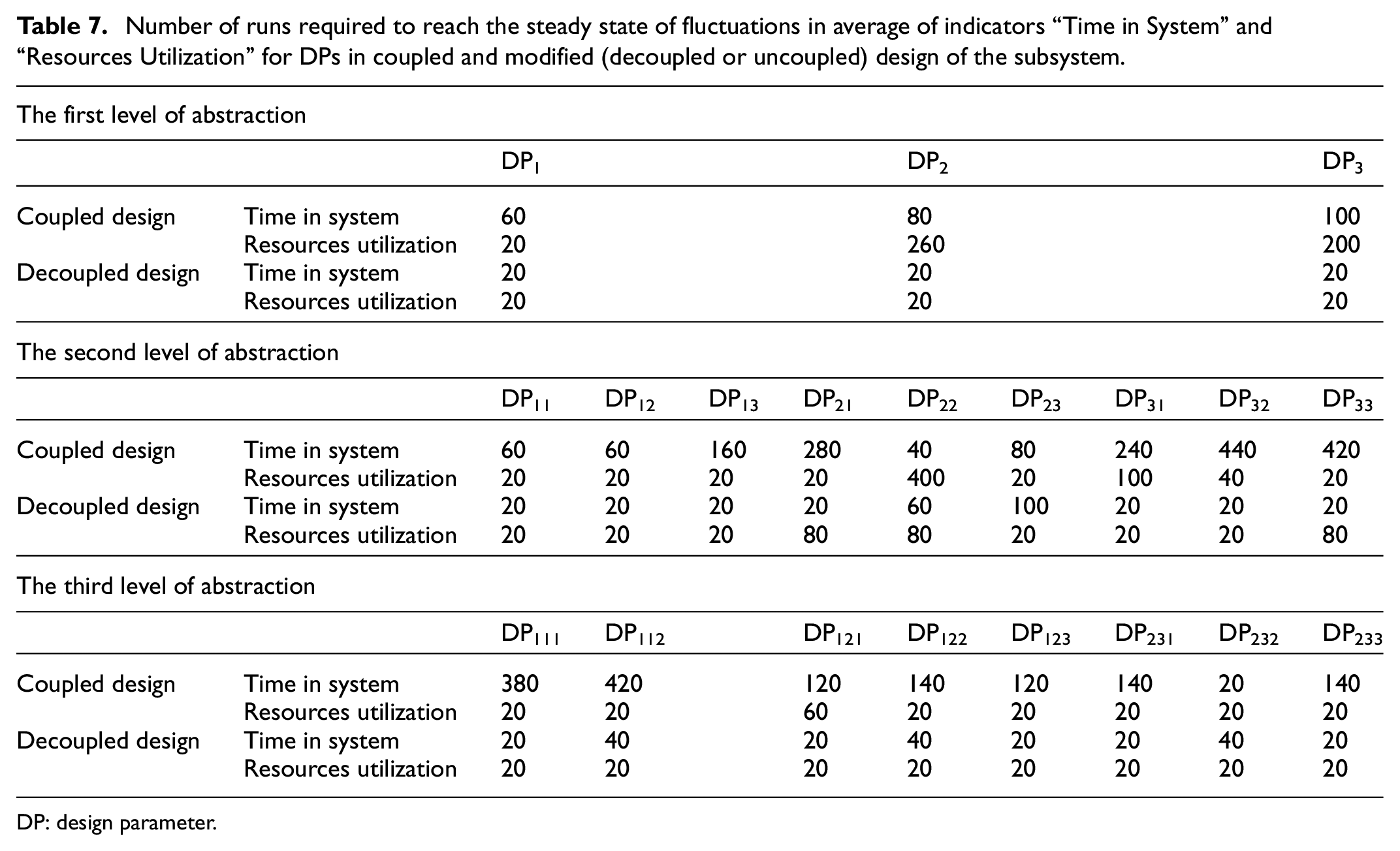
To fairly compare the capability of the subsystem in modified and coupled design, values related to steady state of each indicator (i.e., time in system and “resources utilization”) are considered. Figure 7 represents fluctuations of average of each indictor for (against) different multiple runs for both modified and coupled design at each level of decomposition. Table 7 also presents number of runs required to reach the steady state of fluctuations in average of the indicators for DPs in coupled and modified (decoupled or uncoupled) design of the subsystem.
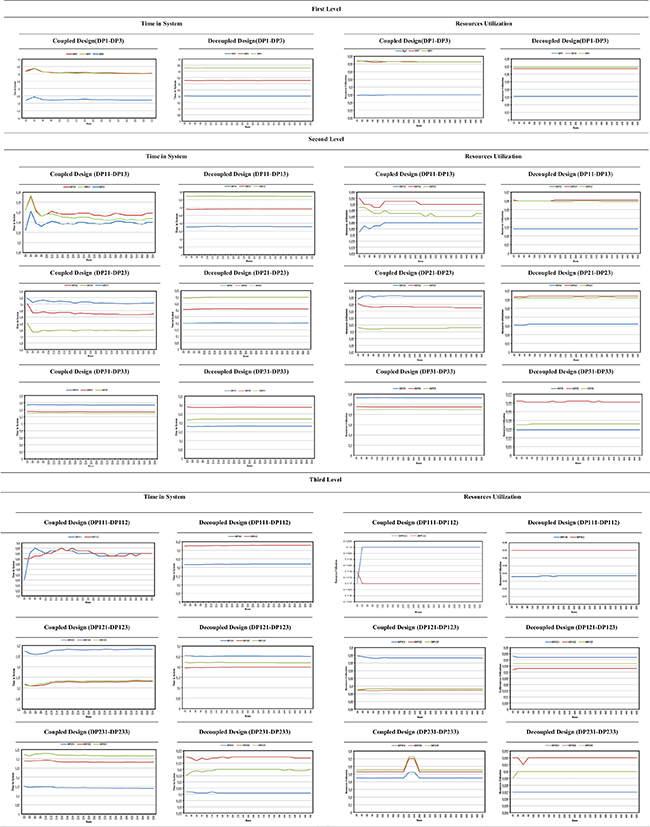
Multiple runs to find the steady state of fluctuations in average of indicators “Time in System” and “Resources Utilization” for DPs in coupled and uncoupled design of the subsystem.
Number of runs required to reach the steady state of fluctuations in average of indicators “Time in System” and “Resources Utilization” for DPs in coupled and modified (decoupled or uncoupled) design of the subsystem.
DP: design parameter.
5.2.2. Checking pre-assumptions for running “two sample t-test”
To run the concerned “two sample t-test,” the “normality assumption for probability distribution” and “equality of variances” of the data related to two indicators for DPs in both coupled and modified (uncoupled or decoupled) design of the system is examined.
5.2.2.1. Test for normality of data
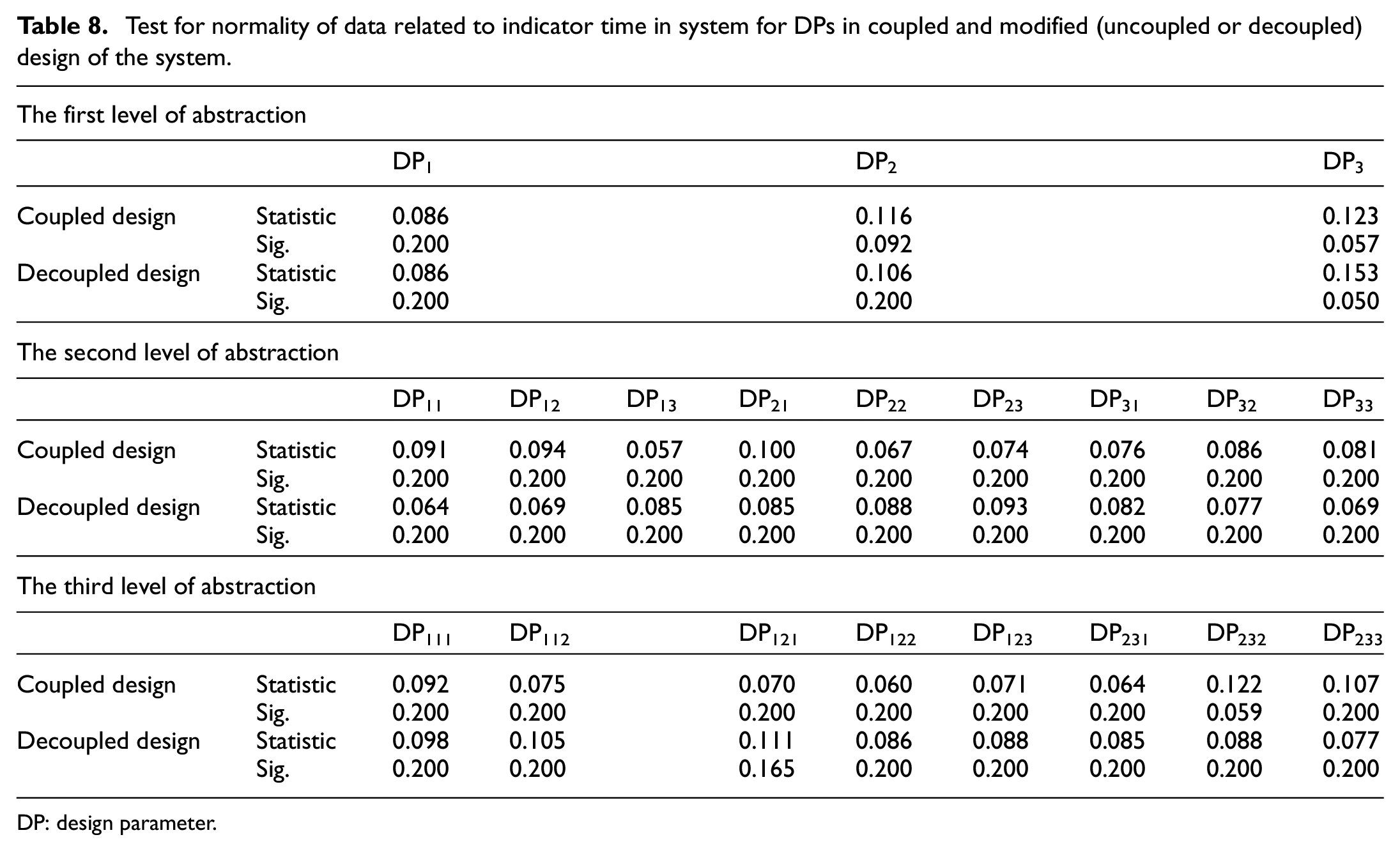
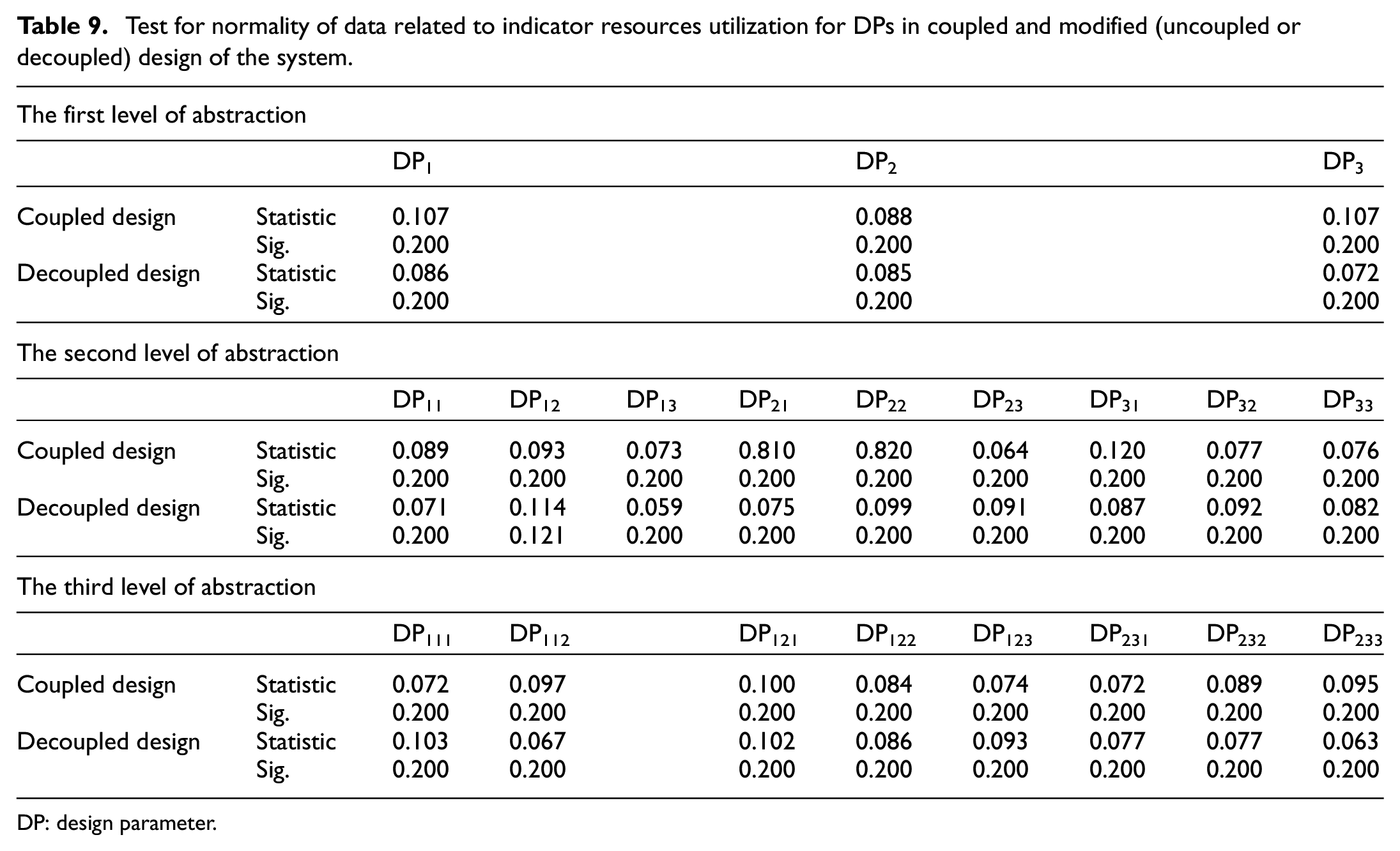
Tables 8 and 9 show the results of “Kolmogorov–Smirnov” test on data of the two interested indicators for DPs at each level of abstraction, respectively.
Test for normality of data related to indicator time in system for DPs in coupled and modified (uncoupled or decoupled) design of the system.
DP: design parameter.
Test for normality of data related to indicator resources utilization for DPs in coupled and modified (uncoupled or decoupled) design of the system.
DP: design parameter.
According to Tables 8 and 9, stochastic behaviors of the data for both indicators (i.e., “time in system” and “utilization of resources”) follow a normal distribution significantly.
5.2.2.2. Test for equality of variances
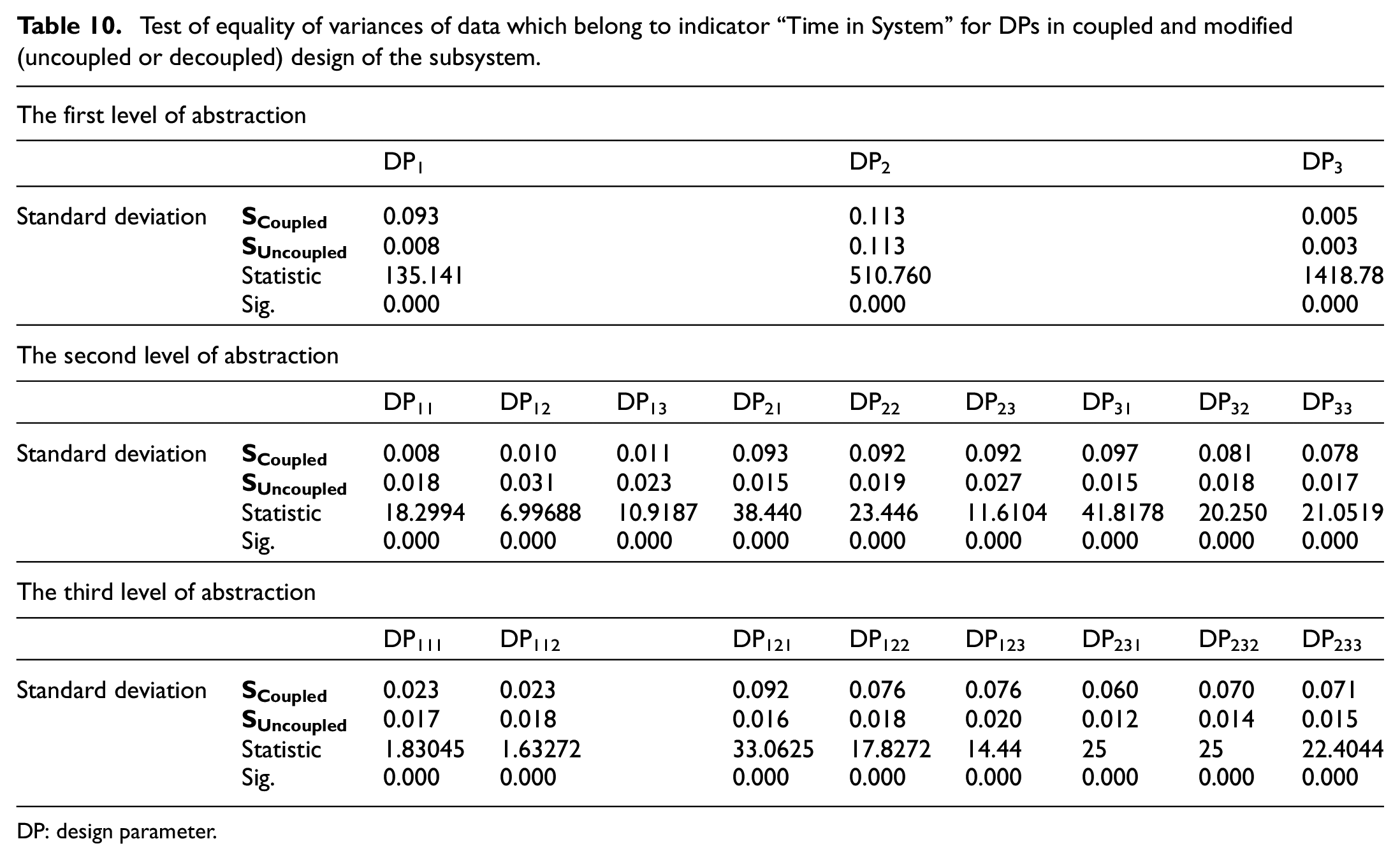
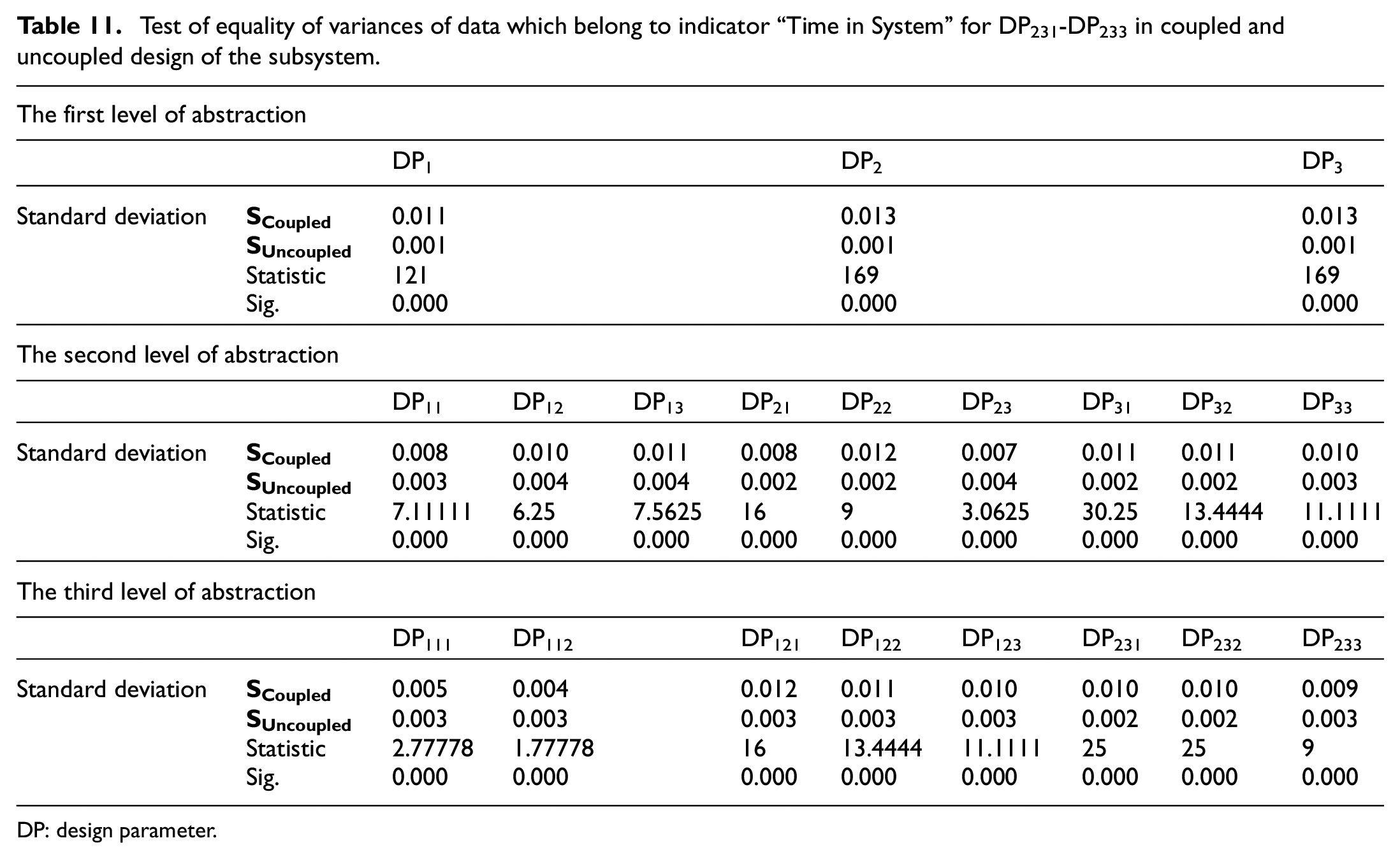
Tables 10 and 11 show the results for test of equality of variances of data which belong to indicators “Time in System” and “Utilization of Resources” for DPs, respectively.
Test of equality of variances of data which belong to indicator “Time in System” for DPs in coupled and modified (uncoupled or decoupled) design of the subsystem.
DP: design parameter.
Test of equality of variances of data which belong to indicator “Time in System” for DP231-DP233 in coupled and uncoupled design of the subsystem.
DP: design parameter.
According to Tables 10 and 11, the variances of coupled and decoupled system design for both indicators “Time in System” and “Utilization of Resources” are not equal. As a result, to compare capability of the system for original and AD-based design, “two sample t-test with unequal variances” is used.
5.3. Comparison of system performance between original and AD-based design
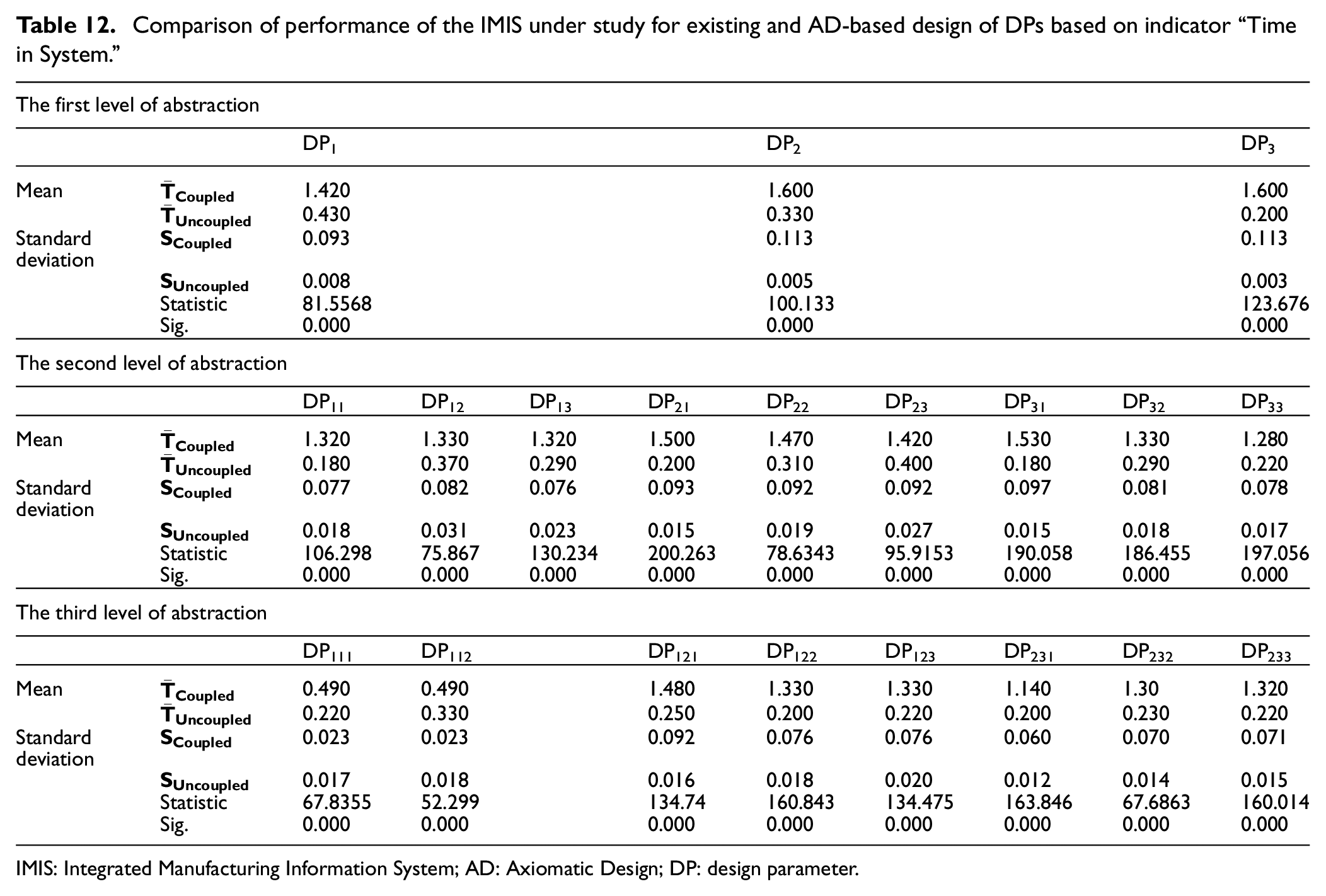
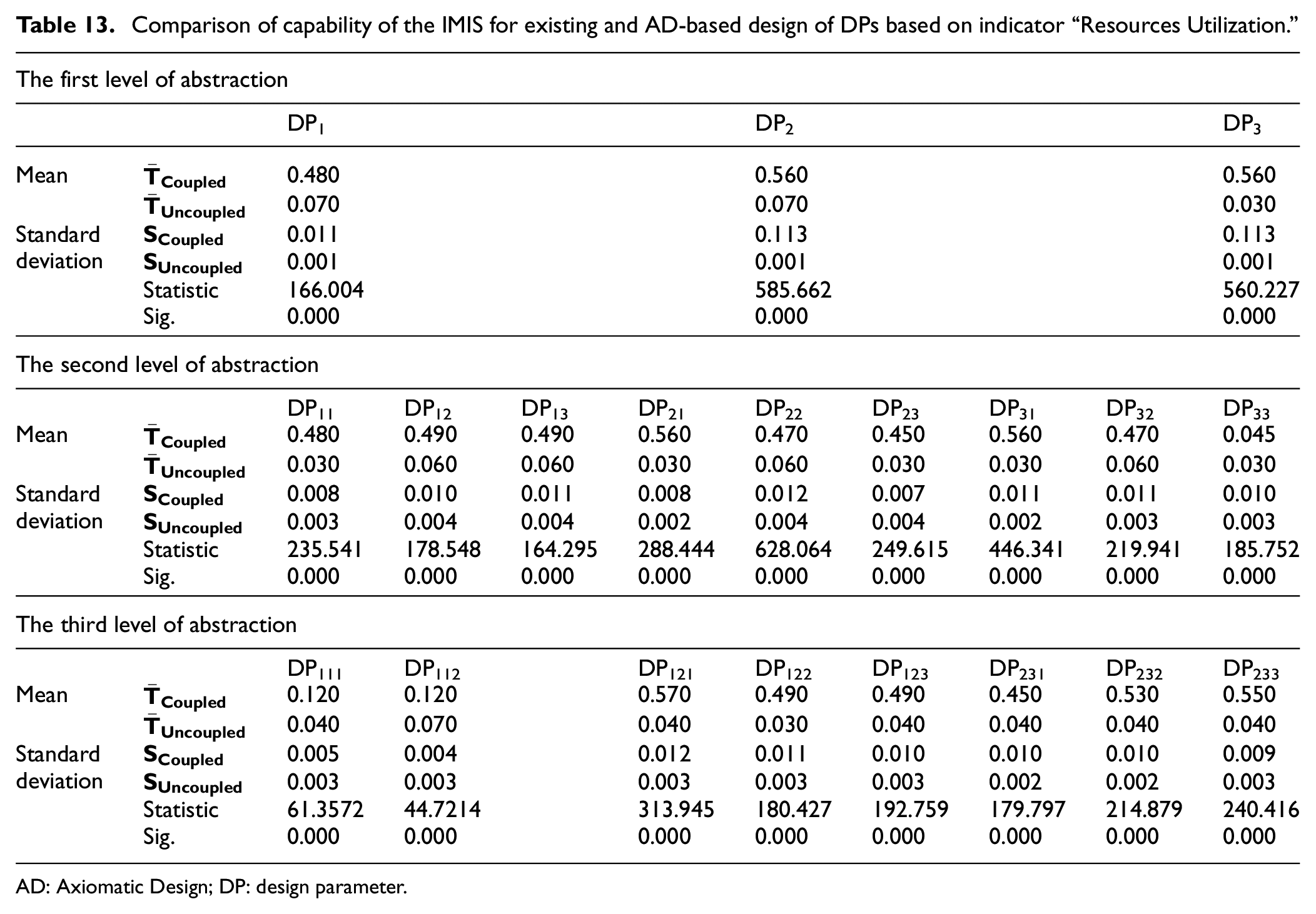
According to steps 13 and 14 of the proposed methodology, Tables 12 and 13 show the results of comparing capability of the system for original and AD-based design for each of the concerned resources (i.e., DPs) based on both indictors “Time in System” and “Resources Utilization” at each level of decomposition, respectively. According to these two tables, there is a significant difference between “mean of time in system”/“mean of resources utilization” between coupled and modified (i.e., decoupled or uncoupled) design of the system.
Comparison of performance of the IMIS under study for existing and AD-based design of DPs based on indicator “Time in System.”
IMIS: Integrated Manufacturing Information System; AD: Axiomatic Design; DP: design parameter.
Comparison of capability of the IMIS for existing and AD-based design of DPs based on indicator “Resources Utilization.”
AD: Axiomatic Design; DP: design parameter.
In addition, to predict probability of system success/failure of the concerned system in fulfilling the specified FRs based on the design type (i.e., coupled/decoupled/uncoupled) employed to develop the system, the logistic regression is used. Concerning this regression model, “values of performance indicators (time in system/resources utilization)” is associated with “Logit (natural logarithm) of odds ratio of the system success.” Moreover, it is important to note the values of performance indicators addressing both coupled and decoupled/uncoupled designs (Equation (10))
where Y expresses the odds ratio of the system success; X expresses the value of the system performance indicator (time in system/resources utilization); α expresses the Y intercept; β expresses the direction of the relationship between X and the logit (Y).
Regarding the logistic regression, test of the null hypothesis
On the basis of Equation (10), the probability of system success in fulfilling FRs can be computed from Equation (11)
Figures 7 and 8 display the probability of system success in satisfying the specified FRs against “values of system performance indicators” at each level of abstraction and for each DM, respectively. Again, it is important to mention that values of indicators address both coupled and decoupled/uncoupled designs. According to Figures 8(a)–(g) and 9(a)–(g), while values of system performance indicators (Time in System/Resources Utilization) from coupled designs through decoupled/uncoupled designs are improving, the probability of the system success will be also significantly increasing.
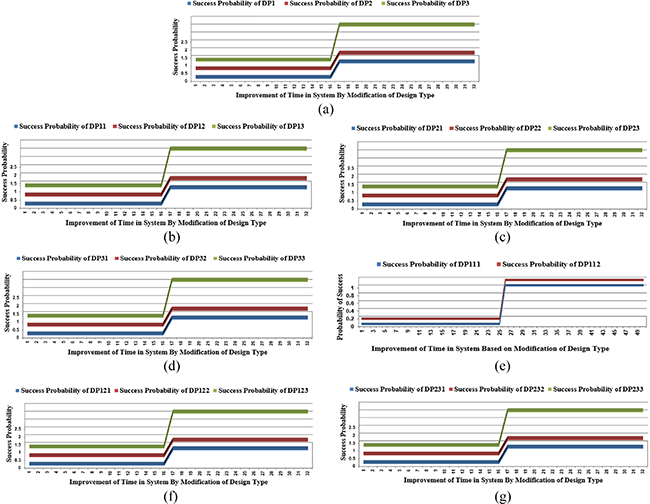
(a) Process time in system (DP1-DP3), (b) process time in system (DP11-DP13), (c) process time in system (DP21-DP23), (d) process time in system (DP31-DP33), (e) process time in system (DP111-DP112), (f) process time in system (DP121-DP123), and (g) process time in system (DP231-DP233).
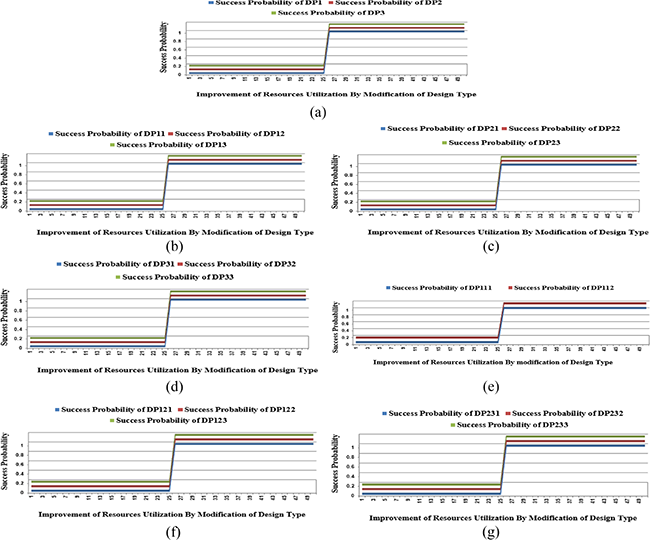
(a) Resources utilization in system (DP1-DP3), (b) resources utilization in system (DP11-DP13), (c) resources utilization in system (DP21-DP23), (d) resources utilization in system (DP31-DP33), (e) resources utilization in system (DP111-DP112), (f) resources utilization in system (DP121-DP123), and (g) resources utilization in system (DP231-DP233).
6. Conclusion
To effectively integrate, manage, and control the information flow, design and development of highly capable “Information Systems” is essential. In manufacturing systems, the flow of information has a critical role in finding appropriate responses for dealing with changing situations in the manufacturing processes.
To control manufacturing processes, integration of flows of manufacturing information is an important starting point. In this regard, an effective IMIS which is capable of monitoring, analyzing, and inspecting manufacturing processes properly is critical. However, often, most of difficulties in achieving an effective IMIS stem from a poor design for the system architecture.
To improve capability of the IMIS associated with a concerned manufacturing processes, a systematic design approach to develop a successful system is highly helpful. For the aim of evaluating and improving design of a concerned IMIS, which is capable of successfully fulfilling every(functional) requirement defined for the IMIS of interest, this study addressed the problem of coupling in architecture of an IMIS and its effect on the system performance. To resolve this problem, this study employed AD theory, particularly the “Independence (First) Axiom” of the theory and used “times in process” and “utilized capacities of available resources” as two important criteria for evaluating the system performance.
The study argued that by applying independence axiom, system characteristics including “modularity” along with “integrity,”“simplicity,”“easiness in access to the required information,”“easiness in modification of the system,”“easiness in monitoring flow of information,”“hierarchical structure for the system,” and “changeability” are all more easily achievable.
To verify the proposed methodology, a real IMIS was addressed, its stochastic behavior was simulated in Visual SLAM and AweSim (version 3.o) software environment, and the outcomes were analyzed by logistic regression method for each level of system decomposition. Results of the analyses indicated that fulfillment of independence axiom of AD theory can significantly enhance performance of the concerned IMIS.
This study was pillared upon the independence axiom of the AD theory to reach a more appropriate design for the concerned IMIS. However, to optimize the system, applying the second axiom of AD theory, the “Information Axiom,” which is concerned about the system complexity, is considered to be a further and useful step. On the basis of this axiom, where several alternative designs fulfilling the independence axiom are available, the information axiom should be employed to choose the one with minimum information content. Development of IMISs with the lowest complexity seems to be highly useful for processing large amount of data, most particularly in era of digitalizing manufacturing processes and realizing principles and techniques of Industry 4.0. On the basis of this line of thought, it seems that further research studies and studies for developing axiomatic architectures for establishing IMISs, in particular, in context of Industry 4.0, are required. However, since every event in the model including “generation of system entities,”“time intervals between arrivals,” and “time intervals for taking the services and/or operations” are all stochastic, and, any finding validated by running a statistical test with an acceptable significance, the results can provide a good insight for other similar integrated ISs in other contexts as well.
Footnotes
Appendix 1
List of functional requirements (FRs) and associated design parameters (DPs) at levels of the system (i.e., the concerned Integrated Manufacturing Information System (IMIS)) decomposition:
Corresponding to each level of hierarchy, the FRs and their associated DPs are as follow:
Funding
This research received no specific grant from any funding agency in the public, commercial, or not-for-profit sectors.
