






Abstract
This article uses artivist methods such as feminist cartooning and body mapping to examine the diversity of racialised women’s menopause knowledge and experiences in the UK, Sweden and India, noting how these are varied and need to be understood contextually against the larger frame of their life experiences. We take as our starting point the menopause discourse prevalent in mainstream media and workplace initiatives in the UK, noting that it is still largely white and middle-class. To widen and decolonise this anglophone discourse, we employ artivist methods in enunciating the menopause experiences of racialised immigrant women in Sweden and Dalit working-class women in India. In both Sweden and India, we deployed feminist cartooning to produce comic strips in one case and body mapping in the other to elicit marginal women’s experiences to not just broaden the anglophone discourse but also to reimagine menopause. We argue that between them, UK, Sweden and India are representative of the unevenness of menopause discourse and activism. In comparison to the UK, a forerunner, Sweden represents a middle ground where the questions of menopause have begun to emerge in the last decade via the issue of women’s health and sick leave, whereas in India the discourse and menopause policy is yet to concretise. This article is grounded in our involvement in the AHRC-funded research network, MAUSI Net: Menopause Artivism in the UK, Sweden and India, which brings together feminist scholars from these three different country contexts.
Introduction
Art has the ability to change our minds – inspiring us to take on different perspectives and to reimagine our worlds. . . . If art can be viewed as a valid tool for change, the question then becomes: What is preventing practitioners from engaging it earlier and more often? (Nossel, 2016, pp. 103–104)
Nossel’s (2016) call provides us the impetus to deploy artivist methods to reimagine menopause in more inclusive ways. Through our involvement in the AHRC-funded research network, MAUSI Net: Menopause Artivism in the United Kingdom (UK), Sweden and India (UK Research and Innovation, 2024) we illustrate the diversity of racialised cis-women’s menopause knowledge and experiences, noting how these remain intertwined within a larger frame of their life experiences. Being funded in the UK, we take as our starting point the menopause discourse prevalent in mainstream media and workplace initiatives in the UK, noting that it is still largely white and middle-class. To widen and decolonise this anglophone discourse, we employ the artivist methods of feminist cartooning and body mapping in enunciating the menopause experiences of racialised immigrant women in Sweden, and Dalit working-class women in India. As the term suggests, ‘artivism’ merges activism, that is ‘the activity of challenging and changing power relations’ (Duncombe, 2016, p. 117) with art. Such methods effectively combine art with activism and proved useful to our participants in enunciating unspoken experiences of menopause.
Among the three countries, the UK is distinctive in the way public debate has evolved. Historically a taboo, menopause has recently become an increasingly ubiquitous feature of the public discourse. Tracing UK print news coverage of menopause from 2001 to 2021, Orgad and Rottenberg (2023) note ‘a very sharp rise occurs in 2021, with 1,220 articles overall, 67% higher than the overall number in the previous year . . . and more than three times the average of 393 in the preceding years (2001–2020)’ (p. 524). The factors feeding this transfiguration, along with a growing destigmatisation of menopause, include the expansion of the ageing female population; the economic drive to extend women’s working lives; the coming-of-age of a generation of ‘bold’ women celebrities; the expansion of neoliberalism and wellness industries (Jermyn, 2023; Orgad & Rottenberg, 2023) as well as the rise of social media and aftermath of Covid-19 (Orgad, 2026). The UK shift can be observed ‘in operation throughout multiple and intertwined cultural spaces, including education, politics, medicine, retail, publishing, journalism, and more’, such that this development has been termed ‘the menopausal turn’ (Jermyn, 2023, p. 2). The greater visibility of menopause discourse in the UK is not to be conflated with greater menopause equity, however. The burgeoning attention to menopause still primarily centres the experiences of white, middle-class women (Jermyn, 2023, 2024; Throsby, 2026). As a result, acknowledgement of how racialised women ‘might experience menopause differently both culturally and physically has had to continually push against mainstream representation to be considered’ (Jermyn & Horeck, 2025, p. 153).
Against this backdrop, the formation of the UK-led research project MAUSI Net was fuelled by a desire to expand the anglophone discourse in the UK to include the experiences of underprivileged women from other contexts. In Sweden, our focus is on Arab immigrant women, and in India on Dalit women who are mostly agricultural labourers. Sweden represents a middle ground where the questions of menopause have begun to emerge in the last decade via the issue of women’s health and sick leave, whereas in India the discourse and menopause policy is yet to fully emerge. In both Sweden and India, we recognised the potential of using artivist methods to elicit marginal women’s experiences to reimagine menopause. Our artivist methods also included guerilla stickering across London, Malmö and Delhi. However, this article is confined to the two workshops in Sweden and India using feminist cartooning and body mapping.
Malmö, our workshop site in Sweden, is already an established centre for feminist cartooning, while in India, we chose to focus on rural women – mostly Dalit agricultural labourers around the agri-town of Hapur after becoming aware of alarming reports of agricultural workers elsewhere opting for premature surgical menopause to enhance their employability (Shinde & Rakshase, 2022). We argue that curating knowledges and experiences of these marginal women through the use of artivist and embodied methods could lead to an effective and inclusive reimagining of menopause. We view MAUSI Net’s contribution to the menopause discourse, then, as an opportunity to curate marginal women’s place-based cultural understandings of menopause and promote awareness of how ‘the change’ is configured internationally in other socio-cultural contexts. While conscious of our position as cis-gender women from diverse locations, we strongly advocate for a more expansive understanding of menopause recognising that the impact of race, class status, sexual orientation, gender identity, neurodiversity and early menopause all necessitate further recognition in current menopause discourse (Jermyn et al., forthcoming; Simmons, 2026).
While menopause may be burgeoning into a more ubiquitous public conversation in the UK (see Orgad, 2026; Throsby, 2026), in the Swedish context, too, the topic entered public debate around 2015 when labour unions observed that for women aged 40–60, the rates of sick leave for stress-related ill health, fatigue syndrome and depression stand out, with women aged 45–49 reporting the highest degree of long-term sick leave (Akavia Aspekt, 2024). Women account for 79% of all sick leave due to stress-related mental illness and are also overrepresented in the same category in the age range 40–60 years (Swedish Social Insurance Agency, 2023). Despite an overrepresentation of menopausal workers in terms of sick leave claims, unlike the UK, workplace menopause policies are absent in Sweden (see Bertola et al., 2026 on lack of formal support in workplaces in Germany, France and Türkiye).
In India, even though most central government health policies for women remain ‘uterocentric’ (Datta, 2003), they are largely focused on reproductive age groups. The discourse on menstruation-related matters is mostly confined to Water, Sanitation and Hygiene (WASH), period poverty or taboos and framed as a development agenda. For example, Mahon and Fernandes (2010) emphasise the negative impact of the silence on menstruation leading to a neglect by practitioners in the WASH sector. Similarly, Tiwari (2022) notes that among rural women of North India, the lack of positive menstrual health practices intersects with existing taboos and results in making them feel unclean and worthless during menstruation, which is not even perceived as a healthy bodily function. Elsewhere, Lahiri-Dutt (2015) probes the implications of medicalising menstruation that help turn the woman into a ‘working body’ to perform its productive and reproductive functions efficiently. Discussions foregrounding menopause are scant, with interventions initiated primarily through the Indian Menopause Society, mostly on medical aspects, adopting an educative approach. 1 We also note that the evident caste-based disparities in health provision (Sowjanya, 2019; Sukumar, 2020) are very likely to extend to menopause care and also that the experiences of poor, rural and underprivileged women are largely absent from discussion, pointing to the need to reimagine menopause and allow for grassroots testimonies to emerge.
Adopting the acronym MAUSI, which translates to ‘maternal aunt’ in Hindi, and is analogous with care, comfort and friendship, foregrounds our transnational network and our intent to relocate menopause discourse to non-white, non-middle-class milieus. The network’s innovation lies crucially in its use of artivism to pursue its intentions. If, as Nossel (2016) observes, art may lead us to ‘take on different perspectives [and] reimagine our worlds’ (emphasis added), how might artivism be a potent and ‘valid tool’ (p. 103) to reimagine menopause? Our purpose, therefore, is to foster greater dialogue, knowledge and diversity by participating in the unfolding conversation about menopause across national boundaries through our feminist cartooning workshop involving Arab immigrant women in Malmö, Sweden and body mapping workshop with rural agricultural labourers in Hapur, India.
As mentioned earlier, the menopause artivism of our project also involved guerilla stickering, a collective artivist action shared across the streets of London, Malmö and Delhi and an exhibition in London. Through guerilla stickering, biodegradable stickers with cartoons from the Malmö workshop and the QR code to the MAUSI Net website were pasted across city locations with high footfall, to arouse curiosity and spread awareness about the project, intervening in public spaces in which countless menopausal women may pass daily. For this article, however, we focus only on the methodological challenges, rewards and critical findings from our Malmö and Hapur workshops, harnessing the artivist potential of feminist cartooning in the first instance and body mapping in the second to ‘reimagine menopause’. While equally artivist, we make an important distinction between the workshops and the guerilla stickering. Our workshops were the sites from where grassroots testimonies of menopause emerged as opposed to the stickering action and exhibition, which only attempted to visibilise the topic of menopause in public spaces, forcing conversation and awareness about our project. Hence, our focus for this article remains the embodied methods and discussions emanating from the workshops.
Through a trans-disciplinary approach drawing on sociology, feminist geography, urban and cultural studies, we demonstrate how our co-creative epistemologies stimulated dialogue, knowledge production and dissemination of more diverse experiences of menopause than traditional research methods. We begin with a discussion of co-creative and participatory methodologies and our choice of feminist cartooning and body mapping techniques to elicit alternative testimonies of menopause. Following this, we proceed to describe our workshops, examine our positionalities and critically evaluate the findings from our use of creative methodologies. Finally, we return to Nossel’s (2016) call and conclude with methodological reflections we were left with at the end of both workshops.
Sociological relevance: Curating alternative testimonies, combining co-creation, participatory ethos and artivism
The sociological discipline has a long-standing interest in embodiment by questioning classical sociological theory to understand whether it frames human agents as embodied (Shilling, 2007). Moreover, mainstream data analyses based on conventional techniques, such as interviews, focus groups and ethnographic research, even when claiming to use an embodied approach, tend to rely heavily on verbal descriptions and discursive approaches (Chadwick, 2017). Leveraging data drawn from spoken words, text and observed reality, these techniques often downplay perception and experiential aspects of research participants’ lives, marginalising the body and failing to understand its material and beyond-discursive nature, validating the feminist critique of the Cartesian dichotomy of mind/body when conducting qualitative research (Vacchelli, 2013). Feminist epistemology critiques the masculinisation of the mind and feminisation of the body implied in Western philosophy, arguing that, as a result, scientific knowledge fails to recognise the materiality of the body. Co-creative methods, on the other hand, re-inscribe the body through the experiential act of doing.
Across the social sciences, there has been a proliferation of co-creative and participative methodologies (Kaptani et al., 2021; Kara, 2015; Manney, 2015; Vacchelli, 2018). Some of these approaches stem more directly from a visual sociology tradition (G. Rose, 2016), while others include sensorial and embodied ways of producing knowledge (Vacchelli, 2017, 2018), harnessing personal experiences of research participants and often resulting in tangible or digital artefacts, crafted with the help of a facilitator. These approaches can be broadly classified as audio-visual, autobiographical and performative, although these categories may overlap (Giorgi et al., 2021). Research approaches such as comic strips (Czerwiec, 2020; Jermyn et al., forthcoming), body mapping (de Jager et al., 2016; Vacchelli, 2020) and participatory theatre (Kaptani et al., 2021) are becoming increasingly established within sociological praxis and have proven particularly effective for working with marginalised groups (see also Simmons, 2026).
Centring menopause, a bodily process that is culturally experienced in diverse ways, the creative-artivist methods used in MAUSI Net build upon theories of embodiment, emphasising perception (Foucault, 1984; Merleau-Ponty, 2002; Young, 2005) and foregrounding the gendered and racialised experiences of participants (Al-Hindi & Kawabata, 2002; Longhurst, 2005; Vacchelli, 2018). What we endeavour to achieve in our project goes beyond the act of interrogating text about the body; instead, it aims to use creative practice and a participatory ethos to co-produce knowledge with research participants in the act of doing research.
Co-production points to a shift in epistemological paradigms where professionals and citizens share power and acknowledge the contributions that anyone brings to the table (D. Rose & Kalathil, 2019). In both of our workshops, co-production is mostly achieved through embodied approaches. Embodiment, a key concept in sociology, human geography, anthropology, philosophy and psychology, emphasises how the body is not just a biological entity but shaped by social, cultural and political forces, confirming that it is a point of overlap between the physical, symbolic and the sociological (Braidotti, 1991). The term embodiment conceptualises the body as a dynamic, organic site of meaningful experience rather than a physical object distinct from the self or mind (Hudak et al., 2007).
By combining art and activism, or through artistic activism, artivism utilises creative and art-based methods of expression to ‘[effectuate] social and political change’ (Nossel, 2016, p. 104). Socially stigmatised experiences such as menopause can be difficult to enunciate and may lack specific linguistic and emotional vocabularies to be meaningfully conveyed, especially where menopause is not visible and discursively available, as evident in the workshop sites in Sweden and India. The sensory and affective experiences mobilised during the MAUSI Net workshops reveal discursive, material and structural aspects of participants’ experiences of menopause that can provide information about people’s identities and behaviours with an emphasis on their emotions and feelings.
Methodological choices: Feminist cartooning and body maps
As argued in Jermyn et al. (forthcoming), comic strips and feminist cartooning are an effective means to capture the experience(s) of menopause, and their use in this way bears a helpful confluence with the ‘graphic medicine’ movement outlined by M. K. Czerwiec, who observes, ‘comics can [be] used as a reflective tool to process trauma or difficult experiences. We form our thoughts in new ways when we draw them’ (Fink, 2024, p. 39). In 2015, Czerwiec and other leading figures published the ‘graphic medicine manifesto’, charting an interdisciplinary enterprise coalescing ‘from a growing community of artists, scholars, researchers and practitioners who turned to drawing and other graphic media to describe complex experiences of health, illness and care from patient and provider perspectives’ (Councillor & Fink, 2024, p. 1). Earlier, Nordenstam and Wictorin (2019) and Fägersten et al. (2021) point to the use of feminist cartooning in Sweden since the 1970s to discuss themes related to the body along with other socio-legal aspects. Responding to this work, we opted to use feminist cartooning to capture the menopause experiences of Arab immigrant women in our first workshop, held in Malmö, in September 2024. The aptness of this method was also crucially driven by the history of Malmö as an established centre for political cartooning, where we were able to draw on the expertise and skills available from a local feminist cartooning group.
We approached the Women’s Network Association (hereafter WNA), part of a wider initiative focused on equal health promotion emerging from a collaboration between Malmö University, the City of Malmö and Vinnova research council, among others. The WNA worked primarily among migrant communities, and of the right age cohort for our work. The group had been meeting for nearly a decade in Lindängen in Malmö, a district built during the late 1960s housing boom called the ‘Million Programme’. Home to around 7000 people, most residents of Lindängen have migrant backgrounds, live in rented high-rise accommodation, and report a high unemployment rate (SALAR, 2022). Lindängen has been the subject of social programmes and community centres such as Framtiden (‘the Future’), which hosts the WNA, and which also became the venue for our workshop. Members meet here for outings, dance, cooking and sewing, yoga (popular as a means to deal with menopause symptoms; see also Steffan et al., 2026), and also to complete official paperwork and share information on social matters. In preparation of the workshop, we assured participants that the workshop theme would be valuable to the WNA and similar to the activities the members participate in during their meetings. We engaged Karolina Bång, a local feminist cartoonist, to introduce basic drawing techniques and document the workshop in cartoon form (see Jermyn et al., forthcoming) along with three translators who had worked with the WNA to facilitate the conversation between the Arabic-speaking participants, the Swedish-speaking cartoonist, as well as our English-speaking group.
Ethical considerations were addressed at the introduction, where the consent form was explained to participants, including their right to leave at any point, how workshop photographs would be pixelated, and that their cartoons would be used in published material. No other personal data or identifiers were used in the workshop, assuring the women of anonymity. The cartoons demanded an element of spontaneity for the themes to emerge from discussion, hence were revealed only in the workshop. Following a shared lunch and ice-breakers, there was an interactive presentation from Malmö University on medical aspects of menopause. This intervention spoke of our care towards the participants’ situation, noting their language, social and cultural barriers in accessing menopause healthcare and provided them with an opportunity to learn about and discuss their symptoms with a medical professional. Thereafter, participants along with the MAUSI Net team co-created comic strips in response to themes suggested by the leader of the women’s organisation, based on her knowledge of the women’s life situations. These included bodily changes and medicalisation; representations and the positives of menopause; and emotions, relationships and work, alongside additional matters arising inductively from discussion. A room was allocated for each theme and subgroup, along with MAUSI Net team who, aided by translators, encouraged the participants to draw comic strips. The cartoons helped bridge language barriers and balance the inherent power relations within the workshop among the researchers, participants and the WNA. Through such feminist cartooning, sharing experiences as women exposed commonalities while simultaneously clarifying differences in relation to work–life balance, resources and trauma, which were themes that emerged organically in the workshop, perhaps because these impacted the everyday life of our participants the most.
In Hapur, India, we opted for body mapping to capture menopause experiences of Dalit working-class women, most of whom had low literacy. A study on menstrual health by Tiwari and Brimicombe (2023), which was similarly focused on rural women, pointed to the need for using methodological novelty in research on menstruation since participants are often reluctant to converse due to the stigma associated with the topic. The difficulties this might pose can be effectively bypassed in body mapping through its interactive and play-like features, which engage participants in creating a body map (see Simmons, 2026). In body mapping, participants outline the contours of their own body on a large sheet of paper and use symbols, words, drawings and other materials to personalise the body map and communicate their own experience, relating to a general experience or a specific event (Giorgi et al., 2021). This approach has been described as a ‘visceral method’, since it draws on the sensory and affective experiences researchers mobilise to reveal discursive, material and structural aspects of their stories (Sweet & Ortiz Escalante, 2015). Body mapping, initially used to work with people affected by HIV-AIDS and reflect on the corporeal experience of disease, addresses the stigma and gives participants the opportunities to tell their stories (Morgan, 2003). The method has evolved into an established research tool (Gastaldo et al., 2012), and is particularly suitable for work with participants in vulnerable situations, especially those who experience language barriers or, as in the case of our participants, in sharing emotionally charged experiences, related to ageing, bodily changes, feelings of loss and not being understood while navigating this transition.
Our Hapur participants were peri-menopausal or post-menopausal working-class women, subject to varying degrees of oppression through a matrix of class, gender and caste hierarchies. All were engaged in low-skilled, low-paid employment, such as agricultural labour, piece-rate tailoring, domestic help, cleaning and sanitation, ironing clothes and part-time factory work. Considering the limited mobility of rural women, we recruited 22 women from the surrounding villages of Jharauthi, Sikheda, Hasanpur and the locality of Shivpuri in Hapur through key contacts with whom the participants were already acquainted, arranging for their travel in village-wise groups. Our body mapping exercise was preceded by several rapport-building visits to the participants’ villages, where they were invited to participate in a day of shared women’s storytelling as a counterpoint to their monotonous working days.
Mindful of the ethical considerations, we obtained informed consent through sahmati patrs (consent letters) in Hindi, which were carefully explained to the participants. Those who were semi-literate signed their names in Hindi, and others affixed their thumb impressions. As our participants were all daily wage earners, we assured them compensation of two days’ wages along with a dignity kit. Wage compensation was in cash, whereas the dignity kits consisted of basic lentils, cooking oil and spices to augment their precarious household food security. This transmission of care, built into the data collection, was similar to the provision of a healthcare professional to explain menopause symptoms to our Malmö participants.
Aware that most of our participants were not literate, we arranged for bundles of coloured rags (instead of newspapers), glue, snippets of tinsel, paints, coloured pens, scissors, glass bangles and bindis for them to embellish their maps. Dividing the participants into four groups based on their localities to enable frank discussion, we deputed student volunteers with each group to collect background information, moderate the discussions and assist in case participants wished to write on their body maps.
Positionality and solidarity as methodologically integral to co-production
We maintain that our connections to each other and to our project were crucial to the way the project was shaped, constituting an important methodological aspect of our work. It is now well-established that researchers’ positionality plays a crucial role in the research process (Berger, 2015), and we agree with Gani and Khan (2024) when they state that ‘Reflexivity is meant to be self-accountability, an awareness of limitations, and an act of humility’, which assumes added importance especially ‘in the context of difference’ (p. 9). With this in mind, we consciously adopted an ‘active reflexivity’ (Soedirgo & Glas, 2020), involving a constant interrogation of our own positionalities, how our participants read us and how our conclusions are shaped. We are acutely conscious that our positionalities are ‘informed by our personal and professional experiences, our political and ideological stances, and other aspects of our social biography’ (Soedirgo & Glas, 2020, p. 528).
Our interest in researching the place-based aspects of menopause within the ‘menopausal turn’ (Jermyn, 2023, pp. 1–8) connected us, and while our research areas have been diverse, they are also complementary. Datta’s (2020a, 2020b) work has involved interrogating epistemic and gendered violence, theorising the gender space connections in the Indian context and visibilising women’s agency in southern contexts through her theoretical exposition of feminist counterspaces. Deborah Jermyn, also a cis-woman and white media scholar, has long-standing experience of feminist analysis of popular culture and gender and age in the media. She seeks to advance greater equity around menopause, by challenging how dominant media narratives about menopause have centred white middle-class women, marginalising intersectional approaches and helping bolster a neoliberal agenda. She advocates for greater awareness of how menopause is experienced across different communities as a bio-psycho-social process. Elena Vacchelli, a UK-based social scientist working across the disciplinary boundaries of sociology and critical geography, has been actively involved with developing co-creative and participatory approaches to work with marginalised groups, and has argued that the relational space of workshops as a data collection strategy should be re-assessed as a site of qualitative data production (see Caretta & Vacchelli, 2015), paying attention to the process of collecting data as an integrative part of research, and not just the final output. She also argues that co-creative and participatory work, currently shifting from the periphery to the centre of social research in the Global North, is situated in continuity with feminist theory and practice (Vacchelli & Peyrefitte, 2018). Carina Listerborn is a white cisgendered feminist urban scholar with most of her empirical research based in Sweden. Her experiences of collaborative research methods and socially engaged research, often through public activities, provided the expertise needed for the workshops. Theoretically, Carina’s work has aimed to contribute to examining urban social justice through materiality – urban public spaces, housing, planning, with an intersectional perspective. Basu (2020) studies Violence against Women (VAW) and Intimate Partner Violence (IPV) as well as issues related to women’s right to the city in India. She works closely with women’s organisations associated with livelihood issues of women in low-income urban neighbourhoods in the National Capital Region (NCR) of Delhi (Basu, 2022). Basu’s contacts with women in the rural communities were instrumental in recruiting participants for the Hapur workshop.
Apart from these complementarities, our ages and experiences of menopause provide a common meeting ground for sharing experiences, and partly relaxed power positions, to make the interaction between ourselves as well as with our participants on more equal terms. We noted that despite resonances, our class positions had cushioned us from the type of deprivations our participants had undergone, with their menopause experiences intersecting with poverty, war, forced migration and lack of access to healthcare. Despite this difference in privilege, we observed a strong sense of feminist solidarity emerging among us and with our participants, which proved crucial in curating their testimonies in an atmosphere of trust and sharing. In Lindängen, the participants’ pre-existing friendships and solidarity with each other as a group were crucial in eliciting their drawings and responses. In the Hapur case, not all participants were known to each other, but ice-breaker activities, sharing food, and, later on, spontaneous dancing and singing dissolved language and cultural barriers. From what the women shared and the way they acted during the workshops, it was evident that coming together and finding solidarity with other women at the same life stage provided a great relief. Positioning ourselves as menopausal women actively contributed to forging this trust and commonality, making us aware of new ways of working together to bridge, reimagine and widen the anglophone menopause discourse. The methodological significance of such feminist solidarity is noteworthy.
A ‘time of hope’: Interpreting insights from Malmö, Sweden
The Malmö workshop revealed that, as most women had migrant experiences, their menopause experiences often coincided with escaping a traumatic war situation and re-settling in a new context. The struggles of entering the labour market, learning a new language, and navigating complex and challenging changes in their family situations also affected their bodily wellbeing and menopause experiences. Feminist cartooning in this case allowed for discussion of both psychological and bodily challenges, and in some instances, accounts of physical relief; as is depicted in the panel sequence seen in Figure 1, where the cessation of menstruation that menopause brought with it was spoken of as a welcome release from period pain.
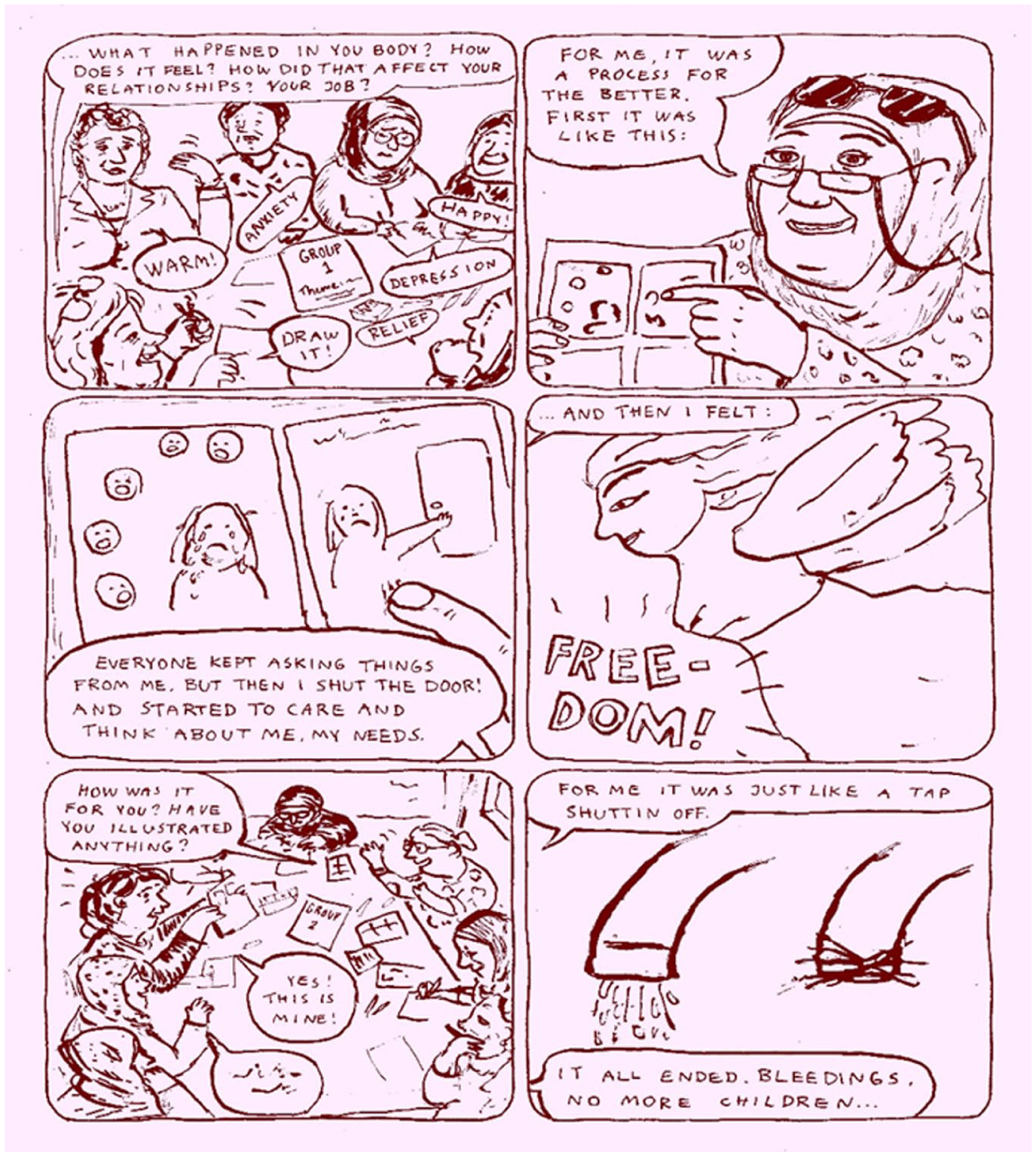
Feminist cartooning by participants in Malmö – the text explains, ‘I started to love myself because I managed to get rid of period pain. I was always upset but now after it stopped, I am happy.’
Some women used the cartoons to illustrate difficulties in finding the right support at health centres, while others used the workshop as a place to articulate repressed feelings that they had put aside as they went about lifemaking and kinkeeping on foreign soil. Some of the cartoons by the women illustrated feelings like loneliness, anger, existential circumstances and freedom. One woman drew a panel of a woman/herself transcending the difficulties menopause had brought. She related the experience of overwhelm she felt in menopause with ‘everyone asking for things’, before she ‘closed the door’ to this, started to think about her own needs, and eventually ‘found freedom’. In her closing frame, she depicts a woman who has grown wings, becoming a powerful, almost mythologically loaded figure on the other side of menopause (Figure 2). Others illustrated situations where they had felt uncomfortable, insecure or upset. Specific places and sites shaped the experiences, like the home, workplace or in nature. Nature played a significant role in finding peace and calm. Most stories revolved around personal situations, but structural aspects were brought up in relation to work life and societal stigmatisation about ageing, hiding their bodily suffering, and not mentioning their health issues to their employers.
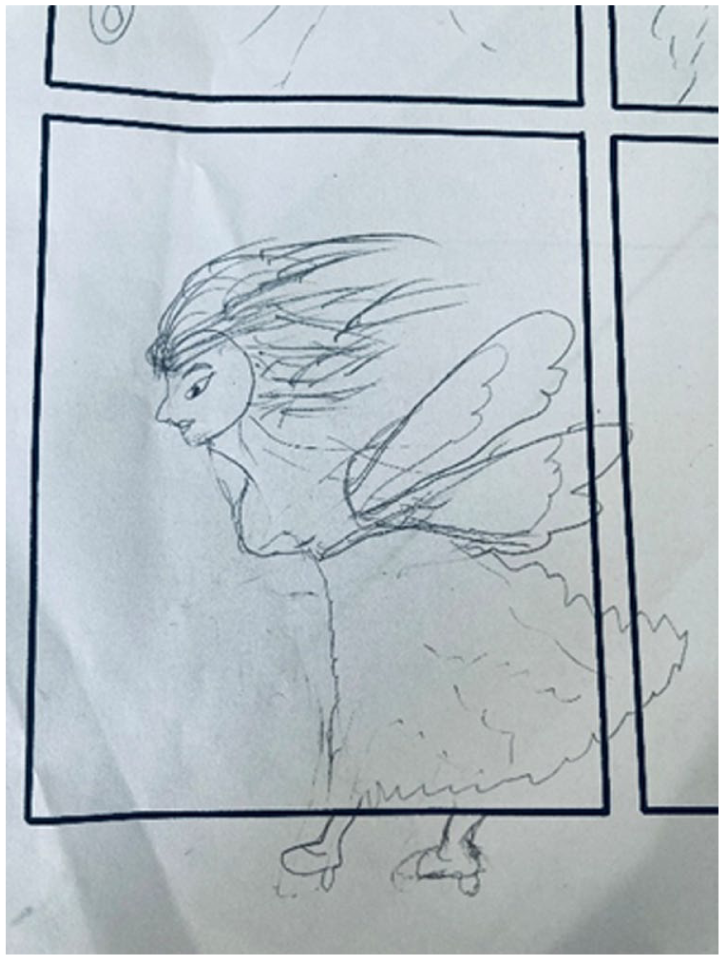
After ‘closing the door’ on crushing menopausal overwhelm, one woman finished her comic with this evocative image of growing wings and ‘finding freedom’ on the other side.
A central discussion concerned the Arabic colloquialism for menopause, translating roughly as ‘the end of hope’. Notably, colloquial words for hope are often used as euphemisms for pregnancy hence the etymology of menopause as ‘end of hope’. Resisting this literal translation of menopause as ‘end of hope’ our participants wanted to replace ‘end of hope’ with ‘time of hope’, after several participants opted to describe their menopause not in terms of loss, but relief and optimism. Using feminist cartooning not only centred the discussion around concrete experiences but also brought joy and laughter to a sensitive topic, as the project artist’s subsequent comic book documenting the workshop illustrated (Figure 3).
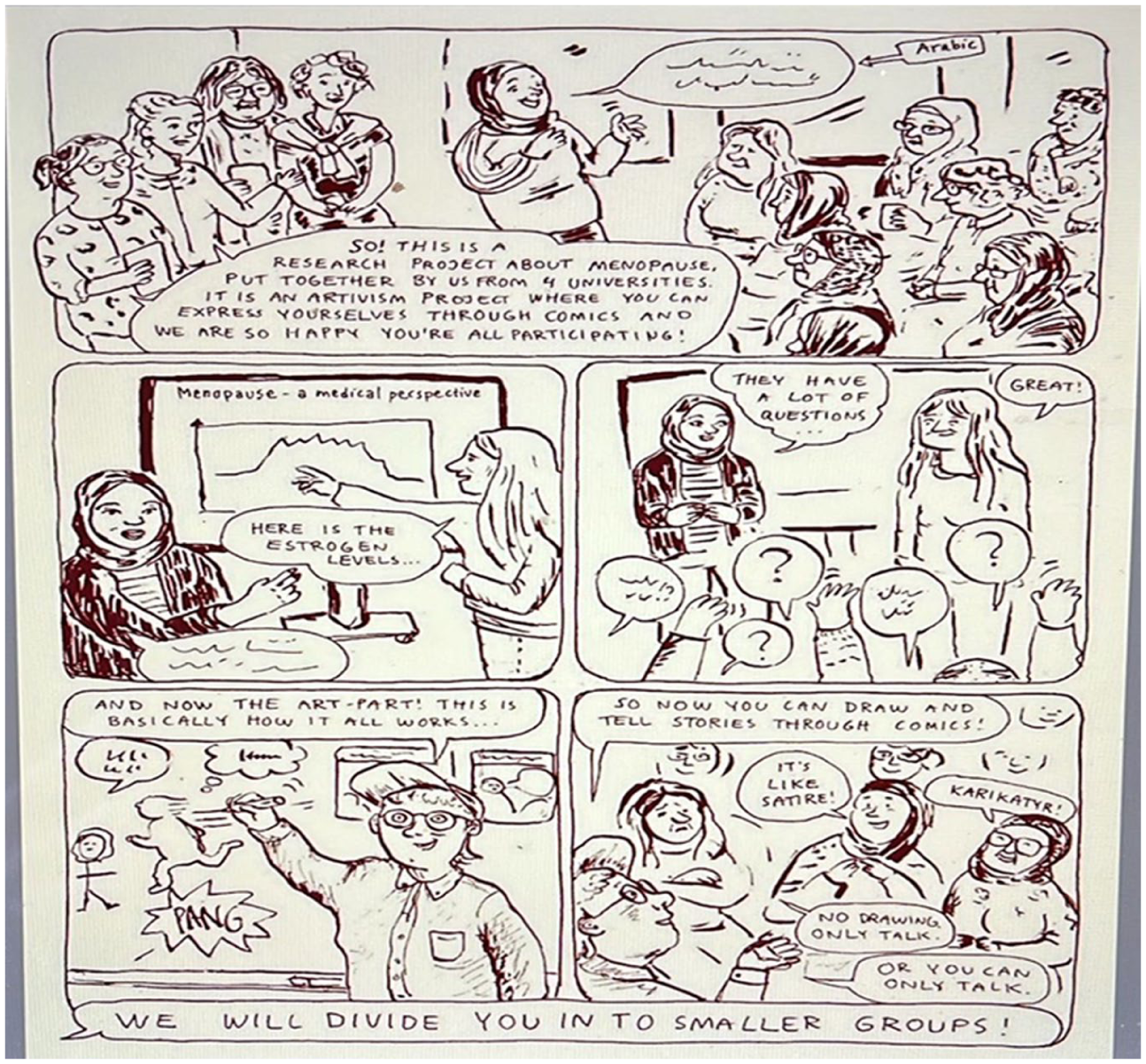
Project artist Karolina Bång’s work captures an animated moment in one workshop room.
In sum, experiences from the Malmö workshop bolstered the project’s confidence in the relevance and effectiveness of bringing artivism to sensitive topics, as proved true again in the Indian workshop that follows.
‘Meri Parchai’: Women’s testimonies of menopause through body mapping in Hapur
Our choice of body mapping for the Hapur workshop was very deliberate. From previous experiences of working with women in rural and peri-urban areas of NCR (see Basu, 2020, 2022; Datta & Basu, 2024), we anticipated the fact that most of the participants were not literate, were used to working with their hands and ‘are quick to intuit the importance of maintaining the optics of a younger, employable and mobile body in order to find work’ (Datta & Basu, 2024, p. 270). We were also aware of alarming reports of women sugarcane workers undergoing premature surgical menopause in order to enhance their employability to local contractors in Maharashtra (Chakraborty, 2023). Ellis-Petersen (2025) describes ‘a combination of poverty, low pay . . . and the threat of fines for missing or incomplete workdays, was putting pressure on women to agree to hysterectomies’ and ‘more than 13,000 sugar cane workers in the district, including some under the age of 25, had had their wombs removed over the previous decade’. In addition, a 2024 study using data from the National Family Health Survey-5 (Ministry of Health and Family Welfare, 2021) had highlighted that more women from rural areas and poorer socio-economic backgrounds are likely to undergo premature menopause due to surgery (Babbar et al., 2024), yet we noted that this group is was underrepresented in the emerging urban-based menopause discourse.
Our connection with Hapur and its hinterland offered us the opportunity to recruit Dalit women from the surrounding villages, most of whom worked as agricultural labourers, as our participants. The agri-town of Hapur is located 45 kilometres east of Delhi and is part of the National Capital Region (NCR). The workforce of the district is predominantly engaged in agriculture and is theorised as the ‘Patriarchal Heartland or Core’ (Datta, 2011). Due to its proximity to the national capital, commercialisation and diversification of agriculture has been adopted by the farming community along with large-scale engagement of women workers in farm and non-farm activities (Singh et al., 2016). Eliciting the menopause stories of such women in underrepresented groups presented us with twin challenges. The first was to open a discussion on the private and culturally taboo topic of menopause, while the second involved discussing menopause-related bodily discomfort and experiences in relation to their working lives. Against this, body mapping presented the best method due to its direct focus on the body through a shared group activity, avoiding written narratives, yet allowing for a visual expression of menopause experiences.
We had intended to follow the standard practice of body mapping as outlined by Gastaldo et al. (2012) and accordingly briefed our participants on choosing a volunteer for the body outline, adding personal symbols, coining a slogan and inscribing their menopause stories and experiences within the body map. However, our participants modified the method in keeping with their cultural contexts and meanings attached to their bodies. We noticed that immediately after drawing the outlines of the body map, they began draping coloured rags over the outlines of the bodies, especially the legs and breast areas (Figure 4).
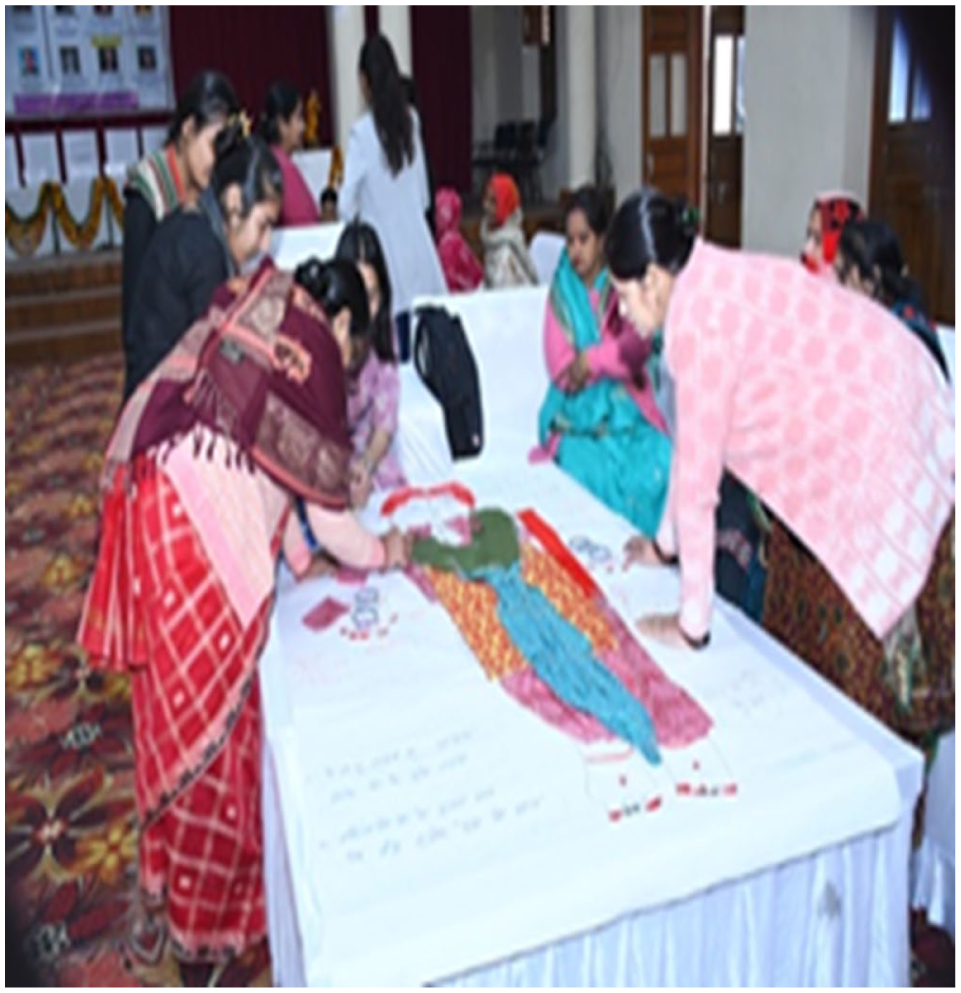
Participants draping the body map.
The need to maintain modesty even on the body map became apparent, even though they continued to discuss their menopause experiences. The participants also proceeded to name the maps and began embellishing them with bangles, bindi, henna and alta (a red dye) commonly worn by married women, even though there were several widowed women in the groups (Figures 5 and 6).
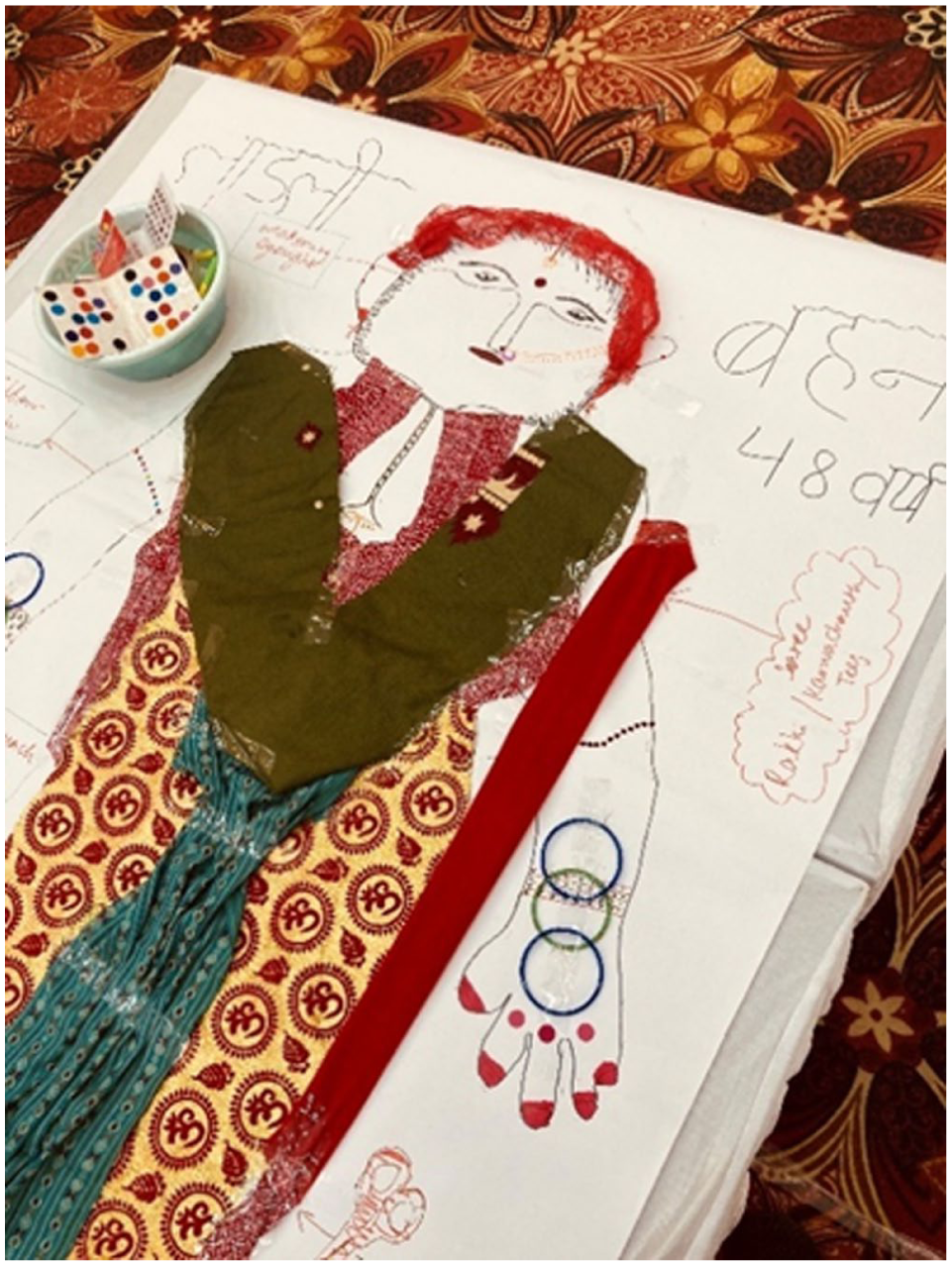
Marital bangles and bindi on body maps created by workshop participants.
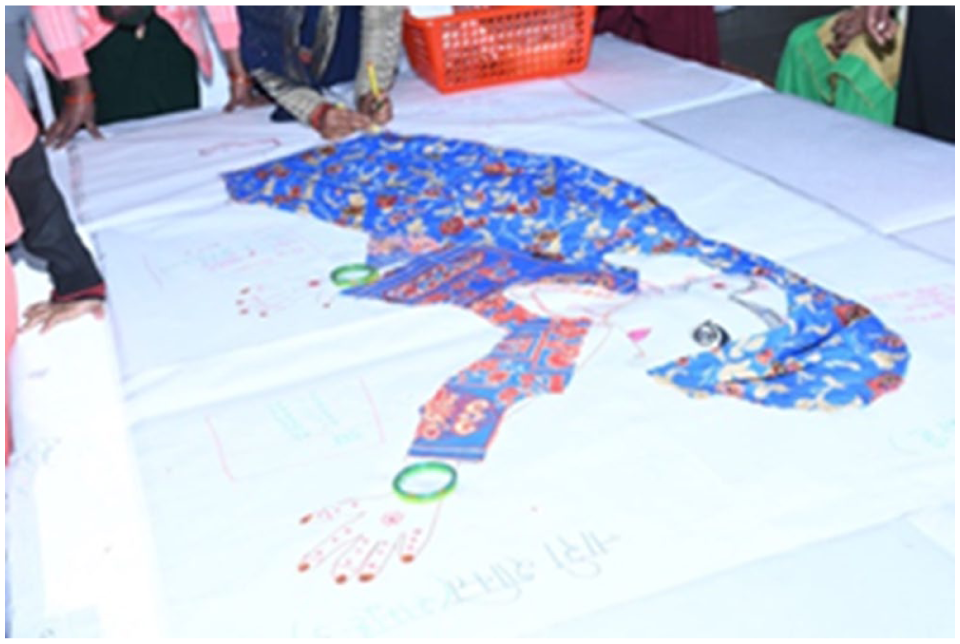
Body map with head covered and bangles created by Hapur participants.
The importance of marriage within a classic patriarchal context and the privileging of productive aspects of patriarchy (Geetha, 2002) was innocuously revealed in this, as was the aspirational use of jewellery and embellishments that were unaffordable for our low-income participants. The tenderness while embellishing body maps across the groups was striking and can be read as therapeutic self-healing, which is counter to the harsh conditions and possible ‘violences’ their bodies bore testimony to.
The names chosen by our participants for their body maps were Pari (Fairy), Laadli behen (Beloved Sister), Saheli (Friend) and Nari Shakti (Empowered Woman), reflecting a mix of feminist solidarities and aspirations as well as affinity, emotional attachment and ownership to the body maps. The participants experienced a heightened sense of pride when informed that their maps would be part of our study and displayed in the UK. They noted with satisfaction that their drawings (meri parchai or ‘my image’) would travel to a distant continent, even though their own mobility was restricted locally. When it came to inscribing personal slogans, they chose empowering slogans yet expressed sadness at not having had enough opportunities, or not being successful or ‘fruitful’. For example, one participant commented on the body map ‘Ban na saki main kaari badariya; yeh meri majboori hain’ (I could not become the rain-bearing cloud, due to my constraint). A curious mix of pride and disappointment that coexisted simultaneously was noted when participants talked about their livelihood and work. They expressed awe at the body mapping exercise and noted that it took education to do ‘this sort of work’ (that of menopause research). Then they said that ‘the food you [the researchers] eat is grown by us’ (illiterate agricultural labourers) and ‘our work keeps you alive’, showing resilience despite adversity, and also the importance of being able to work in the fields through their menopause, despite pain and discomfort.
Participants openly discounted the popular saying ‘aurat hi aurat ki dushman hoti hai’ (women are each other’s enemies) and stated that they had relied on their women friends and relatives, especially in this life stage. The discussions confirmed that many had indeed undergone surgical menopause, and they traced the outline of scissors on the body map to indicate this. The Hapur body maps and discussion thus confirmed the findings of Babbar et al. (2024). Almost all of our participants talked of loss of eyesight, fatigue, lower back and joint pains as ailments accompanying menopause and mentioned that it affected their capacity to work. Participants reported using hot bricks covered with cloth to relieve their pains, using pain-killing tablets and traditional concoctions such as jaggery, basil, clove and pepper for their pain. The emphasis on loss of eyesight (aankhon ki roshni kam hona) was striking and common to every group and seen by the participants as linked specifically to menopause rather than ageing itself.
Despite the pain experienced, each group was unanimous in the sense of freedom experienced in menopause and likened it to being carefree and returning to their childhood (bachpan wapas aana). The analogy of becoming childlike, along with an emphasis on being cleansed, pure and able to perform ‘pooja-path’, i.e. worship and prayer rituals without monthly interruptions, was another common narrative. Our participants emphasise this positive aspect of menopause, saying that the ability to perform all religious rituals accorded them a lot of happiness and enhanced their status in their families. However, as researchers, we also acknowledge the unsaid, that menopause rendered them free of pain and more efficient at their manual work.
Reimagining menopause through artivist methods
In both Malmö and Hapur, we witnessed how the act of producing comic art or body maps, as a participatory, co-creative approach, fostered a ‘safe space’, and prompted disclosures from the women to one another that were new, despite many having known each other for several years. Further, it nurtured the unravelling of a series of unique but corresponding stories, in which menopause is repositioned away from reductive conceptions that understand it as a largely biological process. Common to both groups of participants was the invisibility of menopause in everyday language, negative societal connotations and the fact that the women had to ignore their symptoms in order to keep working. Yet, despite pain, discomfort and suffering, most women chose to highlight positive liberatory aspects of their experiences, clearly resisting the tropes of suffering and hopelessness. The will to find happiness and joy in this phase of life, and resist the negative stigmatisation of post-reproductive women in cultures that value them mostly as bearers of sons can be read as an act of feminist resistance. It is an act of ‘choosing joy and refusing to shrink’ (Stringfield, 2022, p. 7) and that ‘when access to joy is limited by structures of power, accessing and expressing it become highly politicized acts’ (Iqani, 2022, p. 3). In enacting this form of resistance, the feminist solidarities arising through co-creating menopause testimonies using embodied artivist methods allowed our participants to view what could be called a difficult life transition in positive and empowering ways collectively.
We opened this article with Nossel’s (2016) provocative question: if art has the potential to function as a valuable tool for effecting social change, ‘What is preventing practitioners from engaging it earlier and more often?’ (p. 104). The work we have outlined provides something of an answer to this troublesome question and an impetus to undertake such work. Our workshops speak of the labour and emotional and practical challenges that artivist methods such as cartooning and body mapping can demand of researchers and participants, but also the rewards. In both workshops, our participants responded in different ways to the activity with varying forms of outputs to share at the end. Some produced detailed, imaginative outputs while others were self-conscious about their lack of artistry, or were simply more interested in conversation. This prompted some thought-provoking meditations among the MAUSI Net team as reflective practitioners. While at one level there was a desire to leave the workshop with an array of tangible evidence to furnish the project’s archive, we remained deeply invested in one of the core principles of creative and participatory work: that process is just as important as ‘outputs’. Our approach resonates with earlier discussions within sociology on dialogue and praxis rather than extraction (see Freire, 1996). It also chimes meaningfully with Nossel’s (2016) assertion that evaluating the change instigated by artivism ‘cannot be reduced to outputs, percentages or numbers of media hits’ (p. 104); nor, indeed, does it lend itself easily to metrics or ‘impact’ calculations. In this vein, the informal feedback we received from participants indicated that, individually and as a collective, the workshops had served invaluable educational, community and social purposes for them (see also Jermyn et al., forthcoming).
As mentioned earlier, rather than the debilitating effects of menopause, the women chose to highlight the sense of freedom, feminist solidarities and, in Hapur, more time for worship. In the Hapur workshop, as the discussions continued, one group spontaneously broke into song, drawing everyone else in, including us, the outsiders. A powerful moment of feminist solidarity was forged as barriers of race, class and caste crumbled as we sang, held hands, danced and hugged each other, an affect produced through the workshop interactions and near impossible to imagine elsewhere. Our participants mentioned emotionally how the two days spent sharing stories and working on their body maps had forged solidarities, allowed them to feel heard and seen and provided a respite from their work, thereby forging a feminist counterspace (Datta, 2020b). Once the workshop ended, disengaging from our participants was not easy, prompting reflections on the liminality of the workshop space, the ethics of re-distancing and how our solidarities could be sustained meaningfully.
Conclusion
Embodied research approaches enabled the capture of the emotional and material aspects of experiencing menopause through the act of ‘doing’ (such as drawing or decorating a body map). At the same time, our choice of artivist methods provided participants a therapeutic and playful way to revisit their painful stories. Across the different contexts, a recurrent feature of menopause we heard from our participants was the alarming experience of their not knowing what they might expect, and failure to recognise menopause symptoms in advance (see also Orgad, 2026; Simmons, 2026). Lack of knowledge, education and awareness was consistently noted as having made the menopause transition harder than it needed to be, and much more difficult to articulate. This hardship was compounded by poverty, deprivation and other socio-economic and cultural barriers, as well as their traumatic life experiences of migrating, learning a new language, and working hard while neglecting bodily needs. All of these are profoundly embodied and have affected the way menopause is experienced and was expressed in the artefacts produced during the workshops. By centring immigrant and working-class women, we learned how our participants’ climacteric narratives played out across multiple, entwined spaces where migration, mobilities, culture, families, healthcare, community and workplaces converged, and from which experiences of menopause could not be disentangled. Our project thus not just enlarges the menopause discourse but also demonstrates both the effectiveness of embodied and artivist methods in co-production as well as its messiness.
In other words, to pose one answer to Nossel’s (2016) question as to why practitioners might not turn to artivist methods more often, it can be especially unwieldy, unbounded, and messy in how it unfolds. But this is also precisely where the strengths and possibilities lie, and how it might help ‘reimagine menopause’ outside of the constraints that have to date delimited knowledge of intersectional and lived experiences of menopause.
Footnotes
Acknowledgements
Our thanks to Margareta Rämgård, Malmö University; Iftikhar Ali; and the participating women in Lindängen; and Prof Naveen Chandra Singh, Principal, SSV PG College, Hapur, and the participating women from Jarauthi, Sikhera, Hasanpur and Shivpuri, Hapur and our student volunteers at Hapur.
Funding
The authors gratefully acknowledge funding from the UK Arts & Humanities Research Council (AHRC), Research Grant project reference AH/Y007204/1.
Declaration of conflicting interests
The authors declared no potential conflicts of interest with respect to the research, authorship and/or publication of this article.