







Abstract
The purpose of this article is to present a step-by-step process for using self-monitoring to support college students with autism spectrum disorder (ASD) to achieve a variety of goals. Self-monitoring can be used with no technology (e.g., pencil and paper, tangible object placement) or technology-based applications (e.g., interval timers, mobile applications) in non-obtrusive and socially valid ways. College instructors, inclusive postsecondary education (IPSE) program staff, disability office support staff, and other service providers may use this article to guide in the design and implementation of a self-monitoring intervention for college students with ASD. As increasing numbers of transition-age youth with ASD are pursuing higher education, it is important to identify and disseminate a variety of interventions to enhance their college experiences, and self-monitoring is a viable intervention to consider.

William is a driven 19-year-old college student with autism spectrum disorder (ASD) who is enrolled in an inclusive postsecondary education program (IPSE) at a large public university. The program serves students with ASD and/or intellectual disability and promotes inclusivity and integration in all aspects of college life. William lives on campus and is currently enrolled in nine credit hours of coursework in a variety of undergraduate courses aligned to his interests and career goals in the areas of biology, business, and psychology. William receives academic and social supports from both the university disability office and IPSE program staff to meet academic demands. Despite these supports and his interest in the course topics, William often appears disengaged during his large lecture-style psychology class by occasionally leaving his seat and walking around, interrupting others when they are speaking, or speaking off topic during the lecture. William’s psychology professor, Dr. Garcia, reports to the IPSE program director, Ms. Thompson, that William may need more individualized supports to be successful. Dr. Garcia notes that William frequently appears disengaged, his lack of engagement means note-taking is infrequent and scattered, and his participation and classwork grades are Cs.
Earning a college degree contributes to overall greater earnings across an individual’s lifetime and a longer life expectancy and healthier lifestyle (Sasson, 2016; U.S. Bureau of Labor Statistics, 2021). Like William, many transition-age youth with ASD pursue postsecondary education and report a variety of college experiences (Cai & Richdale, 2016; Sosnowy et al., 2018). According to the National Longitudinal Transition Study-2, approximately 36% of transition-age youth with ASD have attended postsecondary education of any kind after high school graduation, including 2-year or 4-year colleges or vocational education (Roux et al., 2015). Although promising, this rate is lower than youth with learning disabilities or speech-language impairments.
College students with and without disabilities must display a variety of skills to be successful in college environments. Morningstar and colleagues (2017) described these essential skills in their college and career readiness (CCR) framework. The CCR framework includes six domains focused on academic and nonacademic skills associated with success in a variety of postschool environments, including higher education. The six domains are academic engagement, academic mindsets, learning processes, critical thinking, social skills, and transition knowledge (Morningstar et al., 2017). See Table 1 for a brief description of each domain. Example skills within the CCR framework that college students will likely need to be successful include identifying personal goals, effective time-management skills, and forming positive relationships with same-age peers, among others.
Example Target Behavior for College Students With Autism Spectrum Disorder Aligned to the College and Career Readiness Framework
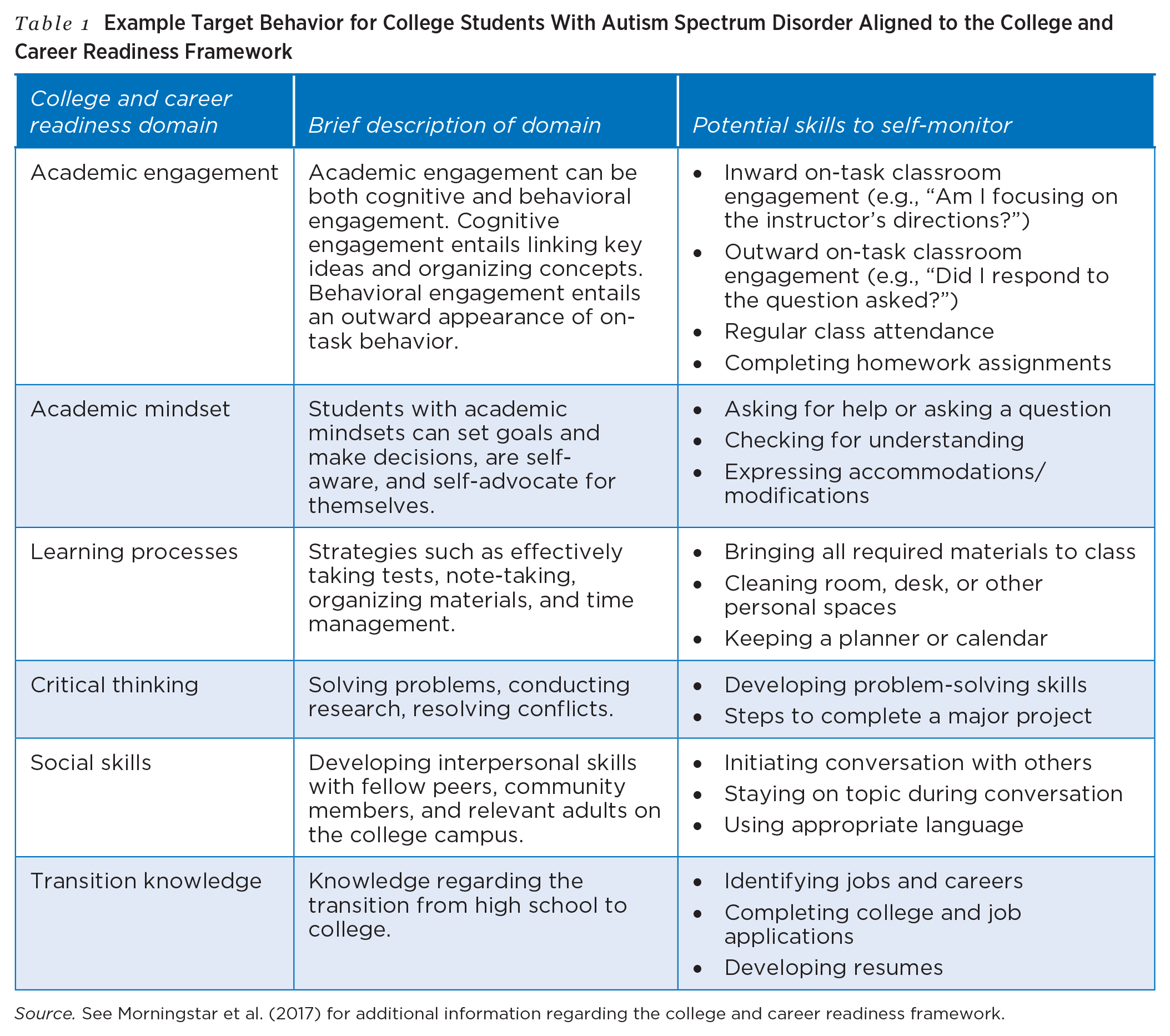
Source. See Morningstar et al. (2017) for additional information regarding the college and career readiness framework.
For college students with disabilities, the focus shifts from access in K–12 settings to success. This may be partially attributed to the fact that college students with disabilities are protected under the Americans with Disabilities Act (ADA; 1990) rather than the Individuals with Disabilities Education Improvement Act (2004). College students with disabilities have access to the same resources, spaces, and materials as their peers without disabilities. However, success is not guaranteed. The essence of college settings is different than K–12 settings, where students with disabilities are supported and guided during their education by a team of professionals (e.g., individualized education program team). Conversely, college students with disabilities are expected to be more independent, advocate for one’s self, and balance a variety of demands.
College students with ASD face many of the same challenges as all college students (regardless of disability status) but also have unique needs as they navigate college experiences. For example, college students with ASD report challenges with self-advocacy skills and managing their emotions (Elias & White, 2018). Many college students with ASD and/or comorbid intellectual disability enroll in IPSE programs, which provide students with disabilities access to postsecondary education in a supported environment. Other college students with ASD may enroll directly in their college or university by meeting regular admission requirements. College students with ASD are eligible to receive accommodations and modifications through their institution’s disability office as mandated by the ADA (1990), but only if they choose to disclose their disability. Regardless of how they obtain and receive supports, many college students with ASD report an overall lack of support and report a desire for more individualized supports (Jackson et al., 2018). Specifically, college students with ASD may benefit from nonstigmatizing supports that increase their independence in a variety of college environments (e.g., academic classes, dorms, leisure areas). One such support that may be particularly relevant in college settings is self-monitoring.
Self-monitoring is an intervention in which individuals monitor their own behavior to improve a target skill or behavior (Cooper et al., 2020). Self-monitoring is an established evidence-based practice for students with ASD (Steinbrenner et al., 2020) that has been used to enhance academic task completion (Holifield et al., 2010), reduce stereotypic behavior (Crutchfield et al., 2015), and improve social skills (Liu et al., 2015). Although more research has been conducted with K–12 students, self-monitoring may be a useful intervention in postsecondary settings because it supports autonomy and can blend into natural environments.
Self-Monitoring in College Settings: High- and Low-Technology Options
Self-monitoring can be conducted with a variety of materials, ranging from low-technology (tech) to high-tech options. College students with ASD can use low-tech pencil-and-paper methods (e.g., checklists, frequency counts) or tangible object placements (e.g., move rubber bands from one wrist to another) to monitor their selected behavior and achieve their desired goals. Low-tech self-monitoring can be combined with other interventions or simple devices. For example, Parker and Kamps (2011) used written task analyses with self-monitoring to teach students with ASD to increase verbal interactions with peers in social settings. One such low-tech device that can be paired with simpler monitoring methods is the MotivAider, a small electronic device that gently vibrates or buzzes at predetermined fixed or variable intervals. The MotivAider allows for students to be discreetly notified to self-monitor while in the classroom but does not record monitoring data; thus, there is a need for a more multifaceted data-collection method. For more information about the MotivAider, see https://habitchange.com/.
Self-monitoring can be conducted with a variety of materials.
College students typically have a variety of personal devices (e.g., smartphones, laptops, tablets) or access to such devices through their university. Because technology is highly valued in postsecondary academic settings and many professors use digital platforms for learning (Bruhn et al., 2016), these devices can be used in the classroom to both prompt the user to monitor and record responses to the prompt. For example, the I-Connect application (app) is a self-monitoring option with customizable features for users to monitor one or more behaviors simultaneously while also recording and storing their responses. The I-Connect app allows a variety of customizable prompt phrases and notifications, including vibrations, auditory chimes, or flashes of light, based on the user’s needs and preferences. The intervals of the prompts may be fixed or variable, with common intervals such as 30 seconds, 1 minute, 2 minutes, or 5 minutes. Figure 1 presents screenshots of the I-Connect self-monitoring mobile app.
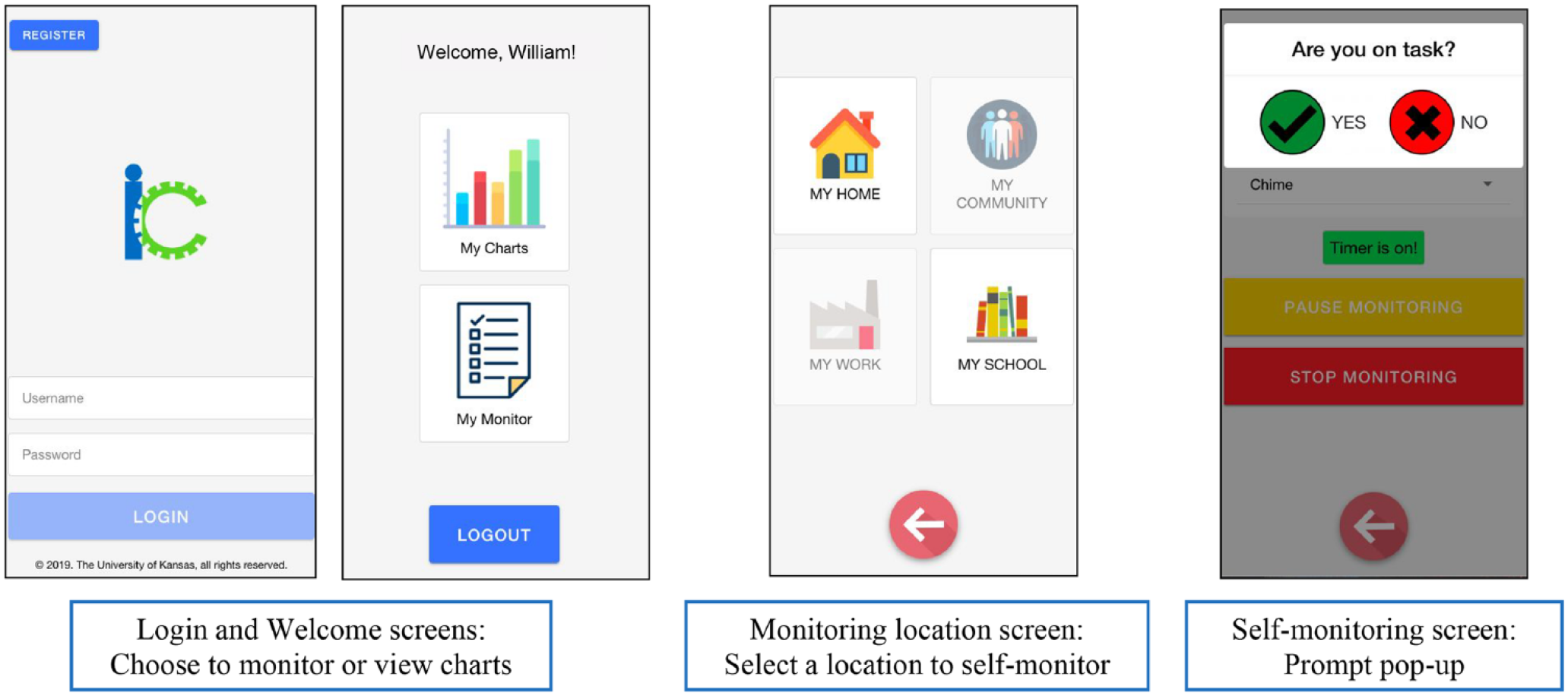
Screenshots of the I-Connect self-monitoring mobile application
Similar to William’s story, Huffman and colleagues (2019) used self-monitoring to support a college student with ASD in a large, lecture-style undergraduate course. The college student used a Samsung tablet to monitor his on-task academic engagement using the I-Connect app set to 1-minute intervals. Results showed the student was on task for an average of 31% (range = 20%–60%) of baseline observations and increased to 87% (range = 67%–95%) on-task academic engagement when using the I-Connect app to self-monitor. Both the student and his professor reported overall satisfaction with I-Connect via social validity surveys. Specifically, the student reported the I-Connect app helped him to focus more, and the professor reported he would allow other students to self-monitor using mobile devices.
Steps for Implementing a Self-Monitoring Intervention for College Students With ASD
We describe a step-by-step process for educators in IPSE programs, campus disability inclusion and access offices, and other service providers working with college students with ASD to collaborate to self-monitor behaviors relevant to achieving their life goals. These steps have flexible components and may be used for both high- or low-tech self-monitoring. We describe how William, Dr. Garcia, and Ms. Thompson worked together to help William reach his goals using vignettes aligned to each step.
Step 1: Identify a Support Team
Students should identify a lead support person who will work collaboratively with them to set up and implement self-monitoring. The lead support person and additional key stakeholders should ideally be people who are typically present in the college environment where the student lives, studies, and/or works. The lead support person may be an IPSE program director, academic counselor, guidance counselor, job coach, professor, or any other adult in the college student’s life who has a positive rapport with the student. Key stakeholders may be peers, family members, instructors, or other people in the college student’s life. Note that not all students will have or need additional key stakeholders.
William asks to meet with Dr. Garcia and Ms. Thompson to discuss his support options to ensure he is successful in his psychology course. Figure 2 presents a sample storyboard illustrating this planning meeting. William identifies Ms. Thompson as the lead support person and Dr. Garcia as a key stakeholder who is willing to assist and support him. William also states he receives tutoring with an IPSE program mentor named Michael. Ms. Thompson and Dr. Garcia agree Michael could be an additional support for William while he self-monitors. Therefore, the lead support person and key stakeholders for William are Dr. Garcia, Ms. Thompson, and Michael, hereby referred to as William’s team.
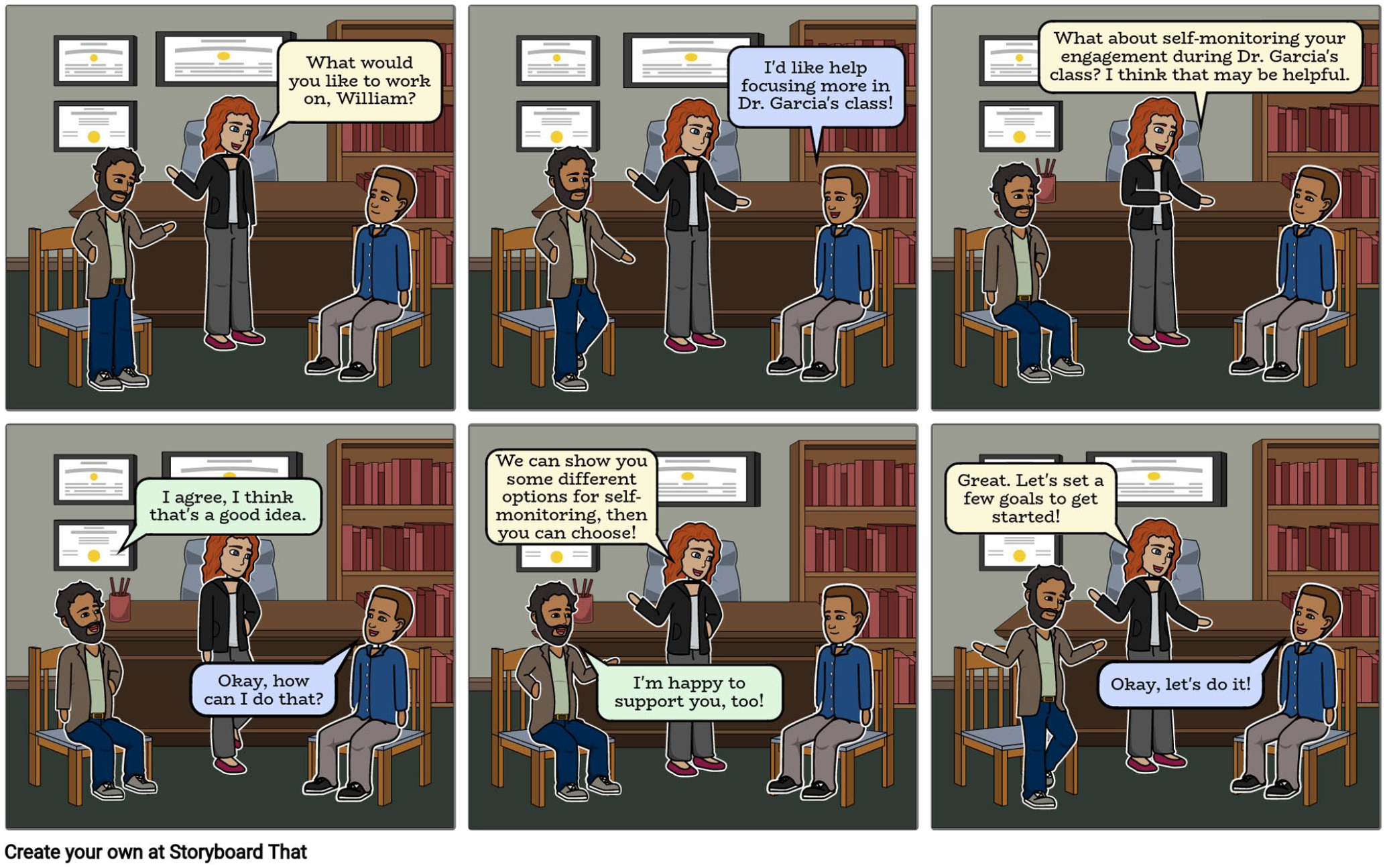
Sample story board for a self-monitoring planning meeting in a college setting
Step 2: Identify Student’s Goals and Target Behavior(s)
The lead support person and key stakeholders (if applicable) should work collaboratively with the student in a person-centered team meeting to identify the student’s goals, the behavior to be monitored, and a criterion level acceptable for goal obtainment. By beginning with identifying the student’s goals, support people can work with the student to identify barriers that may be impacting their success, thus identifying behaviors to target with self-monitoring. All goals should be positively stated such that the student is working toward increasing a desired target behavior instead of working to decrease a behavior. A planning document can be used to record the student’s goals and adapted to fit the student’s needs (for an example, see Table 2). This document allows for consistency across different self-monitoring settings and goals.
Example Self-Monitoring Planning Document
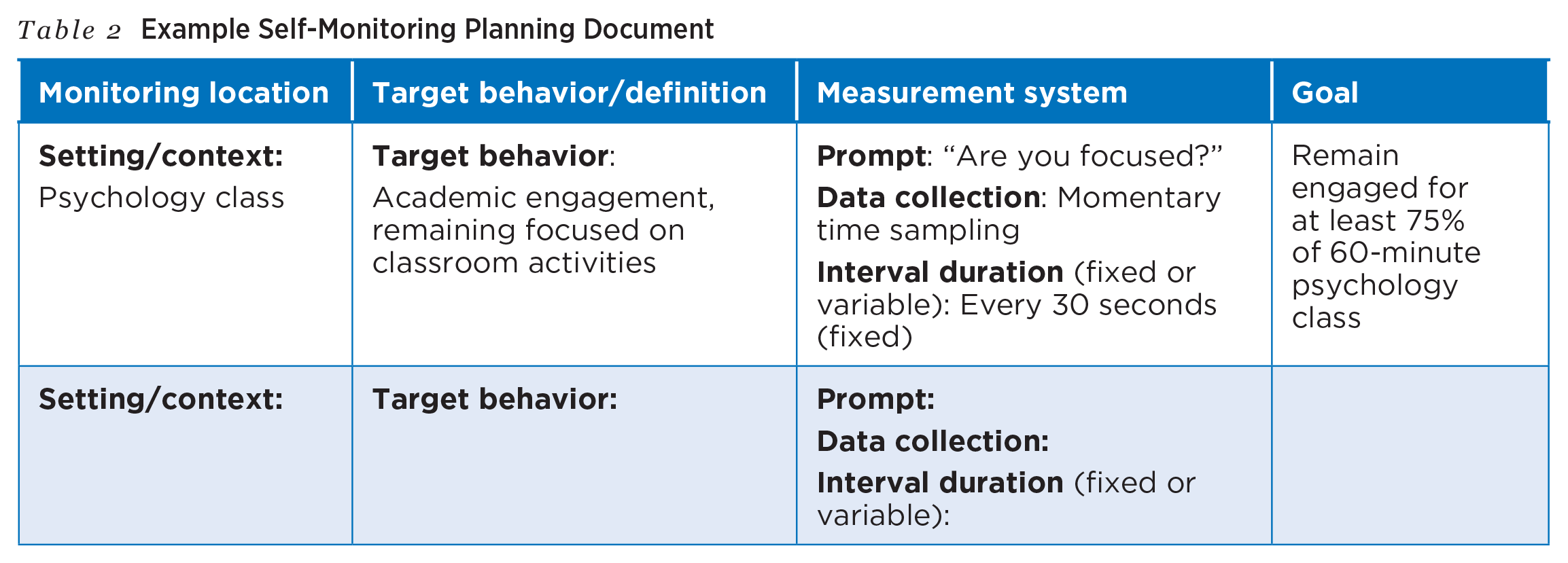
During the planning meeting in Dr. Garcia’s office, William works together with his team to identify his personal goals relevant to the psychology class and his college experience in general. William states he wants to complete the program and obtain a job aligned to his interests after graduation. Ms. Thompson asks William, “What does success in Dr. Garcia’s psychology class look like to you?” William reports that to be successful, he needs assistance to be more engaged during regular class sessions and to remember to take notes. Dr. Garcia agrees, reporting that William frequently appears disengaged rather than taking notes and speaks off topic during class. When asked by Ms. Thompson about a reasonable goal for academic engagement, William states he wants to “stay more engaged” so he is able “to participate on topic more in class” and “take good notes to get an A on the midterm exam.” Dr. Garcia agrees academic engagement is an appropriate target behavior for William, with note-taking frequency in mind.
Step 3: Define Target Behavior and Potential Reinforcers
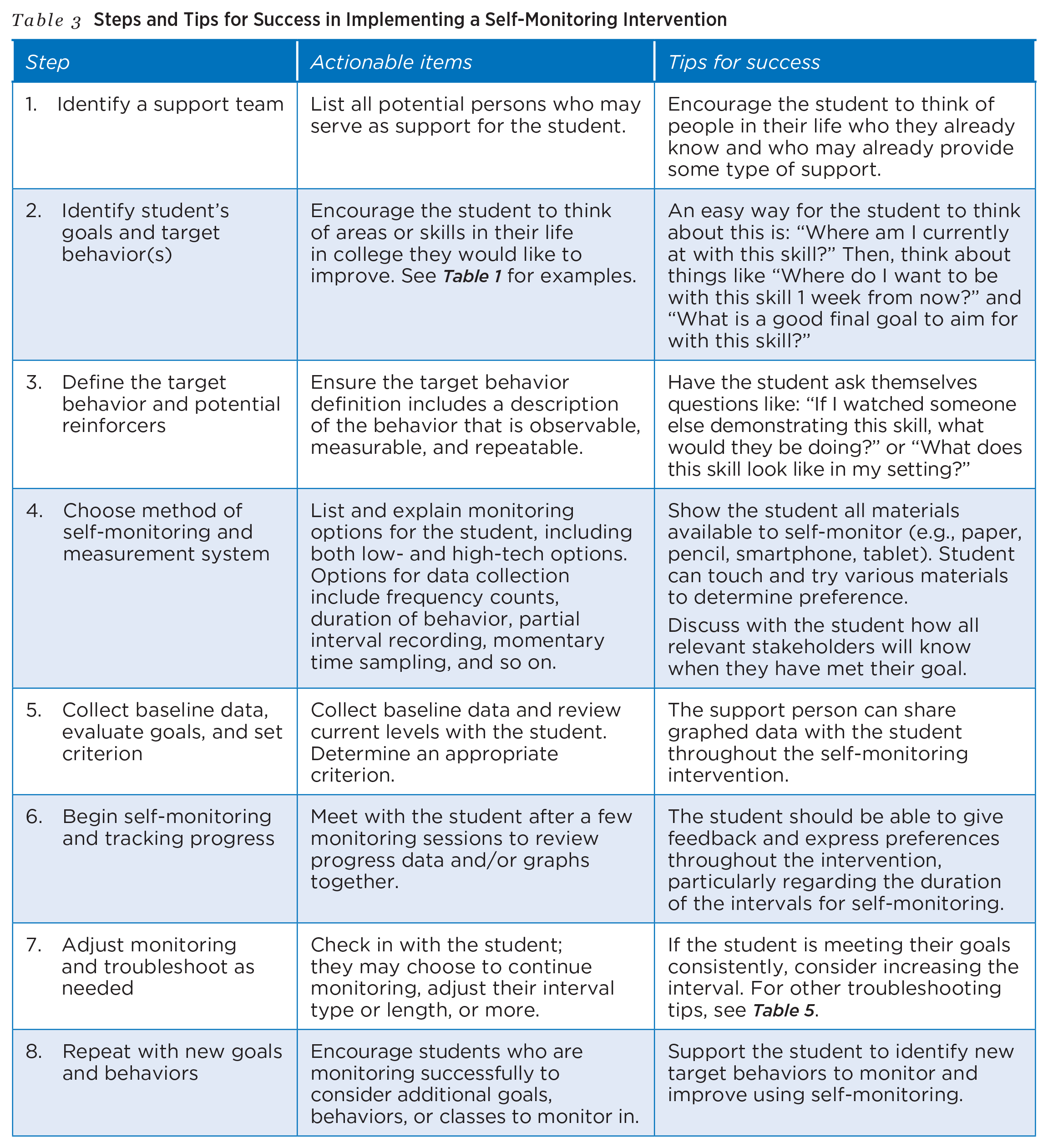
With guidance from the team, the student should examine established goals and work to define the target behavior to be self-monitored. The behavior should be defined objectively, clearly, and completely (Cooper et al., 2020). To be objective, the behavior must be defined only in terms of observable characteristics. To be clear, the behavior must be unambiguous so that others reading about or observing the target behavior would readily and accurately understand it. To be complete, the target behavior must be defined with boundaries that demonstrate when the target behavior has or has not occurred. Each of these three components are crucial for data-collection accuracy in the future. The target behavior definition can be recorded on the same planning document (see Table 2) as the previously identified goals, and a copy should be provided to the student and other support team members identified in Step 1. Table 3 presents a quick guide with actionable components and tips for success when planning and implementing a self-monitoring intervention.
Steps and Tips for Success in Implementing a Self-Monitoring Intervention
Reinforcement in postsecondary settings should ideally be natural instead of programmed. For example, desired outcomes and reinforcement available for all college students include increased grades, learning a new skill, peer attention, forming positive rapport with professors, and many others. When appropriate, other forms of reinforcement not traditionally available within the environment may also be identified.
The team operationally defines William’s target behavior for the self-monitoring intervention as academic engagement. William described being academically engaged as looking at Dr. Garcia while he talks, taking notes, and participating in the lecture appropriately by raising his hand and remaining on topic when responding. Dr. Garcia agrees with the operational definition of the target behavior. For potential reinforcers, William reports he will be pleased to improve his grades and earn an A in the course overall, starting with his participation and classwork grades and the coming midterm exam. William also expresses excitement about working with familiar IPSE program staff, Michael. He states he does not need additional reinforcers because his primary goal is to earn all As and Bs and make new friends. Therefore, the team did not identify any additional reinforcers for William at this time.
Step 4: Choose Mode of Self-Monitoring and a Measurement System
With guidance from the team, the student should express a mode of self-monitoring (i.e., tangible object placement, paper and pencil, technology-based app, etc.) that is socially valid and not stigmatizing for the environment in which the student will self-monitor. The mode of self-monitoring should also be appropriate for the frequency, duration, and goals aligned with the target behavior. The lead support person should return to Step 2 and briefly describe the benefits of the selected mode of self-monitoring, how it relates to the target behavior, and broader identified goals. During this discussion, the student and lead support person should both be able to identify how self-monitoring can lead to the identified naturally occurring reinforcement and/or the criterion level for which alternate forms of reinforcement will be provided. The team may also consider giving the student opportunities to try different modes of self-monitoring to determine a preference, similar to a preference assessment.
A decision must also be made to determine how to measure the selected target behavior. The behavior can often be measured by repeatability (i.e., countability or instances of a behavior), temporal extent (i.e., the duration of the behavior), or temporal locus (i.e., the timing of or when the behavior occurs in relation to other events; Cooper et al., 2020). The duration of measurement should also be collaboratively discussed with and determined by the student. The student should continue to collaborate and provide feedback to the lead support person, although the support person will likely take a leadership role during this step and other members of the team may provide recommendations.
The team presents three different modes of self-monitoring to William: tangible object placement using rubber bands on his wrists, a paper-and-pencil checklist, and the I-Connect app downloaded on William’s smartphone. Ms. Thompson explains how each mode of self-monitoring works and asks William, “What materials do you want to use to self-monitor?” William engages with the various materials and asks questions as needed. William reports he wants to use his smartphone because he does not want other students to notice he is self-monitoring. Many other students in the psychology class utilize their smartphones during class. Therefore, William, Ms. Thompson, and Dr. Garcia agree the I-Connect app is the most appropriate mode of self-monitoring for William. Ms. Thompson has used the I-Connect app with other college students and will provide training to William. Michael, William’s IPSE program staff, will serve as a natural support for William while he self-monitors using the I-Connect app.
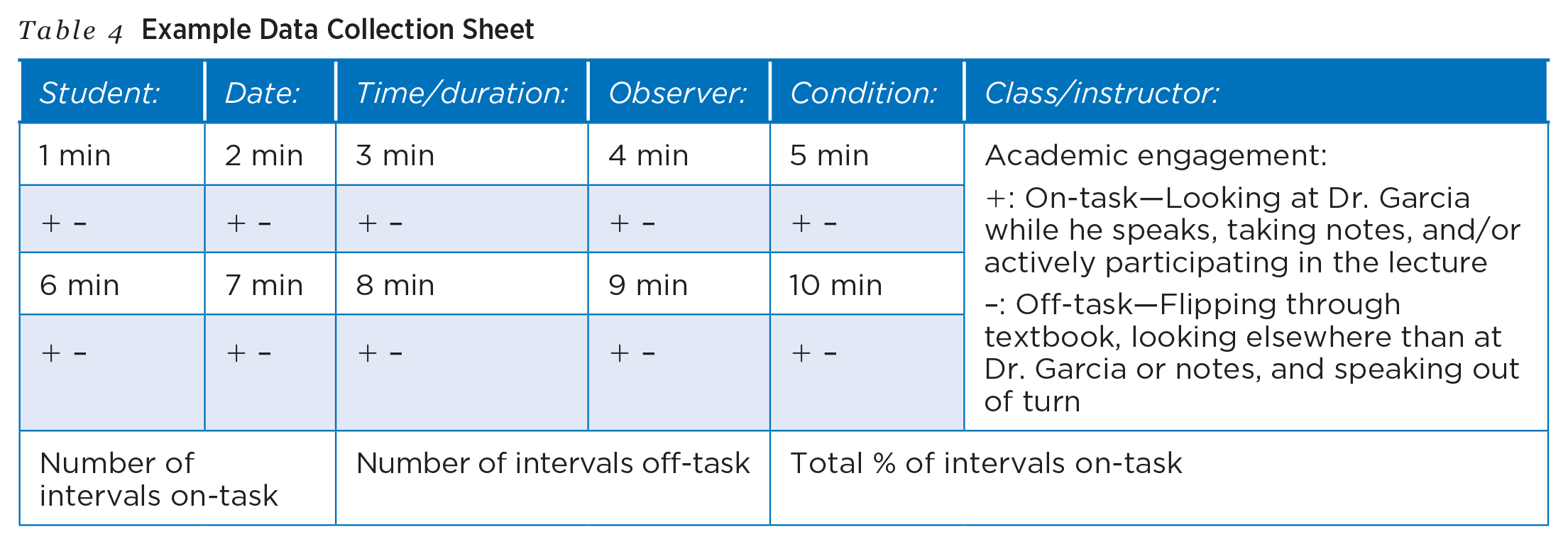
Ms. Thompson suggests momentary time sampling as the most feasible measurement system to blend into the natural university classroom environment. As such, data on William’s behavior will be collected at the end of a predetermined interval. Ms. Thompson provides training to William and Michael to download and use the I-Connect app and models how to choose a notification type (e.g., vibrate, chime, flashing screen). Michael, the IPSE program staff, will collect momentary time sampling data during regular class sessions occasionally for reliability data-collection purposes. Table 4 offers an example data collection form for William, which can be adapted as needed. Michael will observe William to ensure he is self-monitoring with I-Connect accurately and provide assistance with the app as needed.
Example Data Collection Sheet
Step 5: Collect Baseline Data, Evaluate Goals, and Set Criterion
The team should work together to collect baseline data on the target behavior to guide accurate measurement and future recording. At least three data points should be taken prior to implementing self-monitoring (Barton et al., 2018) or until a clear and stable pattern emerges (Barton et al., 2018). Upon completion of this step, returning to Steps 1 through 4 may be necessary if the pattern of behavior is more or less frequent than expected, the form of measurement is not appropriate, or the target behavior needs to be further defined. Revisiting the student’s overall goals to determine a criterion is also recommended during this step to ensure an adequate and attainable level of therapeutic change. The criterion should be set such that the student will receive frequent reinforcement to maximize potential success and investment in the self-monitoring intervention while noting that the criterion may be changed in the future as mastery is accomplished.
Three 10-minute observations are conducted during the 60-minute psychology class with a 5-minute break in between each observation. As described previously, momentary time sampling procedures are used, and the team determines 30 seconds is the most appropriate duration of intervals. The IPSE program staff, Michael, uses an interval timer app on his smartphone to measure the intervals and know when to record William’s behavior. A peer in the class is also observed to determine their average level of engagement. Michael sits near William so he can accurately observe him and collects six baseline data points from William, who exhibits on-task behavior an average of 28% (range = 15%–40%) of each observational session. Michael shares Williams’s baseline responding with William and all team members prior to William beginning to self-monitor with I-Connect. Using William’s baseline data and the comparison peer to guide their decision-making, Dr. Garcia suggests setting an initial criterion of 60%. Based on observations of William’s average current level of engagement (28%) compared to a peer’s average level of engagement while in class (85%), the team agrees this initial criterion is appropriate for William and will change accordingly based on mastery to reach peer levels.
Step 6: Begin Self-Monitoring and Tracking Progress
Now the student is ready to begin self-monitoring. Self-monitoring should begin by the support person demonstrating the steps and materials required to self-monitor (e.g., acquiring a pencil and self-monitoring page, rubber bands or paper clips, logging into the I-Connect app). The support person should then describe, model, and role-play self-monitoring with the student’s selected target behavior while modeling both accurate and inaccurate self-monitoring representations to ensure the student has an adequate understanding of and ability to record their target behavior. The support person and student can practice together prior to the student self-monitoring independently as needed. Initially, the support person should track the student’s self-monitoring to ensure accurate recording of the target behavior. Once the student has demonstrated competency in accurately monitoring their target behavior, the support person can begin to fade monitoring checks and should praise the student for their ability to monitor their own behavior independently and accurately.
Ms. Thompson and Michael role-play how to use the I-Connect app with William. They discuss and act out examples and nonexamples of being engaged or not engaged during class. William practices with the I-Connect app prompts and learns to accurately identify when he is or is not exhibiting engaged behavior. William then begins using the I-Connect app during his psychology class with his smartphone and selects “engaged” or “not engaged” at 30-second intervals when the app vibrates. Michael observes and records William’s progress. After three classes using the I-Connect app, William increases his on-task academic engagement to an average of 53% (range = 45%–65%) during each observational session. Michael checks in with William about how he feels self-monitoring is going. William reports he likes using the I-Connect app, he feels that he is improving, but he also feels a bit overwhelmed while Dr. Garcia is lecturing. Michael continues to track William’s progress during the following psychology class. Michael shares William’s progress data with him, and the two discuss it together. After four classes monitoring using the I-Connect app, William is very close to meeting his goal of 60% on-task engagement and expresses that he feels monitoring is helping him to focus and take notes more often. William shares his progress with all team members, who each agree that William’s academic engagement is improving. After monitoring at 30-second intervals for two more classes, William shows improvement and meets his goal of 60% on-task engagement. See Figure 3 for an example progress monitoring graph.
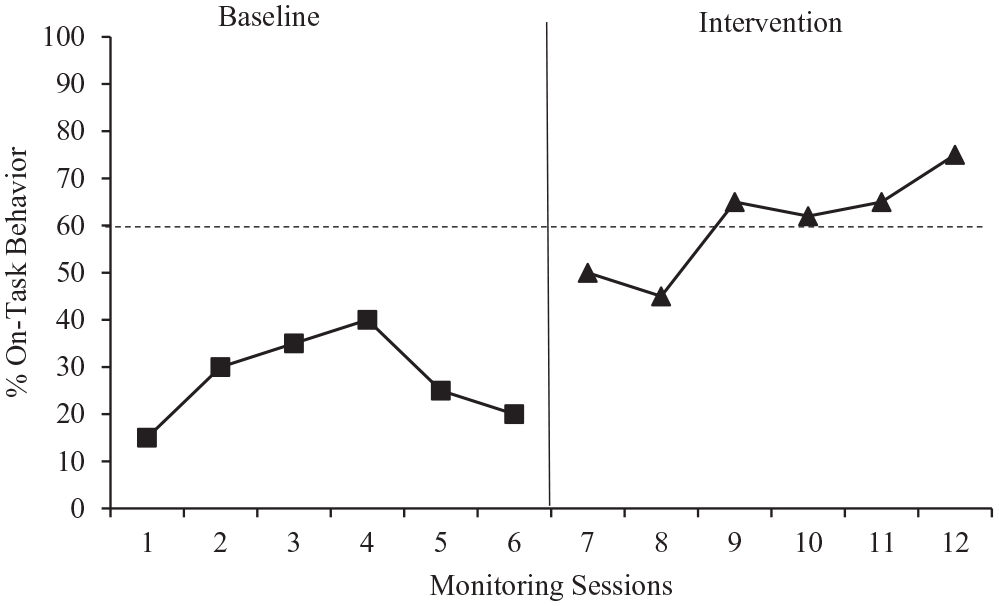
Example progress monitoring graph
Step 7: Adjust Monitoring and Troubleshoot as Needed
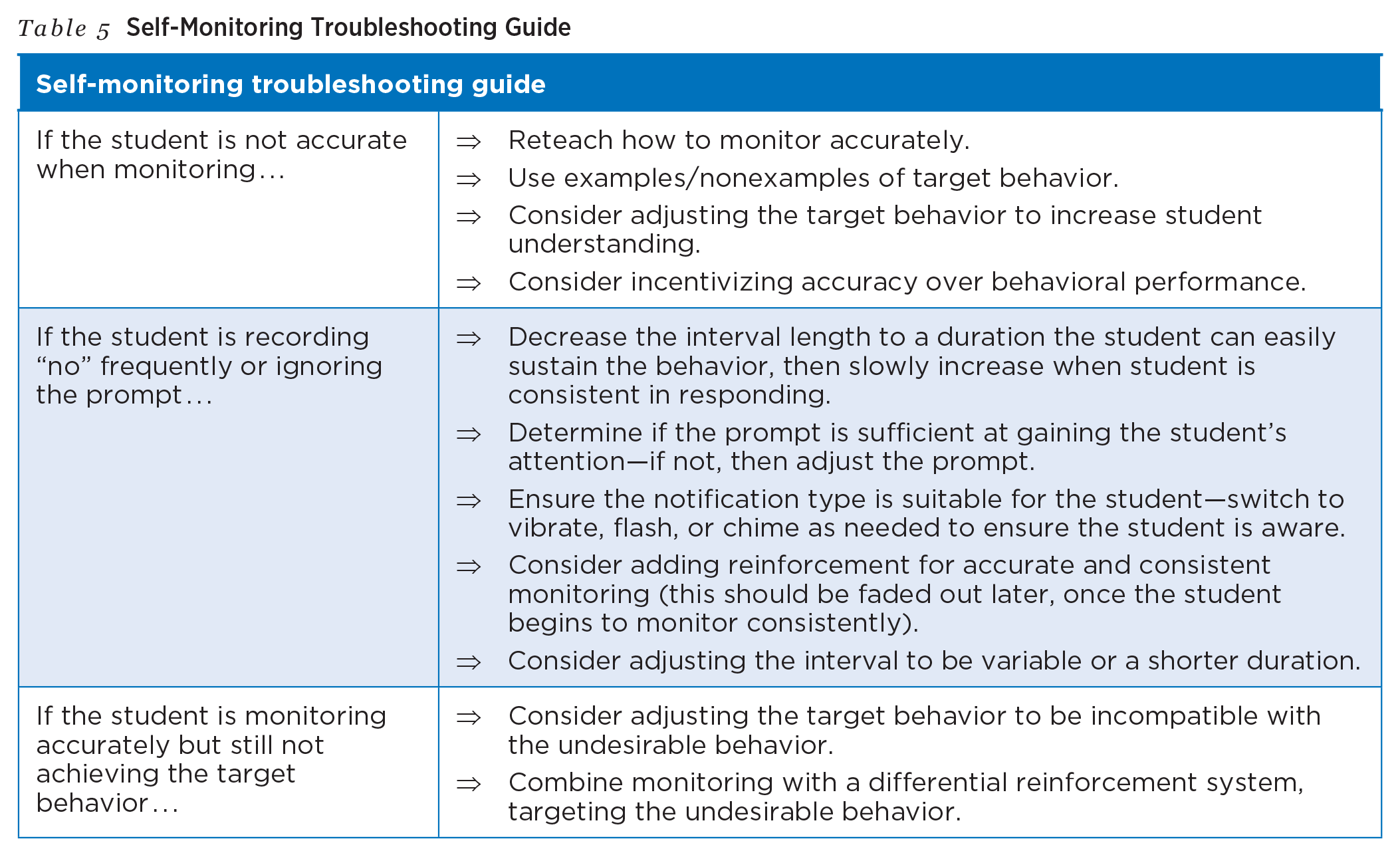
Once the student has demonstrated adequate improvement in their target behavior, the frequency of self-monitoring can be decreased to reflect the change in behavior. If the criteria in Step 6 has been met, it is appropriate to transfer self-monitoring of the same target behavior to other environments or to establish a new target behavior. In addition, troubleshooting and adjusting the self-monitoring intervention according to the student’s responding is almost inevitable. Table 5 presents a troubleshooting guide to common problems students may experience while self-monitoring.
Self-Monitoring Troubleshooting Guide
After William has met his initial goal, Michael asks if he would like to continue monitoring at the same rate or less frequently. William reports he would like to self-monitor less frequently. Therefore, rather than 30-second intervals, William now self-monitors at 90-second intervals. This represents a less intensive approach and still allows for William to be engaged with the course content. Michael has faded his in-class support for William and provides weekly tutoring sessions upon request. This adjustment allows for William to still receive supports but also promotes maximum autonomy and independence. William improves both his participation and classwork grades to B+s and receives an A– on his midterm exam in psychology. He continues self-monitoring to maintain his progress for the remainder of the semester.
Step 8: Repeat With New Goals and Behaviors
Repeat Steps 1 through 7 with the same target behavior in a different environment or identify new goals and target behaviors. Self-monitoring can be used in many ways to help students with disabilities in college settings. Identifying additional target behaviors and setting goals to work toward and/or using self-monitoring skills in alternate settings can help to generalize positive behaviors (Alberto et al., 2013). Example alternate environments could include monitoring the established target behavior in other courses or even at home while doing homework. Similarly, students can identify other behaviors to monitor, such as increasing in-class participation, self-advocacy behaviors such as asking questions, and more.
Self-monitoring can be used in many ways to help students with disabilities in college settings.
Michael asks William, “What do you want to work on next?” William reports he wants to use the I-Connect app in his advertising class to monitor his academic engagement, and he would also like to use it in his dorm to complete organizational and personal hygiene tasks. William is able to independently use the I-Connect app on his smartphone to achieve the goals he has set for himself.
Conclusion
Although increasing numbers of transition-age youth with ASD are pursuing postsecondary educational experiences, they still graduate at lower rates compared to their peers without disabilities (Wehman et al., 2014). College students with ASD are likely to experience barriers to success in postsecondary environments because the demands are different than K–12 education. Self-management and setting personal goals can help college students with ASD to achieve their academic and personal goals and overcome some of those barriers. Self-monitoring has a strong empirical evidence base (Steinbrenner et al., 2020) and may be particularly advantageous in postsecondary settings because it promotes independence and autonomy. Implementing a self-monitoring intervention using a team-based approach described in this article can potentially meet some of the unique needs of college students with ASD. As described in Table 5, the team supporting the college student with ASD will likely need to troubleshoot and adjust the self-monitoring intervention to meet the needs of the student. By adopting a team-based approach, existing support people and key stakeholders in the student’s life can be utilized to contribute to the positive college experiences of students with ASD.
Lastly, self-monitoring’s efficacy base is not limited to students with ASD. Self-monitoring can also meet the needs of postsecondary students with other disabilities such as attention deficit hyperactivity disorder, intellectual disability, or learning disabilities (Diegelmann & Test, 2018; Kumm et al., 2021). However, additional research is needed to evaluate this approach not only with college students with ASD but other disabilities as well.
Footnotes
Declaration of Conflicting Interests
The author(s) declared no potential conflicts of interest with respect to the research, authorship, and/or publication of this article.
Funding
The author(s) received no financial support for the research, authorship, and/or publication of this article.

Emma K. Watson, Juniper Gardens Children’s Project, University of Kansas, Lawrence; Leslie Ann Bross, University of North Carolina at Charlotte; and Jonathan M. Huffman, University of Florida at Gainesville.