







Abstract


It is time for the annual individualized education program (IEP) meeting for James, (pseudonym) a 6-year-old with autism spectrum disorder (ASD) and speech-language impairment. According to his multidisciplinary evaluation team report, James’s intellectual functioning measures in the average range, with strengths in visual-spatial skills, letter-word recognition, and basic academic skills. James can read many familiar words and simple sentences, but his reading comprehension and expressive language are significantly below average. Additional areas of concern include adaptive skills, functional communication, and socialization with peers. James can communicate his wants and needs using three- to four-word utterances (e.g., “I want apple”), and although his speech is easy to understand, his frequency of initiations is low. According to parental and teacher reports, James also engages in noncompliant behaviors (e.g., verbal protesting, tearing up his papers) during transitions that require him to move from preferred to nonpreferred activities (e.g., recess to reading, free play to bath time).
Special education teachers have benefited from using a variety of available technologies in their practice (S. E. Anderson & Putnam, 2020). Technologies have significantly enhanced the capabilities of these educators, enabling them to better support the diverse needs of their students and create more inclusive learning environments (Courduff et al., 2016). Technologies have also supported special educators via online learning platforms and educational software that provide teachers with a wide range of resources and instructional materials that can be tailored to meet the individual needs of each student through presentation of engaging content, alternate ways to represent curriculum, and differentiated instruction (Ciampa, 2017; Courduff et al., 2016). Additionally, technologies provide teachers with the ability to collect and analyze data on student performance, which can inform individualized instruction and identify needed supports (Mandinach, 2012). As such, special educators readily use technology throughout their day across varied tasks and responsibilities in their service delivery, frequently capitalizing on and incorporating multiple technologies and digital media as part of their instruction of today’s digitally adept group of learners (Kennedy et al., 2011).
Technological advances have had recent applications to IEP development. For example, electronic IEPs have become popular among districts over the years, streamlining the process of writing IEPs for special educators (Hedin & DeSpain, 2018). With electronic forms, service providers can access documents, manage IEP dates, input demographic information, and choose from a database of goals within the program (More & Hart, 2013). New developments in AI may further improve the efficiency and quality of IEP development.
AI and Special Education
AI is a sophisticated computer system designed to interact with its environment (Luckin et al., 2016) and make decisions or execute tasks typically performed by humans (A. Anderson, 2019). With advances in machine learning algorithms, big data, and deep learning, AI is growing exponentially (Cardona et al., 2023). Powerful AI features (e.g., OpenAI’s ChatGPT) that generate images and human-like text based on user input have become available to the public. As a result, rapid advances in AI have the potential to significantly transform various sectors of society (A. Anderson, 2019), including special education.
AI in education has been a research focus for over 3 decades (Luckin et al., 2016). For example, AI has the potential to automate routine tasks such as grading and class scheduling (Luckin et al., 2022), relieving teachers of time-consuming tasks and allowing them to allocate more time for instruction and interaction with their students. AI can also support teachers in delivering personalized learning experiences. AI models can analyze large data sets to identify individual learning patterns, predict future performance, suggest personalized instructional strategies, and identify areas where students may require additional support (R. Baker & Siemens, 2014; T. Baker & Smith, 2019). For example, machine learning models have been developed using large data sets to predict individual academic performance based on discrete and ongoing input variables (e.g., student demographics and engagement levels; Arashpour et al., 2023). With continued research, AI models may assist in identifying specific students at risk academically, enabling teachers to provide them with individualized support. These capabilities are also relevant to special education, where individualized instruction and interventions are critical.
Advanced AI chatbots, such as OpenAI’s ChatGPT, are further capable of interacting with humans through natural language (Radford et al., 2019). Developed based on the principle of natural language processing, they eliminate the need for teachers to understand, write, and execute complex algorithms, thereby making these AI tools accessible and user-friendly. These chatbots could potentially assist teachers in creating educational and communication documents and materials (e.g., Cardona et al., 2023), such as IEPs. For example, OpenAI’s ChatGPT can rapidly process and respond to large volumes of text (Radford et al., 2019), allowing it to use relevant student information—such as the present levels of academic achievement and functional performance (PLAAFP) statement—to identify areas of need and potentially generate meaningful and effective IEP goals that meet the field’s specific standards for IEP quality (e.g., SMART goals). Thus, advanced AI chatbots, such as ChatGPT, may assist special educators as they navigate the process of developing IEP goals that meet best practice standards.
What Is a Quality IEP Goal? The SMART Framework
The 2017 Endrew F. v. Douglas County School District ruling and other recent advancements have raised the standard for student achievement in IEPs, emphasizing the need for measurable annual goals that offer meaningful benefits and significant learning opportunities (Yell & Bateman, 2018). An annual IEP goal is a targeted and time-limited objective to guide a student’s progress from their present level of performance to an achievable higher level within a predetermined timeframe (e.g., 1 year) with the provision of appropriate special education services (Goran et al., 2020). IEP goals aim to address a student’s disability-related needs and facilitate their participation and progress in two key areas: the general education curriculum (e.g., achieving grade-level mathematics performance) and other education-related aspects influenced by the student’s disability (e.g., improving articulation or enhancing socially appropriate behaviors; Osborne & Russo, 2021). Each goal should address the academic and/or functional needs identified in the PLAAFP statement and be aligned to grade-level content standards, ensuring integration into the general education curriculum (Goran et al., 2020).
Each IEP goal should consist of the following essential elements: the learner, the target behavior, the conditions for exhibiting and measuring the behavior, the performance criterion for acceptable achievement, and the timeframe for meeting the criterion (Hedin & DeSpain, 2018; Ruble & McGrew, 2013). Goals should be designed as a logical progression from the student’s current level of functioning with a focus on skills relevant and practical for daily classroom use and a direct correlation to local educational standards to ensure alignment with the expected curriculum and learning outcomes (Beukelman & Mirenda, 2013; Rowland et al., 2015).
Additionally, IEP goals should adhere to the SMART framework (Hedin & DeSpain, 2018; Jung, 2007).
However, IEPs for students with disabilities often fall short of recommended practices, resulting in low overall quality (Ruble et al., 2010). Specifically, IEP goals may lack individualization, adequate detail, alignment with students’ current performance levels, or high expectations (Hedin & DeSpain, 2018). By utilizing SMART criteria and related best practices (Goran et al., 2020), IEP goals can be more effectively designed and implemented to support the academic and functional progress of students with disabilities. They can also be a useful framework for evaluating goals generated with the assistance of ChatGPT. For more details and a helpful “how-to” on quality IEP goal writing, see IRIS Center (2024).
Developing IEP Goals With ChatGPT
Although the use of ChatGPT appears straightforward, because users only need to provide a prompt (i.e., instruction) for the model to produce a response, careful planning is needed for the model to generate specific, individualized, and relevant answers. To help with effective use of ChatGPT, OpenAI (n.d.) outlined six strategies for its users so that the model generates relevant answers: (a) writing clear prompts (i.e., instructions), (b) providing reference text, (c) breaking down complex tasks, (d) allowing “thinking” time, (e) using external tools, and (f) systematically testing changes. In the following section, we discuss these strategies and outline how teachers can apply them if using ChatGPT to assist with IEP goal writing.
First, clarity of the instructions is pivotal in shaping the generated goals. When given a prompt, ChatGPT makes predictions based on the patterns it learned during training. If a prompt lacks specific detail, the model will “guess” the context, resulting in vague or general responses. Conversely, a prompt with more specific details provides ChatGPT more context and information to generate a tailored response (e.g., OpenAI, n.d.). For IEP goal writing, this process could involve explicit prompts that highlight the student’s unique needs, current abilities, and desired skill or behavior-change domains (e.g., PLAAFP statement). Applicable quality standards could also be specified (e.g., “generate a SMART IEP goal”). For example, instead of using broad instruction (e.g., “generate an IEP goal for a student with ASD in reading”), a more effective prompt specifies a student’s characteristics, strengths, current skill level, and needs and the quality standards for the goal (see Table 1 examples based on the case vignette).
Examples and Nonexamples of Effective Prompts for ChatGPT
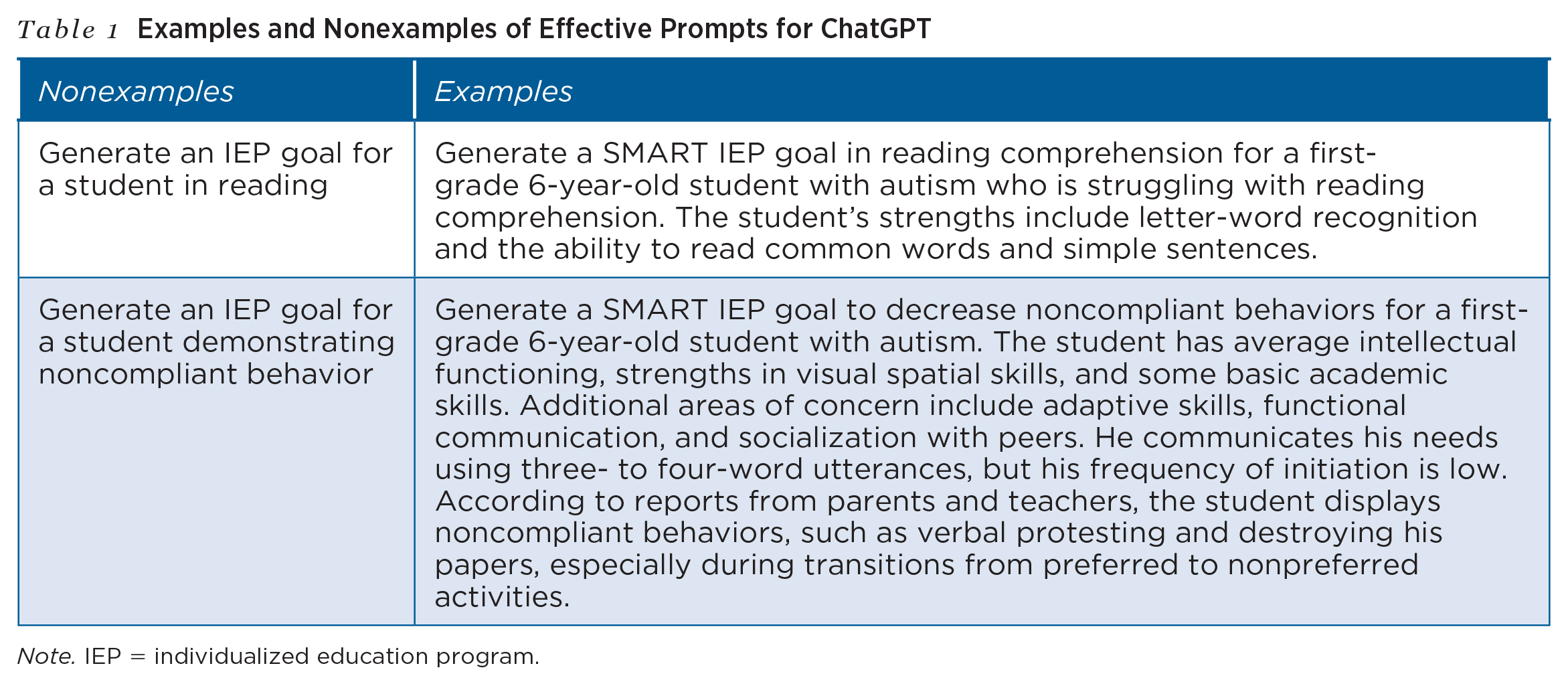
Note. IEP = individualized education program.
Second, providing reference text further enhances the relevance and accuracy of the goals generated by ChatGPT. Relevance and accuracy become especially pertinent given that the model may fabricate incorrect but plausible-sounding answers to some esoteric topics (OpenAI, 2022). Specifically, the model may not have been trained on applicable educational standards (e.g., local and state curricular standards) or other established standards for quality, such as those outlined in the literature related to clarity, individualization, wording, and measurability (Goran et al., 2020; More & Hart Barnett, 2014). Special educators may need to include these functional, social-emotional, and academic and grade-level curricular standards in the user inputs to help ChatGPT incorporate the information and generate goals aligned with them. Failure to do so could result in the model inventing its own education standards. For example, a special educator aiming to create a reading comprehension goal for a first grader based on Common Core standards in reading should delineate this specificity as part of the prompt, “According to Common Core standard RL.1.3, a first-grade student should be able to describe characters, settings, and major events in a story with key details” (see https://www.thecorestandards.org. Similarly, educators may also need to provide the contexts and conditions (e.g., settings, individuals involved, etc.) wherein the target behavior should or should not be exhibited and any prerequisite skills necessary for achieving the goals.
Third, an approach that breaks complex tasks into simpler subtasks could be effective, particularly when constructing overarching IEP goals. Consider a special educator tasked with developing an IEP for a first grader struggling with reading. This task can be divided into subtasks for different aspects of reading (e.g., phonetic decoding, reading fluency, comprehension, vocabulary acquisition; Hua et al., 2018, 2020). Each subtask is then presented as a separate prompt to ChatGPT. This strategy—dissecting an overarching skill domain into smaller subskills—can help generate more relevant and specific goals tailored to the learner.
Fourth, allowing GPTs time to “think” promotes a more reasoned output. Instead of providing one comprehensive prompt and expecting a fully formed goal, a special educator could consider providing a series of queries (see Table 2) for the model to construct a goal gradually. This process allows for a more coherent, well thought out exploration of the task and can result in more effective responses. Using the case vignette as an example, the first query could include relevant student information and identification of the specific skills the student needs to improve (e.g., “For the student described above, what are the specific skills he needs to improve?”). The special educator could guide ChatGPT toward suggesting measures to track progress of the selected skills (e.g., “What would be appropriate measures for tracking the progress of a functional communication skill over time?”). Subsequent queries could ask ChatGPT to propose a realistic and achievable improvement level for the selected skill (e.g., “Given the student’s current abilities and potential for growth, what is a realistic and achievable level of improvement we should aim for the skill we discussed above?”) and a timeframe for this improvement (e.g., “Considering the proposed level of improvement, what would be an appropriate timeframe to aim for this skill?”). The final query could prompt ChatGPT to consider all previous responses and construct an IEP goal for the specific skill based on a specific standard (e.g., “Taking into account the student’s specific skill area, measures, the proposed level of improvement, and timeframe we have discussed, could you construct SMART IEP goals for this skill?”).
A Series of Potential Queries for ChatGPT to Generate an IEP Goal
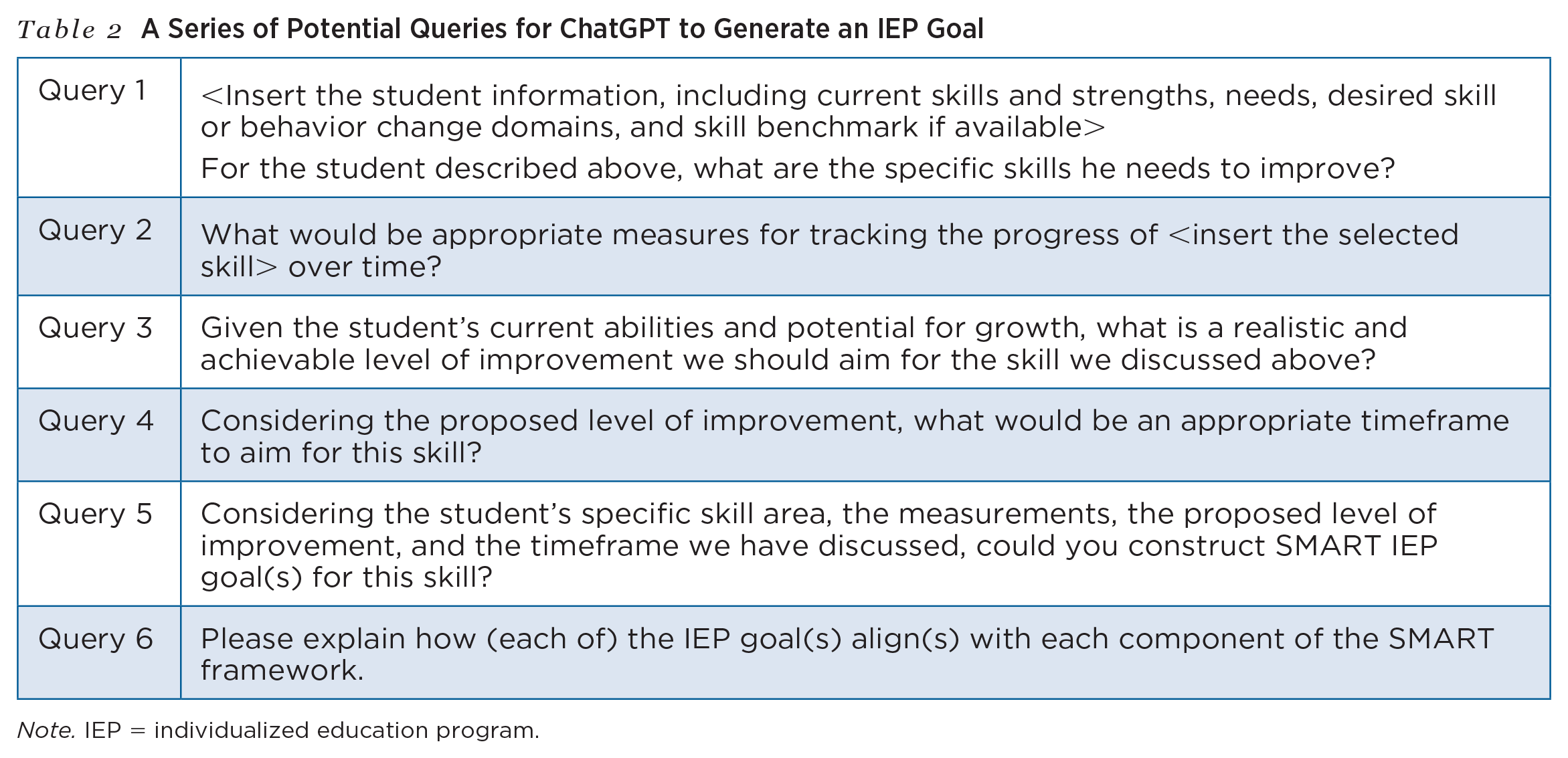
Note. IEP = individualized education program.
It may also be important to ask ChatGPT to explicate—if it has not already done so—how the generated goals align with quality standards (“Please explain how each of the IEP goals aligns with each component of the SMART framework”). Through this process, the user can provide feedback, ask for elaboration or refinement, or redirect the model’s responses as needed. By engaging ChatGPT in this step-by-step approach of expansion and refinement, the educator has more control over the resulting goal, can help ensure it aligns more closely with the SMART framework, and can account more fully for the student’s needs. See Table 2 for the series of queries discussed and Supplementary Material Table S1 for the answers generated by ChatGPT.
Fifth, incorporating external tools or data can also be beneficial when used in conjunction with ChatGPT. Educators might use a repository of academic standards (e.g., Common Core State Standards) or a goal bank (More & Hart Barnett, 2014) to offer additional context, benchmarking details, or examples. For learners who receive clinic-based and/or related services (e.g., behavioral, speech, etc.), relevant standards, guidelines, and curriculum-based assessments should also be consulted (e.g., Verbal Behavior Milestones Assessment and Placement Program, National Association for the Education of Young Children Early Learning Standards). Doing so can guide ChatGPT to generate IEP goals that comply with educational and service standards and best practices across the interdisciplinary fields serving students with disabilities.
Last, a systematic approach toward evaluating changes is crucial to ensure the quality and appropriateness of the generated IEP goals. As with goals developed by teachers, it is similarly imperative for the IEP team to conduct a thorough review of AI-generated IEP goals. This review involves assessing the goals for adherence to SMART criteria, alignment with local and state standards, and suitability for the student’s current abilities and needs. We recommend first establishing a set of criteria that consists not only of the SMART standards but also other elements such as positive orientation, alignment with the PLAAFP statement, and standards- and strengths-based approaches, as delineated in the current best practice literature (e.g., Goran et al., 2020; More & Hart Barnett, 2014; Morin, 2021). See
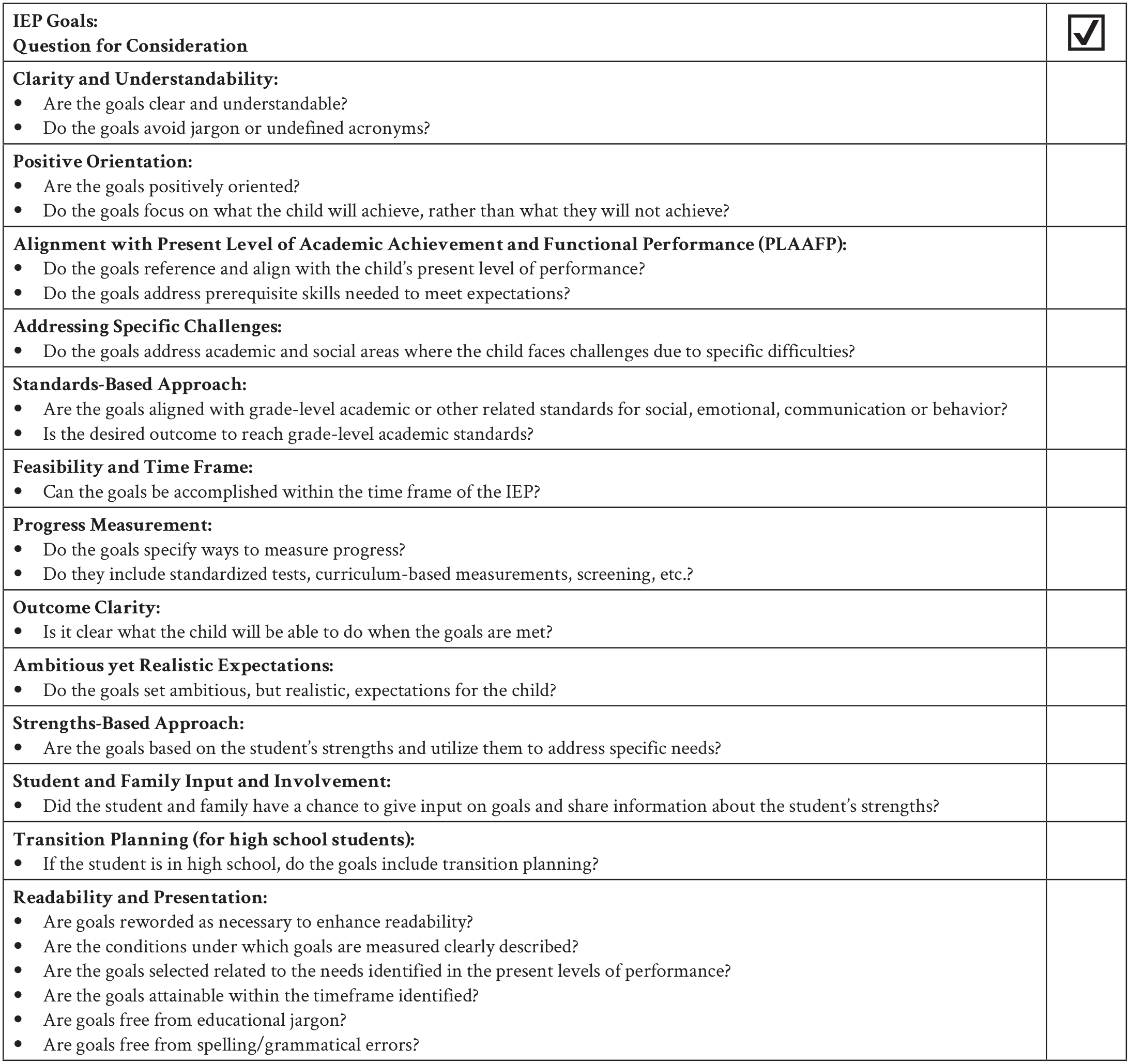
Checklist of guiding questions for the Evaluation of individualized education program goals generated by ChatGPT.
It should be emphasized that although ChatGPT may generate goals embedding the SMART framework components, it is not familiar with all standards, specific domains, or technical or contextual information (e.g., resources available, settings, individuals involved, etc.) pertinent to developing quality IEP goals. Thus, consistent with the aforementioned steps, it may be important to provide specific reference texts related to applicable standards and technical and context-specific information. When reviewing the IEP goals, it is essential for special educators to engage collaboratively with the IEP team and use all established criteria to address any missing or inaccurate information (see
Revisiting the Case
We revisit the case in the following to illustrate how Ms. Mintz created the IEP goals with ChatGPT, assessed quality of the goals, and took steps to mitigate limitations to improve the quality of the goals.
Ms. Mintz began by learning more about the steps needed to interact effectively with ChatGPT when crafting IEP goals. She learned that clarity in instructions is pivotal. Thus, she meticulously crafted detailed prompts that accounted for James’s strengths, challenges, and specific areas needing improvement. She followed a step-by-step querying approach to allow ChatGPT to “think” as it developed IEP goals for James. She sequenced the queries logically to gather insights and allow ChatGPT to gradually formulate the IEP goals (for examples of queries and the responses generated by ChatGPT, see
Once the initial IEP goals were generated (see examples in Table 3), Ms. Mintz and the IEP team met to collaboratively discuss the goals. They used the checklist in
ChatGPT-generated SMART IEP goals
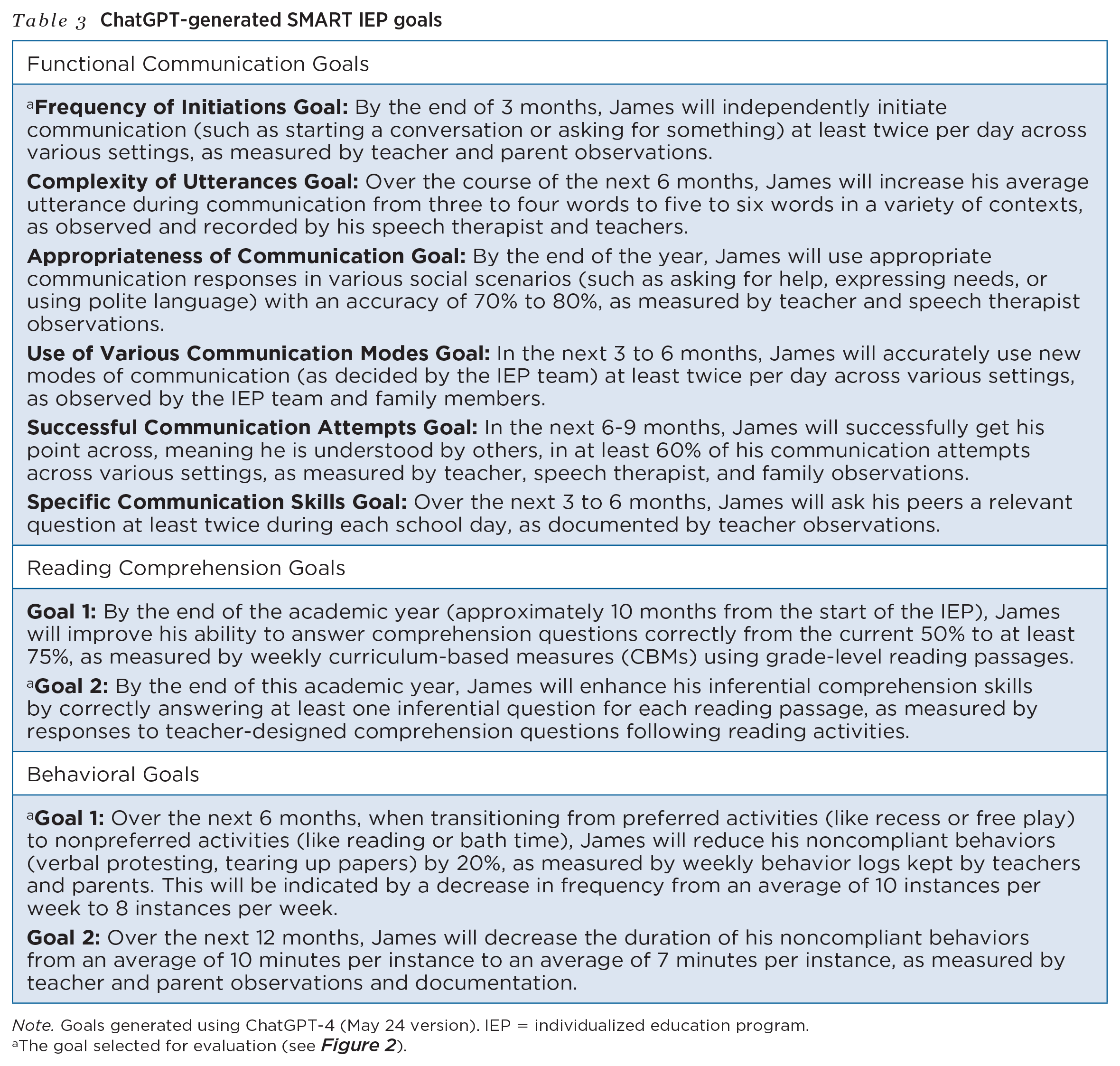
Note. Goals generated using ChatGPT-4 (May 24 version). IEP = individualized education program.
The goal selected for evaluation (see
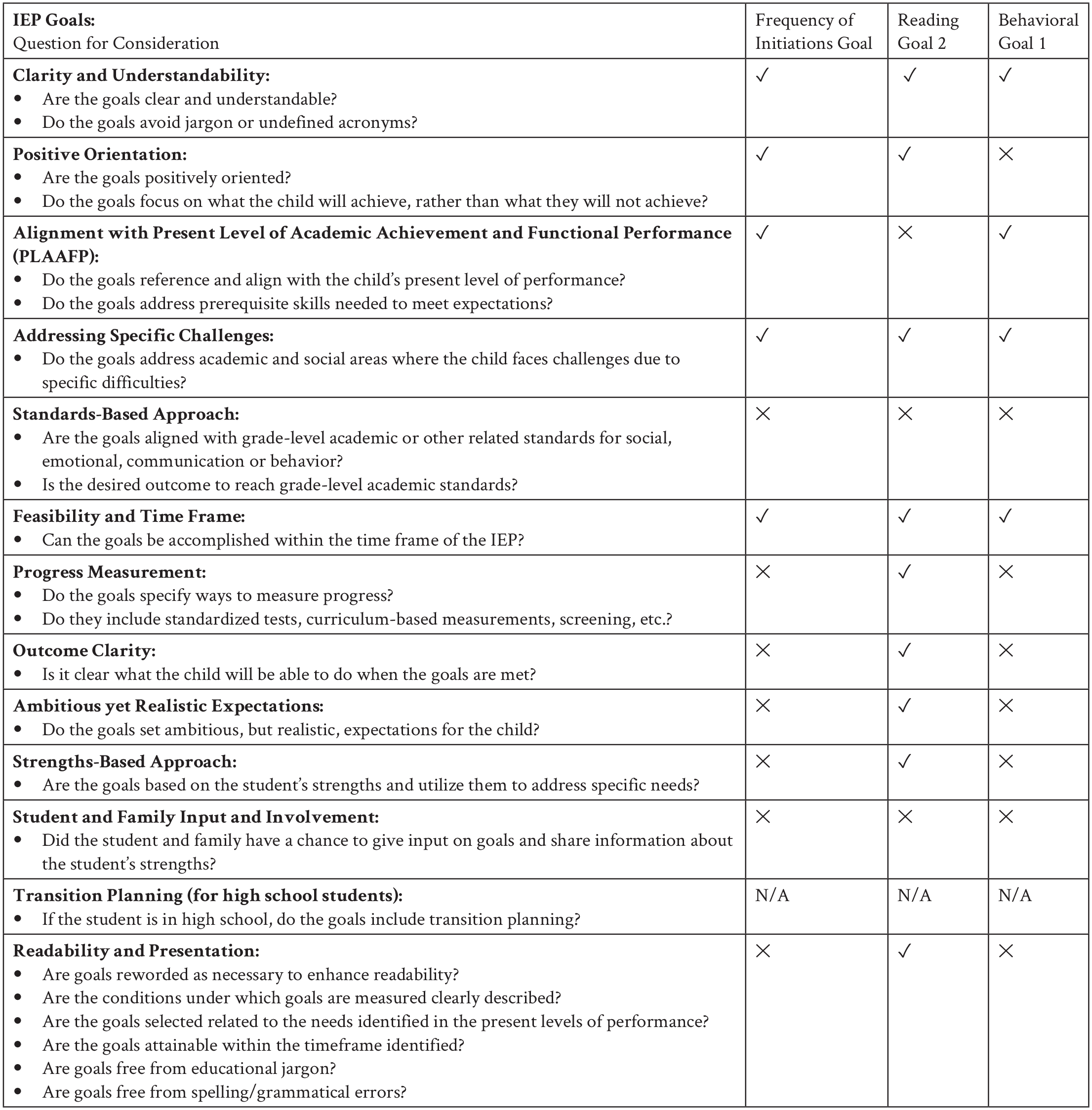
Example of a completed checklist for evaluating sample individualized education program goals generated by ChatGPT
However, the team also noted some limitations using the checklist (see
As the discussion of goals progressed, the team was also concerned about whether the goals accounted for prerequisite skills needed to make them achievable. For example, although Reading Goal 2 attends to James’s need to improve comprehension, before being able to answer inferential questions, several prerequisite skills are typically necessary (Foorman et al., 2016). Ms. Mintz noted that James needed to be familiar with a wide range of words and their contextual usage to grasp subtle nuances and infer implied information. James also needs to comprehend the overall meaning of a text and identify basic elements (e.g., characters, setting, and plot). He needs to have a good grasp of story structure and be able to follow the sequence of events. Thus, the team developed additional subgoals to address these needed prerequisite skills.
Based on the discussion, Ms. Mintz and the team further refined the goals by including detailed reference texts for the standards and providing more detail about the contexts in which James would work on his goals to improve measurability. Through this iterative process, the team was able to modify the goals using ChatGPT based on team and family input. They then continued their discussion on the remaining sections of the IEP.
Additional Challenges and Recommendations
Constructing IEP goals is fundamentally challenging due to their highly individualized nature, which entails a comprehensive assessment process and the determination of specialized instructional supports. These goals are uniquely tailored to each student’s strengths and needs, aligning with state curricular standards (Individuals with Disability Education Act, 2004). Although the strategies provided herein emphasize the importance of including specific details and reference text to support ChatGPT in generating IEP goals, there may still be instances where the IEP goals generated may not be as relevant or customized to meet the specific needs of the individual student. Furthermore, IDEA requires that the IEP process involves meaningful collaboration with the student’s family and multidisciplinary team (Hart et al., 2012; Individuals with Disability Education Act, 2004). Generating an IEP goal based solely on prompts provided by one teacher is unlikely to incorporate the diverse and informed perspectives of the student’s family or the expertise of other members of the team (Elbaum et al., 2016).
It is also important to note that the process used in training AI models could lead to intrinsic, systematic bias (i.e., algorithmic bias; R. S. Baker & Hawn, 2022; Cardona et al., 2023). All AI models are trained using existing data, prone to historical biases in identity categories (e.g., race, ethnicity, gender, nationality, socioeconomic status, and disability; R. S. Baker & Hawn, 2022). It may not be possible to anticipate and prevent all biased data from being fed into the model during training (Cardona et al., 2023). IEP goals generated by ChatGPT are also based on historical data patterns alongside input from the educator. This process could yield inappropriate IEP goals with unknown and known biases toward specific profiles that identify students’ membership in certain identity categories, undermining efforts for achieving equity in special education programming through culturally responsive practices (Barrio, 2022; Lesh, 2020).
To mitigate these risks, direct human oversight and stakeholders’ comprehensive awareness and understanding of AI systems’ limitations are critical. As presented in the strategies, teachers can review the initially generated IEP goals and provide additional prompts to further guide the model, particularly in cases where the goals generated do not meet quality criteria. Through this iterative exchange between human and AI, IEP goals can be progressively refined. It also bears repeating that outputs generated by ChatGPT are heavily contingent on the quality of inputs. Prompt engineering, which involves crafting and refining input queries or commands, plays a vital role in effectively conveying the user’s intent to an AI system, including ChatGPT (Short & Short, 2023). This process facilitates the desired outputs or results. Educators unfamiliar with the technology may find it beneficial to develop their proficiency in crafting effective prompts when using AI tools such as ChatGPT.
It is also essential to acknowledge that biases and knowledge limitations exist due to data sets used to train the AI models. Anti-bias training should be conducted regularly for educators so that they recognize and confront potential biases and promote culturally responsive practices for students with disabilities (e.g., Carter et al., 2020; Fallon et al., 2023; Ko & Lee, 2023). Because the development of IEP goals is a collaborative process, educators should regard the AI-generated IEP goals as preliminary drafts. They require open discussions, critical analysis, and refinement by all stakeholders, including family members, the multidisciplinary team, and the students themselves (Cheatham et al., 2012), to ensure goals are accurate, relevant, feasible, and bias-free. This collaborative approach ensures goals are not solely based on algorithmic output but are verified through human expertise and reflective of the diverse perspectives of all stakeholders knowledgeable about the student.
Furthermore, the use of ChatGPT also brings concerns relating to data privacy and confidentiality. When educators utilize AI systems such as ChatGPT, detailed information about the student may be a part of the input, including academic performance, assessments, behavioral issues, and other personal data necessary to craft effective IEP goals. Without proper handling and safeguards, sensitive data can be susceptible to unauthorized access or breaches. It is important to note that such data may be protected under federal and state privacy laws (e.g., Family Educational Rights and Privacy Act, 1974). Educators who intend to use AI tools to assist with IEP development should consider adopting measures to safeguard student data. For example, student data should be anonymized or pseudonymized, and only the minimum data necessary to complete the task should be used. It is also advisable to seek explicit consent from guardians before using an AI tool that requires the input of student data. In addition, educators must not only be aware of but also carefully monitor the constantly evolving data usage policies specified by the vendors (e.g., OpenAI) concerning data transmission, storage, and utilization. They must also examine the extent to which these policies comply with federal, state, and institutional regulations. Educational institutions also need to ensure that data are transmitted and processed securely to protect against unauthorized access, preventing violations of privacy laws and compromises to student confidentiality (Breivold & Crnkovic, 2014; Sun et al., 2014). For example, they may regularly assess whether a vendor’s technology adheres to the current legal and ethical standards in addition to routine audits and reviews of their data privacy practices.
Finally, the existing research on the application of AI, including ChatGPT, in special education remains limited. To ascertain its social validity and efficacy, researchers need to conduct large-scale surveys and intervention and comparative studies. This ongoing research would allow for a comprehensive evaluation of its potential and provide additional guidance as AI continues to develop and extend its applications.
Conclusion
Integrating AI tools such as ChatGPT in the development of IEP goals could potentially assist with the individualization and effectiveness of special education programs. By balancing AI suggestions with professional expertise, critical evaluation, and responsible use, it may be possible for educators to responsibly utilize AI to improve educational outcomes and support the diverse needs of students. Ongoing research and the informed application of AI tools are crucial in guiding the evolution of IEP goal development for students with disabilities, ultimately fostering their individual progress and achievement.
Supplemental Material
sj-docx-1-tcx-10.1177_00400599241239311 – Supplemental material for Developing Quality IEP Goals in the Age of Artificial Intelligence
Supplemental material, sj-docx-1-tcx-10.1177_00400599241239311 for Developing Quality IEP Goals in the Age of Artificial Intelligence by Chengan Yuan and Juliet E. Hart Barnett in TEACHING Exceptional Children
Footnotes
Declaration of Conflicting Interests
The author(s) declared no potential conflicts of interest with respect to the research, authorship, and/or publication of this article.
Funding
The author(s) received no financial support for the research, authorship, and/or publication of this article.

References
Supplementary Material
Please find the following supplemental material available below.
For Open Access articles published under a Creative Commons License, all supplemental material carries the same license as the article it is associated with.
For non-Open Access articles published, all supplemental material carries a non-exclusive license, and permission requests for re-use of supplemental material or any part of supplemental material shall be sent directly to the copyright owner as specified in the copyright notice associated with the article.
