






Abstract
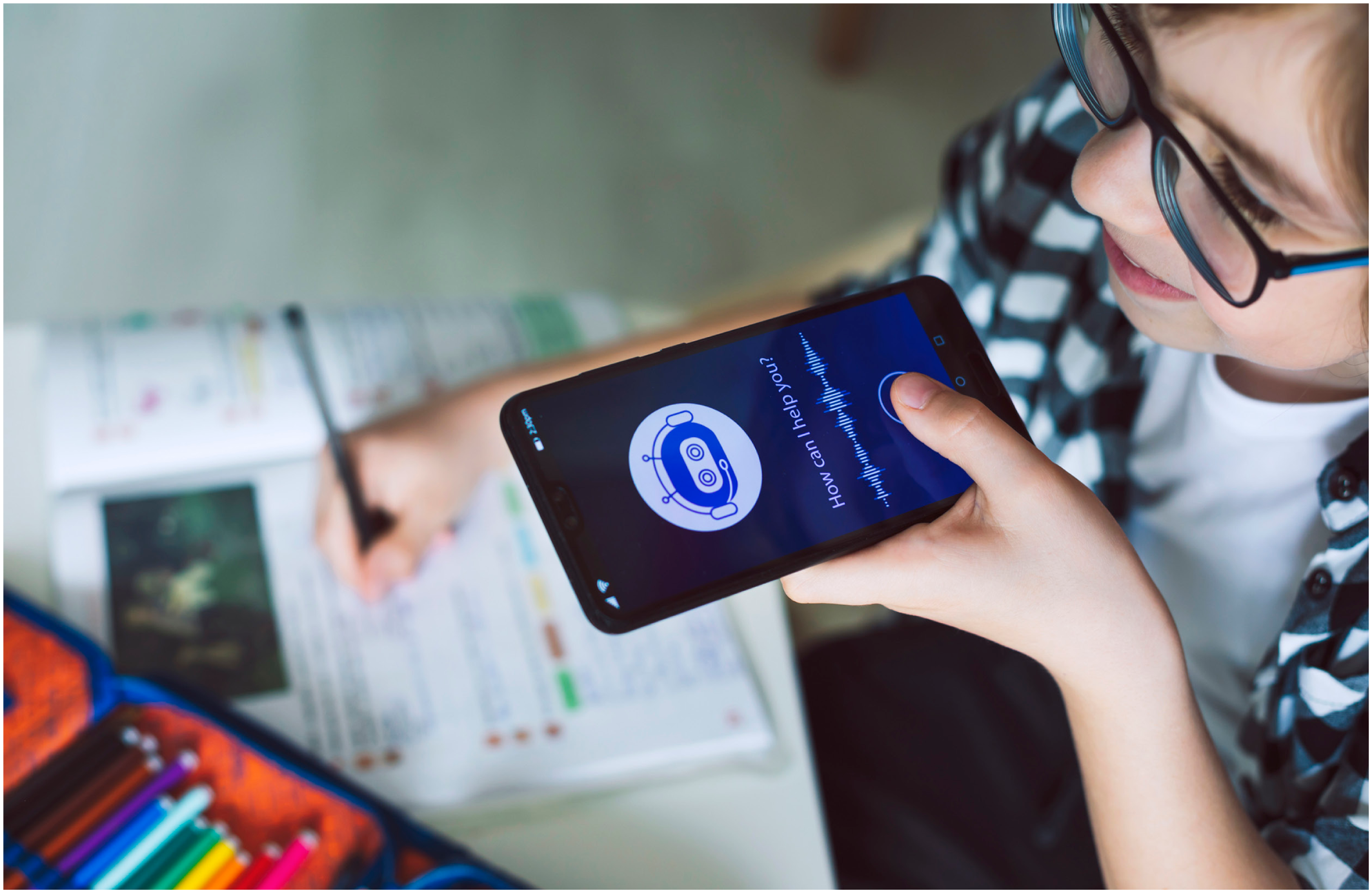
Mrs. Johnson, a fourth-grade dual-certified special education and general education teacher at Maplewood Elementary, has been inspired by recent educational advancements and the potential of artificial intelligence (AI) to enhance learning experiences. Her special education director is also intrigued by the promise of AI but has concerns related to district policy, ethics, and student privacy. Mrs. Johnson envisions integrating AI into her classroom to provide personalized learning paths for her students, particularly for those with disabilities who require additional support. For instance, she plans to use an AI-powered application that adapts reading assignments to each student’s level while offering real-time feedback and suggestions to improve their comprehension skills. Additionally, Mrs. Johnson aims to leverage AI to automate grading for routine assignments, allowing her to focus more on interactive and creative teaching methods.
Mrs. Johnson sees AI as a catalyst for creativity and inclusion in her classroom. She envisions utilizing AI tools to assist students in drafting and editing stories, translating texts for multilingual learners, and solving math problems with step-by-step explanations. She grows excited about the artistic possibilities, such as having students generate illustrations, create voiceovers, or design short videos to bring their projects to life. With AI acting almost like a teaching assistant, analyzing data, identifying strengths and challenges, and offering individualized support, she feels empowered to spend more time fostering curiosity and collaboration. For Mrs. Johnson, AI represents a pathway to a more engaging and dynamic learning environment where every child has the opportunity to thrive.
Despite her enthusiasm, Mrs. Johnson faces several potential barriers to integrating AI in her classroom practice. One major challenge is insufficient training and professional development to use AI tools effectively. Without proper guidance and support, she fears she may not fully utilize the technology’s capabilities or worse, misapply it in ways that hinder student learning. Additionally, she is concerned about access to the technology because not all of her students have reliable internet access or devices at home, which could exacerbate existing educational disparities.
Finally, Mrs. Johnson is mindful of the ethical implications of using AI in her classroom. Data privacy and security concerns are paramount because some AI tools require the collection and analysis of sensitive student information. She worries about ensuring the technology complies with all school policies and that parents are informed and comfortable with how she will use their child’s data. Balancing these considerations while striving to enhance her teaching practice with AI presents a complex challenge that Mrs. Johnson is determined to navigate thoughtfully and with permission from her school administrative team.
Where to Start
Like many teachers, Mrs. Johnson struggles with integrating AI into her classroom and professional practices. When she graduated from her preservice special education program, her professors did not mention the concept of AI. Over the last several years, with the public release of numerous large language models (LLMs), including tools such as OpenAI’s ChatGPT, Google’s Gemini, and Microsoft’s Co-Pilot, many in education have begun to discuss how AI can support students with disabilities. Integrating AI, such as an LLM, can help students with disabilities achieve greater learning outcomes, support more independence, and enhance self-determination (Marino et al., 2023). Additionally, AI can help teachers accomplish tasks that consume a significant amount of time outside the classroom, such as providing students with individualized feedback on assignments promptly. Using AI can help teachers overcome time-consuming tasks, such as lesson planning, individualized education program (IEP) development, making content accessible, communicating with school leaders, and accomplishing school- or district-related committee work. By accomplishing these tasks more efficiently, teachers can spend more time on the individual needs of the students they serve.
This article provides teachers and special education administrators with a foundational understanding of AI and practical knowledge of the applications of AI in special education. Specifically, the authors provide information about a framework and strategies for integrating AI tools into teaching practices and exploring the potential benefits and challenges of using AI to support students with diverse learning needs. The article aims to empower educators with the knowledge and skills to effectively leverage AI technologies to enhance educational outcomes for all students, especially those with disabilities.
What Is AI?
The Center for Innovation, Design, and Digital Learning (CIDDL) serves as a national technology center funded by the U.S. Department of Education’s Office of Special Education Programs. Its primary purpose is to accelerate innovation in personnel preparation for special education by integrating technology and evidence-based practices across higher education programs that prepare educators, related service providers, and administrators. Although AI is only one of the innovative technologies impacting students with disabilities, it is a primary factor driving a needed transformation in special education practices.
People have integrated AI into their daily lives for years. Nearly everyone reading this article has likely used AI multiple times today, from interacting with a smartphone to shopping online or verbally requesting a device to play music. Each of these tools and interactions integrated AI. “Artificial intelligence” has been a recognized term and area of study in computer science since 1956 (Moor, 2006; Zhang & Lu, 2021). Even before the 1950s, computer scientists sought to design machines that could learn and assist humans in accomplishing tasks (Waldrop, 2018).
Many educators conflate AI and LLMs. Whereas an LLM represents one category within AI, artificial intelligence encompasses far broader capabilities. As AI systems gain sophistication and agency, they perform increasingly complex tasks. “Artificial general intelligence” (AGI) denotes machines with at least human-level intelligence. Defining and measuring such intelligence remains contentious because “intelligence” itself lacks a universally accepted definition. Traditional assessments, such as IQ tests, capture only limited aspects of cognition and cannot translate directly to artificial systems. Goertzel (2014) identified adaptability and problem-solving as key traits of intelligence, whereas Bubeck et al. (2023) evaluated large models through benchmarks measuring reasoning, planning, and creativity.
Distinguishing performance from understanding poses another challenge. For instance, an AI might rate a student’s essay highly for vocabulary, grammar, and structure yet fail to explain its meaning. The system recognizes surface patterns but not underlying logic—much like a student who memorizes answers without conceptual grasp. Both display performance without comprehension. Scholars debate whether the field should measure intelligence within narrow domains (e.g., chess, text summarization) or through flexible, cross-domain adaptability (Fei et al., 2022). One student who memorizes formulas excels in algebra but falters in new contexts while another transfers reasoning skills across subjects. This contrast captures the ongoing debate: Should intelligence be defined by mastery of a single domain or by adaptive thinking across varied situations?
Suppose a teacher asks students to write a creative story about a rainy day. A human student might describe how the rain smells, how puddles form on the playground, or how they feel when the weather changes. These details reflect human emotion, sensory experience, and imagination. If an AI writes the same story, it might produce well-structured sentences and vivid vocabulary but lack true sensory understanding; it cannot feel rain or experience boredom indoors. Its output meets human expectations for what “good writing” looks like, but the intelligence behind it operates differently. This AI process highlights anthropocentric bias, the tendency to judge machine intelligence by human standards. Researchers now use evaluation frameworks, such as multimodal benchmarks and emergent behavior analyses, to assess whether AI can respond to unfamiliar, unstructured problems without assuming it should think or feel like a human. Yet no consensus exists, leaving intelligence in machines an open and evolving construct shaped by philosophy, cognitive science, and computer science.
AGI is currently a theoretical construct. However, the development of a machine fulfilling the functions of a human has been discussed since the 1950s (Turing, 1950; Waldrop, 2018). Once developed, AGI will understand, continuously learn, and apply knowledge across a broad range of domains and functions, surpassing human capabilities (Bubeck et al., 2023). AGI will profoundly reshape teaching by challenging the traditional boundaries of knowledge transmission, instructional design, and human purpose in education. Teachers will transition from information providers to cognitive architects. AGI systems will handle routine instructional tasks, such as grading, personalized feedback, and adaptive remediation, allowing educators to focus on mentoring, ethical reasoning, social-emotional learning, and cultivating critical thinking. Teachers will guide students in evaluating AI-generated information, distinguishing between fact and fabrication, and developing epistemic humility in an era of machine intelligence.
Experts disagree on when AGI will emerge; some predict it will appear within 5 years, and others argue it may never materialize (Becker, 2025). Despite this uncertainty, AI technologies are rapidly transforming society, although their adoption in Mrs. Johnson’s classroom remains limited. AI extends beyond digital screens through the Internet of Things (IoT), a vast network of connected devices that generate real-time data for machine learning and predictive analytics (Khadam et al., 2024). Teachers rely on similar systems to identify students needing extra support. IoT sensors in homes, vehicles, and hospitals collect behavioral and environmental data that AI processes to detect patterns, forecast outcomes, and automate responses. In health care, wearable devices track vital signs, and AI alerts clinicians to potential crises; in industry, sensors anticipate equipment failures to improve maintenance efficiency. IoT supplies data, and AI interprets it, forming adaptive, intelligent systems requiring minimal human intervention. In special education, robots already assist students with disabilities in developing social and communication skills (Pennington et al., 2023; Pennisi et al., 2016; Saleh et al., 2021; Scassellati et al., 2012). As AI evolves, its integration into physical devices, such as robots, will increasingly influence daily school operations (CIDDL, 2024). Figure 1 identifies common AI terms teachers and administrators should know.
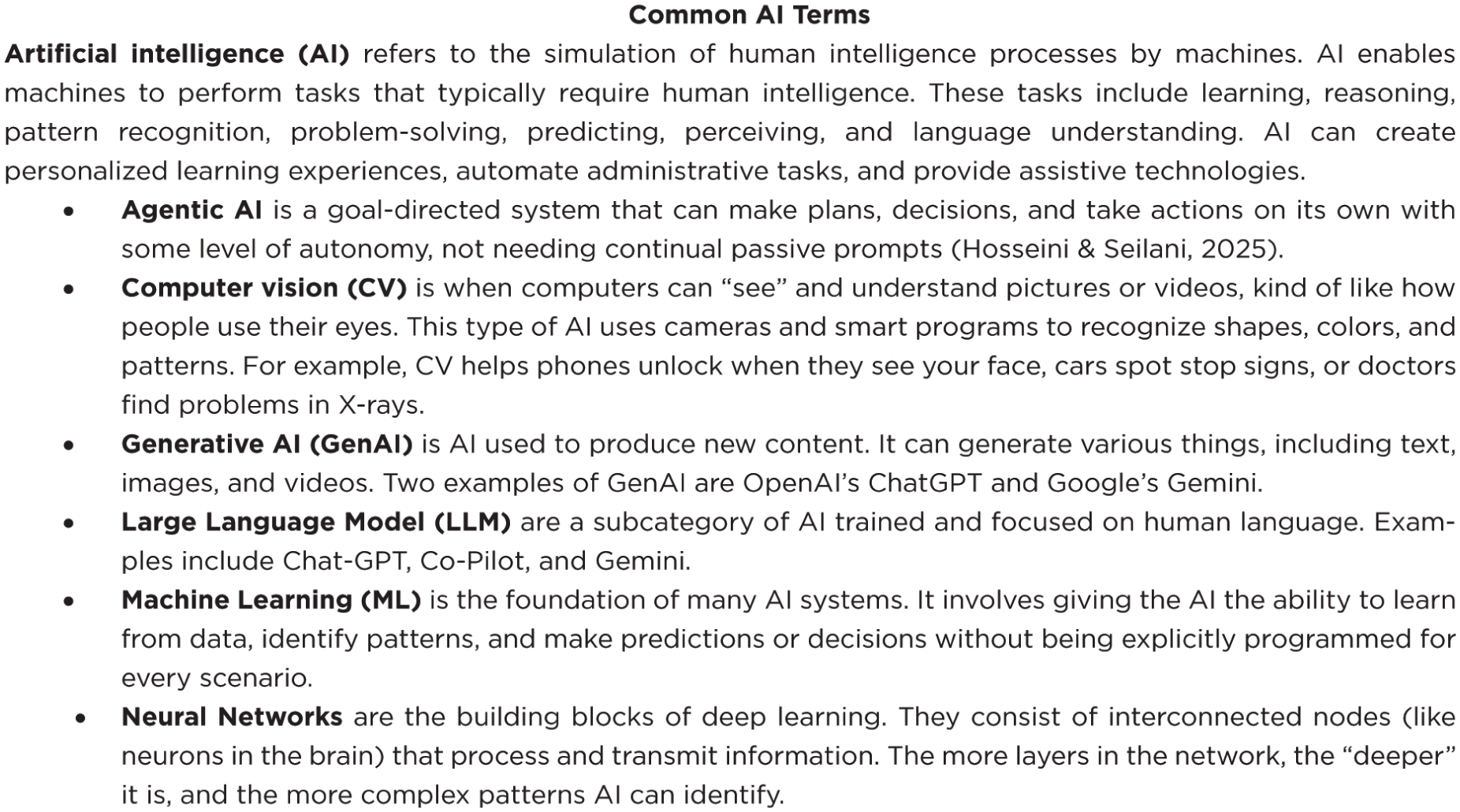
Common artificial intelligence (AI) terms
AI simulates human intelligence through algorithms, neural networks, and computational models that learn from data to make predictions or decisions without direct human input. The process includes data collection, preprocessing, model selection, training, and evaluation. During training, AI systems analyze massive data sets, often spanning the Internet, to identify relationships between inputs and outputs, refining parameters to reduce error. Educators must teach students to understand how AI generates information, emphasizing data literacy, algorithmic bias, and ethical use rather than accepting AI outputs as absolute truths.
Machine learning, deep learning, and neural networks enable AI to improve with experience. LLMs, such as ChatGPT, Claude, and Gemini, represent a deep learning subset trained on extensive language corpora, allowing them to recognize linguistic patterns and generate coherent, contextually relevant responses. These systems enhance productivity across professions. In education, teachers can use LLMs to create lesson plans, draft IEP goals, write emails, or adjust text complexity. AI can streamline educators’ workloads, provided its use remains responsible, professional, and secure.
Human-AI Collaboration Is Key
AI is having and will continue to have a significant impact on nearly all aspects of human existence, including K–12 education, postsecondary education, and the job market (Russell, 2019; Thomson et al., 2024). Given this technology’s widespread adoption, both educators and students need to become literate in using AI. Although discussing AI literacy in depth goes beyond the focus of this article, for educators, AI should be considered an assistant for enhancing teacher productivity, creativity, and the ability to support the students and families they serve. Within this process, educators need to use a model of human-AI collaboration to build on their strengths and use AI as a support tool to maximize professional practice while reducing their workload. Figure 2 provides an overview of key variables for teachers, like Mrs. Johnson, to consider in using human-AI collaboration in education.
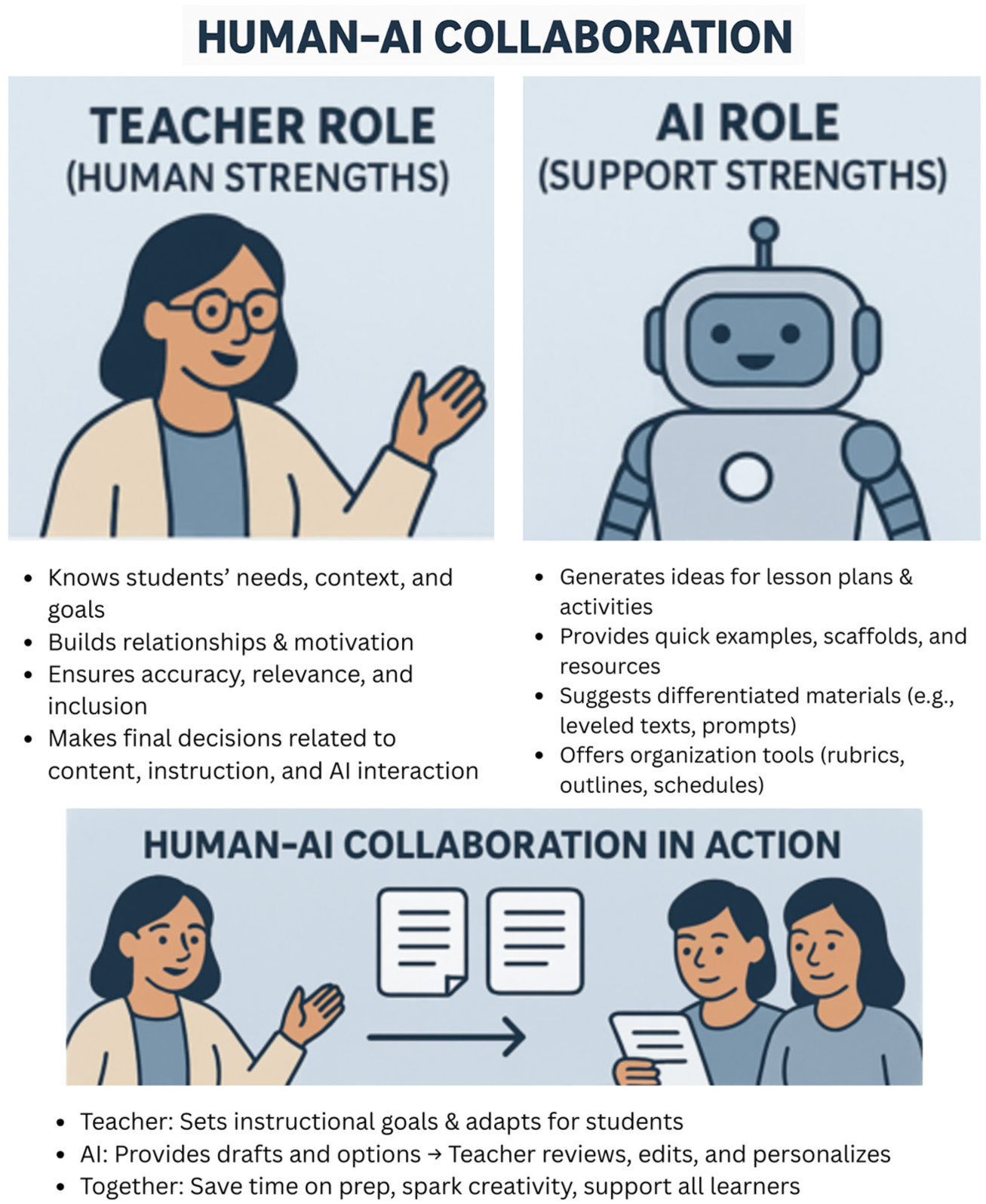
Artificial intelligence (AI)-generated overview of human-AI collaboration
First and maybe most importantly, educators should never enter personally identifiable information into publicly accessible AI systems. This guideline includes details about students, families, or colleagues, such as names, addresses, student IDs, health information, or educational records. Protecting student and family data privacy is not just best practice; it is a legal and ethical obligation. Federal laws, such as the Family Educational Rights and Privacy Act (FERPA; 1974) in the United States, and various state, provincial, and district-level policies strictly regulate how educational data can be collected, stored, and shared. Many AI tools, especially those available freely online, may retain or process input data in ways that conflict with these privacy standards. Educators must ensure they understand their local regulations and use only approved, secure AI platforms for any work involving sensitive information. When in doubt, anonymize the data or exclude it.
How Can AI Assist Students With Disabilities?
AI technologies provide benefits for students with disabilities by personalizing instruction and feedback in ways that address learner variability. Adaptive systems can generate leveled texts, scaffold comprehension, and translate content across languages, ensuring equitable access to curriculum materials (Marino et al., 2023). Immediate feedback helps students monitor their progress and correct misunderstandings in real time, which fosters self-regulation and supports executive function development. Narrative generation tools also allow students with expressive language challenges to communicate ideas more effectively, giving them alternative pathways to demonstrate knowledge.
Teachers can harness multimodal AI to transform traditional lessons into dynamic, personalized learning experiences that adapt to each student’s needs. The following example illustrates how Mrs. Johnson integrates multimodal AI tools to help her fourth-grade students learn fractions while building digital literacy, self-regulation, and independence. Multimodal AI applications extend these benefits by enabling students with disabilities to manipulate images, solve word problems with guided support, and follow step-by-step directions that deconstruct complex tasks into manageable actions. A multimodal AI application is a system that can process, integrate, and respond to multiple forms of input, such as text, speech, images, video, and sensor data, within a single environment. Unlike traditional AI models, which are limited to one modality (e.g., only analyzing text or only interpreting images), multimodal AI synthesizes information across different input types to generate more accurate, context-rich, and humanlike responses. For example, a multimodal AI might interpret a student’s spoken question, analyze an accompanying diagram, and then provide both a written explanation and an audio response. This integration mirrors how humans learn and communicate through diverse channels, making multimodal AI especially powerful for personalized instruction and accessibility in education. Podcast and video creation using platforms like Google NotebookLM offer students the ability to summarize text documents, PowerPoint presentations, websites, and other resources in a custom notebook. These features enhance accessibility, foster engagement, and promote independence, enabling students with disabilities to participate fully in inclusive learning environments. Let’s examine what this might mean for Mrs. Johnson.
Mrs. Johnson is teaching a unit on fractions in her inclusive fourth-grade classroom. Students are seated at round tables in groups of four. She starts the unit with a pretest using the district-adopted learning management system (LMS). The pretest assesses conceptual understanding of basic concepts, such as partitioning, iterating, coordinating, reverse partitioning, and splitting. While the students are taking the pretest, she uploads several PDF documents that are two to four pages long, each containing examples and nonexamples of the concepts on the pretest. Next, she provides students with a 10-minute overview of fractions. Mrs. Johnson demonstrates how students can use their district-provided laptops to record the short presentation and convert it into a text file. She then shows how to upload it to her LMS classroom and generate a summary in the form of notes.
Next, Mrs. Johnson uploads the PowerPoint Slides she presented during her presentation, which contain graphics demonstrating the concepts she discussed. She then shows how students can create a prompt to integrate the notes and PowerPoint graphics into an enhanced note, which she saves in her file. Each student in the class has their own folder. Mrs. Johnson then asks each student in the class to upload their version of the text-converted lecture and generate a summary to keep in their folders. She asks them to label the file “Day 1 lecture.” Mrs. Johnson then prompts them to use AI to create their own set of notes using their own prompt. Finally, the small groups of students are to compare their prompts and AI output for similarities and differences.
This essential first step teaches students the skills necessary to upload documents, organize instruction, and use the AI independently. Once these foundational skills are taught and assessed, she can spend her time circulating among the groups while they use the AI to enhance her instruction. For example, if she presented the concept of partitioning and the students did not understand it, the AI can generate multiple examples and explanations consistent with the materials she prepopulated in her classroom space. Teaching students this technique on a safe, secure school platform provides a 24/7 AI tutor for the students that never gets tired of answering questions or generating alternate explanations. Using the AI tutor means the teacher can spend equivalent time with every student rather than having one student dominate the teacher’s attention. The key is teaching the students how to use the AI tutor and the multimodal way of adapting their learning effectively and independently.
Framework for Considering AI
Having a consistent series of factors for AI implementation in education and special education is helpful to provide structure, accountability, and fairness in the adoption of rapidly evolving technologies. Without considering the underlying variables, schools risk inconsistent integration of AI tools, which may exacerbate existing disparities for students with disabilities. Clearly defined variables ensure alignment with IEP goals, compliance with legal mandates such as the Individuals with Disabilities Education Act (2004) and FERPA, and adherence to Universal Design principles that promote accessibility and inclusion (Marino et al., 2023). Table 1 provides a toolkit for evaluating AI for educational purposes. This toolkit helps administrators and teachers identify critical variables such as goal setting, data privacy, staff training, and evaluation of student outcomes, allowing AI to serve as a genuine support for learning rather than a novelty or distraction. By institutionalizing a reflective understanding of AI, special education programs can harness AI to enhance individualized instruction, streamline administrative tasks, and foster student independence while simultaneously safeguarding ethical standards and long-term sustainability (Sallay, 2024). The CIDDL website has a more in-depth and continually updated toolkit for supporting AI classroom decision-making.
Toolkit for Evaluating Artificial Intelligence (AI) for Educational Purposes (Abbreviated Version)
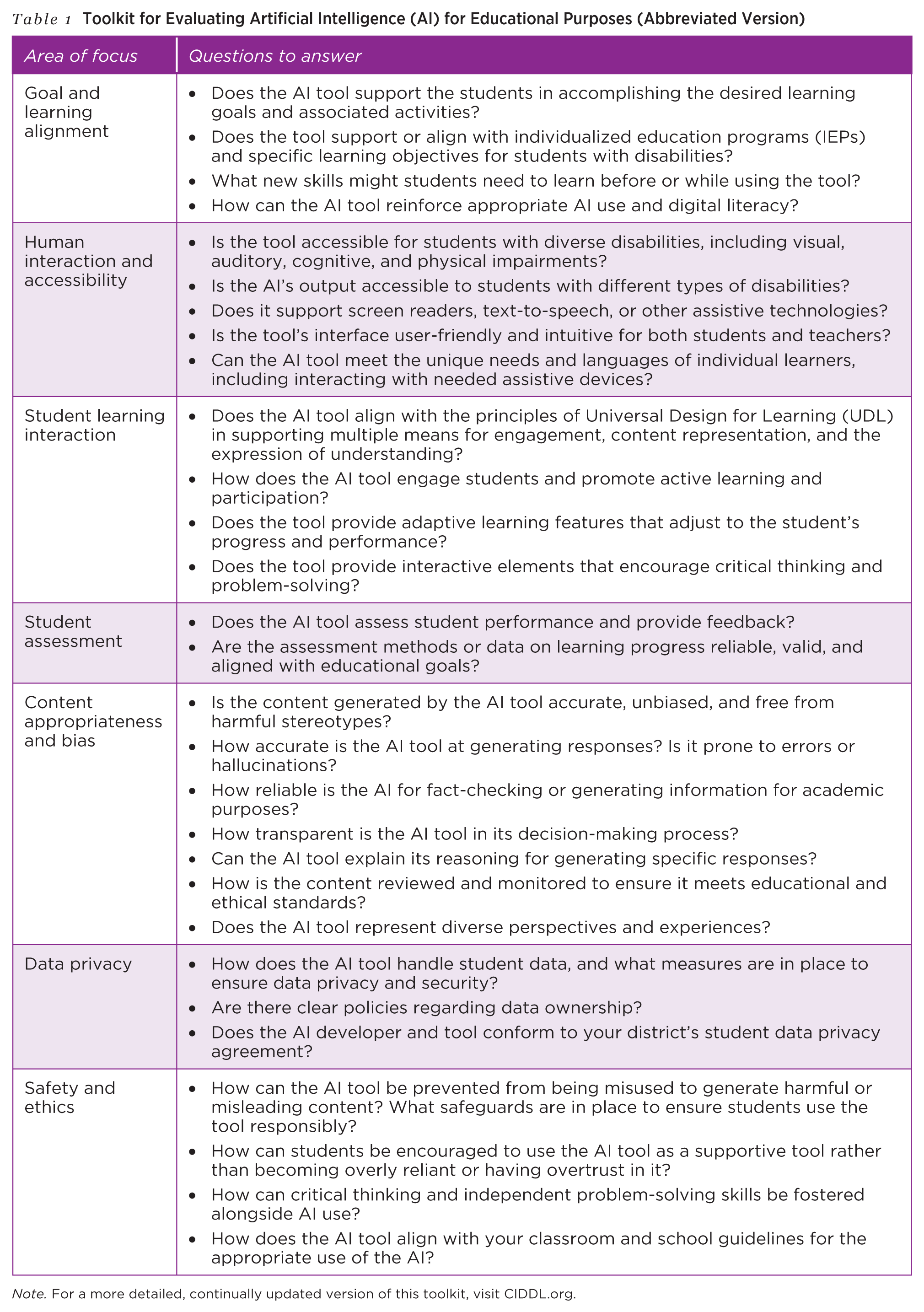
Note. For a more detailed, continually updated version of this toolkit, visit CIDDL.org.
Effective AI integration in schools requires planning, teacher readiness, and measurable outcomes. The Framework for Responsible AI Integration in PreK–20 Education (Basham et al., 2025) guides district-wide and classroom-level implementation. Teachers begin by identifying instructional needs and establishing goals.
In an inclusive secondary science class, Mr. Chichester aligns his objectives with the Next Generation Science Standards (Next Generation Science Standards Lead States, 2013), emphasizing questioning, data analysis, modeling, and argumentation. Students work in groups to address community-based problems related to ecological microsystems and mesosystems. Microsystems involve direct environments, such as home or school, and mesosystems describe interactions between them. One team might study how limited access to parks (microsystem) affects health and engagement and how collaboration between families and park departments (mesosystem) could mitigate the issue. Other teams investigate recycling practices or family support for STEM programs.
Mr. Chichester selects AI tools using criteria such as alignment with standards, educator feedback, and professional support (Crompton et al., 2024). After training through workshops and self-study ( Basham et al., 2025; Okada et al., 2024), he integrates Microsoft Co-Pilot for guided research, requiring students to locate at least three peer-reviewed sources and analyze them in Google NotebookLM. Students use AI to synthesize findings, develop models, and construct evidence-based arguments proposing feasible community solutions.
Formative assessments aligned with the Next Generation Science Standards measure inquiry, collaboration, and scientific reasoning. Small-scale pilots help teachers refine implementation through usability and feasibility data (Basham et al., 2025). Feedback from stakeholders informs iterative updates before scaling integration across classrooms, following validated learning cycles (Ries, 2011).
Addressing ethical and equity considerations in the AI integration framework is the final step. Mrs. Johnson and Mr. Chichester should work with their teams to implement robust data privacy and security measures that protect student information and comply with relevant regulations (CIDDL, 2024). Promoting access is critical and involves developing strategies to provide necessary AI tools, skills, and literacy for all students (CIDDL, 2024). Engaging with stakeholders, including parents, school administrators, and the broader community, fosters a supportive environment related to AI integration (CIDDL, 2024; Roumate, 2023). By following these steps, Mrs. Johnson and Mr. Chichester can create a comprehensive framework for integrating AI into their classrooms, enhancing educational outcomes while ensuring ethical and equitable practices.
An Administrative Perspective
Special education administrators must evaluate AI integration through the dual lenses of instructional benefit and systemic accountability. For students with specific learning disabilities, AI can provide real-time, scaffolded feedback on reading and writing tasks, supporting IEP goals. For example, an AI-powered text-to-speech system combined with adaptive spelling correction can help a student with dyslexia access grade-level texts (Marino et al., 2023). Administrators must ensure such tools align with legal mandates under IDEA, that staff receive training in prompt design and monitoring, and that outputs remain compliant with data protection standards, such as FERPA (Sallay, 2024). These responsibilities include adjusting service delivery models and revising professional development frameworks to accommodate shifts in instructional time allocation.
For students with autism, administrators recognize AI’s potential to strengthen social communication, executive functioning, and self-regulation. AI-enabled virtual coaching platforms can model conversational norms or guide students through multistep routines, providing structured practice in low-risk environments (Ali et al., 2018). For instance, a middle school student might practice reciprocal turn-taking with an AI chatbot before attempting the skill in natural peer interactions. Administrators need to weigh the promise of these innovations against concerns about generalization to authentic settings, fidelity of staff implementation, and sustainability of subscriptions or licenses (Griffen et al., 2024)
Budget forecasting and reliance on evidence-based adoption reviews are critical administrative functions when considering AI integration. Administrators need to anticipate both short-term and long-term costs associated with licenses, software updates, hardware maintenance, and technical support. Equally important, they must avoid adopting tools solely because of market hype by insisting on rigorous, peer-reviewed evidence of effectiveness in comparable educational contexts (CIDDL, 2024). For example, before investing in an AI-driven assessment platform, administrators should examine published validation studies, evaluate the tool’s capacity to align with IEP goals, and calculate return on investment over multiple years. This dual focus on financial sustainability and evidence-based decision-making ensures AI adoption enhances student outcomes without straining limited district resources.
Students with visual impairments highlight another domain where AI can expand access. Screen readers enhanced by AI, computer vision applications, and generative image descriptions allow students to engage with instructional content that would otherwise remain inaccessible. A high school student might upload a complex biology diagram into an AI platform that produces detailed audio narration and tactile graphic prompts, thereby supporting comprehension (See & Advincula, 2021). Administrators must ensure equitable device distribution, provide professional development to enable teachers to effectively integrate these tools into instruction, and collaborate with specialists, such as orientation and mobility trainers. Vendor contracts and ongoing monitoring remain vital to safeguard against updates that inadvertently reduce accessibility (CIDDL, 2024).
Administrators also bear responsibility for building trust with families and staff (Basham et al., 2025). Parents often express concern that AI will displace human interaction or expose sensitive student data. Transparent communication about data safeguards, explicit consent procedures, and family engagement sessions can mitigate skepticism (CIDDL, 2024). Hosting parent workshops where families experience AI tools firsthand fosters greater understanding and demonstrates the continued primacy of teachers in instructional decision-making. By framing AI as an assistive partner rather than a substitute for human educators, administrators can reinforce community confidence in both the technology and the institution.
Finally, administrators should embed AI integration into districtwide strategic planning. This process includes aligning AI initiatives with IDEA (2004) compliance, district technology goals, and state accountability metrics. Iterative evaluation protocols should incorporate student performance data, teacher feedback, and longitudinal monitoring of IEP goal progress (Marino & Vasquez, 2024; Basham et al., 2025). For example, annual reviews could compare reading fluency gains among students with learning disabilities using AI-assisted interventions against peers supported only with traditional tools. Embedding these evaluative practices institutionalizes responsible AI integration and ensures innovations advance equity, accessibility, and improved outcomes for students with disabilities (Dumitru et al., 2026).
Conclusion
Integrating AI into educational settings, such as Mrs. Johnson’s classroom, presents a promising avenue for enhancing teaching and learning. Understanding the foundational aspects of AI, its definition, common terms, and basic functionality is crucial for effective implementation. AI’s ability to simulate human intelligence through machine learning, neural networks, and advanced data processing can enable personalized learning experiences and efficient classroom management.
Building on this foundational knowledge, a structured framework is essential for successfully integrating AI into the classroom. This framework begins with a thorough needs assessment and goal-setting process, followed by researching and selecting appropriate AI tools that align with educational objectives. Professional development and training for educators are crucial to ensure they can effectively utilize these tools. A pilot-testing phase allows for monitoring the AI’s impact and collecting feedback to refine the integration process. Addressing ethical and equity considerations for all learners, such as data privacy and access to technology, is paramount to ensure a fair and secure implementation. Engaging with stakeholders, including parents, school administrators, and the broader community, fosters a supportive environment for integrating AI.
By combining a solid understanding of AI’s basics with a comprehensive framework for integration, educators like Mrs. Johnson can effectively implement AI tools in their classrooms. This approach ensures that AI enhances personalized learning, improves assessment methods, and increases student engagement while addressing potential challenges and ethical concerns. As AI continues to evolve, its thoughtful integration into education holds the potential to transform traditional teaching methods, fostering a more interactive and personalized educational experience for all learners.
Footnotes
Declaration Of Conflicting Interests
The authors declared no potential conflicts of interest with respect to the research, authorship, and/or publication of this article.
Funding
The authors disclosed receipt of the following financial support for the research, authorship, and/or publication of this article: The contents of this publication were developed under a grant from the U.S. Department of Education #H327F20008. However, contents do not necessarily represent the policy of the U.S. Department of Education, and you should not assume endorsement by the Federal Government. Project Officer, Christina Diamond, Ph.D.
