







Abstract
This study has identified the quantitative relationship between the level of hydrophobicity and the surface roughness, represented f1, of superhydrophobic nylon fabrics treated with ZnO nanorods and n-dodecyltrimethoxysilane. With this objective, ZnO nanorods were uniformly grown to give varied particle dimensions on nylon fabrics by a hydrothermal process at a range of solution concentrations. ZnO nanorods, having a unique rod-like hexagonal section structure, were assessed in terms of their dimensions and density to estimate the solid area fraction, f1, in the Cassie–Baxter model. While the static contact angle did not discriminate between the hydrophobicity of superhydrophobic surfaces, the sliding angle and shedding angle were able to achieve this. The estimated value of f1 was quantitatively associated with hydrophobicity. The assumption that there was no penetration of into the gaps between nanorods (zero h′) appeared to be valid for superhydrophobic surfaces, and this was confirmed by the strong correlation between the increased sliding and shedding angles and the increase in f1.
There has been a great deal of recent interest in mimicking biological systems as model surfaces. The development of superhydrophobic textiles inspired by the lotus leaf surface has been a popular subject for both researchers and the developers of commercial products, with applications such as self-cleaning textiles, protective clothing and outdoor wear.1,2 Despite increasing recent attention, research on water repellency dates back as far as 1940s, and the theoretical expression of the wettability of a flat surface originates from Young’s equation:
3

From Young’s equation,
3
the size of θ is determined when thermodynamic equilibrium in the free energy at the solid–liquid–vapor interphase is achieved, and the model applies only to flat surfaces. Subsequently, the influence of surface geometry on wetting was characterized by Wenzel
4
and Cassie and Baxter.
5
In Wenzel’s model the equation incorporated surface roughness to explain the wetting behavior of the surface, with geometry such as

Cassie and Baxter later modified the Wenzel model to account for porous surfaces where the portion of liquid drop is in contact with air, as in

In the Cassie–Baxter model, the contact angle θc was related to the surface roughness, represented in f1 and f2, as is well as by the schematic illustration of f1 in Milne and Amirfazli’s study. 6 It was pointed out that f1 in the Cassie–Baxter model becomes identical to the roughness factor in Wenzel’s model, r, as the liquid penetrates into the gaps between the geometrical structures that create surface roughness. More specifically, Cassie and Baxter 5 suggested in their original work that when the surface has f2 = zero, their model (Equation (3)) reduces to Wenzel’s model (Equation (2)).
Following Cassie and Baxter’s theoretical discussions on the effect of surface geometry on wetting, a number of experimental studies followed, to identify the relationship between hydrophobicity and surface structure and to develop surfaces with the desired hydrophobicity. These studies adopted a variety of methods to render rough surfaces, such as nano-patterning through dicing, 7 lithography,8–10 coating with nano-materials,11,12 or a combination of these methods, 13 and evaluated the hydrophobicity of defined surfaces.
In Yoshimoto and co-workers’ study in which pillar-like and groove structures on a Si wafer were fabricated by dicing, it was not only the solid area fraction but also the design of the microstructure that played a key role in forming sliding angles. 7 Martines et al. 8 and Zhao et al. 9 investigated static and dynamic contact angles as a function of the solid area fraction (f1) in order to verify that the Cassie–Baxter and the Wenzel models were appropriate for explaining the wetting behavior of their model topography. Han and Gao 11 and Sakai et al. 12 grew hexagonal ZnO nanorods on the surface of a Si wafer, and found that the surface hydrophobicity depended upon the length, density and diameter of the ZnO nanorods. 12 In particular, Sakai et al. utilized the concept of f1 to explain not only the static contact angles but also the sliding acceleration and the fluid resistance of a water droplet. 12 Kim et al. developed the micro–nano binary roughness structure on a Si wafer using a traditional wet etching process followed by ZnO nanorods grown on top. 13 When the binary roughness in dual scales was present on the surface, the superhydrophobic characteristics were enhanced, and in this case the morphology of the ZnO nanorods was found to play a critical role in the level of hydrophobicity. Other research groups used the mathematical modeling approach to optimize the surface structure to make it superhydrophobic,6,14 and it was highlighted that the important parameters in designing a superhydrophobic surface included the spacing between rough structures, the geometrical shape of structures, and penetration of liquid into gaps between the roughness of the structure.
Despite efforts to model superhydrophobic surface geometry, verification of such models on superhydrophobic textile surfaces has not yet been fully conducted, possibly due to the fact that the construction of a controlled structure on a textile surface is notoriously difficult. The wetting of a textile is affected by a large number of factors, including weave geometry,15,16 yarn structure, 16 surface energy,15–17 nanomaterial coating,18–20 etc.
There have been a number of studies associating the wetting behavior of textile fabrics with surface geometry. Michielsen and Lee modeled the woven fabric geometry to apply the Cassie–Baxter model to fabrics, 15 and Shim et al. used the models developed to predict the hydrophobicity of the woven fabrics. 16 However, the limitation of these studies was that f1 was calculated only by considering fabric weave geometry. In a separate study by Lee and Michielsen, 17 a micro-scale structure of short nylon-6,6 fibers was introduced on to a polyester fabric surface using a flocking process, and these authors then quantitatively elaborated the wetting behavior of the developed surface based on both the Wenzel and the Cassie–Baxter models, but their work considered only the micro-level of roughness.
The fabrication of superhydrophobic textile surfaces has since evolved to the level of nano-structure.18–20 Most of these studies have focused on the relationship between process parameters and hydrophobicity, and yet the influence of nano-scale roughness on the wetting of fabrics has been neither thoroughly verified or quantified.
The objective of the present study was therefore to identify the quantitative relationship between the level of hydrophobicity and the surface roughness created by ZnO nanorods grown on fabrics. To this end, ZnO nanorods were grown on nylon fabrics by a hydrothermal process at a range of growth solution concentrations able to produce nanoparticles in a variety of dimensions and densities. The ZnO nanorods, which had a hexagonal section, were analyzed in terms of width, height, and density to estimate f1. Measurement methods able to differentiate between the degree of superhydrophobicity of surfaces were used for measurement of static contact angle, sliding angle, and shedding angle. Finally, the estimated value of f1 was quantitatively associated with the level of hydrophobicity measured by sliding and shedding angle.
Materials and methods
Films and woven fabrics of 100% nylon 6 were purchased from Hangyo IC (Korea) and Young Poong Filltex Co Ltd (Korea), respectively. The nylon fabrics were in plain weave (consisting of 23.3 tex filament yarns), and their weight and thickness were 106.54 g/m2 and 0.176 mm, respectively. Chemicals, including zinc acetate dihydrate (>99.5%), triethylamine (>99.0%), sodium hydroxide (>96.0%), citric acid (>99.5%), isopropyl alcohol (>99.5%), zinc nitrate hexahydrate (>98.0%), hexamethylenetetramine (>98.5%), and ethanol (>99.9%) were purchased from Daejung Chemicals (Korea), and n-dodecyltrimethoxysilane (>93.0%) from Sejin CI (Korea). Triton® X–100 was purchased from Yakuri Pure Chemicals Ltd (Japan).
Scouring of fabrics
A scouring solution was prepared by dissolving 5.0 g NaOH, 1.5 g Triton X–100 and 0.75 g citric acid in 500 ml deionized water. 21 Nylon fabrics were cut into squares (2 cm × 5 cm) and scoured in a beaker at 100℃ for 1 h. The squares were then rinsed thoroughly in deionized water and dried in air.
Coating of ZnO seeds on fabrics
ZnO treatment was conducted using the method of Athauda et al. 21 The ZnO seeds coated on the surface of the fabrics provide the nucleation positions, in which this step requires a considerable amount of energy. After the excess nucleation points have been formed, ZnO nanorods exhibit a tendency to grow from the seeds along the (001) plane. 24 A 100 mM solution of zinc acetate dihydrate was prepared by dissolving 1.10 g (5.0 mmol) in 50.0 ml of isopropanol. The resulting solution was stirred vigorously at 85℃ for 15 min and 700 ml of triethylamine (5.0 mmol) added dropwise. The resulting solution, now clear, was stirred at 85℃ for a further 10 min. The solution was cooled to room temperature and incubated without stirring for 3 h. Similarly, 125 mM, 75 mM, and 50 mM seed solutions were prepared by varying the amount of zinc acetate dihydrate (1.37 g, 0.83 g, and 0.55 g, respectively) and triethylamine (875 ml, 525 ml, and 350 ml, respectively).
The scoured nylon fabrics were first dip-coated with a ZnO seeding solution for 8 min, rinsed with ethanol, then cured at 120℃ for 1 h in an oven, and finally conditioned in air for 12 h at room temperature.
Growth of ZnO nanorods
Equimolar aqueous solutions of zinc nitrate hexahydrate and hexamethylenetetramine were employed to grow ZnO nanorods on nylon fabrics. Firstly, a 100 mM solution of hexamethylenetetramine was prepared by dissolving 7.71 g (0.05 mol) in 550 ml deionized water, 16.4 g of zinc nitrate hexahydrate (0.05 mol) added, and the resulting solution stirred 24 h at room temperature. Solutions of 75.0 mM, 50.0 mM, and 25 mM of the ZnO growth solution were also prepared by diluting 100 mM solution, allowing control of the morphology of the ZnO nanorods. To ensure uniform deposition of ZnO nanorods on the nylon surfaces, the specimens were immobilized on a glass slide using a 3M tape. The immobilized specimens were then suspended vertically in 100 ml growth solution and incubated in an oven at 95℃ for 8 h. The container was removed from the oven, and further incubated at room temperature for 12 h. Finally, the specimens were removed from the growth solution, thoroughly rinsed with deionized water, and allowed to air dry at room temperature.
Hydrophobization
Hydrophobization was carried out according to the protocol of Ashiraf et al. 19 Nylon fabric treated with nanorods was hydrophobized using n-dodecyltrimethoxysilane (DTMS). 200 ml DTMS was placed in a ceramic dish at the bottom of a Teflon container in which four nanorod-treated nylon samples were held vertically, and the container was placed in a vacuum oven at 150℃ for 3 h for vaporization of the DTMS and subsequent vapor-coating on the fabrics.
Characterization
The surface characteristics of the ZnO nanorods grown on nylon fabrics were observed by field-emission scanning electron microscopy (FE–SEM; JSM–7600 F, JEOL, Germany). The width, length, and density of the ZnO nanorods were measured by analysis of the FE–SEM images with the help of the image-processing program, Image J (Image J 1.47v, National Institute of Health, USA). For analysis of the geometry of the ZnO nanorods, at least ten measurements were made for different nanorods. For measuring the rod density on the fabric, five FE–SEM images were analyzed and the crystal structure of the ZnO nanorods determined by X-ray diffraction (XRD) using the General Area Detection Diffraction System (GADDS; Bruker, Germany). The surface chemical composition was confirmed by energy dispersive X-ray analysis (EDX, Aztec, Oxford Instruments, UK).
To investigate the superhydrophobicity of the fabrics, static contact angles, sliding angles, and shedding angles were measured using a contact angle meter (Theta Lite Optical Tensiometer, KSV Instruments, Finland) at room temperature. A fabric specimen was attached to a glass slide using 3M tape, and a 3 µl drop of deionized water was placed at five different locations of the surface under investigation. The contact angle for a water droplet was recorded 1 sec after dropping.
To determine the sliding angle and shedding angle, specimens were attached to a glass slide with 3M tape and placed on a custom built tilting table. Detailed settings were adjusted as suggested by Zimmerman et al. 22 A syringe needle containing water was mounted 1 cm above the specimen. A 13 μL water droplet was placed on the specimen surface and the surface was then inclined or reduced by 1°. Sliding angle measurements were executed as following. The water droplet was placed on a level specimen surface and then inclined, and the exact angle at which the water droplet slid 2 cm down from the placement point was measured. Shedding angle measurements were conducted by applying a water droplet to a specimen surface that was already inclined, and the smallest angle at which the water droplet slid 2 cm down from the placement point was measured. Each process was repeated five times and the average recorded.
Results and discussion
Surface characteristics of specimens
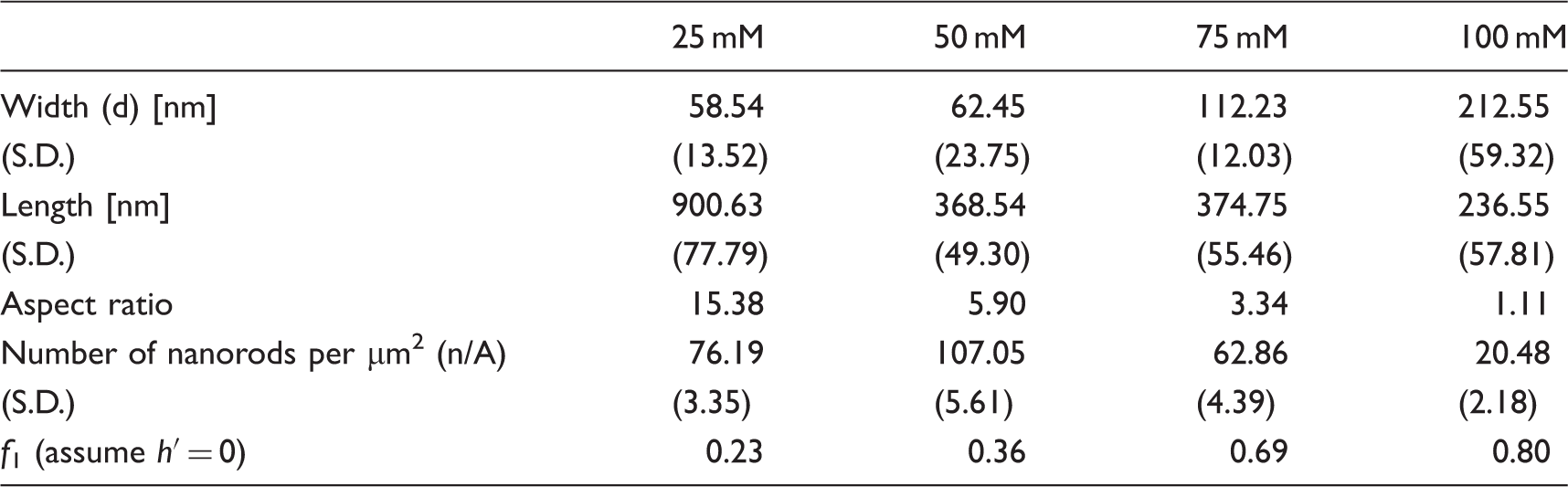
The concentration of the seed solution [S] was determined from a preliminary experiment to be 100 mM, since among the tested [S] of 50, 75, 100, and 125 mM, this concentration generated the most uniform and distinctive structures on nylon fabric. With [S] fixed at 100 mM, the concentration of the growth solution [G] was varied to develop different geometric nanostructures on the fabric surface, where an increased value of [G] produced thicker and shorter ZnO nanorods. This tendency can be established from the reaction equilibrium mechanism.23,24 As [G] increases, the reaction equilibrium moves in a direction favoring the formation of ZnO nanorods, in which the overall process is endothermic. During the growth of ZnO nanorods, longitudinal growth releases a larger amount of heat than lateral growth due to the unique crystal bonding structure of wurzite ZnO crystals. Thus, with increasing [G] longitudinal growth is hindered, and thicker and shorter nanorods are favored. SEM images of examples are illustrated in Figure 1, with the geometric dimensions summarized in Table 1.
Surface structure of nylon fabric treated with ZnO or DTMS: (a) DTMS alone, (b) seed solution alone, (c) ZnO nanorods at [G] = 25 mM, (d) ZnO nanorods at [G] = 50 mM, (e) ZnO nanorods at [G] = 75 mM, (f) ZnO nanorods at [G] = 100 mM. Geometric characteristics of ZnO nanorods and f1 calculated by Equation (4)
Although the durability of surface treatment was not assessed experimentally during the present study, Athauda et al. 20 have reported that ZnO nanorod-grown fabrics retained a high degree of durability after washing at 90℃ for 1 h with a commercial laundry detergent. The ZnO nanorod growth process adopted in the present study was similar to that employed by Athauda et al. 20 and is illustrated in Figure 1.
The XRD patterns confirmed that wurzite ZnO nanorods in a hexagonal structure had grown well on the surface of the nylon fabric (Figure 2), and the characteristic peaks of wurzite ZnO nanorod crystal peaks appeared at 2θ values of 31.9° (100), 34.6° (002), and 36.5° (101).
21
These sharp peaks confirmed the well-defined crystallinity of ZnO nanorods grown on a fabric surface. The strongest peak at (101) is thought to arise from the roughness of the fabric surface.
25
As ZnO nanorods were treated on the fabric, peaks at (100), (002) and (101) became apparent. Since only a very small amount of the ZnO seed was coated, no discernible change from the seed specimen was observed by XRD measurements.
XRD patterns of the ZnO nanorods on the nylon fabric.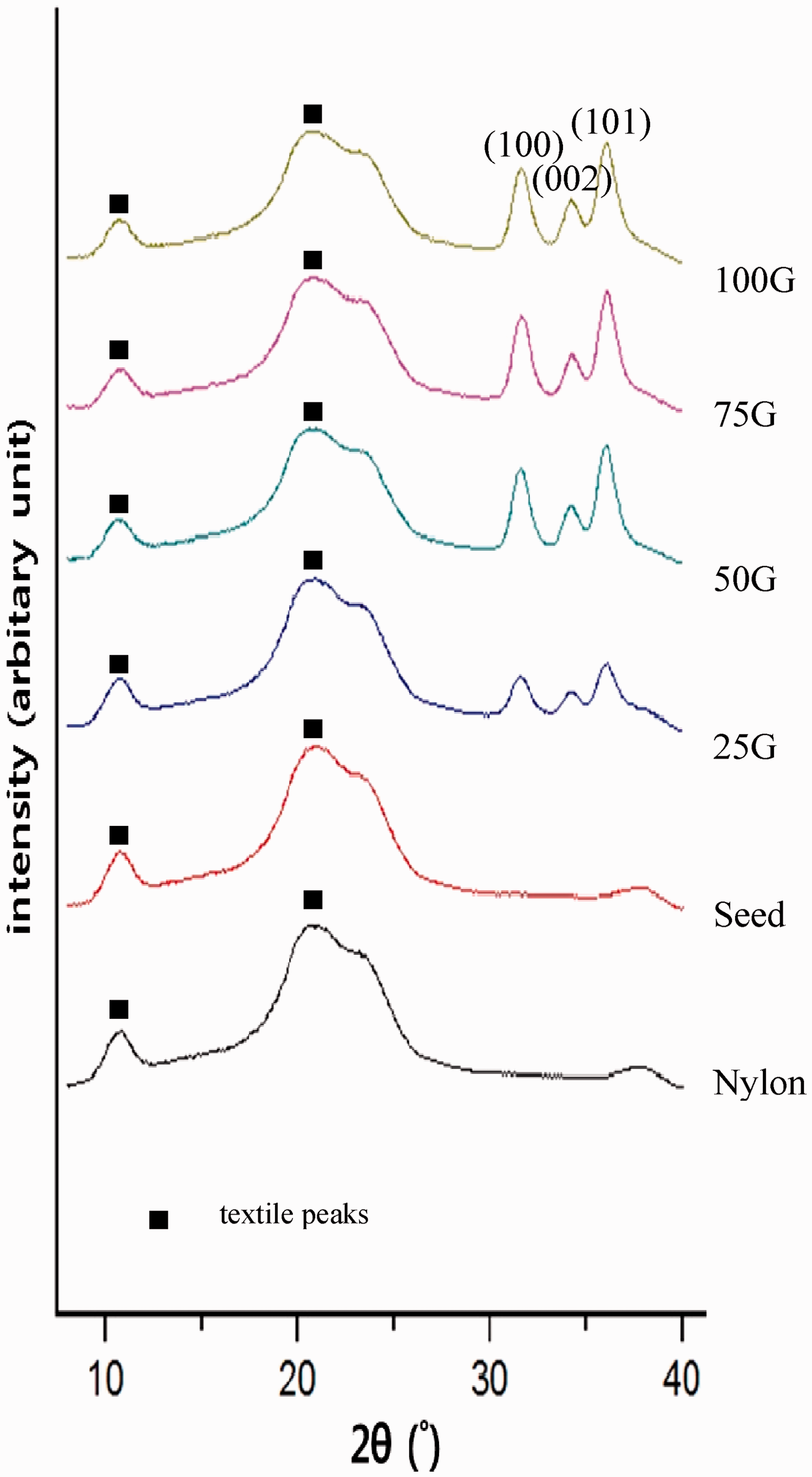
The analysis of chemical composition of the fabric surface by EDX (Figure 3) confirmed that a ZnO seed had been successfully coated on the nylon fabric surface, and after the growth of ZnO nanorods the Zn composition increased considerably. After DTMS deposition, Si peaks appeared, confirming the deposition of DTMS molecules on the specimens.
EDX analysis of the treated fabrics.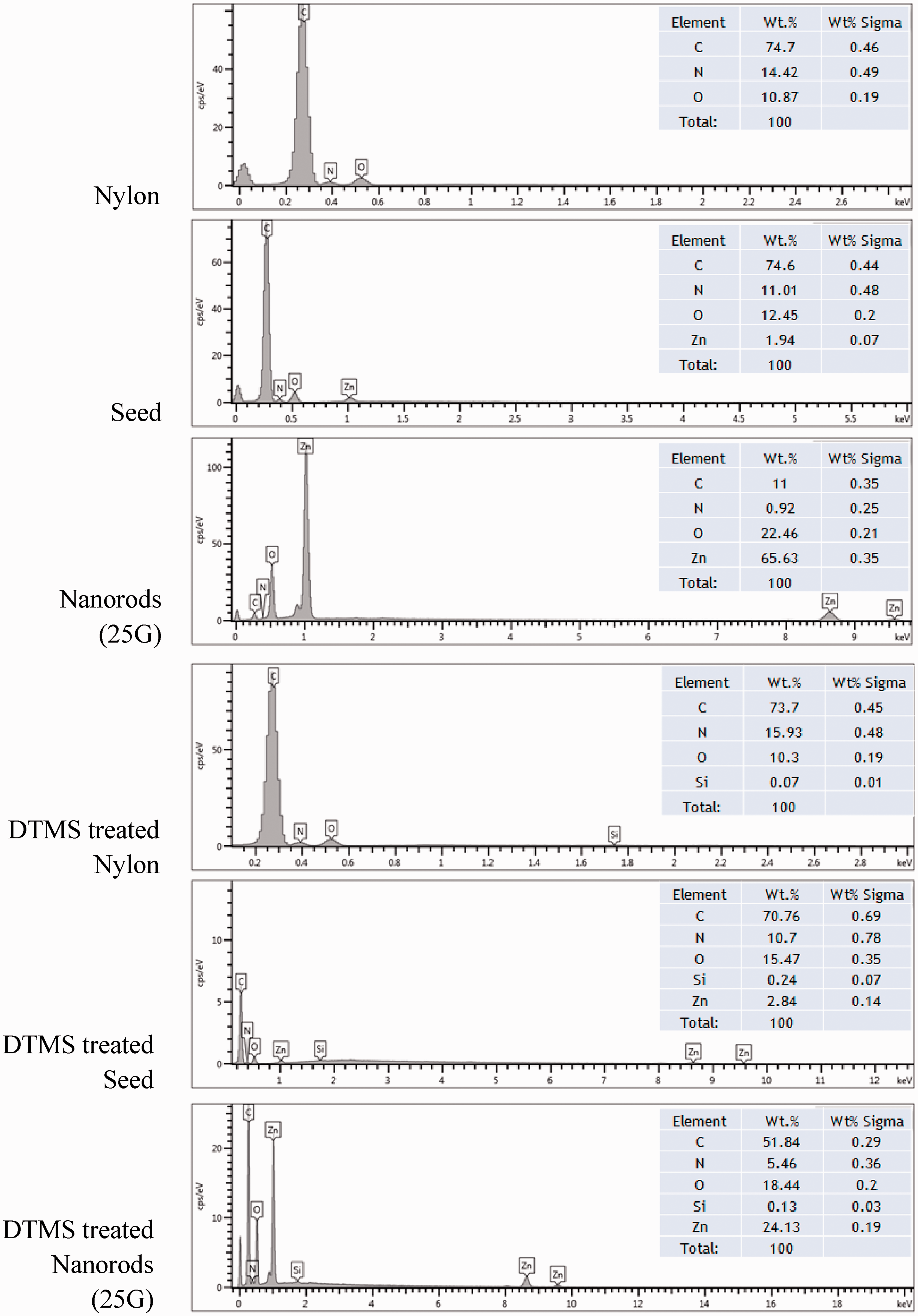
Solid area fraction (f 1 ) calculation
Han and Gao 11 had previously developed the modified solid area fraction calculation model from that of Cassie and Baxter, incorporating the concept of partial penetration of liquid into the gaps between nanorods. In this model f1 was calculated assuming that the ZnO nanorods contained a square top of width d.
In our study, the calculation of f1 was further modified from that in Han and Gao’s study by the assumption of a hexagonal top area for ZnO rods, Schematic illustration of ZnO nanorod-grown fabrics in contact with water: (a) woven fabric with micro- and nano-scale roughness; (b) flat surface with nanorods, (c) Surface in step height with nanorods. Measurement of width (left), length (center), and the number of nanorods (right).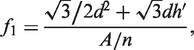
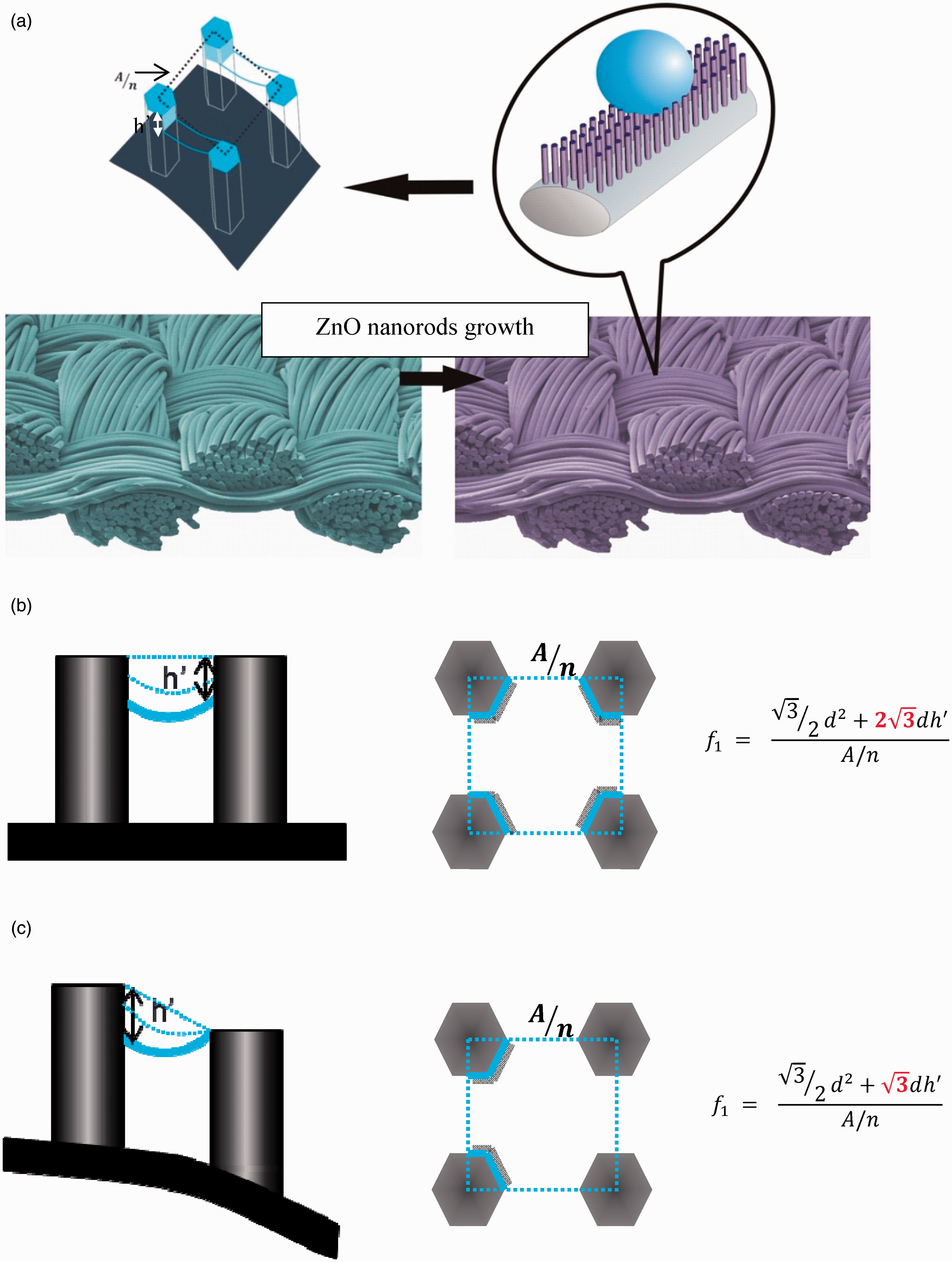
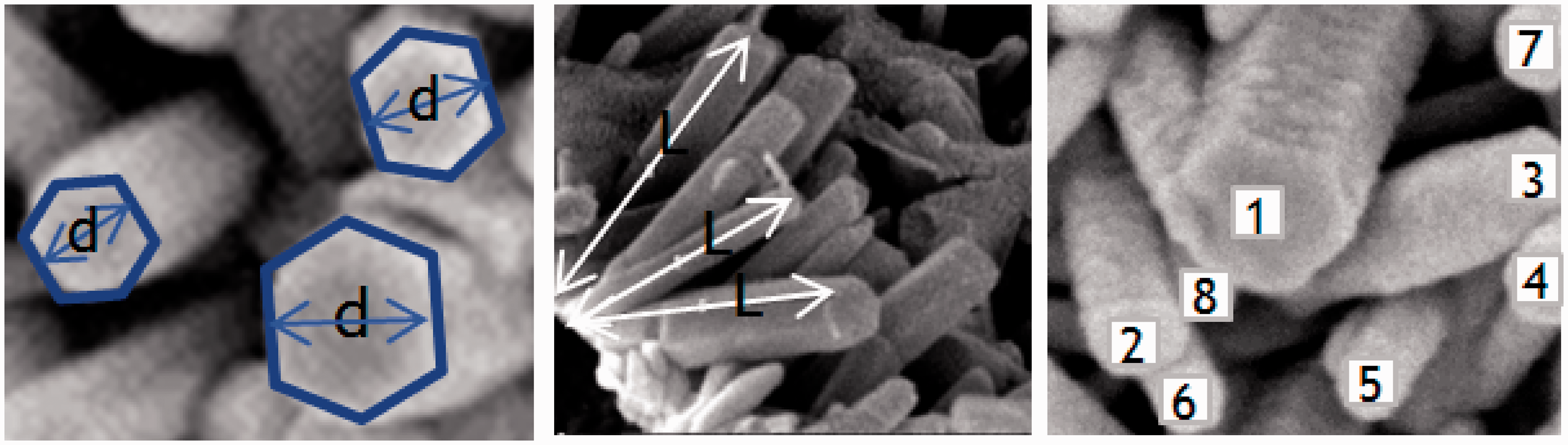
In our model the ZnO nanorods were presumed to have grown evenly on the substrate, and that all the nanorods had similar physical characteristics, namely a flat top, and regular hexagonal-sectioned rods of length l and width d. The width (d) and length (l) of the ZnO nanorods were measured by Image J program from SEM images at ×100,000 magnification, based on at least ten different nanorod images. The number of nanorods (n) was counted over an area of 1.05 µm2 (A) in the SEM image, and five SEM images were averaged. Table 1 presents the results of the SEM image analysis.
Superhydrophobicity of ZnO nanorod-grown fabrics
The static contact angle (SCA) measurements of the specimens are summarized in Figure 6. Untreated nylon film exhibited a SCA of 84.2 ± 3.5°. After DTMS had been deposited the surface became more hydrophobic, the SCA rising to 103.9 ± 0.9°.
Static contact angle measurement, with and without DTMS treatment.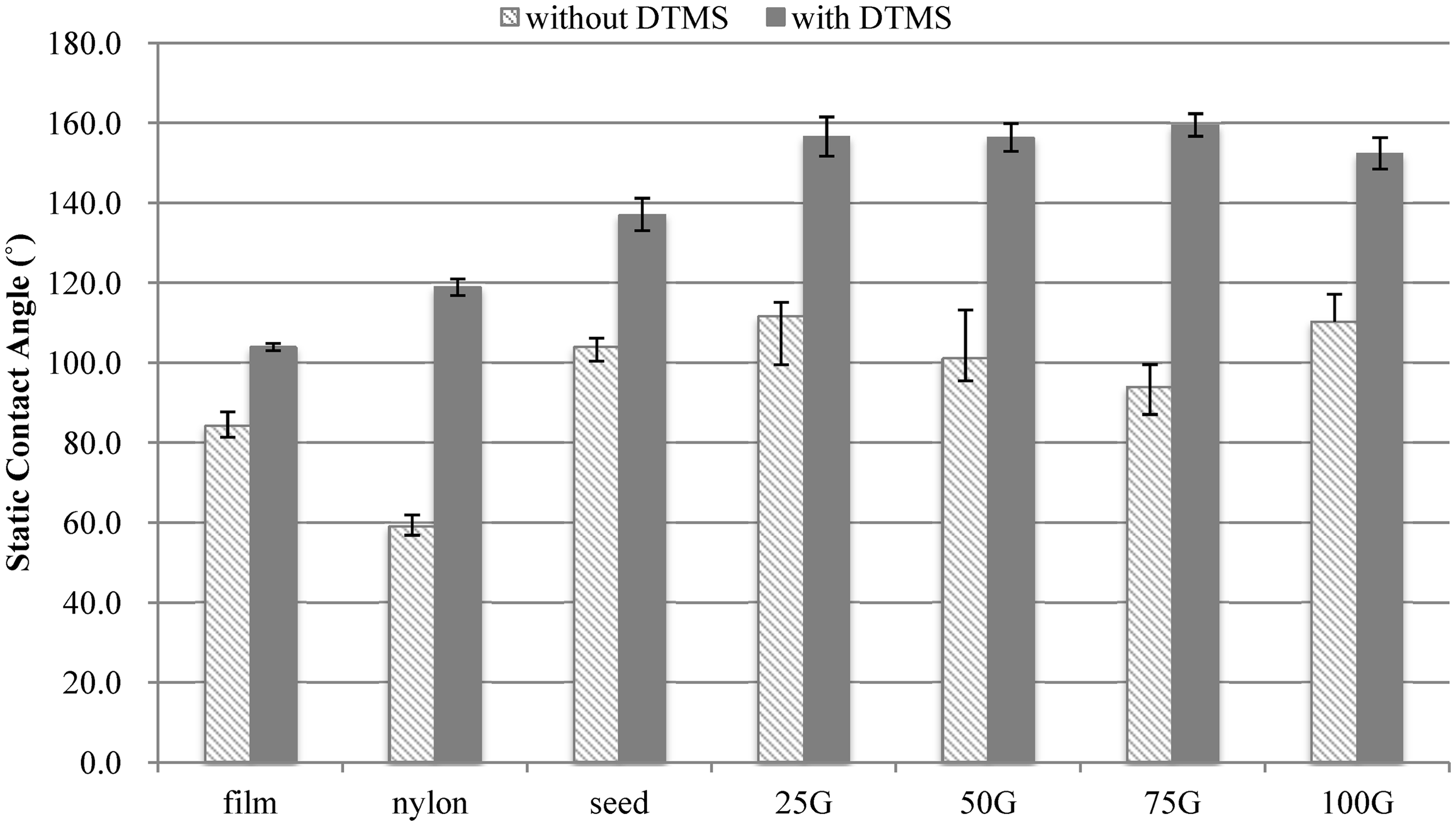
Nylon fabric and nylon film showed a quite different wetting behavior, despite their analogous chemical composition. In the case of the untreated nylon fabric the SCA was 59.1 ± 2.9°, much lower than that on nylon film. In addition, a water droplet placed on nylon fabric was absorbed within 14 sec, whereas no absorption was observed on nylon film. The different wetting behavior is thought to arise from the presence of multifilaments and of gaps in the fabric structure able to promote the spreading and wicking of water along the spaces between filaments.26,27 After ZnO treatment alone, without DTMS deposition either by seed coating or nanorod growth, nylon fabric exhibited enhanced hydrophobicity, although the surface energy of ZnO (71 mN/m) 28 was greater than that of nylon 6 (45.3 mN/m). 29 This was the result of the increase in surface roughness caused by ZnO seed or nanorod geometries having a greater effect than the increase in surface energy on the hydrophobicity of the treated surfaces. In a previous study by Yin et al., the static contact angle of a pure ZnO single crystal surface was reported to be 93°. 30 According to Equation (2), the increased surface roughness generated either by ZnO seed coating or by ZnO nanorod formation would increase the apparent contact angle; in other words, when θ1 > 90°, as r increases, θW also increases.
With DTMS deposition alone, without ZnO treatment, the hydrophobicity of all the specimens was increased due to the reduced surface energy. From the study of Bulliard and co-workers, the surface energy of pure ZnO surface was reported to be 71 mN/m, reducing to 30 mN/m after alkylsilane treatment. 28 After DTMS deposition the contact angle of nylon fabric exceeded that of nylon film, which is opposite to the behavior of the untreated specimen; it appeared that the deposition of DTMS inhibited the wicking of water along the spaces between the nylon filaments. When the surface energy was lowered by DTMS coating the roughness resulting from the textile weave is thought to have contributed to the hydrophobicity of nylon fabric, but not film.
After ZnO seeding had been applied to nylon fabric with DTMS coating, its hydrophobicity increased noticeably (SCA 137.1 ± 4.0°). ZnO nanorod-grown fabrics with DTMS treatment possessed a SCA higher than 150° and exhibited superhydrophobic characteristics. For the specimens treated with either ZnO nanorods or DTMS, the SCA measurement could not differentiate between the level of hydrophobicity of specimens with varied values of [G].
From these results ZnO treatment alone, without DTMS coating, was not sufficient to produce a surface with a very high level of hydrophobicity; in those surfaces it is possible that the liquid drop may have penetrated into the gaps between ZnO nanorods at a certain depth. With DTMS deposition, on the other hand, the surface free energy was sufficiently reduced to inhibit the water from penetrating the gaps between the nanorods, significantly enhancing the level of hydrophobicity. This suggests that before DTMS deposition, specimens treated with ZnO alone might have occupied the transition state between the Wenzel and the Cassie–Baxter states, generating a non-zero h′ in the schematic in Figure 5. After DTMS deposition, the transition could have been closer to the Cassie–Baxter state.
Since at SCA values greater than 140° the contact angles did not discriminate between the relative level of hydrophobicity of the specimens, other measurements such as sliding angle and shedding angle were applied to specimens treated with DTMS (Figure 7). Despite the popularity of superhydrophobic surfaces as a research subject, there is considerable confusion about measurement methodology and naming conventions. The majority of researchers refer to the actual dynamic contact angle measurement as the “sliding angle”,7–11,16,19,22,31 but a few other researchers retain the term “roll-off angle.”20,31 In addition, in measuring the sliding angle a variety of experimental settings have been applied, including the weight of a water droplet, specimen placement, and the size of syringe. In the present study we have adopted the terms “sliding angle” and “shedding angle”, based on the research of Zimmerman et al.
22
Sliding angle and shedding angle measurements of DTMS-treated specimens.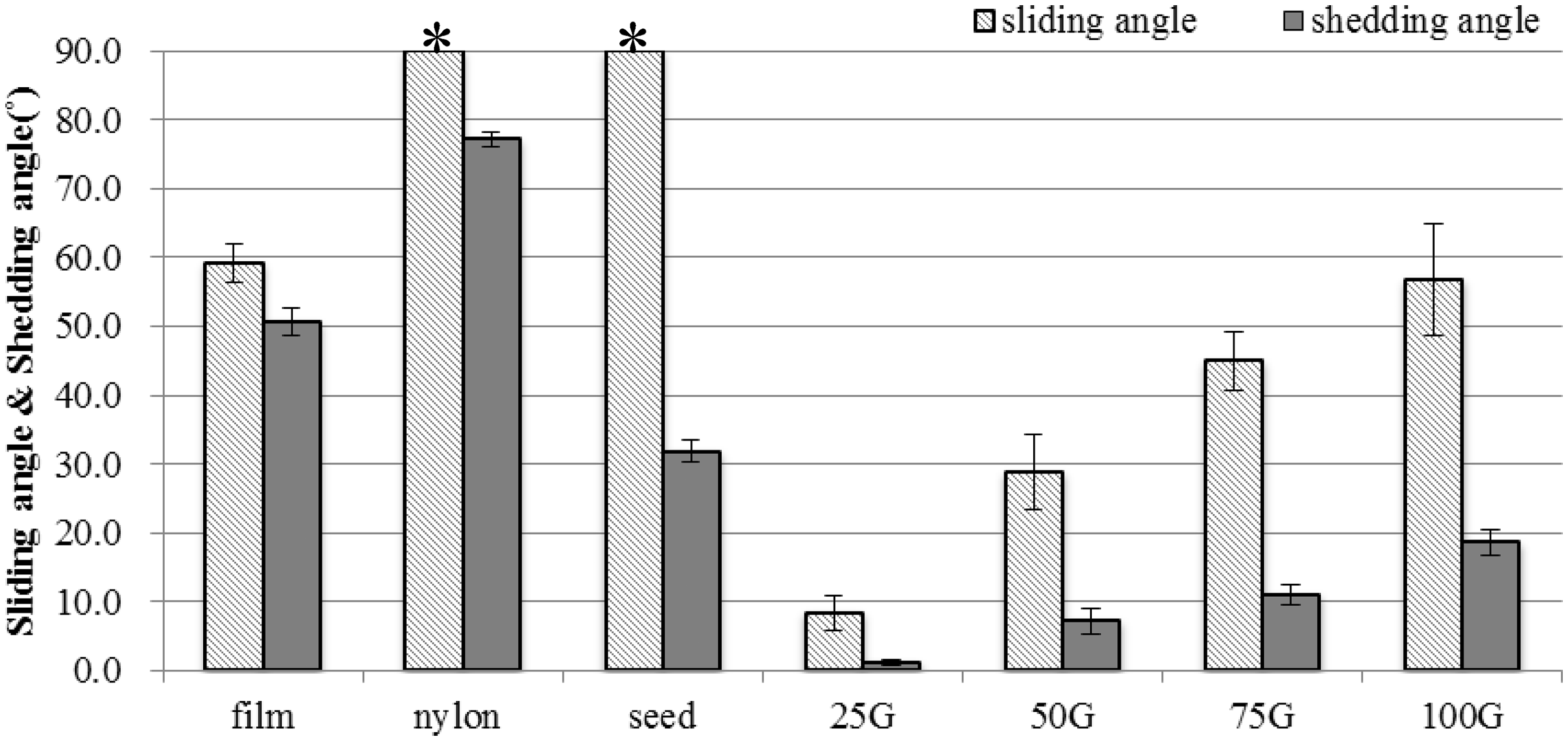
In the present study, when a water droplet was placed on a level specimen surface and then inclined, the actual angle at which water droplet slid 2 cm down from the placement point has been referred as the sliding angle. 22 When a water droplet was placed on a specimen surface that was already inclined, the smallest angle at which the water droplet slid 2 cm down from the placement point is referred as the shedding angle. 22
The tendency for the sliding angle and shedding angle to change was similar, but during our experimental work the sliding angle measurement was always larger than the shedding angle. In addition, a sliding angle did not occur on untreated nylon fabrics or seed-coated fabrics, even when the fabrics were tilted more than 90°. On these fabrics, the water droplet seemed to adhere within the gaps between the filaments and were difficult to roll off. Sliding angles measured on 50G, 75G and 100G specimens were relatively greater than those obtained by Xu et al. 31 This discrepancy probably arose from the differences in experimental settings; for instance, Xu et al. used a 40 ml water droplet in the measurements, whereas ours was only 13 ml. It cannot be confirmed whether the measurement technique employed by Xue et al. involved sliding angle, shedding angle, or any other particular measurement method. 31
The difference in measurements between sliding and shedding angle was in accordance with the research of Pierce et al., 32 in which different measurements were compared for alkyl ketene dimer on coated stainless steel surfaces, and which pointed out that the shape of a water droplet varies with the method of measurement, influencing the shape of the contact lines. This in turn leads to different components of force distribution and gives different measurement results.
There has been little regard taken of dynamic contact angle measurements in the case of fabrics. In our study we attempted to compare and observe the discrepancy between results taken at different dynamic contact angle measurement methods on superhydrophobic fabrics. In the present study these fabrics had an extremely rough surface, so that the pinning and the shape of the water droplet could easily be changed on tilting the surface. There is therefore a significant chance of obtaining inaccurate experimental data when measurements are made on a fabric surface, and careful attention must be given to the measurement of dynamic contact angles.
Based on the measurements of SCA (Figure 6), and sliding and shedding angle (Figure 7), we have concluded that a more appropriate parameter for assessing the level of hydrophobicity of a superhydrophobic surface treated with ZnO/DTMS would be the sliding angle or shedding angle. These measurements were used during our further investigation of the relationship between the solid area fraction (f1) and the level of hydrophobicity (Figure 8).
Evolution of sliding and shedding angles as a function of f1.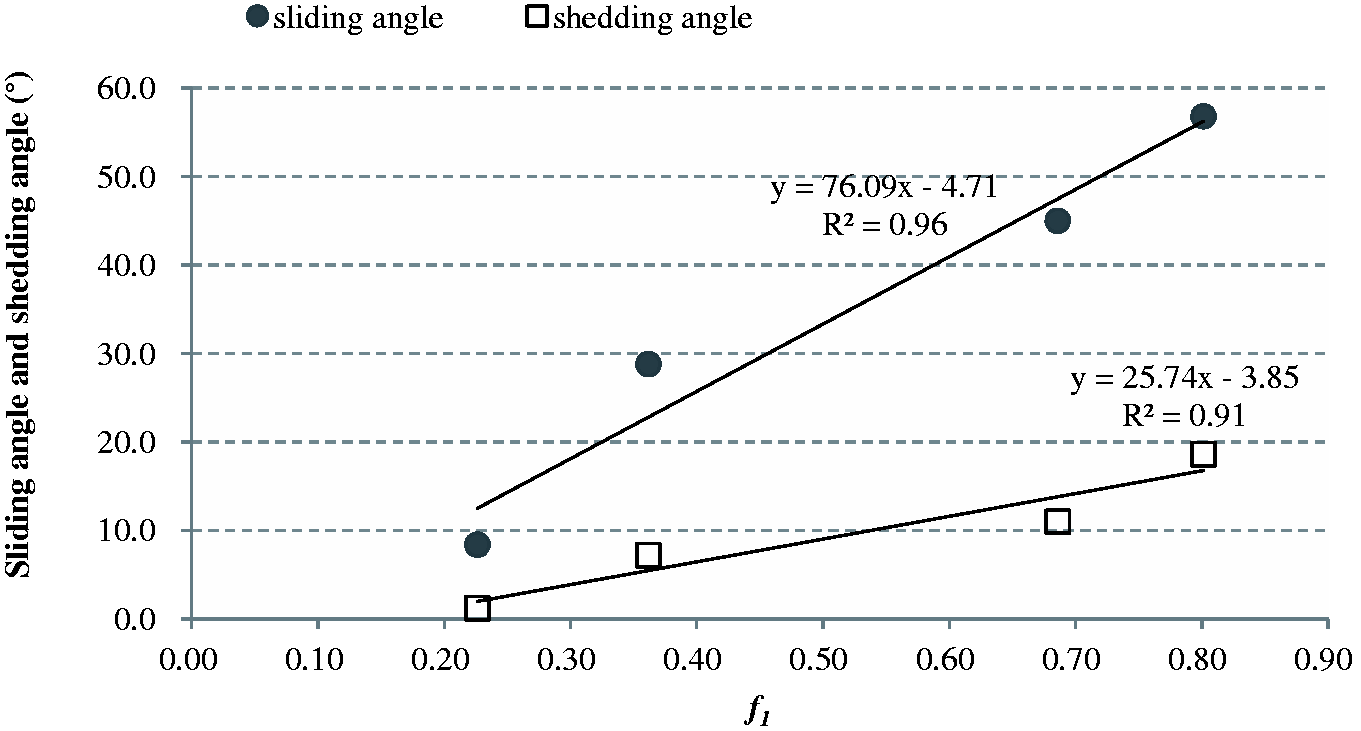
From Figure 8, the level of hydrophobicity of a fabric whose contact angle was greater than 150° (i.e. superhydrophobic fabrics) was analyzed as a function of f1. For the estimation of f1, h′ was assumed to be zero, based on the speculation that a highly hydrophobic surface (SCA greater than 150°) would have h′ close to zero. The level of hydrophobicity represented by both sliding angle and shedding angle measurements were in good correlation (R squared values greater than 0.90), with f1 estimated by Equation (4) with geometrical measurements, d, n, and A. The experimental results clearly demonstrated that the variation in f1 values resulting from different ZnO nanorod geometry and density was in close correlation with the level of hydrophobicity. The high correlation also demonstrated that the assumption of zero h′, or virtually zero depth of liquid penetration into the nanorod, remains valid for highly hydrophobic fabric surfaces.
As f1 becomes larger, f2, calculated from the measured θc, θ1, and f1 from Equation (3), becomes smaller. From Figure 1(c)–(f), it can be seen that an increase in [G] generates wider nanorods and smaller gaps between them, resulting in a smaller f2. The implication is that the air gap influenced by the width and distribution density of the nanorods is well represented by f1, which would ultimately translate into the level of hydrophobicity of the surface.
Ashiraf et al.
19
applied an alternative method of estimating f1, using a further presentation of the Cassie–Baxter model, shown in Equation (5). This model is applicable only when the shape of the liquid–solid interface and liquid–air interface is flat, and no liquid penetration occurs into the gaps between rough structures.
6
Their assumption that no liquid penetration had taken place into the gaps is regarded as a very similar scenario to the superhydrophobic surfaces we had developed. f1 was therefore calculated using θc measured from ZnO/DTMS-treated fabrics and θ1 measured from DTMS-treated film, following
difficulty in accurate measurement of SCA on fabric substrates, due its imprecise measurement due to the unstable baseline of a water droplet,
22
undifferentiated measurements of static contact angle for superhydrophobic surfaces,7,9,16 and the complex shape of the liquid–air interfaces on ZnO nanorod-grown fabrics.
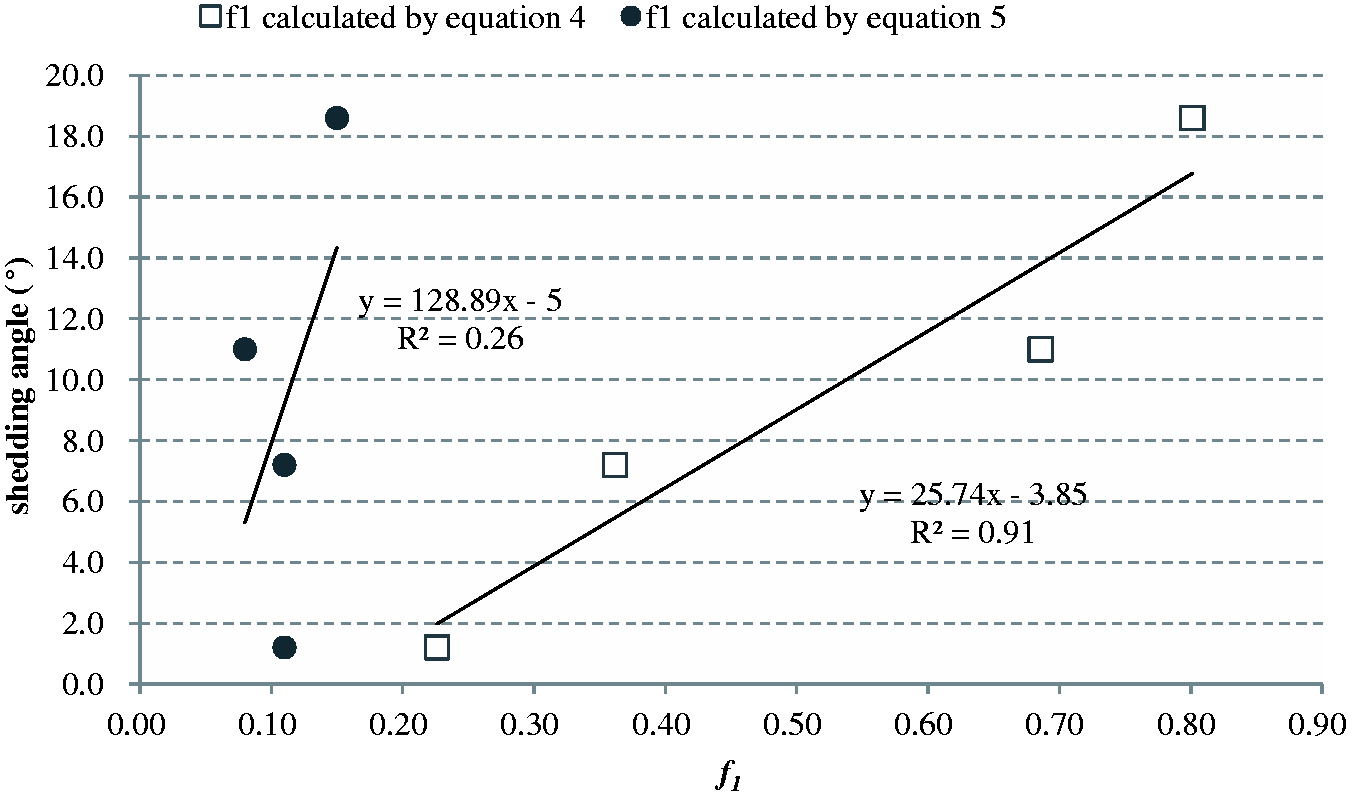
As described in Figure 4(c), the shape of liquid–air surfaces will be much more complex than nanostructured flat surfaces such as a Si wafer, and in turn give a higher value of f2 in the former case. It was therefore concluded that the estimation of f1 by considering the dimension and density of nanorods provided a more reliable figure for estimating the level of hydrophobicity.
Most of the previous research studies regarding superhydrophobic textiles have been concerned with providing the evidence to verify the Cassie–Baxter model, associating f1 with SCA. However, for highly hydrophobic (or superhydrophobic) surfaces, the measurement of SCA does not discriminate the level of hydrophobicity. However, as an alternative method to SCA measurement, sliding angle and shedding angle measurements were found to offer a reliable method to differentiate between the level of hydrophobicity on superhydrophobic fabrics. In the present study a proportional relationship has been demonstrated between f1 estimated from the morphological attributes and the level of hydrophobicity measured by sliding and shedding angle. Based on these findings, it is expected that the superhydrophobicity of textiles can be systematically controlled by tuning the dimensions and density of applied particles in order to minimize the f1 value of the treated surface.
Conclusions
This study was intended to provide a viable measurement of the hydrophobicity of ZnO nanorod-grown fabrics and to validate the theoretical relationship between the solid area fraction value f1 with the hydrophobicity. For this purpose, ZnO nanorods were grown on nylon fabrics by a hydrothermal process and their morphological dimensions of width, height, and density were analyzed to estimate f1.
Films and fabrics made of nylon 6 exhibited a different wetting behavior due to capillary effects along the filaments and pores present in the fabric structure. Vapor deposition of DTMS onto nanorod-treated specimens dramatically enhanced their hydrophobicity (SCA > 150°) by lowering the surface energy; under these conditions it was speculated that water was not able to penetrate the gaps between the nanorods (h′ = 0). Without DTMS deposition, the level of hydrophobicity was lower, and water could then penetrate the gaps between the nanorods (h′ > 0).
For highly hydrophobic or superhydrophobic surfaces such as ZnO nanorods and DTMS-treated fabrics, the measurement of SCA yielded very similar values and did not differentiate the level of hydrophobicity. As an alternative method, sliding or shedding angle measurement was suggested as a reliable method for discriminating between the level of hydrophobicity of superhydrophobic fabrics.
The theoretical relationship between f1 and the level of hydrophobicity was verified by the strong correlation between f1 and the sliding and shedding angles. The validation of this relationship is meaningful, since most of the earlier studies of superhydrophobic fabrics focused mainly on the relationship between f1 and SCA, in which the measurement of differentiated static contact angles for rough surfaces can be very challenging. The relationship identified in the present study can be utilized for optimizing the production of superhydrophobic fabrics, by tuning the dimensions of roughness-producing patterns or particles so as to minimize f1 and enhance the sliding of the water droplets.
Further studies to examine the h′ of the model would be informative, particularly for a hydrophobic surface whose static contact angle is less than 150° (but which is not superhydrophobic), where some level of liquid penetration may occur and an assumed h′ of zero no longer remains valid. The verification of h′ would expand the utility of the model in associating the measured hydrophobicity with f1 for hydrophobic surfaces over a broader range.
Footnotes
Funding
This research program was supported by the SRC/ERC program of MOST/KOSEF (R11–2005–065), by a National Research Foundation of Korea (NRF) grant funded by the Korean Government (2011–0014765), and the BK21–Plus Project funded by the National Research Foundation of Korea in South Korea.