






Abstract
The study presents physical phenomena that occur in the physical–mechanical process of degumming of fiber from flax straw. Moreover, the effect of liquid flow through the straw has been determined by analysis of the mass exchange (motion) according to the principles of fluid mechanics.
It was shown that conditions of the degumming process, especially the temperature, have a significant effect on acceleration of the mass exchange.
The analyses of the results indicated that the developed model laboratory device allowed for evaluation of the mechanism of mass exchange by slow laminar liquid flow. The evaluation of the degumming process with convective mass motion at a higher speed of liquid flow was based on model tests of hydrodynamic washing of three types of gels: fruit pectin, animal gelatin and starch from linen fabrics. It was shown that temperature is a decisive factor affecting the washing out of gels. Better washing out was achieved by using diffusive penetration of water into the gel structure at the initial phase of the process. Using the dynamic washing out of the gels with a water stream of high flow speed (at the m/s range) shortened considerably the washing time.
In recent years there has been much interest in textile products containing natural fibers, especially of flax and hemp.
The quality of the produced fiber depends on the method of its extraction, the number of elementary fibers, their distribution and the strength that binds the fiber bundles together and fibers within the bundle. In order to separate the fiber from the stem of bast plants, the bond between the fiber part and other tissues, which contain pectin, hemicelluloses, lignin, waxes and fats, must be weakened or broken.
Extracting fiber from fibrous plants, is carried out mainly by biochemical processes (retted fiber) or mechanical processes (decorticated fiber), 1 depending on their final use.
Currently, due to both, economic and environmental reasons, new technologies are needed for extracting natural fibers that will maintain the fiber's inherent properties.
Thus, it is necessary to undertake studies of the introduction of a new eco-friendly process for the extraction of natural fibers from plants that will allow for producing fibers of improved properties and in a more efficient and environmentally friendly manner.
The study is based on the assumption that physical phenomena, mostly osmosis which occurs inside fibrous plants in contact with water, can be used for the extraction of fibers with no effect on the natural properties of the degummed fiber. Two Polish research institutes have established cooperation and developed a new degumming method 2 and a device for degumming fibrous plants. The method is based on physical phenomena occurring inside the stem of bast plants in a water environment but with the elimination of the retting process.
There are two physical phenomena involved in the fiber degumming process: diffusion and osmosis.3–5 In this process, water penetrates inside the stem towards its woody part, according to the Fick's law, where the long bundles of cellulosic fibers are clustered in bundles by polysaccharides, see Figure 1.
Cross-section of the flax stem.
The polysaccharides, fibers and the woody core of the stem swell under contact with water. So does the pectin, which as a “super absorber” increases its volume even more than 10 times, which results in considerable increase of hydrostatic pressure inside the stem and creates strain in the epidermis in both the peripheral and longitudinal direction. The peripheral strain, according to the theory on material strength, is stronger than the longitudinal one and causes cracking of the epidermis lengthwise, yet without breaking and shortening of the fibers. This is mostly due to inherent properties of fiber, where longitudinal polymer chain bonds are several hundred times stronger than the transversal bonds, and also to the dramatic decrease of tenacity of the gelated substances gluing the fibers (pectin) in the bast. Hydrostatic pressure inside the stem pushes the gelated pectin outside through the longitudinally cracked epidermis. The pectin becomes diluted and solved (together with other bast substances) in water.
This leads to efficient degumming of the fibers aimed at obtaining high quality fibers. Generally, the substances containing mineral salts, pectin, bacteria and pigments are leached out from the stems in the process. The results of earlier, laboratory scale studies3,4 confirmed the effect of degumming parameters, i.e. time and temperature, on the quality of the obtained fiber.
The research reported in this paper concentrates on the mechanism of the physical degumming of fiber from fibrous plants. Special attention was paid to the process of osmotic, diffusive and convective degumming of fibers with the focus on the mass motion (according to the principles of liquids dynamics) in degumming of fibrous plants. Therefore, the laboratory degumming device 2 was modified by introducing both lengthwise and crosswise flow of the liquid through the raw material, which had crucial effect on the thickness of the laminar near-wall layer (Prandtl), which constituted the principal obstacle for the diffusive mass motion. The liquid recovered from wringed straw was determined for the density and kinematic viscosity and analyzed for the content of dry mass, pectin and other organic compounds, all of which allowed for assessment of the degumming process efficiency. The obtained values were presented in the paper entitled “The effect of physical factors on the process of physical–mechanical degumming of flax fibers”, submitted to Textile Research Journal, yet due to their significance for the mechanism discussed, they are also reported in this paper. 6 The data analysis indicated that the laboratory degumming device enabled assessment of the mechanism at laminar liquid flow at the speed of 4–11 mm/s.
In order to investigate the dynamics of washing out of pectin at the speed of a few m/s, the tests were designed to study hydrodynamic washing out of gels (fruit pectin, animal gelatin and starch) applied on linen fabric. The linen fabric was selected as it contained the same type of fiber as flax straw, aligned in a similar, ordered manner. Additionally, a flat form of the fabric allowed for good measurement of the washing out of the colloidal substance as a function of time and temperature. This indicated that the selected model aptly illustrated the processes that occurred in the stem.
The current study continues earlier work and gives insight into evaluating, in terms of quantity and quality, the phenomenon of the degumming mechanism ruled by convective mass motion.
Experimental details
The studies of the washing out of water soluble substances from flax straw
Materials
The material used in the study was flax straw of the Agatha variety (NL). The straw was subjected to degumming with the lengthwise and crosswise water flow through the flax stems placed in a cylindrical basket.
Lengthwise flow
Middle straw sections 60 cm in length were used (the root and top sections were cut off). The straw, formed into a uniform layer, was placed on a net and rolled up. Formed rolls were put into a special cylindrical basket and loaded into the reactor to allow the process liquid to flow through the batch (Figure 2).
The method of the straw in the basket to allow lengthwise flow of the liquid.
Crosswise flow
Straw middle sections of 28–35 cm in length were taken for the study (the root and top sections were cut off). A uniform straw layer was spread evenly in a cylindrical basket which was fed into the reactor to allow the process liquid to flow through the batch (Figure 3).
The method of placing the straw in the basket to allow crosswise flow of the liquid.
The differences in sample sizes of flax straw, depending on a flow direction and in sample compaction degree, resulted from the construction parameters of the device, which was impossible to modify. Therefore, the measurements of the process, depending on the direction of liquid flow could not be compared and did not allow for objective evaluation. However, they were recorded as a source material for possible use in further studies.
Methodology
The laboratory tests on the degumming process were run at the 3 kg batches of flax straw for the lengthwise flow and 1.5 kg batches for the crosswise flow. The process was carried out in the following conditions: water temperature of 20, 30 and 40℃, the process time 48 and 72 h, and the water flow rate of 20 and 30 m3/min. Assumed mass velocities allowed for achieving average laminar water flow rate around the stems were 4.3 and 6.5 mm/s respectively. In the process a C type UV lamp was used for inhibiting the growth of retting microorganisms. The mechanical processing of the degummed straw was carried out using laboratory scutching unit.
Physical–chemical analysis
In order to assess the efficiency of the degumming, liquid recovered from wringed straw was analyzed for selected physical and physical–chemical properties:
Kinematic viscosity (mm2/s). Determined by measuring the time of gravity forced flow of a certain volume of the liquid through a capillary of the standardized viscosimeter, at a temperature of 20℃. Pinkiewicz's viscosimeter was used in the current study. Liquid density (g/cm3). The measurement was taken using a pycnometer and the ratio of liquid mass to its volume at temperature of 20℃ was determined. Determination of the dry mass content (%). The test was conducted by drying sufficient amount of the sediment at 105℃ and weighing the residue dry mass. Determination of the content of organic compounds (%). Conducted by roasting the dry residue at 600℃, and weighing the remaining matter. Pectin content (%). Determined by gravimetric method developed at INF&MP by dissolving it in ammonium citrate and then precipitating it from the solution with calcium chloride and weighing the calcium pectinate precipitated from the solution.
Model tests on washing out of gels from linen fabrics
Selection of the gel substances
The first stage of the study involved selection of a gel substance that represented the best a given process, which would later be used for further tests:
(a) fruit pectin— Żelfix 3:1 of Dr. Oetker's; (b) potato starch—type LU-1431-1, superior-standard of Wielkopolskie Przedsiębiorstwo Przemysłu Ziemniaczanego S.A. Luboń, Poland; (c) animal gelatin—pork food gelatin of Dr. Oetker's.
Material for the study
Linen fabric (100% flax) with surface mass of about 160 g/m2.
Preparation of the sample
Linen fabric samples of 5 × 5 cm were covered with gels by the padding method at 25℃.
The composition of the padding bath followed the proportions below.
Fruit pectin. A gelatin–sugar water solution at 1 : 1 ratio was prepared by adding 17.6 g of each component and diluting in 1 dm3 of water. Starch. A 1 : 4 ratio water–starch solution was prepared. The solution was heated in water bath at 65℃. A thick mass was obtained, later diluted with 100 ml of water per 1 kg of starch. Animal gelatin. A 22 g/1 dm3 solution of the gelatin was prepared.
After the padding the fabric was left to air dry.
Waxing
In order to emulate the conditions present in the flax straw, the gel applied fabrics were subjected to waxing with beeswax in the form of cream. The wax served as a barrier against substances penetrating the fabric, so as to mimic the role played of waxes occurring naturally in the plant.
Preparation of the cream: 12 g of beeswax was solved hot in 50 ml of rapeseed oil. After cooling of the fraction, 100 ml of distilled water was added at 40℃ and mixed continuously with a mechanical mixer until foamy cream was formed.
Methodology
Model tests on washing out of all the tested gels from the linen fabric were carried out in conditions of diffusive and in hydrodynamic water flow for the colloidal substance that represented the best a given process i.e.:
(a) diffusive water flow (0 m/s) depending on the process temperature, i.e. 12, 30 and 40℃; (b) hydrodynamic water flow at 12 m/s depending on the process temperature, i.e. 12 and 30℃; (c) hydrodynamic water flow at 8.5 m/s at 40℃.
The evaluation of the gel washing out process from the fabric was based on measurements of fabric sample weight depending on the process temperature.
Results
Speed flow of water through the flax straw at maximum load of the reactor

The study on the washing out of water soluble substances from the flax straw
Water flow rate of 20 and 30 dm3/min was applied what resulted in flow velocity of 4.3 mm/s and 6.5 mm/s. Therefore, when using water flow velocity to 4.3 mm/s, the laminar flow was achieved, Re = 1667. In the laminar flow the layers of the liquid move one on another undisturbed, with the lowest velocity occurring near the stem/water boundary (see Figure 4(a)). However, increasing the water flow velocity to 6.5 mm/s allowed for the turbulent flow at the boundary with the laminar flow, Re = 2526. Thus the mass exchange occurs mostly by stationary diffusion, while in turbulent flow (Figure 4(b)) the mass exchange occurs mainly by convection.
The model of laminar (a) and turbulent (b) liquid motion.
Admittedly, the flow velocity at 6.5 mm/s turbulent motion was not achieved, yet the obtained results confirmed higher efficiency of the intensified water flow through the stems even at the laminar flow. It must be noted that despite using turbulent flow in the process, at the stem/water boundary, an interface layer (near-wall layer) is formed, where a laminar flow was observed. The diffusion rate in the water laminar layer inside the pectin gel on the sample surface was at the micrometers per second range, thus even compared with the laminar flow it was three orders of magnitude lower. In other words, convective mass motion in the laboratory device takes place over 1000 times faster than the diffusive motion. This indicates that the main obstacle to washing out pectin is its diffusion through the laminar near-wall layer, thus the thinner the layer, the smaller the resistance and the thickness of the layer depends on the liquid flow velocity.
The experiment showed that forced water flow led to thinning of the near-wall layer which forms on the stem. Figures 5–9 present the results of tests on mass loss and physical–chemical parameters of the liquid recovered from wringed straw.
The effect of liquid parameters on straw mass loss in the degumming of fibrous plants. The effect of liquid parameters on total water consumption and liquid volume after wringing of the straw in the degumming of fibrous plants. The effect of liquid parameters on density and kinematic viscosity of the liquid after wringing of the straw. The effect of liquid parameters on the content of organic substances and dry mass in the liquid after wringing of the straw. The effect of liquid parameters on pectin content in the liquid after wringing of the straw.


The studies showed that the results of the osmotic degumming with forced liquid flow were better in comparison with conventional retting as more efficient removal of the washed out substances was achieved, which prevented the growth of micro-organisms.
However, the temperature increase reduced the dynamic viscosity of the liquid and, in consequence, proportionally, the thickness of the near-wall layer. During degumming, elevated liquid viscosity was observed directly at the interface boundary, which was linked to the transport of pectin into the solution (Figure 7). Thus, higher temperatures accelerated pectin removal from the plants. It was also observed that with higher temperatures the volume of post-wringing wastes increased. The analysis of the results (Figures 5–9) indicated a significant effect of temperature on acceleration of mass exchange in the degumming process for all tested physical–chemical parameters.
The analysis of the study showed that the model laboratory device allowed for evaluation of the mass exchange mechanism at the application of slow laminar liquid flow. Therefore, the evaluation of the degumming mechanism with convective mass motion at higher liquid flow rates was based on model studies of the hydrodynamic washing out of gels applied to linen fabrics.
Model tests on washing out gels from linen fabric
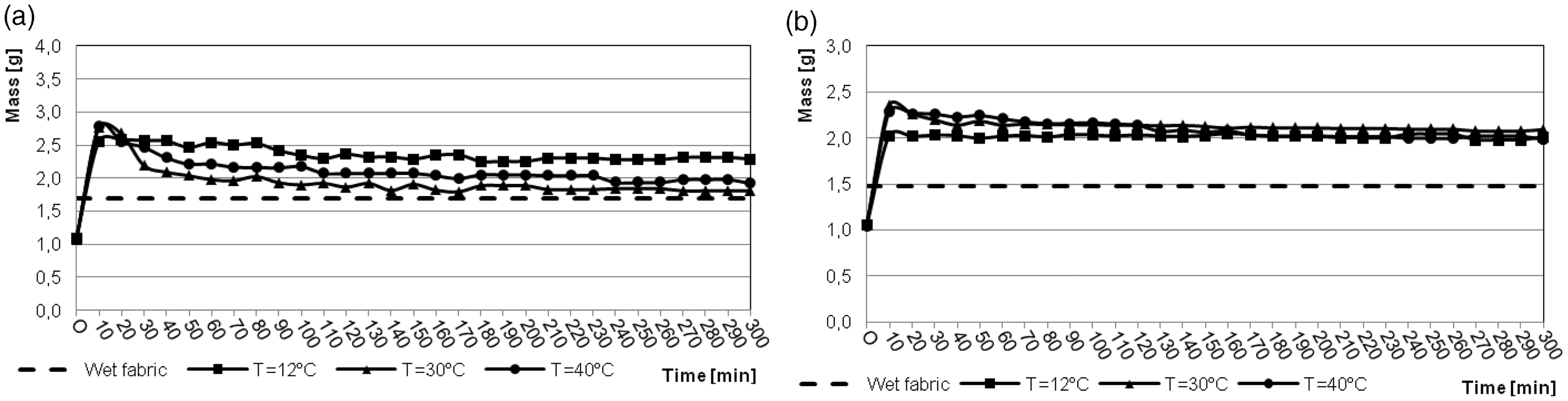
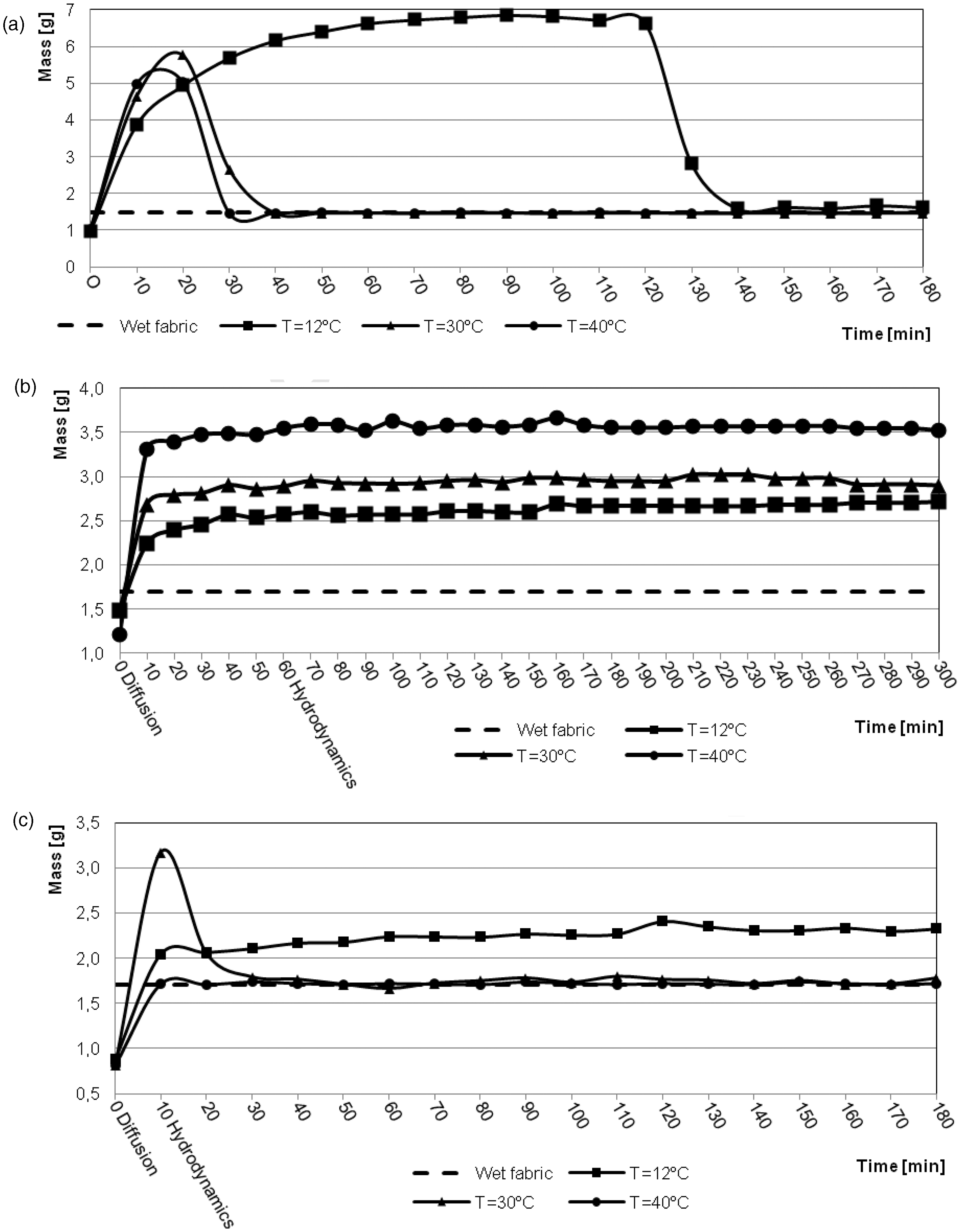
Analyses of hydrodynamic gel wax wash-out from the fabric were carried out using three gels: fruit pectin, starch and animal gelatin. Moreover, wax was applied on top of the gels to emulate the conditions prevailing in flax stem. The studies were compared with the process of the diffusive washing out of gels. The results of diffusive and convective washing out for the three tested gels are presented in Figures 10–12.
Diffusive washing out of the gels, (a) ŻelFix gelatin, (b) starch, (c) animal gelatin, depending on the process temperature. Hydrodynamic washing out of ŻelFix gelatin depending on the process temperature. Diffusive and hydrodynamic washing out of gels with the applied waxes, (a) ŻelFix gelatin, (b) starch, (c) animal gelatin, depending on the process temperature.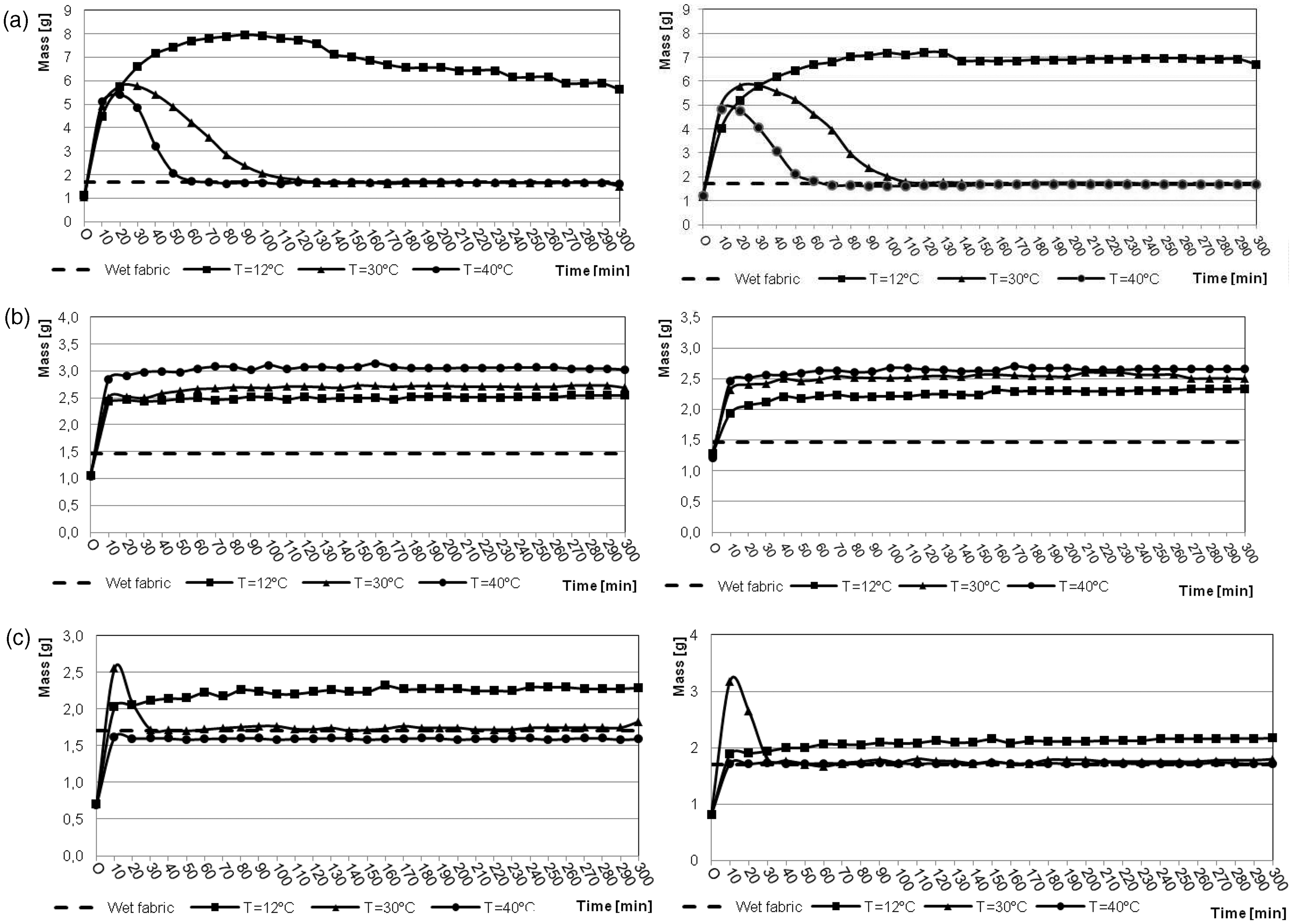
It was shown that the rate of washing out of particular gel increased as follows:
Animal gelatin → ŻelFix gelatin → Starch
The analysis of the results indicated that the washing out of gels depended to a large extent on the temperature of the process and to smaller extent on the velocity of water flow.
It was observed that for ŻelFix gelatin, at a temperature of 12℃, when both dynamic and hydrodynamic washing processes were applied, the complete removal of the gels took 20 min. In case of temperatures of 30 and 40℃, the washing out process was shortened by half as compared with the pure diffusive process.
Among the tested gels, animal gelatin was the easiest to remove from the fabric, at temperatures of 30 and 40℃, in both processes, i.e. diffusive and hydrodynamic. Additionally, the hydrodynamic flow accelerated washing out. At a process temperature of 12℃ neither diffusive nor hydrodynamic processes resulted in washing out of the gels. The most difficult gel to remove was starch, which in diffusive flow could not be washed out at all, while in the hydrodynamic process it was removed only partially. Only at a temperature of 40℃ was the starch gel washed out from the fabric by the hydrodynamic process, although not completely.
The model studies on the washing out of hydrocolloidal substances from linen fabrics indicate that convective mass motion might increase the efficiency of degumming of straw. These tests allowed us to conclude that a combination of diffusion and convection shortens considerably the time needed to wash out the gels.
Discussion
Even though the calculations indicate that the tank of 58 dm3 can be loaded with 12.4 kg of straw, in practice this is impossible. According to the literature data 7 1 ton of air-dried flax straw takes the volume of 11–14 m3, which reduces the tank/reactor load by 60–68%.
When comparing the obtained results with traditional warm water retting, it must be noted that during warm water retting, the gas bubbles move up at several centimeters per second, and this way they cause local water motion accompanied with convection of mass. Therefore, in warm water retting the convective mass motion is also observed, yet it is random, uncontrolled and dependent on the biochemical process. This issue was not included in the study of the process and was revealed for the first time in relation to the study presented here.
In the traditional water retting, the liquid remains relatively static in relation to fibrous plant straw, with the above mentioned random and slow motion causing convection of the products of the biochemical process, i.e. solid, liquid and gaseous products. Mass exchange occurs under such conditions mostly by pure diffusion, and thus it is slow. Literature data reports that the wringing wastes are composed of: 1.5–5.0 g/dm3 of dry mass, 0.54–1.1 g/dm3 of soluble substances and 0.85–3.65 g/dm3 of suspended matter. 8
The above can be presented as follows: if a flax stem is thrown into water without stirring, when the liquid remains still, only soluble substances are washed out: mineral salts, pectin, retting bacteria and pigments. These components will diffuse slowly to places with lower concentration. Similarly, two layers of gases will diffuse slowly in inert conditions. Pure diffusion is a molecular phenomenon, as thermal conduction is. With the motion of substances it can occur only when the flow is laminar with parallel molecule routes. However, collisions of molecules disturb their movement in one specific direction to such an extent that the diffusion proceeds very slowly.
In the diffusion process, water molecules diffuse slowly to places with lower concentration, where smaller molecules diffuse faster than the larger ones. Mass exchange, in this case, runs bidirectionally. 9
Fungi in dew retting, and bacteria in warm water retting, do not diffuse, but their move inside the biodegraded mass occurs in a similar way to the mass motion diffusing into the diffused mass. The principal difference is that in case of fungal or bacterial biodegradation, mass loss is observed (generally of oligo- and polysaccharides) in the straw degraded by microorganisms. An analogy of this process to diffusion has not yet been proposed, and there are indications that it proceeds in a similar way and that Fick's law should apply to it. It is suggested that the diffusion index marked with D (see equation (3)) is named a biodegradation index
In order to accelerate the mass exchange, the forced water flow can be employed with a water pump. By pumping the liquid, the relative velocity of the liquid rises dramatically, even in the case of laminar flow. As a result, the thickness of the near-wall layer (referred to as “s”) drops, which shortens considerably the process time (proportional to the thickness of the “s” near-wall layer).
10
Its thickness can be expressed in the following equation:
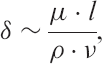
The formula above provides an approximate evaluation of the thickness of the near-wall layer; thus the relation is measured in terms of quality.
The mass exchange occurs by convection, so that the stirred agent, either as a result of laminar or of turbulent flow, transports the exchanged component from places with higher concentration to those with lower concentration. 12
Thus, the degumming process is based on the mass exchange between two phases, i.e. water and flax stem. In the discussed case both phenomena are observed: water diffusion and convection.
In the diffusion process, the movement of water molecules and the dissolved substance occurs by penetration through pores in semi-permeable film that is epidermis, in accordance with the concentration gradient. The phenomenon of the solvent molecules penetrating through the semi-permeable films is called osmosis. In this process, the water moves inside the stem, while for the dissolved substances—in the opposite direction. The volume of such transfer for water molecules and dissolved substances will be higher with higher concentration gradient between the two solutions. Water, when penetrating into the cells, causes an increase of osmotic pressure because pectin molecules, which have a much higher molar mass than this of water, diffuse much slower. Intracellular pressure damages cells and leads to lengthwise breaking of the epidermis, which accelerates the transfer of dissolved components into the solution outside the stem.
The process ultimately leads to the molecules concentration balance. The cause of diffusion is random thermal movement of molecules. If in a given area there are more molecules than in its vicinity, then with the chaotic movement more molecules leave the area than enter it. The resultant amount of molecules penetrating a unit of area/surface in time is described as diffusive stream, according to the formula:

According to the first Fick's law the volume of the diffusive stream is directly proportional to the concentration gradient of the diffusing substance.12,13 In a one-dimensional case (diffusion occurs along a straight line), the concentration gradient equals quotient of difference in concentrations between two points and the distance between them.

The factor of proportionality (D) in the equation (3) is referred to as the diffusion coefficient of a given substance. It depends on the type of the diffusing substance and on the medium and on the temperature.
Liquid diffusion is generally described by the Stokes–Einstein relation (for diluted solutions)

This indicates that diffusion coefficient is inversely proportional to liquid viscosity and the size of molecules of the dissolved substance, and directly proportional to the T/µ ratio.
In fact, the presented degumming methods, i.e. dew retting and physical–mechanical degumming, are random, while the random character of the physical–mechanical process can be influenced in the case of a few factors to a large extent and express them in measurable units, i.e. temperature, viscosity and liquid flow rate near the fiber and stem.
Model tests of the hydrodynamic washing out of gels from linen fabrics were conducted in order to run qualitative evaluation of the convective process in the washing out of water soluble substances from flax straw.
All three used gels belong to hydrocolloid substances with the fruit pectin being the most similar to flax pectin. Pectin substances in flax are high-molecular compounds of polygalacturonic acid, similarly to fruit pectin. Two pectin fractions can be found in fibrous plants: fraction A, soluble in water, and insoluble fraction B. During retting, fraction A is easy to remove, as it is degraded by fungi and bacteria. The pectin B remains in the fiber and determines its cohesion. Excessive removal of pectin makes the fiber rough, dry and unpleasant to touch. However, complete removal of pectin results in disintegration of fiber bundles into elementary fibers. In 1941, Falser 14 and Ludke and Felser 15 reported that the molecular mass of flax pectin reaches 145,000 to 200,000 and is similar to that of fruit pectin. The high molecular mass fruit pectin can be extracted by boiling in water or in diluted acids at high temperature. On the other hand, pectin present in roots (beetroots) or stems (fibrous plants) is characterized by much higher adhesion to tissue walls than pectin in fruits. Despite this, the methods effective in extracting fruit pectin are not suitable for extracting pectin from fibrous plants without damaging pectin molecules. 16 To obtain high-molecular mass, i.e. non-depolymerized pectin, Falser 14 and Ludke with Felser 15 subjected flax straw to the acid action at room temperature and then treated the water soluble pectin with ammonium oxalate at 80℃. 17
These studies also showed that combining diffusion and convection shortens significantly the process of the washing out of the gels.
This can be explained by the fact that the process includes transfer from colloidal system (gel) into high-molecular solution, i.e. sol, where there is no interaction between the sol particles. The tixotropy phenomenon occurs here, which is a reversible isothermal process of the transformation of gel into sol under the influence of mechanical factors, e.g. shaking and mixing. In the process discussed here, it is caused by sprinkling liquid drops. The sprinkling of water drops causes the colloidal particles in the gel to undergo a reversible solvation. The force of the reversible solvation is lower than the force bonding again the coagulated particles, which leads to gel reformation. 18
The analysis of the washing out hydro colloids from linen fabric indicates that using convective mass motion might increase the efficiency of flax straw degumming.
Conclusion
The studies on degumming of flax straw showed that the use of forced flow of the liquid through the material enhances washing out of near-wall layer that forms on the flax stem during osmotic degumming. Using the liquid flow rate at 30 dm3/min caused a turbulent motion, Re = 2526, whereas increased loading of the tank with the straw had only a slight effect on the increase of the Reynolds number. It was also shown that the increase in the process temperature to 40℃ led to faster washing out of pectin and soluble substances from the stem, and thus to shortening of the degumming time.
The model tests on three gels indicated that the temperature was a crucial factor in the washing out of the gels. Waxes constitute a natural protective barrier in this process. It was shown that better washing out of the gels was achieved by applying diffusive penetration of water molecules into the gel at the initial stage of the process. This results in water being absorbed by water soluble and insoluble hydrocolloids, which determines their ability to bind water. Then, the use of the dynamic process significantly reduces the time of the washing out of the gels.
Footnotes
Funding
This work was supported by the National Research Centre, Cracow, Poland (grant no. 2011/01N/ST8/05181, “The method of physical degumming of fibers from bast plants”).
Acknowledgement
I would like to thank Prof. Zbigniew Wrocławski, a member of the Polish Academy of Engineers, for allowing me to consult with him on the diffusive and hydrodynamic washing out of pectins.