






Abstract
Honeycomb woven fabric is considered as a single layer fabric produced only using common weaving looms, but it forms a unique three-dimensional (3D) architecture with inverted pyramidal pits on the fabric surface and repeated tetrahedral-closed space inside the fabric, which is greatly different from the traditional 3D woven fabrics, such as angle-interlock and orthogonal fabrics, showing good prospect for various applications in fields such as geotextiles, medical textiles, air filter, tower packing and underclothing. This paper proposes an analytical model to characterize the geometrical shape and position of each yarn in a honeycomb fabric unit-cell and the volume of the internal space. The model is based on the assumption of fabric thickness in the sum of yarn height and the linear relationship of yarn position and fabric unit-cell dimensions. The model involves geometric parameters, including yarn width, height, spacing, crimp and the number of yarns in a fabric unit-cell. Six honeycomb woven fabrics were manufactured to verify the model. Based on the position and crimp prediction of each yarn node, the architectures of the six fabrics were simulated numerically, which shows close agreement with the observed manufactured fabrics, indicating good accuracy of the geometrical model. A sensitivity study shows that the volume of the internal space decreases with the increase of fabric density, and the application of the elastic yarns to the fabric reduces the volume significantly.
A woven fabric structure has been designed out, called ‘waffle-shape’ or ‘honeycomb’, for various applications in such fields as geotextiles, medical textiles, air filters, tower packing and underclothing.1–5 Although this fabric is considered as a single layer of woven fabric, owing to the periodical emergence of yarn long floats and short floats gradually in the honeycomb fabric, the single layer of fabric exhibits a special three-dimensional (3D) architecture, which is greatly different compared with the traditional two-dimensional (2D) fabrics, such as plain and twill fabrics and 3D woven fabrics like angle-interlock and orthogonal fabrics with binding yarns in the through-thickness direction.6,7
An ordinary honeycomb pattern and a modified pattern with their corresponding woven fabrics in a 3D structure are illustrated in Figures 1(a) and (b), respectively. The yarn path in honeycomb fabric contains interwoven curves and straight yarn floats. The length and altitude of yarn float, no matter whether in the warp or weft, are both increasing and then decreasing gradually and simultaneously, showing a periodicity and forming repeats of inverted pyramidal space on both surfaces of the fabric. The pyramidal pits can accommodate steel balls, as shown in Figure 1. In a honeycomb fabric such as that shown in the top schematic of Figure 1, the part of a warp yarn underneath a weft float is a warp float. Two layers of floats form a closed internal space. Owing to the periodical repeats of the inverted pyramidal space and the closed internal space, the honeycomb fabric has been reported experimentally with good sound and moisture absorption, good insulation and a quick dry rate.8–10 Due to the existence of a yarn straight float, the mechanical properties, such as strength, compression and shear of this fabric, are different from totally interlaced plain woven fabric. The internal closed space formed by the warp and weft floats is also interesting for further investigation, such as accommodation of bio-capsules inside. Owing to these potential interesting performances based on such special fabric architecture, a geometrical model as function of fabric structure is a desirable tool that can be used to further understand the relationship between the honeycomb fabric architecture and property. Moreover, the geometrical model will be very useful in predicting thereafter the honeycomb fabric performance and designing more new honeycomb architectures for the targeted fabric properties.
Patterns of honeycomb woven fabric and corresponding fabrics with the three-dimensional effect: (a) ordinary honeycomb weave; (b) modified honeycomb weave.
Geometrical studies on woven fabrics can be found in the numerical design for traditional 3D fabric or composites, as well as in the following property analysis.11–14 As for analysis for the woven fabric structure, whether 2D or 3D, a matrix with 0 and 1 is commonly used to describe the interlacement of warp and weft yarns in a fabric, as shown in Figure 2.
15
This matrix, however, cannot reflect the fabric thickness and other fabric geometrical parameters, such as yarn cross-section and yarn spacing. On the basis of this two-value code, Chen
16
considered the fabric structure factors that include the length and number of yarn floats, step number and warp/weft repeat. A set of algorithms was proposed to describe the 3D woven fabric structure, for instance, orthogonal, angle-interlock, cellular weaves and trapezoid weaves. All 3D structures are the function of the number of weft (warp) layers, the layers interlocked by warp (weft) yarns and weave repeats. Lomov et al.17,18 proposed a geometrical model of textile structure in which the 3D woven fabric was expressed by the matrix coding based on the yarn placement, crimp and paths as well as yarn layers. Based on this matrix, the fabric structures can be simulated and implemented by WiseTex, which is a commercialized software for describing the internal structure of textiles or textile composites at the unit-cell level.
Matrix code for two-dimensional woven fabric.
Dash et al.
19
investigated the geometrical modeling of 3D orthogonal and angle-interlock structures with fabric cross-section and yarn cross-section modeling, which improved the model accuracy significantly. The yarn cross-section was modeled, including elliptical, race-track, lenticular and circular shapes. Endruweit et al.
20
and Wong et al.
21
mentioned an equation to classify the profile (
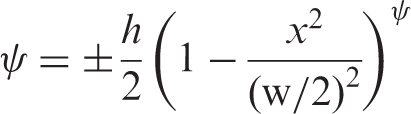
As the literature indicates, there is a scarcity of information on the modeling of the honeycomb fabric structure. To address the necessity of such special fabric structure in potential applications, this study aims to establish a geometric model for characterizing the 3D architecture of honeycomb woven fabrics. On the basis of the reviewed matrix expression for 3D woven fabric, this paper takes into account the exact 3D geometry of the ordinary honeycomb fabric and assumes a linear relationship of the yarn through-thickness position with its perpendicular in-plane direction. Two matrices are developed for warp and weft positions in 3D coordinates and employed for honeycomb fabric geometrical simulation. A number of honeycomb fabrics are weaved by experiment to validate the analytical model (matrices) and fabric samples using elastic yarns as weft yarns are also used to assess the sensitivity.
Geometrical modeling
Analysis of honeycomb fabric architecture
In a honeycomb woven fabric, for instance as shown in Figure 3 where the black mark represents the warp float and the white one indicates the weft float, the tight part (weave area ‘ A honeycomb woven fabric pattern and its simulated fabric. ’) is made of interlaced yarns in plain weave pattern and the loose parts (floats ‘
 ’ or ‘
 ’), are two orthogonal sets of yarn floats. The fabric is relatively thinner in the weave area owing to the yarn interlacement. The yarn floats are on the fabric surface showing the yarn position is higher with the increase of the length of the yarn float. A fabric unit-cell forms a thick 3D, cuspated or pyramidal fabric profile.

In the sketch of the fabric pattern, the point ‘A’ is on the top surface, which is caused by the warp floats above and below, and weft floats on the left and right. The long warp and weft floats pull the point ‘A’ on the top of the fabric surface. The point ‘B’ is in the opposite situation. The weft floats above and below and warp floats left and right lead to the point ‘B’ on the top surface of the opposite fabric, that is, at the back side of fabric. The length of the float is decreasing slowly to the plain weave area, resulting in the repeats of the inverted pyramdial profile in a kind of honeycomb appearance.
Figures 3(I), (II), (III) and (IV) around the fabric pattern sketch are the four schematic illustrations of the slice along the longest weft and warp floats in a honeycomb fabric unit-cell, in which Figures 3(I) and (II) show the interlacement of weft yarns ‘a’ and ‘e’ with the warp yarns, respectively, while the sectional diagrams of 3(III) and (IV) reflect how the warp yarns ‘1’ and ‘5’ interlace with the weft yarns, respectively. From the front view of the honeycomb fabric in Figures 3(I) and (IV), the weft yarn ‘a’ is on the highest position, whereas the warp yarn ‘1’ is analyzed in the highest place based on Figures 3(II) and (III). Therefore, the intersection of the first warp and the first weft are in the top position (point ‘A’). However, the fifth warp ‘5’ is at the lowest position from the front face on the basis of Figures 3(I) and (IV), and the same situation is found with the fifth weft ‘e’ based on Figures 3(II) and (III), hence the intersection thereof is at the lowest position (point ‘B’). Figure 3 also shows a simulated honeycomb fabric according to the weave pattern on the left-hand side, and the representative points ‘A’ and ‘B’ the weft yarns ‘a’ and ‘e’ and the warp yarns ‘1’ and ‘5’ are labeled on the simulated fabric.
Simulation of yarns in honeycomb fabric: (a) weave; (b) yarn path.
Input parameters for geometrical modeling
Characterization of yarns in honeycomb fabric
When a honeycomb woven fabric is in a relaxed state, the unit-cell contains a pyramidal pit, an internal closed-tetrahedral space and an interwoven-yarn layer. We assume the unit-cell has
Figure 5 shows the dimension of the yarn crossover and schematic of the yarn cross-section. D is the height of the yarn crossover, which equals the sum of warp height (hj) and weft height (hw), lj and lw represent the warp yarn length and weft yarn length of the crimped part, respectively, Wj and Ww are the warp yarn width and weft yarn width, respectively, and s is the yarn spacing, which equals the distance between two neighboring yarn centerlines where the subscripts j and w represent the warp and weft symbols, respectively. Because the yarns used in the experiment are plied strands, their cross-sections are assumed as an elliptical shape with the height of one strand diameter and the width of two times the diameter. The yarn crimp (c, fractional) has the definition for the plain weave fabric as follows:
26
Schematic representation of yarn crossover and yarn cross-section.
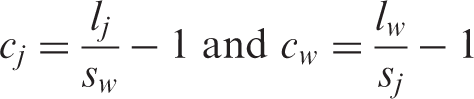
The ratio of crimps, the balance between warp and weft crimps, in the two directions of fabric, is governed by the given yarn spacing and the yarn linear density. However, as for the yarn crimps in a honeycomb woven fabric as shown in Figure 4(a), the weft yarns normally have one interlacement (j1,w1) at the edge of the unit-cell and two (j2,w2) or three (j3,w3) interlacements in the rest of the unit-cell, and the same situation is practicable for the warps in the unit-cell. It is supposed that the unit-cell has 2 m warps and 2 m wefts; the crimp in a honeycomb woven fabric is thereafter calculated as



In Equation (3), the length of crimp parts Lj and Lw can be obtained by integrating the l expression if the crimp (ζ) profile was provided with a cosine function:
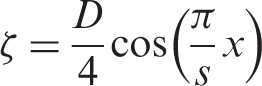
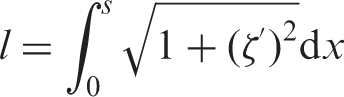
In Equation (4), the parameters D and s can be measured experimentally, then ζ and l are thereafter calculated, and
Apart from the length of yarn crimp, the yarn width and height, as well as the cross-section shape are important input parameters in terms of yarn characteristics in the development of the geometrical model. These yarn factors can be obtained by experimental measurement before fabric manufacturing.
Fabric structural parameters
Yarn spacing (s) in Figure 5 is determined by warp density (
The number of yarns in a honeycomb unit-cell also affects the honeycomb appearance. Together with
Matrix code for the unit-cell of honeycomb fabric
The honeycomb woven fabric cross-section is illustrated in Figure 6. Owing to the particular yarn interlacement, the yarn position (zj/w) in the through-thickness varies regularly and periodically depending on the yarn count (tex), Honeycomb woven fabric cross-section and fabric weave pattern.
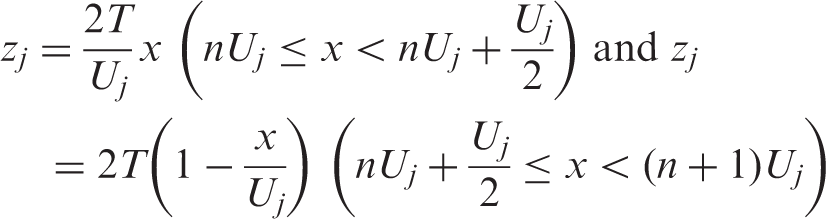
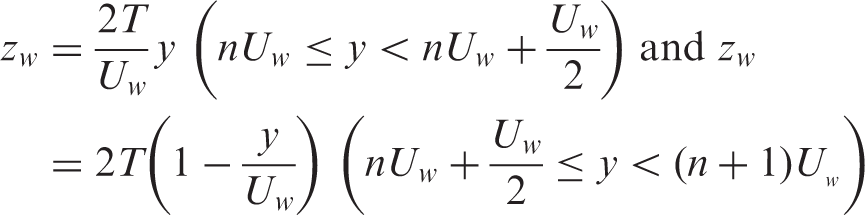
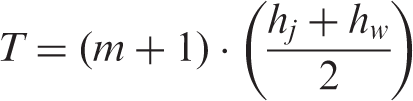
In a unit-cell of honeycomb fabric (2 m × 2 m yarns) along the x-axis and y-axis, as shown in Figure 6, the position of an arbitrary


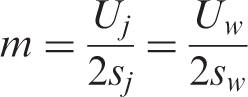
The z values of the

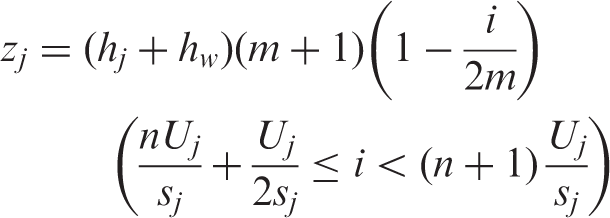

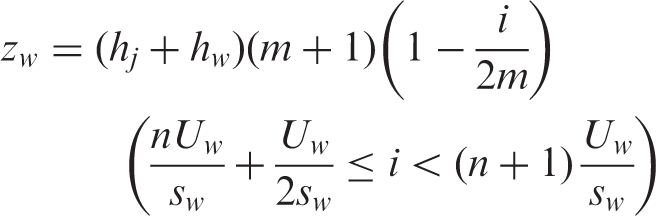
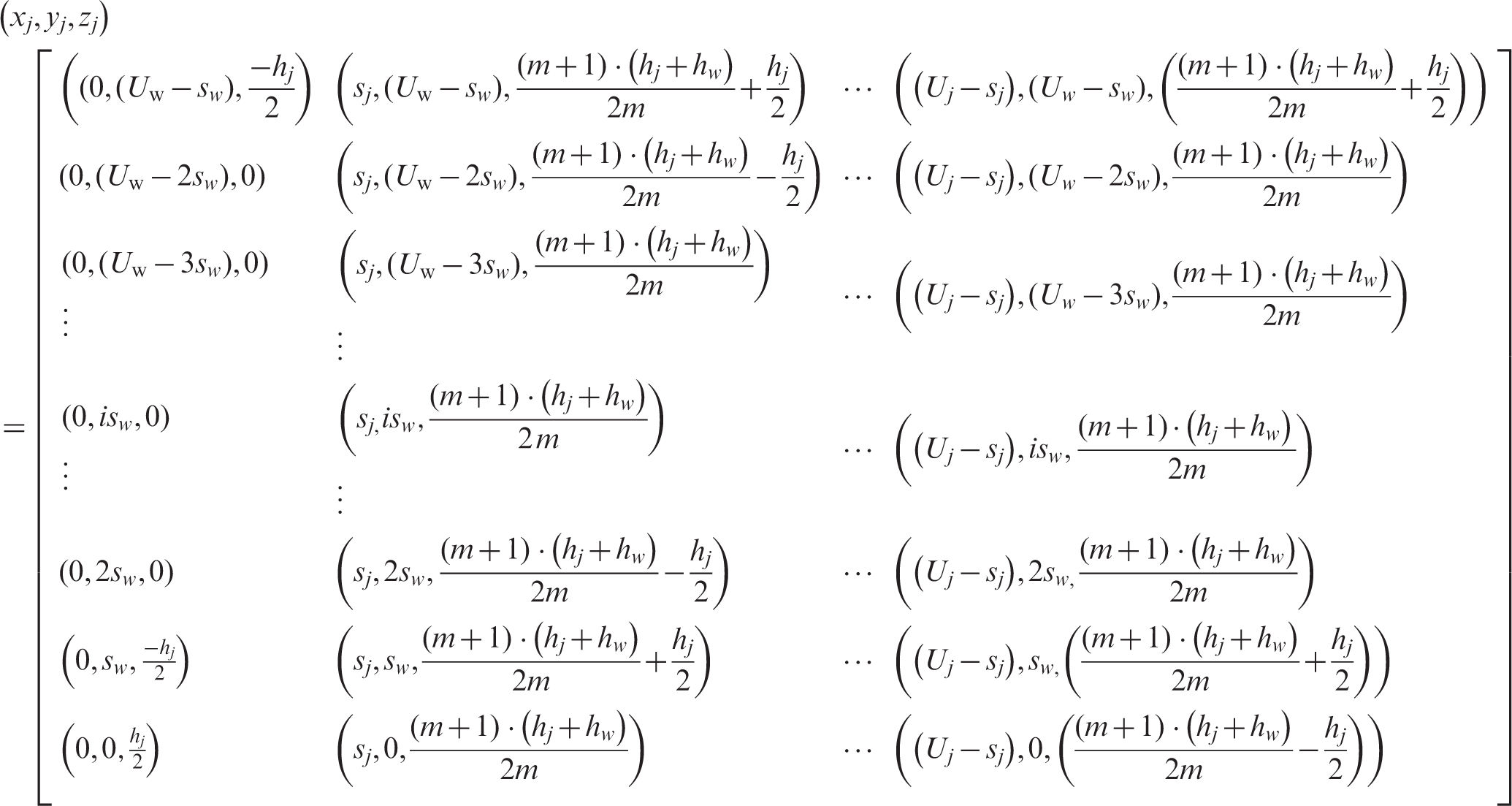
Herein, zj and zw are the transverse locations of the warp and weft yarns. When the yarns are in interlacement at the unit-cell diagonal, zj and zw should be swapped over within half of the yarn height according to the yarn crimp calculation. Then the matrix for describing the 3D coordinates of warp yarns in a honeycomb unit-cell with
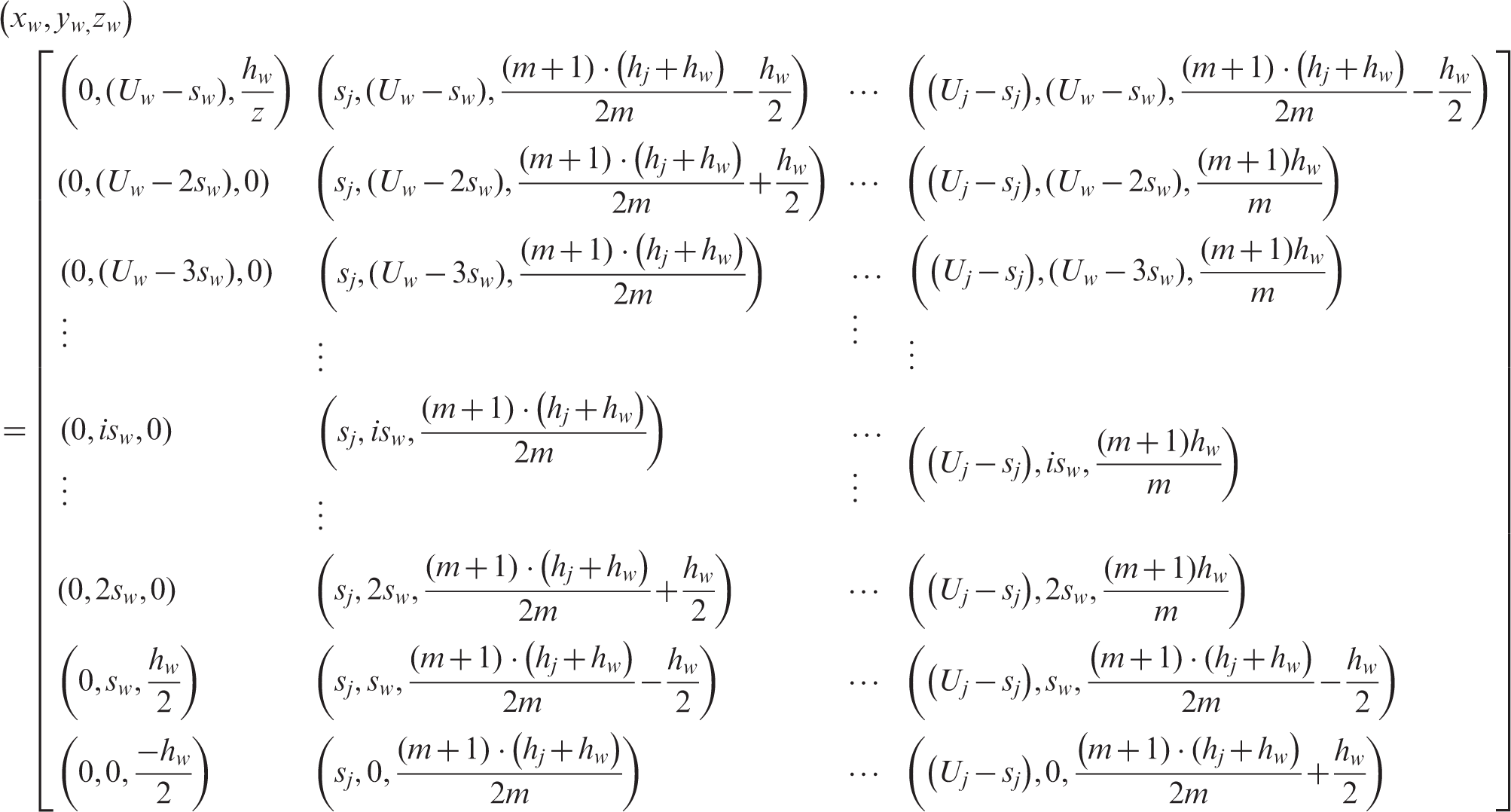
The matrix for recording the 3D coordinates of weft yarns in a honeycomb unit-cell with
Internal space and pyramidal architecture
Owing to the π phase of amplitude difference of Equation (6) between the warp and weft directions, the top warps (wefts) and the back-side wefts (warps) form a closed internal space like a tetrahedral shape, as shown in the schematic representation in Figure 7.
Internal closed space in tetrahedral shape.
The distance between the maximum warp float and the weft float is the fabric thickness subtracted by the yarn height. The depth of the one-side inverted pyramidal space is
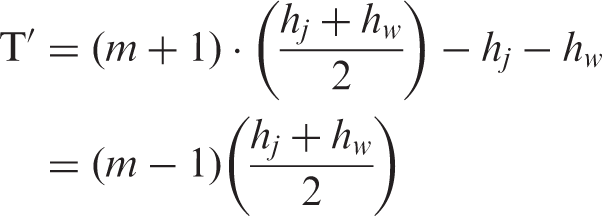
The volume of the one-side inverted pyramidal space is

The other side of the inverted pyramidal space has the same volume as the opposite space, therefore the volume of yarns and internal space has the same volume of Equation (12). Apart from the inverted pyramidal and internal space, the volume of the yarns in a unit-cell is
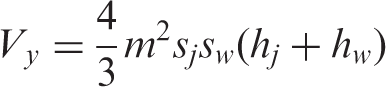
Therefore, the volume of the internal tetrahedral space (Vt) equals the value of Equation (12) subtracted by Equation (13):

On the basis of Equation (14), it is found that the m value should be larger than three, which assures that the internal volume positive. Equation (14) indicates that the fabric unit-cell at least has 6 × 6 warps × wefts to form the honeycomb woven fabric architecture.
Experimental and numerical demonstration
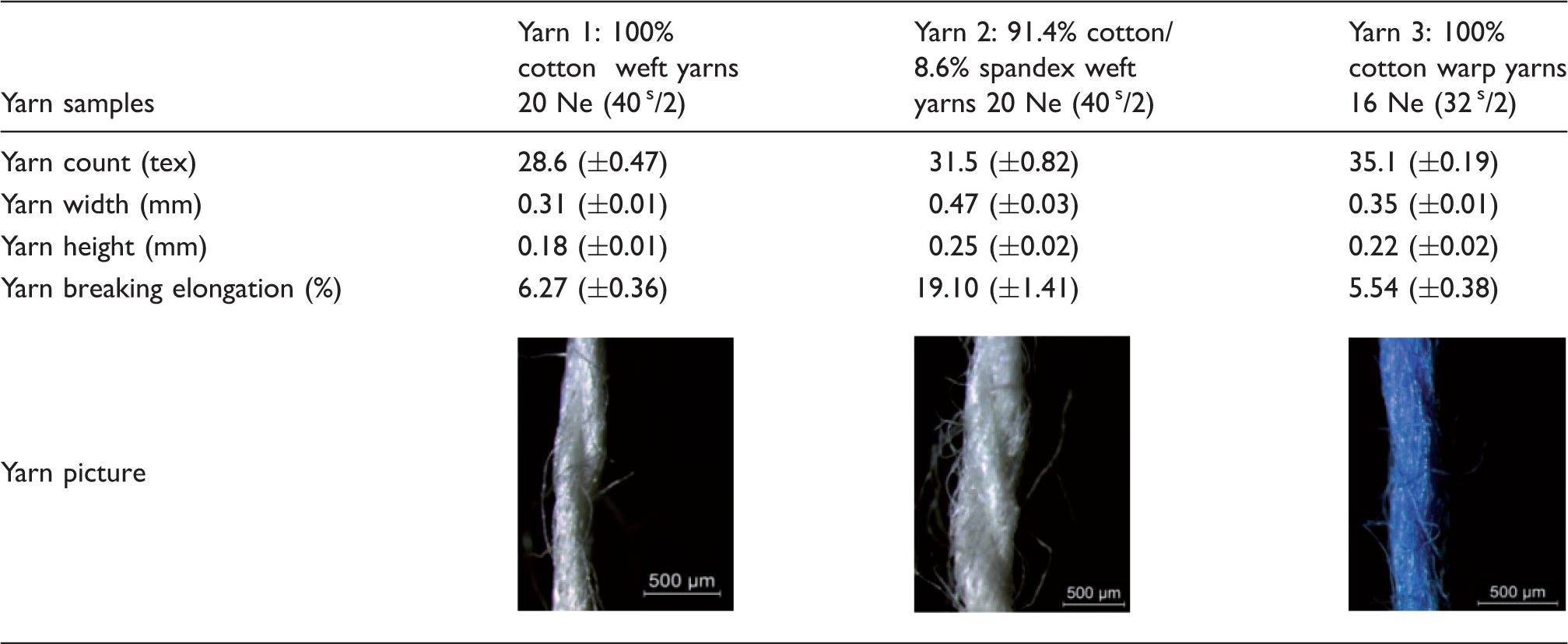
Specifications of yarn for honeycomb fabrics (±standard deviation)
Fabric specifications
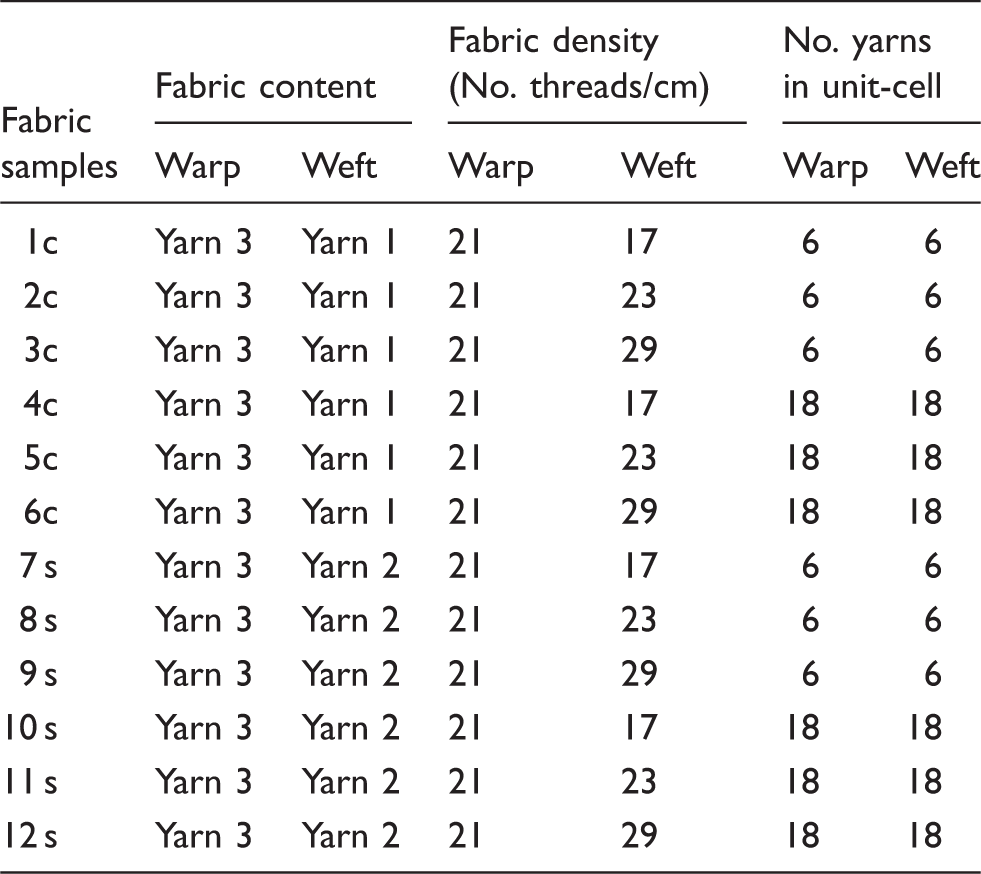
There are 20 harness frames on the rapier loom. Two harness frames were used for forming fabric selvage and the remaining 18 harness frames were used for weaving the honeycomb structure. Therefore, the unit-cell can only have 18 or 6 warps owing to the even number of warp/weft yarns in a unit-cell of the honeycomb fabric and common divisors of 18 harness frames according to the design rule and consistency of the honeycomb structure. The value (warps/cm) was constant (21 ends/cm) as the number of yarns wound on the warp beam, the number of yarns in each dent of the reed and the reed number are all predetermined on the loom in this study. The warp and weft were all plied yarns, which can provide higher strength during the weaving procedure.
In the weaving process, as shown in Table 2, the weft density was set as 17, 23 and 29 wefts/cm, respectively. The fabric specifications in Table 2 were obtained after 24 hours of condition balance. Yarn cross-section, yarn width, yarn spacing and fabric cross-section were examined using a microscope (Leica M165C). Fabric thickness was measured using the Kawabata Evaluation System (KES-FB3) compression tester at the starting point without load. Six specimens were examined for their yarn cross-section, yarn width, yarn spacing and fabric thickness and cross-section. Based on the specifications, the fabric structure was matrix coded according to Equation (10) for the sake of geometrical modeling. The geometries of six honeycomb fabrics without elastic yarns (Fabrics 1c–6c) were simulated by TexGen
25
based on the matrix codes, as shown in the simulation procedures in Figure 8.
Procedure of geometrical simulation in TexGen: (a) input 8 m2 nodes as two layers for warps and wefts; (b) define three coordinates for each node according to Equation (10); (c) set up yarn cross-sections.
Figure 8(b) shows the most important step in the simulation, which determines the accuracy of the modeling. In TexGen, yarns were simulated as solid and flexible bars with elliptical cross-section (Figure 8(c)) on the basis of the measured yarn width and height. The yarn crossover was simulated based on the yarn crimp calculation (Equations (3)–(5)). The simulated fabric can be used for the future study of fabric structures versus properties, including the prediction of fabric mechanical properties, permeability and heat transfer properties.
Results and discussion
Validation of the analytical model by experimental measurement
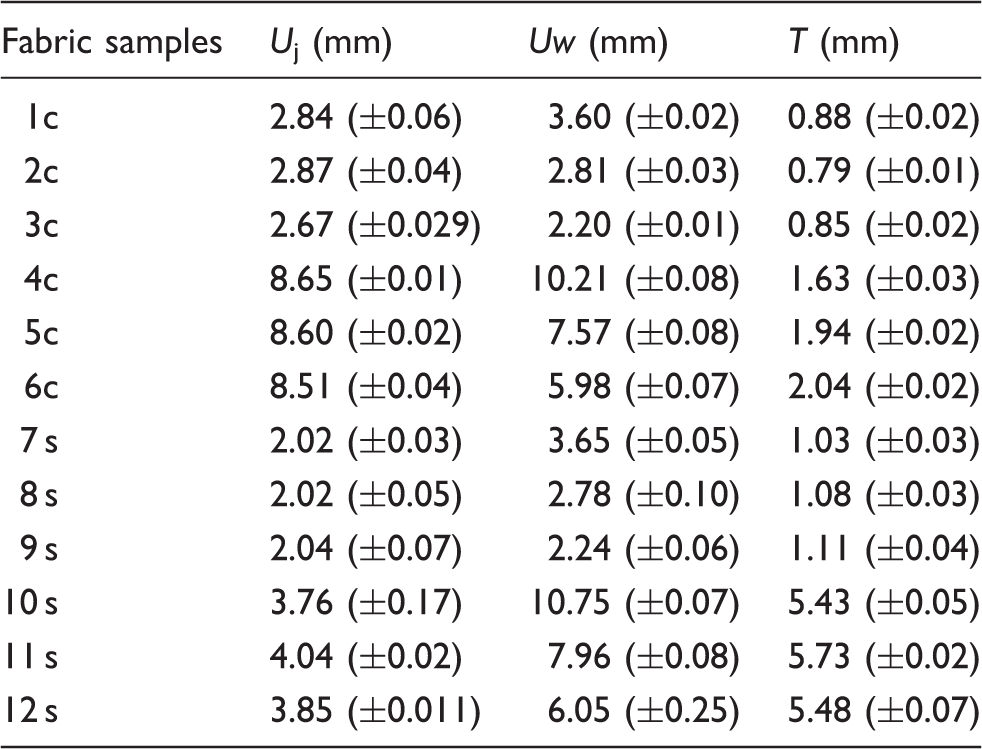
Table 3 lists the measured dimension of average value for each fabric, including the width and length of the fabric unit-cell as well as the fabric thickness. It is noted that the Uj values of fabric samples 4c, 5c and 6c are much higher than that of fabric samples 1c, 2c and 3c because the unit-cell size of fabric samples 4c, 5c and 6c is three times larger than that of fabric samples 1c, 2c and 3c. Meanwhile, the Uw value decreases as Effects of elastic yarn and weft density on the area of the fabric unit-cell. Measured dimension of the fabric unit-cell (±standard deviation)
Comparison of yarn spacing and fabric thickness between analytical prediction (P) and experimental measurement (E)
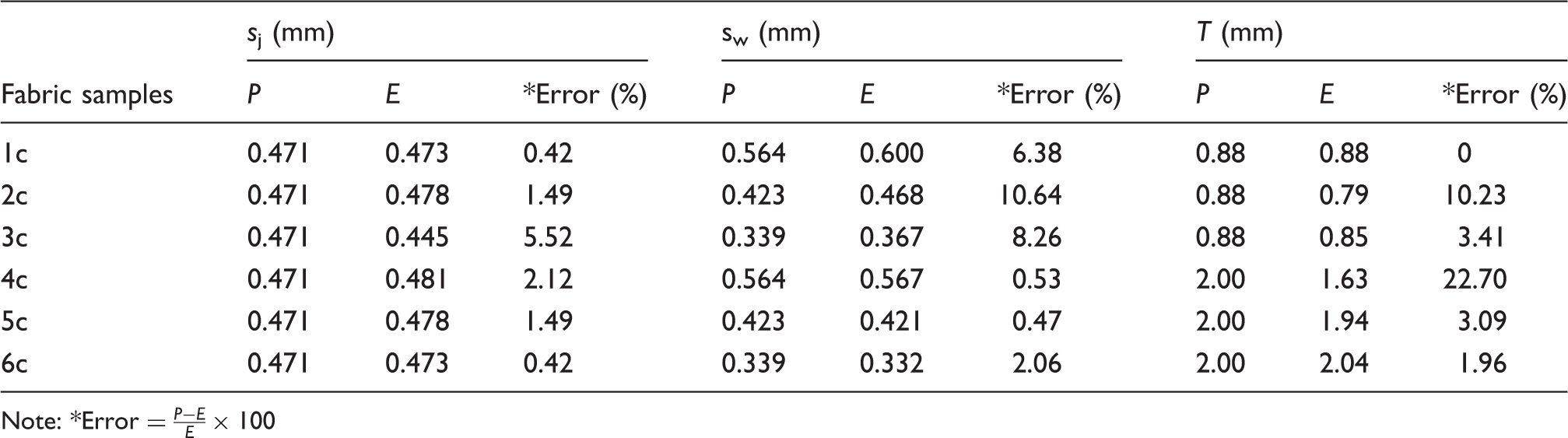
Note: *
Comparison of characterized and simulated fabric structures
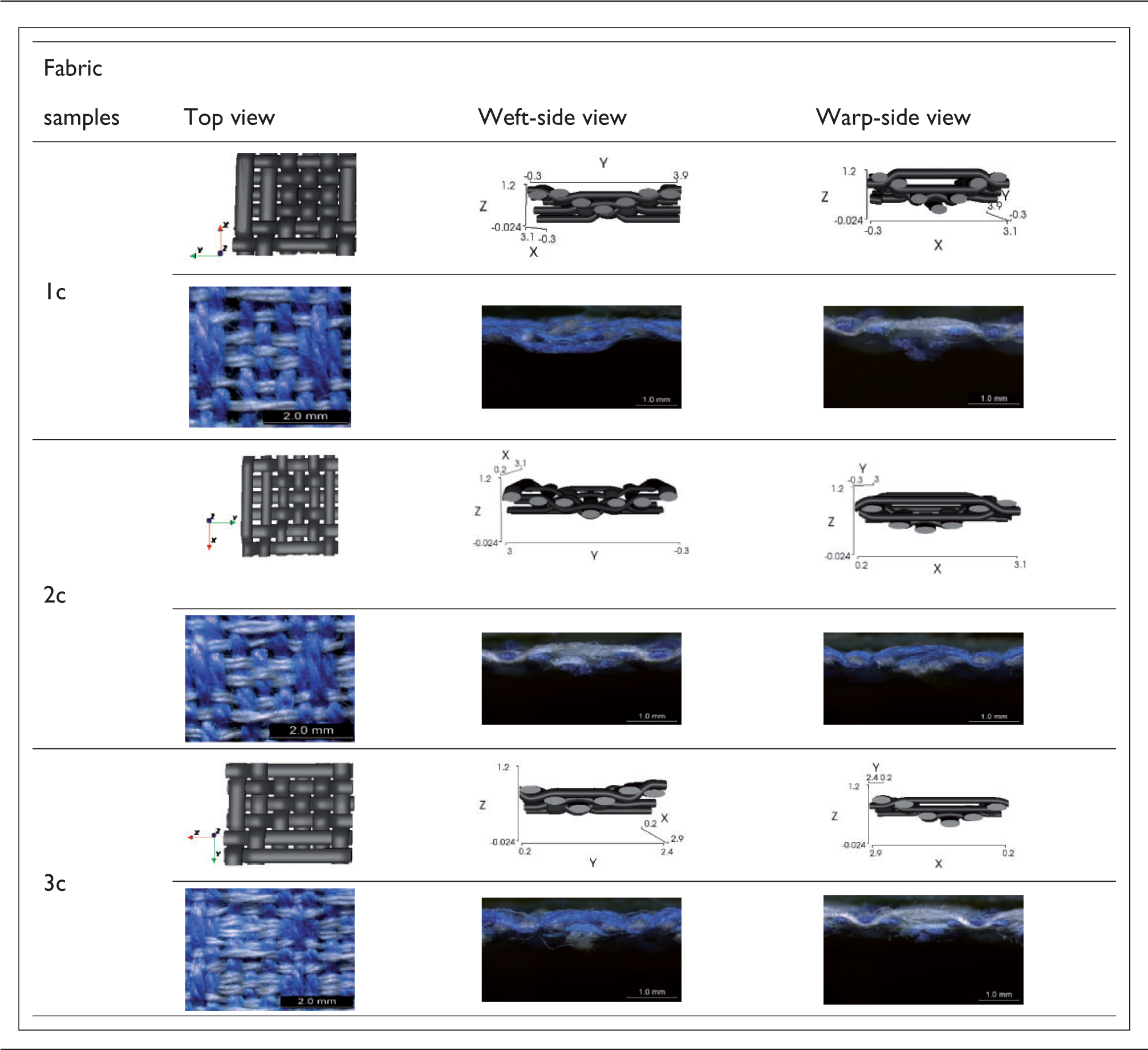
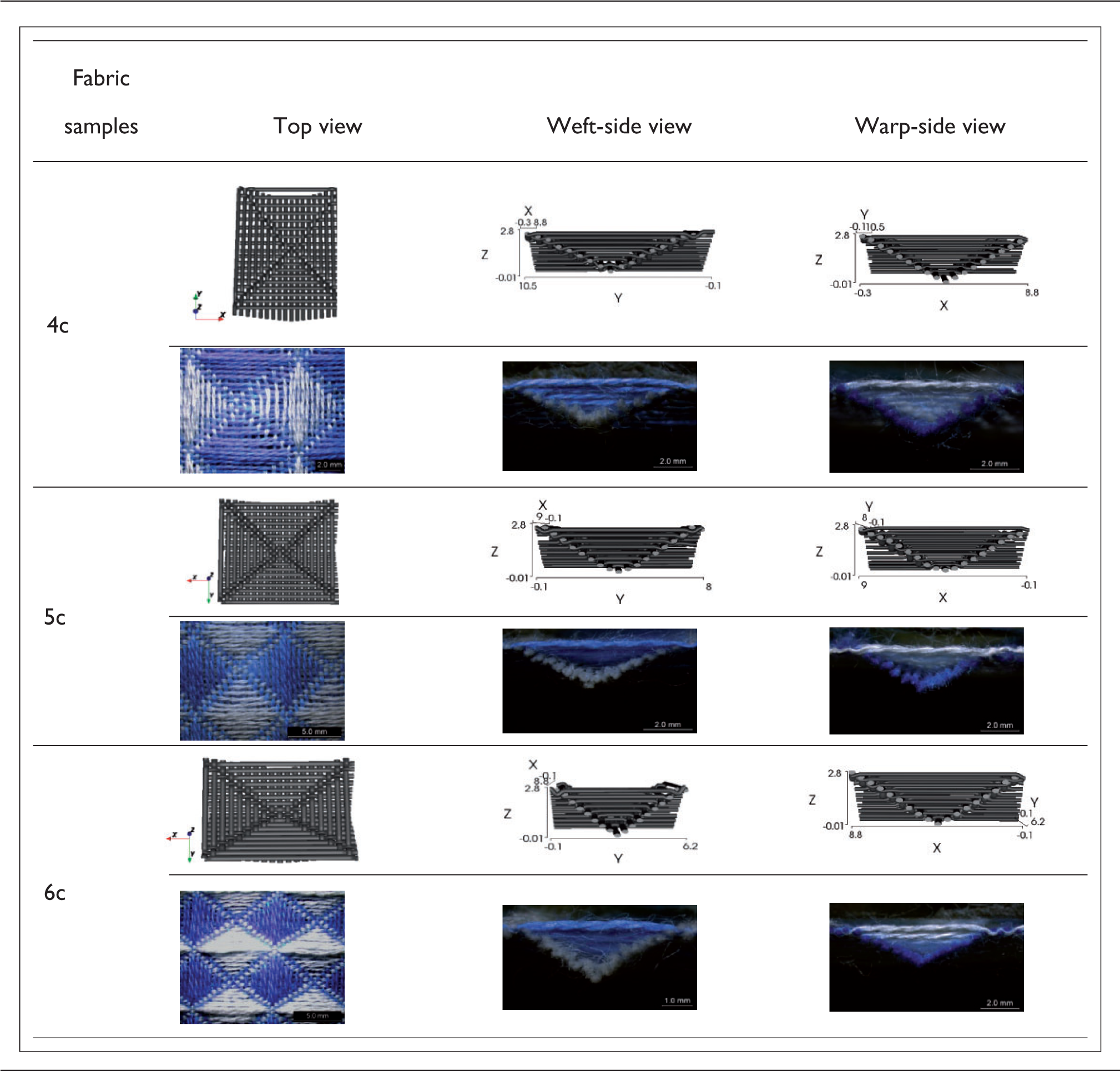
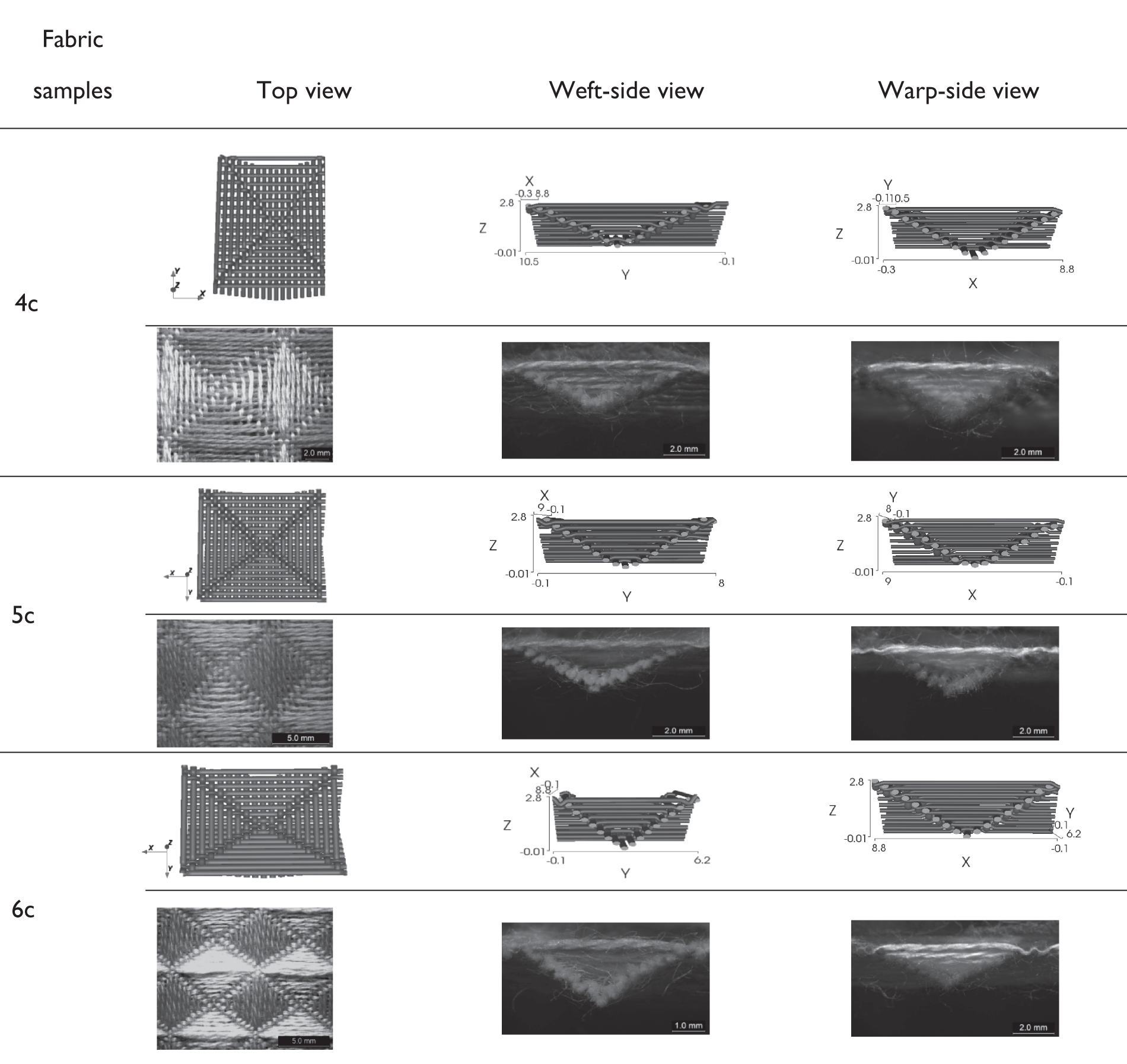
The numerical simulation was implemented according to the matrices (Equation (10)) and suggested simulation procedures (Figure 8). The matrices are based on the measured yarn geometry and setting parameters on the loom, including the number of yarns in a fabric unit-cell and weft/warp density. Three views of the fabric were characterized for the 3D fabric unit-cell architecture: top, warp and weft laterals. Six fabrics (fabrics 1c–6c) are compared for their unit-cells between the experimental characterization and numerical simulation.
Comparison of simulated and real fabrics for the unit-cell with 6 × 6 yarns
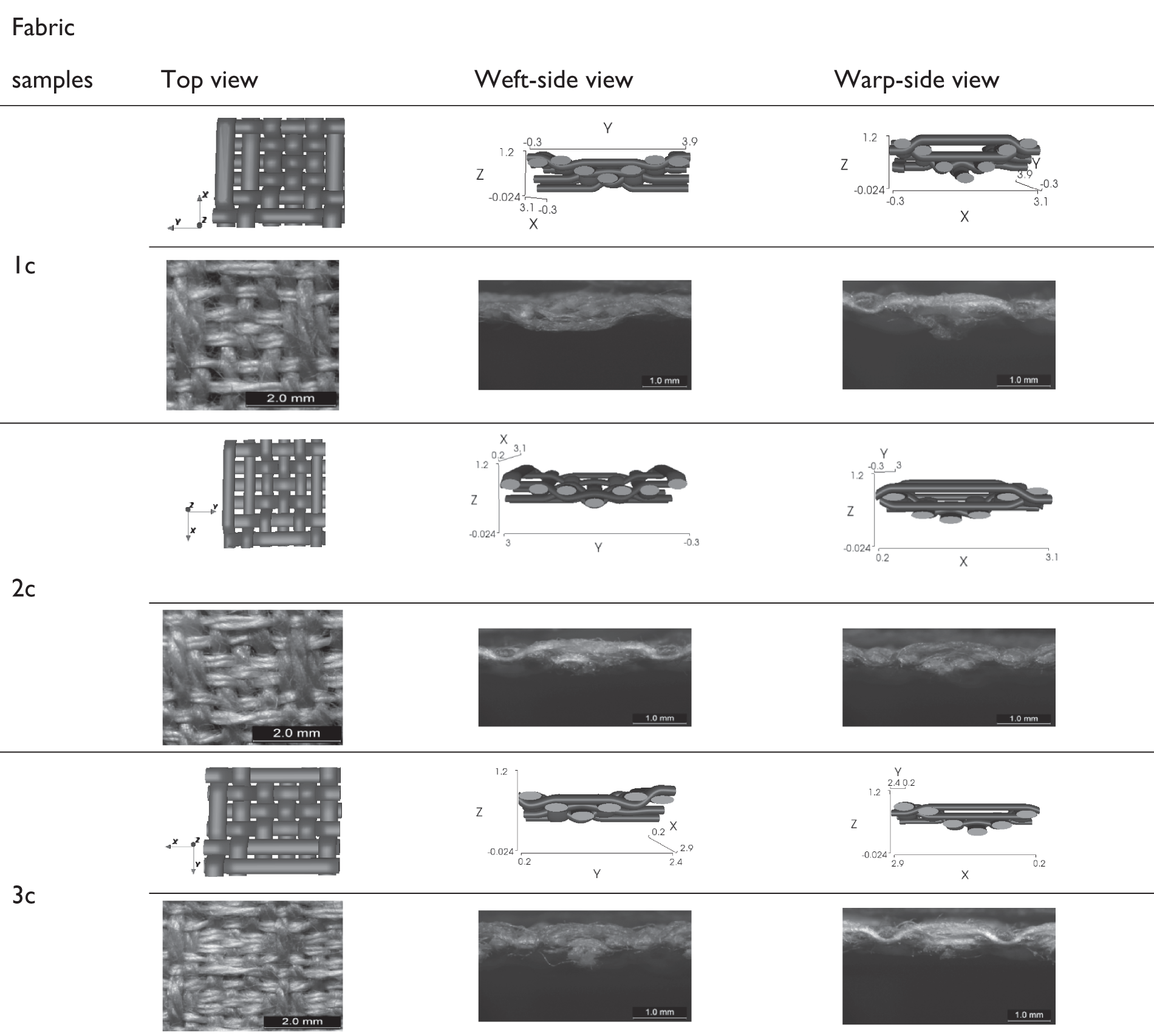
Comparison of simulated and real fabrics for the unit-cell with 18 × 18 yarns
Effect of elastic yarn on the honeycomb weave structure
The elastic yarn with the spandex filament can shrink the fabric unit-cell length or width of the fabric, causing the angle ϕ to greatly increase and the fabric to have a more prominent honeycomb structure. Herein, the honeycomb weave structure is compared for the factor of the weft yarns Yarn 1 and Yarn 2. One kind of fabric unit-cell and three values of
Comparison of honeycomb fabrics (unit-cell of 18 × 18, warps × wefts) with weft Yarn 1 and weft Yarn 2.
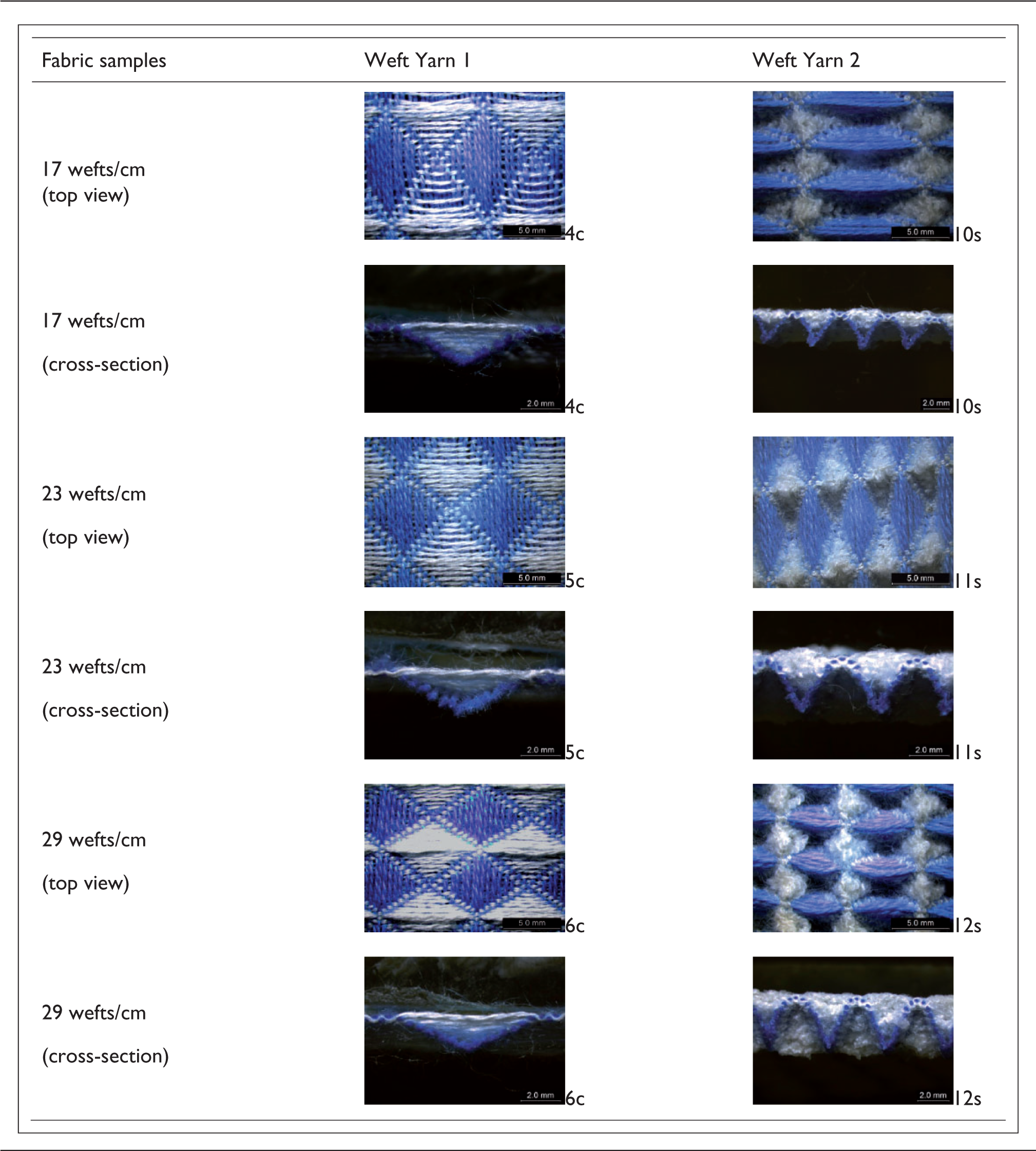
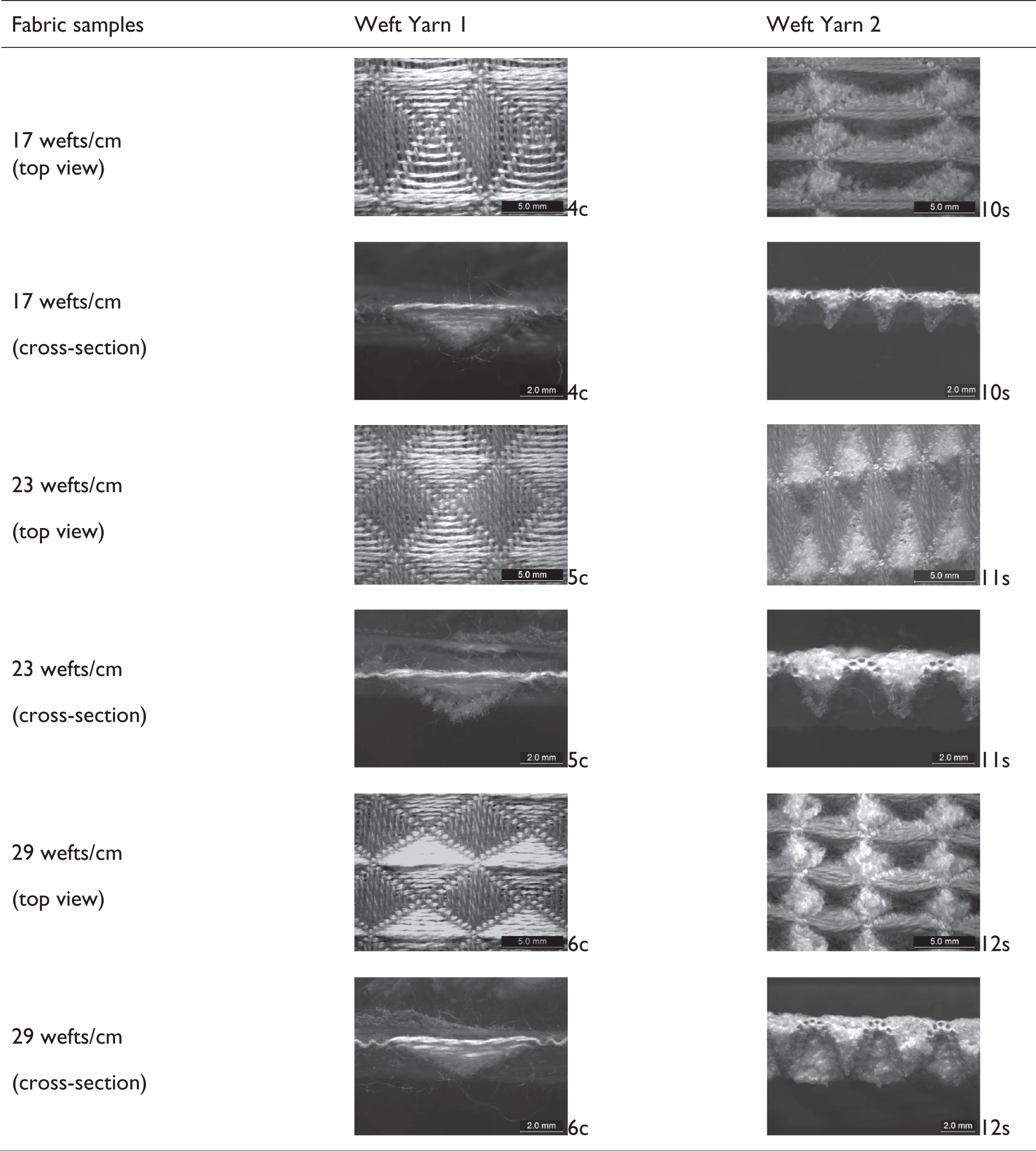
Figure 10 shows the internal volume of a unit-cell (Vt) for the six honeycomb fabrics in Table 7 on the basis of the specifications listed in Table 3 and the volume calculation according to Equation (14). With the increase of Comparison of the volume of internal space among six honeycomb woven fabrics.
Conclusions
A 3D woven fabric is analyzed for its structure, which has waffle or honeycomb geometrical features. The honeycomb fabric structure is characterized for its length and width of the unit-cell, warp and weft yarn densities and yarn width, height, spacing and crimp. In the geometrical modeling, the fabric thickness is assumed as the sum of warp and weft height in half the number of yarns in a fabric unit-cell. A linear function is used for predicting the interwoven positions along the warp and weft directions. Based on the linear assumption, two matrices are developed for characterizing the 3D location of each node in warps and wefts. Using the developed matrices, the numerical simulation in describing the 3D honeycomb weave architecture is carried out based on the platform TexGen, which can define the yarn cross-section, yarn path and yarn density.
Six honeycomb fabrics without elastic yarns were manufactured for validating the developed model. Three of them are honeycomb fabrics in the unit-cell of 6×6 warps×wefts, while the other three samples are honeycomb fabrics with 18×18 warps×wefts in the unit-cell. The comparison between the measured values and the simulated values based on the geometrical model shows excellent agreement (average error <5%) with each other in terms of fabric thickness, yarn cross-section, yarn width and spacing, unit-cell dimension and volume of internal tetrahedral space. This indicates that the simulation based on the developed matrices is very effective for simulating the honeycomb fabric architecture.
Six more honeycomb fabrics with elastic wefts were manufactured for the sensitivity study. The experimental results of fabrics show that the honeycomb weave effect becomes more prominent when the elastic yarns are used as weft yarns for fabrics, especially for fabrics with low fabric density. This is also reflected by the decrease of the volume of internal space in honeycomb fabric with the increase of fabric density and the use of elastic yarns. In the view of significance, applied with yarn specific geometries and properties, this geometrical model will thereafter assist with the fundamental study on the relationship of honeycomb fabric architecture and its mechanical, permeability, wettability and heat transfer properties. Based on this, more honeycomb structures will be developed for the desired fabric performance for various applications.
Footnotes
Funding
This research received no specific grant from any funding agency in the public, commercial or not-for-profit sectors.