







Abstract
Lead-shielding products, such as lead aprons, are important materials for personal protection of physicians and patients from X-ray radiation during medical operations. However, lead has environmental disadvantages, with high toxicity. The aim of this study was to manufacture an environmentally friendly and flexible textile-based radiation shielding material. Tungsten, bismuth and barium sulfate powders were used as alternatives to lead with recognized shielding abilities against X-rays. The cotton fabrics were coated with silicone rubber that contains tungsten, bismuth or barium sulfate powders in equal weight fractions. X-ray attenuation ratios of the samples were measured at 80, 100 and 150 kV tube voltages in accordance with medical protection standards. Using the theoretical models, the thicknesses required for 90%, 95% and 99% attenuation ratios at the 100 kV energy level were also estimated for all the materials. The results showed that, at 60% weight ratio, 1.55 mm bismuth embedded coating can attenuate 90% of X-ray photons at the 100 kV level, while the required thickness of a tungsten embedded coating is 1.73 mm for the same protection level. At the same weight ratios the bismuth–silicone rubber blend reached better attenuation ratios per thickness in comparison with tungsten and barium sulfate powder–silicone rubber blends.
In medical applications, X-rays are used for both diagnostic examinations and radiotherapy treatments. During these applications, the tissues near the region of treatment often get exposed to the penetrative X-rays, leading to harmful side effects. In order to reduce the radiation dose, people working in interventional X-ray rooms are required to wear protective clothing for radiation.
Lead-shielding products, such as lead aprons, are important equipment for personal protection of physicians and patients from X-ray radiation during medical operations.1–4 However, the toxicity of lead is a major concern and its disposal is associated with some environmental hazards. 5 In addition, lead aprons, which are composed of layered thin lead sheets, have common cracking problems in practice due to bending and incorrect hanging after use. 6
In US and British patents,7,8 shielding against radioactive rays via compounds including metal powders is proposed and is patented with a fundamental work. Most of the research about personal shielding materials against X-ray protection has focused on non-lead and lightweight new materials.9–14 Recent studies of non-lead materials have focused on developing processes that incorporate metal powders into polymer sheets with sufficient metal content for effective shielding, and durability to avoid tearing and cracking.15–17 In Mahltig et al., 18 the sol-gel method is used to allow the incorporation of heavy elements in inorganic coatings that may be applied to textiles. In Mahltig et al., 19 the integration of bismuth and barium compounds in the fibers as the composite structure is proposed as an X-ray shielding material.
The conventional textile fibers consist of elements (C, H, O, etc.) with low atomic numbers, which have low attenuation abilities against X-rays. Tungsten, bismuth and barium sulfate are proven shielding substances, used in various fields for X-ray protection.15,20,21 Heavy metal elements (i.e., high Z materials), such as tungsten, bismuth and composites of these materials, have been traditionally used for protection against X-rays or gamma rays because of their higher mass densities with the advantage of lower toxicity compared to lead.22–25
Barium sulfate (BaSO4) is also an environmentally friendly shielding material that is widely used for radiation protection. 21 Barium sulfate can be incorporated into a polymer at high loading levels (weight ratio of 60%) without significant loss in physical properties of the polymer. It has very good weathering resistance and is resistant to acids and alkalis. 15
The aim of this work is to develop a non-lead coating, which can be directly applied on the textile surface using relevant conventional textile technologies. In this study, the idea of developing environmentally friendly X-ray shielding material (with the integration of minerals and metals in polymers) for the textile surface is extended with theoretical modeling, focusing on the required X-ray protection in medical applications.
Experimental details
Material and method
Bismuth (Bi) metal in powder form (Sigma Aldrich, 149 µm) with 9.8 g/cm3 tungsten (W) 26 powder (Sigma Aldrich, 12 µm) with 19.3 g/cm3 density, 26 and barium sulfate (BaSO4) powder (Baser Mining Company – 5 µm) with 4.5 g/cm3 density 26 were employed for the study. In order to hold heavy powders in dispersed form, silicone rubber (SR) was chosen as the coating due to its high viscosity (64 Pa.s). Besides, SR shows high durability to cracking and has good flexibility after curing. The density of SR (Terra Silicone Silastosil LSR36) after curing is 1.11 g/cm3.
The coating compound was prepared such that 60% weight ratio (w/w) powder additives and 40% (w/w) SR were mixed for 1 hour with a Heidolph 2041 mixer. The weight ratio of 60% was the upper limit for the barium sulfate powder additive in order to have a coating paste, which was applicable to a fabric using a conventional coating technology. 15 Therefore, coating samples were prepared at the weight ratio of 60%. To avoid air bubbling, the compound was degassed by vacuuming for 30 minutes before the coating process. An RGK 40 laboratory-type knife coating machine from Atac Machine Corp. was used for the fabric coating at the knife over roll position and the coating thickness was controlled by the knife-roll distance adjustment. The curing condition of the SR compound was determined as 15 minutes at the temperature of 110℃.
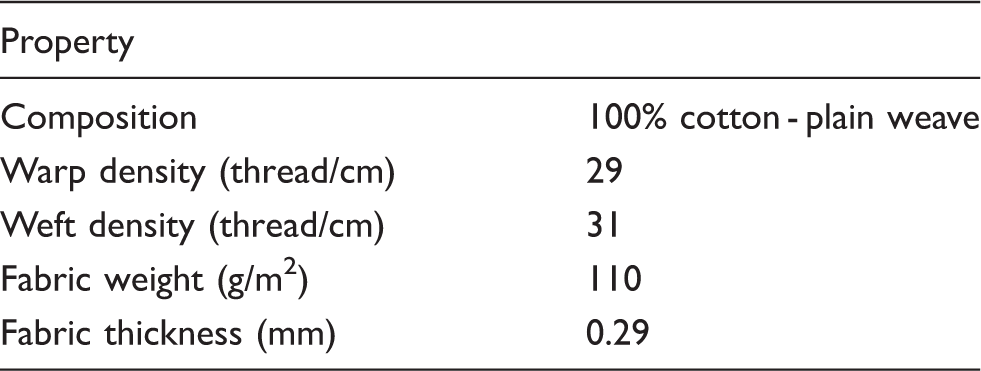
The properties of the base fabric
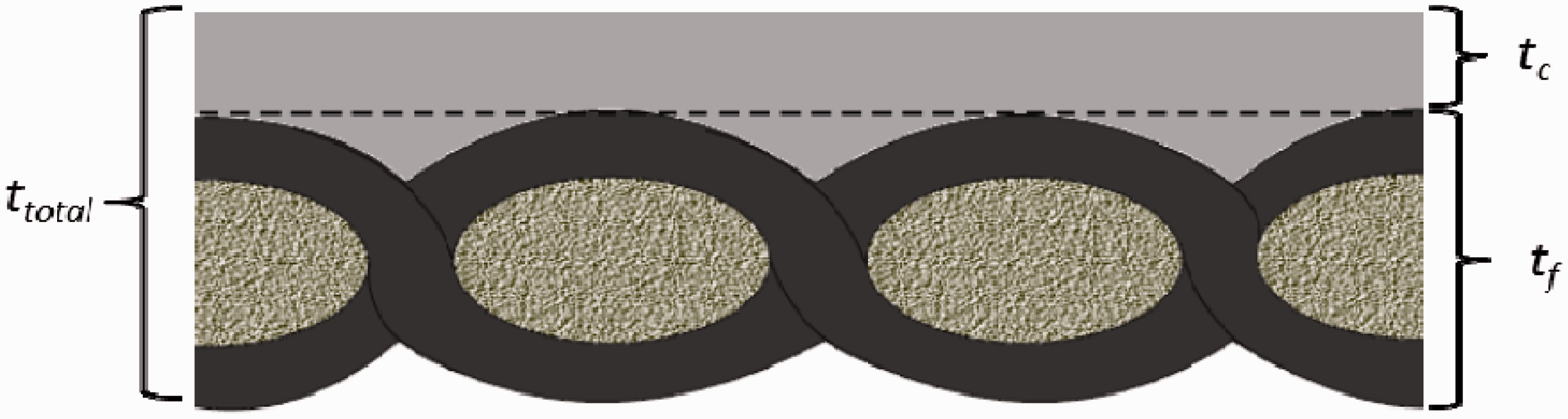
The surface of the uncoated fabric is in a wavy form as a result of woven fabric construction and the coating penetrates through the fabric surface and fills in the cavities between yarns (Figure 1).
27
Besides, the amount of coating on the surface is critical in radiation attenuation, where the thickness of material is the main factor of X-ray shielding efficiency.
28
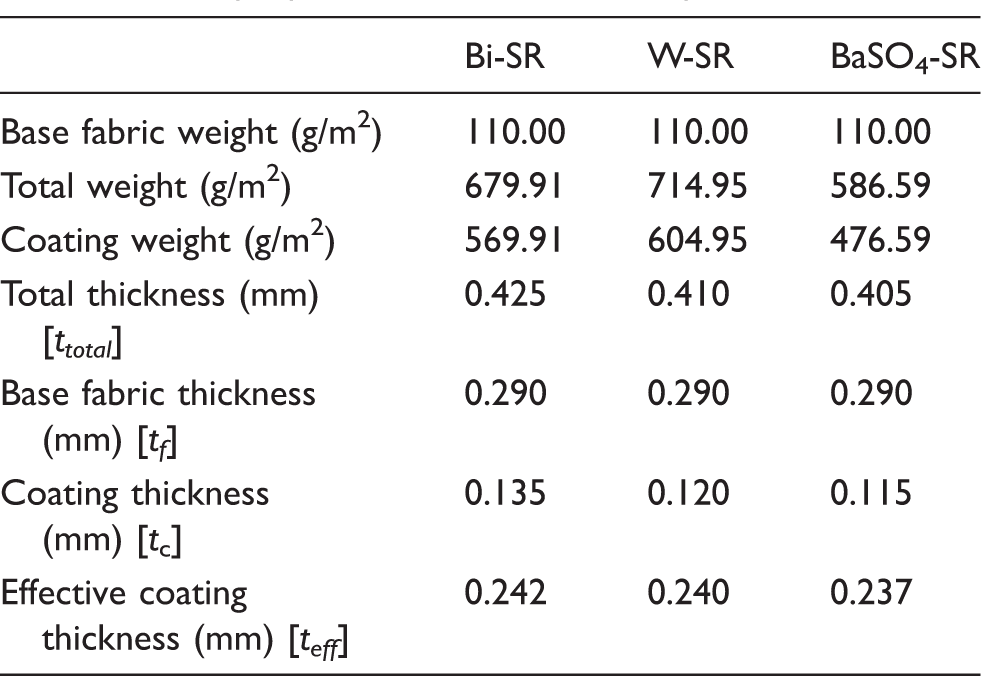
Therefore, with the approach of considering the penetrated amount of coating, Equation (1) was proposed to calculate the effective thickness, which is not equal to the difference between the coated and uncoated fabric thicknesses (tc). In Equation (1), the coating density (g/cm3) is the average density of powder-SR blend, whereas the coating weight per unit area (g/cm2) was calculated in terms of the uncoated and coated fabric weights:
The schematic view of a coated plain weave fabric.
The properties of the coated samples
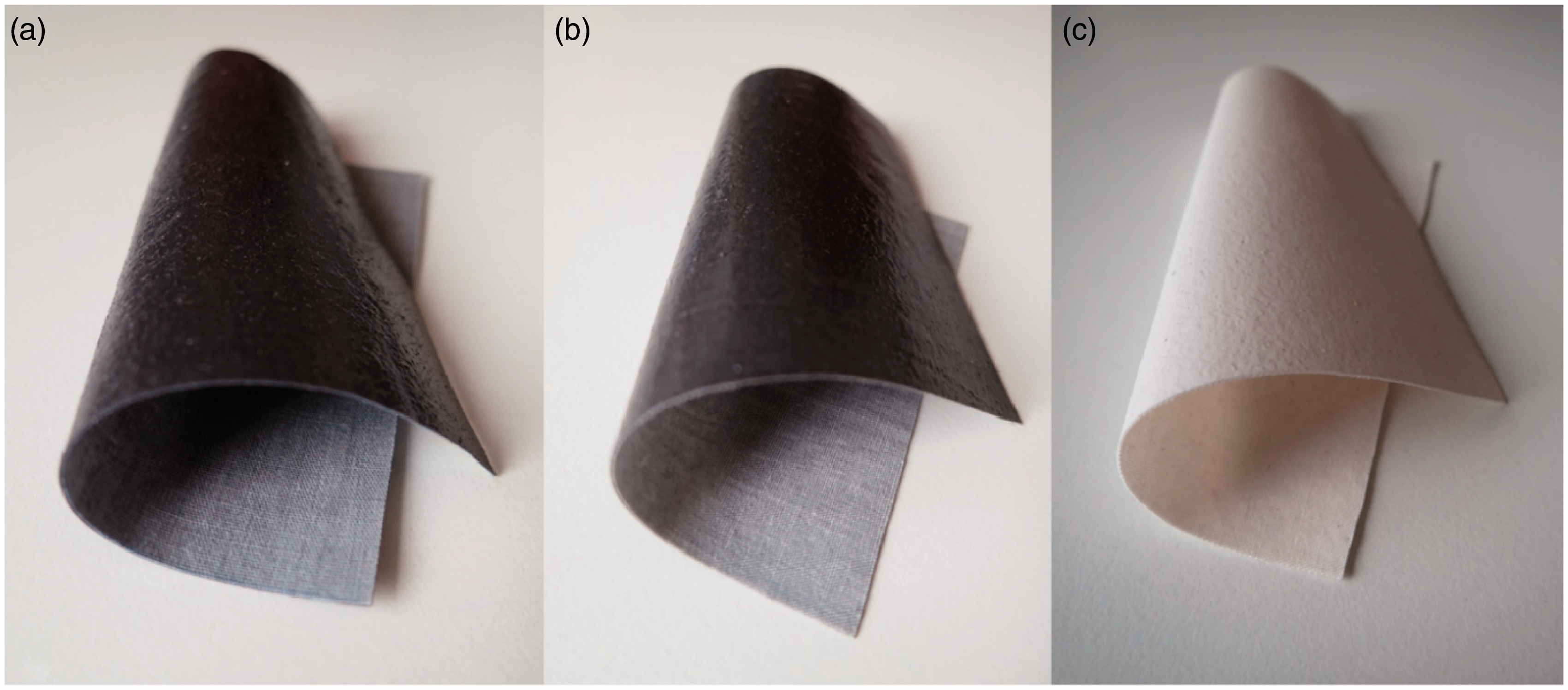
The images of the coated samples: (a) Bi-SR; (b) W-SR; (c) BaSO4-SR.
Measurement of X-ray attenuation
The radiation shielding abilities of the samples were measured at 80, 100 and 150 kV tube voltages in accordance with the medical application standards.
29
The exposure was set at 10 mA. The distance between the X-ray tube and the detector was set to 100 cm, and the X-ray beam was well collimated according to the size of the sample (9 cm × 9 cm). The fabric samples were placed between the detector and the X-ray source, at a very close position to the detector. The schematic representation of the measurement method is given in Figure 3.
The schematic of the measurement set-up.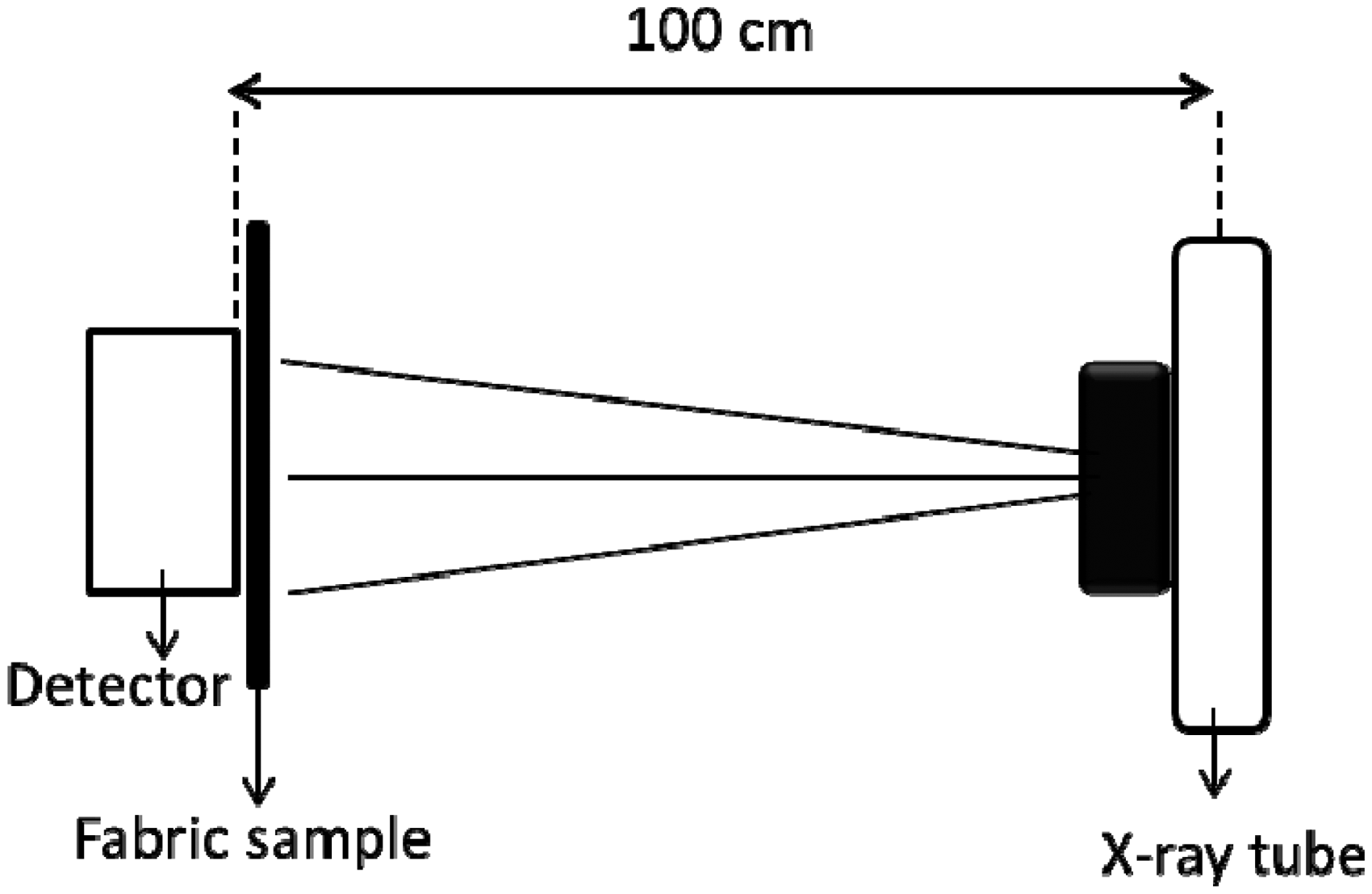
The X-ray attenuation properties of a material are described by the exponential attenuation law. The relation between X-ray and matter is given by Equation (2):
28

In Equation (2), I is the intensity of the attenuated beam, I0 is the initial intensity, t (cm) is the thickness of the shielding material and μ (1/cm) is the attenuation coefficient of the shielding material. 28
In practical terms, I is the intensity of X-ray radiation after interaction with the shielding material (Figure 4). I depends on I0, the initial intensity of the X-ray radiation before shielding and also material thickness and attenuation coefficient. The attenuation coefficient (µ) is a characteristic property of the material that depends on X-ray energy level and can be obtained by inverting Equation (3) as follows:
Illustration of radiation attenuation through material.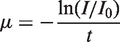
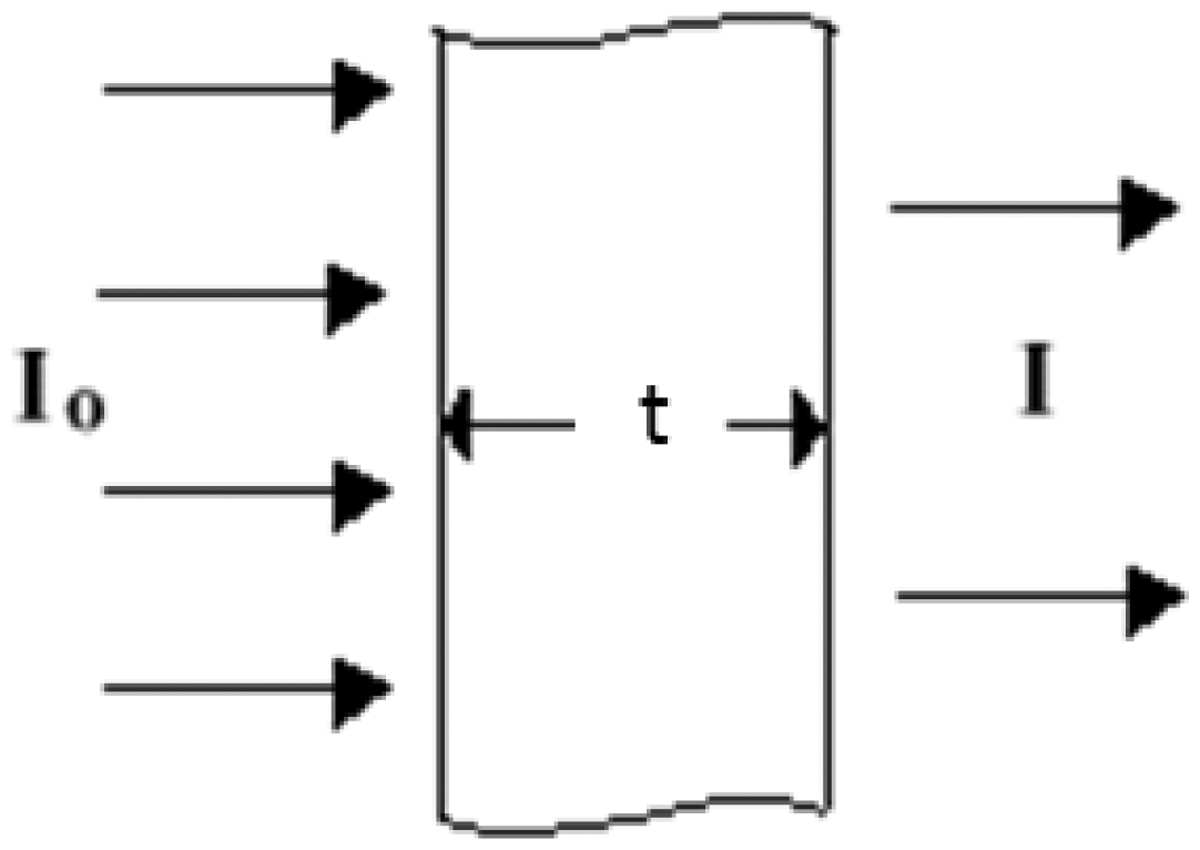
Radiation attenuation ratios (RARs) for each sample are also calculated by Equation (4):

The experimental results were used for modeling the attenuation abilities of the samples via Equation (2). The non-linear regression toolbox of MATLAB was used for the model fitting by using Equation (2) as the model function. Modeling the attenuation abilities enabled us to estimate the RAR values at a given thickness.
Results
In Figure 5, the RARs of Bi-SR, W-SR and BaSO4-SR are given at three tube voltage levels, namely 80, 100 and 150 kV. The RAR values of each sample (points on the curves) are the average of three measurements. The standard deviations of the measurements of Bi-SR, W-SR and BaSO4-SR samples are at most 0.058, 0.058 and 0.057, respectively. As expected, the attenuation ratios of the structures decreased as the X-ray energy levels were increased. Furthermore, as may be seen from Figure 5 for all three samples that were prepared at the equal powder weight ratio (60% w/w), the bismuth powder embedded coating (Bi-SR) showed higher shielding abilities than W-SR and BaSO4-SR samples. The barium sulfate powder embedded sample, BaSO4-SR, had the lowest attenuation ratios, whereas the tungsten embedded one, W-SR, had relatively closer ratios to Bi-SR.
Radiation attenuation ratios of the single layer of each sample.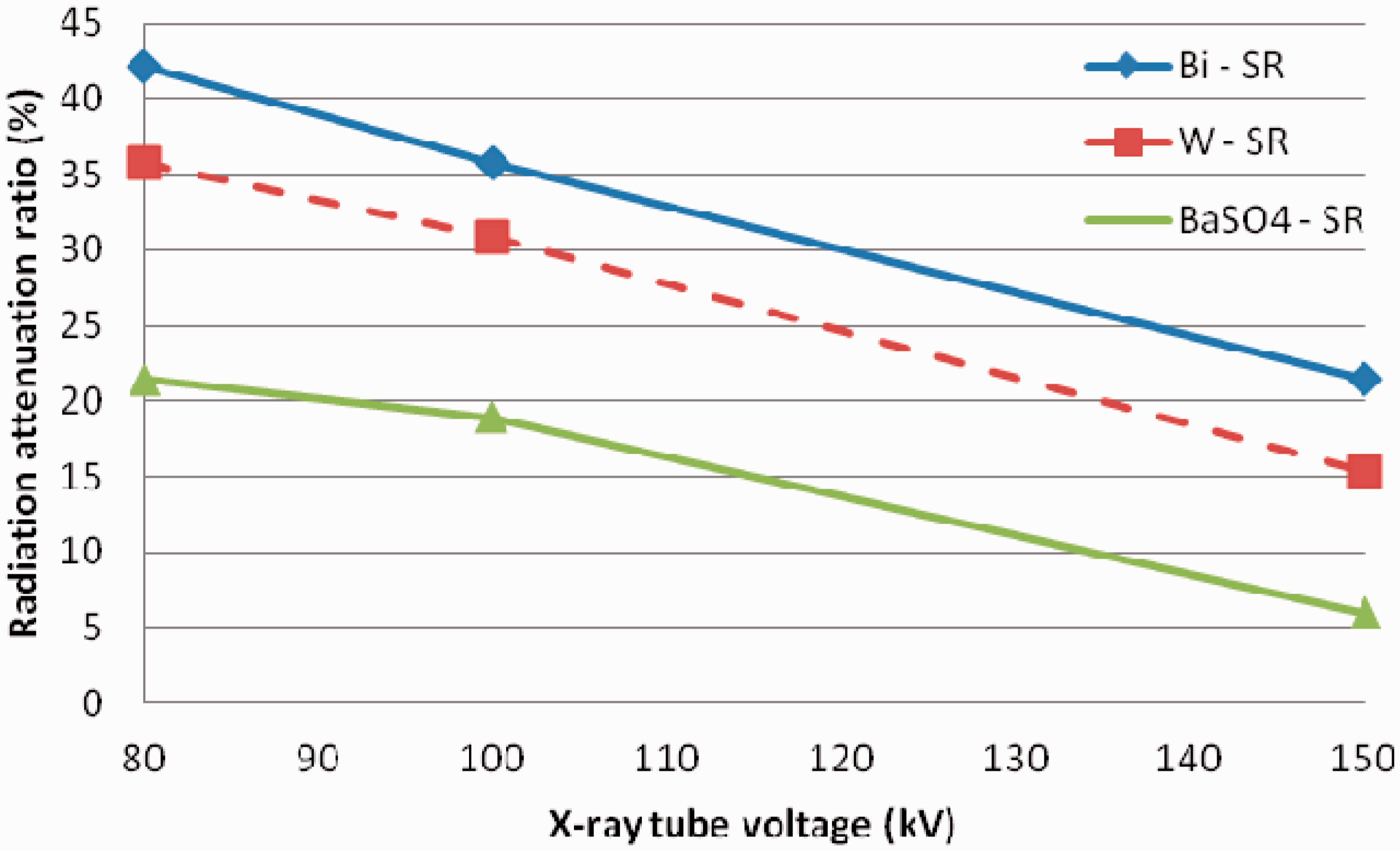
The properties of the coating compounds

The attenuation coefficients from XCOM database. 30
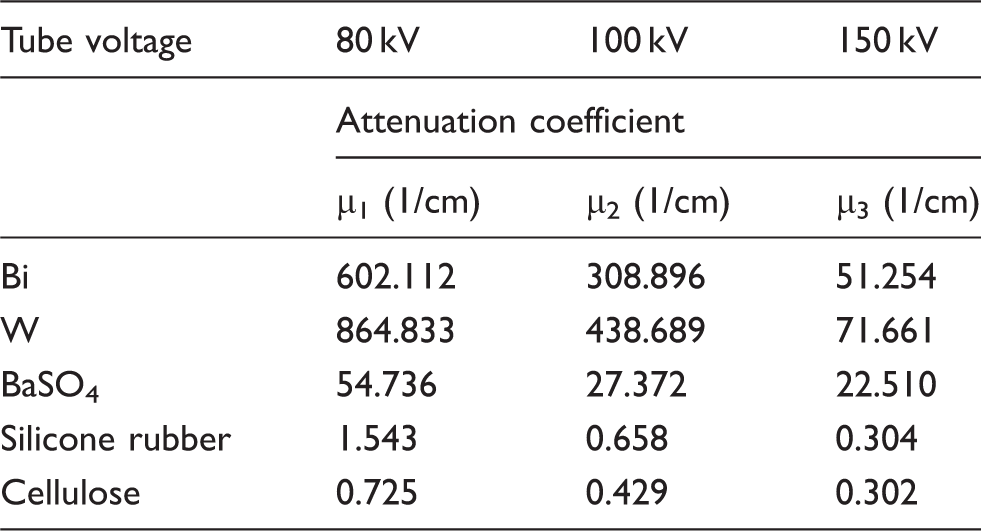
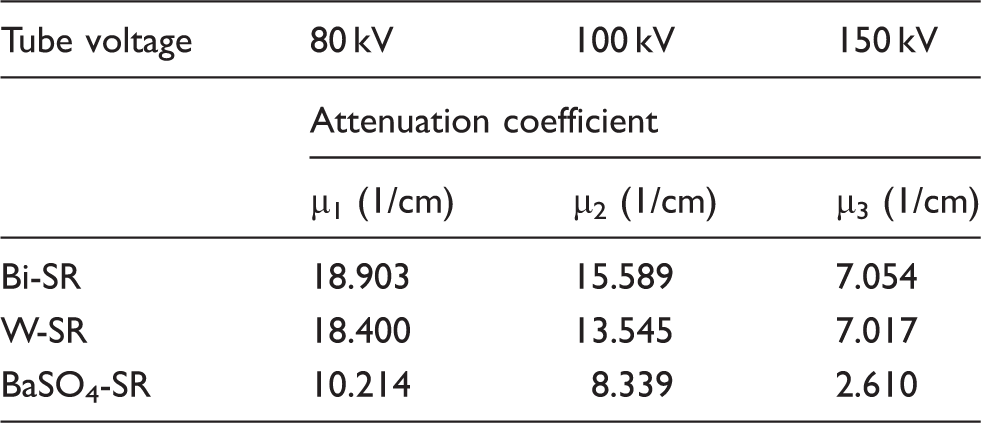
The attenuation coefficients of the coated samples
Tungsten (W) has a higher attenuation coefficient than bismuth (Bi) at all energy levels given in Table 4. Besides, the attenuation coefficient of barium sulfate (BaSO4) mineral is much lower than that of bismuth and tungsten, which are heavy metals with atomic numbers 83 and 74, respectively (Table 4).
Despite the fact that tungsten has a higher coefficient than bismuth in the pure form (Table 4), the attenuation coefficient of Bi-SR was higher than W-SR (Table 5). This has resulted from the different powder volume ratios of the coatings (Table 3) to some extent. As may be seen from the Table 3, at the same coating thickness for the 60% w/w ratio, the bismuth volume ratio in the coating was 14.41%, whilst the tungsten volume ratio was found to be only 7.4%, due to the differences between their densities, which are 9.8 g/cm3 (bismuth) and 19.3 g/cm3 (tungsten). On the other hand, BaSO4-SR had the lowest RAR, despite the fact that it gave the highest volume ratio (27.3%), when compared to that of Bi-SR and W-SR. This very result suggested that for additives having relatively high attenuation ratios, the radiation shielding performance of the coating may be improved by increasing the volume ratio of the additive in the coating.
The attenuation coefficients of the coated materials were lower than those of the pure forms of the additives used. This revealed that the SR (40% weight ratio in the coating) had a reducing effect on the shielding performance of the coating, since it caused a decrease in the volume ratios of the additives in the coating (Table 5). Similarly, the cellulose, forming 90% of cotton, has the lowest coefficient, which implies that the fabric from cotton would have almost no positive effect on X-ray shielding (Table 4) of the coated material.
The results showed that the single layer of a coated fabric had insufficient protection at the energy levels studied (Figure 5). As Equation (2) suggested, the thickness of a shielding material has an important role in radiation shielding. In order to enhance the shielding ratios, the total thicknesses of the samples were increased by layering the structures in a sandwich form. After that, Bi-SR, W-SR and BaSO4 samples from two to five layers were tested under the 100 kV energy level. By utilizing the data of layered samples, a theoretical approach was used to estimate the attenuation abilities of the samples for the same effective coating thickness (teff), as well as the thickness values, which are essential for medical protection. The thickness of the base fabric is omitted because there was no effect against X-rays, as was stated previously (Table 4). In doing so, the NonLinearModel.fit() procedure of MATLAB was used for non-linear regression. 31 The radiation attenuation model function is known and given in Equation (2), and accordingly the curve fitting is achieved by minimizing the sum of squared errors. The estimated coefficient was significant at the 5% significance level by using the t-test since the corresponding p-value is less than 0.05. The root mean squared errors are 0.0339 (Bi-SR), 0.0281(W-SR) and 0.0127 (BaSO4-SR).
Figure 6 gives the comparative results of the experimental and theoretical data. As can be seen from the figure, the experimental data of all three samples and their model curves are coherent. Bi-SR had the lowest I/I0 ratio for a given thickness, which meant higher radiation attenuation.
The experimental data and model curves of I/I0 versus thickness of Bi-SR, W-SR and BaSO4-SR.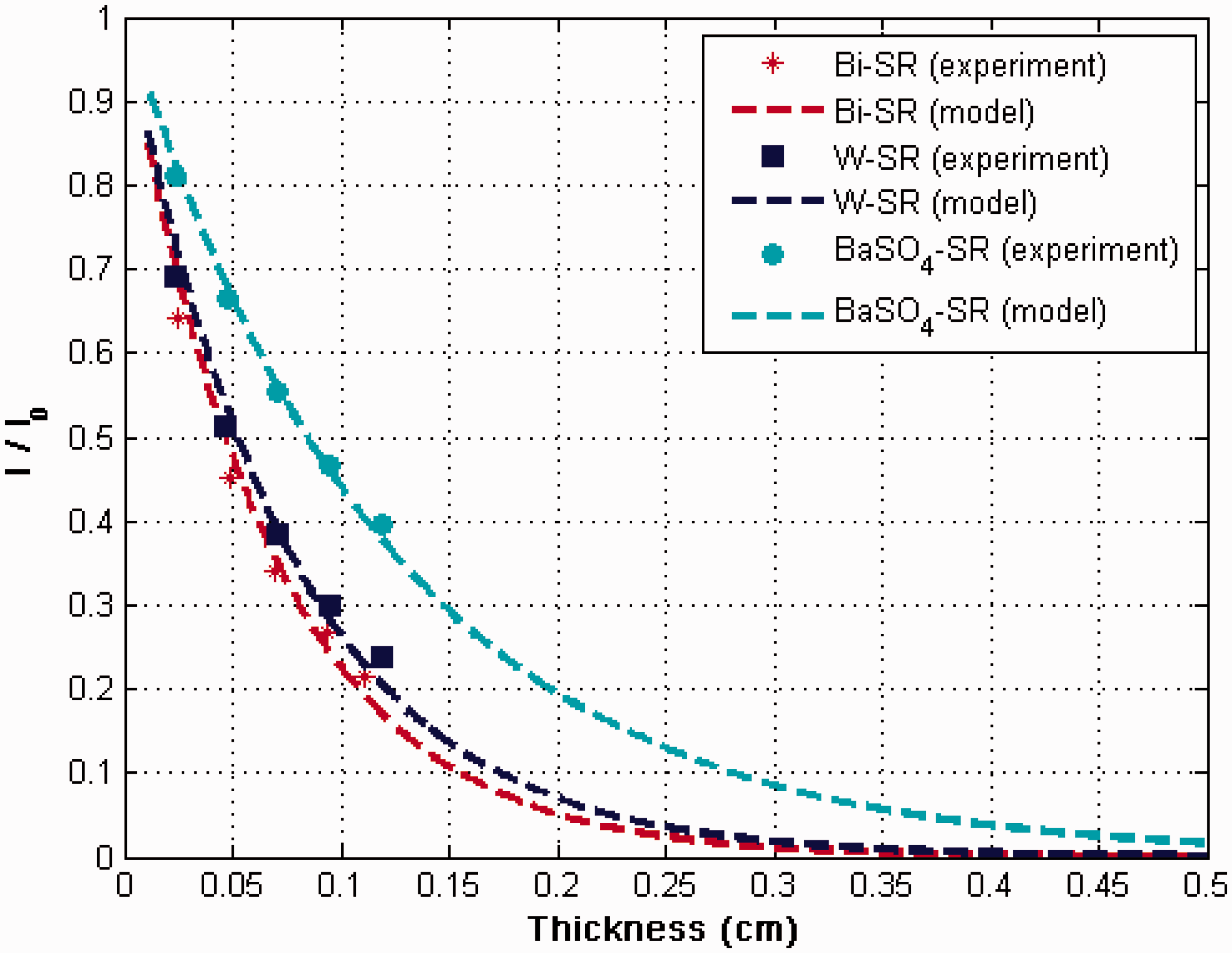
As far as medical applications are concerned, protective clothing and/or equipment against X-rays should have the attenuation performance of 90% or higher, which means a protective equivalent of not less than 0.25 mm lead for X-rays up to 100 kV and not less than 0.35 mm lead for X-rays over 100 kV.
32
Using the theoretical models, the thicknesses required for 90%, 95% and 99% attenuation ratios at 100 kV energy level were estimated for all the samples, and they are presented in Figure 7.
The estimated thicknesses of Bi-SR, W-SR and BaSO4-SR required for 90%, 95% and 99% attenuation ratios at the 100 kV level.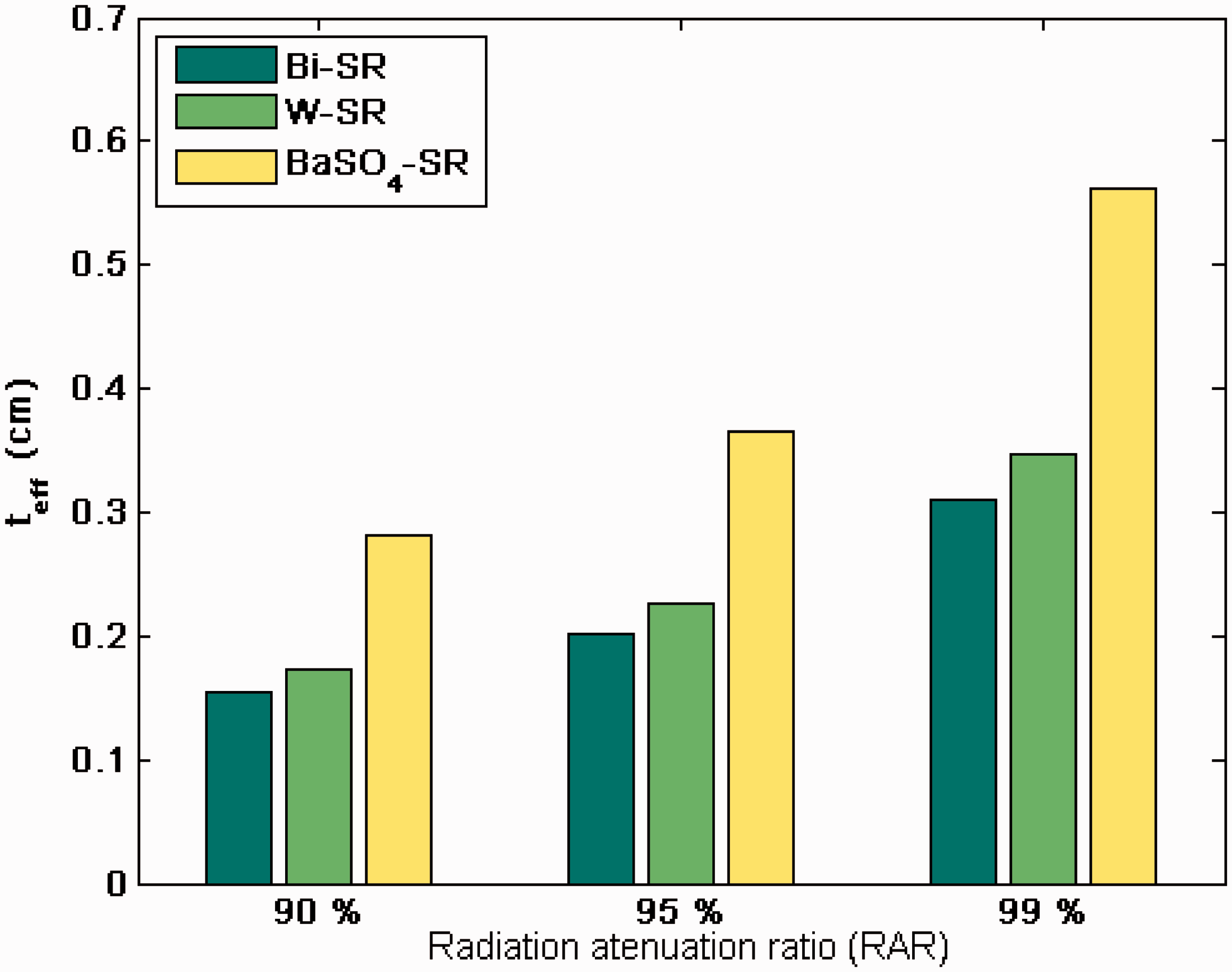
The calculated coating weights of Bi-SR, W-SR and BaSO4-SR at the estimated thickness for 90%, 95% and 99% attenuation ratios at the 100 kV level

Layer combinations of, Bi-SR, W-SR and BaSO4-SR samples
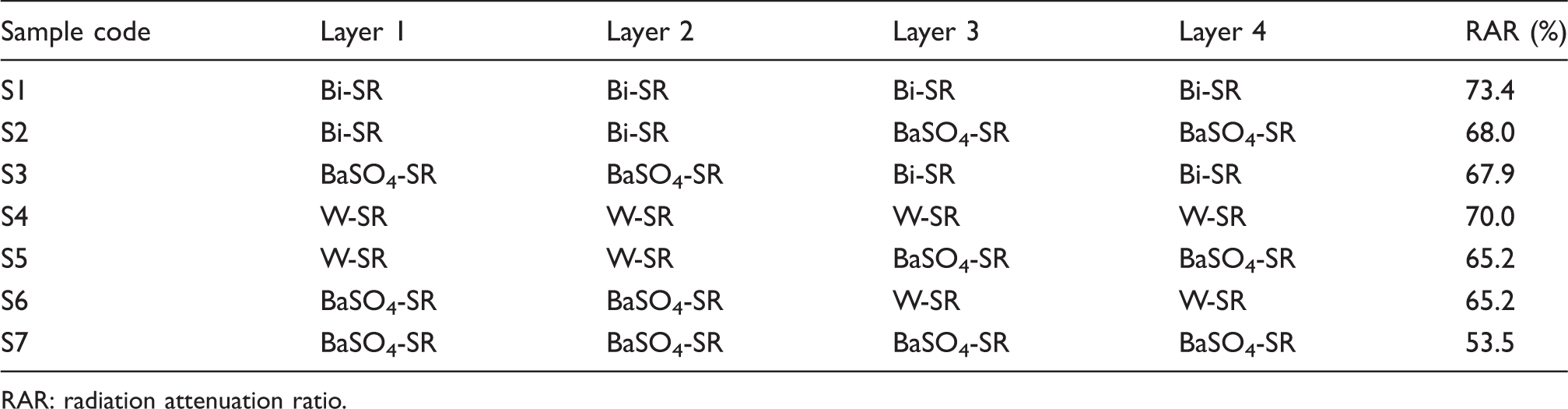
RAR: radiation attenuation ratio.
Even though BaSO4-SR had lower attenuation values than other samples, it was used in the layered samples so as to understand the attenuation behavior of barium sulfate with different metal combinations (bismuth and tungsten). However, the data (Table 7) shows that the combination of Bi-SR, W-SR and BaSO4-SR in the different layer orders had almost no effect on the X-ray shielding properties of the samples (S2, S3, S5 and S6). Moreover, the RARs of two material combinations were between the values of four layered samples of single material (for example, the RAR % of S5 and S6 is between that of S4 and S7).
Conclusion
The main aim of this study was to develop lead-free, coated fabrics for X-ray shielding, focusing on the attenuation properties. The use of heavy metals like bismuth and tungsten powder additives in a fabric coating was proposed as a potential method in the design of protective clothing against X-ray shielding for medical applications. The results showed that 90% of X-ray photons were attenuated at the 100 kV level with 1.55 and 1.73 mm of bismuth and tungsten embedded coating (at 60% weight ratio), respectively. At the same weight ratios, the bismuth–SR blend reached better attenuation ratios per thickness in comparison with tungsten and barium sulfate–SR blends. While tungsten and bismuth coated samples had very close results, the barium sulfate embedded samples had lower attenuation ratios at the same thickness, which meant higher weight for the same protection capacity.
The 40% of coating weight was composed of SR, which was used as the supporting component in the coating with ineffective shielding behavior. The weight of the structures with the additives of bismuth and tungsten at 60% w/w could be reduced by decreasing the SR ratios, which meant higher metal powder ratios. Reducing the SR ratio could result in lighter weight and lower thickness at equivalent protection.
As future work, the mechanical performance of the coated fabrics should be analyzed and improved, as well as the shielding abilities and the weight.
Footnotes
Declaration of Conflicting Interests
The authors declared no potential conflicts of interest with respect to the research, authorship, and/or publication of this article.
Funding
The authors disclosed receipt of the following financial support for the research, authorship, and/or publication of this article: This work was supported by TUBITAK (The Scientific & Technological Research Council of Turkey) under the grant number 112M453 and Istanbul Technical University, BAP project under the grant number 37057.