







Abstract
Image retrieval has been an active research topic in recent decades. In this paper, a novel and effective algorithm is proposed for printed fabric image retrieval by combining color moments methods and gist feature description methods. Color information distribution could be declared by color moments very well and gist feature description has an advantage in representation of spatial information. Therefore, color features and spatial information features are respectively extracted by color moments and the gist feature description method, which constitutes a feature database. After that, the similarity between query image features and the feature database is computed by Euclidean distance. To demonstrate the efficacy of the framework, experiments are conducted on the FABRIC database. Experimental results indicate that the proposed algorithm is more effective and accurate than other hybrid schemes for printed fabric images, in terms of precision and recall.
Advances in modern multimedia technologies have led to huge and ever-growing achievements of images, audio and video in diverse application areas such as medicine, remote sensing, entertainment, education and on-line information services. This is similar to what occurred in the early computer development stage, during which the amount of alphanumeric data increased rapidly and there were many practical issues in the database system. Effective retrieval of the image database is an essential building block for general multimedia information management. For an image to be searchable, it has to be indexed by its content, which is manually annotated by keywords or automatically extracted by visual features. Although it seems effortless for a human being to pick out flower images from a collection of fabric pictures, object recognition and classification are still the most difficult problems in image identification and computer vision, especially in the textile industry. The study background is to achieve image retrieval for printed fabric images in the factory. In some factories, printed fabric sample images are added to the image database every day. The goal of this paper is to complete image retrieval of printed fabrics with various features.
There has been a rapidly increase in the size of digital printed fabric image collections in recent years. A huge amount of information is stored in these images. It is not possible to access or make use of the information unless it is organized so as to allow efficient browsing, searching and retrieval. There has been very active research in the area of image retrieval since the 1970s, from two major research communities, database management and computer vision.1–9 To access an images database on content, low-level features are widely used as indexing features for image retrieval to bypass the difficulties of image understanding, such as colors, textures and shapes of objects.
The objective of color and spatial information features is to retrieve all the images whose color composition is similar to the query image. As is known, the color histogram (CH) method is significant to retrieve images, which was first proposed by Swain and Ballard.10–13 It has been widely used, especially color feature representation of images. However, two disadvantages commonly exist in the CH method, which are respectively noisy interference and lost spatial information. The color histogram and image segmentation (CHIS) method is able to adopt to solve these problems. In image segmenting, the Markov random model (MRF) is chosen to extract spatial information features, which was proposed by Geman and Geman in 1984.14–16 The MRF model has been applied widely, because that spatial information in an image is described and it has a good theory effectively. In the CHIS method, the printed fabric images are firstly pre-processed with image enhancement, in which red, green, blue (RGB) spaces are transformed into hue saturation value (HSV) spaces to avoid certain concentrated color features of the space. 17 Then the color features and spatial information features are respectively extracted by the CH method and MRF model, which are converted into feature vectors. Similarity between the objective query image and image database is computed by Euclidean distance and displayed in decreasing order. Experimental results show that the CHIS scheme has good precision but low recall for printed fabric images retrieval.
The CH is unable to capture the spatial relationship of color regions. This matter is not only solved by the CHIS scheme, but also dealt with by the color moments (CM) scheme. Many papers and researchers have focused on color indexing approaches based on global distributions of color in an image. The most widely adopted algorithms are the color coherent vector, color correlogram and CM, which are better than the traditional algorithm.18,19 CM are adapted to extract color features, which are an advantage of a low feature vector dimension and a small number of calculations.20–24 However, it is inferred that the retrieval efficiency of this method is relatively low, which in practice is often used to filter images. To increase the accuracy of printed fabric image retrieval, an algorithm combined CM and gist feature description (GFD) is presented. In 2001, American scholars Oliva and Torralba were the first to research quick scene identification and classification.25–27 In this study, filtered images are divided into 4 × 4 equal and non-overlapping grids. Discrete Fourier transform is employed to extract overall spatial information features of printed fabric images, which is estimated by the energy spectrum information of images. Compared with the image segmentation scheme (IS), the GFD scheme could smooth away difficulties with computation and parameter estimation complexity.
Glossary
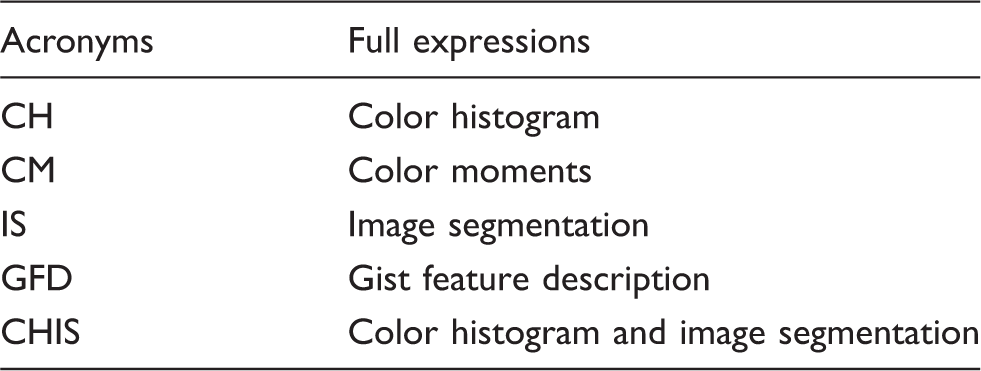
The structure of the paper is organized as follows.
Feature extraction. One kind of features describes feature extraction, including the color feature and spatial information feature, employing respectively the CM method and GFD method. Another contains a similarity calculation to obtain results of image retrieval. Similarity matching. Similarity of features is computed by Euclidean distance, in order to measure the standard of retrieval images. Experimental procedure and experiments. Experimental analysis and discussion are given. This section discusses the experimental results step by step, comparing the results of the proposed algorithm with the CH scheme, CM scheme, IS scheme, GFD scheme and CHIS scheme.
Feature extraction
The key technology of printed fabric image retrieval is looking for certain suitable and efficient features to retrieve. Various feature descriptions for image retrieval have been proposed. From the perspective of visual sense, these could be divided into color features, texture features, shape features and spatial information features. In this paper, color features and spatial information features are adopted to represent overall information of printed fabric images to acquire the computation of similarity between query image and image database.
Color feature
Color is one of the most distinguished and expressive visual features that is utilized in printed fabric image retrieval and object recognition. There are many color descriptors that have been proposed for image retrieval. Lu and Chang 28 proposed a new technique for the purpose of more effective printed image retrieval that adopts the color distributions to represent the global characteristics of printed fabric images. CM are known to produce better retrieval accuracy as compared to the conventional color features. In this paper, CM are used for extraction of color features, because primitives of CM are more robust to describe color images.
Image pre-processing
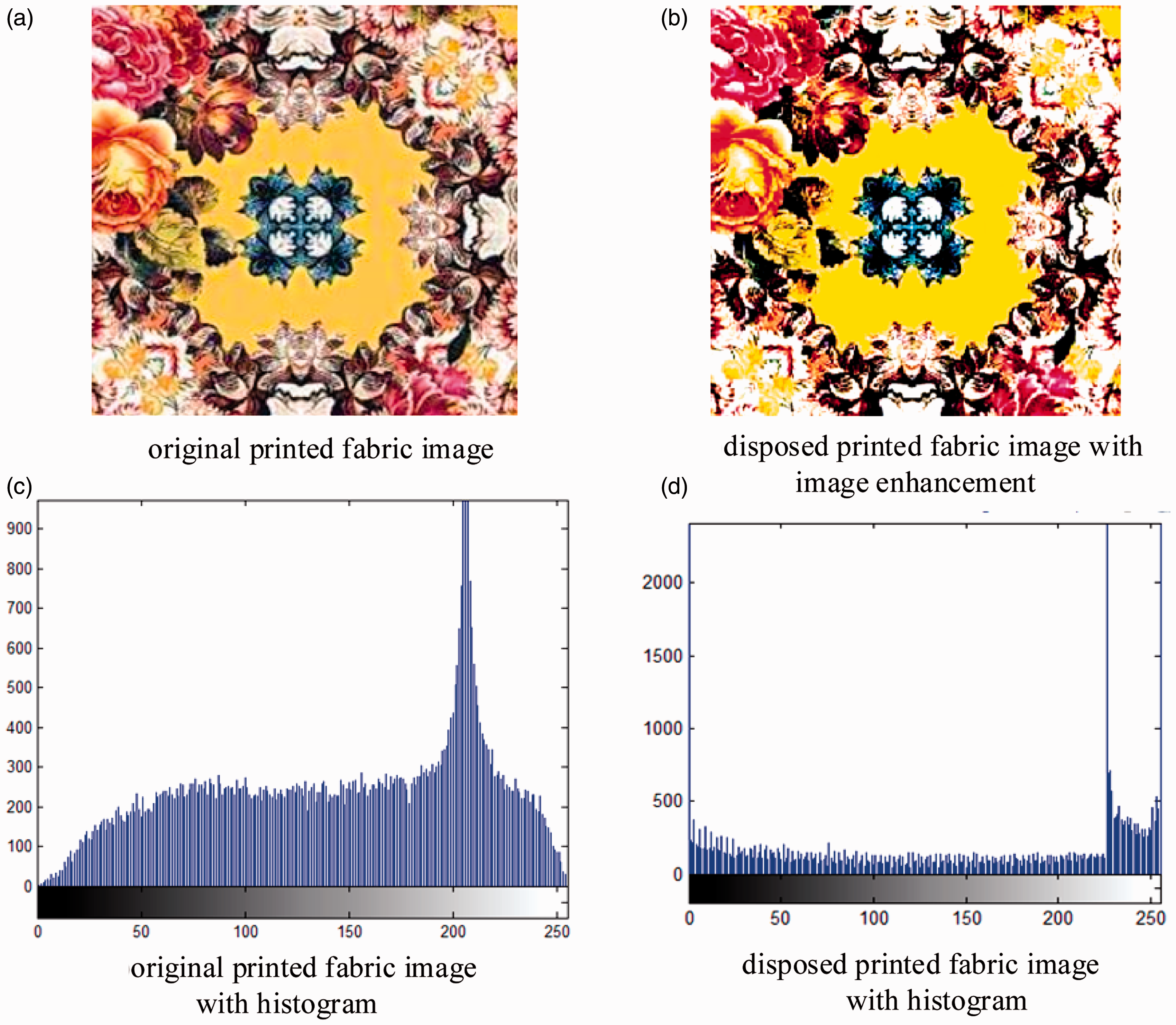
To achieve perfect color features, printed fabric images should be pre-processed. In this paper, image enhancement is used, which means that certain feature of the printed fabric images are emphasized to display, observe or be further analyzed and processed, including edge, contour and contrast. Image enhancement technology is roughly divided into spatial domain and frequency domain. In this study, spatial domain is adopted, meaning that the information of RGB space is converted into the information of HSV space, as shown in Equation (1).
29
Certain features of the RGB space are concentrated, which is a disadvantage to extract the color features. However, after converting RGB space into HSV space, color features could be uniformly distributed to prepare for extracting color features. The results of printed fabric image enhancement are viewed by histogram, as shown in Figure 1.
Histogram comparing the original image and the enhanced image.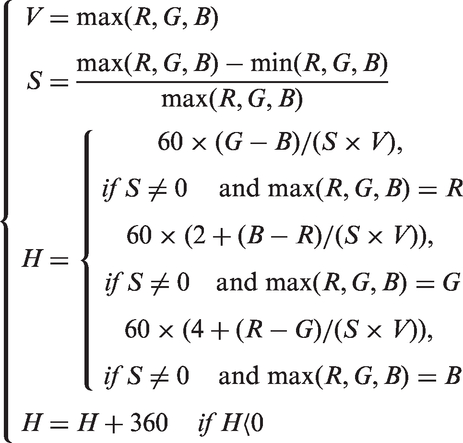
Color moments
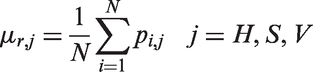
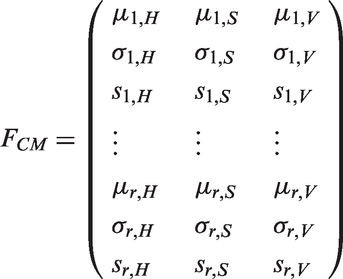
CM are simple and effective methods for color feature representation, including mean (first moment), standard deviation (second moment) and skewness (third moment) of colors. Color information is mainly distributed in the low-end moments. Therefore, the first moment, second moment and third moment could express the color distribution of the printed fabric image. These are depicted in Equations (2)–(4):


Thus the descriptor size for CM is shown as

Spatial feature
GFD is the characteristic of biological inspiration, which imitates human visual features to extract concise contextual information of printed fabric images, and the spatial information feature is also reflected.30,31 It is introduced briefly as follows.
Gabor filter group
The gist feature is contour information, which is obtained by the multi-direction and multi-scale Gabor filter group. In signal processing, the single-dimensional Gabor function is widely used. In 1985, the two-dimensional Gabor function was extended by Daugman, and then Gabor filter group is formed, as shown in Equation (7):32,33

On the basis of the Gabor filter 
Gist feature extraction
The principle of feature extraction with the Gabor filter is the convolution between a set of Gabor wavelet functions and printed fabric images. Each Gabor function and its direction of oscillation with a vertical direction produce a strong response. Therefore, significant features of corresponding direction frequency information are detected in the printed fabric images, forming a robust and compact feature representation. A gray-scale image 

A printed fabric image is divided into 4 × 4 regular grids. Then gist features are acquired with 32 (4 × 8, four scales and eight orientations) Gabor filters. The process of extraction is shown in Figure 2.
Gist feature extracting process: (a) a patterned fabric image; (b) gist feature description in each grid.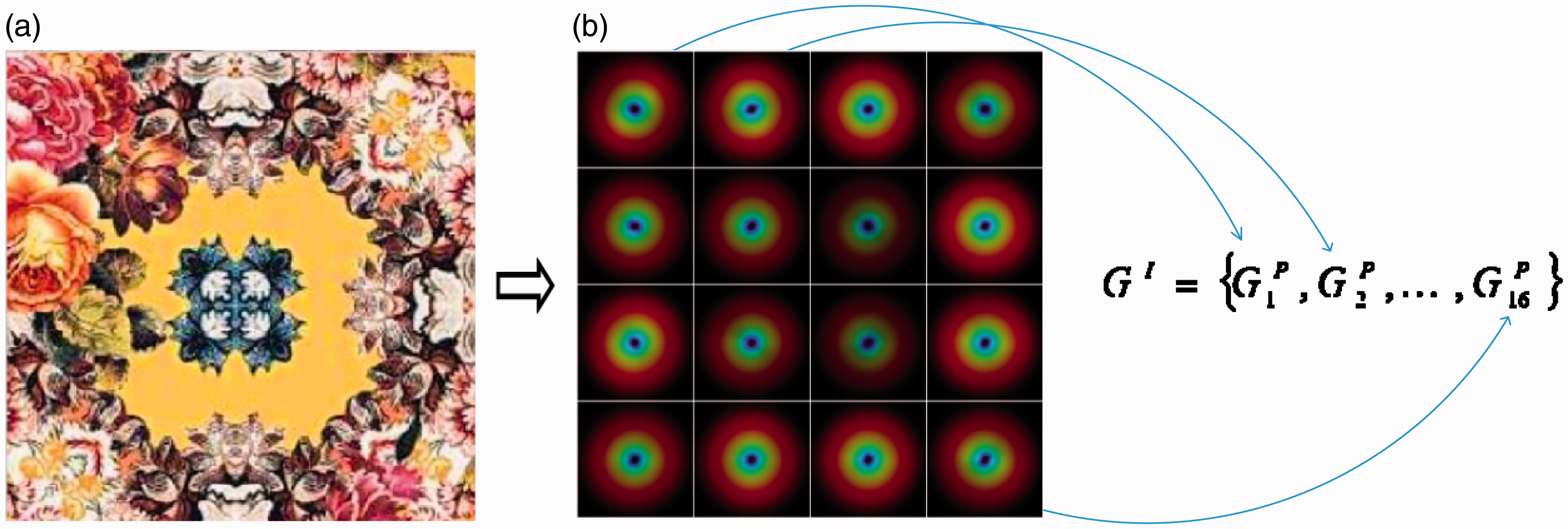
Similarity matching
Printed fabric image similarity typically is assessed by the distance between a set of image features. However, a short distance corresponds to higher similarity and the choice of metrics depends on the type of feature vectors. In order to calculate distance between the query image and image database, Euclidean distance is adopted for the similarity of color and spatial information features.34,35 We use a weighted color channel scheme, wherein the weight to color moment distance of each color channel is given. Many experimental results show that saturation has more impact in HSV color space; therefore, more weight to the S component (for example w2) is chosen to be higher than w1 and w3, which are both equal. The color moment similarity measurement is defined as follows:

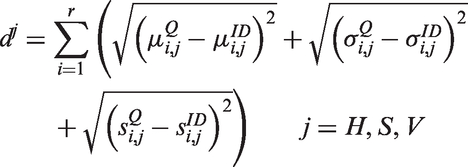

Similarity distance of spatial information described with gist feature descriptors is also computed using Euclidean distance, which is defined as follows:


When integrated features of printed fabric images are retrieved, the corresponding distance measure is different, due to different extractive image features. Therefore, the similarity distance of sub-features is dealt with by normalization to make different sub-features comparable. The overall similarity is summed to weighted similarity of normalized distance, as shown in Equation (16):

Experimental procedure
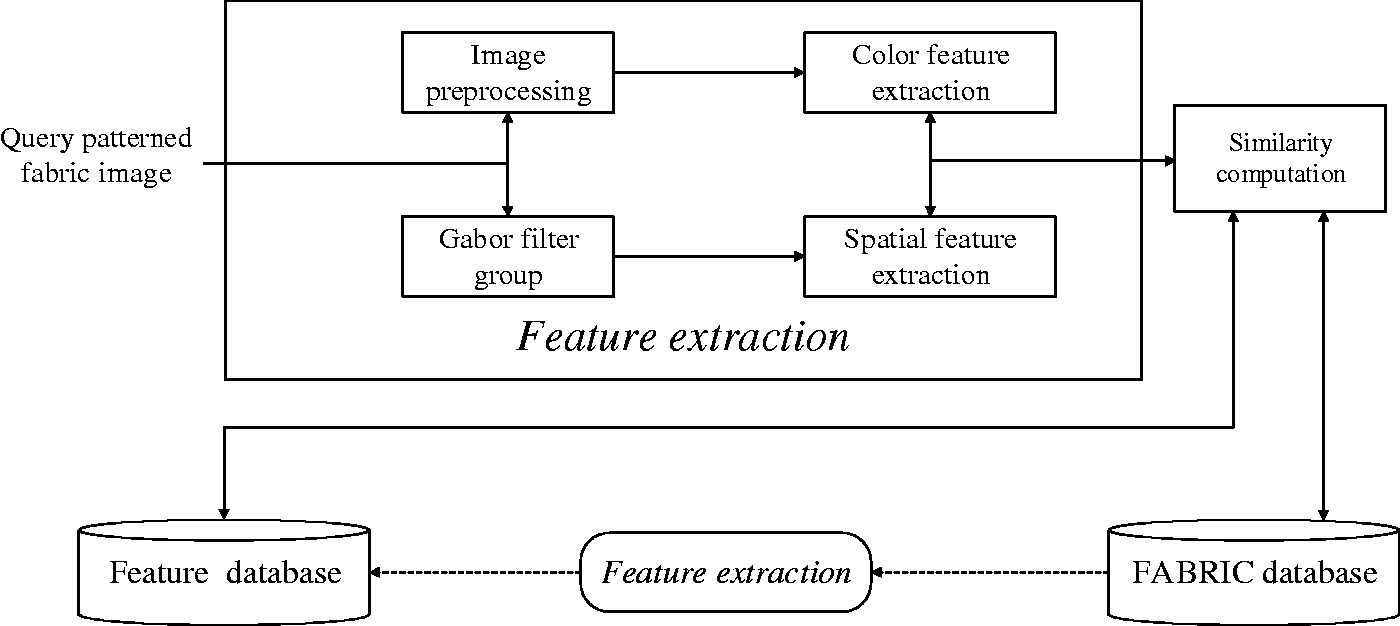
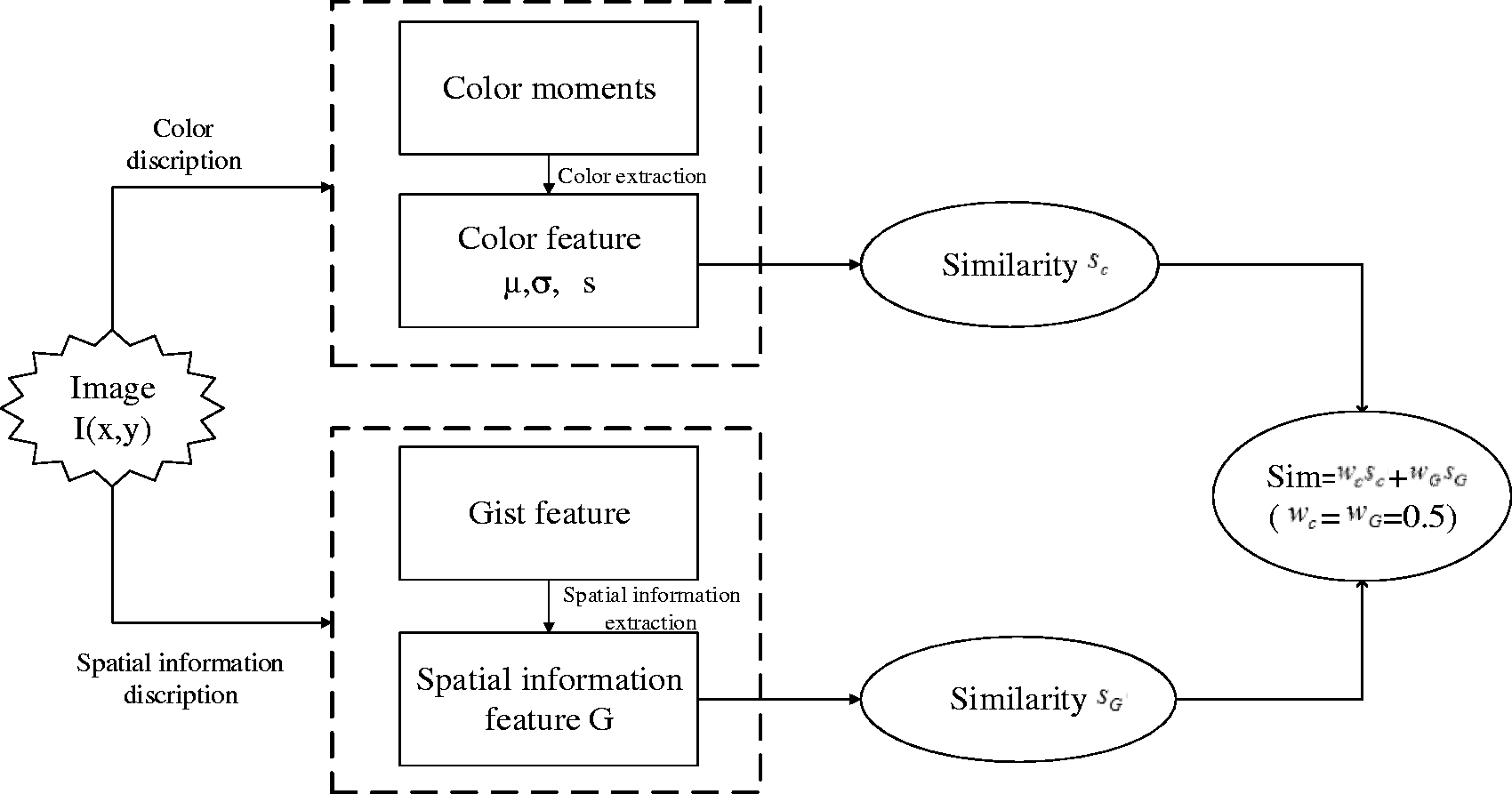
In this paper, an algorithm combining the CM and GFD schemes is proposed to retrieve printed fabric images effectively, as shown in Figure 3 where the section of feature extraction is shown in Figure 4. The method of printed fabric images retrieval is summarized as follows.
Color feature extraction. Firstly, printed fabric images are pre-processed with image enhancement. Secondly, CM are adopted to extract color features, including mean (μ), standard deviation (σ) and skewness (s) of colors. Spatial feature extraction. Objective printed fabric images and FABRIC database images are filtered by the Gabor filter group. After that, the gist feature is used to extract spatial features, for which space description is shown in Figure 3. Similarity matching. The color feature vectors and spatial feature vectors are obtained. Similarity distance of sub-features is processed by normalization to make different sub-features comparable. Similarity of color and space features is respectively computed by Euclidean distance between query printed fabric images and FABRIC database images, which are Block diagram of the proposed method. Flow charts of mutual information descriptors extraction.
Experimental details
Printed fabric image retrieval database
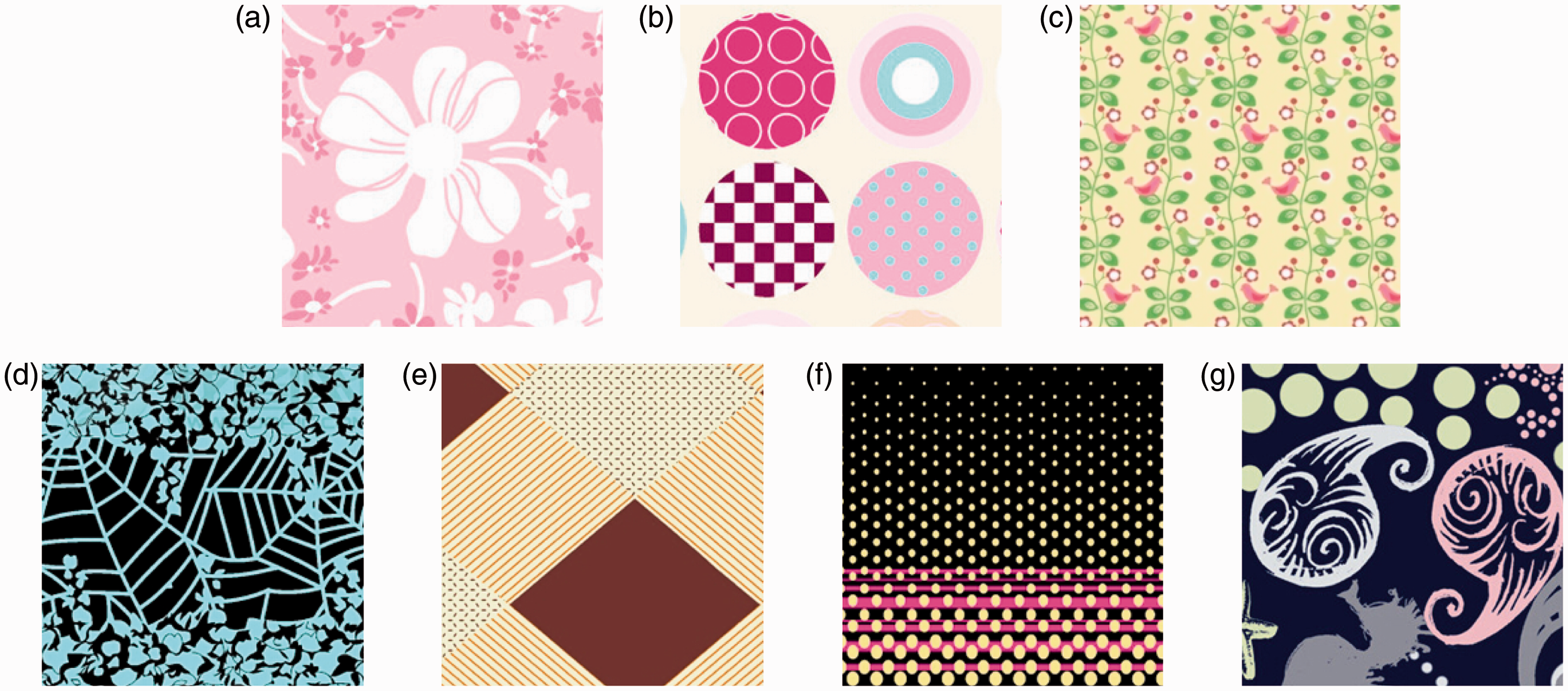
The proposed algorithm is tested with the FABRIC database containing 700 printed images, which are from the actual factory. Experiments are conducted in a MATLAB compiling environment on a personal computer with Intel 1.60 GHz processor and 1 GB RAM. Fabric printing images with different sizes are contained by a Canon 9000F scanner. The images are divided into seven categories based on their content, namely Flower, Paisley, Stripe, Leaf, Geometry, Spot and Reticulation. Flower with JPEG format is used in a general purpose image database for experimentation. These images are stored and each image is represented by RGB color space. A sample of the FABRIC image database from a textile factory is shown in Figure 5. Precision and recall are calculated to measure retrieval effectiveness for the image retrieval system. Recall measures the ability of the system to retrieve all models that are relevant, which is the ratio of the retrieved relevant images to the total number of relevant retrieved images to the total number of relevant images in the FABRIC database.
36
Precision measures the ability of this system to retrieve only models that are relevant, which used the ratio of relevant retrieved images to the total number of relevant retrieved images to the total number of retrieved images. Recall and precision are represented by Equations (17) and (18):
Sample of the FABRIC image database.

Results and analysis
Generally in a printed fabric image retrieval system, images are expressed by multiple visual features. Color information is the most informative feature because of its robustness. Spatial information can be another important feature and previous studies have shown that spatial structure and orientation fit well with the model of human perception.
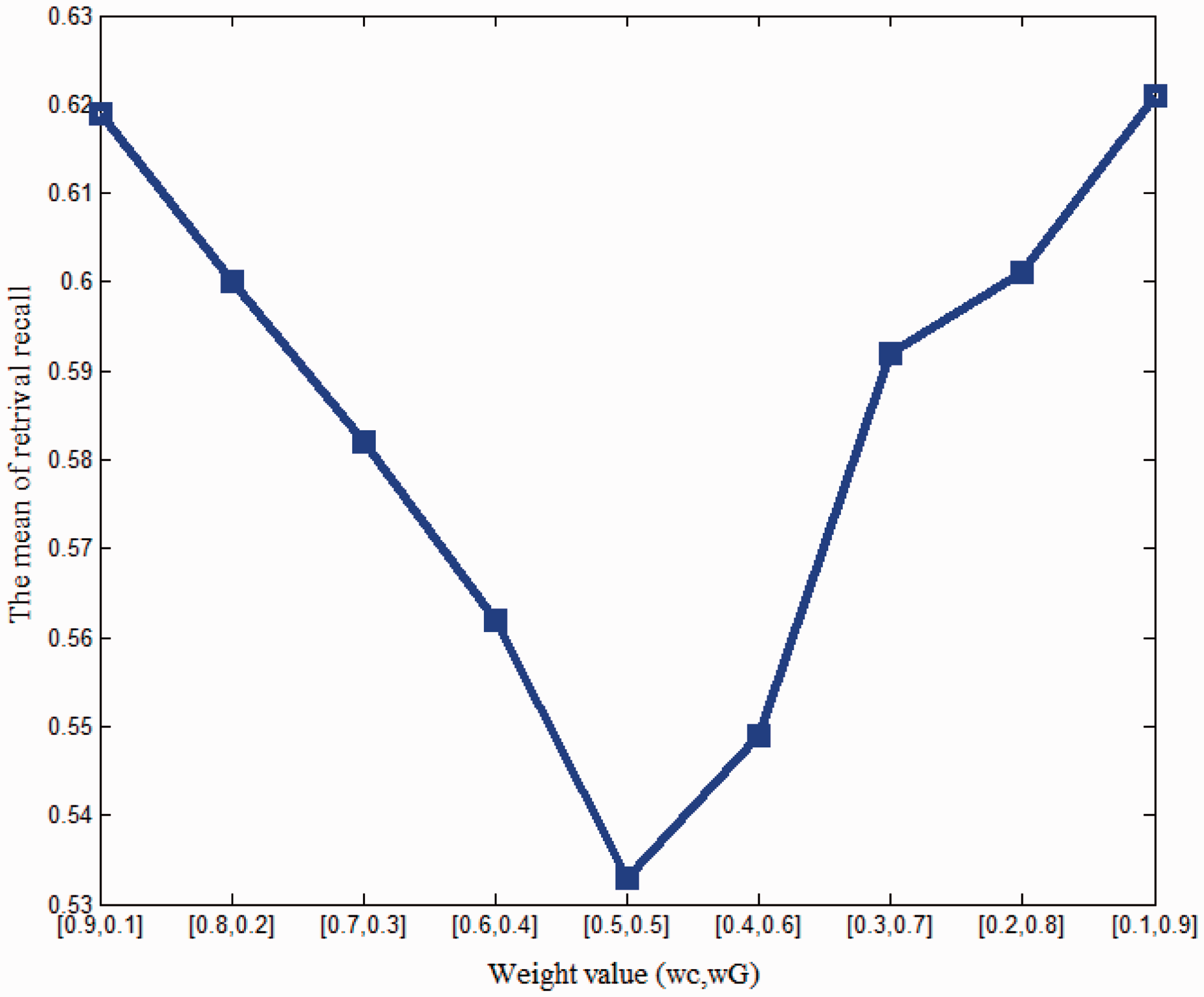
In this image retrieval, CM are adopted to capture the color content, and GFD is extracted to acquire the spatial information. In order to verify the feasibility of the proposed image features in retrieval, a number of experiments were performed on printed fabric image retrieval, including comparison with the CH scheme, CM scheme, IS scheme, GFD scheme and CHIS scheme. In order to choose the suitable weighting values in integrations with color and spatial features, 300 images are selected as query images from the above image database, and the image retrieval accuracies are tested for different weight values. Figure 6 shows the mean of retrieval precision of 300 query results for different weight values, which reflects the image retrieval accuracy. Figure 7 represents the mean of retrieval recall of 300 query results for different weight values, which reflects the robustness of image retrieval. From Figures 6 and 7, the optimal weight values wc and The mean of retrieval precision of 300 query results for different weight values. The mean of retrieval recall of 300 query results for different weight values.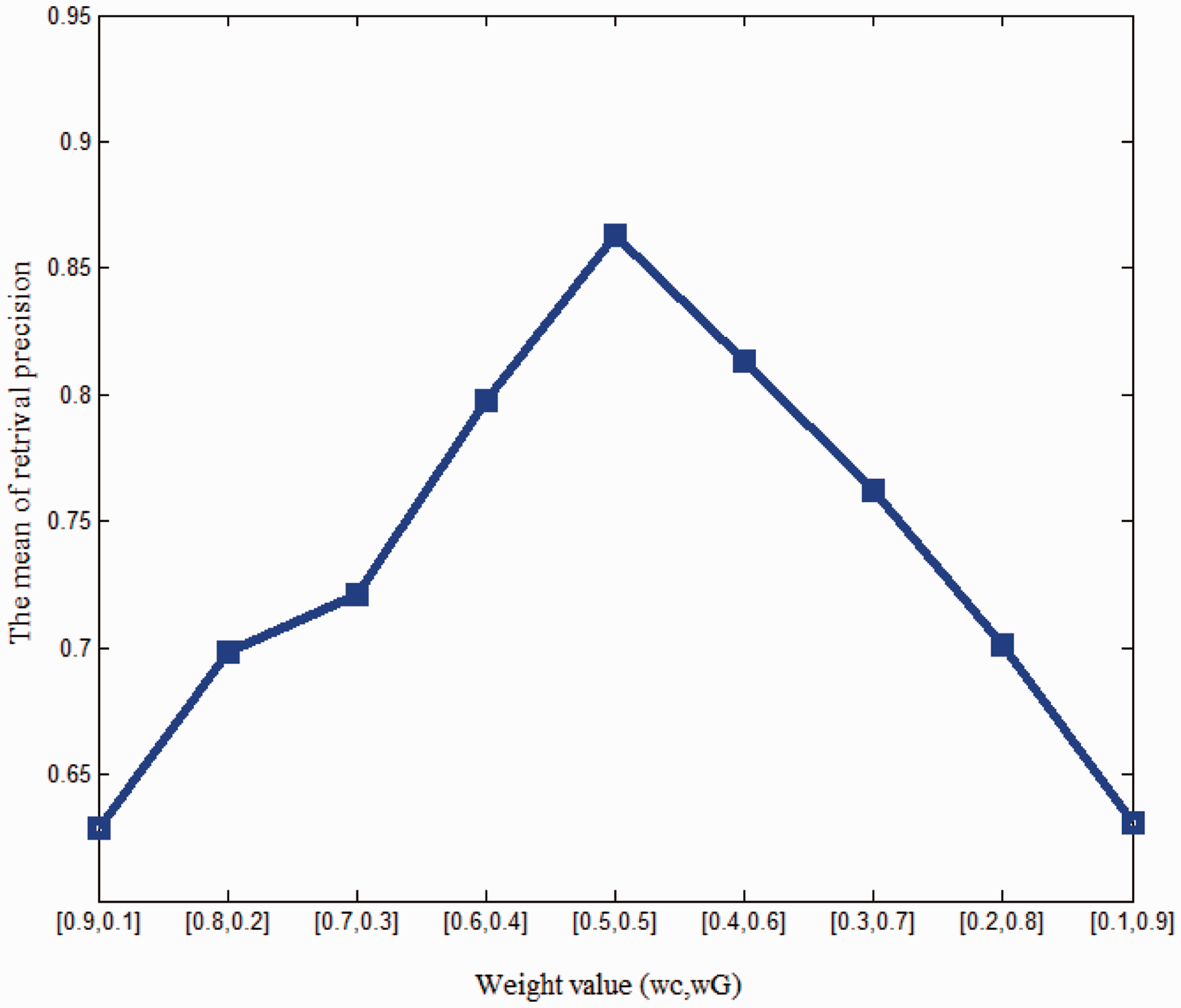
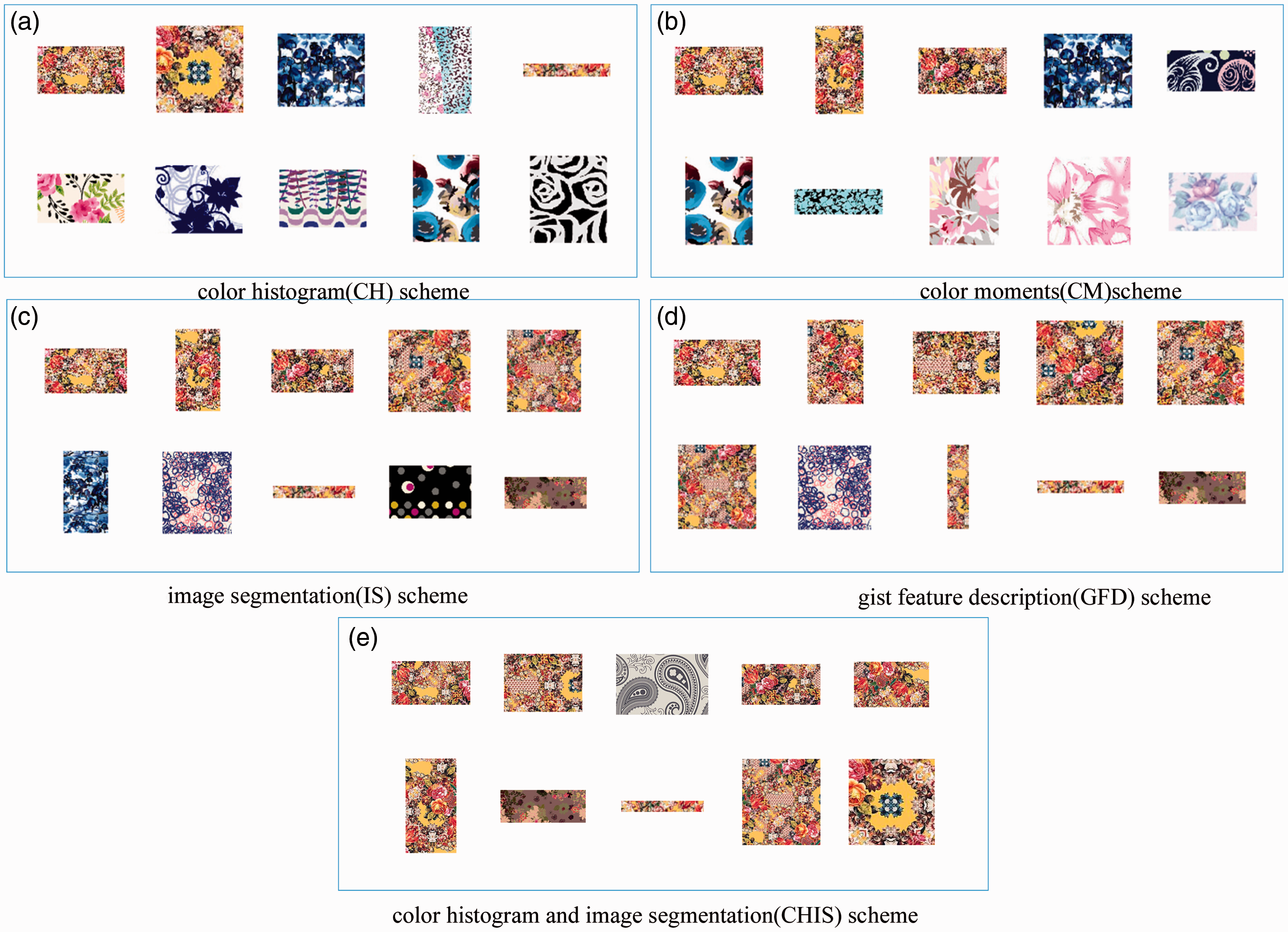
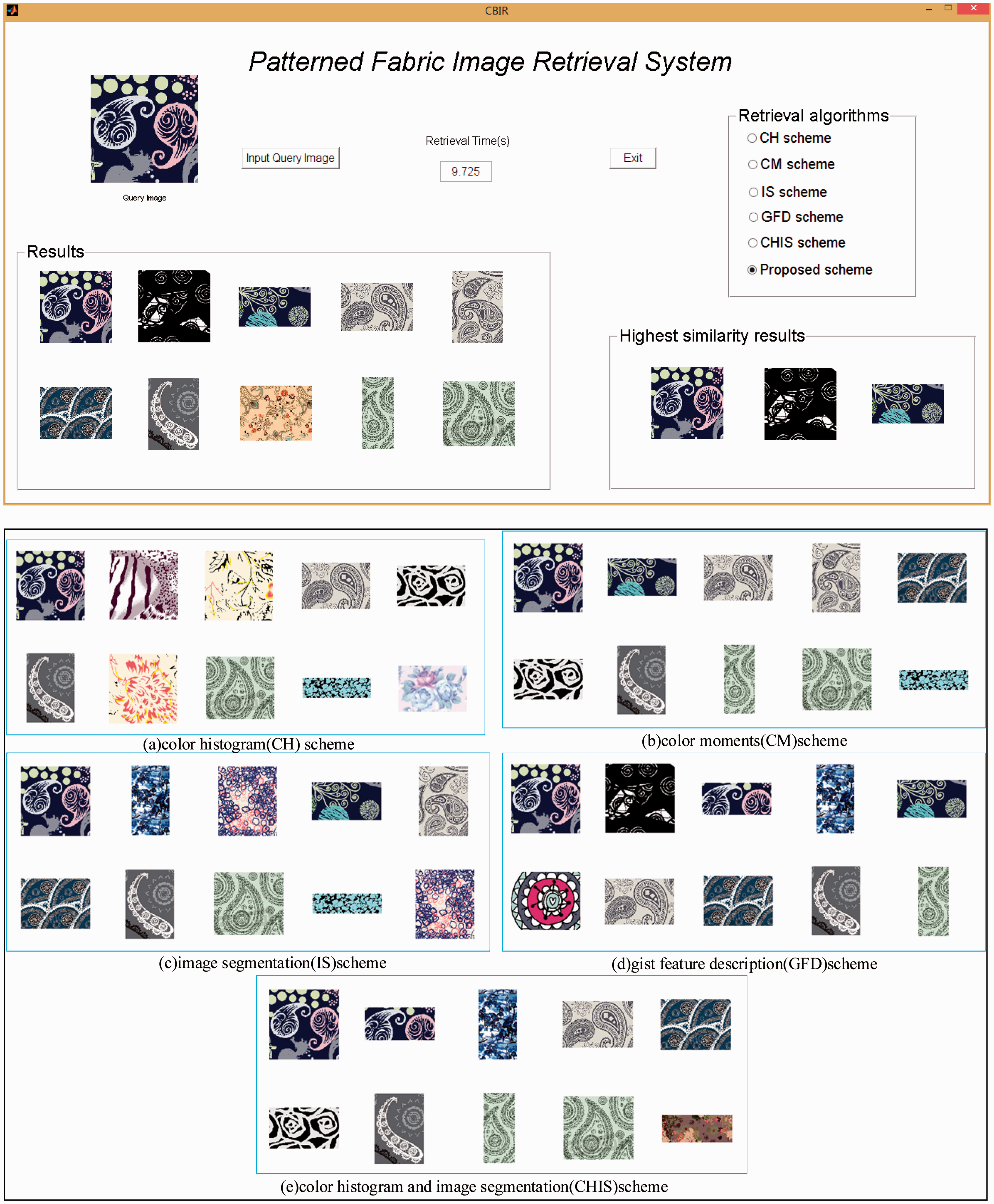
In order to verify the feasibility of the proposed algorithm, the image (Flower) of the FABRIC database is treated as a sample. An example is given in Figure 8 and 9 that was retrieved for a randomly selected image (of Flower) as a query. The user interface of the printed fabric images retrieval system is shown in Figure 8, which is processed in the environment of MATLAB. The image (Paisley) retrieval results of six schemes are shown in Figure 10. Image retrieval by the proposed method is competitive with other methods. The effectiveness of the proposed image retrieval results is from using the CM and GFD schemes. The top 10 images retrieved by the proposed algorithm are depicted in accordance of their rank from left to right following the query printed fabric image.
User interface of the patterned fabric images retrieval system and result of the proposed scheme. The image (Flower) retrieval results using five schemes. The image (Paisley) retrieval results using six schemes.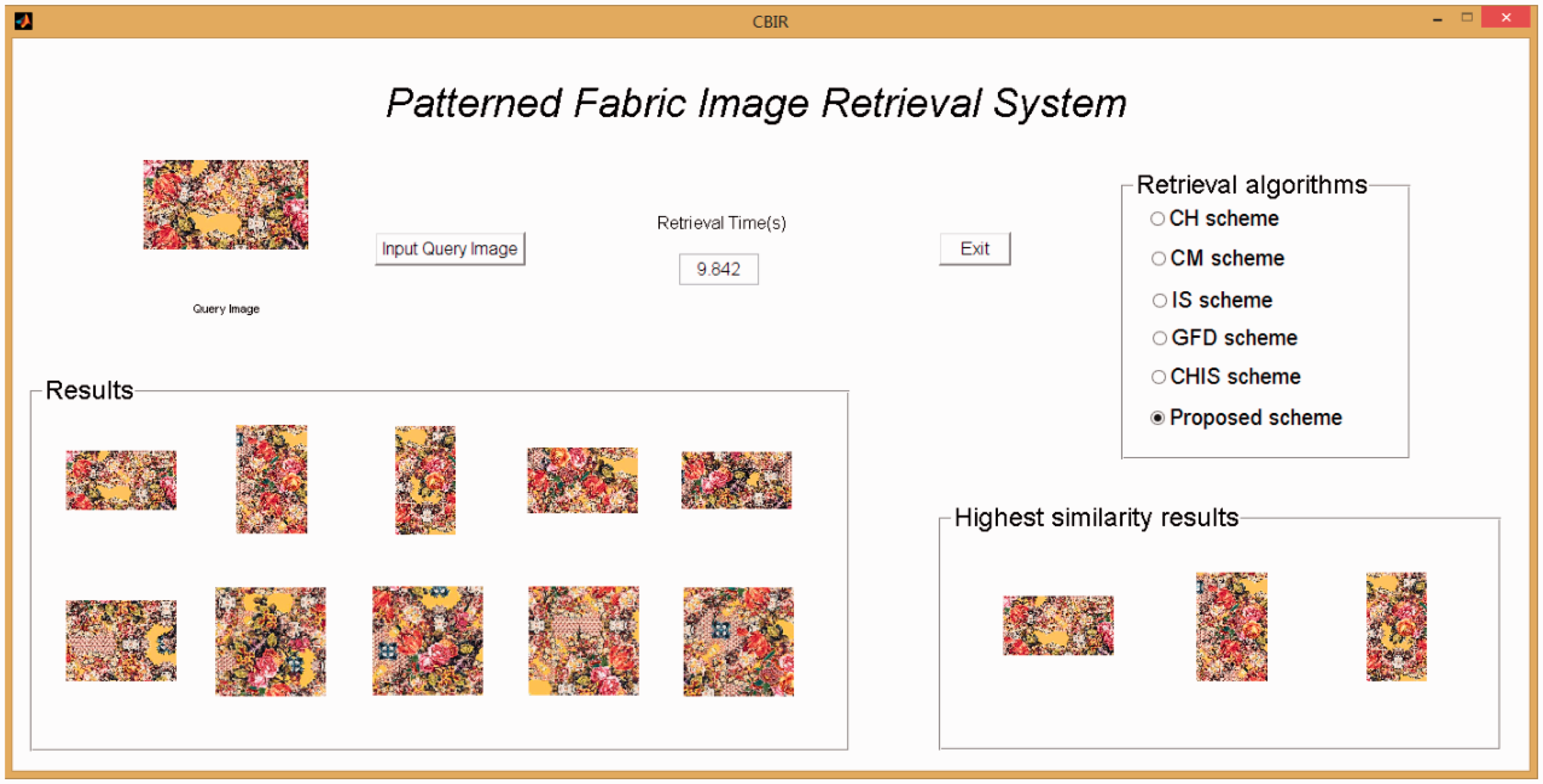
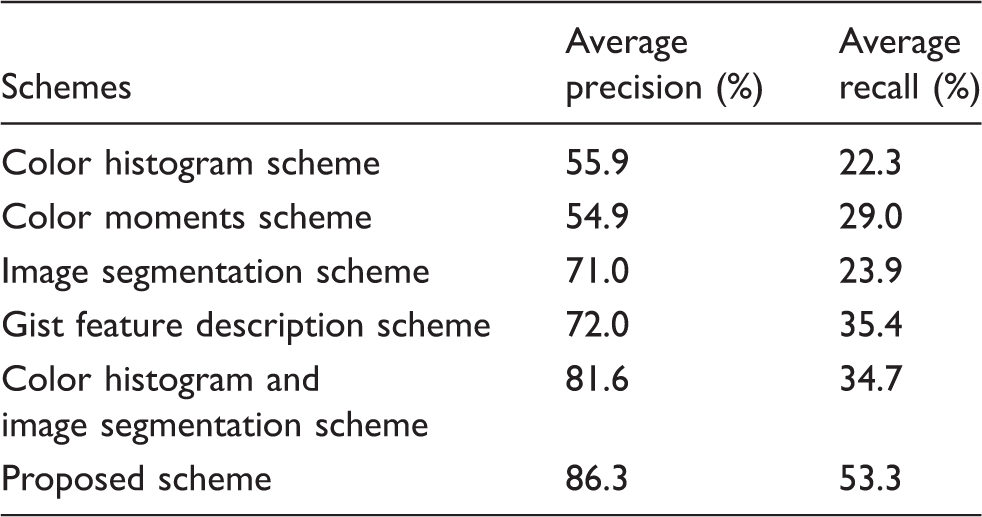
As mentioned, recall and precision are presented to validate the accuracy of the algorithms. In Figure 11, for each kind of printed fabric image, we use 100 images for training. Then 700 images are employed for retrieval for each scheme. Average precision and recall of 100 printed fabric images with each scheme are obtained. The results are shown in Table 2. From Figure 11 and Table 2, the proposed results are compared with other image retrieval approaches. It is inferred from the comparison that the proposed framework acquires good results on the FABRIC database with average precision of 86.3% and average recall of 53.3%. The CHIS method is behind the presented framework in aspects of average precision and recall, which is better than other schemes.
Average precision and recall of different schemes using 100 images. Average precision and recall of schemes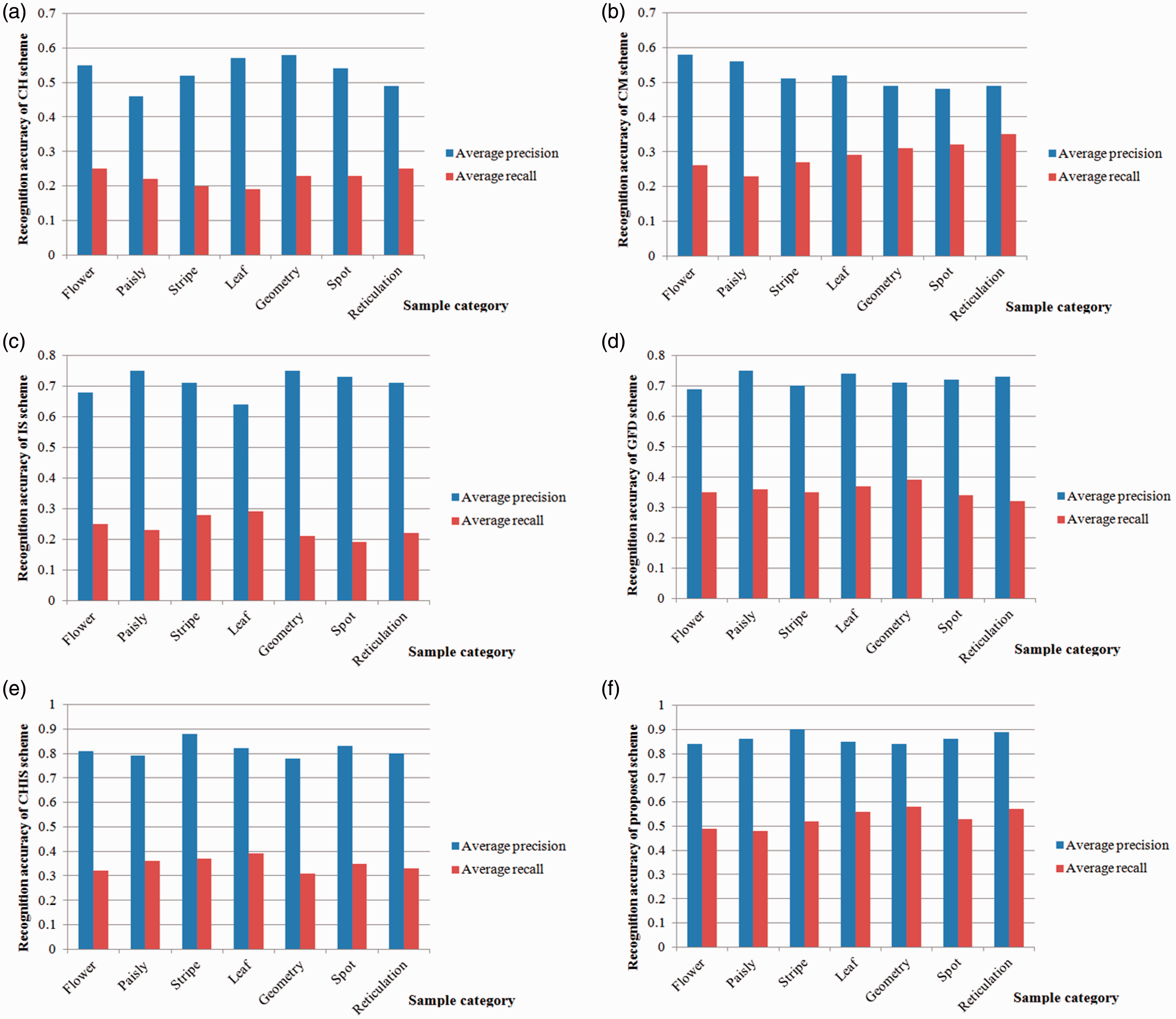
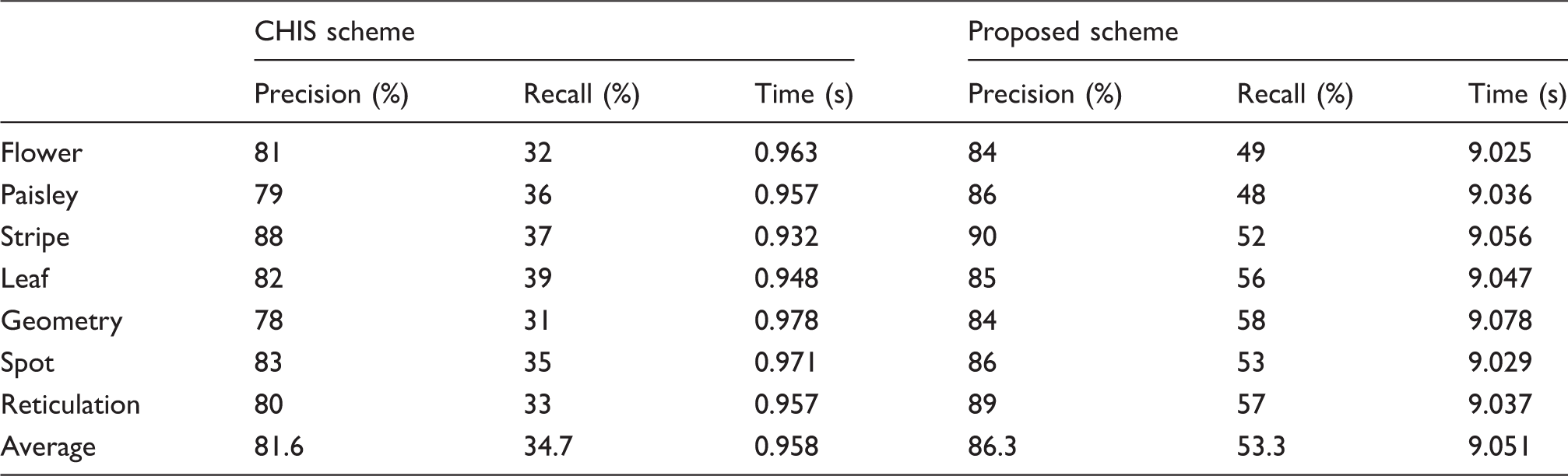
To obtain retrieval results for printed fabrics quickly and accurately, the CHIS algorithm compares precision, recall and retrieval time with the proposed framework. Figure 12 shows average precision and recall of different schemes using 700 images with each scheme. Average precision and recall of the proposed scheme are respectively 86.3% and 53.3%. It is shown that the CHIS scheme and the presented scheme are effective to retrieve printed fabric images in terms of average recall and precision. In addition to the comparison given in Table 3, the time taken for printed fabric image retrieval is 0.958 and 9.051 seconds, respectively, for the CHIS scheme and the proposed scheme. This is because 700 images are synchronously retrieved by the CHIS scheme and successively queried by the proposed scheme. Further, we observed that retrieval time of the proposed scheme is more than with the CHIS scheme, but the retrieval performance of our proposed scheme is better than the performance of other schemes in respect of average recall and precision. The results of experiments show that proposed algorithm is accurate and effective.
Average precision and recall of different schemes using 700 images. Evaluation parameters of color histogram and image segmentation (CHIS) and proposed schemes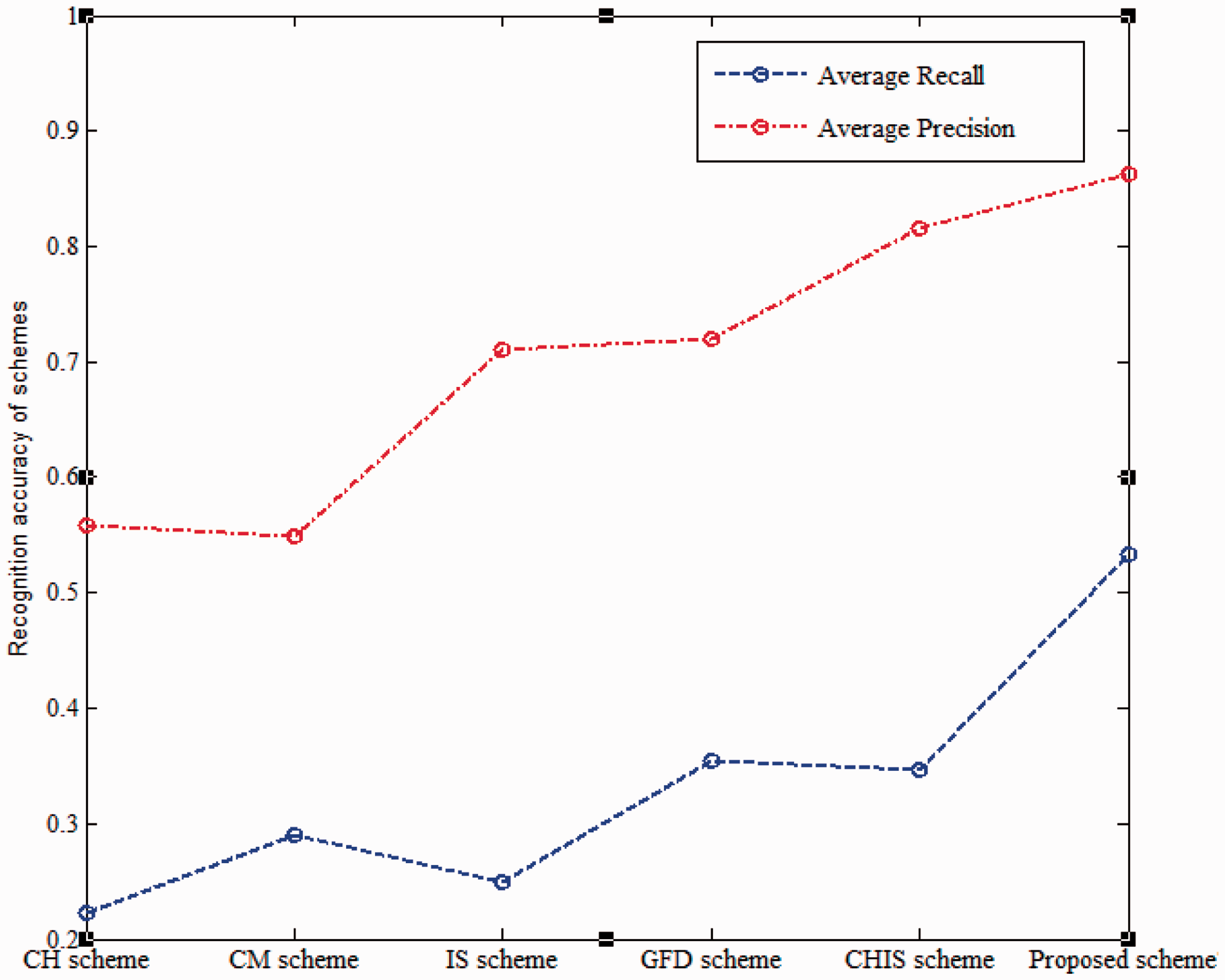
Conclusion
In this paper, a novel framework using a combination of CM and GFD schemes is used in a manner to improve the retrieval accuracy of the printed fabric image retrieval system. CM have a small amount of calculation and gist features and can be stable to capture the representation features of printed fabric images with overall spatial information. Based on the performance analysis, it is concluded that the retrieval accuracy calculated in terms of average precision is 86.3% for the FABRIC database, which is better than other hybrid schemes. Meanwhile, experimental results indicate that the proposed algorithm could retrieve printed fabric images precisely, comprehensively and efficiently.
However, we mainly focus on the building precision and recall rate in the paper instead of the retrieval time. In the future, an optimized algorithm will be presented by combining color, texture and spatial information features of fabric images in order to further reinforce the accuracy of printed image retrieval.
Footnotes
Declaration of Conflicting Interests
The authors declared no potential conflicts of interest with respect to the research, authorship, and/or publication of this article.
Funding
The authors received no financial support for the research, authorship, and/or publication of this article.