







Abstract
Cotton and wool fabrics were mordant-dyed with C.I. direct red 28 (congo red) and copper (II) sulfate. The deodorization abilities of the mordant-dyed samples for ethanethiol were examined using gas detector tubes. The cotton and the wool samples indicated the deodorizing abilities of the following order, respectively: pre-mordant < post-mordant < only copper salt treatment, and pre-mordant < only copper salt treatment < post-mordant. The deodorization rate constants were obtained from the slopes of the lines for the semi-logarithmic plots of the ethanethiol concentration against time. Two rate constants were obtained from the slopes of both the cotton and wool samples for the initial and the following second phases of the deodorization process. The deodorization rates for the mordant-dyed cotton fabrics were of the fast–slow type, while for the wool fabrics they were of the slow–fast type. The deodorization behavior of the mordant-dyed fabrics depended on the type of constituting fiber material for the fabrics.
Various types of unpleasant smells exist in the surroundings of daily life. In particular, there has been growing concern for odor in the fields of medical care and nursing. Recently, after the great earthquake in Japan, there is interest in the odors of disaster waste, and of clothes in evacuation areas. Because sense of smell varies greatly among individuals, an odorless environment is the most desirable one for common areas, such as, hospitals and nursing homes. The removal of odors is one of the important factors in improving the comfortable life. Generally, deodorization mechanisms are classified into the following four types: physical adsorption, chemical decomposition, biological decomposition, and masking of odors. The oxidative decomposition of odor substances with catalysts is an effective way of deodorizing, since it can be expected for removing odor substances efficiently and continuously.
Fibers have a large surface area, and there are both hydrophilic and hydrophobic groups. It is important that odor molecules with hydrophilic or hydrophobic portions are adsorbed onto a surface as the first step of deodorization. Therefore, fibers are very suitable as materials for deodorizing. Shirai et al. found that iron phthalocyanine derivatives fixed on rayon fiber showed a catalytic function of biomimetic oxidation for thiols, and called the material “odor removing fiber”. 1 Amemiya et al. examined the deodorization properties for ethanethiol with acrylic fiber containing various kinds of transition metals. 2 Kobayashi et al. examined the deodorization of ethanethiol and ammonia by using mordant-dyed cotton and wool fabrics with several kinds of metal salts and dyes by means of gas detector tubes.3–5 The deodorization abilities for the mordant-dyed fabrics did not depend only on the metal uptakes of the fabrics, but the combination of dyes and metal ions. 6 Kasai et al. investigated the kinetics of the deodorizing reaction for ethanethiol by mordant-dyed cotton fabrics. The dependence of the initial deodorization rates on the ethanethiol concentration was explained by using a Langmuir–Hinshelwood type model. 7 Kasai et al. evaluated the deodorization properties for ethanethiol with mordant-dyed cotton fabrics by gas chromatography (GC) instead of the method of gas detector tubes. 8 By GC with a flame photometric detector, diethyl disulfide—the oxidation product of ethanethiol—can be detected. Therefore, the amounts of ethanethiol and/or diethyl disulfide adsorbed onto the fabrics were evaluated from the material balance between ethanethiol consumed and diethyl disulfide produced. However, the detailed mechanism for removal of ethanethiol with mordant-dyed fabrics is still not clear.
To elucidate the deodorization mechanism, it seems to be necessary not only to focus on the deodorization efficiency, but also on understanding the interactions among the odor, the dye, the metal ion, and the fibers. Fukatsu 9 and Kokot 10 reported on the formation of copper ion and wool keratin complex. Sheffield et al. 11 and Bendak et al. 12 studied the uptakes of copper and other metal salts by wool fiber. Tarkhanova et al. studied co-oxidation of thiols and amines in the presence of copper complexes. 13 Teng et al. investigated the interaction between congo red (CR) dye and copper adsorbed in chitosan hydrogel beads in a binary adsorption system, and showed that chitosan hydrogel beads exhibit higher adsorption affinity towards free copper ions than the CR–copper complex. 14
The objective of this study is to focus on the effect the kind of materials constituting the fabrics have on the deodorizing ability, and to investigate the deodorization mechanism for the system of ethanethiol and mordant-dyed fabrics with CR and a copper salt. We prepared the cotton and wool fabrics mordant-dyed by CR, and copper (II) sulfate, and examined the deodorization process of ethanethiol with the mordant-dyed fabrics. CR, the first invented direct dye by Böttiger in 1884, is a direct dye of diazo type. CR is scarcely used in the textile industry at present because of its toxicity. However, the objective of this study is to investigate the mechanism of deodorization by mordant-dyed fabrics, and CR was appropriate to be selected as a model dye in this study since the chemical structure of CR is simple, high purity commercial reagent (approximately 90% dye content) was available, and dyeing both cotton and wool fabrics with CR is possible under the same dyeing condition. Copper ions are expected to be coordinated by the azo and the amino groups of CR. Hence, a CR molecule has two coordination sites available for binding a copper ion.
Experimental
Materials
Plain woven fabrics of cotton (mercerized cotton broad) and of wool (wool muslin) were purchased from Shikisensha Co., Ltd. The cotton fabric was woven with 40 count cotton yarns, and the density of the fabric was 122 g m−2. The wool fabric was woven with 54 count wool yarns in the warp and 60 count in the weft, and the density is 100 g m−2. Both the fabrics were scoured in hexane for 6 h using by a Soxhlet extractor, and washed with distilled water at 85℃ for 1 h. C. I. direct red 28 (CR) was purchased from Kanto Chemical Co., Inc. and used without further purification. Copper (II) sulfate pentahydrate was used as a mordant, and sodium sulfate was used as a dyeing auxiliary.
Preparation of the sample fabrics
The following three types of sample fabrics were prepared: (1) mordanted with copper (II) sulfate and undyed, (2) pre-mordanted with copper (II) sulfate and dyed with CR, and (3) dyed with CR and post-mordanted with copper (II) sulfate. The dyeing was carried out with a dye bath containing 0%, 1%, 3%, and 5% owf CR and 20% owf Na2SO4 at a liquor ratio of 1:30. The scored fabrics were immersed in the dye bath, and the temperature was gradually raised from room temperature to 85℃ over 30 min, and kept at 85℃ for 1 h. After the dyeing, the samples were washed thoroughly with distilled water. The pre- or post-mordanting involved processing in aqueous copper (II) sulfate solution at 85℃ for 30 min at a liquor ratio of 1:30. The concentration of CuSO4·5H2O was 2% owf, except for the mordanted and undyed samples. After the mordanting, the samples were rinsed thoroughly with distilled water. The prepared sample fabrics were sandwiched between two sheets of filter paper and dried at room temperature. All the reagents used were of analytical grade.
Hereafter, the samples are denoted by C (cotton) or W (wool), 0 (undyed), 1, 3, or 5 (dyed in 1%, 3%, or 5% owf CR solution), -Cu (mordanted with CuSO4 and undyed), -pre (pre-mordanted with CuSO4), or post (post-mordanted with CuSO4). For example, C3-post represents a cotton sample fabric dyed with 3% owf CR and post-mordanted with CuSO4, and W0-Cu represents a wool sample fabric only treated with CuSO4 solution. C-pre represents C1-pre, C3-pre, and C5-pre samples.
Dye and copper ion uptakes
The dye uptakes of the mordant-dyed fabrics were evaluated from the concentration of residual dye in the dye bath after the dyeing. The dye concentrations of the dye baths were determined photometrically (UV-2600, Shimadzu). The copper ion uptakes of the fabrics were determined by atomic absorption spectrometry. A sample of 40 mg was put into a test tube and 4 mL mixed acid (60 wt% nitric acid and 80 wt% sulfuric acid, 1:1 v/v) and 4 mL of 60 wt% nitric acid were added for cotton and wool samples, respectively. After keeping at 90℃ for about 2 h, 2 mL of 30 wt% aqueous hydrogen peroxide solution was added to each test tube. After maintaining at 90℃ for about 1 h, the samples were completely dissolved. The sample solutions were diluted with distilled water to appropriate concentrations, and the copper concentrations of the solutions were determined by using an atomic absorption spectrophotometer (AA-680, Shimadzu).
Diffuse reflectance
The diffuse reflectances of the samples were measured by using a UV-vis spectrophotometer with an integrating sphere attachment (UV-2600 with ISR-2600Plus, Shimadzu) in the range of wavelength 220–1400 nm. Pressed and hardened barium sulfate powder was used as the standard white surface (100% reflection). The sample fabrics was folded to three thicknesses in accordance with the method described elsewhere. 15
Deodorization ability
The deodorization ability of the sample fabrics was evaluated by a gas detector tube method. Ethanethiol was used as a model odor substance. A 10 L Tedlar® bag was filled with dry air, and the given amount of ethanethiol (98 wt% ethanethiol aqueous solution, Wako Pure Chemical Industries) was injected into the bag with a gastight syringe. The deodorization experiments were carried usually at 100 ppm ethanethiol, and some experiments were performed at 10–110 ppm. To make sure that the air containing ethanethiol in the bag is homogeneous, the bag was left for about half a day at room temperature. 2.0 g of sample fabric was put in a 2 L Tedlar® bag, and then the bag was degassed by a water aspirator. These two bags, that is, the 10 L bag containing air and ethanethiol gas, and the 2 L bag containing only the sample fabric, were connected by a short silicone tube, and then the air containing ethanethiol in the 10 L bag was introduced into the 2 L bag within 10 s. The concentration of residual ethanethiol in the 2 L bag was measured at given intervals by using gas detector tubes (No.72, No.72 L, GASTEC). All the experiments for evaluation of deodorization ability were carried out at 25℃.
Results and discussion
Dye and copper ion uptakes of the mordant-dyed fabrics
The copper ion uptakes of the scoured cotton and wool fabrics were plotted against the CuSO4·5H2O concentration of the mordant bath in Figure 1. The copper ion uptakes of the cotton fabrics were almost the same and small. On the other hand, the copper ion uptakes of the wool sample fabrics increased with the increase in the mordant bath concentration. The copper ion uptake of wool sample (W0-Cu) only treated with 2% owf CuSO4·5H2O bath concentration was about 55 µmol.g−1, as shown in Figure 1. The main component of wool fiber is protein. However, cotton fiber contains less than 2 wt% of protein as a minor component. For the W0-Cu sample, copper ions bind mainly to the dissociated carboxyl groups of wool keratin. The amount of carboxyl groups of acidic amino acids such as glutamic and aspartic acids in wool is about 0.95 mmol g−1.
9
If we assume that copper ions bind only to the carboxyl groups in wool, and that the binding ratio of Cu2+:−COO− is 1:2, about 12 mol% of carboxyl groups in the W0-Cu sample participated in the binding sites for copper ions. On the other hand, the copper ion uptake of the C0-Cu sample is about 3 µmol g−1, as shown in Figure 1, because cotton has about 50-fold fewer carboxyl groups than wool.
16
The difference in the sorptive ability of copper ions between cotton and wool fabrics is attributed to the amounts of carboxyl groups in these fibers.
The plots of the copper ion uptakes against CuSO4ċ 5H2O bath concentration: ○ C0-Cu; Δ W0-Cu.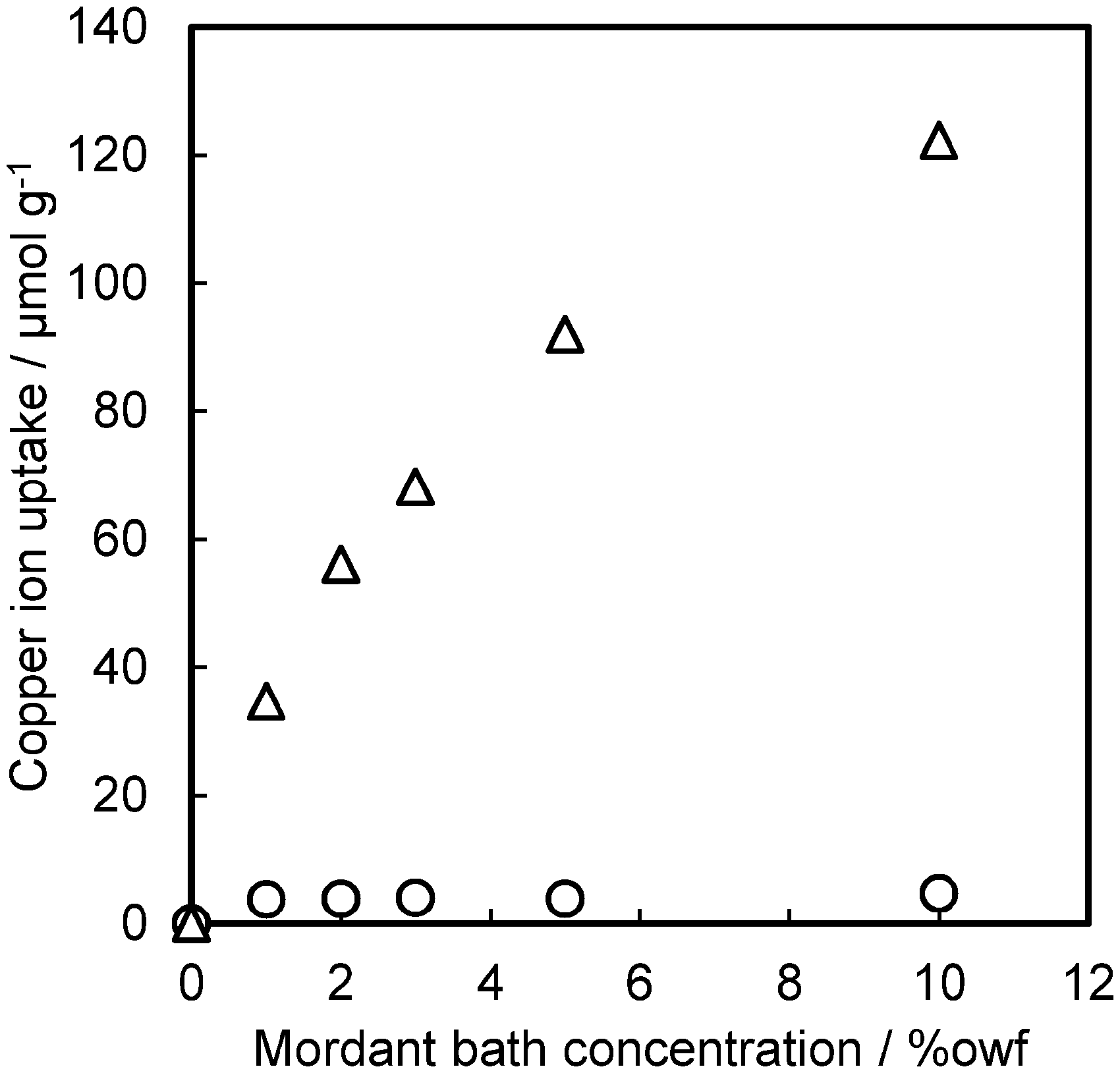
The dye and copper ion uptakes of sample fabrics
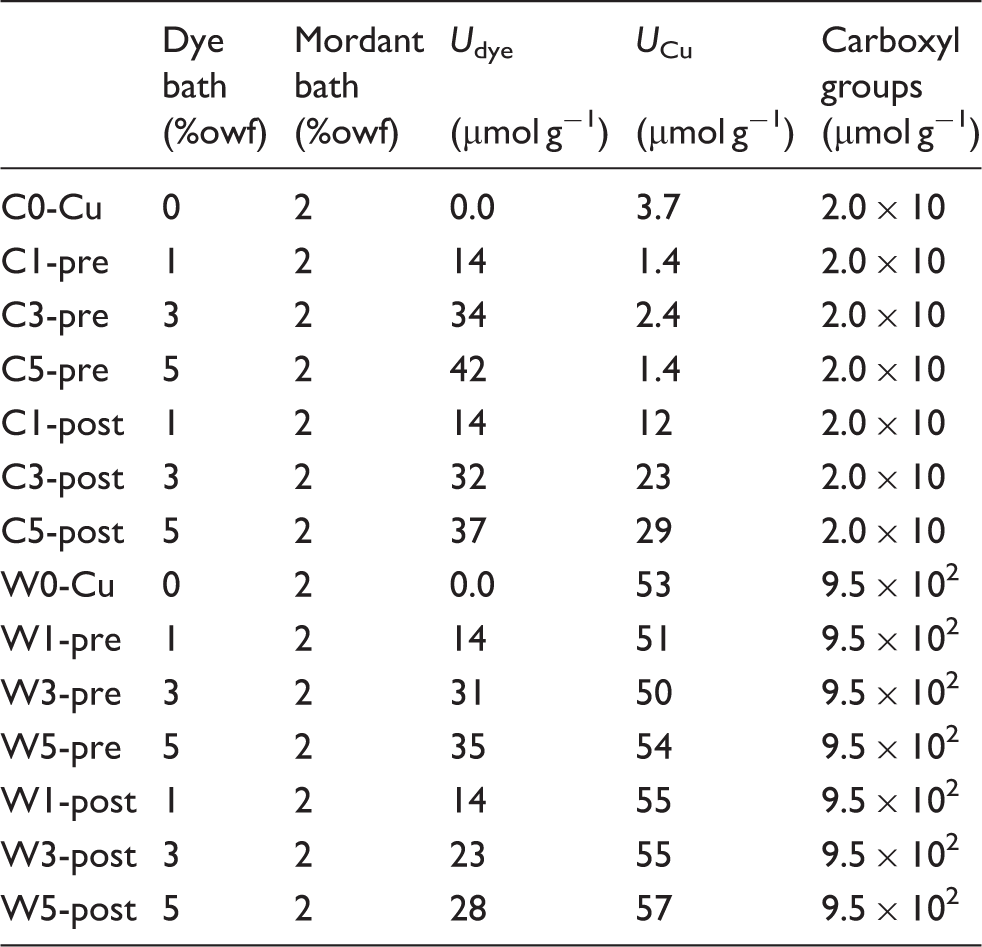
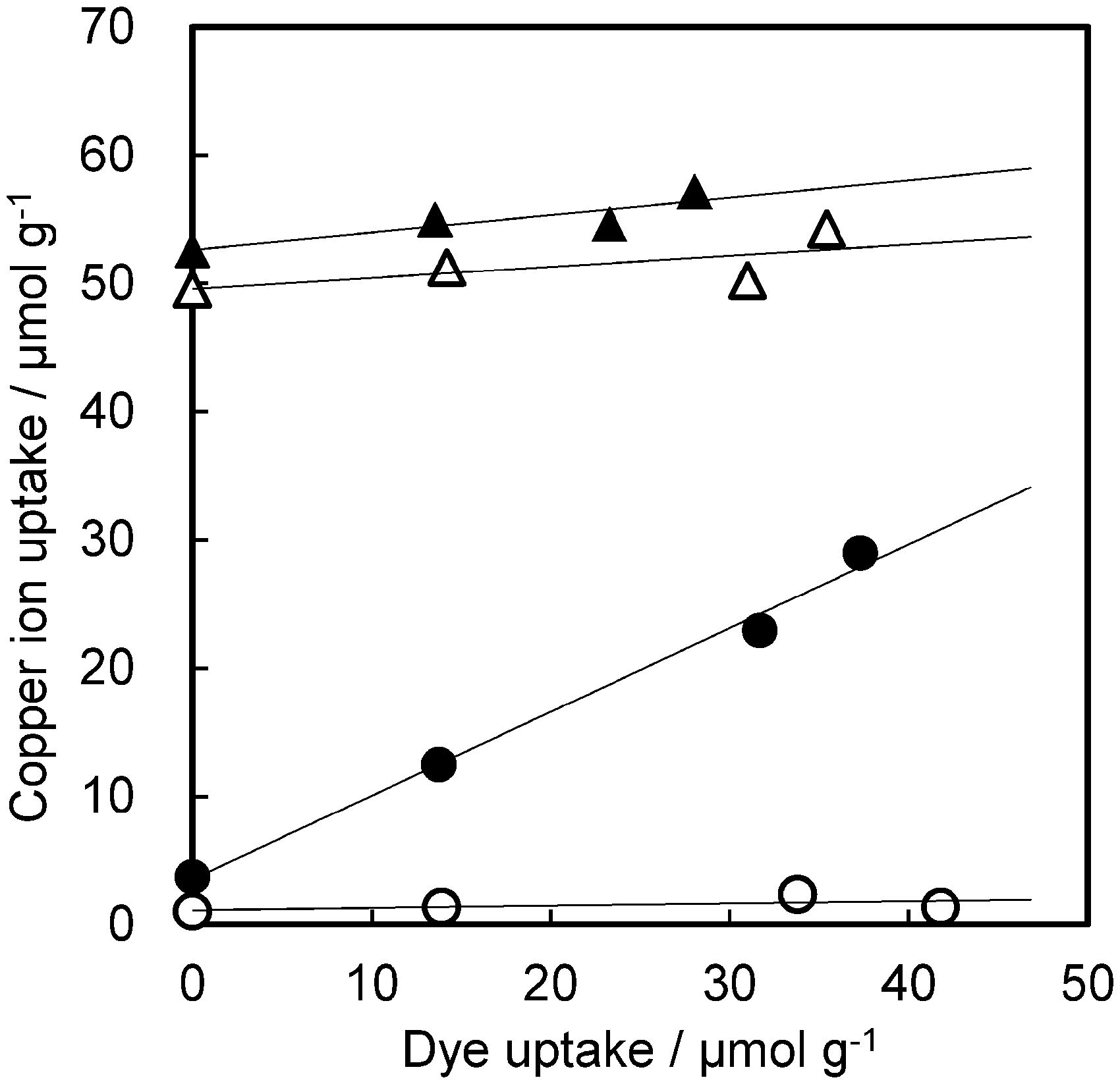
The plots of the copper ion uptakes against the dye uptakes: ○ C-pre; • C-post; Δ W-pre; ▴ W-post.
Diffuse reflectance
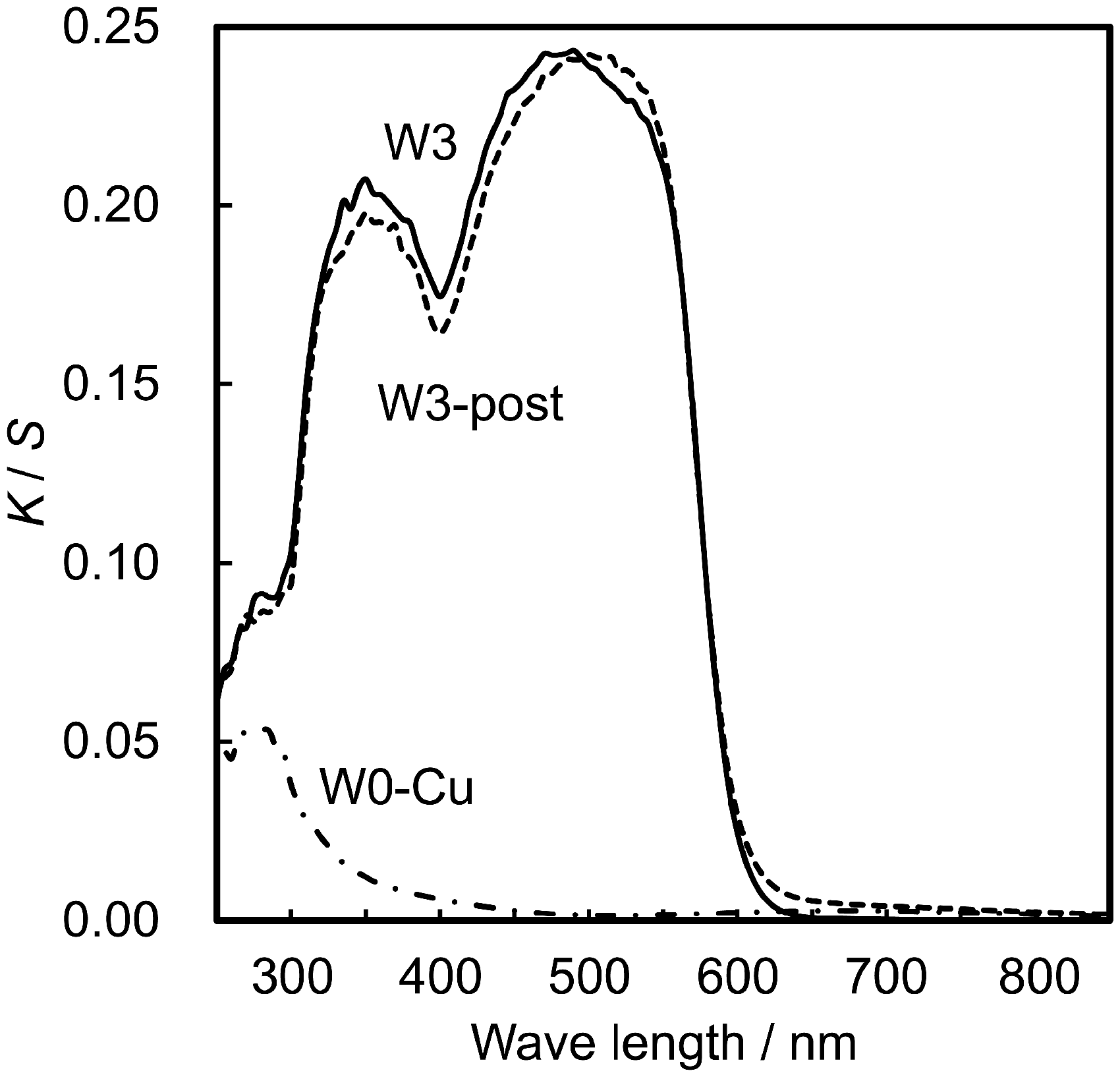
K/S values were calculated by applying the Kubelka–Munk model for the measured diffuse reflectances of the sample and the reference (undyed and unmordanted) fabrics. The Kubelka–Munk equation is
K/S spectra of C3, C0-Cu, and C3-post samples. K/S spectra of W3, W0-Cu, and W3-post samples.
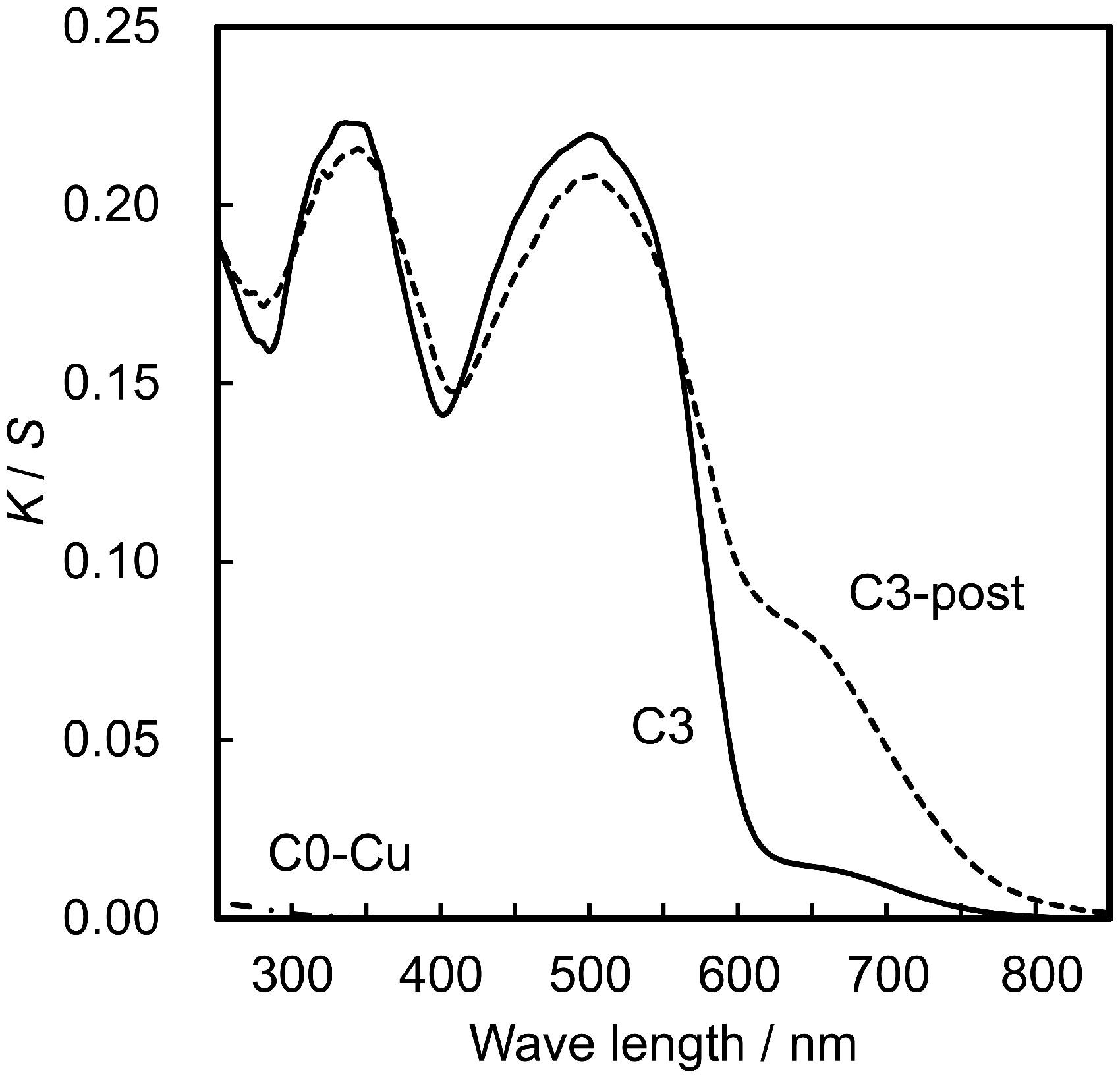
Deodorization experiments
The deodorization abilities for ethanethiol by mordant-dyed sample fabrics of cotton and wool were evaluated using gas detector tubes. The results of preliminary experiments showed no adsorption of ethanethiol onto the inner wall of a Tedlar® bag, and no removal ability of ethanethiol for the raw and the scoured sample fabrics of cotton and wool. Figures 5 and 6 show plots of the amount of the residual ethanethiol in the bag against time for C0-Cu and W0-Cu samples, respectively. C0-Cu samples showed slight blueness of the same color as dilute aqueous copper sulfate solution, whereas W0-Cu samples were colored moss-green. Figure 5 shows that the deodorization curves of C0-Cu samples prepared with different copper sulfate concentrations (1%, 2%, 3%, 5%, and 10%owf CuSO4·5H2O) of mordant baths were almost the same, that is, the deodorization abilities of these samples were very similar. For W0-Cu samples as shown in Figure 6, however, the deodorization ability increased with the increase in the concentration of mordant bath. As already mentioned, the copper ion uptakes of the cotton fabrics were almost the same, and the copper ion uptakes of the wool sample fabrics increased with the increase in the concentration of mordant bath. Therefore, the deodorization ability of W0-Cu sample is determined by the copper ion uptakes. Comparing cotton samples with wool samples, the deodorization ability did not depend only on copper ion uptake. It is supposed that due to differences in such as the electrostatic environment around the copper and the physicochemical states of the fabric surface, the carboxyl-type copper ions in the cotton and wool samples have different properties for ethanethiol removal.
Deodorization of ethanethiol for C0-Cu samples. CuSO4ċ5H2O concentration: ○ 0%; Δ 1%; □ 2%; ⋄ 3%; • 5%; ▴ 10% owf. Deodorization of ethanethiol for W0-Cu samples. CuSO4ċ5H2O concentration: ○ 0%; Δ 1%; □ 2%; ⋄ 3%; • 5%; ▴ 10% owf.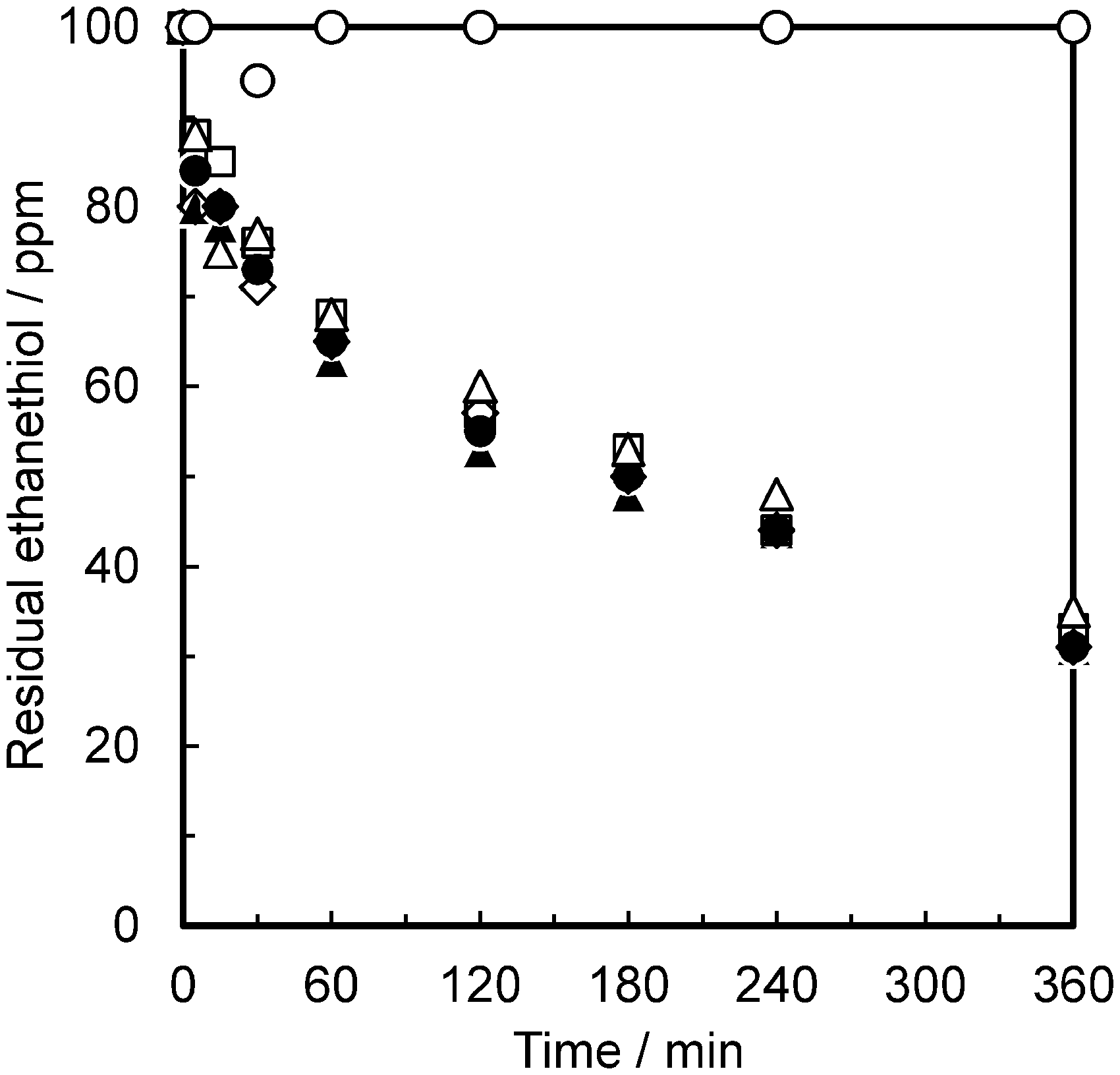
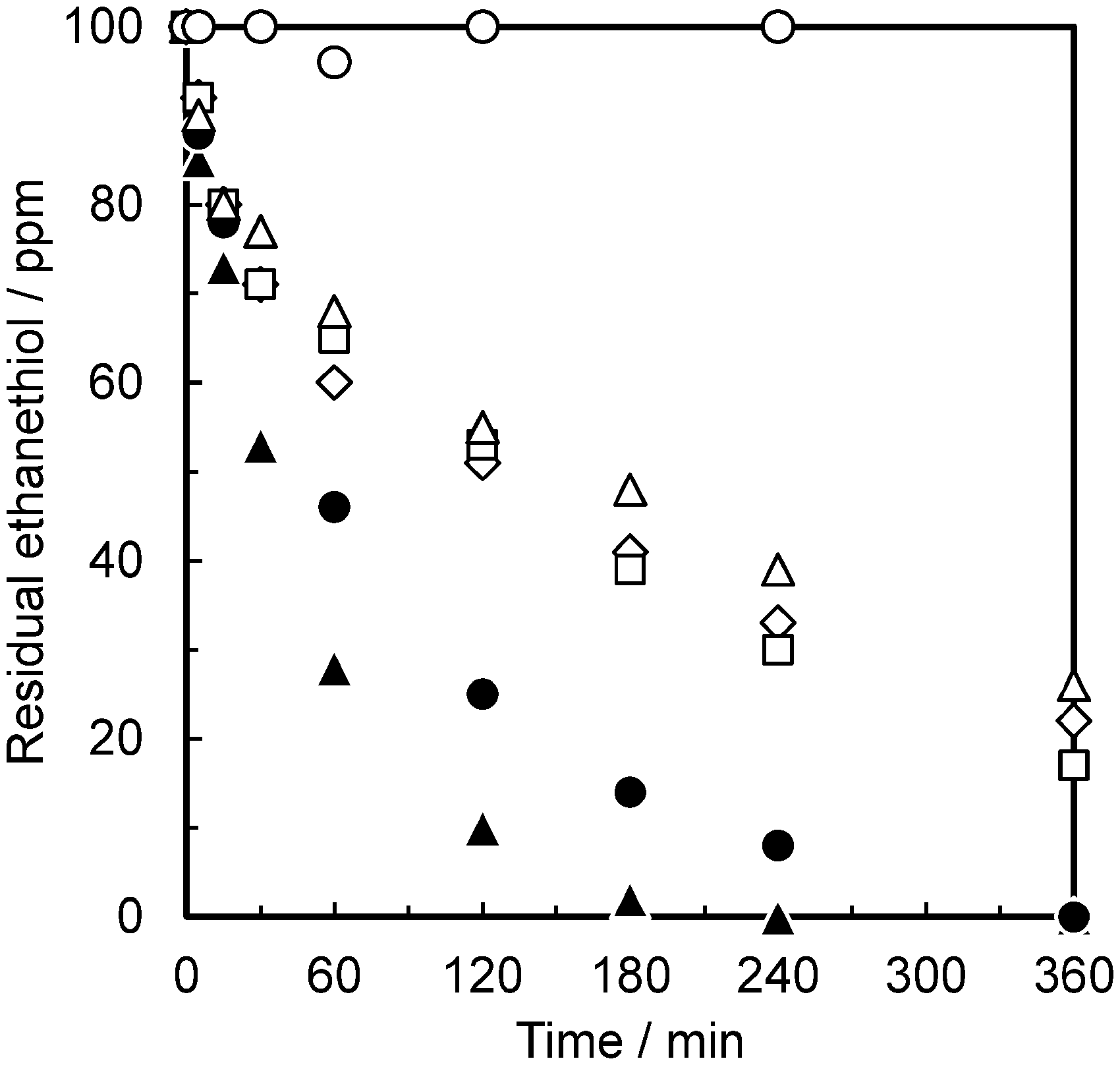
Figure 7 shows the deodorization curves for C0-Cu (only treated with CuSO4), C-pre (pre-mordanted and dyed), and C-post (dyed and post-mordanted) samples. By comparing the amounts of the residual ethanethiol for the samples at 360 mm, the following order of the deodorization abilities was estimated: C0-Cu>C5-post ≈ C3-post>C1-post>C3-pre≈C1-pre≈C5-pre. Except for the C0-Cu sample, the order of deodorization abilities coincides with the order of the copper ion uptakes of the samples, as shown in Figure 2. The copper ion uptake is, therefore, a main factor governing the deodorization performance with copper-mordanted cotton fabrics. Although the copper ion uptake of the C-pre sample was about the same as that of C0-Cu sample, the deodorization ability of C-post and C-pre samples was lower than that of C0-Cu sample. This result indicates that CR has a negative effect for ethanethiol removal because of ionic repulsion occurring between the anionic dye molecules and the thiolate anions. The other reason is that coordination of the copper ion with CR molecules results in lowering accessibility of ethanethiol by steric hindrance, thus reducing the reactivity of the copper ion.
Deodorization of ethanethiol for C0-Cu, C-pre, and C-post samples. CR concentration: ×0%; ○/• 1%; Δ/▴ 3%; □/▪ 5% owf. Opened symbols are for pre-mordanted cotton and filled symbols are for post-mordanted cotton, respectively.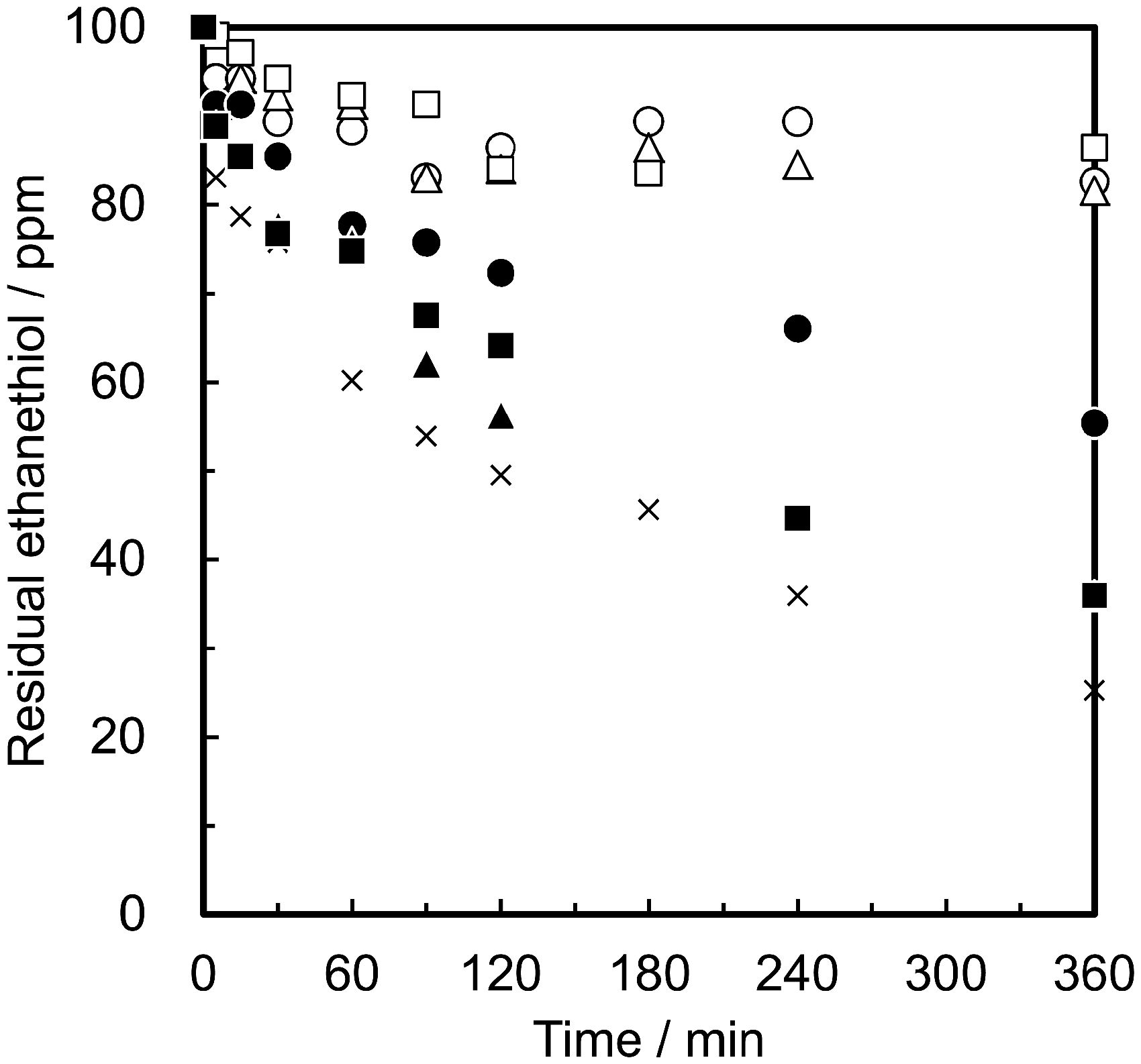
In Figure 8, the deodorization curves for W0-Cu, W-pre, and W-post samples are shown. The following order of deodorization ability was estimated by comparing the curves: W3-post≈W5-post>W1-post>W0-Cu>W1-pre≈W5-pre≈W3-pre. This is the same tendency observed for the C-pre samples except C0-Cu sample. Even though the copper ion uptakes of W-post samples were only slightly more than the W-pre samples, the deodorization ability of W-post samples were obviously higher than that of W-pre samples. As has been mentioned, the slight increase in copper ion uptake for W-post samples is ascribed to the coordination of CR to copper ions. The copper ions bound to CR may have high deodorization ability. From this result, when slightly increased copper is regarded as dye type copper in the W-post against W-pre, the slight dye type copper possesses the very high ability for deodorizing.
Deodorization of ethanethiol for W0-Cu, W-pre, and W-post samples. CR concentration: × 0%; ○/• 1%; Δ/▴ 3%; □/▪ 5% owf. Opened symbols are for pre-mordanted wool and filled symbols are for post-mordanted wool, respectively.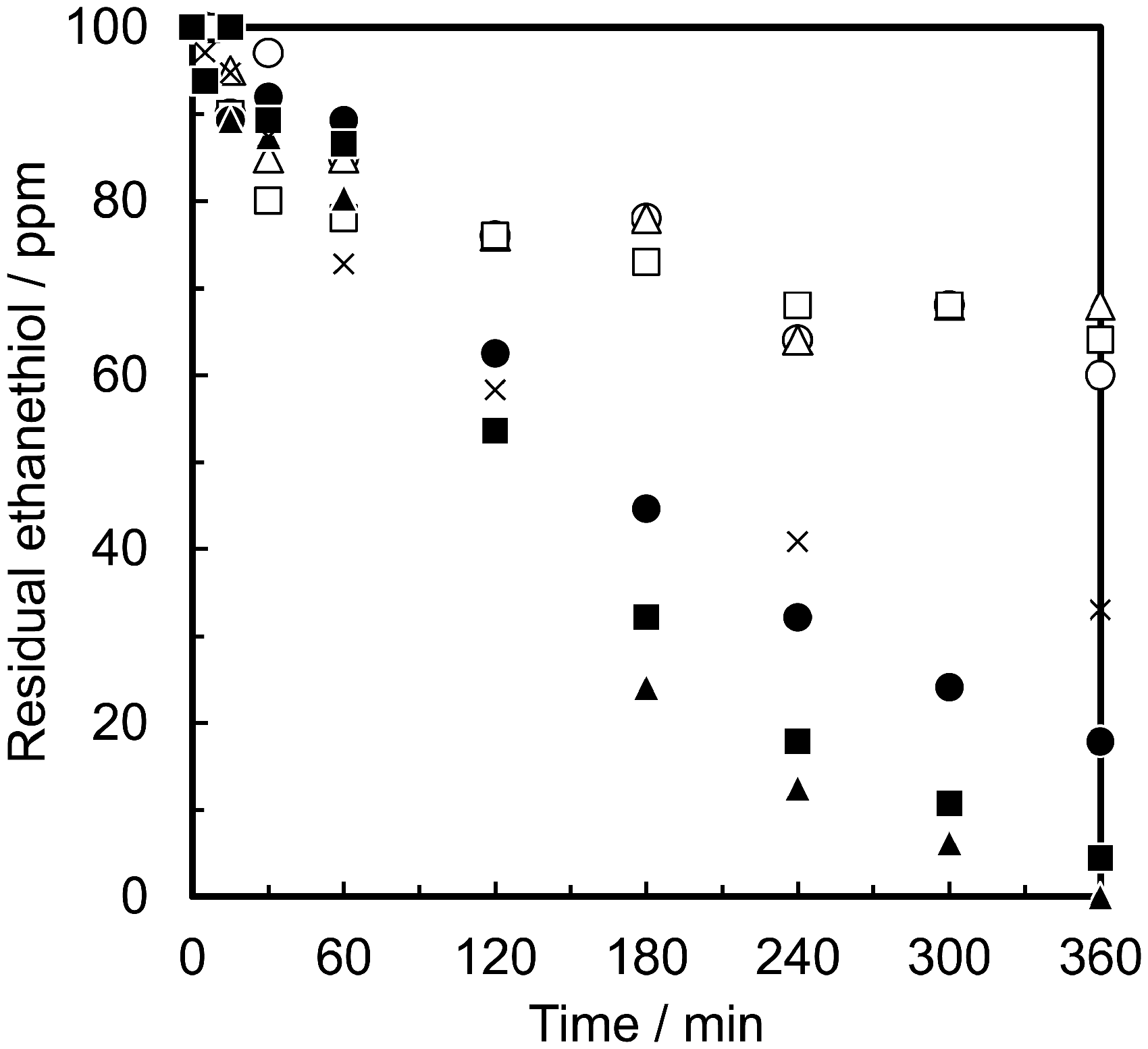
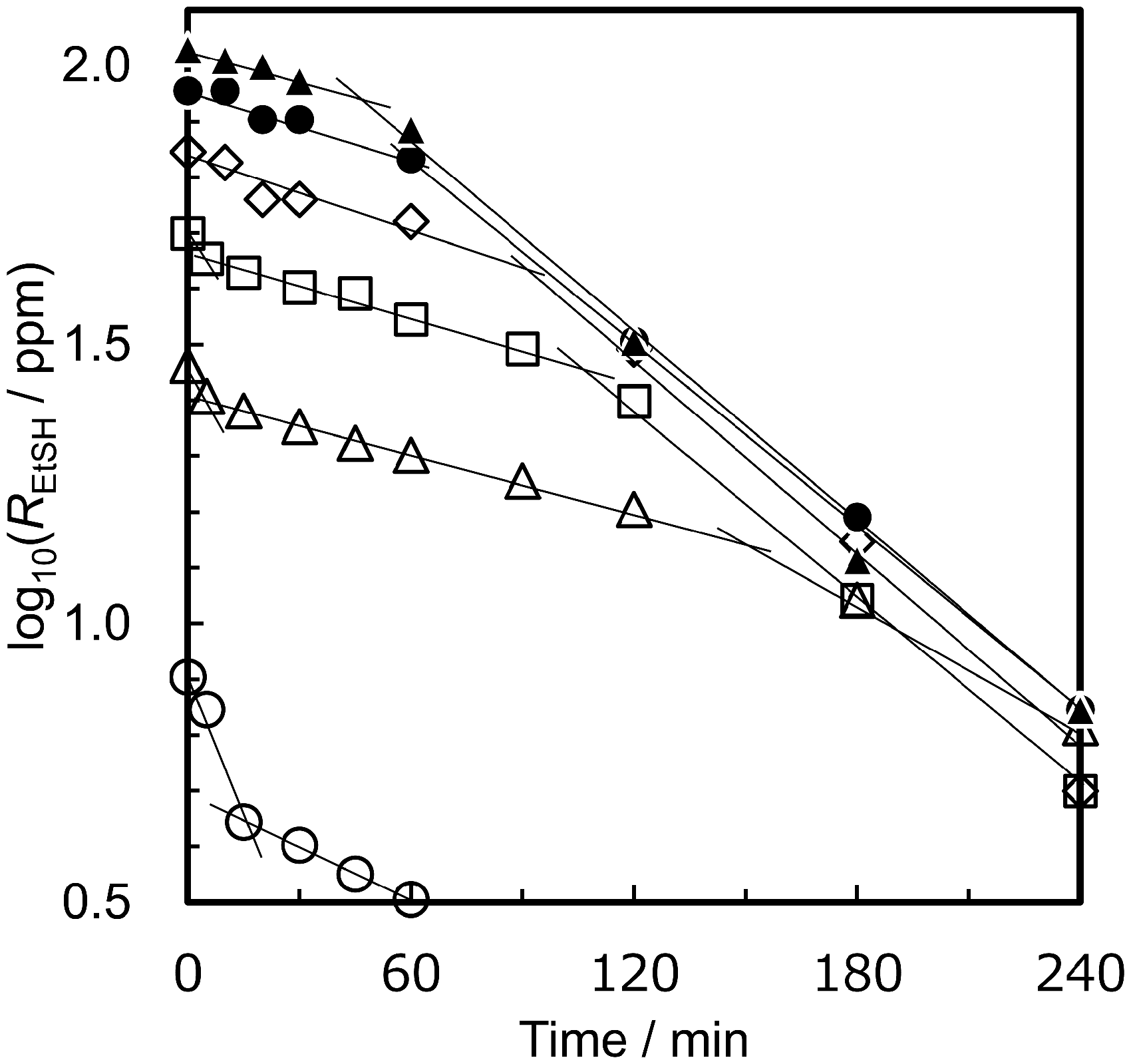
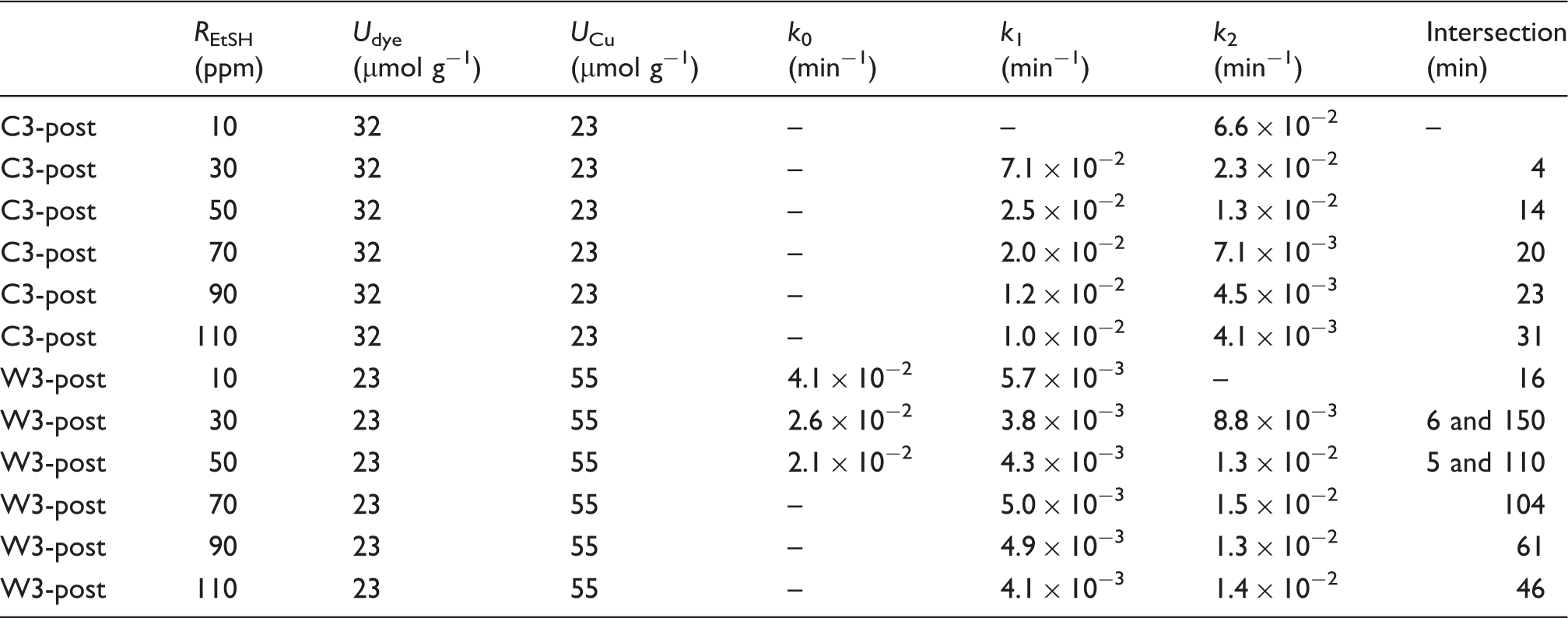
Figures 9 and 10 show the results for the deodorization experiments of the different initial concentrations of ethanethiol for C3-post and W3-post samples, respectively. To examine the data of the deodorization experiments from the viewpoint of kinetics, in these figures, common logarithms of the concentration of the residual ethanethiol were plotted against time. For both C3-post and W3-post samples, the course of the deodorizing process for each experiment of each sample was expressed by two line segments with different slopes in these figures. These results indicate that each deodorization curve is divided into two first-order kinetics processes. The rate constants, k, which was obtained by multiplying the slope of the lines by the factor of 2.303 (=ln10) shown in Figures 9 and 10, are summarized in Table 2. In this table, k1 and k2 are the rate constants of the initial and the subsequent stages, respectively. As shown in Table 2, it is found that the tendencies of k1 > k2 (fast–slow type) for C-post samples and k1 < k2 (slow–fast type) for W-post samples. These remarkable results seem to suggest strongly that the deodorization of ethanethiol by the samples proceeds by two different mechanisms attributed to the two types of copper ions, that is, carboxyl-type Cu and dye-type Cu, and that the rates of the deodorization by the two types of copper ions are modified by type of fiber material—cotton or wool. As for the C-post samples, large amounts of dye-type Cu and a very small amount of carboxyl-type Cu exist in the samples. The two types of oxidation reaction for ethanethiol seem to progress by the carboxyl- and dye-type Cu on C-post samples. The fast–slow type of variation of the rate constant observed may imply that the catalytic activity of either of the types of Cu, presumably the carboxyl-type Cu, is reduced rapidly and finally deactivated during the initial stage, and that the deodorization rate in the following stage is decreased. Contrary to the C-post samples, for W-post samples, carboxyl-type Cu dominates the deodorization reaction. It is possible that the initial deodorization rate is slow because of its particularity in the structure of the wool fiber. As mentioned earlier, the carboxyl groups of the fibers play a part in the adsorption sites of copper ions for the mordant dyed fabrics.
Kinetics of deodorization of different initial concentrations of ethanethiol for C3-post sample. [C2H5SH]0: ○ 10 ppm; Δ 30 ppm; □ 50 ppm; ⋄ 70 ppm; • 90 ppm; ▴ 110 ppm. Kinetics of deodorization of different initial concentrations of ethanethiol for W3- post sample. [C2H5SH]0: ○ 10 ppm; Δ 30 ppm; □ 50 ppm; ⋄ 70 ppm; • 90 ppm; ▴ 110 ppm. Parameters obtained from deodorization results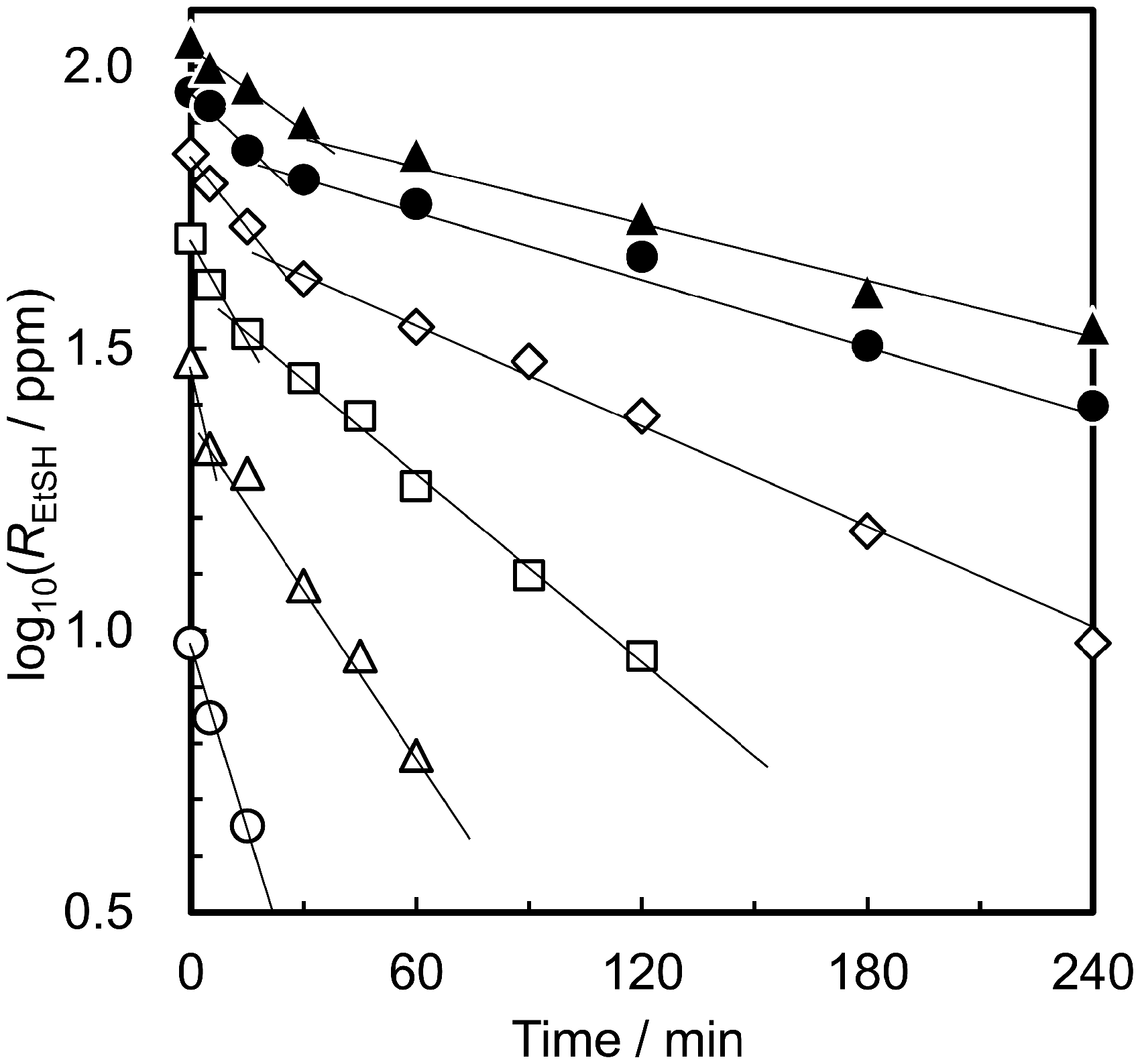
Finally, we add some remarks on the function of copper ions. It is obvious that the copper ions in the mordant-dyed fabrics are involved in the deodorization capability. However, two deodorization mechanisms related to copper ions—that is, oxidative decomposition of thiol and adsorption of thiol to copper ions—cannot be discussed separately at the present stage. The reaction rate constants given in this paper, therefore, include the two mechanisms.
Conclusions
We examined the deodorization ability of mordant-dyed cotton and wool fabrics prepared under the same conditions with CR and copper sulfate as a mordant. Ethanethiol was used as an odor substrate. Both the cotton and wool samples showed a deodorization function for ethanethiol in the following order: pre-mordant < only metal treatment < post-mordant. From the semi-logarithmic plot of the residual concentration of ethanethiol against time, the two apparent first-order rate constants were obtained for the deodorization with each mordant-dyed fabric. Deodorization rates of the fast–slow type for the cotton samples, and of the slow–fast type for the wool samples were observed. These results were discussed from the viewpoints of two types of copper ions, namely, dye-type and carboxyl-type ones.
Footnotes
Declaration of conflicting interests
The authors declared no potential conflicts of interest with respect to the research, authorship and/or publication of this article.
Funding
The authors disclosed receipt of the following financial support for the research, authorship, and/or publication of this article: This work was supported by JSPS KAKENHI Grant Number 24500923.