







Abstract
Spent coffee grounds (SCGs) are solid residues generated from coffee brewing and are mostly discarded as waste. However, SCGs are drawing much attention because they have many health-promoting compounds that exhibit anti-tumor, anti-allergic, antioxidant, and other activities. Therefore, we tried to use SCGs for fabric dyeing to apply functional and coloring effects to the fabrics. SCGs were extracted by a conventional solid–liquid method, and the extract was applied to wool fabrics through a laboratory infrared dyeing machine. It was found that the extract contained a significant number of bioactive components, such as tannins (ca. 0.61 mg/mL); caffeine (ca. 0.38 mg/mL); and phenolic compounds, including chlorogenic acid (ca. 0.21 mg/mL). The wool fabrics dyed with the SCG extract exhibited promising coloring effects, displaying deep-brown hues. In addition, the colorfastness to washing and light were superior to that of fabrics dyed with other natural pigments. In particular, the wool fabrics dyed with the SCG extract showed excellent antioxidant ability (≤86%) and high levels of ultraviolet blocking (≥98%).
Coffee is one of the most popular beverages in the world. Spent coffee grounds (SCGs) are solid residues generated from brewing coffee, amounting to approximately 40% of the total coffee bean mass. 1 The world coffee consumption was approximately 9 million tons in 2015, 2 which resulted in an estimated 3.6 million tons of SCGs. SCGs have been reused in different purposes, such as biodiesel and compost.3,4 Nevertheless, a huge amount of SCGs is still thrown away in landfills, thereby resulting in the environmental problems. Earlier studies demonstrated that SCGs contain large amounts of functional compounds, including phenolic compounds, terpenes, caffeine, and Maillard reaction products.5–8 Therefore, instead of ordinary disposal methods, more sustainable methods for the reuse of SCGs should be explored, which would not only reduce the threat toward the environment but also provide a solution to manage beverage waste. 7
In recent years, many researchers have been interested in functional compounds in SCGs and have tried to use SCG extract for health-promoting applications. Earlier studies have demonstrated that the extracts produced from SCGs exhibit anti-tumor and anti-allergic activities related to the presence of phenolic compounds, such as chlorogenic acid. 9 Chlorogenic acid, one of the most abundant phenolic compounds in SCGs, has been reported to possess a number of beneficial health properties related to its potent antioxidant activity as well as its hepatoprotective, hypoglycemic, antibacterial, antiviral, anti-inflammatory, and anti-carcinogenic activities.10–12 Other coffee components that are beneficial to health are nicotinic acid, trigonelline, quinolinic acid, tannic acid, and pyrogallic acid. Antioxidant properties, such as scavenging reactive oxygen species (ROS), have also been recently proposed for caffeine, the most abundant alkaloid present in SCGs. 8 In addition, the use of SCG oil in sunscreens and health-care applications was introduced by Chiari et al. 13 Due to the high antioxidant activity and the phenolic compounds in SCG oil, the synergistic effects of conventional synthetic sunscreen (ethylhexylmethoxycinnamate) and SCG oil have further increased sun protection by a factor of 20%. Moreover, in vivo results have shown that the incorporation of SCG oil has no cytotoxic effect for skin and liver cells. 7
Therefore, we predicted that SCGs could be useful for functional textile dyeing applications because these compounds exhibit multiple biological effects, including antioxidant activity, as well as an attractive deep-brown color. Teli and Paul 14 have dyed cotton and silk fabrics with extract from coffee seed coat. However, they only focused on the coloring effect and color fastness of the dyed fabrics. Thus, we extracted dyeing solution from SCGs and dyed wool fabrics with the extract. In addition, the coloring and functional properties of the dyed wool fabrics were investigated in this study.
Materials and methods
Sample material and chemicals
Scoured wool fabric (ISO 105-F01; plain woven 125 g/m2) was purchased from Testfabrics Inc. (West Pittston, PA). SCGs (Coffea arabica L.) were supplied from a local coffee house in Gongju, Korea. Folin–Ciocalteu’s phenol reagent, methanol, potassium iodate, sodium bicarbonate, formic acid, acetonitrile, tannic acid, trigonelline, gallic acid, protocatechuic acid, chlorogenic acid, and caffeine were purchased from Sigma-Aldrich (St. Louis, MO, USA). 1,1-Diphenyl-2-picrylhydrazyl (DPPH, free radical) was purchased from Calbiochem (CA, USA). All reagents were used as received without any further purification.
Extraction of the SCG dyeing solution
The extraction of the SCG dyeing solution proceeded by the method of Mussatto et al. 10 The sample (20 g) was mixed with 200 mL of 60% methanol and shaken at 120 rpm for 60 min using a shaking water bath (JSSB-30T, JS Research Inc., Gongju, Korea) set at 60℃. Then, the mixture was centrifuged at 17,000 g for 15 min at 4℃. The extraction was repeated 30 times as described above. The combined supernatant was concentrated using a rotary evaporator (SB-1200, EYELA, Shanghai, China). The concentrate was transferred to a mass flask and then adjusted to 2 L. The extract was used as a stock solution (100%) for this research.
Preparation of the SCG extract dyed fabrics
Wool fabrics were cut into 30 cm × 20 cm pieces, and each was immersed in containers containing a diluted series of the SCG extract stock solution (25, 50, 75, and 100 wt%). For the dyeing process, a Lab infrared (IR) dyeing machine (Daelim Starlet Co., Ltd; Gyeonggi-do, Korea) was used (bath ratio = 1:20, rotating at 25 rpm). The temperature of the dyeing bath was gradually increased (ca. 2℃/min) up to 120℃ and, then, the rotating bath was kept at this temperature for 1 h. After that, the dyed wool fabrics were rinsed with tap water and air-dried.
Analysis of the SCG extract
The total tannin content in the SCG extract was determined with the method of Naima et al. 15 Five milliliters of 2.5% KIO3 solution preheated for 7 min at 30℃ was mixed with 1 mL of 10-fold diluted extract. The mixture was then placed in a thermostatic bath at 30℃ for 2 min, and the absorbance was measured at 550 nm (Biochrom Libra S22, Santa Barbara, CA, USA). The total tannin content was expressed as mg of tannic acid equivalents (TAE)/mL. All samples were analyzed in triplicate.
The total phenolic content in the SCG extract was measured by the colorimetric method of Singleton and Rossi. 16 A 10-fold diluted extract (0.5 mL) was mixed with 0.9 mL of 10-fold diluted Folin–Ciocalteu reagent and 3.6 mL of saturated sodium bicarbonate solution. The mixture was placed at room temperature for 1 h and, then, the absorbance was measured at 700 nm (Biochrom Libra S22). The total phenolic content was expressed as mg of gallic acid equivalents (GAE)/mL. All samples were analyzed in triplicate.
The antioxidative compounds in the SCG extract were analyzed by a high-performance liquid chromatograph (HPLC) equipped with a diode array detector (Agilent Technologies, 1260 Infinity, Waldbronn, Germany). A Kinetex 5-µm C18 column (150 mm × 4.6 mm i.d., Phenomenex, Torrance, CA, USA) was employed at 40℃. The injection volume was 4 µL. The antioxidative compounds were eluted using a gradient mobile phase consisting of (A) 0.1% formic acid and (B) acetonitrile at a flow rate of 1 mL/min. The gradient was programmed as follows: 0–10 min, 15–37% B; 5–10 min, 37–80% B; 10–12 min, 80–100%, B; 12–13 min, 100–15% B. The separated compounds were monitored at 258 nm. The identification of the major antioxidative compounds was based on the congruence of the retention time and ultraviolet-visible (UV-Vis) spectra with those of pure authentic standards (trigonelline, gallic acid, chlorogenic acid, and caffeine).
Characteristics of the wool fabrics dyed with the SCG extract
Color changes of the dyed fabrics, in terms of L*, a*, and b* values, and color differences (ΔE) were obtained using a Color i7 Benchtop spectrophotometer (X-rite Inc., Seoul, Korea). The color strength (K/S) value was assessed using the Kubelka–Munk equation (1)

The ability of the dyed fabrics to impede microbial growth and retention was tested using Staphylococcus aureus (ATCC 6538; a gram-positive bacterium) and Klebsiella pneumoniae (ATCC 4352; a gram-negative bacterium) cultures according to an established protocol to test the antibacterial activity of textiles (KS K 0693)

In the above equation, A and B represent the surviving bacterial cells (colony-forming unit mL–1) on the plates inoculated with bacterial solutions derived from the dyed fabrics and a control solution derived from the untreated fabrics, respectively.
The antioxidant ability of the dyed fabrics was measured with DPPH using a previously reported method.
17
DPPH is a well-known free radical and a trap (“scavenger”) for other radicals. Therefore, the rate reduction of a chemical reaction upon the addition of DPPH is used as an indicator of the radical nature of that reaction.
18
The evaluation was conducted as follows. Five hundred milligrams of wool fabric was immersed in a container containing 30 mL of 0.15 mM DPPH/methanol solution. The absorbance at 517 nm was measured using a UV-Vis spectrophotometer (Sinco S-3100, Scinco Co., Ltd, Seoul, Korea) after the solutions stood in the dark for 1 h. A lower absorbance of the solution indicated a higher DPPH scavenging ability. The DPPH scavenging ability was calculated using equation (3)

In the above equation, S and C represent the absorbance of the sample from the dyed fabric and that of the control from the untreated fabric, respectively.
Results and discussion
Element analysis of SCG extract
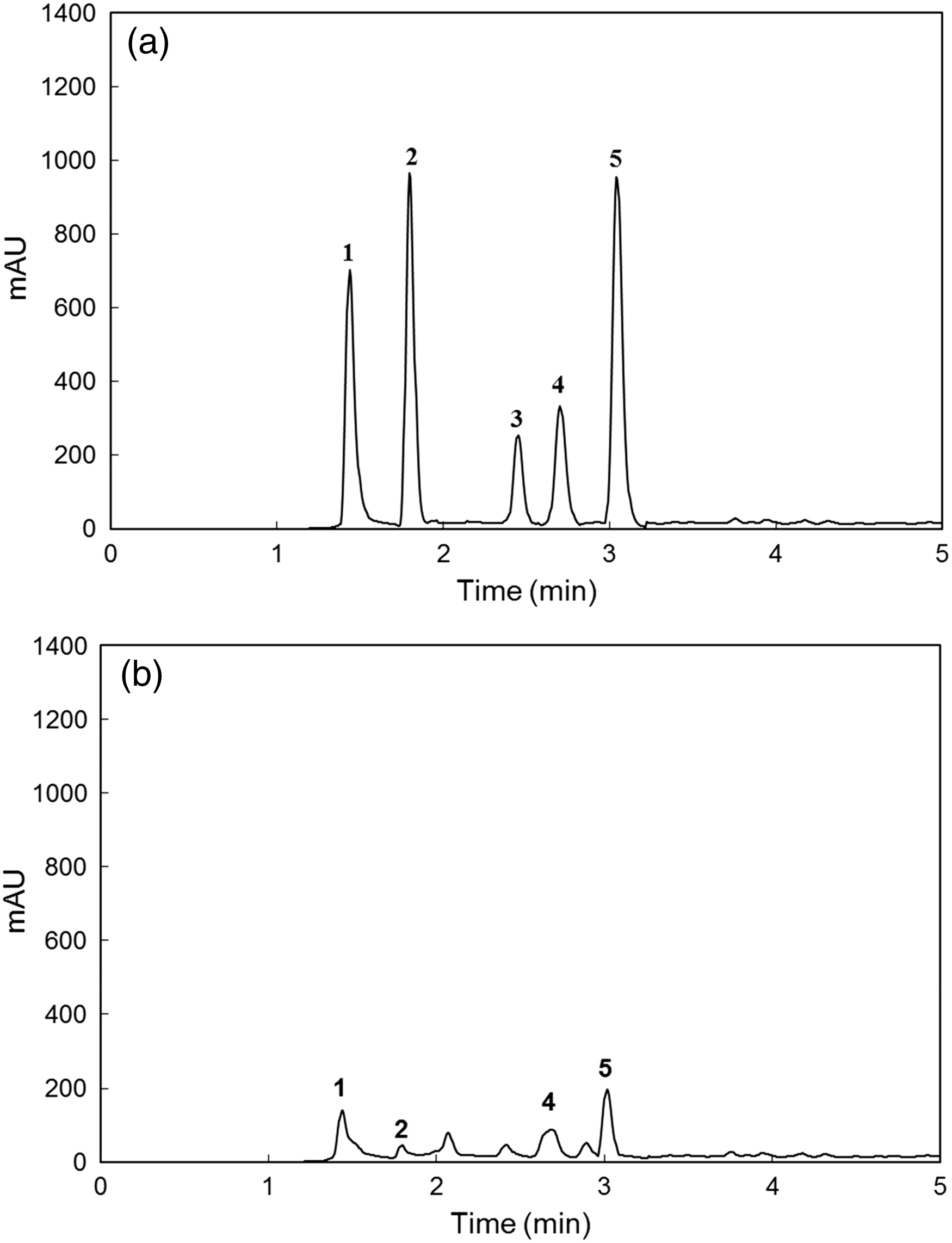
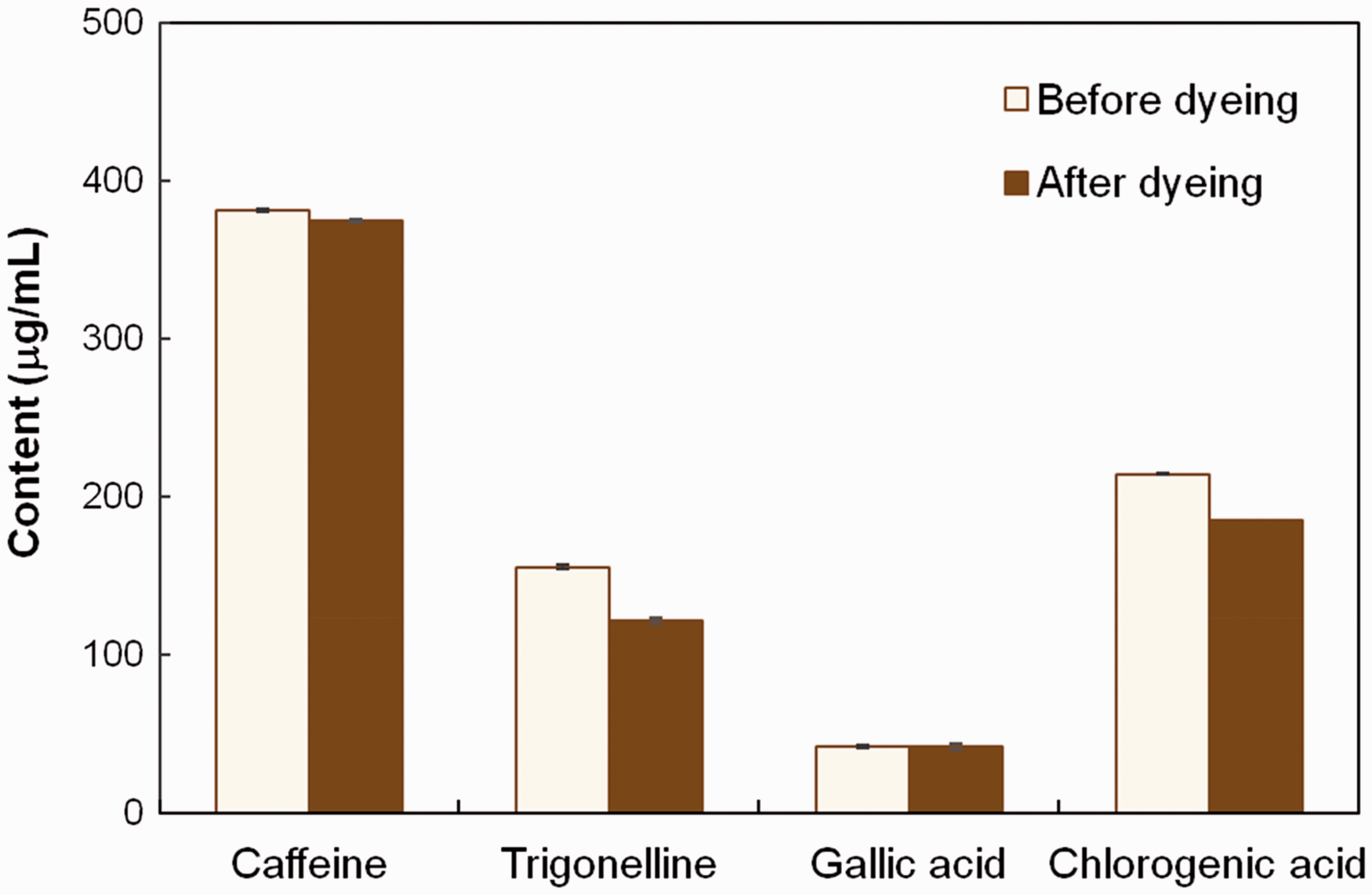
The total tannin and total phenolic contents in the methanolic extract of the SCGs were 0.61 ± 0.04 mg TAE/mL and 2.00 ± 0.01 mg GAE/mL, respectively (Figure 1). After dyeing, 92% of the total tannins were retained, whereas 62% of the total phenolics remained, indicating that a considerable amount of the total phenolics was adsorbed into the wool fabric. Four peaks were identified from the SCG extract by comparing the retention times and UV-Vis spectra with an authentic standard (Figure 2). Although a peak appeared near the retention time of protocatechuic acid, the UV-Vis spectrum was not identical. The four identified peaks were phenolic compounds (gallic acid and chlorogenic acid) and nitrogenous compounds (trigonelline and caffeine). Of the compounds identified here, caffeine was the most abundant compound in the SCG extract, followed by chlorogenic acid (Figure 3). Chlorogenic acid and trigonelline were present in lower amounts than caffeine. Chlorogenic acid efficiently eliminates ROS induced by glutathione depletion and lipid peroxidation.
19
Trigonelline shows antiradical activities in vitro and in vivo.
20
These previous results suggest that chlorogenic acid and trigonelline will be the primary contributors to the antioxidant activity of the dyed wool fabrics.
Total tannin (mg tannic acid equivalents/mL) and total phenolic (mg gallic acid equivalents/mL) contents in the methanolic extracts of the spent coffee grounds. High-performance liquid chromatograms of the standard (a) and 75% spent coffee ground extract (b) at 258 nm. 1: trigonelline; 2: gallic acid; 3: protocatechuic acid; 4: chlorogenic acid; 5: caffeine. Contents of antioxidative nitrogenous and phenolic compounds in the methanolic extracts of the spent coffee grounds.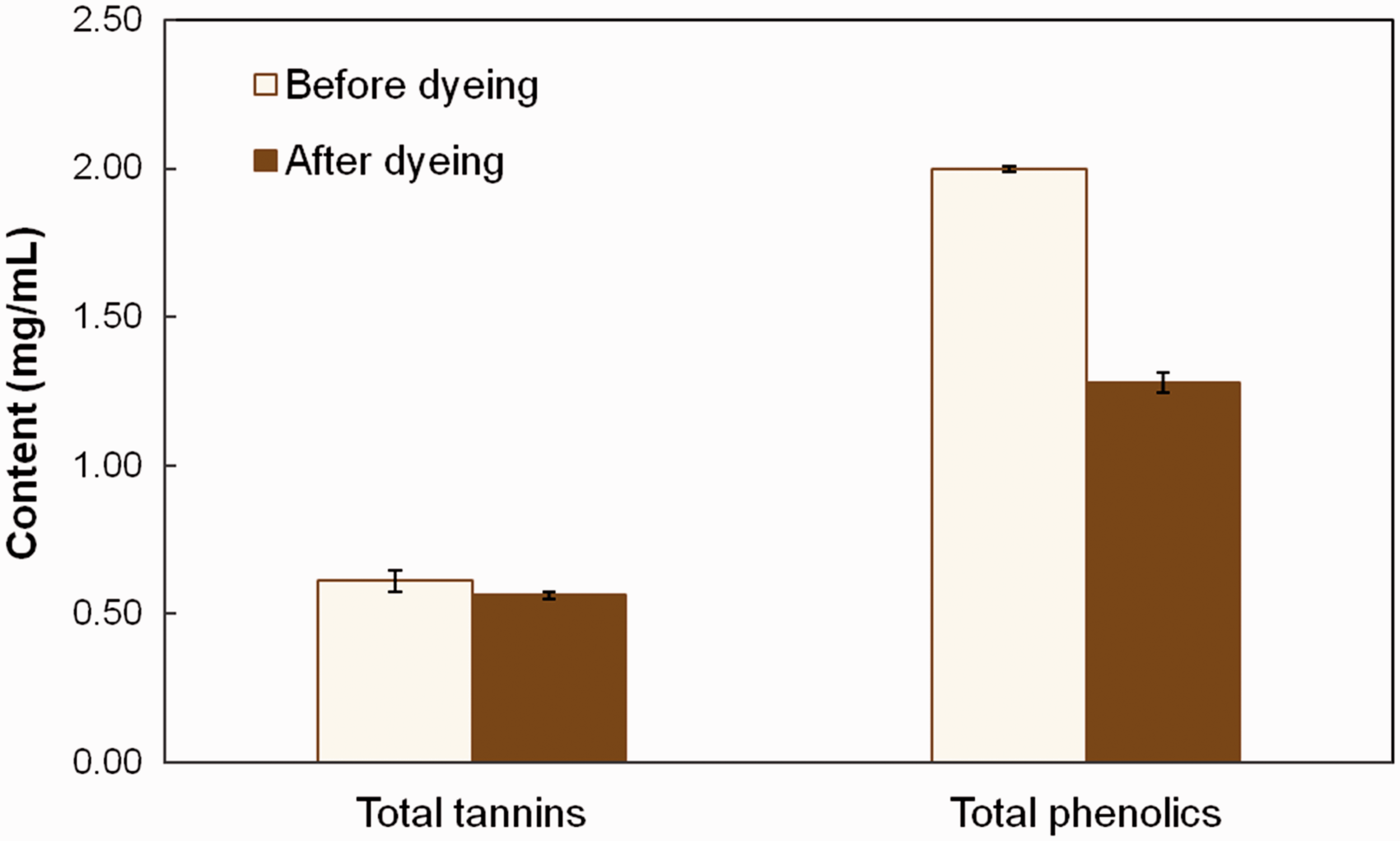
Color properties of the wool fabrics dyed with the SCG extract
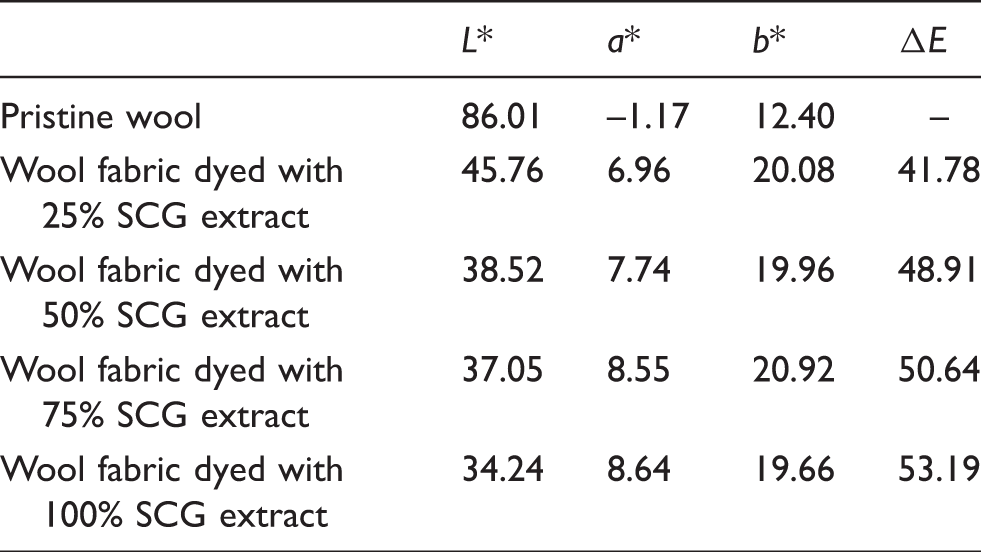
Color values of the wool fabrics dyed with the spent coffee ground (SCG) extract
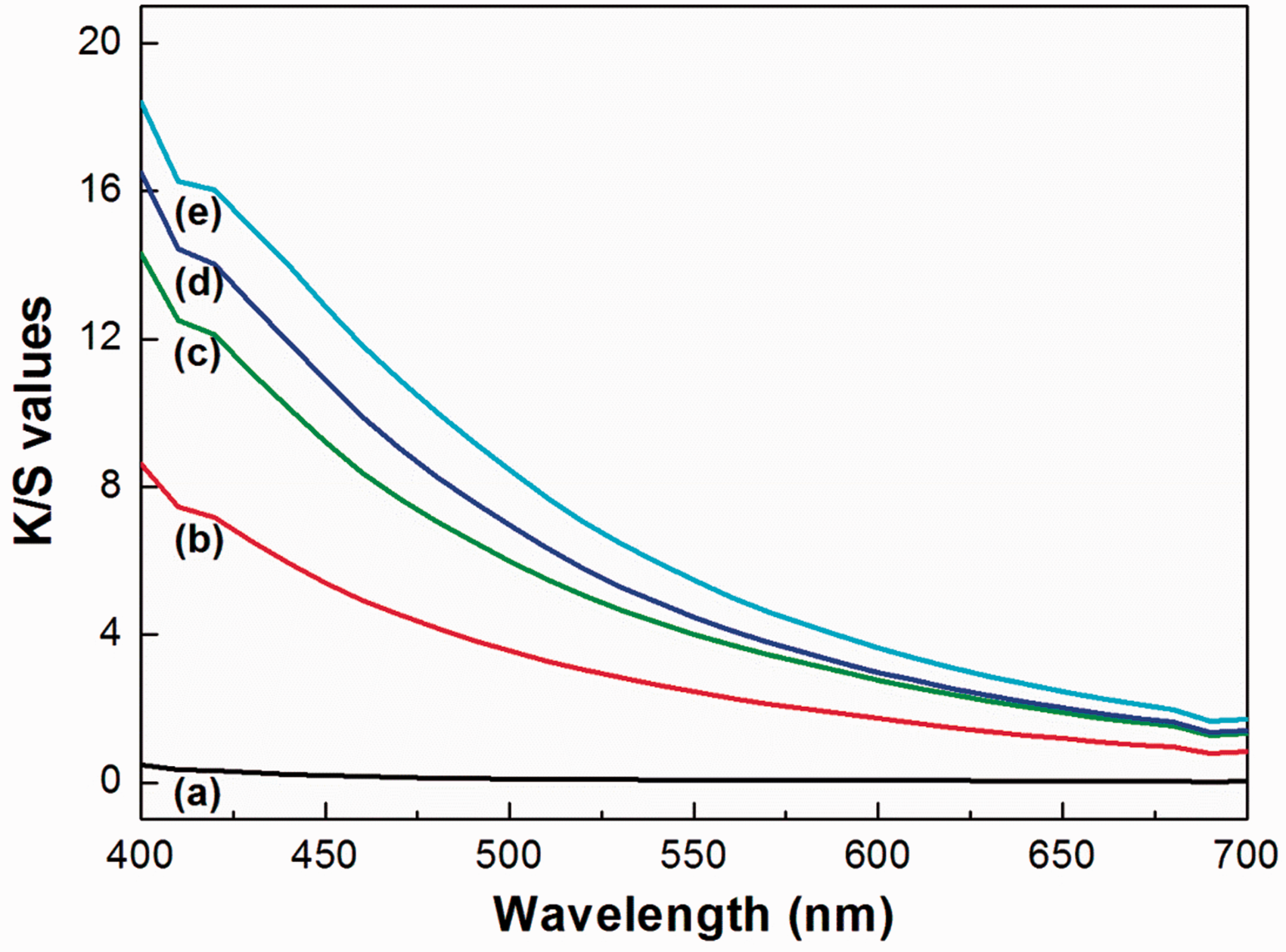
K/S values of wool fabrics dyed with spent coffee ground (SCG) extract: (a) pristine; (b) dyed with 25% SCG extract; (c) dyed with 50% SCG extract; (d) dyed with 75% SCG extract; (e) dyed with 100% SCG extract.
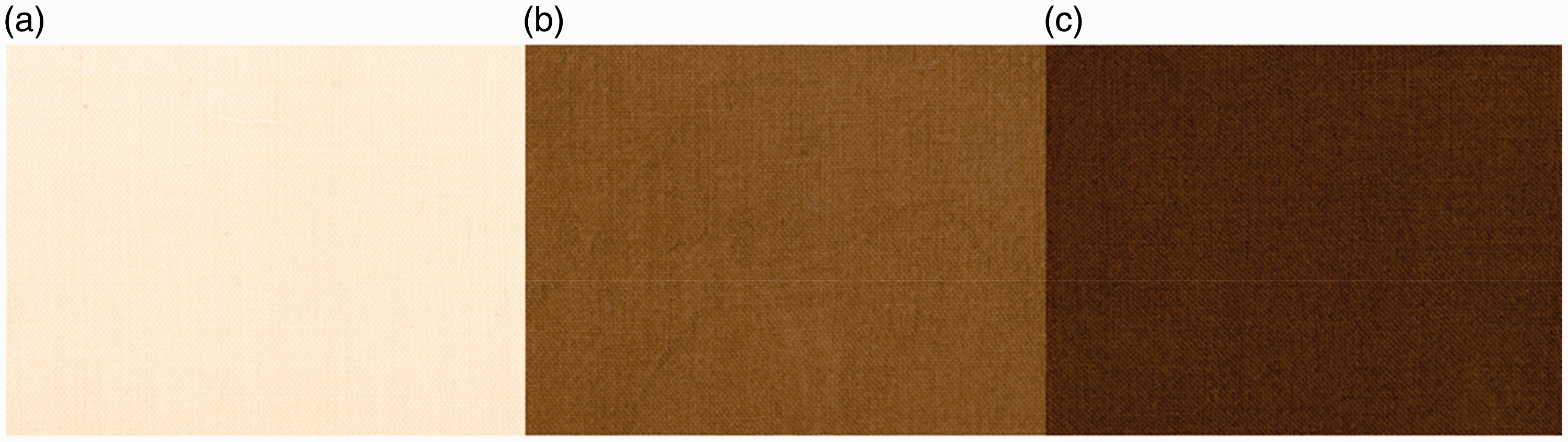
Color values of wool fabrics: (a) pristine; (b) dyed with 25% spent coffee ground (SCG) extract; (c) dyed with 100% SCG extract.
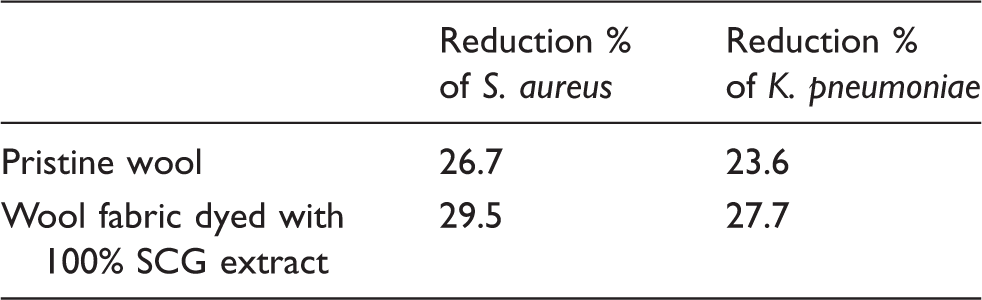
Antibacterial abilities of the wool fabrics dyed with the spent coffee ground (SCG) extract
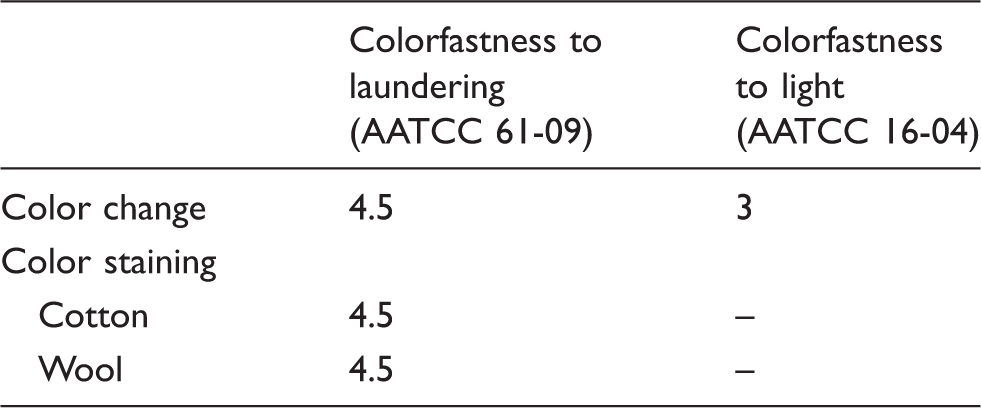
Colorfastness of the wool fabrics dyed with 75% spent coffee ground extract
Antioxidant and UV-blocking ability of the wool fabrics dyed with the SCG extract
Chronic exposure to UV radiation is the most important contributor to skin disorders, such as wrinkling, scaling, dryness, and mottled pigment abnormalities. Thus, the roles of antioxidants scavenging ROS and suppressing the rate of oxidative reactions on clothing material would be beneficial for skin health.14,35 Figure 6 shows the antioxidant ability of the wool fabrics dyed with the SCG extract as a function of the dyeing bath concentration. Expectedly, the antioxidant ability of the wool fabrics increased as the concentration of the SCG extract increased in the dyeing bath. This increase was due to more phenolic compounds being bonded to the wool fabrics in the dyeing process under a high concentration of SCG extract. Phenolic compounds are the major determinant of antioxidant potential found in high concentrations in plants.
36
Chlorogenic acid and trigonelline were found to be the major phenolic components when the extract was analyzed by the HPLC, as shown in Figure 2. In addition, it is well-known that non-phenolic compounds in coffee extracts, such as caffeine, can contribute to the antioxidant activity and scavenge hydroxyl radicals (a highly active ROS).
37
Antioxidant ability of the wool fabrics dyed with the spent coffee ground extract as a function of dyeing bath concentration. DPPH: 1,1-diphenyl-2-picrylhydrazyl.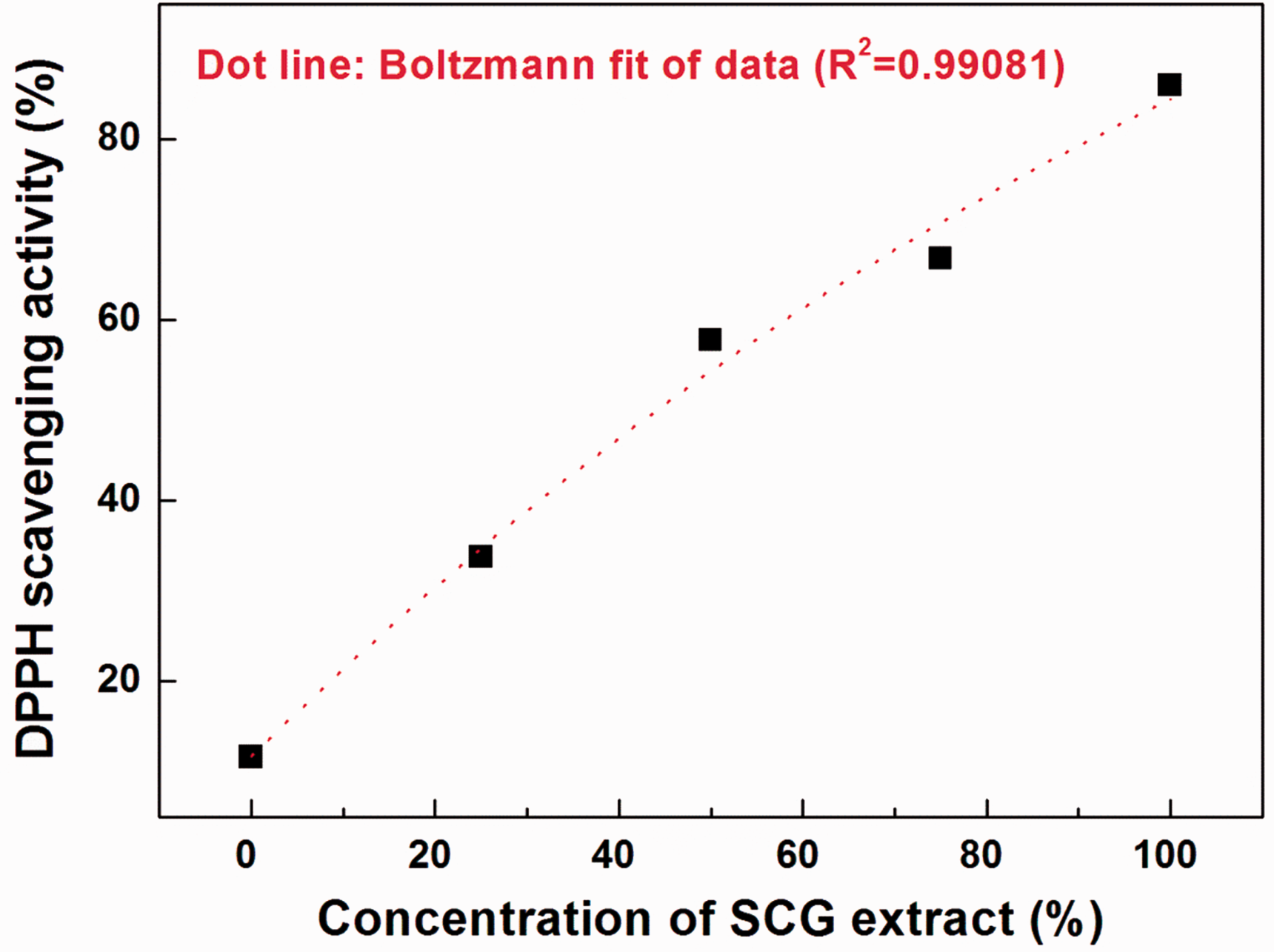
On the other hand, it was observed that the wool fabrics dyed with the SCG extract were effective in blocking UV radiation, as shown in Figure 7. To avoid the UV-blocking effect accounting for wool shrinkage, the control sample was also treated in the deionized water under the same dyeing process as the wool fabrics dyed with SCG. It seems that phenolic compounds in the SCGs effectively absorb UV radiation, particularly in the wavelength range of 260–280 nm.
38
Therefore, we conclude that the SCG treatment on clothing materials can be a helpful application for skin health care.
Ultraviolet (UV)-blocking rate of the wool fabrics treated at 120℃ for 1 h in an infrared dyeing machine. UV-R: 290–400 nm; UV-A: 315–400 nm; UV-B: 290–315 nm; SCG: spent coffee ground.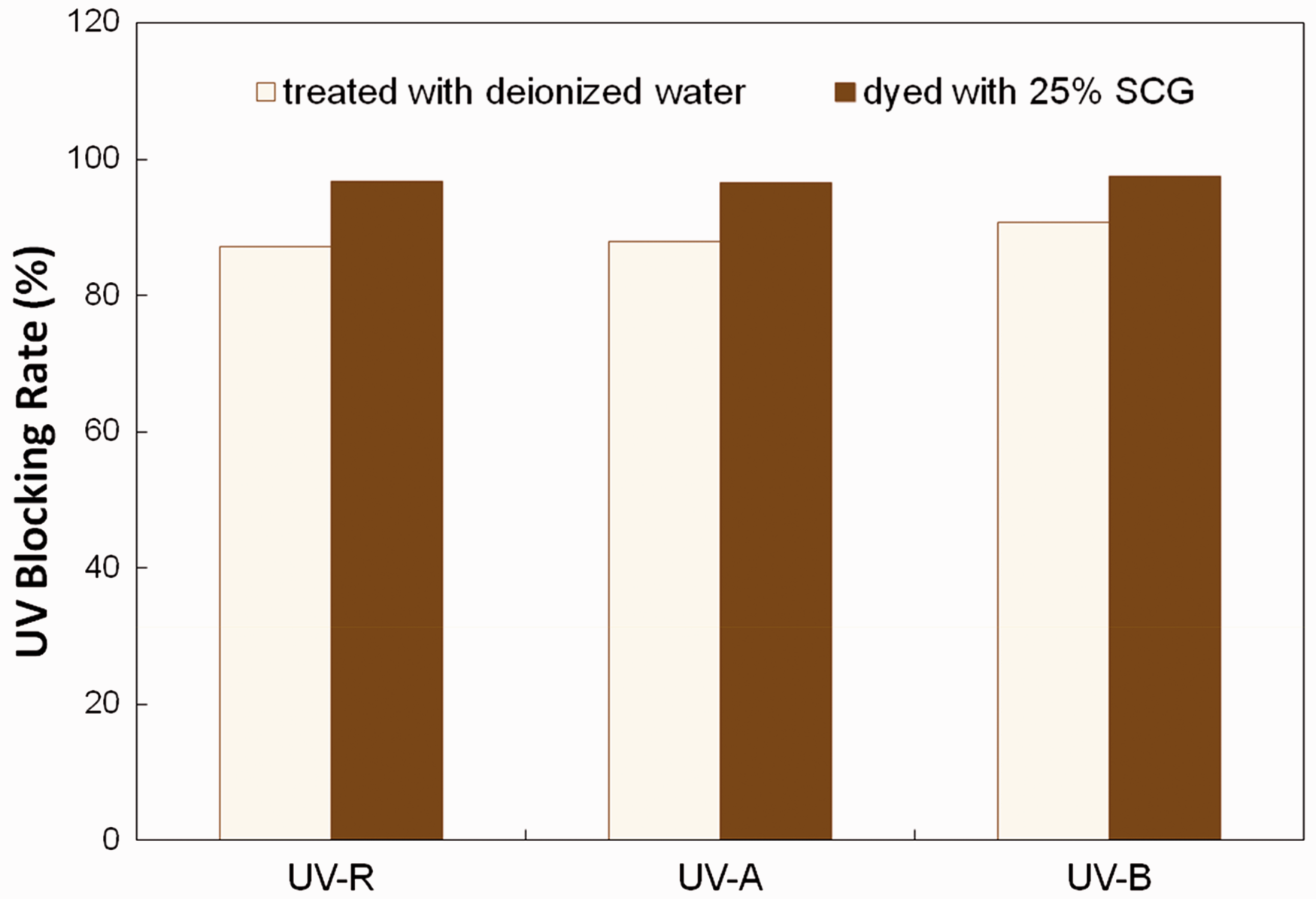
Conclusions
In this study, wool fabrics were dyed with SCG extract to prepare functional clothing materials and to recycle the waste produced from the coffee industry. The SCGs contained large amounts of functional chemical compounds, such as caffeine, tannins, and polyphenols, which could be inimical to the environment. Thus, recycling the SCG extract would be beneficial to the environment. In addition, we expected that the coloring effects and functionality could be obtained from wool fabrics dyed with the SCG extract. Consequently, it was observed that the wool fabrics dyed with the SCG extract were colored by a deep-brown hue, and the colorfastness was superior to that of other natural pigments. In addition, the wool fabrics showed significant antioxidant activity and UV-blocking ability. Based on the results of these experimental tests, it was determined that the wool fabrics dyed with the SCG extract in this study could be applied to functional clothing materials.
Footnotes
Declaration of conflicting interests
The authors declared no potential conflicts of interest with respect to the research, authorship, and/or publication of this article.
Funding
The authors disclosed receipt of the following financial support for the research, authorship, and/or publication of this article: This study was financially supported by Kongju National University (grant number: 2017).