







Abstract
Wiping of surfaces contaminated with pathogenic bacteria is a key strategy for combating the transmission of healthcare associated infections. It is essential to understand the extent to which removal of bacteria is modulated by fiber properties, biocidal liquid impregnation and applied hand pressure. The influence of intrinsic and extrinsic factors on the removal efficiencies of pathogenic bacteria was studied. Nonwoven wipes made of either hydrophobic (polypropylene) or hygroscopic (lyocell) fibers were manufactured and dynamic removal efficiency of bacteria studied. The single most important parameter affecting bacterial removal efficiency was impregnation with biocidal liquid (p < 0.05). For inherently hygroscopic 100% regenerated cellulose (lyocell) wipes impregnated with biocidal liquid, removal of E. coli, S. aureus and E. faecalis improved by increasing the fabric surface density and wiping pressure to their maximal values – 150 g.m–2 and 13.80 kN.m–2, respectively. For inherently hydrophobic 100% polypropylene nonwoven wipes, the same conditions maximized the removal efficiency of S. aureus, but for E. coli and E. faecalis a reduction in the wiping pressure to 4.68 kN.m–2 was required. Best practice involves the use of higher surface density wipes (150 g.m–2) containing regenerated cellulose fibers loaded with liquid biocide, and applied with the greatest possible wiping pressure.
Keywords
Pathogenic bacteria contaminating critical patient care areas are known contributors to the transmission of healthcare associated infections (HCAIs).1,2 HCAIs have been directly linked with more than 37,000 deaths per annum in Europe. Between 20% and 30% of these infections are thought to be preventable with appropriate control programs. 3 Consequently, the effective removal of pathogens from critical patient care surfaces is crucial. 4 Many healthcare providers use nonwoven wipes in combination with a biocidal liquid as part of a disinfection and decontamination regimen for solid surfaces.5,6 This is an effective strategy, however the underlying interactions governing the removal of bacteria by the nonwoven wipe are poorly understood.7,8 There are also issues surrounding the discrepancy between realistic wiping time and the exposure time proposed in some standards. 9 Removal of bacteria by wiping solid surfaces has been investigated by various groups,10,11 most notably by Williams et al. 5 and Ramm et al., 12 as they developed reproducible methods for analyzing bacterial removal by wipes. However, previous studies have typically focused on analyzing commercially available wipes, the structure and properties of which are not directly comparable due to differences in the ways they are manufactured. Consequently, understanding the role of wipe design parameters on wiping performance has been challenging.
Nonwoven fabrics are porous assemblies containing fibers arranged mostly in the x–y plane. 13 They can be produced from hygroscopic or hydrophobic fibers and fabrics are often impregnated with an aqueous biocidal formulation. The liquid loading is typically 150–350% by weight, with much of the liquid volume being held in the interstitial pore volume between the fibers. For hygroscopic fibers, there will be a large degree of sorption. The basic dimensional properties of a nonwoven fabric include the surface density (g.m–2), the thickness (mm) and the porosity (ratio of void volume to total fabric volume). The porosity is an important influence on the total liquid absorptive capacity of the wipe. It has been shown that the mechanical action of wiping with a dry nonwoven fabric is capable of removing some of the bacteria present on a surface. 14 Impregnation with an aqueous biocidal formulation substantially improves the removal of particles up to a limit, depending on the absorptive capacity of the fabric. 15 Cleaning regimens alone may be ineffective in eliminating pathogens from surfaces. 16 Therefore biocides, more specifically, antimicrobials, are used for the control of organisms considered harmful to human health. These pre-impregnated, pre-moistened or “wet” wipes provide higher cleaning-regimen compliance when used by staff and lead to a more rapid cleaning and disinfection process. 17 During dynamic wiping, shear and compressive forces are applied, assisting the transfer of bacteria to the wipe surfaces and overcoming the adhesive forces between bacteria and the surface on which they reside. 18 Changing the wiping pressure can therefore be expected to affect the balance of these forces and the resulting bacterial removal efficacy.
To develop improved biocidal wipe products, there is a need for a controlled investigation into the effect of the wipe surface density, biocide liquid loading and applied pressure during wiping on the disinfection of abiotic plastic surfaces. These factors relate to the basic design attributes of the wipe itself and the wiping action, all of which can be expected to influence the bacterial removal efficiency. Each of these parameters can be controlled in the laboratory to provide a basis for systematic study. The purpose of this research is to determine the intrinsic (e.g. wipe surface density, lotion addition to wipe) and extrinsic (e.g. wiping pressure) factors leading to the greatest bacterial removal efficiencies. As such, an orthogonal array testing strategy (OATS) was employed. 19 An inherently hydrophilic regenerated cellulose fiber (lyocell) and an inherently hydrophobic fiber (polypropylene – PP) were selected as raw materials for wipe fabric manufacture. Surface density values were selected to encompass the range of weights commonly found in nonwoven wipes. Wiping pressures were selected based on those produced by an average sized human hand and the median value reported in the literature, 12 while the influence of a biocidal liquid was compared with distilled water and dry controls.
Materials and methods
Orthogonal array and parameter selection
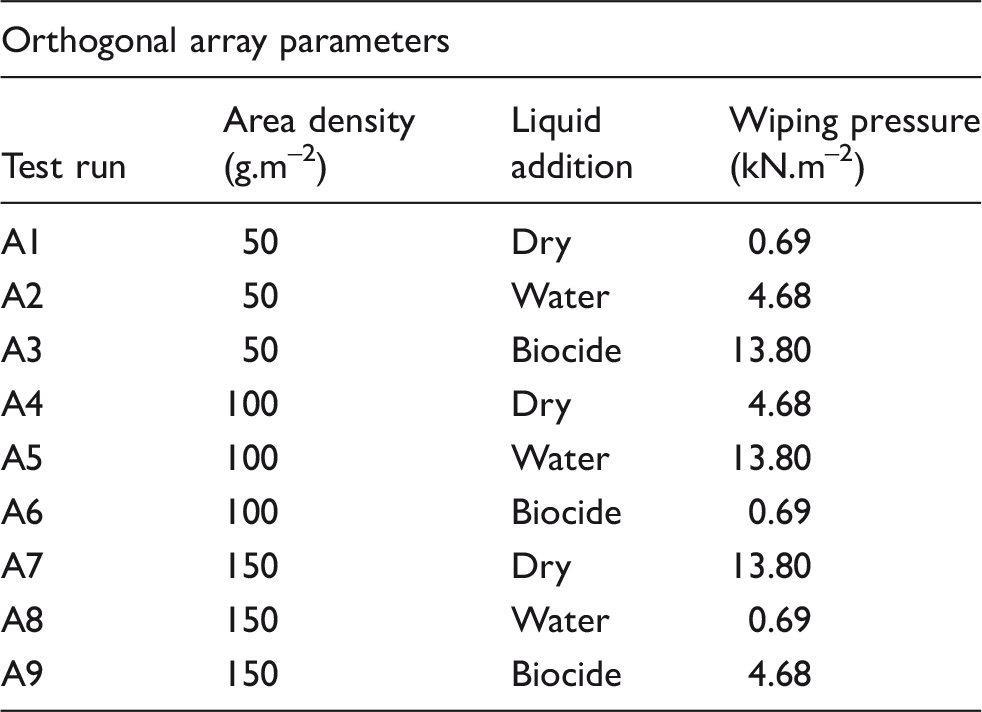
An L9 3**3 orthogonal array, generated using the Taguchi method, was used to analyze the optimum wiping conditions for removal of pathogenic bacteria from a poly (methyl methacrylate) (PMMA) model surface. Experimental factors and levels were selected based on preliminary experiments and industrial norms. Fabric surface densities of 50, 100 and 150 g.m–2 were chosen to approximate the range of surface densities found in commercially available nonwoven healthcare surface wipes.
Orthogonal array parameters arranged in a 3**3 Taguchi array
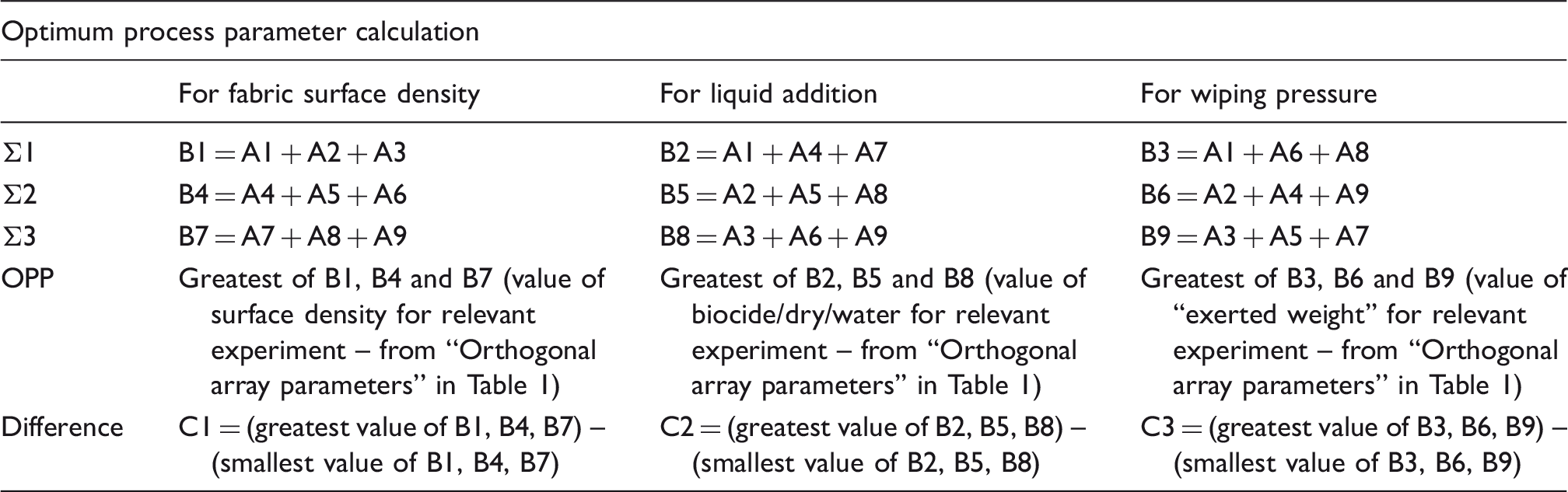
Optimum process parameter (OPP) calculation scheme and results
Wipe manufacture
Thickness and surface density of wipes
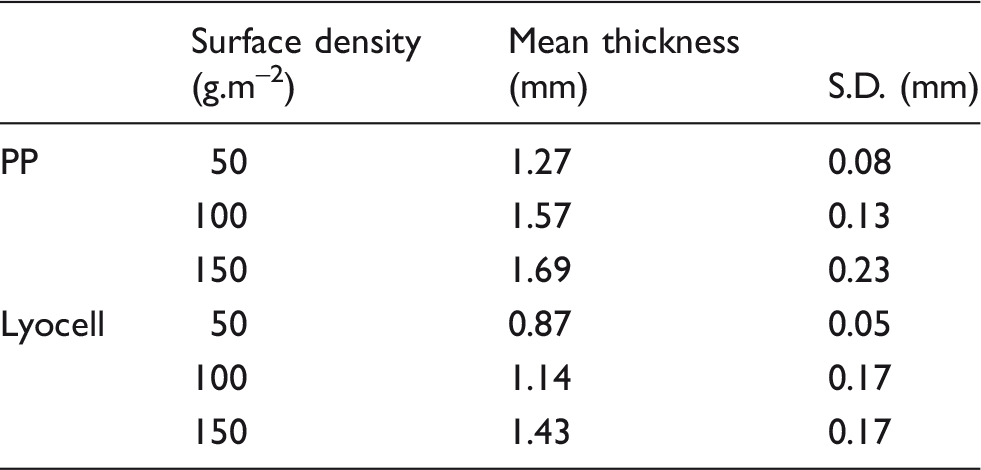
S.D.: standard deviation; PP: polypropylene.
To ensure removal of any residual fiber finish or auxiliary chemistry, all fabrics were scoured in a Roaches Rotohouse rotary drum dyeing machine (Roaches, UK) for 15 min at 60℃ with 1 g.dm–3 Hostapal NIN tl k (Clariant Produkte GMBH; Frankfurt, Germany) and 2 g.dm–3 sodium carbonate, using a liquor ratio of 20:1. 21 Fabrics were then thoroughly rinsed and line-dried prior to further treatment.
Biocide, neutralizer and addition to wipe
In the following text, the term “biocide” will be used only to refer to the surfactant-based formulation used in this study. A proprietary biocide was selected consisting of a blend of a non-ionic surfactant (C9–C11 ethoxylated alcohol pareth-5), a cationic surfactant (benzalkonium chloride) and various buffering agents and sequestrants. A 1:20 dilution of the biocide stock solution with deionized water (dH2O) passed the EN 1276 “Quantitative suspension test of bactericidal activity of chemical disinfectants” test, giving a 5 log reduction of the pathogenic bacteria S. aureus, E. coli, E. hirae and P. aeruginosa within 5 min. 22 The biocide surface tension was 37.5 × 10⁻³ N.m–1 at 20℃.
The neutralizer acts to arrest the activity of the biocide. The neutralizer was manufactured according to the methodology outlined by Ramm et al. 12 The toxicity of the neutralizer and its ability to quench the activity of the biocide was tested according to the method outlined by Knapp et al. 23
Where dictated by the orthogonal array, each experimental wipe was soaked in 10 ml 1:20 biocide or dH2O (control) for 10 min before being run through a Werner Mathis mangle (4 m.min–1) to remove excess liquid as per Berendt et al. 11 Liquid pickup was 150% for both the biocide and dH2O, on all wipe surface densities, using both the PP and the lyocell. This was also the maximum pickup that could be achieved with the hydrophobic PP wipes.
Measuring the microorganism removal efficiency from a healthcare surface
The microorganisms used in this study were E. coli (ATCC 25922), S. aureus (ATCC 29213) and E. faecalis (ATCC 29212), provided by Leeds Teaching Hospitals NHS Trust Pathology department (LGI; Leeds, UK). Strains were cultured according to previously published methods. 14 These were selected as examples of pathogenic bacteria.
Removal of bacteria from a model healthcare solid surface was tested based on the methodology reported by Williams et al.
5
For brevity, only modifications to this protocol are described. Bacterial cells were suspended in phosphate buffered saline (PBS); the optical density of the solution was measured at λ = 600 nm; and the solution adjusted to McFarland standard 0.5, equivalent to an approximate cell density of 1 × 10⁸ CFU.ml–1;
24
0.3 g.dm–3 bovine serum albumin (BSA) w/v was added to the final solution. Alcohol-sterilized PMMA surface tiles (registered to ISO 9001) were inspected to ensure freedom from any defects. The tiles were then inoculated with 20 µl of the bacterial solution, and allowed to dry. To simulate dynamic wiping, a 900 mm2 section of the nonwoven test specimen was attached to a 20 mm diameter boss, and fixed to a Caframo BDC2002 overhead stirrer (Caframo Ltd; Ontario, Canada). This was rotated at 60 r min–1 for 10 s at either 0.68, 4.69 or 13.80 kN.m–2 applied pressure against the inoculated surface tile, depending on the OATS parameter. Surfaces were then transferred to the neutralizer solution, and shaken at 150 r min–1 for 5 min. Agar was then inoculated, incubated for 24 h at 37℃, and bacteria removal efficiencies (average % error) calculated using Equation (1)

The control tile was inoculated with the bacterial solution but was not subject to wiping. All experimentation was carried out at 20℃ ± 2℃ and 65% ± 4% relative humidity.
Scanning electron microscopy
Samples were gold coated using a Quorum Q150RS sputter coater (Quorum Technologies Ltd; East Sussex, UK). A JEOL JSM-6610 LV scanning electron microscope (JEOL Ltd; Tokyo, Japan) was then used to image the nonwoven wipe samples. FIJI image analysis software
25
was used to calculate the fiber presence at the wipe–bacteria–surface interface according to Equation (2) (images not shown). During the coating and imaging, the wipes are subject to negligible pressure, so this should not influence the calculated fiber percentages at the surface. All wipes were imaged at this same pressure, so the results are unbiased

Statistical analysis
All data resulted from three independent replicates. Where appropriate, one-way analysis of variance (ANOVA) at the 95% confidence interval was performed. All analyses were completed in MINITAB software, version 16 (Minitab Inc.; Pennsylvania, USA).
Results and discussion
The influence of key wipe parameters on bacterial removal efficiency was studied in relation to each type of bacterium in conditions of dynamic wiping.
Bacterial removal efficiency results for the polypropylene (PP) and the lyocell wipes for E. coli, S aureus and E. faecalis. Standard deviations are not reported as this is not consistent with the orthogonal array method
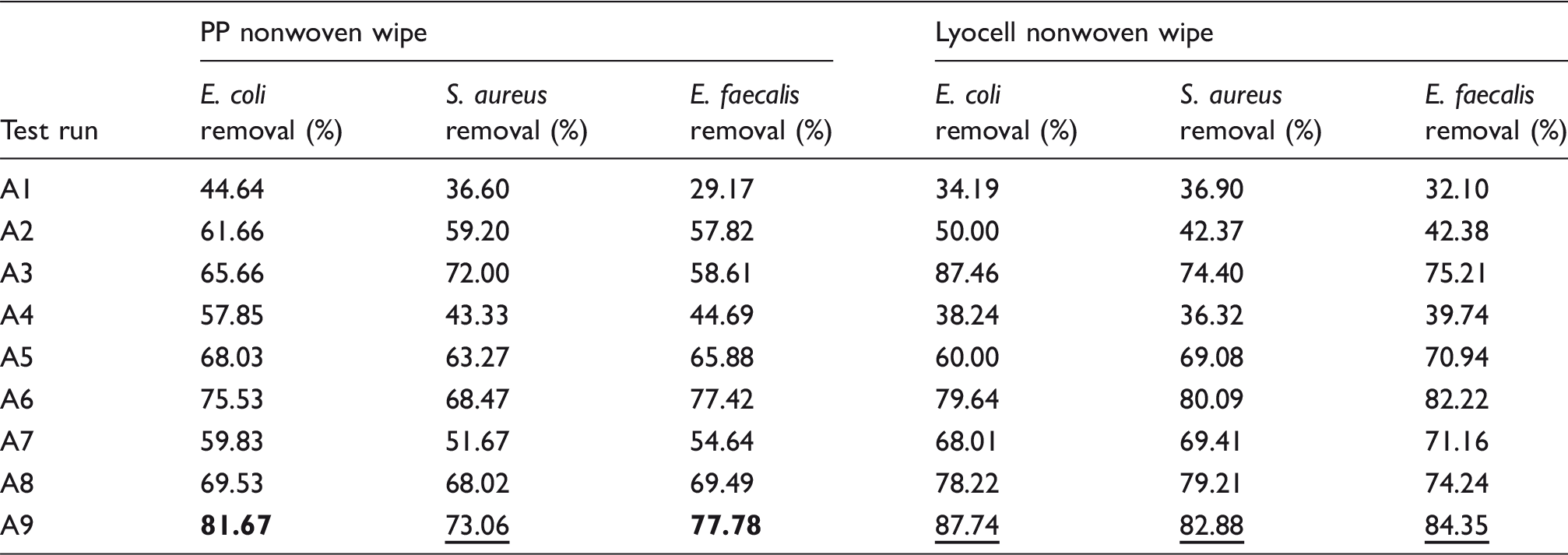
Testing (Table 4) was conducted according to the orthogonal array (given in Table 1). The bacterial removal % values in row A9 in Bold are the highest removal values for a given bacterium given by the “within-array” testing. These match the optimum combination of area density, liquid addition and wiping pressure predicted by the orthogonal array. The underlined bacterial removal % values in row A9 in Table 4 are the highest removal values for a given bacterium given by the “within-array” testing. However, they are not the optimum combination of area density, liquid addition and wiping pressure predicted by the orthogonal array.
For PP nonwovens, the predicted OPPs – that is, the wipe manufacture and testing parameters predicted by the orthogonal array to give the highest removal % of bacteria from the surface – for both E. coli and E. faecalis were 150 g.m–2 surface density, in combination with the biocide and a pressure of 4.68 kN.m–2 during wiping. This prediction was confirmed by OATS output values in Table 4, test run A9 – 81.67% removal of E. coli and 77.78% removal of E. faecalis, the highest removal values found for each bacterial condition during the testing. For the S. aureus, 13.8 kN.m–2 was the predicted optimum pressure parameter. This was confirmed by testing these parameters outside of the array – that is, using a 150 g.m–2 PP nonwoven with biocide and 13.8 kN.m–2 pressure while wiping a surface contaminated with S. aureus – which gave a mean removal value of 74.4%, higher than any within-array value (Table 4 shows orthogonal array testing results – the highest removal value for within-array testing for removal of S. aureus was 71.78 % in test row A9).
For lyocell nonwovens, 150 g.m–2 surface density in combination with the biocide and 13.8 kN.m–2 pressure during wiping were the calculated OPPs for all bacteria; these were confirmed by testing these conditions outside the orthogonal array and comparing the results. The mean removal values obtained were 88.74% for E. coli, 88.31% for S. aureus and 86.52% for E. faecalis, all of which were higher than any of the array outputs for the given bacteria (
The bacterial removal efficiency was considered as a function of fabric surface density for each bacterium and each substrate material (Figure 1), by taking an average of the results from the three surface density values (i.e. from Table 4, results from A1–A3 for 50 g.m–2, A4–A6 for 100 g.m–2 and A7–A9 for 150 g.m–2).
Removal efficiency of wipe versus fabric surface density: (a) lyocell wipes; (b) polypropylene (PP) wipes. Error bars indicate standard deviation.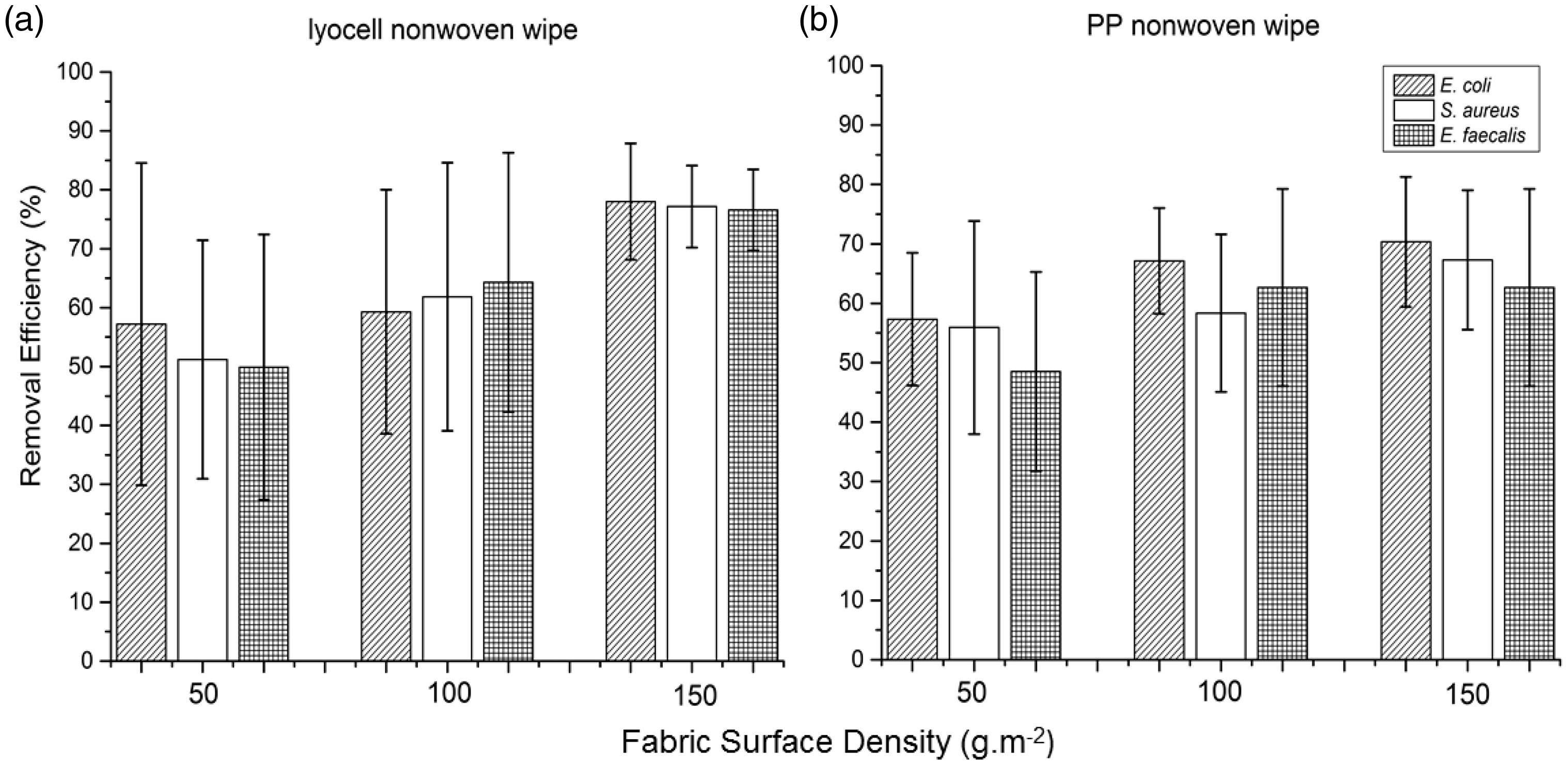
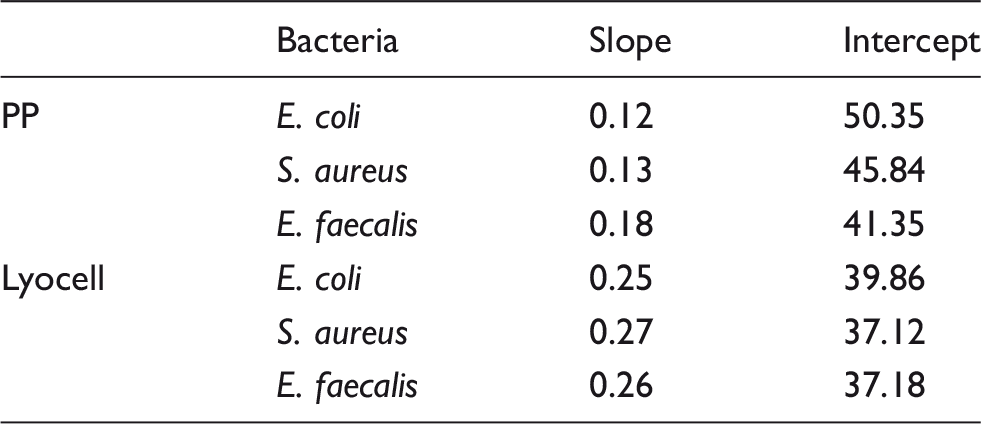
Although usage of biocide was the most influential parameter in terms of increasing bacterial removal efficiency, the results suggested utilization of higher surface density would also improve removal efficiency, shown by the trend in increase in removal efficiency with increasing surface density (Figure 1). This can impact dry wiping as well as wet wiping. This is significant, as dry wiping has shown to be effective in bacterial removal from surfaces. 14 The differences in bacterial removal efficiency between the lowest and highest surface density wipes containing both lyocell and PP for E. coli, S. aureus and E. faecalis were all significant at p < 0.05 (unpaired t-test).
Slope and intercept for removal efficiency versus surface density graph best fit lines from Figure 1
PP: polypropylene.
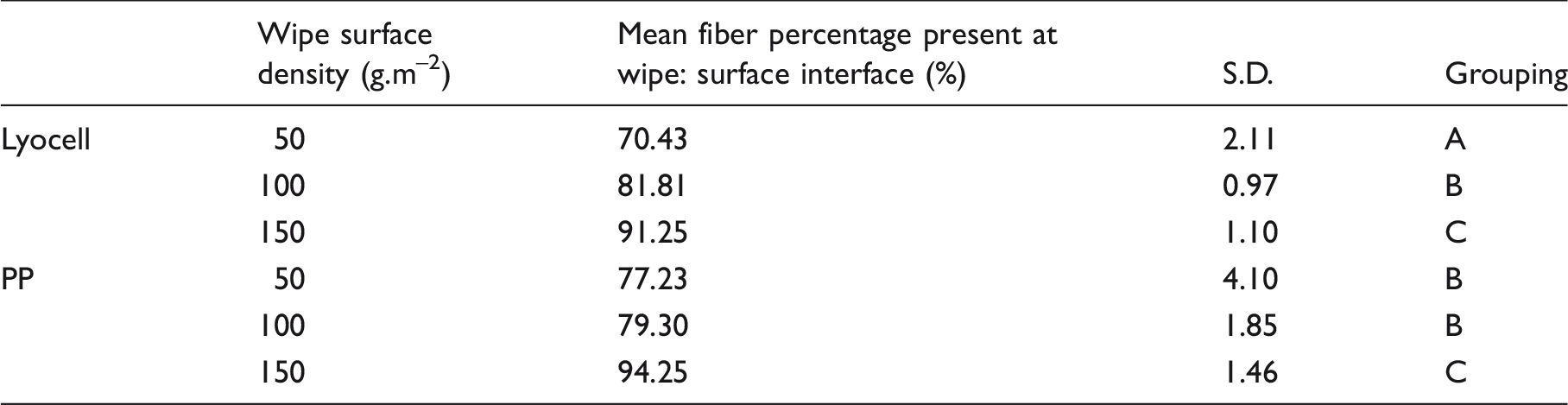
Liquid add-on during biocide (or water) addition to the wipe was 150% weight to weight for all wipes, so heavier surface density wipes will have more biocide. Therefore, the likelihood of either a bacterial “kill” on the contaminated surface or bacterial removal from the contaminated surface is greater with higher surface density. It has previously been shown that bacteria interact with and adhere directly to the fibers in dry wipes 14 Therefore, if more fibers are present at the wipe-contaminated surface interface, there is a greater likelihood of bacterial adhesion and removal. Heavier surface density wipes were shown to remove more bacteria without liquid addition, following the same trend as with the biocide-containing wipes.
In Table 6, values highlighted in bold show the OPP selection.OPP* denotes a set of OPPs that have been confirmed by testing outside of the orthogonal array. Cells highlighted in black indicate the largest “C” (“difference”) value – indicating the variable that has most impact on bacterial removal. The paramater with the greatest “C” value (Table 5, calculated according to Table 2) is the paramater that has the greatest effect on the removal efficiency. For all bacteria and both wipe types, this was “C2” – the liquid addition. This means that the addition of a biocide to a wipe has the greatest effect on bacterial removal % of any of the parameters investigated. The main effects on removal efficiency were determined by ANOVA. For the PP wipe, liquid addition had the most significant effect on removal of E. coli (p < 0.01); S. aureus and E. faecalis (both p < 0.05), confirming the differences observed in the OATS. PP surface density also had a significant effect on E. coli removal (p < 0.01). Similarly, for the lyocell wipe, liquid addition had the most significant effect on removal of E. coli (p < 0.05); S. aureus and E. faecalis (both p < 0.01), which agreed with the OATS differences. The lyocell surface density and wiping pressure both had a significant effect on the removal of S. aureus (p < 0.05 and p < 0.01, respectively) and E. faecalis (both p < 0.05). Increase of surface density for either wipe type will also increase the dry wiping removal of biocide.
Note that the improvement in wiping efficiency due to the addition of the biocidal liquid might also be partly due to the presence of a liquid phase, and not just the fact that it is a biocidal liquid. The addition of water alone can substantially increase bacteria removal from the surface by providing a transport medium in which bacteria can be suspended and transported by the interstitial pore spaces within the wipe fabric structure.
The presence of a biocide liquid in wiping is therefore important to ensure effective removal of bacteria from hard surfaces. Since bacteria are attached to the surface, there will be an energy threshold that must be overcome to remove them. Whilst it is reasonable to assume that increasing wiping pressure will assist in overcoming these forces by providing greater energy to the surface 26 via applied forces such as shear and compression, it is apparent that a high wiping pressure cannot substitute for the presence of a liquid. Initially, during wiping, the role of the biocidal liquid relates to its inherent surfactancy and the consequent reduction in surface tension, which improves surface wetting. 27 In the present study, the surface tension of the biocide was roughly half of that of water. Consequently, an increase in the removal of bacteria from the surface versus water and dry controls can be anticipated.
The 0.015 g.m–2 BSA simulated organic load present on the PMMA tile causes a decrease in wetting tension of the PMMA surface due to the chemical nature of BSA (i.e. protein); the salts also present in the BSA will deposit on the PMMA surface, decreasing the wetting tension of the PMMA surface. 14
Also important to consider is the absorption and desorption of biocide to and from the wipes during use. The biocide is an aqueous medium, the bulk of which is absorbed and retained within the void volume of the wipe, depending on the surface energy of the constituent fibers. During use, compression of the wipe structure reduces its volume and a proportion of interstitially retained liquid will therefore be released. This effect was most pronounced in the PP wipe, which is inherently hydrophobic. In the PP wipe, the optimum wiping pressure for E. coli and E. faecalis was only 4.69 kN.m–2, compared to 13.80 kN.m–2 in the lyocell wipes. In the lyocell wipes, a proportion of the aqueous biocide will chemically interact with –OH groups on the fiber surfaces, and be more effectively retained within the fabric, restricting its subsequent availability. Therefore, as the biocide is largely aqueous, the concentration of the benzalkonium chloride, the “biocidal” component of the biocide, may be greater outside the lyocell fiber, in the interstitial spaces in the lyocell wipe, as it only has one hydrogen-bond acceptor and zero hydrogen-bond donors. Therefore, the availability of benzalkonium chloride may be greater in the lyocell wipes; however, it lacks the necessary liquid phase to deliver it to the contaminated surface and the bacterial cells on it. This means that although the fraction of liquid impregnated in to each wipe was identical, a greater proportion of the “whole” biocide (i.e. liquid phase, benzalkonium chloride and surfactants) is released from the PP wipe at a low wiping pressure, which assists in the bacterial removal. Thus, increasing the wiping pressure using PP wipes did not result in significantly better removal of E. coli and E. faecalis. In contrast, greater wiping pressure of 13.80 kN.m–2 is required using lyocell wipes to release sufficient liquid to provide optimal surface bacterial removal.
Contamination of previously clean surfaces by soiled wipes is known to occur during practical wipe usage. This has previously been studied by Siani et al. 28 Interestingly, Siani et al. 28 and Ramm et al. 12 both suggested that the degree of surfactancy of the biocide will affect any surface recontamination that occurs from an already used, soiled wipe onto a previously sterile surface. The effect of the parameters examined in this study on recontamination of the PMMA surface was not studied in this work. In addition, only the PMMA tiles were used as the model surface, but in practical usage wipes will be used on surfaces of different chemistries and topographies. It is suggested that recontamination and the effect of different surface types will form the basis of future experimentation. Discussion of other factors affecting the wiping of surfaces can be found in the work of Maillard and Sattar. 9
Optimum process results
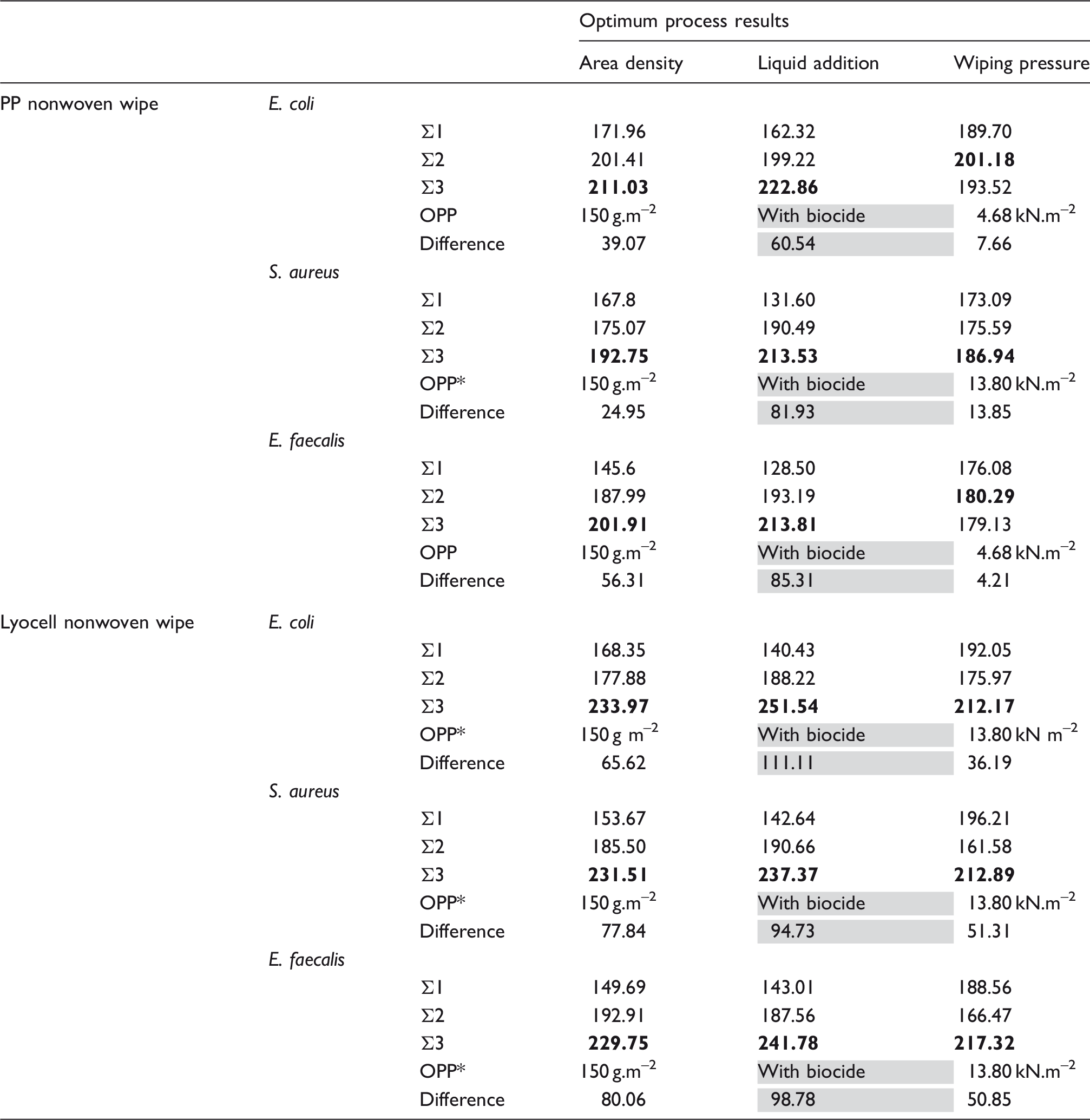
PP: polypropylene; OPP: optimum process parameter. Note: OPP* is a set of OPPs that have been confirmed by testing outside of the orthogonal array.
Relative fiber content at the wipe–surface interface. Scanning electron microscopy (SEM) images of wipe substrates with different surface densities were analyzed using FIJI image analysis software, 25 then output values were subject to analysis of variance (ANOVA) with a post hoc Tukey’s test (p < 0.05). Means that do not share a grouping letter are significantly different from each other. Data are the average of five replicates
S.D.: standard deviation; PP: polypropylene.
However, increasing the surface density also enables a greater weight of biocide liquid to be reabsorbed, as there is greater excess absorptive capacity in a heavier wipe, even if the liquid loading in terms of weight fraction was consistent for all wipes. In absolute terms, heavier weight wipes will carry more liquid volume than those of lighter weight. Note that in addition, during wiping, the pressure applied to the substrate is likely to reduce the pore volume as a result of compression, leading to a reduction in effective absorbent capacity. Collectively, this points to heavier weight (>100 g.m–2), regenerated cellulosic wipes with biocide being preferentially used in the healthcare environment. As best practice for infection control, this should be combined with use of a high hand wiping pressure, where possible, to maximize bacterial removal efficiency. It is interesting to note that the role of hand wiping pressure varies depending on the fiber composition of the wipe substrate. To the authors’ knowledge this has not been previously reported. In addition, it is important to note that in real usage conditions, heat transfer from the user’s hand might potentially influence wiping efficiency.
The benefit of increasing the substrate surface density is also likely to hold true for dry wipes, as it has also been shown in previous work that bacteria will adhere to wipe fibers in the dry state. As reported in these experiments, greater fiber surface area is provided at the interface between the wipe and contaminated surface. As the wipe surface density increases, there will be more surface provided for bacterial adhesion. 14
In the future, it may be necessary for the fiber composition of the wipe to be made clearer on the packaging of wipe products so that better guidance can be provided about the hand pressures to be applied. It could be difficult for users to know how much pressure they are actually exerting in real life on the wipe; however, the wiping pressure used in this experiment were purposely based on “low”, “medium” and “high” values that correlate with the “hand pressures” already reported in the literature.
Conclusions
Removal of pathogenic bacteria from abiotic surfaces using nonwoven wipes in combination with a biocidal liquid is a stratagem commonly used by healthcare providers. Production of wipes with optimal bacterial removal efficiency is therefore crucial. Using an OATS, it was determined that the optimum surface density for both the lyocell and PP wipes was 150 g.m–2, that is, regardless of wipe polymer composition, it was advantageous to use the heaviest substrate. This is substantially higher than the surface density of many surface wipes currently used in healthcare environments, which are more typically in the range of 45–100 g.m–2. Cleaning efficiencies could therefore be improved by specifying wipes of higher surface densities. The addition of biocidal liquid had the most influence on bacterial removal (p < 0.05). This work provides new insight into cleaning, disinfection and decontamination; however, greater understanding is needed into the fundamental process underlying bacterial removal from surfaces by nonwoven wipes. The results of this research suggest that best practice for infection control should involve use of heavier weight, regenerated cellulosic wipes impregnated with biocide, with as much wiping pressure as possible.
Footnotes
Acknowledgement
The authors would like to thank Professor Chris Carr for academic support.
Declaration of conflicting interests
The authors declared no potential conflicts of interest with respect to the research, authorship, and/or publication of this article.
Funding
The authors disclosed receipt of the following financial support for the research, authorship, and/or publication of this article: This work was supported by The Clothworkers' Company (Grant/Award Number: ‘484132').