







Abstract
This study synthesized a series of prepolymers from butyl acrylate and functional monomer with various side-chain structures. A bulk polymerization process was then applied under ultraviolet irradiation. The molecular structure of the prepolymer was characterized by Fourier transform infrared spectroscopy and gel permeation chromatography. The degradation temperature and glass transition temperature (Tg) were examined. The prepolymer was employed to the acrylic hot-melt pressure-sensitive adhesives (HMPSAs) and the corresponding adhesive performance was presented. In this study, glycidyl methacrylate was considered to be an effective cross-linking agent for acrylic HMPSAs containing carboxylic acid groups. The prepolymer containing carboxylic acid synthesized acrylic HMPSAs exhibited high adhesion in peel strength and shear strength compared to the hydroxyethyl group. The adhesive performance of HMPSAs in different environments was also investigated.
Keywords
General fabrics that are machine sewed may have shortcomings of loose threads, water seepage, and down or batting leaks. Those defects may increase the production time, labor cost, and machine maintenance. As seamless bonding can reduce the work of machine sewing, seamless functional textiles have become increasingly popular in recent years. For example, using seamless fabrics on underwear can reduce the friction between the seams and body, and on down coats to minimize leakage of down through the needle hole seams. When used on water-tight coats, seamless fabrics can prevent water from seeping through the needle holes. In hot-melt adhesive film bonding, the cutting and sewing processes are done in a single and continuous process. As a result, there are no seams in the garment structure, even in the sleeves and neck-line. 1
Hot-melt pressure-sensitive adhesives (HMPSAs) are a special category of adhesives, and occupy a high market share of self-adhesives sold worldwide. They are permanently tacky at room temperature, and can be removed without leaving any residue.2,3 They can be used for piecing together various materials, such as metal, paper, plastic, glass, wood, and leather. Moreover, they feature stable peel strength, adhesion, and excellent resistance to aging at room and elevated temperatures. 4 The most common types of HMPSAs are styrenic block copolymers. These HMPSAs are usually composed of base resin, a tackifier, and a plasticizer. In this study, an acrylate copolymer with butyl acrylate (BA) was used as the main component for HMPSAs, allowing them to be applicable to thermos-compression seamless bonding for nylon fiber fabrics.
Acrylic HMPSAs contain a functional monomer to improve the cohesion and supply the remaining reaction site with a curing agent, 5 such as acrylic acid (AA),6,7 methacrylic acid,8,9 and 2-hydroxyethyl methacrylate.10,11 The functional monomer is used in a small proportion with a concentration lower than 10% of the total monomer mixture. The effect on molecular weight of polymer and glass transition temperature (Tg) from a monomer has been proved.12–14 The cohesion of acrylic HMPSAs is correlated with the molecular weight or cross-linking density. 15 Therefore, the cohesive strength of acrylic HMPSAs can be improved by increasing the molecular weight or cross-linking density.
At present, acrylic HMPSAs have not been used in seamless bonding for nylon fiber. The hydrophilic property of nylon fiber is subject to the NH and C=O groups of chemical structure. The main bonding mechanism of acrylic HMPSAs is the polar attraction between the nylon fiber and substrate surface. 16 The structure of the functional monomer is the key in this study. Therefore, this study aimed to synthesize 100% solid ultraviolet (UV) cross-linkable acrylic HMPSAs containing different functional groups, namely –COOH, –COO(CH2)2COOH, and COO(CH2)2OH. The influence of different functional groups on prepolymer properties and on adhesive properties was investigated systematically. The molecular structure of all samples was characterized by Fourier transform infrared spectroscopy (FTIR). The thermal properties of the prepolymer were examined by differential scanning calorimetry (DSC) and thermogravimetric analysis (TGA). Adhesion performance was evaluated with peel and shear strength in different environments.
Experimental details
Materials
The BA (98% purity), AA (99% purity), and 2-hydroxyethyl acrylate (HEA, 97% purity) were purchased from the Keeneyes Industrial Corp (Taiwan). The 2-carboxyethyl acrylate (CEA, >97% purity) was purchased from the Double Bond Chemical Corp. (Taiwan). The diphenyl (2,4,6-trimethylbenzoyl) phosphine, which was applied as a photo-initiator (PI), was purchased from the Double Bond Chemical Corp. (Taiwan). The glycidyl methacrylate (GMA, >97% purity) was from Sigma-Aldrich (USA).
Bulk polymerization of prepolymer by UV irradiation
Components and their quantities in the synthesis of a prepolymer

Conversion values were calculated by 1H nuclear magnetic resonance following the disappearance of the vinyl bond.
Theoretical value from the Flory–Fox equation.
Experimental value from differential scanning calorimetry.
The temperature of 5% mass loss.
BA: butyl acrylate; AA: acrylic acid; CEA: 2-carboxyethyl acrylate; HEA: 2-hydroxyethyl acrylate; PI: photo-initiator.

The bulk polymerization process of a prepolymer for the free-radical reaction. UV: ultraviolet.
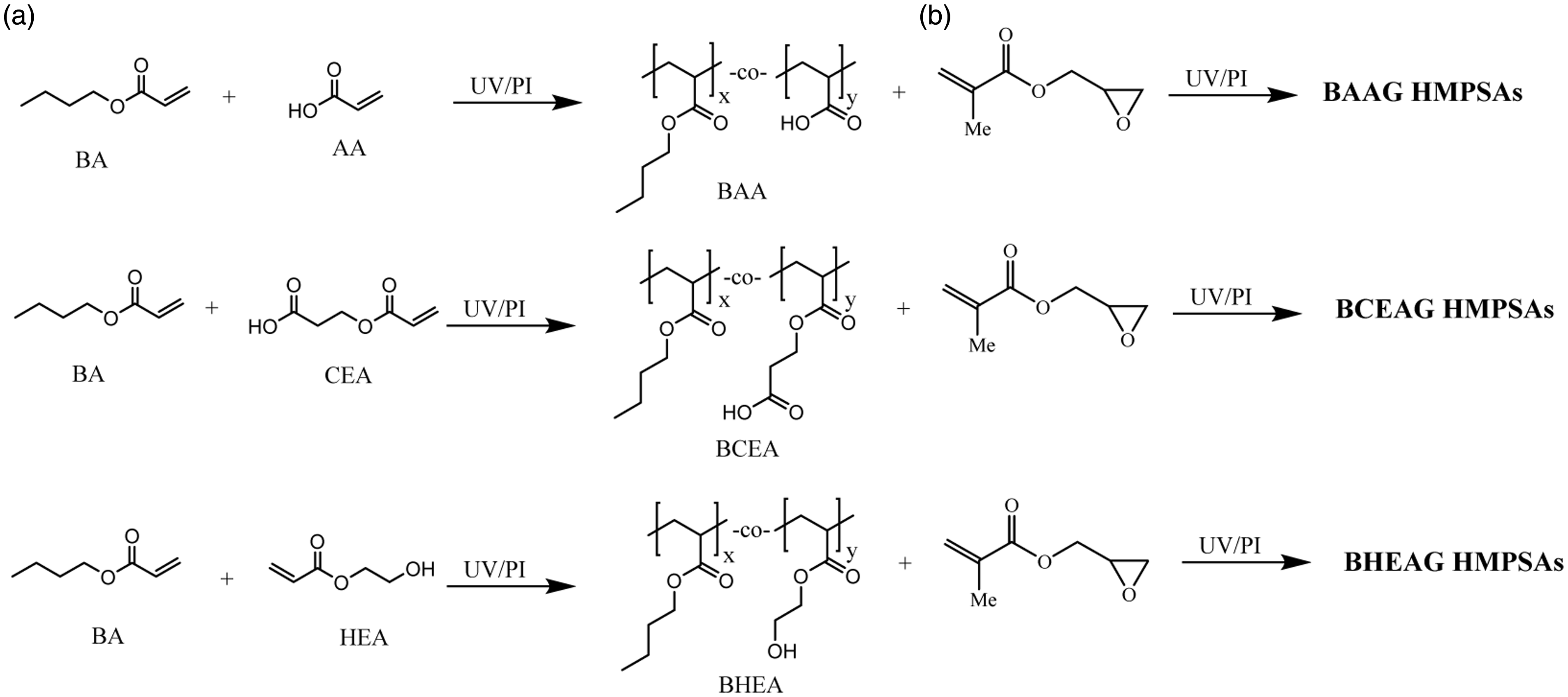
The synthesis of acrylic hot-melt pressure-sensitive adhesives (HMPSAs): (a) synthesis reaction of the prepolymer; (b) ultraviolet (UV) curing process of acrylic HMPSAs.
Preparation of acrylic HMPSAs pasted onto nylon fabric
A prepolymer of 70 wt%, GMA 30 wt%, and PIs (8.0 phr) was mixed at room temperature for 12 h. After that, the mixture was coated onto a poly (ethylene terephthalate) release film. The UV-curing machine was equipped with a high-pressure mercury lamp (400 W/cm, main wavelength: 365 nm). A mirror was applied as a reflector to avoid the heating effect of the mercury lamp. The UV energy was 4000–4200 mJ/cm2 from an UV-integrator 151 UV radiometer. The 1.0 inch wide acrylic HMPSAs was prepared for the specimen. It was pasted between nylon fabric under the pressure of 1 kg/cm2 at 100℃ for 25 s. The UV curing process of acrylic HMPSAs is shown in Figure 2(b).
Instrumentations
1H nuclear magnetic resonance spectroscopy
The spectra of nuclear magnetic resonance were recorded by a Bruker AR 400 NMR spectrometer (Germany). Deuterated chloroform was used as the solvent. Tetramethylsilane was taken as the internal reference.
Fourier transform infrared spectroscopy analysis
The chemical structure of the sample was measured by using a Fourier transform infrared spectroscopy FTS-1000 spectrometer (Digilab, USA) equipped with an attenuated reflectance accessory. It had a transmission range of about 400–4000 cm–1.
Gel permeation chromatography analysis
Gel permeation chromatography (GPC) was carried out on advance permeation chromatography equipment from Waters (USA). The instrument was equipped with a differential refractive index and two sets of columns (APC XT 200 and APC XT 450). Measurements were taken at 30℃. The tetrahydrofuran was used as an eluent solvent at a flow rate of 1.0 mL/min. The number average molecular weight (Mn) and the weight average molecular weight (Mw) were calculated using a calibration curve of polystyrene standards.
Differential scanning calorimetry analysis
The glass transition temperature (Tg) of cured films was estimated using a DSC TA Q2000 analyzer from TA Instruments (USA). The film sample was weighed in an aluminum pan and heated from −60℃ to 0℃ with a heating rate of 10℃/min under nitrogen.
Thermogravimetric analysis
TGA of cured films was conducted on a TGA Q500 from TA Instruments (USA), under nitrogen and air atmosphere. The thermal analysis was monitored from 30℃ to 600℃ with 20℃/min under a dry nitrogen flow at 20 mL/min.
Contact angle meter analysis
The contact angles were measured using image analyzer software, and the images were acquired by a charge-coupled device camera and deionized water with 0.5 mL on a film of samples at room temperature. The water was added by drops with a syringe through the sessile drop method. The contact angles were averaged from three measurements.
Gel fraction
To obtain the gel fraction of the acrylic HMPSAs film, a known number of cured films was placed in a Soxhlet apparatus and extracted with acetone for 24 h. The film was then dried for 48 h at 85℃. Five tests were taken for each sample, and the averages were recorded. The gel fraction was calculated from equation (1)

Seam bonding strength
The seam bonding strength includes peel strength and shear strength. It was measured by a tensile testing machine (HT9501, Hung Ta Instrument, Taiwan) in accordance with PSTC-117 and ASTM D3654, 18 respectively. Shear strength was measured at a speed of 300 mm/min in the tensile testing machine. The peel and shear strength were measured three times, respectively.
Durability bonding test
The durability bonding tests were conducted in different environments after washing 50 times and placing at –40℃/24 h in order to determine the adhesion performance of the prepared acrylic HMPSAs. The washing test was carried out according to AATCC 61. 19
Results and discussion
Characterization of the synthesized prepolymer
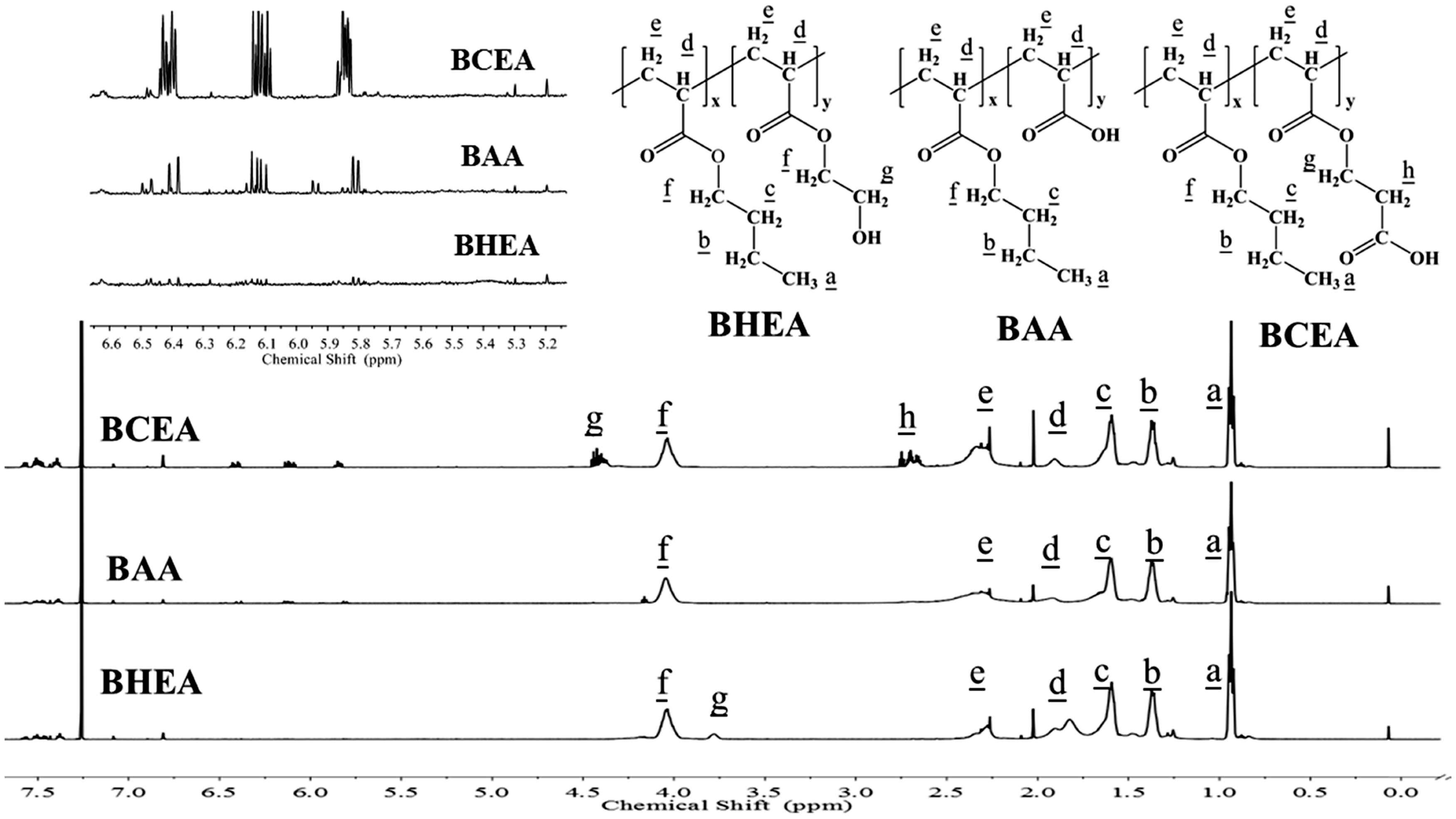
The 1H nuclear magnetic resonance (1H NMR) spectrum of prepolymer polymerized by bulk polymerization is shown in Figure 3. The signal at 0.9 ppm (a in Figure 3) corresponded to the methyl protons of the acrylate moiety.
20
At 1.6 ppm (c in Figure 3), there was a signal that is attributed to the CH2 protons. The signal at 1.9 ppm (d in Figure 3) corresponded to the CH protons of the polymer backbone. The CH2 protons of the backbone had a signal at 2.3 ppm (e in Figure 3).
21
The signal at 4.0 ppm (f in Figure 3) was attributed to –O–CH2– protons. The 1H NMR spectra showed that all of the polymeric samples had peaks due to unsaturated protons between 5.8 and 6.4 ppm. This suggests that the monomer has an incomplete reaction. The 1H NMR spectra of crude samples for the prepolymer were used to calculate the molar masses of the samples. The conversion rate was calculated from equation (2) and is shown in Table 1
The 1H nuclear magnetic resonance spectra of the prepolymer.
The composition, microstructure, molecular weight, and distribution of the prepolymer are the key parameters affecting the adhesion properties.23,24 The Mw, Mn, and Mw/Mn of the prepolymer used in this study are shown in Figure 4. It could be seen that the molecular weight of the prepolymer changed with the side-chain structure of the functional monomer. Moreover, the Mw of the prepolymer varied with the side-chain activity and steric effect. In this reaction, both a free-radical reaction and a self-cross-linking reaction were present. The prepolymer were synthesized through the free-radical reaction of BA and a functional monomer. During the free-radical reaction, the reactive ends produced a self-cross-linking reaction and formed a network structure prepolymer. This finding was consistent with previous research.
25
The H+ dissociation degree of the functional monomer was tested by using a pH meter, so as to judge the side-chain activity of AA, CEA, and HEA. The pH values of AA, CEA, and HEA were 0.27, 2.5, and 4.3, respectively. The H+ dissociation behavior from the resonance effect of the functional monomer could thus be explained. Higher H+ dissociation of the functional monomer results in higher catalytic capability of acid, thus enhancing the condensation reaction of the polymer. In addition, as the CEA contains two C = O groups, there was a larger steric effect, leading to lower conversion.
The molecular weight and distribution of the prepolymer.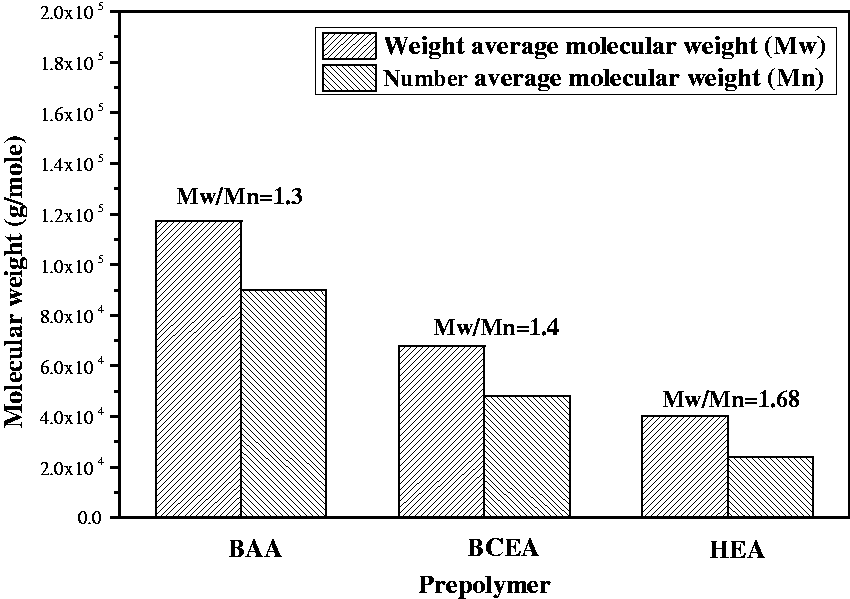
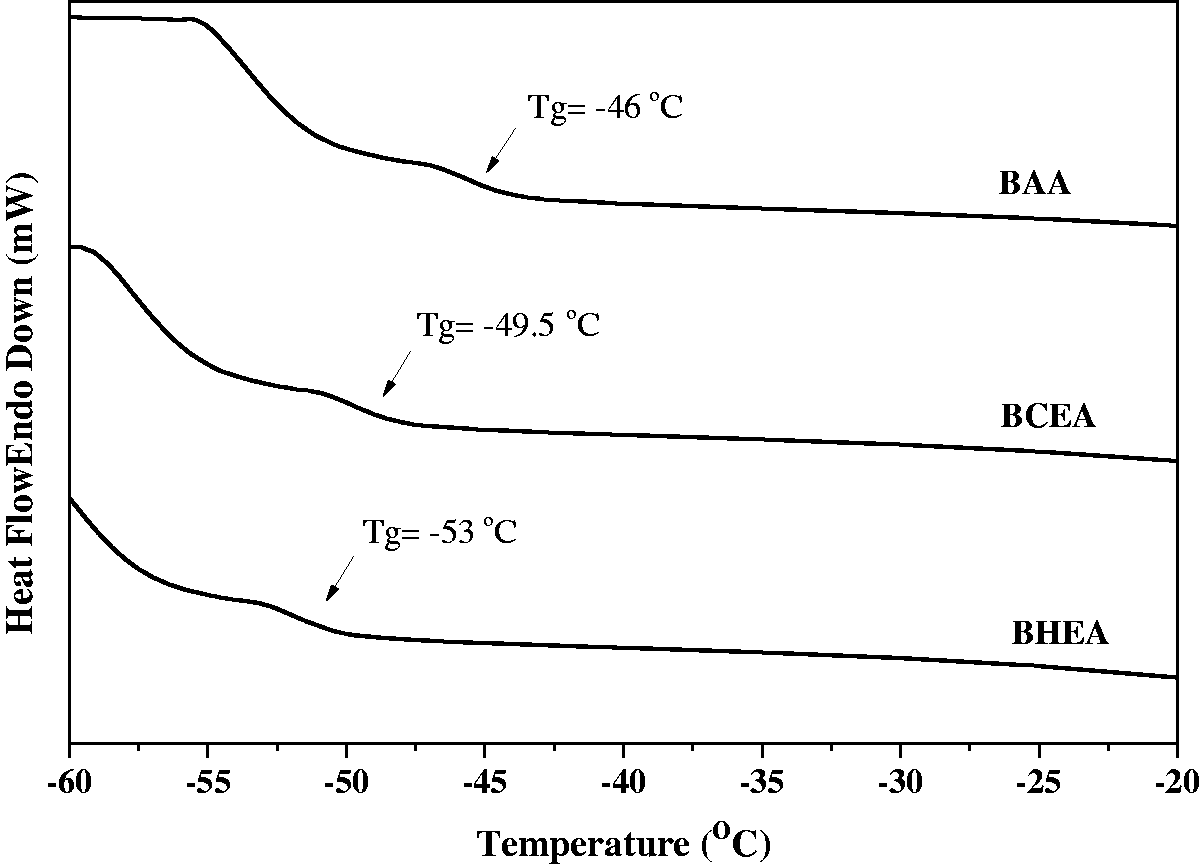
The DSC curve of the prepolymer is shown in Figure 5. The glass transition temperatures (Tg) are listed in Table 1. In this study, only one glass transition point was detected for all prepolymers, indicating that a homogeneous polymer was synthesized.26,27 As expected, the change of the functional monomers in the prepolymer would make Tg different. The Tg from theoretical calculations and DSC measurements in different functional monomers are shown in Table 1. The observed Tg was close to the theoretical value by using the Fox formula. According to the Flory–Fox equation
The differential scanning calorimetry curve of the prepolymer.
The TGA curves of the prepolymer in nitrogen atmosphere are shown in Figure 6. The temperatures of 5% mass loss are listed in Table 1. The degradation temperature of a prepolymer depended on the molecular weight of the prepolymer network and the molecular structure.
29
The degradation temperature of the prepolymer increased when the molecular weight was increased.
The thermogravimetric analysis curve of the prepolymer.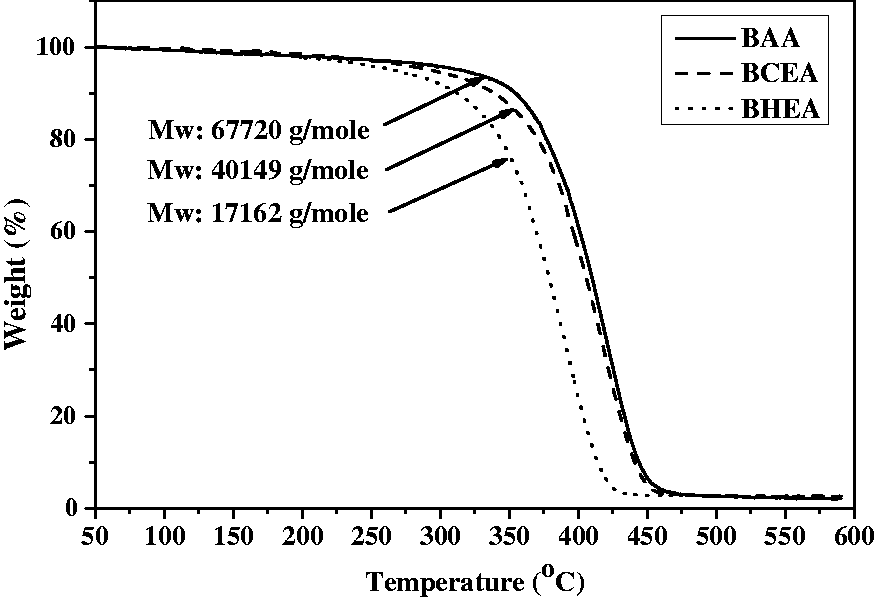
Characterization of curing acrylic HMPSAs
Components and their quantities in acrylic hot-melt pressure-sensitive adhesives

GMA: glycidyl methacrylate; PI: photo-initiator.
The prepolymer side-chain activity group offered nucleophilicity, thereby facilitating the open-ring reaction of the cross-link. The oxygen of the nucleophilicity caused the opening of the strained GMA rings, while the hydrogen atoms accompanying the carboxylic acid groups protonated the oxygen atoms.
30
The cross-linking mechanism is outlined in Figure 7. At low pH, the GMA reacted with both the carboxylic and the hydroxyl groups through an epoxide ring-opening mechanism. This was because the chemical reactions of GMA and carboxylic acid groups in a solution are dependent on pH conditions.
The cross-linking mechanism of acrylic hot-melt pressure-sensitive adhesives.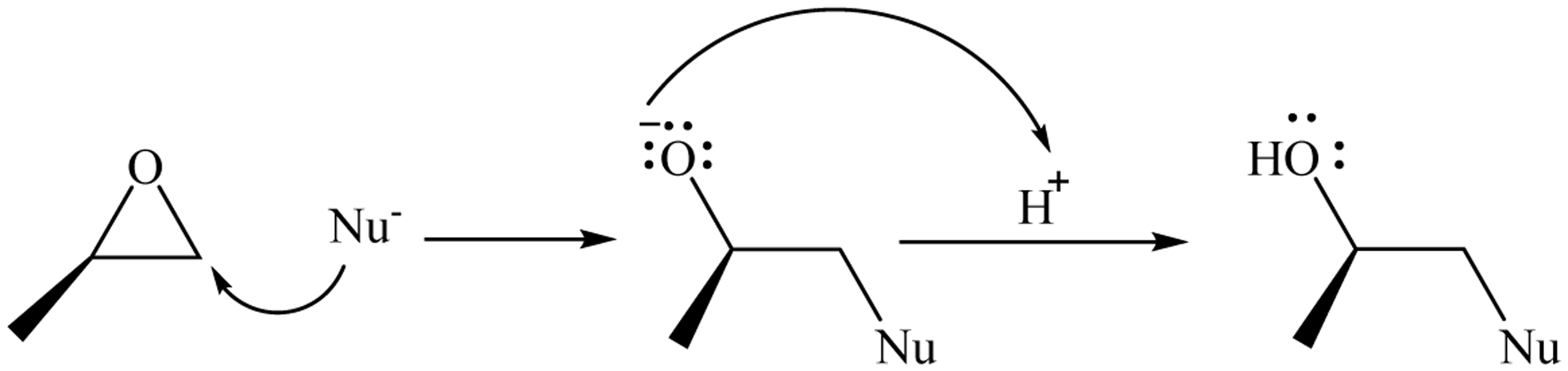
The FTIR spectra of acrylic HMPSAs are shown in Figure 8. The FTIR spectral scanned all of the acrylic HMPSAs. As can be seen, the peaks due to C=C ranged from 1615 to 1590 cm–1, suggesting an incomplete vinyl reaction. The reaction between the prepolymer and GMA was confirmed by the disappearance of the hydroxyl peak of the prepolymer around 3000–3500 cm–1 and the appearance of the characteristic peaks of an epoxy group at 850 cm–1,
31
representing an incomplete reaction. The absorbance intensities of the epoxy group in acrylic HMPSAs changed the side-chains of the structure. The CH2CH2OH was difficult to dissociate from the nucleophilic bond and H+. The incomplete reaction between the prepolymer and GMA was demonstrated, such as BHEAG. On the contrary, the carboxylic acid had stronger ring-opening ability, presenting a lower epoxide group absorption peak. The FTIR results could be explained through the gel fraction.
The Fourier transform infrared spectra of acrylic hot-melt pressure-sensitive adhesives.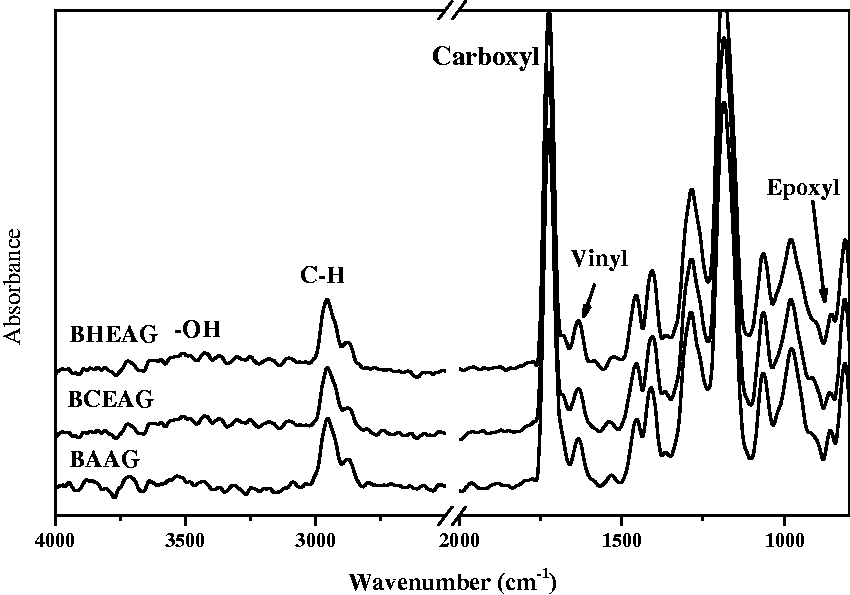
The color-difference of the acrylic hot-melt pressure-sensitive adhesives
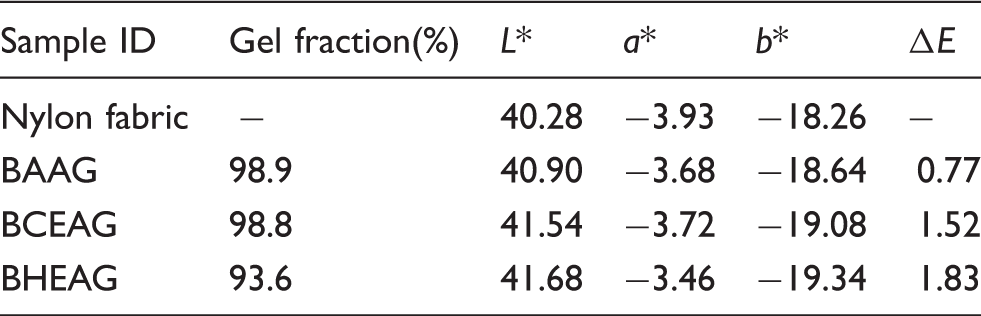
+L*: white; −L*: black; +a*: red; −a*: green; +b*: yellow; −b*: blue; ΔE: chromatic aberration.
The glass transition temperature (Tg) was the most important factor affecting acrylic HMPSA performance. A higher Tg commonly represented a higher rigidity of the acrylic HMPSA chains, showing better elasticity and cohesive behavior. On the contrary, acrylic HMPSAs with lower Tg demonstrated better fluidity or deformability, which was tackier but might cause cohesive failure. Generally, the acrylic HMPSAs with Tg from −20℃ to −50℃ were favored for their good end-use performance. The Tg was determined for each final acrylic HMPSA. The DSC curve of the UV-cured acrylic HMPSAs of the prepolymer type is shown in Figure 9. It was evident that all acrylic HMPSAs showed similar curves with one characteristic endothermic peak, indicating the presence of a homogeneous polymer. In addition, the Tg values were −46.3℃, −49.3℃, and −52.5℃ for prepolymers AA, CEA, and HEA, respectively. As acrylic HMPSAs possessed higher Tg values compared to that of a prepolymer, higher Tg values for the samples adding GMA were expected. Prepolymers without GMA demonstrated lower Tg values than those that added with GMA. This was due to a cross-linking reaction that created molecular chain entanglement and, then, led to higher glass transition temperatures.
32
The differential scanning calorimetry curves of acrylic hot-melt pressure-sensitive adhesives.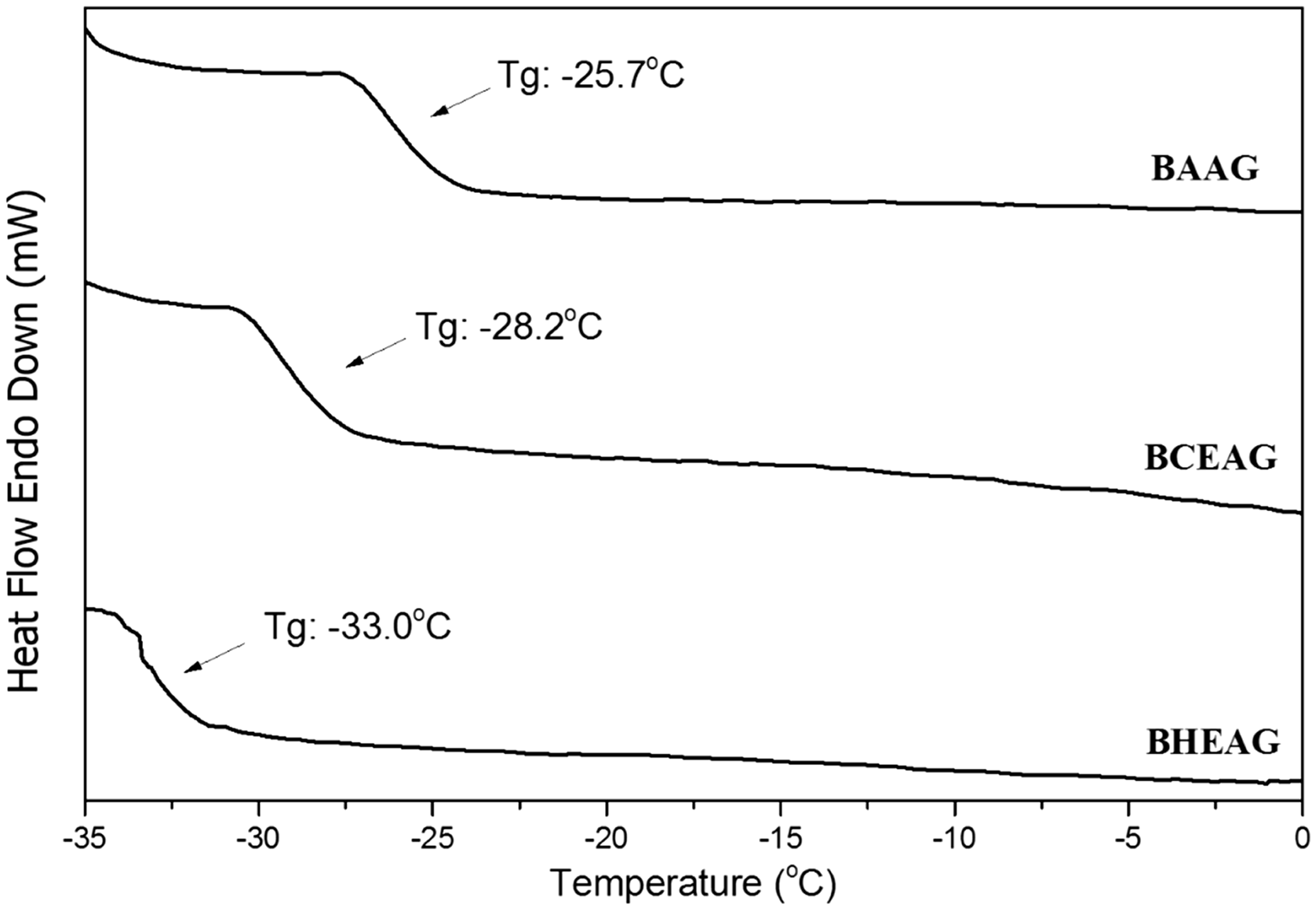
The microstructure of the polymer, defined by the Tg and gel fraction, as well as the presence of functional monomers, strongly affected adhesive properties.
33
The seam bonding strength of the acrylic HMPSAs is shown in Figure 10. The excellent adhesive performance of BAAG and BCEAG, as compared with BHEAG, was attributed to their Tg and hydrophilicity. This result could be due to the increased high Tg of the acrylic HMPSAs. The BAAG and BCEAG presented the best peel strength and peel strength properties. The functional monomer containing a carboxylic acid group could serve as a cross-linking monomer, leading to easy entanglement between the prepolymer and GMA. The increase in the degree of cross-linking between polymer chains improved the shear strength of the acrylic HMPSAs. The shear strength of the acrylic HMPSAs induced a concomitant increase in peel strength. However, the CH2CH2OH in the polymer main chain decreased the activity of the polymer side chain. This led to a lower gel fraction that would affect the adhesion properties. The peel strength under durability bonding test is shown in Figure 10. There was no obvious reduction in the peel strength under the durability bonding test.
The seam bonding strength of acrylic hot-melt pressure-sensitive adhesives.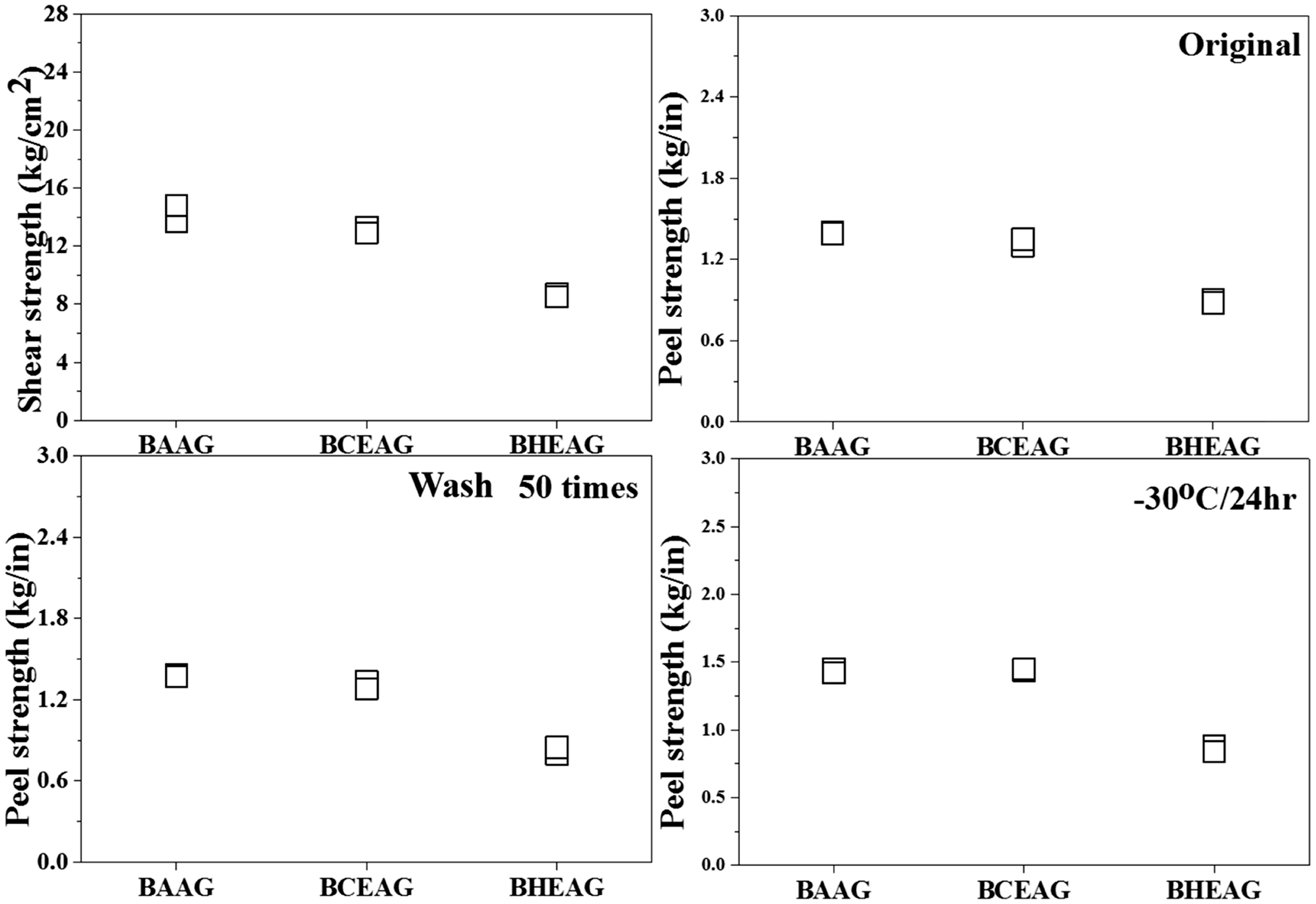
The results of peel strength could be reasonably explained by the contact angle. The deionized water was used to measure the contact angle for acrylic HMPSAs. The results are presented in Figure 11. It was evident that the acrylic HMPSAs films were generated with BAAG and BCEAG. The contact angles were smaller when compared with those prepared with BHEAG. This indicated that the hydrophilicity of acrylic HMPSAs films could be improved with the application of a functional monomer. The BAAG and BCEAG showed better peel strength, while a smaller contact angle of the acrylic HMPSAs increased the surface tension by improving the wettability. The carboxylic acid of acrylic HMPSAs strengthened the adhesion between the acrylic HMPSAs and substrates.
5
The acrylic HMPSAs’ lower contact angle was due to their high polar property that arises from the carboxylic acid in its structure. Therefore, BAAG and BCEAG had the best peel strengths of acrylic HMPSAs.
The effect of the functional monomer on the contact angle of the acrylic hot-melt pressure-sensitive adhesives.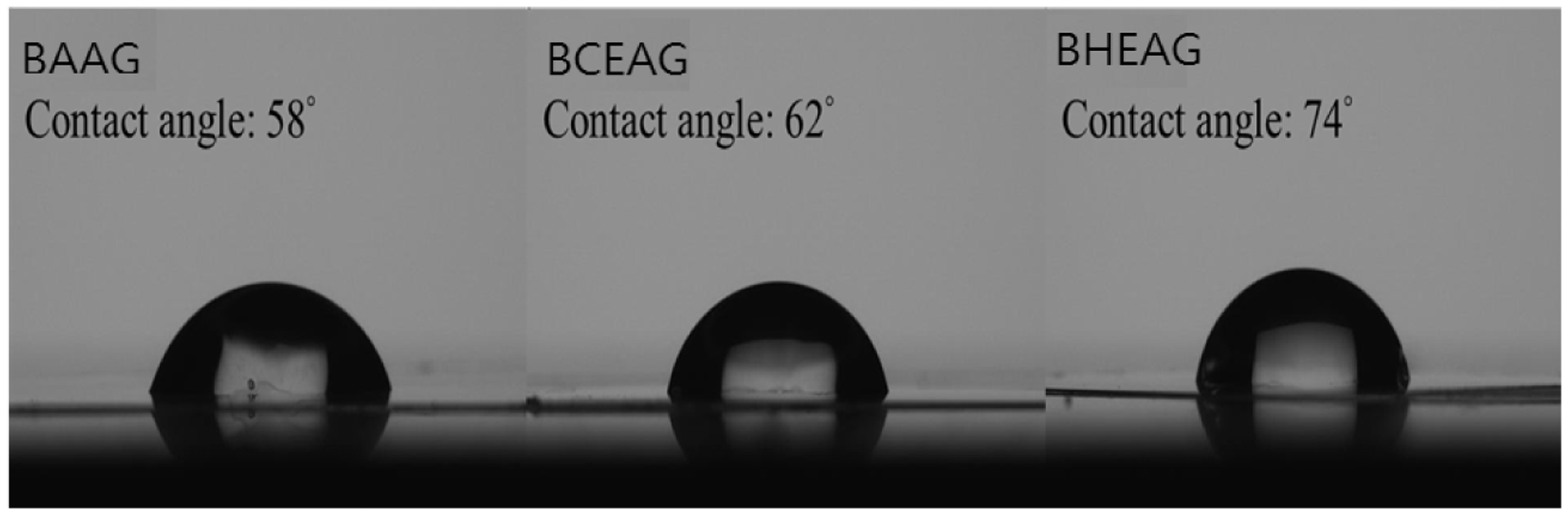
The anchoring phenomenon was worsened when the acrylic HMPSAs was heated. As the BHEAG displays a low Tg, it was easy for the soft acrylic HMPSAs to enter the fiber. In contrast, the BCEAG and BAAG displayed higher Tg, and the acrylic HMPSAs entered the fiber to result in a better anchoring phenomenon. Therefore, the BAAG and BCEAG presented better peel strength and shear strength.
Three kinds of acrylic HMPSAs have a slight influence on the color of fabrics. The chromatic aberration (ΔE) 34 increases as the cross-linking of acrylic HMPSAs decreases. The sequence of the ΔE value from maximum to minimum is BHEAG, BCEAG, BAAG. The gels of acrylic HMPSAs affected the color of fabrics. Since cross-linking of acrylic HMPSAs was incomplete, the low molecular polymers release or even overflow gels during hot pressing and this led to the change of nylon fabric color.
Conclusion
This study investigated the effects of a prepolymer with different side-chain structures on the physical properties of acrylic HMPSAs coatings. The molecular structure of a prepolymer and acrylic HMPSAs were synthesized and confirmed by FTIR. Adhesion performance was evaluated using peel strength, shear strength, and the results from the durability bonding test. In all of the curing systems, the gel fractions and Tg increased, and the 180° peel strength increased. Shear strength results showed a similar tendency to the 180° peel strength. The carboxylic acid content of acrylic HMPSAs exhibited high adhesion in the peel strength and shear strength. This suggested that both the side-chain activity of a prepolymer and the curing system had significant effects on the formation of a cross-linked structure and the resultant mechanical properties of acrylic HMPSAs. In addition, the peel strength results could be reasonably explained through the contact angle of the water. The PSA surface hydroxyl groups might form a chemical bond with the polar groups of a substrate, leading to a great improvement in the degree of adhesion between the acrylic HMPSAs and substrate. Due to acrylic HMPSAs, there is a potential to improve the peel strength by simultaneously manipulating the acrylic HMPSAs and the surface properties. In the durability bonding test, acrylic HMPSAs increased the possibility of the fabric peeling off during washing and under low temperature. The acrylic HMPSAs have the best anchorage performance and a slight effect on the color of fabrics. Moreover, acrylic HMPSAs produced with a dual curing system had excellent adhesive properties on nylon fabric. There is a great potential for application in fabric seamless adhesion.
Footnotes
Declaration of conflicting interests
The authors declared no potential conflicts of interest with respect to the research, authorship, and/or publication of this article.
Funding
The authors disclosed receipt of the following financial support for the research, authorship, and/or publication of this article: This work was supported by the Ministry of Science and Technology of the Republic of China (Grant No. 104-2745-8-011-004).