







Abstract
In this study, tensile experiments of Twaron fiber tows under different strain rates (quasi-static: 0.001 s−1, dynamic: 800–2400 s−1) were tested with an MTS materials tester (MTS 810.23) and a split Hopkinson tension bar, respectively. The results showed that the mechanical properties of the Twaron fiber tows were sensitive to strain rate: the stiffness and failure stress of the fiber tows increased distinctly as the strain rate increased, while the failure strain decreased. From scanning electron microscope photographs of the fracture surface, it is evident that the Twaron fiber tows failed in a tougher mode and the axial split became more severe as the strain rate increased. The tensile behaviors of the Twaron fiber tows were analyzed in the frequency domain using the fast Fourier transform method. The amplitude spectrum and power of energy absorption of the Twaron tows were concentrated in a specific frequency range and increased with strain rate.
Aramid fibers are man-made high-performance fibers, with molecules that are characterized by relatively rigid polymer chains. These molecules are linked with strong hydrogen bonds that transfer mechanical stress very efficiently, making it possible to use chains of relatively low molecular weight, which have outstanding specific tensile strength and energy absorption capabilities and have been widely used in textile and reinforcing composite structures for many impact-related applications. As we all know, the mechanical properties of the composite strongly depend on the fiber reinforcement, and the response of materials is sensitive to strain rate. Therefore, it is important for us to further understand the mechanism of fiber under impact loading. However, there is little data definitely explaining the dynamic behavior of aramid yarns in the strain-rate range under impact loading.1,2
Kinari et al. 3 conducted tests on Kevlart 29 yarns for dynamic tension at strain rates of up to 1000 s−1 using an impact testing apparatus. These tests showed that both the breaking load and fiber modulus increased with strain rate, while the elongation at breakage decreased. Shim et al. 4 studied the dynamic mechanical properties of Twaron fabric. The load-deformation and failure characteristics at different rates of stretching were determined. However, Creasy 5 has argued that the effects of slack and variability in tensile test procedures may account for the apparent strain-rate dependence of these parameters. Gu and Pan 6 studied the effect of strain rate on the tensile behavior of Twaron filaments and analyzed Twaron filaments application to ballistic perforation of multi-layered fabrics. Weerasooriya 7 observed that the tensile stress–strain response of Kevlar KM2 fibers in the axial direction was linear and elastic until failure. However, the overall mechanical behavior was also found to be nonlinear along the transverse direction. Weerasooriya also discussed the effects of loading rate and the influence of axial loading on transverse, and transverse loading on axial, stress–strain. Tan et al. 8 studied the mechanical behavior of aramid fibers at high strain rate with a split Hopkinson pressure bar setup. They utilized a viscoelastic material model to describe the mechanical behavior of yarns and fracture modes and employed it in a computational simulation of ballistic penetration of woven aramid fabrics. Tapie et al. 9 investigated the influence of the weaving process on the mechanical response of aramid yarns subjected to high-speed loading. The result showed that both virgin and woven yarns exhibit similar rate dependence behavior. An increase in strain rate stiffens yarns, the tensile strength increases and the failure strain decreases. Guo et al. 10 have investigated the mechanical response of a single yarn pull-out from single layers of Kevlar® and Twaron® fabric under out-of-plane loading at both quasi-static and dynamic rates. The results revealed that the behavior of yarn pull-out was sensitive to loading rate, a higher pull-out rate results in an increase in the peak load. As the loading rate increases, the fabric displacement at the peak load increases. However, the peak load did not change with increasing pressure at higher rates.
The development of high performance fibers (such as Kevlar® fibers) leads to great potential applications of fiber reinforced composite in impact protection, such as turbine blade containment, fuselage protection, aircraft, high speed vehicle and body armor, etc. The mechanical response of materials under the impact loading is sensitive to the rate at which they are loaded. Even though many studies have been carried out to study the dynamic tension behavior of aramid fibers, only limited information is available on the high strain behavior of Twaron fiber tows.
Owing to the difficulty of establishing the constitutive equations of textile composite under impact loading, the frequency response analysis of the textile composites is an effective way to understand features of impact behavior. Gu et al. have investigated the impact damage of 3-D textile composites in the frequency domain,11–13 and Ma et al. focused on the tensile behavior of co-woven-knitted fabric (CWKF) composites under quasi-static and high strain rates. 14 Zhu et al. have studied the tensile behavior of basalt filament tows under quasi-static and high strain rate tension with the fast Fourier transform (FFT) method, 15 and Tian et al. 16 effectively predicted the properties of composites using the FFT method.
The main goal of this work is to provide a direct method to evaluate the tensile properties of Twaron fiber tows under various tensile speeds (corresponding to various strain rates) using the FFT method. The fracture morphologies of the Twaron fiber tows under different strain rates were photographed with scanning electron microscopy (SEM). The fracture behaviors of the fiber tows were analyzed. The presented paper could intuitively reveal the strain rate sensitivity and behavior of Twaron fiber tows in the frequency domain.
Experimental research
Materials and specimens
The Twaron fiber tows used in the present work are manufactured by Suzhou Donghua Fibrous Material Products Co. Ltd. in China. The fineness of the Twaron fiber tows is 1680 dtex (as shown in Figure 1), and the volume density is 1.45 g/cm3. Figure 1 is a photograph of the bobbin of Twaron fiber tows.
Bobbin of Twaron fiber tows.
Split Hopkinson tension bar apparatus and sample preparation
The quasi-static tensile tests (with a strain rate of 0.001 s−1) and high strain rate tensile tests (impact tensile tests) were performed on a MTS 810.23 materials testing system and a self-designed split Hopkinson tension bar (SHTB) apparatus (as shown in Figure 2),
17
respectively.
Self-designed split Hopkinson tension bar (SHTB) apparatus.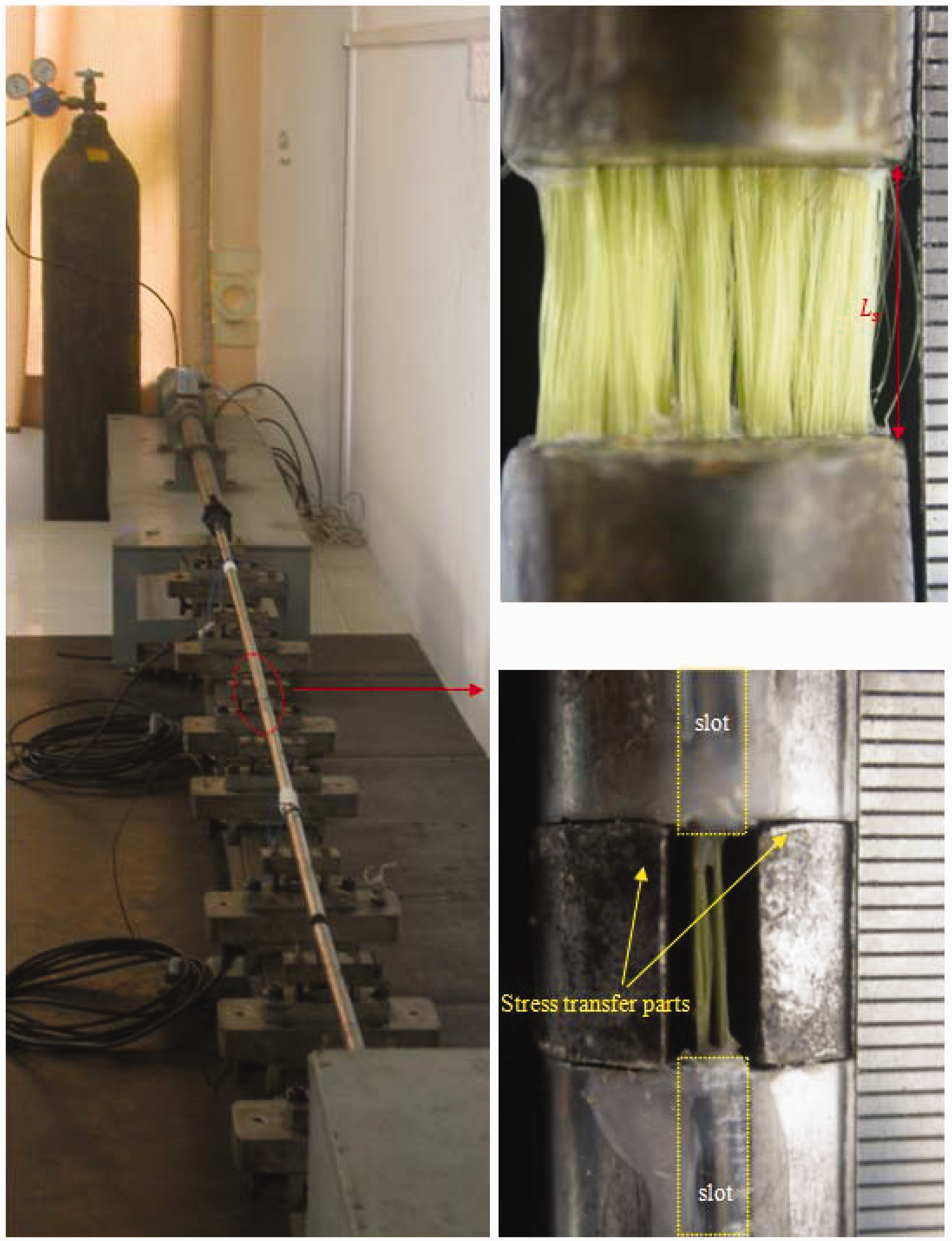
The Twaron fiber tows were connected with the SHTB bars as shown in Figure 2. In Figure 2, Ls is the testing span (fiber tow length in testing region) and L s = 10 mm. In the quasi-static test, each fiber tow specimen is glued to the slots of two short metal bars by high shear strength (>20 MPa) adhesive (Type: WD-1001, made by Shanghai Kangda Chemical Co., Ltd in China). The short metal bars are clamped in the grips of the MTS 810.23 tester. In the high strain rate tensile tests, the fiber specimen is glued to the slots in the ends of the incident bar and transmission bar with the adhesive. The stress transfer parts were intercalated in the ends of two bars before testing (as shown in Figure 2). The fiber tow specimens were tested under conditions of room temperature and approximately 55% relative humidity. The fiber tows were tested at least three times at each strain rate (including quasi-static testing).
Brief description of the FFT procedure
A fast Fourier transform (FFT) algorithm computes the discrete Fourier transform (DFT) of a sequence, or its inverse. Fourier analysis converts a signal from its original domain (often time or space) to a representation in the frequency domain and vice versa, which is a faster way to compute the same result: computing a DFT of N points takes O(N2) arithmetical operations, but only O(NlogN) operations with FFT analysis. Actually, the algorithm could save lots of computation time when the number of N sets is too great, and the improvement of speed is roughly proportional to N/log(N). Because of the huge improvement of FFT, it’s widely used for many applications in engineering, science and mathematics, such as digital signal processing and solving equations for multiplication of large integers quickly.
Most FFT algorithms depend on the fact that
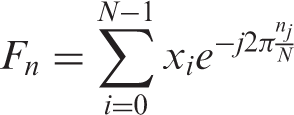
where the results consist of real and imaginary number parts, along with the other amplitude and calculated power spectra.
The FFT calculation employed the commercial software OriginLab OriginPro 8.5, applied for the most complex input.
Results and discussion
Stress–strain curves of tension impact tests
With the presence of specimens, these velocities would give rise to strain rates of 800 to 2400 s−1. Figure 3 illustrates typical strain wave signals. Although shorter specimen lengths will result in higher strain rates, specimens are too short to clamp properly for the misaligned and twisted filaments, thus causing inaccurate results. Higher strain rates can also be obtained with higher striker velocities. However, too high a striker velocity will cause plastic deformation in the input bar.
Typical strain signals of Twaron fiber tows in SHTB tests.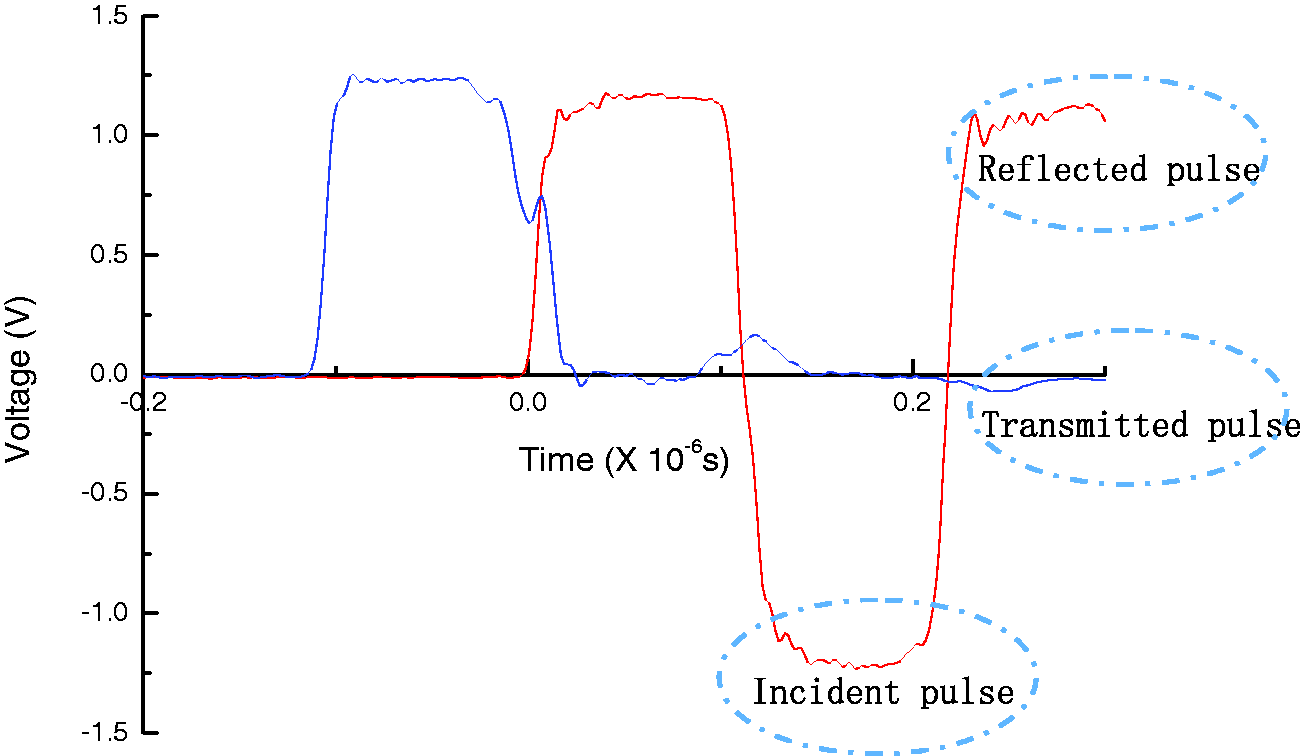
The stress–strain curves of the Twaron fiber tows are shown in Figure 4. Table 1 shows the mechanical properties of the Twaron fiber tows and E-glass fibers tows at different strain rates. It can be seen that the Twaron fiber is strain rate sensitive; however, the degree of rate sensitivity is not as severe as that of the glass fiber bundles.18–20
The stress–strain curves of the Twaron fiber tows. The mechanical properties of fiber tows at different strain rates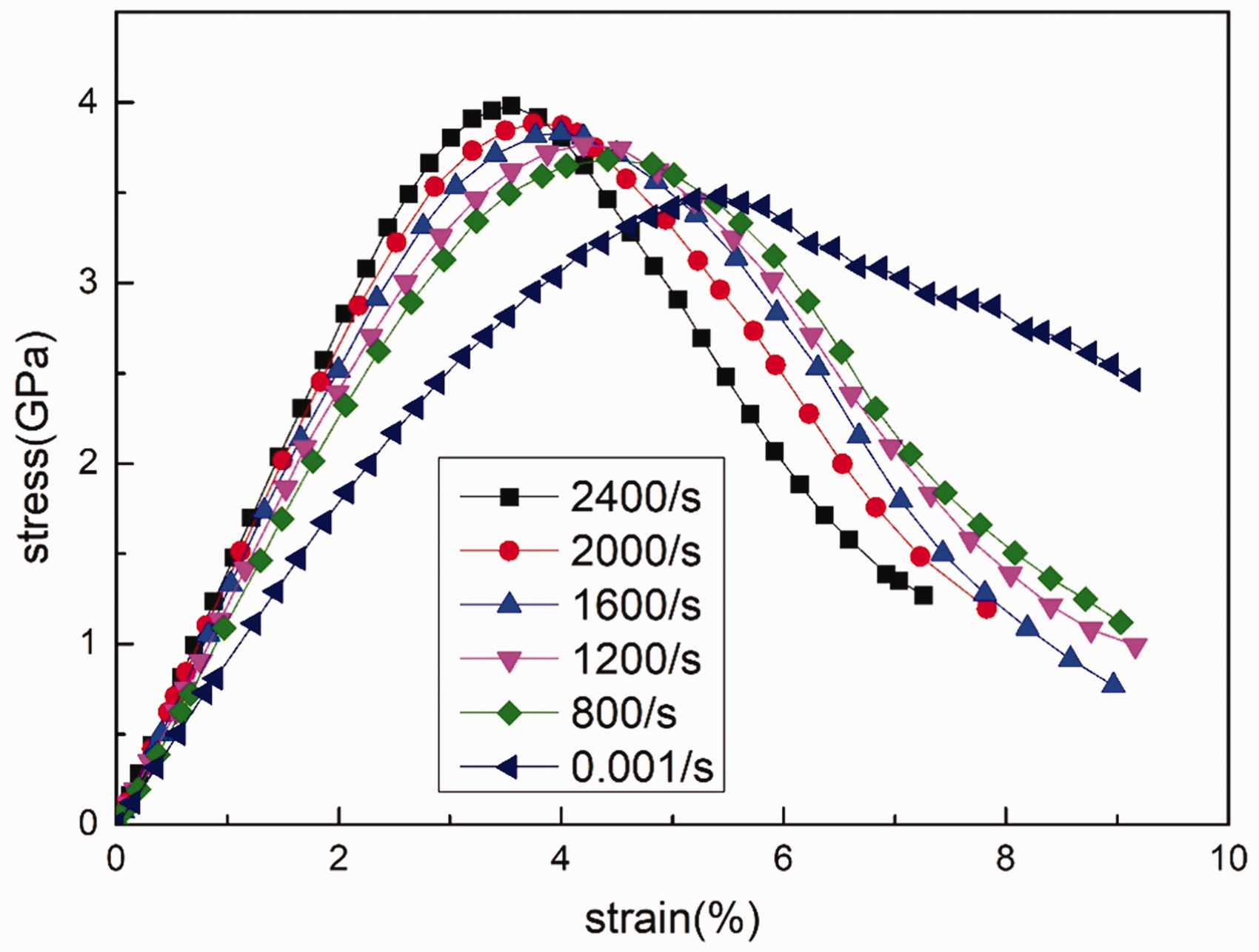

Fractography
Figure 5 shows impact tensile damage of the Twaron fiber tows under high strain rate tension. The ends of the fibers are pulled apart and with an axial split. In order to further investigate the mechanical properties of the Twaron fiber tows, the fracture morphology of the fibers was typically observed under a scanning electron microscope. Figure 6 depicts the fracture surfaces of the fibers under different strain rates. From these photographs, it is clear that the Twaron fiber tows are broken in a tough manner and show an axial split phenomenon under various strain rates. Under quasi-static rate tension, the fibers have broken with significant axial direction cracks, which reflect the toughness feature of aramid fiber tows. Under high strain rate tension, fiber fracture has the same axial split photographs, and the axial split is more severe and presents a fibrillation shape compared with the quasi-static tension. Under a strain rate of 2400 s−1, the fiber split into lots of small fibers with a similar shape, and the axial split is deeply along the fiber axis. Twaron fiber tows have a much stronger tendency to form a fibrillar fracture surface, which is a main failure mode of the Twaron fiber under high strain rate tension. It is characterized by decohesion, a reduction in diameter and splintering of the microfibrils along the longitudinal axis of the fiber, and the fracture surface has a bamboo-like appearance, which is reflected in the toughness of the fiber tows. As the strain rate increases, the axial split will become more severe and present a fibrillation shape. This failure arises predominantly from molecular chain scission at high strain rates. This is the main failure mode of the aramid fiber under quasi-static and high strain rate tension. The more serious the axial split, the more energy will be absorbed by the fiber tows. Contrary to the glass fiber,
21
the failure mode of the Twaron fiber has no ductile–brittle transition when the strain rate increases. The crack in the Twaron fiber will be generated from the surface flaw and then propagate along the longitudinal direction under high strain rates.
Impact tensile damage of the Twaron fiber tows under strain rates of 1200 s−1. Fracture surfaces of the fibers tows under different strain rates. Strain rate of (a) 0.001 s−1 (b) 800 s−1 (c) 1200 s−1 (d) 1600 s−1 (e) 2000 s−1 (f) 2400 s−1.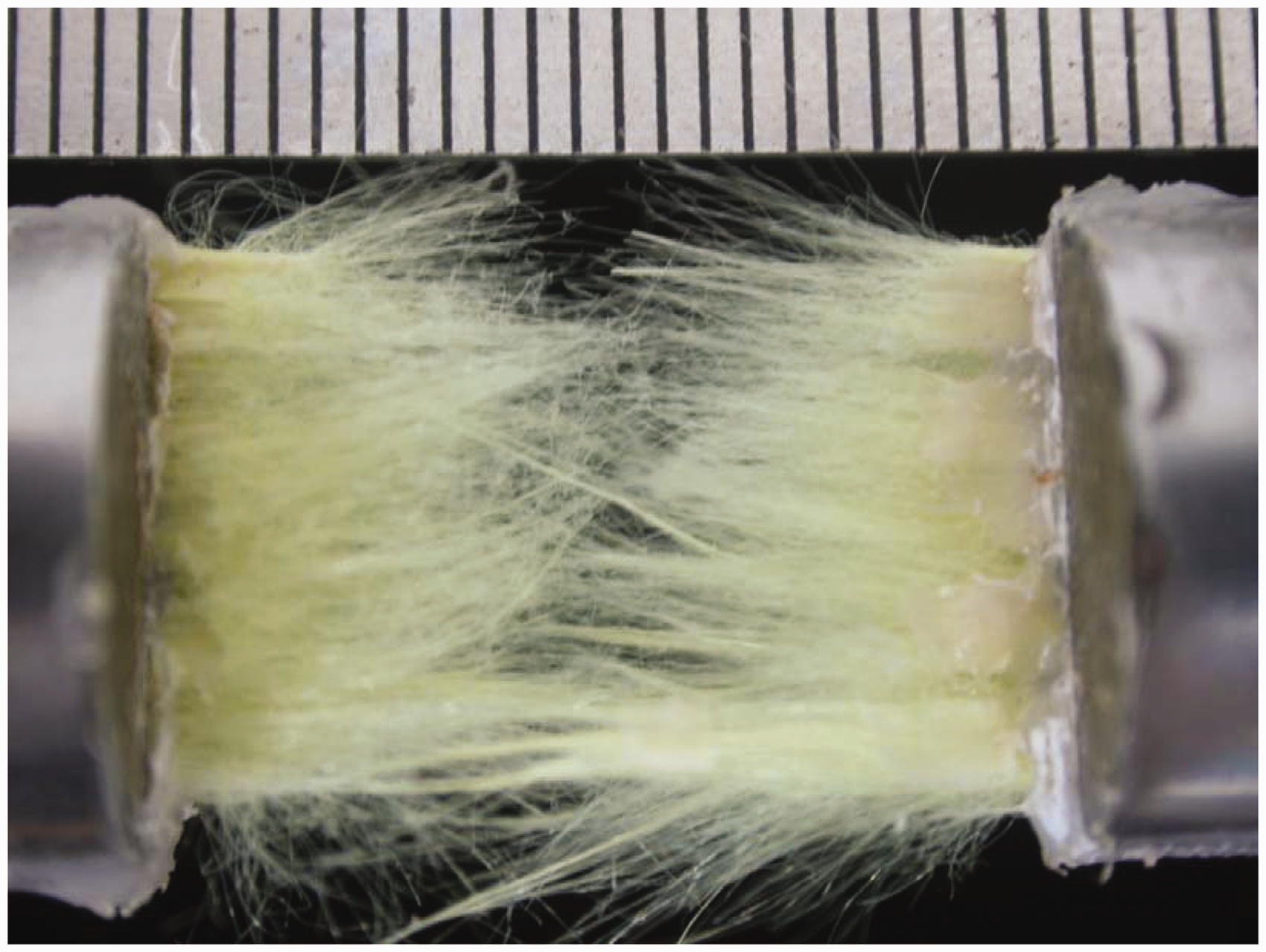

FFT analysis of the tension behavior
The stress–time history is shown during the high strain rate tension tests and can be transformed into frequency–amplitude/power, which presents damage features by analyzing the mechanical behaviors of Twaron fiber tows with the FFT method. The frequency response has been described, including the amplitude and power spectrum of the Twaron fiber tows under quasi-static and high strain rate tension in Figures 7 and 8.
Amplitude spectrum of the Twaron fiber tows under various strain rates. Power spectrum of the Twaron fiber tows under various strain rates.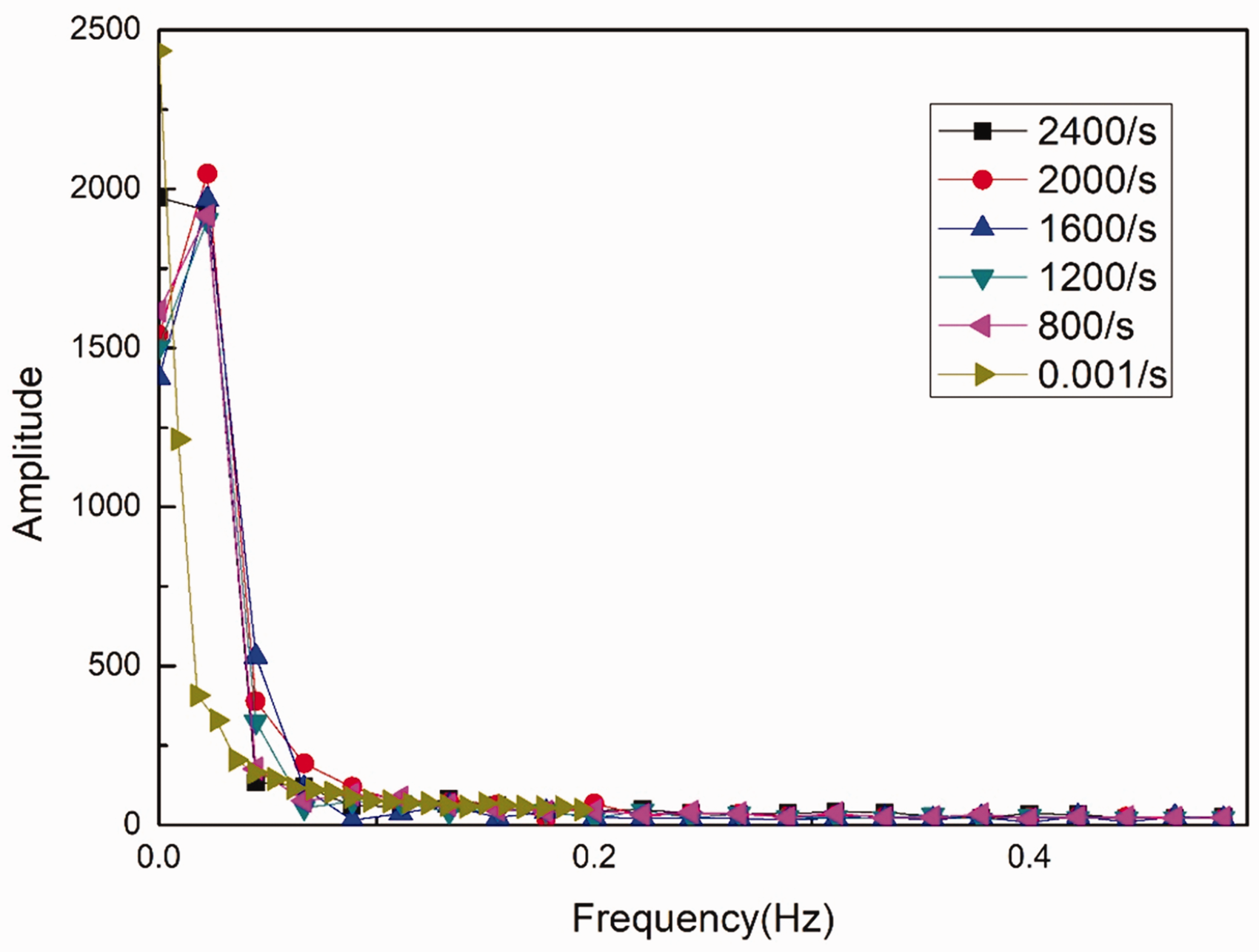
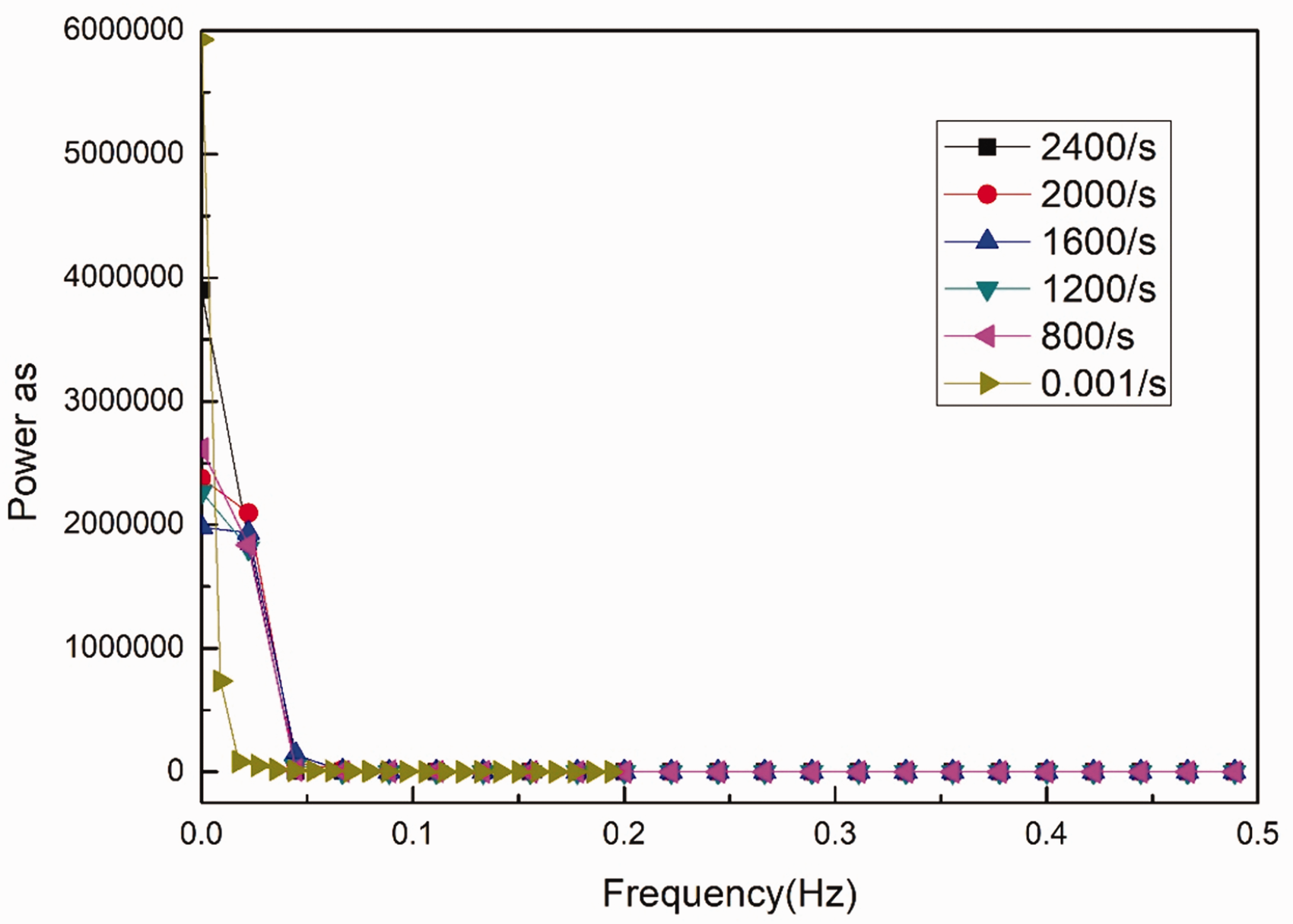
Figure 7 shows that the amplitude distribution concentrates in a wide range frequency region up to 0.2 Hz under a high strain rate state, but the amplitude distribution concentrates in a much lower frequency region near zero, barely visible under quasi-static loading. Almost all amplitudes initial increase as strain rate increases (except the strain rate of 0.001 s−1), but then drops sharply, long before a strain rate of 0.2 Hz; the amplitude decreases gradually and fluctuates in a random way when greater than a frequency of 0.4 Hz. With increasing frequency, the amplitude nears zero.
Figure 8 presents the power spectra of Twaron filament tows at different strain rates. The curves in Figure 8 have similar features to the amplitude spectra. Under a quasi-static state, the energy of the Twaron filament tows is close to zero in a much lower frequency region, while the energy distribution varies more from 0 to 0.2 kHz under high strain rates. In the first 0.05 Hz, the power spectra exhibit a sharp decrease and have smaller fluctuations around zero after that region. As with the trend of amplitude distribution, the power spectra of the Twaron filament tows increase with the strain rate (except the strain rate of 0.001 s−1 where in the region of 0 Hz the strain maximum can reach 6,000,000).All curves then tend to be stable close to zero.
The energy absorption of the Twaron filament tows under various strain rates is shown in Figure 9. It is found that the absorbed energy of the Twaron filament tows corresponds to the increasing strain rates. However, at a strain of about 5%, the curves intersect in a point, and when the strain rate exceeds this point, the Twaron filament tows have the reverse tendency of energy absorption with increasing strain rate. These features indicate that the Twaron filament tows show excellent potential for energy absorption during a certain frequency region under high strain rates, while the tows under quasi-static loading express it only at an extremely low frequency, conversely exceeding specific strain.
Effect of strain rate on the energy absorption of the Twaron fiber tows.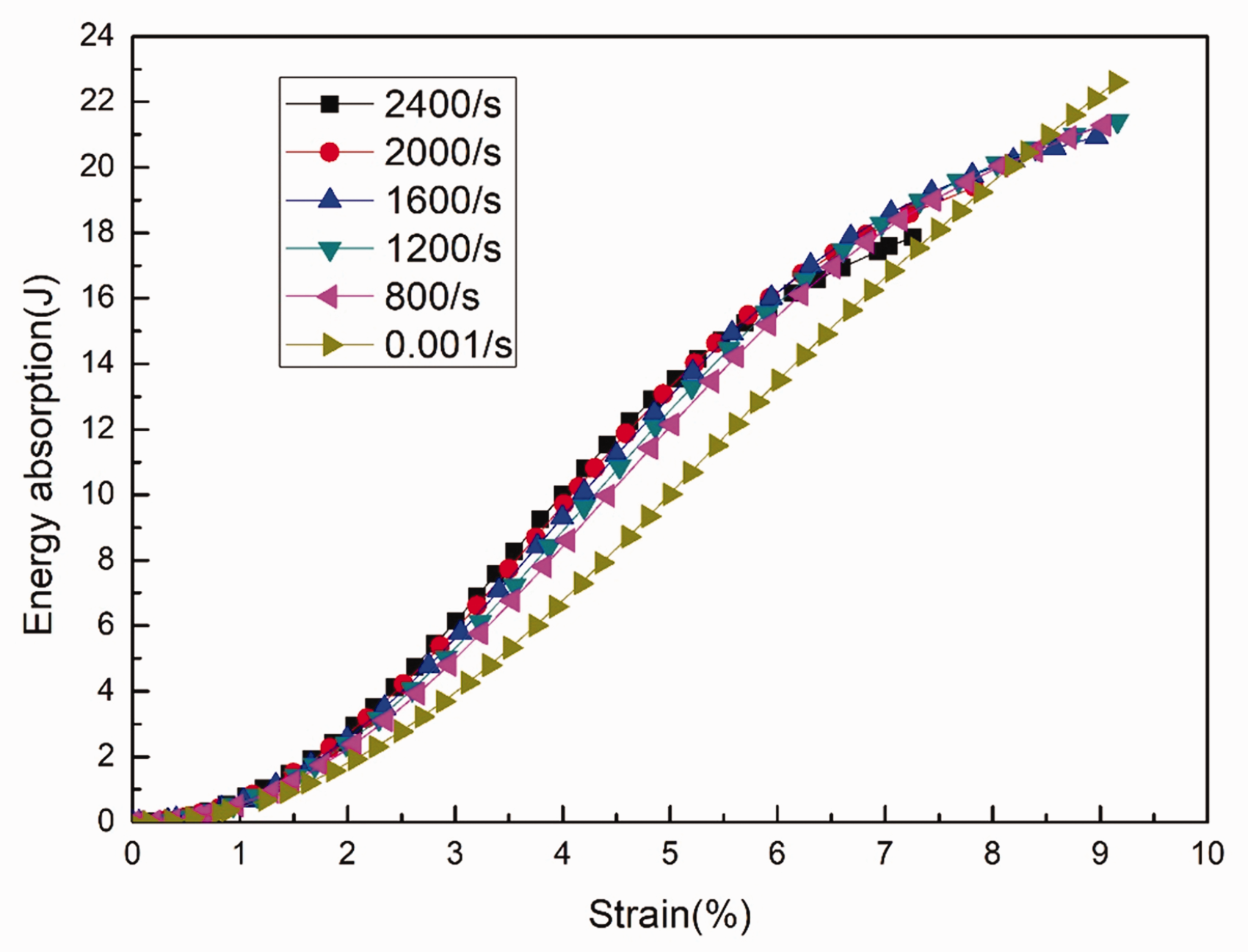
Summary and conclusions
The tensile properties of Twaron fiber tows have been tested under quasi-static and high strain rate conditions with a MTS 810.23 materials tester and a self-designed split Hopkinson tension bar (SHTB) apparatus. The stress–strain curves under different strain rates were obtained. The fractography of the Twaron fibers was photographed to enable analysis of the failure mode. The FFT method was adopted to transform the stress history into frequency domain to obtain the tensile behaviors. The following conclusions have been drawn:
1. Twaron fiber tows are a type of rate-dependent material. The elastic modulus, strength and the failure strain of the fiber tows apparently increase with the strain rate from 0.001 to 2400 s−1. 2. Twaron tows are broken in a tough manner and have an axial split phenomenon under various strain rates. Fibrillar fracture is the main failure mode of the fiber under high strain rate tension, and the axial split will become more severe as the strain rate increases, which reflects the toughness feature of the fiber tows. 3. The Twaron fiber tows could absorb higher energy in a certain frequency domain. The ability for energy absorption increases with increasing strain rates in the certain frequencies. A more serious axial split phenomenon corresponds to more energy absorption. This study could be of benefit to the application of structure design for Twaron fibers as reinforcing materials subjected to dynamic impact loading conditions.
Footnotes
Declaration of conflicting interests
The authors declared no potential conflicts of interest with respect to the research, authorship, and/or publication of this article.
Funding
The authors disclosed receipt of the following financial support for the research, authorship, and/or publication of this article: The authors acknowledge financial support from the Open Project Program of Key Laboratory of Eco-textiles, Ministry of Education, Jiangnan University (Grant Number KLET1607), financial support from the Key Laboratory of Advanced Textile Materials and Manufacturing Technology (Zhejiang Sci-Tech University), Ministry of Education (Grant Number 2017QN07) and financial support from the Zhejiang Sci-Tech University Scientific Research Project (Grant Number 17012050-Y) and the State Key Laboratory for Hubei New Textile Materials and Advanced Processing Technology, Wuhan Textile University (Grant Number ZDSYS201702).