







Abstract
In this study, the tensile impact property of Twaron fiber tows with different fiber fineness were characterized and compared. A self-designed split Hopkinson tension bar apparatus and MTS materials tester (MTS 810.23) were used to determine the tension behavior of Twaron fiber tows under different strain rates (quasi-static: 0.001 s–1, dynamic: 800–2400 s–1). The results showed that the mechanical properties of the Twaron fiber tows were sensitive to strain rate; the stiffness and failure stress of the fiber tows increased distinctly as the strain rate increased, whereas the failure strain decreased. The scanning electron microscope photographs showed that a fibrillated end of a Twaron single fiber failed at both quasi-static and high strain rates. The observations reaffirmed that the fiber fibrillation was more severe as the strain rate increases. In addition, the fiber of 220 dtex exhibited higher strength and stiffness than that of 1680 dtex. Combined with the aligned fiber bundle model and the statistical theory, a single Weibull distribution function is adapted to evaluate the strength distribution, and the Weibull plot for Twaron fiber tows under different strain rates provided a more accurate agreement with the experimental results.
Keywords
Kevlar® and Twaron® are types of aramid that contain highly oriented long molecular chains produced from poly-para-phenylene (PPTA), which results in high tenacity and modulus as well as anisotropy in their mechanical behavior. 1 It has been broadly used in textile and reinforcing composite structures for many impact-related applications.2–6 The mechanical properties of the composite materials depend strongly on the fiber reinforcement, and the response of the materials is sensitive to the strain rate at which they are loaded. The increasing use of aramid fibers in industrial applications has led to the need for a better understanding of the mechanisms of tensile behavior in the materials. Detailed descriptions of dynamic testing procedures and techniques for aramid fibers are relatively scarce in the existing literature, despite the design of their properties being for high-speed impact applications.
Kinari et al. 7 conducted tests on Kevlar 29 yarns under dynamic tension at strain rates of up to 1000 s–1 using an impact testing apparatus. These tests showed that both the breaking load and fiber modulus increased with strain rate, while the elongation at breakage decreased. Wang and Xia8,9 used a Weibull distribution statistical model to analyze the mechanical properties of Kevlar 49 fiber under various strain rates. They found that the behavior of fiber bundles are strain rate dependent and the Young’s modulus and strength of the fiber bundles increase slightly with increasing strain rate, whereas Shim et al. 10 and Tapie et al. 11 studied the dynamic mechanical properties of Twaron fabric. The load–deformation and failure characteristics at different rates of stretching were determined. However, Creasy 12 has argued that the effects of slack and variability in tensile test procedures may account for the apparent strain rate dependence of these parameters. Moreover, Gu and Qi 13 studied the strain rate effect on the tensile behavior of Twaron filaments and examined its application on ballistic perforation of multi-layered fabrics. Moreover, Cheng and Chen 14 observed that the tensile stress–strain response of Kevlar KM2 fibers in the axial direction was linear and elastic until failure. However, the overall transverse compression behavior was found to be nonlinear inelastic along the transverse direction. They also discussed the effects of loading rate and the influence of axial loading on transverse and transverse loading on axial stress–strain responses. Furthermore, Tan et al. 15 studied the mechanical behavior of aramid fibers at high strain rate with a split Hopkinson pressure bar setup. They used a viscoelastic material model to describe the mechanical behavior of the yarns and fracture modes and employed it in computational simulation of ballistic penetration of woven aramid fabrics. Zhu et al. 16 analyzed the tensile behaviors of the Twaron fiber tows in the frequency domain using the fast Fourier transform (FFT) method. They found that the amplitude spectrum and power of energy absorption of the Twaron tows were concentrated in a specific frequency range and increased with strain rate.
Although there is increasing interest in characterizing the dynamic properties of the aramid fibers, reports of dynamic testing techniques and procedures for fiber tows are rare due to the technical difficulties in high strain rate tests. 15 Therefore, it is important to study the impact effects of Twaron fiber tows under various strain rates. This work aimed to provide a direct method to assess the tensile properties of Twaron fiber tows under various tensile speeds (corresponding to various strain rates) and compare the properties of the two fiber tows with different fineness. The fracture morphologies of the Twaron fiber tows under different strain rates were photographed with a scanning electron microscope (SEM), and the fracture behavior of the fiber tows was analyzed. Based on the filament tows model and the statistical theory of fiber strength, a single Weibull statistical model was employed. Consistency between the simulated and experimental results indicated that the model and the method are valid and reliable.
Experimental procedure
Materials and specimen
The Twaron fiber tows used in the present work were manufactured by Suzhou Donghua Fibrous Material Products Co. Ltd in China. The fineness of one Twaron fiber tow (golden yellow) was 220 dtex and the volume density was 1.44 g/cm3. The fineness of the other tow (light yellow) was 1680 dtex and the volume density was 1.45 g/cm3.
Split Hopkinson tension bar apparatus and sample preparation
The quasi-static tensile tests (strain rate of 0.001 s–1) and high strain rate tensile tests (impact) were performed on an MTS 810.23 tester and a self-designed split Hopkinson tension bar (SHTB) apparatus, respectively.
17
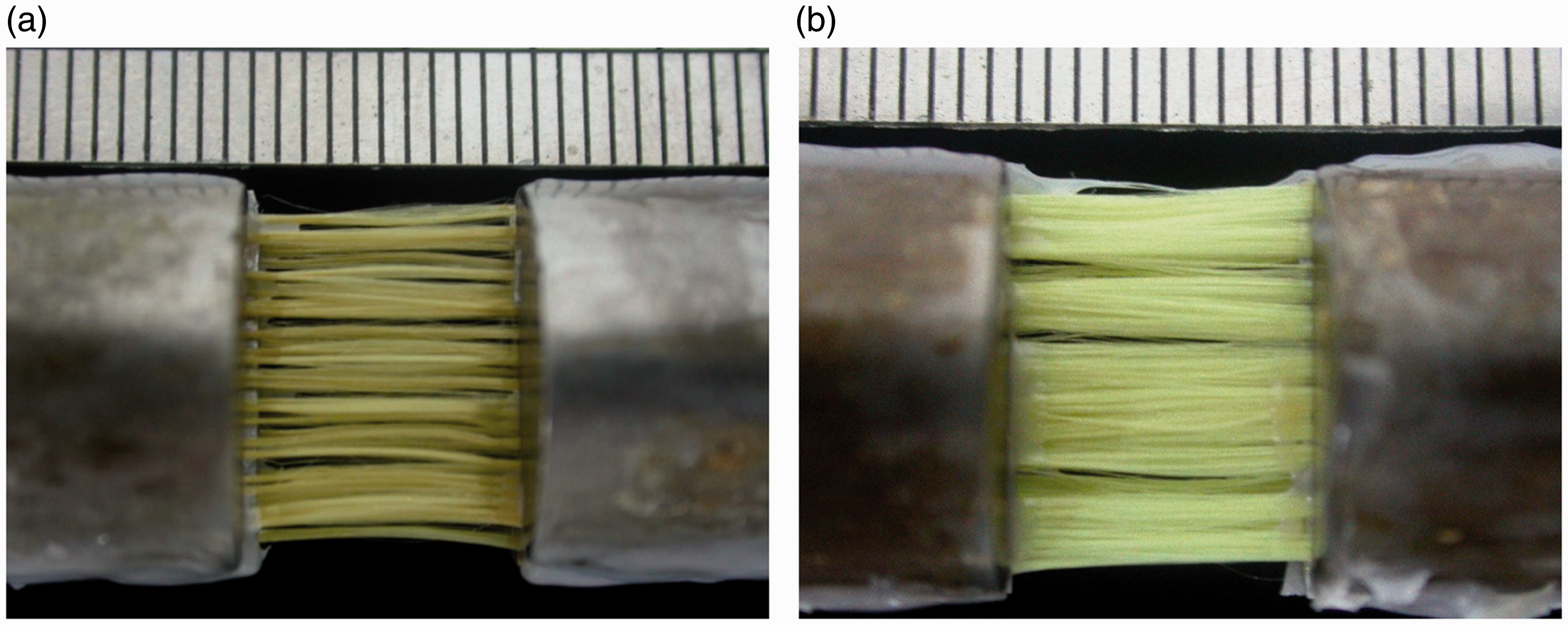
The preparation of fiber tows specimen for tensile testing is shown in Figure 1, where Preparation of fiber tow specimens for tensile testing. (a) Glued the lining blocks on the supplement plate. (b) Wound the bundles onto the lining blocks. (c) Glued the specimen to the slots of the incident and transmission bar. (d) Intercalat the stress transfer parts in the ends of two bars. The different fineness fiber tow specimens for tensile testing. (a) The fineness is 220 dtex. (b) The fineness is 1680 dtex.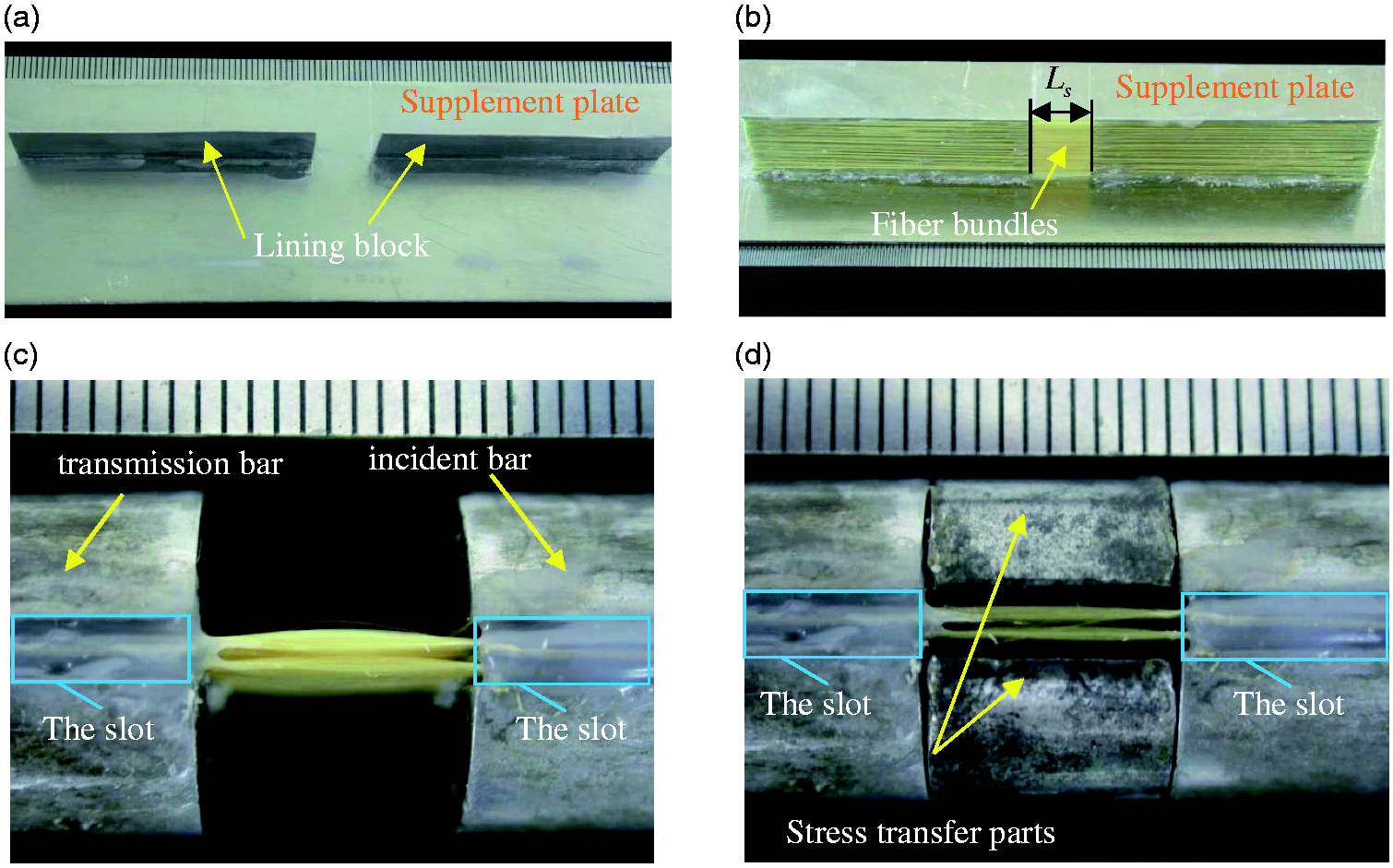
The principles of the SHTB
A sketch of the SHTB apparatus is shown in Figure 3. The striker bar, having the same cross-sectional area and modulus of the incident and transmission bars, was propelled by a gas gun. Different rates of loading were achieved by varying the velocity of the strike, and the velocity of the strike could be adjusted by controlling the gas pressure. The partial enlargement of Figure 3 depicts the connection among the specimen, the incident bar and the transmission bar. In the test, the striker bar impacted on the transmission bar and this generated an elastic stress wave propagating through the transmission bar with the velocity of the sound in the bar medium, and then passed through the stress transfer parts of the same material with the incident and transmission bar. When the wave touches the bottom surface of the incident bar, it is reflected at the bottom surface and it propagates backward.
17
This backward propagating elastic wave is a tensile wave passing through the Twaron fibers, resulting in the tensile failure of the fibers and it finally propagates to the transmission bar.
17
The reflected The diagram illustration of the split Hopkinson tension bar system.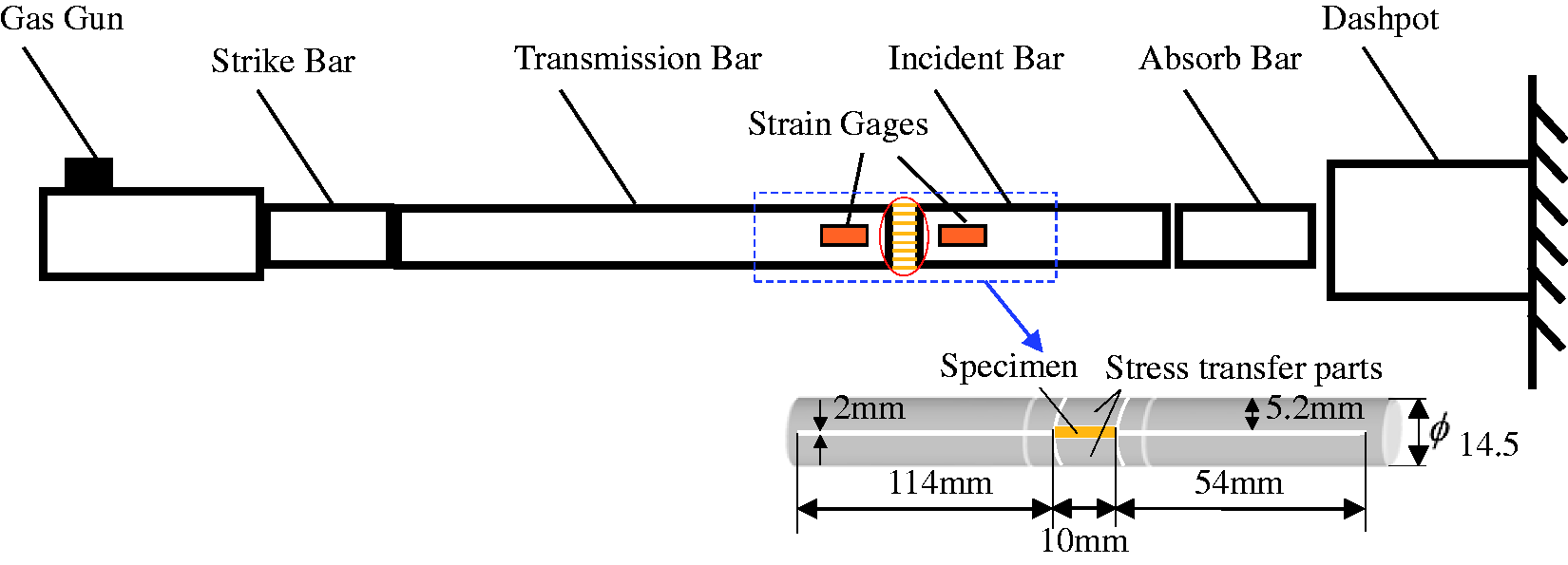



With the specimens in place, the velocities used would give rise to strain rates of 800–2400 s–1. Figure 4 illustrates the typical strain wave signals recorded. Shorter specimen lengths will result in higher strain rates; however, shorter specimens cannot be clamped properly because filaments would be misaligned and twisted, causing inaccurate results. Higher strain rates can also be obtained with high striker velocities. However, a striker velocity that is too high will cause plastic deformation in the input bar.
Typical strain signals of Twaron fiber tows in split Hopkinson tension bar tests. (a) The fineness is 220 dtex. (b) The fineness is 1680 dtex.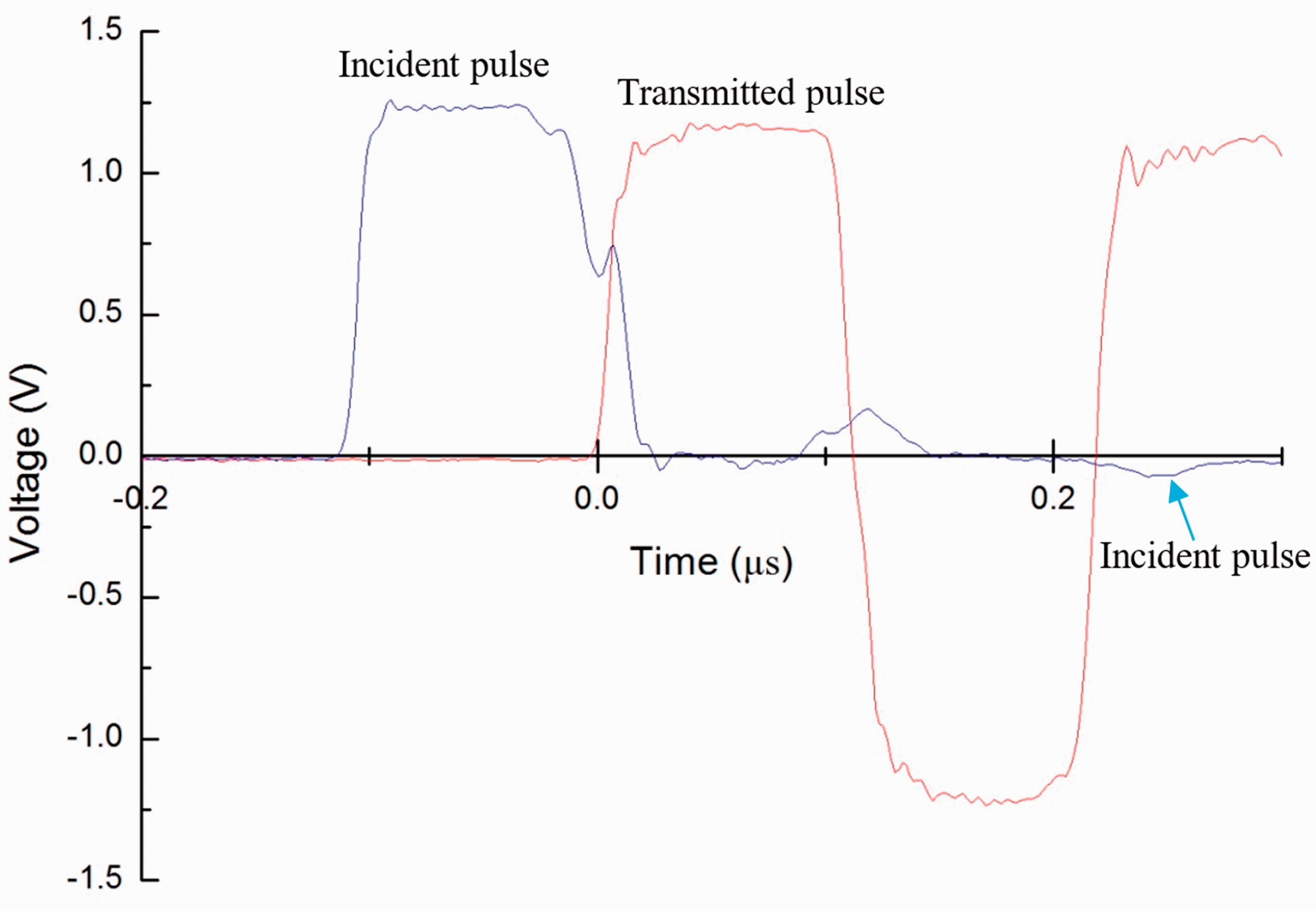
Results and discussion
Stress–strain curves
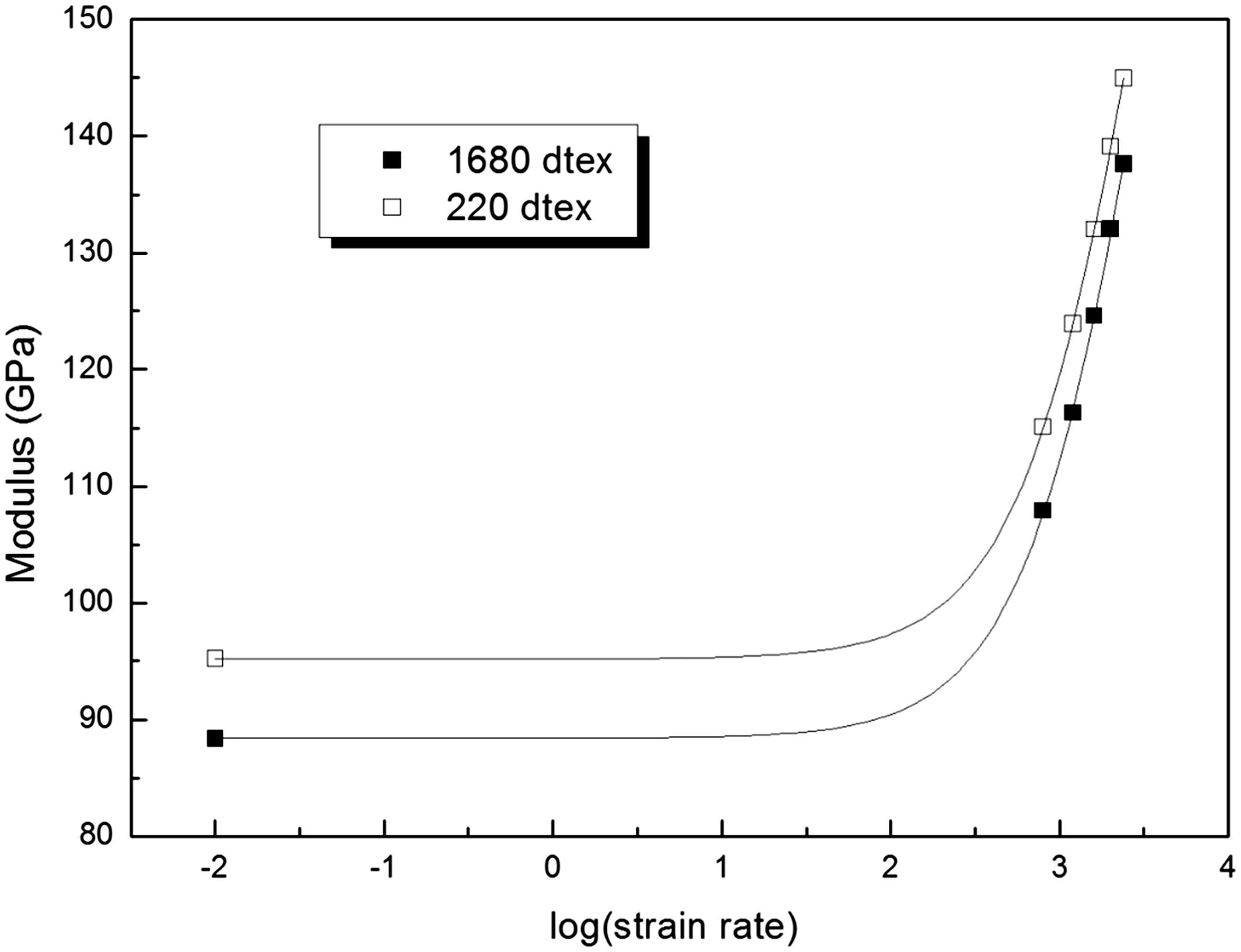
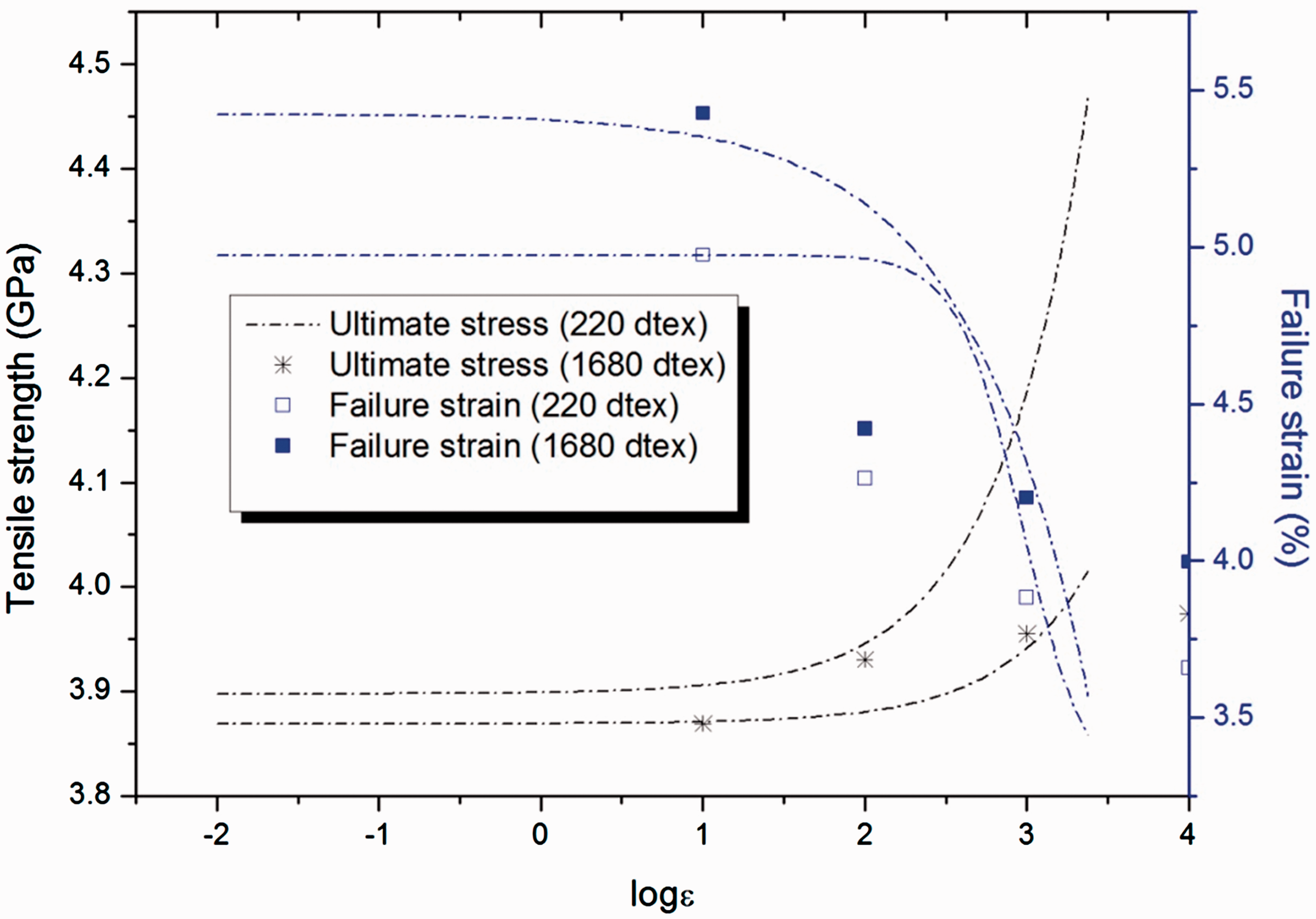
The stress–strain curves of the two Twaron fiber tows are shown in Figure 5. It can be seen that the Twaron fiber is strain rate sensitive. Figure 6 shows the relationship between tensile modulus and strain rate, whereas Figure 7 depicts the relationships tensile strength versus strain rate and tensile failure strain versus strain rate. The tensile modulus and strength both increased with the strain rate, while the failure strain decreased. In a comparison of the two types of fibers fineness, it can be seen that, at the same strain rate, the 220 dtex fiber has a higher modulus and a higher strength but a lower failure strain than the 1680 dtex fiber. It can be seen in Figures 6 and 7 that the plots appear to have approximately exponential characterization in the whole range of strain rates. Hence, the following fitting equations were used to describe the relationship between mechanical properties and strain rates
Stress–strain curves of Twaron fiber tows under various strain rates. (a) The fineness is 220 dtex. (b) The fineness is 1680 dtex. Modulus versus strain rate curve. Tensile strength, failure strain versus strain rate curves.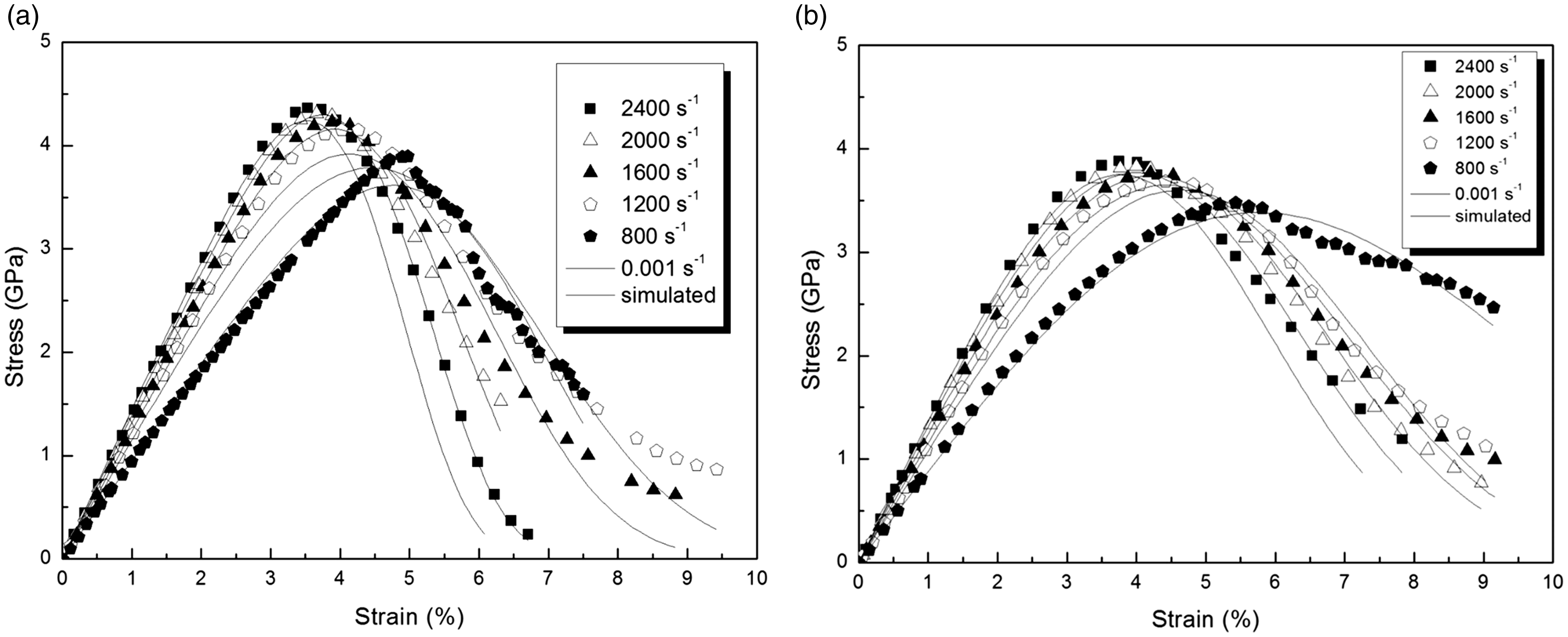


(The Twaron fiber tows with the fineness of 220 dtex.)


(The Twaron fiber tows with the fineness of 1680 dtex.)
Fractographs
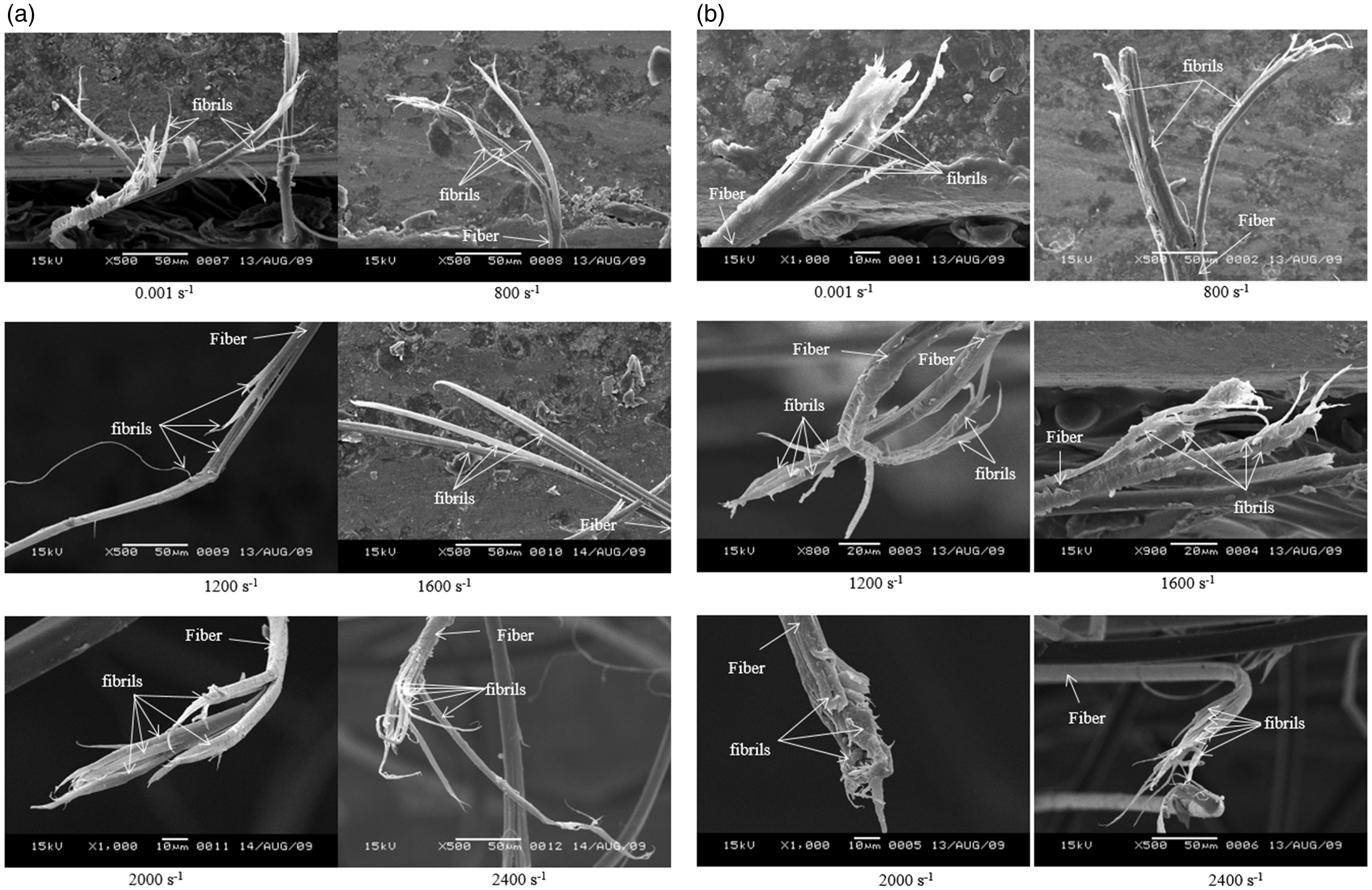
Figure 8 shows damage of the two Twaron fiber tows under high strain rate impact tension. The ends of the fibers were pulled apart, and the fiber was fractured and has some fiber fragments near the middle area of testing fiber tows. In order to further investigate the mechanical properties of the Twaron fiber tows, the fracture morphology of the fibers was observed under a SEM. Figure 9 illustrates the fracture surfaces of the two fibers under different strain rates. It is clear from these images that the Twaron fiber tows fibrillate around the region of failure; fibrils separate from one another before they break and the fiber is no longer a single strand. The images show a fiber becoming thinner toward the tip where it breaks, as fibrils fail and progressively separate from the fiber core. The SEM images showing a fibrillated end of Twaron single fiber at both quasi-static and high strain rate. Twaron fiber tows are also observed to fracture, with more lengthy fibrils splitting axially at low strain rates while exhibiting fewer and shorter fibrils at high strain rates. As shown in Figure 9, due to the aligned macromolecule packaging, Twaron fiber tows have a much stronger tendency to form a fibrillar fracture surface, which leads to the failure mode of the Twaron fiber under high strain rate tension. It is characterized by decohesion, a reduction in diameter and splintering of the microfibrils along the longitudinal axis of the fiber, and the fracture surfaces have a fibrillated end appearance, which is reflected in the toughness feature of the fiber tows. It is know that at low strain rates, inter-chain slippage is significant and secondary bond failure dominates, whereas intermolecular slippage becomes restrained and primary bonds are stretched to fracture at high strain rates.
15
The more serious the fibrillation, the more energy will be absorb by the fiber.
Damage of Twaron fiber tows under various strain rate tensions. (a) Strain rate of 800 s−1. (b) Strain rate of 1200 s−1. (c) Strain rate of 1600 s−1. (d) Strain rate of 2000 s−1. (e) Strain rate of 2400 s−1. (f) Strain rate of 800 s−1. (g) Strain rate of 1200 s−1. (h) Strain rate of 1600 s−1. (i) Strain rate of 2000 s−1. (j) Strain rate of 2400 s−1. Fractographs of Twaron fiber tows under various strain rate tensions. (a) The fineness is 220 dtex. (b)The fineness is 1680 dtex.
Statistical analysis of the tensile data of Twaron fiber tows
Weibull strength theory of the parallel filament fiber tow
The Weibull distribution20–22 is a statistical method based on the weakest link model and is widely applicable in brittle materials where failure occurs by crack growth from a single, critical flaw. It is well known that the strength distribution of parallel filament fiber tows could be characterized with Weibull strength theory, also called “weakest link theory”,23–25 in which the fracture is controlled by the weakest defect of all the defects in a fiber. To characterize the strength distribution of the Twaron fiber tows, a fiber tow model is presented in this paper. In this model (Figure 10) the N parallel fibers of the same length L, cross-sectional area A, are rigidly fixed between the two ends. The fibers are clamped at the ends in such a way that all of the unbroken fibers have the same strain and such that there is no interaction between the individual fibers. Each filament of the filament bundle remains completely elastic until it ruptures when the tensile stress in the fiber reaches its rupture strength.
Model of parallel filament fiber tows.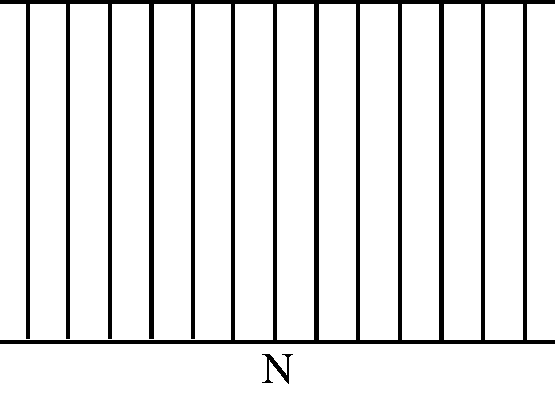
The model assumed the following.
1. The relationship between applied stress 2. The probability distribution of single fiber strength under tensile impact follows Weibull distribution.
where Ef is the modulus of the fiber.

Failure probability 3. The rupture stress is fiber-dependent. As n fibers break, the load is uniformly borne by







Then the tensile constitutive equation of the filament fiber tow could be obtained as




The nonlinear parameters
Constitutive equation of Twaron fiber tows under various strain rates
In the Weibull plot curve of the experimental data of the two Twaron fiber tows under various strain rates (Figure 11), all the curves have exponential characterization. According to Hearle’s molecular chain theory
28
and fiber facture model,
29
the molecular chain ends were considered as defects facilitating stress concentration and intermolecular sliding, and the fiber rupture is initiated by failure of weak transverse secondary bonds due to intermolecular interaction. This is quite different with E-glass fiber tows,
30
SiC fiber tows
31
and basalt tows.
32
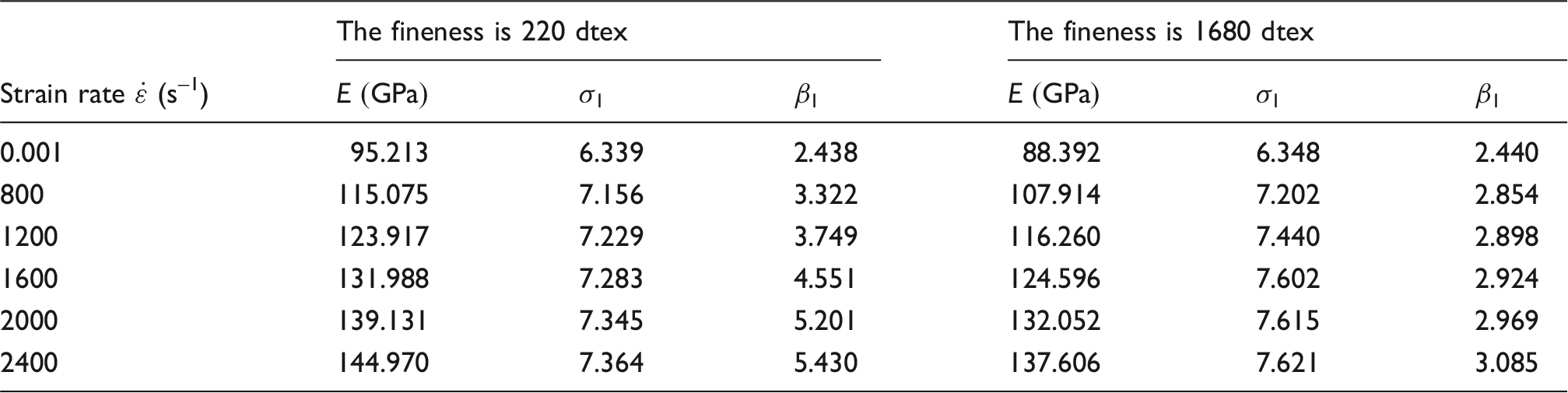
The Twaron fiber tows are organic fibers, and the constitutive equation of the fiber tows could be obtained from the single Weibull strength distribution theory using Equation (16). By the least squares estimation, the Weibull distribution parameters in Equation (16) under various strain rates could be calculated and are listed in Table 1. It could be inferred that both the scale parameter Weibull plot for Twaron fiber tows under different strain rates. (a) The fineness is 220 dtex. (a) The fineness is 1680 dtex. Weibull distribution parameters of Twaron fiber tows at different strain rates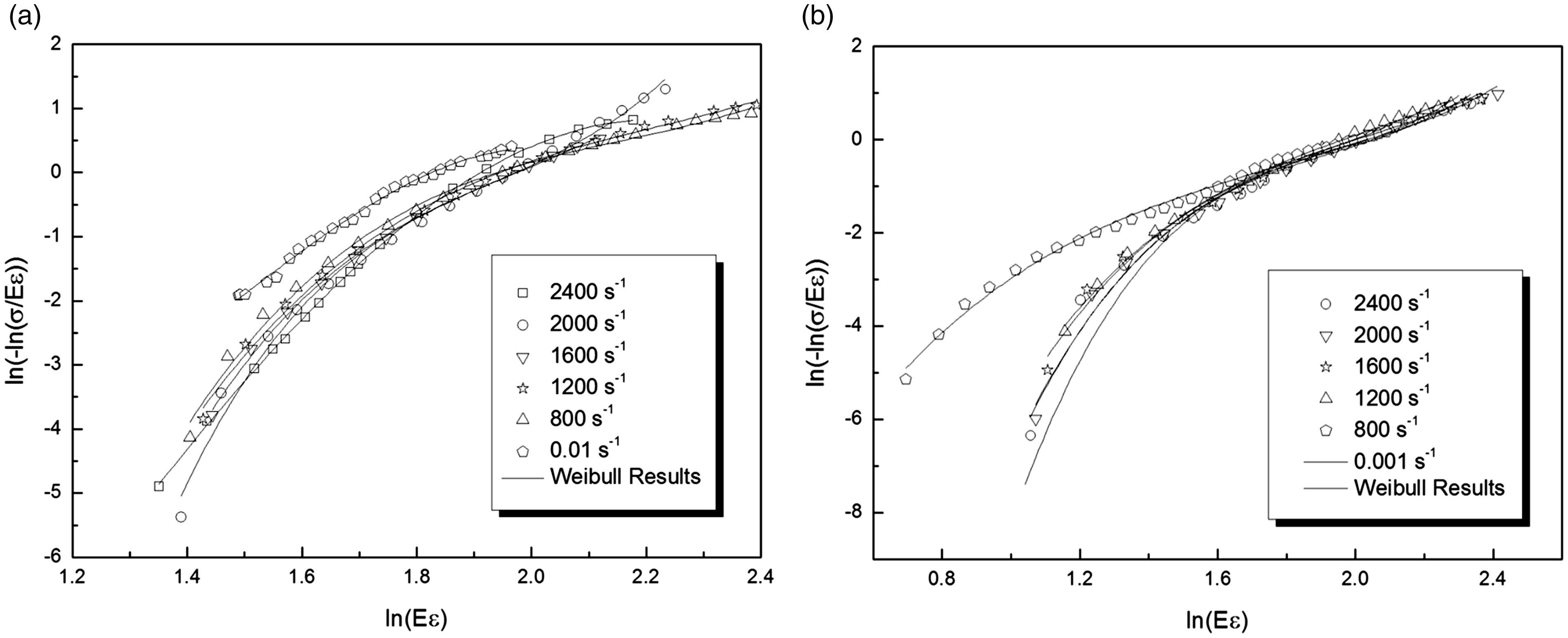






(The Twaron fiber tows with the fineness of 220 dtex.)






(The Twaron fiber tows with the fineness of 1680 dtex.)
The solid lines in Figure 5 were drawn from the Weilbull distribution constitutive equations, which fitted the experimental data well.
Summary and conclusions
The tensile properties of Twaron fiber tows have been evaluated under quasi-static and high strain rate conditions. The stress–strain curves under different strain rates were obtained. The fracture morphology of the Twaron fibers was observed to analyze the failure mode. The Weibull distribution strength theory was employed for deriving the constitutive equation.
The tensile test undertaken showed that Twaron fiber tows Are strain rate sensitive. The elastic modulus and the strength of the Twaron fiber tows apparently increase with the strain rate from 0.001 to 2400 s–1, while the failure strain decreased with the increase of strain rate. The fiber of 220 dtex has higher strength and stiffness than that of 1680 dtex, which reflected that the fiber of 220 dtex has more beneficial application prospects in the field of impact. Twaron specimens showed a fibrillated end at both quasi-static and high strain rate and fracture with more lengthy fibrils splitting axially at low strain rates, while exhibiting fewer and shorter fibrils at high strain rates, which reflected the toughness feature of the fiber tows. The statistical results show that the strength distribution of the Twaron fiber tows complies with the single Weibull distribution. The single Weibull constitutive model can describe the stress–strain relationship of the fiber bundles under different strain rates. Both the scale parameter and shape parameter increased with the strain rate.
Footnotes
Declaration of conflicting interests
The authors declared no potential conflicts of interest with respect to the research, authorship and/or publication of this article.
Funding
The authors disclosed receipt of the following financial support for the research, authorship, and/or publication of this article: This work was supported by the Zhejiang Sci-Tech University Scientific Research Project (17012050-Y), the Key Laboratory of Advanced Textile Materials and Manufacturing Technology (Zhejiang Sci-Tech University), Ministry of Education (2017QN07), The State Key Laboratory for Hubei New Textile Materials and Advanced Processing Technology (ZDSYS201702) and the Open Project Program of Key Laboratory of Eco-textiles, Ministry of Education, Jiangnan University (KLET1607). National Natural Science Foundation of China (Grant No. 51303025), Shanghai Natural Science Foundation (Grant No. 17ZR1400800), as well as the Fundamental Research Funds for the Central Universities and DHU Distinguished Young Professor Program.