







Abstract
This study examined the thermal wear comfort of clothing made from flame-retardant (FR) rayon- and cotton-blended fabric using a thermal manikin and wearer trials. In addition, the tactile hand property of the FR rayon-blended fabric was predicted and compared with that of the cotton-blended one using the Fabric Assurance Simple Testing system. The FR rayon-blended fabric exhibited a lower heat insulation rate than that of the cotton-blended one in the thermal manikin experiment and lower microclimate humidity during 40 min walking in the human subject experiment. The FR rayon-blended fabric was more extensible than the cotton-blended one, with a lower bending rigidity and shear modulus. This study showed that FR rayon-blended fabric has better thermal wear comfort and a superior tactile hand feel compared with the cotton-blended one, without any significant difference of pilling compared to the cotton-blended modacrylic one.
Modacrylic-included fabrics have been used as the main materials for sleepwear clothing for children and flame-retardant (FR) working wear.1,2 Several research findings on the FR property of modacrylic fibers, yarns, and fabrics mixed with cotton and polyester fibers have been reported.3–5 On the other hand, the FR properties of the yarn and fabrics made from regenerated cellulose and fire-retardant viscose rayon fibers have been examined.6–8 Recently, Lavate et al. 9 investigated the wear comfort of viscose fabrics made from different kinds of regenerated fibers, such as the TENCEL, modal, and Excel®. Nowadays, modacrylic fibers are used in home textile goods, such as curtains, furnishings, and carpets, requiring FR and anti-static properties. FR rayon is used in the FR textile market and anti-static polyethylene terephthalate (PET) fiber in protective clothing. Thus, the FR and anti-static properties of knitted and woven fabrics made from staple yarns mixed with modacrylic fiber, FR rayon, Excel®, and anti-static PET fibers have been examined, focusing on investigation of the physical and mechanical properties of their staple yarns.10,11 The wear comfort property related to water absorption and drying using a MMT (Moisture Management Tester) experiment was also examined. Previous research findings on the thermal comfort of clothing made from heat storage and release textile materials using thermal manikin measurements have been reported.12–16 Fan and Tsang 17 and Kar et al. 18 examined the thermal properties of sportswear and thermal and moisture transport properties of T-shirts using a thermal manikin test and wearer trial test, respectively. Many studies related to clothing thermal comfort have been carried out to evaluate the wear comfort of clothing and the near environment using different thermal manikins.19–21 In addition, many research findings on the clothing wear comfort related to the water and moisture transport have been reported using a wearer trial test in a climatic chamber.22–27 However, there has been no reports on the thermal comfort properties using a thermal manikin wearing clothing made from FR woven fabrics mixed with different fibers that are very popular in the market, such as modacrylic fiber, FR rayon, cotton, and anti-static PET. In previous studies,10,11 the FR and anti-static properties as a basic physical property, and water absorption and moisture vapor permeability, as a wear comfort, were investigated using woven and knitted fabrics mixed with FR rayon and regular rayon (Excel®) to examine their application possibility in working and protective clothing. The FR (Limiting Oxygen Index (LOI) value) and anti-static properties between regular rayon and cotton-blended knitted fabrics 10 exhibited a negligible difference, respectively. In addition, moisture vapor permeability between two types of fabrics did not show any significant difference; moreover, regular rayon-blended fabric had an inferior tactile hand compared with the cotton-blended fabric. However, the absorption and drying properties of the regular rayon-blended fabric were better than those of the cotton-blended fabric. On the other hand, the FR rayon-blended fabric has better FR and anti-static properties than the cotton-blended fabric. 11 The wear comfort, such as absorption, drying, and moisture vapor permeability, was superior to that of the cotton-blended fabric and, besides, FR rayon-blended fabric had a better tactile hand feel than the cotton-blended one. These results suggest that there are many differences of flame-retardancy and wear comfort properties between FR rayon and regular rayon fibers, despite experimental data measured from the fabric state. However, additional study for thermal and tactile wear comforts for clothing is needed to due to their importance in the protective clothing market. Therefore, this study examined the clothing thermal wear comfort of woven fabrics made from different fibers using thermal manikin and wearer trial experiments. The tactile hand of the fabric specimens was also obtained from the fabric mechanical properties measured using the FAST (Fabric Assurance Simple Testing) system.
Experimental details
Yarn and fabric specimen preparation
Characteristics of the fibers used in this study.

CV: coefficient of variance; FR: flame-retardant; PET: polyethylene terephthalate.
Characteristics of yarn and fabric specimens.
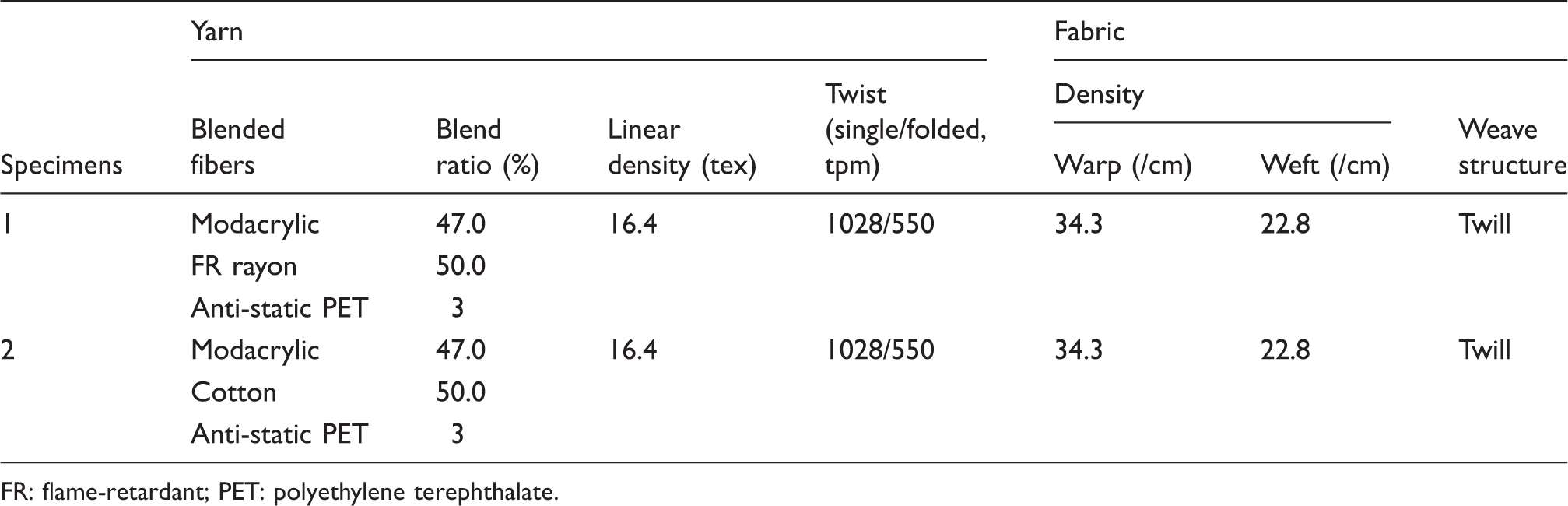
FR: flame-retardant; PET: polyethylene terephthalate.
Woven fabric specimens were prepared using the yarn specimens listed in Table 2. A warp beam was prepared on a single warping machine, and the warping width was 152.4 cm. The fabric with a weave pattern of a 2/1 twill weave was woven on a rapier loom. Two types of gray fabric specimens were pre-treated in a similar way before dyeing, that is, they were gas-singed, desized, and scoured continuously. Pre-treated fabric specimens were continuously dyed on the pad-dryer, which was followed by the pad-steamer after washing treatment. Finally, dyed fabric specimens were finished with heat treatment on a tenter machine with speed of 40 m/min at temperature of 160℃, followed by anti-shrink finishing for the dimensional stability of fabric specimens, which were treated with a feed speed of 30 m/min at a steaming temperature of 90℃ on a sanforizing compressive machine. Table 2 lists the specifications of the two types of woven fabric specimens prepared in this study.
Measurement of the yarn and fabric physical properties
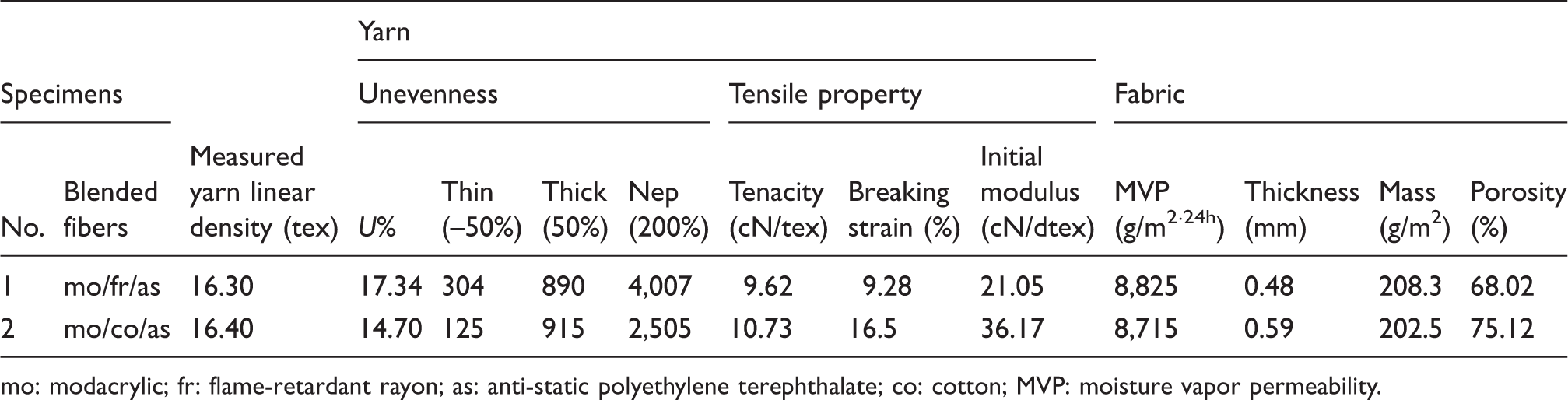
The unevenness of the two types of yarn specimens was measured using an Uster evenness tester (Tester 5, Uster Co., Switzerland). Imperfections, such as thin (–50%), thick (+50%), and neps (+200%), were counted as the number per 1000 m of yarn. The yarn tensile property was measured with a gauge length of 100 mm and a test speed of 100 mm/min using a Testometric Micro 350 (UK). Ten tests were conducted for each yarn specimen to obtain the tenacity, breaking strain, and initial modulus. Table 3 lists the physical and mechanical properties of the two types of yarn and fabric specimens measured in this study. The porosity (ɛ) of the two types of woven fabric specimens was calculated using Equation (1), which was proposed by Zupin et al.
28
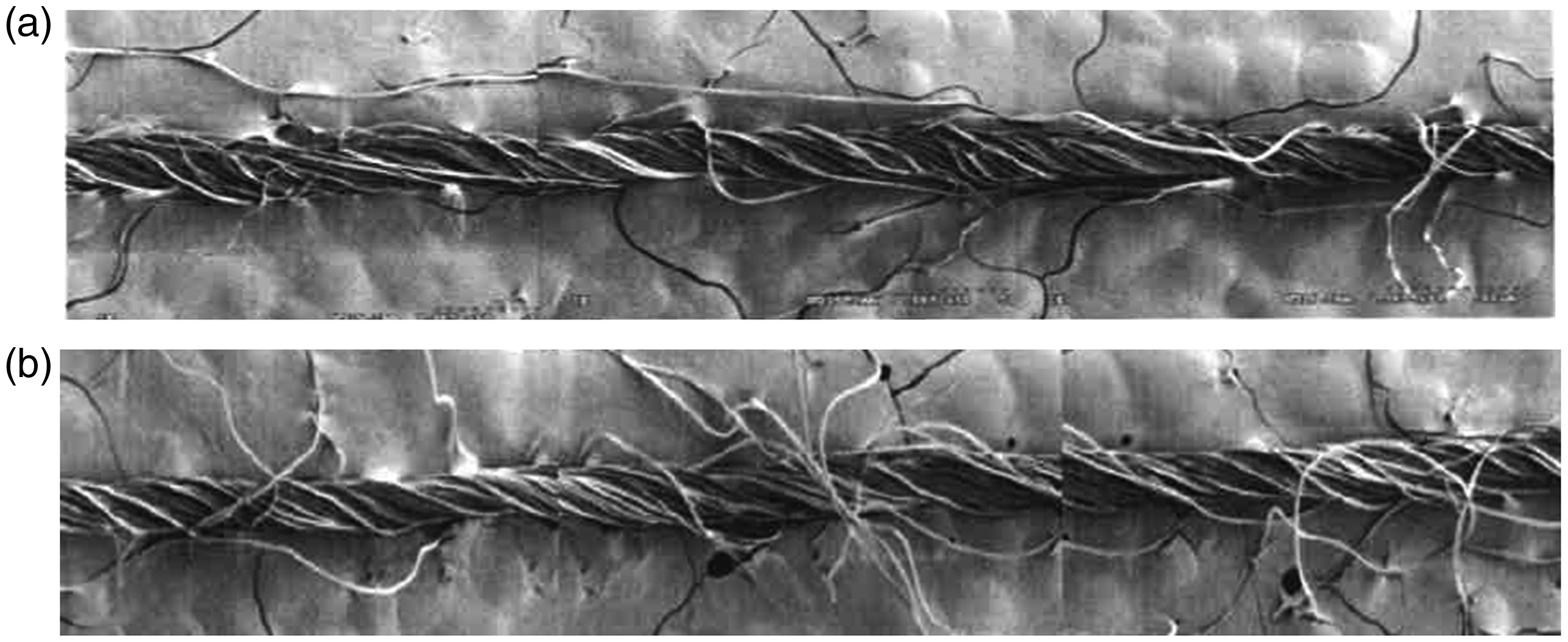
Scanning electron microscopy images of the yarn specimens: (a) specimen 1 and (b) specimen 2. Physical and mechanical properties of the yarn and fabric specimens. mo: modacrylic; fr: flame-retardant rayon; as: anti-static polyethylene terephthalate; co: cotton; MVP: moisture vapor permeability.
Thermal manikin measurement
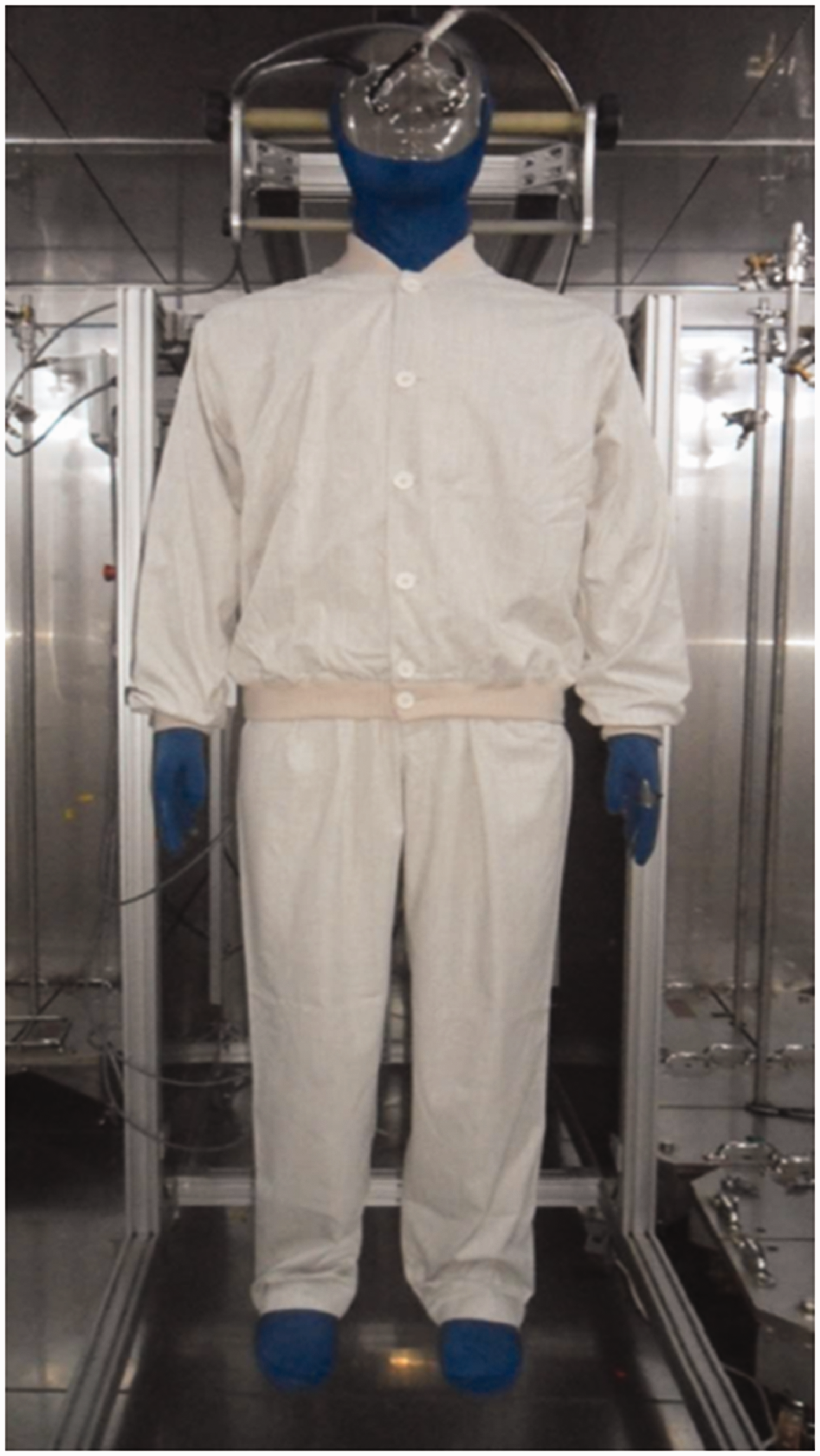
Prototype garments worn by a thermal manikin were made using the modacrylic/FR rayon/anti-static PET-blended fabric (no.1) and modacrylic/cotton/anti-static PET-blended fabric (no.2) specimens, as listed in Table 2. Two types of twill fabrics were made into long-sleeved jackets and trousers, as shown in Figure 2. The skin temperature and total dry heat loss from the manikin wearing the two types of garments were measured using a sweating thermal manikin (Newton-20, NWTM, USA) in a climate chamber according to the ISO 9920:2007 standard measuring method.
29
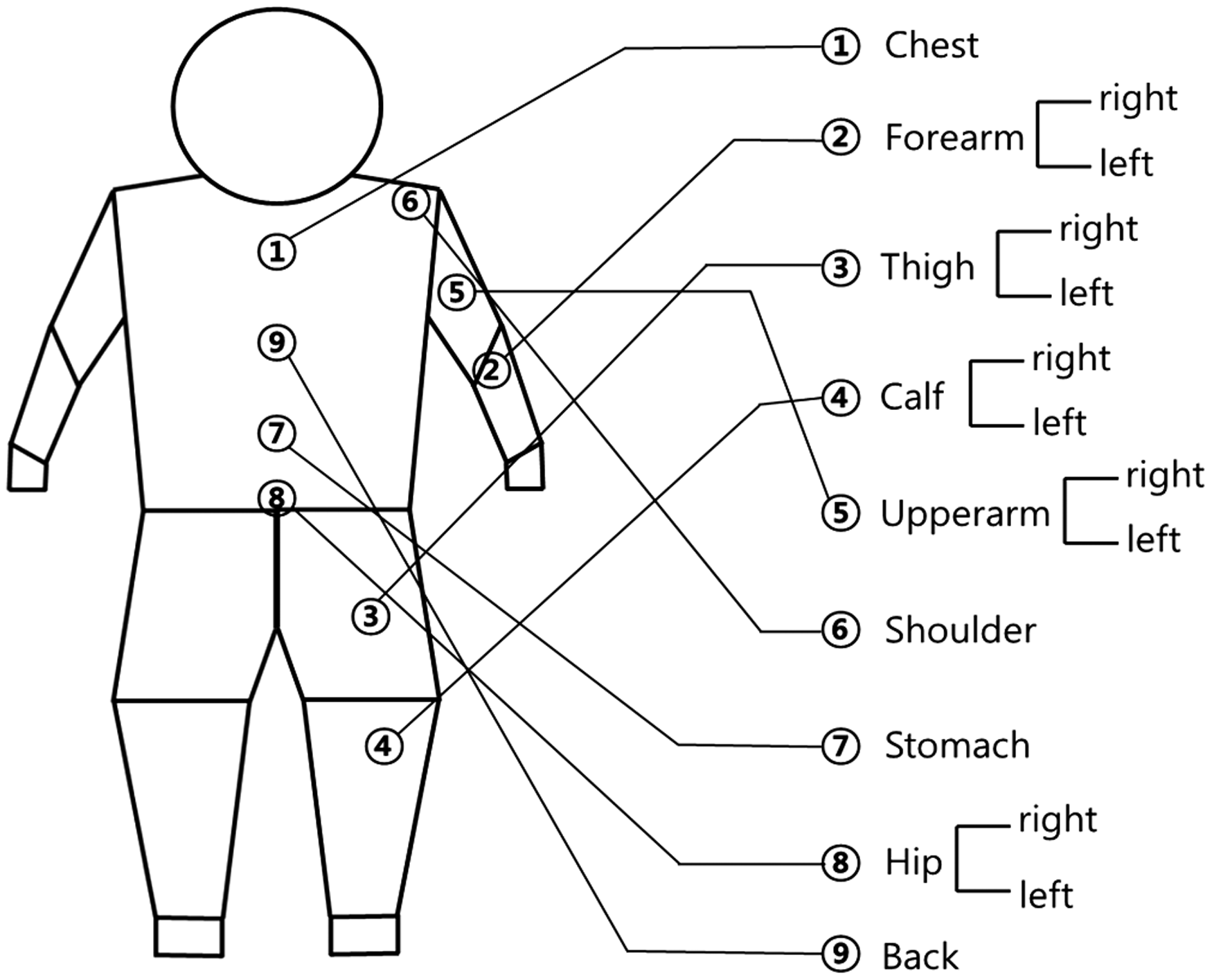
The skin temperature measurements were taken at six points of the front body (chest, upper arm, stomach, forearm, thigh, and calf) and three points of the back body (hip, shoulder, and back). The temperature measuring sensors were attached to 14 skin surfaces on the thermal manikin, as shown in Figure 3.
Size specifications of the jacket and trousers worn by the manikin. Positions of the sensors attached to the thermal manikin.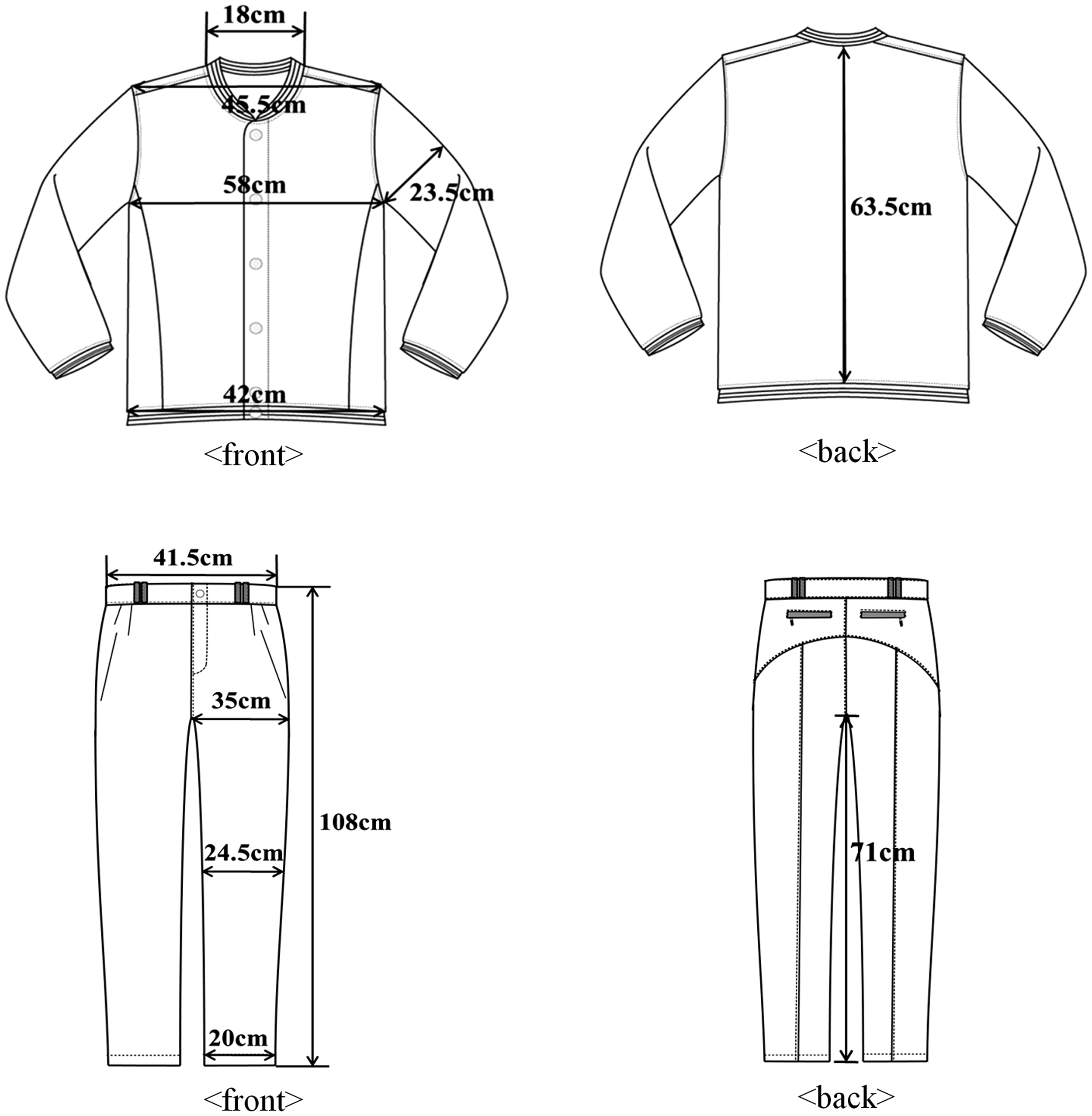
The skin temperature of the manikin was set to 34℃ for each body part. The ambient temperature (Ta) in the climate chamber was 20 ± 0.5℃ with 50% ± 2% RH and an air velocity of 0.1 m/s. The average skin temperature (Ts) on the 14 points was measured and the total dry heat loss (Q) from the thermal manikin was also measured for 60 min after the thermal manikin was started up. The dry thermal resistance (Rct, m2℃/W) was calculated using Equation (2)
30

The total heat insulation rate (Kt, Clo) was calculated using Equation (3),
30
where, the term ‘Clo’ is a measure of clothing insulation and one Clo unit is defined as 0.18 m2℃h/kcal, which is equal to 0.155 m2℃/W,
31
which is the inverse of 6.45

The effective heat insulation rate (Kc, Clo) of the clothing was adopted by subtracting Ka from Kt using Equation (4)
29
Thermal manikin wearing the garment.
Measurements of the skin temperature and microclimate humidity during the wearer trials
Three healthy males served as the subjects for the wearer trials. Sensors were attached to six parts (stomach, chest, right upper arm, back, thigh, and calf) to measure the skin temperature, and four parts (chest, back, right upper arm, and thigh) to measure the microclimate humidity. During the wearer trial, the human subjects wore clothing made from the two types of woven fabric specimens. Figure 5 presents the wearer trial experiments by the human subjects.
11
The wearers were then asked to rest for 10 min while sitting on a chair in an air conditioned chamber with a temperature of 20℃ and a RH of 50%.
11
The wearers were allowed a further 10 min to reach a stable stage and were asked to exercise by walking with a speed of 5.0 km/h for 40 min.
11
Finally, the wearers were allowed to sit for 20 min. During the wearer trials, the microclimate humidity between the human body and clothing on the four areas
11
and the skin temperatures on the six areas were measured every minute. This experiment was carried out for each human subject, and the mean microclimate humidity, the mean skin temperatures, and their deviations were analyzed.
Wearer trial experiment of a subject wearing a jacket and trousers
11
: (a) seated (rest) and (b) walking.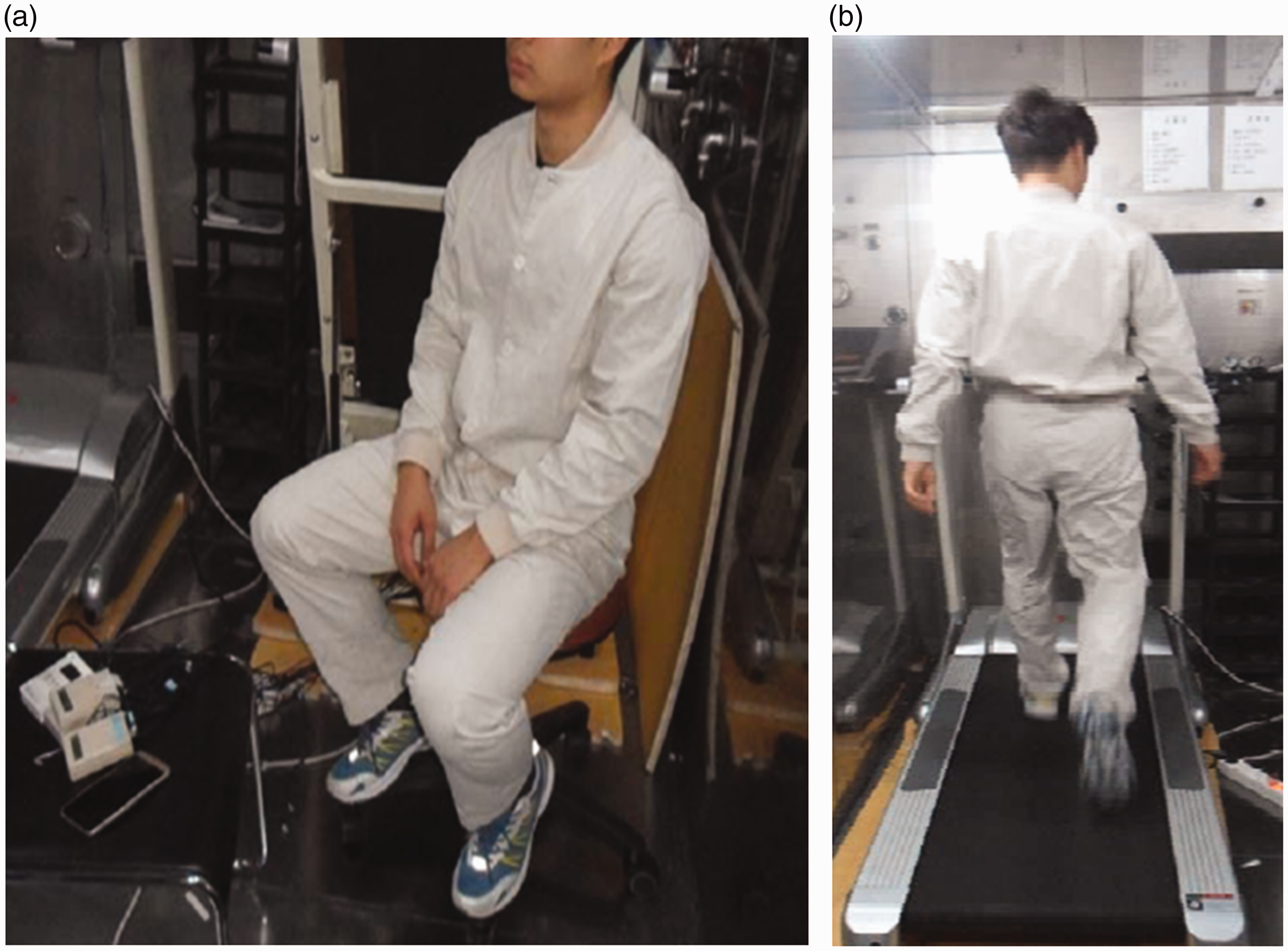
Mechanical properties of the fabric specimens
The mechanical properties of the fabric specimens were measured using the FAST system.
31
The compressibility was measured using the FAST-1 measuring apparatus. The surface thickness (ST) was calculated as the difference in the thickness of the fabric at compression of 1.96 and 98.04 cN/cm2. The bending rigidity (B, μN·m) was calculated using C, as shown in Equation (5),
31
which was measured using the FAST-2 measuring device


Pilling measurement
The pilling phenomena for garment wearing are very important. An understanding of how the fiber properties affect pilling while wearing clothing is important for determining the application possibility of the clothing of the FR rayon fibers compared to the cotton fibers. The pilling experiment of two types of woven fabrics was carried out using a pilling box according to the KSK ISO 12945-1:2014 standard measuring method.
Results and discussion
Heat insulation rate of the FR rayon-blended fabric by the thermal manikin test
The heat insulation rate of the FR rayon-blended fabric could not provide objective data because the thermal measurements of fabric are not an actual wearing performance assessment. Therefore, a quantitative evaluation of the thermal property between the FR rayon-blended fabric and cotton-blended one is required using a thermal manikin experiment.
12
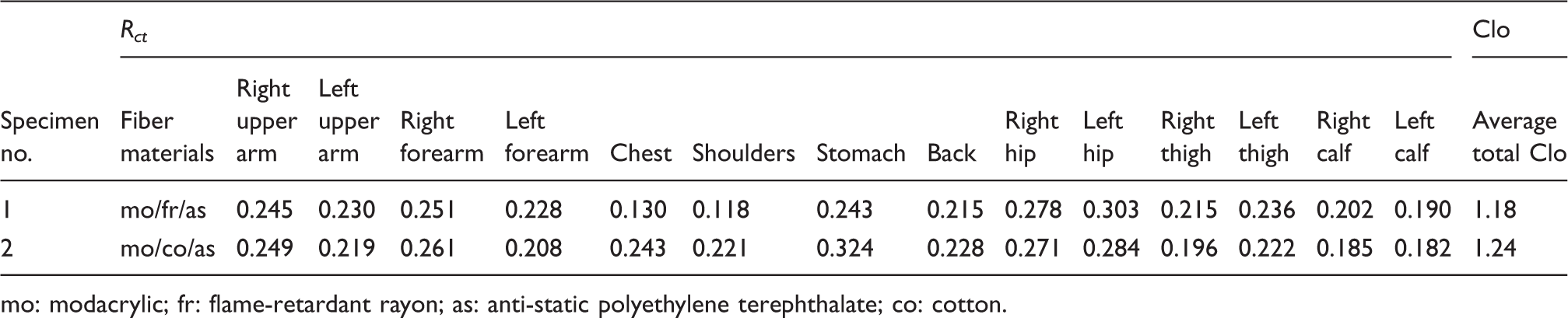
The Clo value was calculated from the thermal resistance (Rct), which was also calculated using Equation (2) from the total dry heat loss (Q) and the mean skin temperature Ts of the experimental values obtained from the thermal manikin experiment. Thus, the total Clo values from 14 positions of the thermal manikin were obtained using Equations (3) and (4) from the mean Rct of the FR rayon- and cotton-blended fabrics, respectively. Table 4 lists the mean total Clo and thermal resistance (Rct) of the fabric specimens worn by the thermal manikin according to the manikin position. As shown in Table 4, the FR rayon-blended fabric specimen exhibited a lower total Clo value than the cotton-blended fabric. This is because the FR rayon-blended fabric was thinner and has lower porosity, that is, it was less bulky than the cotton-blended fabric, which was calculated using Equation (1) and is shown in Table 3. In Equation (1) and Table 3, the porosity of the FR rayon-blended fabric with higher fabric mass and lower fabric thickness exhibited a lower value than the cotton-blended one. This enables heat in the FR rayon-blended yarns and fabric to pass through easily, that is, air in the pores in the bulky yarn (cotton-blended yarn) with higher porosity prevents heat flow from the inner layer to the outer layer of the cotton-blended fabric, which results in a cotton-blended fabric with a high Clo value and a FR rayon-blended fabric with a low heat insulation rate. Figure 6 presents images of the surface and cross-section of the two types of fabrics. As shown in Figure 6, the less hairy fabric surface as well as a more compact fabric structure and, thus, smaller pores and voids in the fabric cross-section, were observed on the FR rayon-blended fabrics, and the cross-section of the FR rayon-blended fabrics showed a more compact fabric thickness. In addition, in Table 4, it is shown that the different of Rct values on the chest, shoulders, and stomach between the two fabric specimens was much larger than that of others. This was because Rct in these areas was measured according to net fabric characteristics without airflow disturbance coming from outside of the clothing. On the other hand, other areas were hindered by the airflow due to being very close to the inlet of the airflow coming from outside, which seems to diminish the difference of Rct between the two fabric specimens.
Scanning electron microscopy images of the surface and cross-sections of the fabric specimens: (a), (b) flame-retardant rayon-blended; (c), (d): cotton-blended. Clo and Rct values of the fabric specimens. mo: modacrylic; fr: flame-retardant rayon; as: anti-static polyethylene terephthalate; co: cotton.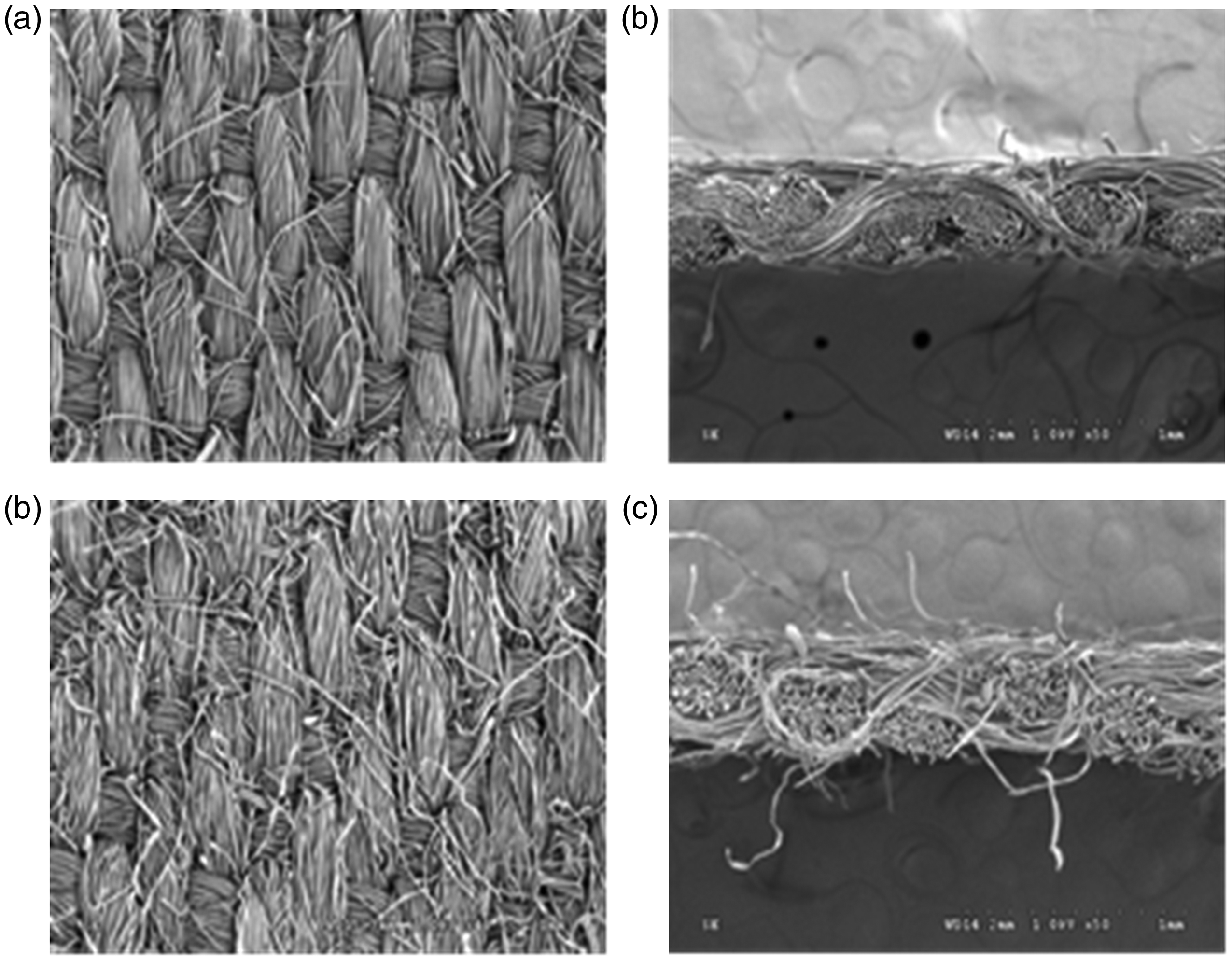
Skin temperatures and microclimate humidity during the wearer trials
Two different clothing prototypes were fabricated with the FR rayon-blended and cotton-blended fabrics, which were worn by three human subjects to measure the skin temperature and clothing microclimate humidity. Figure 7 presents the mean skin temperature and its deviations (maximum and minimum values) for three subjects during wearer trials. As shown in Figure 7, in the chest, back, stomach, and upper arm, the skin temperature of the FR rayon-blended fabric showed lower values than the cotton-blended fabric. This means that the heat insulation rate of the FR rayon-blended fabric (Mo/Fr) is lower than that of the cotton-blended fabric (Mo/Co), which is consistent with the Clo value in the thermal manikin experiment. In addition, in the chest, back, stomach, and upper arm, as shown in Figure 7, the skin temperatures of the FR rayon- and cotton-blended fabrics increased with time for 20 min during the rest time and decreased linearly during walking for 40 min. This might be because during the first 20 min sitting in the rest condition, clothing enables the human body to warm-up, which results in an increase in skin temperature by preventing heat from moving with no airflow in the microclimate. On the other hand, during 40 min walking, the skin temperature decreased because sweat from the skin surface reduces the skin temperature on the chest, back, stomach, and upper arm, as shown in Figure 7. In the thigh and calf positions, however, the temperature change during the rest and walking conditions showed a different trend, that is, there was no change in temperature during the rest conditions, and the temperature increased while walking. This was attributed to airflow at the thigh and calf, which enables the sweat developed from the skin surface by walking to seep out, resulting in an increase in skin temperature by the heat energy developed from walking. This increase was higher in the calf position, in where there is much more airflow, than in the thigh position. This means that the airflow in the thigh and calf positions can drop the evaporation of sweat, and thus increase the temperature during walking. This finding is consistent with an earlier study.
32
Skin temperature during wearer trials: (a) chest; (b) back; (c) stomach; (d) upper arm; (e) thigh and (f) calf.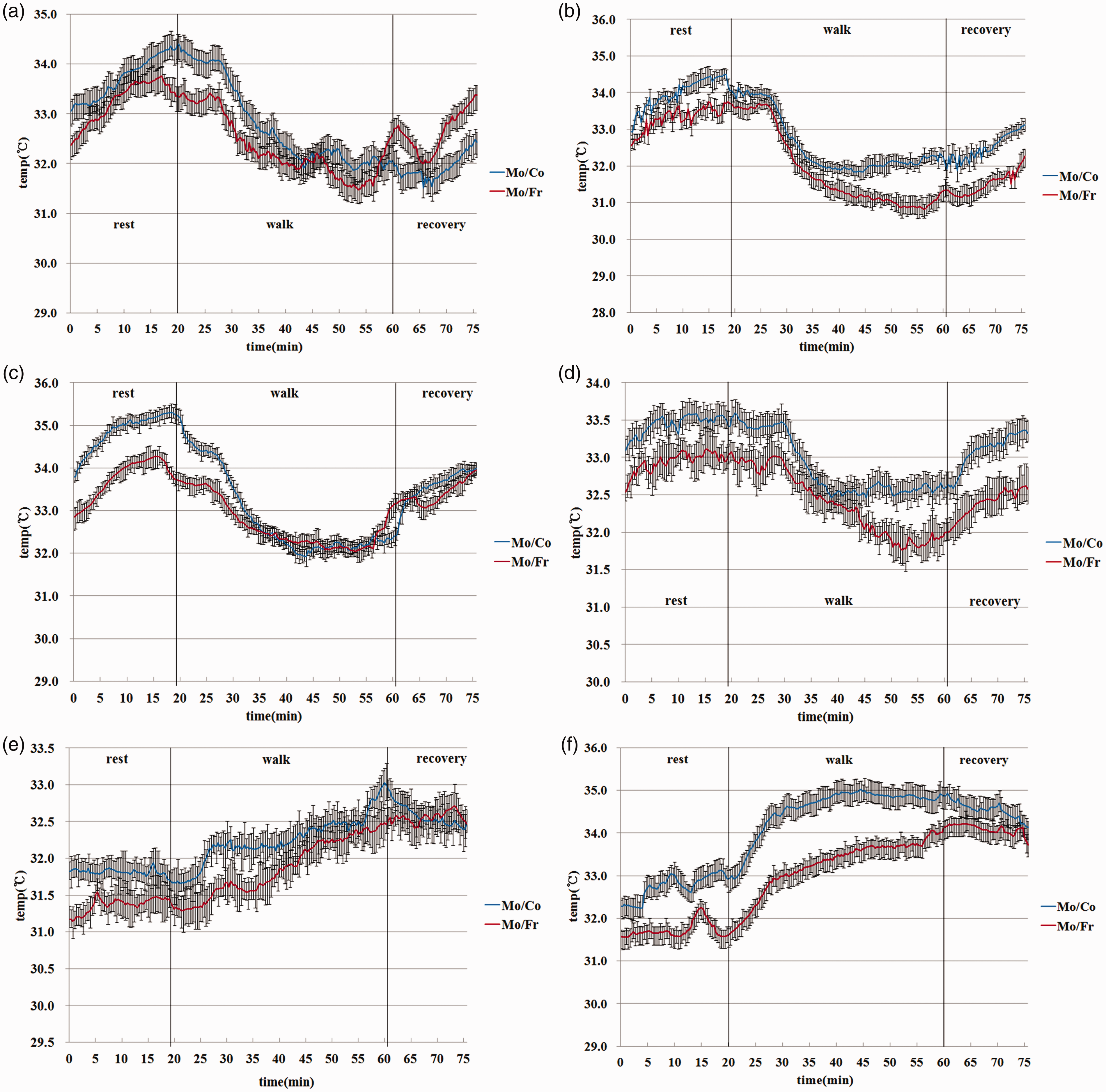
According to Figure 7, the skin temperature of the subject wearing the FR rayon- and cotton-blended fabrics ranged from 31℃ to 35℃. In addition, the skin temperature of the subject wearing the FR rayon-blended fabric was lower than that of the subject wearing the cotton-blended one, which was attributed to the higher MVP of the FR rayon-blended fabric compared with the cotton-blended one,
11
that is, higher moisture vapor permeability enables higher evaporation of sweat developed from the human body, resulting in a decrease of the skin temperature of the subject wearing the FR rayon-blended fabric. This was in accordance with the Clo value by the thermal manikin experiment, that is, FR rayon-blended fabric showed a lower Clo value due to lower thermal resistance than the cotton-blended one on the heat insulation rate. On the other hand, as shown in the latter half of the walking in Figures 7(a)–(d), the skin temperature of the FR rayon-blended fabric was increased and reversely higher than that of the cotton-blended one. This seems to be attributed to the higher wetted heat of the FR rayon-blended one than the cotton-blended one, that is, the absorption rate of the FR rayon fiber is higher than that of the cotton one, which results in an increased and higher value of the skin temperature due to more wetted heat developed from the FR rayon fibers. Figure 8 presents the mean microclimate humidity and its deviations (maximum and minimum values) for three subjects during the wearer trials. As shown in Figure 8, in the chest and back, the microclimate humidity of the FR rayon-blended fabric during 40 min walking ranged from 40% to 45%, which was much lower than that of the cotton-blended fabric. This means that the FR rayon-blended fabric has a better moisture vapor permeable property than the cotton one due to the higher evaporation of sweat developed from the human body during 40 min walking, which results in the lower microclimate humidity of FR rayon-blended fabric. In addition, this is because the lower porosity of the FR rayon-blended fabric enables sweat vapor to pass through easily, that is, better moisture vapor permeability, which was verified in a previous study,
11
and partly because cotton is difficult to dry, resulting in more moisture accumulation in the cotton-blended yarn and fabric.
32
This finding, in comparison with the skin temperature mentioned previously, suggests that the FR rayon-blended fabric has a better wear comfort feel than the cotton-blended one due to the lower skin temperature and microclimate humidity than those of the cotton-blended fabric during 40 min walking, that is, the higher skin temperature and microclimate humidity of the subject wearing the cotton-blended fabric during 40 min walking make the wearer uncomfortable.
Microclimate humidity during the wearer trials: (a) chest; (b) back; (c) upper arm and (d) thigh.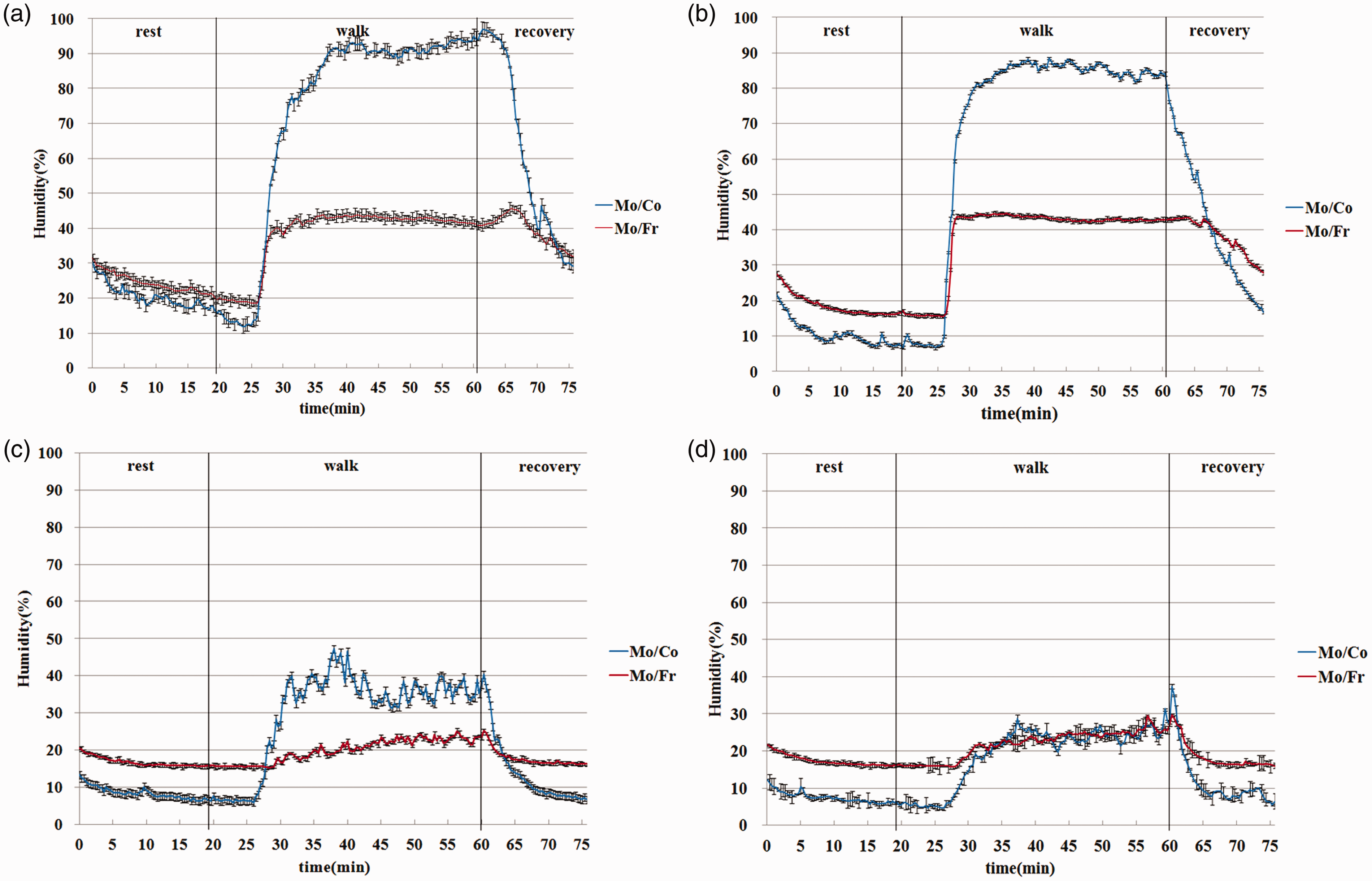
On the other hand, in the upper arm and thigh (Figure 8), the microclimate humidity of the FR rayon-blended fabric during 40 min walking ranged from 20% to 25%; there was no difference in microclimate humidity between the two fabric types in the thigh position. This is because there is much more airflow from the bottom of the trousers during walking in the thigh than in the chest and back positions, which enables the sweat evaporated from the human skin during walking to flow out, resulting in lower microclimate humidity than that in the chest and back positions, and in a similar microclimate humidity in the thigh position between the two types of fabrics. On the other hand, in the upper arm position, which shows less airflow compared to the thigh position, the microclimate humidity of the FR rayon-blended fabric was lower than that of the cotton-blended fabric, like the chest and back positions, despite the difference being little like the chest and back positions. This was partly attributed to the higher moisture vapor permeability of the FR rayon-blended fabric than the cotton-blended one, 11 despite the lower microclimate humidity compared to the chest and back positions due to the airflow from the cuffs of the sleeves.
Tactile hand and mechanical properties of the fabric specimens
Figure 9 presents the relative mechanical properties of the FR rayon- and cotton-blended fabrics measured using the FAST system. The extensibility (E5, E20, and E100), compressibility (ST), bending rigidity (B), and shear rigidity (G) of the FR rayon-blended fabric were plotted as a ratio to those of the cotton-blended fabric (mean, maximum, and minimum) As shown in Figure 9, the compressibility of the FR rayon-blended fabric was lower than that of the cotton-blended fabric. This was attributed to the coarser fiber fineness and longer fiber length of the constituent FR rayon fibers in the yarns, which makes a clean fabric surface (Figure 6(a)) and a compact fabric cross-section (Figure 6(b)) compared to those of the cotton-blended modacrylic fabric (Figures 6(c) and (d)), as shown in Figure 6. This resulted in a lower compressibility of the FR rayon-blended fabric.
Relative mechanical properties of the woven fabric specimens (mean, maximum, and minimum). FR: flame-retardant.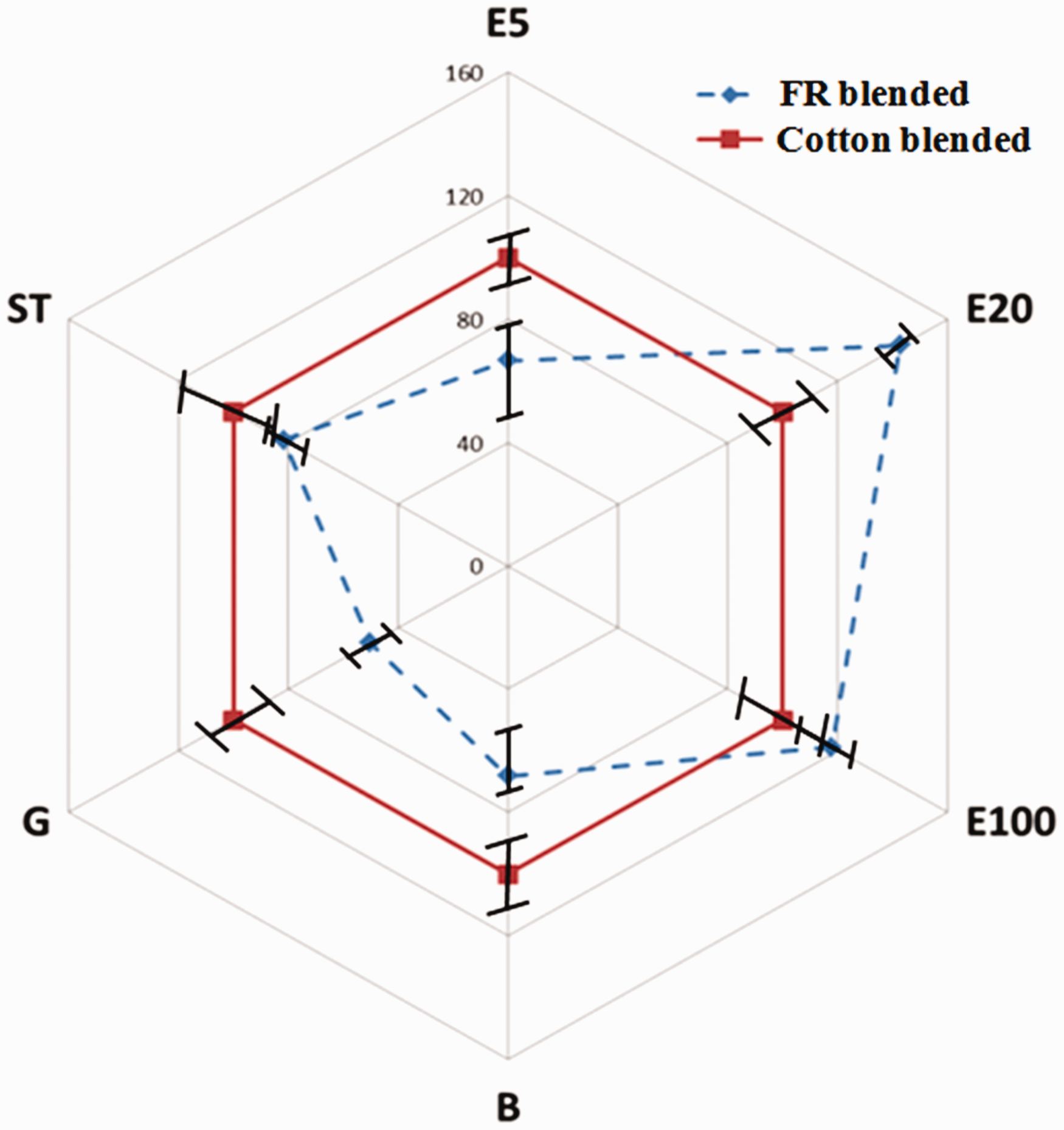
The bending rigidity of the FR rayon-blended fabric was lower than that of the cotton-blended fabric. This can be explained in a similar manner to that of the lower compressibility of the FR rayon-blended fabric, that is, the compact helical yarn structure of the FR rayon-blended yarns results in low bending rigidity due to the lower initial modulus by the helical yarn structure and smaller yarn diameter than the cotton-blended yarn with a thicker yarn structure. As shown in Figure 1, the FR rayon-blended yarn exhibits a more regular helical yarn structure than the cotton-blended yarn, which results in the lower initial modulus of the FR rayon-blended yarn, as shown in Table 3. In addition, the shear rigidity of the FR rayon-blended fabric was lower than that of the cotton-blended fabric. This was attributed to the FR rayon-blended helical yarn structure not obstructing the fabric from the in-plane deformation by the shear of the fabric. On the other hand, the extensibility (E20 and E100) of the FR rayon-blended fabric was higher than that of the cotton-blended fabric due to the lower modulus of the FR rayon-blended yarn than the cotton-blended yarns, as shown in Table 3. Based on the high extensibility and low shear modulus of the FR rayon-blended fabric, it was more extensible in the longitudinal and bias directions than the cotton-blended fabric. Despite the lower compressibility of the FR rayon-blended fabric, the lower bending rigidity and shear modulus with the higher extensibility of the FR rayon-blended fabric appeared to give it a superior tactile hand compared to the cotton-blended fabrics. Figure 10 presents images of the pilling experiment of the two types of woven fabrics. No meaningful differences in the surface feature by pills were observed between the FR rayon-blended and cotton-blended fabrics. The pilling grade of specimens 1 and 2 according to the KSK ISO standard was grade 4.
Images of pilling of the fabric specimens: (a) specimen 1 and (b) specimen 2.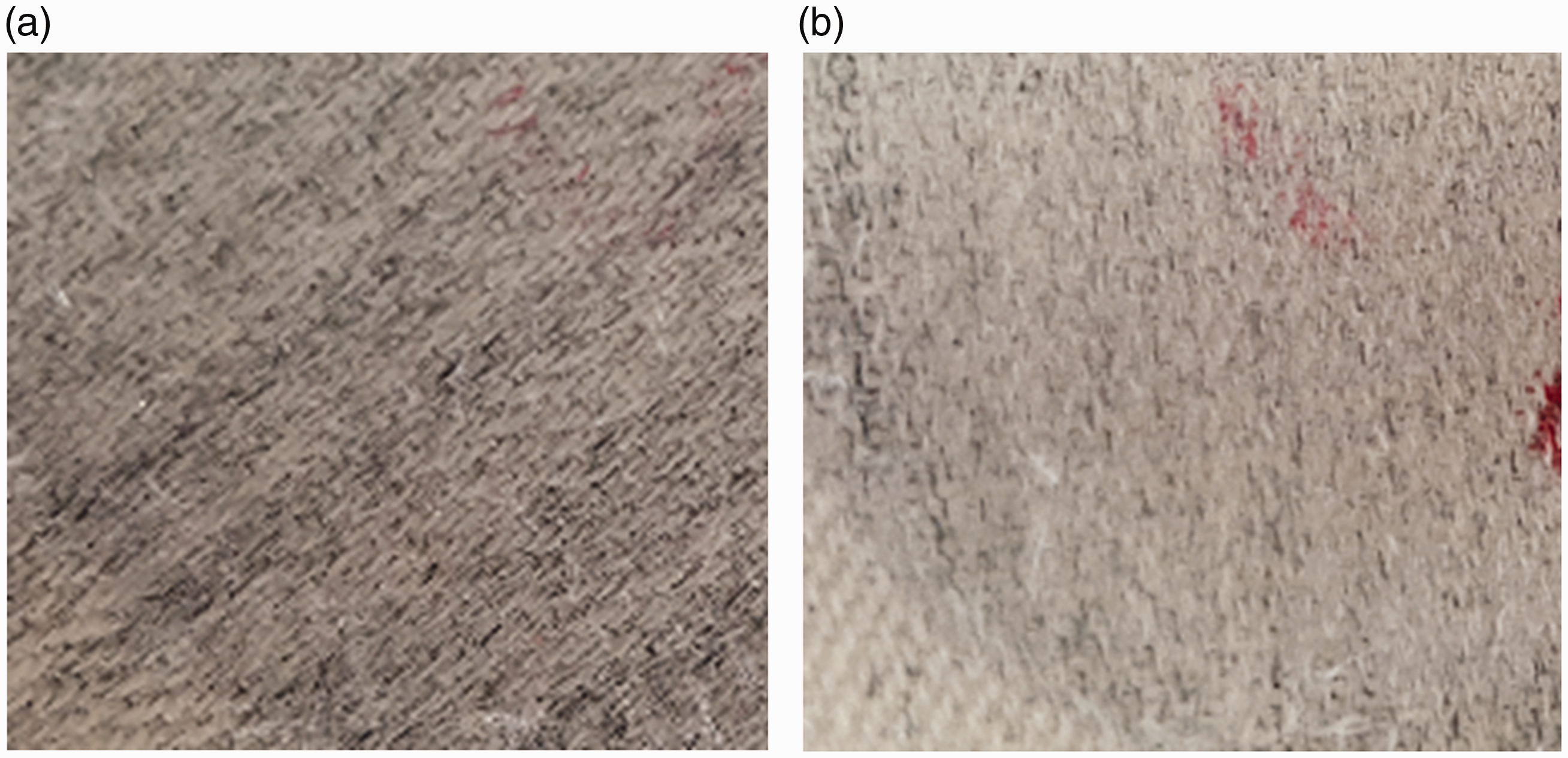
Conclusion
The thermal wear comfort of fabric made from FR rayon cotton and anti-static PET-blended yarn was examined using a thermal manikin and wearer trials. The FR rayon-blended fabric exhibited a lower Clo value than the cotton-blended fabric according to the thermal manikin experiment, which was attributed to lower porosity with less bulky and hairy yarn and smaller pores and voids in the FR rayon-blended fabric, resulting in a lower heat insulation rate of the FR rayon-blended fabric. This was consistent with the lower skin temperature of the FR rayon-blended fabric compared with the cotton-blended one worn by the human subject, which was attributed to the higher moisture vapor permeability of the FR rayon-blended fabric compared with the cotton-blended fabric. The microclimate humidity of the FR rayon-blended fabric during 40 min walking was much lower than that of the cotton-blended fabric, which can be explained by the lower porosity of the FR rayon-blended fabric compared with the cotton-blended one, enabling sweat vapor to pass through easily, that is, better moisture vapor permeability. This suggests that the FR rayon-blended fabric has a better wear comfort feel than the cotton-blended one due to the lower skin temperature and microclimate humidity than those of the cotton-blended fabric. The FR rayon-blended fabric was more extensible than the cotton-blended one, and had a superior tactile hand to the cotton-blended fabric due to lower the bending rigidity and shear modulus with higher extensibility. No significant differences in the surface feature by pills were observed between the FR rayon-blended and cotton-blended fabrics.
Declaration of conflicting interests
The authors declared no potential conflicts of interest with respect to the research, authorship, and/or publication of this article.
Funding
The authors received no financial support for the research, authorship, and/or publication of this article.