







Abstract
Seam slippage often occurs with some garments during the process of wearing or washing, which not only affects the appearance of the garment but also influences garment quality. The purpose of this study is to find out the factors that affect the seam slippage of garments. In order to make the test results closer to those of the garment itself, this study first proposed to make the fabric into a Japanese woman's prototype sample, in order to simulate the garments produced by a garment enterprise. Then, according to standards GB/T 13772.2-2008/ISO 13936-2: 2004 and GB/T 21294-2014, samples were made and seam slippage at the armhole and side seam was tested. Experimental results reveal that the factors that cause the seam slippage of garments are the fabric, seam type and sewing thread. According to the regression analysis, the seam type has a significant effect on the seam slippage of the armhole and side seam, with Pearson correlation coefficients of −0.715 and −0.650, respectively. Thickness, weight, weft density and weave type of the fabric are also important in terms of seam slippage. The weight of the fabric is more significant than other factors; the significant values at the armhole and side seam are 0.009 and 0.002, respectively. In the linear equation, it is shown that weft breaking strength of the fabric only impacts the seam slippage at the side seam. Sewing thread is another important factor for the seam slippage of garments, and its influence on the armhole is obvious; the larger the sewing thread linear density of polyester material is, the smaller the seam slippage is.
The quality of garment seams is one of the main indicators to evaluate the overall performance of garments; it affects the quality and appearance of garments. In the relevant clothing testing standard, the seam quality of the garment was usually judged according to testing the strength of the seam, the seam efficiency and the seam slippage. 1 Seam slippage is weft yarns slipping over warp, or warp yarns over the weft; when the seam is subjected to a given load, its value depends on the fabric construction and finishing applied. 2 It not only causes partial or full distortion of the garment appearance, but also reduces the usage life of the garment. 3 However, the seam slippage problem in silk products and fiber filament fabrics has not been solved effectively, which is a great problem for garment enterprises. Therefore, many researchers have paid attention to this problem. Different researchers have proposed different factors that influence seam slippage; three groups of the factors are identified as the fabric, yarn and sewing parameters.
As we all know, a garment is made of fabric. Proper selection of the fabric not only influences the quality of the garment and gives comfort to the wearer but also contributes to production and processing. The quality of the fabric directly affects the overall quality of the garment. It is well known that fabric is a complex material, and its quality is closely dependent on the structure of itself. The woven fabric structure parameters are warp and weft raw material, linear densities, settings, fabric weave and so on. 4 All parameters of the fabric structure have an effect on the seam slippage of fabric. 5
Lin 6 observed that the mechanical properties of fabric have a great influence on seam slippage, for example, the increasing of fabric thickness results in the decreasing of seam opening.
Other studies have also shown that weave structure and weft setting affected the slippage resistance of yarns at a seam.7–10 The findings of Gürarda's research 11 revealed that in twill fabric it is easier to produce seam slippage than in plain fabric. Malčiauskienė et al. emphasized that warp density has a little influence on seam slippage, and is mainly affected by weft density. 7
Seam slippage is the result of yarn slippage, which appears near the seam. Therefore, some researches revealed that seam slippage results from the character of yarn systems in the fabric, such as the bending rigidity of fabric yarns, warp and weft yarn elongation, type of weaving yarn,12–14 the friction between fabric yarns and sewing yarns, which is also a very important factor causing seam slippage, especially in very smooth fiber types, where it leads to a high yarn migration, and the seam slippage decreases with the increasing yarn-to-yarn friction.15,16
The conversion of two-dimensional (2D) fabric into three-dimensional (3D) garments not only involves a suitable selection of fabric, but also optimization of the sewing parameters, so as to yield a satisfactory garment. Sewing parameters include the seam type, sewing thread, stitch type, stitch density, needle size, the pressing foot and so on. The overall quality of a seams is essential for strength, durability, elasticity and the aesthetic appearance of garments 17 ; irrational seam design will affect the appearance and overall quality of garments, and can result in such issues as torn threads, seam slippage and seam pucker. 18 In short, seam performance is affected by sewing parameters and the ease of sew-ability of the fabric. 19
Although sewing thread weight is less than 1% by total weight of a sewn fabric, 20 it plays a very important role in the production of a garment; good sewing thread does not only affect the life expectancy of that garment, 21 but also improves the production efficiency of garment enterprises because of the lower breakage rate of sewing threads. Sewing thread is not like weave type, but its friction between yarns, fabric density and many other factors have a noticeable influence on seam slippage; in many situations a better sewing thread can be a solution to seam performance problems.22,23 In particular, when the fabric has a lower breaking strength, the fabric may break before the seam if it is sewed with a good sewing thread. 24
Besides sewing threads, reasonable seam type also needs to be designed for different clothes or different parts of the garment. Shi et al. 25 found that seam type has a significant influence on seam strength, and the seam efficiency of outdoor clothing can be increased by the increasing of stitches and the interaction among fabrics.
In other studies, sewing direction also has an effect on the seam slippage. Seam slippage in the weft direction is higher than that in the warp direction. With the increasing of the angle between the weft yarn and the sewing direction, seam slippage decreases.26,27
The needle is another important factor affecting the seam efficiency of a garment. Germanova and Petrov 18 showed that straining of the upper thread and load on the pressing foot affect the seam quality of fine fabrics, and using the appropriate needle size (No.80) can result in the optimal value. Because needle penetration force may damage the yarns of the fabric, just like stitch density in a seam, although increasing stitch density can produce more threads in the seam, and thus increase the seam strength, in some fabrics, too many stitches can damage the fabric by cutting the yarns in it, 28 so it is important to determine the value of the needle penetration force, thus avoiding sewing damage appearing on the fabric and influencing the quality of the garments.
As mentioned above, many researchers have focused on examining factors that influence the seam slippage of fabric, limited studies about the effects of these parameters together on garments. Due to the fact that the garment is a 3D structure, the seam of some parts of the garment is curved, so the joint between the yarns at the seam is not perpendicularly intersected as in the 2D structure of the fabric. Therefore, the amount of seam slippage measured by 2D fabric cannot fully represent the seam slippage in a 3D garment. In this paper, the shape of the garment is simulated by making the fabric into a Japanese woman's prototype sample (Figure 1), thereby ensuring that the experimental test results are closer to the actual values of the garments that are produced by enterprises. The purpose of this research was to find out the factors that affect the seam slippage of the garment, by using six fabrics, three sewing threads and four seam types to make samples, and multiple linear regression is used to analyze the experimental results to accurately find out the influence degree of the effect of each factor on the seam slippage at the armhole and side seam of the garment, and establish the relevant mathematical model.
Japanese woman's prototype sample garment.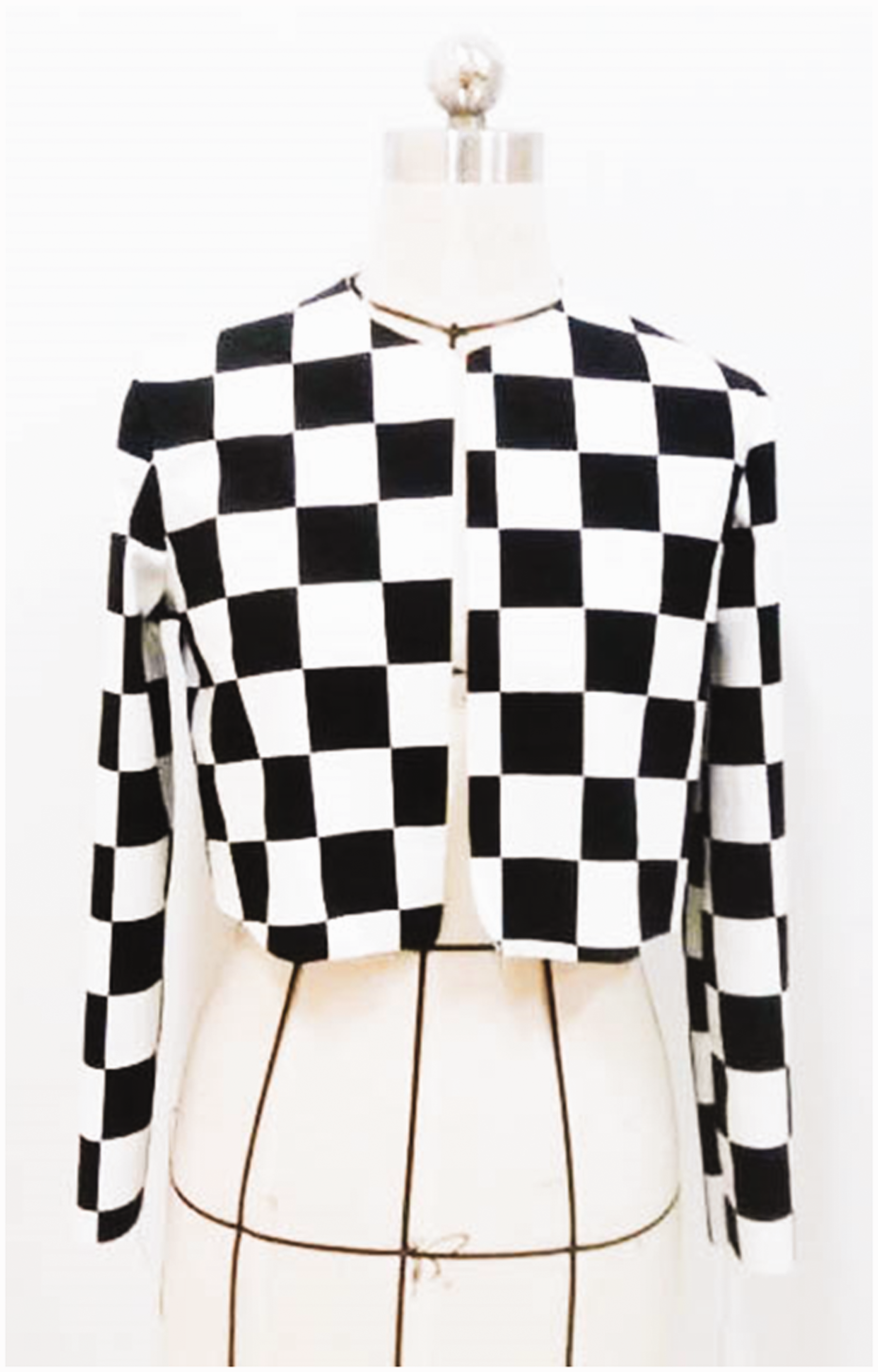
Experimental method
Sample design
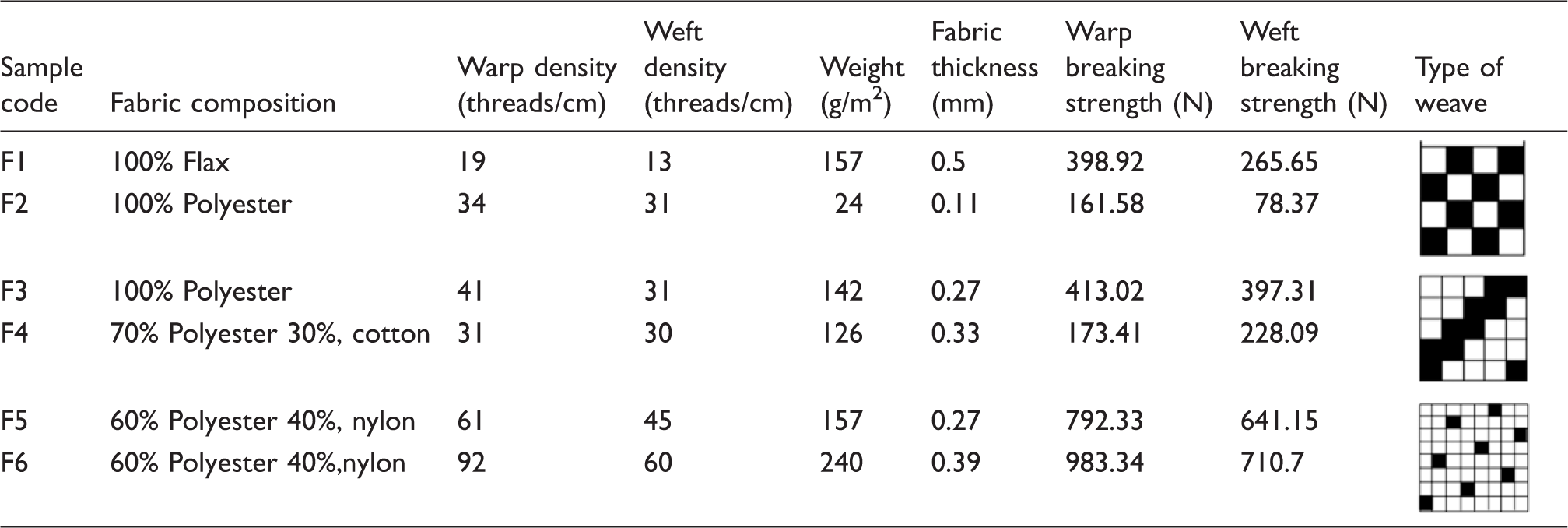
Structural properties of the test fabrics
Properties of the sewing thread used

According to the research, four kinds of commonly used seam types were selected in the experiment. The seam type and rows of stitches and the number of stitched fabric layers are shown in Figure 2. Sewing of the Japanese prototype sample clothes was carried out with 301 stitches, 4 stitch/cm stitch density and other factors that are commonly used in the clothing sewing process.
Seam types.
Then, samples were taken according to standards GB/T 13772.2-2008/ISO 13936-2: 2004 (Determination of the slippage resistance of yarns at a seam in woven fabrics–fixed load method) and GB/T 21294-2014 (Testing methods of physical and chemical performance of garments) to test the seam slippage at the armhole and side seam.
Experimental design
In the experimental study, seam slippages were chosen to represent the performance of garment seams. The pr-humidification of the cut test specimens and the test environment are conditioned in the standard atmosphere of 65 ± 2% relative humidity and 20 ± 2℃.
The load values for the test fabrics
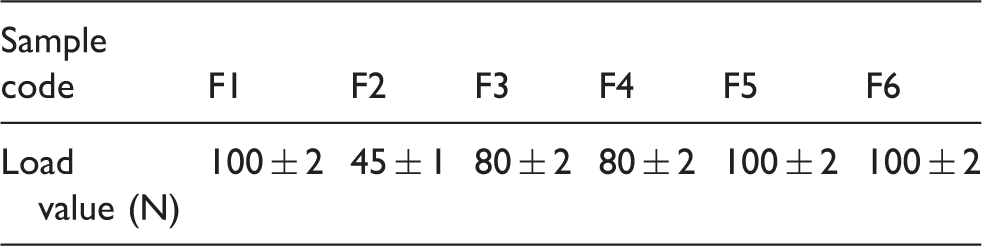
Then through the statistical methods of multiple linear regression analysis, the influence of factors on seam slippage is discussed.
Results and discussion
Factors affecting the seam slippage at the armhole of the garment
Figure 3 shows the test results of seam slippage at the armhole. It is easy to see that the seam slippage result of seam type T1 is much higher than the others, meaning that regardless of the type of experimental fabrics and sewing threads, sewing is performed at the armhole with the seam type T1, such that the amount of the seam slippage is the largest. When the experimental fabric is sewn with the sewing threads L1 and L2, the seam slippage amount at the armhole is T2 > T3 > T4. The results show that the seam type has an effect on the seam slippage at the armhole of the garment.
The test results of seam slippage at armhole.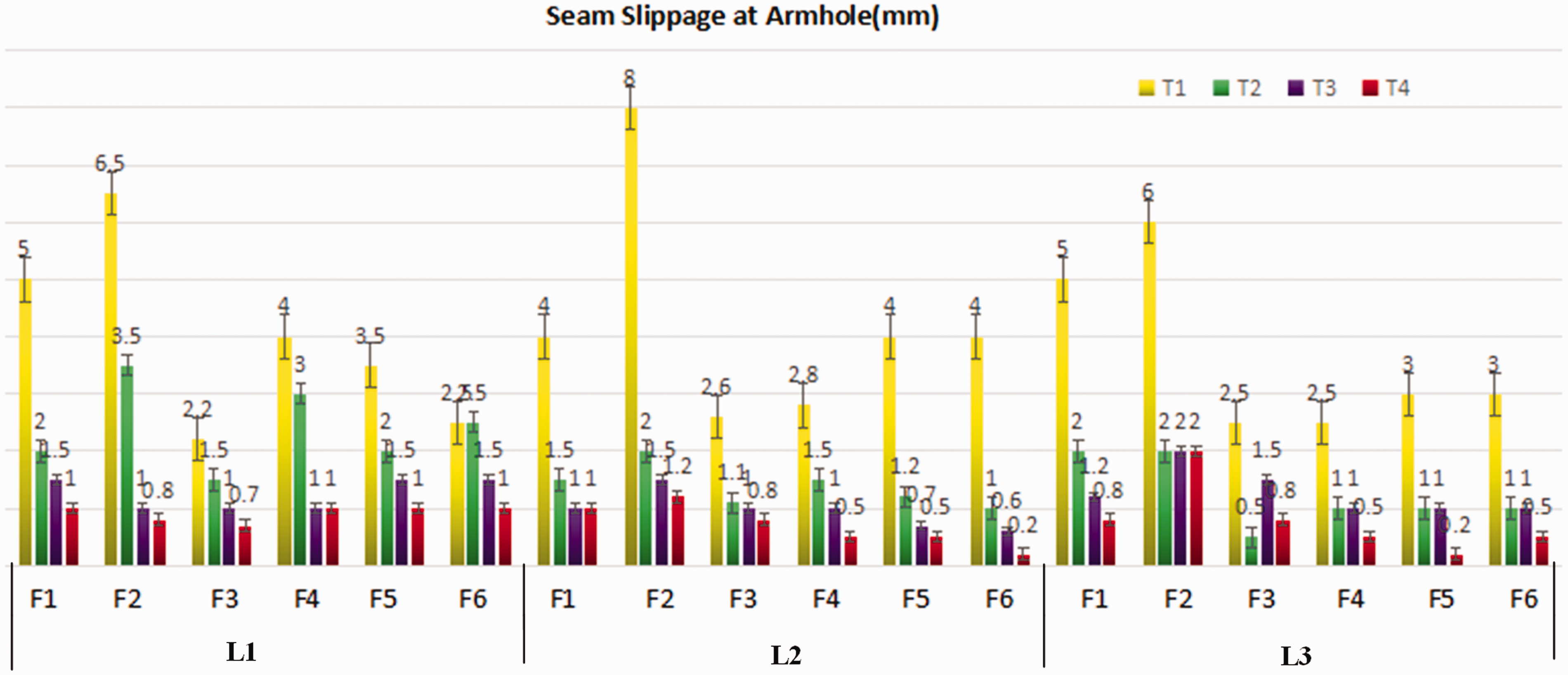
In the case of the same seam type and sewing thread, compared with the other five fabrics, fabric F2 has a large amount of seam slippage at the armhole; in particular, when using seam type T1, the armhole sewn with the three kinds of experimental sewing threads, all experimental results exceeded the standard allowable 5 mm. Table 1 shows that the weight, thickness and the warp and weft breaking strength of fabric F2 are much smaller than those of other fabrics. It can be inferred that the seam slippage of the fabric may be related to its weight, thickness and warp and weft breaking strength.
Under the condition of the same fabric and seam type, the armhole sewn with sewing thread L1 has a large seam slippage, In particular, when the seam type is T2, the result of seam slippage with sewing thread L1 in Figure 3 is significantly higher than the result with sewing threads L2 and L3; seam types T3 and T4 also have similar results. As can be seen from Table 2, although the three sewing threads are made of polyester, the sewing thread linear density and breaking strength of sewing thread L1 are significantly smaller than the other two kinds, so the result shows that some properties of the sewing thread may also affect the seam slippage of the armhole.
Correlation of the factors and the seam slippage at the armhole
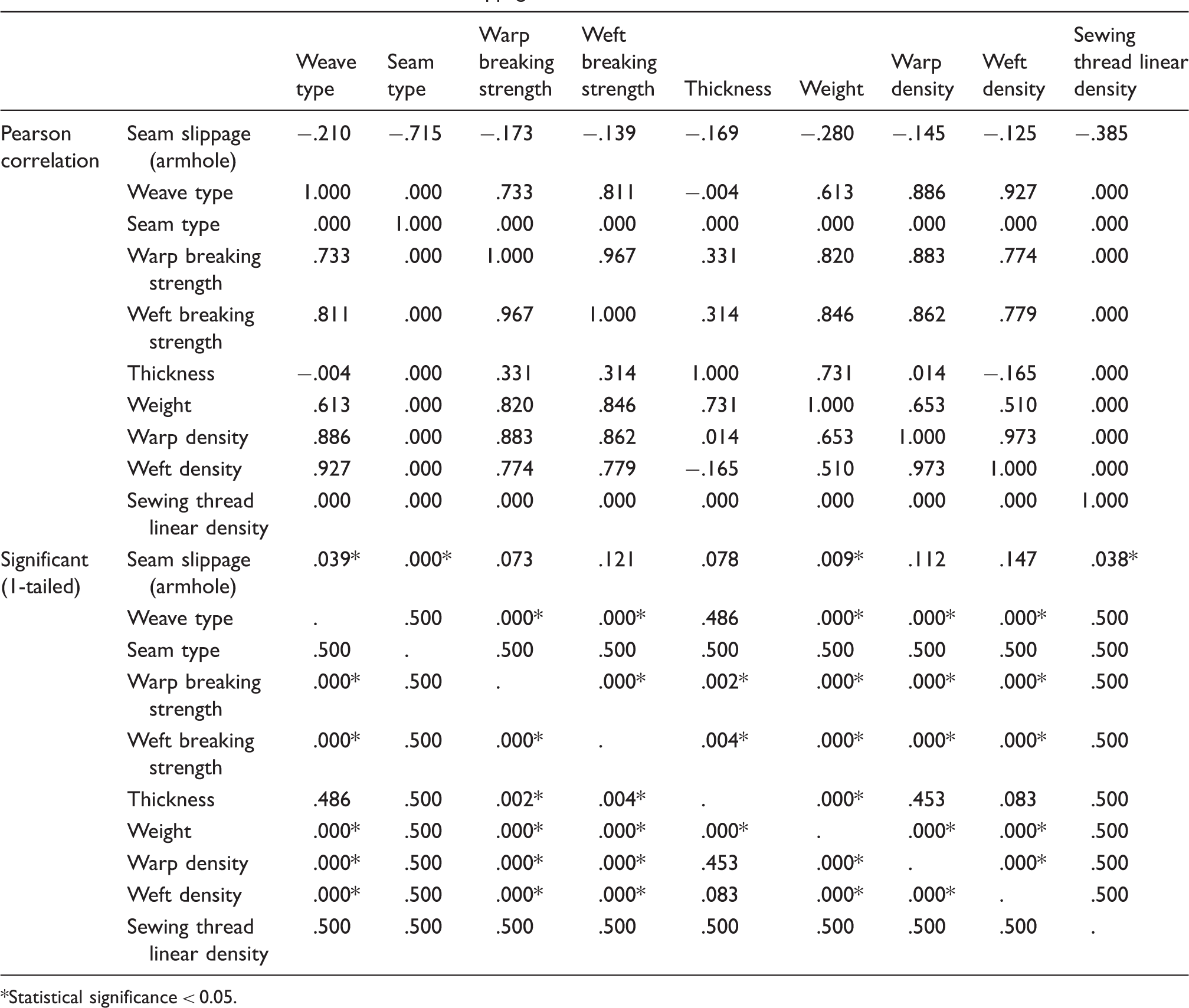
Statistical significance < 0.05.

Coefficients a
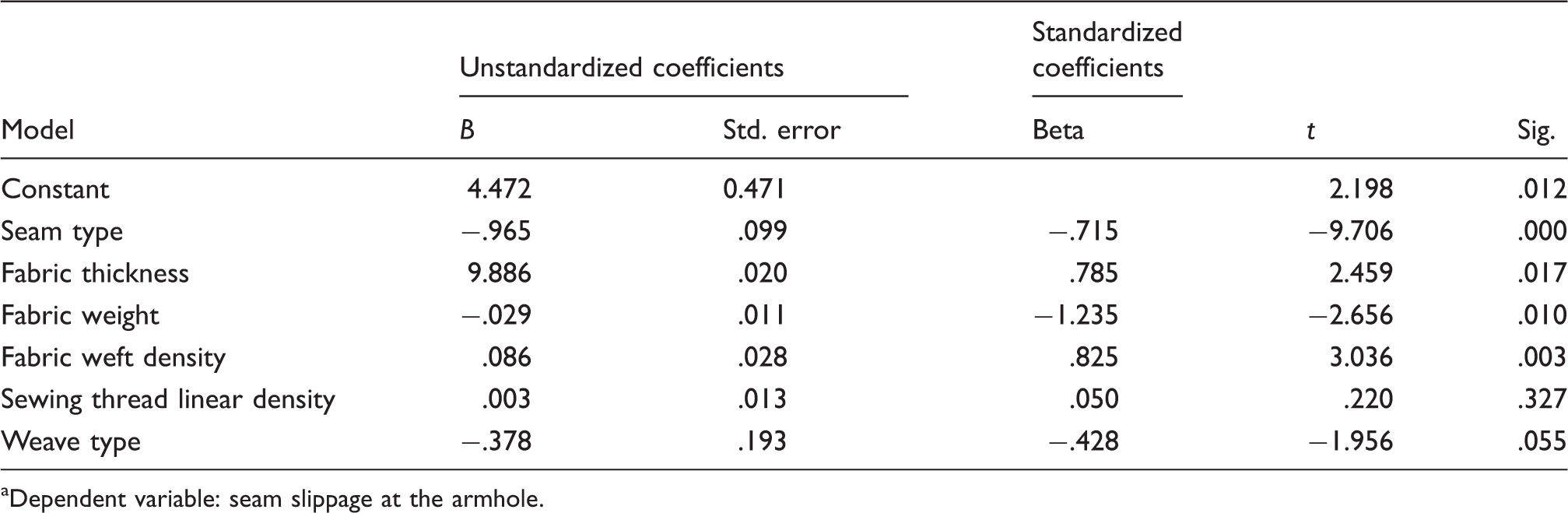
Dependent variable: seam slippage at the armhole.
According to above analysis, it is obvious that the seam type has the strongest influence on seam slippage at the armhole. Through analysis these four kinds of seam types, it is revealed that seam type T1 has two layers of fabric and a sewing thread. When compared with the other three kinds of seam types, it has fewer fabric layers and sewing threads, especially compared with seam type T4, which has four layers of fabric and two sewing threads. Therefore, when seam type T1 is used, the result of seam slippage is high due to having fewer fabric layers and fewer sewing threads on the seam; the weaker the interaction between the fabric and the seam, the higher the seam slippage. Fabric physical properties play a very important role in seam slippage. Seam slippage at the armhole is affected by the weave type, weight, thickness and weft density of the fabric. Among these, the weight of the fabric is more significant for the seam slippage at the armhole; lightweight fabrics are more likely to cause seam slippage than heavy fabrics because the fabric yarns are more slender. Just like fabric F2, because its weight is much smaller than other fabrics, it has a large amount of seam slippage in the case of the same seam type and sewing thread. The sewing thread is another important factor that influences the seam slippage at the armhole, especially the linear density of the sewing thread; from the experimental results, we can see that the larger the sewing thread linear density of polyester material, the smaller the seam slippage.
Factors affecting the seam slippage at the side seam of the garment
It can be seen from Figure 4 that in the case of the same fabric and sewing thread, the side seam of the garment sewn with the seam type T1 has the largest seam slippage, the side seam slippage obtained by the seam types T2 and T3 is relatively close and seam type T4 is the smallest. For example, when fabric F2 uses seam type T1, the measured slippage amount at the side seam is 12, 9, 6.5 mm; these results far exceed the standard requirements, and it is basically judged that the amount of seam slippage at the side seam made of fabric F2 is unacceptable. However, when fabric F2 uses seam type T4, the seam slippage at the side seam is 2.8, 2, 3 mm, respectively. The results are not only reduced as compared with the seam slippage with seam type T1, but also it is important that these results are within the scope of the standard requirements. Therefore, it can be said that the effect of the seam type on the seam slippage at the side seam is relatively significant, and by selecting an appropriate seam type, the problem of unsatisfactory seam slippage can be effectively avoided.
The test results of seam slippage at the side seam.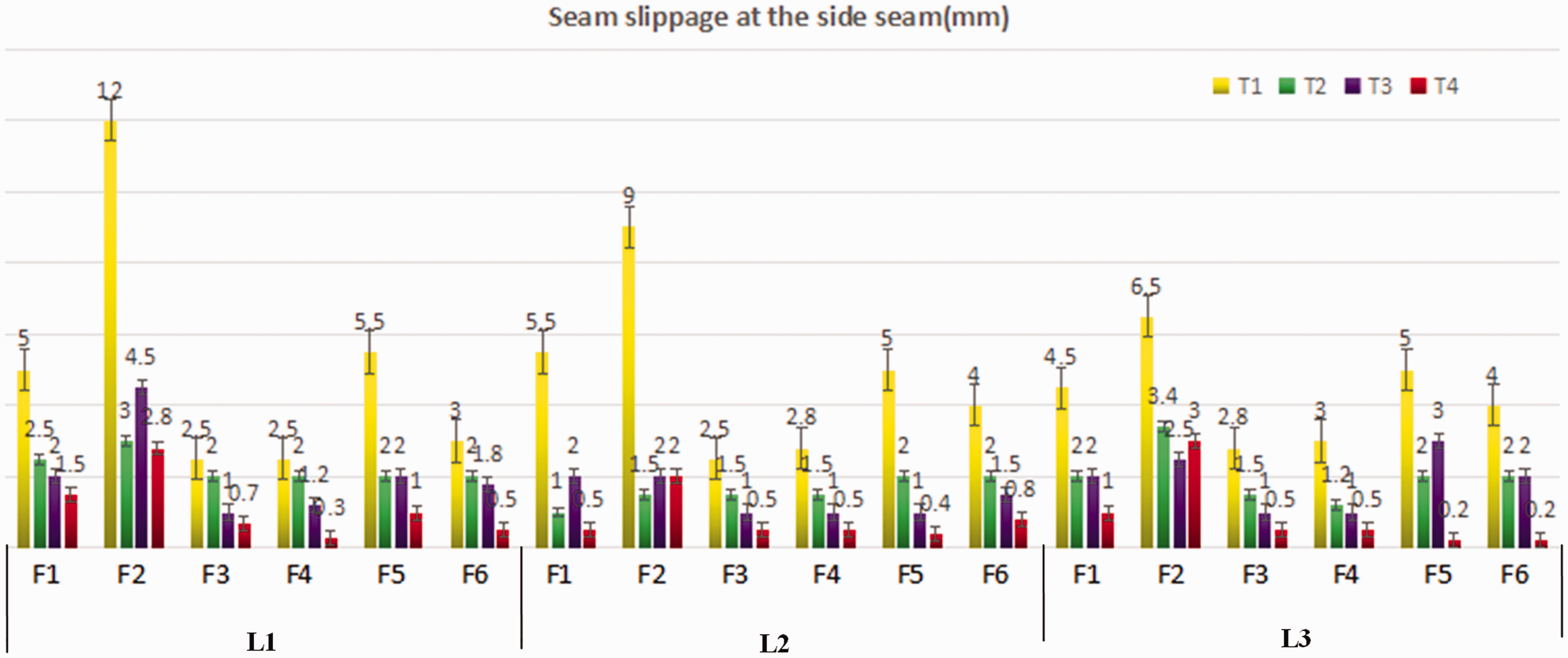
When the same seam type and sewing thread are used, the seam slippage at the side seam made by fabric F2 is basically the maximum, and the result of fabric F4 is 0.3–3 mm, which is relatively small. As seen from Table 1, the warp and weft density and the warp breaking strength of fabric F2 are close to that of F4; they differ in weave type, weight, thickness and weft breaking strength of the fabric, which may be the reason for the large difference in seam slippage at the side seam.
Under the same seam type and fabric circumstances, different sewing threads will produce different seam slippage on the side seam, and there is no rule to follow. For example, when seam type T2 is used, the seam slippage at the side seam sewed with sewing thread L1 is large; when adopting seam type T3, sometimes sewing thread L1 results in a larger seam slippage, while sometimes it is sewing thread L3; the other two types of seam have similar results. This means that the effect of the sewing thread on the seam slippage at the side seam is not particularly significant or has no effect.
Correlation of the factors and the seam slippage at the side seam
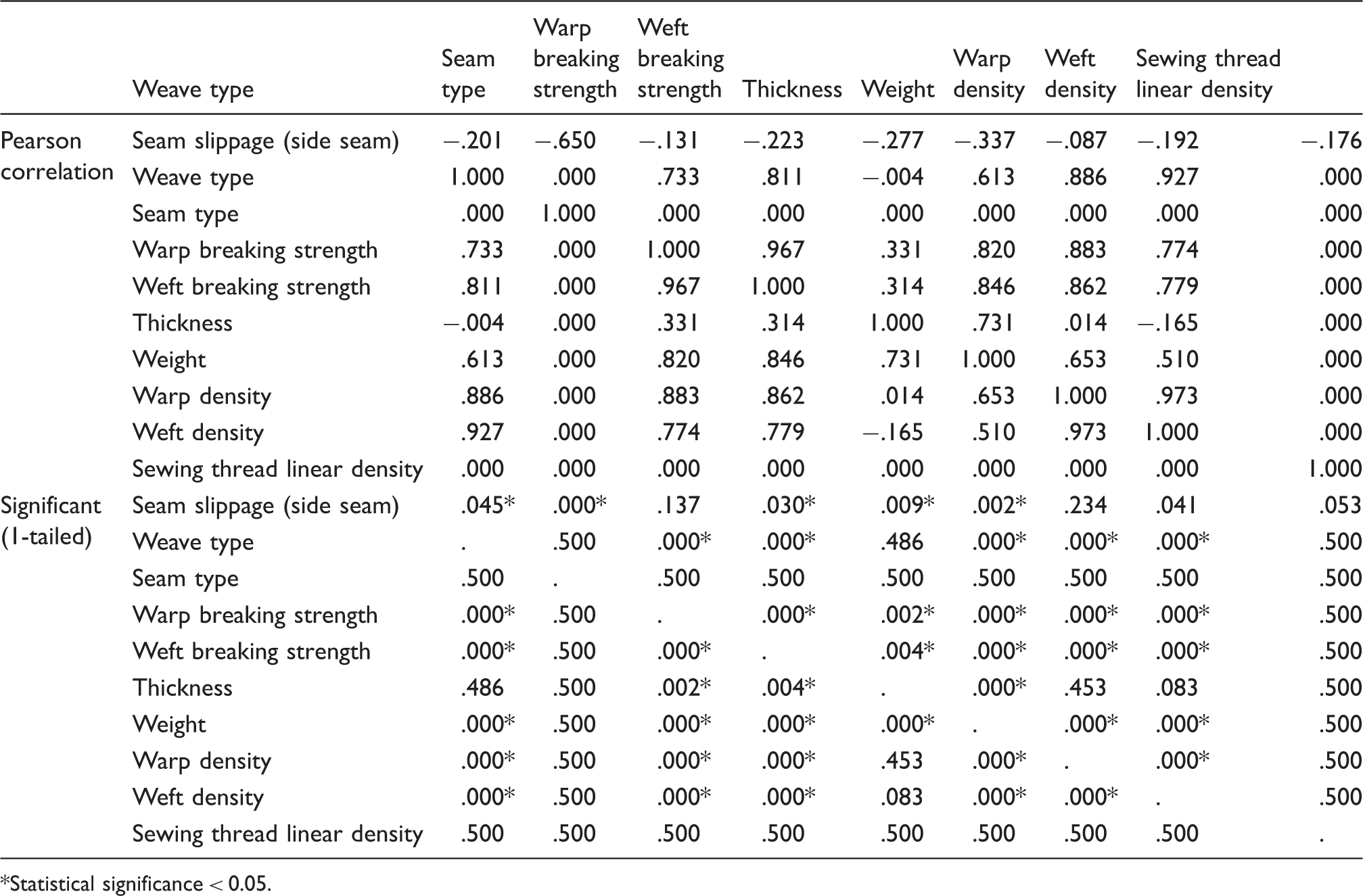
Statistical significance < 0.05.

Coefficients a
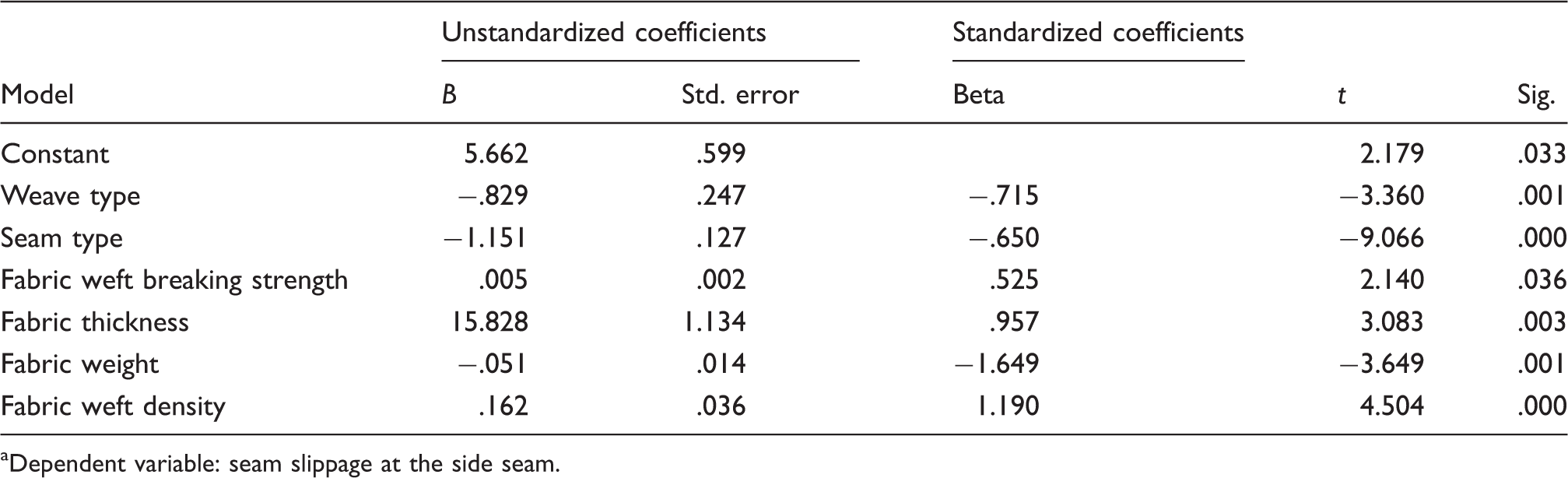
Dependent variable: seam slippage at the side seam.
Based on the above analysis, the factors affecting the seam slippage at the side seam are mainly the seam type and fabric, while the sewing thread has less influence. The side seam of the garment sewn with seam type T1 has the largest seam slippage; the results of types T2 and T3 are relatively close, because the number of fabric layers and sewing threads are closer to each other, while the result of seam type T4 is still the smallest. The weave type of the fabric is also an important factor affecting the seam slippage of the garment. Fabric with a different weave type due to the different amount of warp and weft interlacing makes the degree of sparsity and resistance between fabric yarns different, resulting in different seam slippage. In addition to the thickness and weight of the fabric having a significant effect on the seam slippage at the side seam, the weft density and weft breaking strength of the fabric also have an effect on it. In the seam slippage test at the side seam of this experimental sample, in the test process, the weft yarn of the fabric is mainly subjected to tensile force; therefore, the weft density and weft breaking strength of the fabric influence the seam slippage at the side seam.
Conclusion
In this study, the factors causing the seam slippage of garments can be divided into three groups. These are the fabric, seam type and sewing thread. Through the multiple linear regression analysis of the experimental results, the factors affecting the seam slippage of garments are obtained, and the degree of their influence is also clearly shown in the linear equation.
The properties of the fabric have a certain effect on the seam slippage of the garment. It can be seen from the regression model that the fabric thickness, weight, weft density and weave type are also important in terms of seam slippage. Among them, the weight of the fabric is more significant; the seam slippage at the armhole and side seam had significant values of p = 0.009, 0.002, respectively. Lightweight fabrics are more likely to cause seam slippage than heavy fabrics because the fabric yarns are more slender. In the linear equation, it shows that weft breaking strength of the fabric only impacts the seam slippage at the side seam. In this study, when testing the seam slippage at the side seam, the weft yarn of the fabric is mainly subjected to tensile force, so the influence of weft breaking strength on the seam slippage of the side seam is more significant than that of armhole.
According to the regression analysis, the seam type has a significant effect on the seam slippage of the armhole and side seam, with Pearson correlation coefficients of −0.715 and −0.650, respectively. Fabric F2 can prove this well, as can be seen from Figures 3 and 4. Through analysis, seam type T1 has fewer fabric layers and fewer sewing threads on the seam when compared with other seam types, so the weaker the interaction is, the higher the seam slippage. The results reveal that, by changing the seam type to increase the interaction between the seam and fabric, the seam slippage can be effectively decreased. Therefore, in the process of producing garments, garment enterprises can select suitable seam types according to different stitching parts, which can effectively improve the seam quality of garments.
Sewing thread is another important factor that influences the seam slippage of garments. As can be seen from Tables 4 and 6, the influence of sewing thread linear density on the seam slippage at the armhole is obvious, with a Pearson correlation coefficient of −0.385, but has no significant effect on the side seam, with a Pearson correlation coefficient of less than 0.2. According to the experimental results, the larger the sewing thread linear density of polyester material is, the smaller the seam slippage.
In the present study of the seam slippage of garments, some sewing parameters were selected according to the garment company; for further studies, it will be beneficial to explore the seam slippage of any type of fabric suitable for different uses by utilizing different sewing parameters.
Footnotes
Authors’ note
Daoling Chen and Pengpeng Cheng are also affiliated with Silpakorn University, Thailand.
Declaration of conflicting interests
The authors declared no potential conflicts of interest with respect to the research, authorship and/or publication of this article.
Funding
The authors disclosed receipt of the following financial support for the research, authorship and/or publication of this article: This work was supported by the Fuzhou Department of Science & Technology (Grant No. 2017-G-112), the Fujian Department of Education (Grant No. JAS170368), the Collaborative Innovation Center of Modern Clothing Technology, Minjiang University (Grant No. MJKFFZ201708) and the Fujian Department of Education (Grant No. JAT170446).