







Abstract
New types of poly(vinylamine-co-acrylic acid) macromolecule dyes were designed and synthesized based on poly(vinylamine-co-acrylic acid) and reactive dyes. The structures of the synthesized dyes were characterized by ultraviolet-visible spectroscopy, infrared spectroscopy, proton nuclear magnetic resonance and thin layer chromatography. They were applied for dyeing cotton fibers and high fixations were achieved due to their reactive abilities. The dyed samples showed excellent fastness to washing and rubbing and the light fastness of red, blue and yellow poly(vinylamine-co-acrylic acid) dye could reach grades 3–4, 4 and 6–7, respectively.
Keywords
Reactive dyes are the most important class of dyes since they can be linked onto cotton fibers through covalent bonds, and the colored fibers have high fastness to wet treatment.1–3 However, most dyes exhibit modest technical properties, especially relatively low fixation, probably resulting from the presence of a single reactive group in the molecule. The hydrolysis of the reactive group in the process of storage and application decreases the fixation of reactive dyes on fibers and large fractions of reactive dyes are wasted during the dyeing process.4,5 Residual dyes in the dyeing solution not only waste resources, but also pollute the environment. When the reactive dyes can be almost completely fixed on fibers after dyeing application, the utility of the dyes can be maximized and the environmental pollution caused by dye wastewater can be resolved.6,7
Over the last two decades, researchers have been trying to achieve high fixation of reactive dyes on fibers.8–10 Various treatments, such as ultraviolet, ultrasonic and gamma radiation, have been used to improve the color strength and fastness properties of dyed fabric.11–14 Due to the outstanding physical properties and excellent fixation under suitable conditions, polymeric macromolecular dyes have received much attention in recent years.15,16 The application of these dyes has occurred in various fields, including the textile industries, inkjet printing, biological fields and so on.17–19 Our research group has developed various polyamine dyes by incorporating different chromophores on polyallylamine, polyethylene polyamine or polyvinylamine (PVAm).20–22 They can be prepared by using polyamine macromolecules as the backbones and halogenated aromatic compounds or reactive dyes as the chromophores. Tang et al. 23 invented a water-soluble polymeric dye based on polyallylamine and 2,4-dinitrochlorobenzene, which was evaluated in the dyeing of cotton and silk, and the fixation could reach 99% by the use of a crosslinking agent. Yang et al. 24 reported a series of macromolecular dyes synthesized by the reaction of poly(acrylamide-co-vinylamine) with reactive dyes, and the fixations on cotton were more than 95% when a crosslinking agent was added. All these dyes possess excellent high fixations on fibers via covalent bonds, with the crosslinking agent acting as a bridge between the fibers and the dyes. However, most polyamine macromolecular dyes have poor light fastness properties on cotton fibers. Compared with reactive dyes, polyamine macromolecular dyes containing large residual amino and amide groups with electron-donating abilities are more prone to photooxidation reaction, which limits their light stability and application in industry. 25
It has been suggested that ionic bonds formed between cationic and anionic groups facilitate the transfer of energy of the excited state of the dyes, thereby reducing the rate of photodegradation of the dyes. 26 Poly(vinylamine-co-acrylic acid) [P(VAm-AA)] is an amphoteric polymer containing both amino and carboxyl groups, which can provide straightforward synthetic approaches to the materials of this type.27,28 Therefore, in this work, the carboxyl group was incorporated into the backbone of the PVAm macromolecule dye. New types of P(VAm-AA) macromolecule dyes were synthesized by the grafting reaction of P(VAm-AA) with three different reactive dyes, respectively. Then, the macromolecular dyes were applied for dyeing cotton fibers by using the dip–pad–steam process without a crosslinking agent. The dyeing properties, namely dry and web rub fastness and wash fastness, were examined as well as the light fastness.
Experimental methods
Materials and instruments
PVAm oligomer (GPC, Mn 1240.5, PDI 1.39) with 79.5% amino group content was prepared using the hydrolyzation of poly(N-vinylformamide) in sodium hydroxide solution according to a previous study. 29 N-Vinylformamide (NVF) was purchased from Sigma-Aldrich Co. and acrylic acid (AA) was purchased from Tianjin Bodi Chemical Reagent Co. 2,2-Azobisisobutyronitrile (AIBN), 1-dodecanethiol (DDM), N,N-dimethylformamide (DMF) and ethyl acetate (EtOAc) were obtained from Tianjin Fuyu Chemical Reagent Co. Cyanuric chlorine, 1-amino-8-naphthol-3,6-disulfonicacid (H-acid), 2-aminobenzenesulfonic acid, 2-aminobenzene-1,4-disulfonic acid, 3-methyl-1-(4-sulfonphenyl)-5-pyrazolone and 4,6-diaminobenzene-1,3-disulfonic acid were supplied by Zhejiang Shunlong Chemical Co. All other chemicals used in this study were of synthetic grade.
Fourier transform infrared (FT-IR) spectra were recorded on a JASCO 430 spectrometer (JASCO, Japan) using KBr pellets. Ultraviolet-visible (UV-Vis) spectra were recorded using an HP-8453 UV-Vis spectrometer (Hewlett-Packard, USA). The degree of substitution of the macromolecular dye was measured on a thin layer chromatography (TLC) densitometer (CD60; Desaga, Germany). Atmospheric pressure ionization electrospray mass (API-ES-Mass) spectra were carried out on an HP1100 mass spectrometer (Hewlett-Packard, USA). The average molecular weight was measured on an Agilent Technologies 1200 series GPC (Agilent, USA) and water was used as the eluent at a flow rate of 0.5 mL/min with narrow polyethylene glycol as the calibration standard. Cotton dyeing was operated using 1002 (Roaches Co., UK) Padding, Drying, Heat-setting and Steam Combination Apparatus.
Synthesis of dyes
Synthesis of poly(vinylamine-co-acrylic acid)
P(VAm-AA) oligomer (GPC, Mn 1088.2, PDI 1.32) with 78.7% amino group content was prepared by precipitation polymerization and hydrolyzed in NaOH solution according to the literature. 29 A mixture of NVF (3.5 g) and AA (1.5 g) dissolved in DMF (6 mL) and acetic ether (25 mL) solution was deaerated by nitrogen purge. When the temperature was increased to 65℃, AIBN (0.5 g) and DDM (0.5 g) were added. The resultant mixture was maintained under stirring at 65℃ for 6 h and the copolymer was precipitated in the reaction solution gradually. When the reaction was completed, the resulting polymer was collected by filtration and dried under vacuum. Then, the copolymer product of poly(N-vinylformamide-co-acrylic acid) [P(NVF-AA)]) was dissolved at 10 wt% in deionized water and excess NaOH was added with a 2:1 NaOH/amide group molar ratio. The resulting solution was kept at 70℃ under stirring and maintained for 20 h until the solution became clear. The mixture solution was poured into 200 mL of methanol and the resulting precipitate was dissolved in water and adjusted to pH 2.0 using 6 mol/L of HCl. Finally, the polymer was precipitated from methanol and dried in vacuum at 40℃. GPC was used to measure the average molecular weight and the amination degree was determined by the measurement of the chlorine content of the product. 30 Yield: 85.6%. IR (KBr, cm−1): 3424 (N–H), 2926 (–CH2–), 2071 (–NH3+), 1624 (C=O), 1534 (N–H), 1402(C–N), 1252 (C–O).
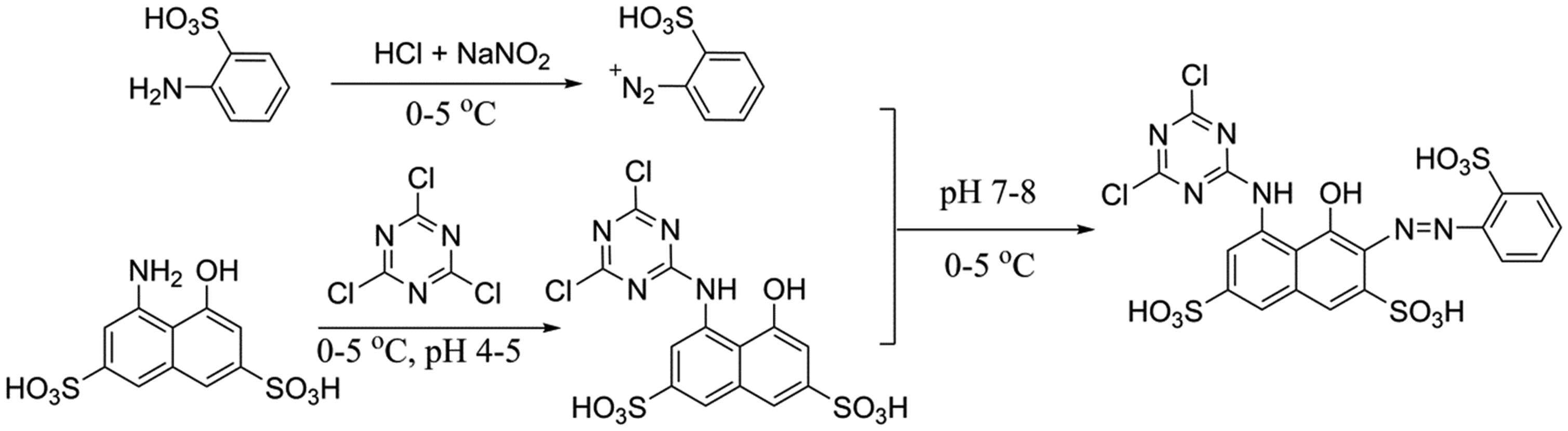
Synthesis of reactive dye DR
NaNO2 (0.0105 mol) was added to a precooled solution of 0.01 mol 2-aminobenzenesulfonic acid and then the mixture was added to a system containing 2.5 mL of concentrated hydrochloric acid (37%, w/w) and 20 mL of water that had been cooled to 0–5℃. The reaction mixture was stirred for 30 min until no chromogenic reaction to the Erich reagent was detectable. Excess nitrous acid was decomposed by sulfamic acid to give the solution of the diazo salt. Afterwards, cyanuric chloride (0.0103 mol) was introduced into 20 g of ice cubes with 2 mL of water and the mixture was stirred at a temperature of 0–5℃. After stirring for 30 min, 0.01 mol H-acid was added. The temperature of the mixture was maintained at 0–5℃ and the pH was maintained at 4–5 using 10% Na2CO3 aqueous solution. The condensation reaction mixture was stirred for about 1 h until no chromogenic reaction to the Erich reagent was detectable. Finally, the solution of diazo salt made above was added slowly to the mixture solution at a temperature of 0–5℃ and pH 7–8 by adding 10% Na2CO3 aqueous solution. TLC was used to monitor the completion of the coupling reaction (n-PrOH:i-BuOH:EtOAc:H2O, 2:4:1:3, v/v). After the addition of potassium acetate (15% w/v), the solid product was isolated, collected by filtration, washed with ethanol three times and dried in vacuum. Yield: 82.6%. R f = 0.63. λmax = 508 nm (H2O). εmax = 28.1 L·g−1·cm−1 (H2O). IR (KBr, cm−1): 3446 (N–H and O–H), 1625 (N–H), 1565 (N=N), 1489 (triazine), 1325 (C–N), 1215 (C–O), 1204, 1048 (–SO3Na). Proton nuclear magnetic resonance (1H NMR) (dimethyl sulfoxide-d6 [DMSO-d6]): δ 15.81 (s, 1H, N–H in hydrazone), 13.45 (s, 1H, Ar–NH), 8.90 (s, 1H, Ar−OH), 7.23−8.35 (m, 7H, Ar−H). MS (API-ES): m/z = 651.4, found 650.0 ([M–H]−), 324.0 ([M–2H]2–/2), 216.9 ([M–3H]3–/3).
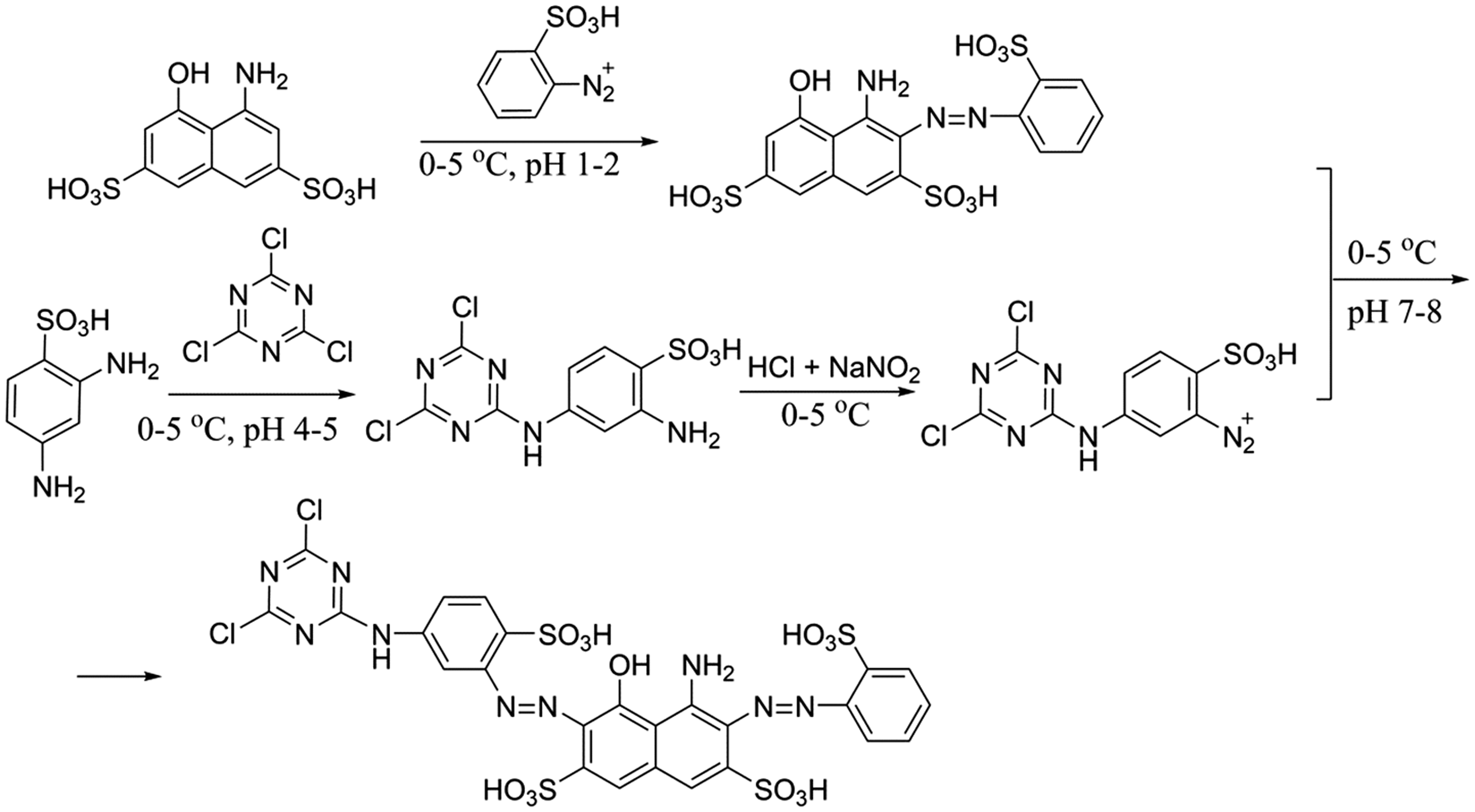
Synthesis of reactive dye DB
The first diazotization reaction of 2-aminobenzenesulfonic acid was the same as that of reactive dye DR. Then, a solution of H-acid (0.01 mol) was added slowly to the diazo salt at 0–5℃ and pH 1–2. The coupling reaction mixture was stirred for about 5 h and TLC was used to monitor the completion of the reaction. Afterwards, the condensation reaction of cyanuric chloride and 2-aminobenzene-1,4-disulfonic acid was essentially the same as the reaction of cyanuric chloride and H-acid of reactive dye DR. After the reaction was completed, 2.5 mL of concentrated hydrochloric acid and 0.0105 mol of NaNO2 were added into to the solution. The reaction mixture was stirred for 30 min until no chromogenic reaction to the Erich reagent was detectable. Finally, the solution of diazo salt was added slowly to the mixture solution of the coupling reaction made above at a temperature of 0–5℃ and pH 7–8 by adding 10% Na2CO3 aqueous solution. The synthesized reactive dye DB was isolated according to the same process described in the synthesis of the reactive dye DR. Yield: 84.5%. R f = 0.66. λmax = 600 nm (H2O). εmax = 33.6 L·g−1·cm−1 (H2O). IR (KBr, cm−1): 3441 (N–H and O–H), 1621 (N–H), 1555 (N=N), 1489 (triazine), 1341 (C–N), 1265 (C–O), 1196, 1045 (–SO3Na). 1H NMR (DMSO-d6): δ 15.90 (s, 1H, N–H in hydrazone), 11.41 (s, 1H, Ar–NH), 11.24 (s, 1H, Ar–NH), 10.42 (s, 1H, Ar−OH), 7.04−8.07 (m, 9H, Ar−H). MS (API-ES): m/z = 850.6, found 849.0 ([M–H]-), 424.5 ([M–2H]2–/2), 282.1 ([M–3H]3–/3).
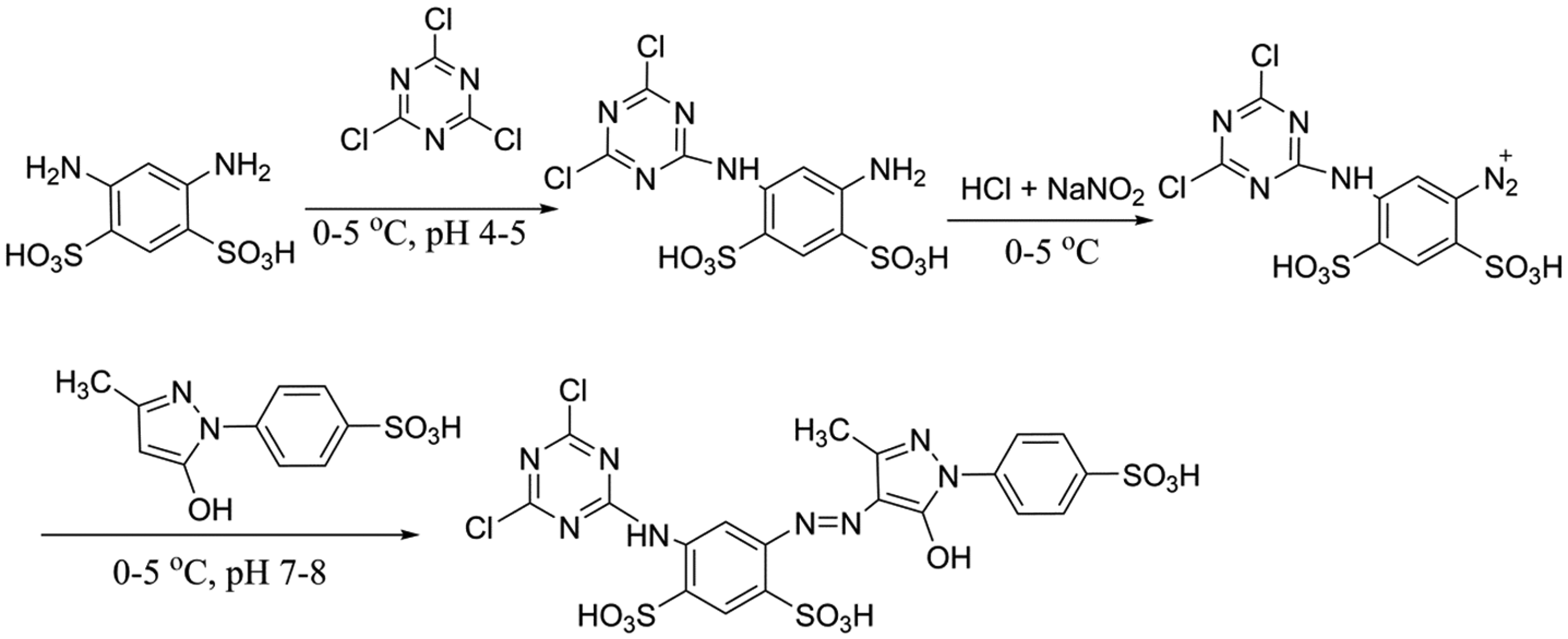
Synthesis of reactive dye DY
The first condensation reaction of cyanuric chloride and 4,6-diaminobenzene-1,3-disulfonic acid was essentially the same as the reaction of cyanuric chloride and H-acid of reactive dye DR. After the reaction was completed, 2.5 mL of concentrated hydrochloric acid and 0.0105 mol of NaNO2 were added into the solution. The reaction mixture was stirred for 30 min until no chromogenic reaction to the Erich reagent was detectable. Finally, the resultant diazo salt was added to a 0.01 mol 3-methyl-1-(4-sulfonphenyl)-5-pyrazolone solution in 20 mL of water at 0–5℃ and at pH 7–8 by adding 10% Na2CO3 aqueous solution. The synthesized reactive dye DY was isolated according to the same process described in the synthesis of reactive dye DR. Yield: 81.8%. R f = 0.67. λmax = 389 nm (H2O). εmax = 26.4 L·g−1·cm−1 (H2O). IR (KBr, cm−1): 3455 (N–H and O–H), 1670 (C=O), 1622 (N–H), 1540 (N=N), 1498 (triazine), 1421, 1396 (pyrazol), 1337 (C–N), 1231 (C–O), 1197, 1033 (–SO3Na). 1H NMR (DMSO-d6): δ 14.11 (s, 1H, N–H in hydrazone), 10.98 (s, 1H, Ar–NH), 8.64 (s, 1H, Ar−OH), 7.69–8.21 (m, 6H, Ar−H), 2.34 (m, 3H, −CH3). MS (API-ES): m/z = 681.4, found 680.0 ([M–H]−), 340.0 ([M–2H]2–/2), 226.3 ([M–3H]3–/3).
Synthesis of poly(vinylamine-co-acrylic acid) macromolecular dyes
The P(VAm-AA) macromolecular dyes P(VAm-AA)-DR, P(VAm-AA)-DB and P(VAm-AA)-DY were prepared as described below.
P(VAm-AA) (0.02 mol) was dissolved in 20 mL of water and the pH value was adjusted to 11.0–11.5 by 10% NaOH aqueous solution. Then, a solution of reactive dye DR, DB or DY was added slowly. The temperature of the mixture was maintained at 10–20℃ and pH at 8.0–11.5 using 10% NaOH aqueous solution until the reaction was completed. The TLC method was used to monitor the completion of the reaction (n-PrOH:i-BuOH:EtOAc:H2O, 2:4:1:3, v/v). The resultant macromolecular dye solution was adjusted to pH 2.0 using 6 mol/L of HCl aqueous solution, poured into 200 mL ethanol and the precipitate was obtained. The product was dried to constant weight under vacuum at 40℃ and the unrefined product was purified by recrystallizing in water.
P(VAm-AA)-DR: Yield: 80.2%. R f = 0. λmax = 507 nm (H2O). εmax = 23.2 L·g−1·cm−1 (H2O). IR (KBr, cm−1): 3419 (N–H and O–H), 2922(–CH2–), 1619 (C=O), 1592 (N–H), 1545 (N=N), 1486 (triazine), 1323 (C–N), 1205 (C–O), 1205, 1042 (–SO3Na).
P(VAm-AA)-DB: Yield: 73.7%. R f = 0. λmax =596 nm (H2O). εmax = 26.7 L·g−1·cm−1 (H2O). IR (KBr, cm−1): 3419 (N–H and O–H), 2921(–CH2–), 1680 (C=O), 1616 (N–H), 1575 (N=N), 1489 (triazine), 1341 (C–N), 1191 (C–O), 1175, 1043 (–SO3Na).
P(VAm-AA)-DY: Yield: 83.4%. R f = 0. λmax =389 nm (H2O). εmax = 20.9 L·g−1·cm−1 (H2O). IR (KBr, cm−1): 3426 (N–H and O–H), 2921 (–CH2–), 1676 (C=O), 1616 (N–H), 1568 (N=N), 1498 (triazine), 1338 (C–N), 1211 (C–O), 1190, 1028 (–SO3Na).
Synthesis of polyvinylamine macromolecular dyes
The PVAm macromolecular dyes PVAm-DR, PVAm-DB and PVAm-DY were prepared in a similar procedure by using PVAm instead of P(VAm-AA). The crude products were refined by recrystallizing in water.
PVAm-DR: Yield: 71.7%. R f = 0. λmax = 510 nm (H2O). εmax = 22.6 L·g−1·cm−1 (H2O). IR (KBr, cm−1): 3418 (N–H and O–H), 2919 (–CH2–), 1719 (–CHO), 1621 (N–H), 1552 (N=N), 1486 (triazine), 1323 (C–N), 1214 (C–O), 1175, 1040 (–SO3Na).
PVAm-DB: Yield: 71.9%. R f = 0. λmax = 595 nm (H2O). εmax = 28.5 L·g−1·cm−1 (H2O). IR (KBr, cm−1): 3401 (N–H and O–H), 2918 (–CH2–), 1755 (–CHO), 1621 (N–H), 1575 (N=N), 1486 (triazine), 1342 (C–N), 1215 (C–O), 1159, 1041 (–SO3Na).
PVAm-DY: Yield: 87.4%. R f = 0. λmax = 391 nm (H2O). εmax = 19.6 L·g−1·cm−1 (H2O). IR (KBr, cm−1): 3423 (N–H and O–H), 2919 (–CH2–), 1755 (–CHO), 1620 (N–H), 1548 (N=N), 1497 (triazine), 1336 (C–N), 1191 (C–O), 1122, 1027 (–SO3Na).
Dyeing and fixing process
Dyeing procedure
The dip–pad–steam process was used for the dyeing of cotton with the macromolecule dyes. Dyeing was carried out at dye concentration of 20–30 g/L and the pH of dye bath of 10.5. The cotton was dipped into the dye solution for 5 min at room temperature, passed between pad rolls once and the pressure on the mangle was adjusted to give 80% pickup. Then the cotton was dried at 50℃ for 2 min and steamed at 100℃ for 30 min. Finally, the dyed cotton was washed thoroughly, soaped in 2 g/L OP-10 solution at 95℃ for 10 min, then washed and dried.
Dye fixation
The dye fixation (F) was calculated using Equation (1), and the absorbance was determined using an HP 8453 UV-Vis spectrometer at the λmax of each dye, wherein A0, A1 and A2 of the dye liquors were measured with the same volume

Measurements
K/S values were measured using an Ultra Scan XE Colour Measuring and Matching Meter (Hunter Co., USA). Rub fastness was tested according to ISO 105-X12:2001 using a Y(B)571-II crockmeter (Darong Standard Textile Apparatus Co. Ltd, Wenzhou). Wash fastness was assessed using a 5g/L standard soap solution at 40℃ for 30 min in an S-1002 two-bath dyeing and testing apparatus (Roaches International Ltd, UK) according to ISO 105-C10:2006. Light fastness was tested according to ISO 105-B02:1999 using a YG(B)611-V light fastness tester (Darong Standard Textile Apparatus Co. Ltd, Wenzhou). Fading fastness was measured according to ISO 105-A05:1996 using a Digieye color fastness tester (VeriVide Co., UK).
Results and discussion
Synthesis of macromolecular dyes
The P(VAm-AA) macromolecular dyes were designed and synthesized by using P(VAm-AA) as the backbone and reactive dyes as the chromophores. Firstly, P(VAm-AA) oligomer (GPC, Mn 1088.2, PDI 1.32) with 78.7% amino group content was prepared by a two-step method, consisting of precipitation polymerization and hydrolysis reaction (Scheme 1). Then, the three reactive dyes DR, DB and DY were synthesized by condensation and diazo-coupling reaction using cyanuric chloride as the reactive group (Schemes 2–4). The reaction of reactive dyes with P(VAm-AA) can be considered as nucleophilic aromatic substitution. Therefore, the synthesized reactive dyes with dichloro-s-triazine groups can react with P(VAm-AA) under suitable conditions. Meanwhile, parts of reactive groups in macromolecular dyes are retained to react with cotton fibers in the fixation process.
Synthesis procedure of poly(vinylamine-co-acrylic acid) [P(VAm-AA)]. P(NVF-AA): poly(N-vinylformamide-co-acrylic acid). Synthesis procedure of reactive dye DR. Synthesis procedure of reactive dye DB. Synthesis procedure of reactive dye DY.
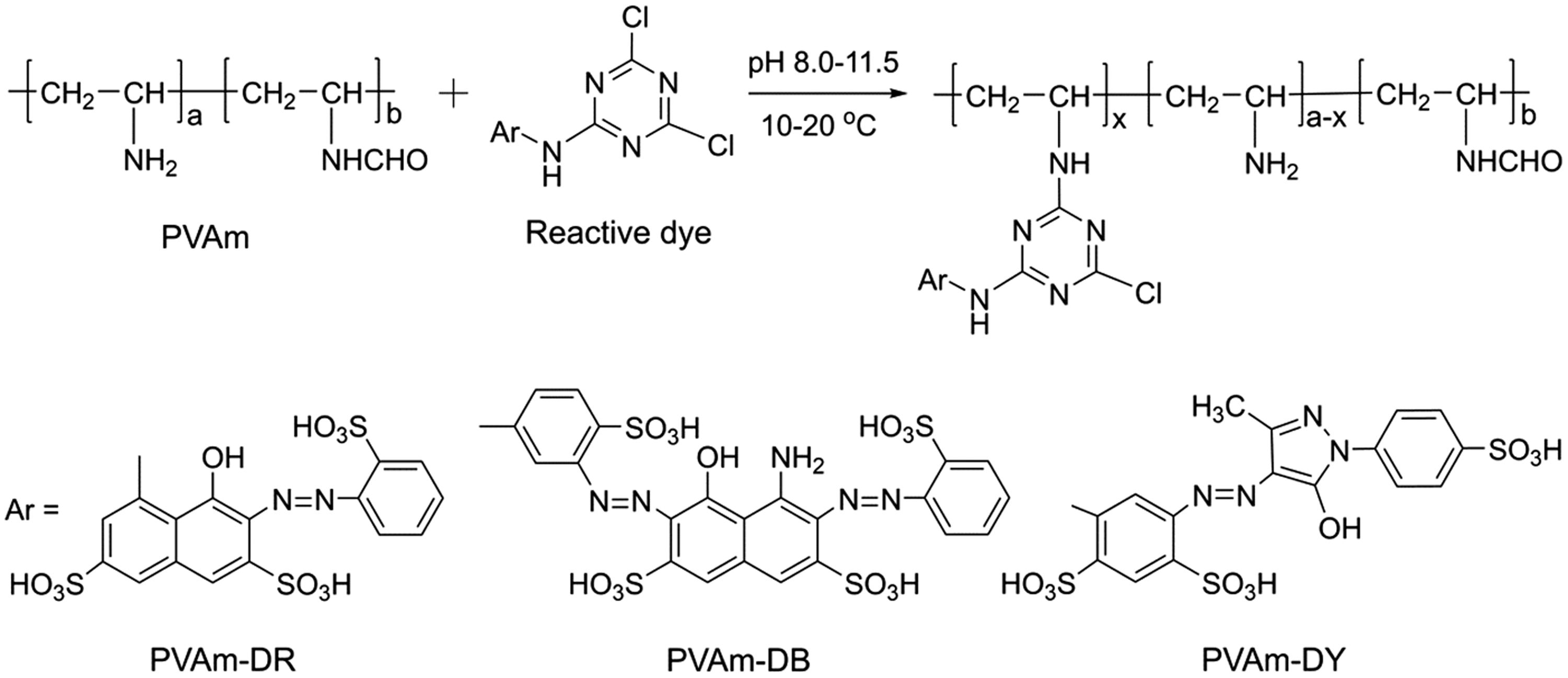
The synthetic scheme of P(VAm-AA) macromolecular dyes is illustrated in Scheme 5. The primary amino group of P(VAm-AA) has high activity as a nucleophilic reagent, which can easily react with reactive dyes DR, DB and DY. A pH value of 11.0–11.5 was required to enable the amino groups of P(VAm-AA) to dissociate fully and was maintained at 8.0–11.5 with the increasing of the sulfonic acid groups.
20
In addition, in order to study the difference in light stability of macromolecular dyes, PVAm macromolecular dyes without a carboxyl group were synthesized from PVAm by the route depicted in Scheme 6.
Synthesis procedure of poly(vinylamine-co-acrylic acid) [P(VAm-AA)] macromolecular dyes. Synthesis procedure of polyvinylamine (PVAm) macromolecular dyes.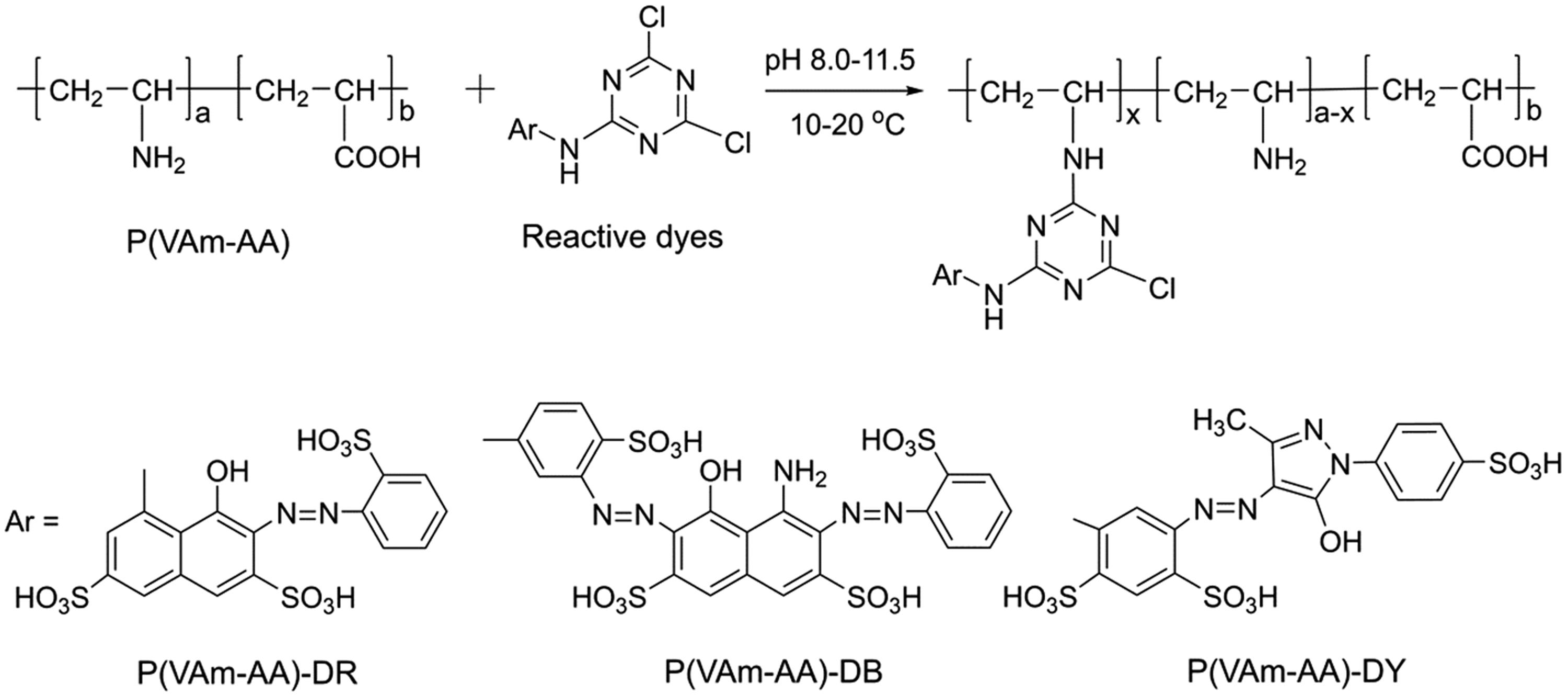
The structures of the synthesized dyes were characterized by TLC, UV-Vis spectroscopy, infrared (IR) spectroscopy and 1H NMR. The TLC method was used to monitor the completion of the reaction and showed that it was completed quantitatively (n-PrOH:i-BuOH:EtOAc:H2O, 2:4:1:3, v/v). The R f value of the macromolecular dyes was 0.0 and the R f values of DR, DB, DY were 0.63, 0.66 and 0.67, respectively. The degree of substitution of chromophore was calculated by the use of the calibration curve of macromolecular dyes. 23 In addition, a TLC densitometer was used to determine the reactivity of the reactive dyes quantitatively and provide accurate measurement of the unreacted dyes, 24 so the degree of substitution of chromophore could be confirmed by calculating the molar ratio of the reacted dyes to the P(VAm-AA) or PVAm. The results confirmed that the degrees of substitution of P(VAm-AA)-DR, P(VAm-AA)-DB and P(VAm-AA)-DY were 30.2%, 28.4% and 31.3%, while those of PVAm-DR, PVAm-DB and PVAm-DY were 32.5%, 28.3% and 29.3%, respectively.
The UV-Vis absorption spectra of P(VAm-AA) macromolecular dyes in water are shown in Figure 1. As shown, the maximum absorption wavelength of red, blue and yellow P(VAm-AA) macromolecular dye was 507, 596 and 389 nm in water, respectively, which was the same with that of DR, DB and DY. In addition, although the absorption coefficients of macromolecular dyes were slightly lower than those of reactive dyes owning to the incorporation of polymer, the P(VAm-AA) macromolecular dyes also exhibited high absorption coefficients, ranging from 20.9 to 26.7 L·g−1 · cm−1.
Ultraviolet-visible absorption spectra of poly(vinylamine-co-acrylic acid) [P(VAm-AA)] macromolecular dyes at the concentration of 2.4 × 10⁻² g/L in water (pH = 7): (a) P(VAm-AA)-DR; (b) P(VAm-AA)-DB; (c) P(VAm-AA)-DY.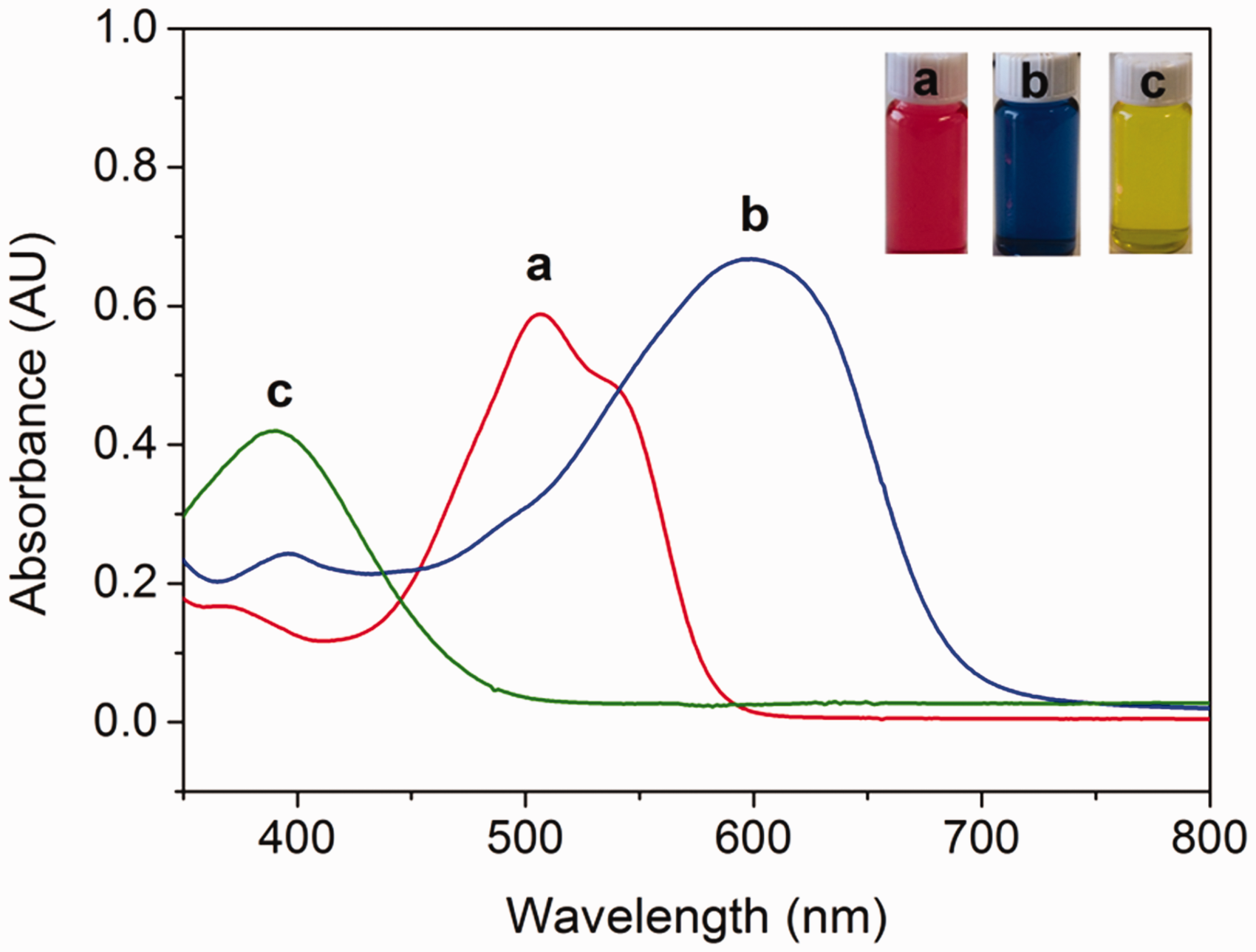
The IR spectrum was used to further confirm whether or not the reactive dyes had been successfully grafted on the P(VAm-AA). The IR spectra of macromolecular dyes P(VAm-AA)-DR, P(VAm-AA)-DB, P(VAm-AA)-DY and P(VAm-AA) are shown in Figure 2. The characteristic absorption peaks of the hydroxyl group and amino group were observed to overlap at 3419 cm−1. The absorption band at 1619 cm−1 indicated the presence of a carboxy group. Compared with the IR spectrum of P(VAm-AA), the absorption band at 1545 cm−1 indicated the presence of N=N, whereas the absorption band created by the s-triazine ring appeared at 1486 cm−1. The characteristic absorption peaks at 1323 and 1205 cm−1 indicated the existence of C–N and C–O of the aromatic ring, respectively. Meanwhile, the absorption bands at 1205 and 1042 cm−1 were assigned to S=O of the sulfonate groups of macromolecular dyes.
Infrared spectra of poly(vinylamine-co-acrylic acid) [P(VAm-AA)] and P(VAm-AA) macromolecular dyes: (a) P(VAm-AA)-DR; (b) P(VAm-AA)-DB; (c) P(VAm-AA)-DY; (d) P(VAm-AA).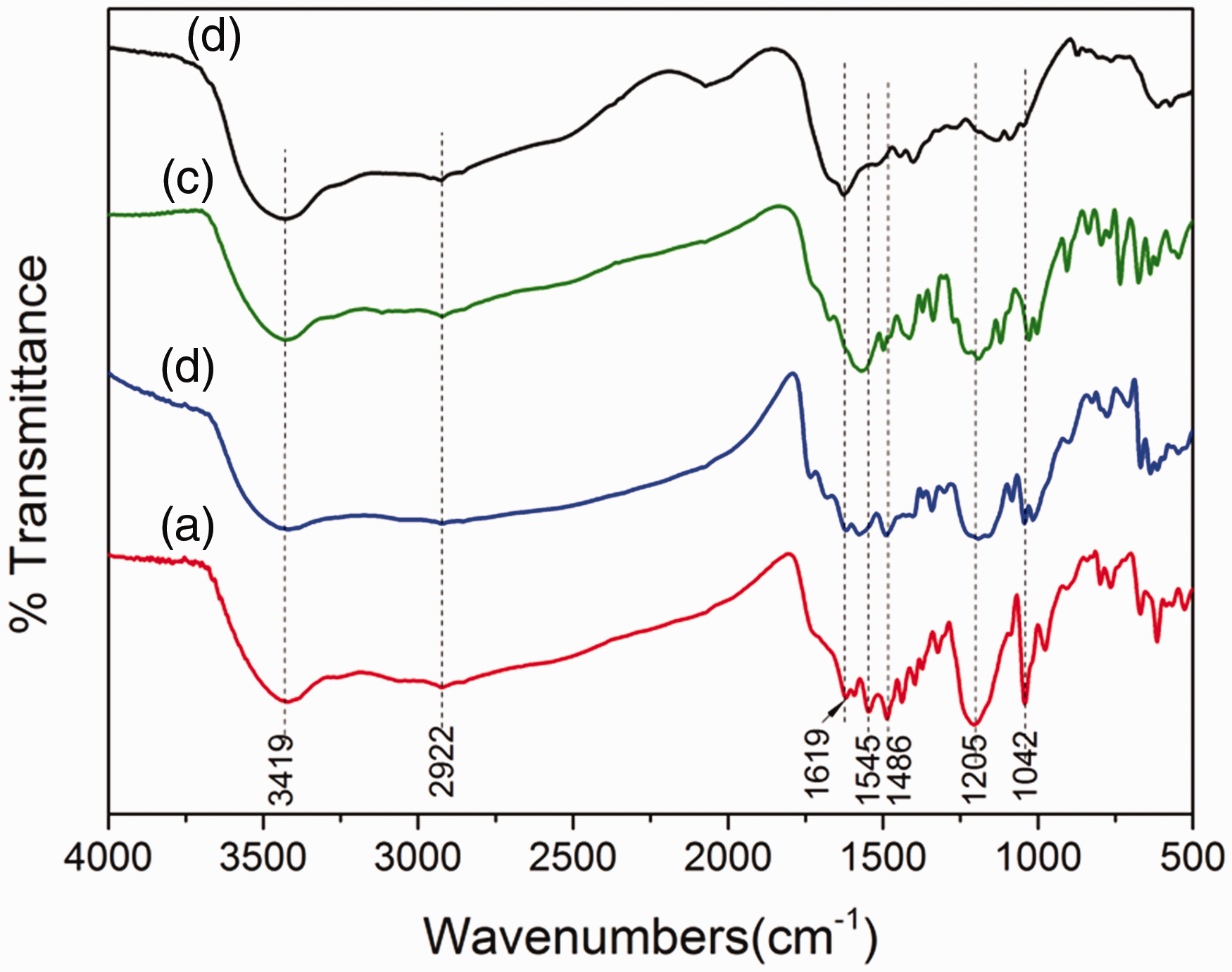
The 1H NMR spectra of P(VAm-AA) and P(VAm-AA) macromolecular dyes are shown in Figure 3. The signals at 3.6 and 1.2 ppm were assigned to the aliphatic methine (−CH−) and methylene (−CH2−) protons of P(VAm-AA), respectively. Compared with the 1H NMR spectrum of P(VAm-AA), the signals of the aliphatic methine and methylene protons of macromolecular dyes shifted to 2.9−3.0 ppm and 1.8−1.9 ppm, respectively, due to the introduction of the reactive dyes. Besides, the obvious aromatic protons of the macromolecular dyes at 7.1−8.5 ppm could be observed, which provided further evidence that the reactive dyes were successfully introduced into the P(VAm-AA).
Proton nuclear magnetic resonance spectra of poly(vinylamine-co-acrylic acid) [P(VAm-AA)] and P(VAm-AA) macromolecular dyes: (a) P(VAm-AA)-DR; (b) P(VAm-AA)-DB; (c) P(VAm-AA)-DY; (d) P(VAm-AA).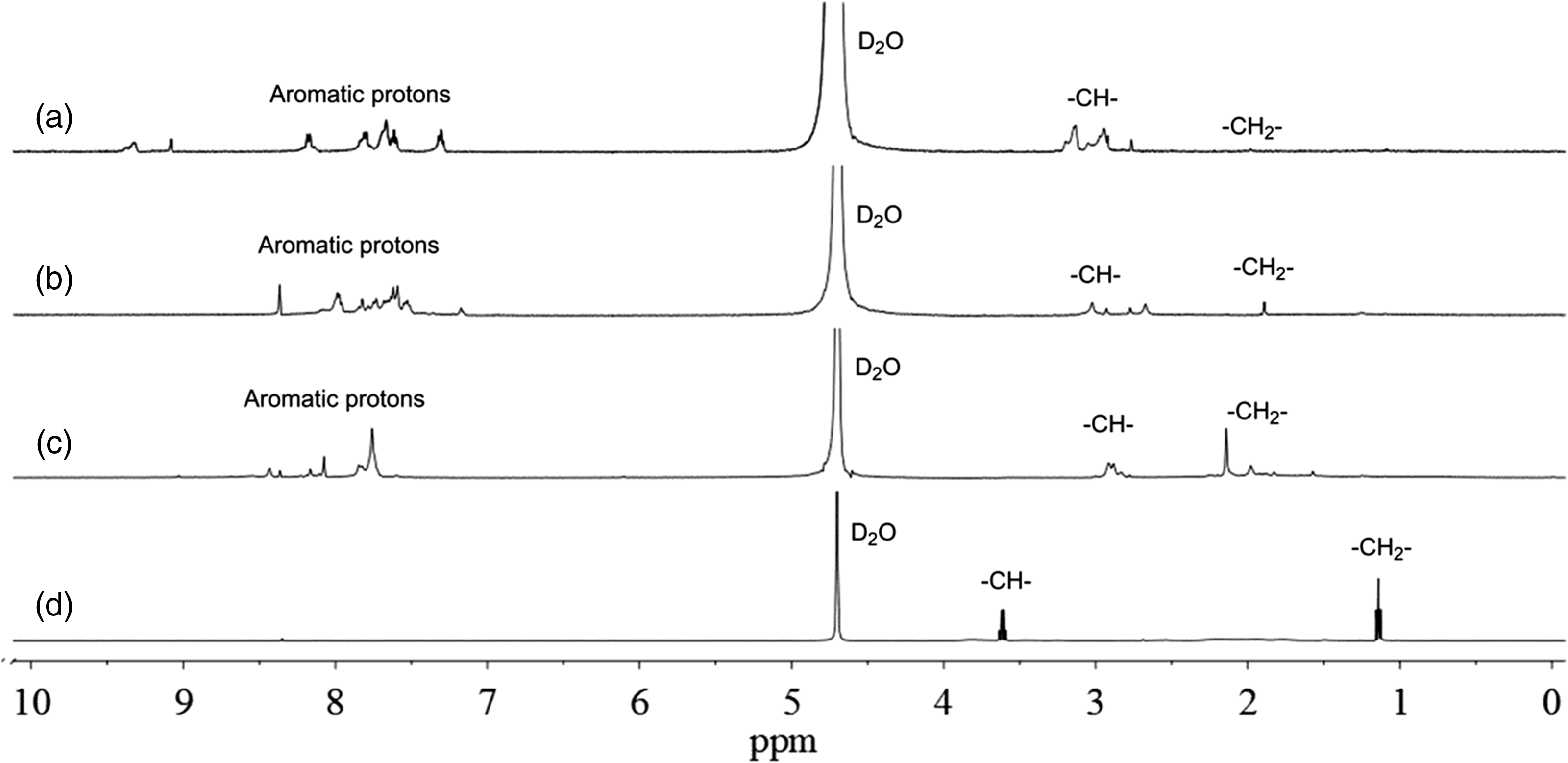
Dyeing properties of macromolecular dyes on cotton
Fixation and fastness properties of poly(vinylamine-co-acrylic acid) [P(VAm-AA)] and polyvinylamine (PVAm) macromolecular dyes and their chromophores
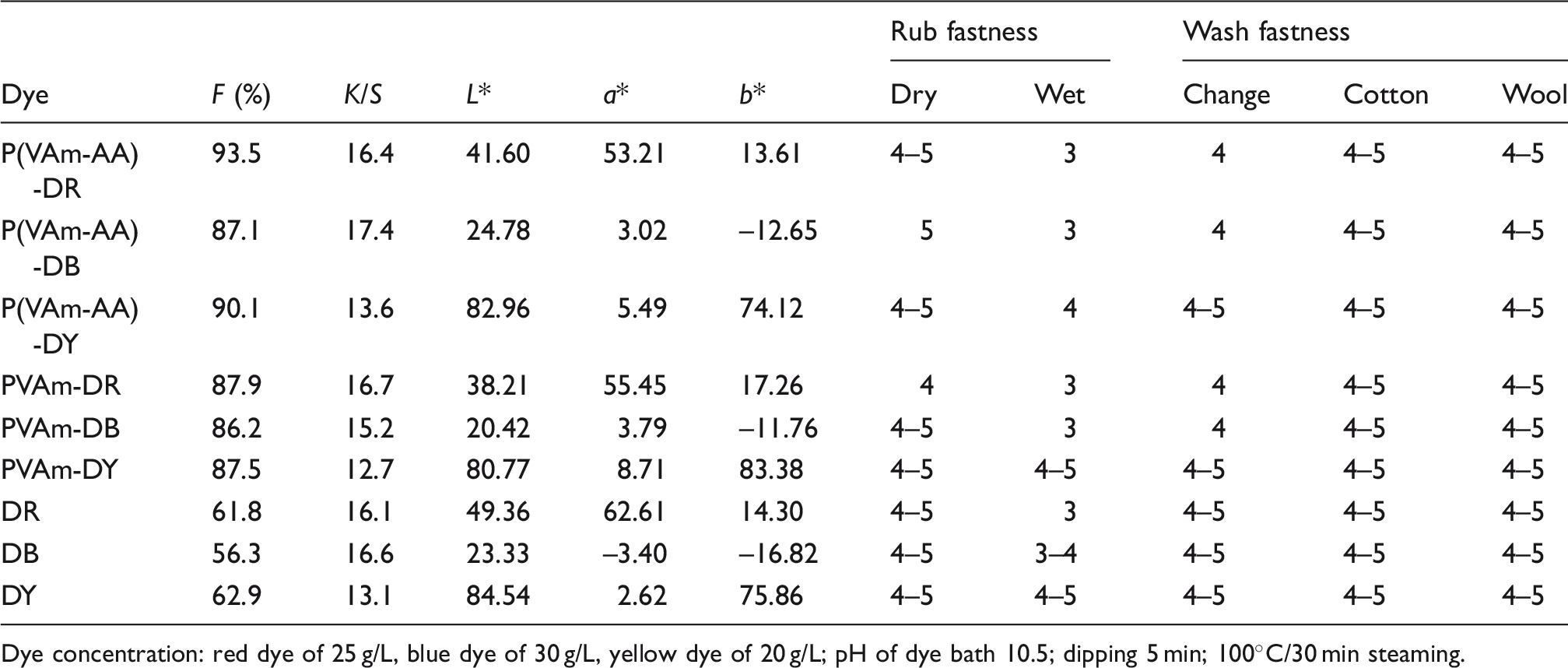
Dye concentration: red dye of 25 g/L, blue dye of 30 g/L, yellow dye of 20 g/L; pH of dye bath 10.5; dipping 5 min; 100℃/30 min steaming.
Light fastness of macromolecular dyes on cotton
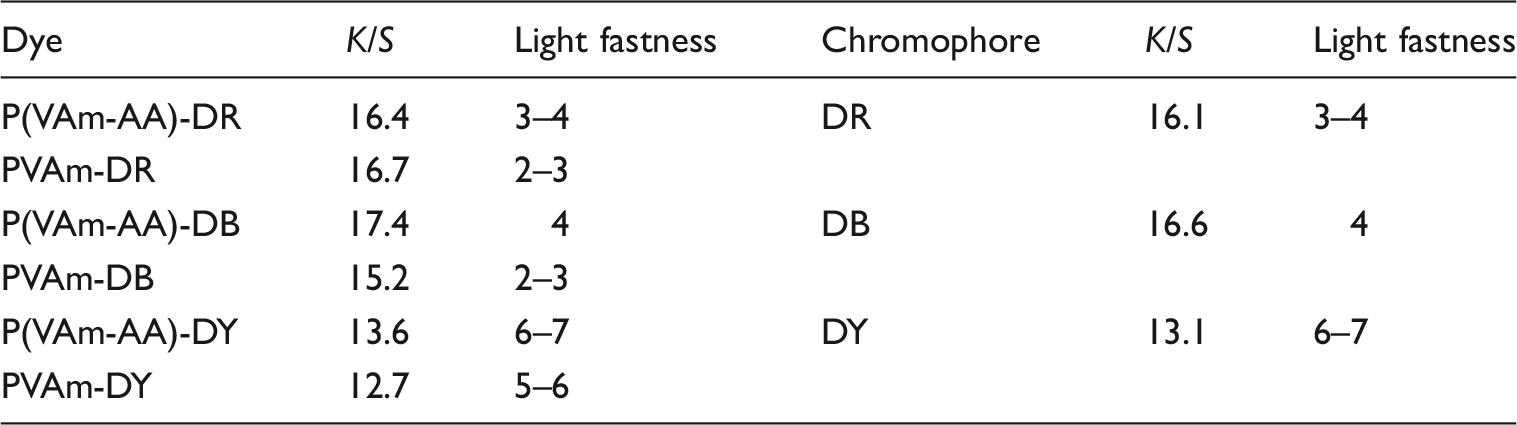
Light fastness of poly(vinylamine-co-acrylic acid) [P(VAm-AA)] and polyvinylamine (PVAm) macromolecular dyes and their chromophores on cotton
Conclusions
New types of macromolecular dyes were obtained by the grafting reaction of P(VAm-AA) with three different reactive dyes, respectively. Cotton fibers were dyed and fixed with these macromolecular dyes using the dip–pad–steam process without a crosslinking agent. The fixations of the macromolecular dyes on cotton fibers could reach up to 93.5%. The dry rub and wash fastness could reach grades 4–5 and 4, respectively. The light fastness of the dyed cotton fabrics of P(VAm-AA) dyes containing carboxyl groups were improved by 0.5–1.5 grades, of which the light fastness of red, blue and yellow P(VAm-AA) dyes on cotton was grades 3–4, 4 and 6–7, respectively. These results will provide a new method for the synthesis of macromolecular dyes with high fixation and excellent light fastness on cotton, and make it possible for the future industrial application of macromolecular dyes.
Footnotes
Declaration of conflicting interests
The authors declared no potential conflicts of interest with respect to the research, authorship and/or publication of this article.
Funding
The authors disclosed receipt of the following financial support for the research, authorship, and/or publication of this article: This work was supported by the State Key Program of the National Natural Science Foundation of China (Grant No. 21536002), the National Natural Science Foundation of China (Grant No. 21808118), the Natural Science Foundation of Shandong Province (Grant No. ZR2018BB065) and the Qingdao Postdoctoral Applied Research Project (Grant No. 2018102).